VI.12.2 Pompeii. Casa
del Fauno or House of the Faun.
Linked to VI.12.1,
VI.12.3, VI.12.5, VI.12.7 and VI.12.8.
Part 2 Part 3 Part 4
Part 5 Part 6 Part 7
Part 8 Part 9 Part 10
Part 11 Part 12 Part 1
Plan
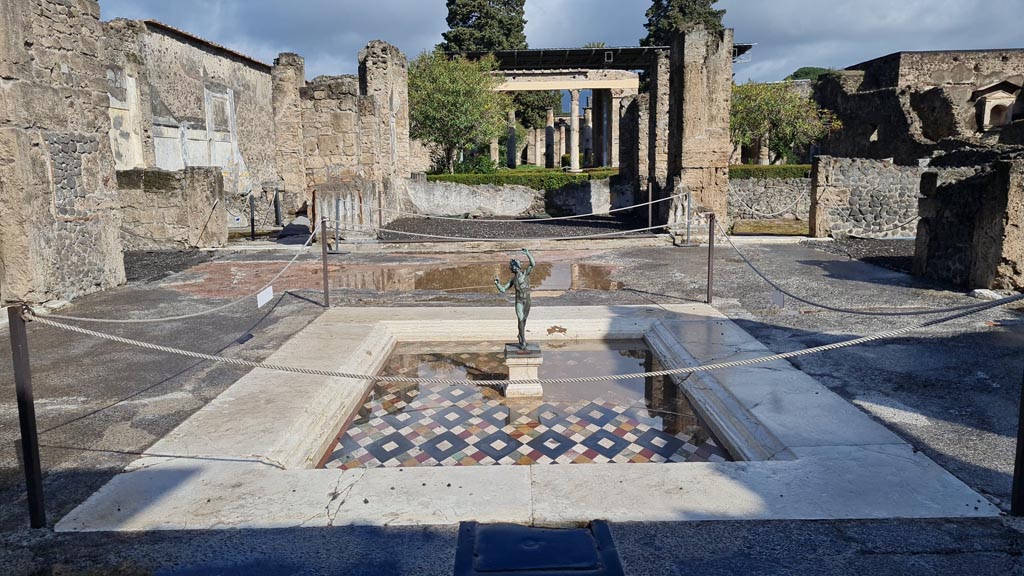
VI.12.2 Pompeii. April 2022. Looking north across impluvium in
atrium towards tablinum. Photo courtesy of Giuseppe Ciaramella.
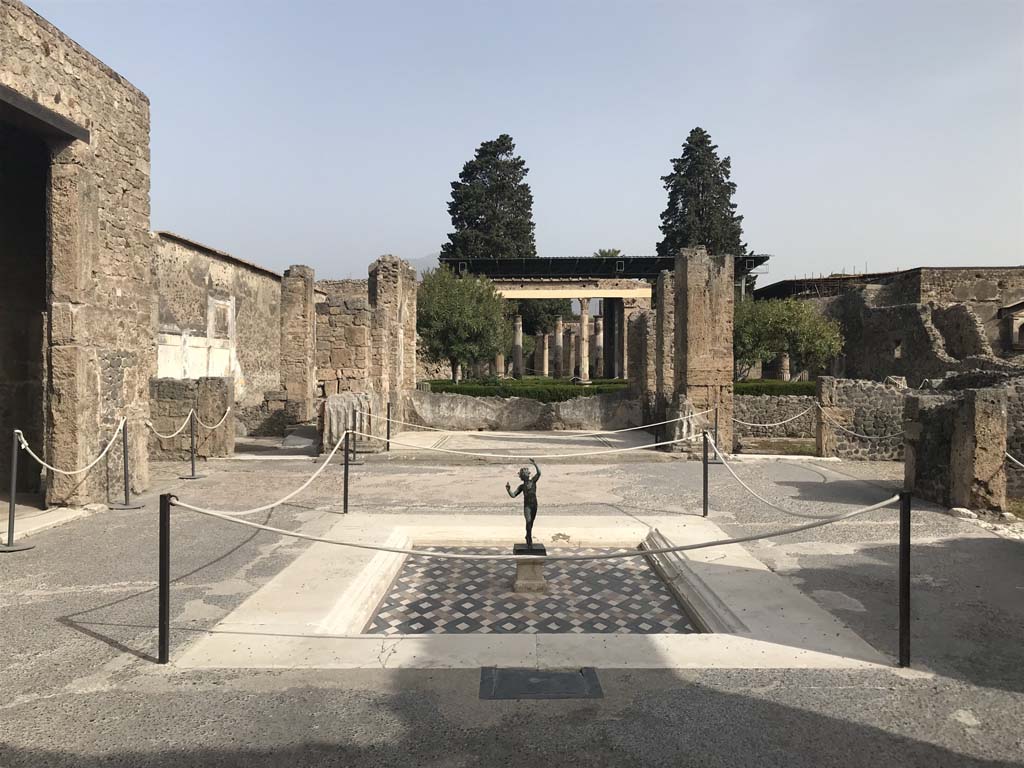
VI.12.2 Pompeii. April 2019. Looking north across impluvium in
atrium towards tablinum. Photo courtesy of Rick Bauer.
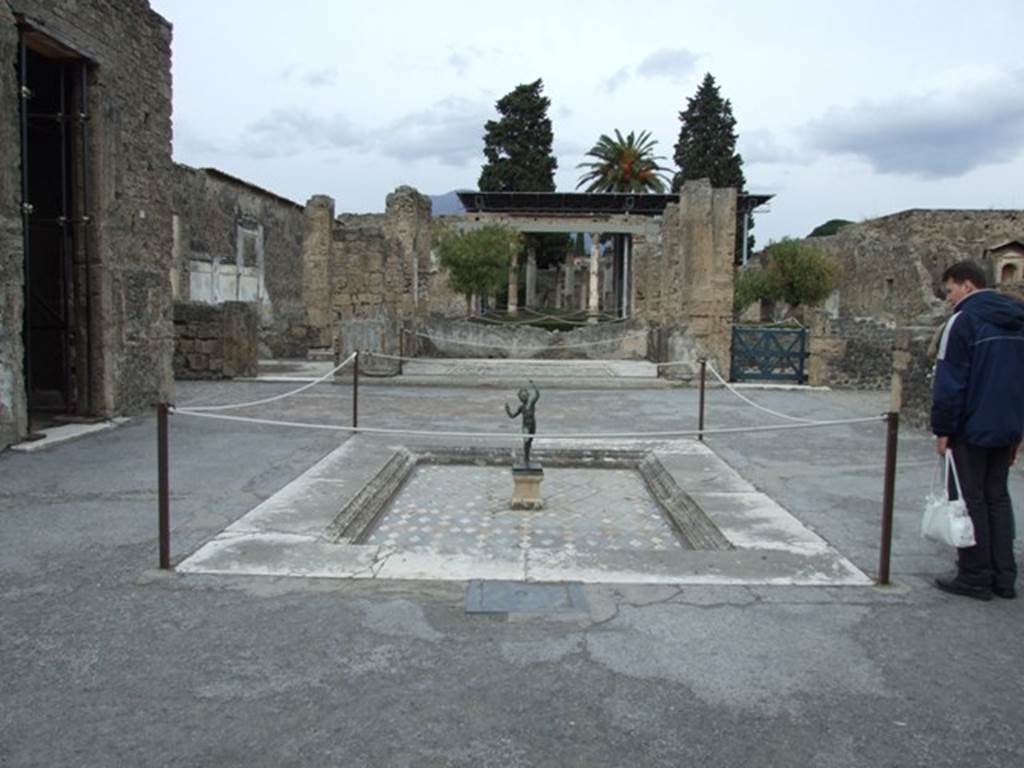
VI.12.2 Pompeii. December 2007. Looking north across impluvium in atrium, towards tablinum.
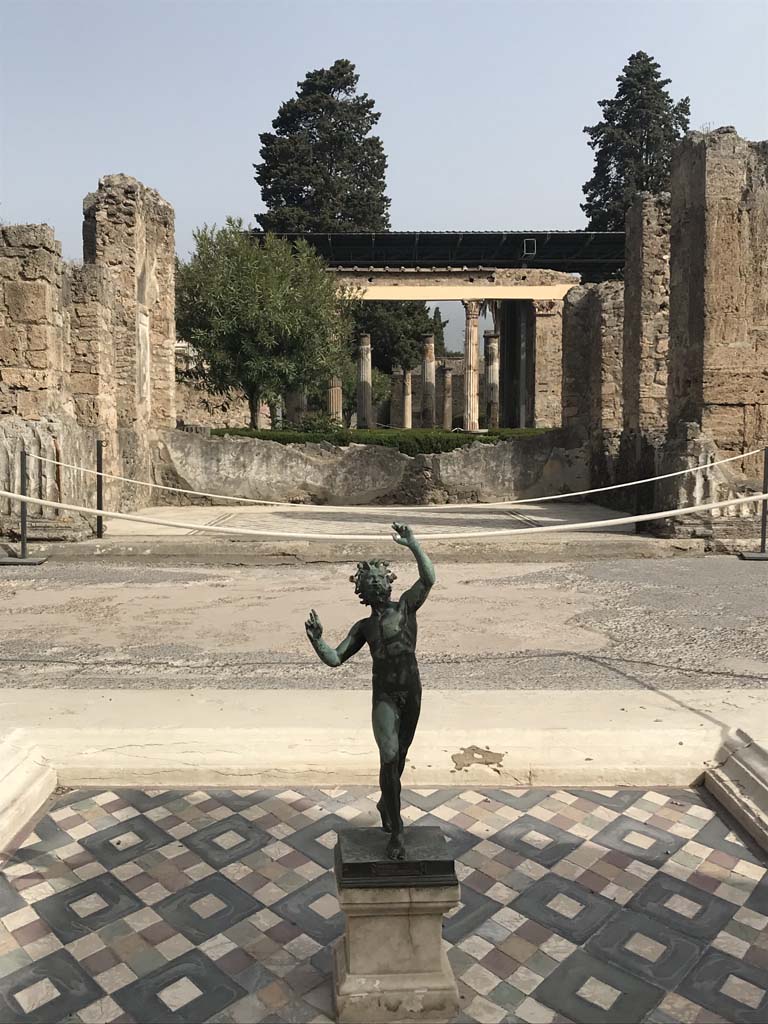
VI.12.2 Pompeii. April 2019.
Looking north across detail of impluvium towards tablinum. Photo
courtesy of Rick Bauer.
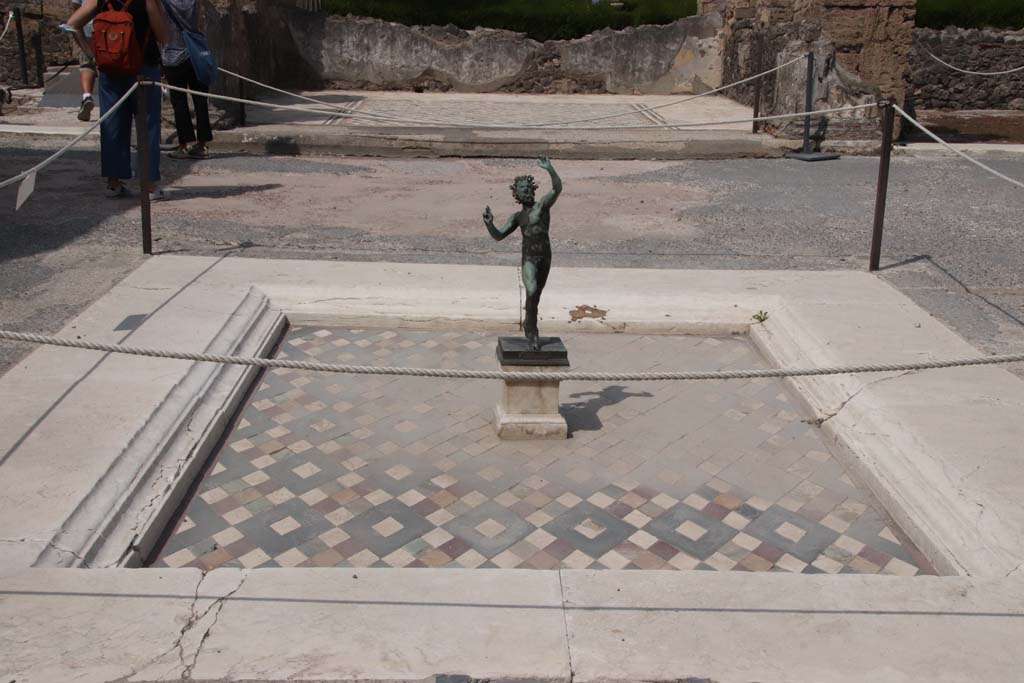
VI.12.2 Pompeii. September 2021.
Looking north across impluvium towards tablinum. Photo courtesy of Klaus Heese.
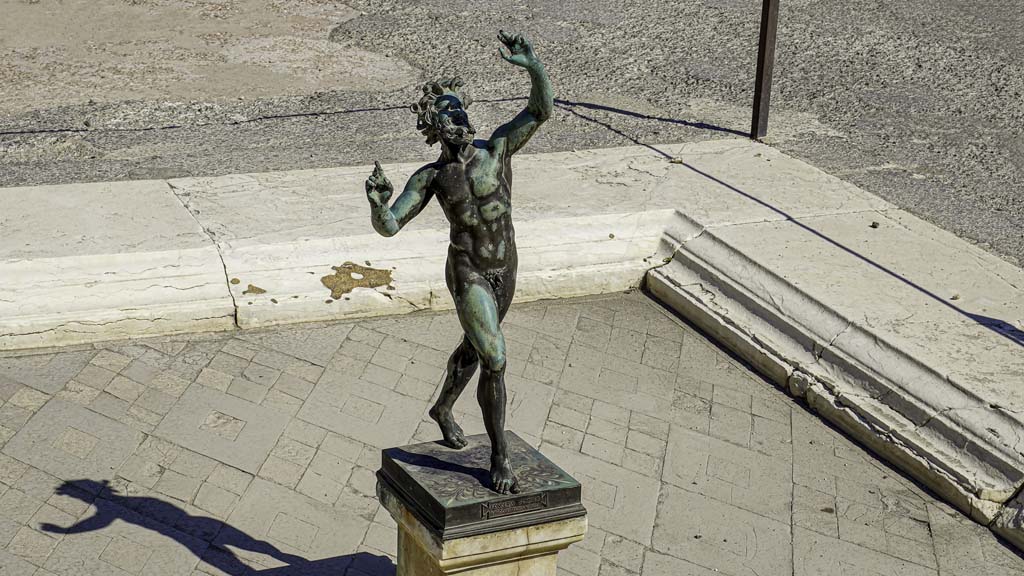
VI.12.2
Pompeii. July 2024.
Looking north across impluvium with dancing faun. Photo courtesy of Johannes Eber.

VI.12.2 Pompeii. August 2021. Dancing faun in
impluvium in atrium. Photo
courtesy of Robert Hanson.
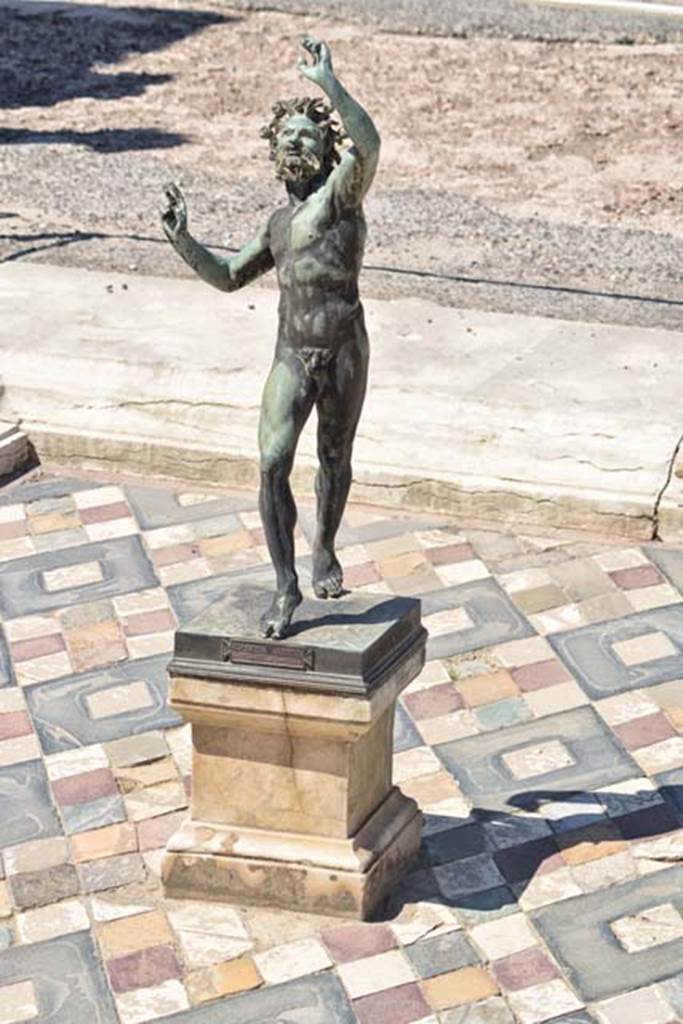
VI.12.2 Pompeii. April 2018. Dancing faun in impluvium in
atrium. Photo courtesy of Ian Lycett-King.
Use is subject to Creative
Commons Attribution-NonCommercial License v.4 International.
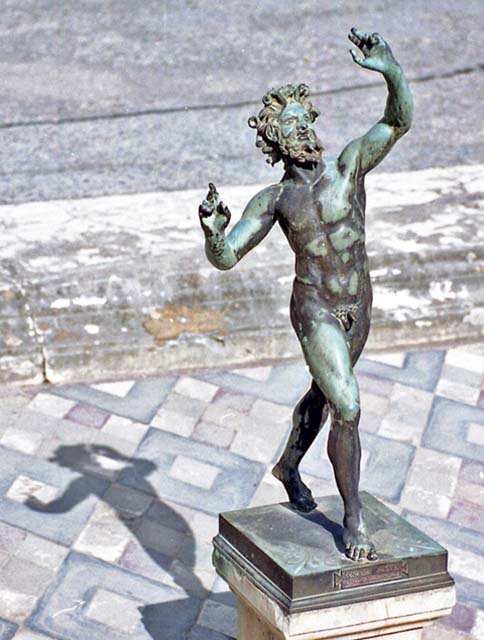
VI.12.2 Pompeii. October 2001.
Detail of reproduction dancing faun in impluvium in atrium. Photo courtesy of Peter Woods.
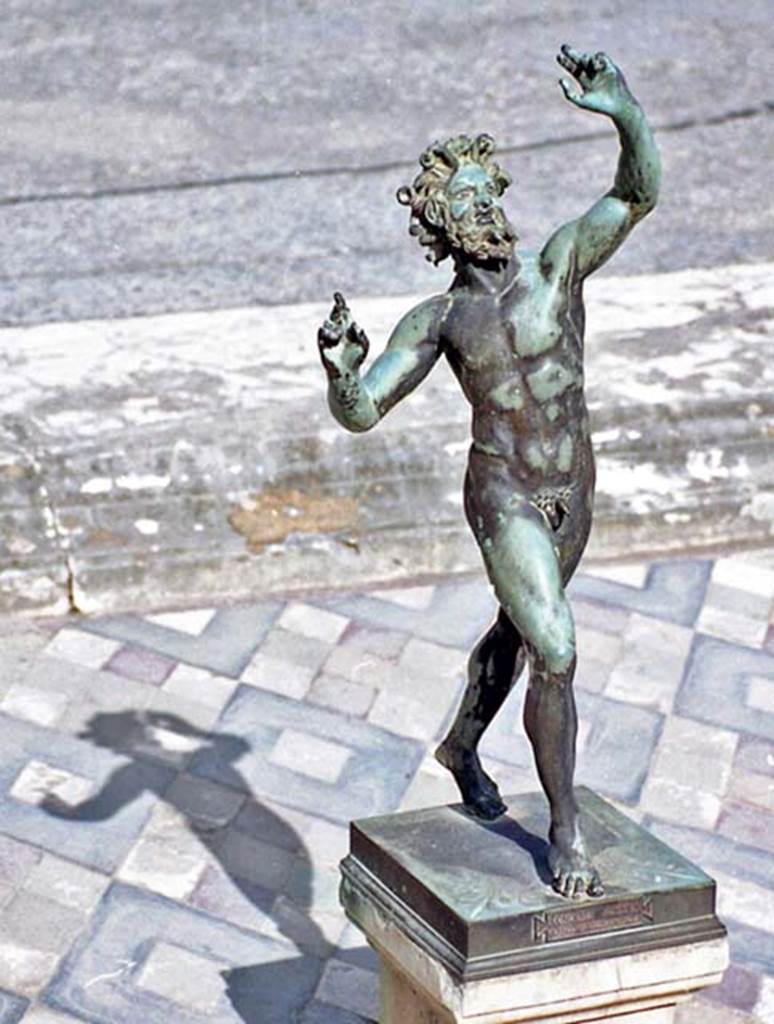
VI.12.2 Pompeii. September 2024.
Detail of original bronze statuette of dancing faun/satyr, in Naples Archaeological Museum, inv.no. 5002.
Photo courtesy of
Giuseppe Ciaramella.
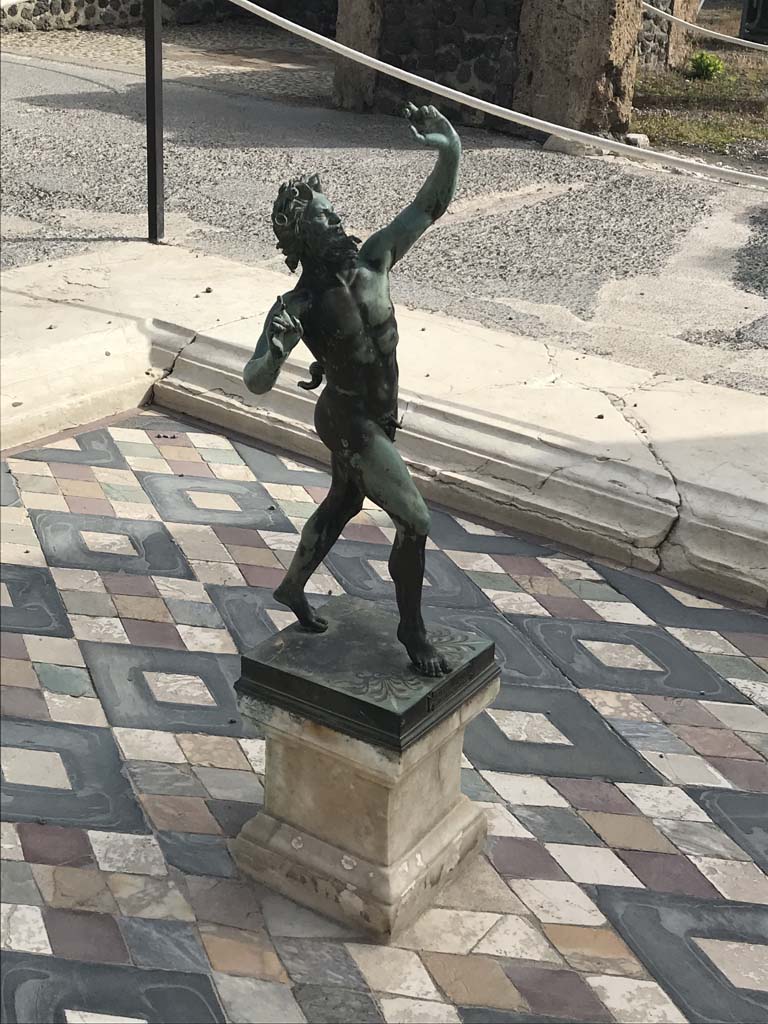
VI.12.2 Pompeii. April 2019.
Detail of reproduction dancing faun and impluvium in atrium.
Photo
courtesy of Rick Bauer.
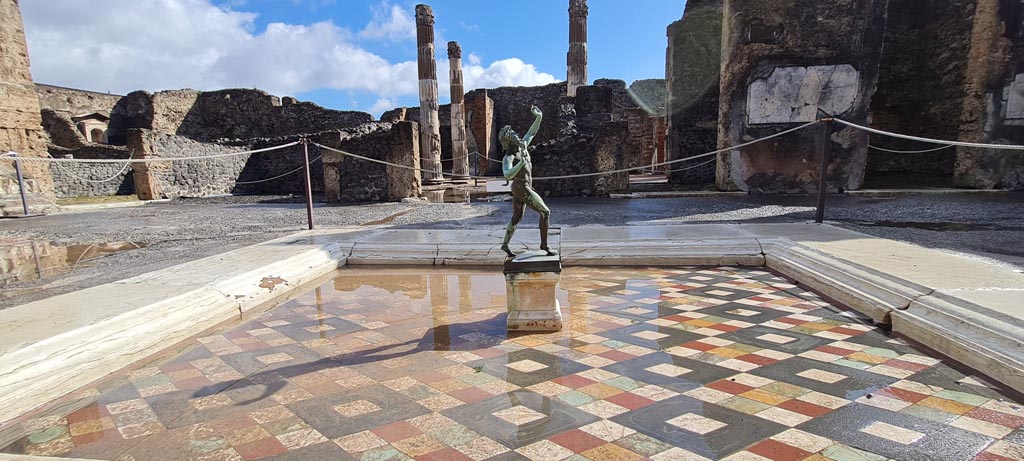
VI.12.2 Pompeii. April
2022.
Looking across impluvium in atrium towards east side, and through
to atrium of VI.12.5. Photo
courtesy of Giuseppe Ciaramella.
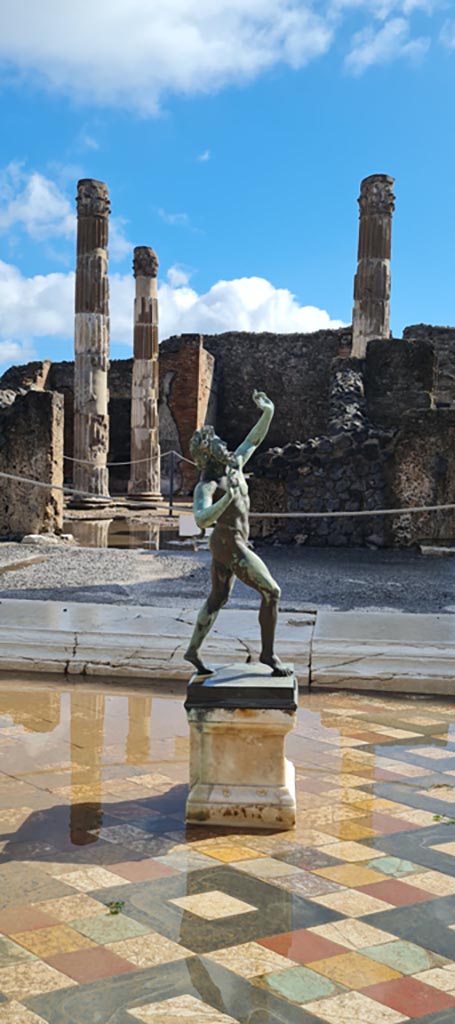
VI.12.2 Pompeii. April
2022.
Looking east across impluvium in atrium towards atrium of VI.12.5.
Photo courtesy of
Giuseppe Ciaramella.
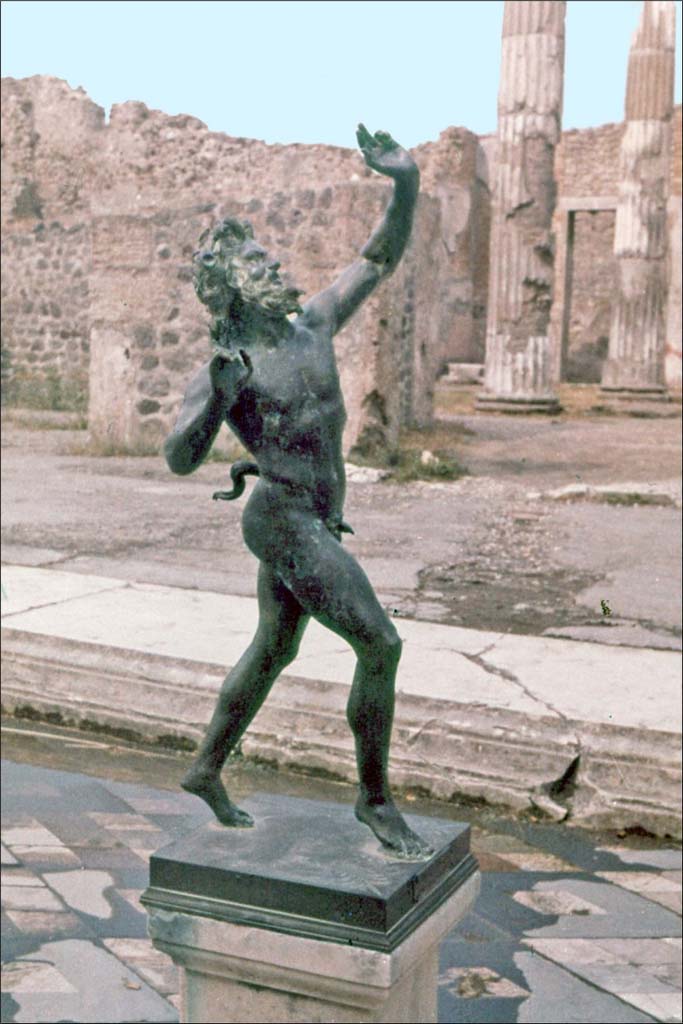
VI.12.2 Pompeii. June 1962. Looking east across impluvium in atrium.
Photo by Brian Philp: Pictorial Colour Slides, forwarded by Peter Woods
(P43.23 POMPEII Statue of the dancing faun House of the Faun)
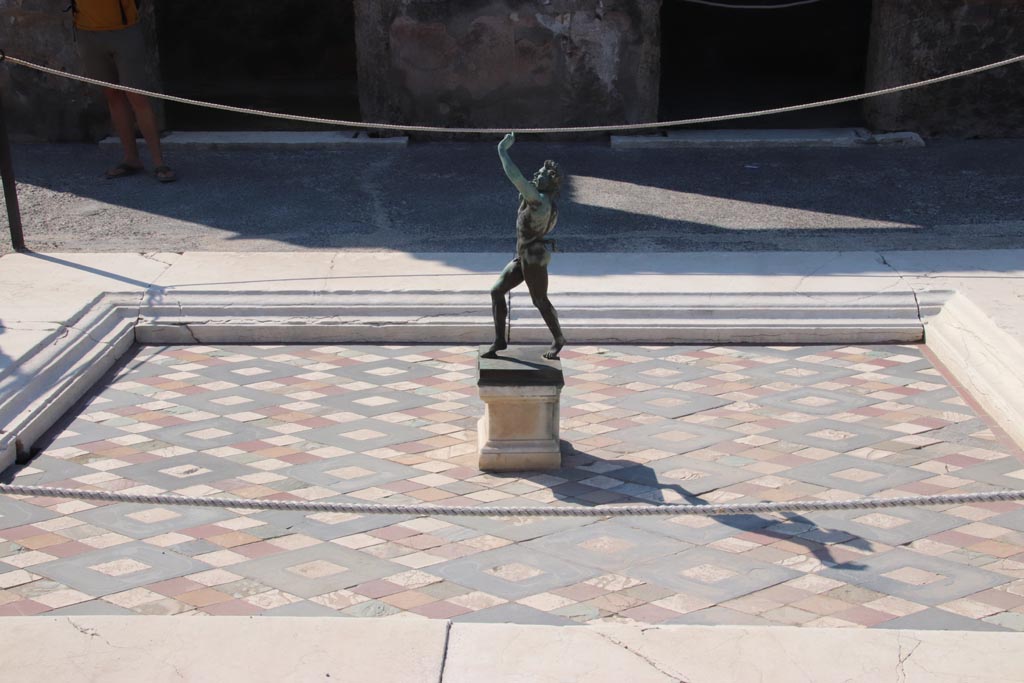
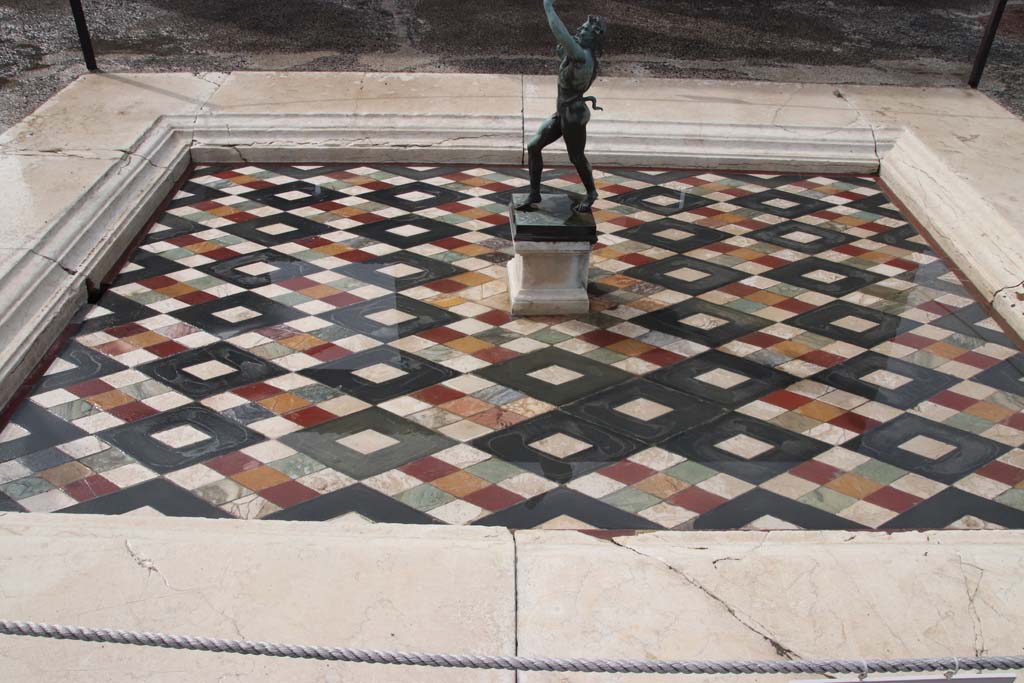
VI.12.2
Pompeii. September 2024.
Looking
west towards bronze statuette in Naples Archaeological Museum.
Photo courtesy of Giuseppe Ciaramella.

VI.12.2
Pompeii. September 2024.
Detail
of bronze statuette of dancing faun/satyr in Naples Archaeological Museum. Photo
courtesy of Giuseppe Ciaramella.
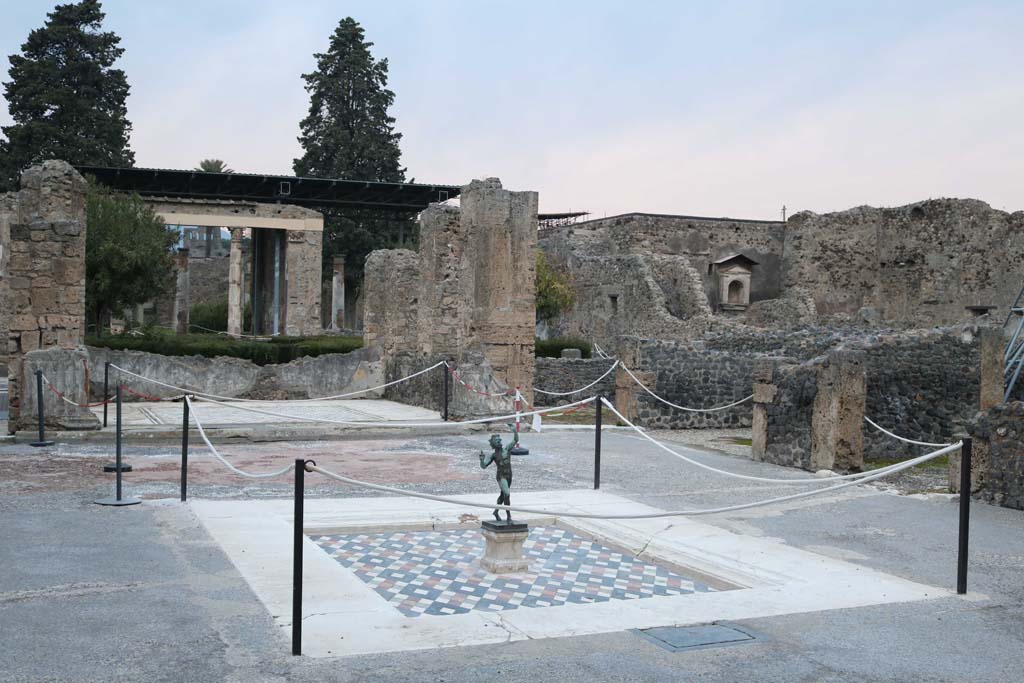
VI.12.2 Pompeii. May 2015. Decorated floor of impluvium. Photo courtesy of Buzz Ferebee.
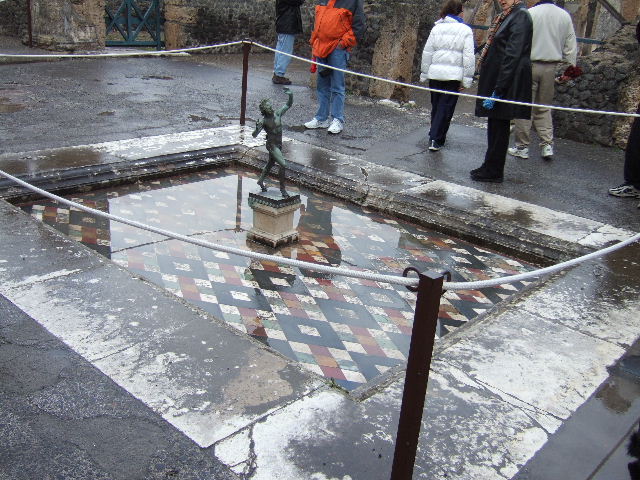
VI.12.2 Pompeii. December 2018. Looking north-east across impluvium in atrium. Photo courtesy of Aude Durand.

VI.12.2 Pompeii. December 2005.
Impluvium in atrium, with diamond pattern bottom and reproduction bronze statue of a dancing faun.
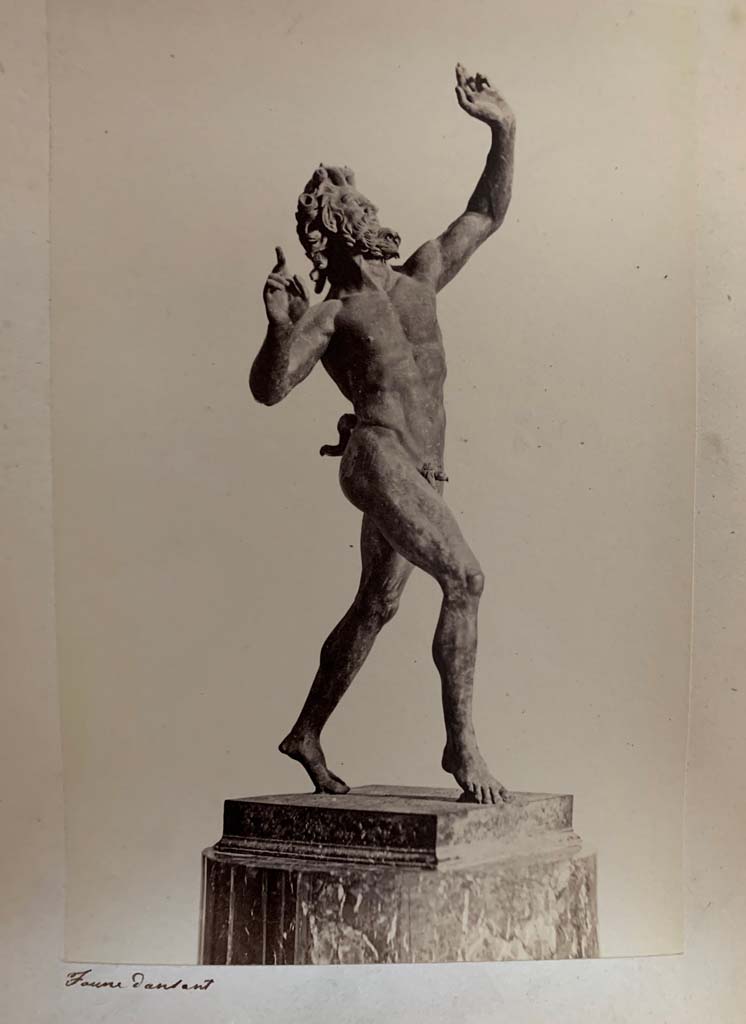
VI.12.2 Pompeii. Original bronze statue of a dancing faun found in Tuscanic atrium.
Now in Naples Archaeological Museum. Inventory number 5002.
This was found on 28th October 1830.
See Pagano, M. and Prisciandaro, R., 2006. Studio sulle provenienze degli oggetti rinvenuti negli scavi borbonici del regno di Napoli. Naples: Nicola Longobardi, (p. 144) PAH II, 240
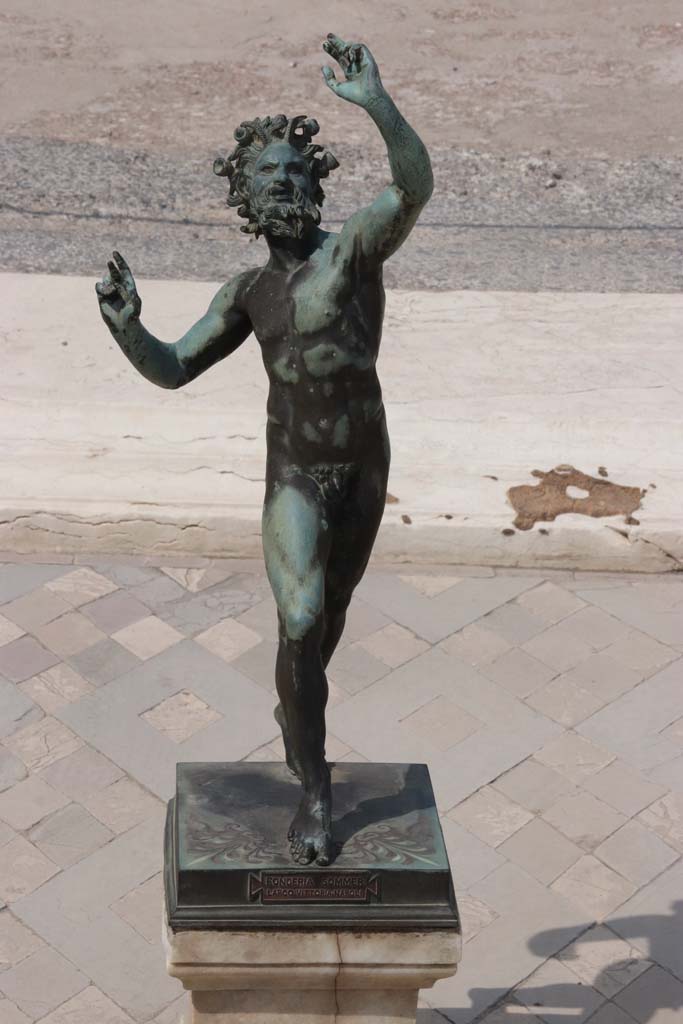
VI.12.2 Pompeii. Dancing Faun.
Photograph by M. Amodio, from an album dated April 1878. Photo courtesy of Rick Bauer.
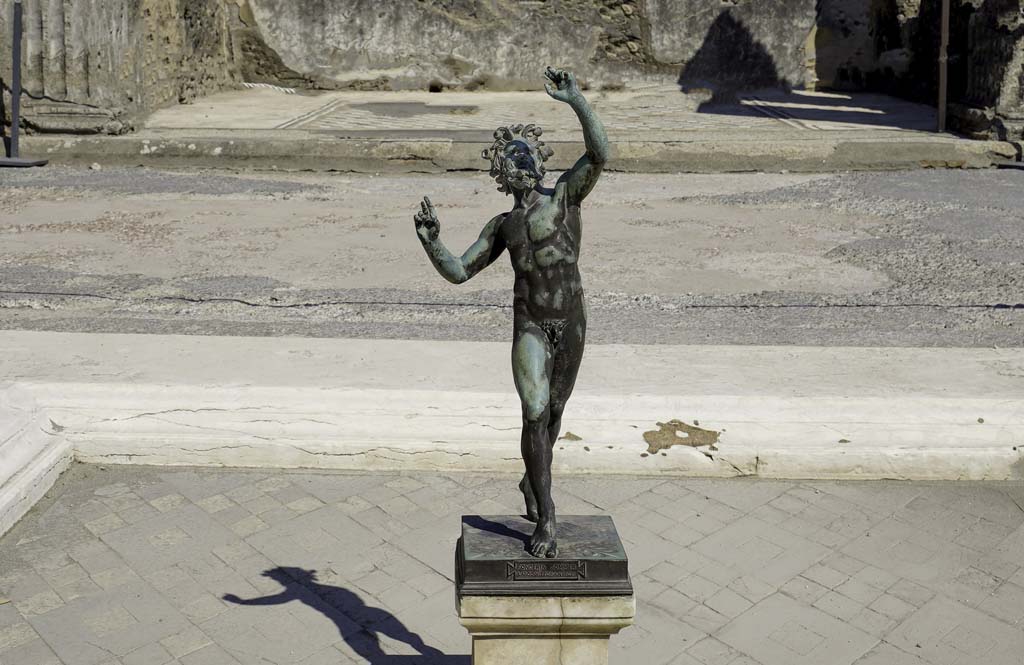
VI.12.2 Pompeii. September 2021.
Looking
north towards Dancing Faun in impluvium, with plaque “Fonderia Sommer, Largo
Vittoria, Napoli”.
Photo
courtesy of Klaus Heese.
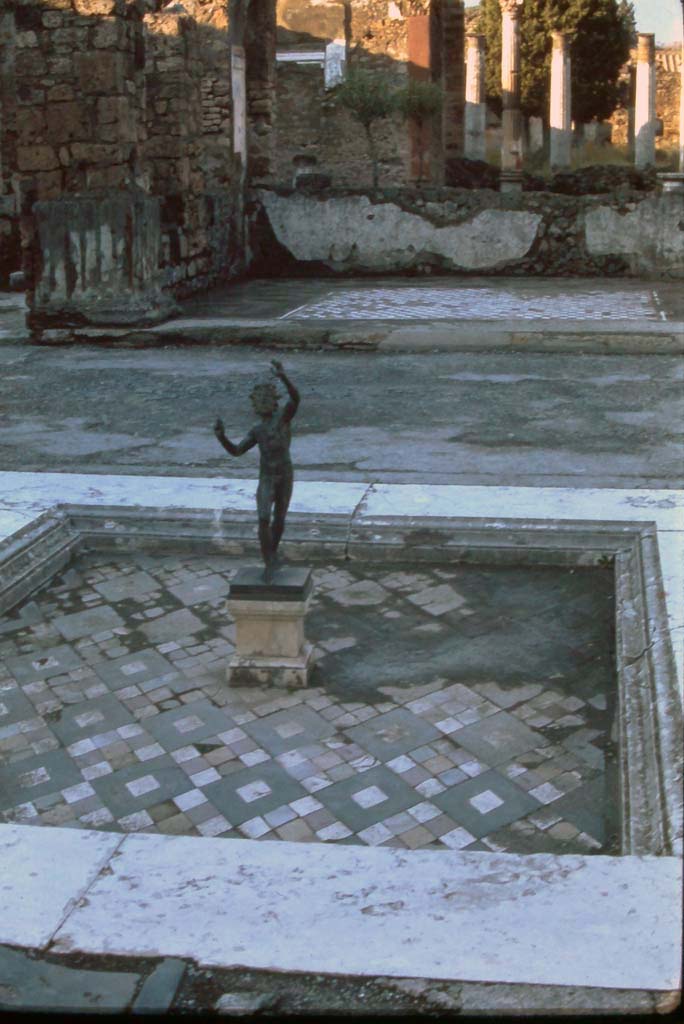
VI.12.2 Pompeii. August 2021. Looking north across impluvium in
atrium towards tablinum. Photo courtesy of Robert Hanson.
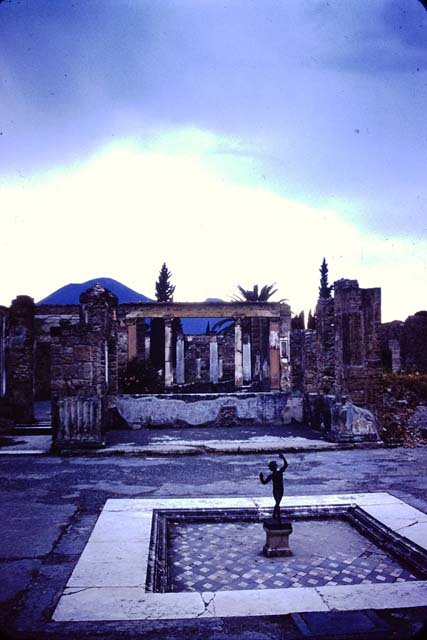
VI.12.2 Pompeii. 4th December 1971. Looking north across impluvium
towards tablinum.
Photo courtesy of Rick Bauer, from Dr George Fay’s slides
collection.
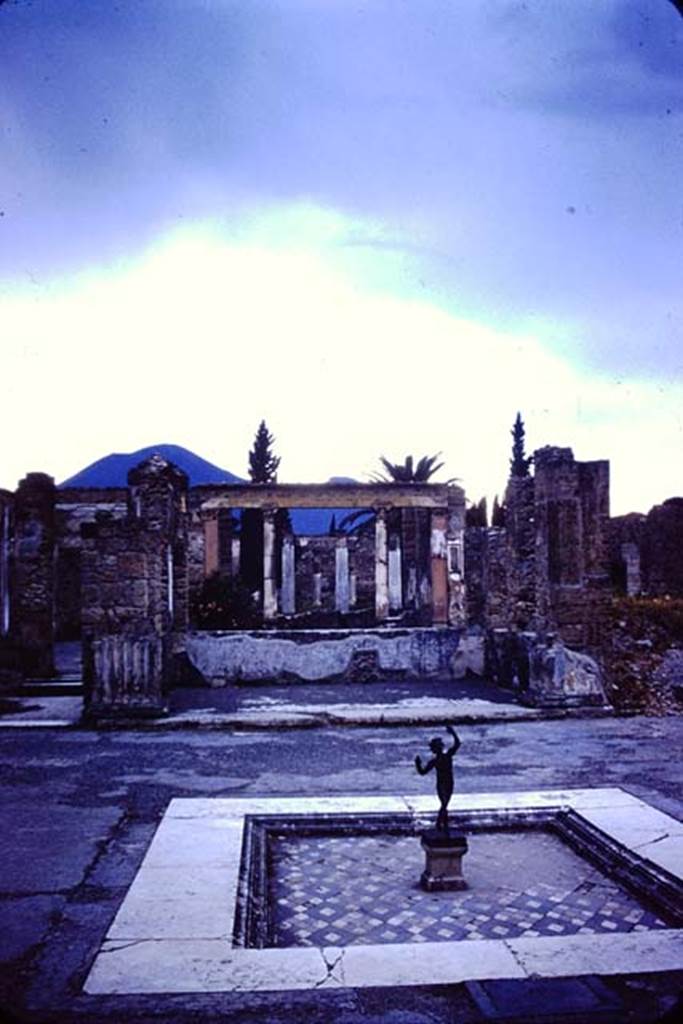
VI.12.2 Pompeii. 1955. Atrium, looking north. Photo by Stanley A. Jashemski.
Source: The Wilhelmina and Stanley A. Jashemski archive in the University of Maryland Library, Special Collections (See collection page) and made available under the Creative Commons Attribution-Non-Commercial License v.4. See Licence and use details.
J55f0483
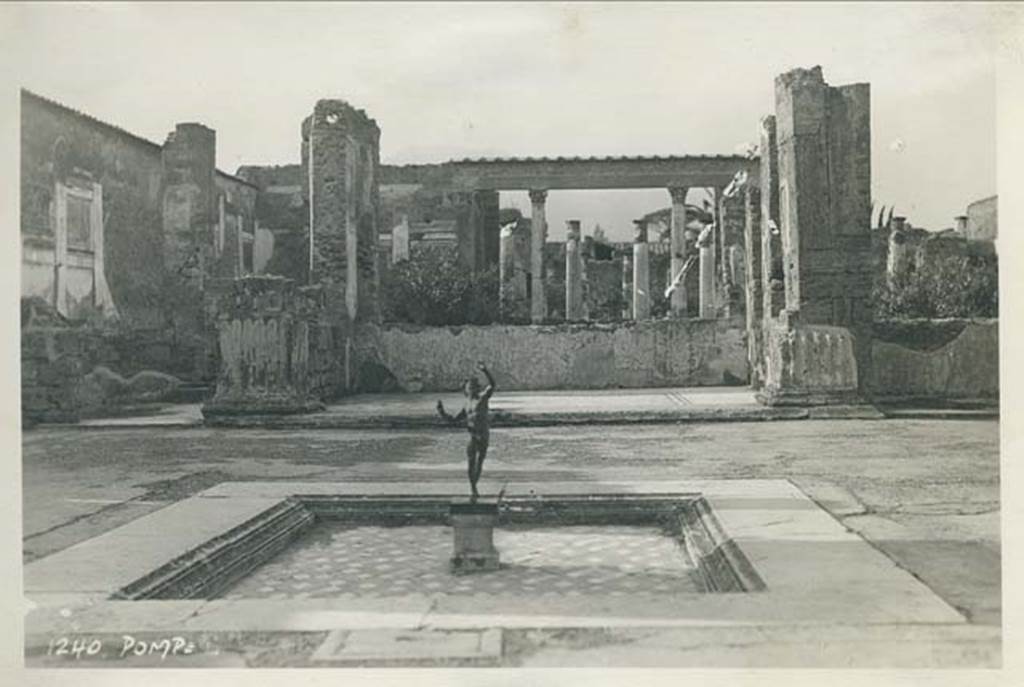
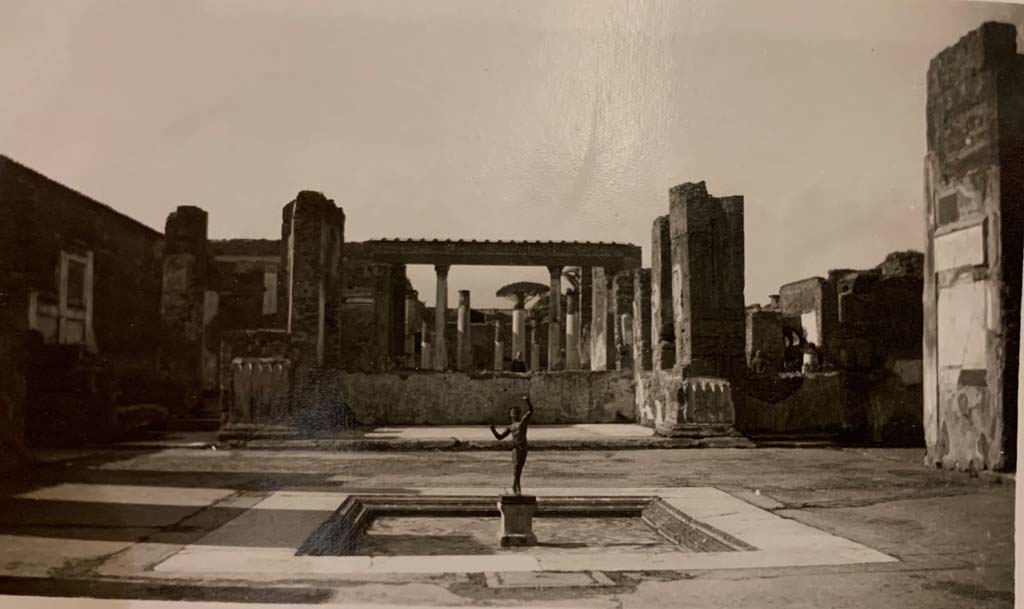
VI.12.2 Pompeii. March 1939 during a stop on SS Carinthia world cruise.
Looking north across the impluvium in atrium. Photo courtesy of Rick Bauer.
VI.12.2
Pompeii. May 1934, from an album of the Nierhoff family vacation.
Looking
across impluvium in atrium. Photo courtesy of Rick Bauer.
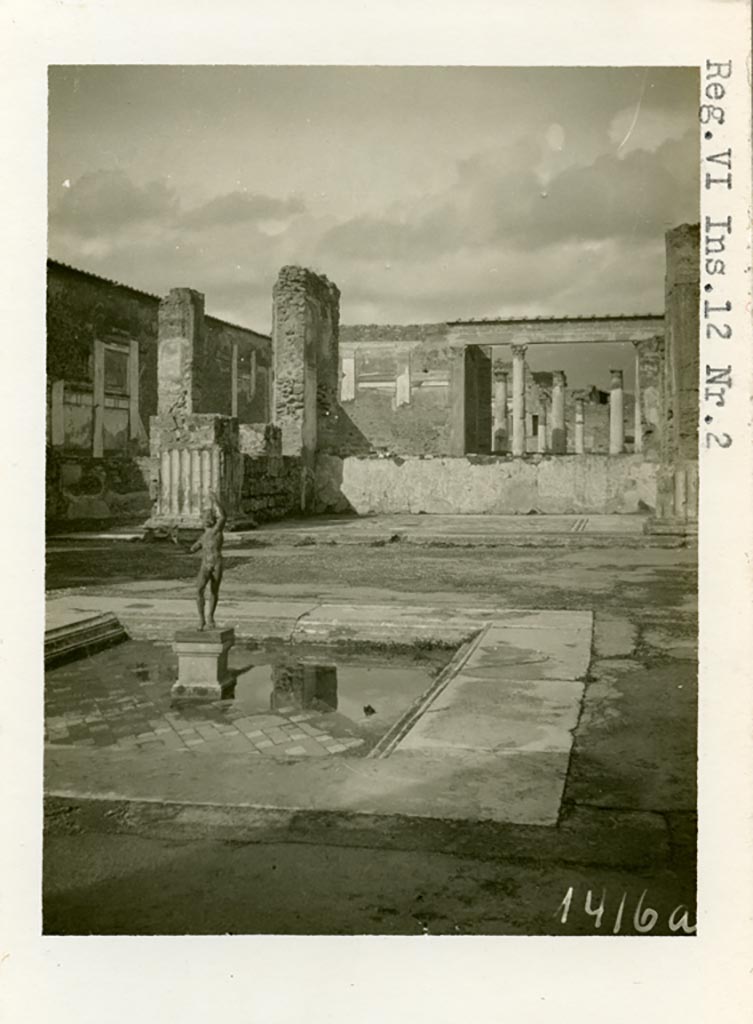
VI.12.2 Pompeii. pre-1937-39. Looking north-west across impluvium in atrium.
Photo courtesy of American Academy in Rome, Photographic Archive. Warsher collection no. 1416a.
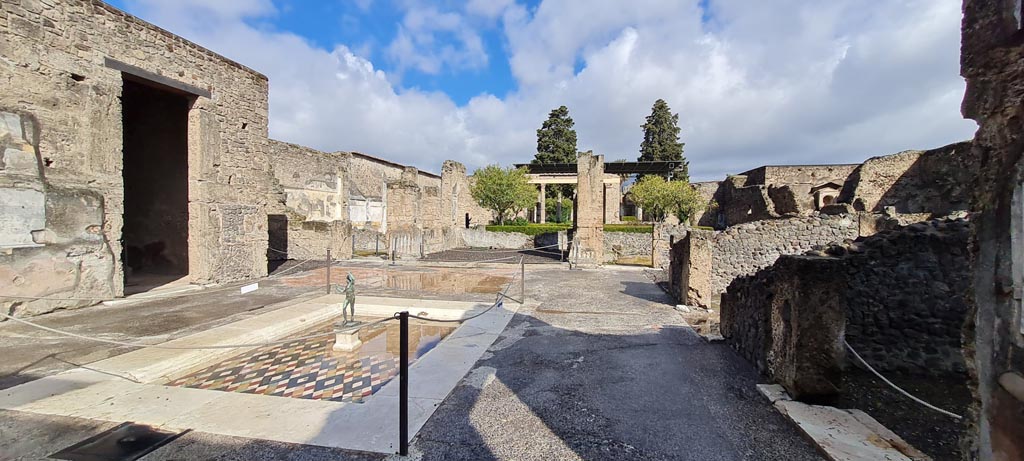
VI.12.2 Pompeii. April
2022. Looking north across east side of atrium. Photo courtesy of Giuseppe Ciaramella.
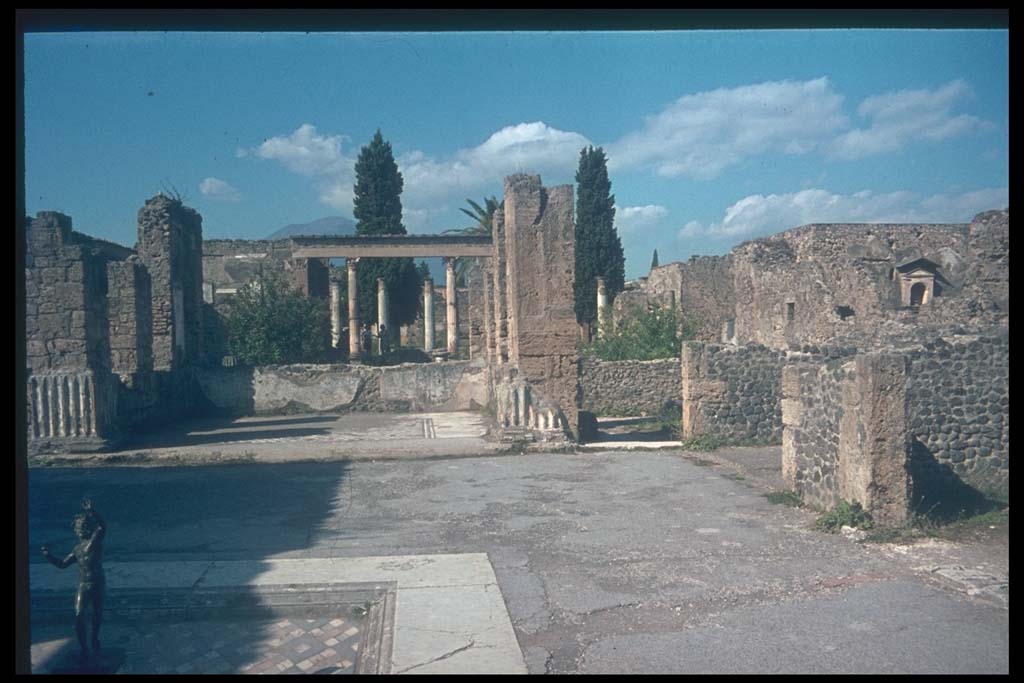
VI.12.2 Pompeii. Looking north across east side of atrium.
Photographed 1970-79 by Günther Einhorn, picture courtesy of his son Ralf Einhorn.
According to Garcia y Garcia, two bombs fell on this house in 1943.
One caused the destruction of three rooms to the north-east of the Tuscanic atrium, then causing damage to other areas.
The loss of 1st style painting on the north and east walls of the atrium, and on the dividing wall of two cubicula to the west of these.
The mosaic floor was also damaged.
In a cubiculum in the south-east of the atrium, there was a total loss of the 2nd style painting.
In the other two cubicula on the east side, there was a total loss of the 1st and 4th style decoration.
The floor of the centre of the atrium also suffered damage.
The other bomb fell on the secondary atrium, see VI.12.5.
See Garcia y
Garcia, L., 2006. Danni di guerra a Pompei. Rome: L’Erma di Bretschneider. (p.82-85, with
photos)
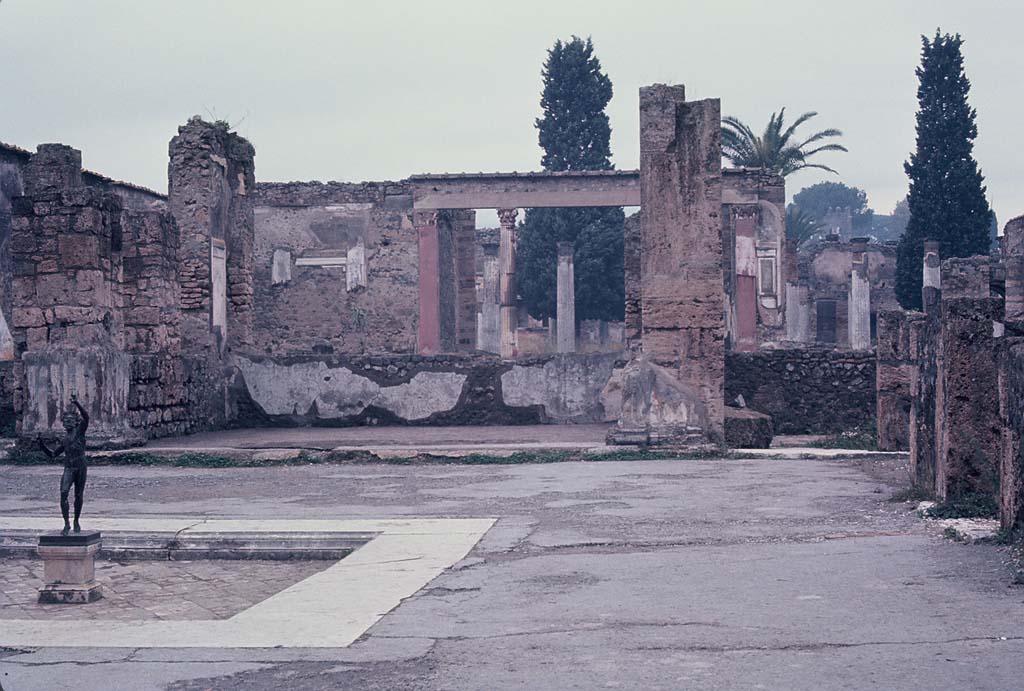
VI.12.2 Pompeii. November 1966. Looking north across east side of atrium. Photo courtesy of Rick Bauer.
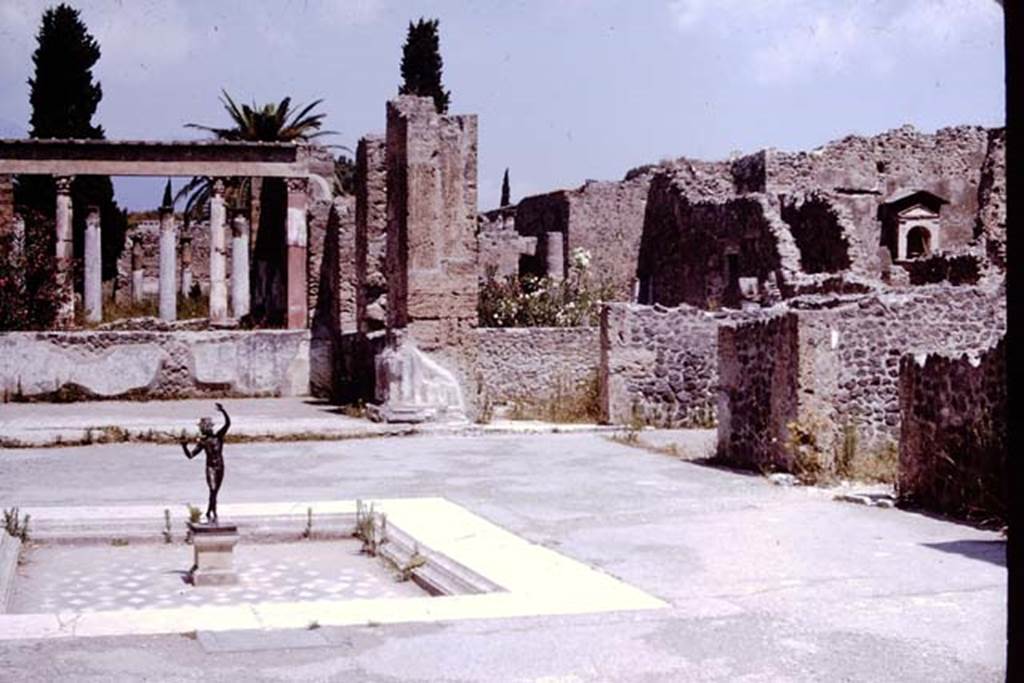
VI.12.2 Pompeii. 1964. Looking north across east side of atrium. Photo by Stanley A. Jashemski.
Source: The Wilhelmina and Stanley A. Jashemski archive in the University of Maryland Library, Special Collections (See collection page) and made available under the Creative Commons Attribution-Non-Commercial License v.4. See Licence and use details.
J64f1910

VI.12.2 Pompeii. 22nd July 1961. Looking north across east side of atrium. Photo courtesy of Rick Bauer.
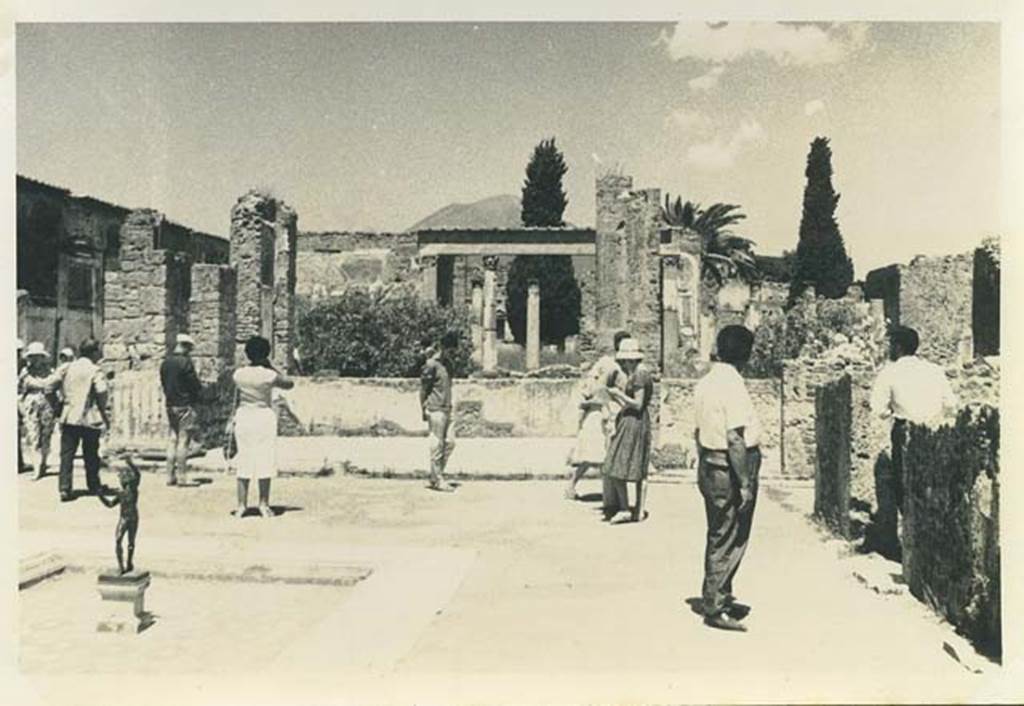
VI.12.2 Pompeii. 22nd July 1961. Looking towards north-east corner of atrium. Photo courtesy of Rick Bauer.
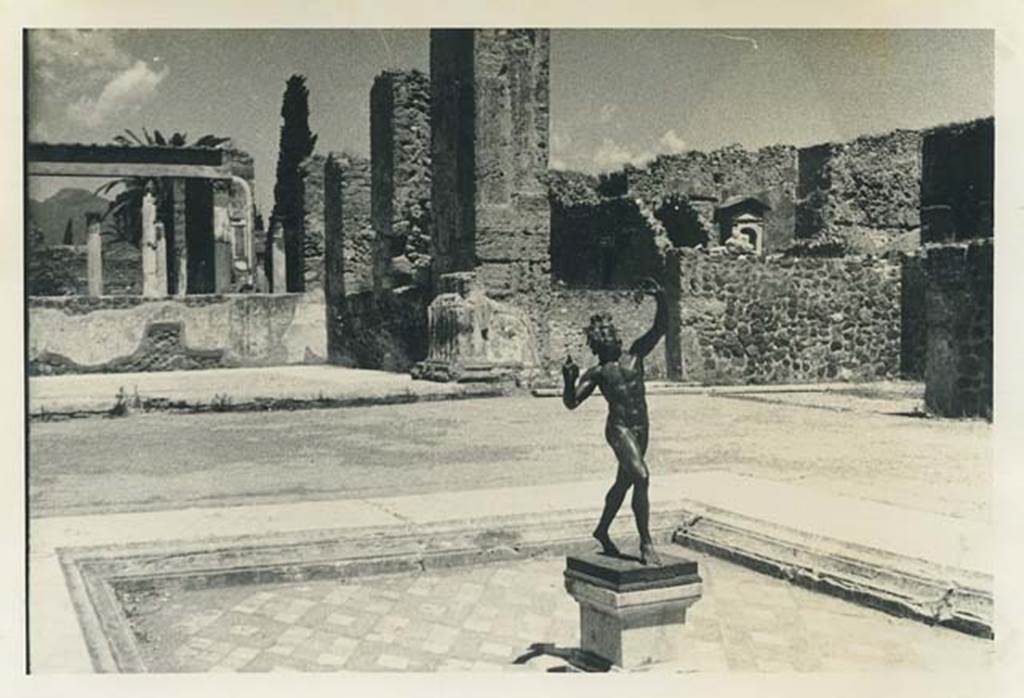
VI.12.2 Pompeii. 4th October 1937. Looking north-east across atrium. Photo courtesy of Rick Bauer.
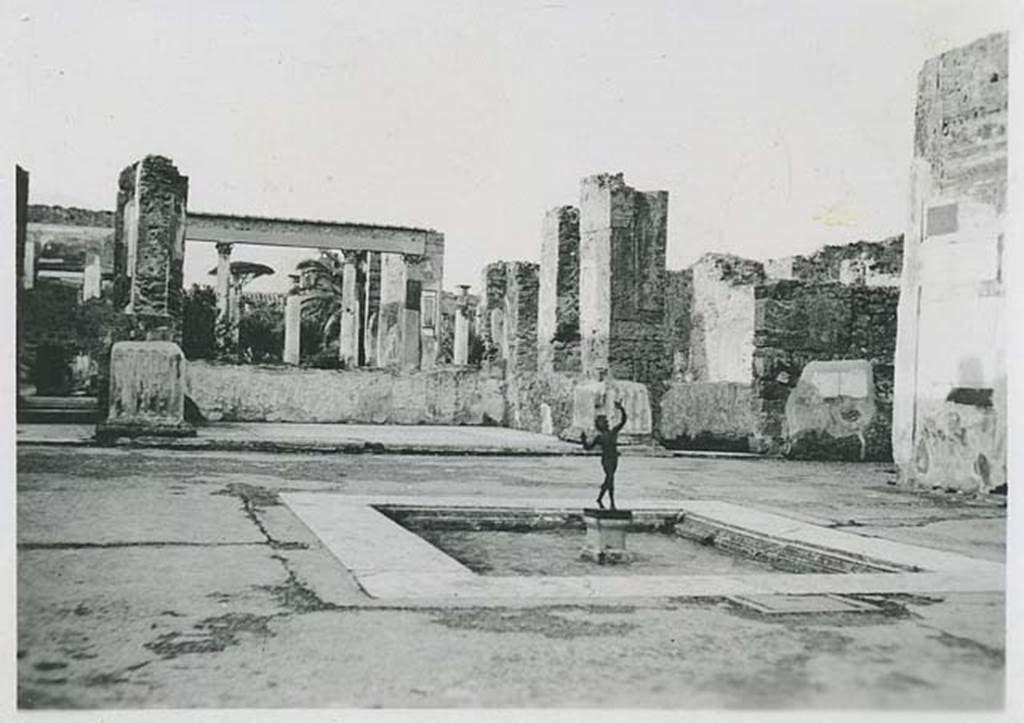
VI.12.2 Pompeii. May 1932. Atrium, looking north-east. Photo courtesy of Rick Bauer.
The east ala 30 can be seen on the right of the photo, together with a painted wall with doorway to room 11, leading towards atrium of VI.12.5.
This wall is no longer there, probably because of the 1943 bombing.
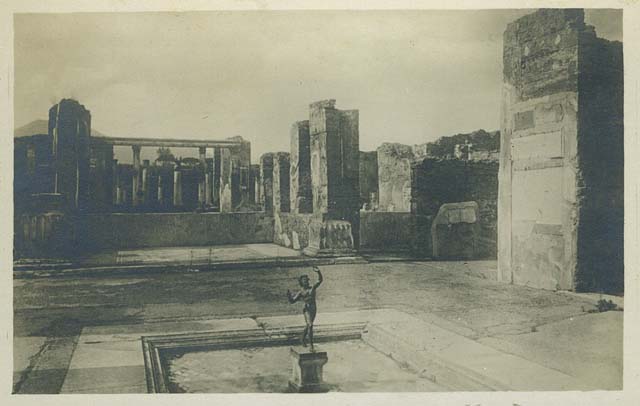
VI.12.2 Pompeii. Giorgio
Sommer Cabinet Card number 5. Looking north along east side of atrium. Photo
courtesy of Rick Bauer.
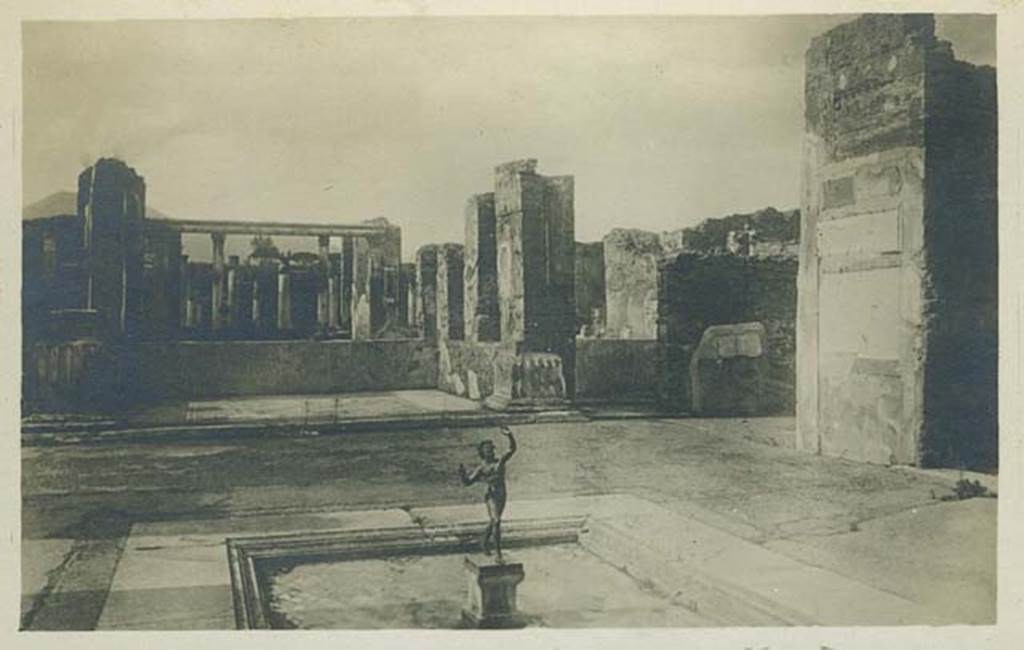
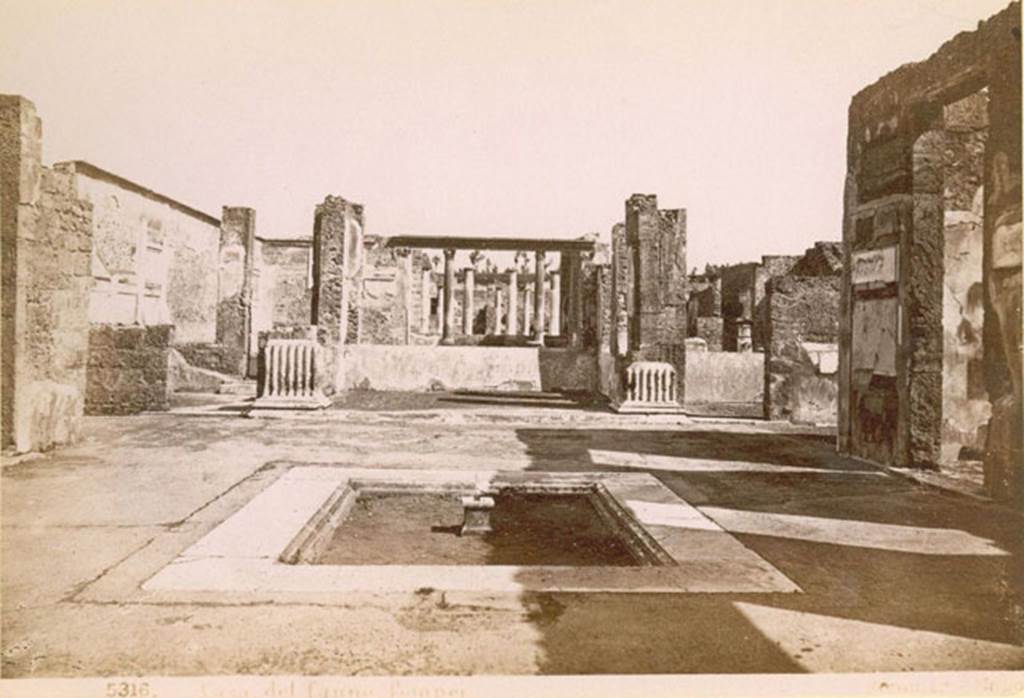
VI.12.2 Pompeii. Photo of 1880s by G. Sommer, number 5316. Looking north across impluvium in atrium, towards tablinum.
The west and east ala can be seen, on either side of the north end of the atrium. Photo courtesy of Rick Bauer.
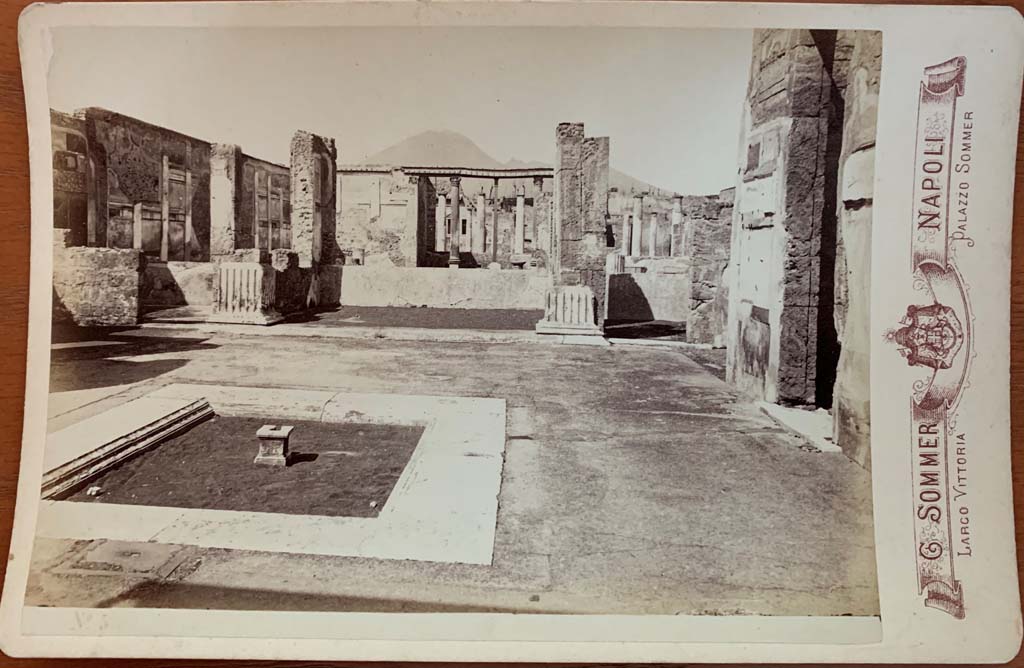
VI.12.2 Pompeii, August 1976.
Looking north from impluvium in atrium, through tablinum across
middle/first peristyle towards exedra and rear/second peristyle.
Photo courtesy of Rick Bauer, from Dr George Fay’s slides
collection.
VI.12.2 Pompeii. 1968. Looking north across atrium towards tablinum. Photo by Stanley A. Jashemski.
Source: The Wilhelmina and Stanley A. Jashemski archive in the University of Maryland Library, Special Collections (See collection page) and made available under the Creative Commons Attribution-Non-Commercial License v.4. See Licence and use details.
J68f1251

VI.12.2 Pompeii. 1964. Looking north across atrium towards tablinum. Photo by Stanley A. Jashemski.
Source: The Wilhelmina and Stanley A. Jashemski archive in the University of Maryland Library, Special Collections (See collection page) and made available under the Creative Commons Attribution-Non-Commercial License v.4. See Licence and use details.
J64f1081
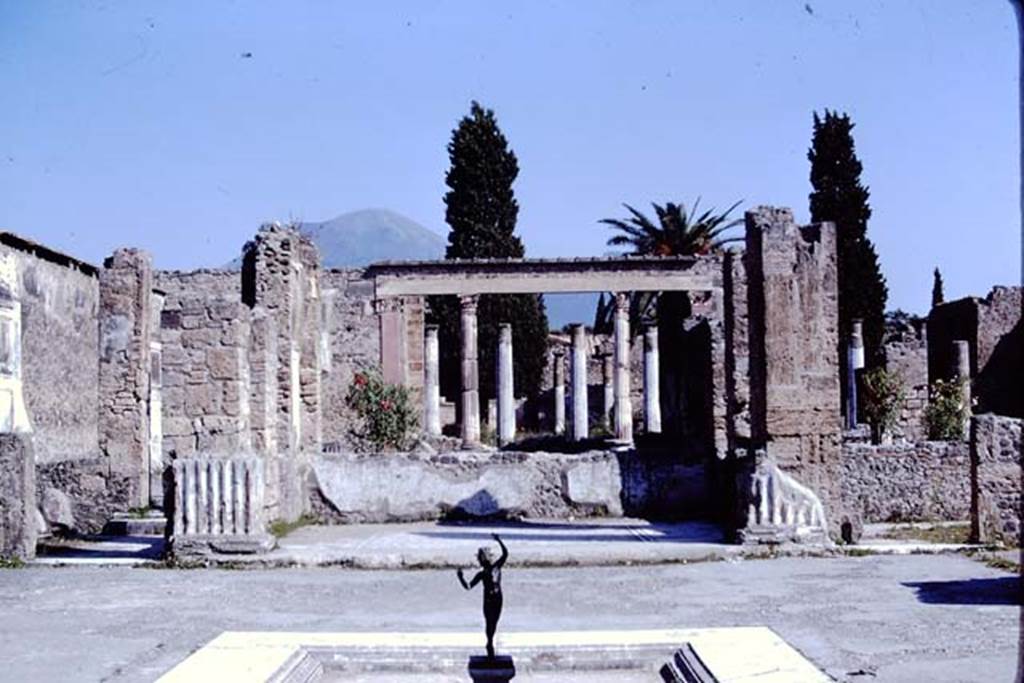
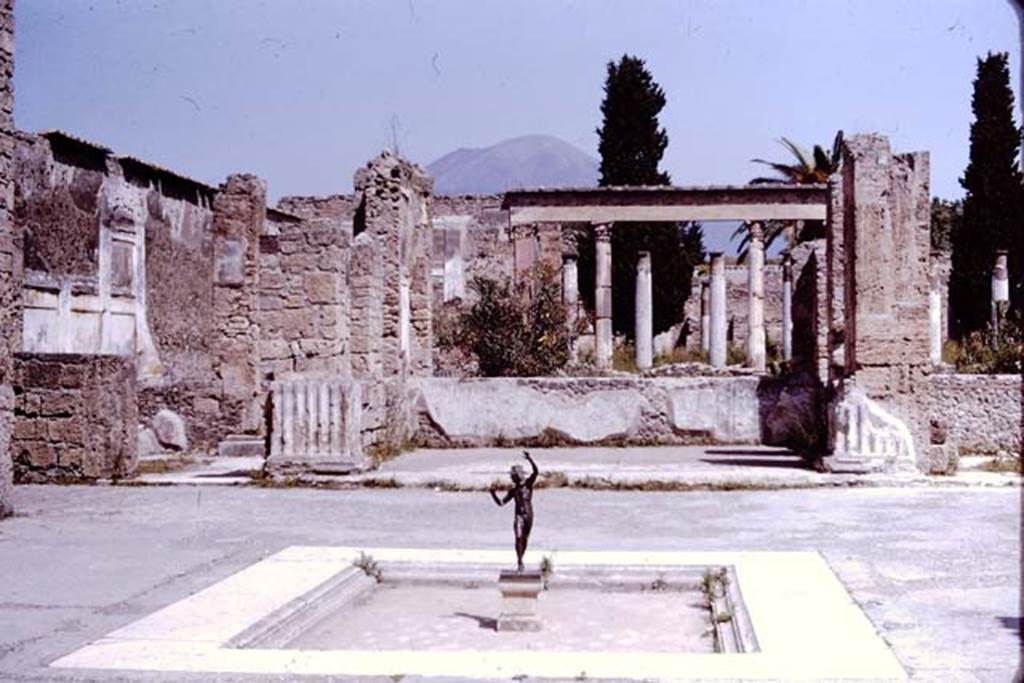
VI.12.2 Pompeii. 1958. Looking north towards tablinum, from atrium. Photo courtesy of Rick Bauer.
Part 3 Part 4
Part 5 Part 6 Part 7
Part 8 Part 9 Part 10
Part 11 Part 12 Part 1
Plan