VI.2.4 Pompeii. Casa di Sallustio or House of Sallust or Domus A. Cossius Libanus.
Excavated 1805 to 1809, 1969 to 1971, 2005 to 2007 and 2010.
Bombed 1943. Restored 1970.
Part 1 Part
2 Part 3 Part 4 Part 5 Part 6 Part 7 Part 8 Part 9 Plan
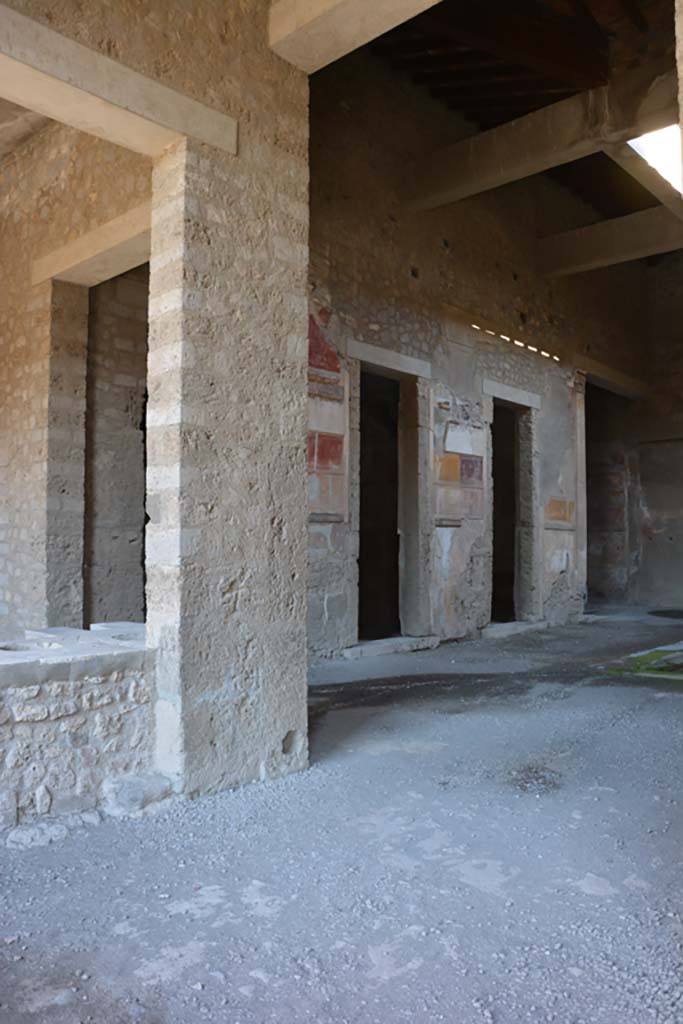
VI.2.4 Pompeii. December 2017. Looking east along north side of
atrium.
Foto Annette Haug, ERC
Grant 681269 DÉCOR.
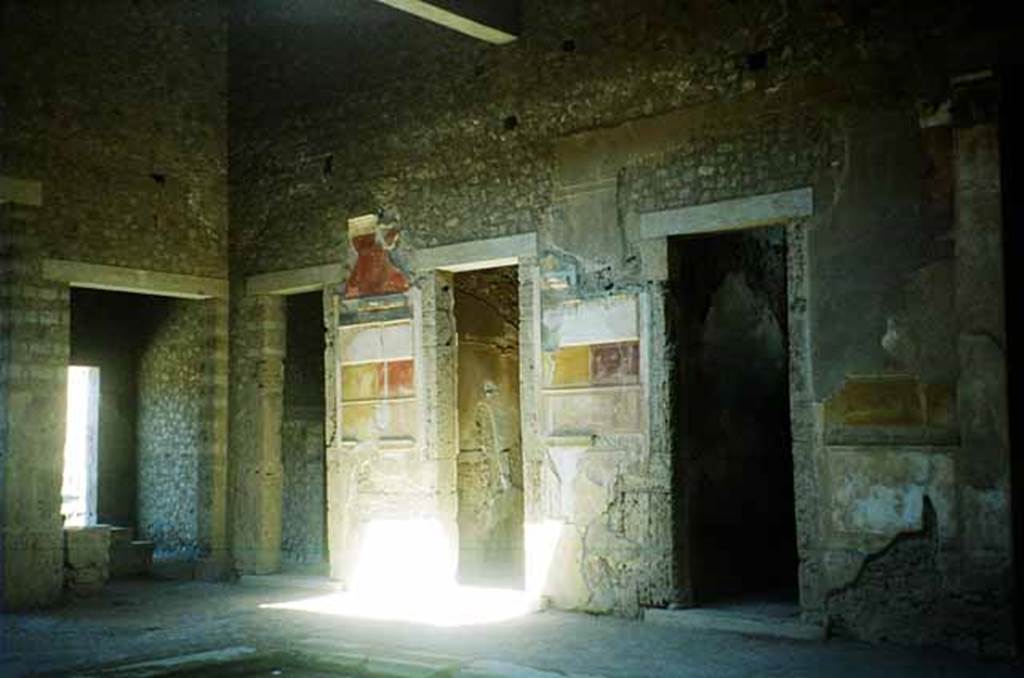
VI.2.4 Pompeii. June 2010. North side of atrium, looking west. Photo courtesy of Rick Bauer.
On the left is the entrance to VI.2.5, then the doorway leading to the anteroom of the winter triclinium, see below.
In the centre and on the right, are two doorways to cubicula.
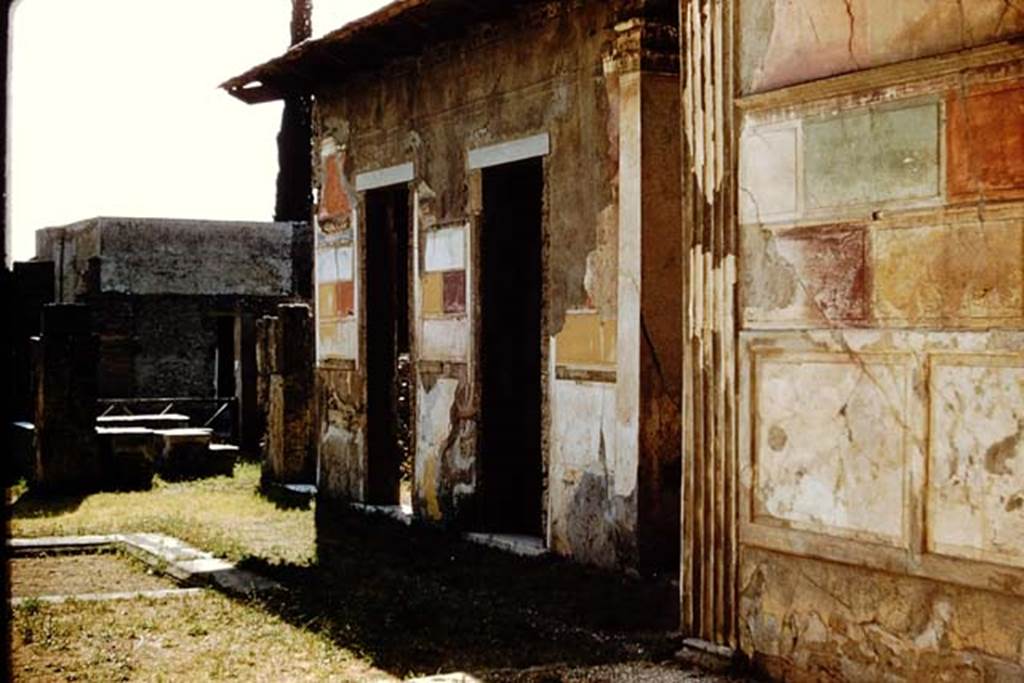
VI.2.4 Pompeii. 1959. North side of atrium, looking west from tablinum. Photo by Stanley A. Jashemski.
Source: The Wilhelmina and Stanley A. Jashemski archive in the University of Maryland Library, Special Collections (See collection page) and made available under the Creative Commons Attribution-Non-Commercial License v.4. See Licence and use details.
J59f0573
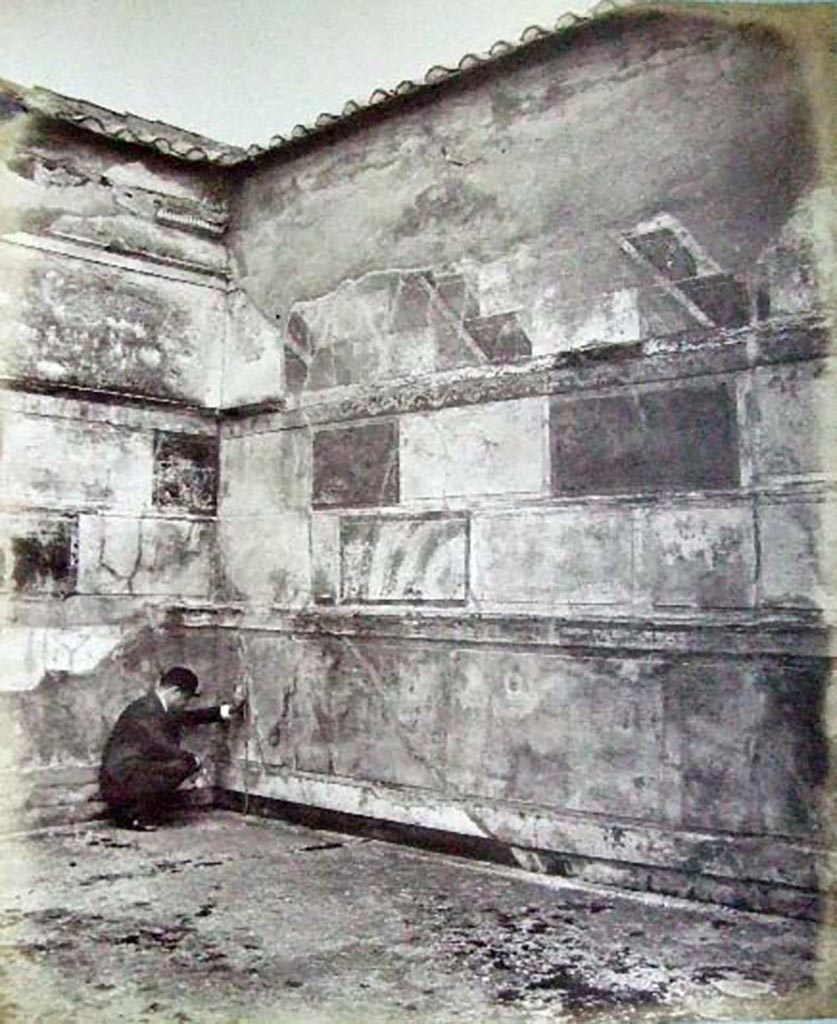
VI.2.4 Pompeii. Old undated photograph of 1870s. Winter Triclinium, room in north-west corner of atrium.
Courtesy of Society of Antiquaries. Fox Collection.
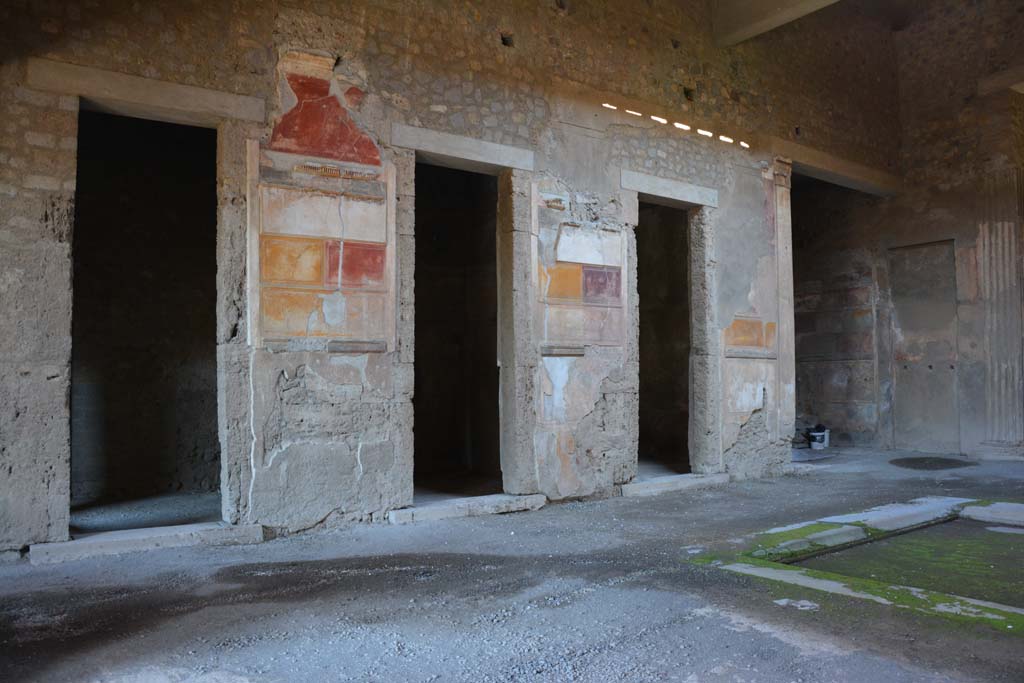
VI.2.4 Pompeii, December 2017. Looking towards rooms on north side
of atrium.
The doorway on the left leads to the anteroom of the winter triclinium. Next to it are two cubicula, and then the north ala.
Foto Annette Haug, ERC
Grant 681269 DÉCOR.
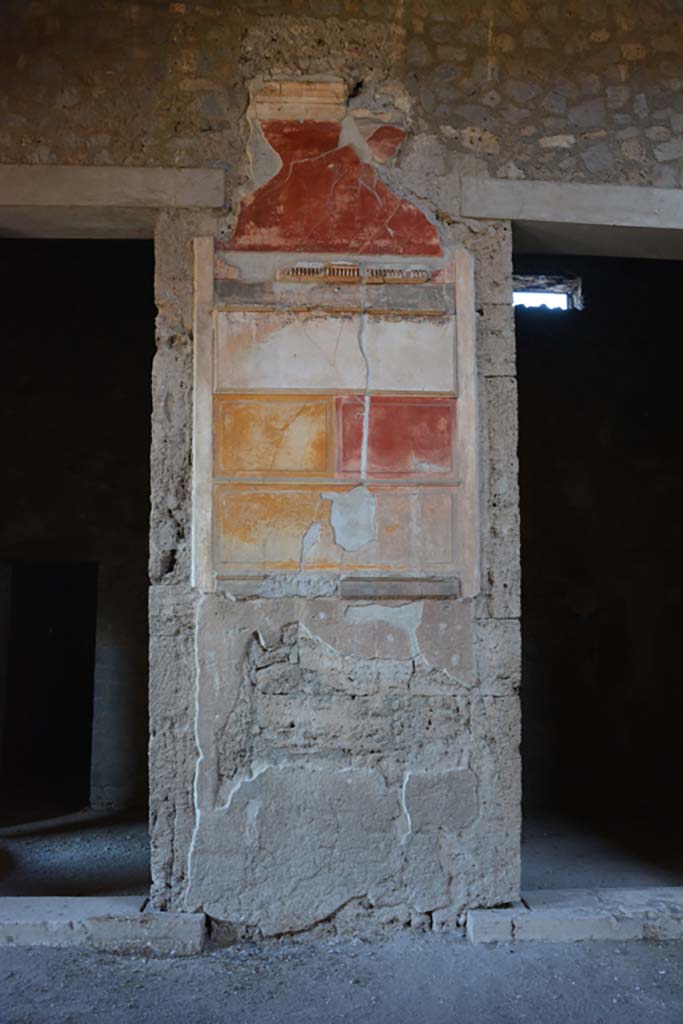
VI.2.4 Pompeii, December 2017.
Painted
wall decoration on north side of atrium, between doorways to the
anteroom of the winter triclinium, and a cubiculum.
Foto Annette Haug, ERC Grant 681269 DÉCOR.
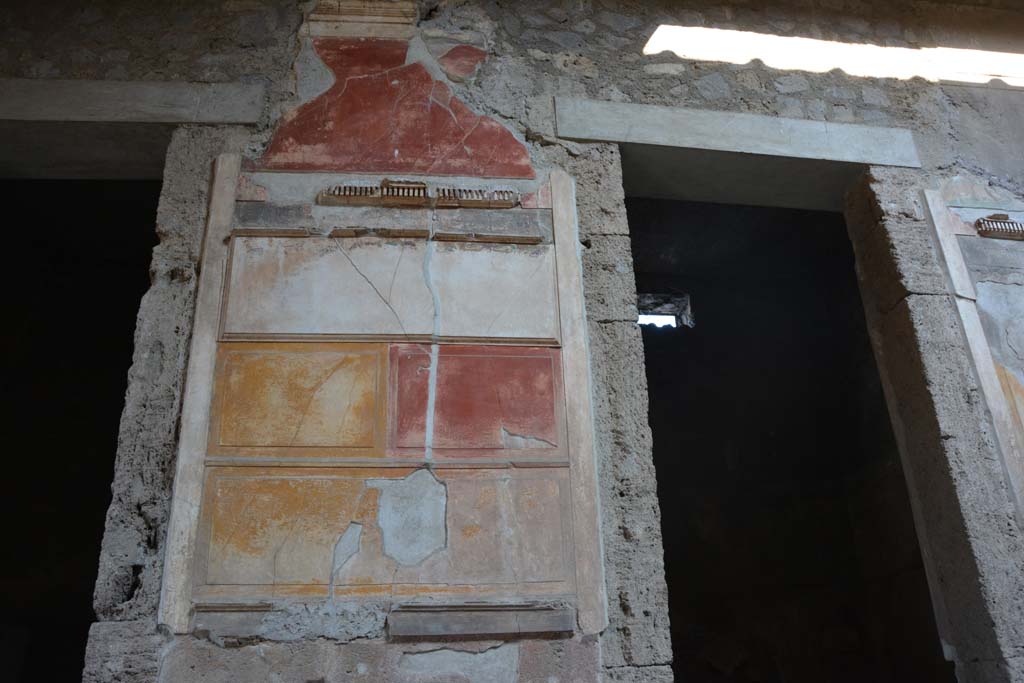
VI.2.4 Pompeii. March 2019.
Detail of painted wall decoration on north side of atrium,
between doorways to the anteroom of the winter triclinium, and a cubiculum.
Foto Annette Haug, ERC
Grant 681269 DÉCOR.
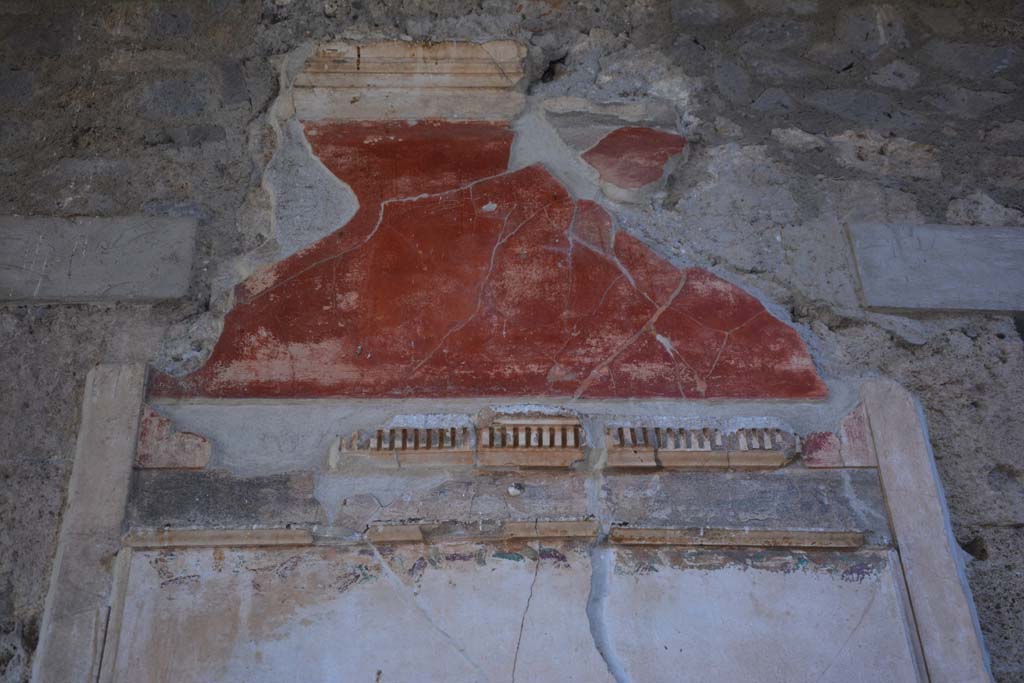
VI.2.4 Pompeii, December 2017. Detail of painted wall
decoration on upper north side of atrium.
Foto Annette Haug, ERC
Grant 681269 DÉCOR.
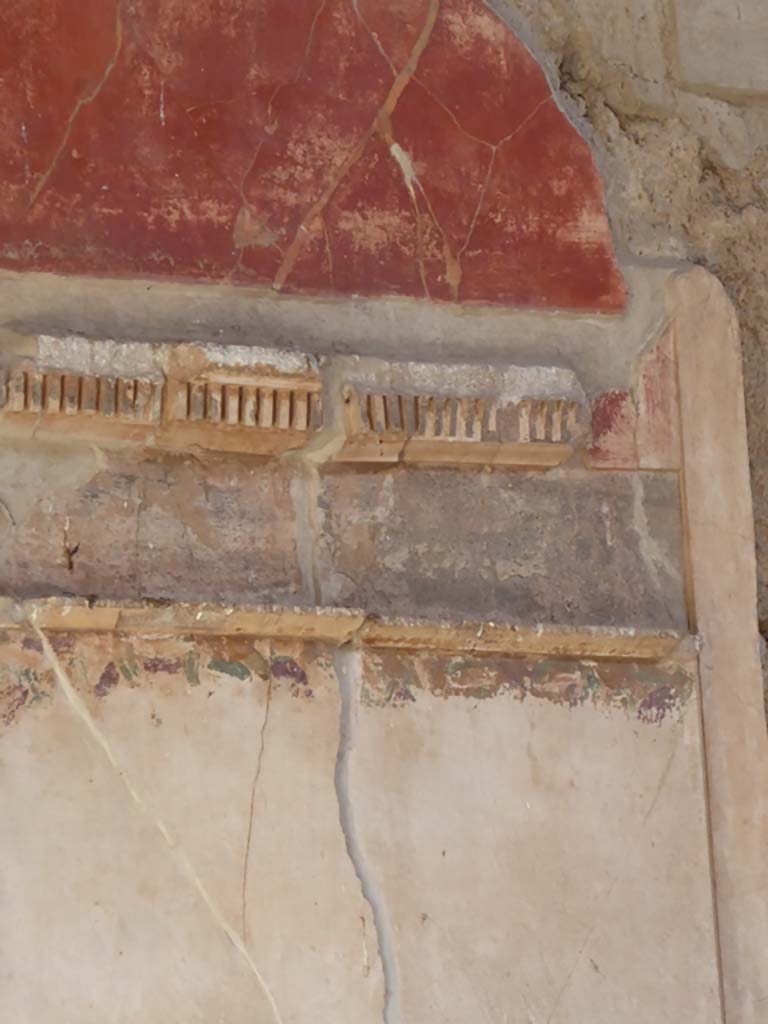
VI.2.4 Pompeii, January 2017. Detail of painted wall
decoration on upper north side of atrium.
Foto Annette Haug, ERC
Grant 681269 DÉCOR.
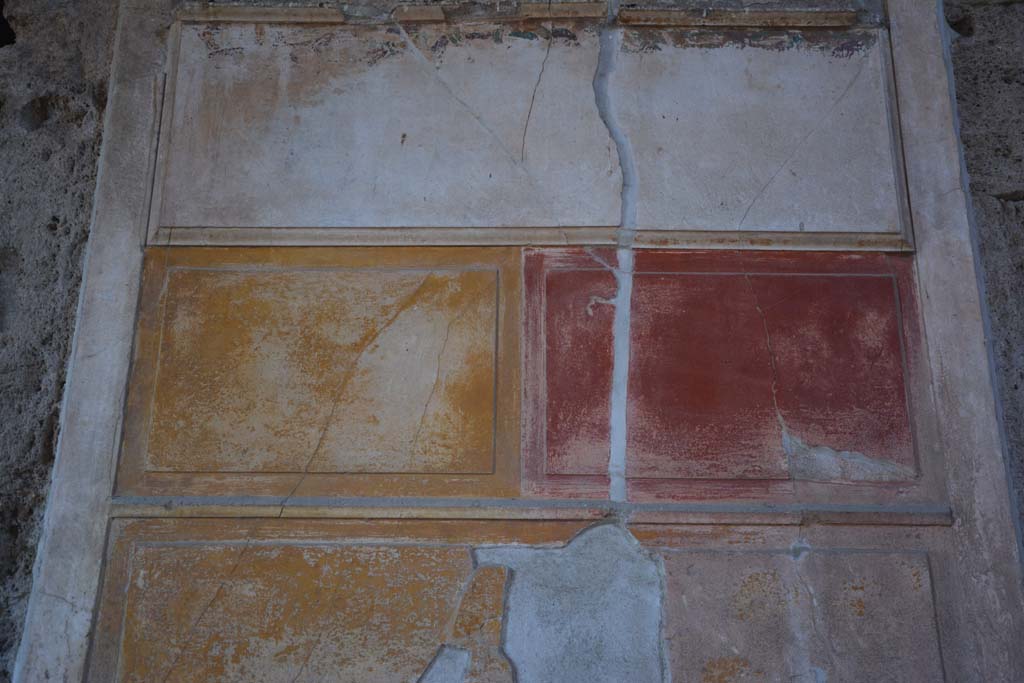
VI.2.4 Pompeii, December 2017.
Detail of painted wall decoration on north side of atrium.
Foto Annette Haug, ERC Grant 681269 DÉCOR.

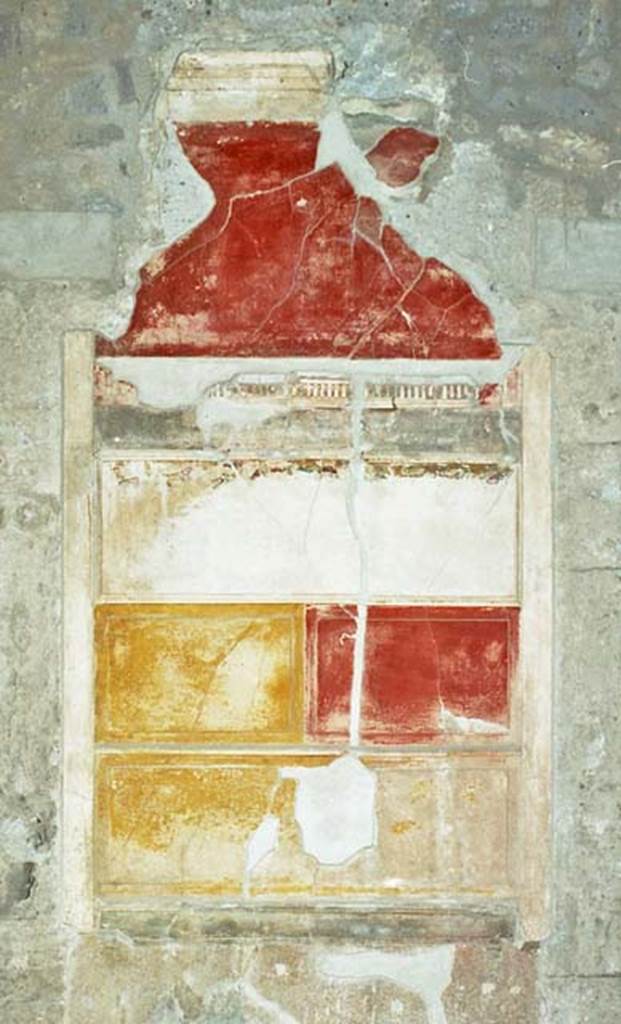
VI.2.4 Pompeii. October 2001.
Detail of wall decoration on north side of atrium, between doorways to the anteroom of the winter triclinium, and a cubiculum.
Photo courtesy of Peter Woods.
VI.2.4 Pompeii, January 2017. Doorway
to first cubiculum on north side of atrium.
Foto Annette Haug, ERC Grant 681269 DÉCOR.
![VI.2.4 Pompeii. c.1819 sketch by W. Gell showing gutter-tiles decoration, on left.
The doorway to first cubiculum on north side of atrium, on right, also shows details of the painted east wall inside.
See Gell W & Gandy, J.P: Pompeii published 1819 [Dessins publiés dans l'ouvrage de Sir William Gell et John P. Gandy, Pompeiana: the topography, edifices and ornaments of Pompei, 1817-1819], pl. 13 verso.
See book in Bibliothèque de l'Institut National d'Histoire de l'Art [France], collections Jacques Doucet Gell Dessins 1817-1819
Use Etalab Open Licence ou Etalab Licence Ouverte](6%2002%2004%20p2_files/image016.jpg)
VI.2.4 Pompeii. c.1819 sketch by W. Gell showing gutter-tiles decoration, on left.
The doorway to first cubiculum on north side of atrium, on right, also shows details of the painted east wall inside.
See Gell W & Gandy, J.P: Pompeii published 1819 [Dessins publiés dans l'ouvrage de Sir William Gell et John P. Gandy, Pompeiana: the topography, edifices and ornaments of Pompei, 1817-1819], pl. 13 verso.
See book in Bibliothèque de l'Institut National
d'Histoire de l'Art [France], collections Jacques Doucet Gell
Dessins 1817-1819
Use Etalab Open Licence ou
Etalab Licence Ouverte
![VI.2.4 Pompeii. c.1819 sketch by W. Gell showing detail from the north wall of the first cubiculum on north side of atrium.
See Gell W & Gandy, J.P: Pompeii published 1819 [Dessins publiés dans l'ouvrage de Sir William Gell et John P. Gandy, Pompeiana: the topography, edifices and ornaments of Pompei, 1817-1819], pl. 55.
See book in Bibliothèque de l'Institut National d'Histoire de l'Art [France], collections Jacques Doucet Gell Dessins 1817-1819
Use Etalab Open Licence ou Etalab Licence Ouverte
See Laidlaw, A., and Stella M. S., 2014. The House of Sallust in Pompeii (VI.2.4): JRA 98. Portsmouth Rhode Island. (p.76, cubiculum 14)](6%2002%2004%20p2_files/image017.jpg)
VI.2.4 Pompeii.
c.1819 sketch by W. Gell showing detail from the north wall of the first
cubiculum on north side of atrium.
See Gell W & Gandy, J.P: Pompeii published 1819 [Dessins publiés dans l'ouvrage de Sir William Gell et John P. Gandy, Pompeiana: the topography, edifices and ornaments of Pompei, 1817-1819], pl. 55.
See book in Bibliothèque de l'Institut National
d'Histoire de l'Art [France], collections Jacques Doucet Gell
Dessins 1817-1819
Use Etalab Open Licence ou
Etalab Licence Ouverte
See Laidlaw, A., and Stella M. S., 2014. The House of Sallust in Pompeii (VI.2.4): JRA 98. Portsmouth Rhode Island. (p.76, cubiculum 14)
VI.2.4
Pompeii. March 2019.
Looking
towards north side of impluvium in atrium with doorway to first cubiculum, on
left of painted pilaster, and to second cubiculum, on right.
Foto Annette Haug, ERC Grant 681269 DÉCOR.
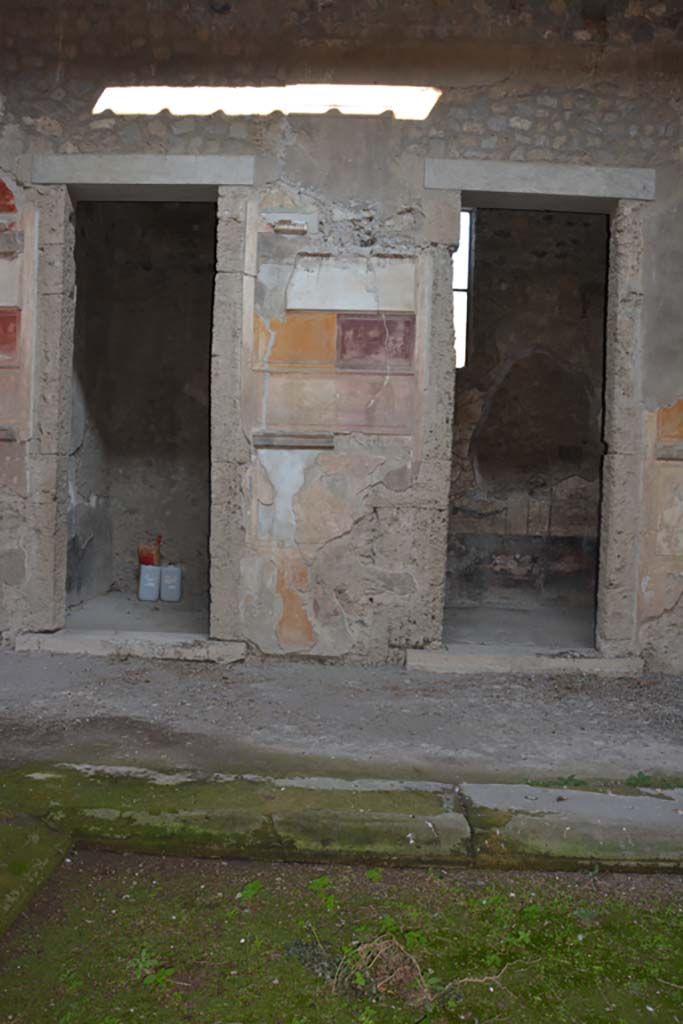
VI.2.4
Pompeii, December 2017.
Foto Annette Haug, ERC Grant 681269 DÉCOR.
VI.2.4 Pompeii. C.1850 painting by Carl Werner. “Die Casa di Sallustio und umliegende Ruinen in Pompeji”.
Note the lararium
painting to the left of the tablinum.
Now in the Städel Museum, Frankfurt am Main, inventory number 13749.
![VI.2.4 Pompeii. c.1819 sketch by W. Gell. Looking east across atrium towards tablinum and peristyle.
The doorway to the second cubiculum on north side of atrium, can be seen on the left.
See Gell W & Gandy, J.P: Pompeii published 1819 [Dessins publiés dans l'ouvrage de Sir William Gell et John P. Gandy, Pompeiana: the topography, edifices and ornaments of Pompei, 1817-1819], pl. 18.
See book in Bibliothèque de l'Institut National d'Histoire de l'Art [France], collections Jacques Doucet Gell Dessins 1817-1819
Use Etalab Open Licence ou Etalab Licence Ouverte](6%2002%2004%20p2_files/image021.jpg)
VI.2.4 Pompeii. c.1819 sketch by W. Gell. Looking east across atrium towards tablinum and peristyle.
The doorway to the second cubiculum on north side of atrium, can be seen on the left.
See Gell W & Gandy, J.P: Pompeii published 1819 [Dessins publiés dans l'ouvrage de Sir William Gell et John P. Gandy, Pompeiana: the topography, edifices and ornaments of Pompei, 1817-1819], pl. 18.
See book in Bibliothèque de l'Institut National
d'Histoire de l'Art [France], collections Jacques Doucet Gell
Dessins 1817-1819
Use Etalab Open Licence ou
Etalab Licence Ouverte
![VI.2.4 Pompeii. c.1819 sketch by W. Gell.
Second cubiculum on north side of atrium, detail of the painted east wall inside of doorway.
See Gell W & Gandy, J.P: Pompeii published 1819 [Dessins publiés dans l'ouvrage de Sir William Gell et John P. Gandy, Pompeiana: the topography, edifices and ornaments of Pompei, 1817-1819], pl. 14 verso.
See book in Bibliothèque de l'Institut National d'Histoire de l'Art [France], collections Jacques Doucet Gell Dessins 1817-1819
Use Etalab Open Licence ou Etalab Licence Ouverte](6%2002%2004%20p2_files/image022.jpg)
VI.2.4 Pompeii. c.1819 sketch by W. Gell.
Second cubiculum on north side of atrium, detail of the painted east wall inside of doorway.
See Gell W & Gandy, J.P: Pompeii published 1819 [Dessins publiés dans l'ouvrage de Sir William Gell et John P. Gandy, Pompeiana: the topography, edifices and ornaments of Pompei, 1817-1819], pl. 14 verso.
See
book in Bibliothèque de l'Institut National d'Histoire de l'Art [France],
collections Jacques Doucet Gell Dessins 1817-1819
Use
Etalab Open Licence ou Etalab Licence Ouverte
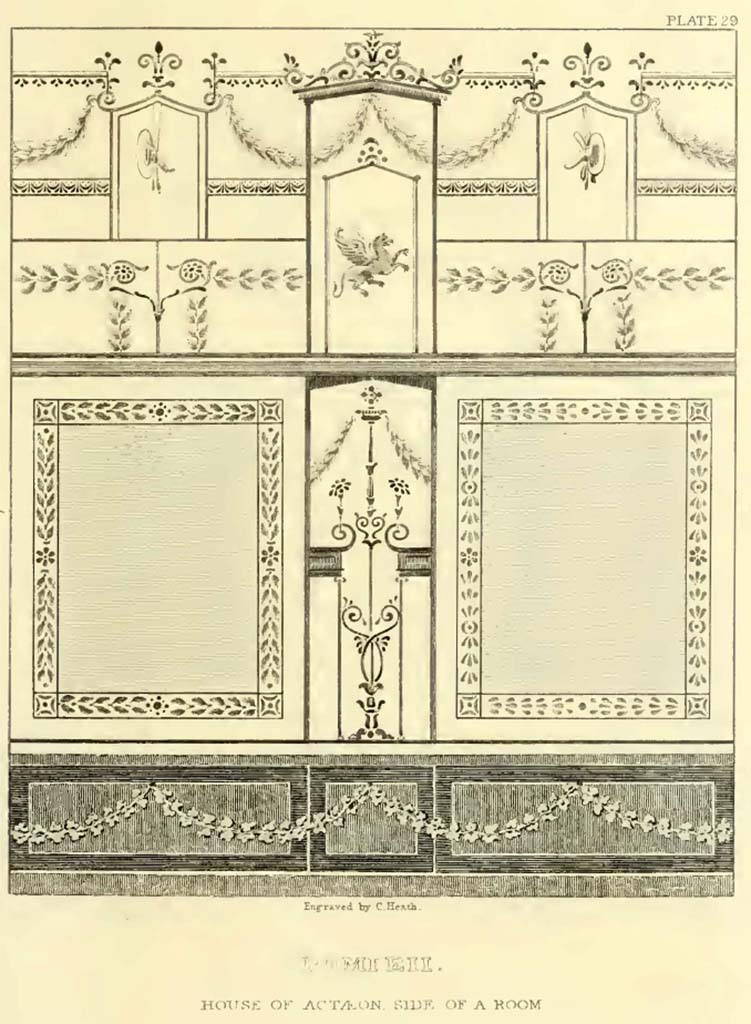
V.2.4 Pompeii. Drawing by William Gell, described as “Side of an apartment in the foregoing house”.
See Gell, W., and Gandy J. P., 1819. Pompeiana. London: Rodwell and Martin, (p.176, plate XXIX).
See Laidlaw, A., and Stella M. S., 2014. The House of Sallust in Pompeii (VI.2.4): JRA 98. Portsmouth Rhode Island. (p.77, fig.2.33). (Cubiculum 14a, east wall of the Fourth Style decoration).
See Gell W. and Gandy J., 1872. Pompeiana. London: Chatto and Windus, (p.95, plate 30).
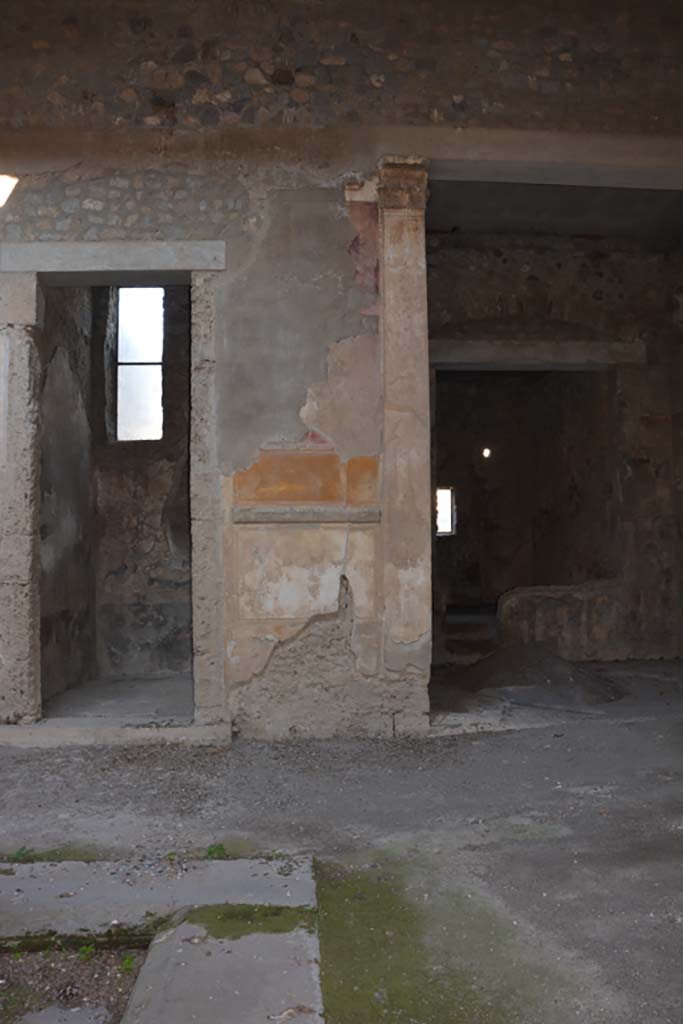
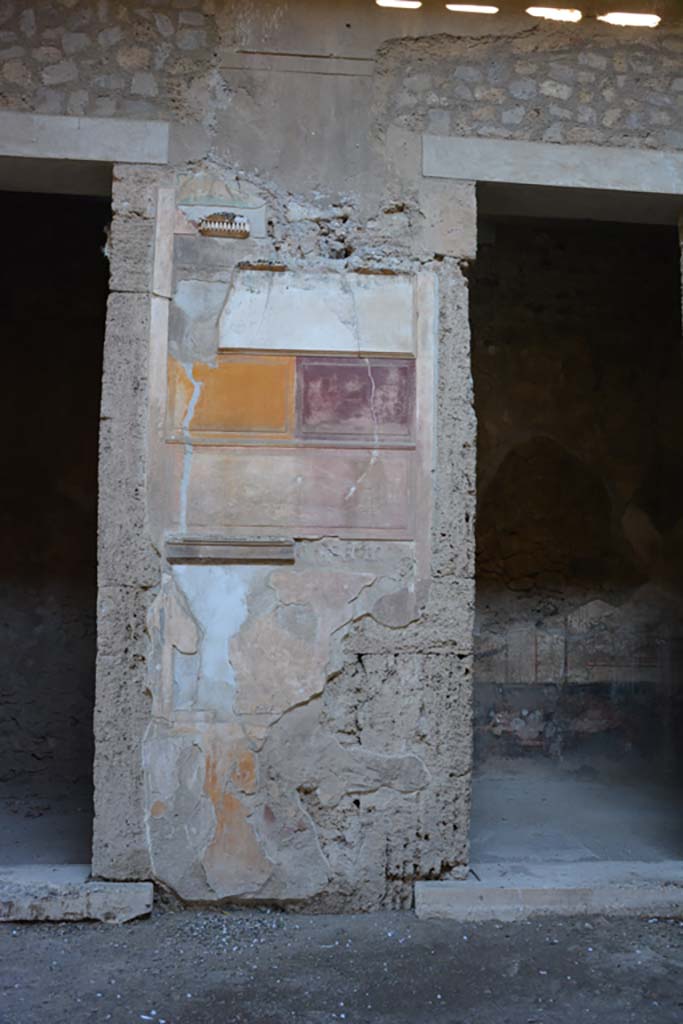
Looking
north across impluvium towards pilaster between second cubiculum and north ala
with capital at top, on right.
Foto Annette Haug, ERC Grant 681269 DÉCOR.
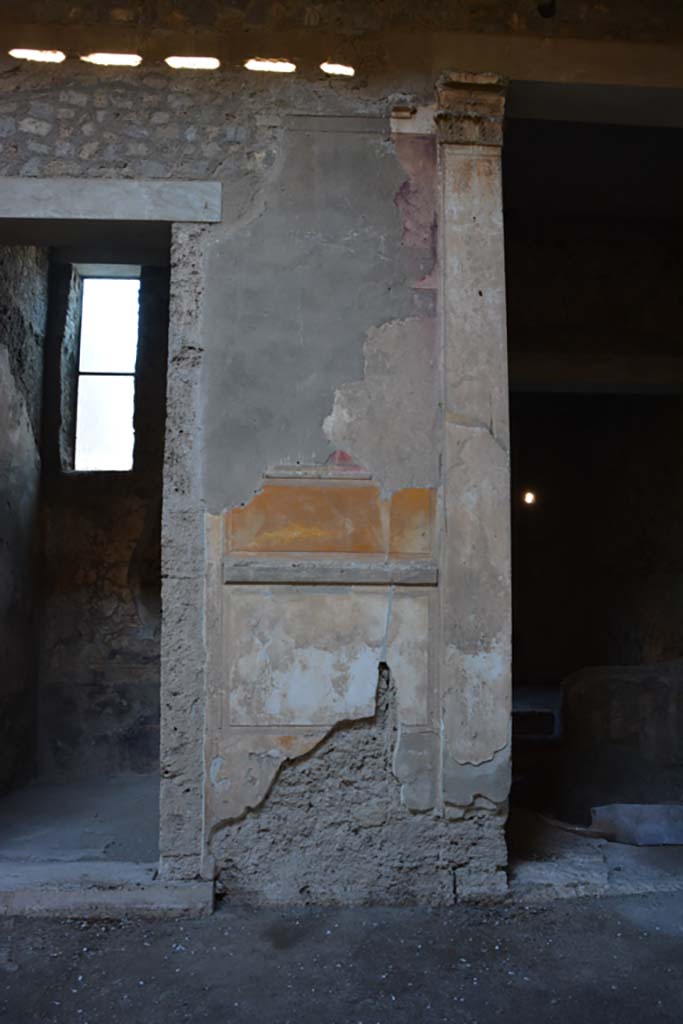
VI.2.4
Pompeii, December 2017.
Painted
wall decoration on pilaster between doorway to the second cubiculum, on
left, and north ala, on north side of atrium.
Foto Annette Haug, ERC Grant 681269 DÉCOR.
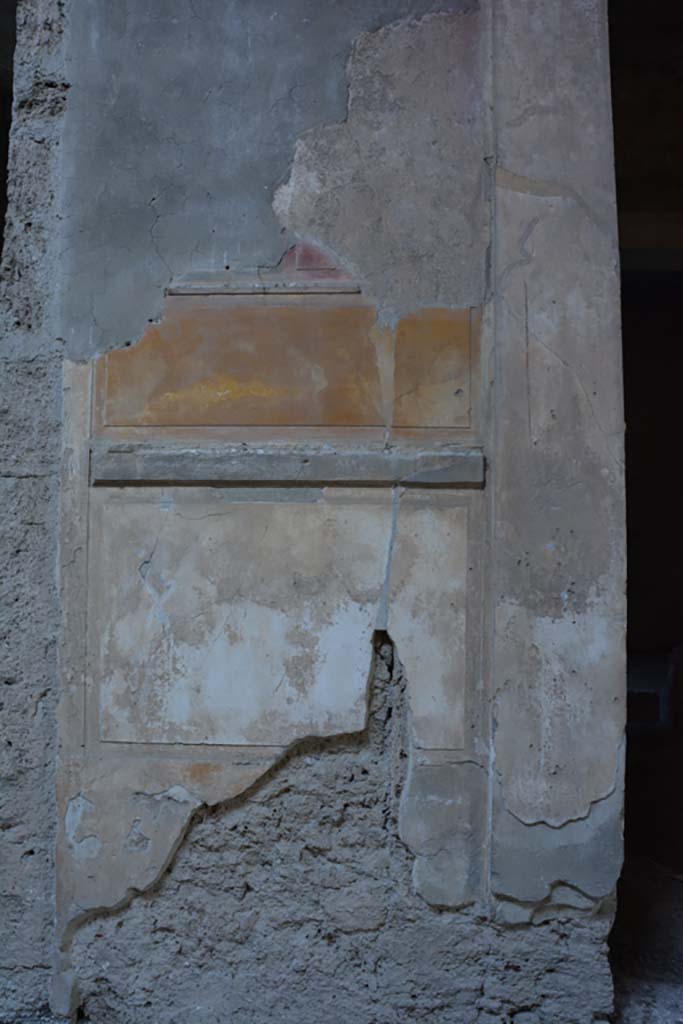
VI.2.4 Pompeii. March 2019.
Detail of painted decoration on pilaster
between second cubiculum, and north ala, on right.
Foto Annette
Haug, ERC Grant 681269 DÉCOR.
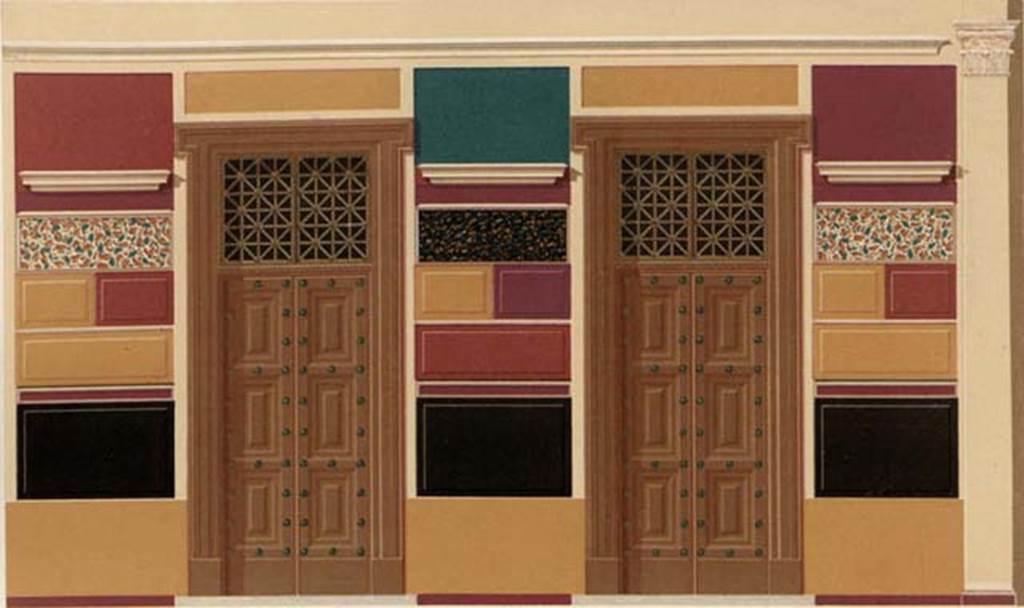
VI.2.4 Pompeii. 1882. Reconstruction painting by A. Sikkard of walls and doorways in atrium.
See Mau, A. 1882. Geschichte der Decorativen Wandmalerei in Pompeji. Berlin: Reimer. (p. 20, Taf II).
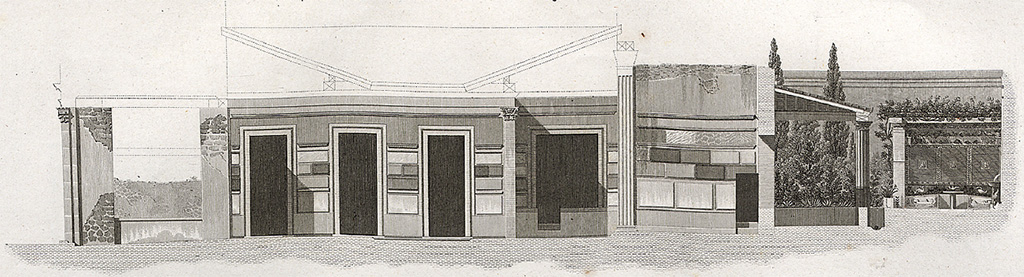
VI.2.4 Pompeii. 1824, Cross section drawing of house, looking north.
See Mazois, F., 1824. Les Ruines de Pompei : Second Partie. Paris: Firmin Didot. (Pl. 36,1).
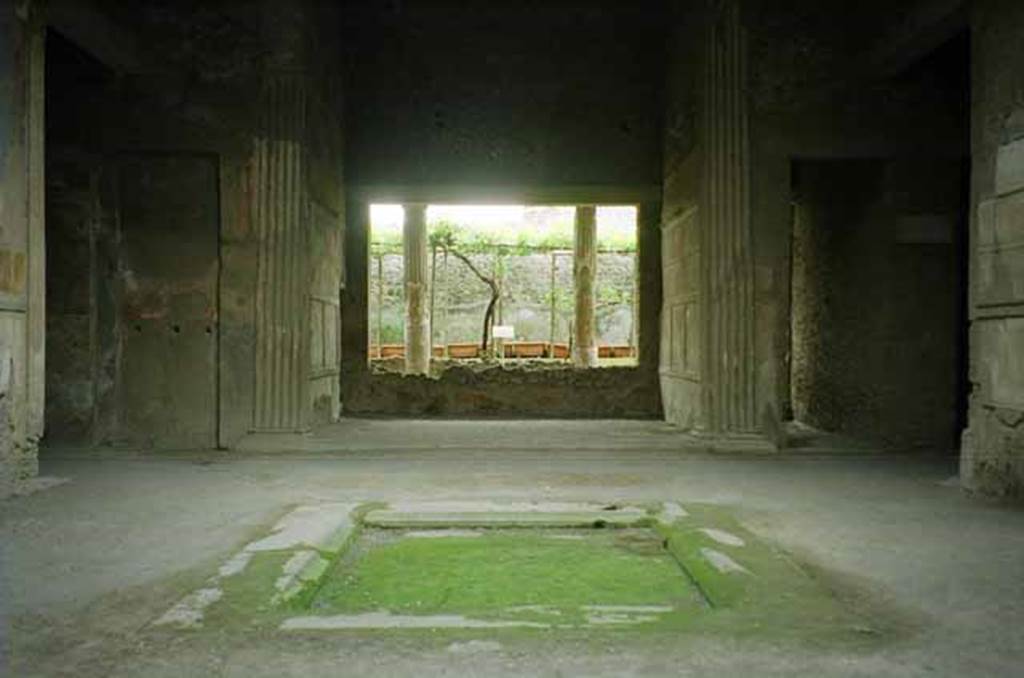
VI.2.4 Pompeii. May 2010. Looking east across atrium towards tablinum.
On the left can be seen the north ala, on the east wall of which are the remains of a lararium painting.
Below the site of the painting can be seen holes in the wall. Photo courtesy of Rick Bauer.
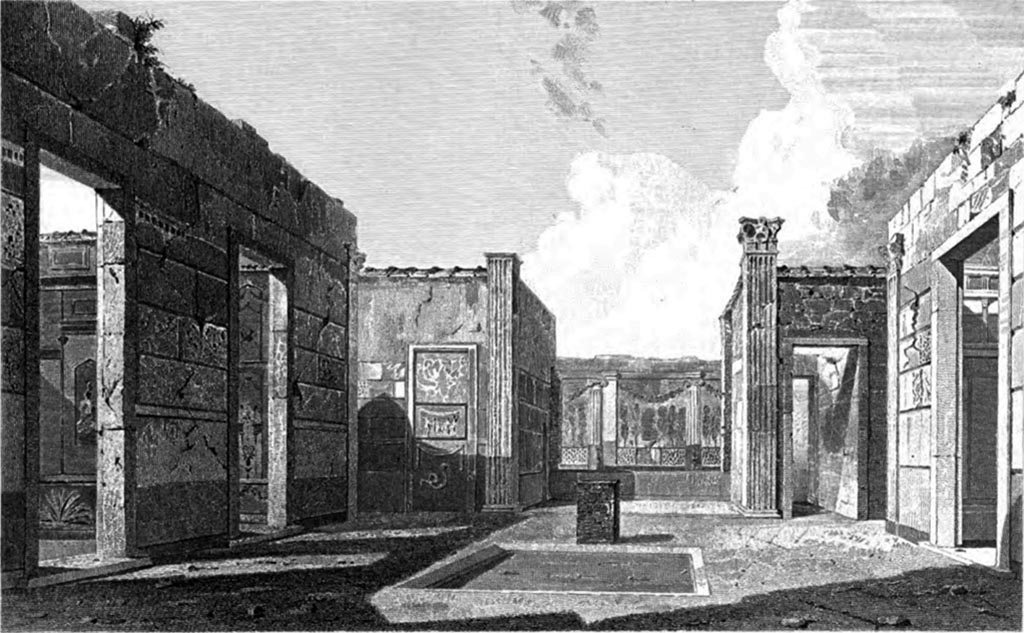
VI.2.4 Pompeii. 1852. Looking east across atrium showing east wall of ala (left of centre) and lararium painting with single serpent below.
See Gell, W. and Gandy, J., 1852. Pompeiana: Third Edition. London: Bohn. (p. 124, pl. 28).
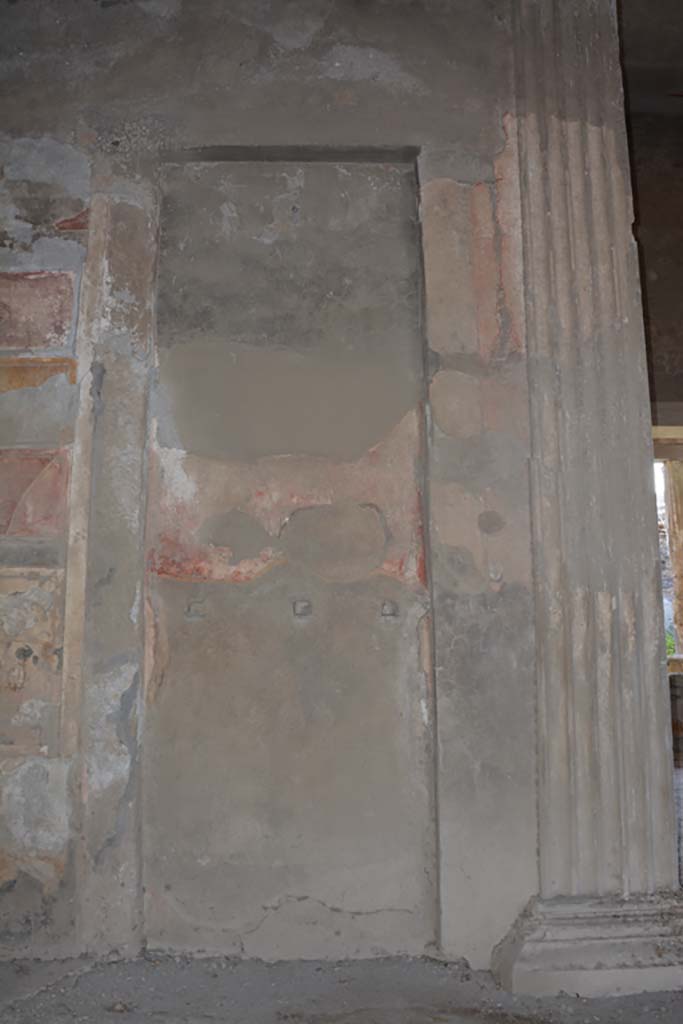
VI.2.4 Pompeii. March 2019. East
wall of ala/atrium with site of lararium painting.
Foto Annette Haug, ERC Grant 681269 DÉCOR.
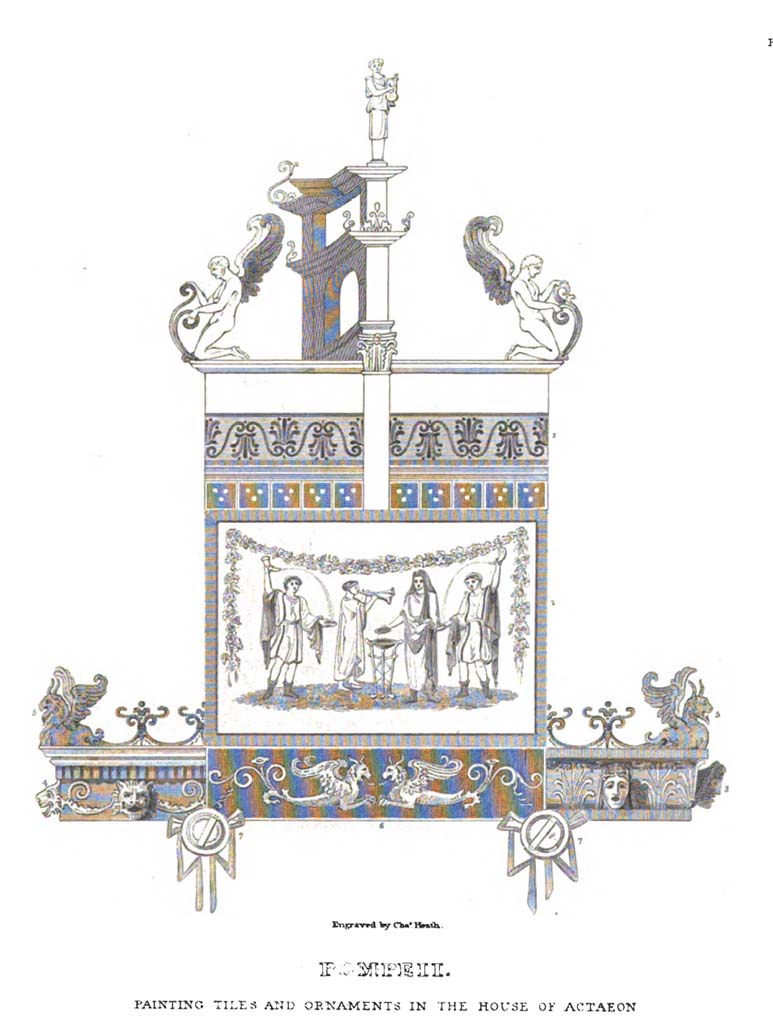
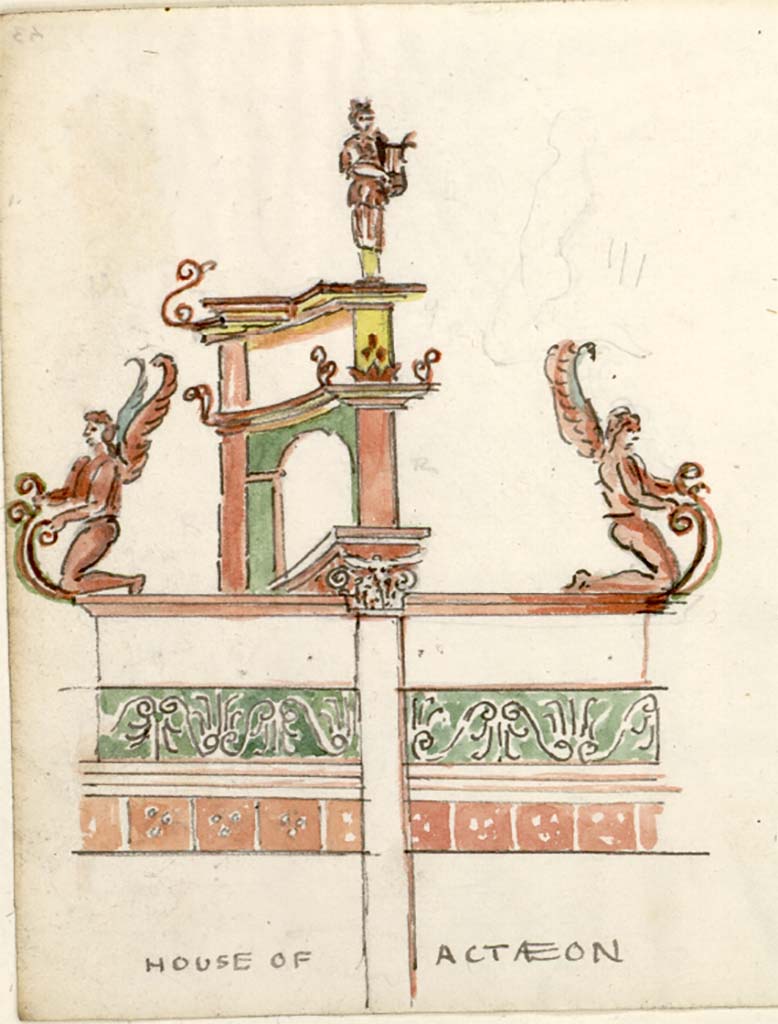
VI.2.4 Pompeii. 1852. Drawing by Gell of "Painting Tiles and Ornaments in the House of Actaeon"
See Gell, W. and Gandy, J., 1852. Pompeiana: Third Edition. London: Bohn, p. 126, pl. 31.
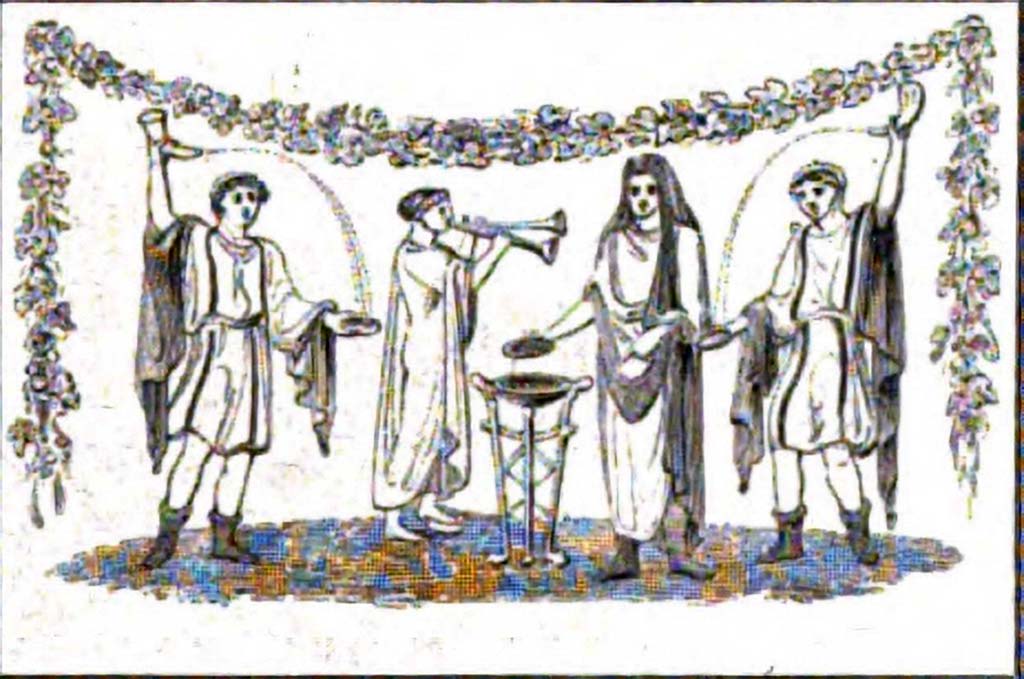
VI.2.4 Pompeii. 1852 painting, by Gell showing upper part of lararium.
According to Boyce, on the surface of a walled-up door which formerly led from the north ala into the triclinium, located on the north side of the tablinum, was a lararium painting upon a red background.
In the centre was a blazing tripod, to the right of which stood the Genius, holding a patera above the flame.
To the left of the tripod was the tibicen with his foot upon a scabellum (foot stool).
On each side stood a Lar in blue tunic and red pallium and holding rhyton and patera.
Across the top were garlands which hung down on either side.
On the lower part of the wall, was a single serpent.
Four holes in the wall below the painting indicate the position of a projecting ledge for offerings or the images of the gods.
See Boyce G. K., 1937. Corpus of the Lararia of Pompeii. Rome: MAAR 14. (p. 44, no. 139).
See Gell, W. and Gandy, J., 1852. Pompeiana: Third Edition. London: Bohn. (p. 126, pl. 31).
![VI.2.4 Pompeii. c.1819 sketch by W. Gell of lararium.
See Gell W & Gandy, J.P: Pompeii published 1819 [Dessins publiés dans l'ouvrage de Sir William Gell et John P. Gandy, Pompeiana: the topography, edifices and ornaments of Pompei, 1817-1819], pl. 5 verso.
See book in Bibliothèque de l'Institut National d'Histoire de l'Art [France], collections Jacques Doucet Gell Dessins 1817-1819
Use Etalab Open Licence ou Etalab Licence Ouverte](6%2002%2004%20p2_files/image036.jpg)
VI.2.4 Pompeii. c.1819 sketch by W. Gell of lararium.
See Gell W & Gandy, J.P: Pompeii published 1819 [Dessins publiés dans l'ouvrage de Sir William Gell et John P. Gandy, Pompeiana: the topography, edifices and ornaments of Pompei, 1817-1819], pl. 5 verso.
See book in
Bibliothèque de l'Institut National d'Histoire de l'Art [France], collections
Jacques Doucet Gell Dessins 1817-1819
Use Etalab Open Licence ou Etalab Licence
Ouverte
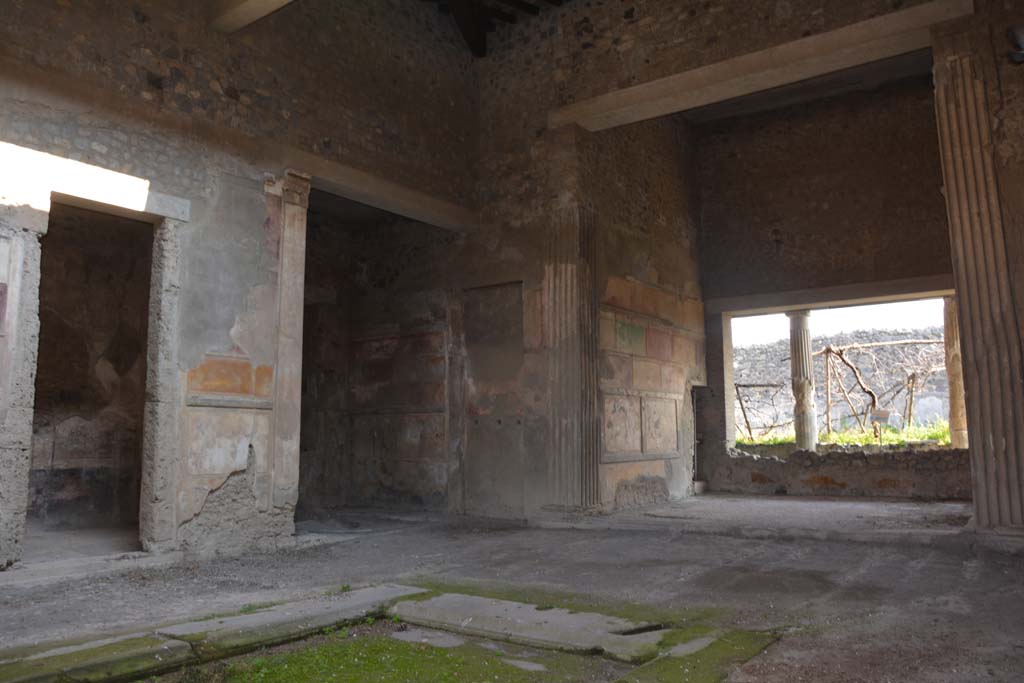
VI.2.4 Pompeii. March 2019.
Looking north-east across atrium towards the north ala and tablinum.
Foto Annette Haug, ERC Grant 681269 DÉCOR.
![VI.2.4 Pompeii. 1840. Looking north-east across atrium towards the north ala, lararium and tablinum as shown on model.
Model of the Casa di Sallustio, by A. Padiglione und G. Abbate, 1840 (Aschaffenburg Cat. 53).
See Kockel V., 1993. Das Haus des Sallust in Pompeji: Eine dreidimensionale archäologische Dokumentation aus dem 19. Jahrhundert. P. 345, AbbFarb 22.
According to Fröhlich, the red-ground painted wall surface is in a niche created by the obstruction of a door blocked in the 1st century BC., as there is Second Style decoration on its back in the room behind. In the middle of the upper pictorial zone, the sacrificing genius without a cornucopia is standing at a portable altar and opposite him is the tibicen, who has one foot on a scabellum [stool]. The scene is flanked by the two Lares. A garland can be seen at the top of the picture, the ends of which hang down at the sides. A similar garland was painted in the top of the lower zone of the picture, under which was depicted a snake crawling to the right.
See Fröhlich, T., 1991. Lararien und Fassadenbilder in den Vesuvstädten. Mainz: von Zabern, L57, p. 274, Abb. 3.](6%2002%2004%20p2_files/image038.jpg)
VI.2.4 Pompeii. 1840. Looking north-east across atrium towards the north ala, lararium and tablinum as shown on model.
Model of the Casa di Sallustio, by A.
Padiglione und G. Abbate, 1840 (Aschaffenburg Cat.
53).
See Kockel V., 1993. Das Haus des Sallust in Pompeji: Eine dreidimensionale archäologische Dokumentation aus dem 19. Jahrhundert. P. 345, AbbFarb 22.
According to Fröhlich, the red-ground painted wall surface is in a niche created by the obstruction of a door blocked in the 1st century BC., as there is Second Style decoration on its back in the room behind. In the middle of the upper pictorial zone, the sacrificing genius without a cornucopia is standing at a portable altar and opposite him is the tibicen, who has one foot on a scabellum [stool]. The scene is flanked by the two Lares. A garland can be seen at the top of the picture, the ends of which hang down at the sides. A similar garland was painted in the top of the lower zone of the picture, under which was depicted a snake crawling to the right.
See Fröhlich, T., 1991. Lararien und Fassadenbilder in den Vesuvstädten. Mainz: von Zabern, L57, p. 274, Abb. 3.
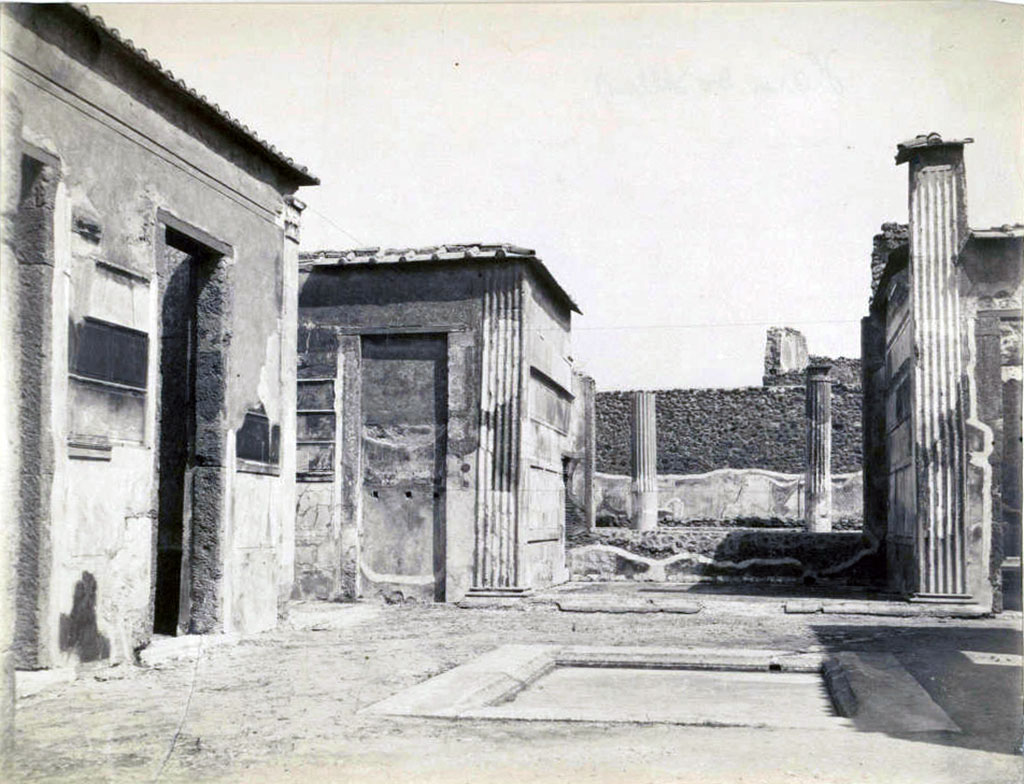
VI.2.4 Pompeii. Old undated photograph of 1870s. Looking east across atrium, the north ala is seen, centre left.
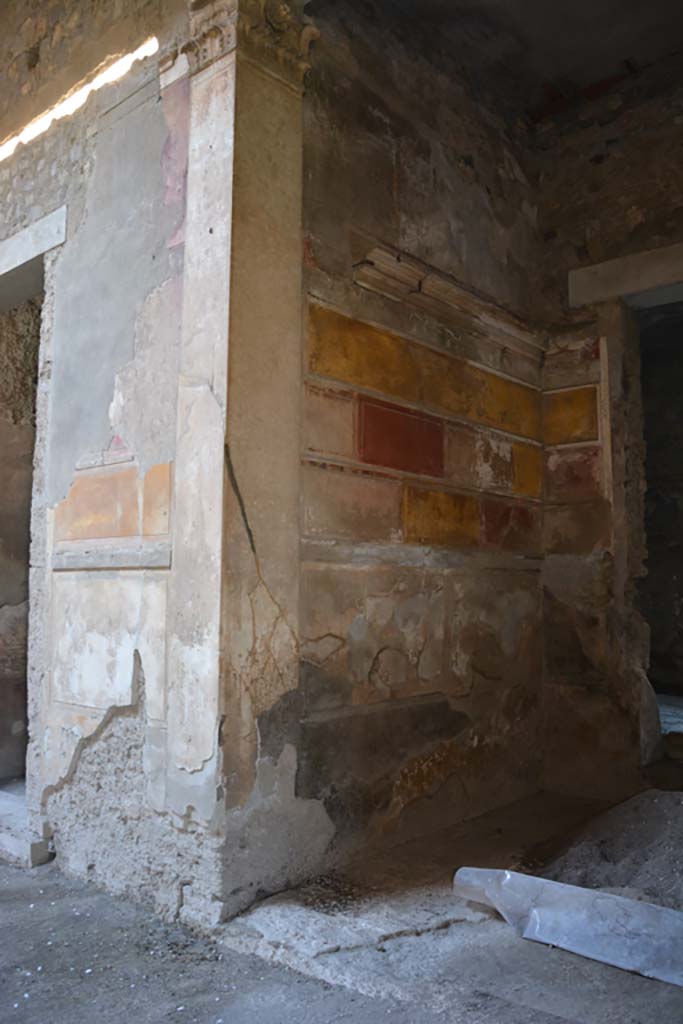
VI.2.4 Pompeii. December 2017.
Looking towards west side of north ala, with capital at top of
pilaster.
Foto Annette Haug, ERC
Grant 681269 DÉCOR.
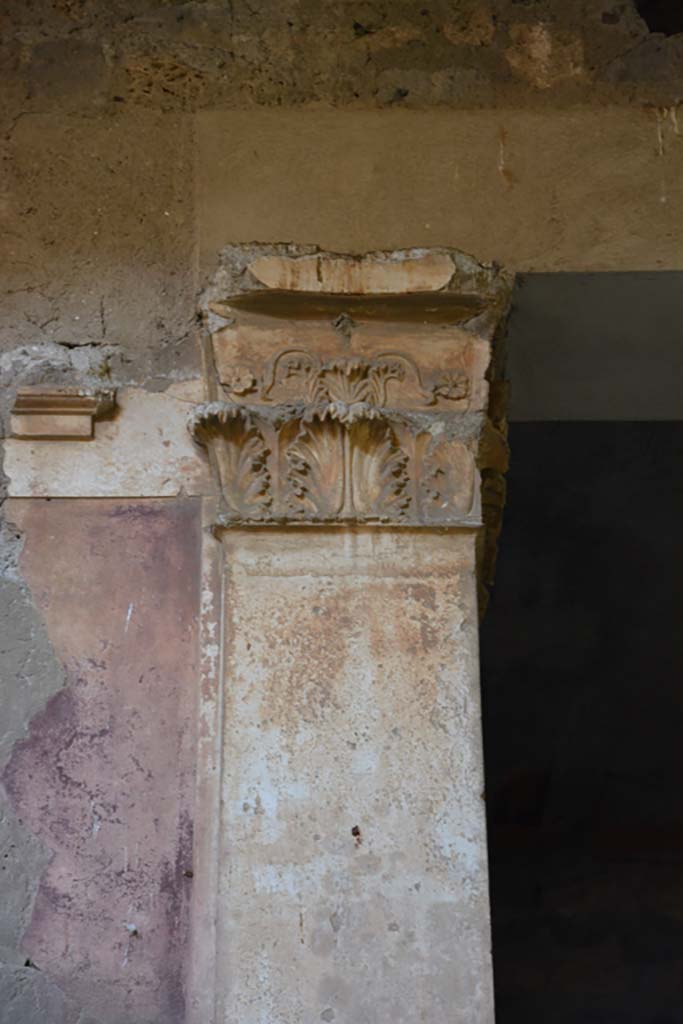
VI.2.4 Pompeii. December 2017.
Looking north to capital from atrium.
Foto Annette Haug, ERC Grant 681269 DÉCOR.
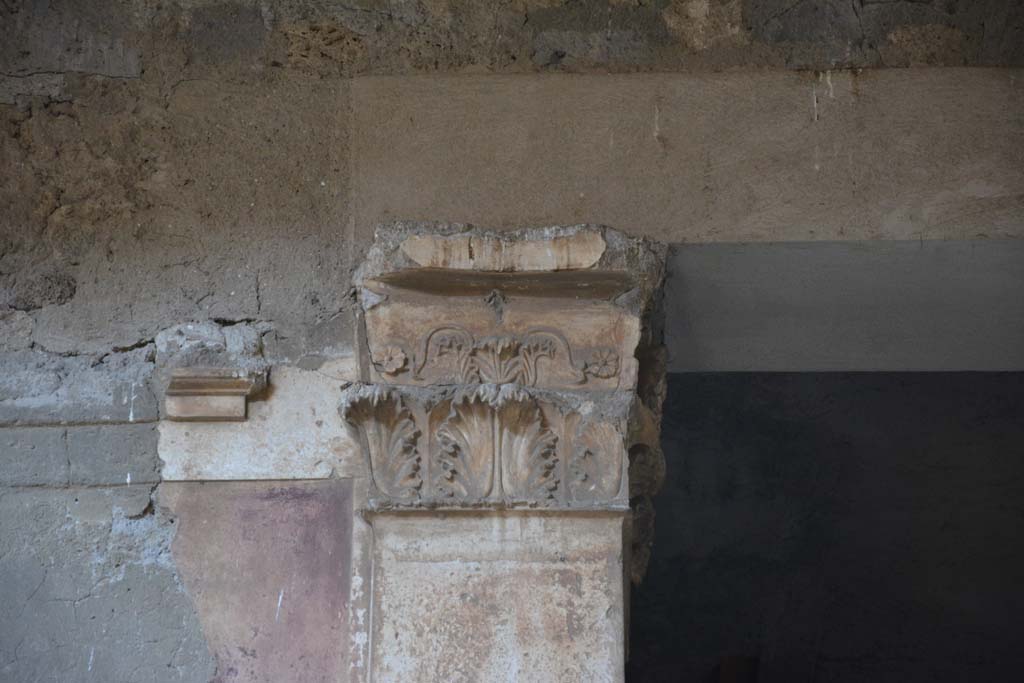
VI.2.4
Pompeii. March 2019. Detail of capital on north side of atrium.
Foto Annette Haug, ERC Grant 681269 DÉCOR.
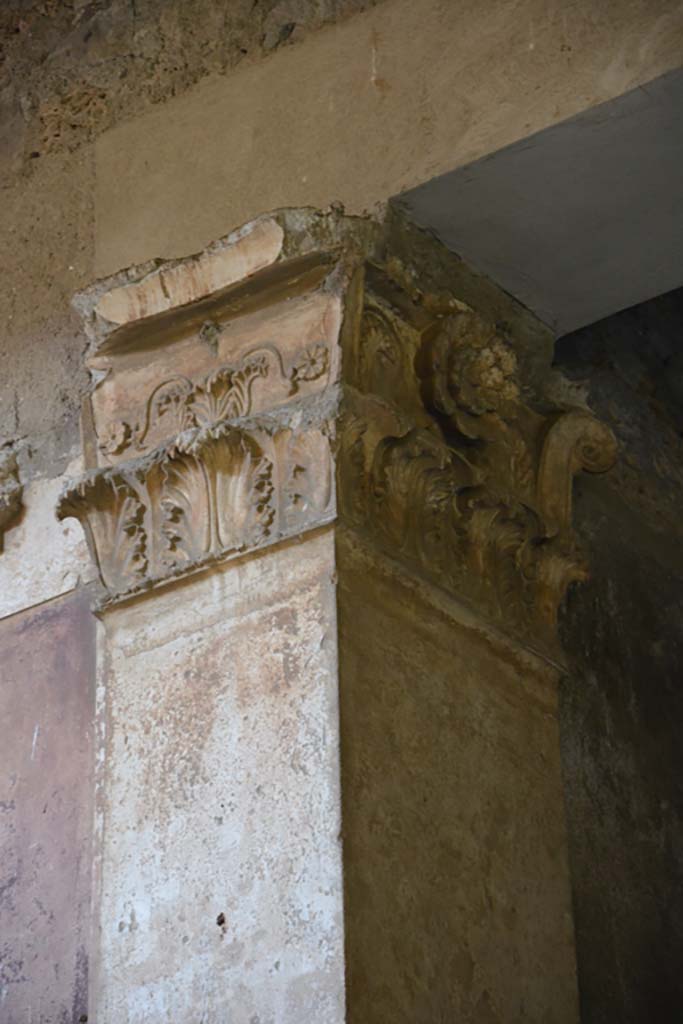
VI.2.4 Pompeii. December 2017. Capital on west side of north ala.
Foto Annette Haug, ERC
Grant 681269 DÉCOR.
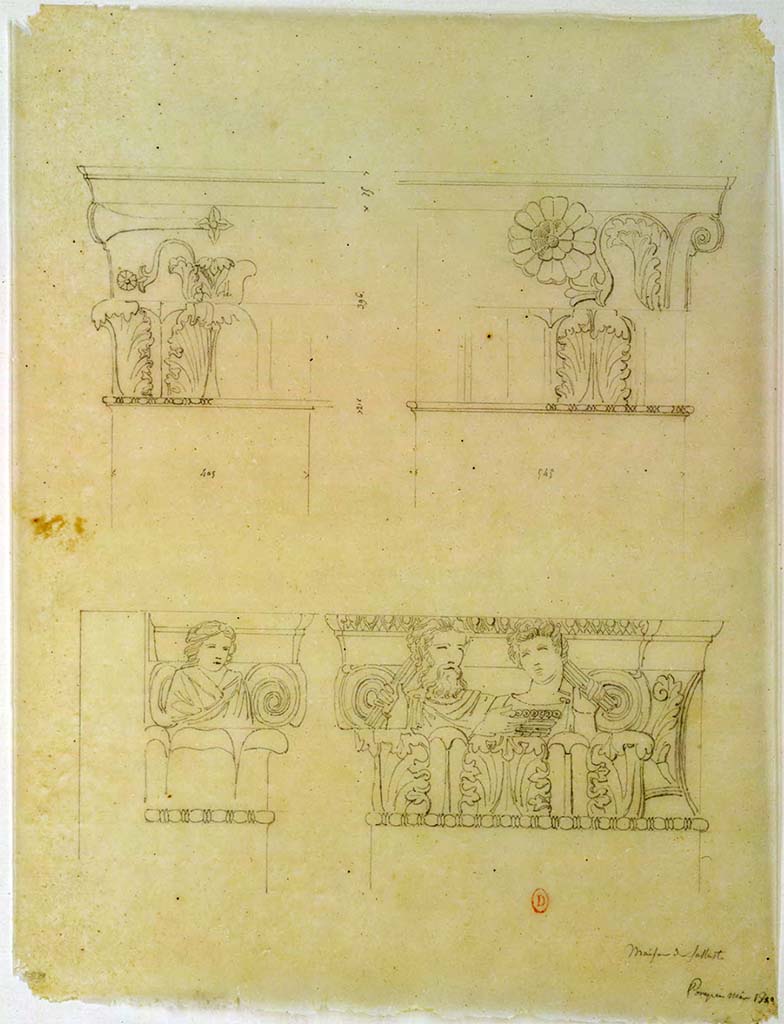
VI.2.4 Pompeii. May 1823. Sketches of capitals, at the top,
they are of the capital on west side of north ala.
The lower sketches show details of the capital on the south
side of the house entrance doorway.
See Chenavard, Antoine-Marie (1787-1883) et al. Voyage
d'Italie, croquis Tome 3, pl. 143.
INHA Identifiant
numérique : NUM MS 703 (3). See Book on INHA
Document placé
sous « Licence Ouverte / Open Licence » Etalab
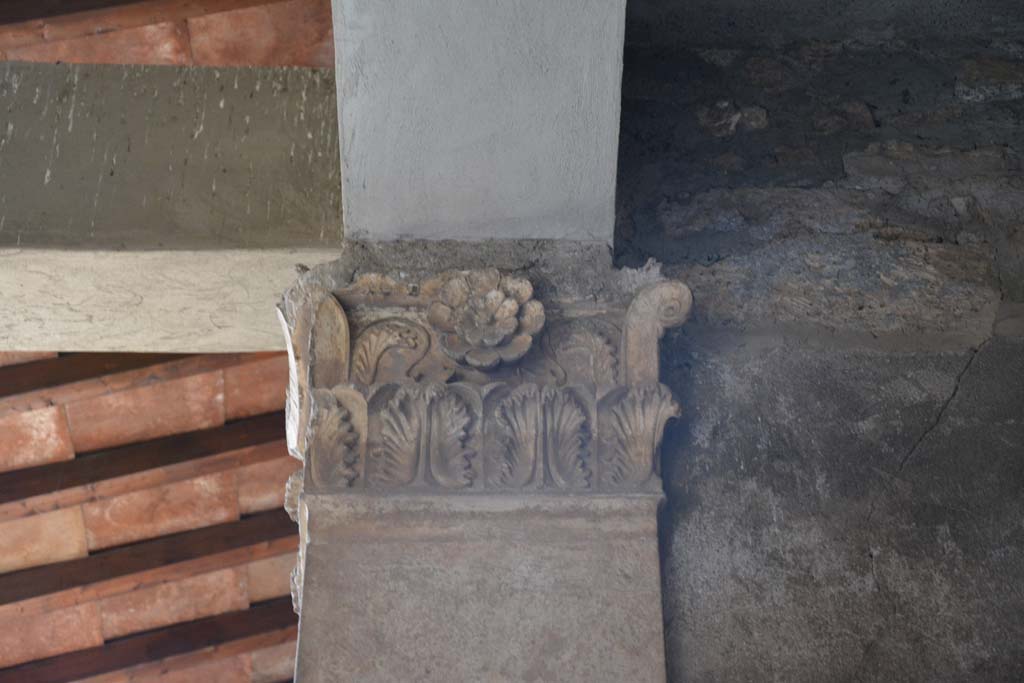
VI.2.4 Pompeii. March 2019. Looking
west towards capital on west wall of north ala.
Foto Annette Haug, ERC Grant 681269 DÉCOR.
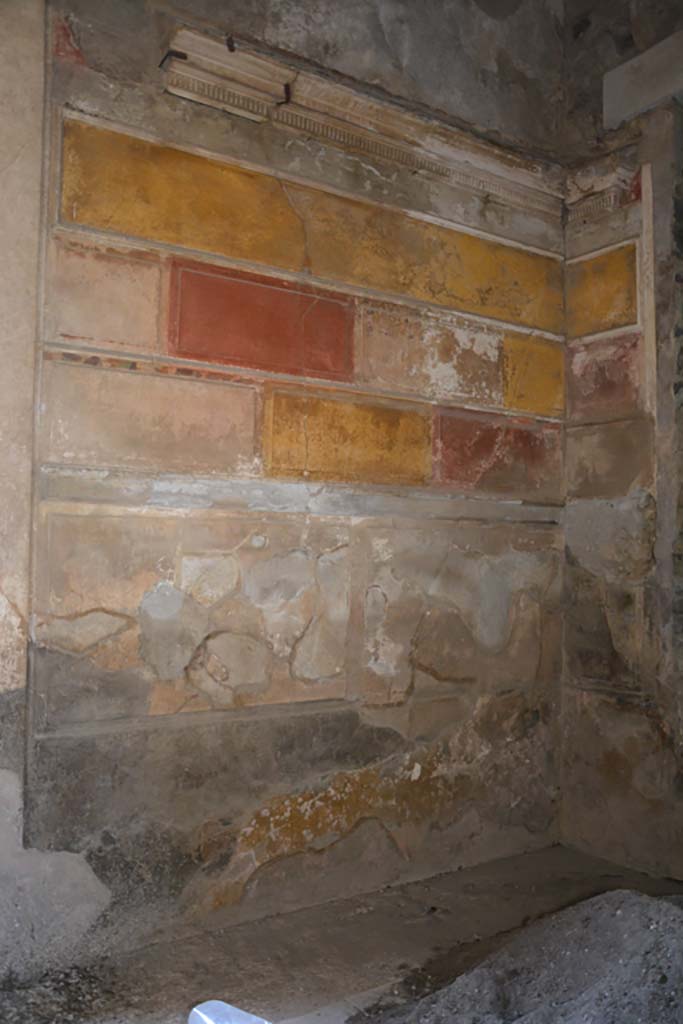
VI.2.4
Pompeii. December 2017. Looking towards west wall of north ala.
Foto Annette Haug, ERC Grant 681269 DÉCOR.
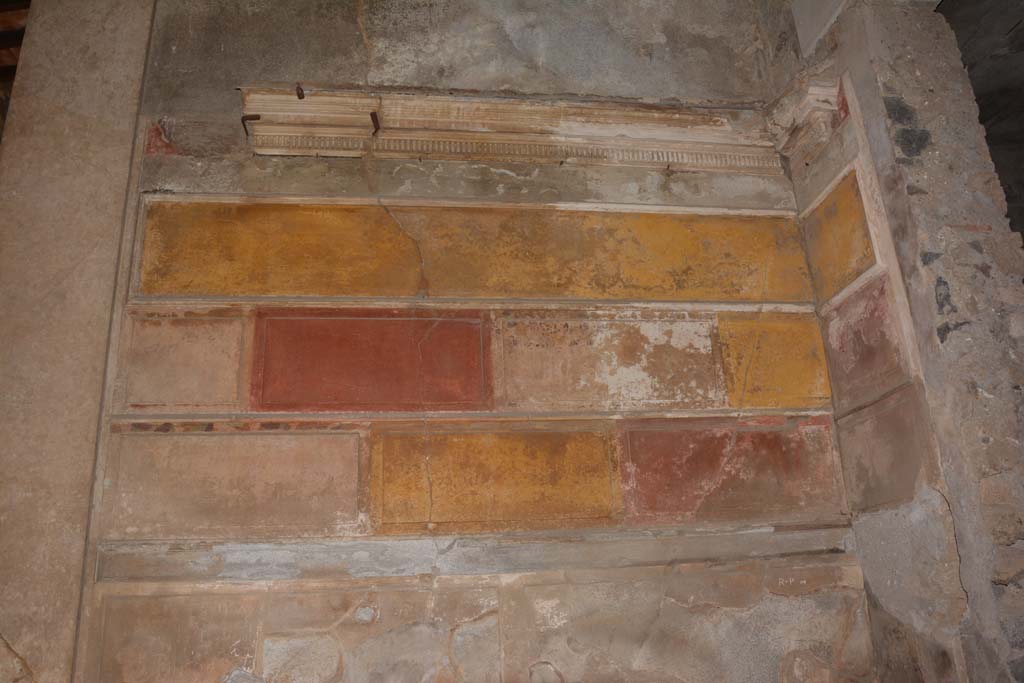
VI.2.4
Pompeii. March 2019.Looking towards upper west wall of north ala.
Foto Annette Haug, ERC Grant 681269 DÉCOR.
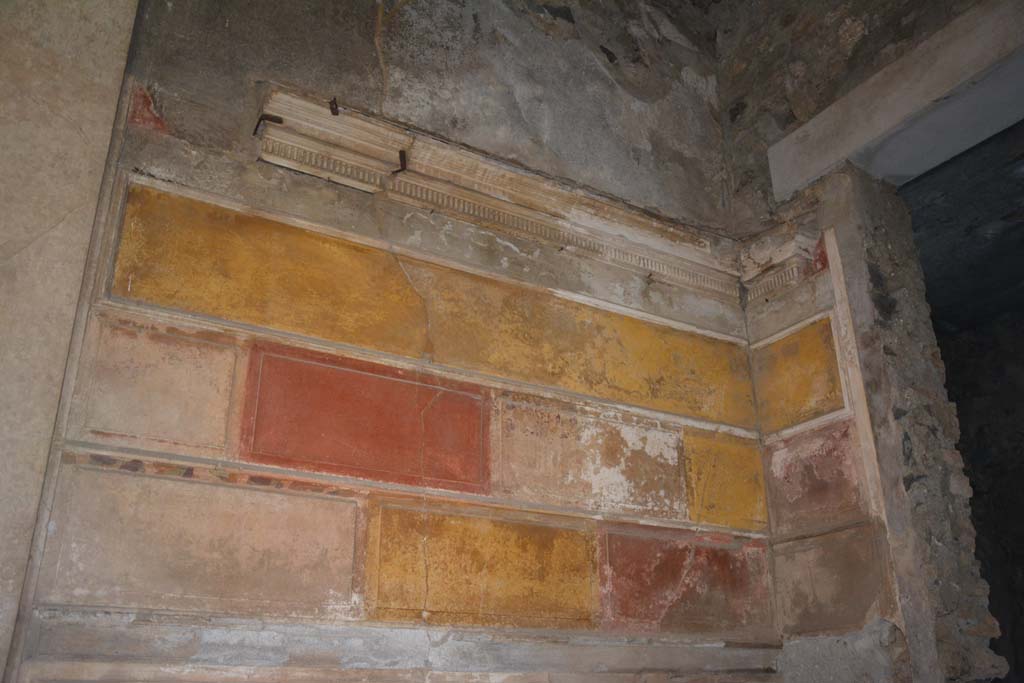
VI.2.4
Pompeii. December 2017. Upper west wall and north-west corner in north ala.
Foto Annette Haug, ERC Grant 681269 DÉCOR.
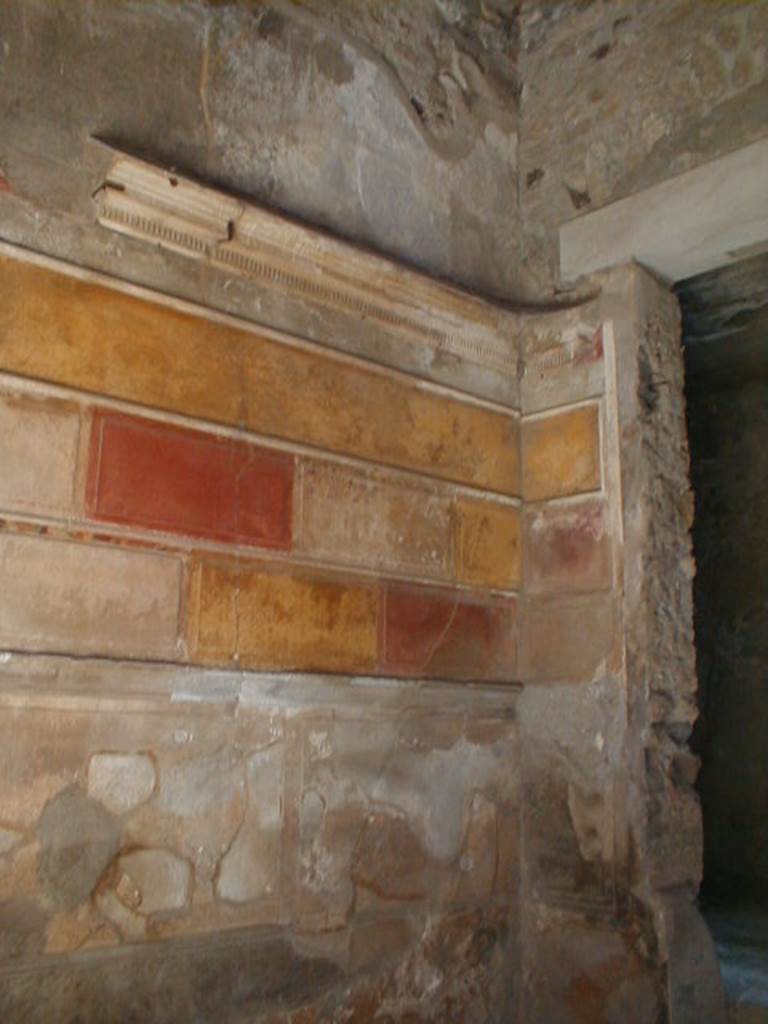
VI.2.4 Pompeii. September 2004. Wall decoration in north-west corner of north ala.
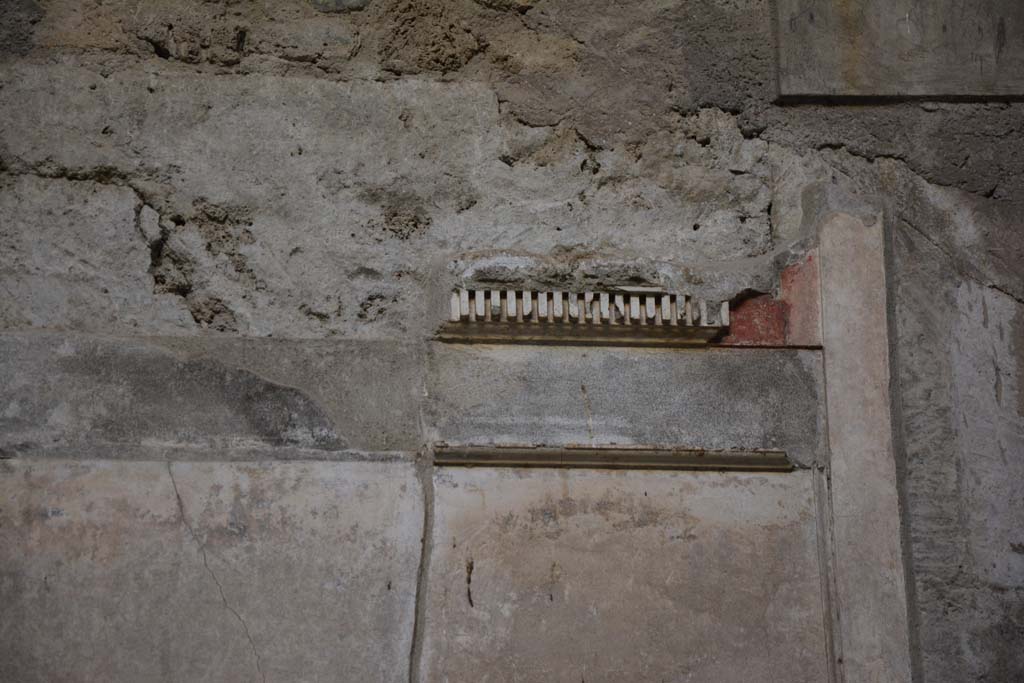
VI.2.4
Pompeii. December 2017. Detail from upper north wall on west side of doorway
through to area at rear.
Foto Annette Haug, ERC Grant 681269 DÉCOR.
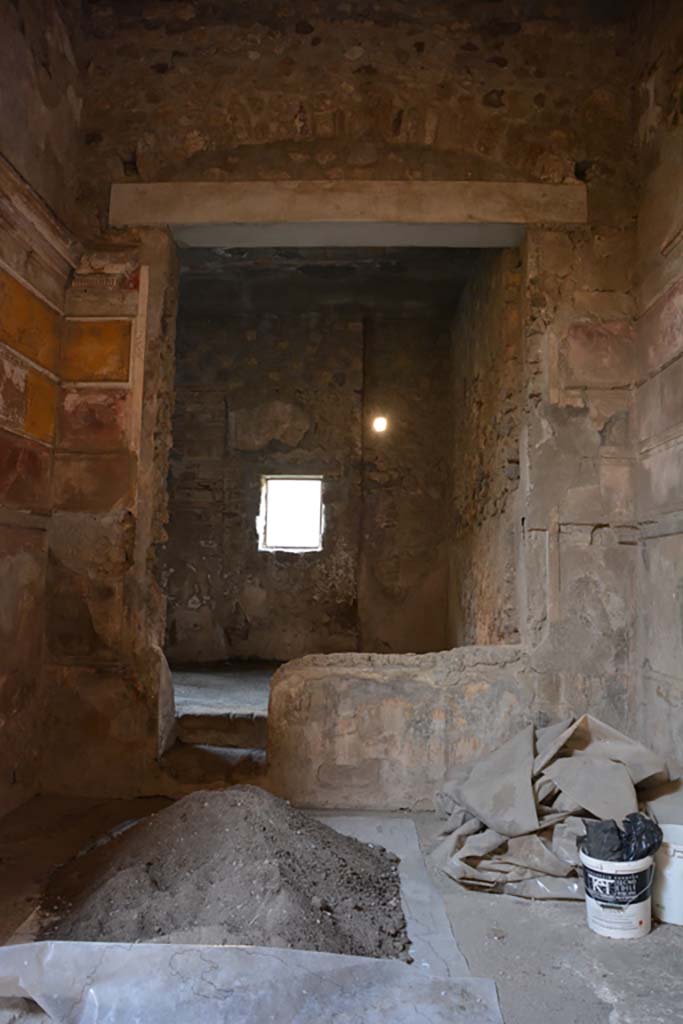
VI.2.4
Pompeii. December 2017. Looking north across ala.
Foto Annette Haug, ERC Grant 681269 DÉCOR.
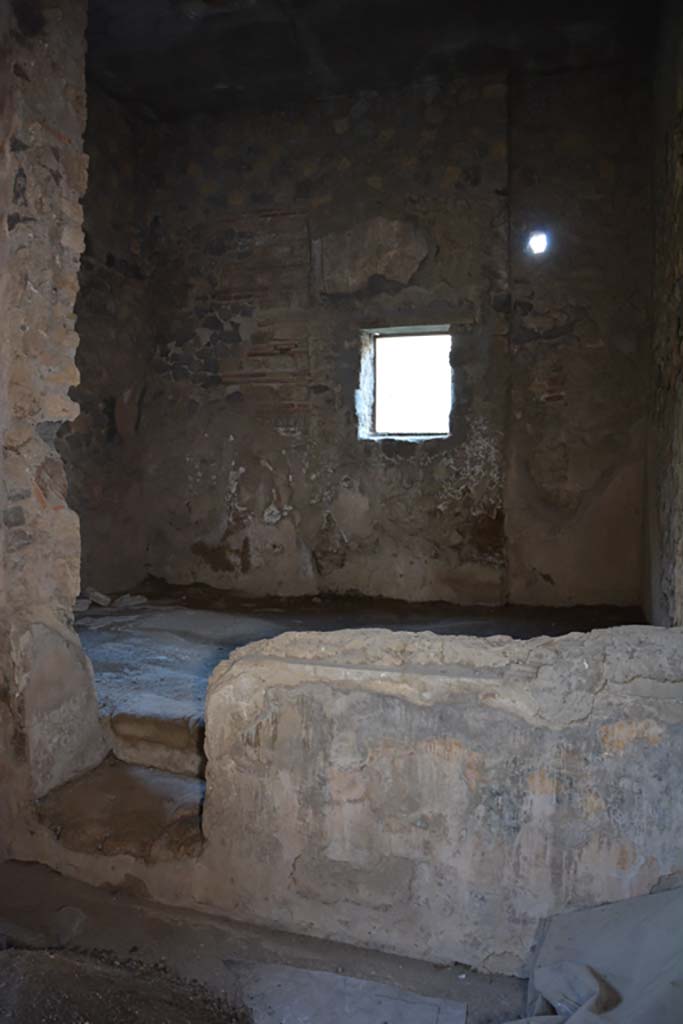
VI.2.4
Pompeii. December 2017. Looking towards north wall of rear room behind north
ala.
Foto Annette Haug, ERC Grant 681269 DÉCOR.
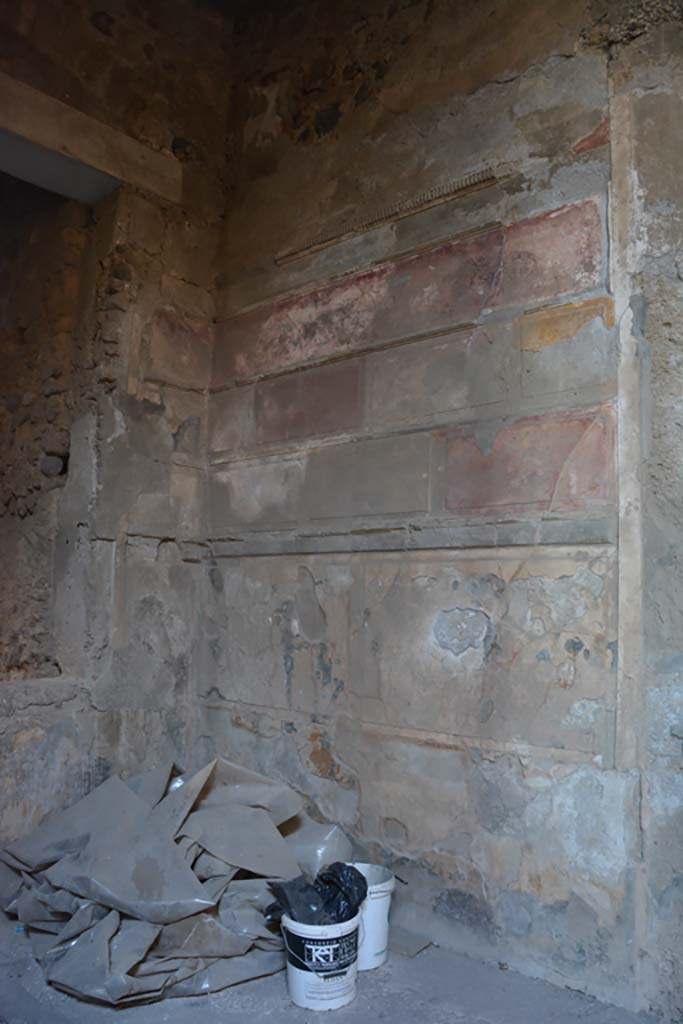
VI.2.4 Pompeii. December 2017. Looking towards east wall of north
ala.
Foto Annette Haug, ERC
Grant 681269 DÉCOR.
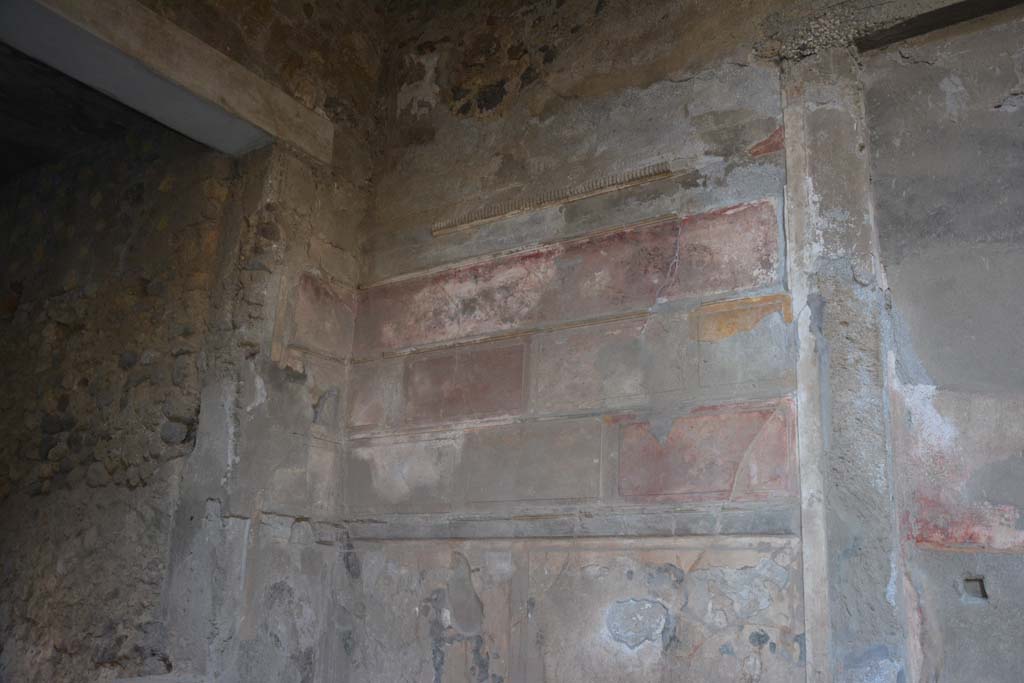
VI.2.4 Pompeii. December 2017. Upper east wall of north ala.
Foto Annette Haug, ERC
Grant 681269 DÉCOR.
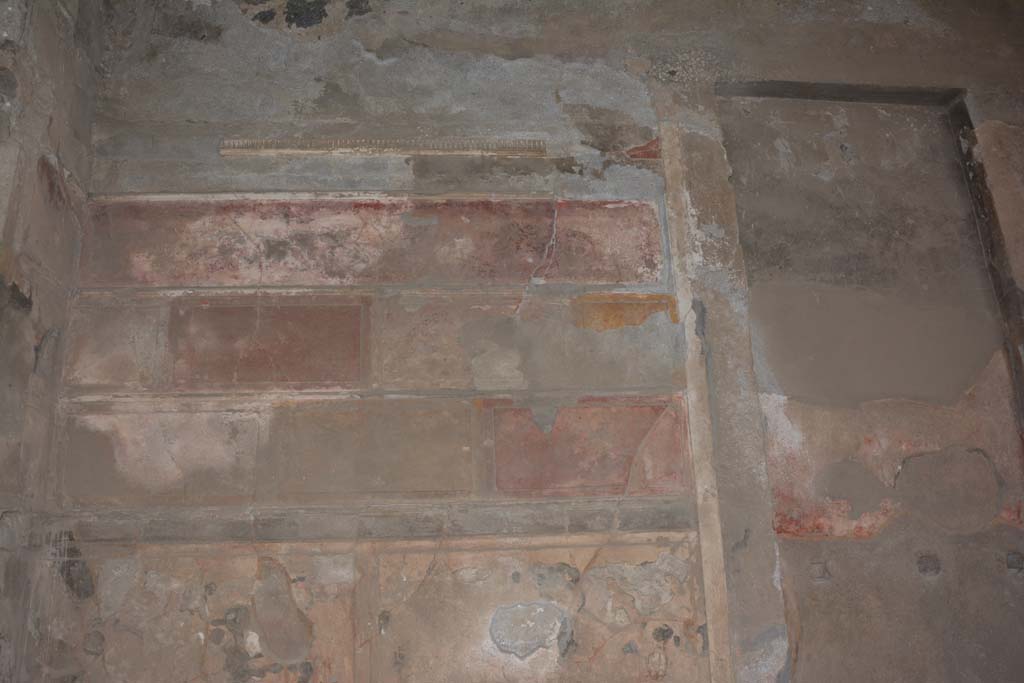
VI.2.4 Pompeii. March 2019. Upper east wall of ala, with site of
lararium, on right.
Foto Annette Haug, ERC
Grant 681269 DÉCOR.
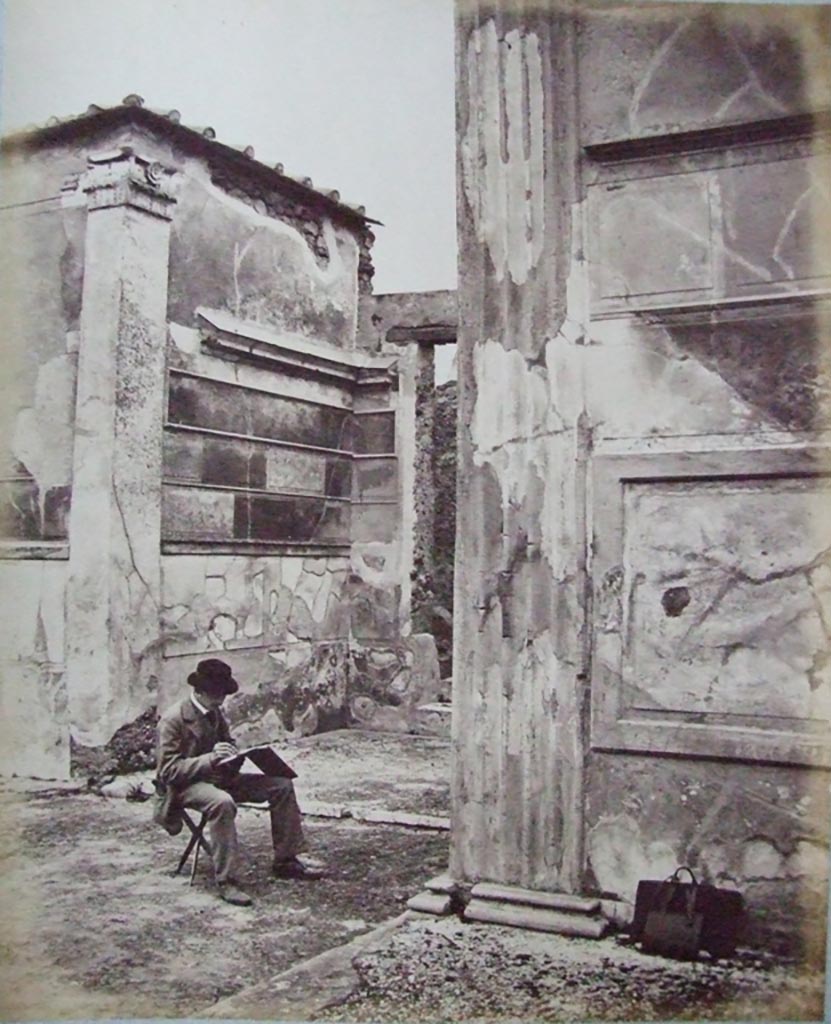
VI.2.4 Pompeii. Old undated photograph of 1870s. Ala on north side of atrium, taken from the tablinum.
Courtesy of Society of Antiquaries. Fox Collection.
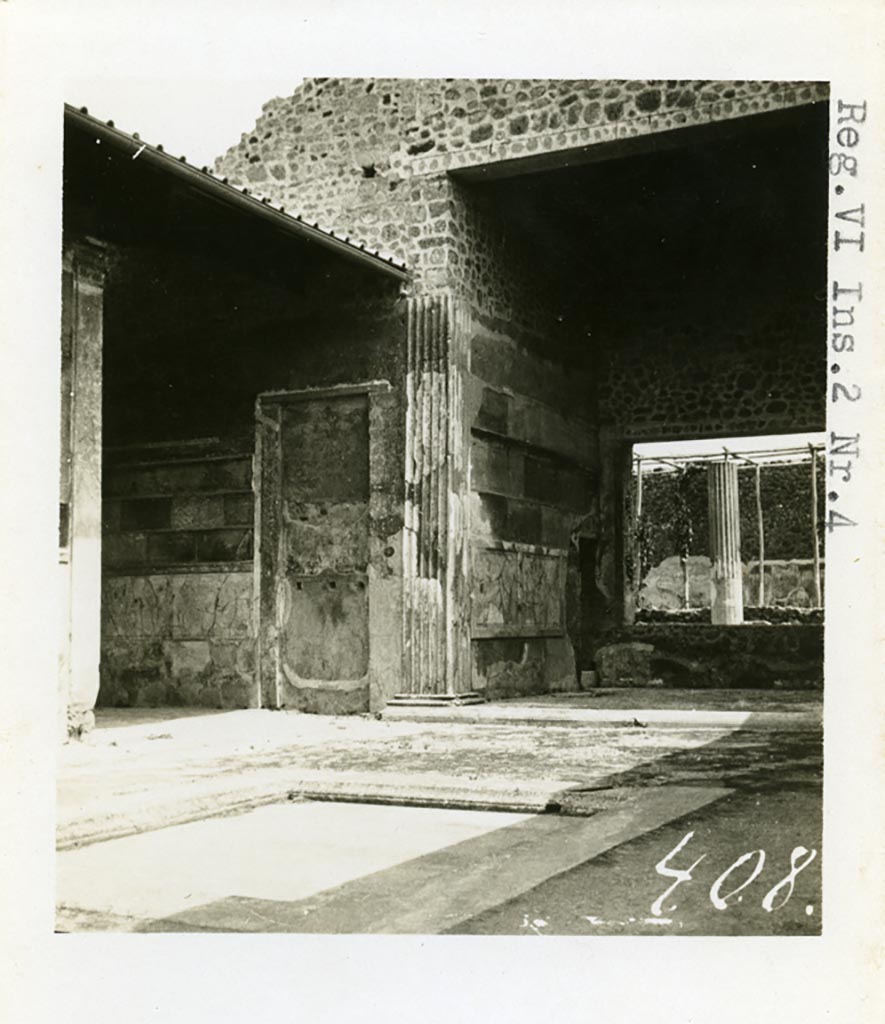
VI.2.4 Pompeii. Pre-1937-39. Looking across atrium towards north ala, on left, and tablinum, on right.
Photo courtesy of American Academy in Rome, Photographic Archive. Warsher collection no. 408.
Part 1 Part 2 Part 3 Part 4 Part 5 Part 6 Part 7 Part 8 Part 9 Plan