VI.9.2 Pompeii. Casa del Meleagro or House of Meleager.
Rear entrance at VI.9.13. Excavated 1829, 1837 and 1966.
Part: 1 2 3 4 5 6 7 8 9 10 11 12 13 14 15 16 17 18 Plan
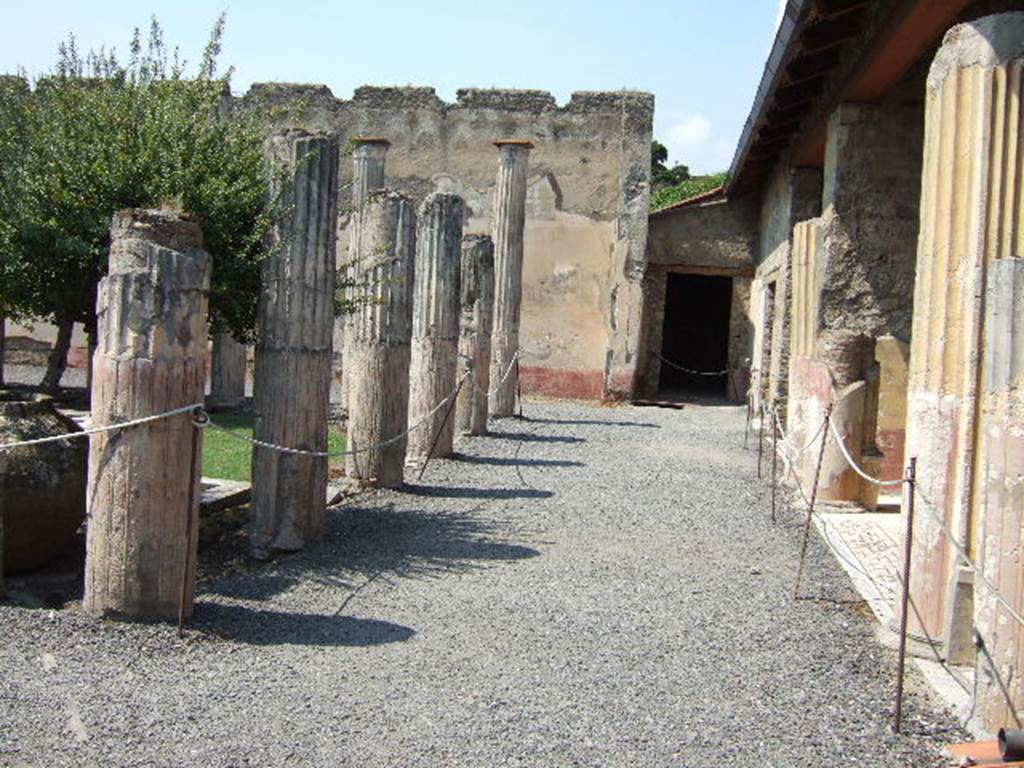
VI.9.2 Pompeii. September 2004. Peristyle, east side. Looking north towards room 28, doorway, right of centre.
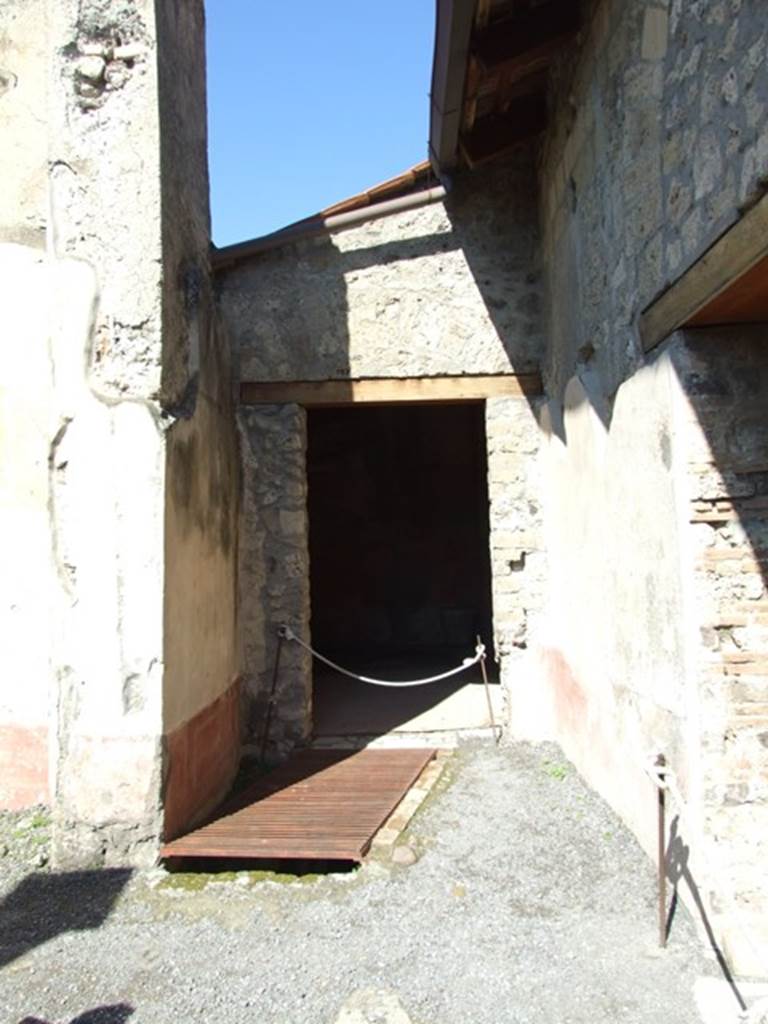
VI.9.2 Pompeii. March 2009. Doorway to room 28.
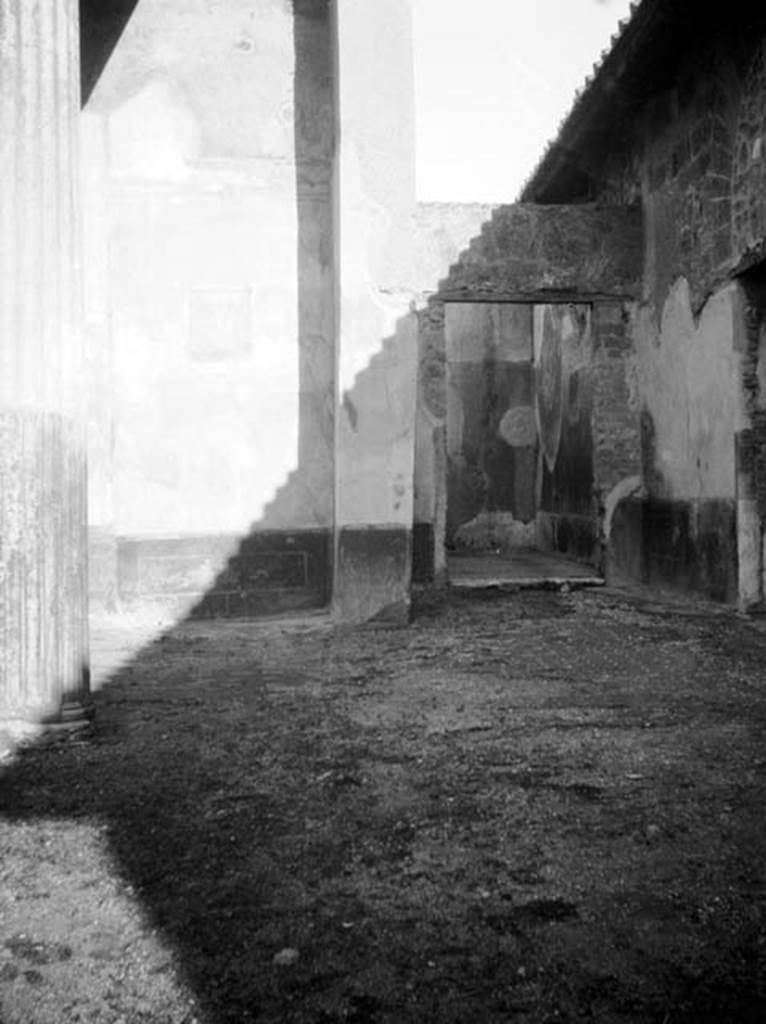
VI.9.2 Pompeii. W.616. Looking north along east portico of peristyle 16, towards doorway to room 28 in north-east corner.
Photo by Tatiana
Warscher. Photo © Deutsches Archäologisches Institut, Abteilung Rom, Arkiv.
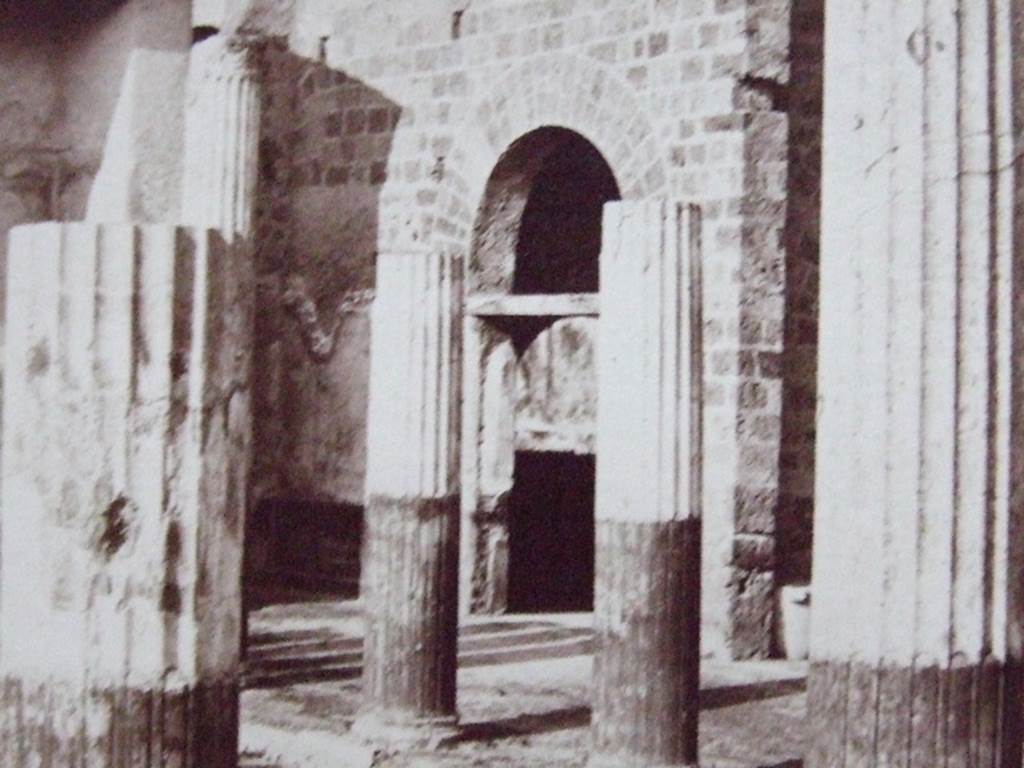
VI.9.2 Pompeii. Looking towards north-east corner of peristyle 16.
The doorway to room 27 is in the centre, and the wall to the east of room 28, between the first and second columns, on left.
Old undated photograph, Courtesy of Society of Antiquaries. Fox Collection.
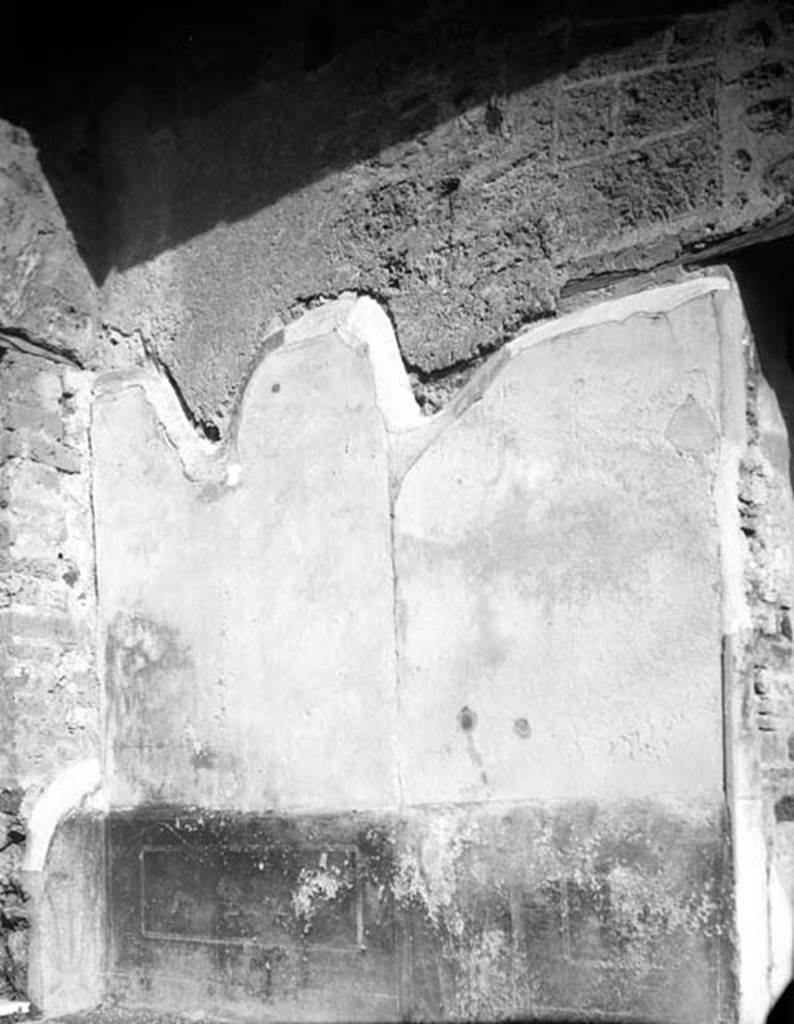
VI.9.2 Pompeii. W.614. Peristyle 16, remains of wall decoration from east wall of peristyle, on north side of doorway to room 27.
Photo by Tatiana
Warscher. Photo © Deutsches Archäologisches Institut, Abteilung Rom, Arkiv.
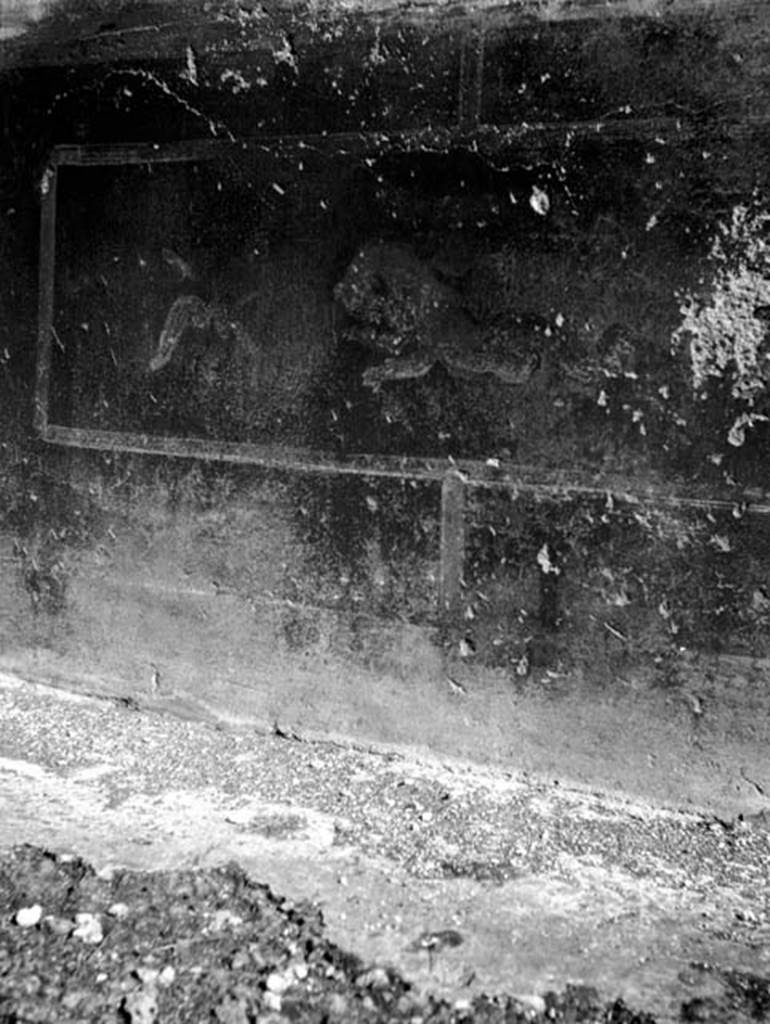
VI.9.2 Pompeii. W.612. Peristyle 16, remains of wall painting from dado on east wall.
Photo by Tatiana
Warscher. Photo © Deutsches Archäologisches Institut, Abteilung Rom, Arkiv.
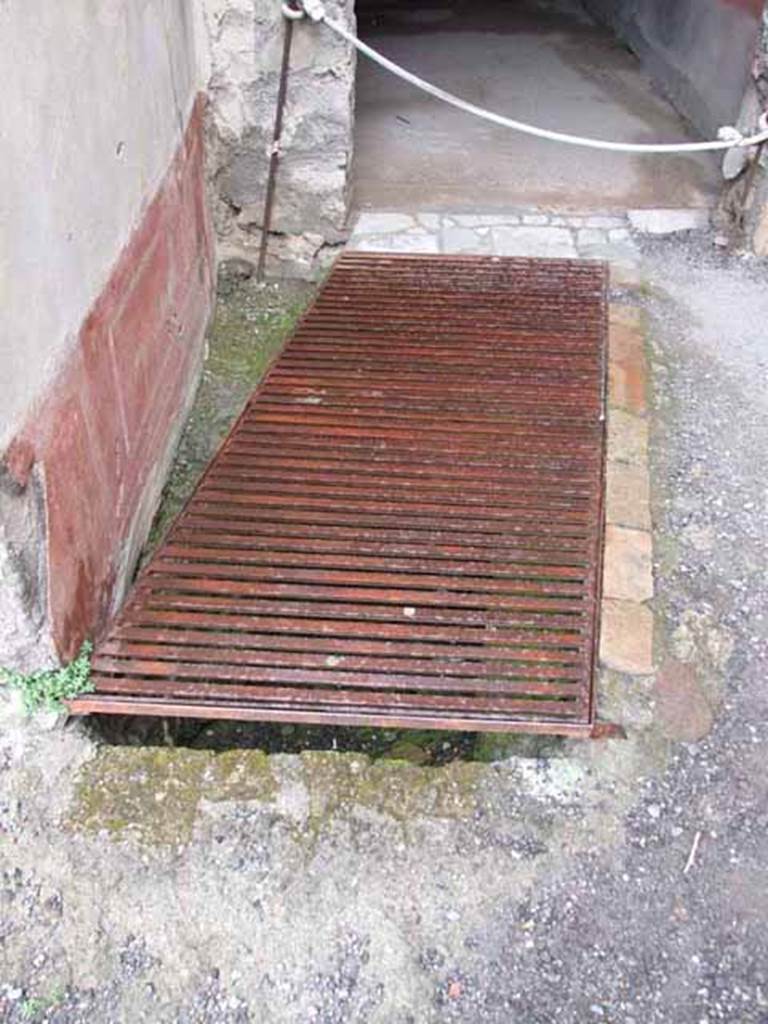
VI.9.2 Pompeii. May 2010. Stairs to cellar, outside room 28.
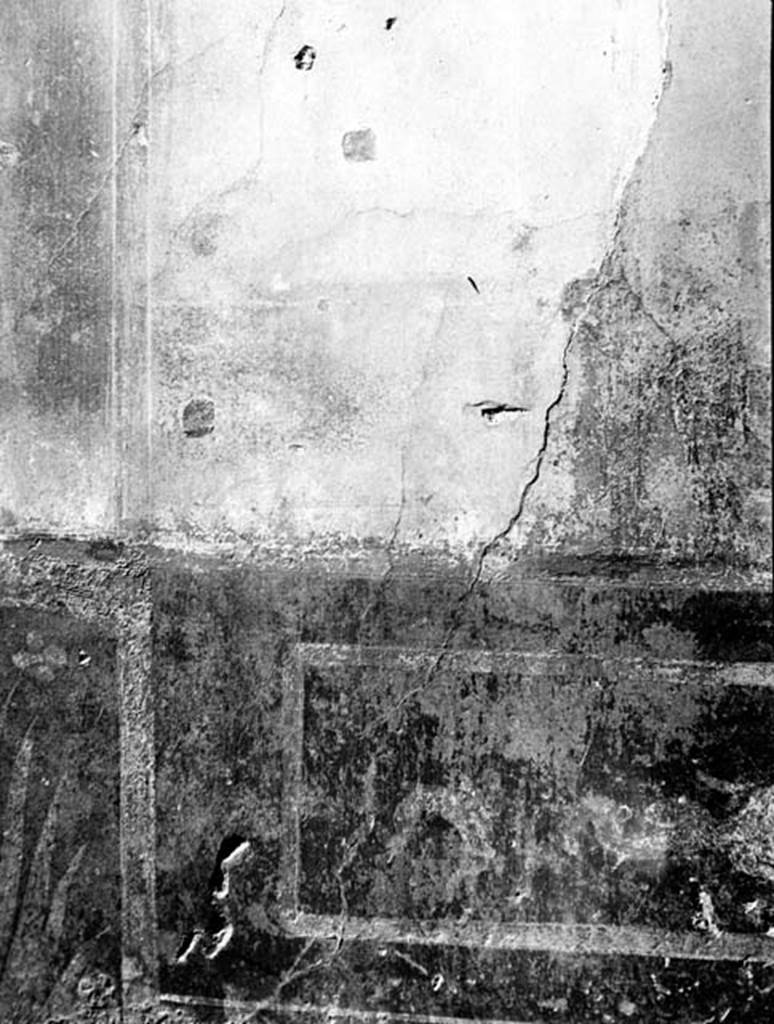
VI.9.2 Pompeii. W.611.
Peristyle 16, remains of wall paintings from dado on west wall, near doorway to room 28, above steps to cellar.
Photo by Tatiana
Warscher. Photo © Deutsches Archäologisches Institut, Abteilung Rom, Arkiv.
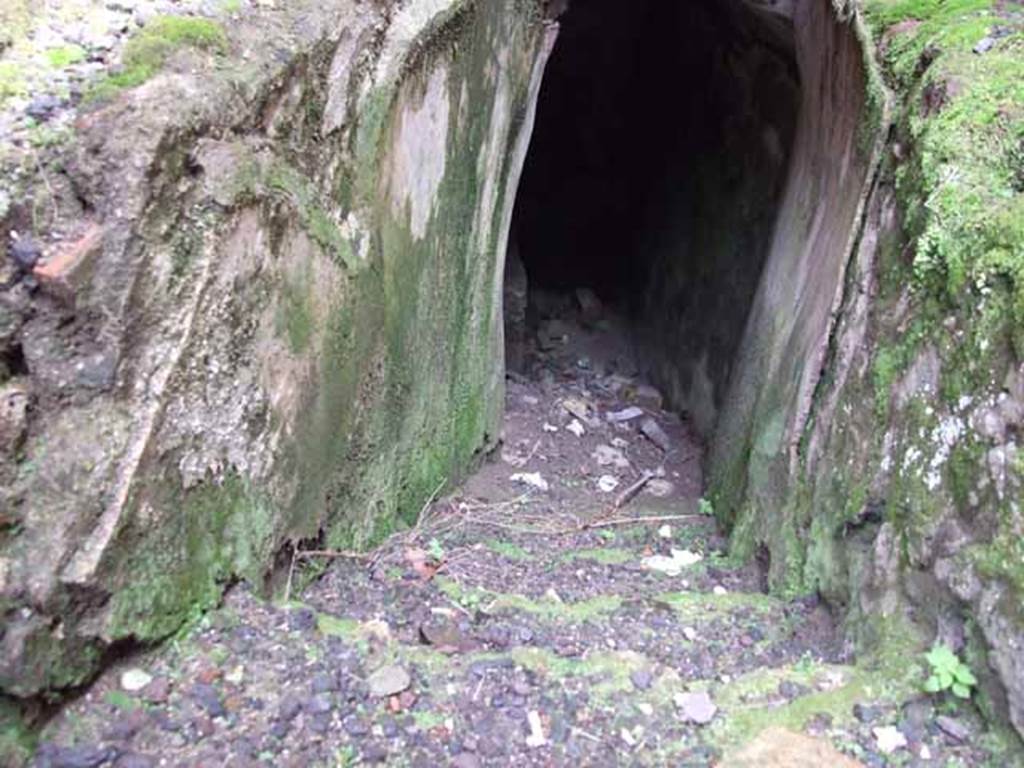
VI.9.2 Pompeii. May 2010. Stairs to cellar.
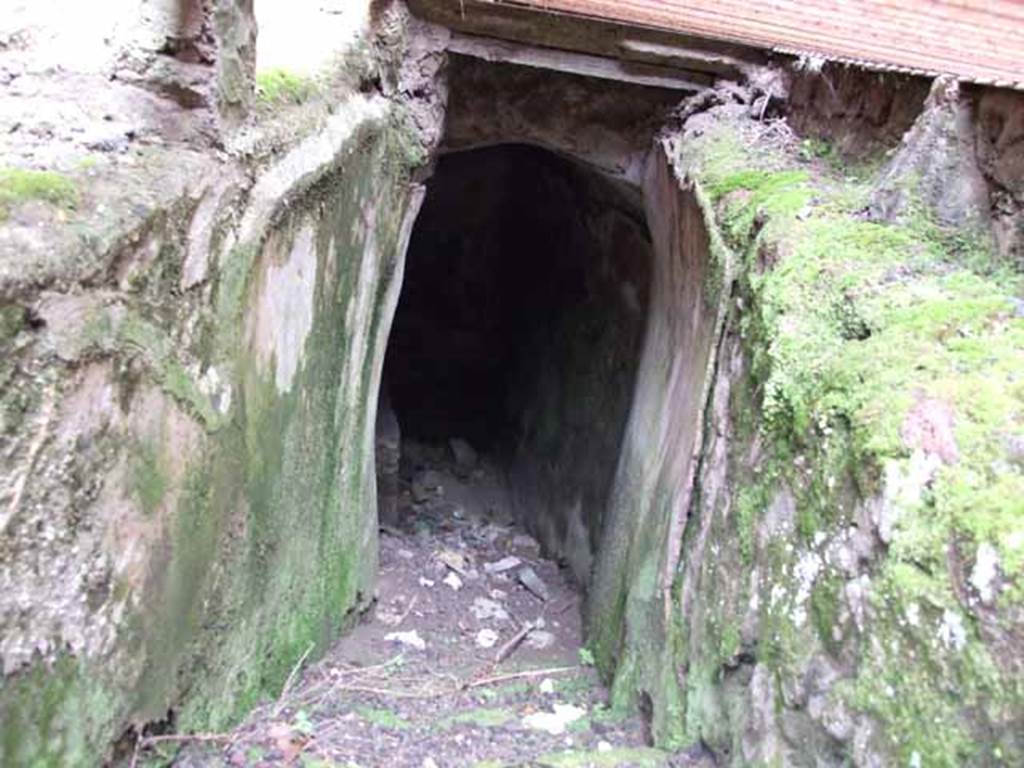
VI.9.2 Pompeii.
May 2010. Entrance to cellar.
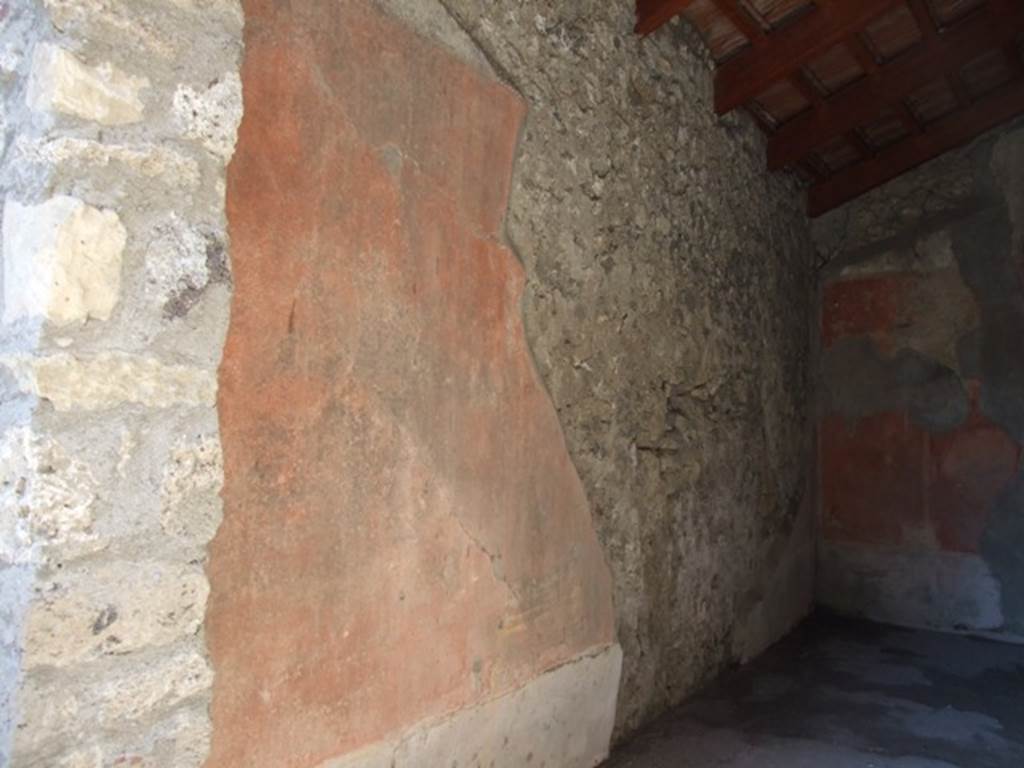
VI.9.2 Pompeii. March 2009. Room 28, west wall.
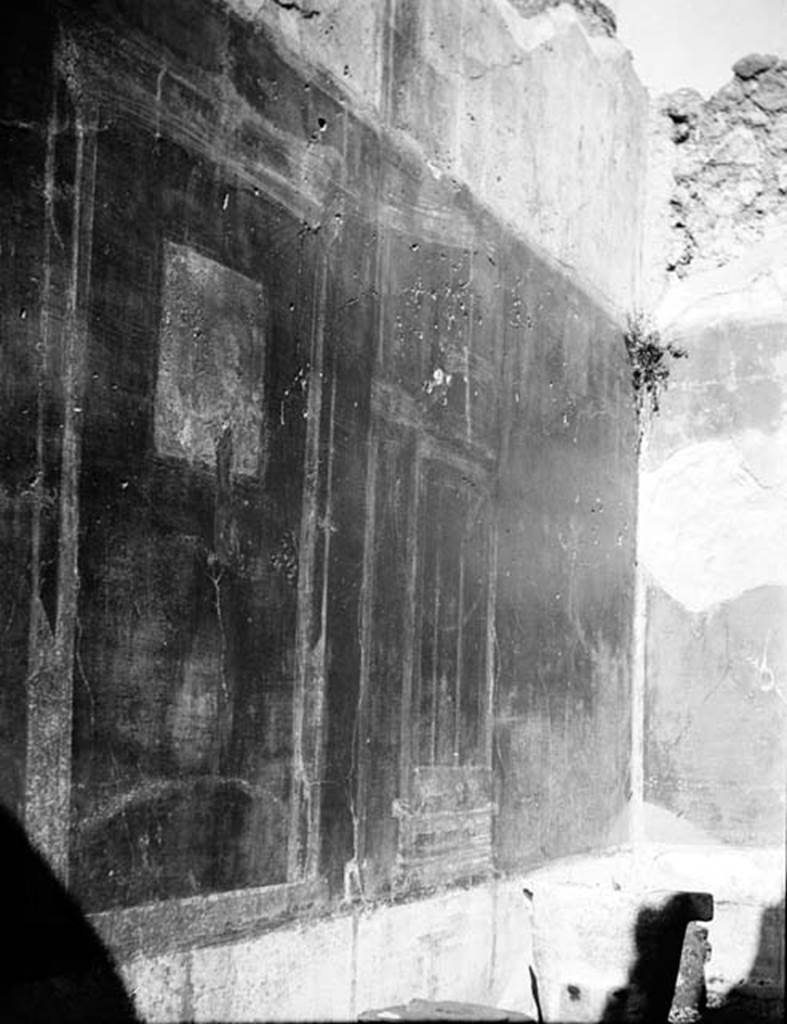
VI.9.2 Pompeii. W.609. Room 28, west wall.
Photo by Tatiana Warscher. Photo © Deutsches Archäologisches Institut, Abteilung Rom, Arkiv.
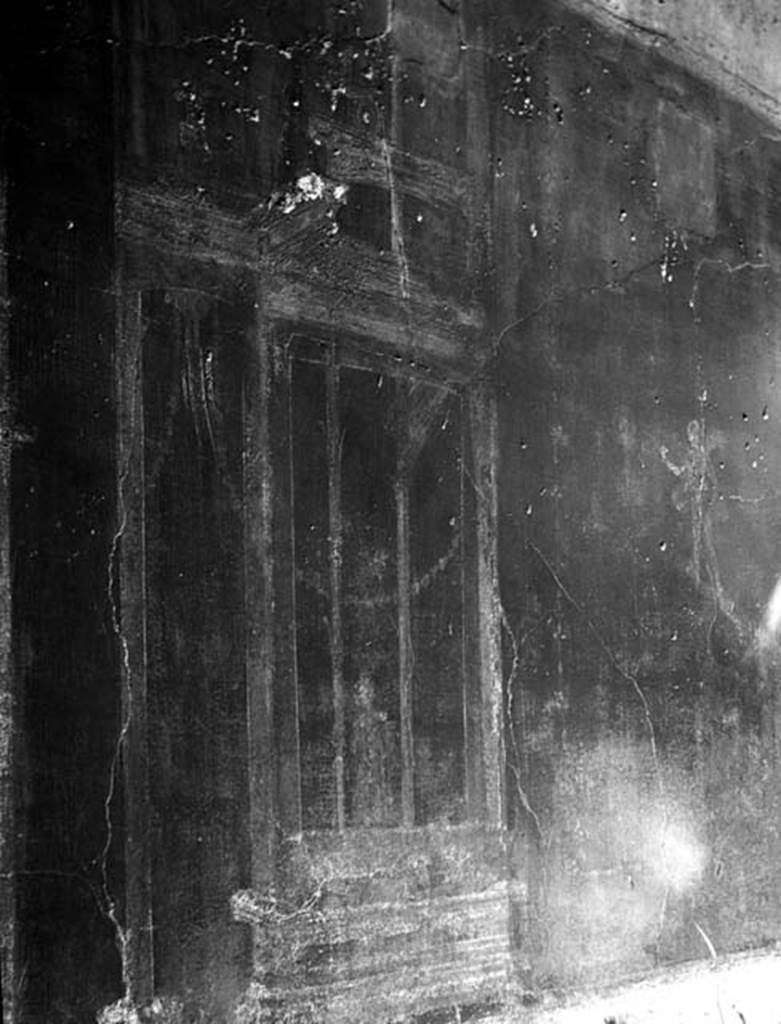
VI.9.2 Pompeii. W.607. Room 28, remains of wall decoration from west wall.
Bragantini describes the wall decoration as architectural painting with garland and figure, and panel (on right) with painting of cupid.
See
Bragantini, de Vos, Badoni, 1983. Pitture e Pavimenti di Pompei, Parte 2. Rome: ICCD. (p.198)
Photo by Tatiana
Warscher. Photo © Deutsches Archäologisches Institut, Abteilung Rom, Arkiv.
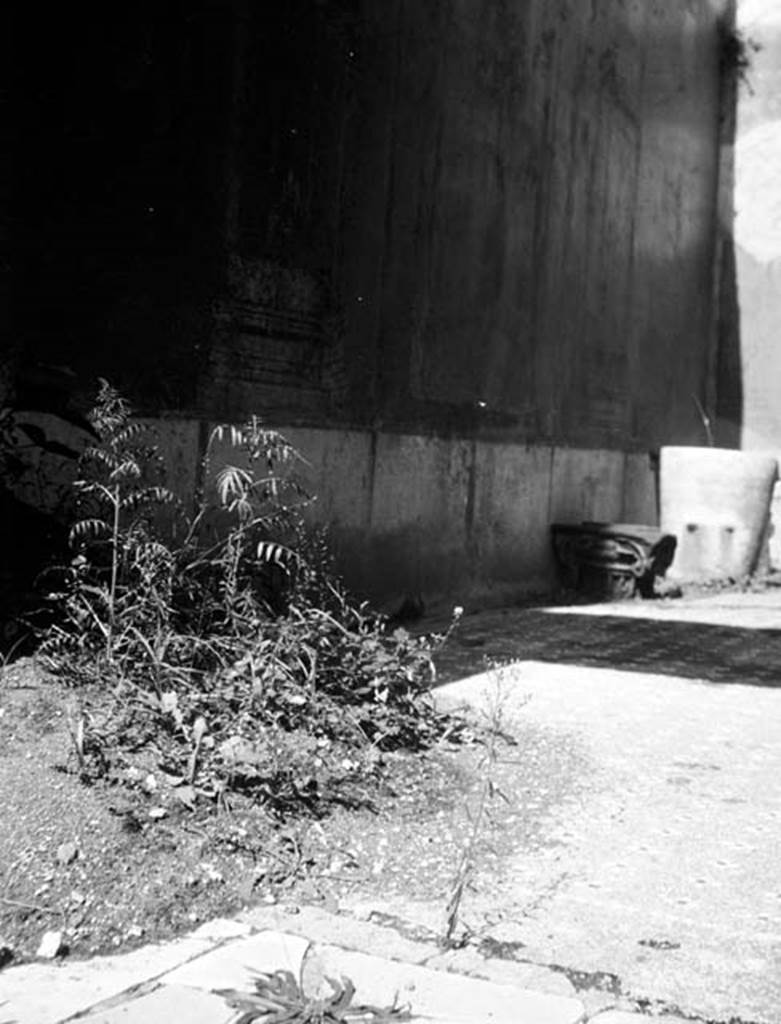
VI.9.2 Pompeii. W.617. Room 28 showing flooring and west wall.
Photo by Tatiana
Warscher. Photo © Deutsches Archäologisches Institut, Abteilung Rom, Arkiv.
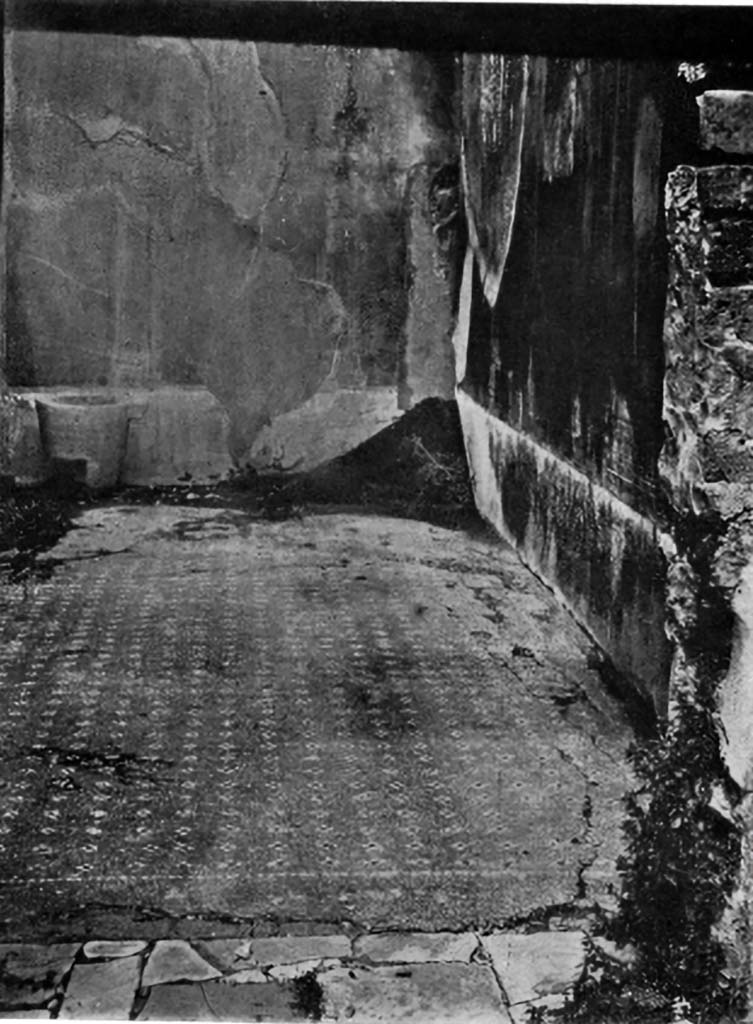
VI.9.2 Pompeii. c.1930. Room 28, looking north across flooring of cocciopesto inserted with
small crosses.
See Blake,
M., (1930). The pavements of the Roman Buildings of the Republic and Early
Empire. Rome, MAAR, 8, (p.28 & Pl.4, tav.4).
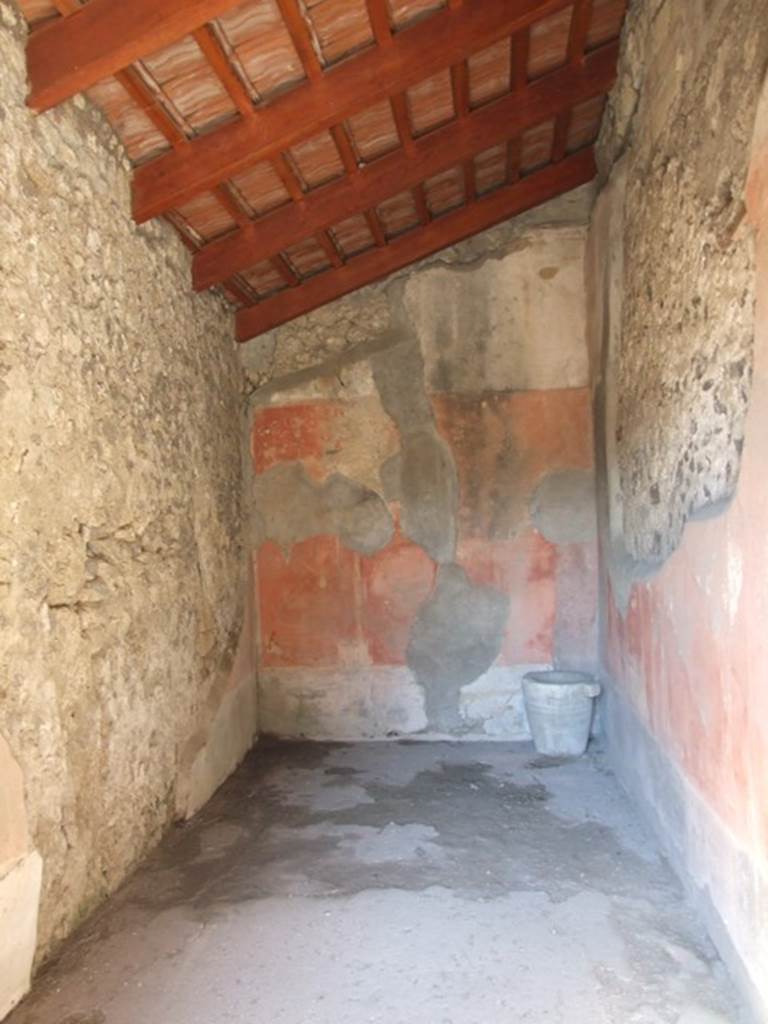
VI.9.2 Pompeii. March 2009. Room 28, north wall.
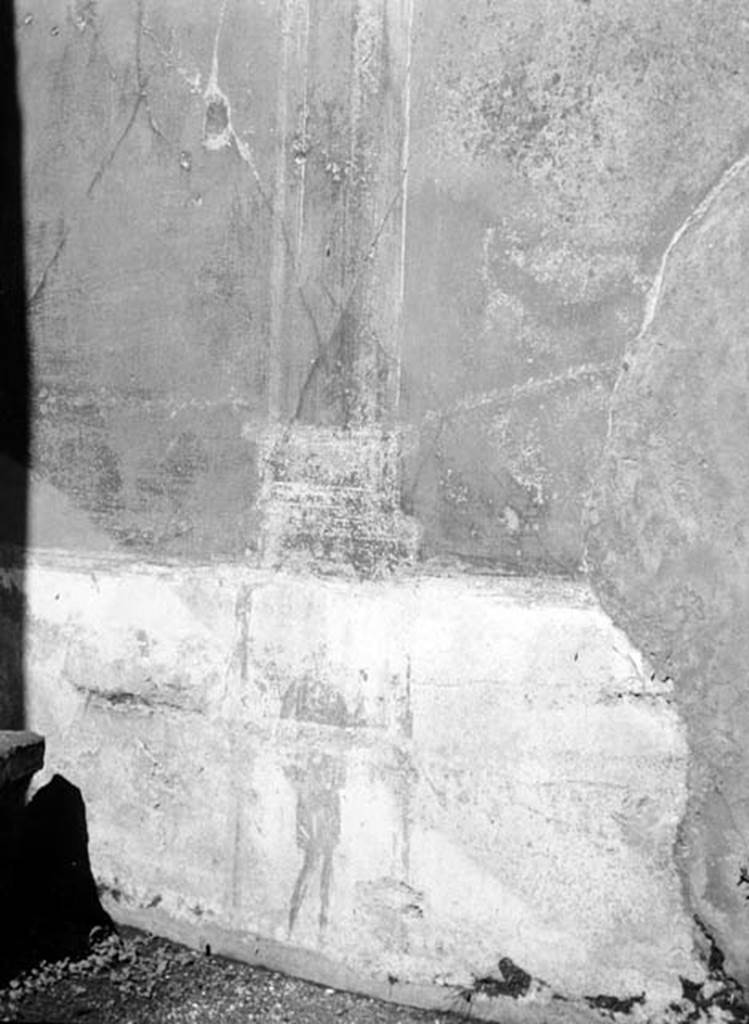
VI.9.2 Pompeii. W.613. Room 28, remains of figure from north wall.
Photo by Tatiana
Warscher. Photo © Deutsches Archäologisches Institut, Abteilung Rom, Arkiv.
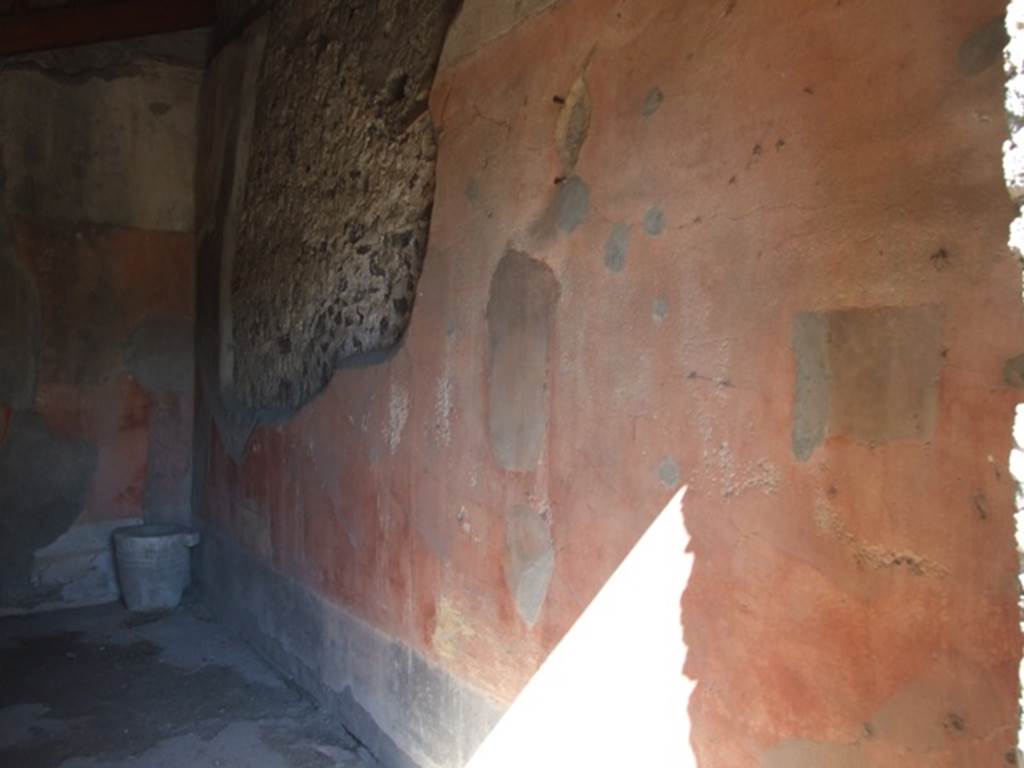
VI.9.2 Pompeii. March 2009. Room 28, east wall.
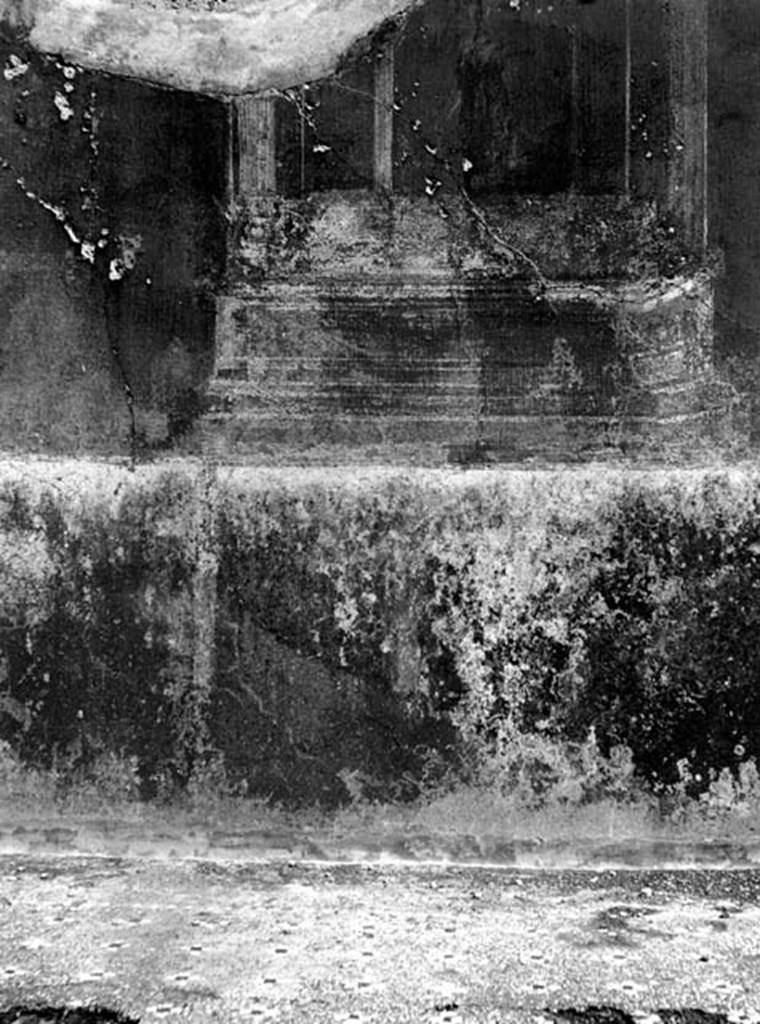
VI.9.2 Pompeii. W.608. Room 28, remains of wall decoration from east wall, and flooring.
Photo by Tatiana
Warscher. Photo © Deutsches Archäologisches Institut, Abteilung Rom, Arkiv.
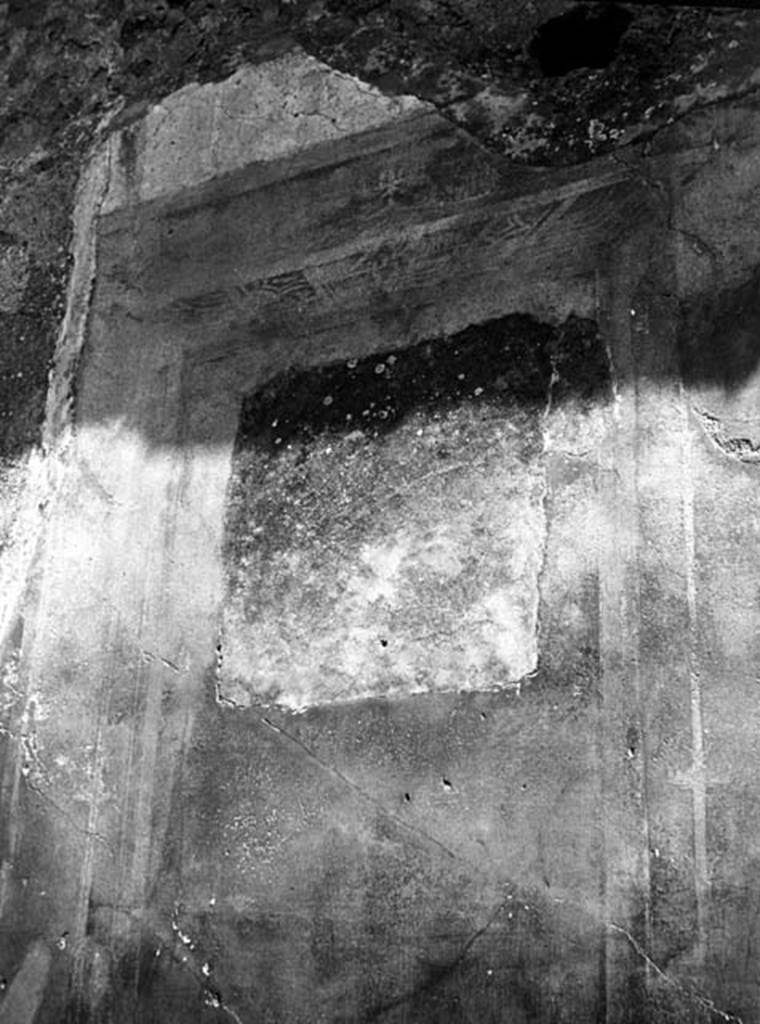
VI.9.2 Pompeii. W.610. Room 28, east wall.
Photo by Tatiana Warscher. Photo © Deutsches Archäologisches Institut, Abteilung Rom, Arkiv.
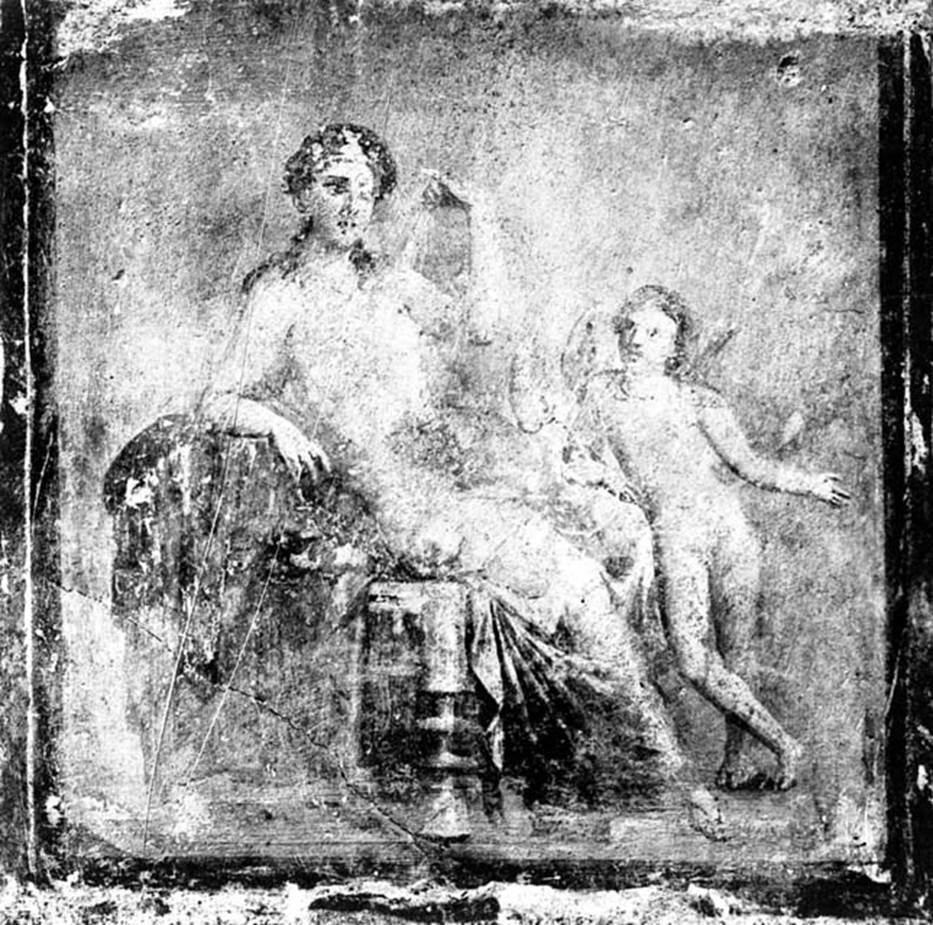
VI.9.2 Pompeii. W.135. Wall painting of a sitting woman with cupid.
According to Bragantini, a painting of a seated woman and cupid was found in the centre of the east wall.
It was then removed.
See Bragantini, de Vos, Badoni, 1983. Pitture e Pavimenti di
Pompei, Parte 2. Rome: ICCD. (p.198)
See Helbig, W.,
1868. Wandgemälde der vom Vesuv
verschütteten Städte Campaniens. Leipzig: Breitkopf und Härtel. (1429)
See Real Museo Borbonico, VIII, taf 5.
See Zahn, W.,
1852. Die schönsten Ornamente und
merkwürdigsten Gemälde aus Pompeji, Herkulanum und Stabiae: III. Berlin:
Reimer, 58.
Photo by Tatiana
Warscher. Photo © Deutsches Archäologisches Institut, Abteilung Rom, Arkiv.
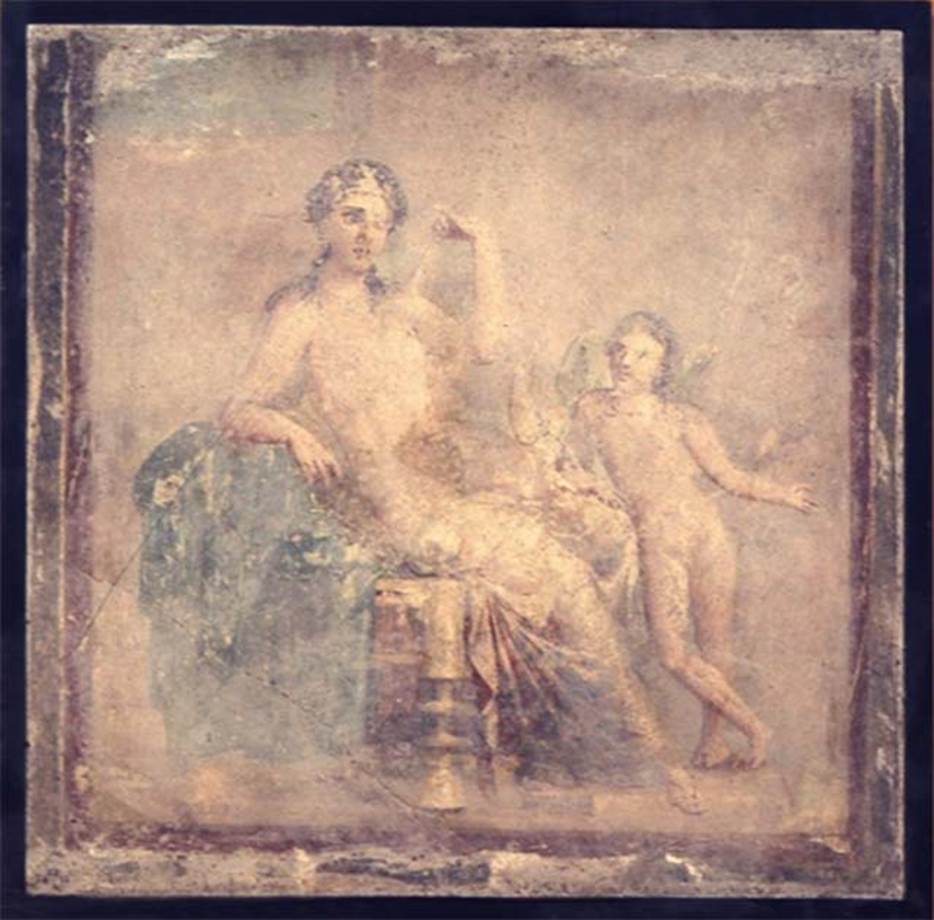
VI.9.2 Pompeii. Wall painting of a sitting woman with cupid.
Photo © The Trustees of the British Museum. Inventory number 1857, 0415.3.
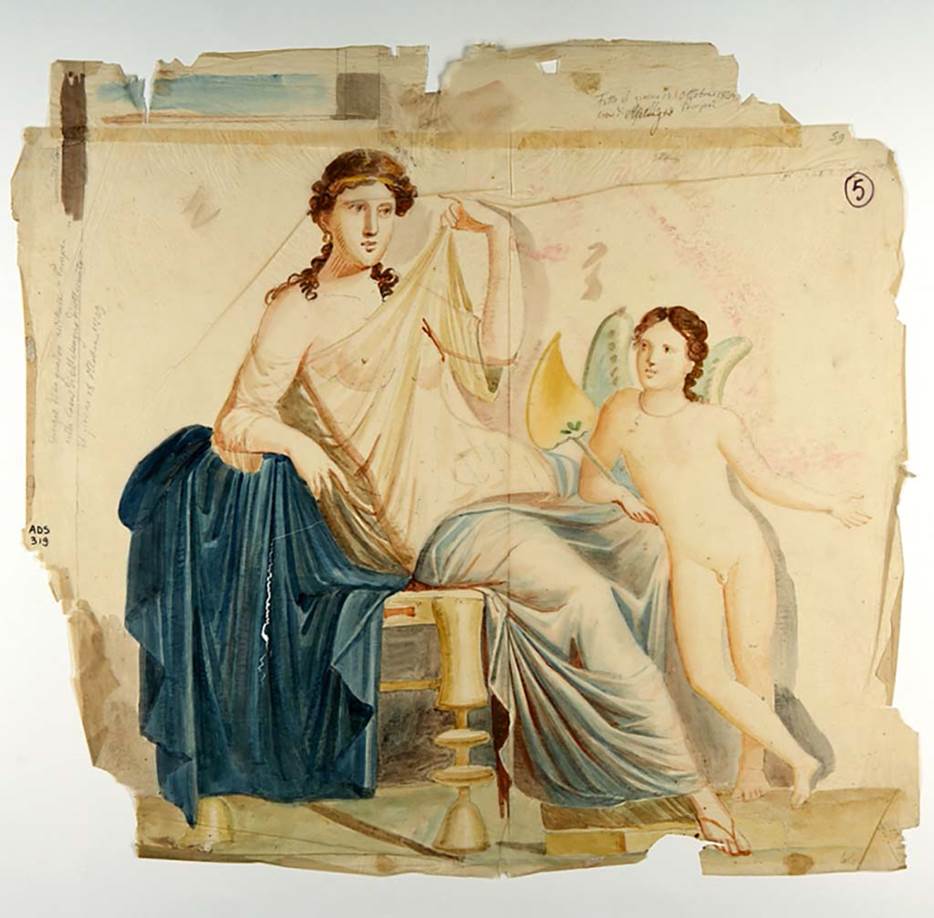
VI.9.2 Pompeii. Painting by Giuseppe Marsigli dated 18th October 1829, of female figure and cupid. (Helbig 1429)
According to Overbeck this painting was on the north wall, according to Warscher from the east wall of room 28.
Now in Naples Archaeological Museum. Inventory number ADS 319.
Photo © ICCD. https://www.catalogo.beniculturali.it
Utilizzabili alle
condizioni della licenza Attribuzione - Non commerciale - Condividi
allo stesso modo 2.5 Italia (CC BY-NC-SA 2.5 IT)
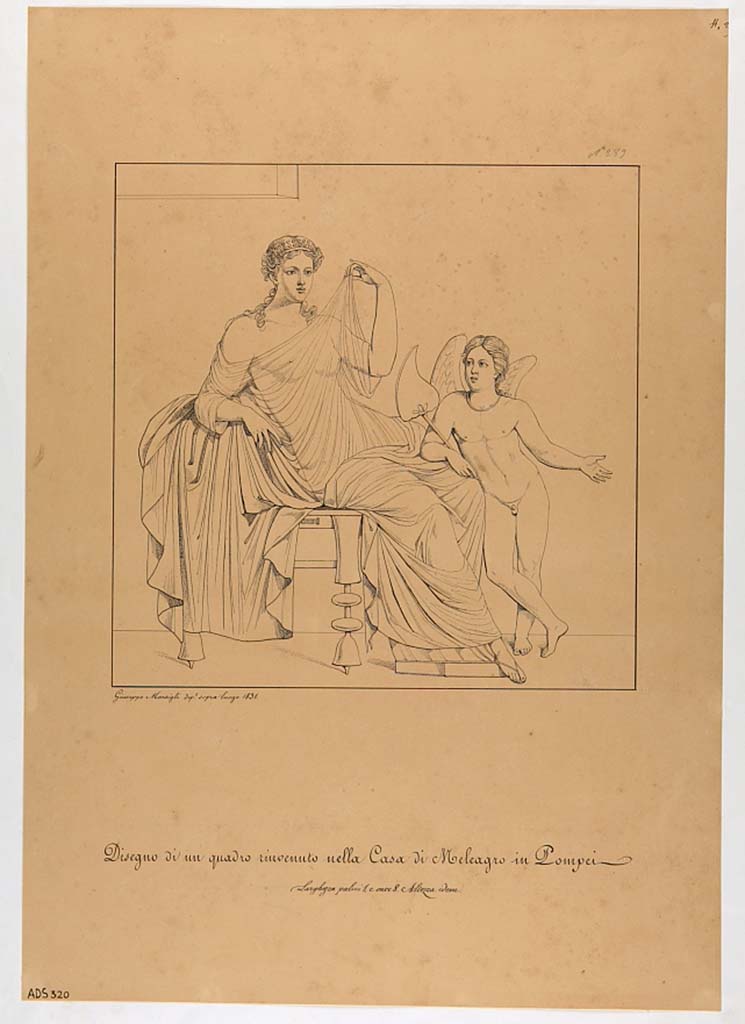
VI.9.2 Pompeii. Drawing by Giuseppe Marsigli, dated 1831 of female figure and cupid from room 28.
Now in Naples Archaeological Museum. Inventory number ADS 320.
Photo © ICCD. https://www.catalogo.beniculturali.it
Utilizzabili alle condizioni della licenza Attribuzione
- Non commerciale - Condividi allo stesso modo 2.5 Italia (CC BY-NC-SA 2.5 IT)
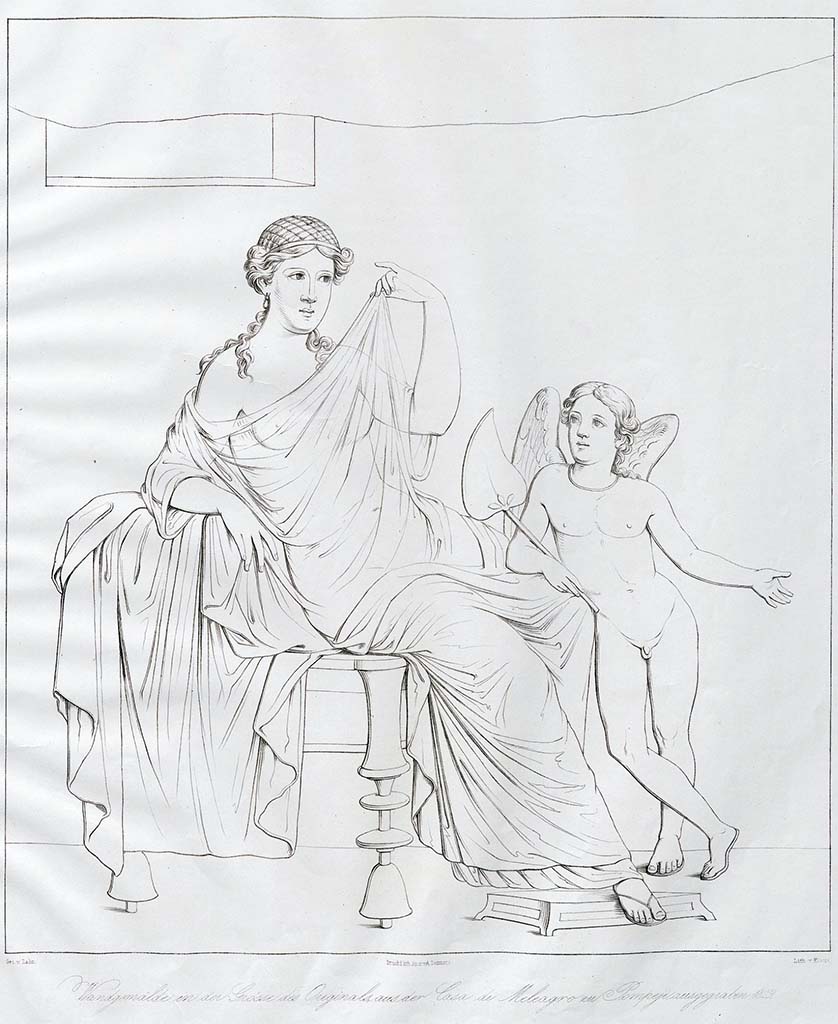
VI.9.2 Pompeii. Pre-June 1854. Drawing by Zahn of female figure, possibly Helen, and cupid from room 28.
See Zahn, W., 1852-59. Die schönsten Ornamente und merkwürdigsten Gemälde aus Pompeji, Herkulanum und Stabiae: III. Berlin: Reimer, taf. 58.
Part: 1 2 3 4 5 6 7 8 9 10 11 12 13 14 15 16 17 18 Plan