HGW20 Pompeii. Herculaneum Gate West Side. Tomb of C. Calventius Quietus.
Cenotafia di Calvenzio. (Eschebach West
20, Kockel Süd 20).
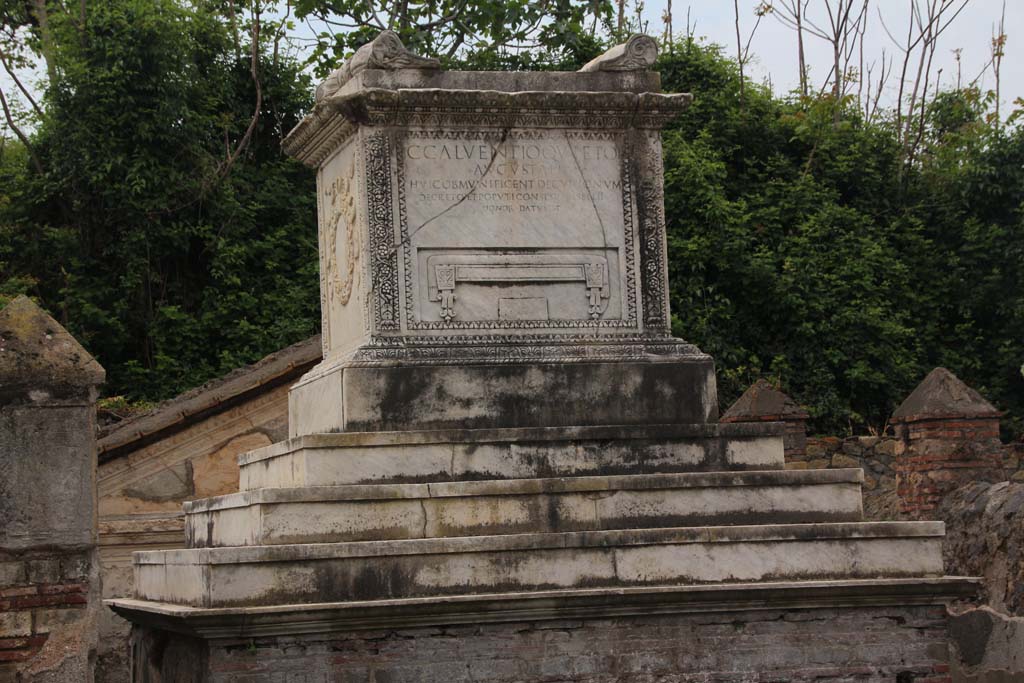
HGW20 Pompeii. April 2014. Looking towards
east side on Via dei Sepolcri. Photo courtesy of Klaus Heese.
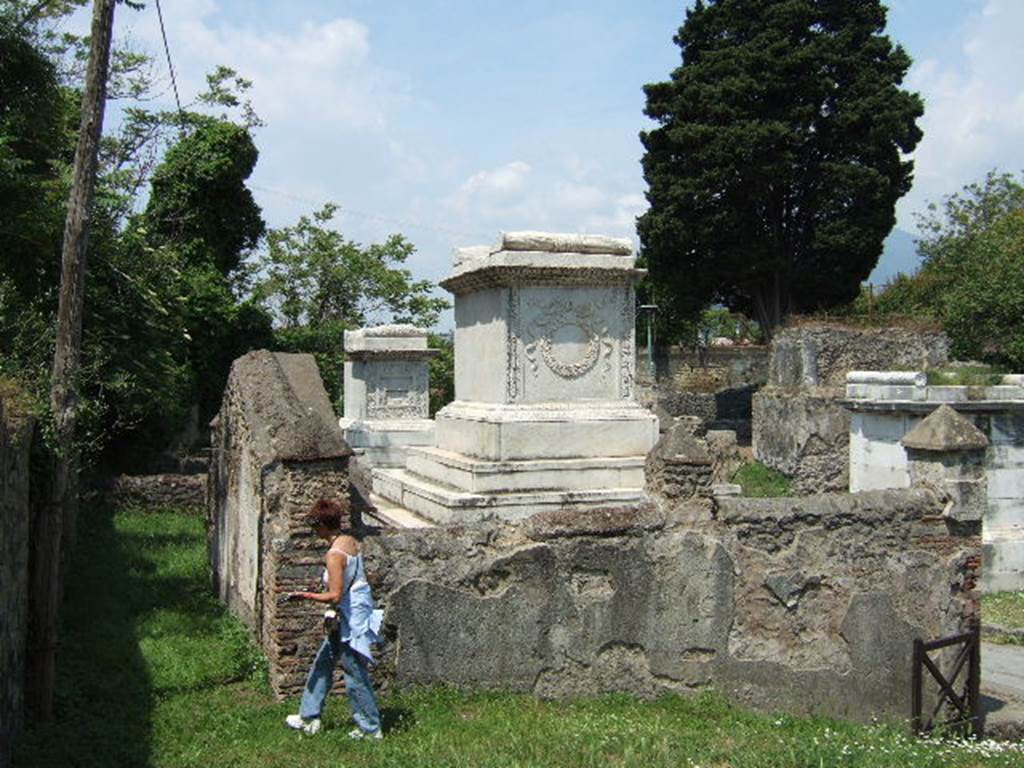
HGW20 Pompeii. May 2006. Looking north-east.
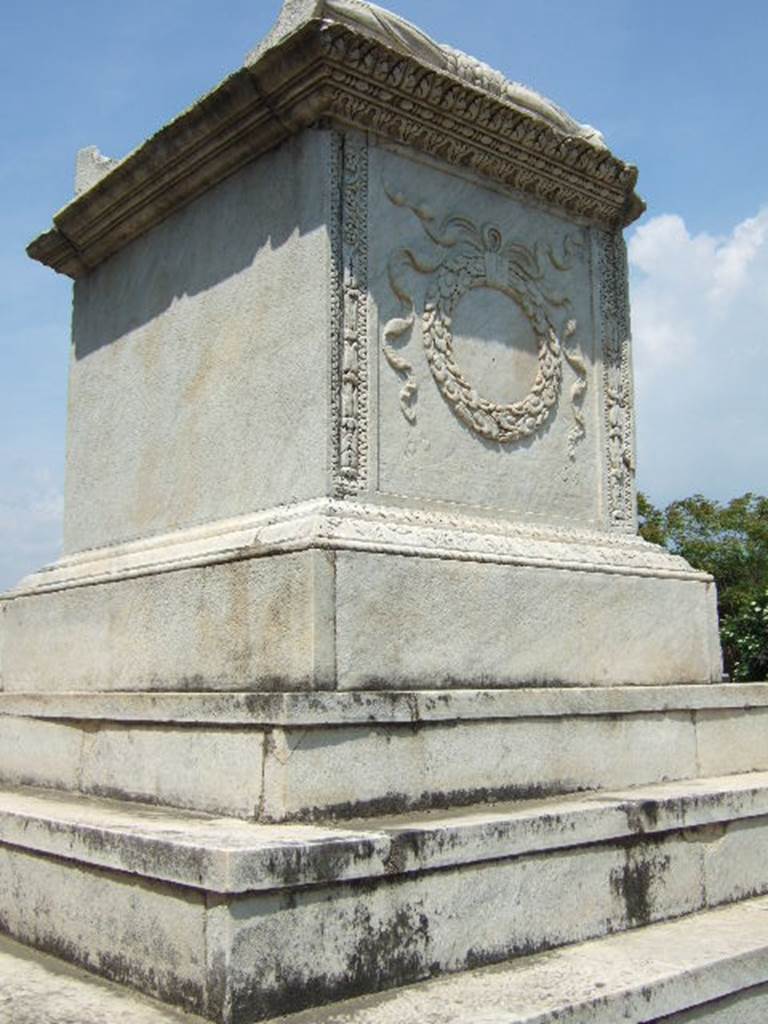
HGW20 Pompeii. May 2006. West, and south sides of marble altar with wreath.
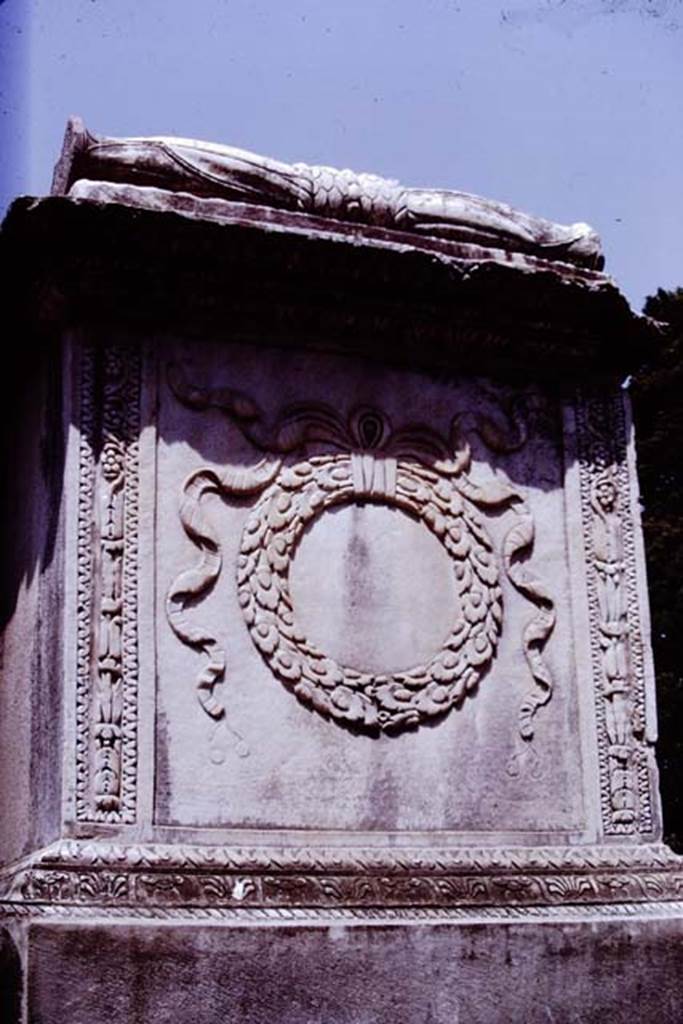
HGW20 Pompeii. 1970. South side of tomb, with wreath decoration.
Photo by Stanley A. Jashemski.
Source: The Wilhelmina and Stanley A. Jashemski archive in the University of Maryland Library, Special Collections (See collection page) and made available under the Creative Commons Attribution-Non Commercial License v.4. See Licence and use details.
J70f0602
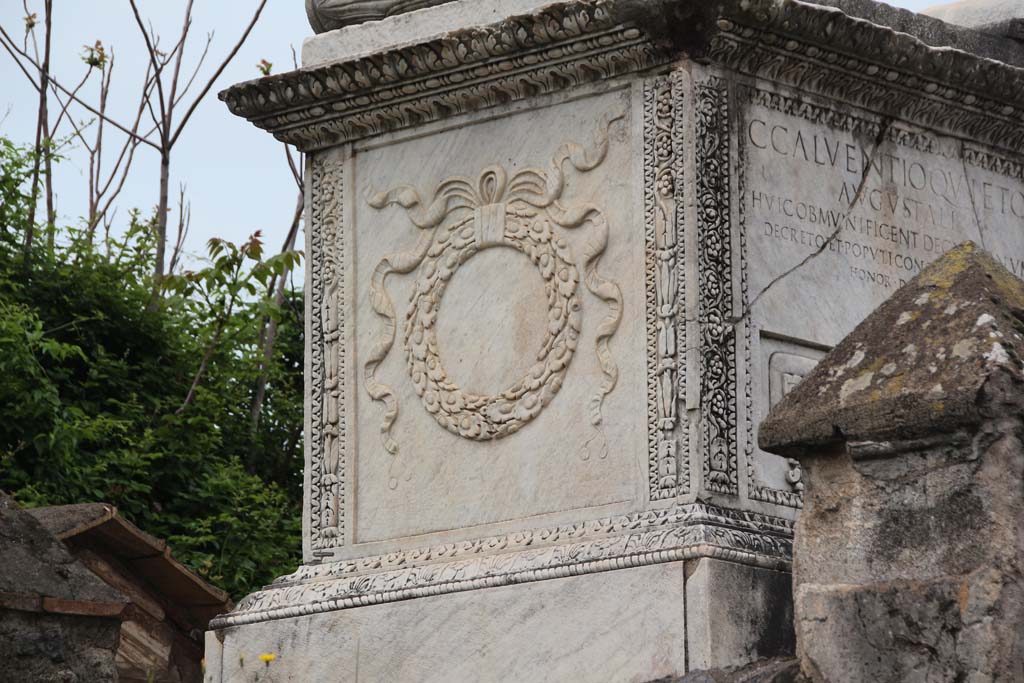
HGW20 Pompeii. April 2014. Detail
from south and east sides of marble altar. Photo courtesy of Klaus Heese.
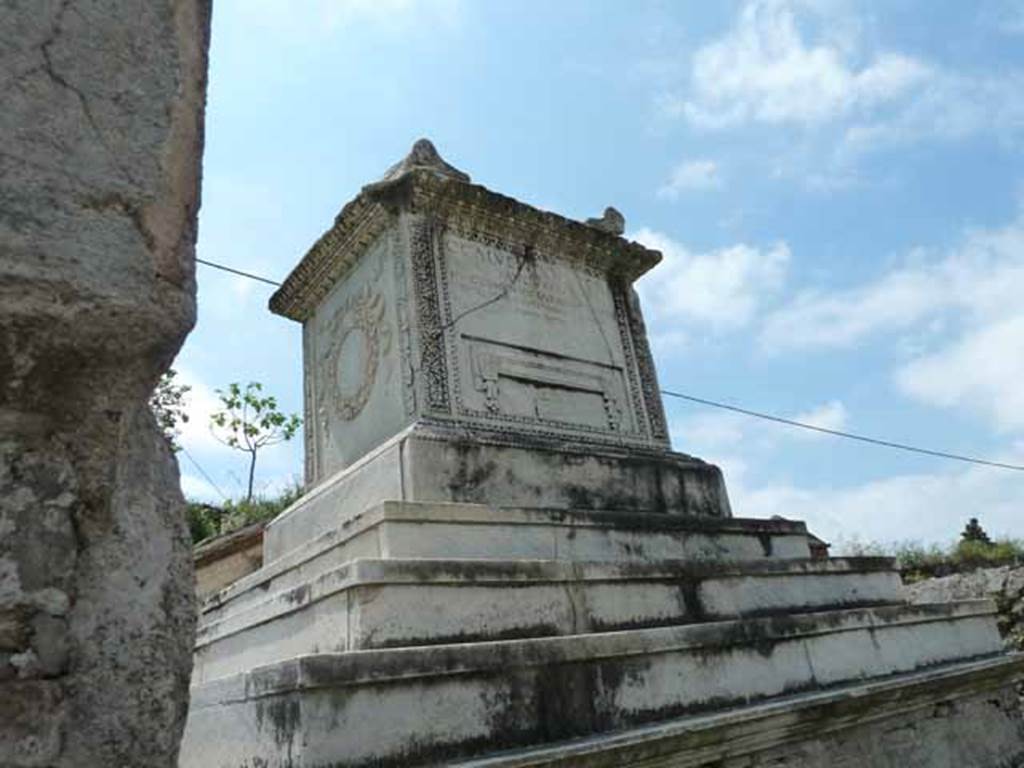
HGW20 Pompeii. May 2010. South and east sides of marble altar.
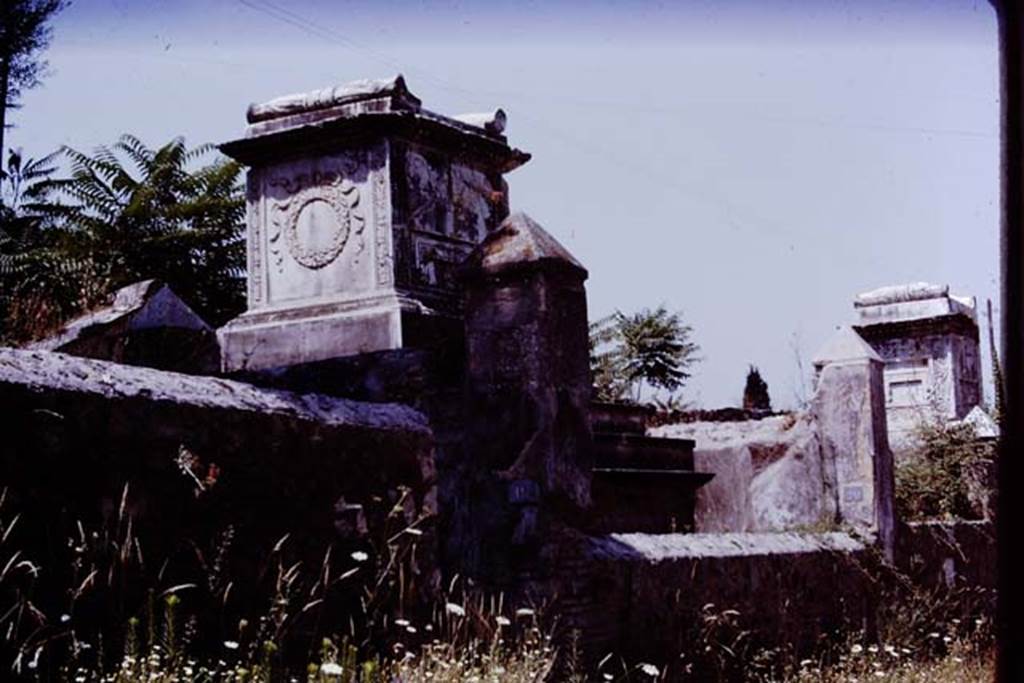
HGW20 Pompeii. 1970. South and east sides of marble altar. Photo by Stanley A. Jashemski.
Source: The Wilhelmina and Stanley A. Jashemski archive in the University of Maryland Library, Special Collections (See collection page) and made available under the Creative Commons Attribution-Non Commercial License v.4. See Licence and use details.
J70f0603
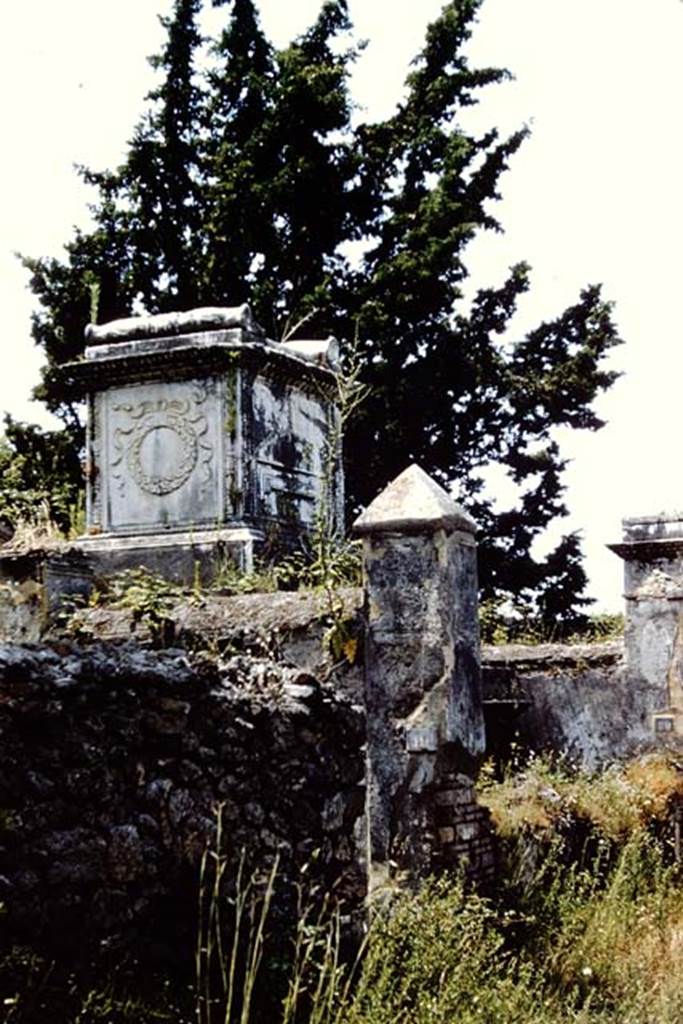
HGW20 Pompeii. 1961. Looking towards the south-east corner. Photo by Stanley A. Jashemski.
Source: The Wilhelmina and Stanley A. Jashemski archive in the University of Maryland Library, Special Collections (See collection page) and made available under the Creative Commons Attribution-Non Commercial License v.4. See Licence and use details.
J61f0624
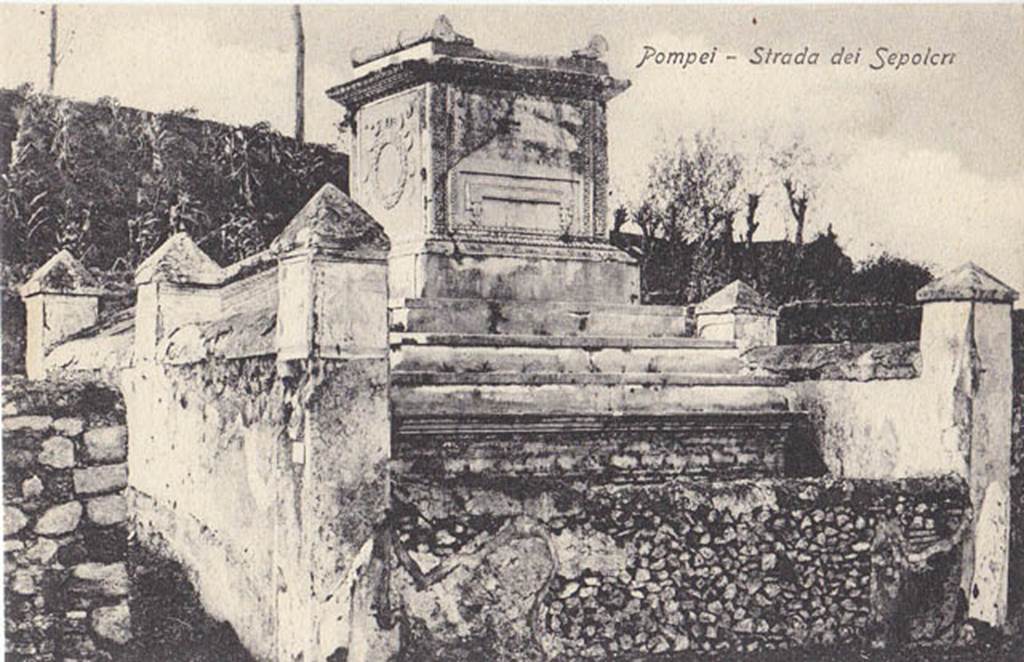
HGW20 Pompeii. Old postcard by Trampetti. East side of tomb. Photo courtesy of Drew Baker.
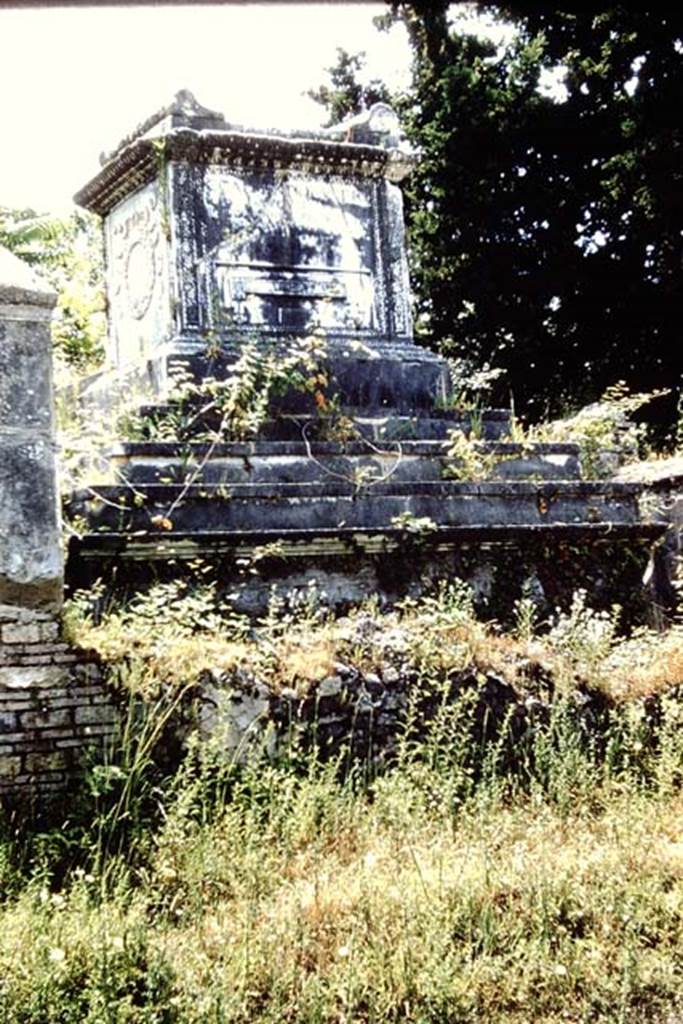
HGW20 Pompeii. 1961. East side of tomb. Photo by Stanley A. Jashemski.
Source: The Wilhelmina and Stanley A. Jashemski archive in the University of Maryland Library, Special Collections (See collection page) and made available under the Creative Commons Attribution-Non Commercial License v.4. See Licence and use details.
J61f0625
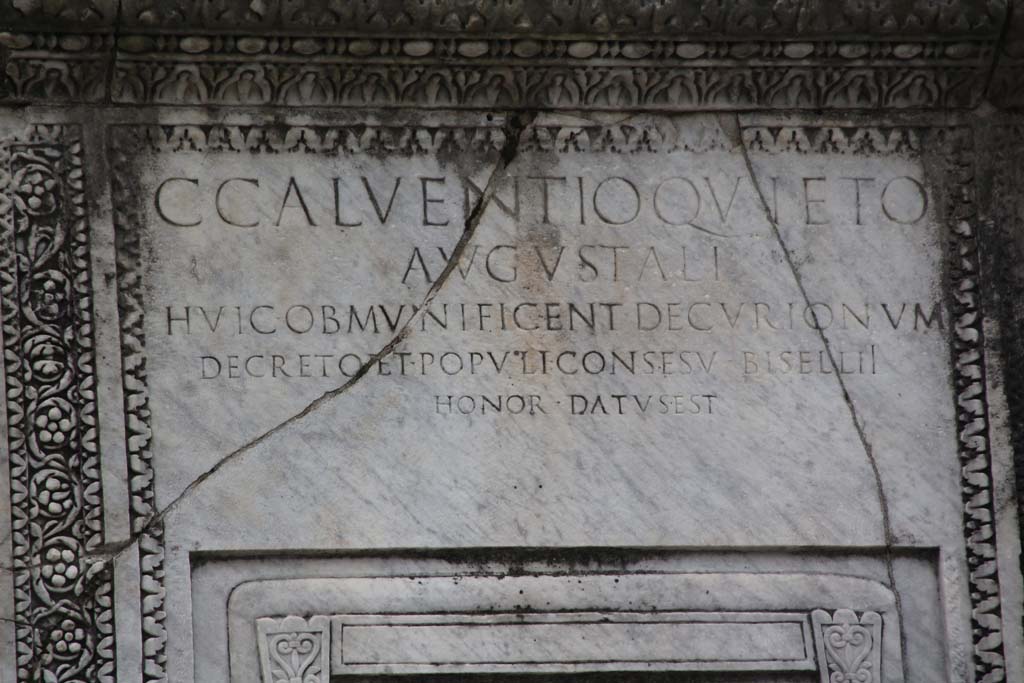
HGW20 Pompeii. April 2014. Looking towards east side of marble altar with inscription.
Photo courtesy of Klaus Heese.
![HGW20 Pompeii. May 2006. North side of marble altar with inscription and bisellium.
The inscription reads:
C. CALVENTIO QVIETO
AVGVSTALI
HVIC OB MVNIFICENT DECVRIONVM
DECRETO ET POPVLI CONSESV BISELLII
HONOR DATVS EST
According to Epigraphik-Datenbank Clauss/Slaby (See www.manfredclauss.de) this reads
C(aio) Calventio Quieto
Augustali
huic ob munificent(iam) decurionum
decreto et populi conse(n)su bisellii
honor datus est [CIL X 1026]
Mau translates this as:
To the memory of Gaius Calventius Quietus, member of the Brotherhood of Augustus.
On account of his generosity the honour of a seat of double width was conferred upon him by the vote of the city council and the approval of the people.
See Mau, A., 1907, translated by Kelsey, F. W., Pompeii: Its Life and Art. New York: Macmillan. (p. 421).](tombs%20hgw20_files/image022.jpg)
HGW20 Pompeii. May 2006. East side of marble altar with inscription and bisellium.
The inscription reads:
C. CALVENTIO QVIETO
AVGVSTALI
HVIC OB MVNIFICENT DECVRIONVM
DECRETO ET POPVLI CONSESV BISELLII
HONOR DATVS EST
According to Epigraphik-Datenbank Clauss/Slaby (See www.manfredclauss.de) this reads
C(aio) Calventio
Quieto
Augustali
huic ob
munificent(iam) decurionum
decreto et populi
conse(n)su bisellii
honor datus
est [CIL X 1026]
Mau translates this as:
To the memory of Gaius Calventius Quietus, member of the Brotherhood of Augustus.
On account of his generosity the honour of a seat of double width was conferred upon him by the vote of the city council and the approval of the people.
See Mau, A., 1907, translated by Kelsey, F. W., Pompeii: Its Life and Art. New York: Macmillan. (p. 421).
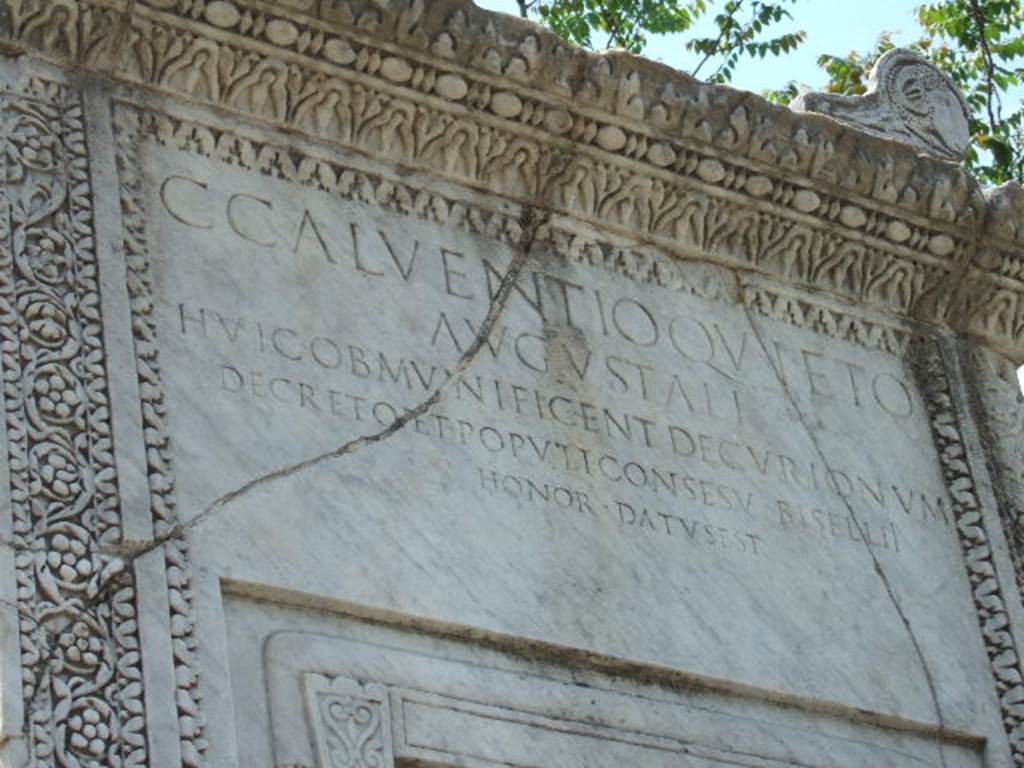
HGW20 Pompeii. May 2006. Detail of east side of marble altar.
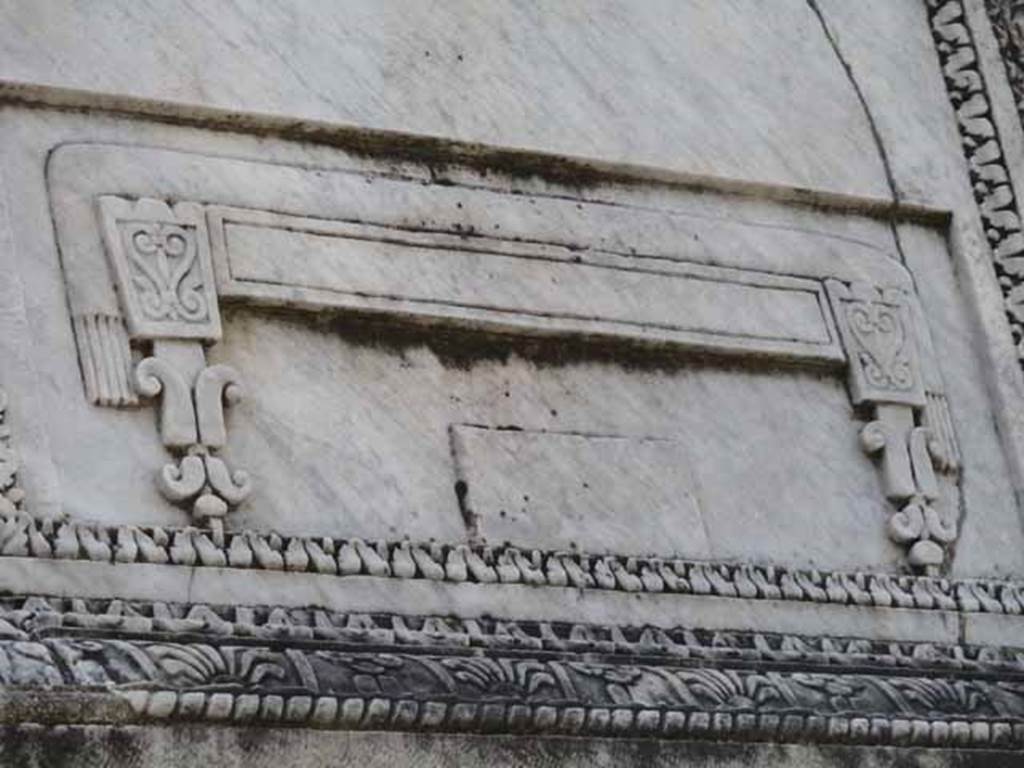
HGW20 Pompeii. May 2010. East side. Detail of his bisellium, or seat of double width.
The square footstool in the middle implies that the seat was intended for a single person.
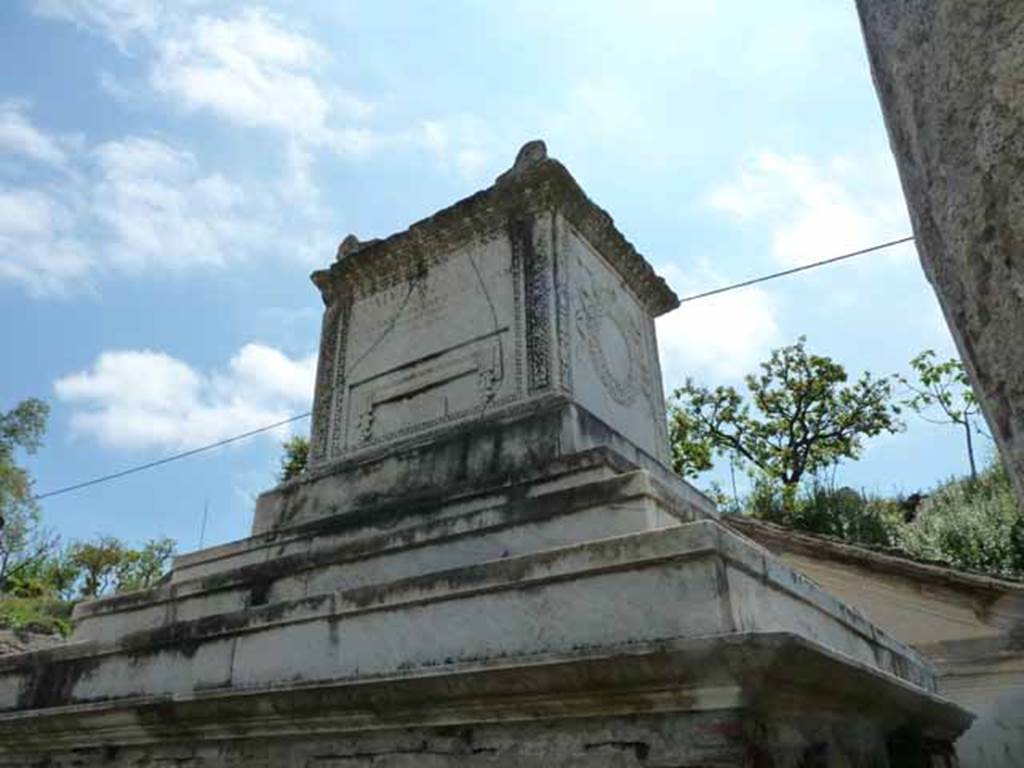
HGW20 Pompeii. May 2010. East and north sides of marble altar.
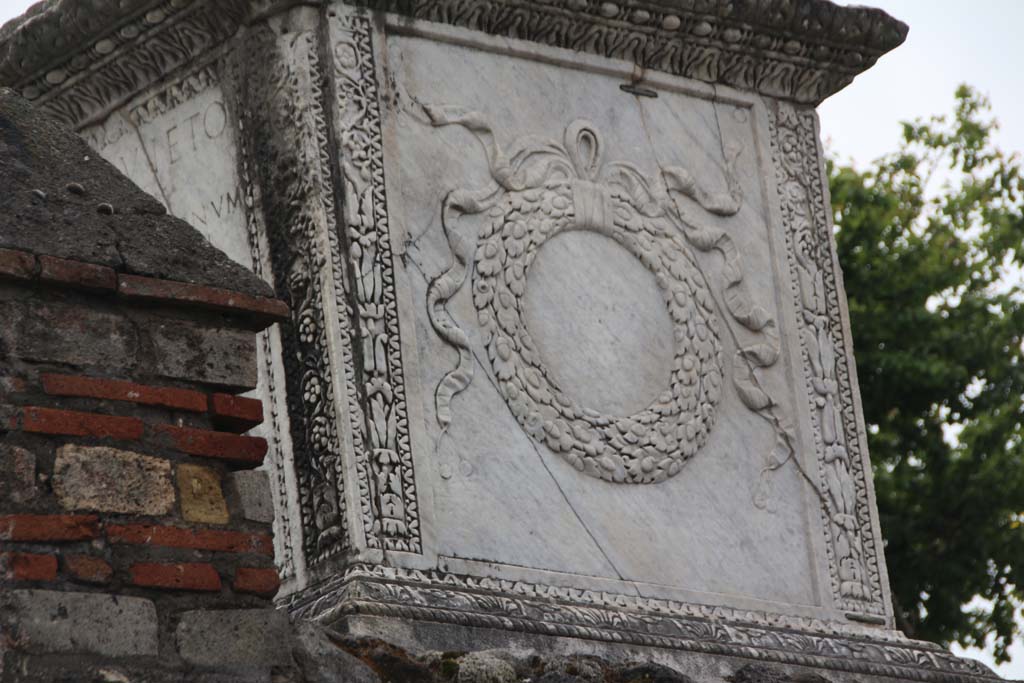
HGW20 Pompeii. April 2014. Detail of north
side of marble altar. Photo courtesy of Klaus Heese.
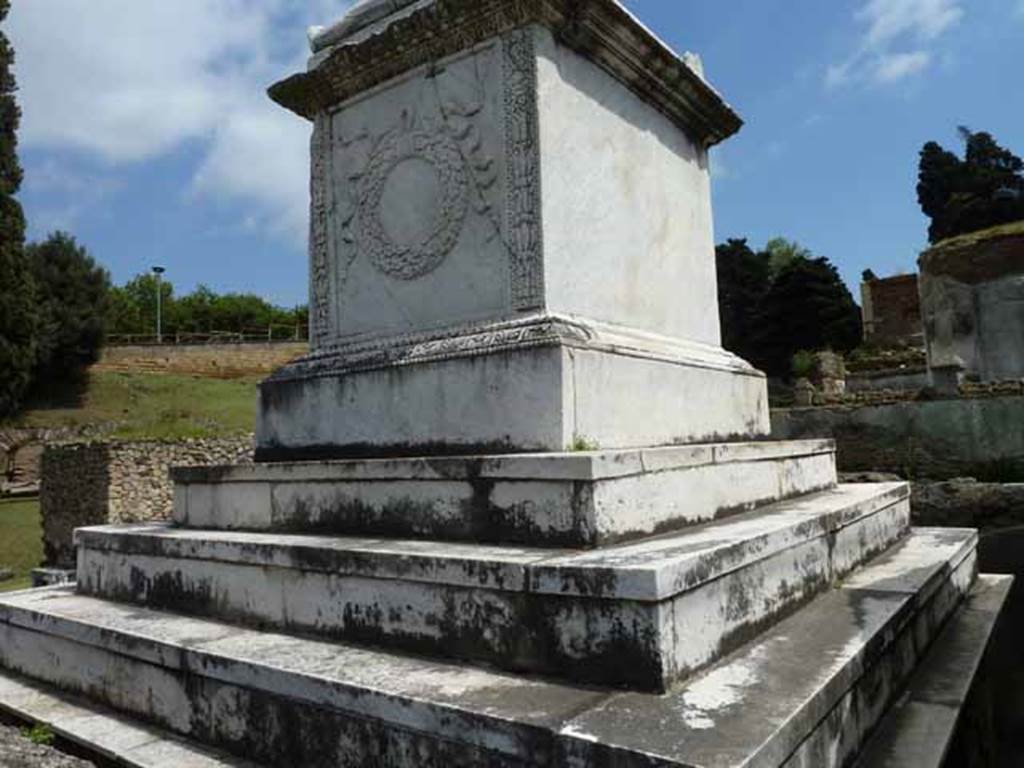
HGW20 Pompeii. May 2010. North and west sides of marble altar.
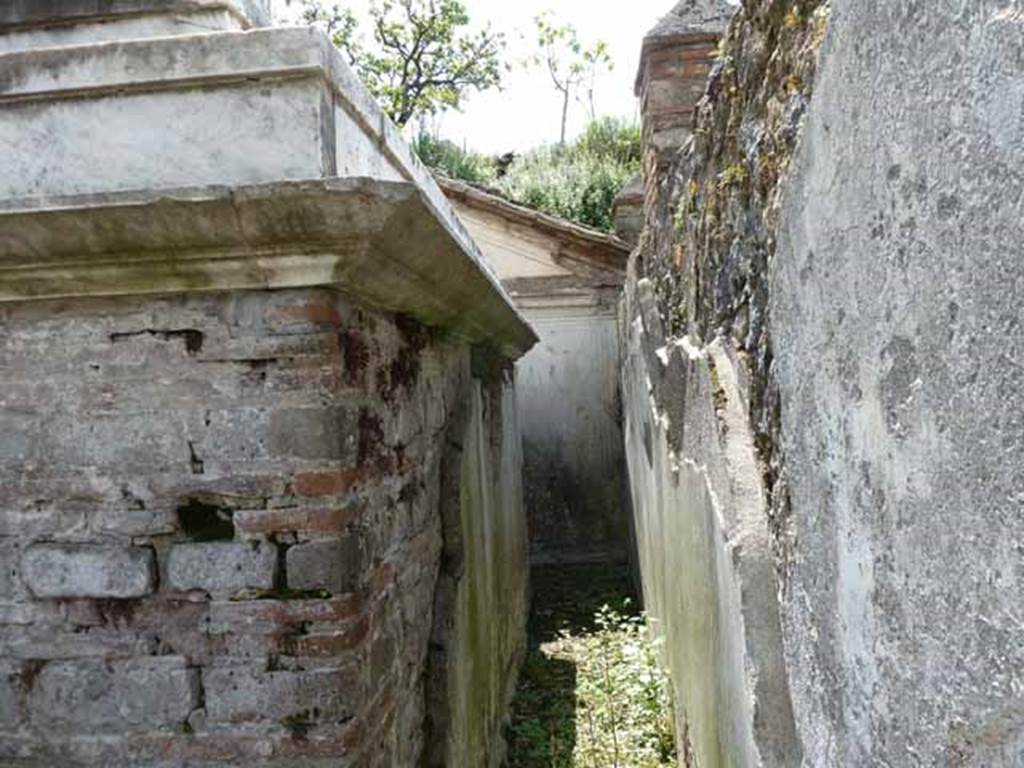
HGW20 Pompeii. May 2010. Looking south along west side of base.
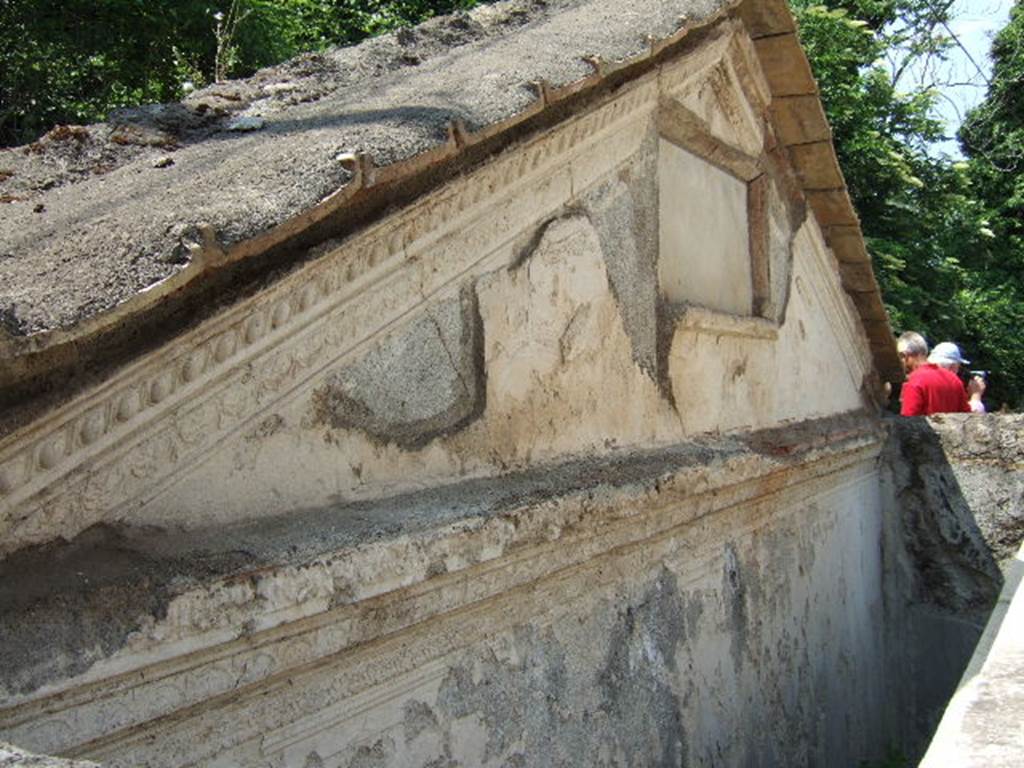
HGW20 Pompeii. May 2006. Looking west along inside south wall of tomb.
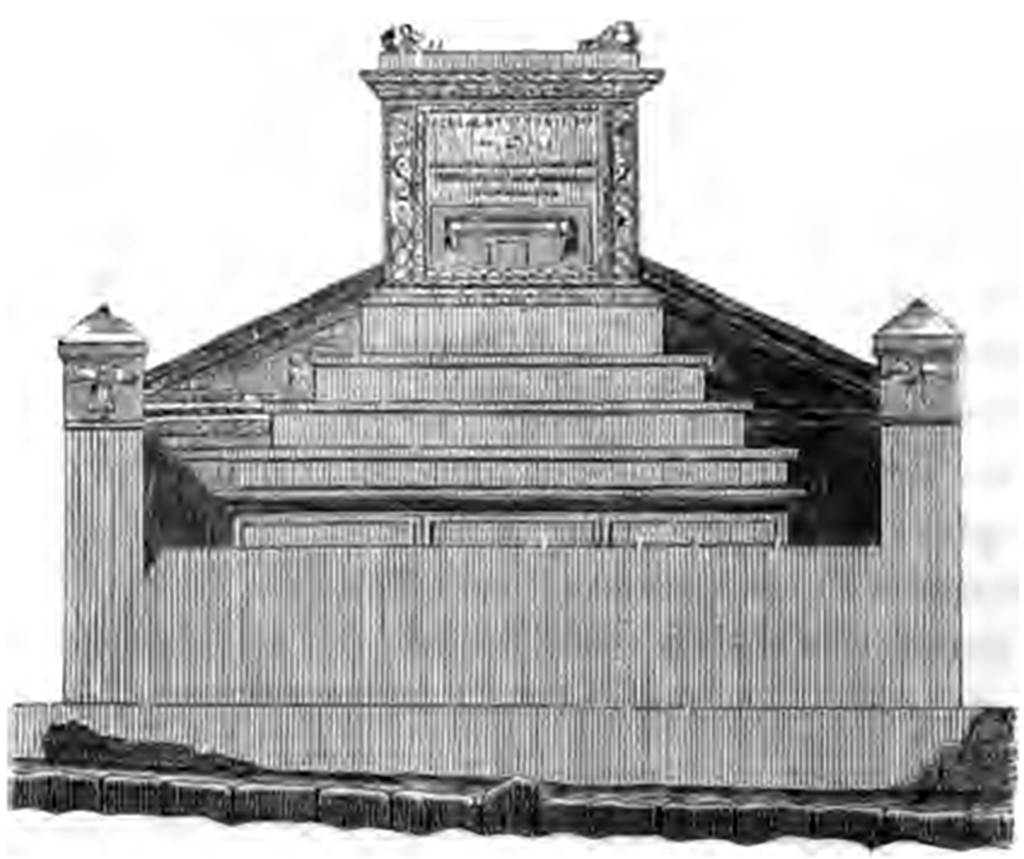
HGW20 Pompeii. 1884 drawing of east side. The location of some of the stucco reliefs on the small pilasters can be seen.
See Overbeck J., 1884. Pompeji in seinen Gebäuden, Alterthümen und Kunstwerken. Leipzig: Engelmann. (p. 416, fig. 216).
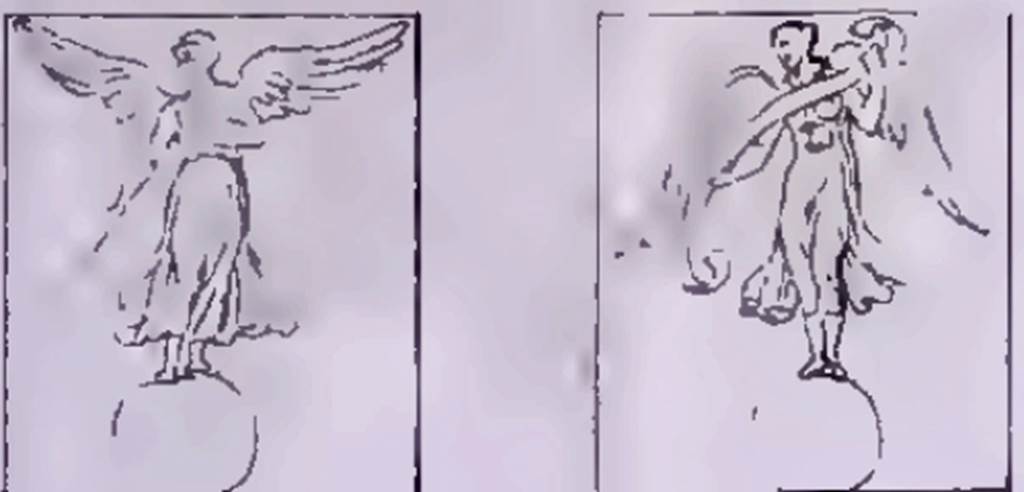
HGW20 Pompeii. 1813 drawings of winged Victoria from the two front pilasters of the tomb.
See Millin A.,
1813. Description des Tombeaux de Pompei.
Naples: L’Imprimerie Royale, (pl. 5 figs. 8-9).
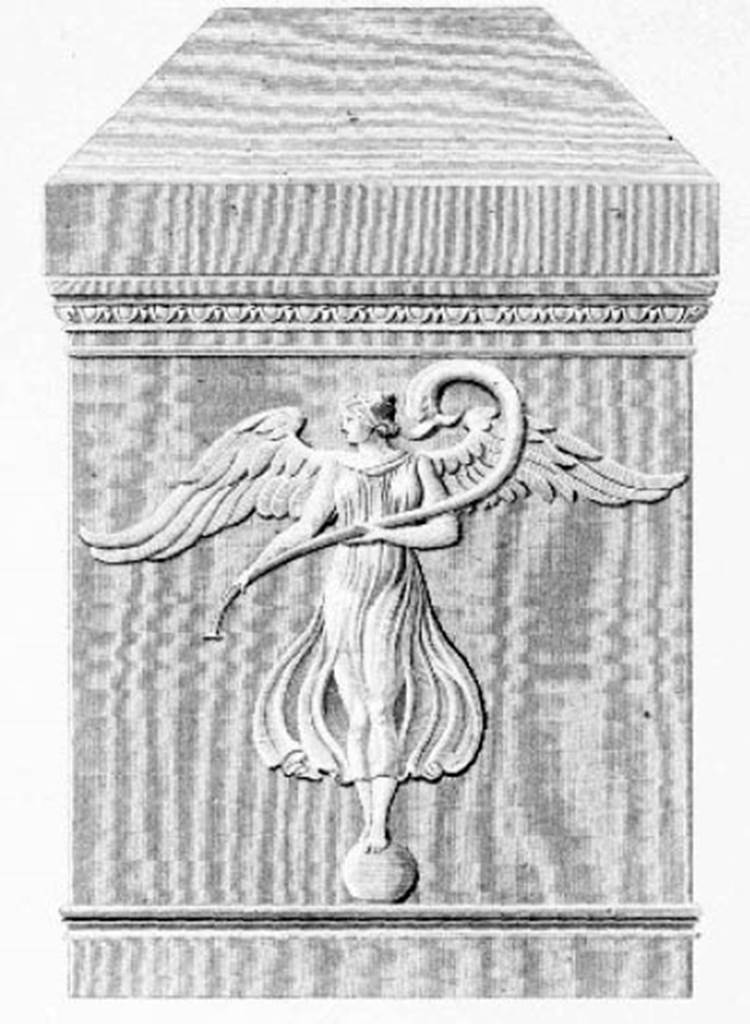
HGW20 Pompeii. 1824 drawing of stucco relief of Victoria from one of the small pilasters.
See Mazois, F.,
1824. Les Ruines de Pompei: Premiere
Partie. Paris: Didot Frères, (pl. 26,1).
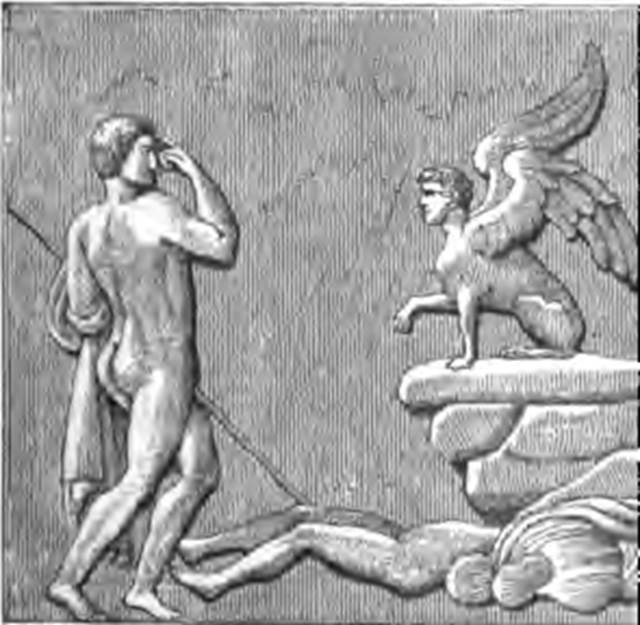
HGW20 Pompeii. 1884 drawing of stucco relief of Oedipus and the Sphinx from one of the small pilasters.
See Overbeck J., 1884. Pompeji in seinen Gebäuden, Alterthümen und Kunstwerken. Leipzig: Engelmann. (p. 417, fig. 217).
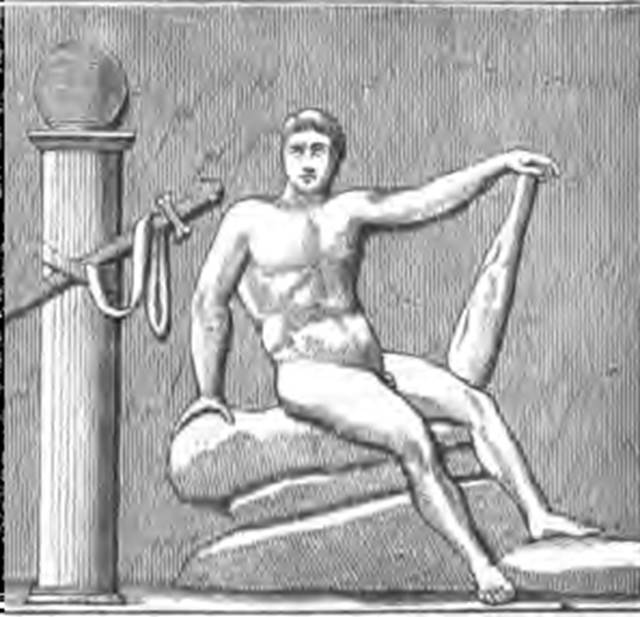
HGW20 Pompeii. 1884 drawing of stucco relief from one of the small pilasters.
Possibly Theseus in the labyrinth after overcoming the Minotaur.
See Overbeck J., 1884. Pompeji in seinen Gebäuden, Alterthümen und Kunstwerken. Leipzig: Engelmann. (p. 417, fig. 217).
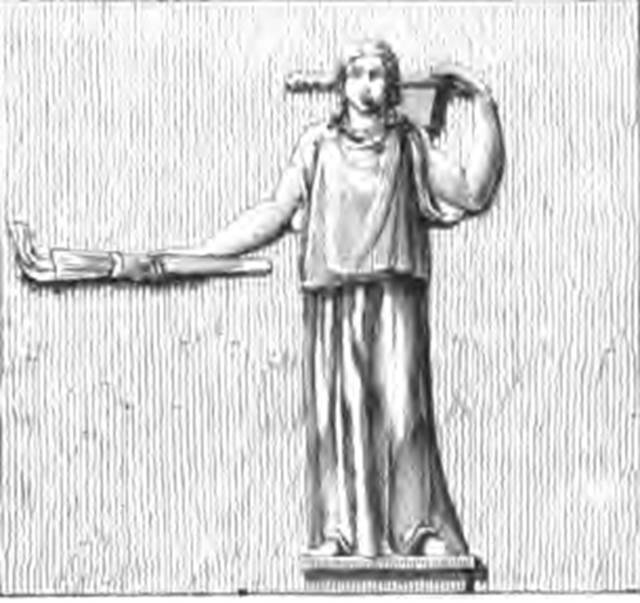
HGW20 Pompeii. 1884 drawing of stucco relief of a female figure from one of the small pilasters.
See Overbeck J., 1884. Pompeji in seinen Gebäuden, Alterthümen und Kunstwerken. Leipzig: Engelmann. (p. 418, fig. 218).