HGW16 Pompeii. Herculaneum Gate West Side. Unfinished grave?
Tomb of Tyche, slave of Julia Augusta. Tomb of Aulus Umbricius Scaurus son of Aulus?
(Eschebach West 16, Kockel Süd 16).
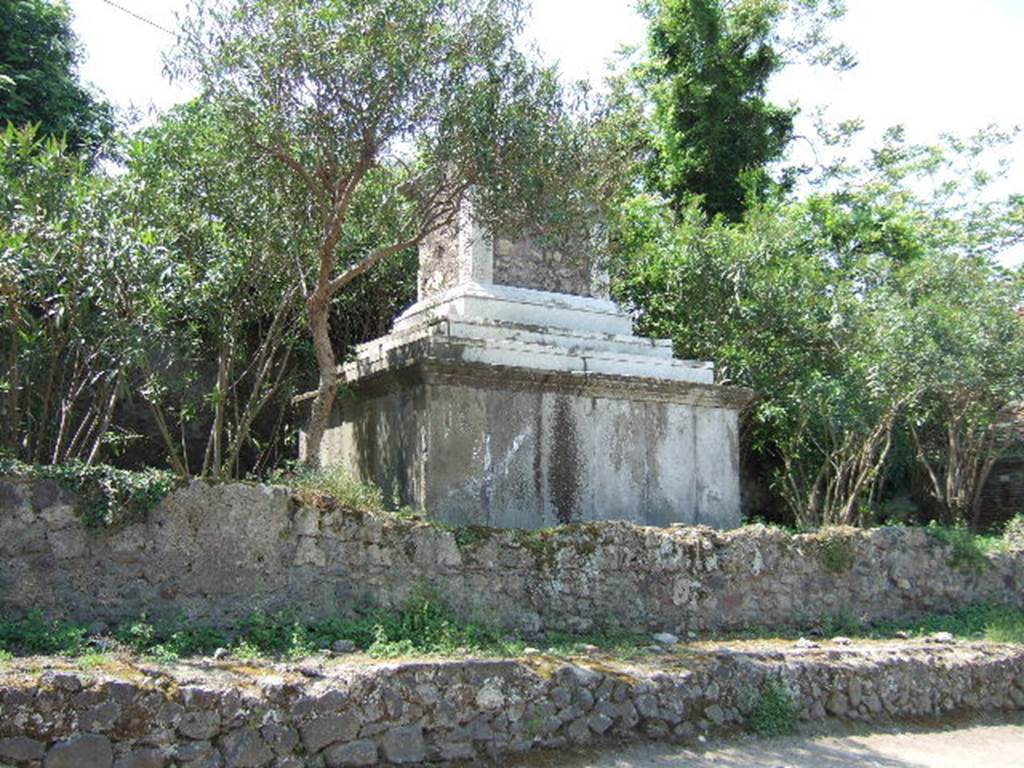
HGW16 Pompeii. May 2006. Looking west. According to Mau the tomb was unfinished at the time of the eruption.
Part of the marble veneering had not yet been added and the walls of the sepulchral chamber were in the rough.
There were also no urns in any of the five niches.
See Mau, A., 1907, translated by Kelsey F. W. Pompeii: Its Life and Art. New York: Macmillan. (p. 418).
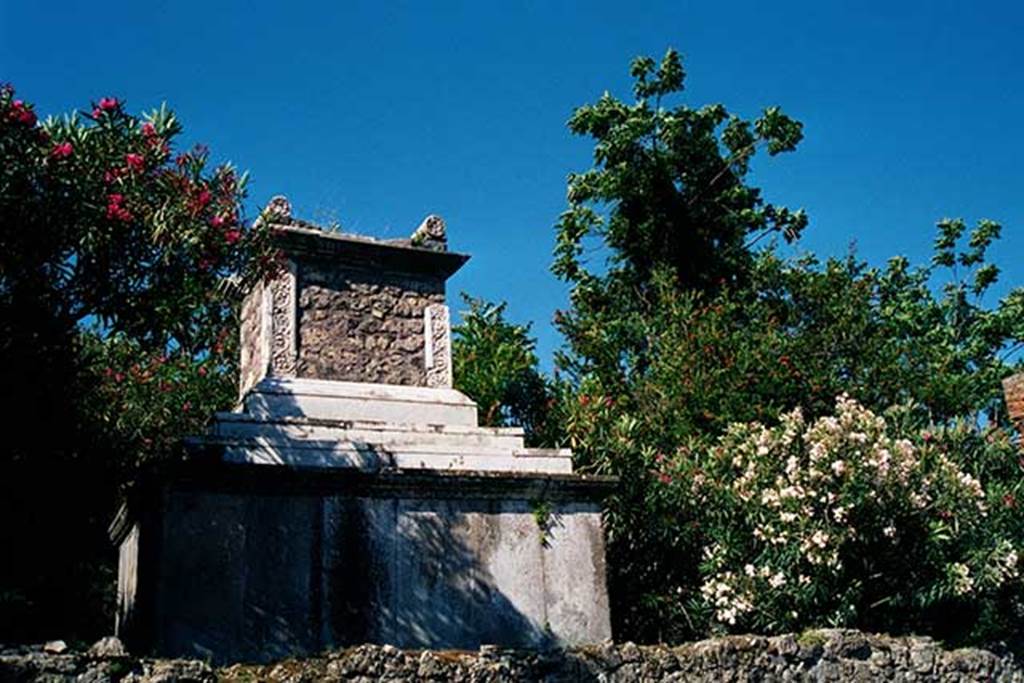
HGW16 Pompeii. June 2001. Looking west to east side of tomb. Photo courtesy Arne Andersson.
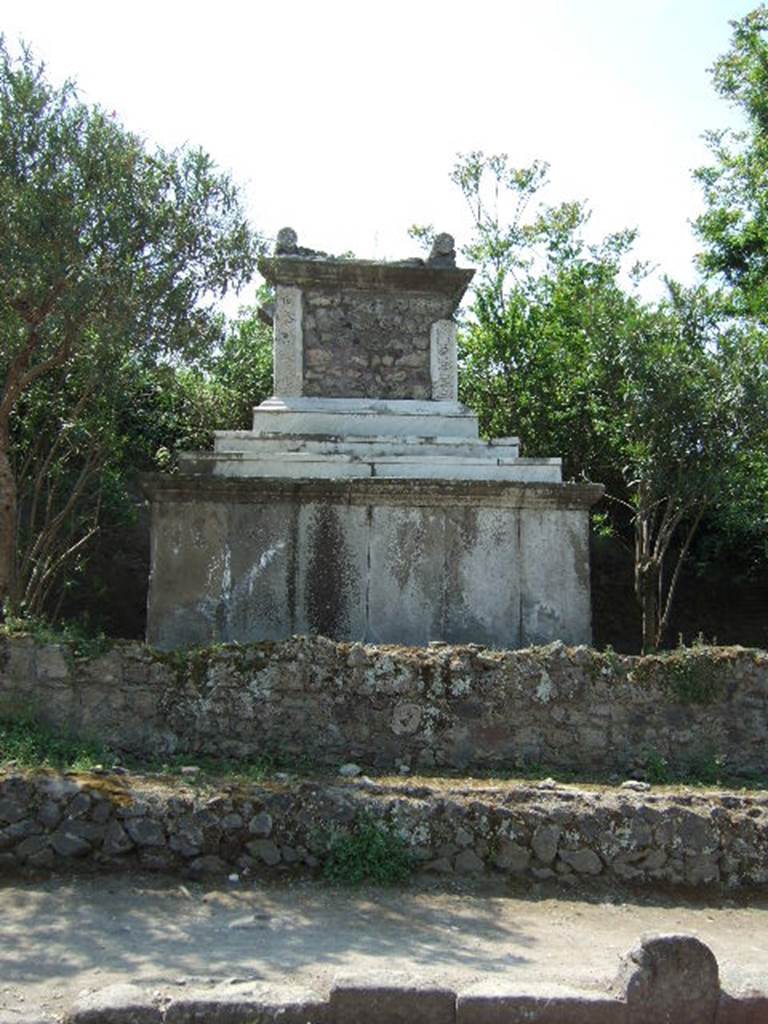
HGW16 Pompeii. May 2006. Looking west to east side of tomb.
According to Kockel, this might have been the tomb of Umbricius Scaurus.
It has also been erroneously referred to as the Tomb of Servilia.
See Kockel V., 1983. Die Grabbauten vor dem Herkulaner Tor in Pompeji. Mainz: von Zabern. (p.70-1).
![HGW16 Pompeii. 1907 drawing of marble cippus found to the west of the monument on 14th November 1812. It has the Latin inscription.
IVNONI
TYCHES IVLIAE
AVGVSTAE
VENER.
According to Epigraphik-Datenbank Clauss/Slaby (See www.manfredclauss.de) this read:
Iunoni
Tyches Iuliae
Augustae Vener(es) [CIL X 1023]
Mau translates this as: “To the Genius of Tyche, slave of Julia Augusta, of the cult of Venus”.
See Mau, A., 1907, translated by Kelsey F. W. Pompeii: Its Life and Art. New York: Macmillan. (p. 418, Fig. 240).](tombs%20hgw16_files/image009.jpg)
HGW16 Pompeii. 1907 drawing of marble cippus found to the west of the monument on 14th November 1812.
It has the Latin inscription.
IVNONI
TYCHES IVLIAE
AVGVSTAE VENER.
According to Epigraphik-Datenbank Clauss/Slaby (See www.manfredclauss.de) this read:
Iunoni
Tyches Iuliae
Augustae
Vener(es) [CIL X 1023]
Mau translates this as: “To the Genius of Tyche, slave of Julia Augusta, of the cult of Venus”.
See Mau, A., 1907, translated by Kelsey F. W. Pompeii: Its Life and Art. New York: Macmillan. (p. 418, Fig. 240).
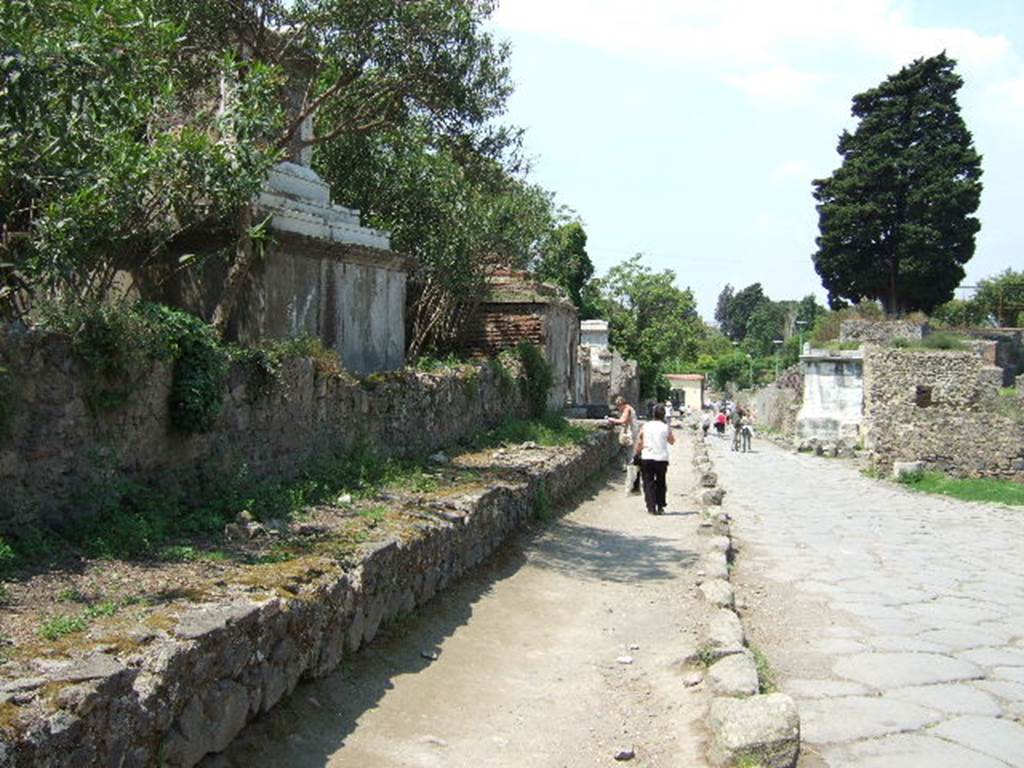
HGW16 Pompeii. May 2006. Looking north along Via dei Sepolcri, from near tomb.
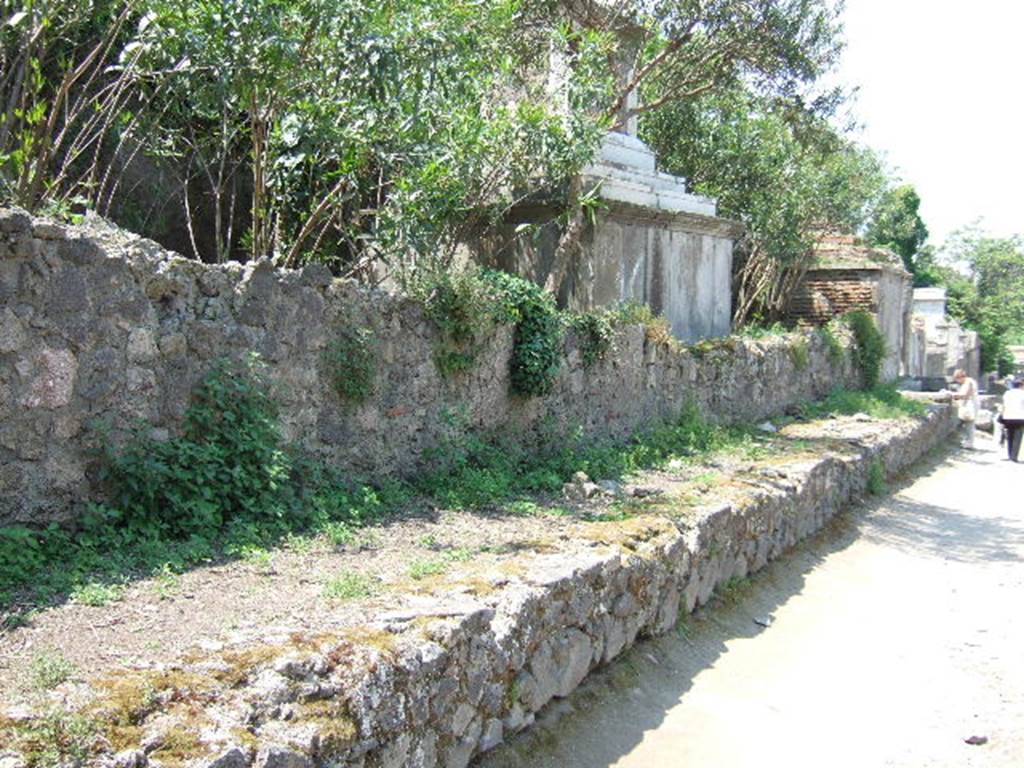
HGW16 Pompeii. May 2006. Looking north along front of tomb on Via dei Sepolcri.
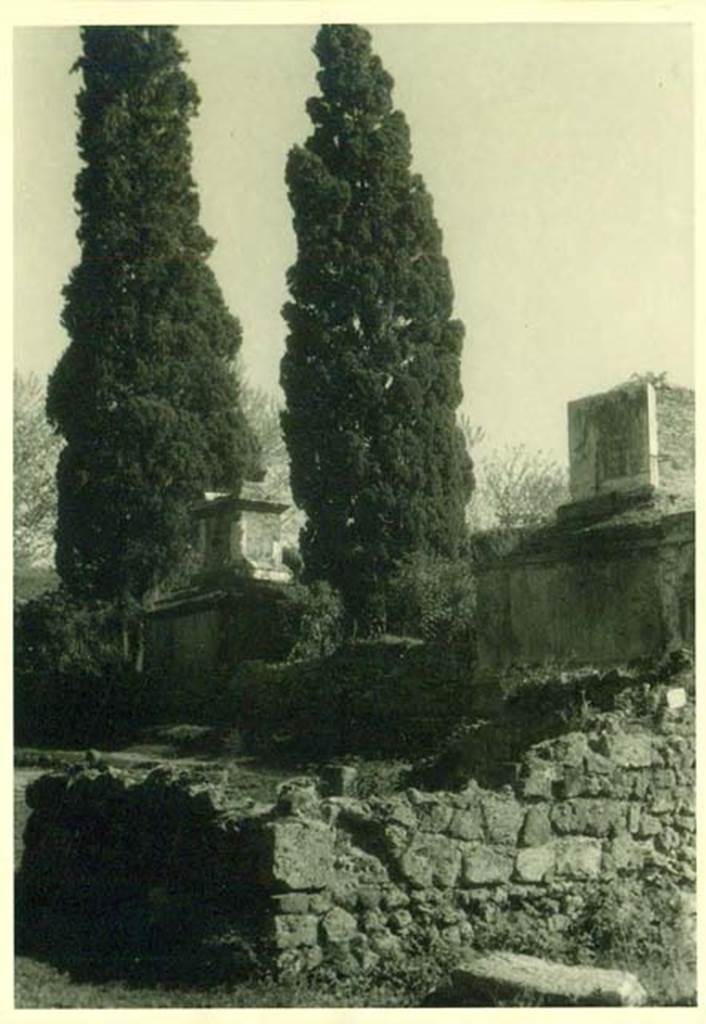
HGW16 and HGW17 Pompeii. 1940. Looking south across front of tombs on Via dei Sepolcri.
Photo courtesy of Rick Bauer.