HGW15a Pompeii. Herculaneum Gate West Side. Entrance to Villa detta di Cicerone.
Linked to HGW06. (Eschebach West 15, Kockel Süd 15, SANP 15a).
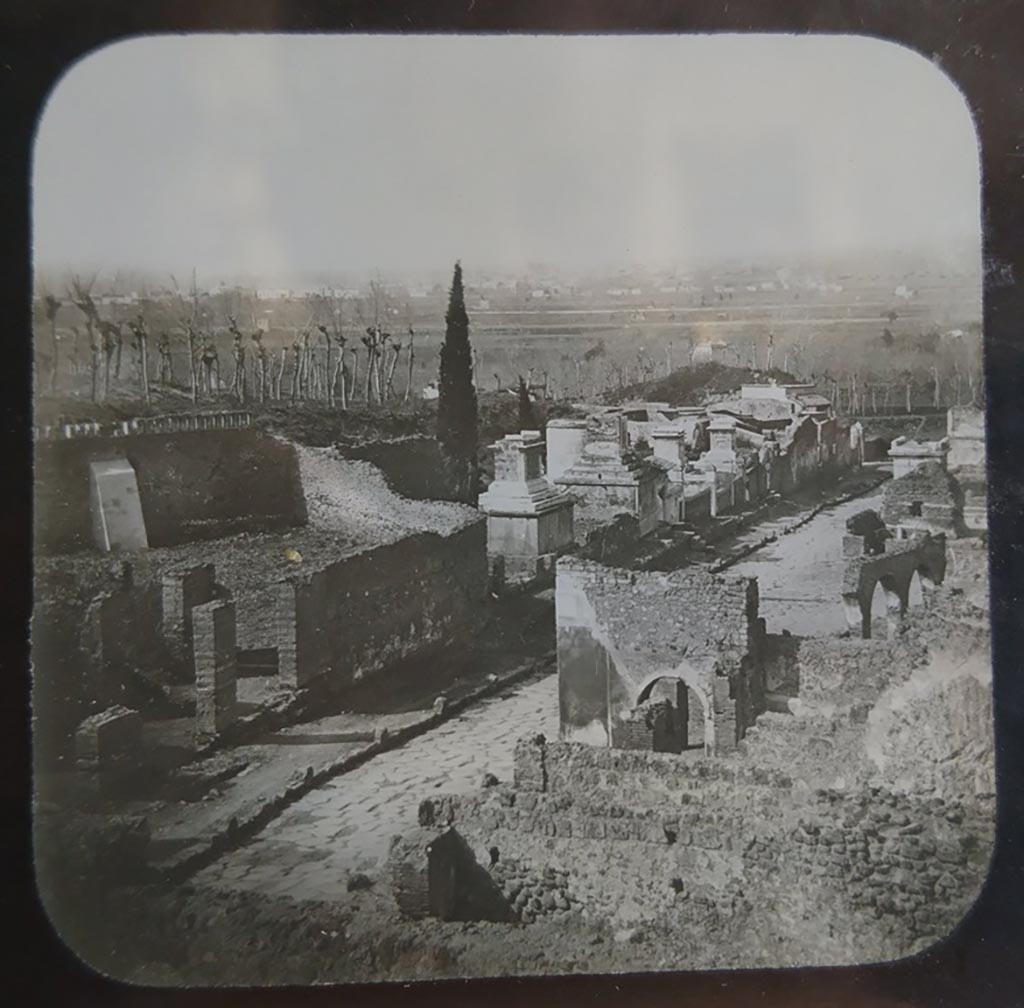
HGW15 and HGW15a Pompeii, on left. Part of the Villa of Cicero, Pompeii. c.1900. C. and G. Lantern slide published by
A. Laverne.
Looking north-west
across Via dei Sepolcri, with entrance doorways and peristyle of Villa of
Cicero, visible on upper left.
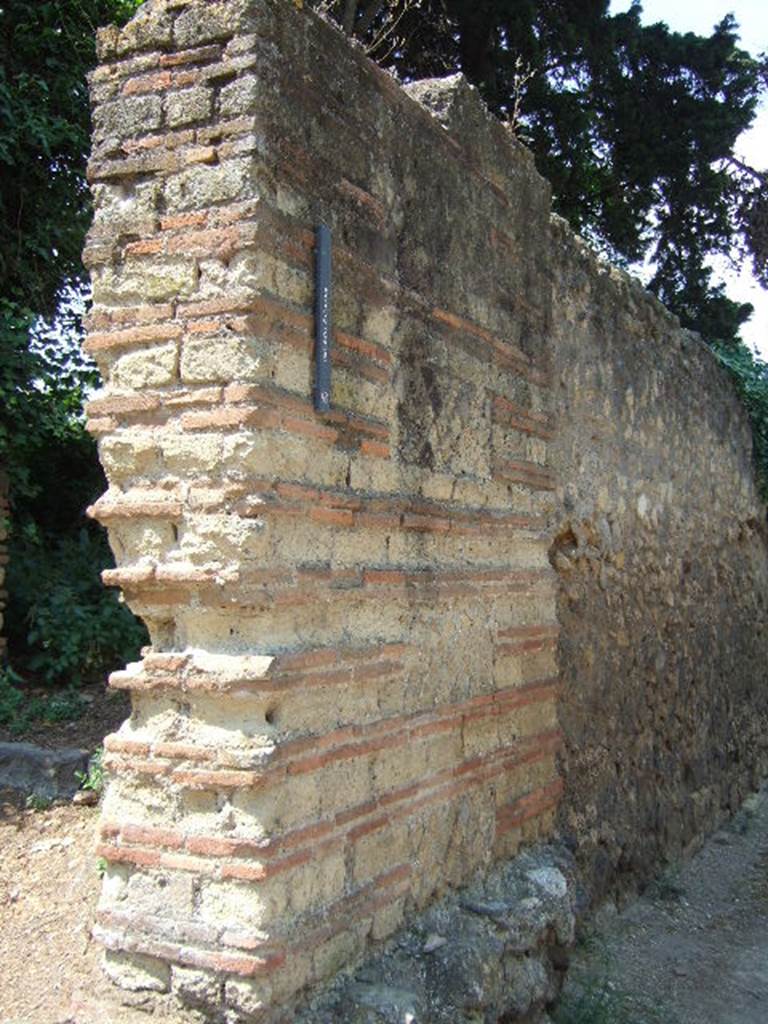
HGW15a Pompeii. May 2006. This entrance is in the west side of the shop HGW15.
It leads in to the Villa of Cicero and is numbered separately as 15a by SANP.
The strip on the outside wall says Villa detta di Cicerone (Villa said to be that of Cicero).
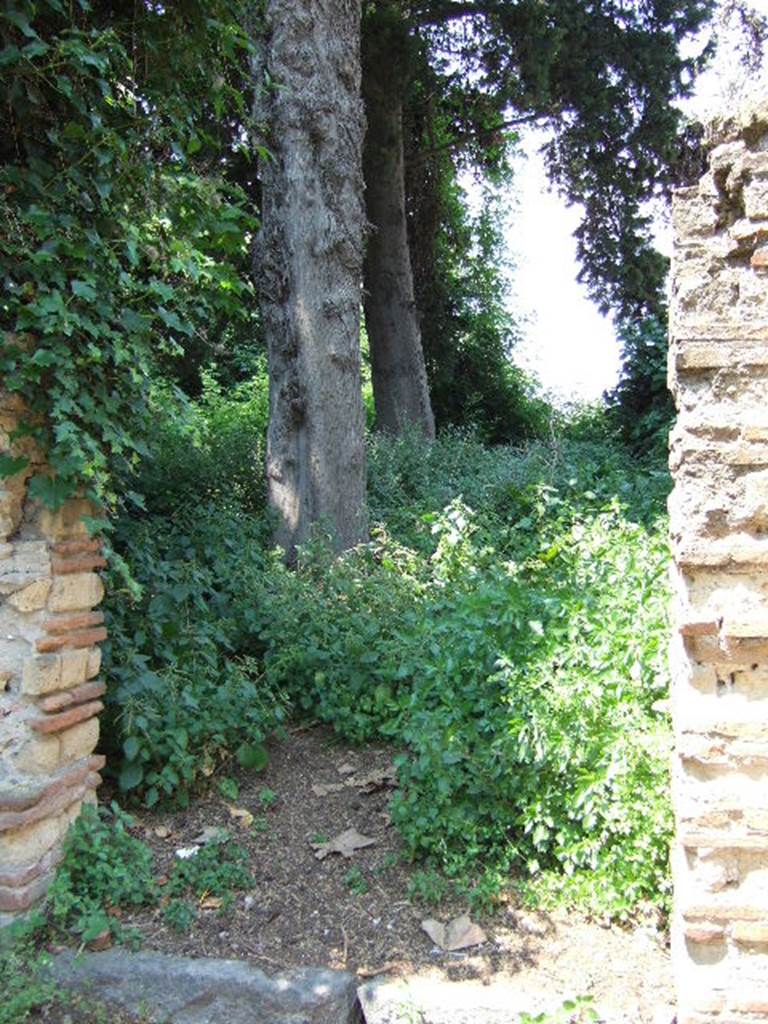
HGW15a Pompeii. May 2006. Looking north through entrance doorway.

HGW15a Pompeii. October 2023. Looking north. Photo courtesy of Klaus Heese.
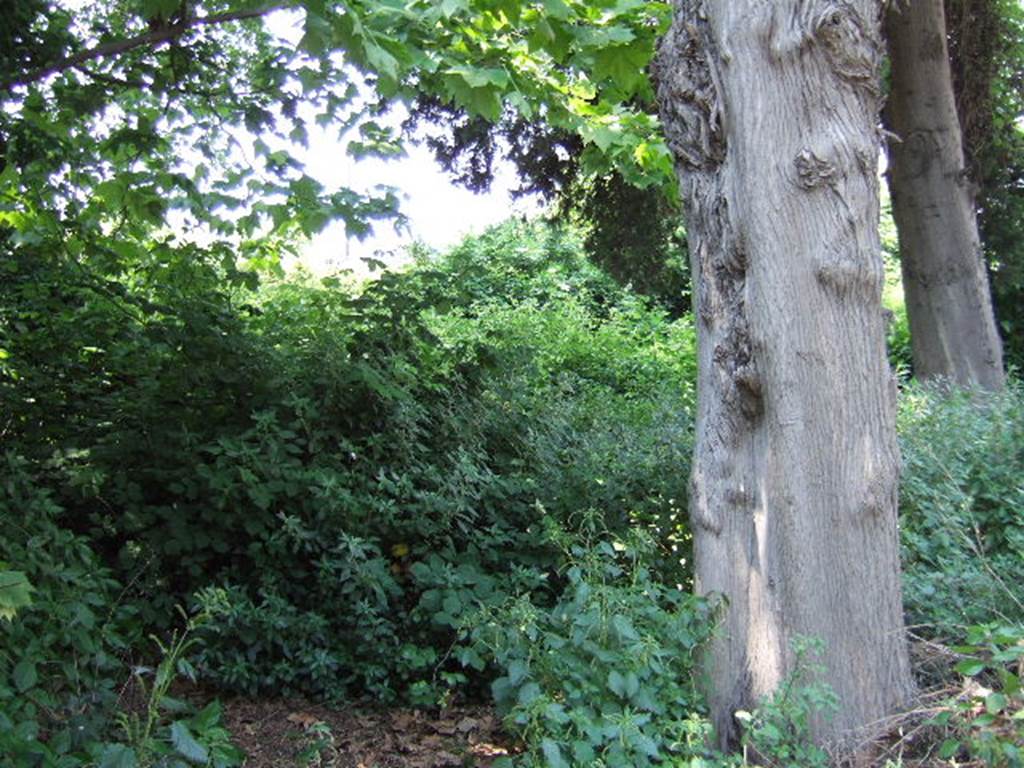
HGW15a Pompeii. October 2023. Looking west towards area of
peristyle, of so called “Villa of Cicero”. Photo courtesy of Klaus Heese.
According to Jashemski, this villa was partially excavated briefly in 1749, again in 1763, then covered over again, and only sketchily published.
The large peristyle according to the plan in Mau-Kelsey (plan V, between pp.404 and 405) was enclosed on 4 sides by a portico supported by 36 pillars.
See Jashemski, W. F., 1993. The Gardens of Pompeii, Volume II: Appendices. New York: Caratzas. (p.279)
See Mau, A., 1907, translated by Kelsey, F. W., Pompeii: Its Life and Art. New York: Macmillan. (p. 404).

HGW15a Pompeii. May 2006. Looking west from near entrance towards area of peristyle, of so called “Villa of Cicero”.