HGW02 Pompeii. Herculaneum Gate West Side. Schola tomb of Aulus Veius M. F. or Sedile di A. Veio.
(Eschebach West 2, Kockel Süd 2).
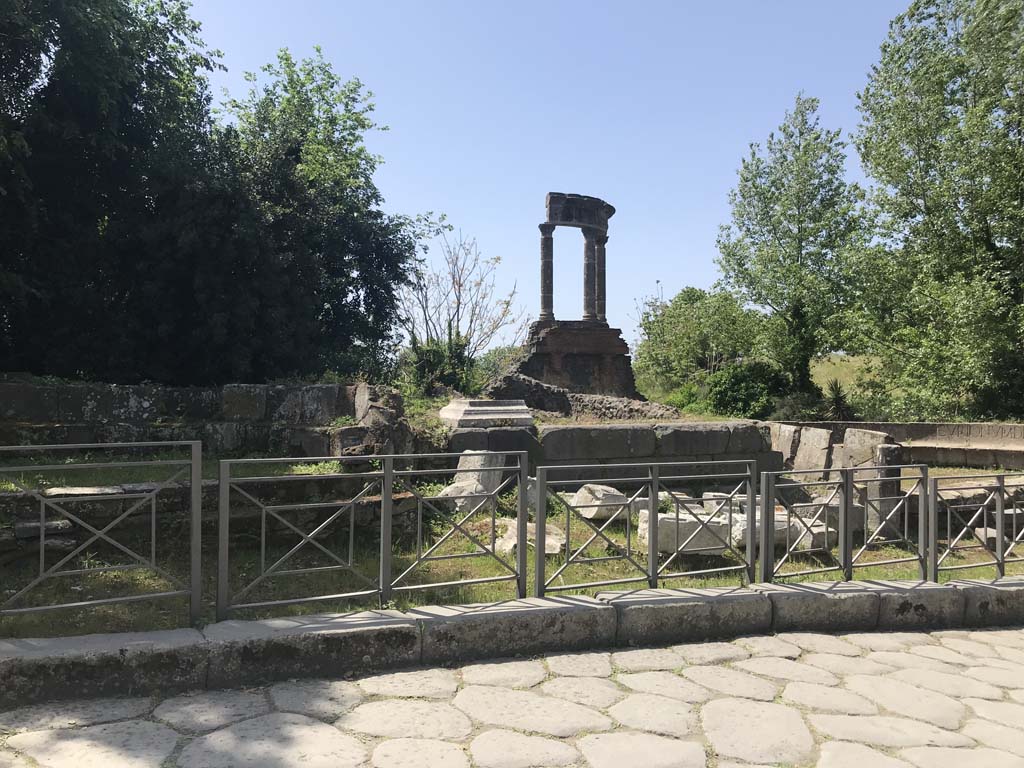
HGW02 Pompeii, on left. HGW03, centre, and HGW04, on right. April 2019. Looking west. Photo courtesy of Rick Bauer.
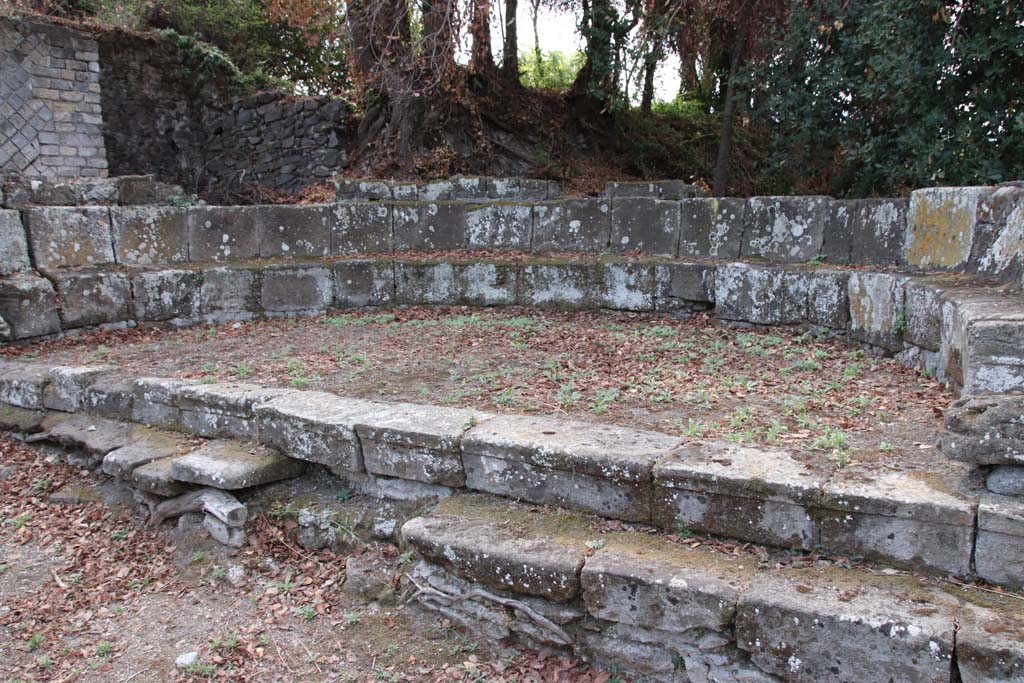
HGW02 Pompeii, November 2023. Looking west towards schola. Photo courtesy of Giuseppe
Ciaramella.

HGW02 Pompeii. September 2021. Looking west towards tomb. Photo courtesy of Klaus Heese.

HGW02 Pompeii. May 2006. Looking west towards tomb.

HGW02 Pompeii. May 2006. Schola tomb of Aulus Veius M. F.

HGW02 Pompeii. May 2006. Lion’s paw at south end of tomb.

HGW02 Pompeii. May 2006. Detail of lion’s paw at south end of tomb.

HGW02 Pompeii. May 2006. North end of tomb.

HGW02 Pompeii. May 2006. Remains of lion’s paw at north end of schola.
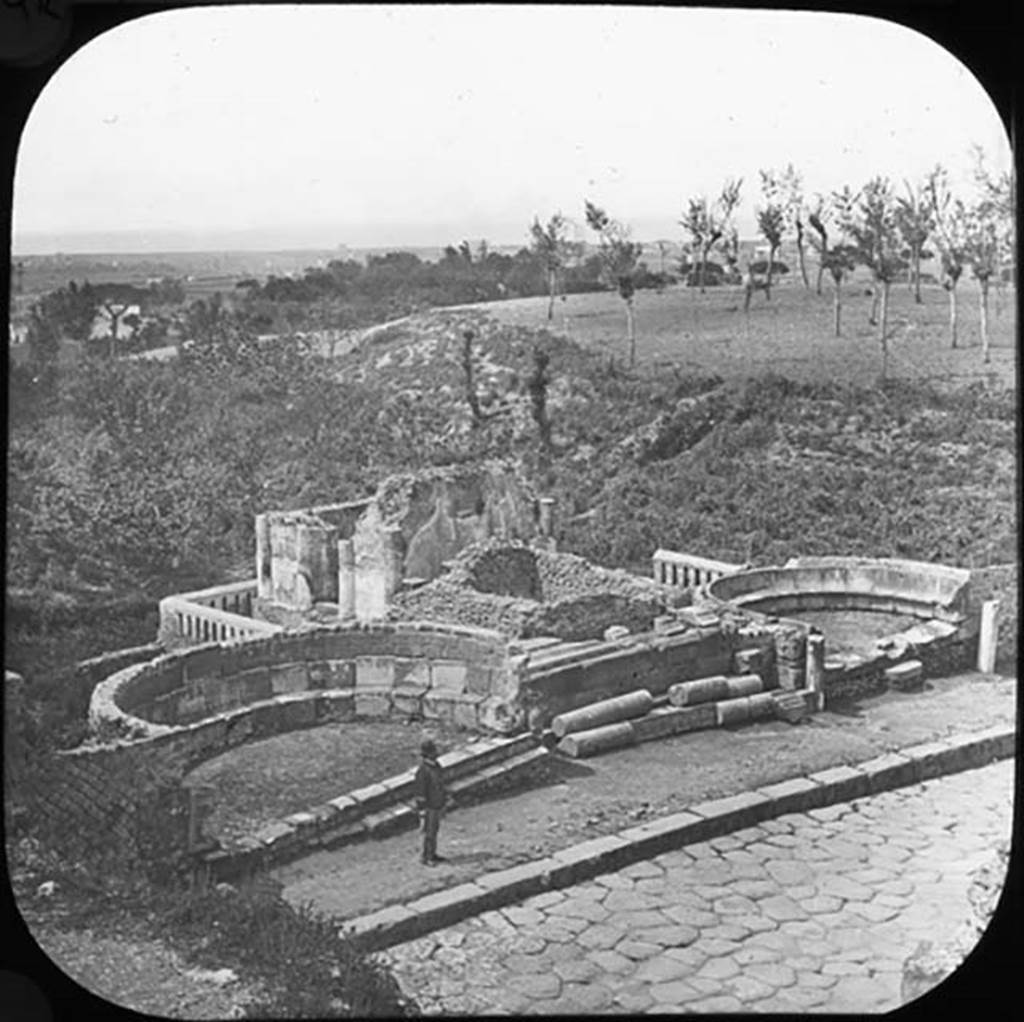
HGW02-4 Pompeii, with HGW02, on left behind the figure. Looking north-west.
Photo by permission of the Institute of
Archaeology, University of Oxford. File name instarchbx208im 031. Source ID.
44357.
See photo on University of Oxford HEIR database
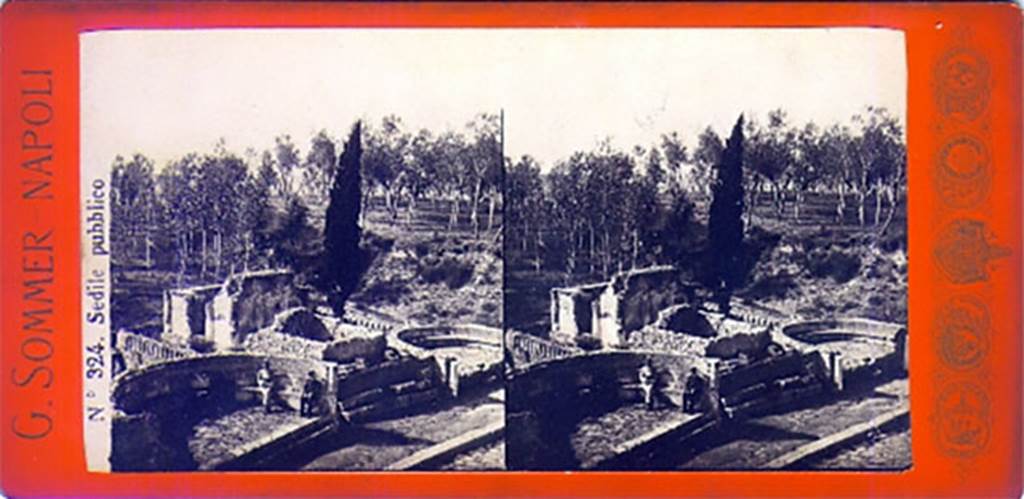
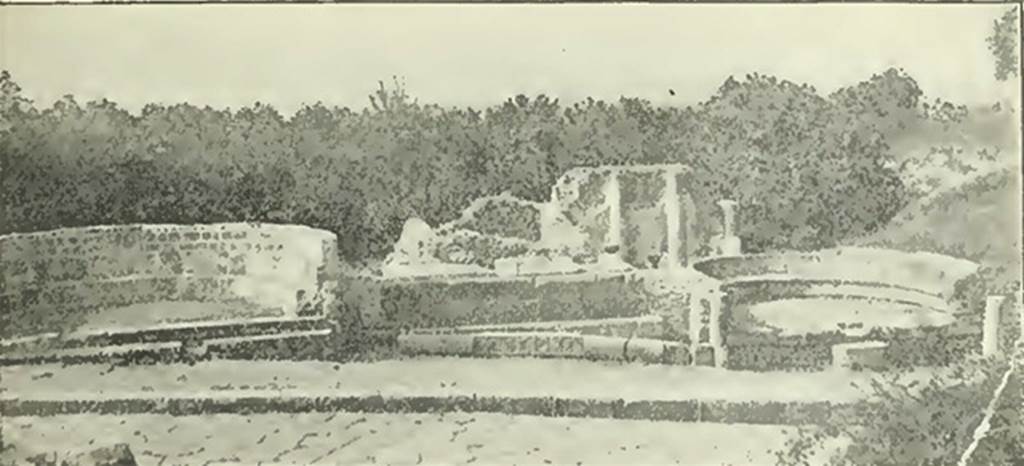
HGW02-4a Pompeii. c.1870. Old stereoview no. 324 by G Sommer. Note the higher back to the schola HGW02 than is there now.

HGW02-4a Pompeii. c.1899. Note the schola HGW02 has a higher back to it than is there now.
See Mau, A., 1899, translated by Kelsey F. W. Pompeii: Its Life and Art. London: Macmillan, p. 401.
HGW01-4 Pompeii. Woodcut by Samuel Palmer, looking
along the tombs towards the Herculaneum Gate
See Dickens C.,
1846. Pictures from Italy. Whitefriars, London: Bradbury and Evans.
![HGW01, HGW02, HGW03, HGW04 and HGW04a Pompeii. 1804 drawing of the fabric existing outside the Herculaneum Gate. See Piranesi, F, 1804. Antiquites de la Grande Grece: Tome I. Paris: Piranesi and Le Blanc. (Pl. 4). A marble plaque with an inscription was found set in a tufa block on the back of the schola on the 16th March 1763.
A VEIO M F IIVIR I D
ITER QVINQ TRIB
MILIT AB POPUL EX D D
According to Epigraphik-Datenbank Clauss/Slaby (See www.manfredclauss.de) this read
A(ulo) Veio M(arci) f(ilio) IIvir(o) i(ure) d(icundo)
iter(um) quinq(uennali) trib(uno)
milit(um) ab(!) popul(o) ex d(ecreto) d(ecurionum) [CIL X 996]
According to Cooley this translates as
To Aulus Veius, son of Marcus, duumvir with judicial power twice, quinquennial, military tribune by popular demand. By decree of the town councillors.
See Kockel V., 1983. Die Grabbauten vor dem Herkulaner Tor in Pompeji. Mainz: von Zabern. (p. 51).
See Cooley, A. and M.G.L., 2004. Pompeii : A Sourcebook. London : Routledge. (p. 139, G4).](tombs%20hgw02_files/image023.jpg)
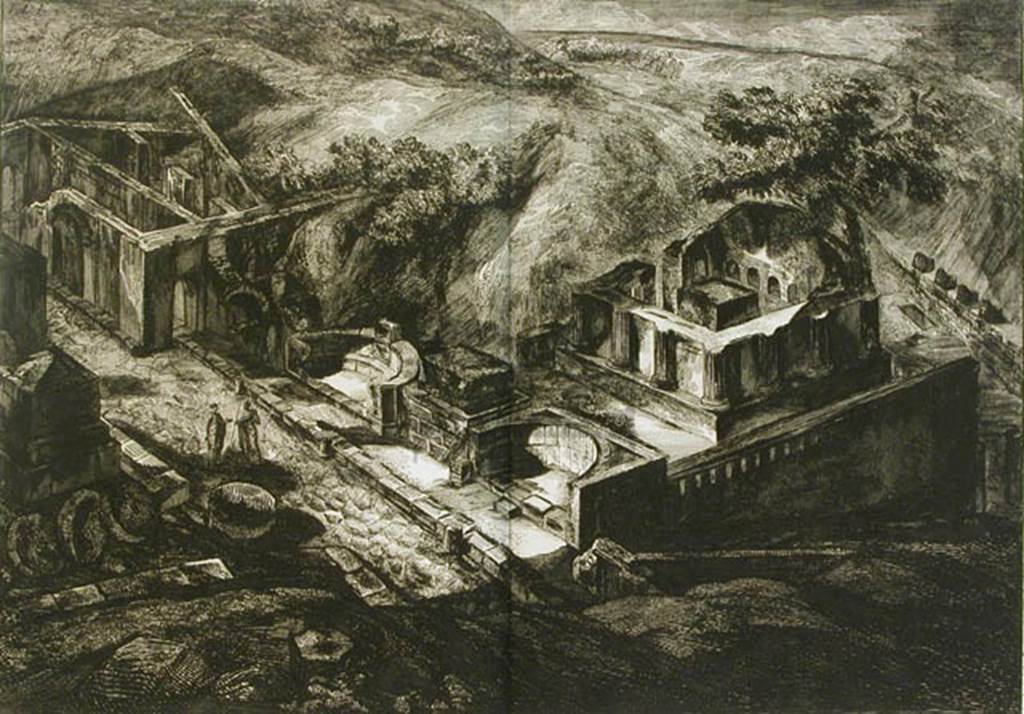
HGW01, HGW02, HGW03, HGW04 and HGW04a Pompeii.
1804 drawing of the fabric existing outside the Herculaneum Gate.
See Piranesi, F,
1804. Antiquités de la Grande Grèce: Tome
I. Paris: Piranesi and Le Blanc. (Pl. 4).
HGW02 Pompeii. 1793 painting with tomb on left showing the tufa block on the back of the schola.
On the 16th March 1763 an inscribed marble plaque was found set in the tufa block.
![HGW02 Pompeii. On the 16th March 1763 a marble plaque, (20BC – 10AD), was found set in the tufa block on the back of the schola.
According to Mau the marble plaque had the inscription -
A VEIO M F IIVIR I D
ITER QVINQ TRIB
MILIT AB POPUL EX D D
Now in Naples Archaeological Museum. Inventory number 3887 (CIL X, 996)
According to the information card in the Museum, it read –
“To Aulus Veius, son of Marcus, duovir with judicial powers, the second time with censorial powers, military tribune nominated by the people, by decree of the municipal council”.
(Aulus Veius was a member of the ruling class of the Augustan age.
The office of tribunus militum a populo attests to his achievement of Roman knighthood.
His family, who had come to Pompeii as Sullan colonists, is no longer attested after him.)
According to Epigraphik-Datenbank Clauss/Slaby (See www.manfredclauss.de) this read
A(ulo) Veio M(arci) f(ilio) IIvir(o) i(ure) d(icundo)
iter(um) quinq(uennali) trib(uno)
milit(um) ab(!) popul(o) ex d(ecreto) d(ecurionum) [CIL X 996]
According to Cooley this translates as
To Aulus Veius, son of Marcus, duumvir with judicial power twice, quinquennial, military tribune by popular demand. By decree of the town councillors.
See Kockel V., 1983. Die Grabbauten vor dem Herkulaner Tor in Pompeji. Mainz: von Zabern. (p. 51).
See Cooley, A. and M.G.L., 2004. Pompeii: A Sourcebook. London: Routledge. (p. 139, G4).](tombs%20hgw02_files/image025.jpg)
HGW02 Pompeii. On the 16th March 1763 a marble plaque, (20BC – 10AD), was found set in the tufa block on the back of the schola.
According to Mau the marble plaque had the inscription -
A VEIO M F
IIVIR I D
ITER QVINQ TRIB
MILIT AB POPUL EX D D
Now in Naples Archaeological Museum. Inventory number 3887 (CIL X, 996)
According to the information card in the Museum, it read –
“To Aulus Veius, son of Marcus, duovir with judicial powers, the second time with censorial powers, military tribune nominated by the people, by decree of the municipal council”.
(Aulus Veius was a member of the ruling class of the Augustan age.
The office of tribunus militum a populo attests to his achievement of Roman knighthood.
His family, who had come to Pompeii as Sullan colonists, is no longer attested after him.)
According to Epigraphik-Datenbank Clauss/Slaby (See www.manfredclauss.de) this read
A(ulo) Veio
M(arci) f(ilio) IIvir(o) i(ure) d(icundo)
iter(um)
quinq(uennali) trib(uno)
milit(um)
ab(!) popul(o) ex d(ecreto) d(ecurionum)
[CIL X 996]
According to Cooley this translates as
To Aulus Veius, son of Marcus, duumvir with judicial power twice, quinquennial, military tribune by popular demand. By decree of the town councillors.
See Kockel V., 1983. Die Grabbauten vor dem Herkulaner Tor in Pompeji. Mainz: von Zabern. (p. 51).
See Cooley, A. and M.G.L., 2004. Pompeii: A Sourcebook. London: Routledge. (p. 139, G4).