HGW01
Pompeii. Herculaneum Gate West Side. Tomba
di M. Cerrinius Restitutus.
Tomb of Marcus Cerrinius Restitutus.
A low vaulted niche flanked by seats. (Eschebach West 1, Kockel Süd 1).
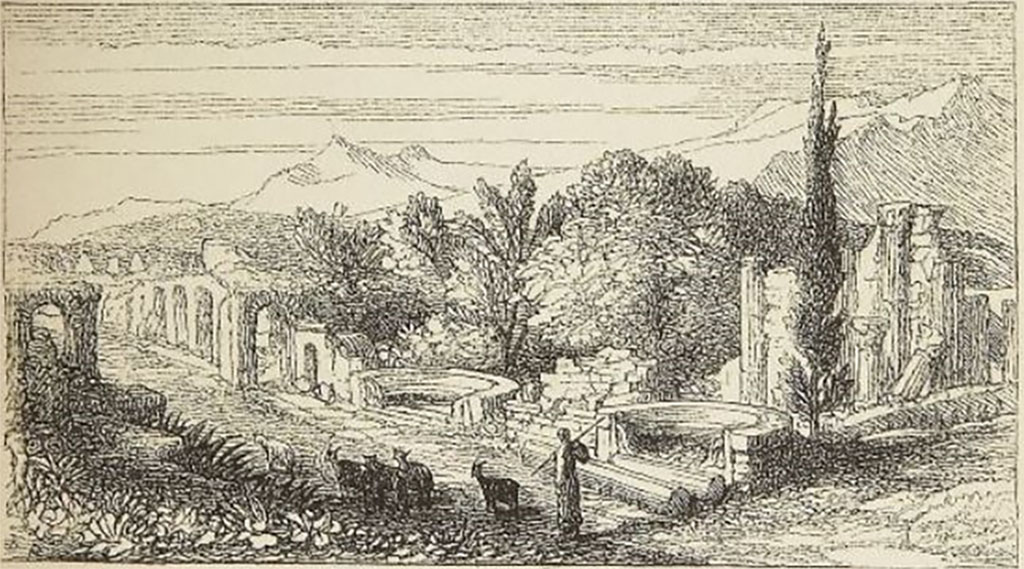
HGW01-4 Pompeii. Woodcut by
Samuel Palmer, looking along the tombs towards the Herculaneum Gate
See Dickens C., 1846. Pictures from Italy.
Whitefriars, London: Bradbury and Evans.
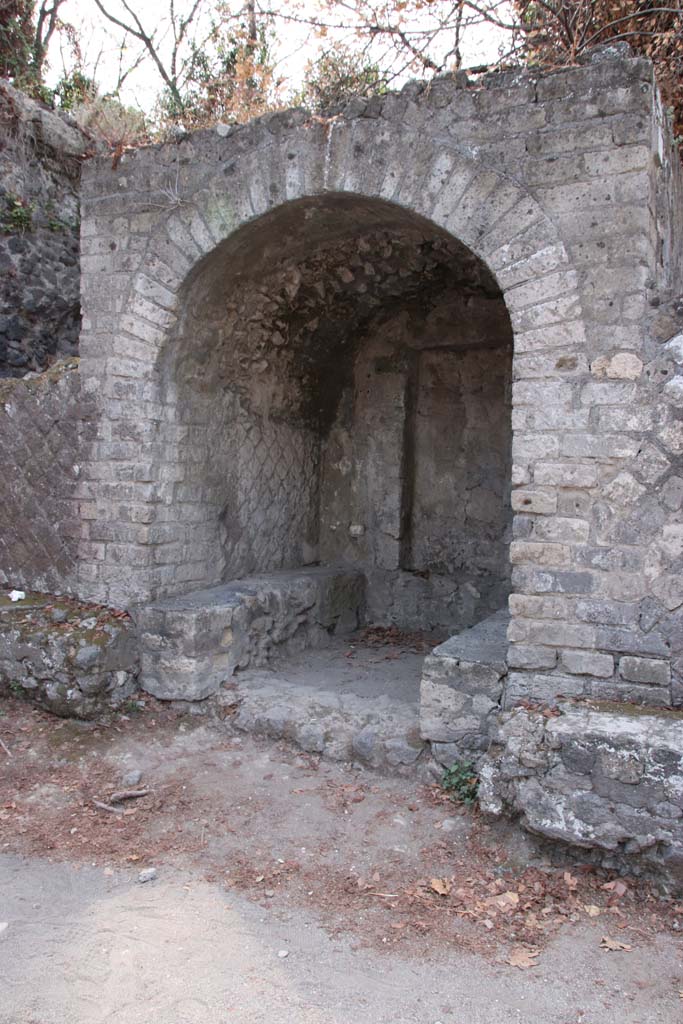
HGW01 Pompeii. September 2021. Looking south-west. Photo courtesy
of Klaus Heese.
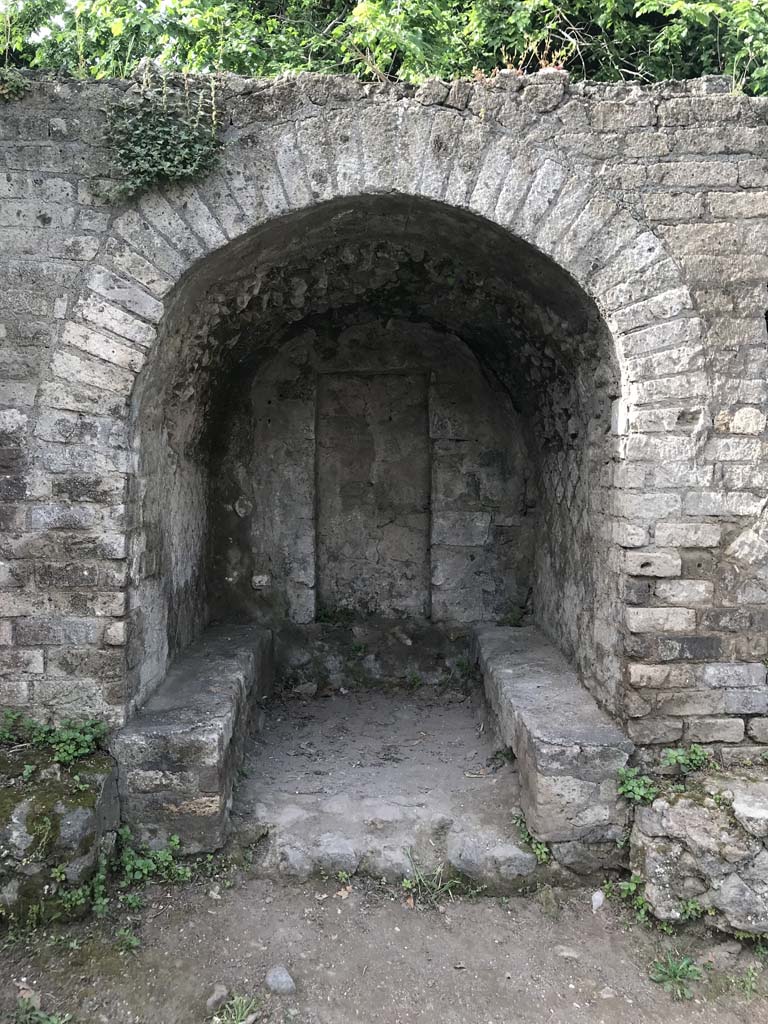
HGW01 Pompeii. April
2019.
Looking west to Tomb of Marcus Cerrinius Restitutus. Photo
courtesy of Rick Bauer.
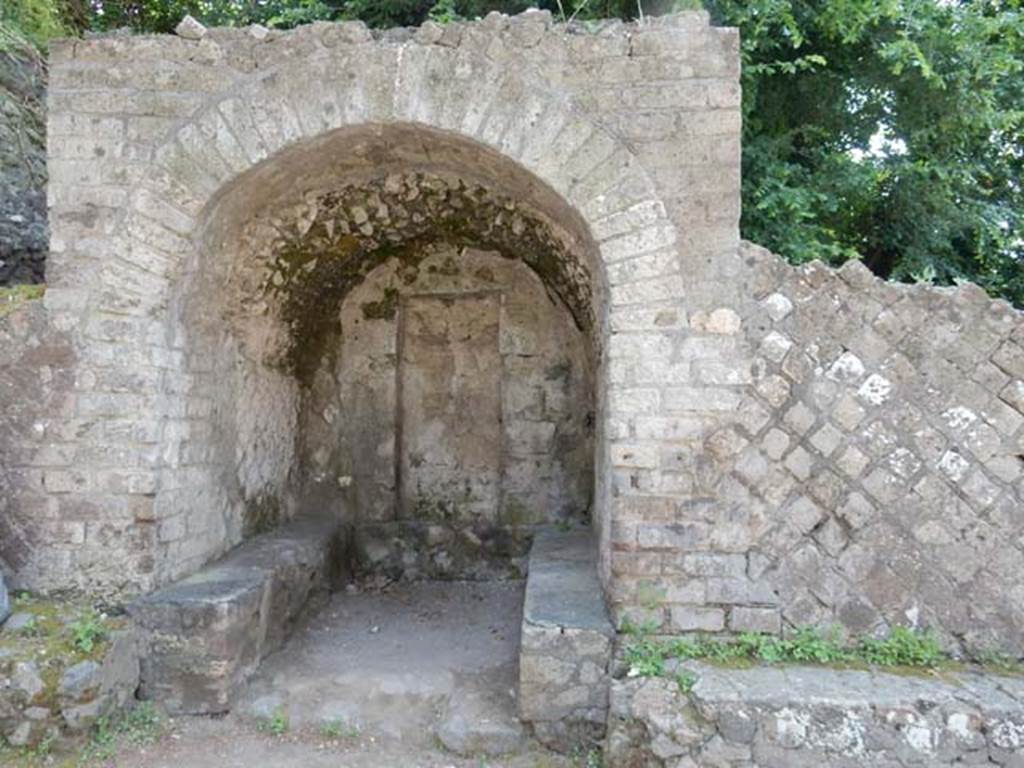
HGW01 Pompeii. May 2015. Looking west to Tomb of Marcus Cerrinius Restitutus. Photo courtesy of Buzz Ferebee.
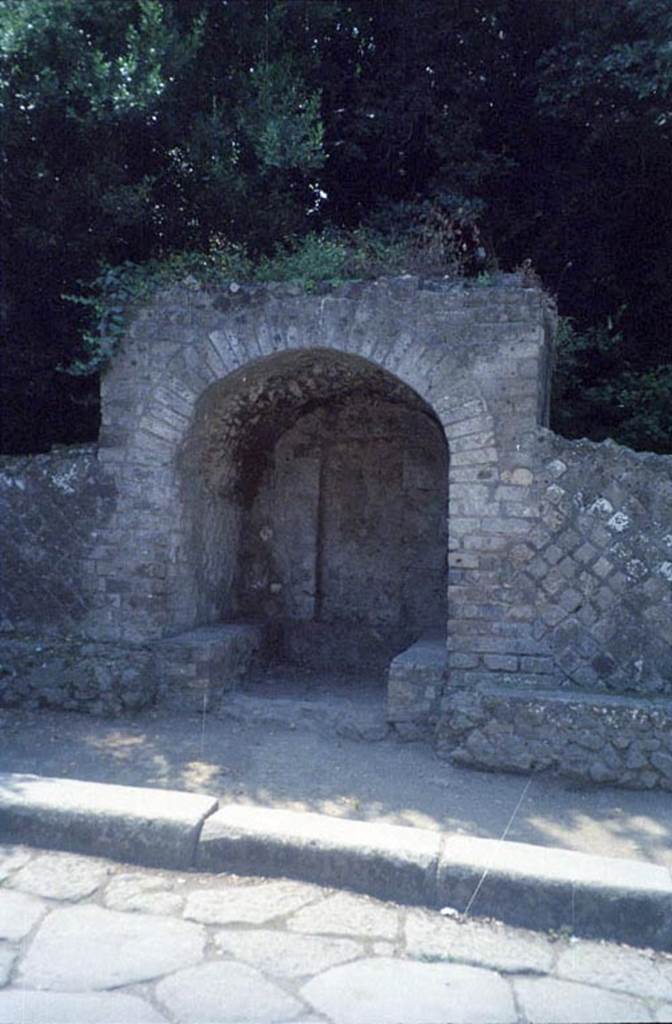
HGW01 Pompeii. July 2011.
Tomb of Marcus Cerrinius Restitutus. Photo courtesy of Rick Bauer.
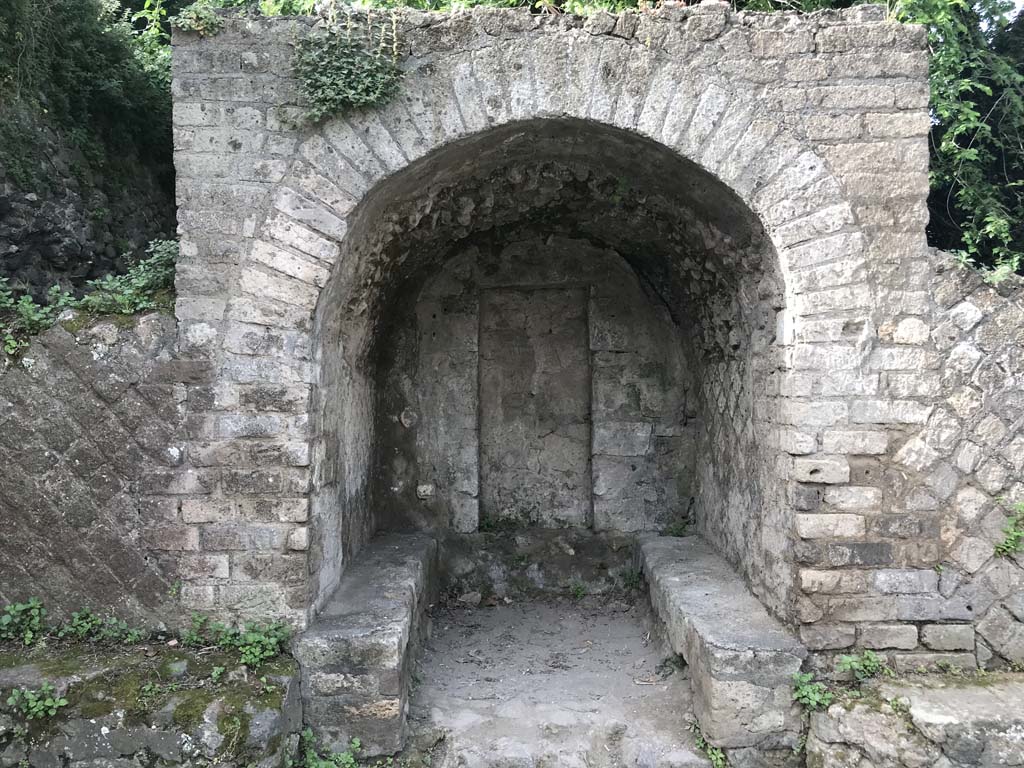
HGW01 Pompeii. April 2019.
Looking west towards benches around the arched tomb of Marcus Cerrinius Restitutus. Photo courtesy of Buzz Ferebee.
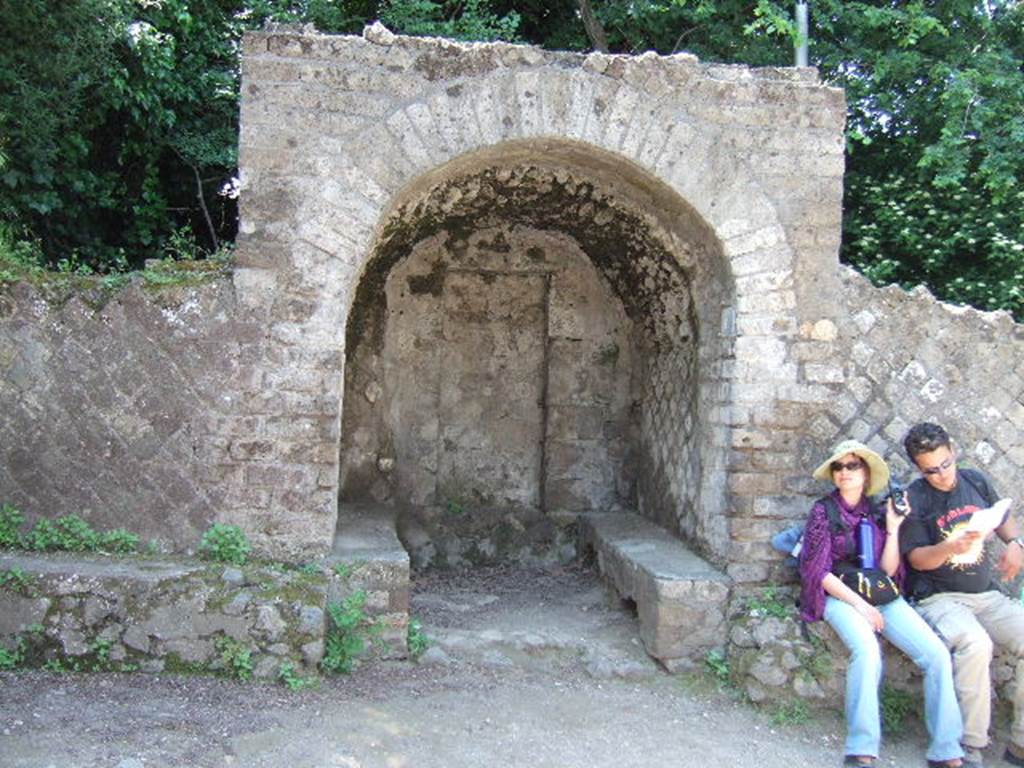
HGW01 Pompeii. May 2006. Looking west towards the tomb of Marcus Cerrinius Restitutus.
According to Kockel, in August 1763 a 1.55m high marble block with an inscription was found in rear of the grave.
Also found in the middle of the grave was a travertine altar. Both had the same inscription.
Now in Naples Archaeological Museum. Inventory numbers 3919 (CIL X, 994) and 3851.
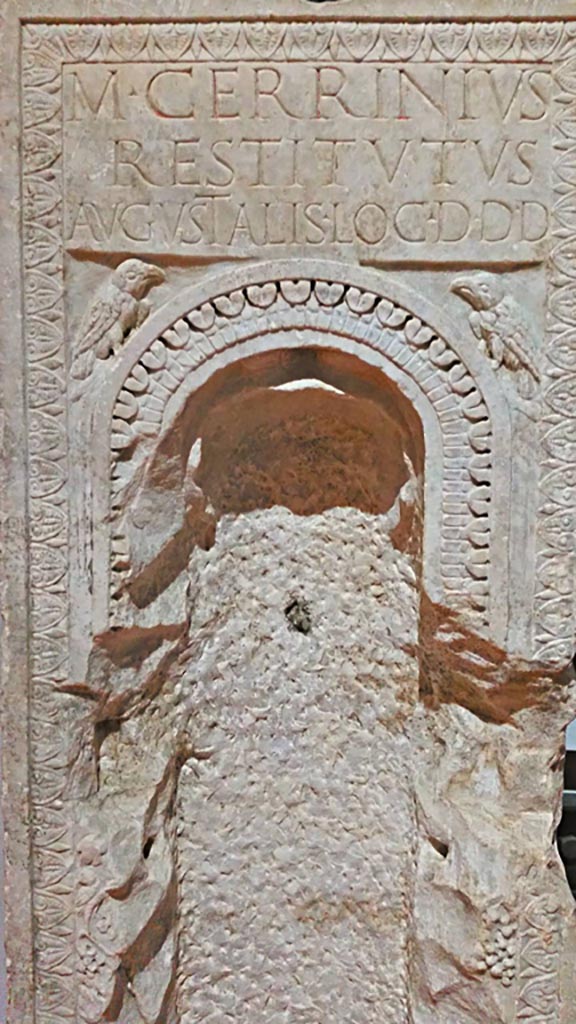
HGW01 Pompeii. Marble stele found in
rear wall of tomb.
Now in Naples Archaeological Museum, inventory numbers 3919 (CIL X, 994).
Photo courtesy of Giuseppe Ciaramella, June 2017.
![HGW01 Pompeii. Marble stele found in rear wall of tomb.
According to Kockel, in August 1763 a 1.55m high marble block with an inscription was found in rear of the grave.
The inscription read
M. CERRINIVS
RESTITVTVS
AVGVSTAL. LOC. D.D.D. [CIL X 994]
According to Epigraphik-Datenbank Clauss/Slaby (See www.manfredclauss.de) expands this to
M(arcus) Cerrinius
Restitutus
Augustalis loc(us) d(atus) d(ecreto) d(ecurionum) [CIL X 994]
Cooley translates this as
Marcus Cerrinius Restitutus, Augustalis. Place given by decree of the town councillors.
See Cooley, A. and M.G.L., 2004. Pompeii : A Sourcebook. London : Routledge, p. 149, G36.](tombs%20hgw01_files/image014.jpg)
HGW01 Pompeii. Marble stele found in rear wall of tomb.
According to Kockel, in August 1763 a 1.55m high marble block with an inscription was found in rear of the grave.
The inscription read
M. CERRINIVS
RESTITVTVS
AVGVSTAL. LOC. D.D.D. [CIL X 994]
According to Epigraphik-Datenbank Clauss/Slaby (See www.manfredclauss.de) expands this to
M(arcus)
Cerrinius
Restitutus
Augustalis
loc(us) d(atus) d(ecreto) d(ecurionum)
[CIL X 994]
Cooley translates this as
Marcus Cerrinius Restitutus, Augustalis. Place given by decree of the town councillors.
See Cooley, A. and M.G.L., 2004. Pompeii: A Sourcebook. London: Routledge, p. 149, G36.
![HGW01 Pompeii. Drawing of travertine altar found in the middle of the grave in August 1763.
The altar was 0.66m high and about 0.31m square. It had the same inscription as the marble stele
M. CERRINIVS
RESTITVTVS
AVGVSTALIS
LOCO DATO
D.D. [CIL X 995]
See Kockel V., 1983. Die Grabbauten vor dem Herkulaner Tor in Pompeji. Mainz: von Zabern. (p. 48, Taf. 4c and 4d).
According to Epigraphik-Datenbank Clauss/Slaby (See www.manfredclauss.de) this expands to
M(arcus) Cerrinius
Restitutus
Augustalis
loco dato
d(ecreto) d(ecurionum) [CIL X 995]
Marcus Cerrinius Restitutus, Augustalis. Place given by decree of the town councillors.](tombs%20hgw01_files/image016.jpg)
HGW01 Pompeii. Drawing of travertine altar found in the middle of the grave in August 1763.
The altar was 0.66m high and about 0.31m square. It had the same inscription as the marble stele
M.
CERRINIVS
RESTITVTVS
AVGVSTALIS
LOCO DATO
D.D. [CIL X 995]
See Kockel V., 1983. Die Grabbauten vor dem Herkulaner Tor in Pompeji. Mainz: von Zabern. (p. 48, Taf. 4c and 4d).
According to Epigraphik-Datenbank Clauss/Slaby (See www.manfredclauss.de) this expands to
M(arcus)
Cerrinius
Restitutus
Augustalis
loco dato
d(ecreto)
d(ecurionum) [CIL X 995]
Marcus Cerrinius Restitutus, Augustalis. Place given by decree of the town councillors.
According to Virginia Campbell, the tomb once contained a herm and a small altar, all lost since excavation.
The herm depicted the deceased as Mercury with winglets and staff, possibly linked to business success or membership in the Augustales.
The deceased was active from AD52 to AD62 as is known from the Iucundus tablets recorded in CIL IV 3340,70 and CIL IV 3340,76.
See Campbell V., 2015. The Tombs of Pompeii: Organization, Space, and Society. London: Routledge, Tomb PE1.
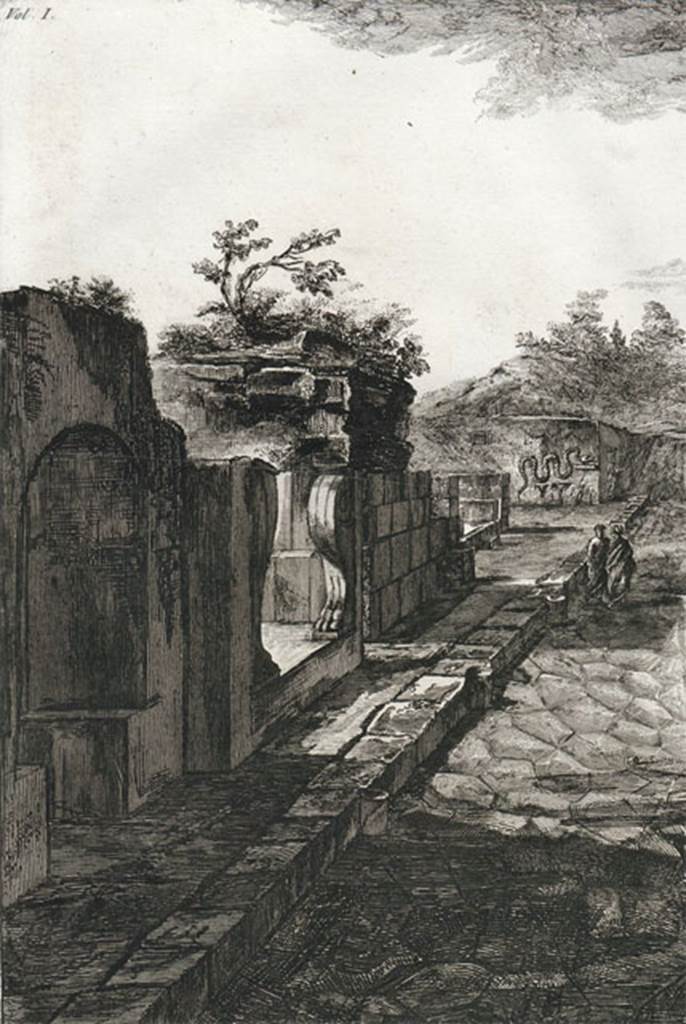
HGW01 Pompeii. Detail from 1804 drawing of view along HGW01, HGW02, HGW03 and HGW04.
See Piranesi, F,
1804. Antiquités de la Grande Grèce: Tome
I. Paris: Piranesi and Le Blanc. (Pl. 5).
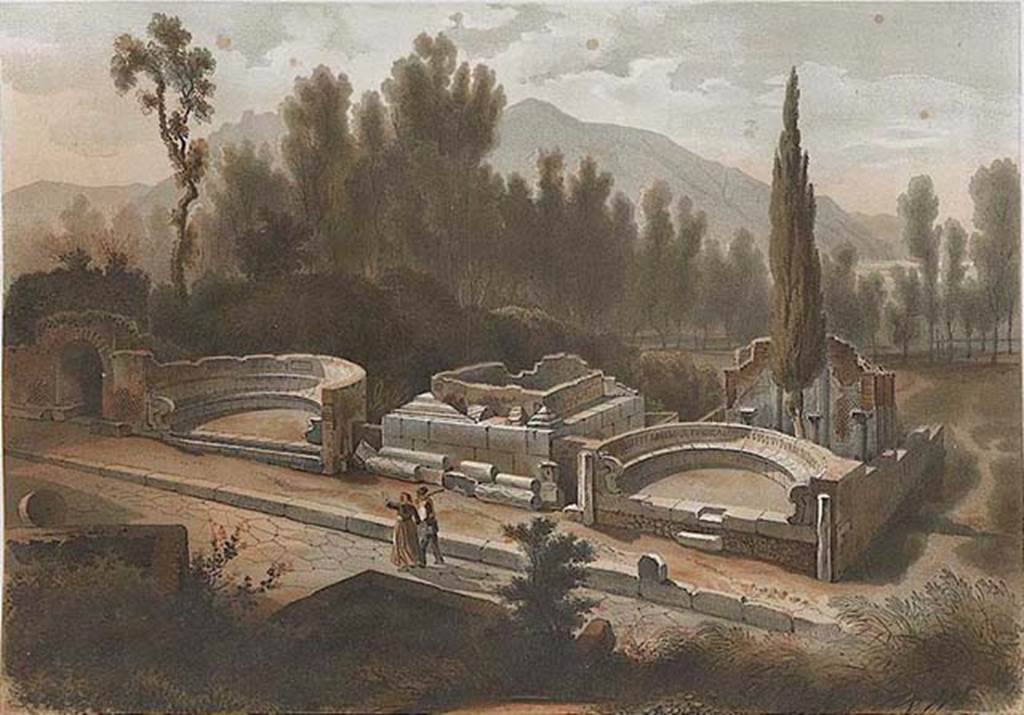
HGW01 Pompeii. 1862 painting of tombs HGW01-HGW04.
See Niccolini F, 1862. Le case ed i monumenti di Pompei: Volume Secondo. Napoli, Descr. Gen. Tav. 7.