IX.13.4 Pompeii. Shop of Successus?
Linked to IX.13.5 and IX.13.6. Partly excavated 1913, 1970.
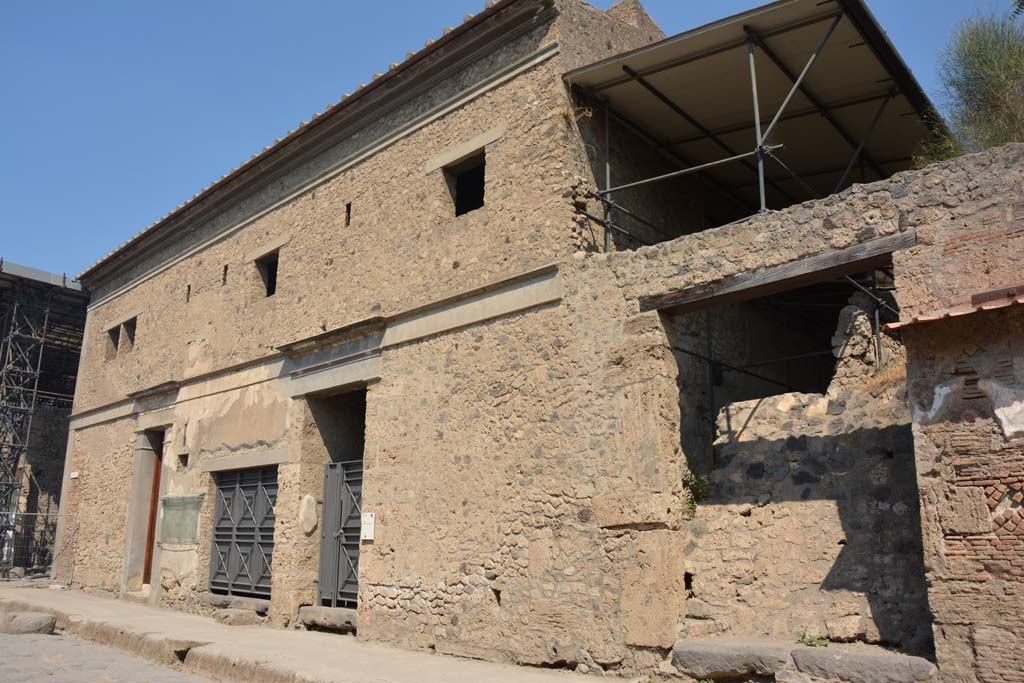
IX.13.1-4 Pompeii. July 2017. Looking west on north
side of Via dell’Abbondanza, from IX.13.4, on right.
Foto Annette Haug, ERC Grant 681269 DÉCOR.
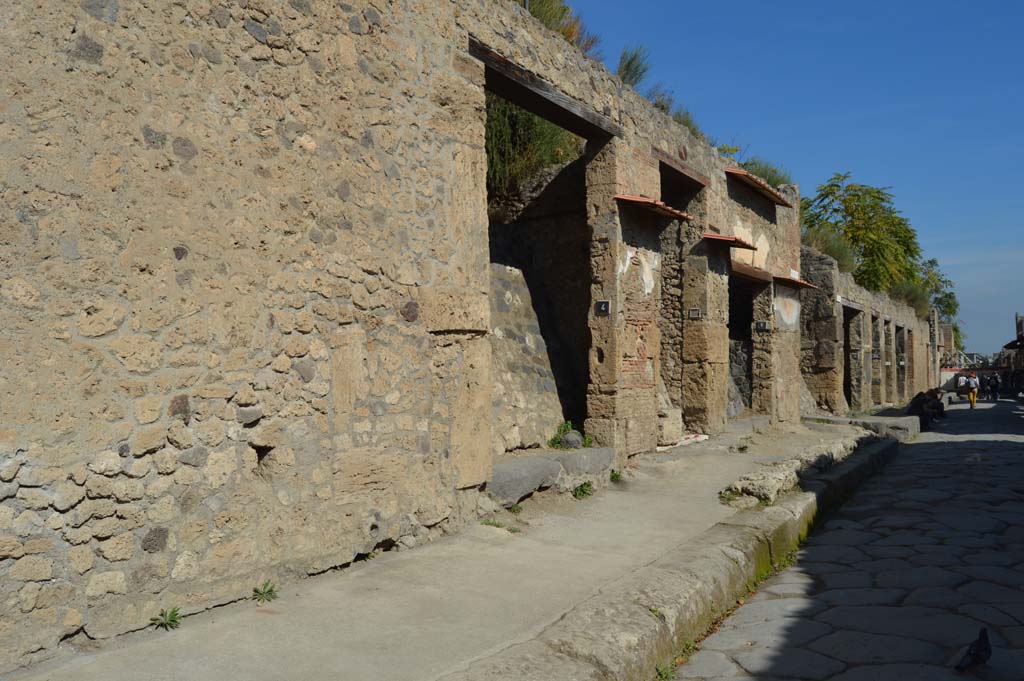
Via dell’Abbondanza, Pompeii, north side. October 2017, Looking east from IX.13.4.
Foto Taylor Lauritsen, ERC Grant 681269 DÉCOR.
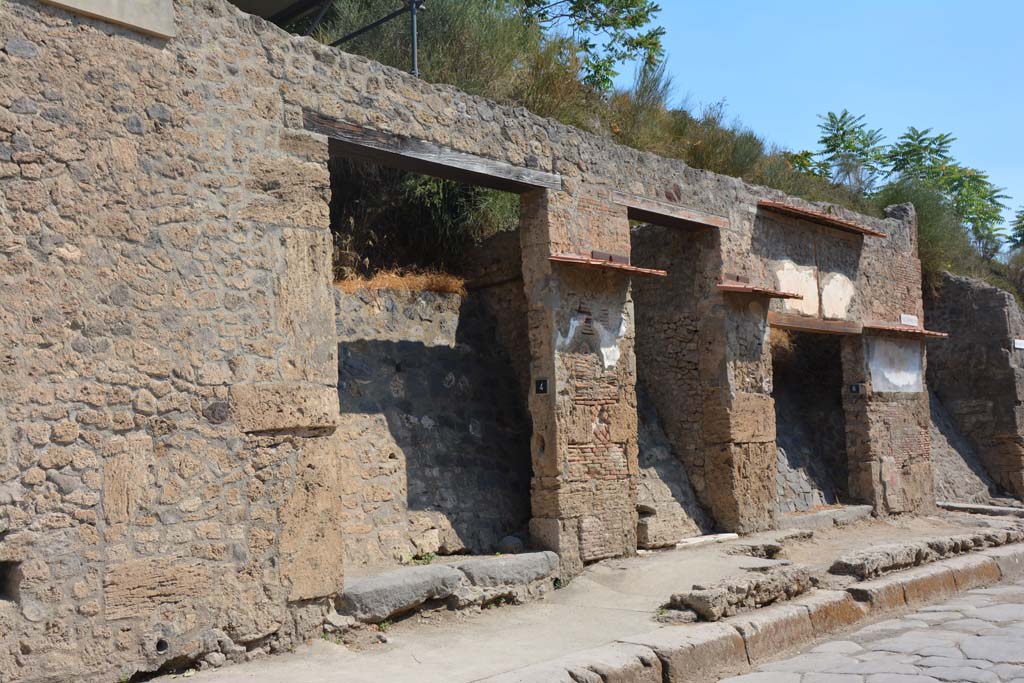
IX.13. 4, 5 and 6 Pompeii. July 2017. Looking east from IX.13.4.
Foto Annette Haug, ERC Grant 681269 DÉCOR.
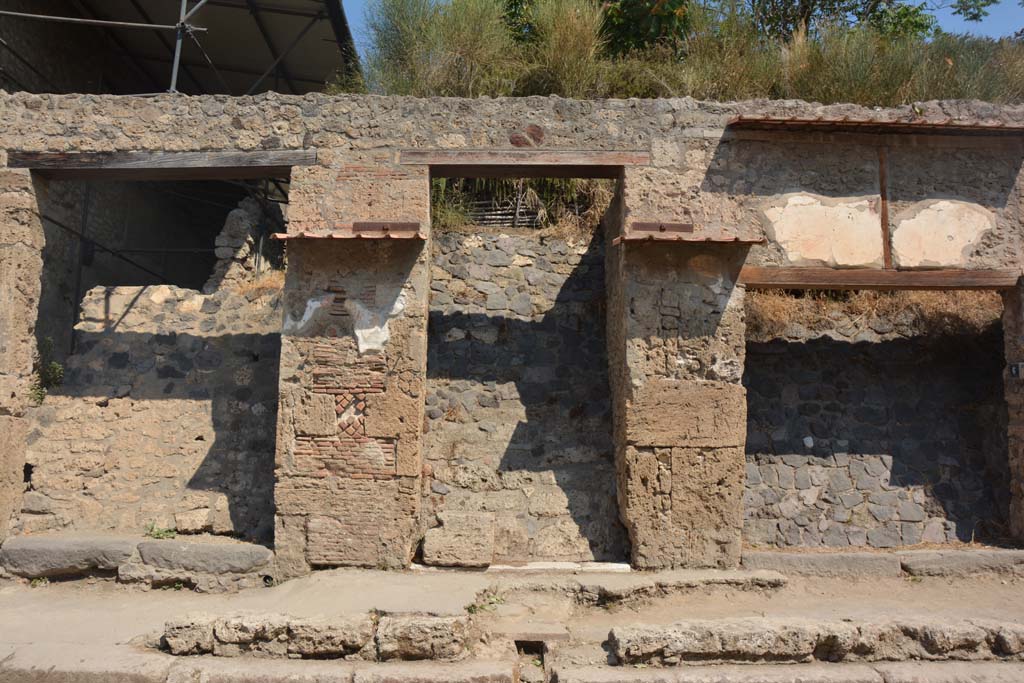
IX.13.4, 5 and 6 Pompeii. July 2017. Looking north to
entrance doorways.
Foto Annette Haug, ERC Grant 681269 DÉCOR.
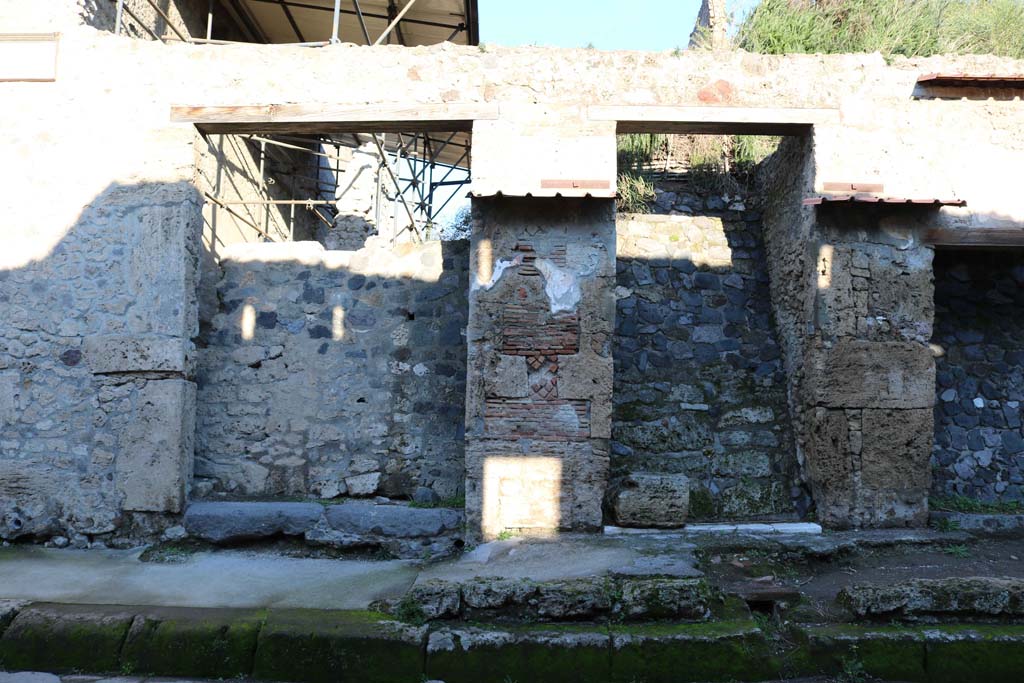
IX.13.4
Pompeii, on left. December 2018.
Looking
towards entrance doorways on north side of Via dell’Abbondanza. Photo courtesy
of Aude Durand.
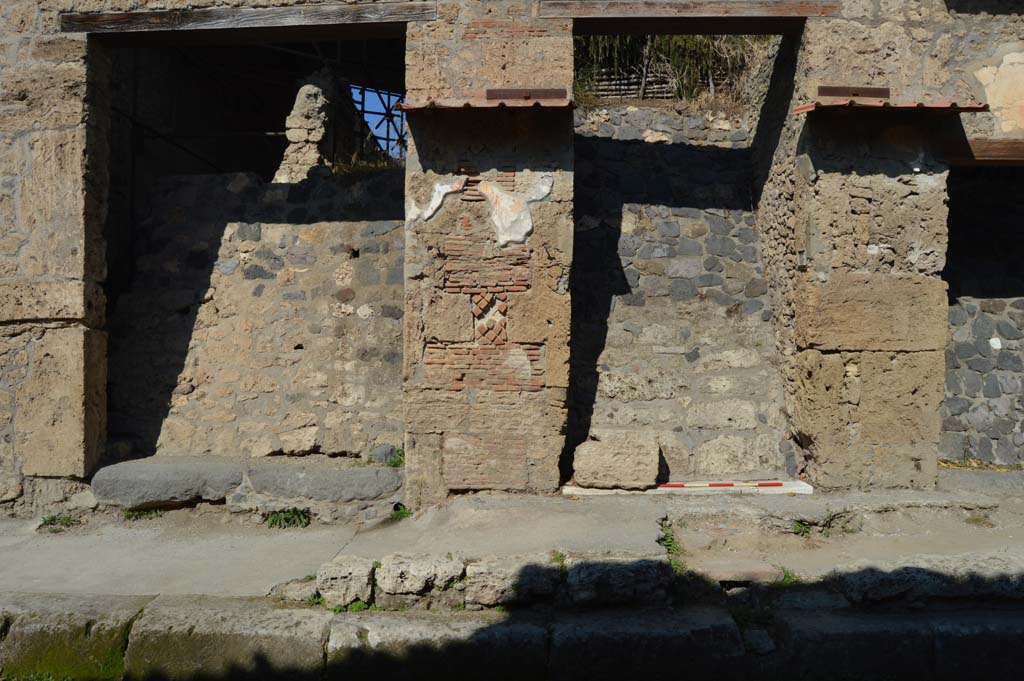
IX.13.4
Pompeii, on left. October 2017. Looking towards entrance doorways with IX.13.5,
in centre.
Foto
Taylor Lauritsen, ERC Grant 681269 DÉCOR.
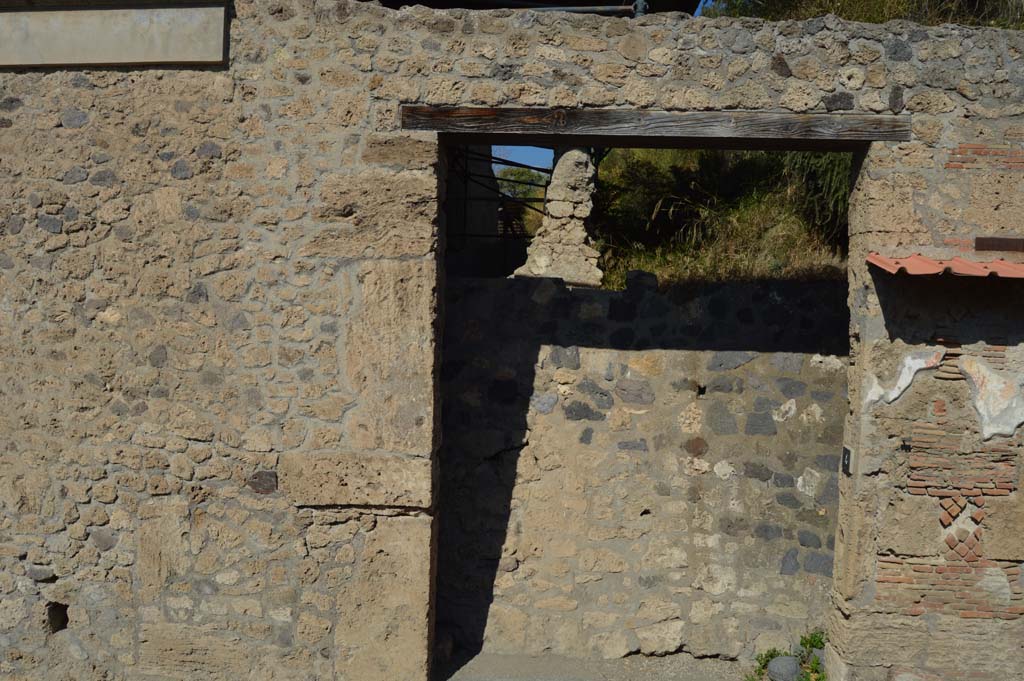
IX.13.4 Pompeii, October 2017. Detail of upper doorway.
Foto Taylor Lauritsen, ERC Grant 681269
DÉCOR.
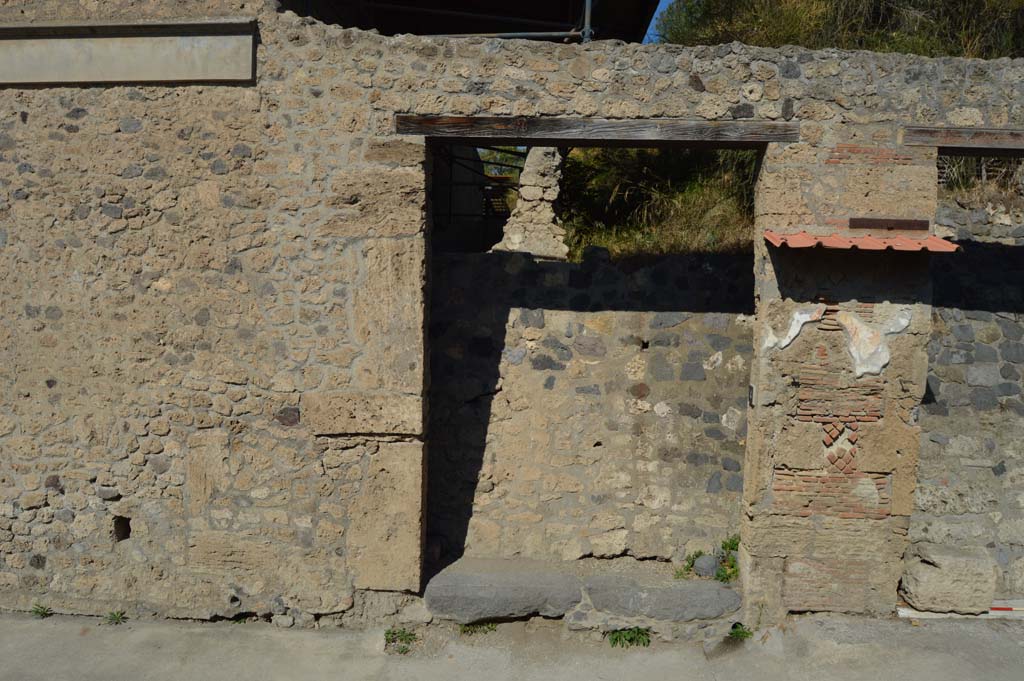
IX.13.4
Pompeii, October 2017. Looking north towards entrance doorway.
Foto
Taylor Lauritsen, ERC Grant 681269 DÉCOR.
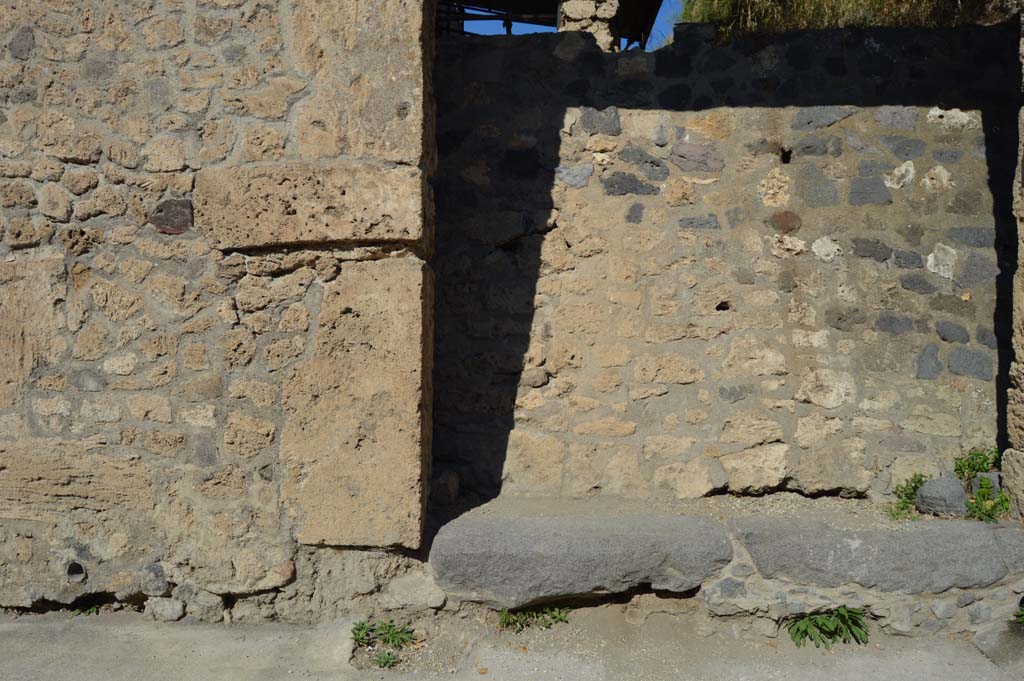
IX.13.4 Pompeii, October 2017. Detail of doorway threshold, at
west end.
Foto Taylor Lauritsen, ERC Grant 681269
DÉCOR.
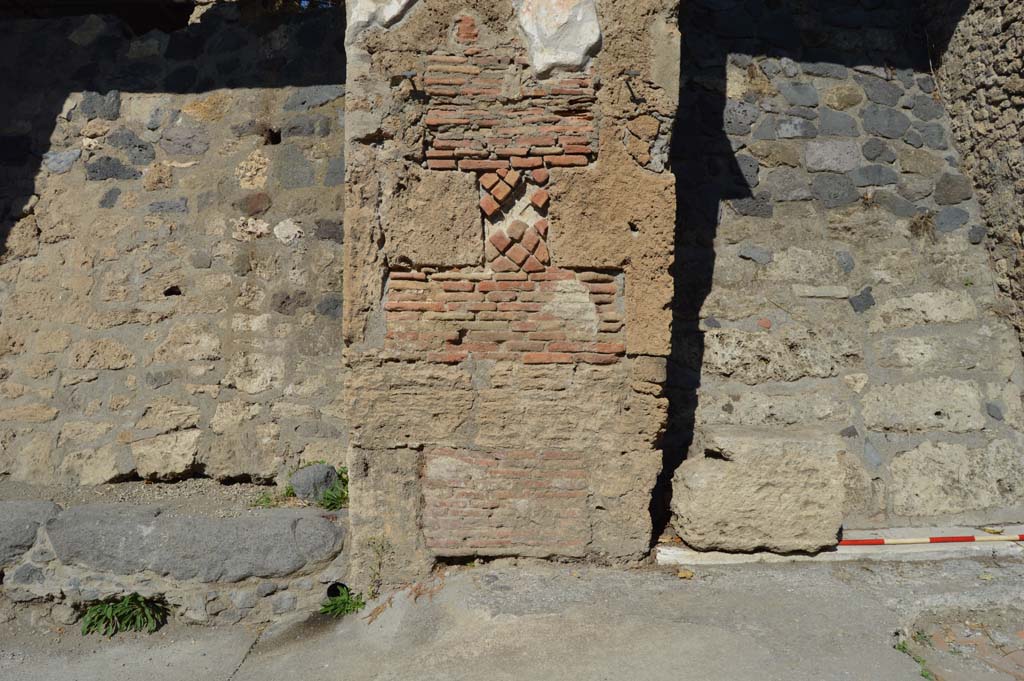
Foto Taylor Lauritsen, ERC Grant 681269
DÉCOR.
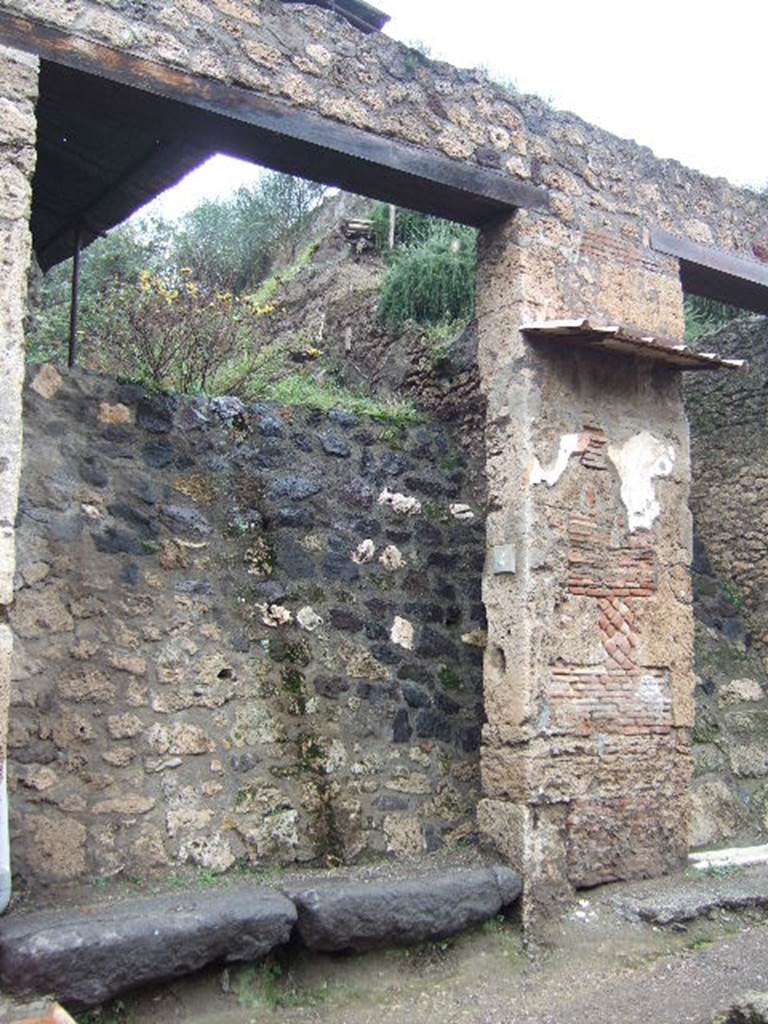
IX.13.4 Pompeii. December 2005. Entrance doorway.
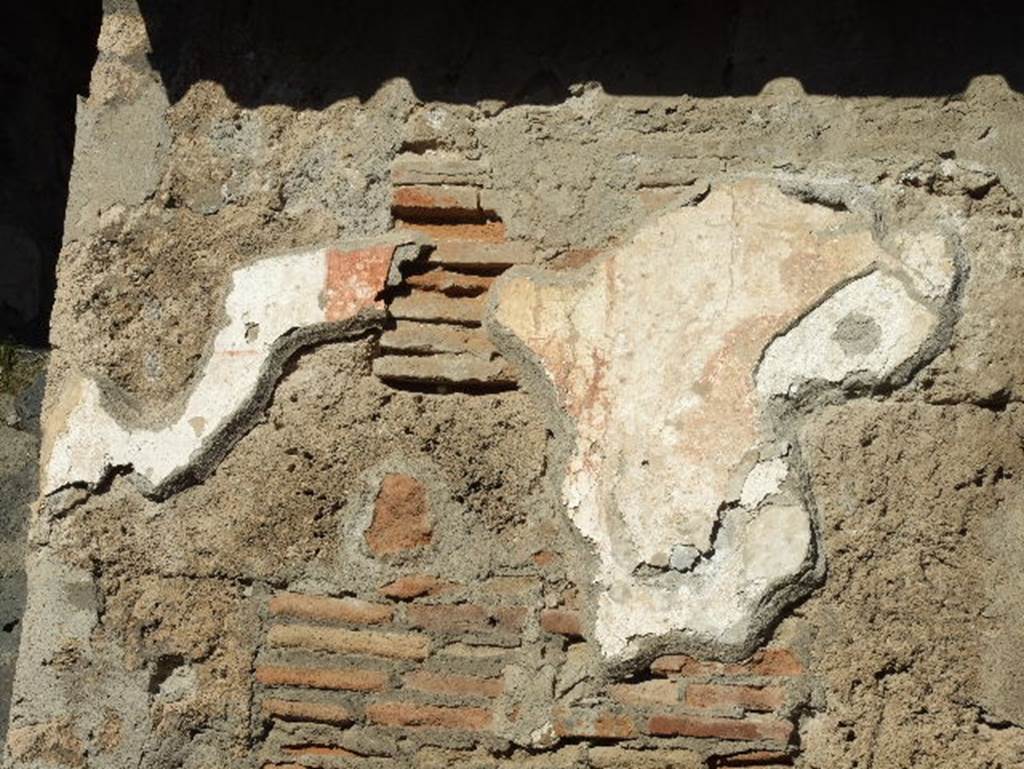
IX.13.4 Pompeii. May 2005. Remains of painted plaster between IX.13.4 and IX.13.5, see IX.13.5
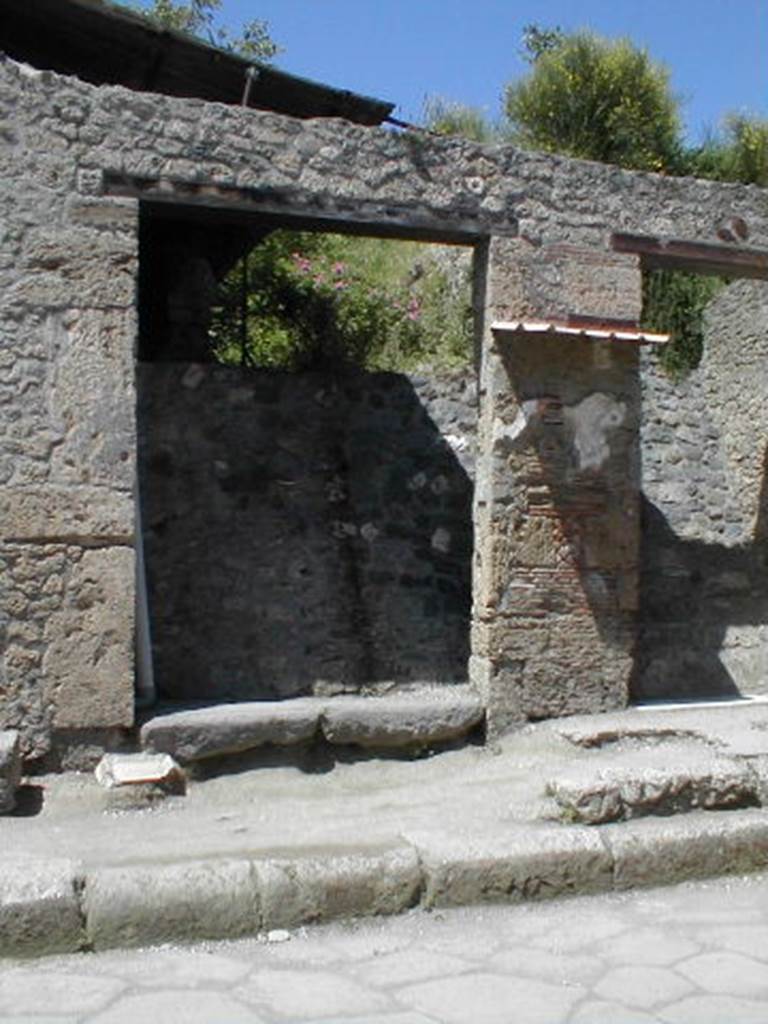
IX.13.4 Pompeii. May 2005. Entrance doorway.
![IX.13.4 Pompeii. 1913. Graffito poem found on the left of the doorway.
According to Della Corte, found on the external plaster on the left of the doorway, was a beautiful but sad and prophetic poem.
Nihil durare potest tempore perpetuo.
Cum bene Sol nituit redditur Oceano;
Decrescit Phoebe quae modo plena fuit.
(Sic) Venerum feritas saepe fit aura levis. [CIL IV 9123].
This was found on 25th February 1913, written in red.
In the winter of 1915, following prolonged torrential rain, the original perished when the wall fell.
See Notizie degli Scavi di Antichità, 1927, p. 116, fig. 11.
See Della Corte, M., 1965. Case ed Abitanti di Pompei. Napoli: Fausto Fiorentino. (p.335)
According to Garcia y Garcia, this was discovered in 1913, but sadly soon lost.
He also quoted the last Latin word as “l(e)vis”, and in note 28, stated that the interpretation had been strongly disputed (with references).
His translation of the Latin was –
“Nothing can last forever: the sun, when its course is complete, hides itself behind the sea; the moon, once full, now wanes.
Thus, love’s wounds shall heal, and fresh breezes will blow once more”
See Garcia y Garcia, L., 2005. Pupils, Teachers and Schools in Pompeii. Roma: Bardi editore. (p.155)
Cooley has a similar translation -
“Nothing can last for all time:
When the Sun has shone brightly it returns to Ocean;
The Moon wanes, which recently was full.
Even so the fierceness of Venus often becomes a puff of wind”
See Cooley, A. and M.G.L., 2004. Pompeii: A Sourcebook. London: Routledge. (p.72)](9%2013%2004_files/image019.jpg)
IX.13.4 Pompeii. 1913. Graffito poem found on the left of the doorway.
According to Della Corte, found on the external plaster on the left of the doorway, was a beautiful but sad and prophetic poem.
Nihil durare
potest tempore perpetuo.
Cum bene Sol
nituit redditur Oceano;
Decrescit Phoebe
quae modo plena fuit.
(Sic) Venerum
feritas saepe fit aura levis. [CIL IV
9123].
This was found on 25th February 1913, written in red.
In the winter of 1915, following prolonged torrential rain, the original perished when the wall fell.
See Notizie degli Scavi di Antichità, 1927,
p. 116, fig. 11.
See Della Corte, M., 1965. Case ed Abitanti di Pompei. Napoli: Fausto Fiorentino. (p.335)
According to Garcia y Garcia, this was discovered in 1913, but sadly soon lost.
He also quoted the last Latin word as “l(e)vis”, and in note 28, stated that the interpretation had been strongly disputed (with references).
His translation of the Latin was –
“Nothing can last forever: the sun, when its course is complete, hides itself behind the sea; the moon, once full, now wanes.
Thus, love’s wounds shall heal, and fresh breezes will blow once more”
See Garcia y Garcia, L., 2005. Pupils, Teachers and Schools in Pompeii. Roma: Bardi editore. (p.155).
Cooley has a similar translation -
“Nothing can last for all time:
When the Sun has shone brightly it returns to Ocean;
The Moon wanes, which recently was full.
Even so the fierceness of Venus often becomes a puff of wind”
See Cooley, A. and M.G.L., 2004. Pompeii: A Sourcebook. London: Routledge. (p.72).
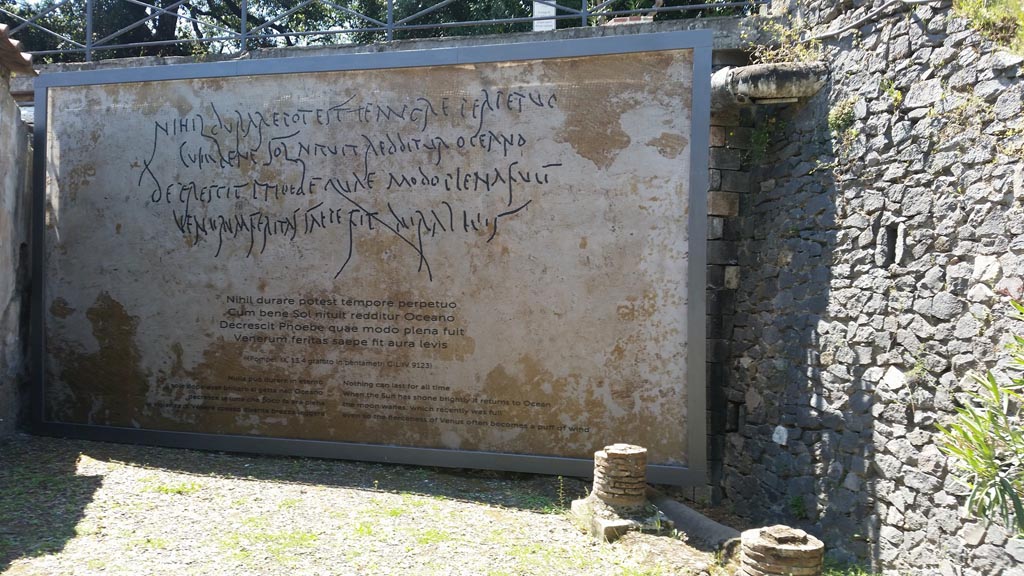
IX.13.4 Pompeii. 2016/2017. Graffito, CIL IV 9123. Photo courtesy of Giuseppe Ciaramella.
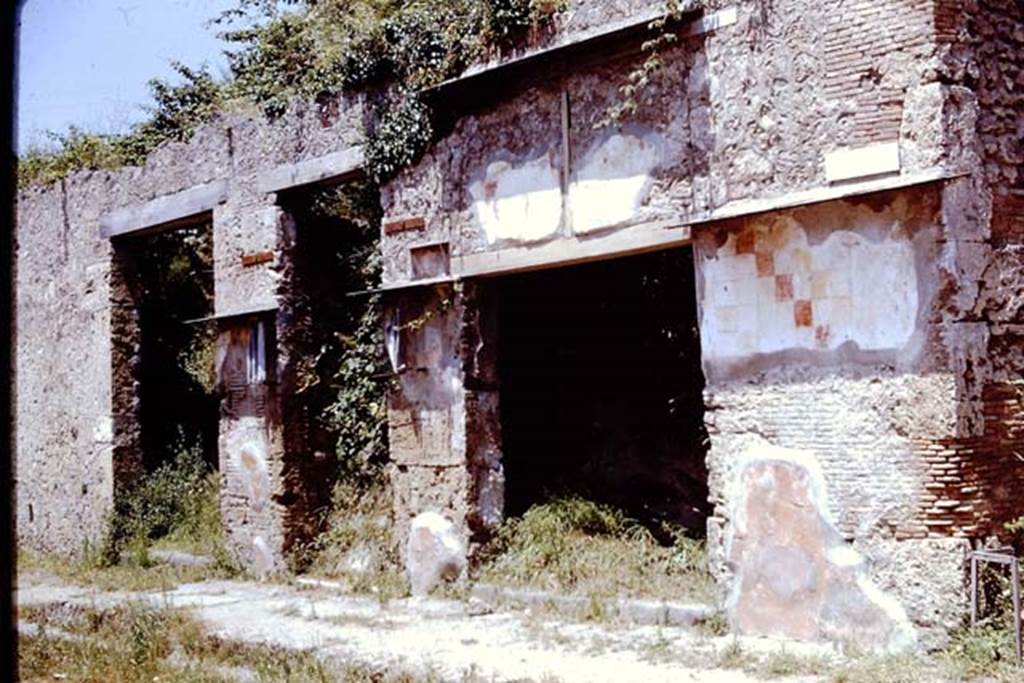
IX.13.4 Pompeii, on left. 1961.
Looking towards doorways to IX.13.4, IX.13.5 and IX.13.6 on north side of Via dell’Abbondanza. Photo by Stanley A. Jashemski.
Source: The Wilhelmina and Stanley A. Jashemski archive in the University of Maryland Library, Special Collections (See collection page) and made available under the Creative Commons Attribution-Non-Commercial License v.4. See Licence and use details.
J61f0707