IX.7.16 Pompeii. House of A. Virnius
Modestus or Casa del Cavallo Troiano.
Partly excavated in 1867, 1880.
Part 1 Part 2

IX.7.16 Pompeii. Plan by PPM.
See Carratelli, G. P.,
1990-2003. Pompei: Pitture e Mosaici:
Vol. IX, Parte II. Roma: Istituto della enciclopedia italiana, p. 782-3.
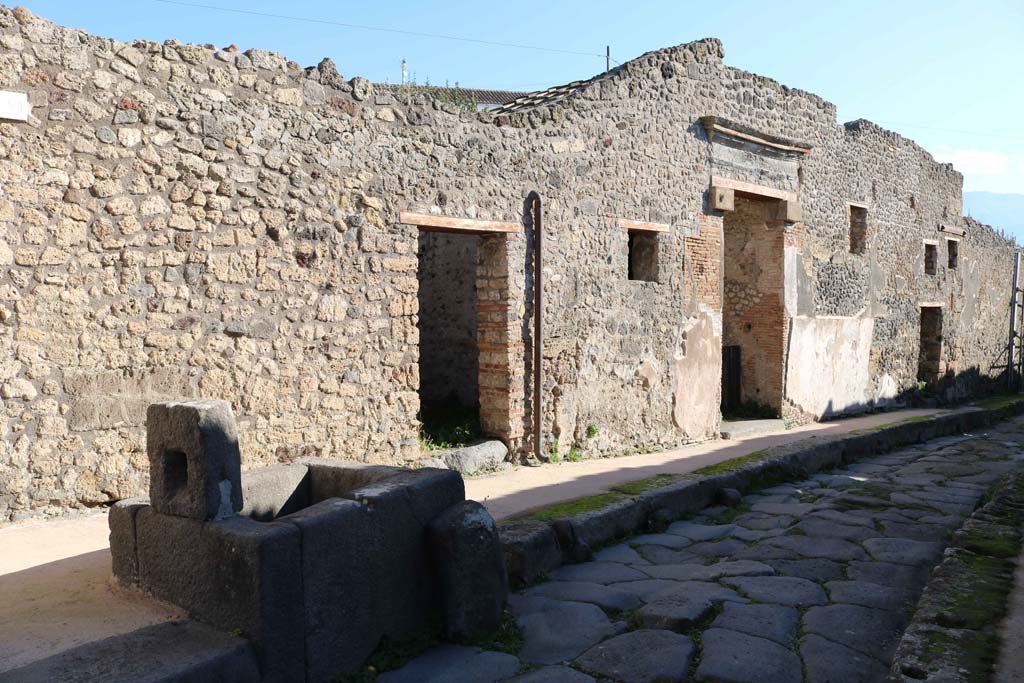
IX.7.16 Pompeii, on left. September 2004. Vicolo di Tesmo looking south. IX.1, on right.
IX.7.17 Pompeii right of fountain, then IX.7.16 and IX.7.15, on
right. December 2018.
Looking south along east side of Vicolo di Tesmo. Photo courtesy
of Aude Durand.
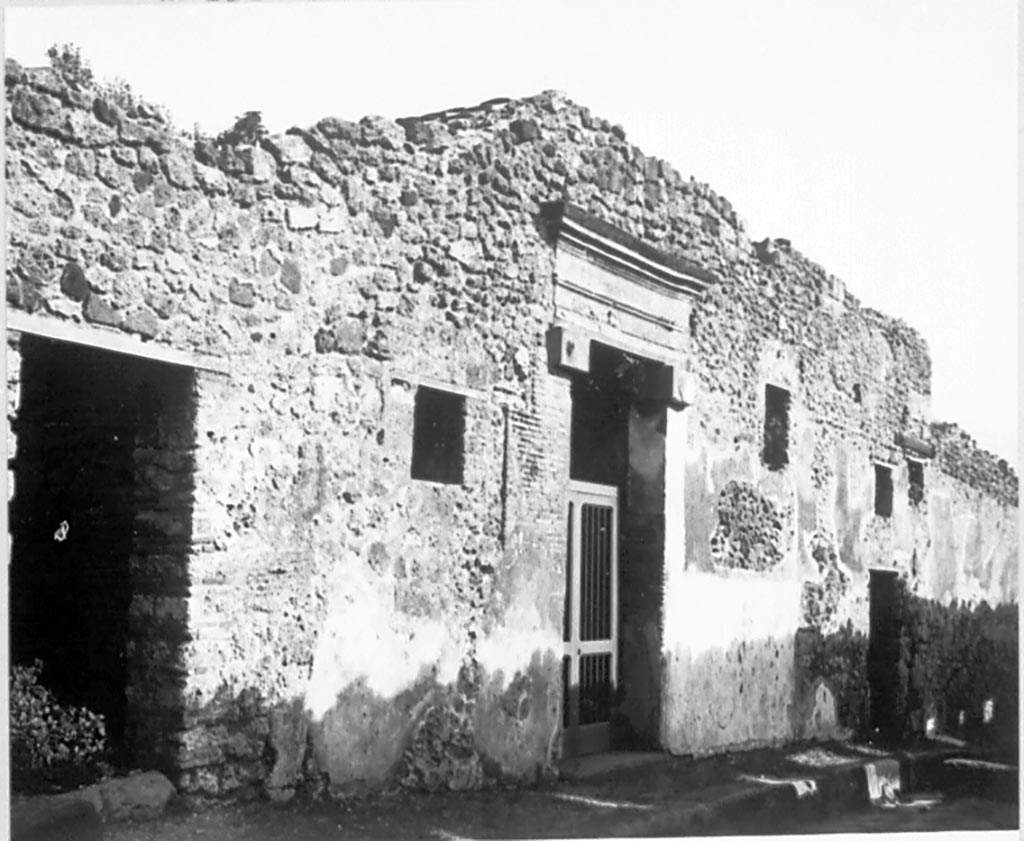
IX.7.17 Pompeii, on left, IX.7.16, in centre, together with IX.7.15, on right. Looking south along east side of Vicolo di Tesmo, 1972.
DAIR 72.3583. Photo
© Deutsches Archäologisches Institut, Abteilung Rom, Arkiv.
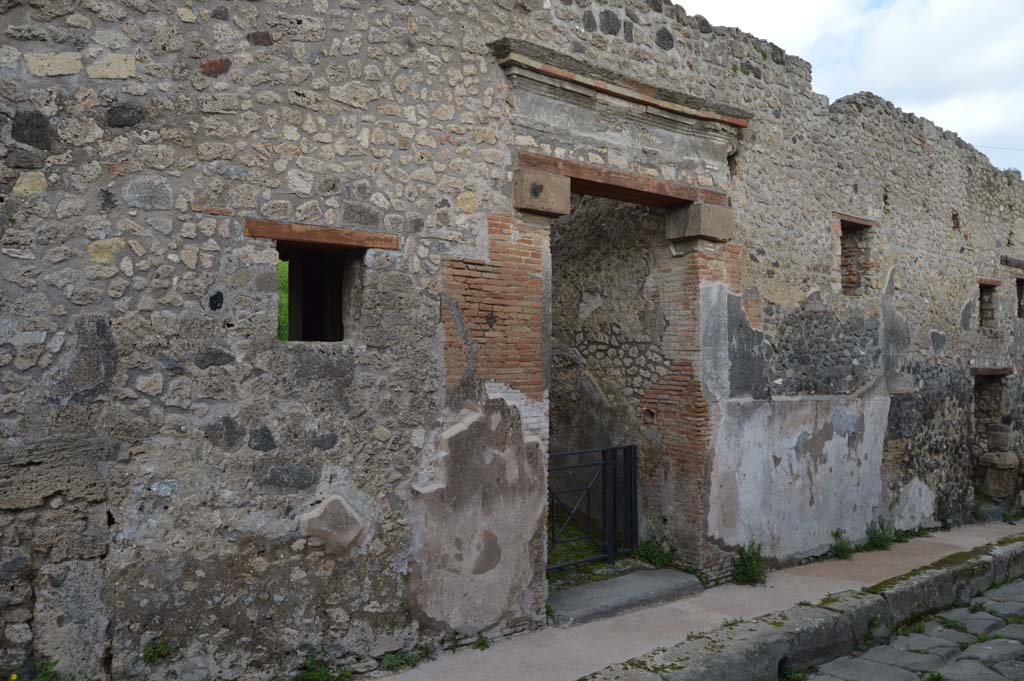
IX.7.16 Pompeii. March 2018.
Looking south towards entrance doorway on east side of Vicolo di Tesmo.
Foto
Taylor Lauritsen, ERC Grant 681269 DÉCOR.
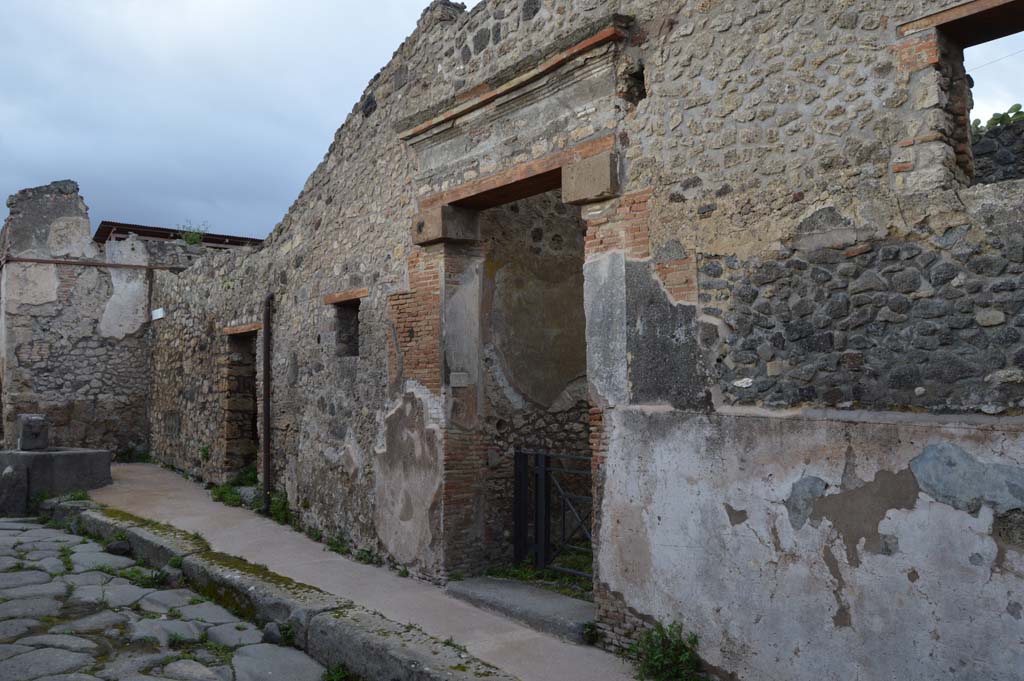
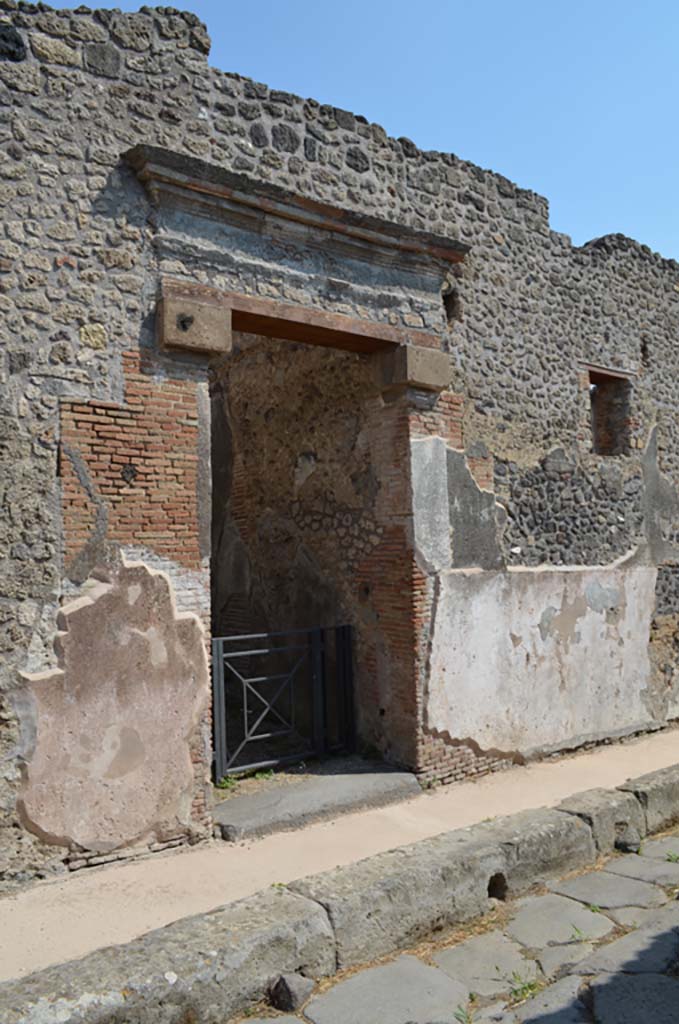
IX.7.16 Pompeii. September 2019. Looking south to entrance doorway.
Foto
Annette Haug, ERC Grant 681269 DÉCOR.
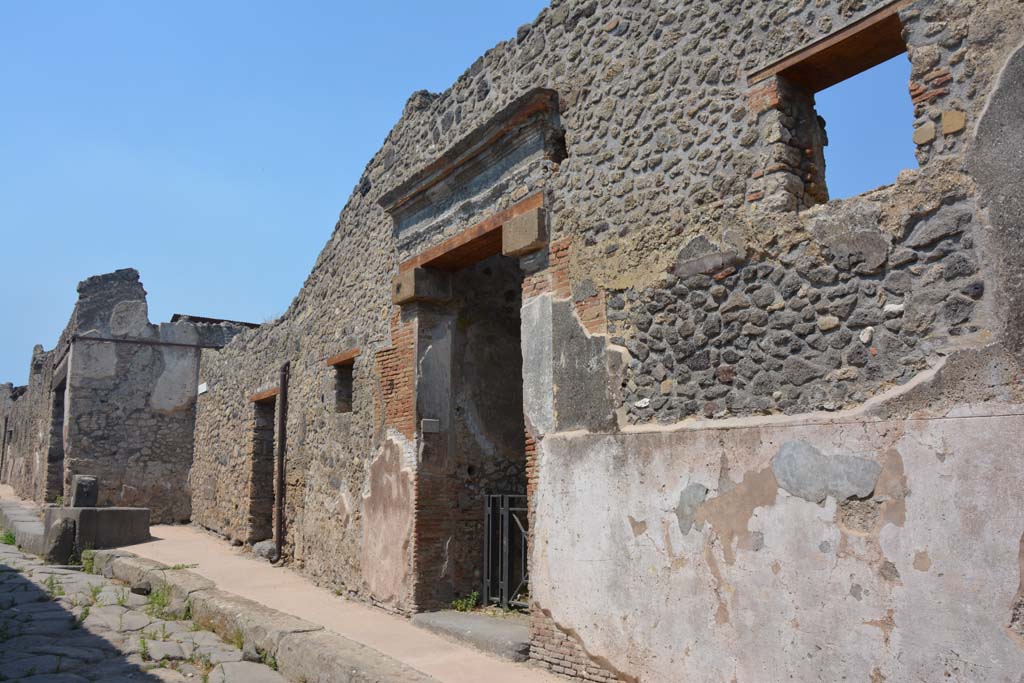
IX.7.16 Pompeii. March 2018. Looking north towards entrance
doorway.
Foto Taylor Lauritsen, ERC Grant 681269 DÉCOR.
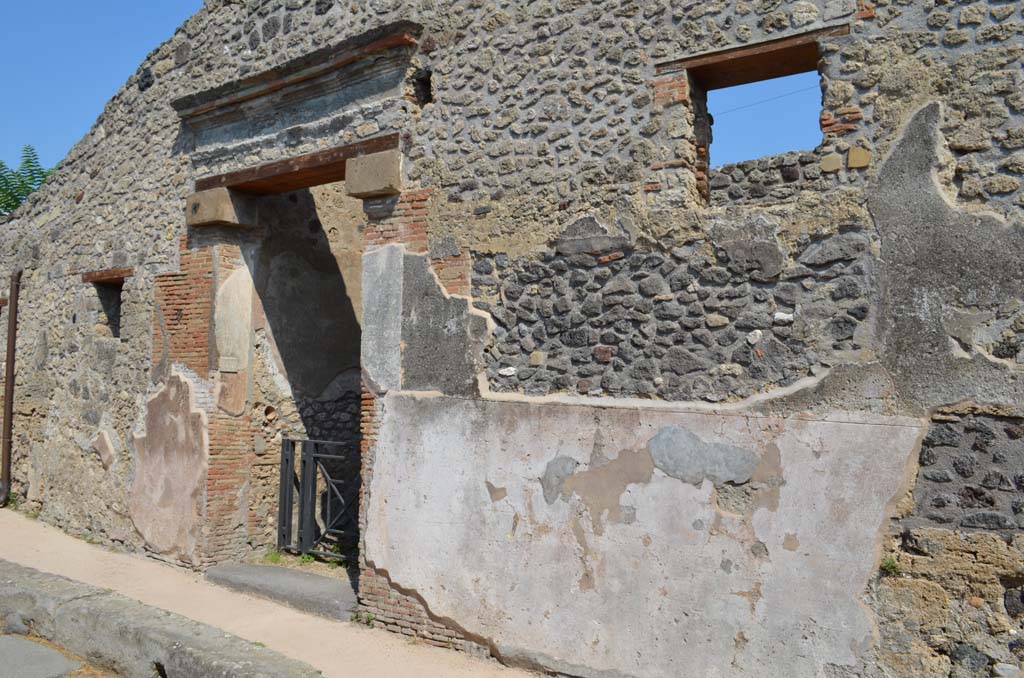
IX.7.16 Pompeii. July 2017. Looking north to entrance doorway on east side of Vicolo di Tesmo.
Foto Annette Haug, ERC Grant 681269 DÉCOR.
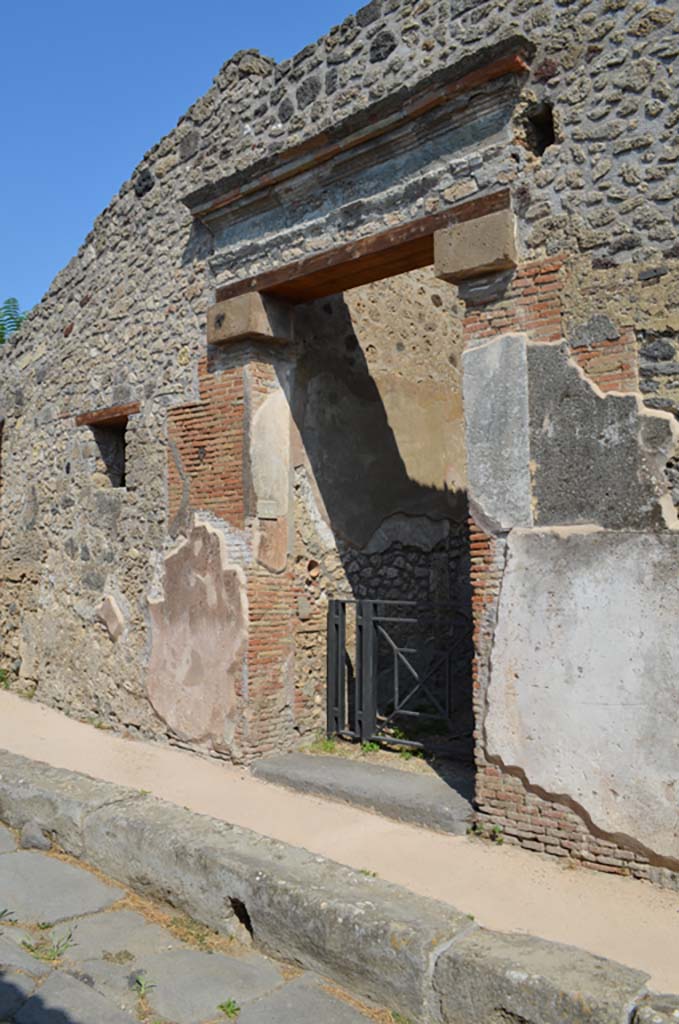
IX.7.16 Pompeii. September 2019. Looking north along front façade.
Foto
Annette Haug, ERC Grant 681269 DÉCOR.
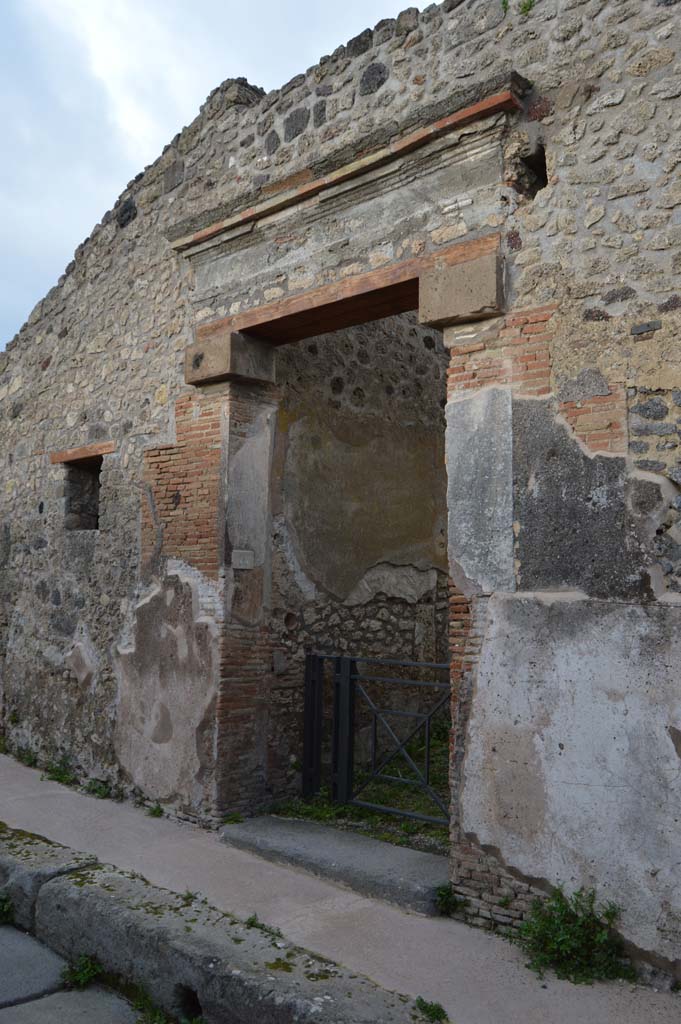
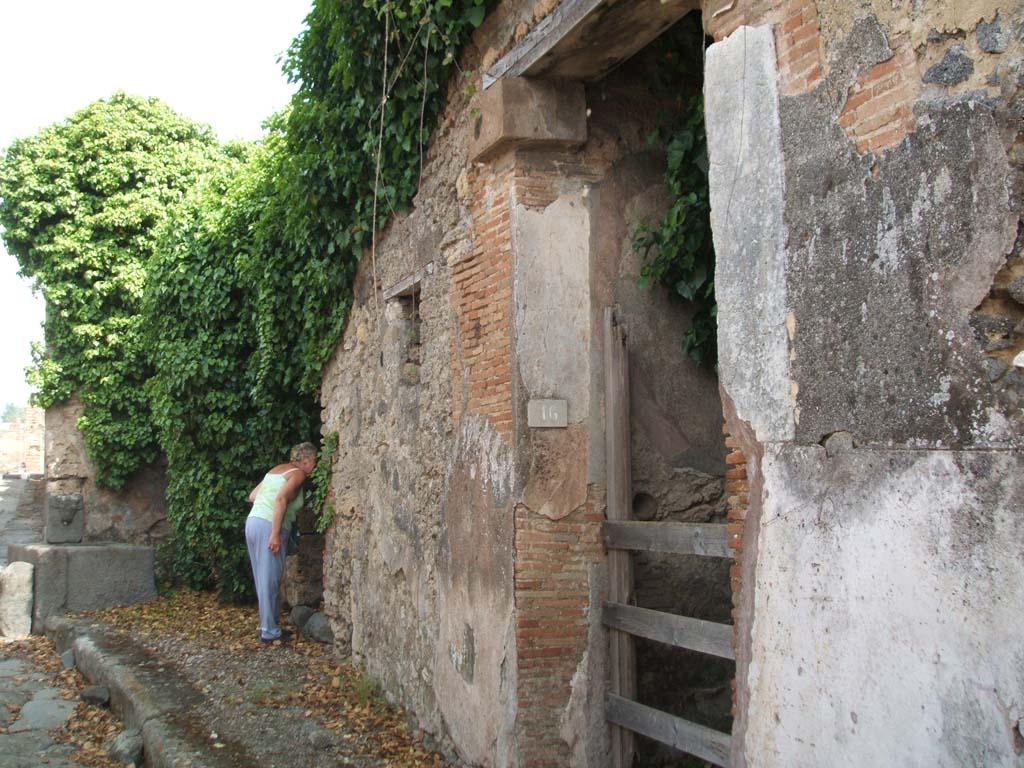
IX.7.16 Pompeii. September 2019. Entrance doorway, looking north.
Foto
Annette Haug, ERC Grant 681269 DÉCOR.

IX.7.16 Pompeii. March 2018. Entrance doorway, looking north.
Foto Taylor Lauritsen, ERC Grant 681269 DÉCOR.

IX.7.16 Pompeii. December 2007. Entrance, looking north.
According to Della Corte, found in this partly excavated house, only excavated as far as the atrium, was a terracotta pitcher (urceo).
Graffito painted on the container of the best fish sauce, sent from Umbricius Agathopus, was addressed to A. Virnio Modesto [CIL IV 5712]
See Della Corte, M., 1965. Case ed Abitanti di Pompei. Napoli: Fausto Fiorentino. (p.212)
According to Cooley, the graffito was painted on a fish sauce container which was found in the kitchen.
CIL IV 5712 she translates as “Best essence, to Aulus Virnius Modestus from Agathopus”
See Cooley, A. and M.G.L., 2004. Pompeii: A Sourcebook. London: Routledge. (p.166, H27)
According to Epigraphik-Datenbank Clauss/Slaby (See www.manfredclauss.de), CIL IV 5712 read as –
Liquamen
Optimum
A(ulo) Virnio
Modesto
ab
Agathopode [CIL IV 5712]

IX.7.16 Pompeii. May 2018.
Entrance doorway, after renovation and stabilization, on east side of Vicolo di Tesmo. Photo courtesy of Buzz Ferebee.
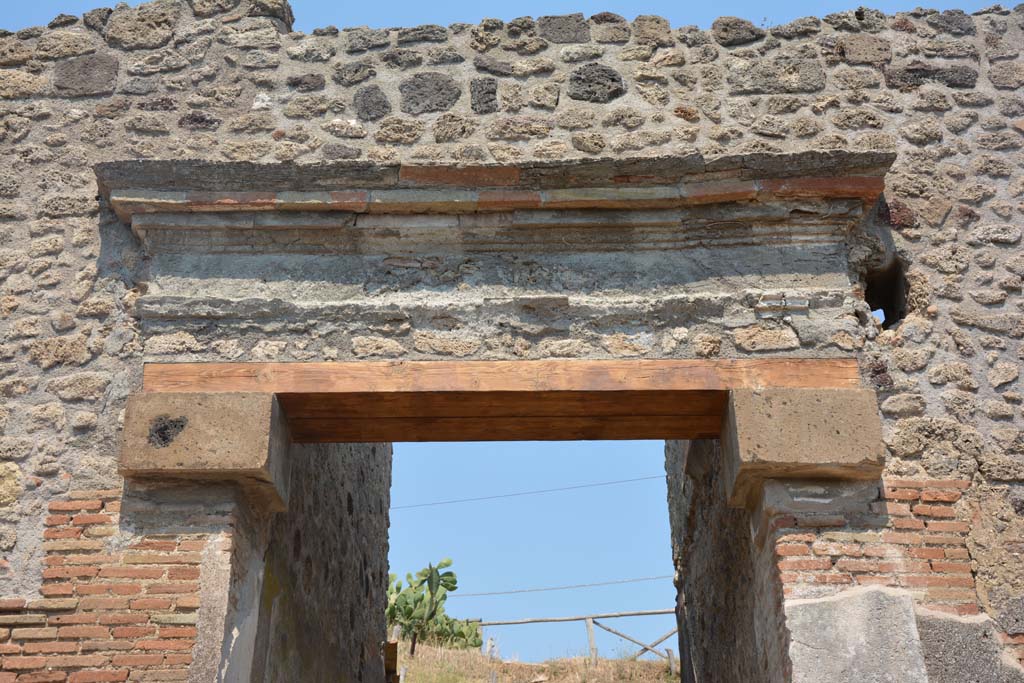
IX.7.16 Pompeii. May 2018. Detail of top of doorway after renovation. Photo courtesy of Buzz Ferebee.
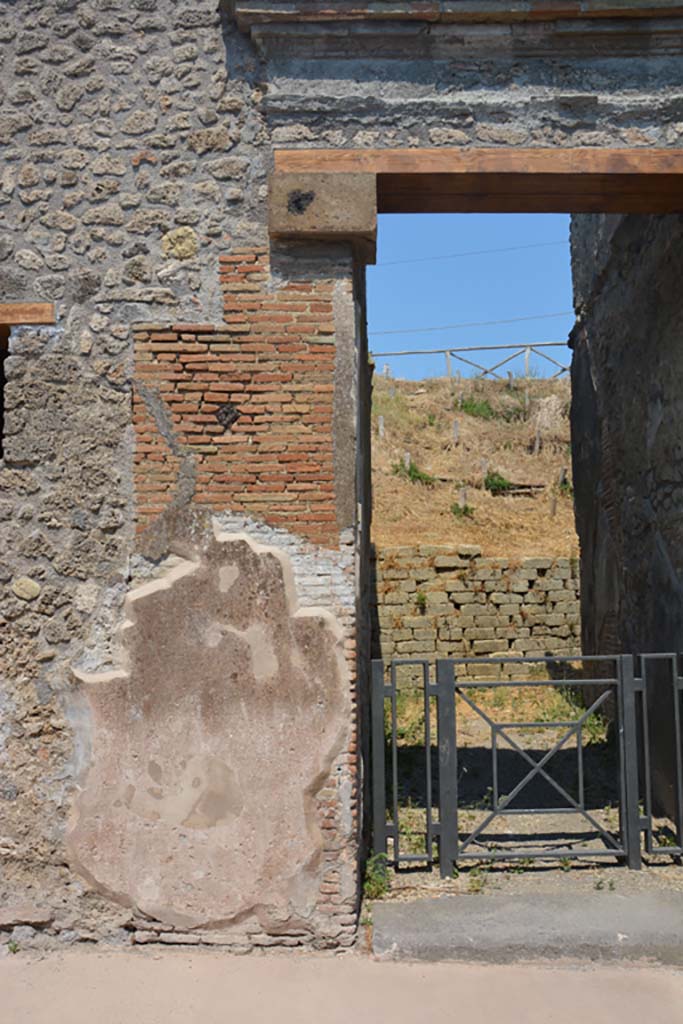
IX.7.16 Pompeii. July 2017. Detail of top of doorway.
Foto Annette Haug, ERC Grant 681269 DÉCOR.
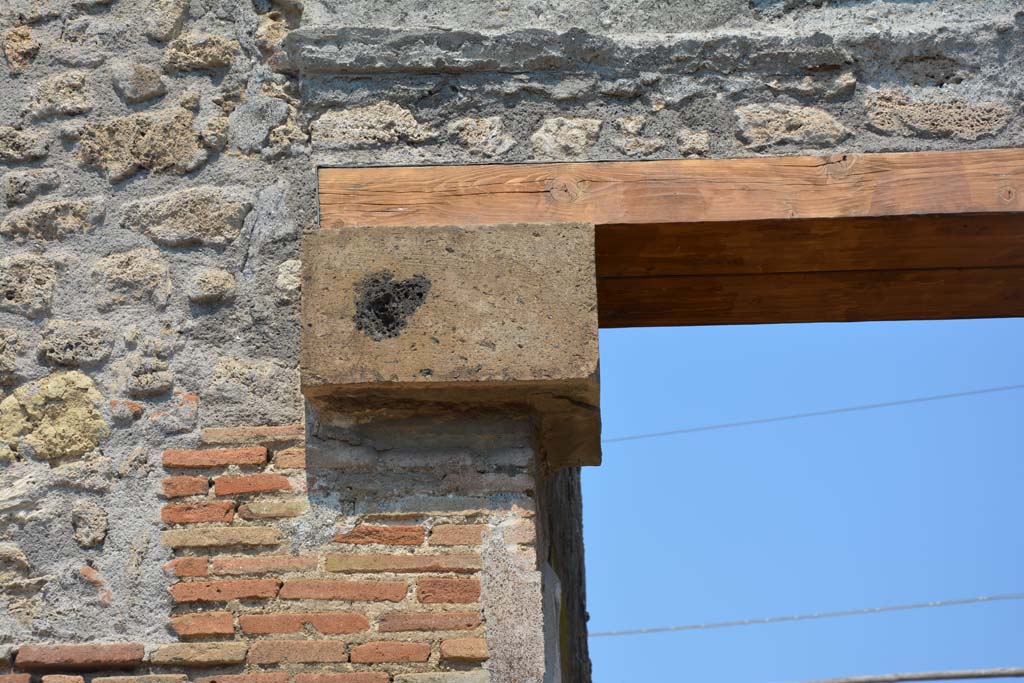
IX.7.16 Pompeii. July 2017. Detail from north side of entrance doorway.
Foto Annette Haug, ERC Grant 681269 DÉCOR.
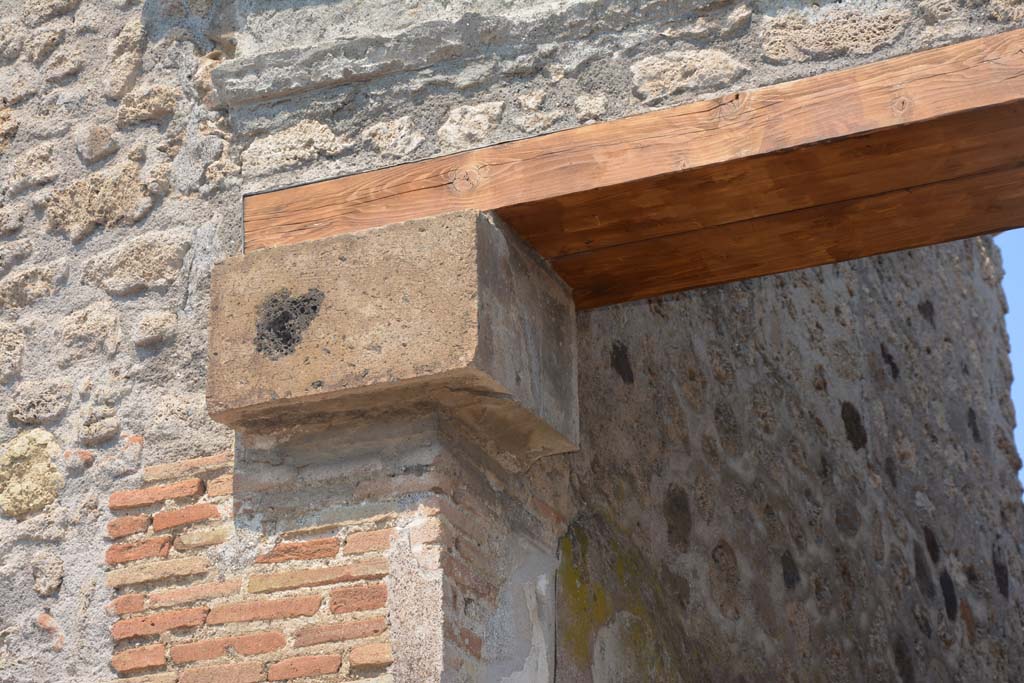
IX.7.16 Pompeii. July 2017. Square capital at top of north side of doorway.
Foto Annette Haug, ERC Grant 681269 DÉCOR.
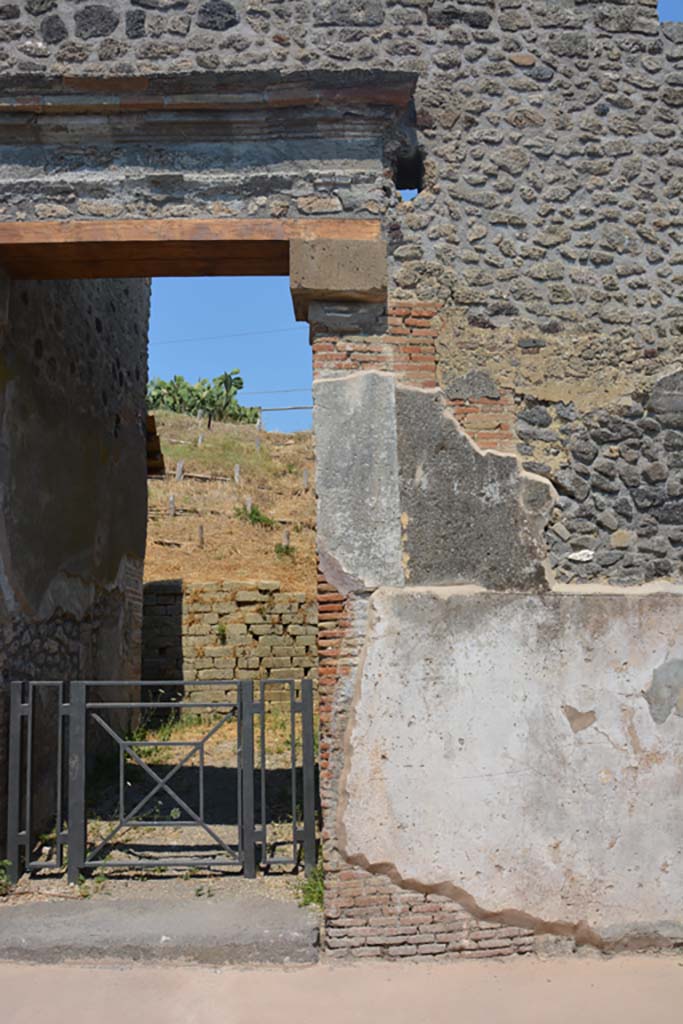
IX.7.16 Pompeii. July 2017. Looking towards upper north side of entrance doorway.
Foto
Annette Haug, ERC Grant 681269 DÉCOR.
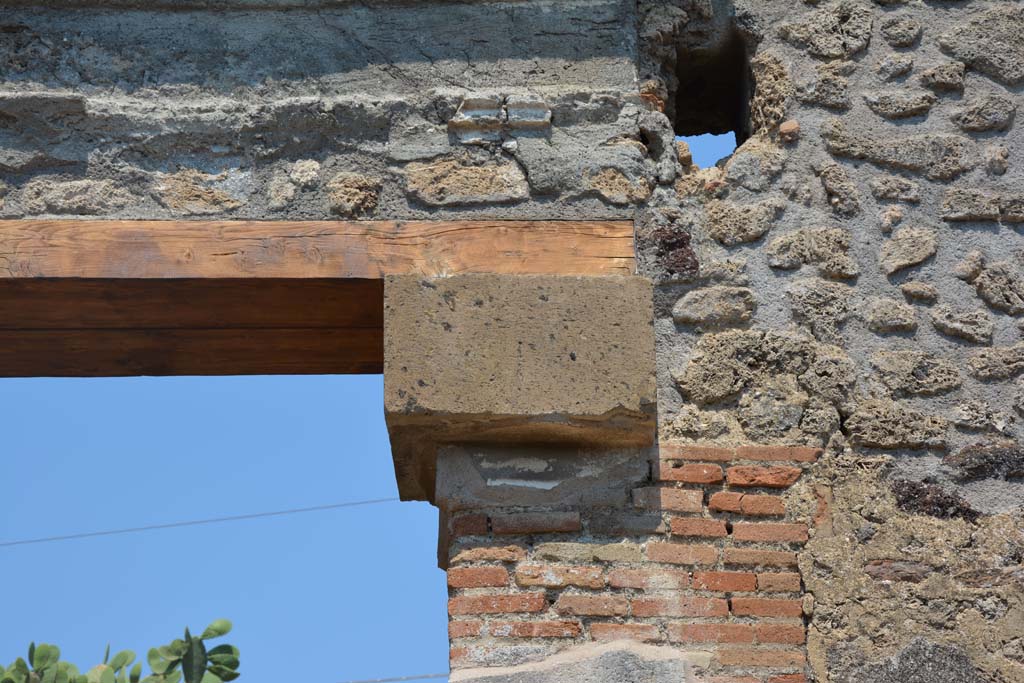
IX.7.16 Pompeii. July 2017. Detail from south side of entrance doorway.
Foto
Annette Haug, ERC Grant 681269 DÉCOR.
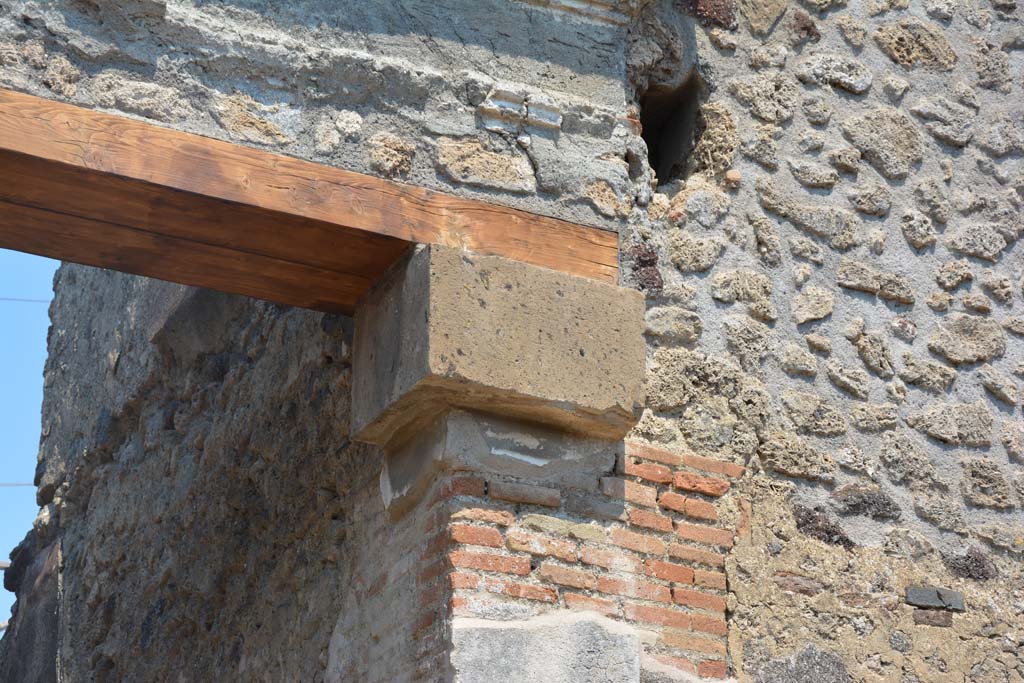
IX.7.16 Pompeii. July 2017. Square capital at top of south side of doorway.
Foto Annette Haug, ERC Grant 681269 DÉCOR.
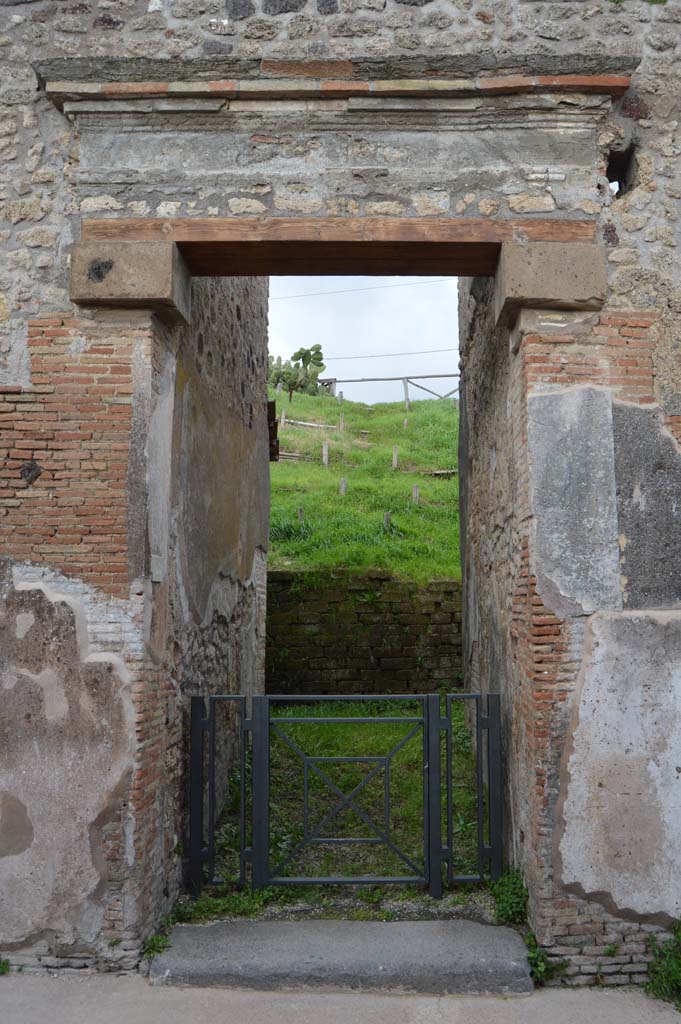
IX.7.16 Pompeii. July 2017. Looking towards upper south side of entrance doorway.
Foto Annette Haug, ERC Grant 681269 DÉCOR.
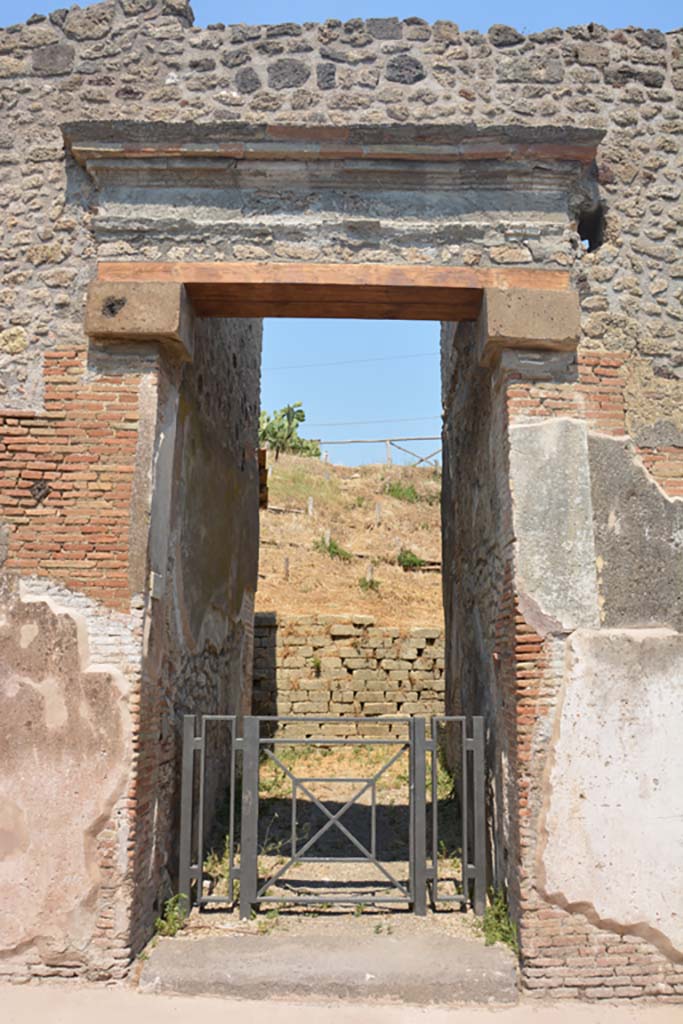
IX.7.16 Pompeii. May 2024.
Looking towards south side of entrance doorway. Photo courtesy of Klaus Heese.
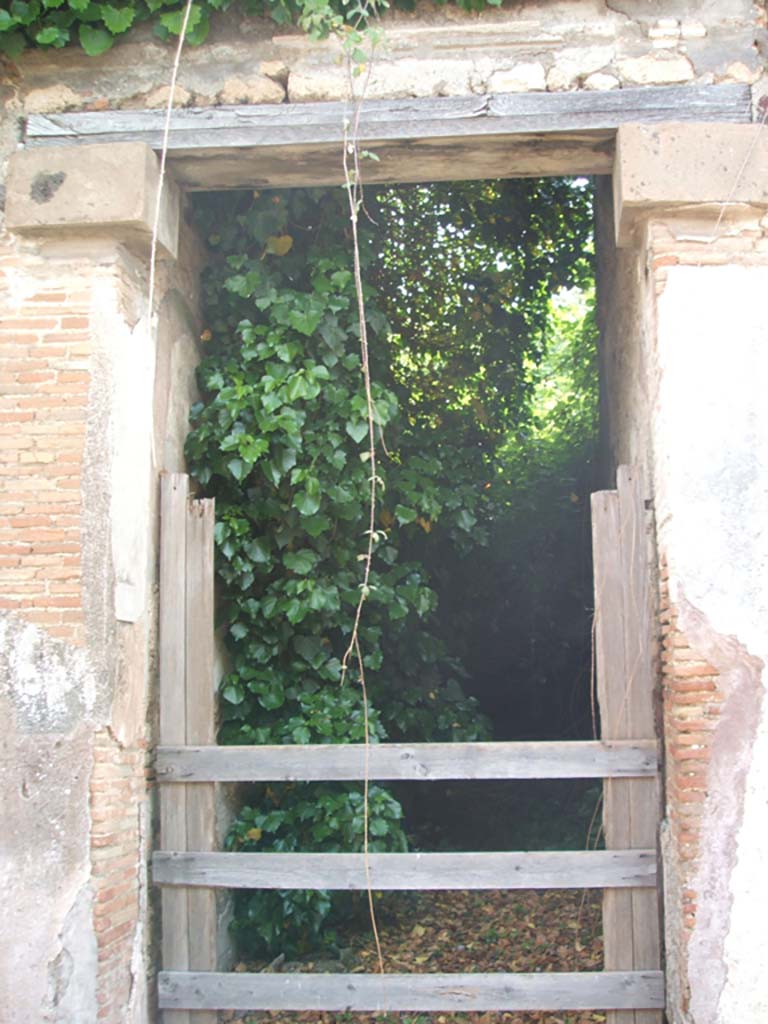
IX.7.16 Pompeii. May 2024.
Looking towards north side of entrance doorway. Photo courtesy of Klaus Heese.

IX.7.16 Pompeii. March 2018. Looking east through entrance
doorway.
Foto Taylor Lauritsen, ERC Grant 681269 DÉCOR.
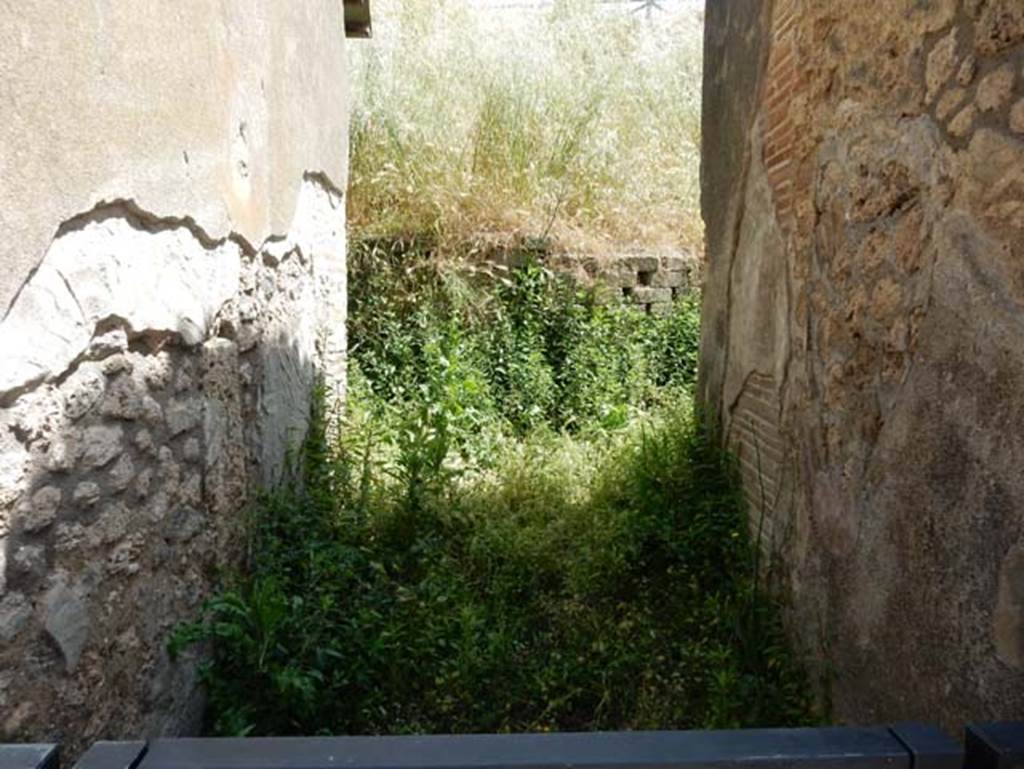
IX.7.16 Pompeii. July 2017. Looking east through entrance doorway.
Foto Annette Haug, ERC Grant 681269 DÉCOR.

IX.7.16 Pompeii. May 2005. Entrance doorway, looking east.
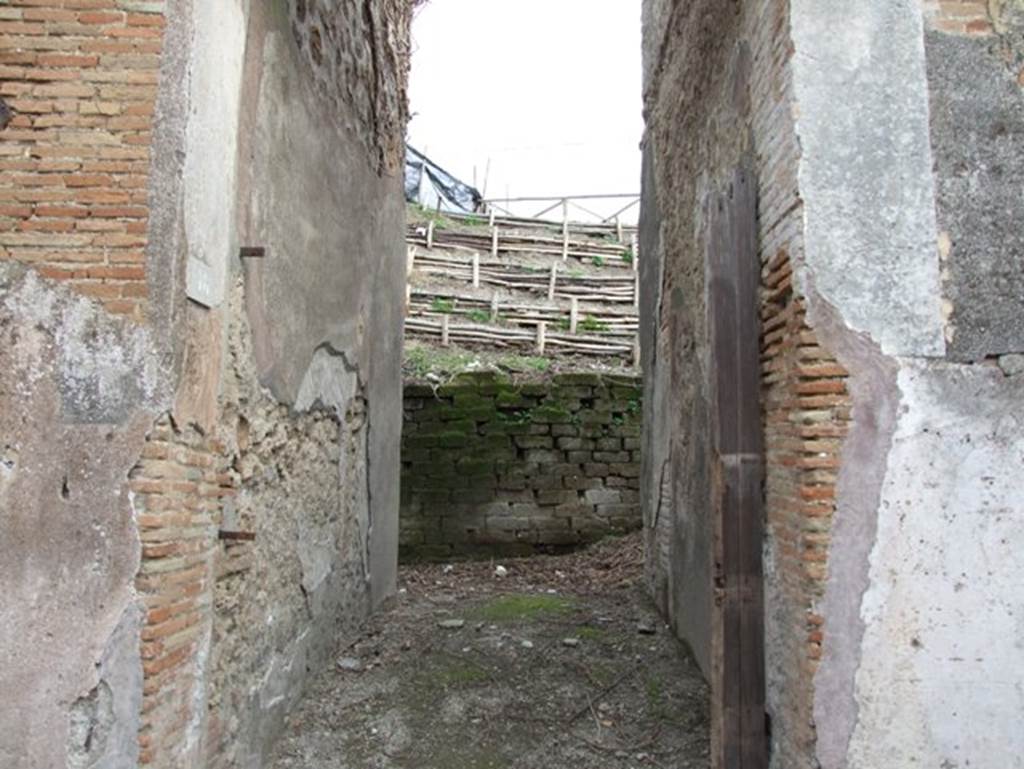
IX.7.16 Pompeii. May 2024.
Looking east along north wall of entrance corridor 1 from entrance doorway. Photo courtesy of Klaus Heese.
IX.7.16 Pompeii, May 2018. Looking east along entrance corridor 1. Photo courtesy of Buzz Ferebee.
IX.7.16 Pompeii. December 2007. Looking east along entrance corridor 1, into the unexcavated/reburied atrium 2.
IX.7.16 Pompeii. May 2005. Looking east along entrance corridor 1.
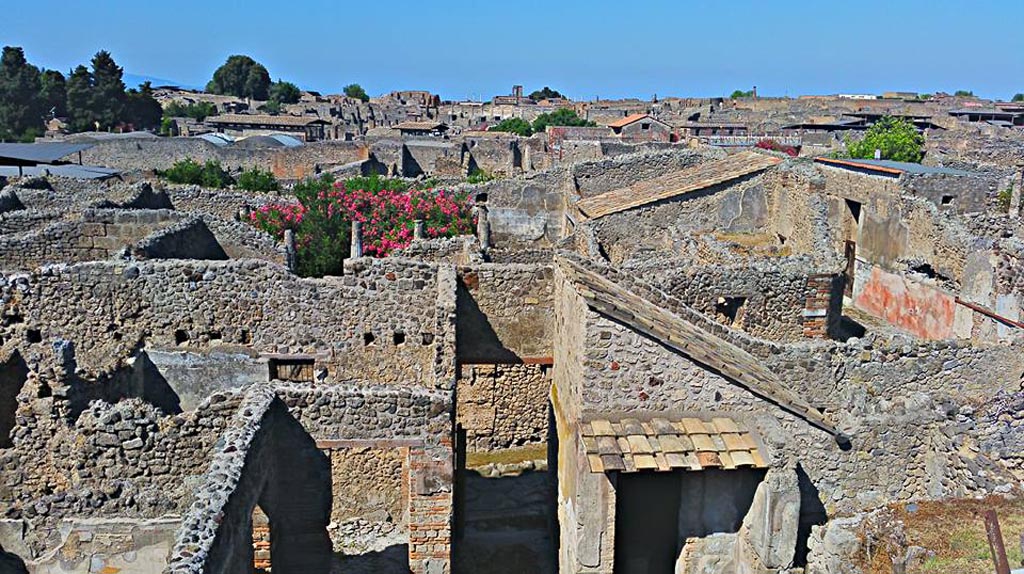
IX.7.17 Pompeii, together with IX.7.16. May 2005. Entrances on Vicolo di Tesmo. Looking north.
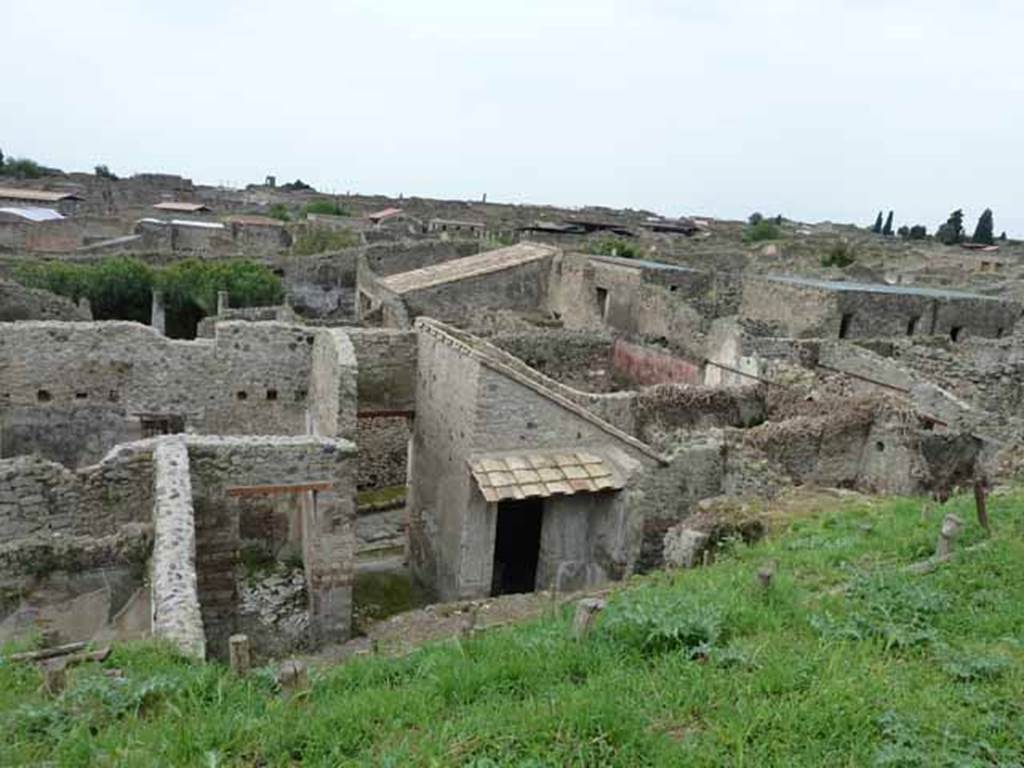
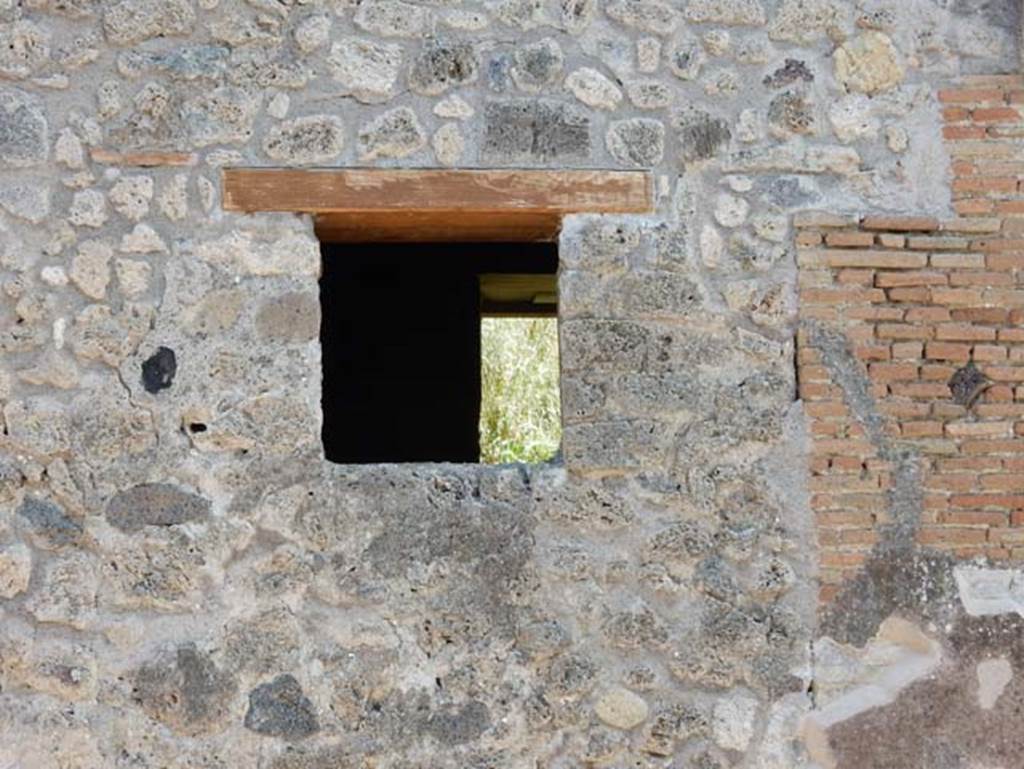
IX.7.16 Pompeii, May 2018. Renovated window to cubiculum on north side of entrance doorway. Photo courtesy of Buzz Ferebee.
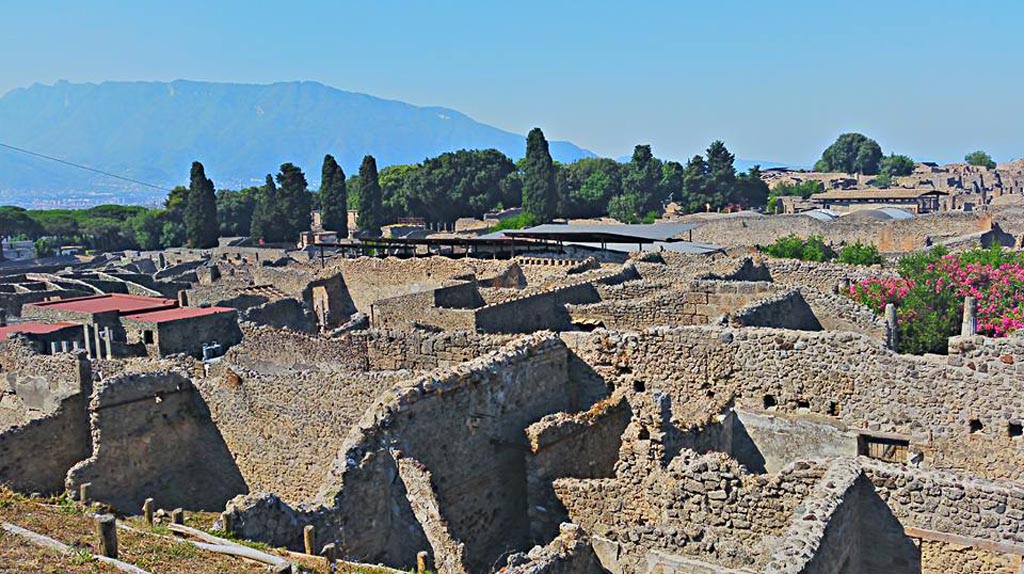
View looking west towards the Basilica in the distance, taken from above IX.7.12, towards doorway of IX.7.16, in centre.
2017/2018/2019.
Photo courtesy of Giuseppe Ciaramella.

2015/2016. Photo courtesy of Giuseppe Ciaramella.

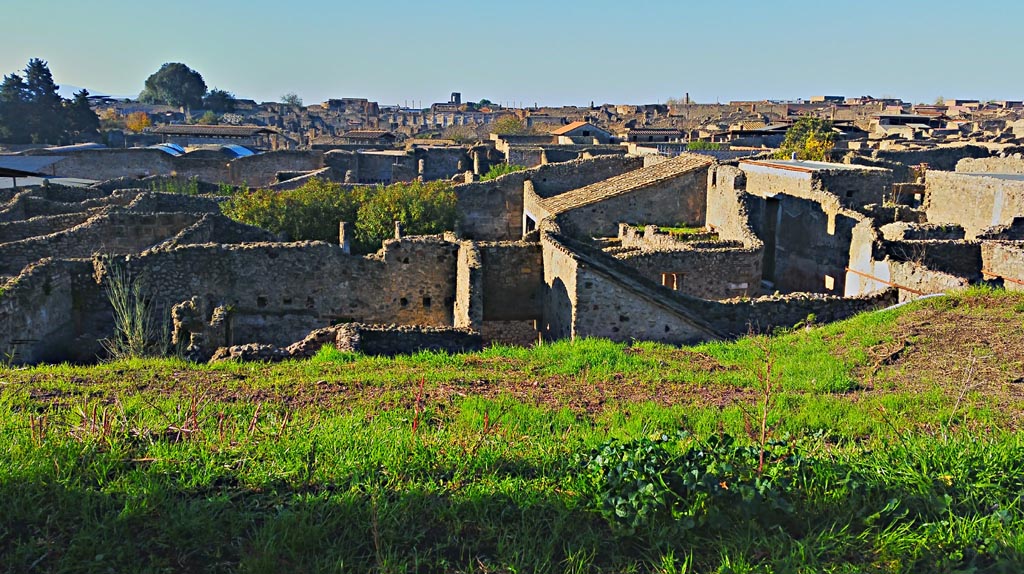
IX.7.16 Pompeii. May 2010. Looking west from Casina dell’Aquila.
Looking towards rear of entrance between two rooms, the triclinium “c” on the left, and a cubiculum “b” on the right.
The room 3, on the lower left of the photo, would be another cubiculum, the doorway was described as the second on the right of the atrium.