IX.1.8 Pompeii. Bar and rooms.
Excavated 1856. (Strada Stabiana 79).
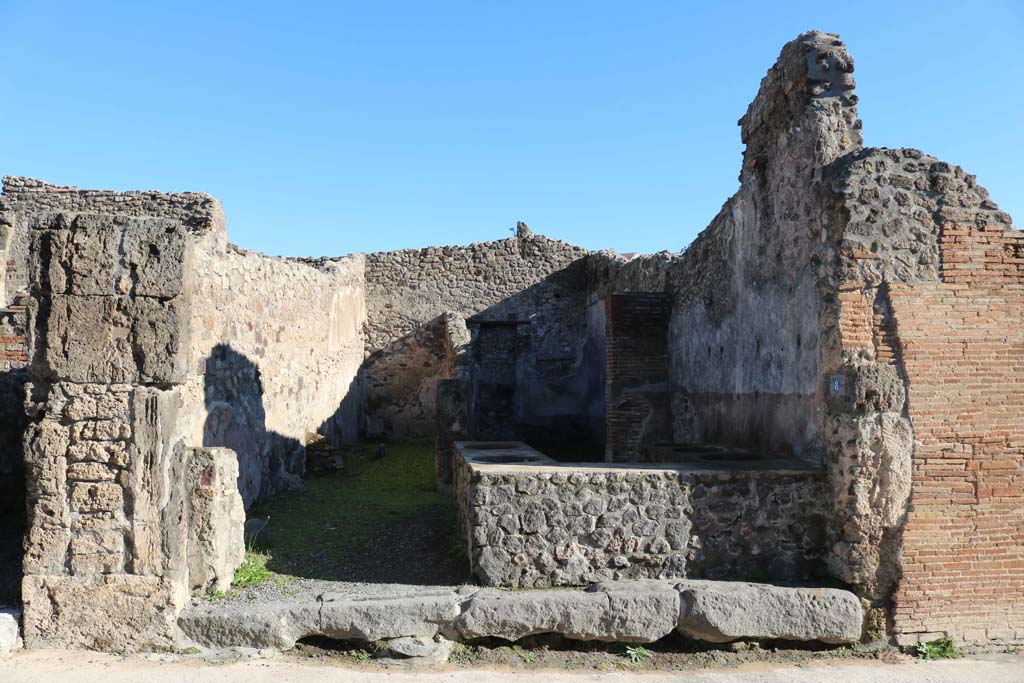
IX.1.8 Pompeii. December 2018. Looking east to entrance doorway. Photo
courtesy of Aude Durand.
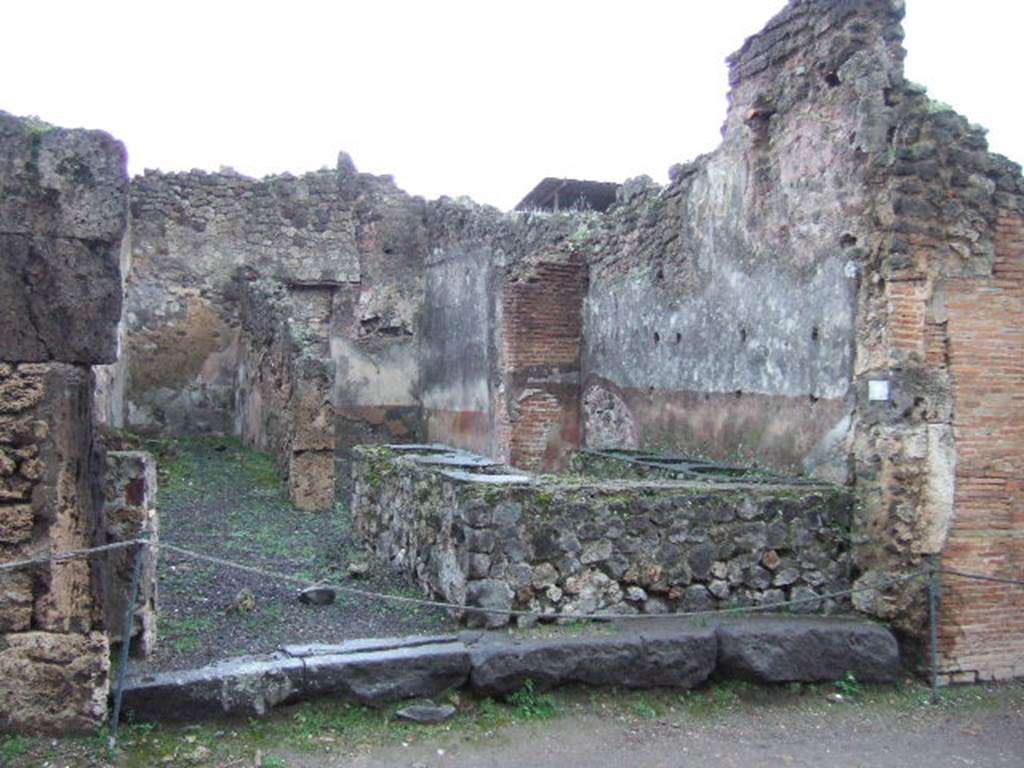
IX.1.8 Pompeii. December 2005. Looking east from Via Stabiana.
The room at the front had a bench embedded with five large terracotta containers for provisions, support-holes for shelving for utensils, and a hearth on the north side near the doorway.
At the rear, (towards the east side), was a room possibly used as a dining room for the customers, as well as a narrow room where the stairs to the upper floor were found, underneath the stairs was the latrine.
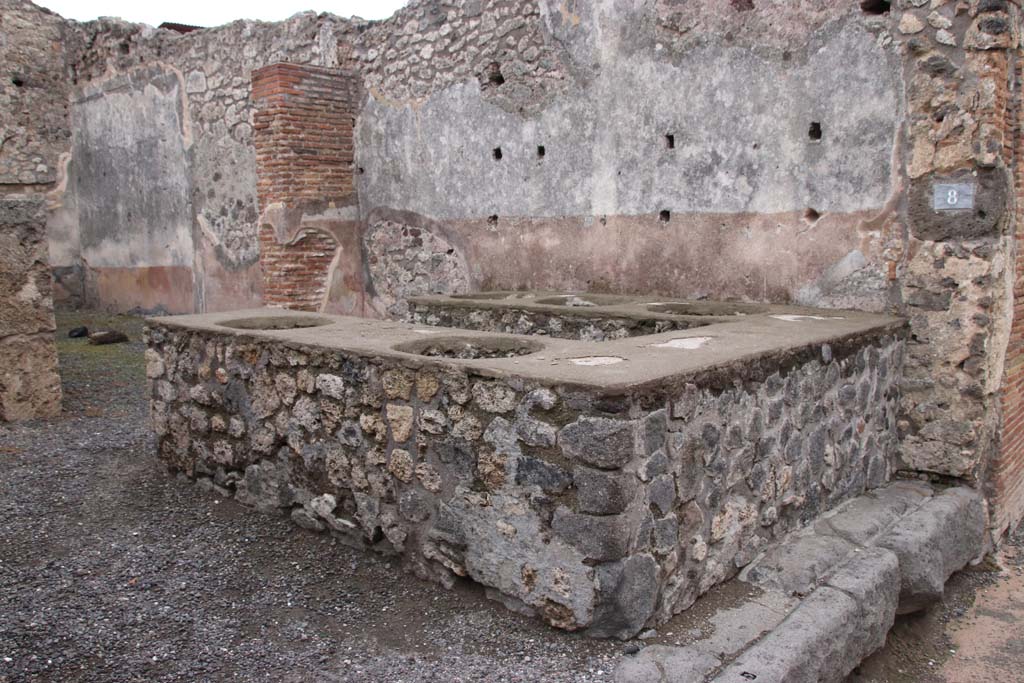
IX.1.8 Pompeii. October 2020. Entrance doorway with bar counter on south side. Photo courtesy of Klaus Heese.
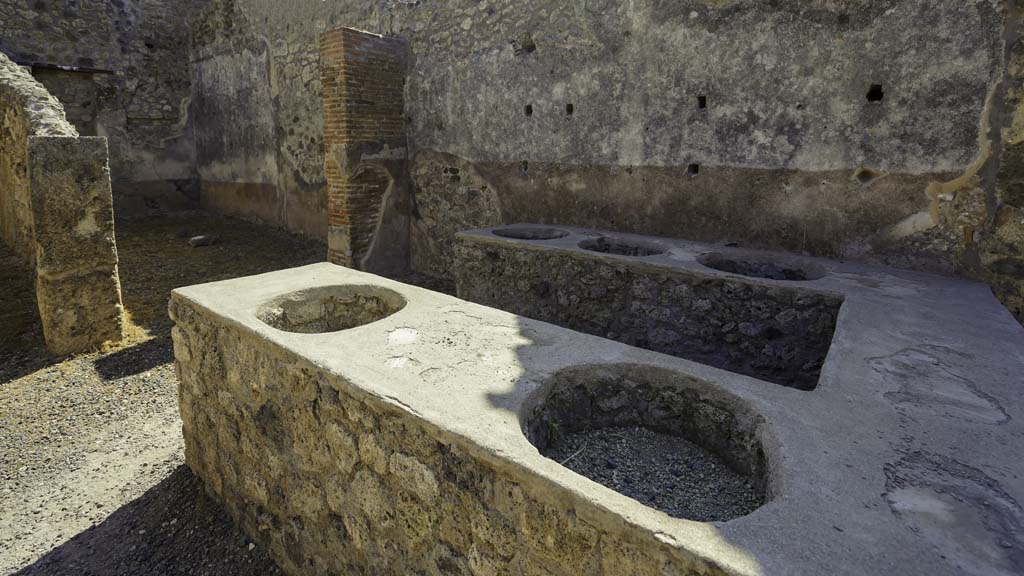
IX.1.8 Pompeii. August 2021.
Looking across counter to south side of bar-room, and towards rear
room. Photo courtesy of Robert Hanson.
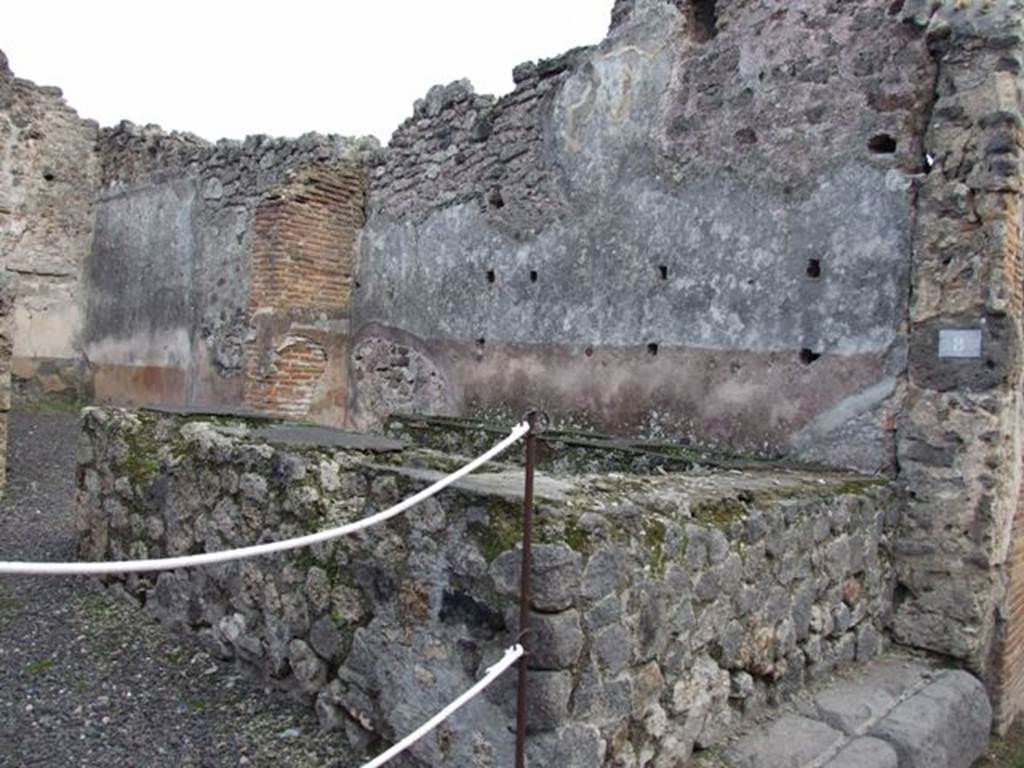
IX.1.8 Pompeii. December 2007. Entrance with bar counter on south side.
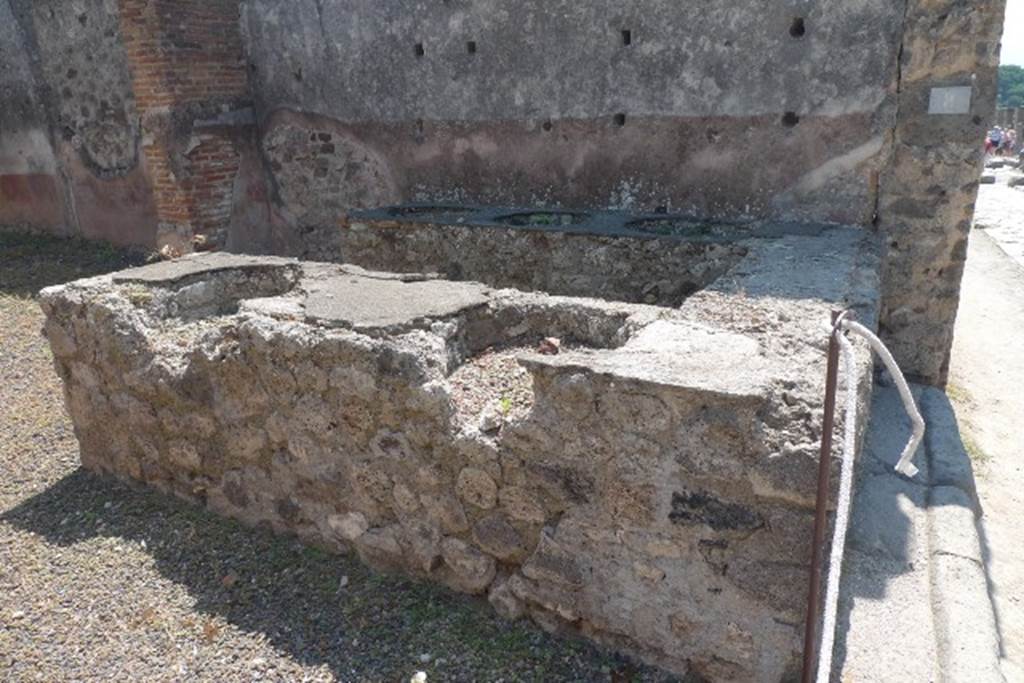
IX.1.8 Pompeii. July 2010. Looking south across counter. Photo courtesy of Michael Binns.
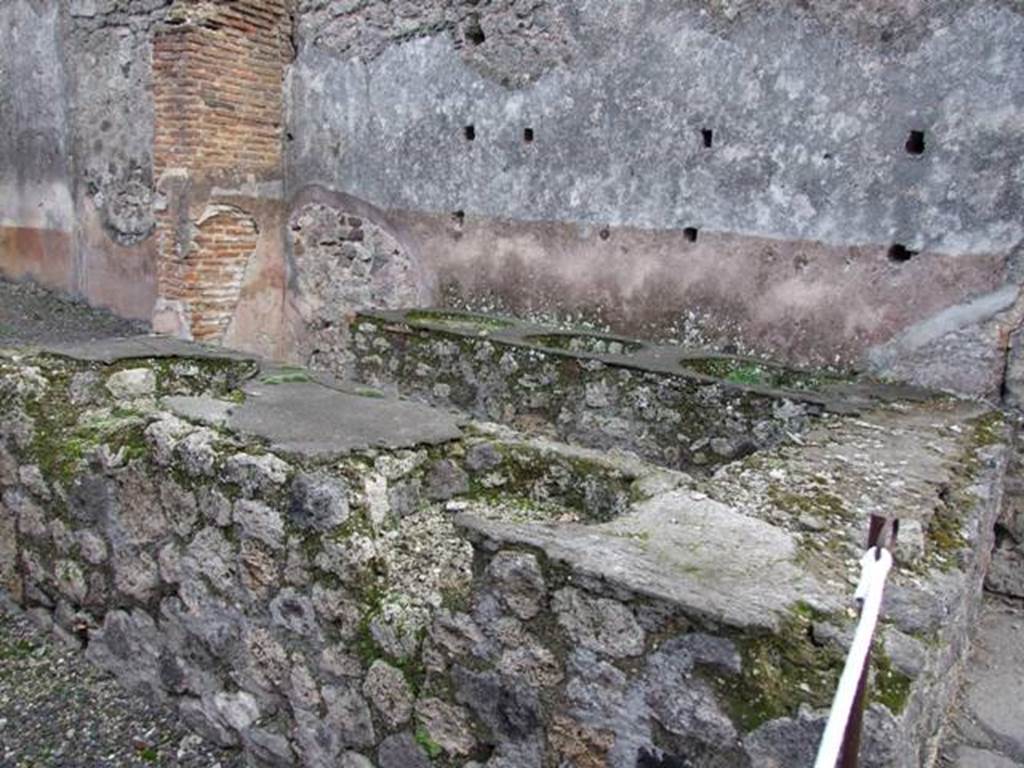
IX.1.8 Pompeii. December 2007. Counter containing remains of five urns, and holes in south wall for shelving supports.
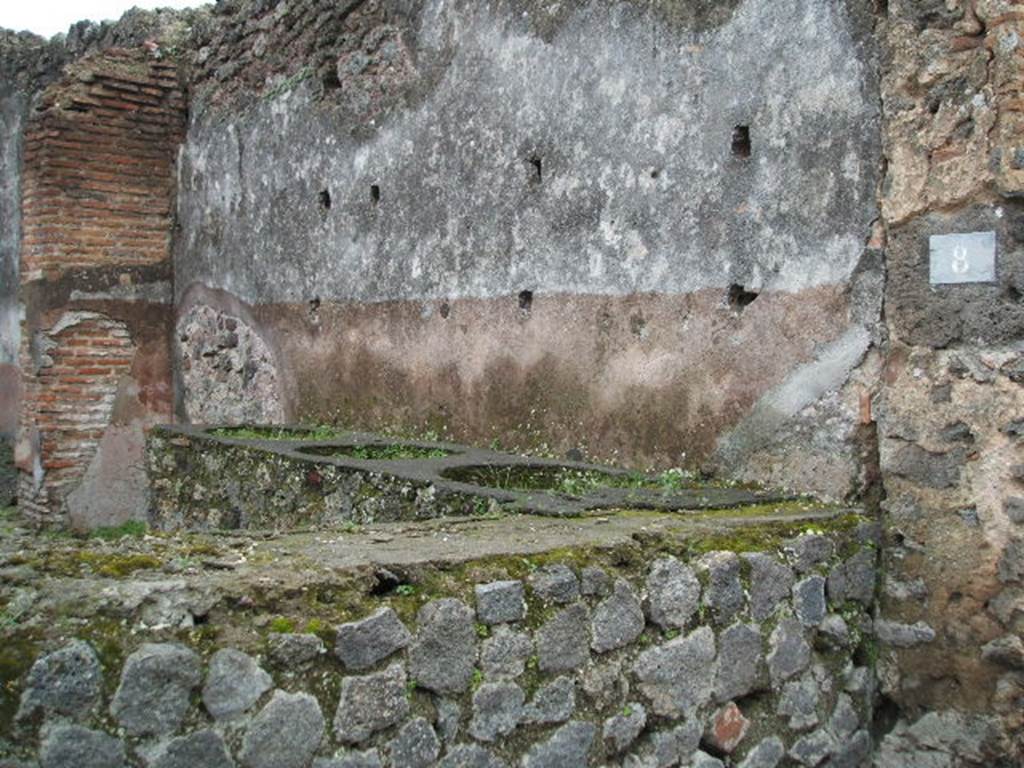
IX.1.8 Pompeii. December 2004. Bar counter and south wall with high purple/dark red zoccolo/plinth topped with a white middle zone.
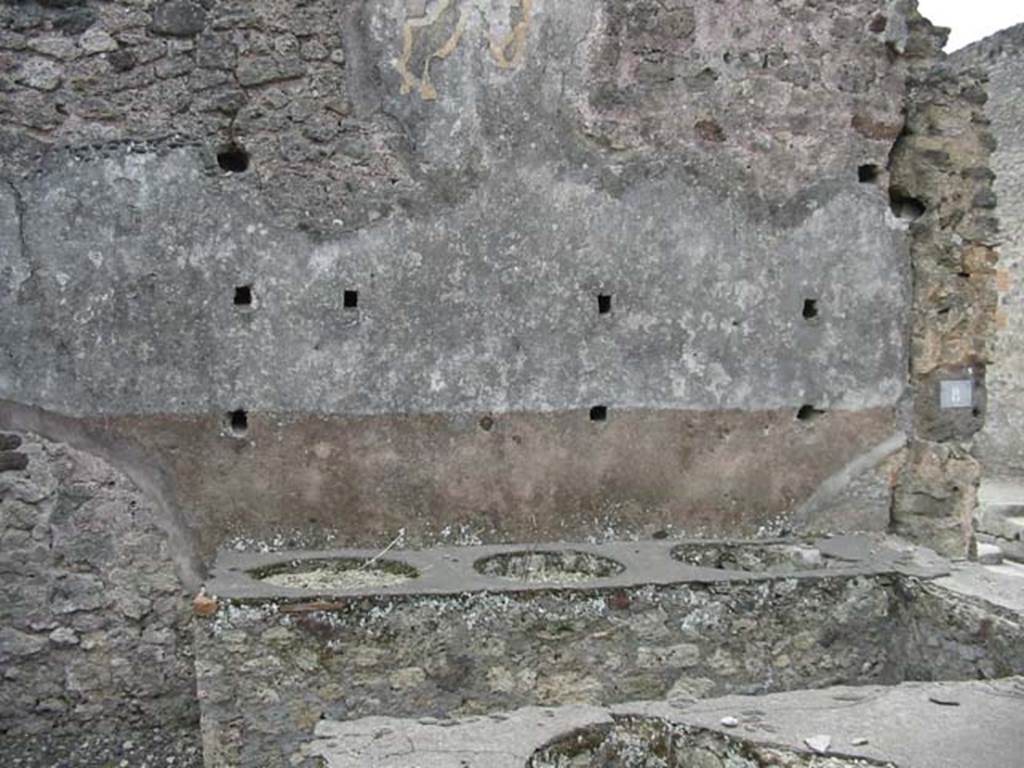
IX.1.8 Pompeii. May 2003. Looking towards bar counter and south wall. Photo courtesy of Nicolas Monteix.
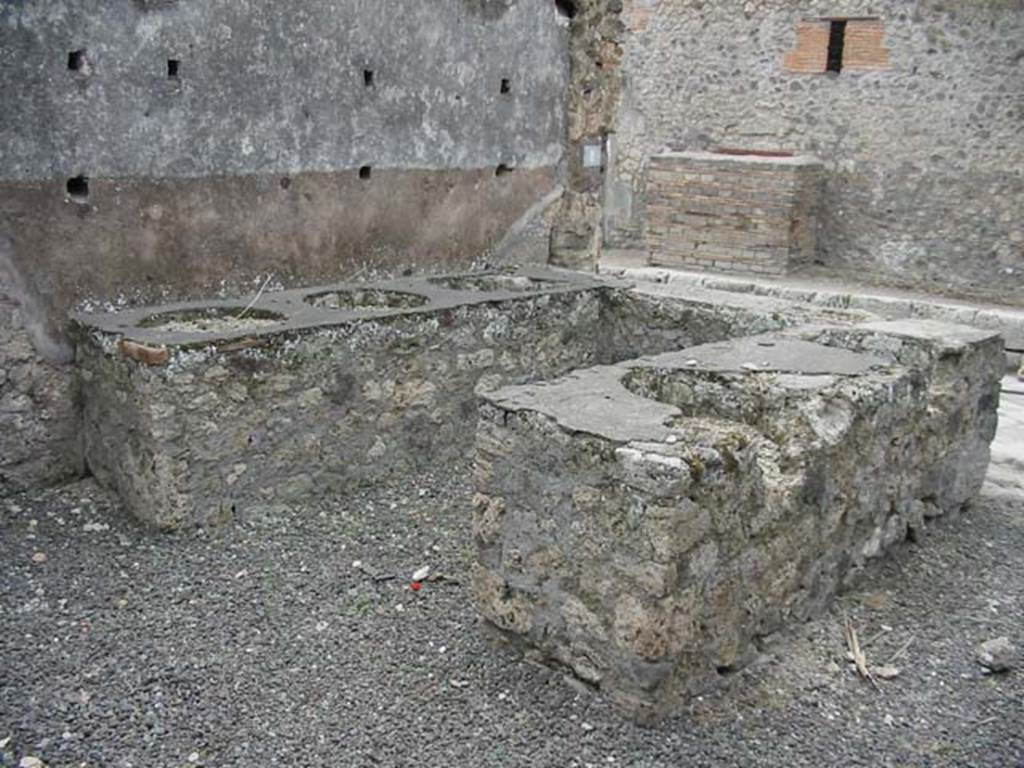
IX.1.8 Pompeii. May 2003. Looking south-west across bar counter from rear. Photo courtesy of Nicolas Monteix.
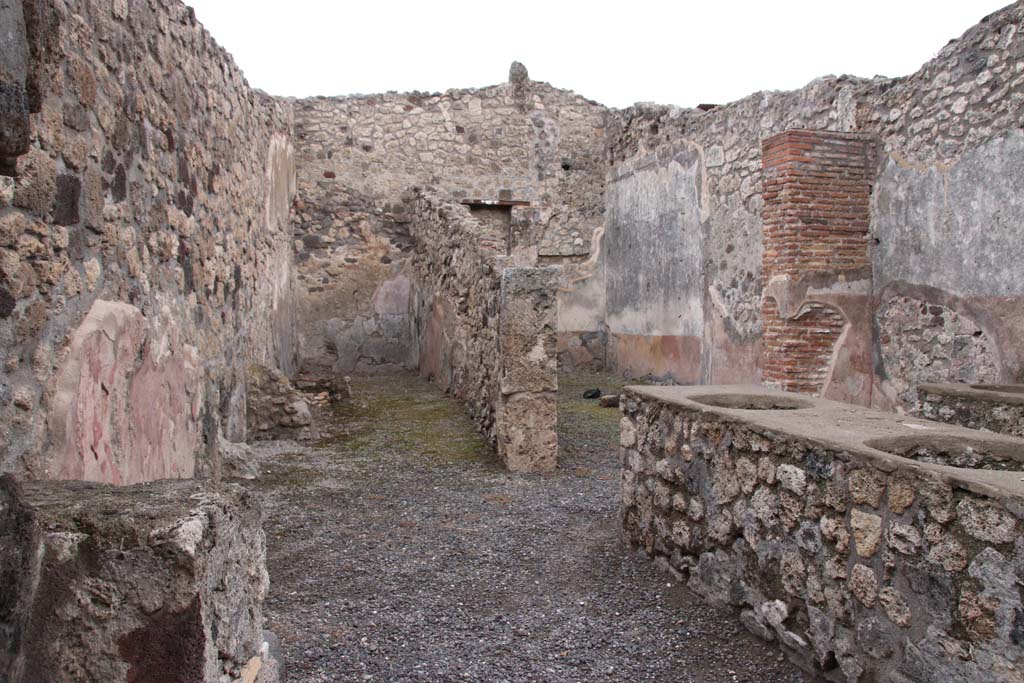
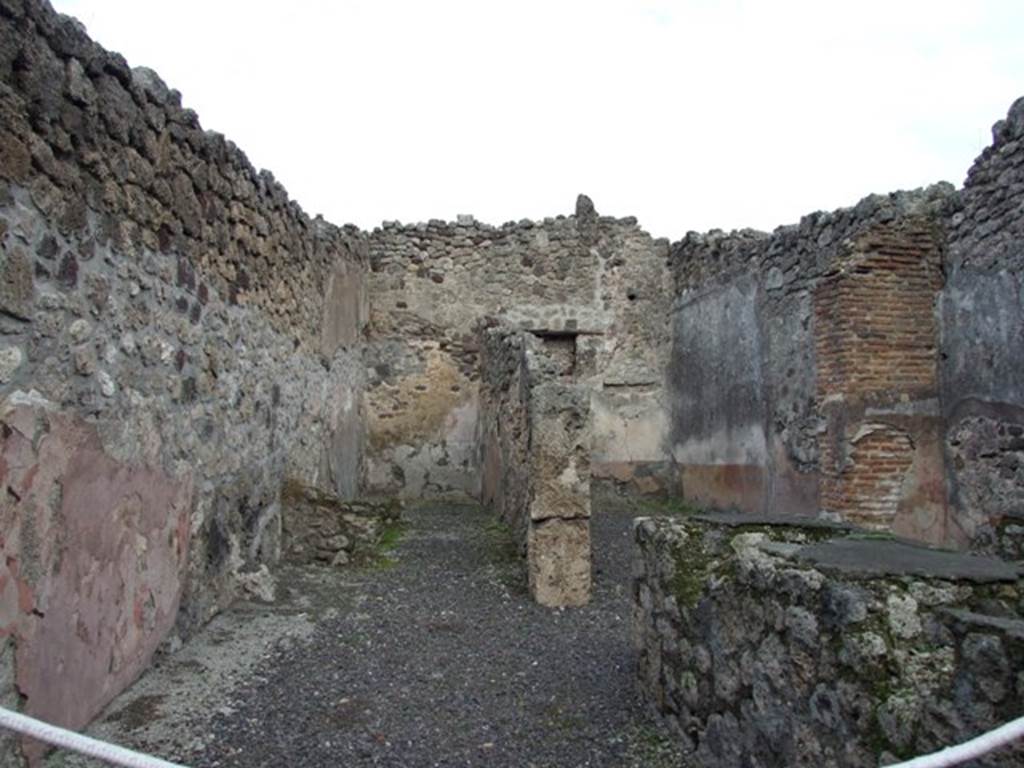
IX.1.8 Pompeii. December 2007. Looking east across bar room to rear rooms.
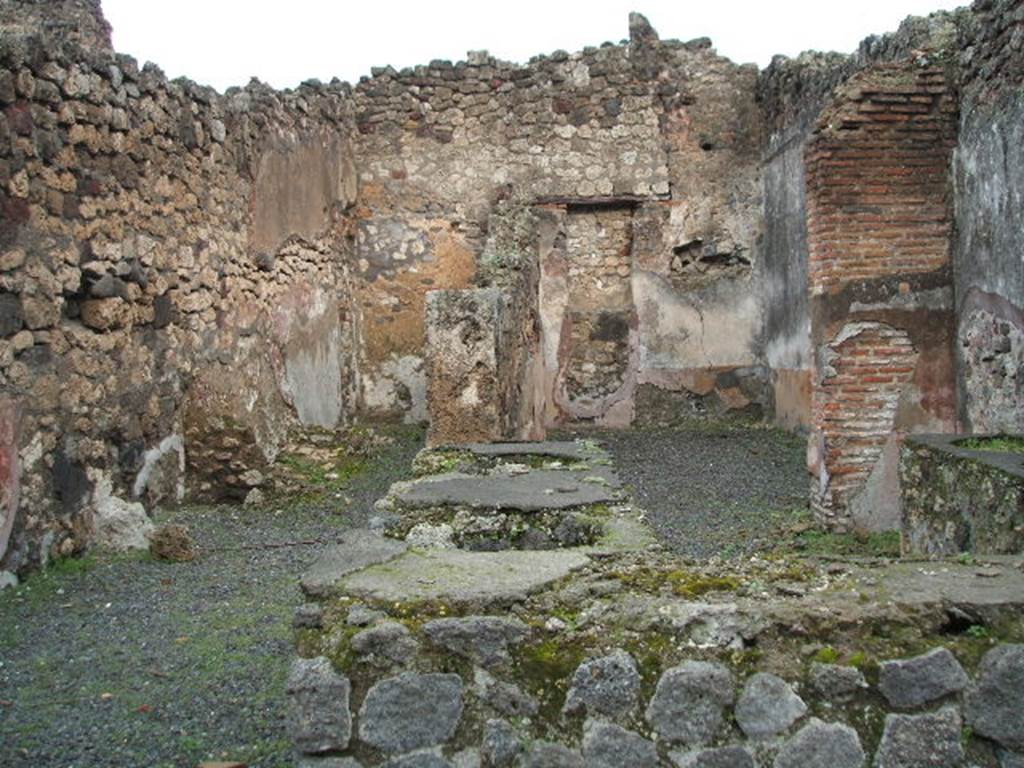
IX.1.8 Pompeii. December 2004. Looking east across bar to rear rooms.
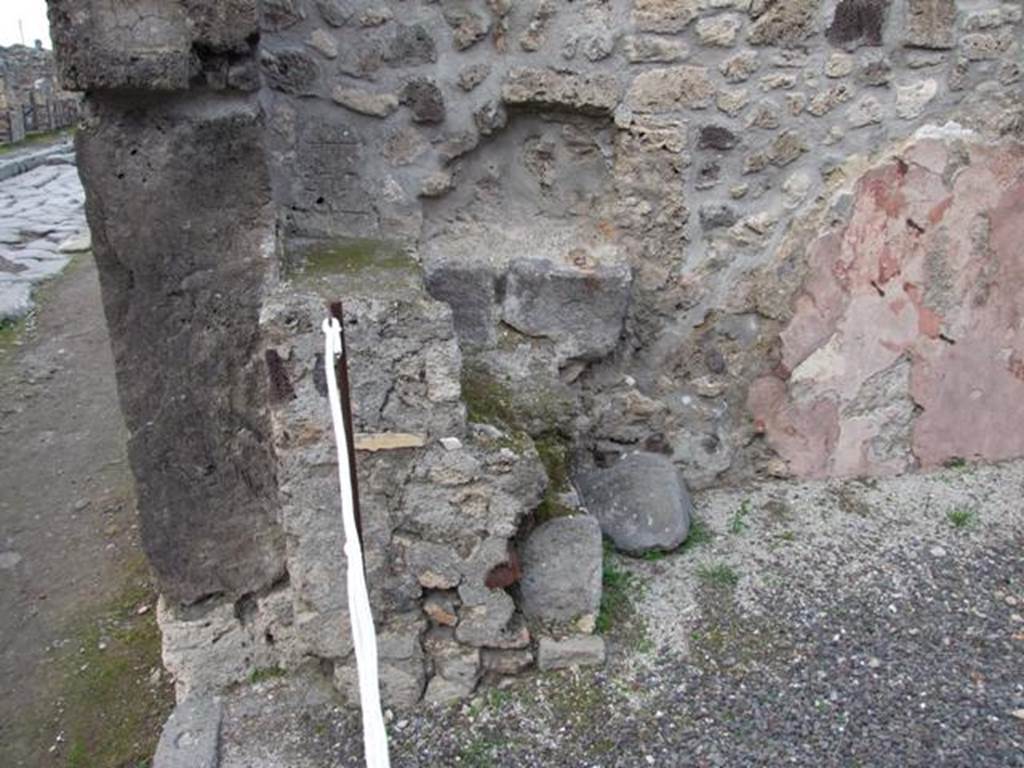
IX.1.8 Pompeii. December 2007. North-west corner of bar room, near entrance doorway, remains of hearth.
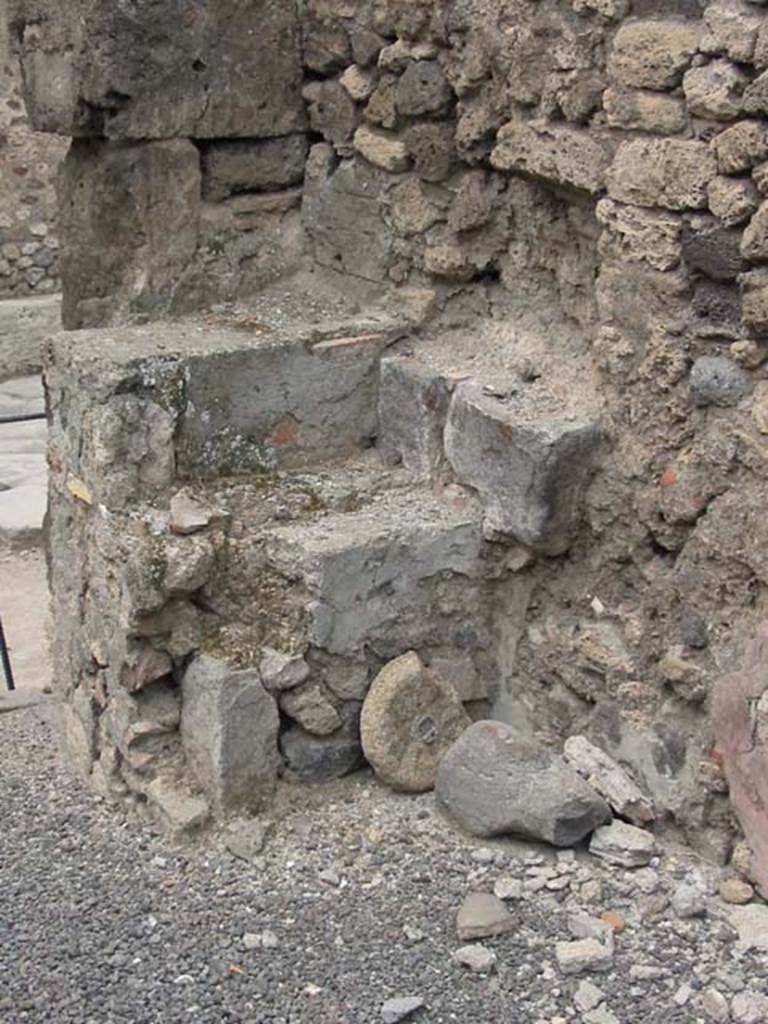
IX.1.8 Pompeii. May 2003.
Looking west towards the north-west corner of bar room, near entrance doorway, remains of hearth.
Photo courtesy of Nicolas Monteix.
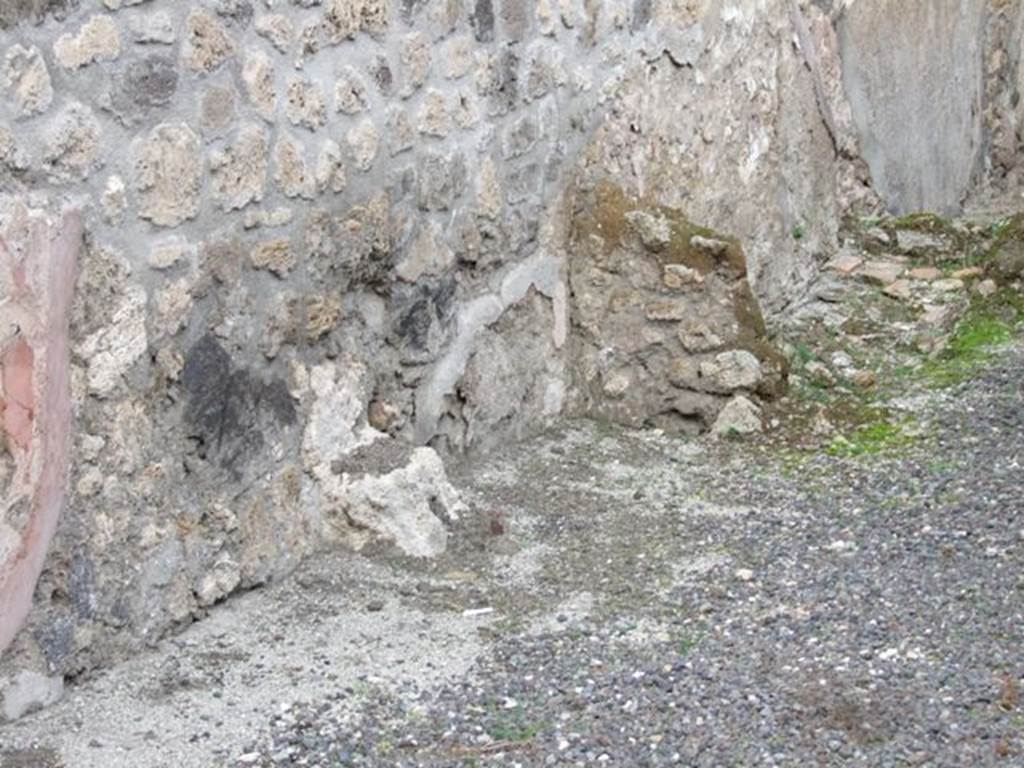
IX.1.8 Pompeii. December 2007. North wall.
According to PPP, this wall would have had a high violet/dark red zoccolo/plinth and was subdivided into panels by yellow stripes.
See Bragantini, de Vos, Badoni, 1986. Pitture e Pavimenti di Pompei, Parte 3. Rome: ICCD. (p.386).
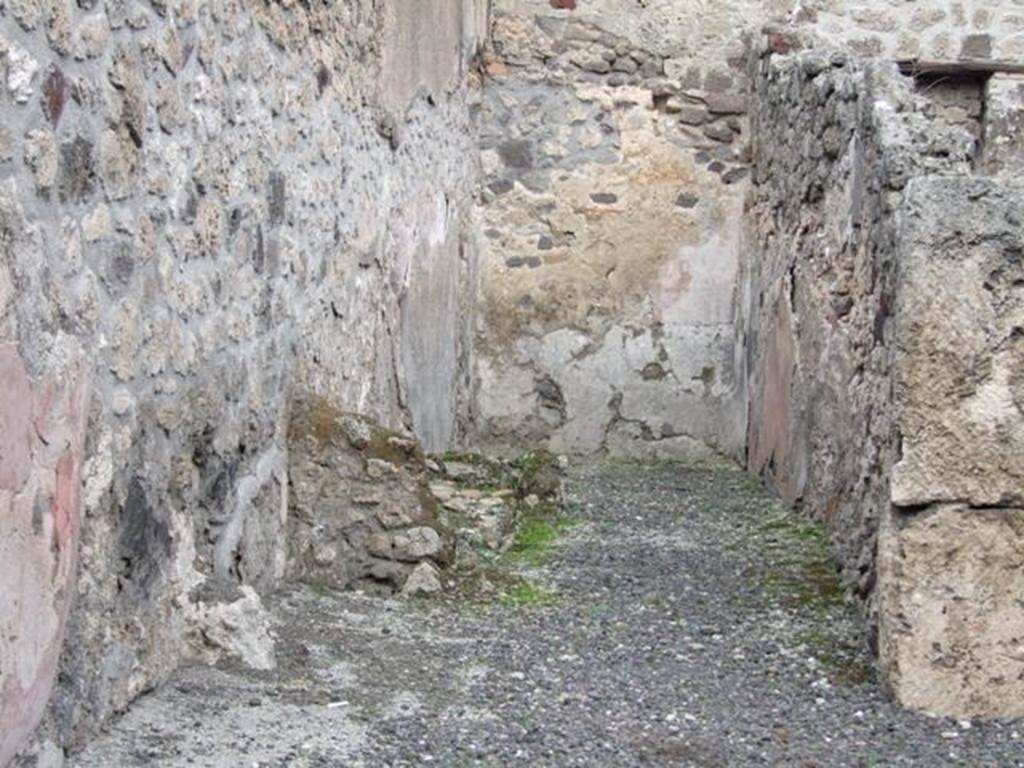
IX.1.8 Pompeii. December 2007. Room in north-east corner. Looking east.
This room also contained the latrine, and a lararium, according to Fiorelli.
According to Boyce, the lararium was on the east wall painted on a white background with a red border.
In the middle, two serpents raised their heads, one on either side of a tile embedded in the wall and projecting out as a shelf for offerings.
Two Lares were above the serpents, one on either side, wreathed, wearing red tunic and green pallium and holding rhyton and patera.
In the middle below the serpents was a kantharos with a small bird perched on its rim.
See Boyce G. K., 1937. Corpus of the Lararia of Pompeii. Rome: MAAR 14. (p.79)
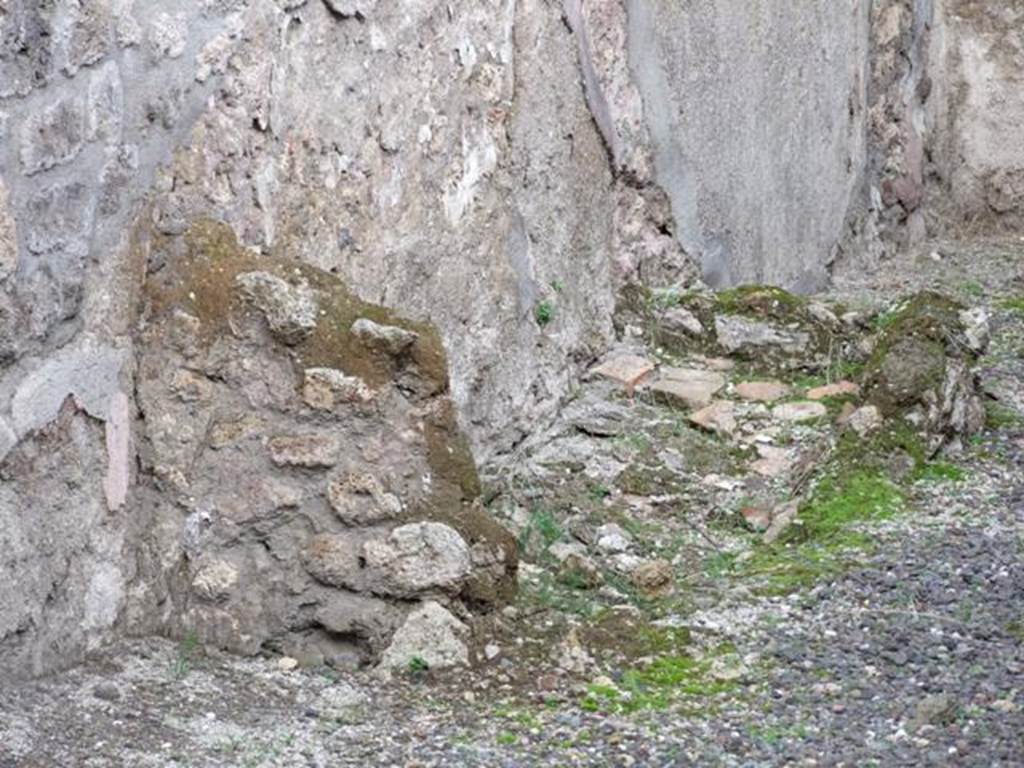
IX.1.8 Pompeii. December 2007. Remains of base of steps to upper floor, with latrine beneath, against the north wall in rear room.
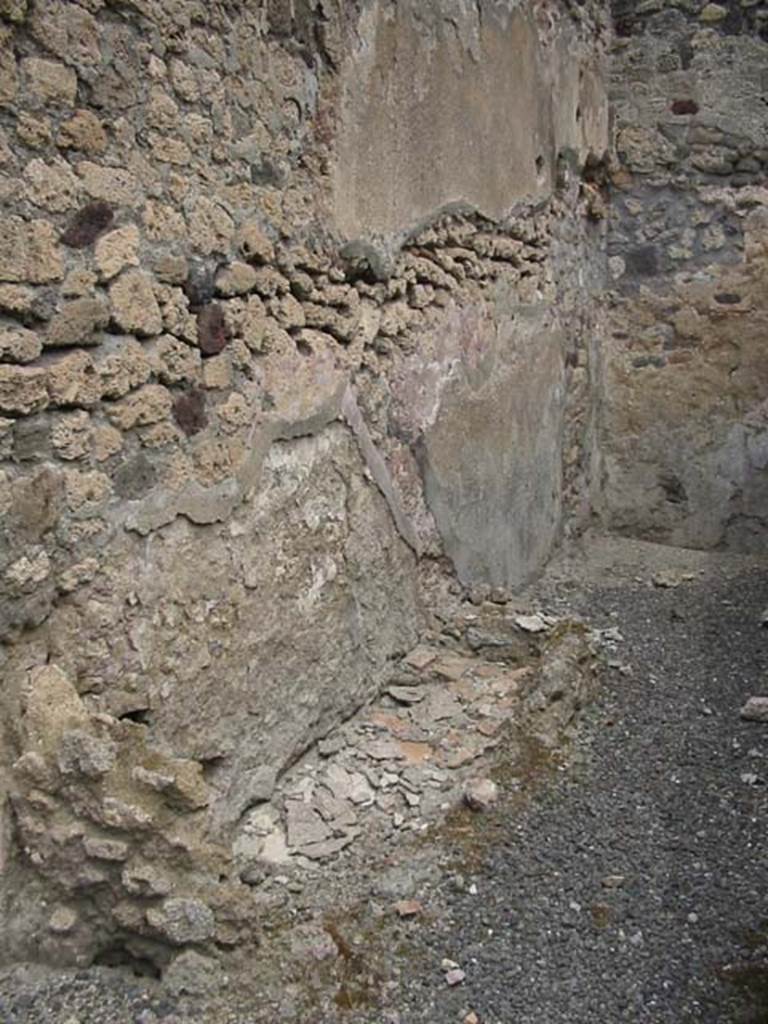
IX.1.8 Pompeii. May 2003.
Remains of base of steps to upper floor, with latrine beneath, against the north wall in rear room.
Photo courtesy of Nicolas Monteix.
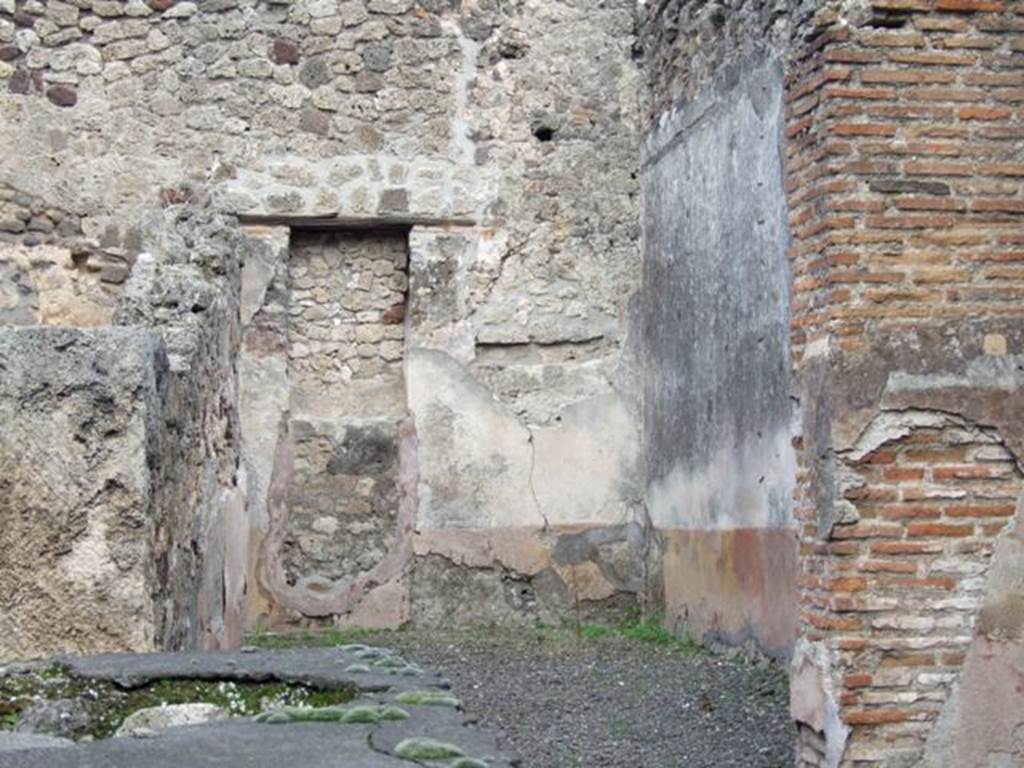
IX.1.8 Pompeii. December 2007. Rear room for the clients, in south-east corner.
This room would have been decorated with a yellow zoccolo/plinth subdivided into panels, the middle zone would have been painted white.
On the east side of the south wall, with a yellow zoccolo/plinth, a vertical red stripe was visible dividing panels on the white middle zone of the wall.
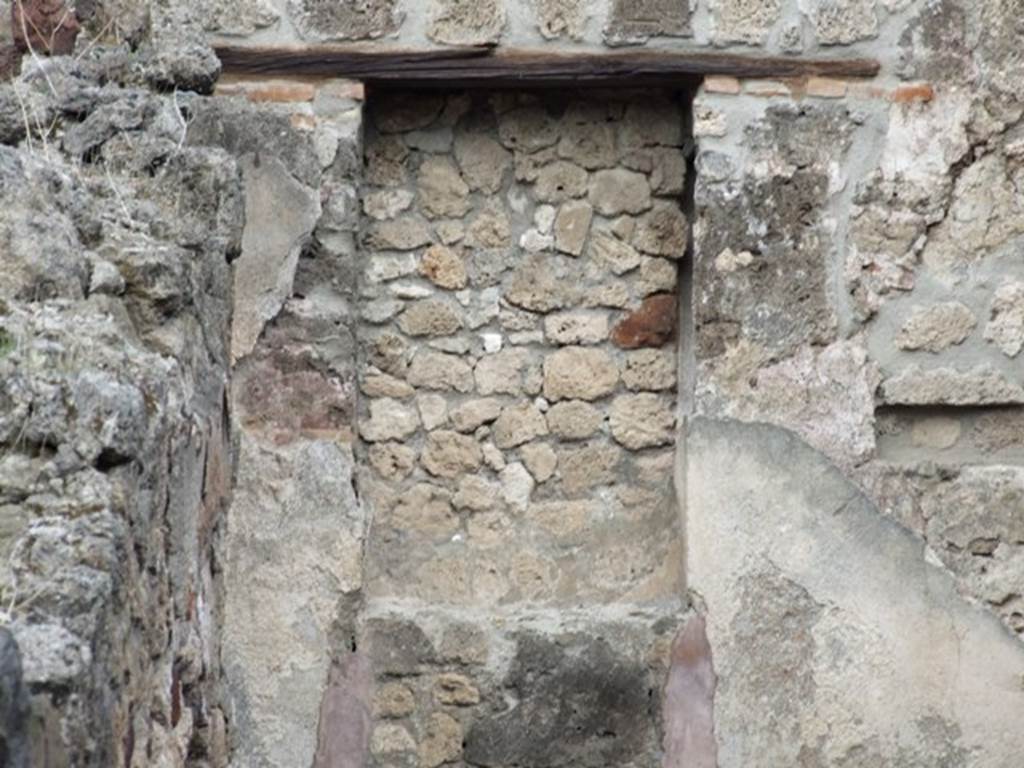
IX.1.8 Pompeii. December 2007. East wall with bricked-up doorway, window or recess in rear room.
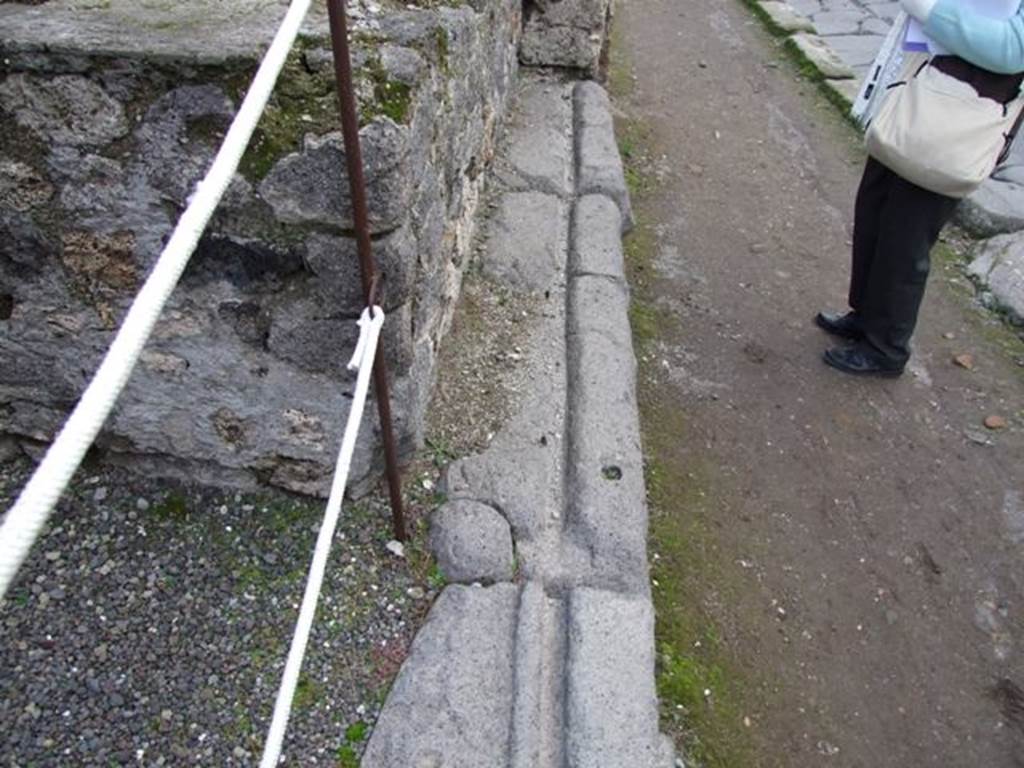
IX.1.8 Pompeii. December 2007. Threshold or sill.