VIII.5.37 Pompeii. Casa delle Pareti rosse or House of the Red Walls or House of the family Fabia.
Excavated 1832 and 1882. Restored and re-opened 2017.

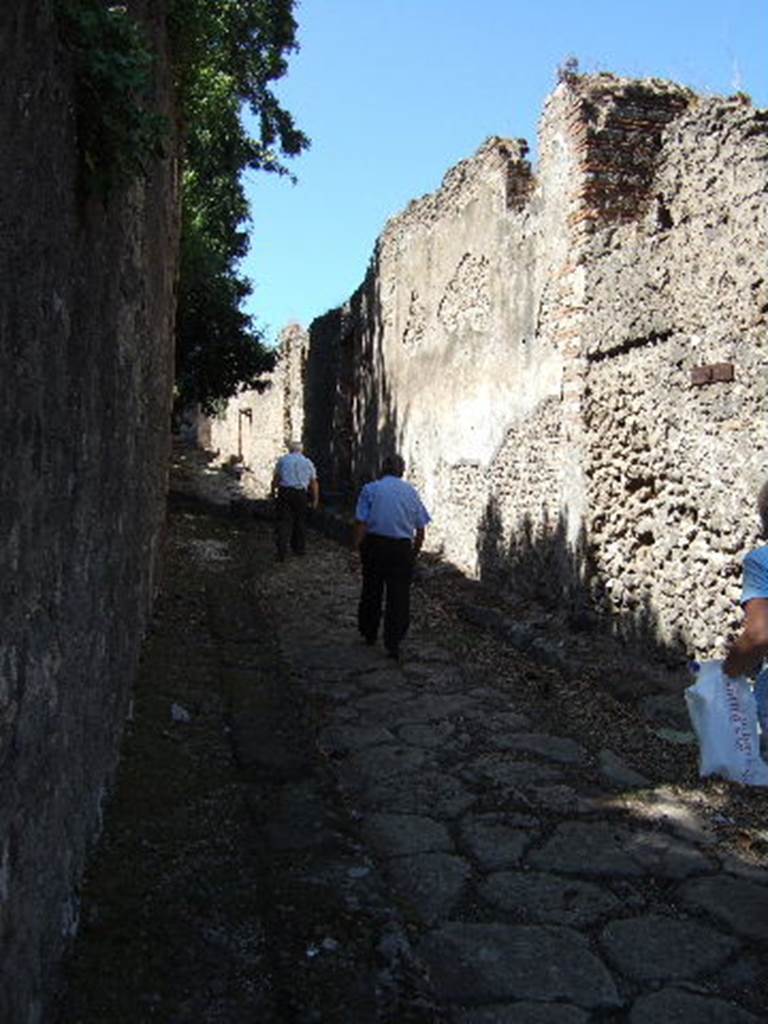
VIII.5.37 Pompeii. September 2005. Wall and possible blocked door, on right.
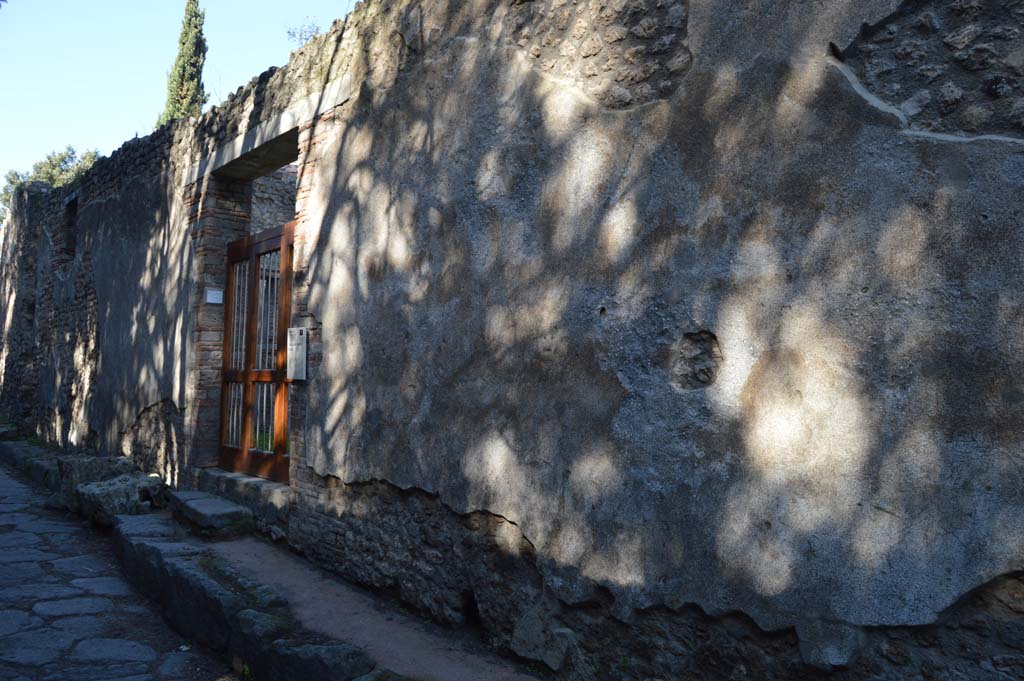
VIII.5.37 Pompeii. March 2019.
Looking west towards entrance doorway on Vicolo delle Pareti Rosse.
Foto
Taylor Lauritsen, ERC Grant 681269 DÉCOR.
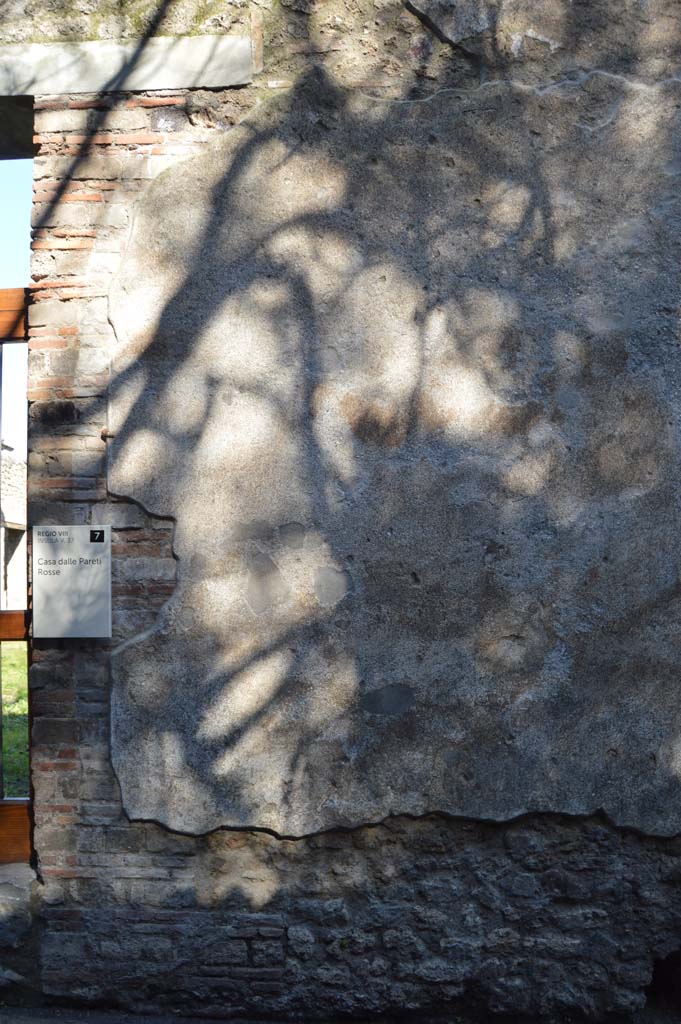
VIII.5.37 Pompeii.
March 2019. Looking towards stucco on east side of entrance doorway.
Foto
Taylor Lauritsen, ERC Grant 681269 DÉCOR.
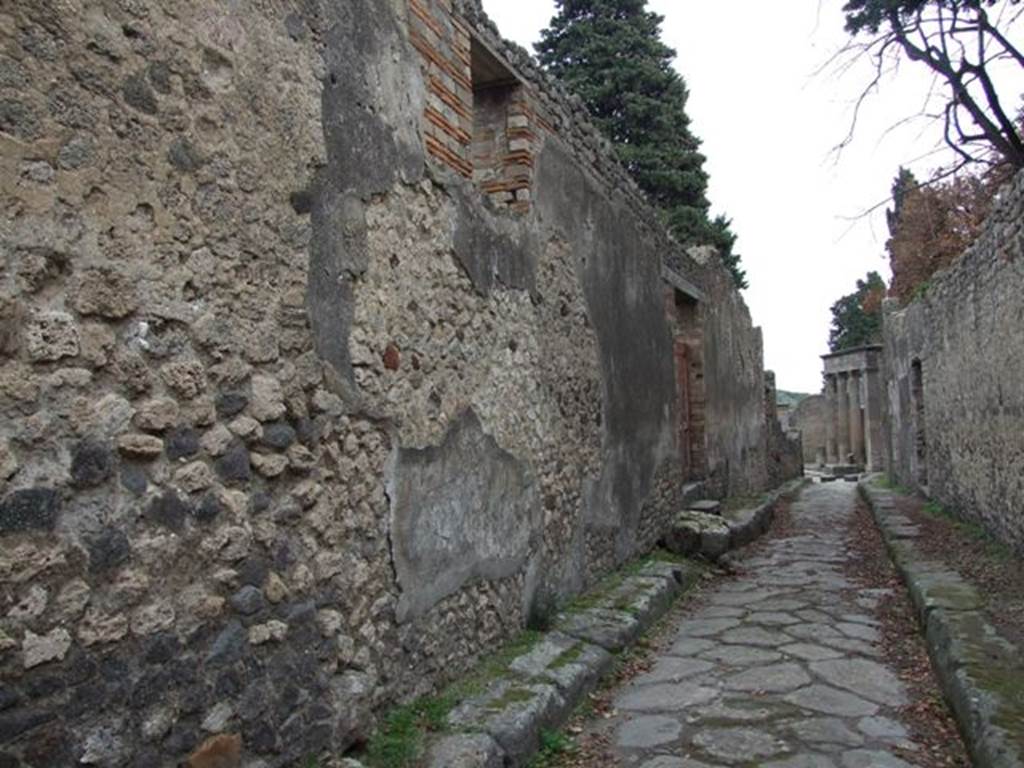
VIII.5.37 Pompeii. March 2019. Looking east on Vicolo delle Pareti Rosse.
Foto
Taylor Lauritsen, ERC Grant 681269 DÉCOR.

VIII.5.37 Pompeii, on left. December 2007. Vicolo delle Pareti Rosse, looking east.
VIII.5.37 Pompeii. May 2024. Looking towards entrance doorway. Photo courtesy of Klaus Heese.
![VIII.5.37 Pompeii. December 2007. Entrance. According to Della Corte, two electoral programmes written next to the doorway were attributed to indistinct members of the family Fabia: Fabi rog(ant) (3591): Fabi rog(ant) (3592). See Della Corte, M., 1965. Case ed Abitanti di Pompei. Napoli: Fausto Fiorentino. (p.257)
According to Epigraphik-Datenbank Clauss/Slaby (See www.manfredclauss.de), they read as –
Iunianum IIvir(um)
d(ignum) r(ei) p(ublicae) Fabi rog(ant) [CIL IV 3591]
Laelium Fuscum
d(uum) v(irum) i(ure) d(icundo)
Fabi rog(ant) [CIL IV 3592]](8%2005%2037%20p1_files/image010.jpg)
VIII.5.37 Pompeii. December 2007. Entrance.
According to Della Corte, two electoral programmes written next to the doorway were attributed to indistinct members of the family Fabia:
Fabi
rog(ant) (3591): Fabi rog(ant)
(3592)
See Della Corte, M., 1965. Case ed Abitanti di Pompei. Napoli: Fausto Fiorentino. (p.257)
According to Epigraphik-Datenbank Clauss/Slaby (See www.manfredclauss.de), they read as –
Iunianum IIvir(um)
d(ignum) r(ei)
p(ublicae) Fabi rog(ant)
[CIL IV 3591]
Laelium Fuscum
d(uum) v(irum)
i(ure) d(icundo)
Fabi rog(ant) [CIL IV 3592]

VIII.5.37 Pompeii. September 2005. Entrance and west side of atrium.
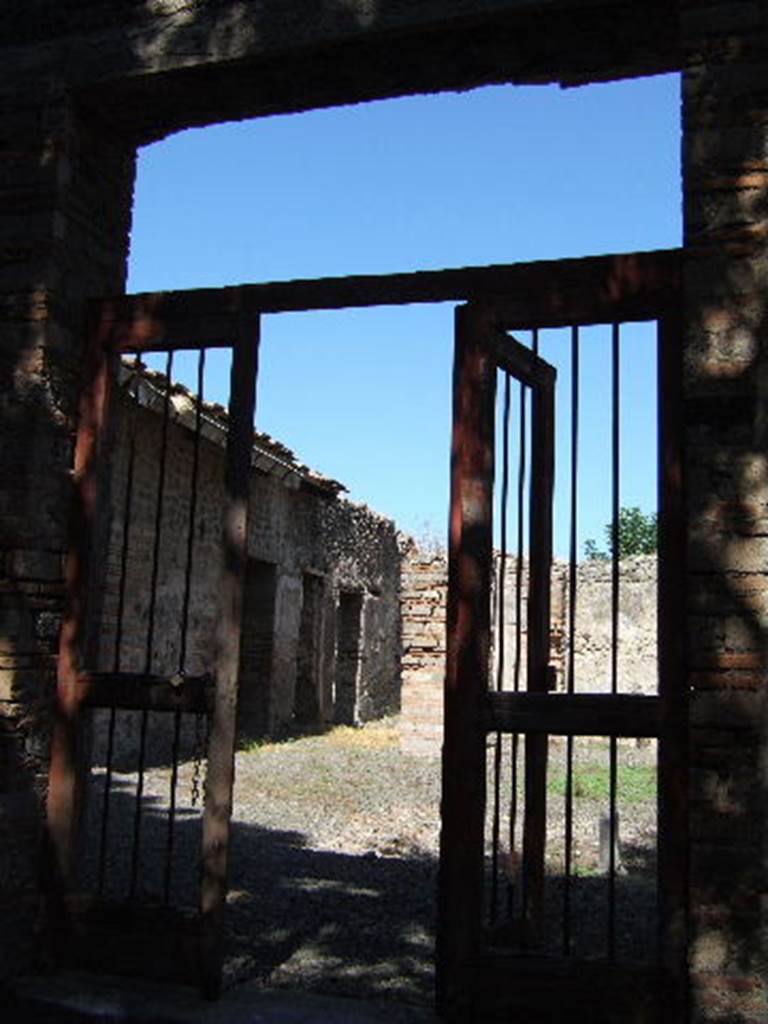
VIII.5.37 Pompeii. May 2024. Looking north along west side of atrium. Photo courtesy of Klaus Heese.
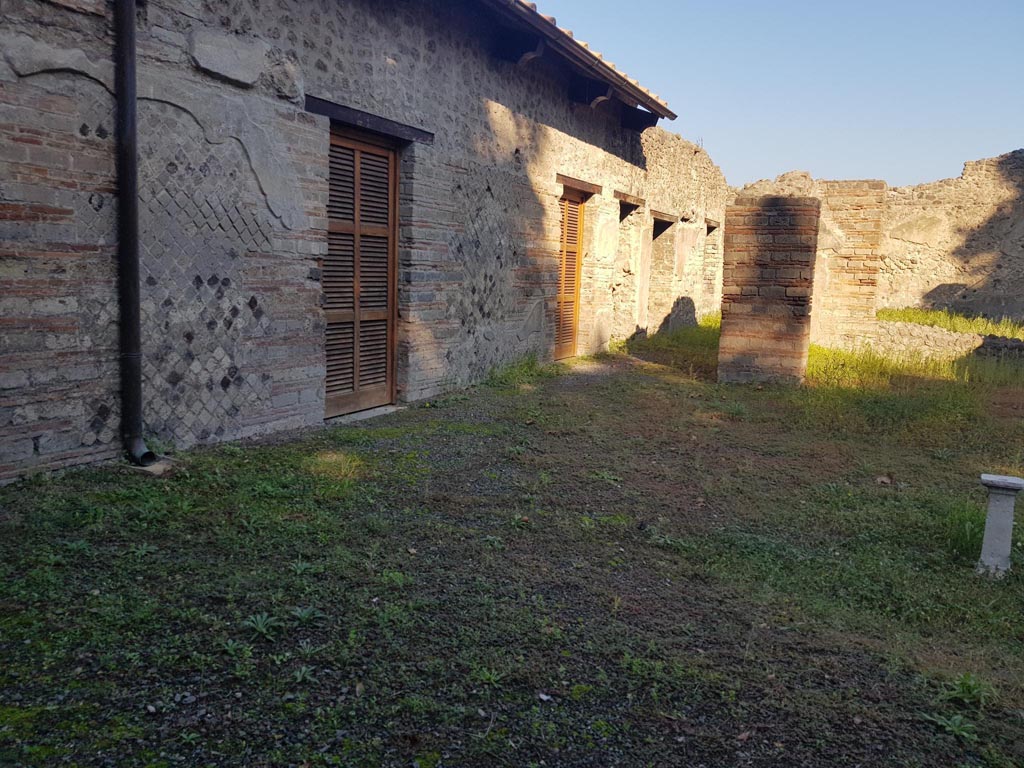
VIII.5.37 Pompeii. October 2022. Room 1, looking north along west side of atrium. Photo courtesy of Klaus Heese.
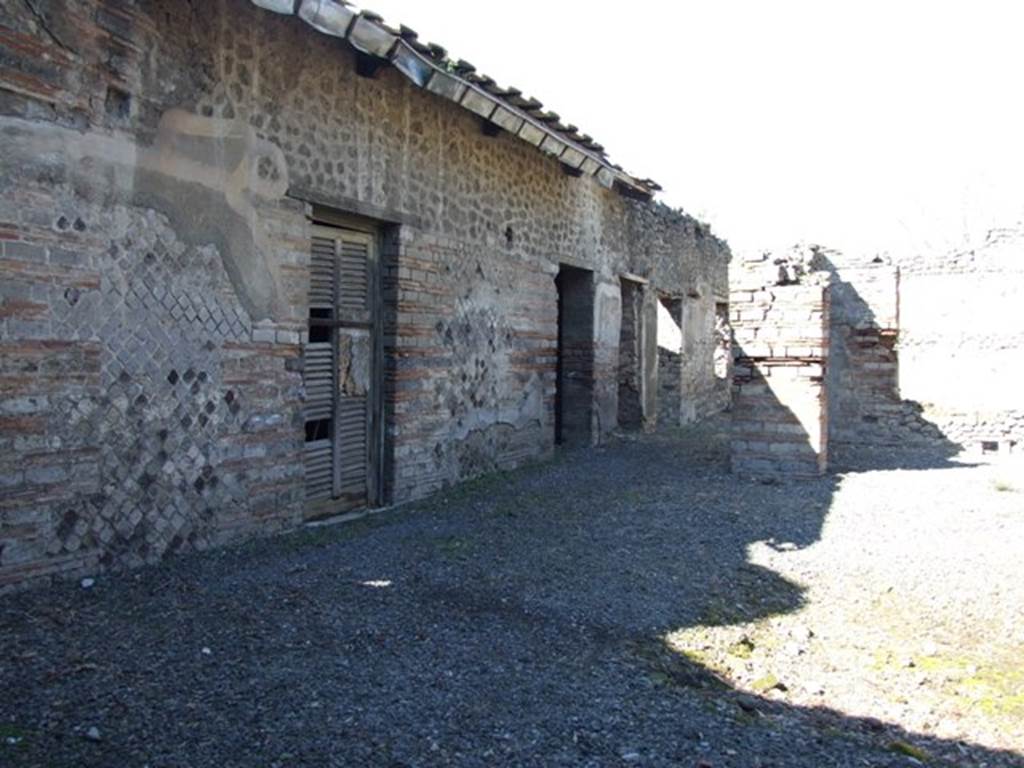
VIII.5.37 Pompeii. March 2009. Room 1, atrium, looking north along west side.

VIII.5.37 Pompeii. December 2023.
Looking north across site of impluvium in atrium, from entrance doorway.
Photo courtesy of Miriam Colomer.
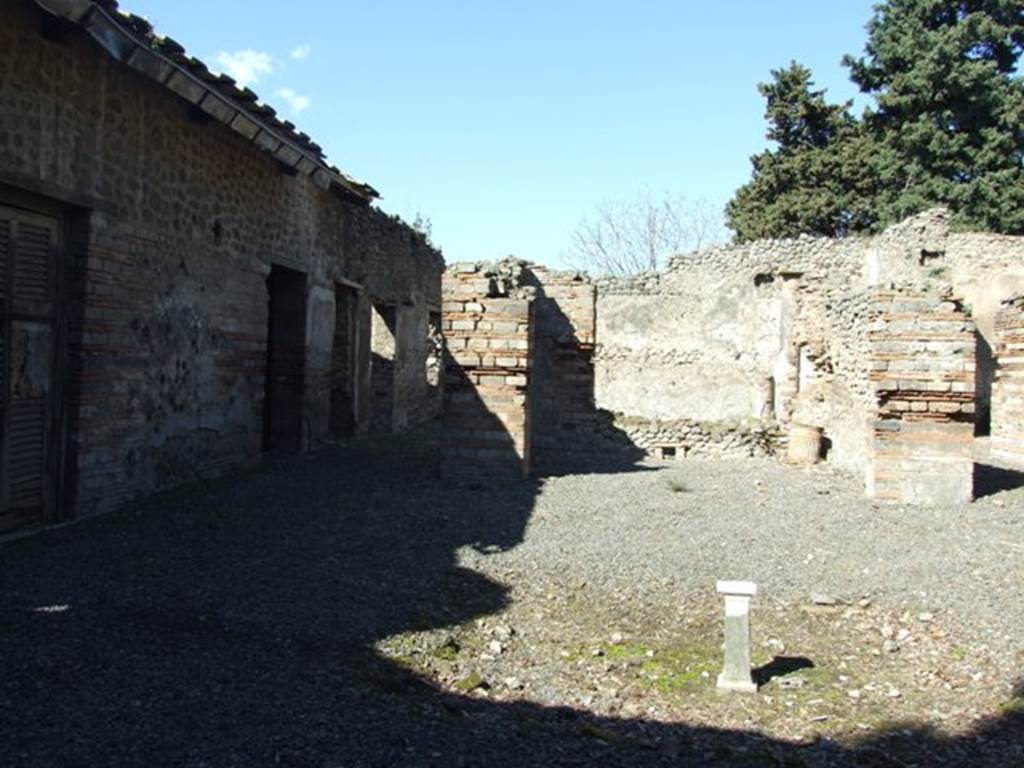
VIII.5.37 Pompeii. November 2024. Room 1, atrium, looking north across site of impluvium. Photo courtesy of Annette Haug.

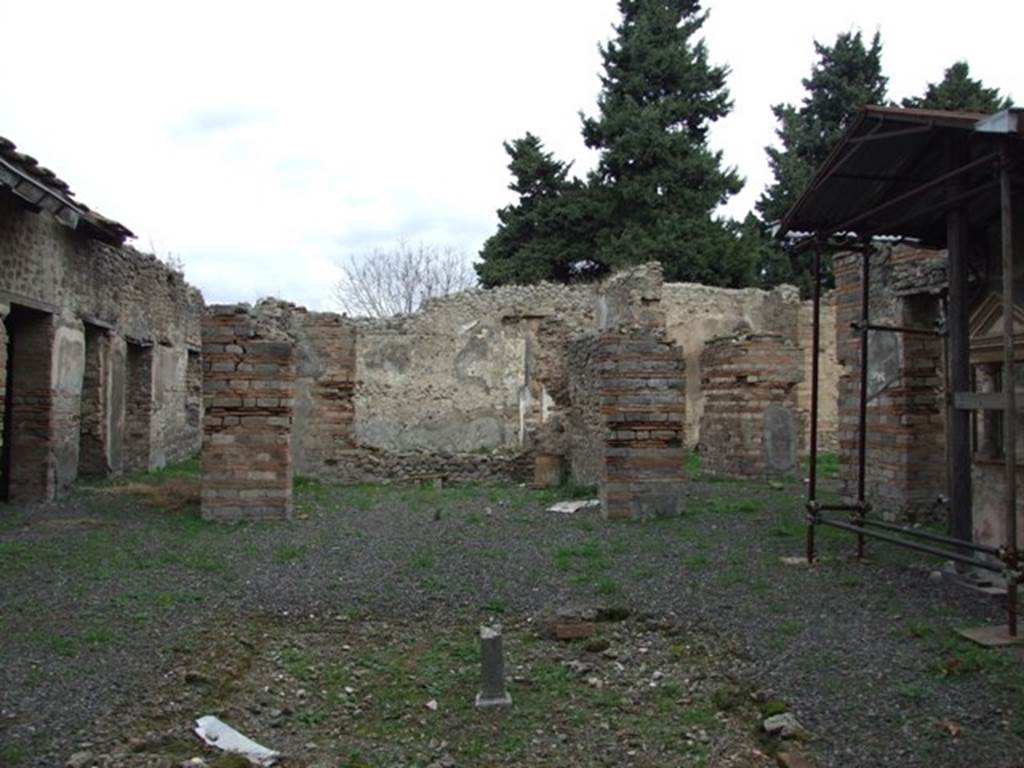
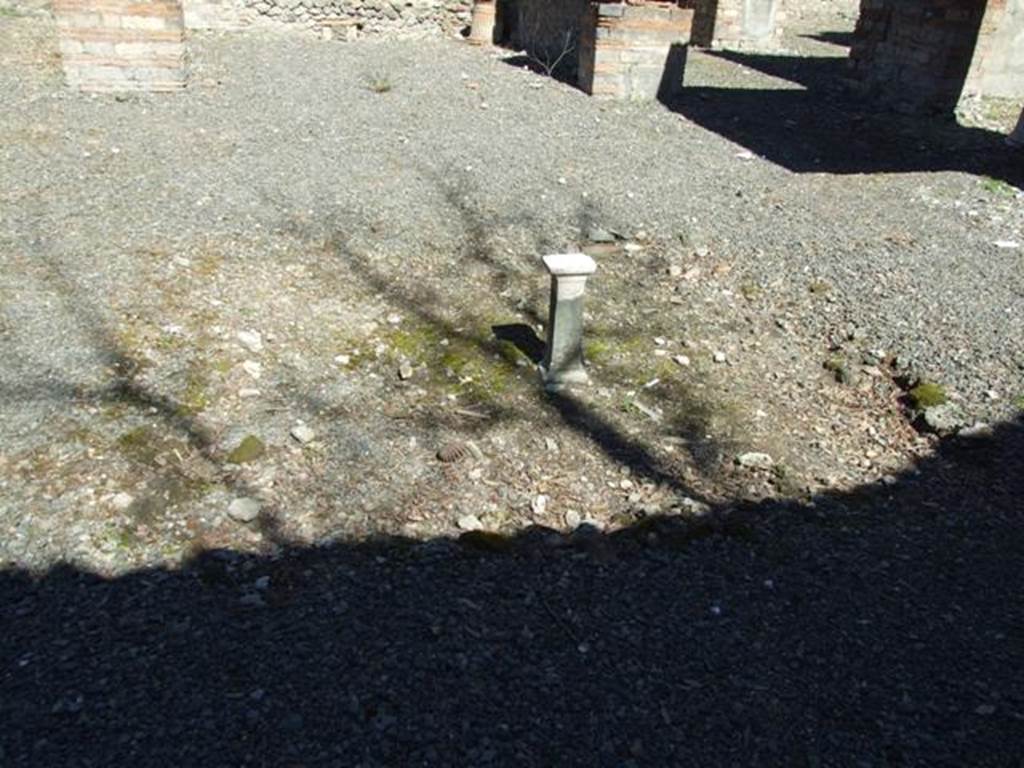
VIII.5.37 Pompeii. March 2009. Room 1, atrium, looking north across site of impluvium.

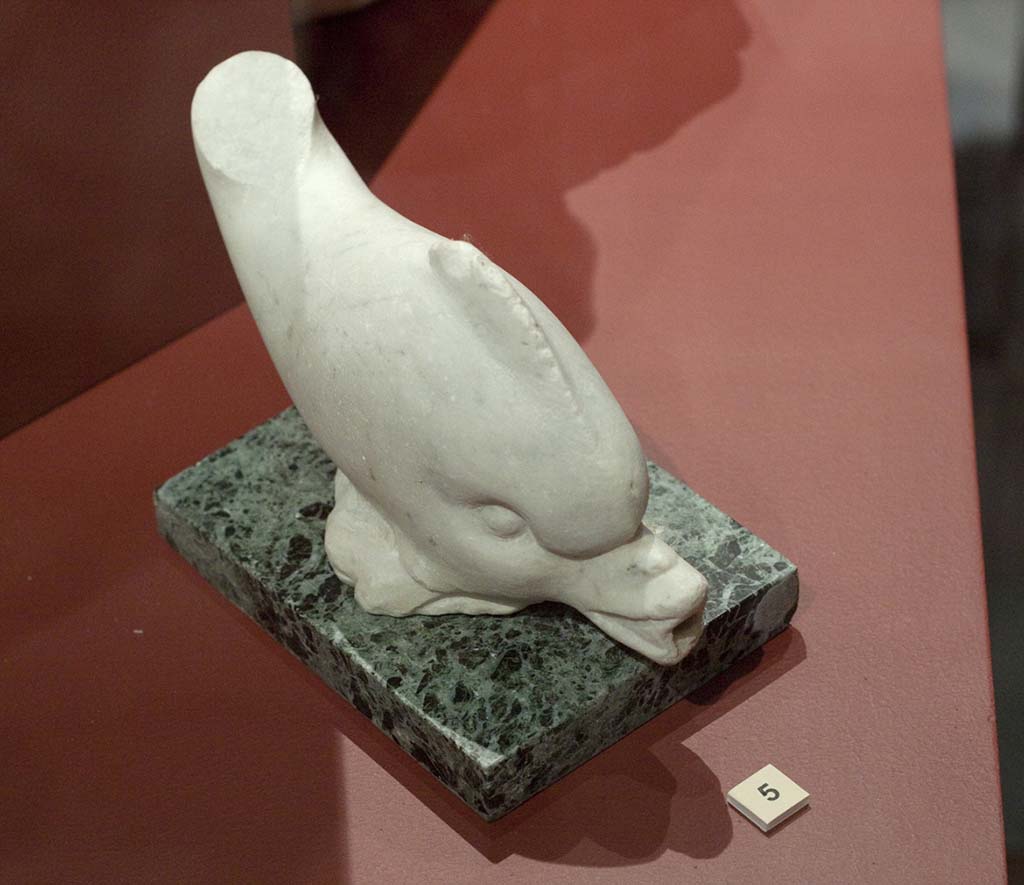
VIII.5.37 or VIII.6.6 Pompeii. Found 16th October 1882. Sculpture of a dolphin used as a fountain to squirt water, missing its tail.
The base is modern. (This has also been put into VIII.6.6.).
Now in Naples Archaeological Museum. Inventory number 120051.
According to the book below, this was found 16th October 1882 in a small channel/ditch of VIII.6.6.
See Marmora
Pompeiana nel Museo Archeologico Nazionale di Napoli: Studi della SAP 26, 2008,
p. 152, C49.
According to Jashemski, and the description in Notizie degli Scavi, this would seem to have been found in the atrium of the house now known as Casa delle Pareti Rosse, which is now given the number of VIII.5.37.
However, in NdS, the house where this was found was given the number of VIII.6.6, but the description of the lararium with the bronze statuettes (and a “small” garden), would definitely seem to fit VIII.5.37, rather than VIII.6.6.
See Jashemski, W. F., 1993. The Gardens of Pompeii, Volume II: Appendices. New York: Caratzas. (p.218).
VIII.5.37 or
VIII.6.6 Pompeii. Notizie degli Scavi di Antichità, 1882, (16th
October), p.421.
VIII.5.37 or
VIII.6.6 Pompeii. Notizie degli Scavi
di Antichità, 1882, (16th
October), p.422.

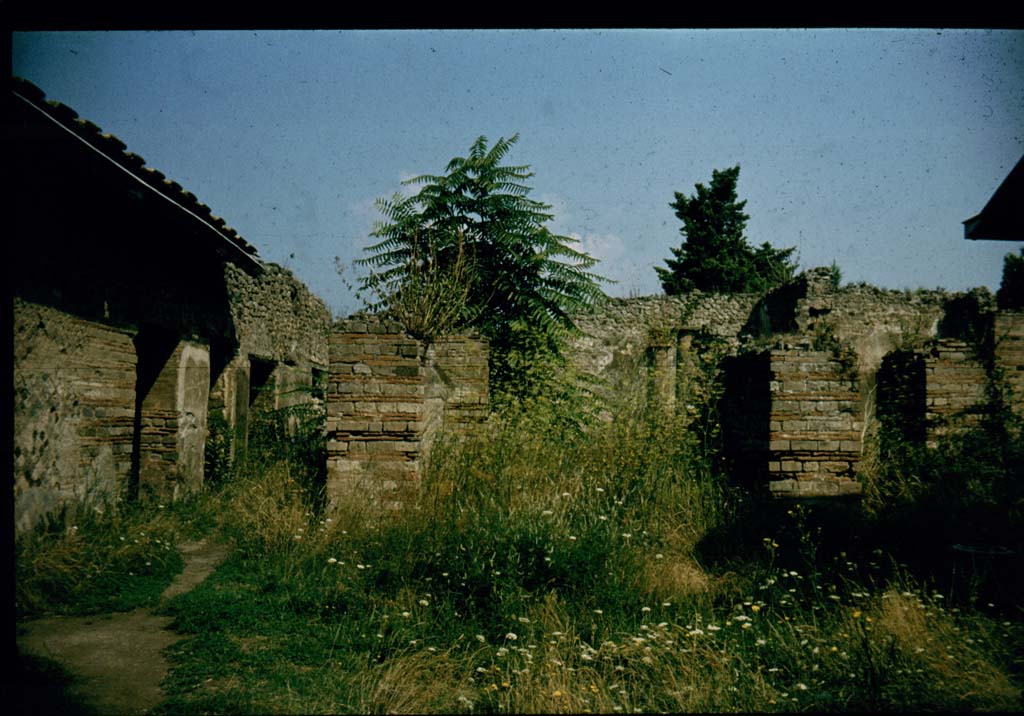
VIII.5.37 Pompeii. December 2007. Looking north from entrance across atrium and remains of impluvium.
VIII.5.37 Pompeii. Room 1, atrium, looking north across site of Impluvium.
Photographed 1970-79 by Günther Einhorn, picture courtesy of his son Ralf Einhorn.

VIII.5.37 Pompeii. October 2022. Room 1, atrium, looking north across site of Impluvium. Photo courtesy of Klaus Heese.

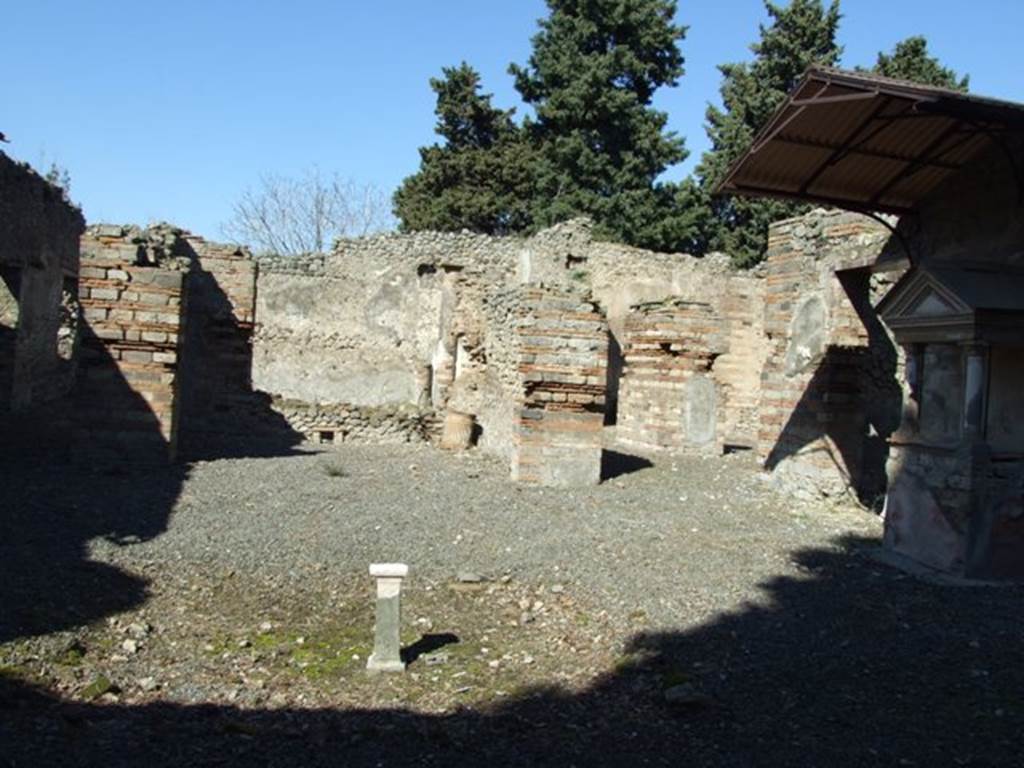
VIII.5.37 Pompeii. March 2009. Room 1, remains of impluvium in atrium.
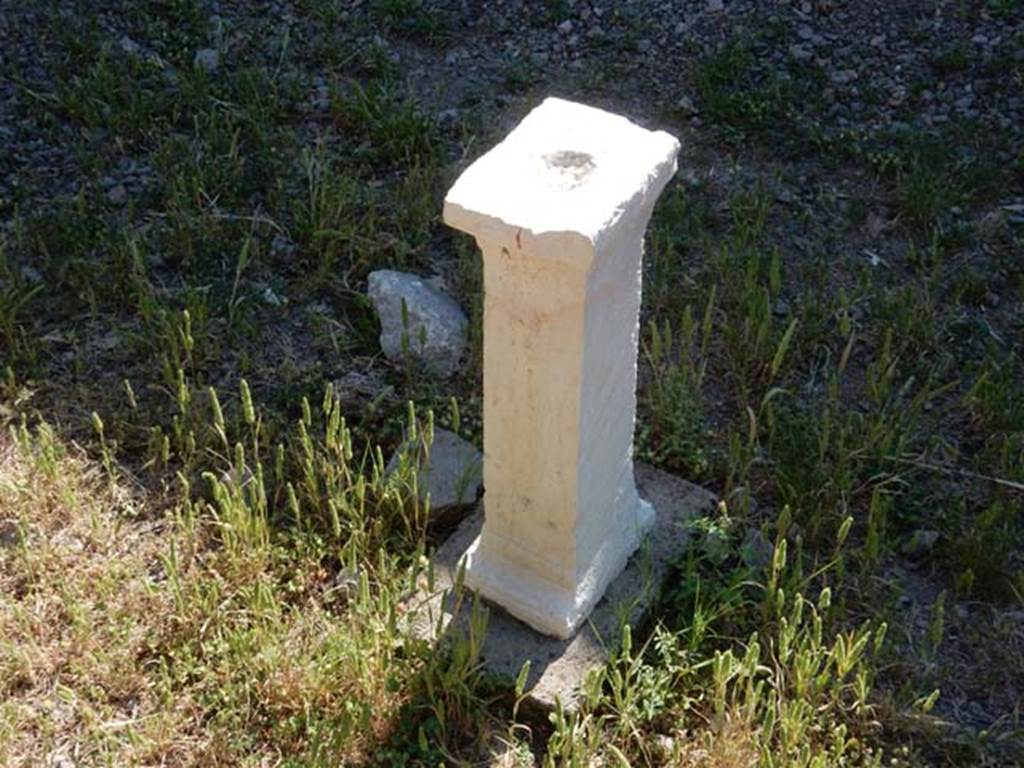
Room 1, stone detail from impluvium in atrium. Photo courtesy of Klaus Heese.
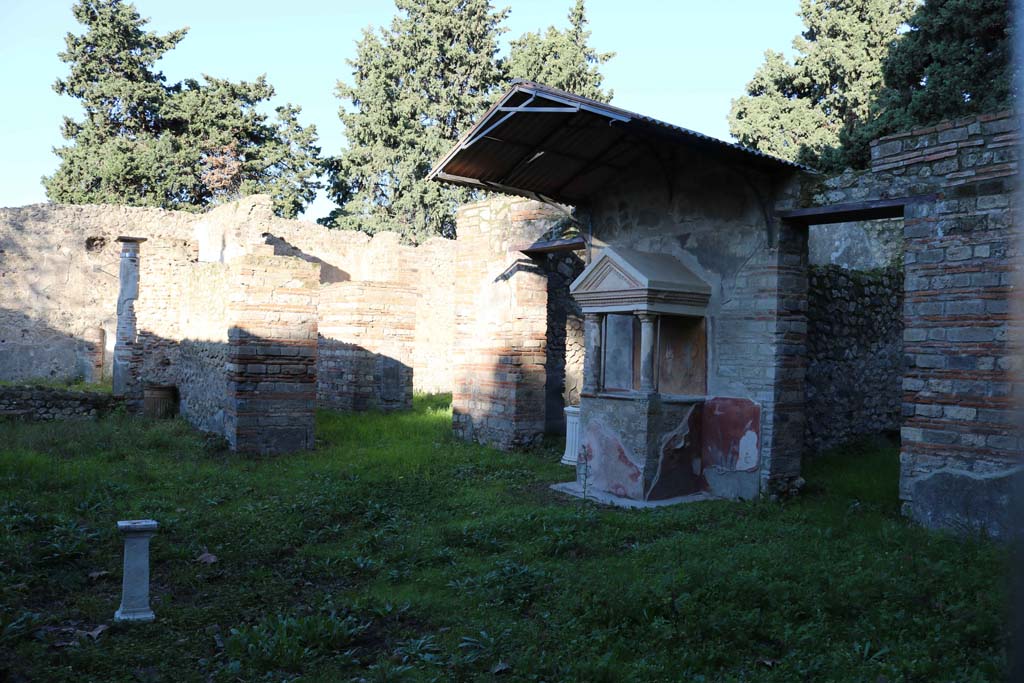
VIII.5.37 Pompeii. May 2017. Room 1, site of impluvium. Photo courtesy of Buzz Ferebee.
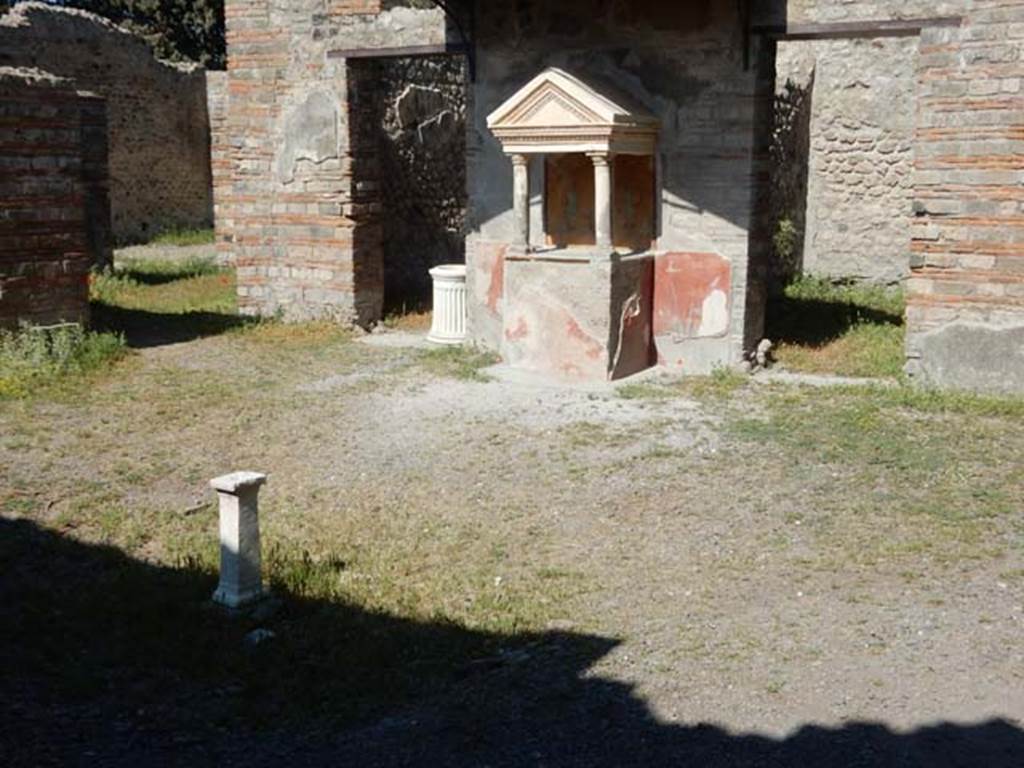
VIII.5.37 Pompeii. May 2017. Room 1, site of impluvium. Photo courtesy of Buzz Ferebee.
VIII.5.37 Pompeii. March 2009. Room 1, looking north along the east side of atrium.

VIII.5.37 Pompeii. December 2023.
Room 1, looking north-east across atrium, from entrance doorway. Photo
courtesy of Miriam Colomer.
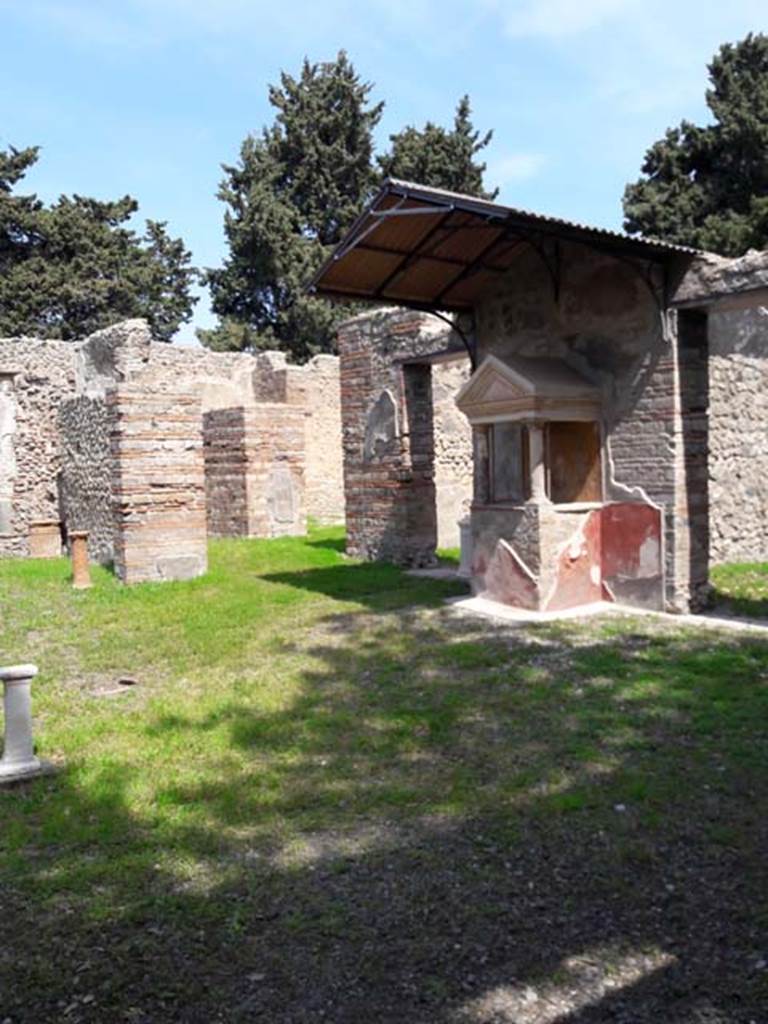
VIII.5.37 Pompeii. October 2022. Room 1, looking towards
east side of atrium. Photo courtesy
of Klaus Heese.

VIII.5.37 Pompeii.
December 2018. Room 1, looking towards east side of atrium. Photo courtesy of
Aude Durand.

VIII.5.37 Pompeii. May 2017. Room 1, looking north-east across atrium, after restoration. Photo courtesy of Buzz Ferebee.

VIII.5.37 Pompeii. April 2017.
Room 1, atrium, looking north-east, after restoration. Photo courtesy of Dr Paul J. Turner.
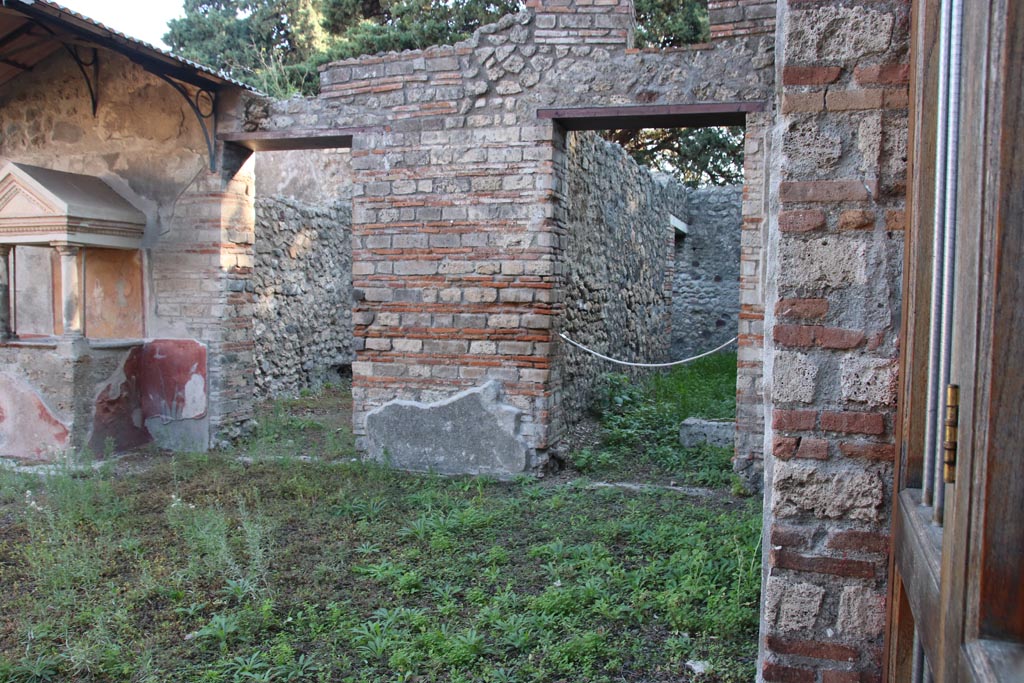
VIII.5.37 Pompeii. 1959. Room 1, atrium, looking north-east. Photo by Stanley A. Jashemski.
Source: The Wilhelmina and Stanley A. Jashemski archive in the University of Maryland Library, Special Collections (See collection page) and made available under the Creative Commons Attribution-Non-Commercial License v.4. See Licence and use details.
J59f0335
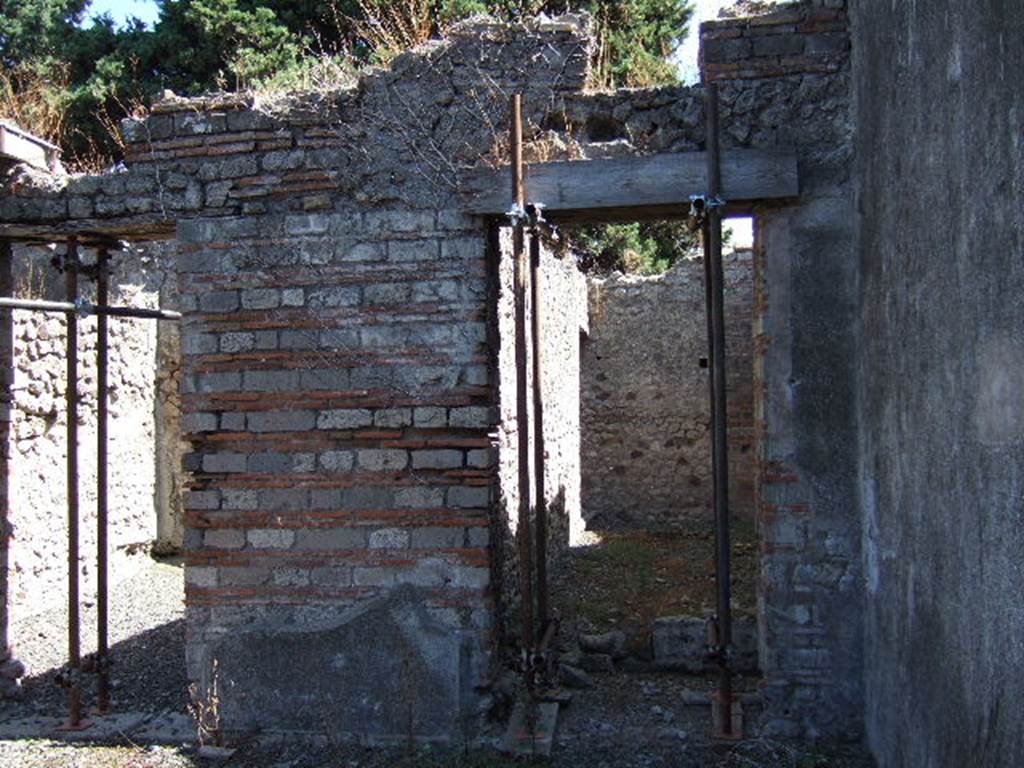
VIII.5.37 Pompeii. March 2009. Room 1, east side of atrium.

VIII.5.37 Pompeii. May 2017.
Looking towards south-east corner of atrium, after restoration, with doorways to rooms 4 and 2, on the right.
Photo courtesy of Buzz Ferebee.
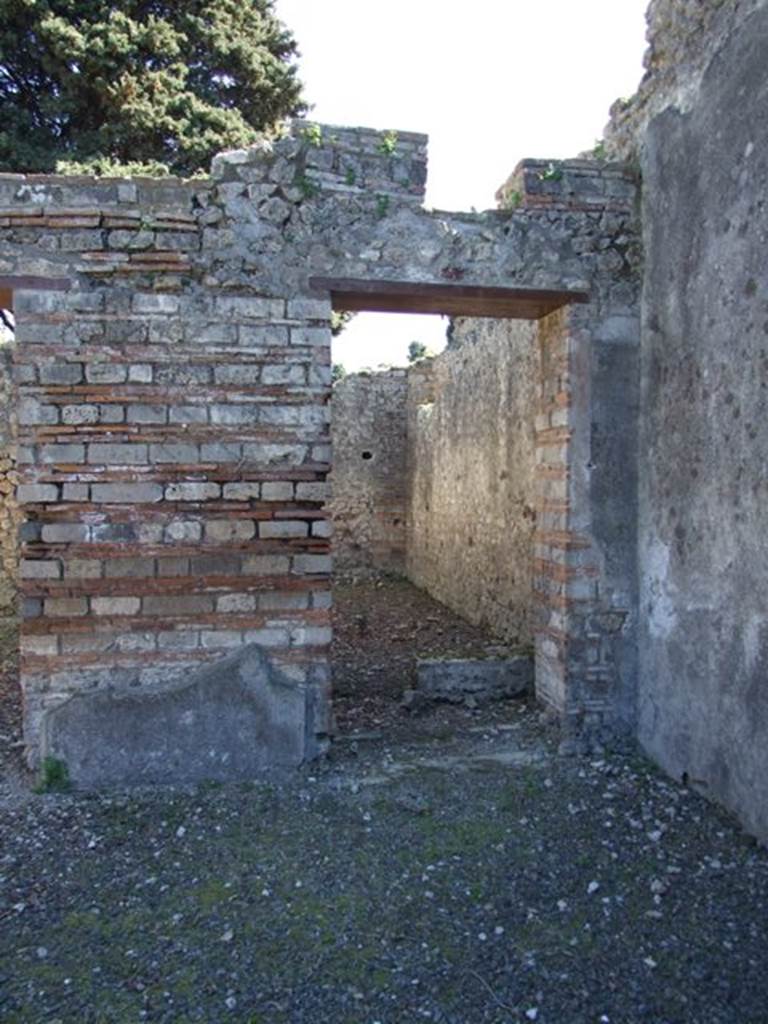
VIII.5.37 Pompeii. October 2022. Rooms 4 and 2 in south-east corner of atrium. Photo courtesy of Klaus Heese.
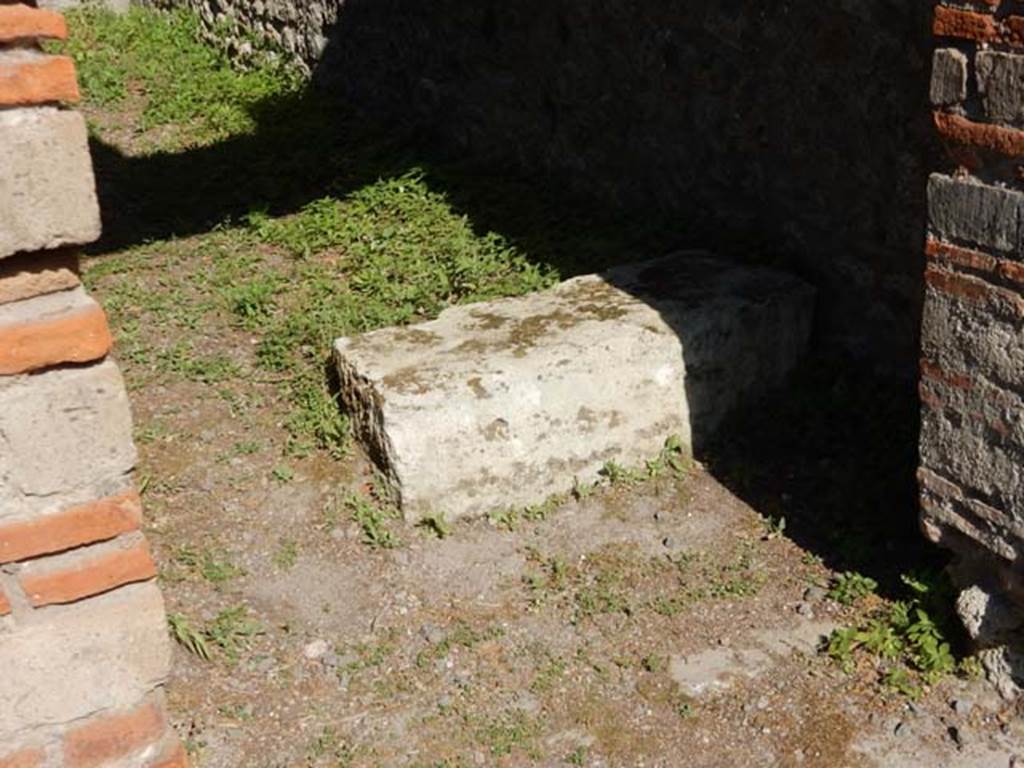
VIII.5.37 Pompeii. September 2005. Rooms 4 and 2 in south-east corner of atrium.

VIII.5.37 Pompeii. October 2022.
Doorway to room 2 on east side of atrium, looking along north wall. Photo courtesy of Klaus Heese.

VIII.5.37 Pompeii. March 2009. Doorway to room 2. Small room with staircase to upper floor.

VIII.5.37 Pompeii. May 2017. Detail of doorway to room 2. Photo courtesy of Buzz Ferebee.

VIII.5.37 Pompeii. March 2009. Room 2, remains of base of staircase to upper floor.

VIII.5.37 Pompeii. May 2017. Room 2, remains of base of staircase to upper floor. Photo courtesy of Buzz Ferebee.

VIII.5.37 Pompeii. March 2009. Room 2, looking east.

VIII.5.37 Pompeii. March 2009. Room 2, doorway at east end in north wall to room 3.

VIII.5.37 Pompeii. May 2017.
Room 3, looking north through doorway from room 2, after restoration. Photo courtesy of Buzz Ferebee.

VIII.5.37 Pompeii. May 2017. Room 3, threshold of doorway. Photo courtesy of Buzz Ferebee.

VIII.5.37 Pompeii. March 2009. Room 3, looking north across storeroom.

VIII.5.37 Pompeii. March 2009. Room 3, north end.
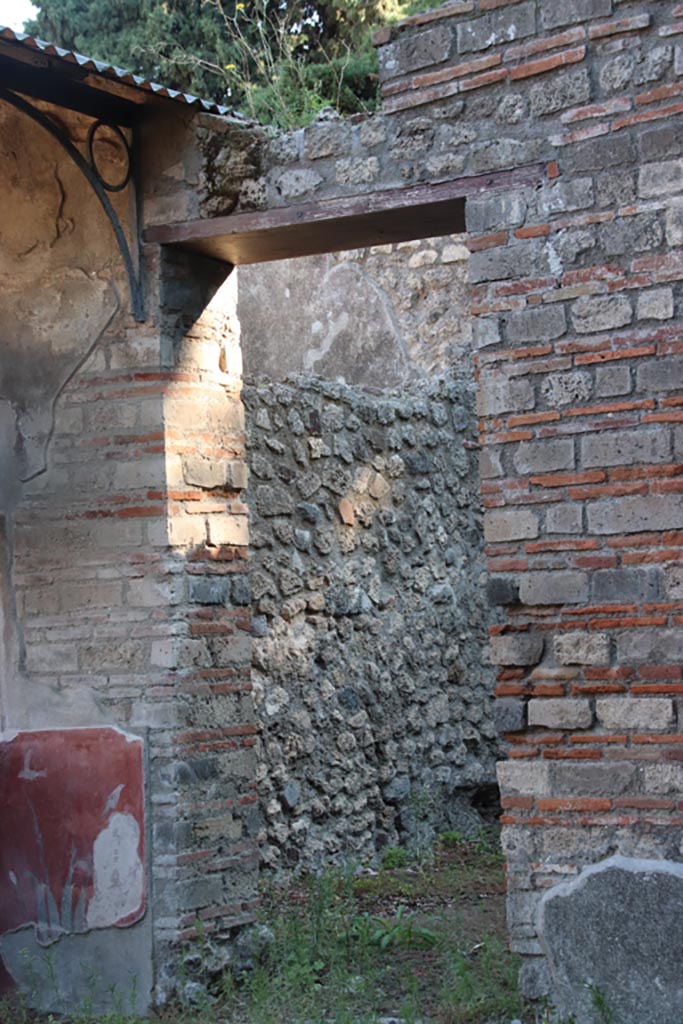
VIII.5.37 Pompeii. March 2009. Room 3, doorway in south wall to room 2.
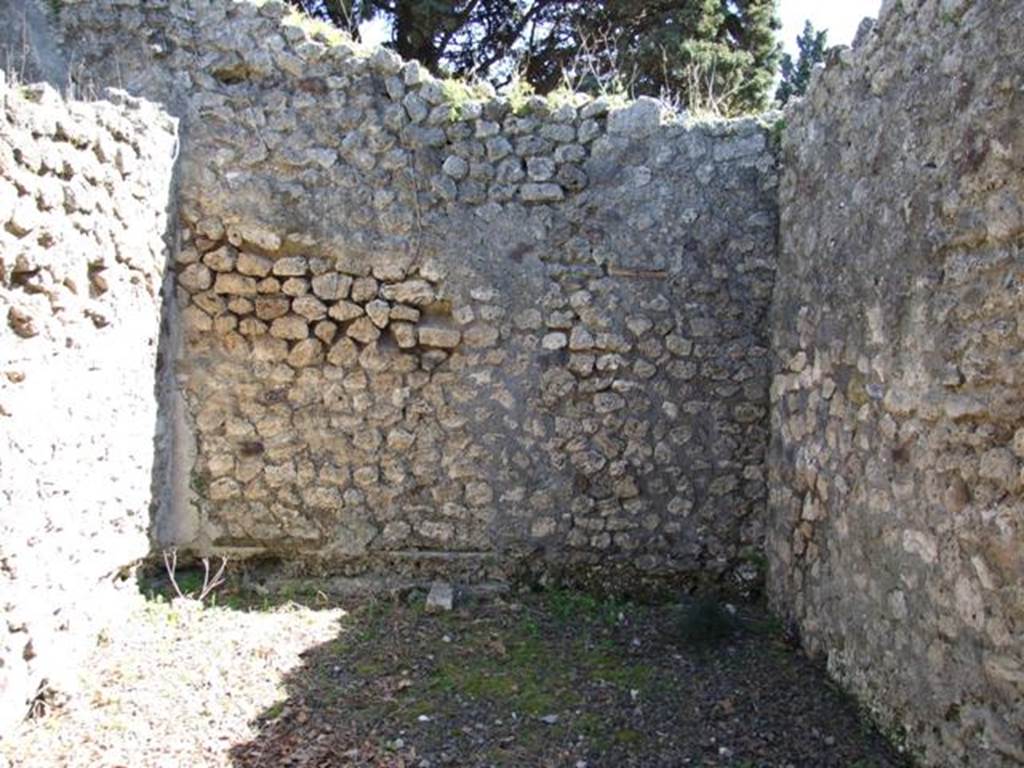
VIII.5.37 Pompeii. March 2009. Doorways to rooms 4 and 2, on east side of atrium.

VIII.5.37 Pompeii. May 2017. Doorway to room 4, after restoration. Photo courtesy of Buzz Ferebee.

VIII.5.37 Pompeii. October 2022.
Doorway to room 4, cubiculum. Photo courtesy of Klaus Heese.

VIII.5.37 Pompeii. March 2009. Room 4, looking east across cubiculum.