VIII.2.20 Pompeii. Entrance to House later converted to Sarno Baths.
Excavated from 1826.
Other parts of the baths: VIII.2.17 VIII.2.18 VIII.2.19 VIII.2.20 VIII.2.21
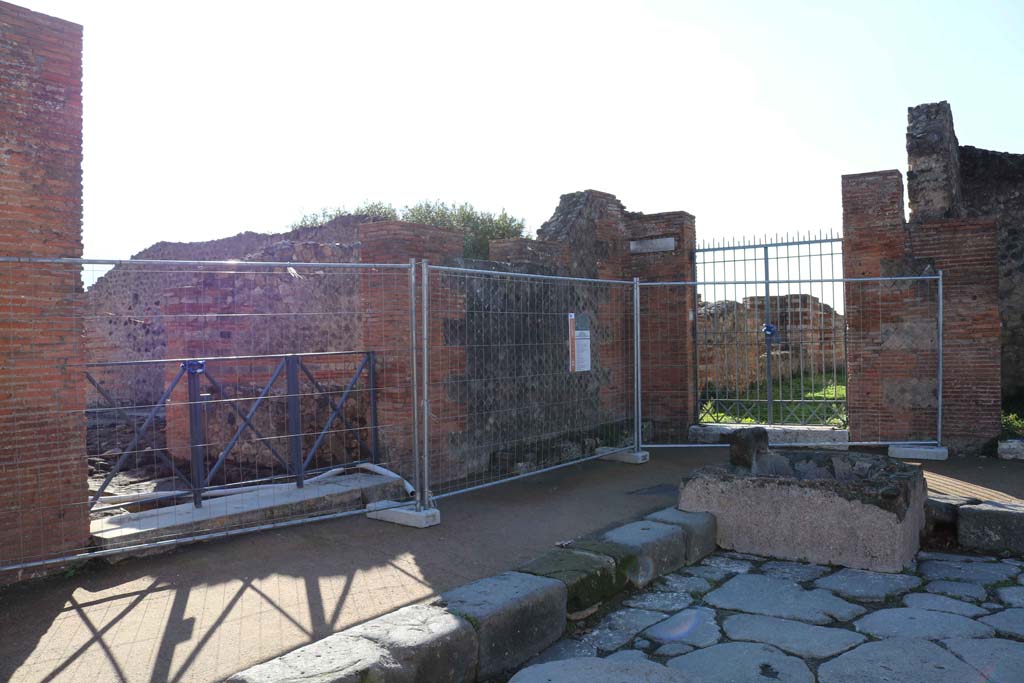
VIII.2.21 Pompeii, on left, and VIII.2.20, on
right. December 2018.
Looking towards entrances at south end of Via
delle Scuole, at junction with Via della Regina. Photo courtesy of Aude Durand.
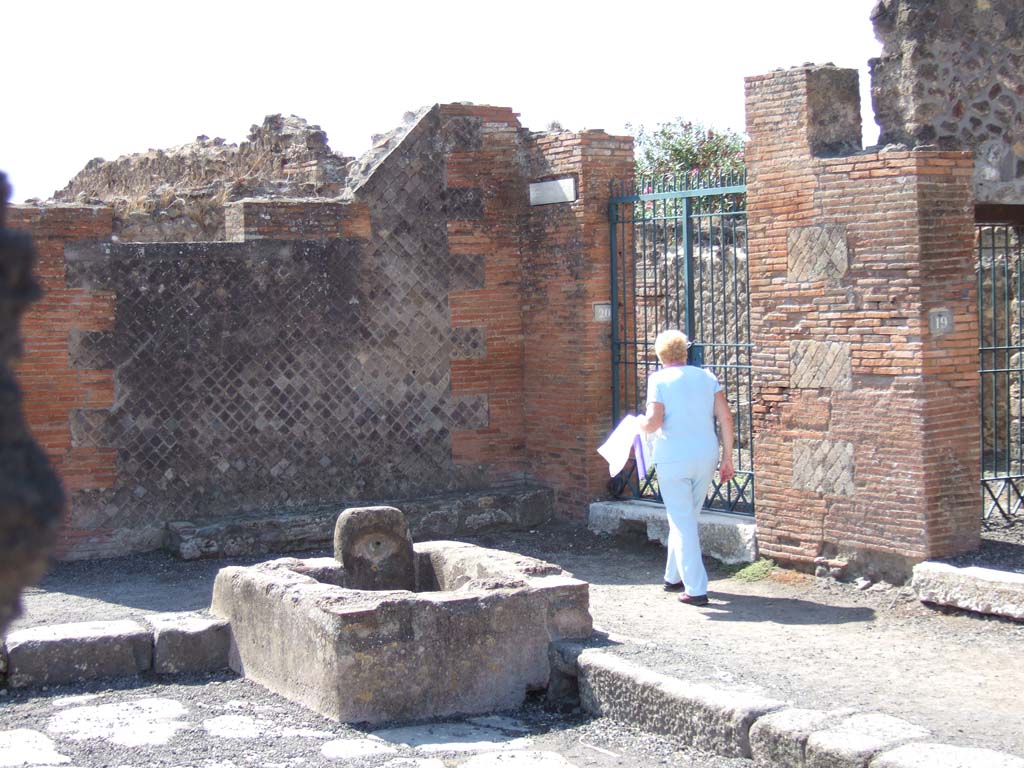
VIII.2.20 Pompeii. May 2024. Entrance doorway to Sarno Baths with fountain outside. Photo courtesy of Klaus Heese.

VIII.2.20 Pompeii. September 2005. Entrance to Sarno Baths with fountain outside.
VIII.2.20 Pompeii on left, and VIII.2.19 on right. 1968. Looking south-west. Photo by Stanley A. Jashemski.
Source: The Wilhelmina and Stanley A. Jashemski archive in the University of Maryland Library, Special Collections (See collection page) and made available under the Creative Commons Attribution-Non-Commercial License v.4. See Licence and use details.
J68f1177
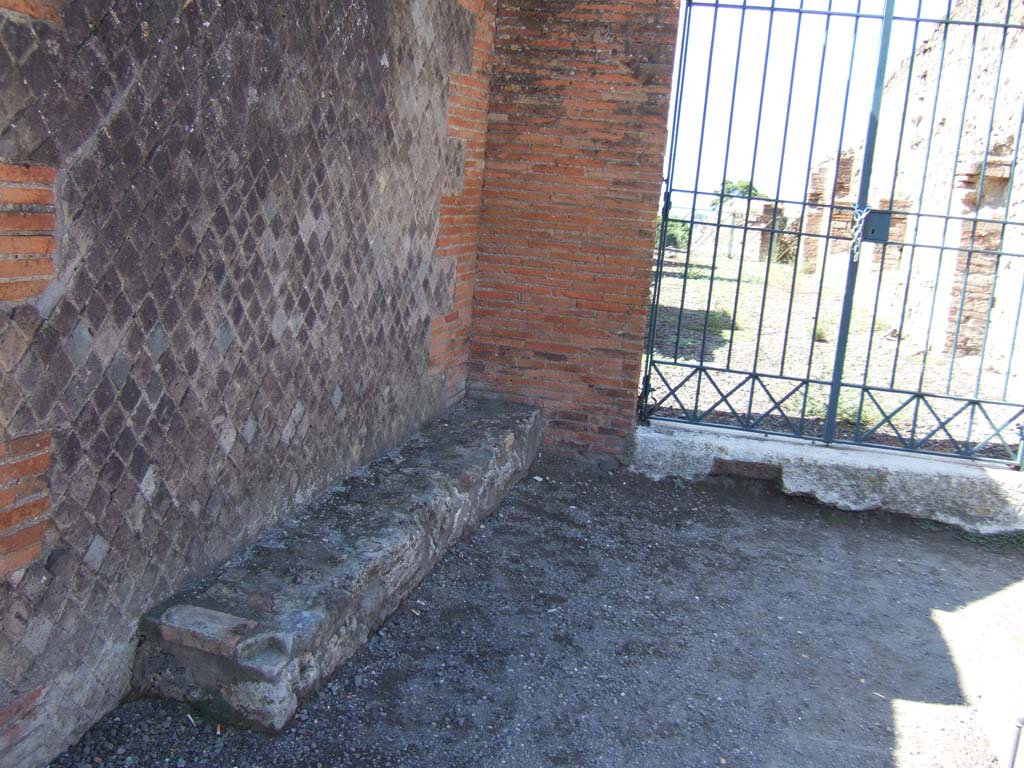
VIII.2.20 Pompeii. September 2005. Bench outside doorway.
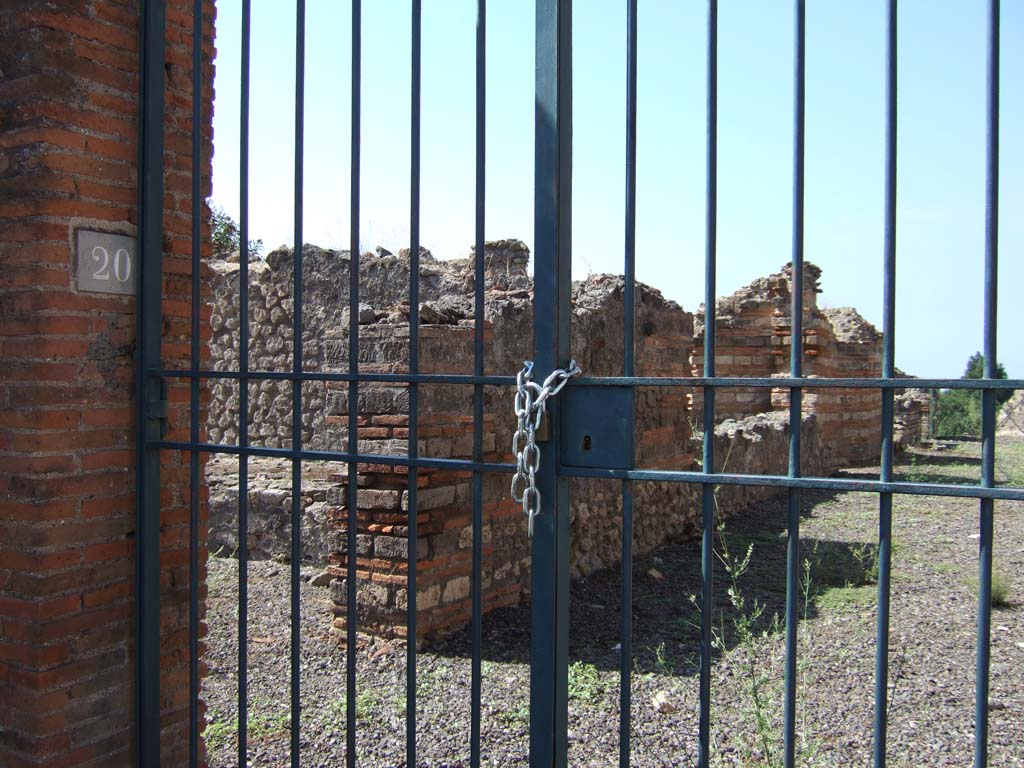
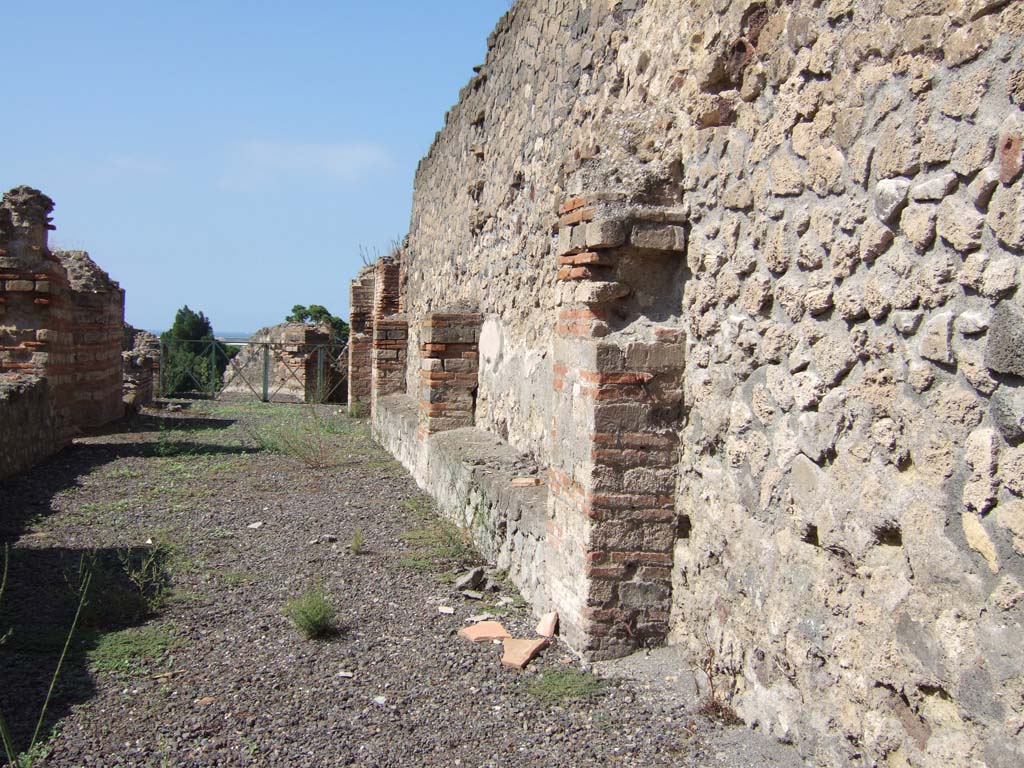
VIII.2.20 Pompeii. September 2005. Looking south-west from entrance doorway.
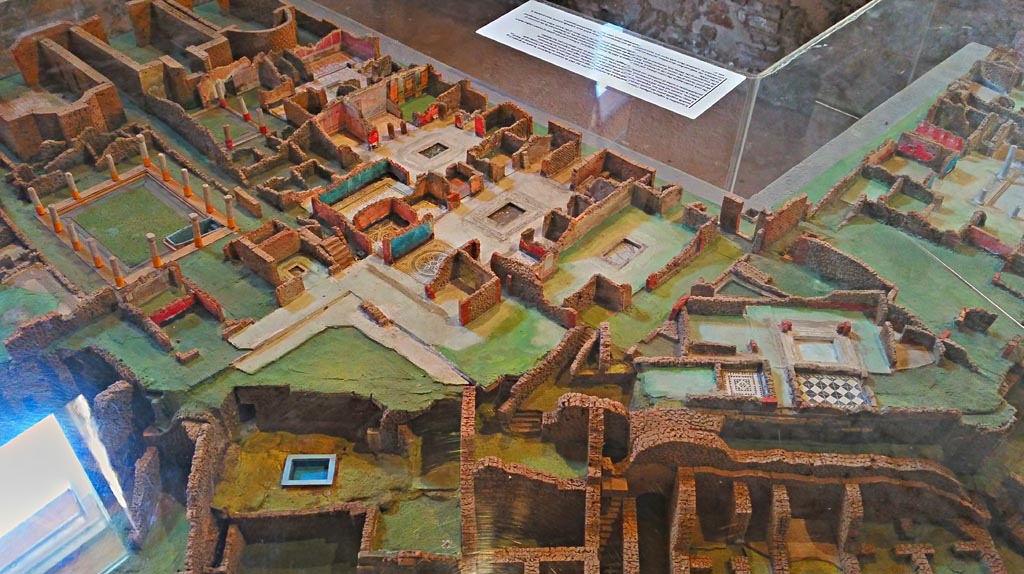
VIII.2.20, centre
right, Pompeii. 2018.
Model of area, with
VIII.2.14 and 16 in centre, VIII.2.18, 20 and 21, Sarno Baths, lower right. Photo
courtesy of Giuseppe Ciaramella.
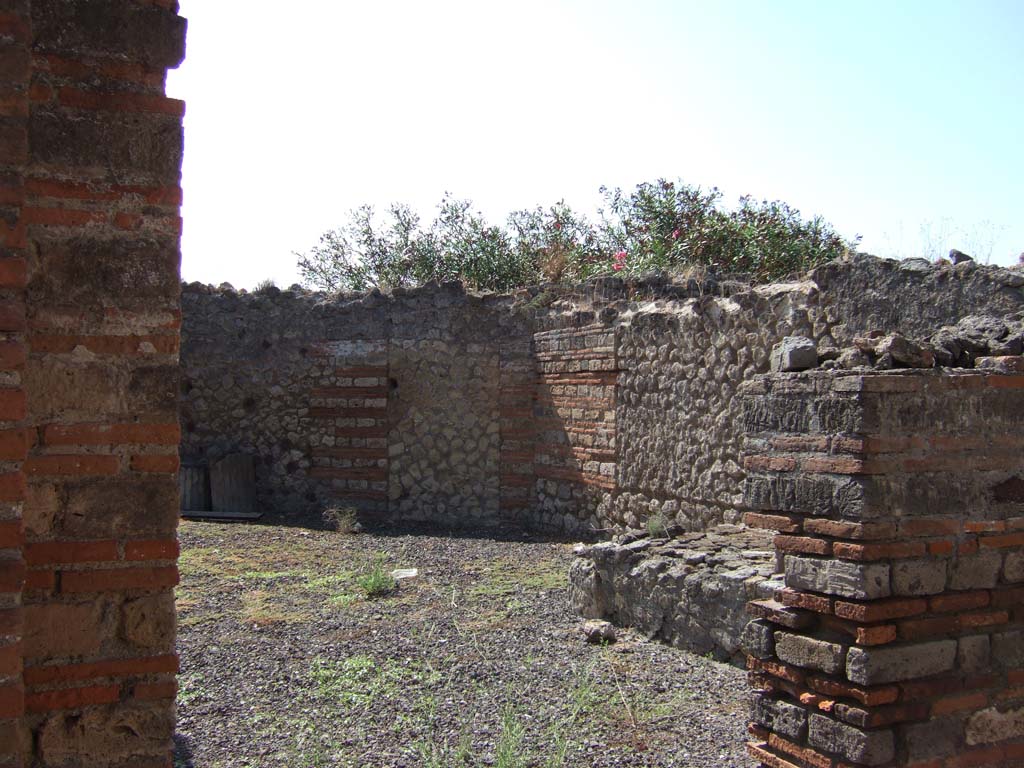
VIII.2.20 Pompeii. September 2005. Looking west from entrance doorway.
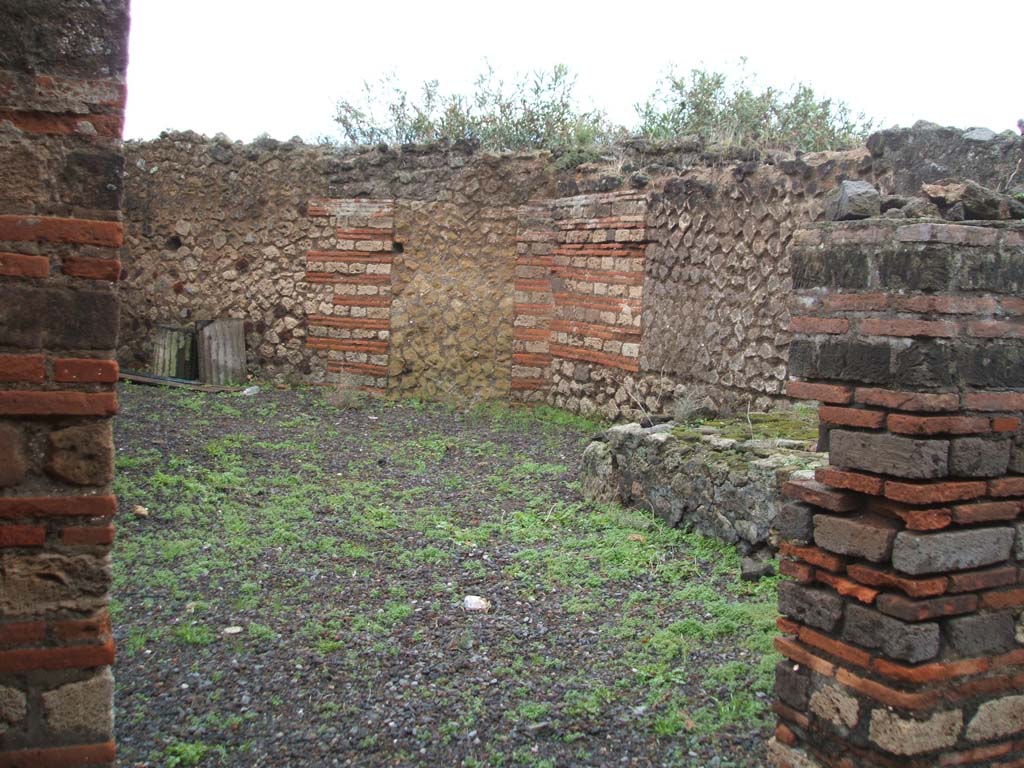
VIII.2.20 Pompeii. September 2005. Doorway to kitchen on south side of corridor.
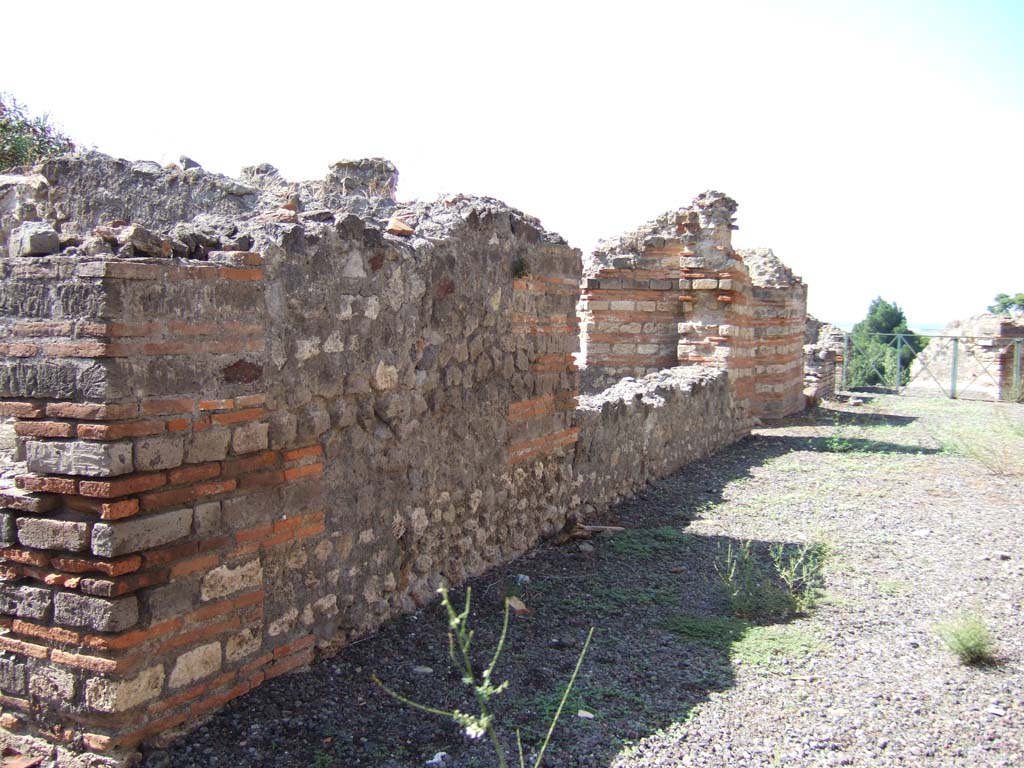
VIII.2.20 Pompeii. December 2004. Doorway to kitchen, with hearth or bench in corner.
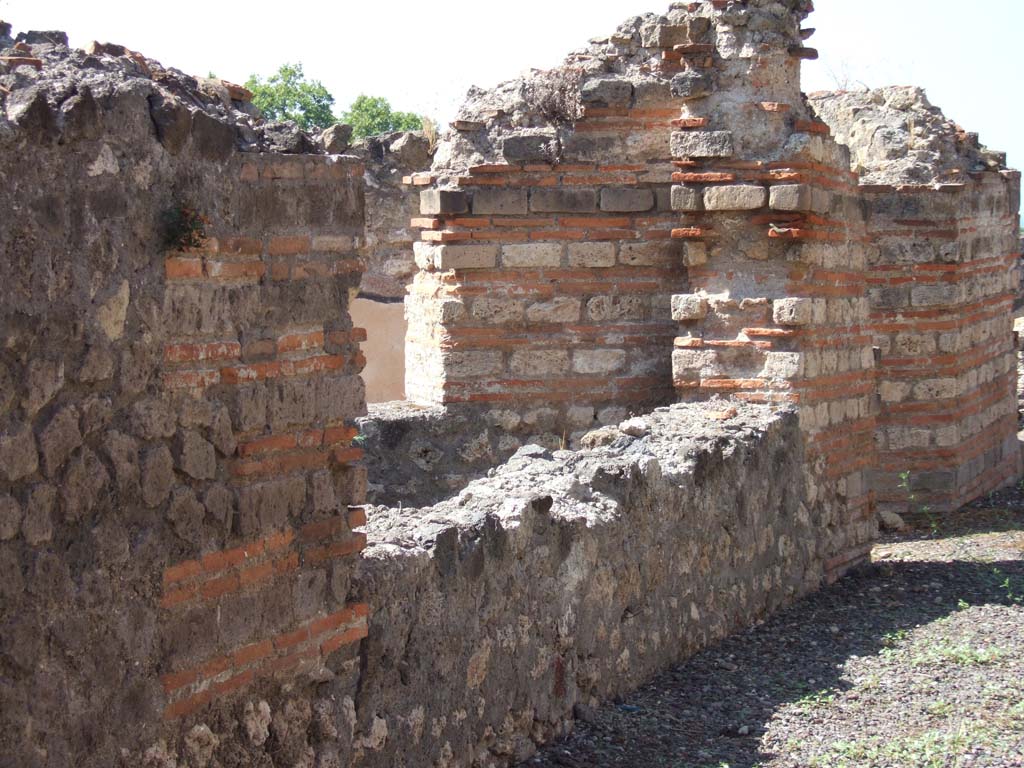
VIII.2.20 Pompeii. September 2005. Looking west along corridor
According to Jashemski, this was the wall of the triangular light-well.
It had two large windows which gave light to the corridor which led from the street at entrance 20.
This corridor, which turned to the left, was lit by another window before it reached the peristyle.
The light-yard had a tufa gutter around the edges with a drain towards the east, apparently to the cistern,
The opening of the cistern could be seen in the kitchen on its east side.
See Jashemski, W. F., 1993. The Gardens of Pompeii, Volume II: Appendices. New York: Caratzas. (p.207)

VIII.2.20 Pompeii. September 2005. Window of light-yard in south wall of corridor, with doorway to corridor on right.
According to Jashemski, this doorway/corridor would have led to the small peristyle which was on the street level.
It was enclosed on three sides by a portico supported by two pillars.
The black walls of the peristyle were beautifully painted with grape vines with clusters of fruit, many birds, lizards and a little mouse.
This garden was the centre of the house on this level.
See Jashemski, W. F., 1993. The Gardens of Pompeii, Volume II: Appendices. New York: Caratzas. (p.207)

VIII.2.18-20 Pompeii. According to Niccolini this is a painting of Level 1 viridarium 20 corridor 18.
According to Koloski Ostrow it is from peristyle 18, north-east wall.
See Koloski Ostrow, A., 1990. The Sarno Bath Complex. Roma: L’Erma di Bretschneider, plate 70.
See Niccolini F, 1896. Le case ed i monumenti di Pompei: Volume Quarto. Napoli. NS Tav. II.

VIII.2.20 Pompeii. 1978. Looking south-west along the west side of the small peristyle area.
The flooring in this area was of white mosaic with rows of black crosses and bordered by two lines of black tesserae.
This passageway led to a corridor separated by a black and white mosaic threshold decorated with rectangles.
Photo by Stanley A. Jashemski.
Source: The Wilhelmina and Stanley A. Jashemski archive in the University of Maryland Library, Special Collections (See collection page) and made available under the Creative Commons Attribution-Non-Commercial License v.4. See Licence and use details.
J78f0231

VIII.2.20 Pompeii. 1978.
Looking south-east along a corridor on the north side of the small peristyle garden. Photo by Stanley A. Jashemski.
Source: The Wilhelmina and Stanley A. Jashemski archive in the University of Maryland Library, Special Collections (See collection page) and made available under the Creative Commons Attribution-Non-Commercial License v.4. See Licence and use details.
J78f0232

VIII.2.20 Pompeii, 1968. Looking south-east from the west side across the small peristyle garden. Photo by Stanley A. Jashemski.
Source: The Wilhelmina and Stanley A. Jashemski archive in the University of Maryland Library, Special Collections (See collection page) and made available under the Creative Commons Attribution-Non-Commercial License v.4. See Licence and use details.
J68f1065
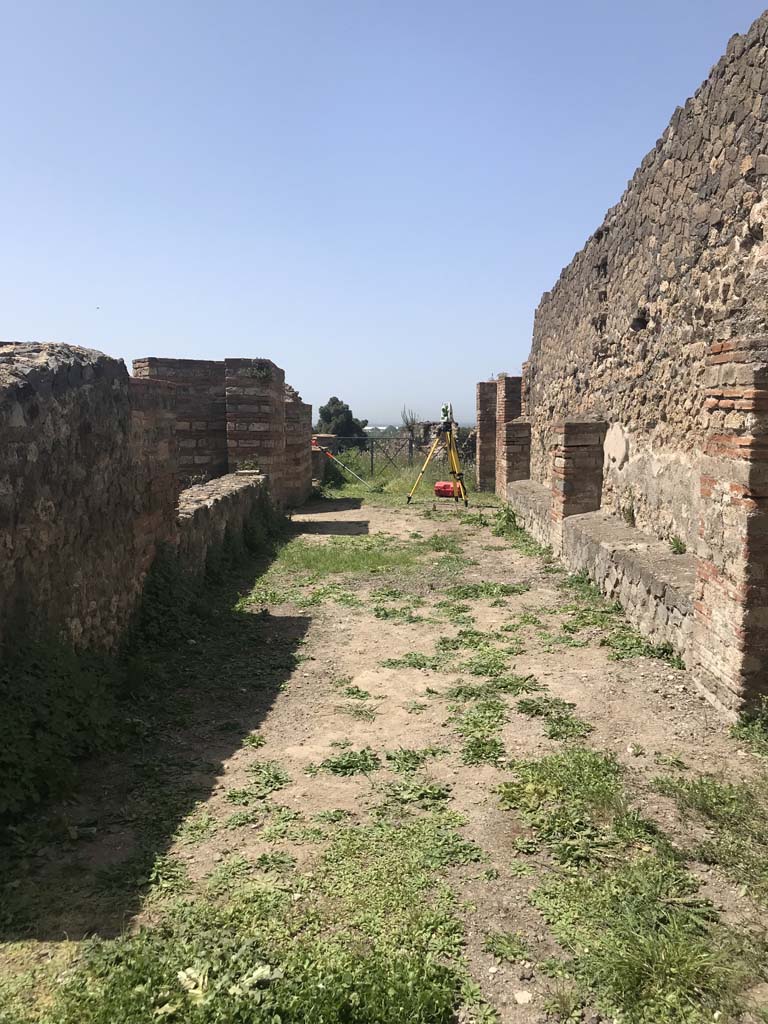
VIII.2.20 Pompeii. 1968.
Looking south-west from the east side across the peristyle garden. Photo by Stanley A. Jashemski.
Source: The Wilhelmina and Stanley A. Jashemski archive in the University of Maryland Library, Special Collections (See collection page) and made available under the Creative Commons Attribution-Non-Commercial License v.4. See Licence and use details.
J68f1064
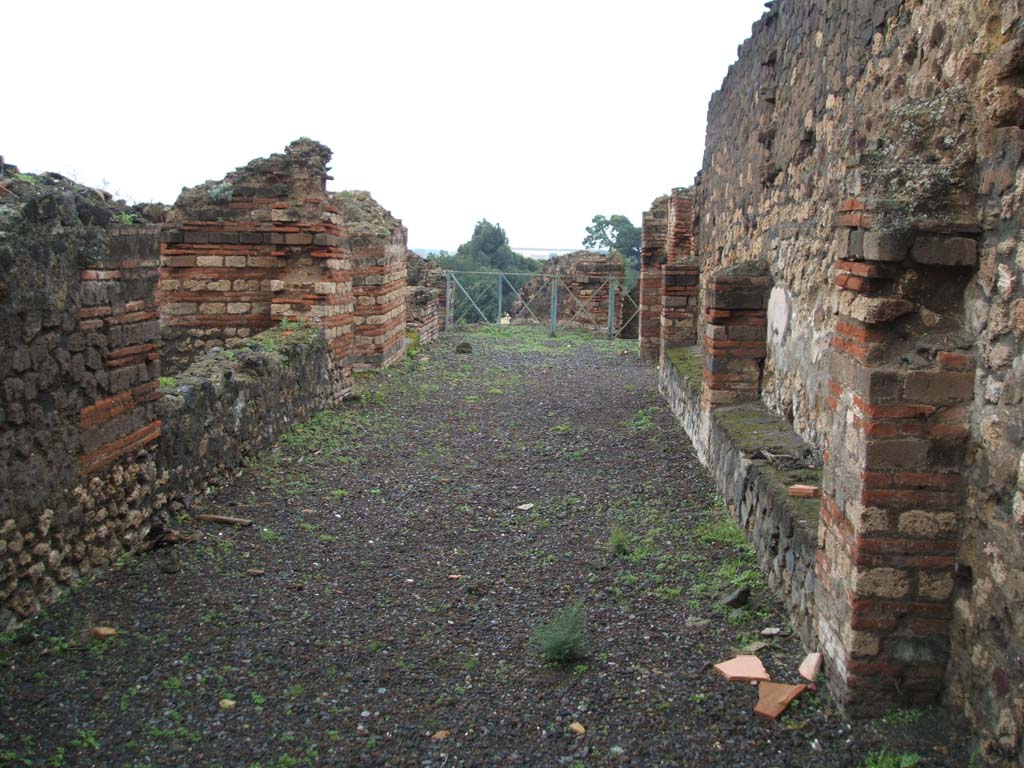
VIII.2.20 Pompeii. April 2019.
Looking west from entrance doorway along corridor leading to
peristyle on existing upper level.
Photo courtesy of Rick Bauer.
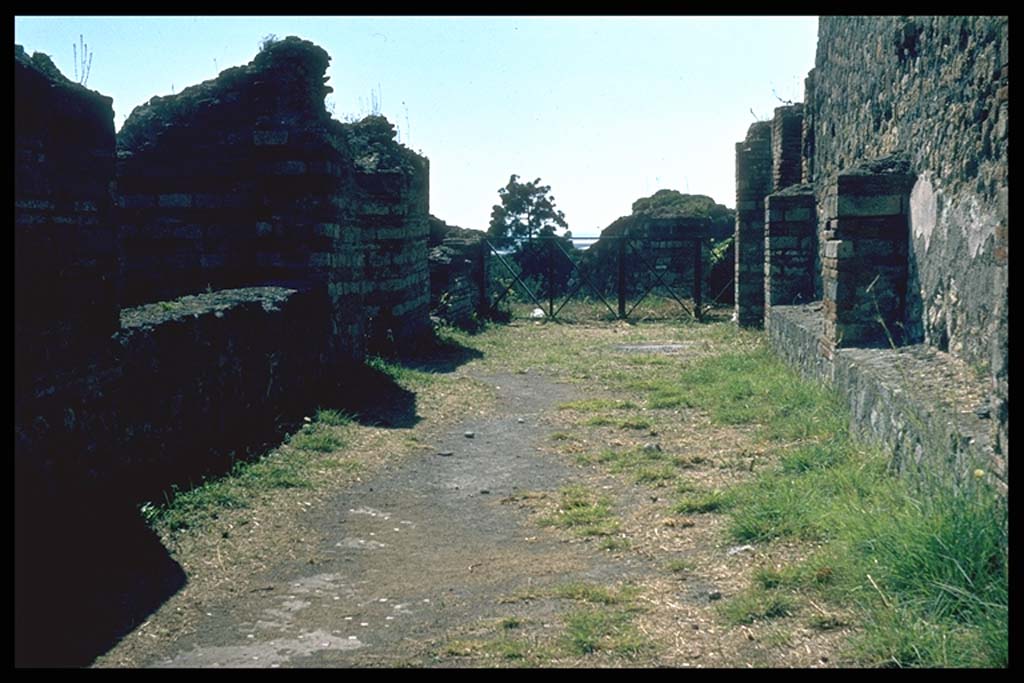
VIII.2.20 Pompeii. December 2004. Corridor leading west to peristyle on existing upper level.
VIII.2.20 Pompeii. Looking west along corridor.
Photographed 1970-79 by Günther Einhorn, picture courtesy of his son Ralf Einhorn.
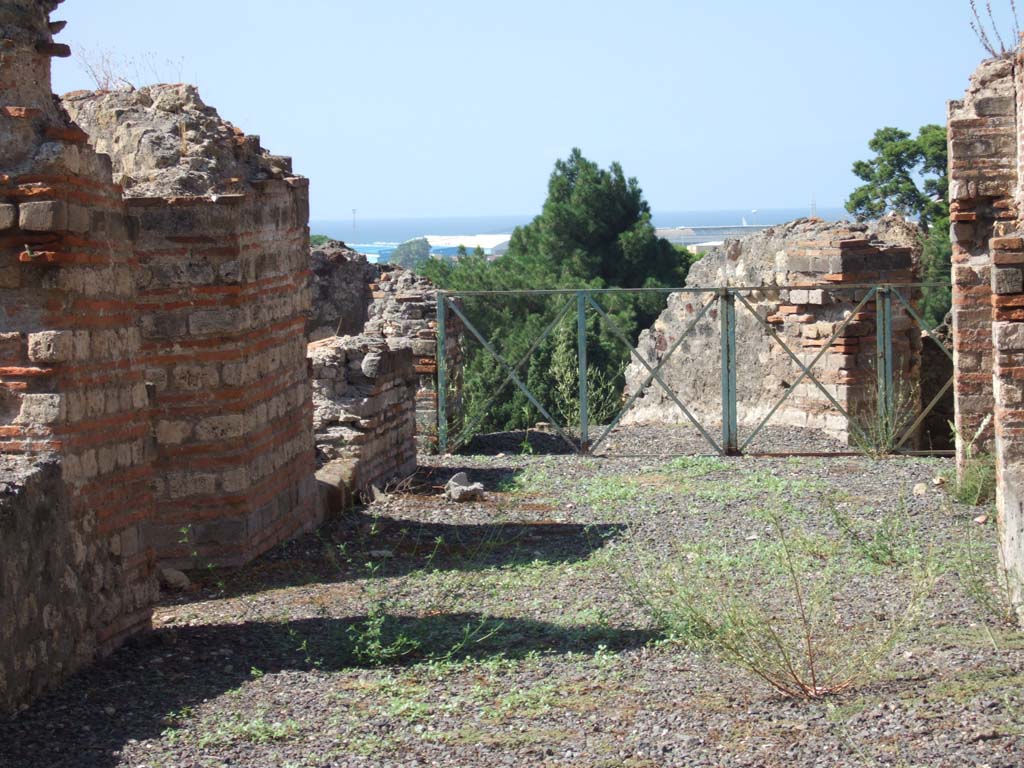
VIII.2.20 Pompeii. September 2005. Area at end of corridor.
According to Jashemski, this block of dwellings was built on five levels, and had three porticoed terraces on the rear.
The upper (4th) terrace was not preserved.
See Jashemski, W. F., 1993. The Gardens of Pompeii, Volume II: Appendices. New York: Caratzas. (p.207)
Rear exterior photos

VIII.2.20 Pompeii. June 2019. Rear of Sarno baths, from east end. Photo courtesy of Buzz Ferebee.
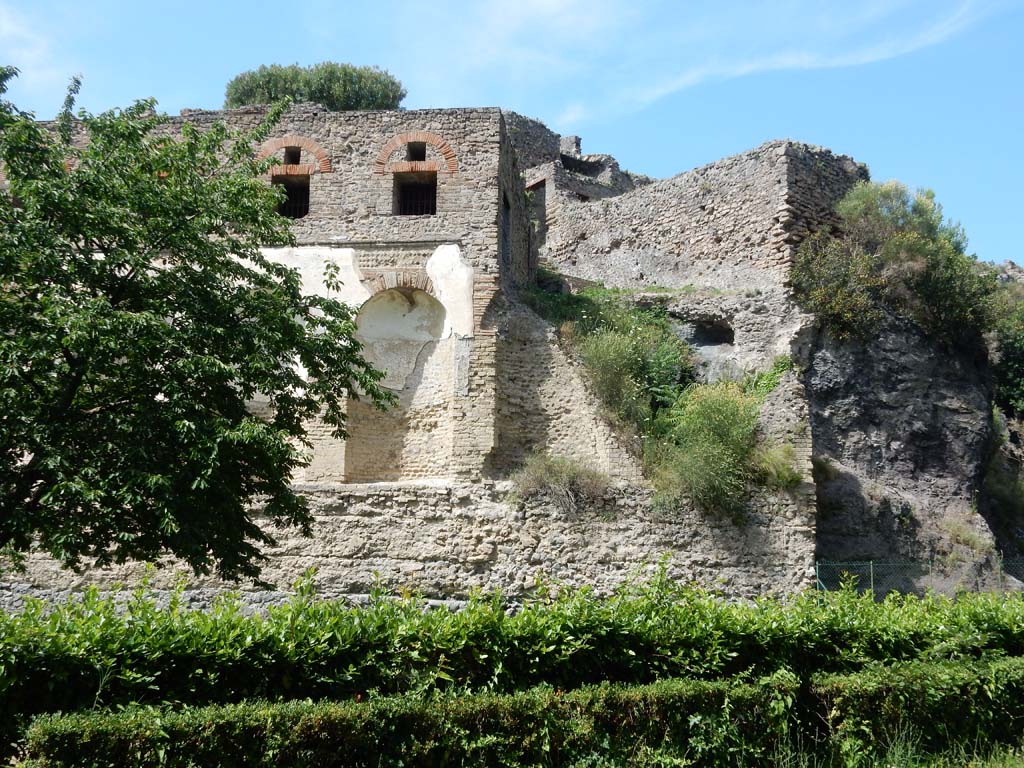
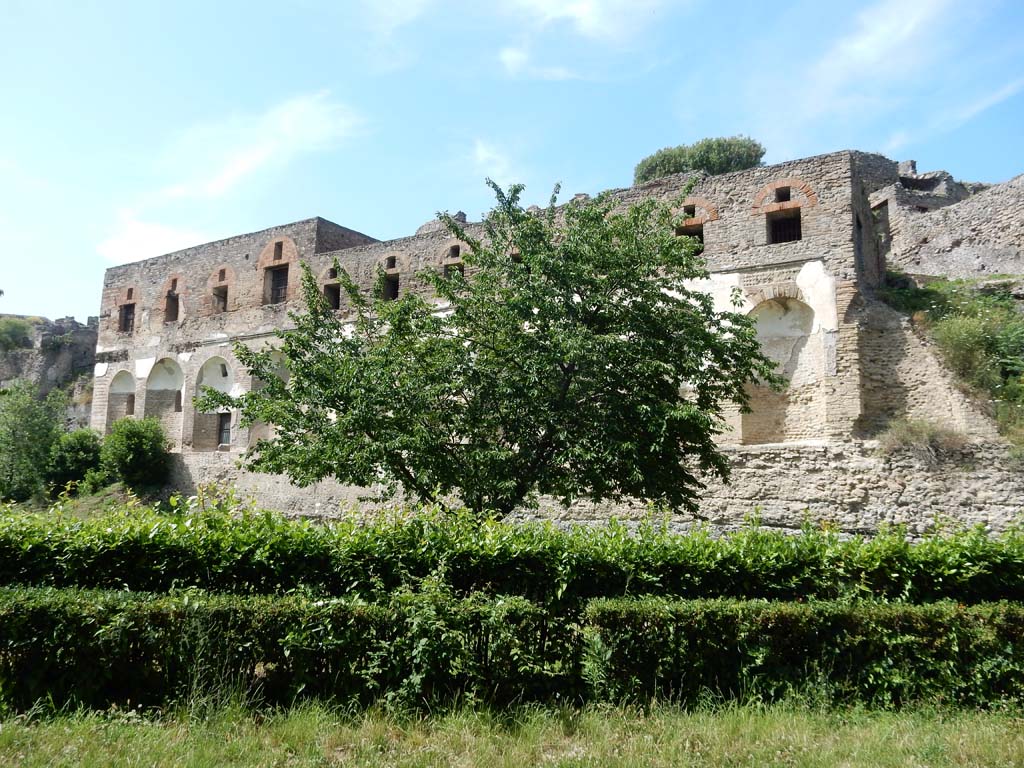
VIII.2.20 Pompeii, on left. September 2015. Rear of Sarno baths, with VIII.2.21, on right.
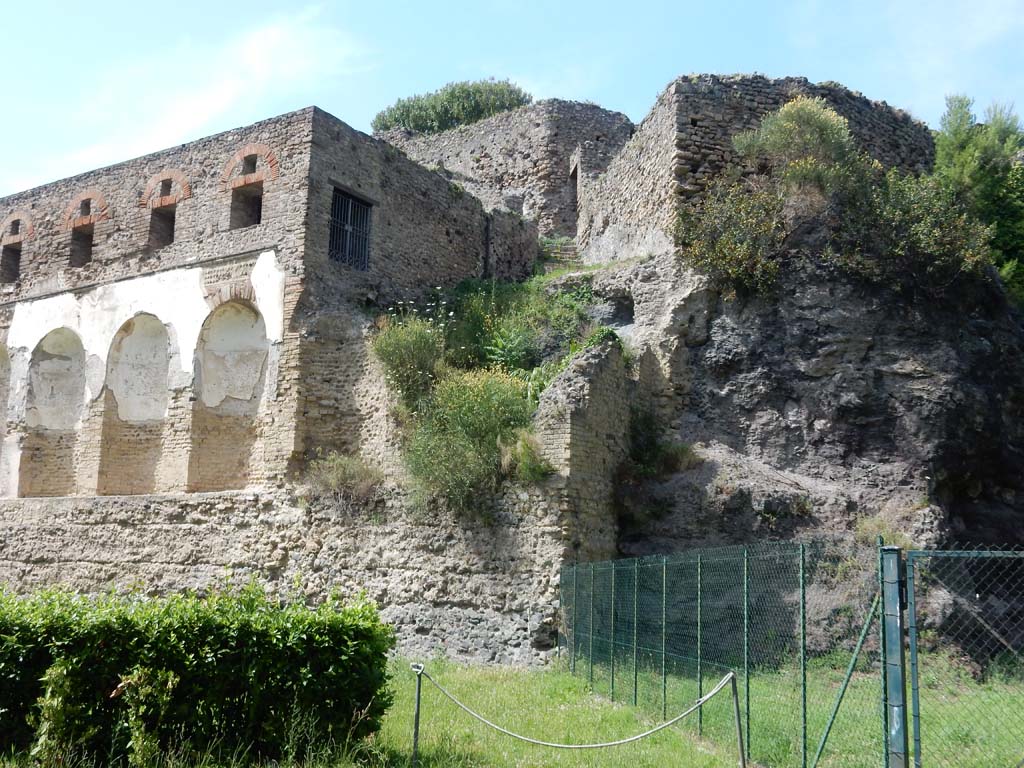
VIII.2.20 Pompeii. June 2019. Rear of Sarno baths, east end. Photo courtesy of Buzz Ferebee.

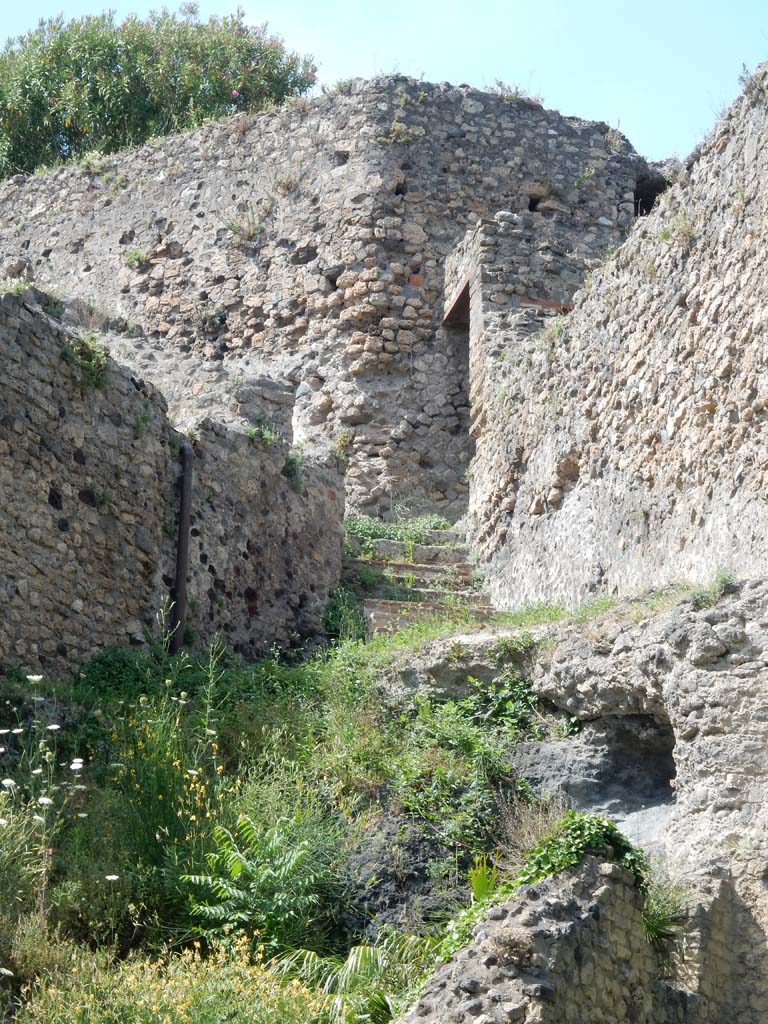
VIII.2.20 Pompeii. May 2006. Rear of Sarno baths.

Rear of Sarno baths, east end, detail of stairs on an upper level. Photo courtesy of Buzz Ferebee.

VIII.2.20 Pompeii. September 2015. Rear of Sarno baths.

VIII.2.20 Pompeii. May 2006. Rear of Sarno baths.
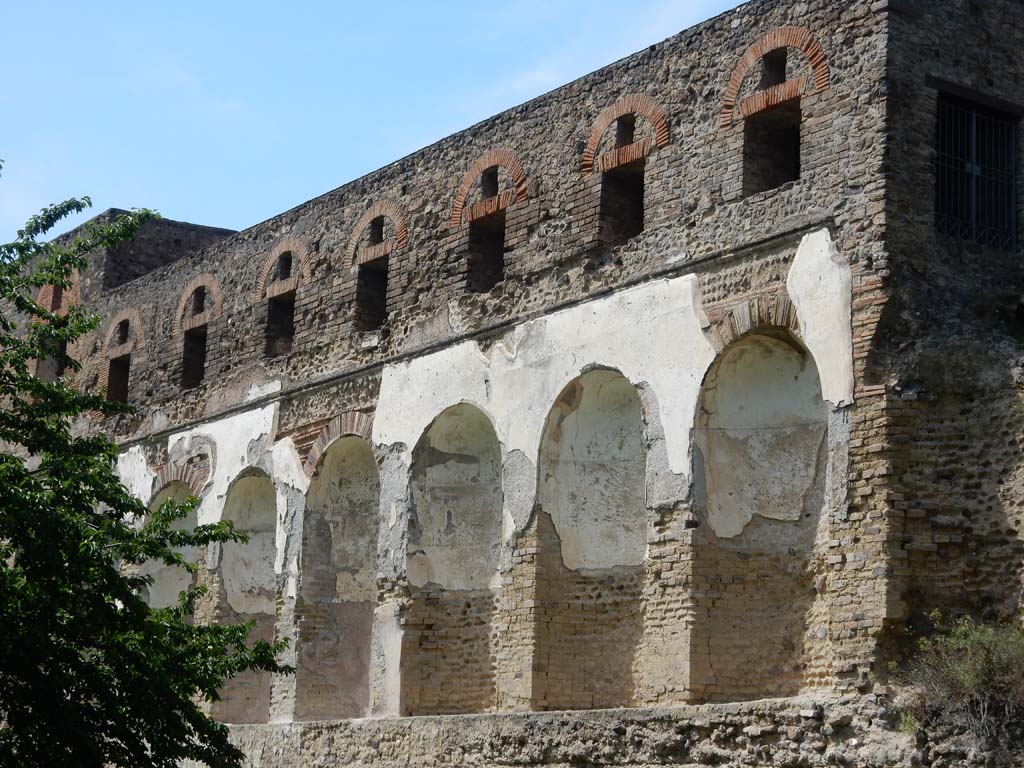
VIII.2.20 Pompeii. September 2015. Rear of Sarno baths, looking north-west.

VIII.2.20 Pompeii. June 2019. Looking north-west at rear. Photo courtesy of Buzz Ferebee.
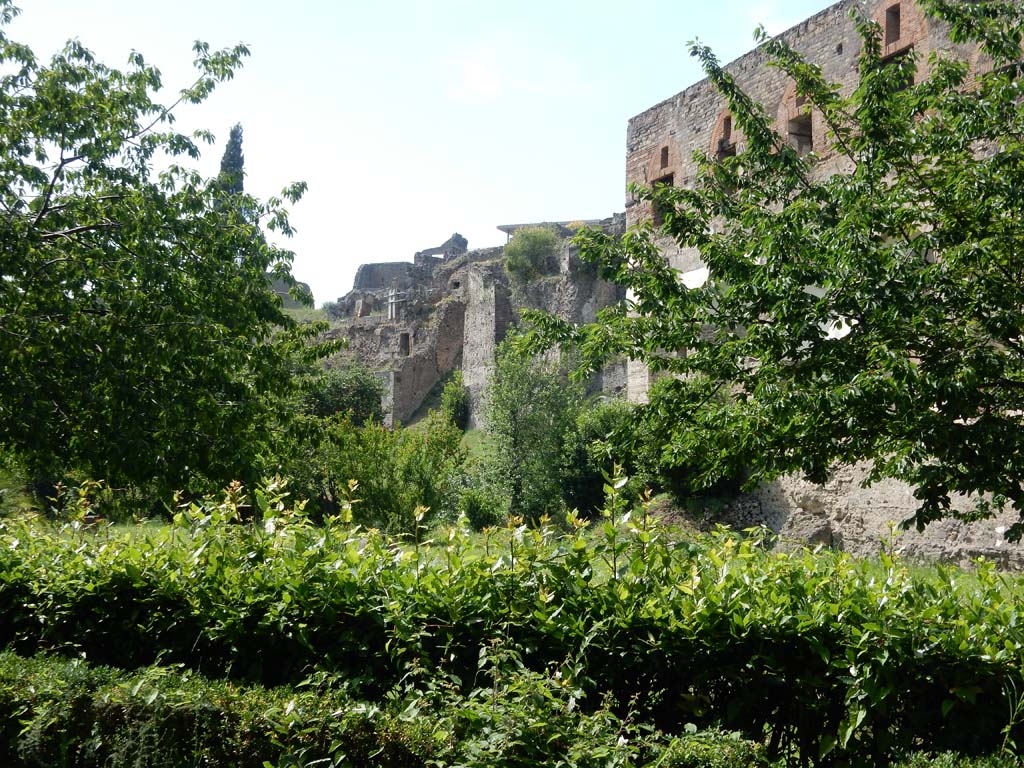
VIII.2.20 Pompeii. May 2006. Rear of Sarno baths.

VIII.2.20 Pompeii. June 2019. Looking west from east end towards rear of VIII.2.16, etc. Photo courtesy of Buzz Ferebee.

VIII.2.20 Pompeii. May 2006. Rear of Sarno baths, looking north-west.

VIII.2.20 Pompeii. May 2006. Rear of Sarno baths (right) and rear of VIII.2. (centre).

VIII.2.20 Pompeii. 1959.
Rear of Sarno baths, looking west from east end. Photo by Stanley A. Jashemski.
Source: The Wilhelmina and Stanley A. Jashemski archive in the University of Maryland Library, Special Collections (See collection page) and made available under the Creative Commons Attribution-Non-Commercial License v.4. See Licence and use details.
J59f0405

VIII.2.20 Pompeii, May 2018.
Sarno Baths complex, on right, and lower areas of VIII.2.16, from the rear. Photo courtesy of Buzz Ferebee.

VIII.2.20 Pompeii. May 2018. Sarno Baths complex, from the rear. Looking east from west end. Photo courtesy of Buzz Ferebee.

VIII.2.20 Pompeii. May 2018. Sarno Baths complex, from the rear. Photo courtesy of Buzz Ferebee.

VIII.2.20 Pompeii. May 2006. Rear of Sarno baths complex from exit of site.

VIII.2.20 Pompeii. May 2006. Rear of Sarno baths, at west end.
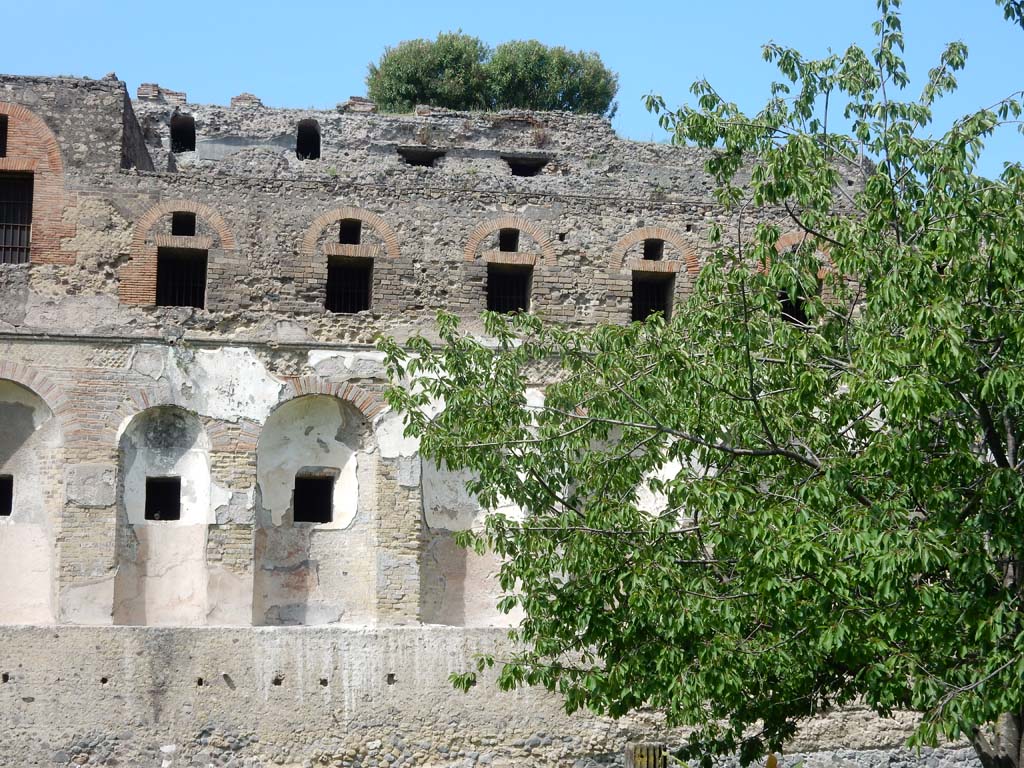
VIII.2.20 Pompeii. c.1895.
Rear of Sarno baths. Photograph by Brogi with the title Casa a Due Piani. The lower levels were buried at this time.
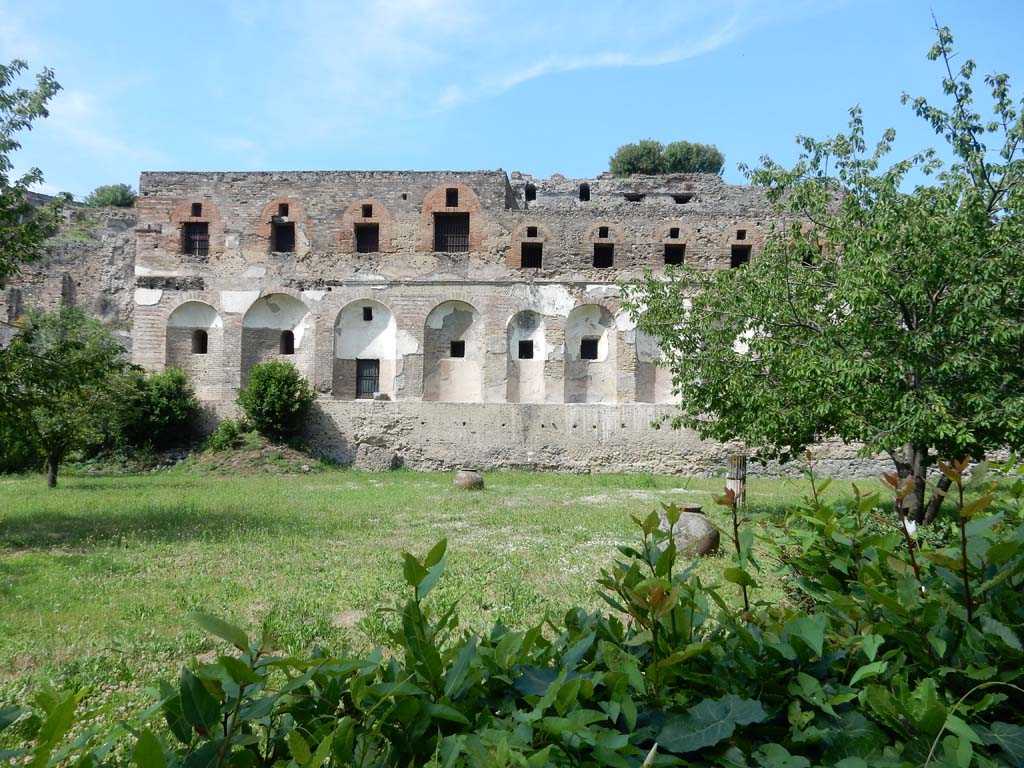
VIII.2.20 Pompeii, June 2019. Sarno Baths complex with upper floors, from the rear. Photo courtesy of Buzz Ferebee.
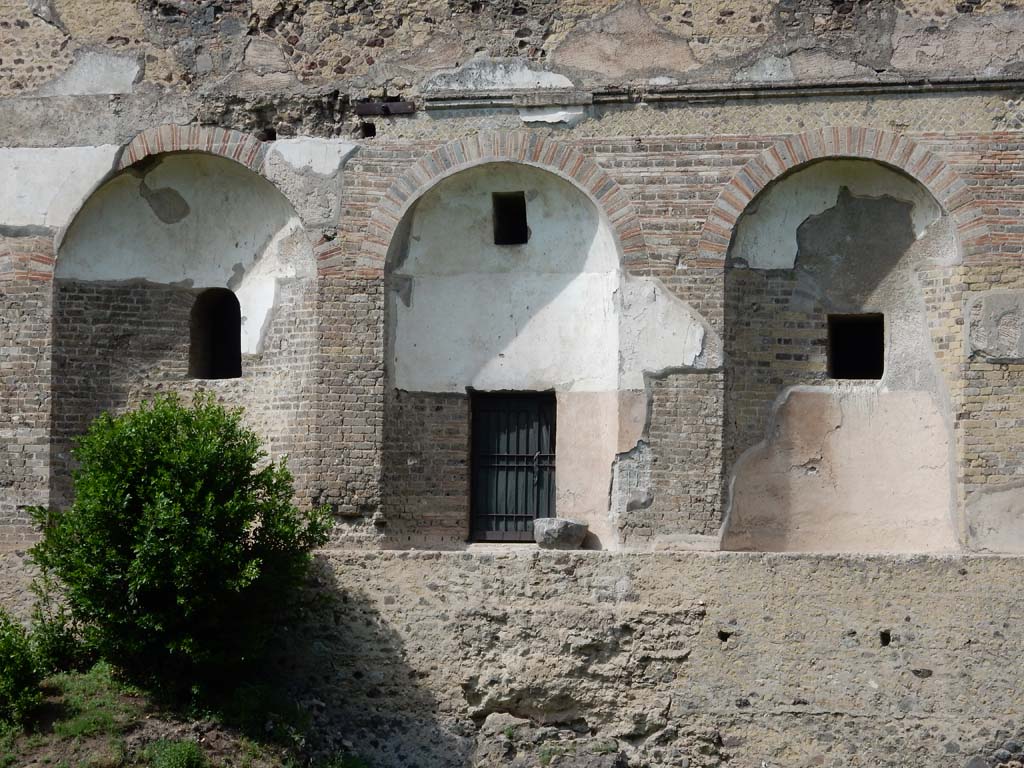
VIII.2.20 Pompeii, June 2019. Sarno Baths complex, from the rear. Photo courtesy of Buzz Ferebee.

VIII.2.20 Pompeii, June 2019. Sarno Baths complex, doorway on lower level. Photo courtesy of Buzz Ferebee.

VIII.2.20 Pompeii. March 2012. Rear of Sarno Baths. Photo courtesy of Marina Fuxa.
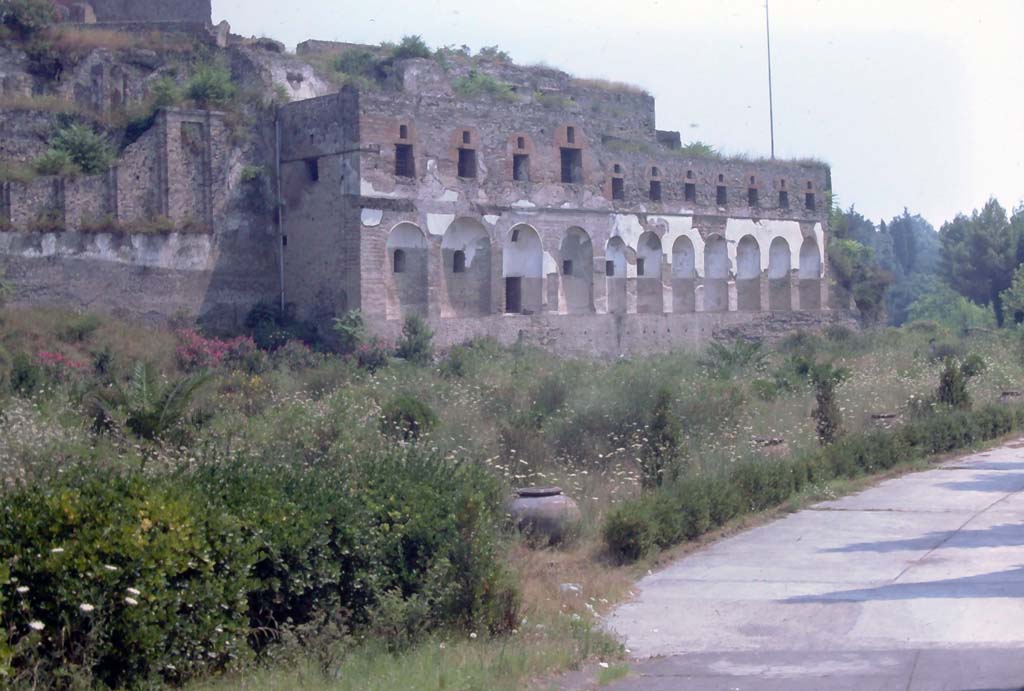
VIII.2.20 Pompeii. May 2006. Rear of Sarno baths.

VIII.2.20 Pompeii. August 1976. Rear of Sarno Baths.
Photo courtesy of Rick Bauer, from Dr George Fay’s slides
collection.

VIII.2.20 Pompeii. 1968. Rear of Sarno baths. Photo by Stanley A. Jashemski.
Source: The Wilhelmina and Stanley A. Jashemski archive in the University of Maryland Library, Special Collections (See collection page) and made available under the Creative Commons Attribution-Non-Commercial License v.4. See Licence and use details.
J68f1373

VIII.2.20 Pompeii. 1964. Rear of Sarno baths. Photo by Stanley A. Jashemski.
Source: The Wilhelmina and Stanley A. Jashemski archive in the University of Maryland Library, Special Collections (See collection page) and made available under the Creative Commons Attribution-Non-Commercial License v.4. See Licence and use details.
J64f1743

Rear of VIII.2.20/VIII.2.34 Pompeii. May 2015.
Looking east along rear with Sarno Baths, left and centre. Photo courtesy of Buzz Ferebee.
Other parts of the baths: VIII.2.17 VIII.2.18 VIII.2.19 VIII.2.20 VIII.2.21