VII.16.17 Pompeii. Casa di Maius Castricius. Dwelling house complex of M. Fabius Rufus.
Linked to VII.16.20, VII.16.21, VII.16.22. Excavated 1759, 1940, 1958-1980.
Unnumbered on Eschebach site plan.
This page contains only the outside views. We entered this house through Fabius Rufus.
For the inside pictures of VII.16.17 see VII.16.17 photos in VII.16.22 Plan
![VII.16.17 Pompeii. September 2005. Entrance doorway on Vicolo dei Soprastanti.
According to Jashemski, the rooms of the complex of Fabius Rufus, which included this House of Maius Castricius, are on different levels.
The rooms on the east along Vicolo del Farmacista were on street level.
Those on the south, entered from Vicolo del Soprastanti, were on the floor below.
See Jashemski, W. F., 1993. The Gardens of Pompeii, Volume II: Appendices. New York: Caratzas. (p.202)
According to Garcia y Garcia, prior to the 1943 bombing, on the right side of this doorway, was another numbered 17A.
All of the perimeter wall between entrances 17 and 19, on the north side of Vicolo dei Soprastanti, was demolished by the bombing for a length of at least 20 metres.
Also lost was a small window with metal grating which was on the right side of 17A.
Following the damage from the bombardment in 1943, and the restoration and cleaning which followed in October 1960, changes were made.
See Garcia y Garcia, L., 2006. Danni di guerra a Pompei. Rome: L’Erma di Bretschneider. (p.137 and figs. 327-8)
According to Varriale, the name Maius Castricius was derived from an Oscan inscription [Eituns] found on the south-east corner of VII.6.
This directed soldiers to follow the road that ran inside the walls and passed the houses of Maius Castricius and Mara Spurnus. [CTP shows these as VII.16.17 and VII.16.13].
Whilst the actual ownership cannot be verified, the inscription does provide evidence that houses existed overlooking the walls in Samnite times.
See Varriale I., VII 16, Insula Occidentalis, 17, Casa di Maius Castricius in Aoyagi M., Pappalardo U., 2006. Pompei (Regiones VI-VII) Insula Occidentalis. Napoli: Valtrend, p 421.](7%2016%2017_files/image002.jpg)
VII.16.17
Pompeii. September 2005. Entrance doorway on Vicolo dei Soprastanti.
According to Jashemski, the rooms of the complex of Fabius Rufus, which included this House of Maius Castricius, are on different levels.
The rooms on the east along Vicolo del Farmacista were on street level.
Those on the south, entered from Vicolo del Soprastanti, were on the floor below.
See Jashemski, W. F., 1993. The Gardens of Pompeii, Volume II: Appendices. New York: Caratzas. (p.202)
According to Garcia y Garcia, prior to the 1943 bombing, on the right side of this doorway, was another numbered 17A.
All of the perimeter wall between entrances 17 and 19, on the north side of Vicolo dei Soprastanti, was demolished by the bombing for a length of at least 20 metres.
Also lost was a small window with metal grating which was on the right side of 17A.
Following the damage from the bombardment in 1943, and the restoration and cleaning which followed in October 1960, changes were made.
See Garcia y
Garcia, L., 2006. Danni di
guerra a Pompei. Rome:
L’Erma di Bretschneider. (p.137 and figs. 327-8)
According to Varriale, the name Maius Castricius was derived from an Oscan inscription [Eituns] found on the south-east corner of VII.6.
This directed soldiers to follow the road that ran inside the walls and passed the houses of Maius Castricius and Mara Spurnus. [CTP shows these as VII.16.17 and VII.16.13].
Whilst the actual ownership cannot be verified, the inscription does provide evidence that houses existed overlooking the walls in Samnite times.
See Varriale I., VII 16, Insula Occidentalis, 17, Casa di Maius Castricius in Aoyagi M., Pappalardo U., 2006. Pompei (Regiones VI-VII) Insula Occidentalis. Napoli: Valtrend, p 421.
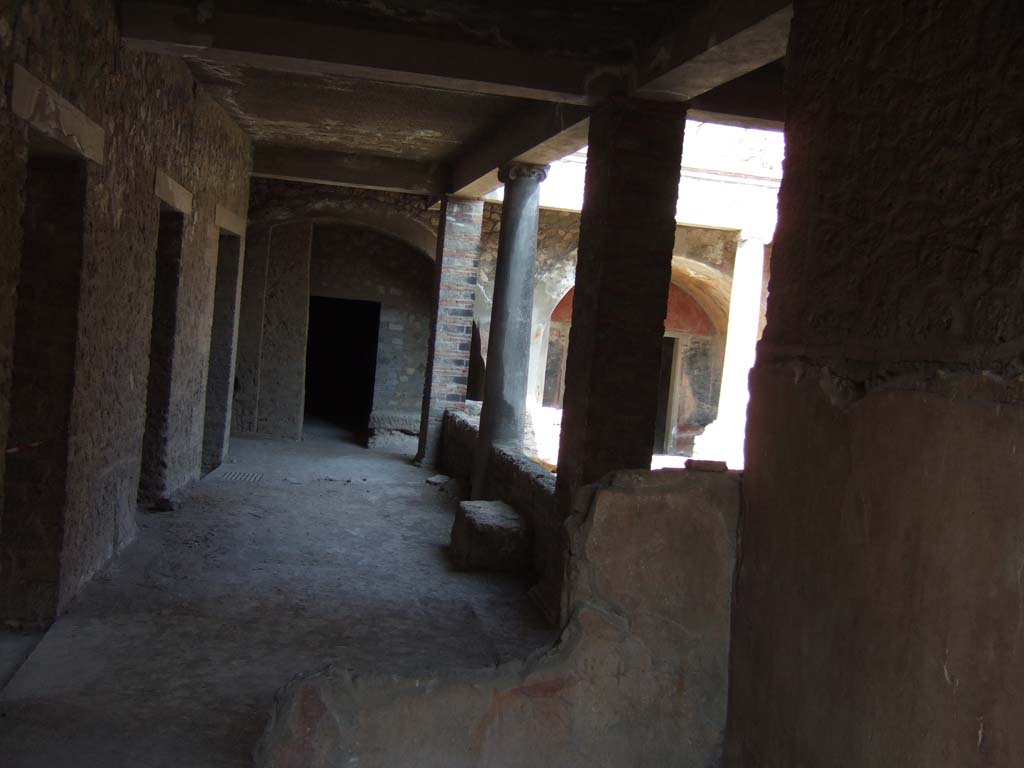
VII.16.17 Pompeii. September 2005. Looking north towards peristyle area, from entrance doorway.
According to Jashemski, the peristyle garden could be reached easily from the entrance doorway on the Vicolo dei Soprastanti.
The peristyle portico was supported by pillars at the corners, and by a column in the middle of each of the four sides.
The entrance to the garden was in the north side.
See Jashemski, W. F., 1993. The Gardens of Pompeii, Volume II: Appendices. New York: Caratzas. (p.203)
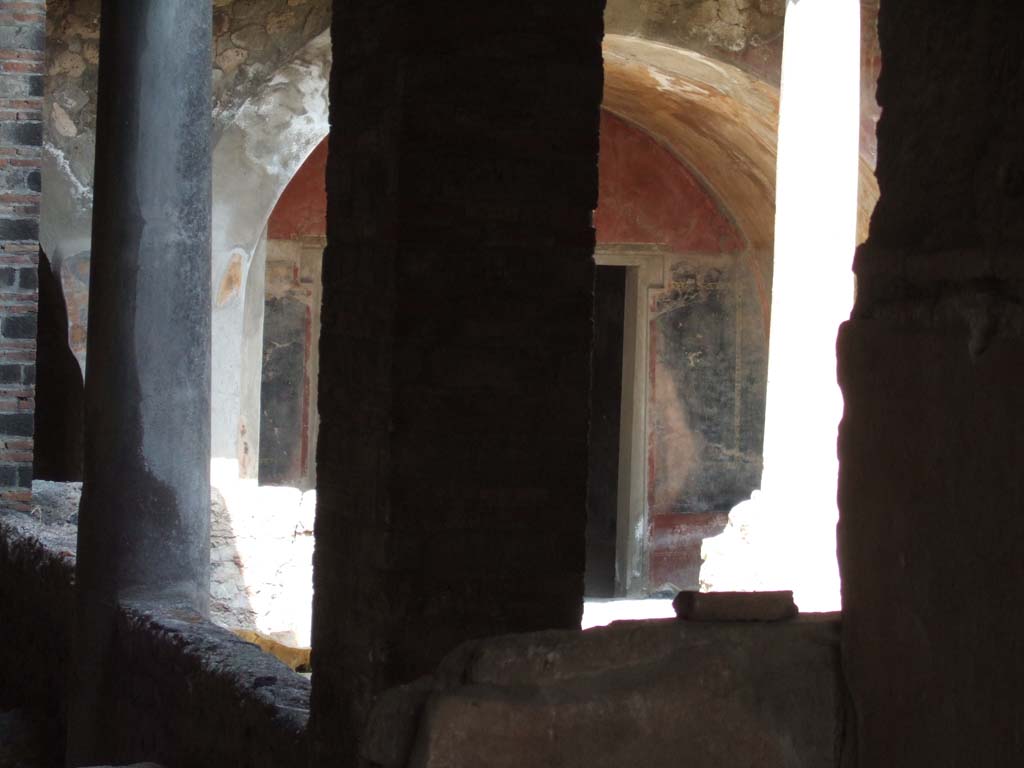
VII.16.17 Pompeii. September 2005. Peristyle area, from entrance doorway. (see also VII.16.22)
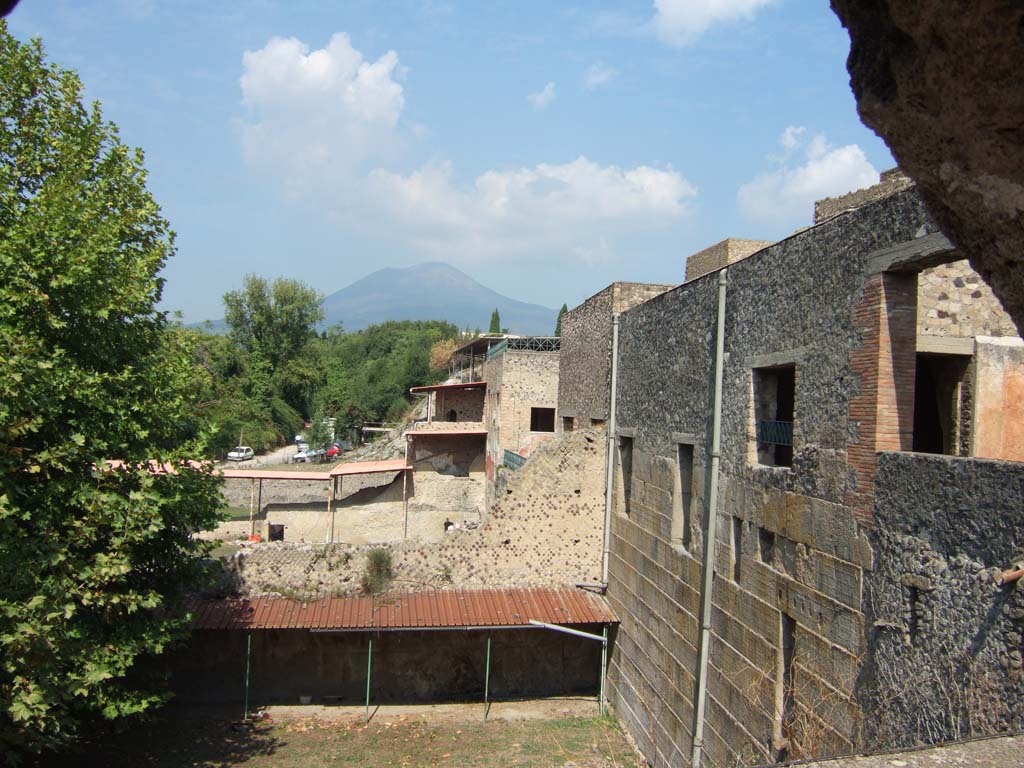
View through hole in wall of VII.16 on Vicolo dei Soprastanti. September 2005. Looking north to rear of complex of M Fabius Rufus, Pompeii.
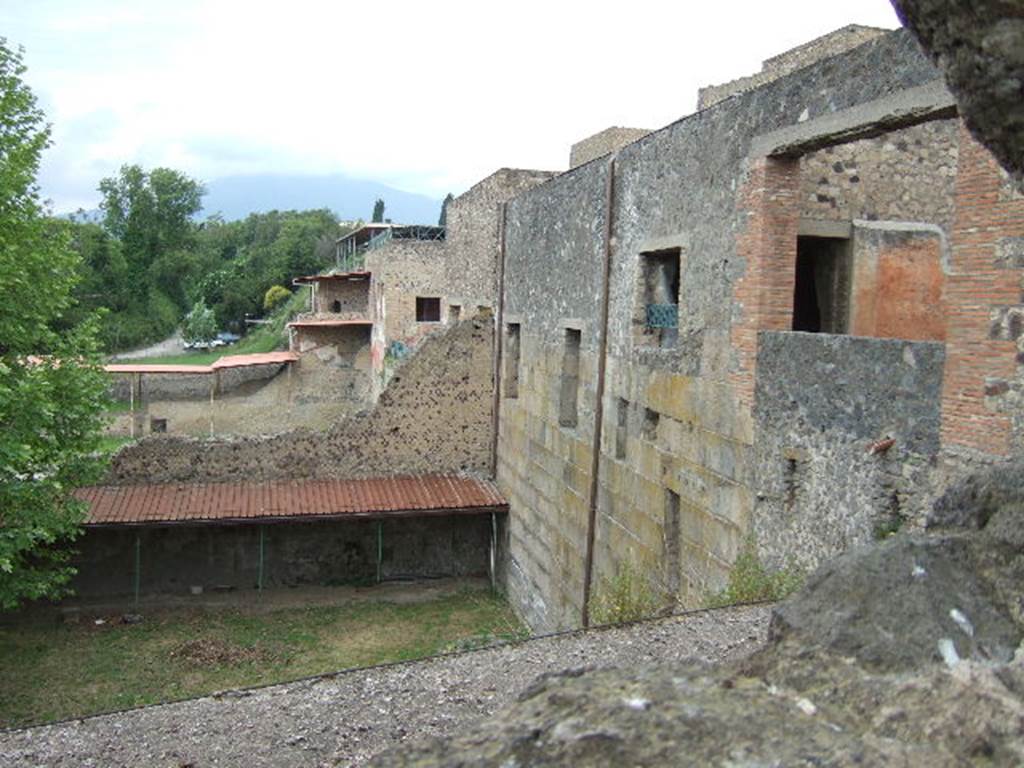
View through hole in wall of VII.16 on Vicolo dei Soprastanti. May 2006. Looking north to rear of complex of M Fabius Rufus, Pompeii.
The part containing the House of Maius Castricius is on the right.
The large square window, on the right, is from the courtyard garden (see VII.16.22).
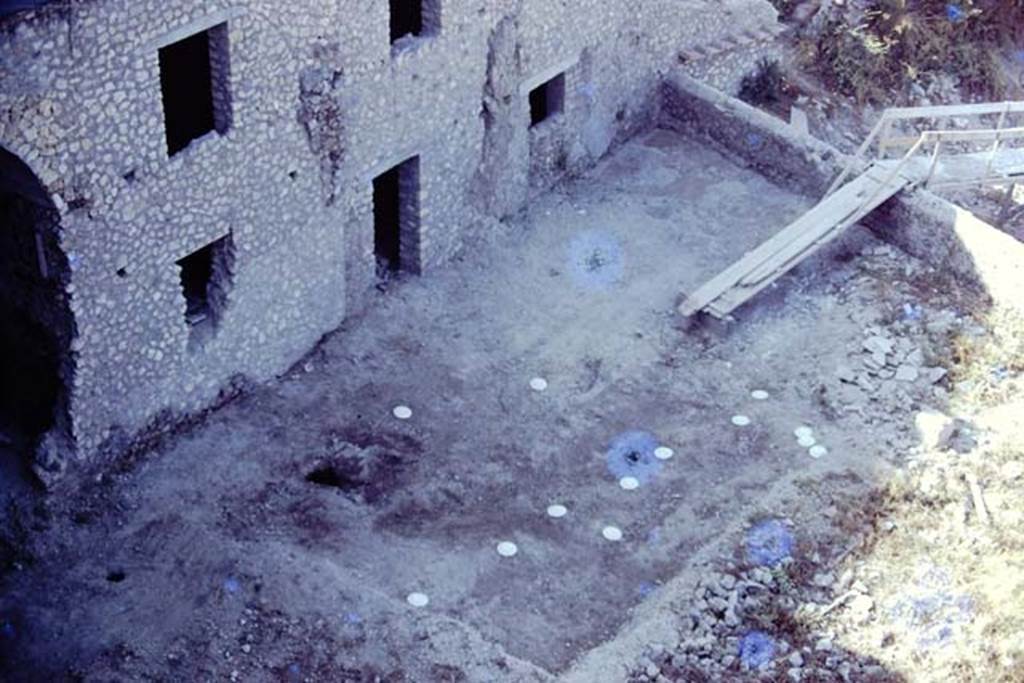
VII.16.17, Pompeii. 1974. Looking south-west from the courtyard garden, down onto lower garden.
According to Jashemski, the garden was badly damaged and piled with building debris in 1974, but in the south part they were able to find root cavities (the white markers) arranged informally in rows.
Photo by Stanley A. Jashemski.
Source: The Wilhelmina and Stanley A. Jashemski archive in the University of Maryland Library, Special Collections (See collection page) and made available under the Creative Commons Attribution-Non-Commercial License v.4. See Licence and use details.
J74f0706
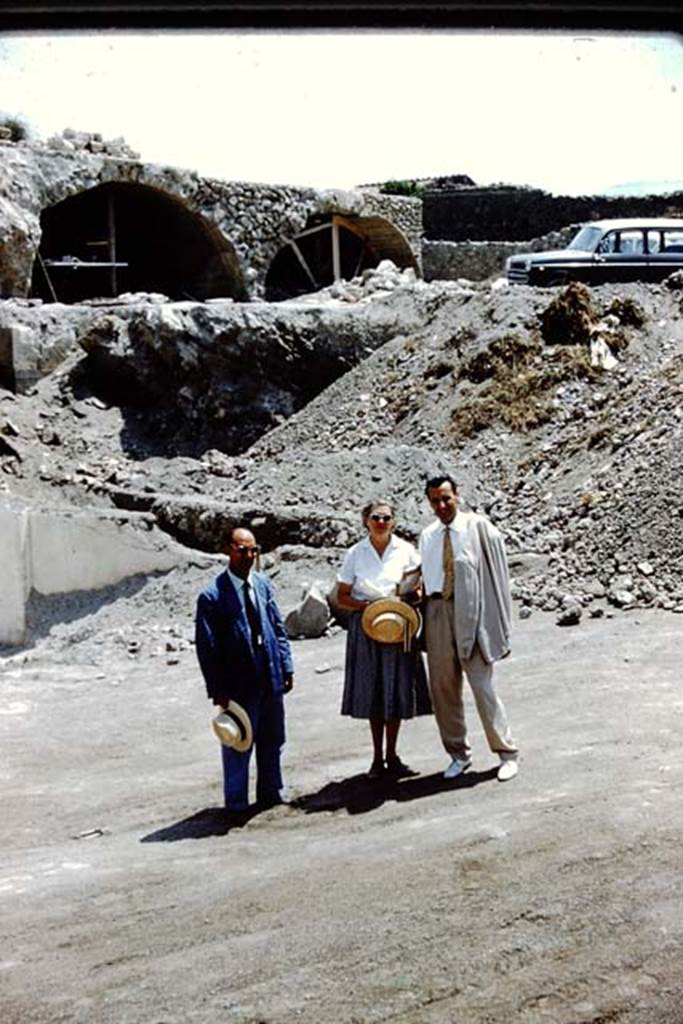
VII.16.17-22 Pompeii. 1961.
Wilhelmina and friends during the excavation. Photo by Stanley A. Jashemski.
Source: The Wilhelmina and Stanley A. Jashemski archive in the University of Maryland Library, Special Collections (See collection page) and made available under the Creative Commons Attribution-Non-Commercial License v.4. See Licence and use details.
J61f0849
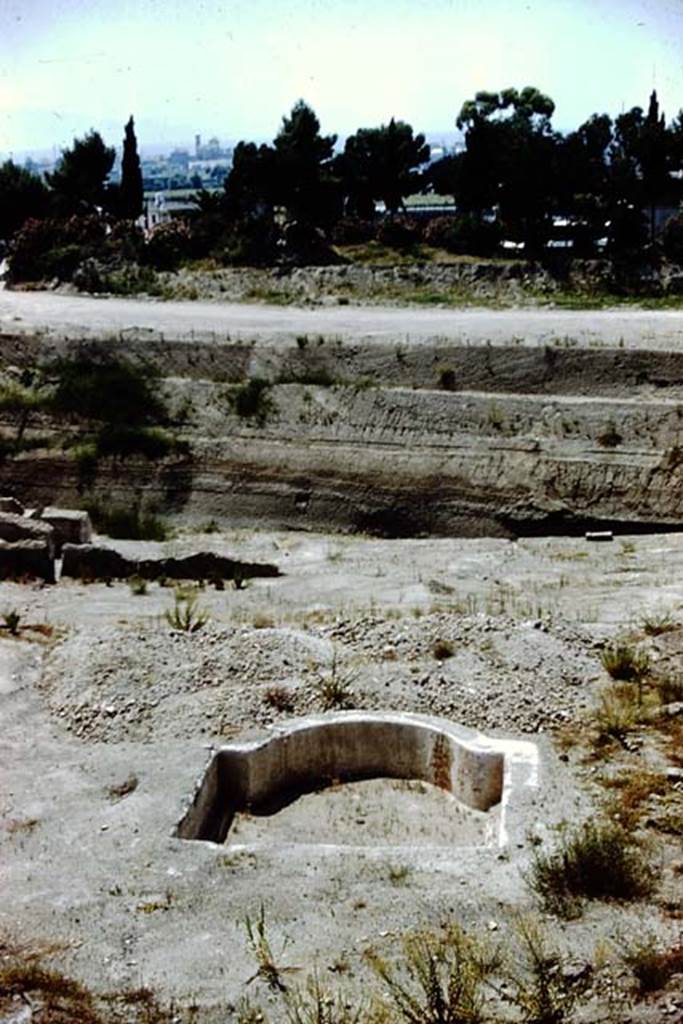
VII.16.17-22 Pompeii. 1961.
Upon excavation, looking south to garden pool. Photo by Stanley A. Jashemski.
Source: The Wilhelmina and Stanley A. Jashemski archive in the University of Maryland Library, Special Collections (See collection page) and made available under the Creative Commons Attribution-Non-Commercial License v.4. See Licence and use details.
J61f0850
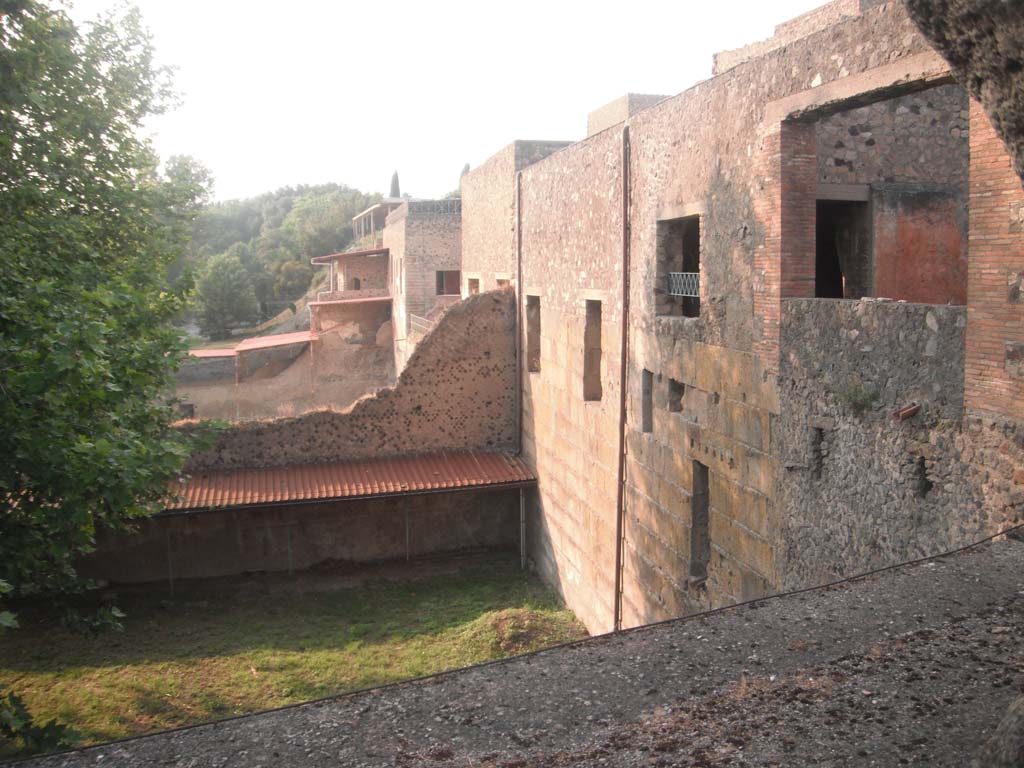
Looking north through “hole in wall” towards rear of house of M. Fabius Rufus, and down into garden area. Photo courtesy of Ivo van der Graaff.
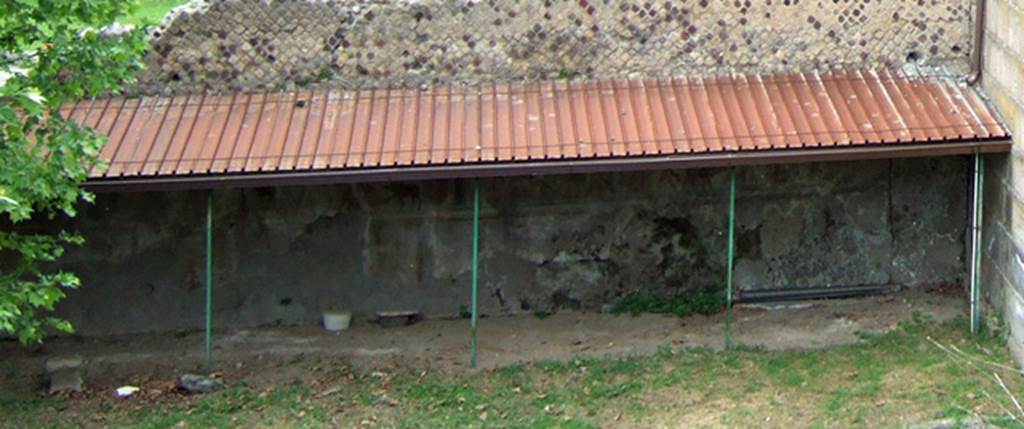
VII.16.17 Pompeii. May 2006. Animal and pigmy paintings on north wall of rear garden.
According to Jashemski, the ground level garden at the rear of this part of the house had an animal and pigmy painting on its north wall.
On the wall below were the remains of a gladiatorial scene.
See Jashemski, W. F., 1993. The Gardens of Pompeii, Volume II: Appendices. New York: Caratzas. (p.204, E.)
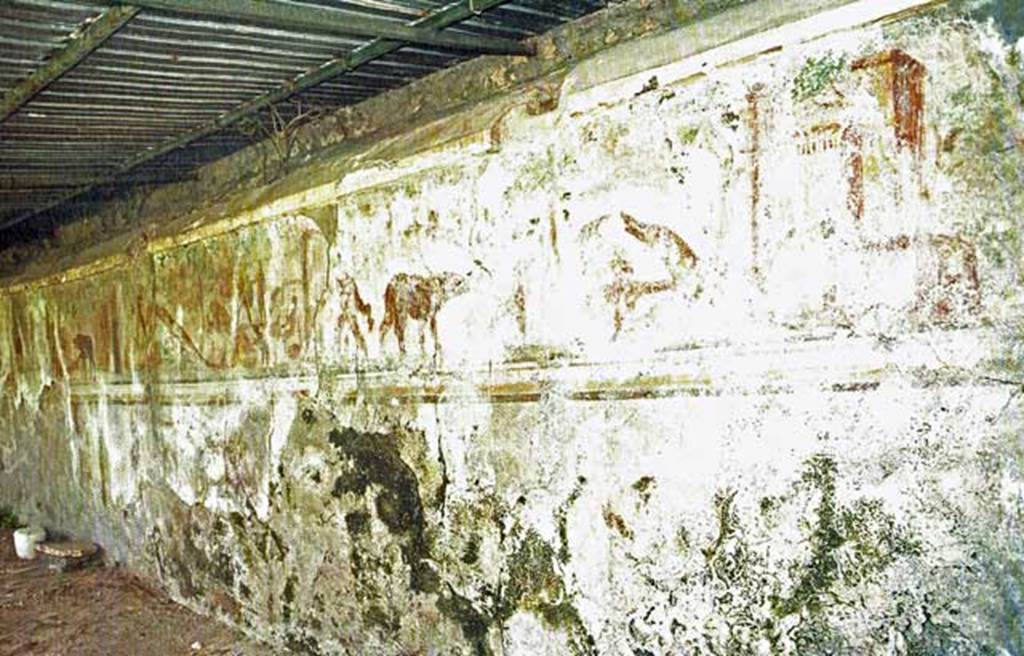
VII.16.17 Pompeii. May 2006. Animal and pigmy paintings on north wall of rear garden.
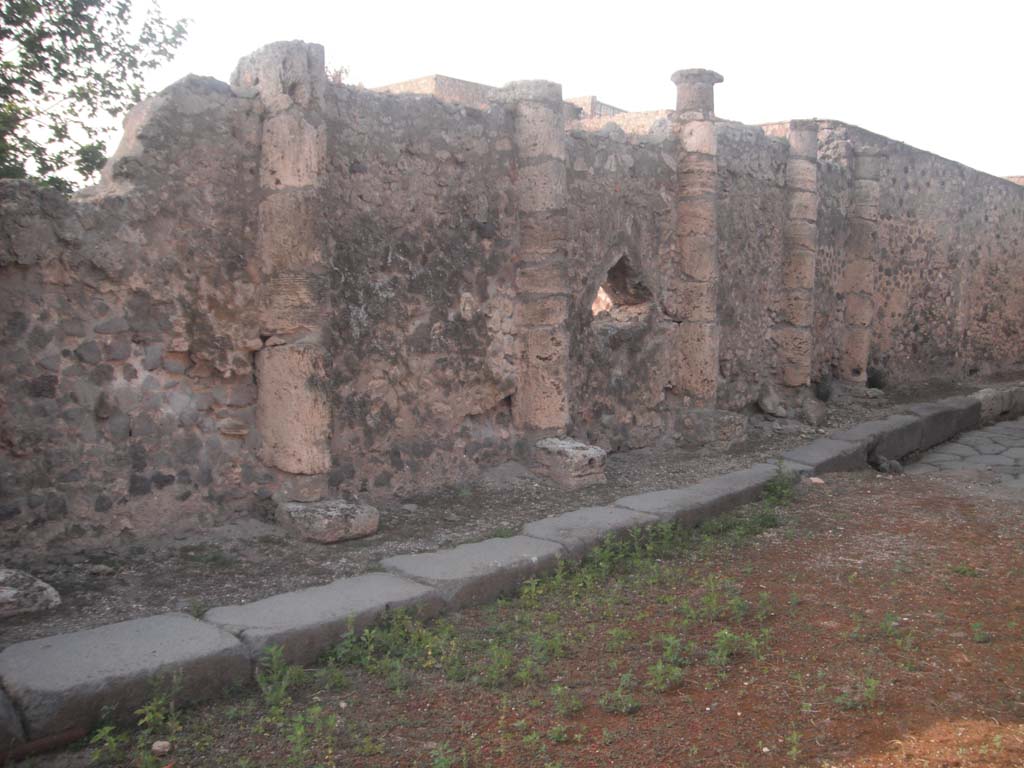
South perimeter wall on north side of Vicolo dei Soprastanti, looking east.Photo courtesy of Ivo van der Graaff.
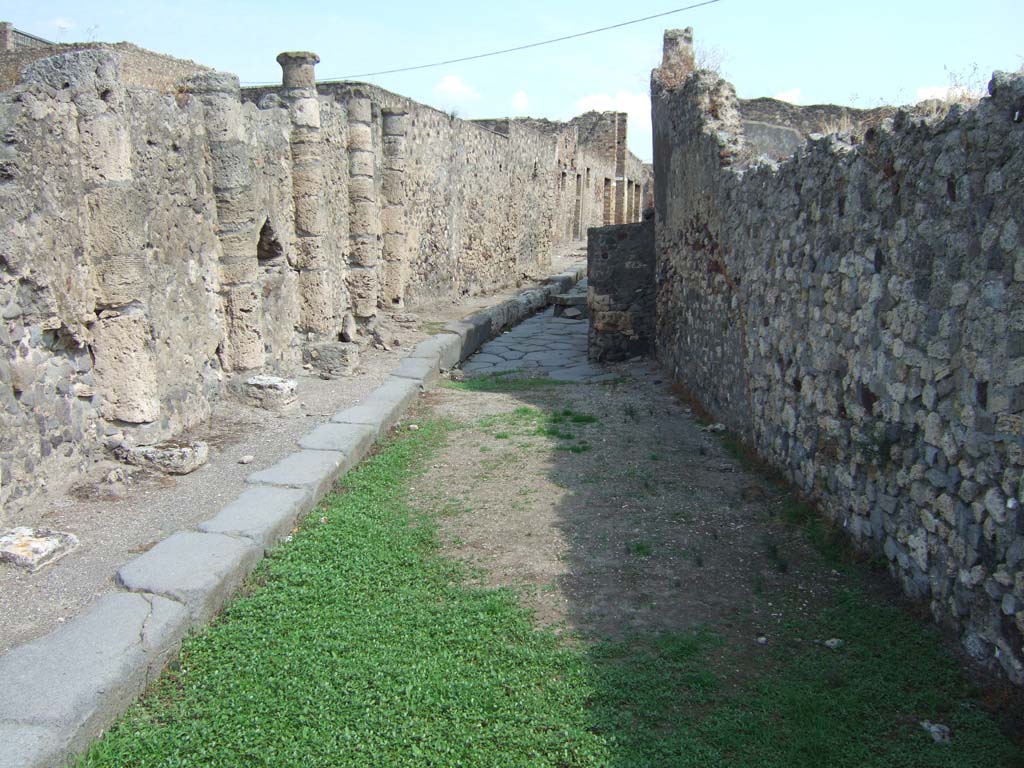
VII.16.17 Pompeii. September 2005. South perimeter wall on Vicolo dei Soprastanti, looking east. VII.15 is on right.
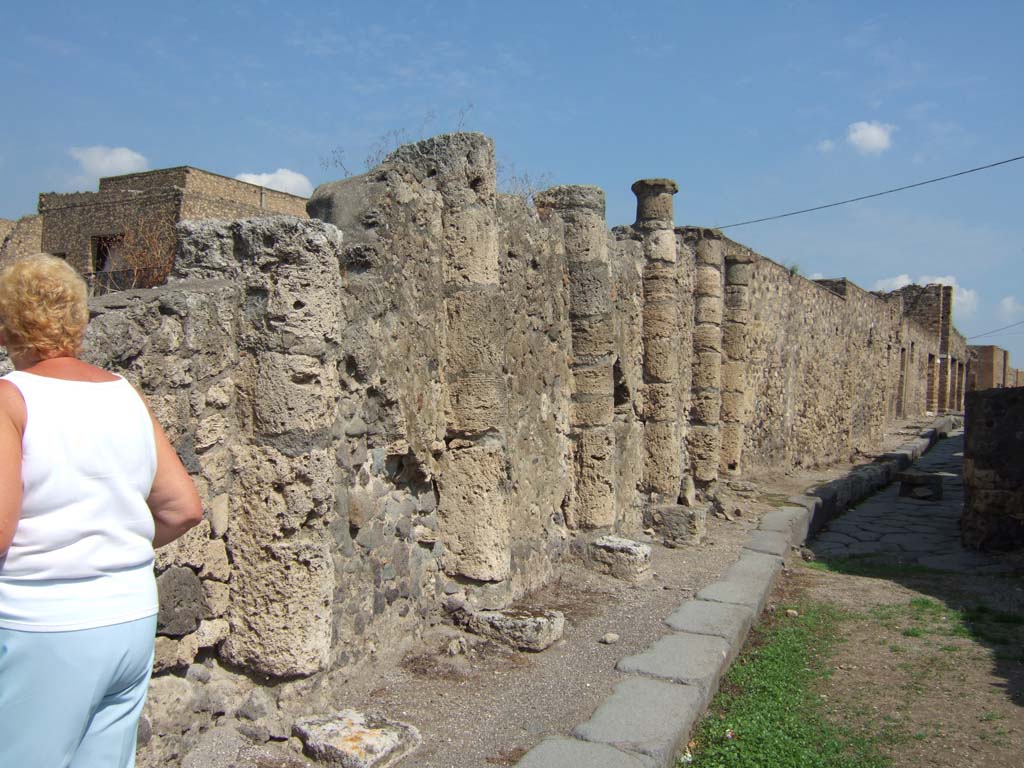
South perimeter wall of VII.16.17 with half columns. September 2005. Vicolo dei Soprastanti,
looking east.
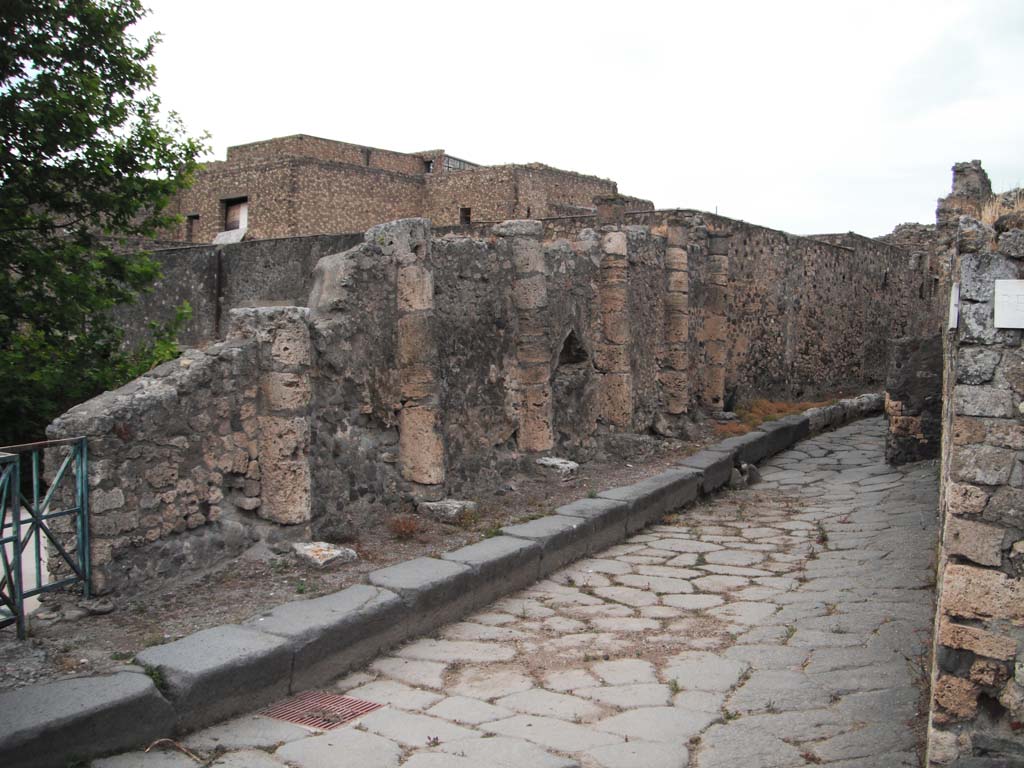
South perimeter wall of VII.16.17 with half columns. June 2012. Looking east. Photo courtesy of Ivo van der Graaff.
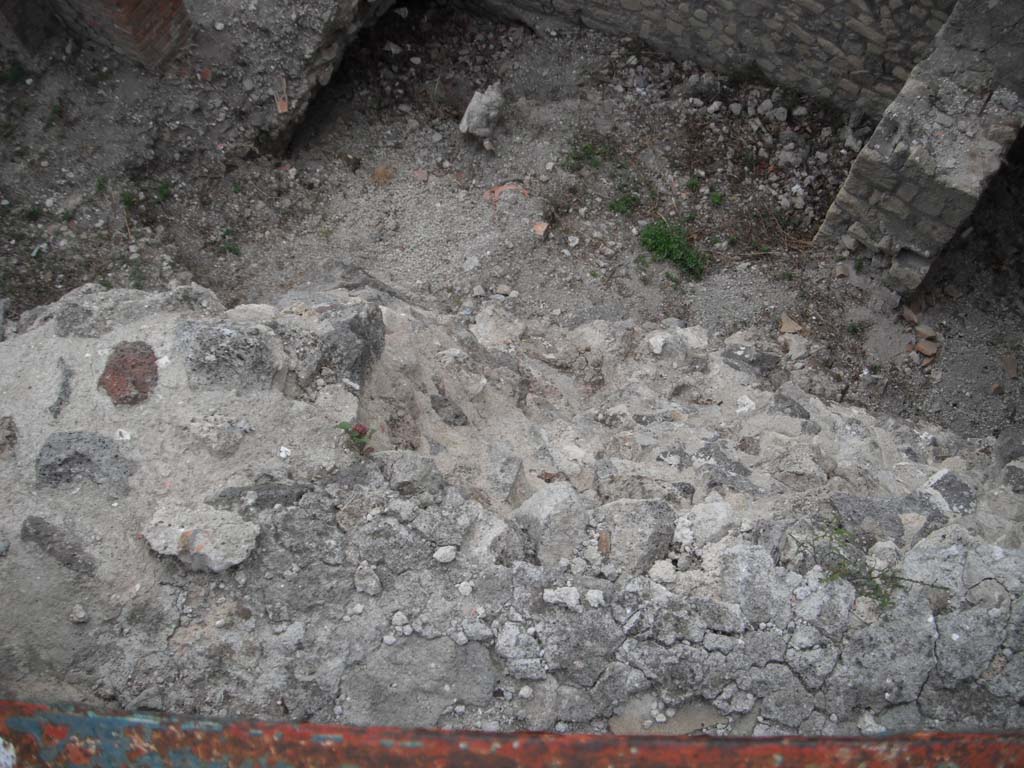
VII.16.17 Pompeii. June 2012.
Looking north from top of wall on north side of Vicolo dei Soprastanti. Photo courtesy of Ivo van der Graaff.
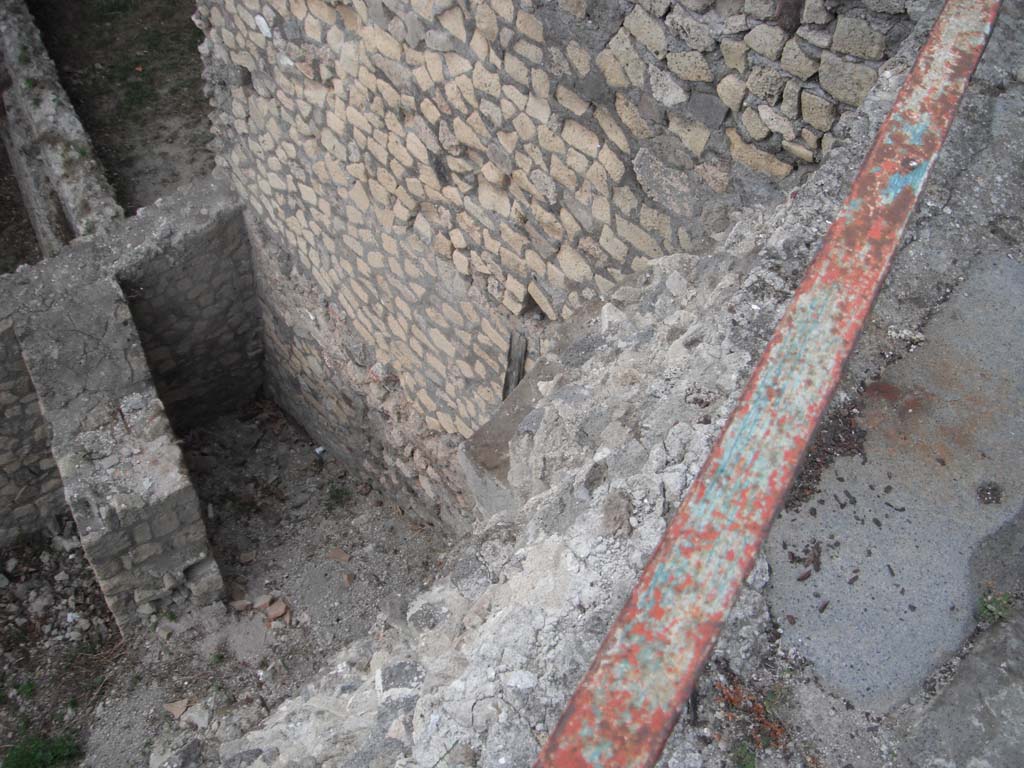
VII.16.17 Pompeii. June 2012.
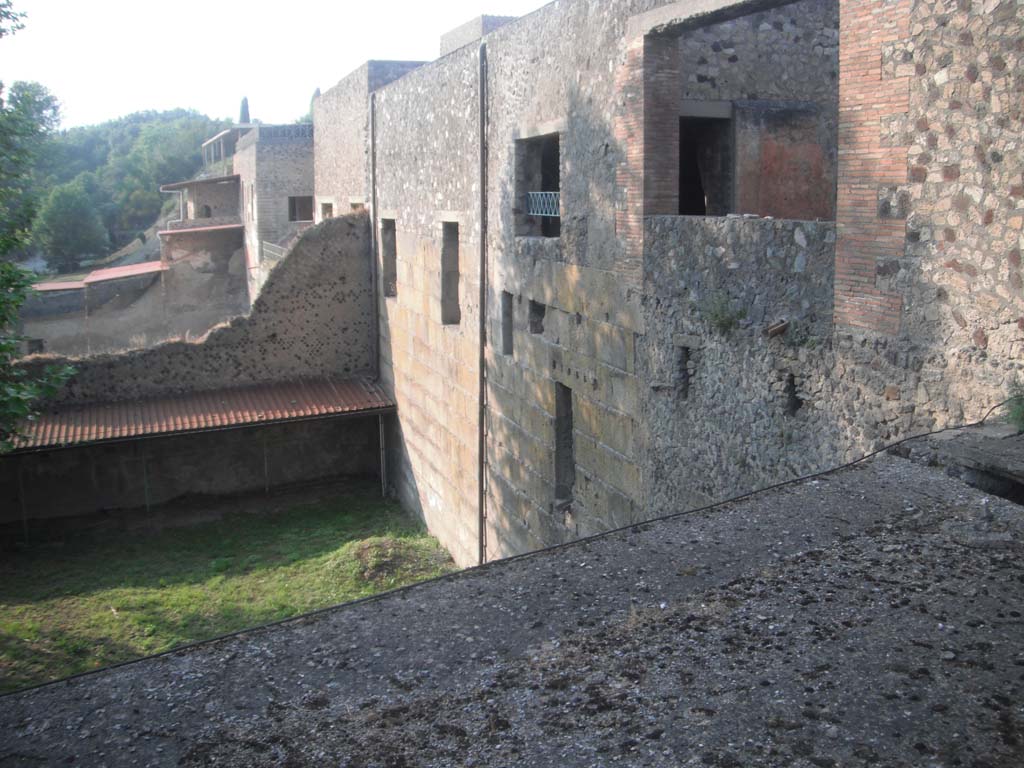
Looking north-east from top of wall on north side of Vicolo dei Soprastanti. Photo courtesy of Ivo van der Graaff.
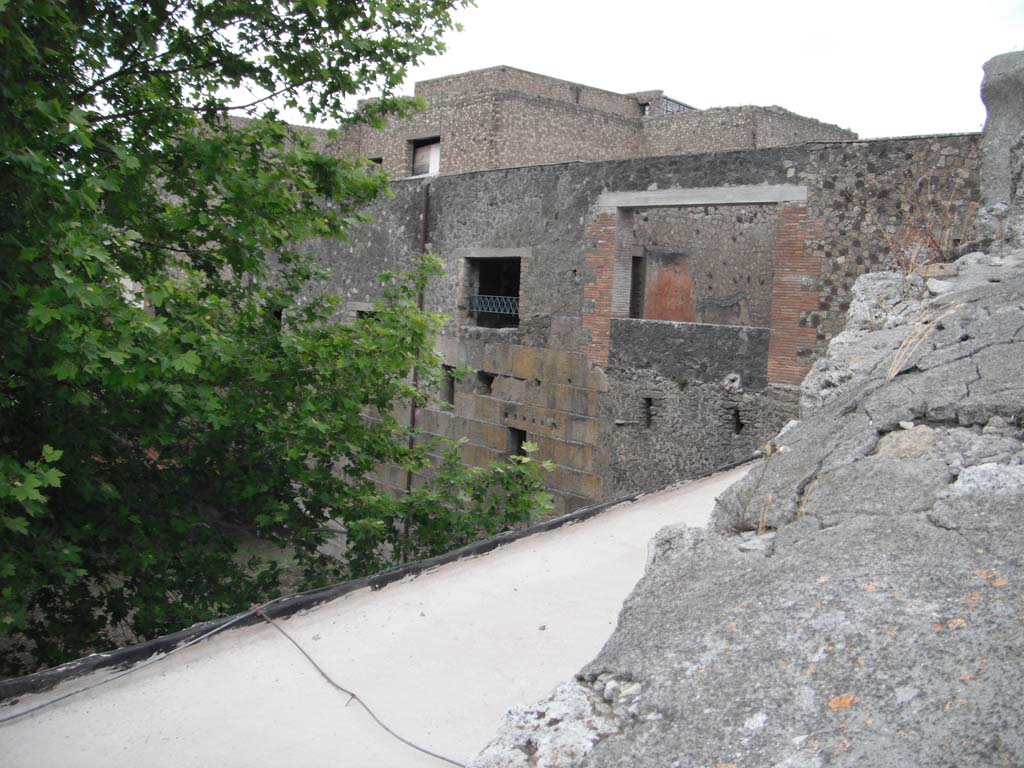
Looking north-east across wall on north side of Vicolo dei Soprastanti. Photo courtesy of Ivo van der Graaff.
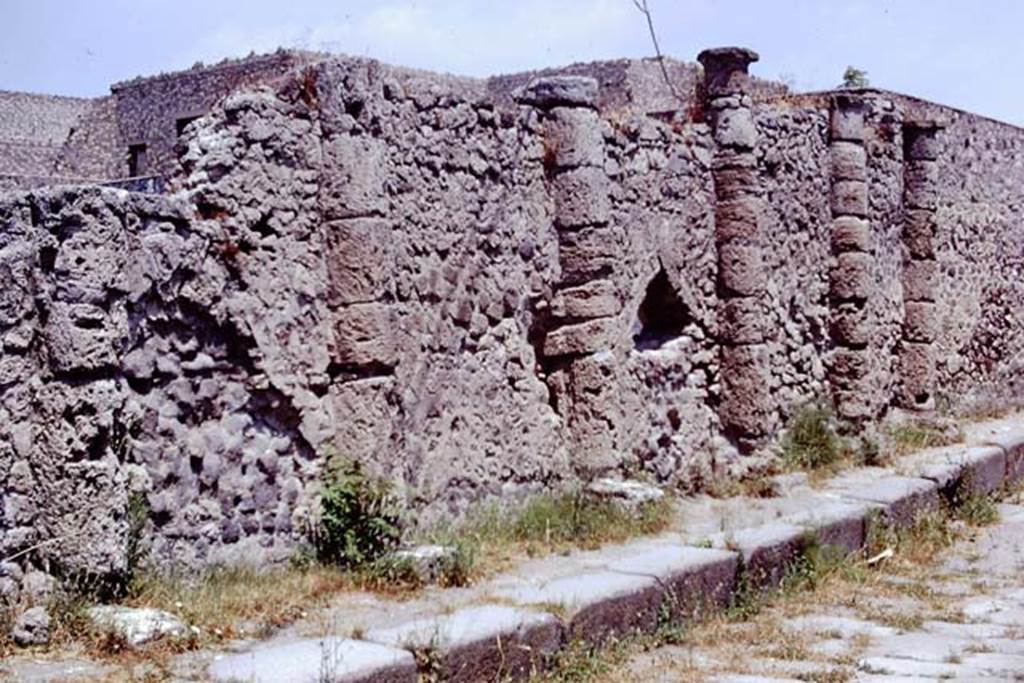
South perimeter wall of VII.16.17 with half columns,
Pompeii. 1973.
Vicolo dei
Soprastanti, looking east. Photo
by Stanley A. Jashemski.
Source: The
Wilhelmina and Stanley A. Jashemski archive in the University of Maryland
Library, Special Collections (See collection page) and made available under the Creative
Commons Attribution-Non-Commercial License v.4. See Licence and use details.
J73f0195
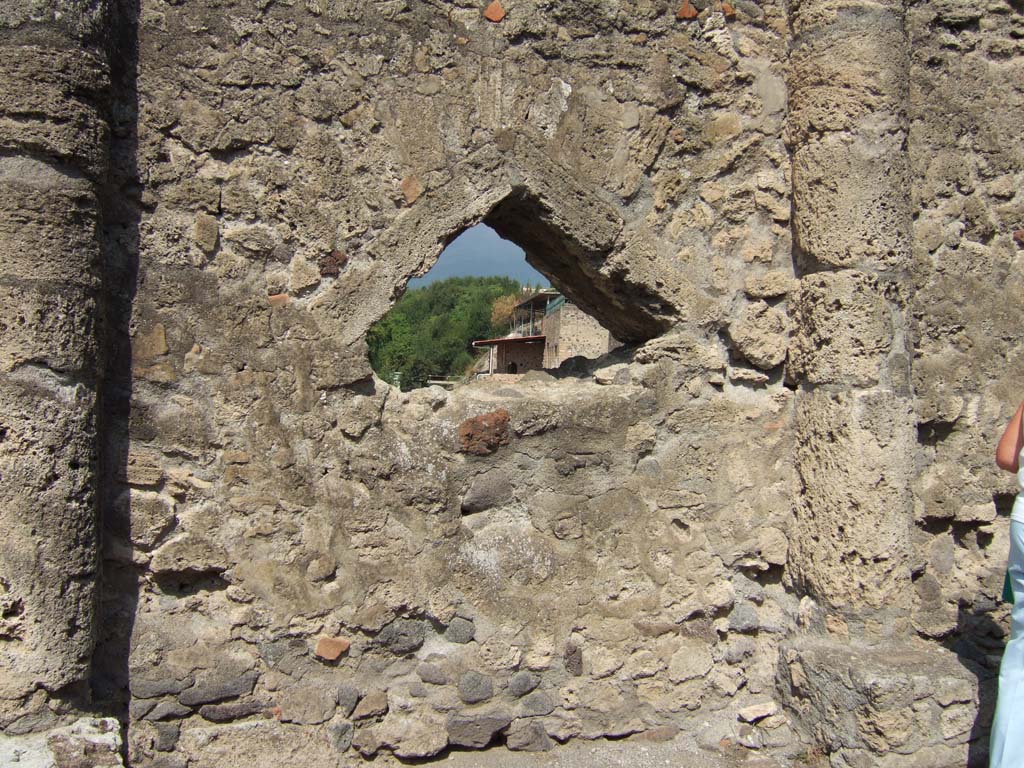
Hole in wall of VII.16 on Vicolo dei Soprastanti. September 2005. Looking north to rear of House of M. Fabius Rufus, Pompeii.
VII.16.17 Pompeii. May 2011.
Looking north through “hole in wall” towards rear of house of M. Fabius Rufus. Photo courtesy of Ivo van der Graaff.
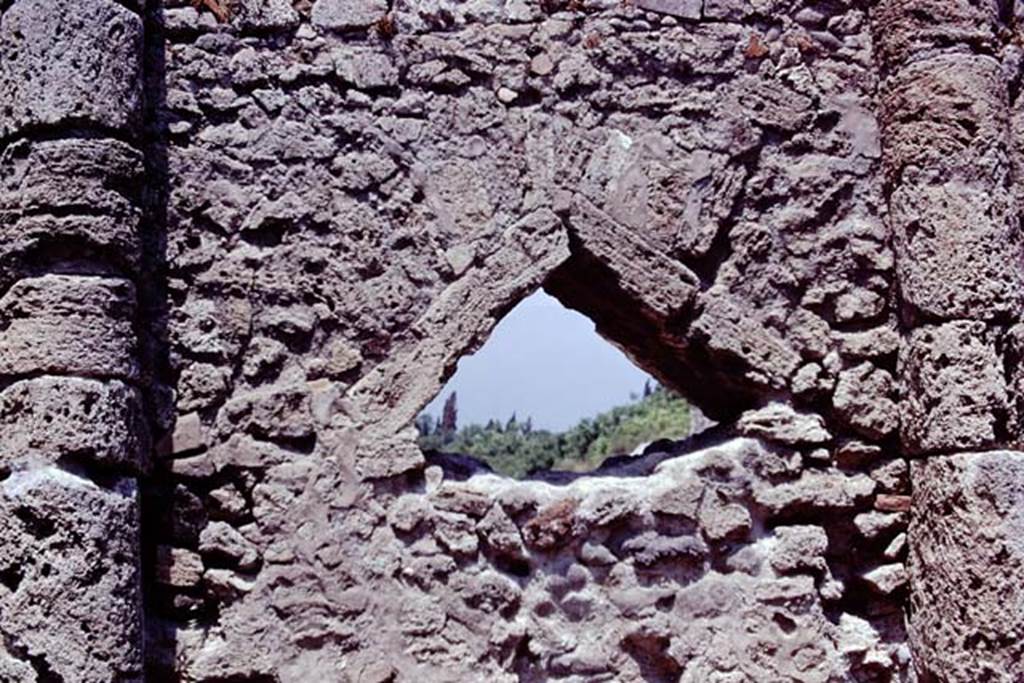
Hole in wall of
VII.16 on Vicolo dei Soprastanti, Pompeii. Looking north. 1973. Photo by Stanley A. Jashemski.
Source: The
Wilhelmina and Stanley A. Jashemski archive in the University of Maryland
Library, Special Collections (See collection page) and made available under the Creative
Commons Attribution-Non-Commercial License v.4. See Licence and use details.
J73f0196
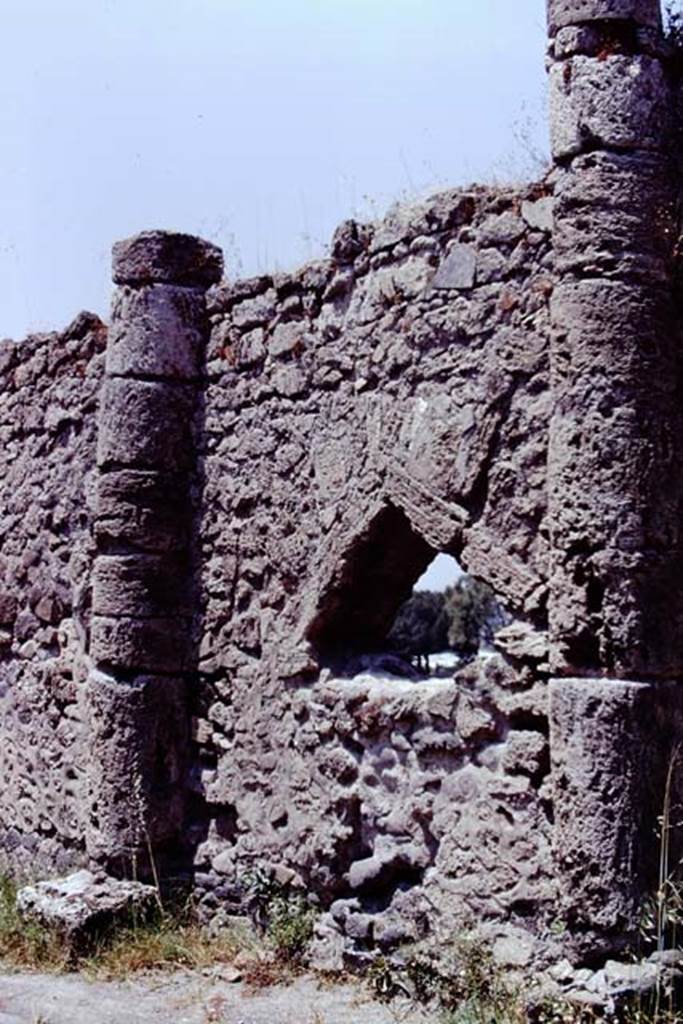
Wall of VII.16 on
Vicolo dei Soprastanti, Pompeii. 1973.
Looking west
along VII.16. Photo by Stanley A. Jashemski.
Source: The
Wilhelmina and Stanley A. Jashemski archive in the University of Maryland
Library, Special Collections (See collection page) and made available under the Creative
Commons Attribution-Non-Commercial License v.4. See Licence and use details.
J73f0197
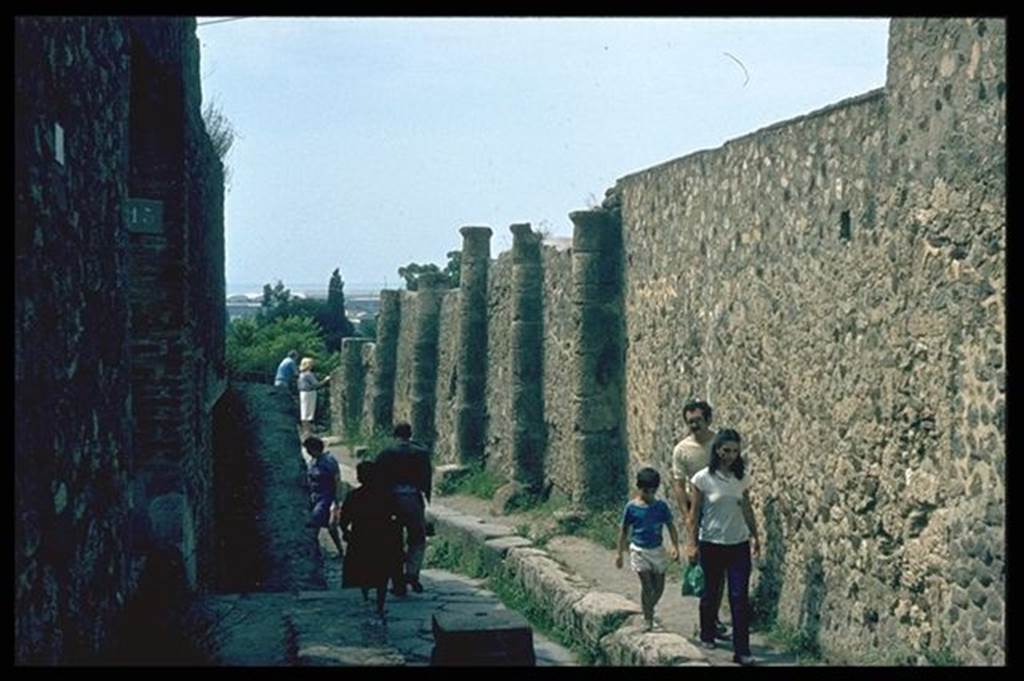
Wall of VII.16 on Vicolo dei Soprastanti, looking west.
Photographed 1970-79 by Günther Einhorn, picture courtesy of his son Ralf Einhorn.
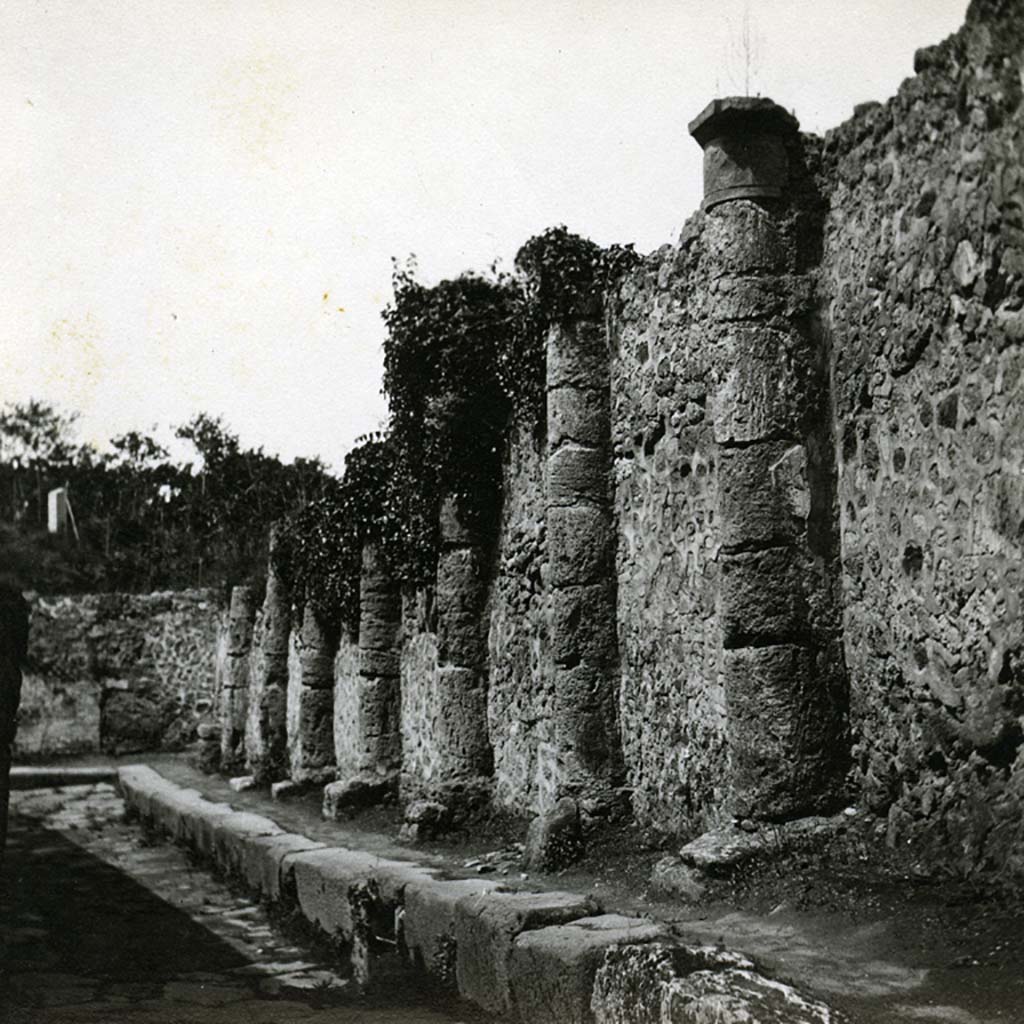
Wall of VII.16 on Vicolo dei Soprastanti, looking west.c.1900-1930.
Photo
by Esther Boise Van Deman (c) American Academy in Rome. VD_Archive_Ph_236.
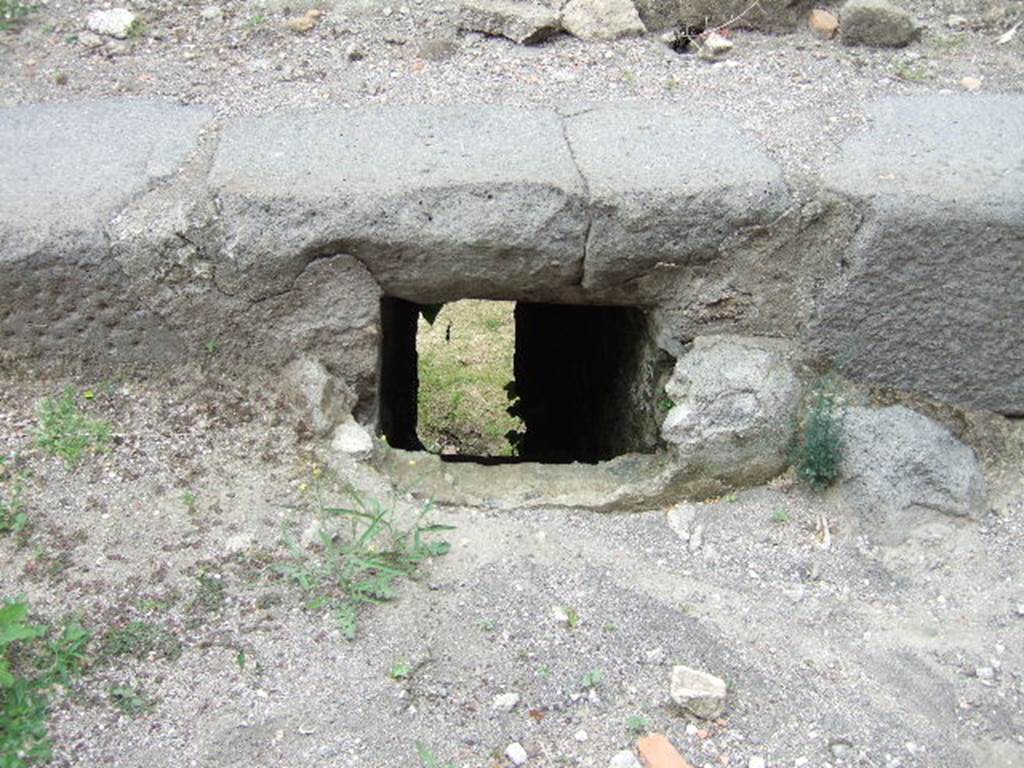
Drain in road on
Vicolo dei Soprastanti, outside
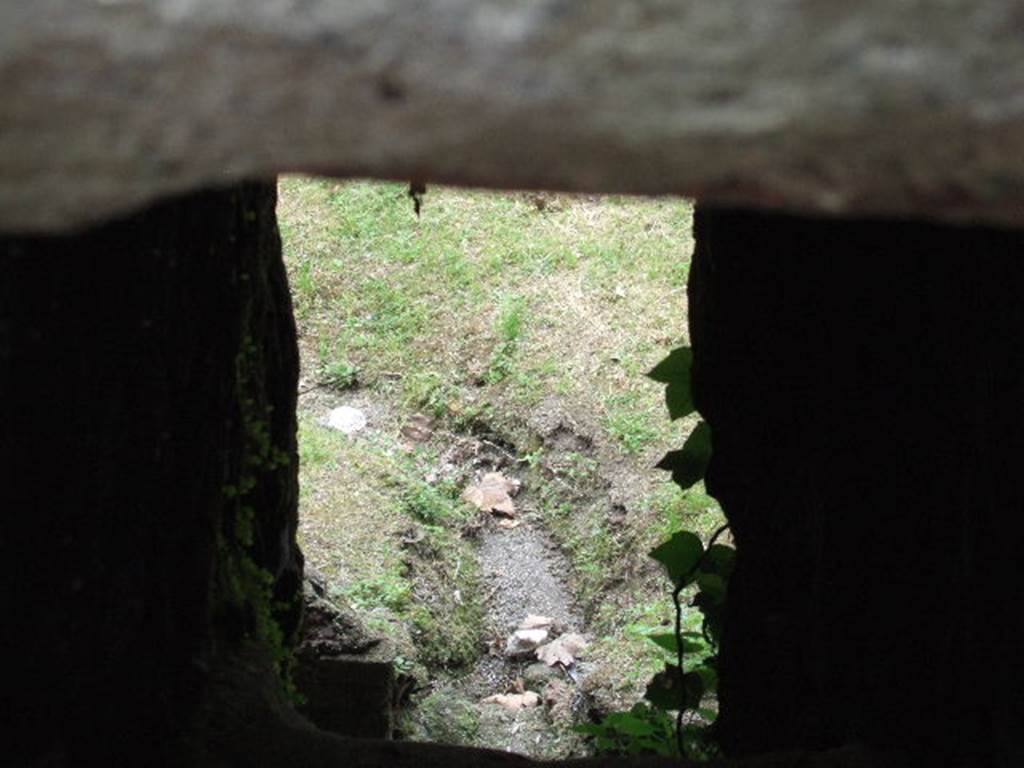
View through drain on Vicolo dei Soprastanti, outside