VII .16.10 Pompeii. House, known as Scavo del Principe
del Montenegro. Linked to VII .16.11.
Excavated 1846, 1851, 1872. Bombed in 1943, restored in 1950.
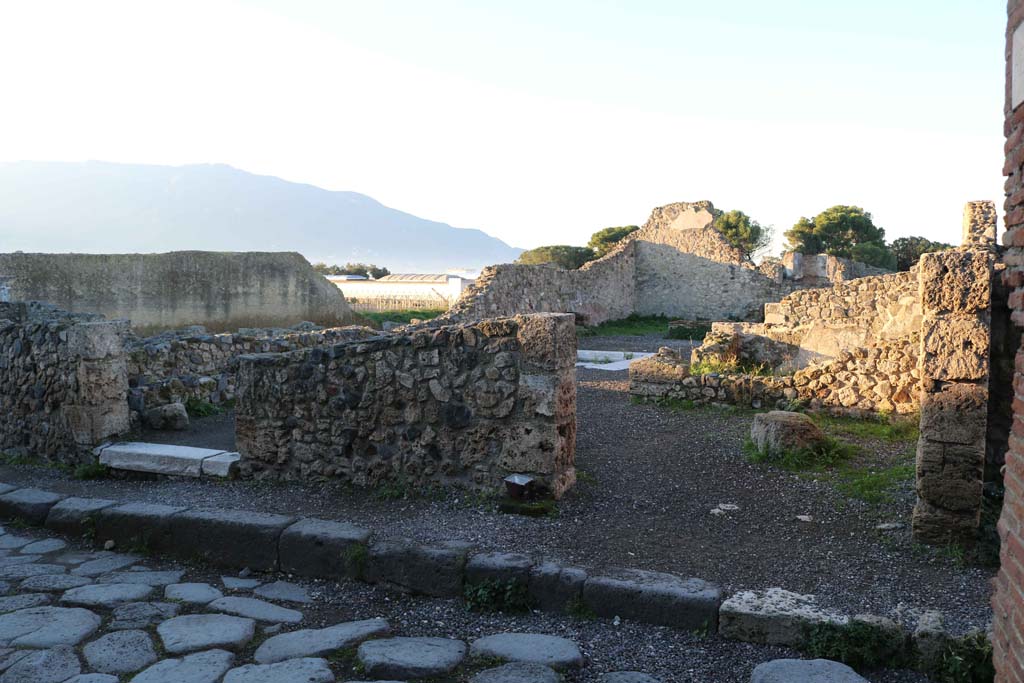
VII.16.10
Pompeii on left, and VII.16.11 on right. December 2018. Looking west to
entrance doorways. Photo courtesy of Aude Durand.
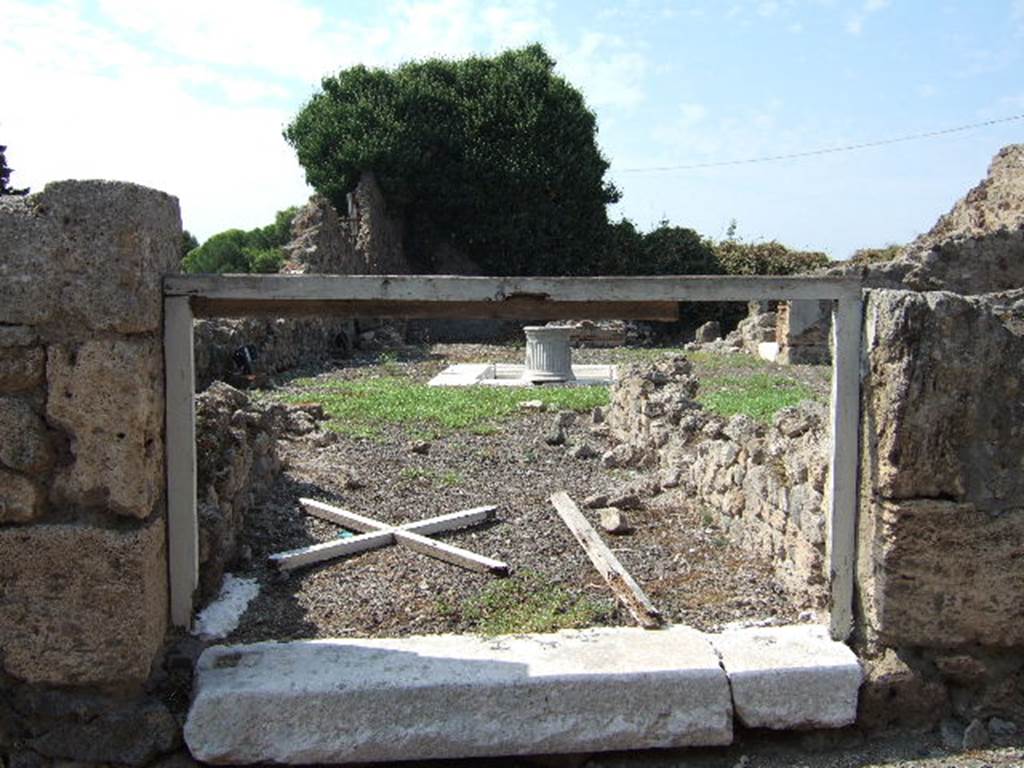
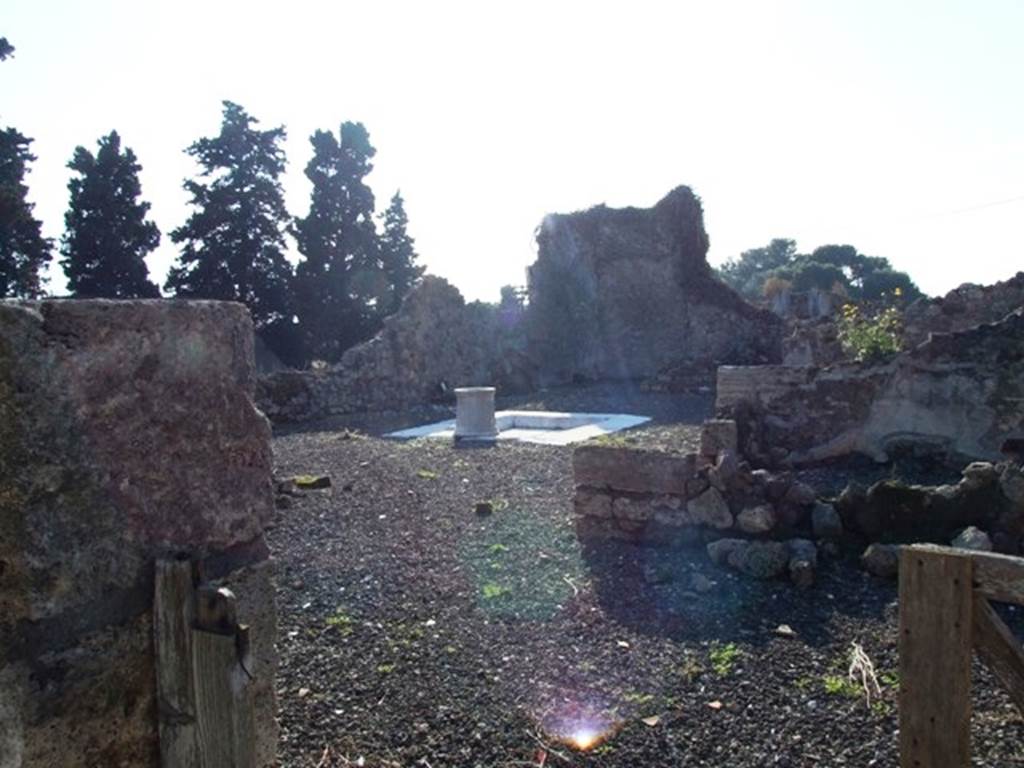
VII.16.10 Pompeii. September 2005. Looking west towards atrium from entrance doorway with marble sill.
According to Fiorelli, in the Tuscanic atrium was a travertine impluvium, and on the left of the entrance was a doorway to a room.
To the right of the entrance, was a doorway into the shop at VII.16.11, which seemed to have originally been the triclinium.
On the same side, north of the atrium, was a cubiculum, an ala, and a rustic room that may have been the kitchen.
In this last room was found a staircase to access the upper floor.
Facing the entrance was the tablinum.
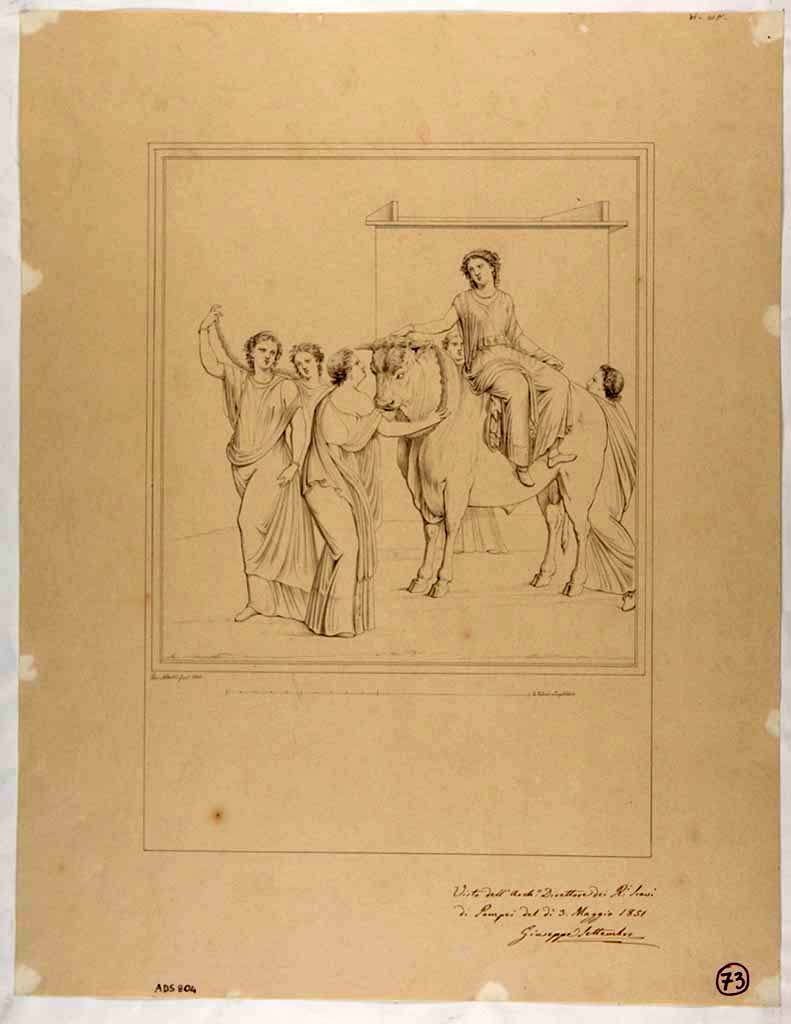
This had two paintings now faded and lost, one was the likeness of Europa on the Bull, the other a feminine figure, that held out a papyrus to a sitting man,
In front of the tablinum there was a base of material that may have held the arca or money chest.
Adjoining was an oecus that also had a doorway from the atrium, and this was decorated with three paintings of major proportions, of which only two were visible.
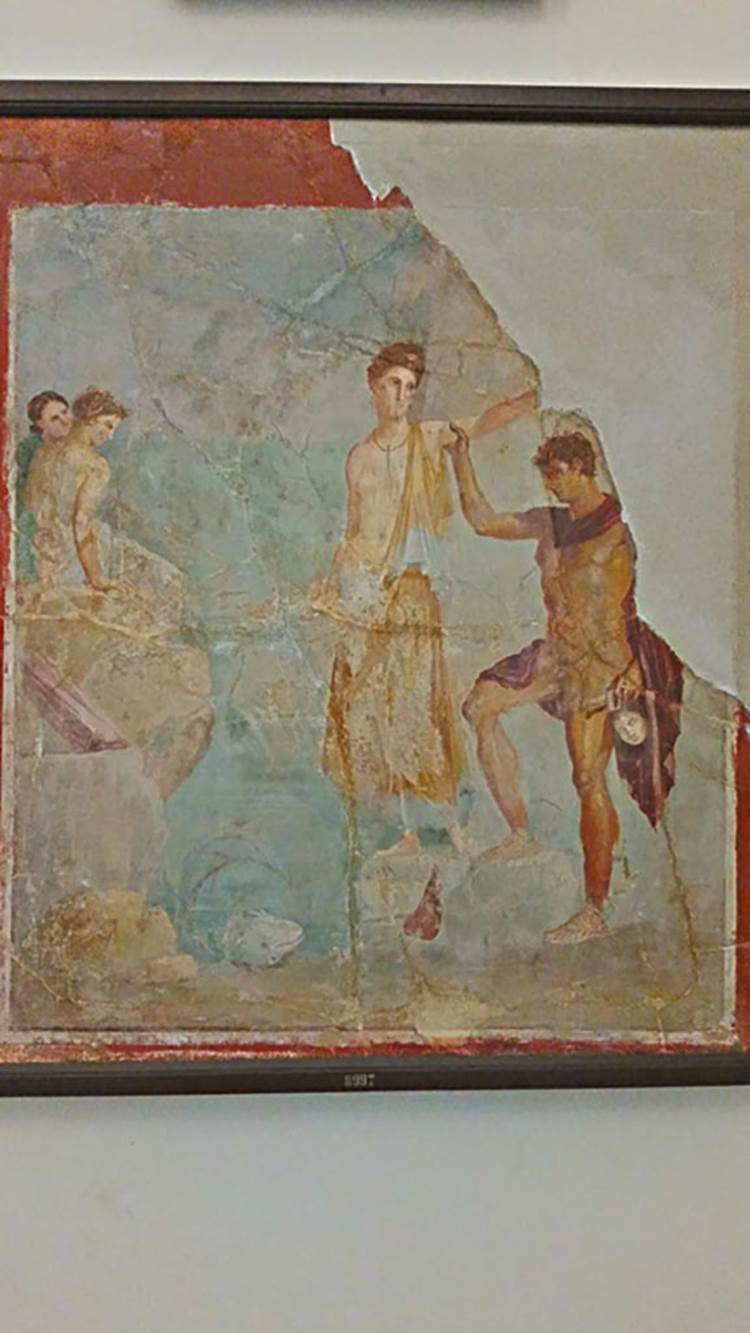
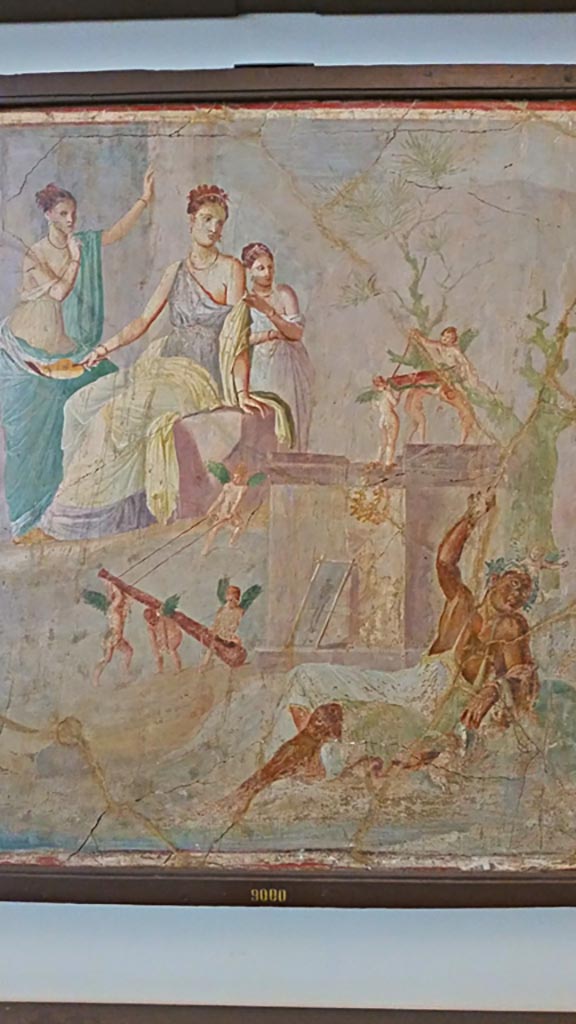
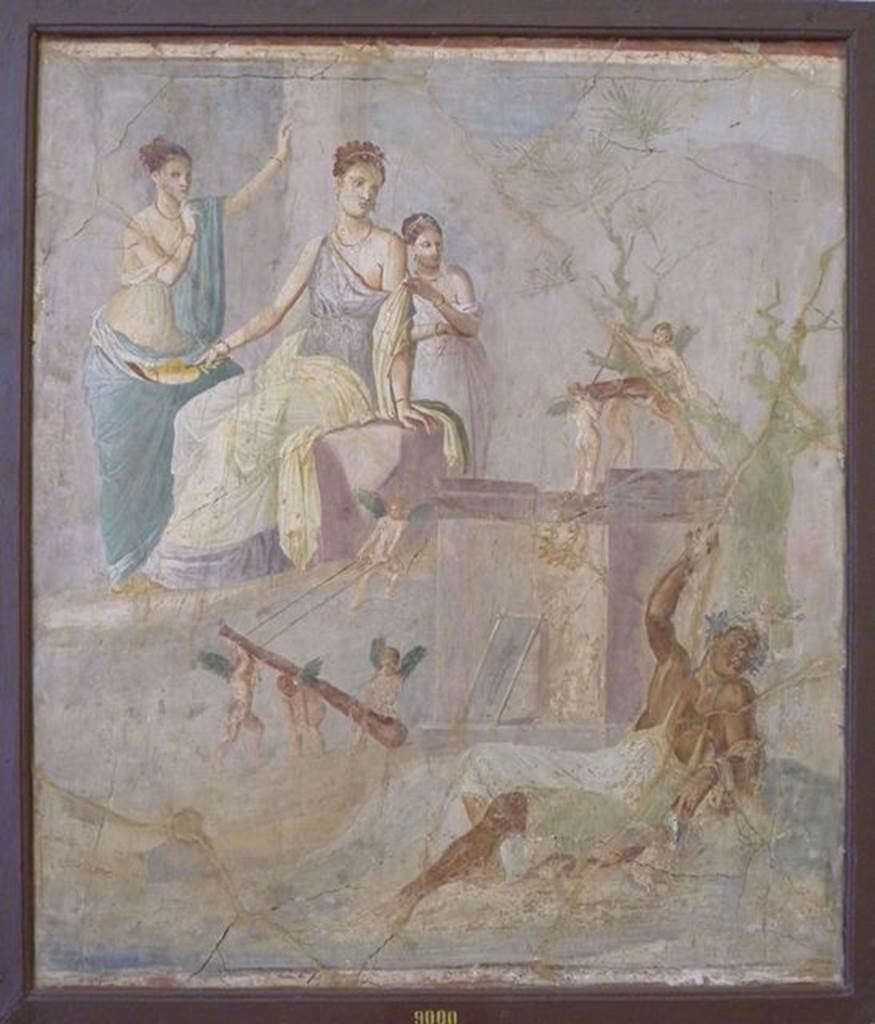
One represented Perseus and Andromeda, the other Drunken Hercules with Omphale.
Omphale was accompanied by two maidservants and they looked down on him from on high.
Also, in the painting were cupids that harassed Hercules and raised up his weapons.
See Pappalardo,
U., 2001. La Descrizione di Pompei per
Giuseppe Fiorelli (1875). Napoli: Massa Editore. (p.161)
See Helbig, W.,
1868. Wandgemälde der vom Vesuv
verschütteten Städte Campaniens. Leipzig: Breitkopf und Härtel. (123, 1137,
1189, 1393b)
See Ragghianti,
C.L., 1963. Pittori di Pompei.
Milano: Edizioni del Milione, (p.47, fig 120, 121)
See Aoyagi, M, and Pappalardo, U. & others, 2006. Pompei, Reg.VI-VII, Insula Occidentalis. Valtrend Editore (p.543), article by Ivan Varriale.
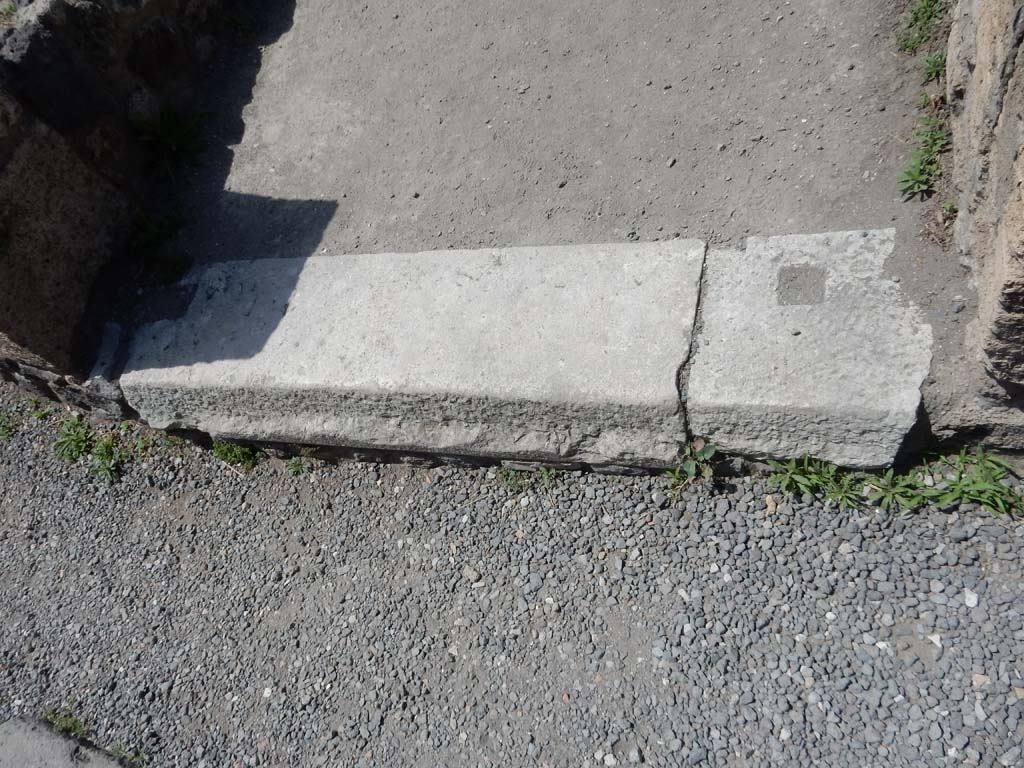
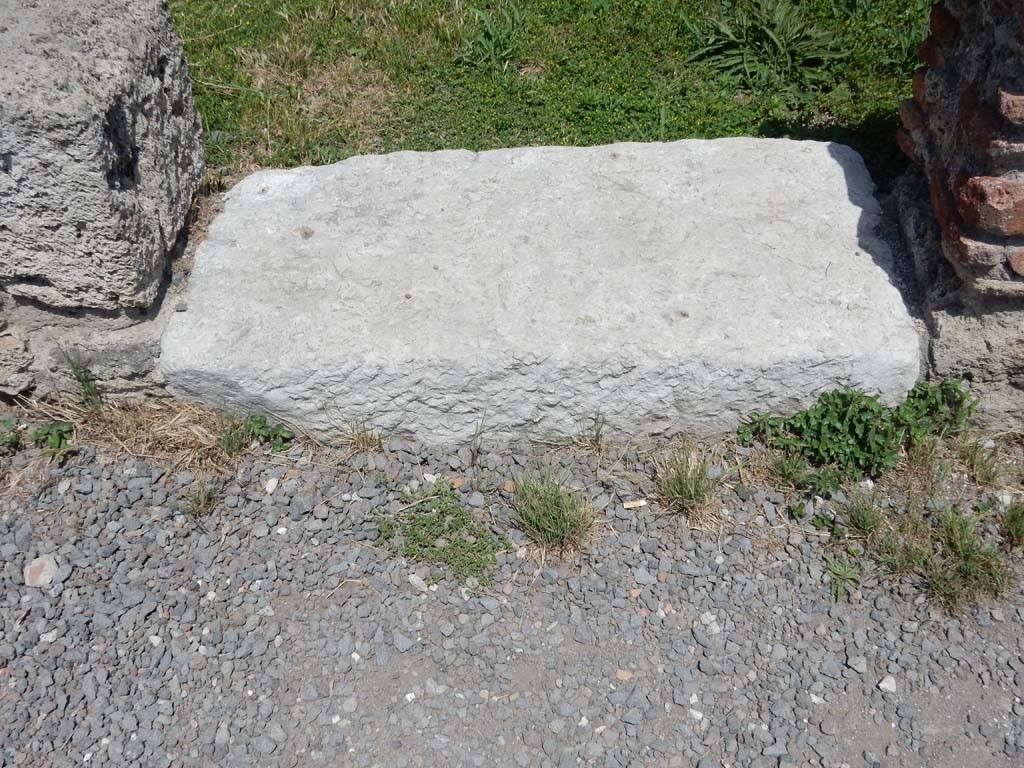
VII.16.10 Pompeii. June 2019. Doorway threshold. Photo courtesy of
Buzz Ferebee.
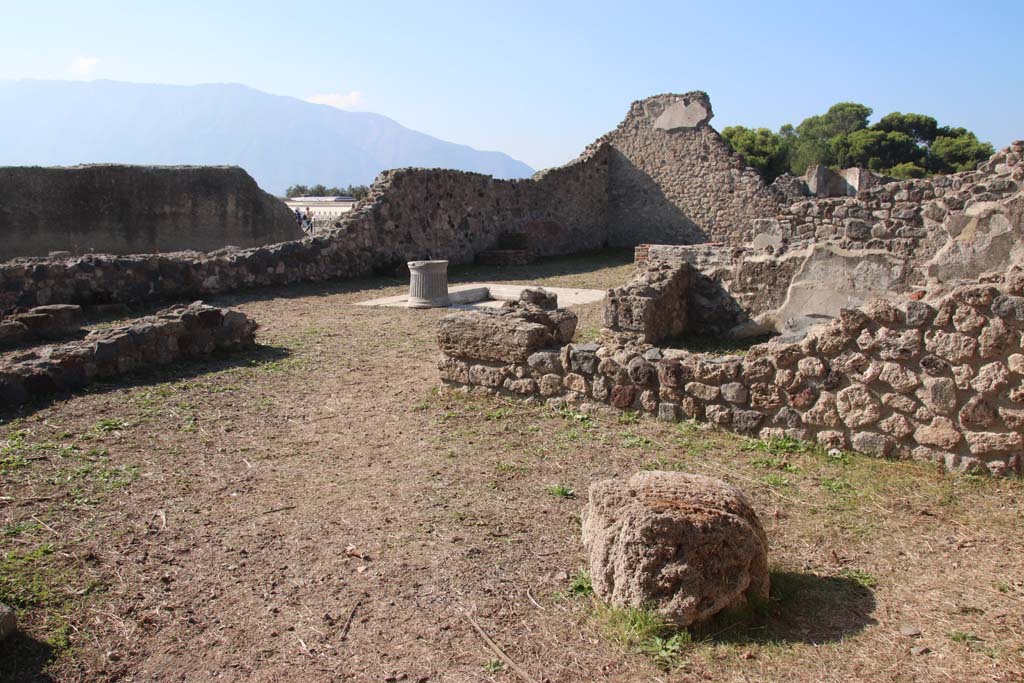
VII.16.10 Pompeii. May 2024. Looking west across atrium towards impluvium. Photo courtesy of Klaus Heese.
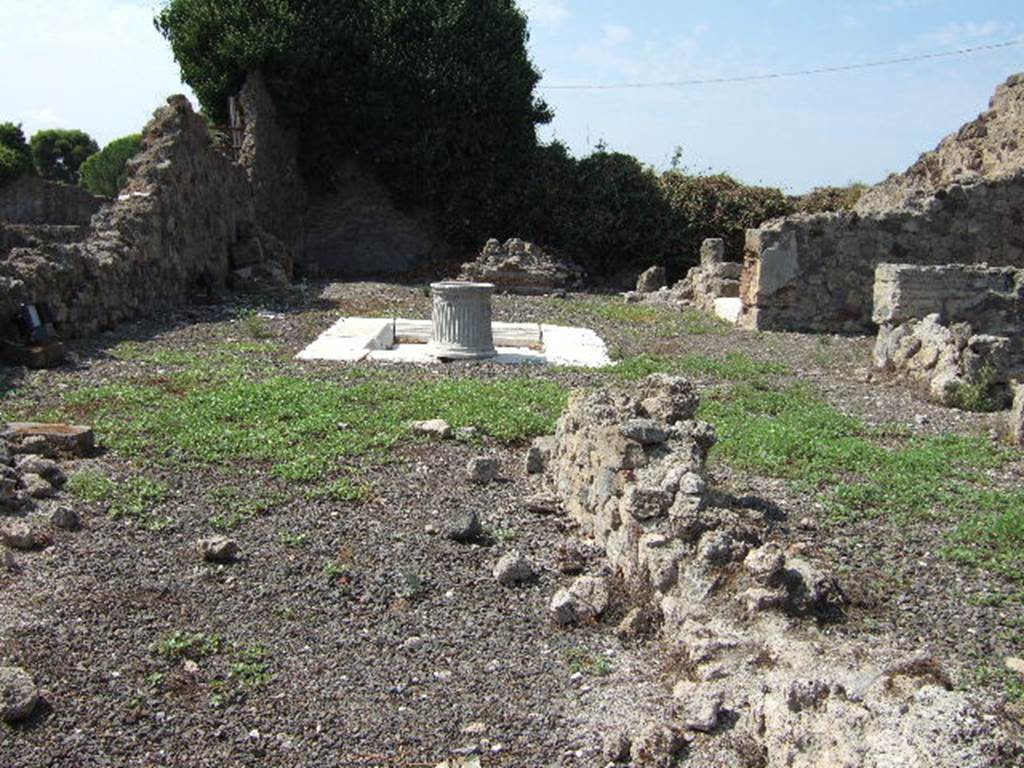
VII.16.10 Pompeii. September 2005. Looking west across atrium to rear.
The tablinum would have been in the south-west corner, in the rear left.
The oecus would have been in the north-west corner, in the rear right behind the room with the white marble threshold.
According to Garcia y Garcia “Excavation of the Prince of Montenegro”,
When the house was excavated in 1851 it showed important
decoration in the
The walls of the tablinum were protected from the moisture through the isolation achieved with big tegulae mammatae on which the plaster was applied.
This was then frescoed.
At the moment of excavation in 1851, the detachment of one of these large tegulae (tegoloni) collapsed half of the west wall.
This wall was painted with a scene of Europa on the bull (fig 312-3, page 132).
The 1943 bombardment provoked the total destruction of the
atrium and some surrounding rooms, with the total loss of the decorations in
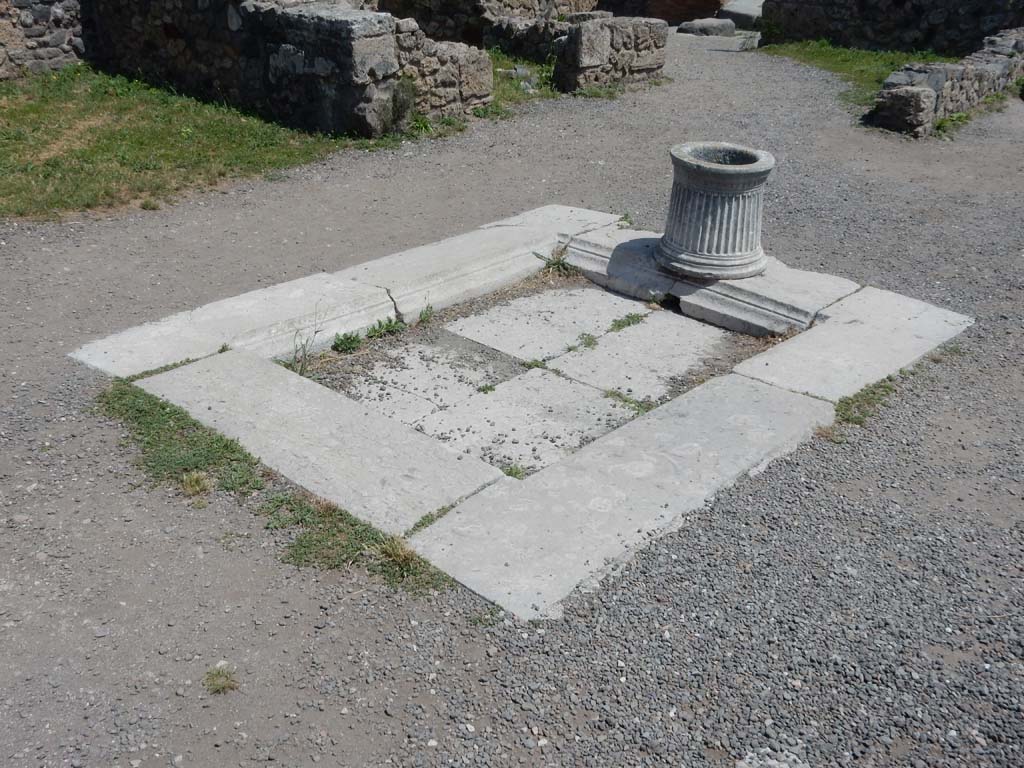
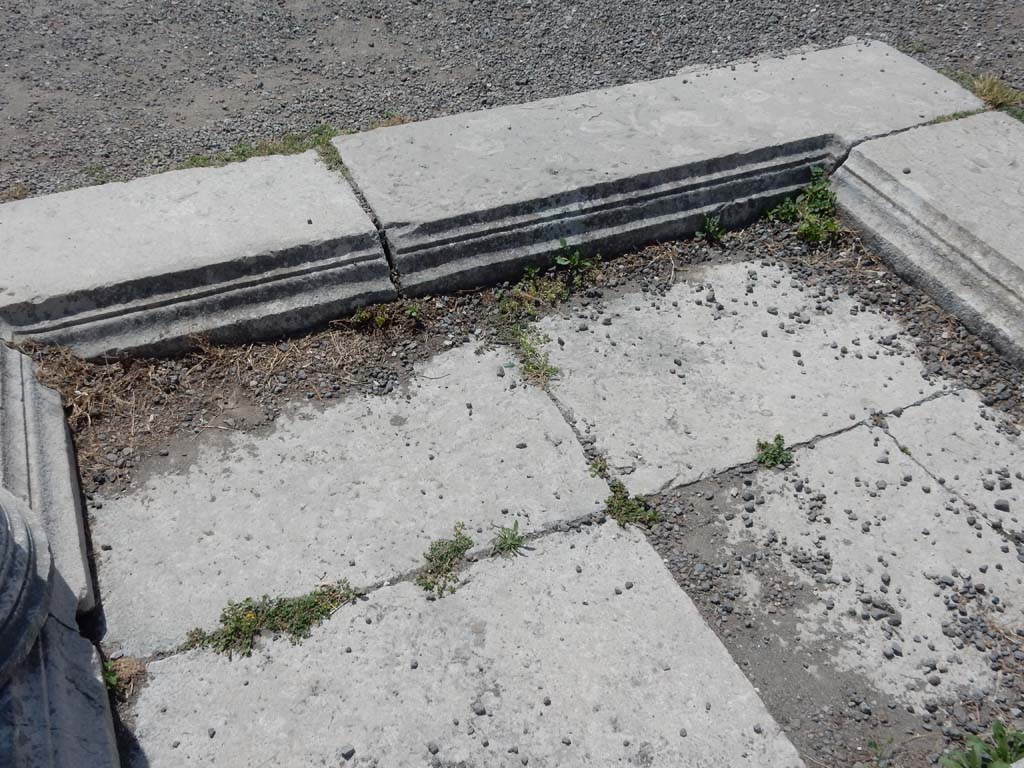
In the succeeding restoration of 1950, the entrance threshold (fig 314) was recovered, and the impluvium was also restored (fig 315-6).
However, there are some elements that are lost, for example the stairs of which Fiorelli spoke.
Some others have been arbitrarily modified, for example the changing of the entrance at no.11.
See Garcia y
Garcia, L., 2006. Danni di guerra a Pompei. Rome: L’Erma di Bretschneider. (pp.133, 199-200, figs 312-6, 465).
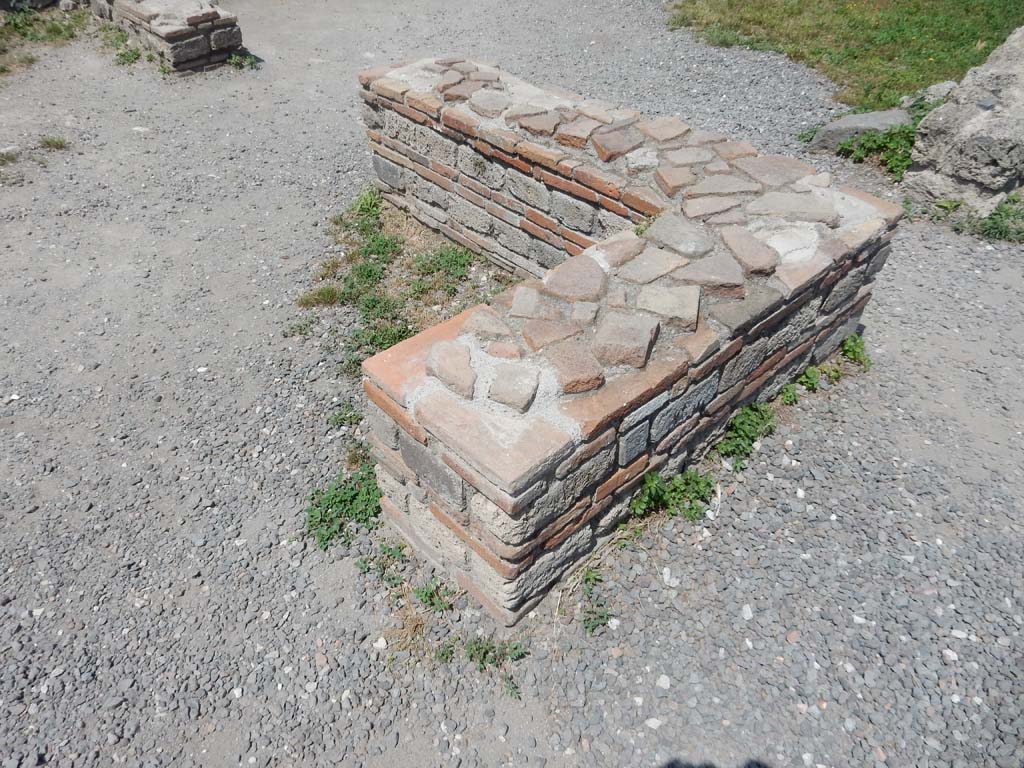
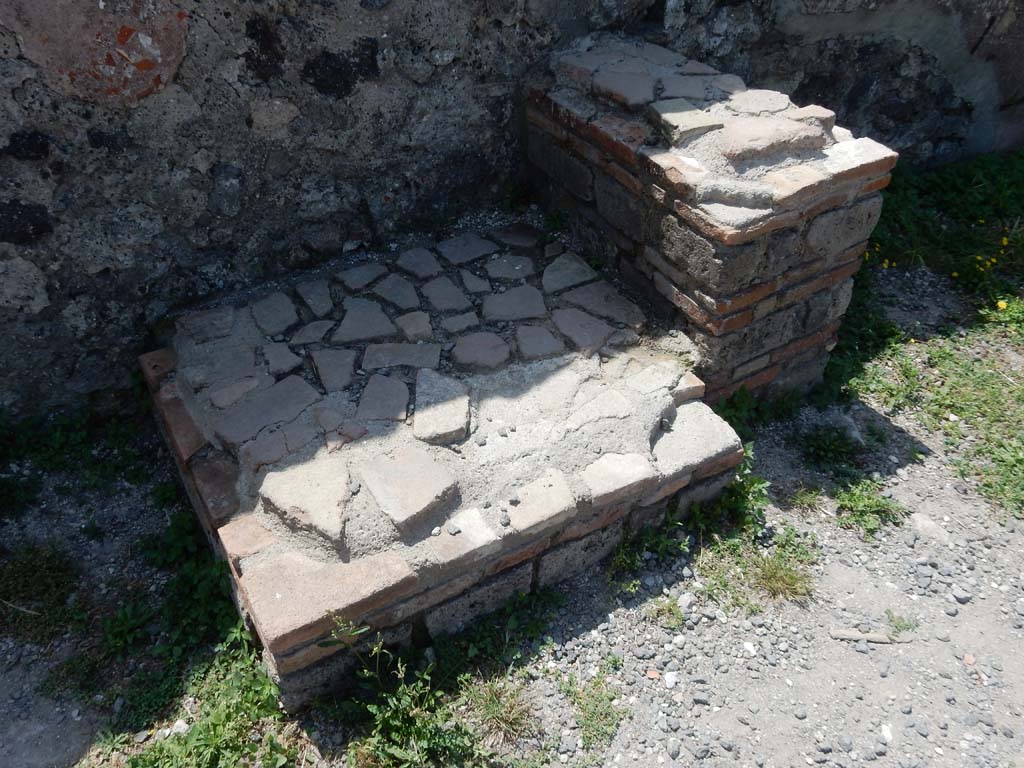
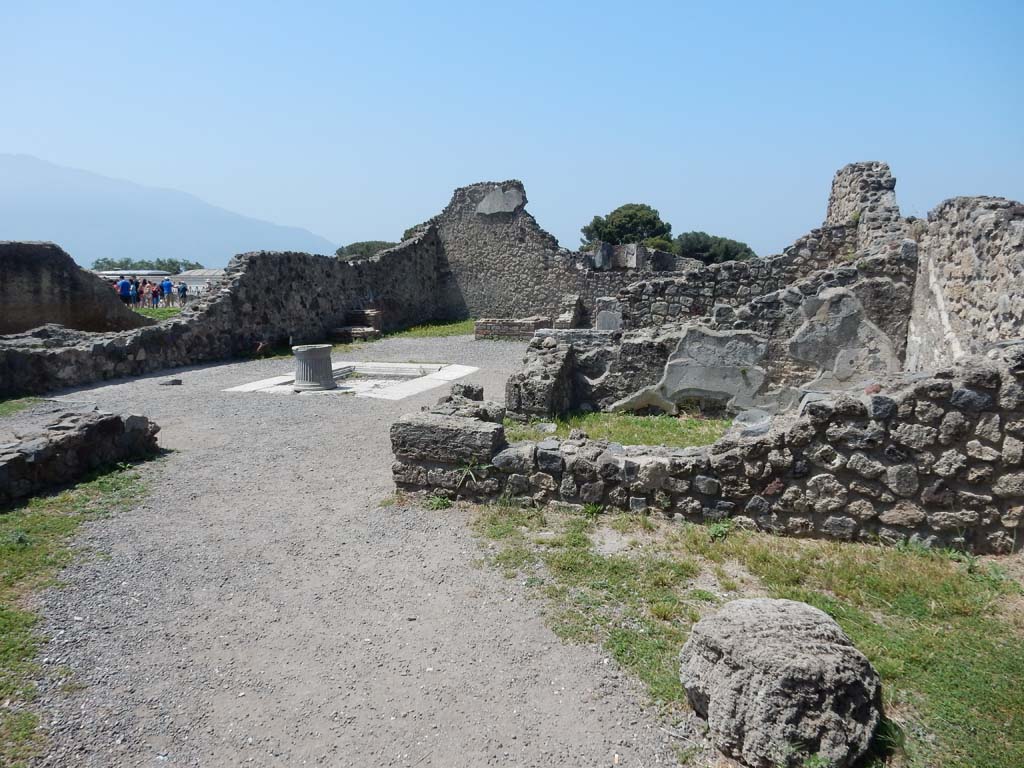
VII.16.10 Pompeii. June 2019. Looking west
across atrium from entrance doorway. Photo courtesy of Buzz Ferebee.

VII.16.10
Pompeii. May 2024. Looking west across atrium to tablinum in south-west corner
of atrium. Photo courtesy of Klaus Heese.
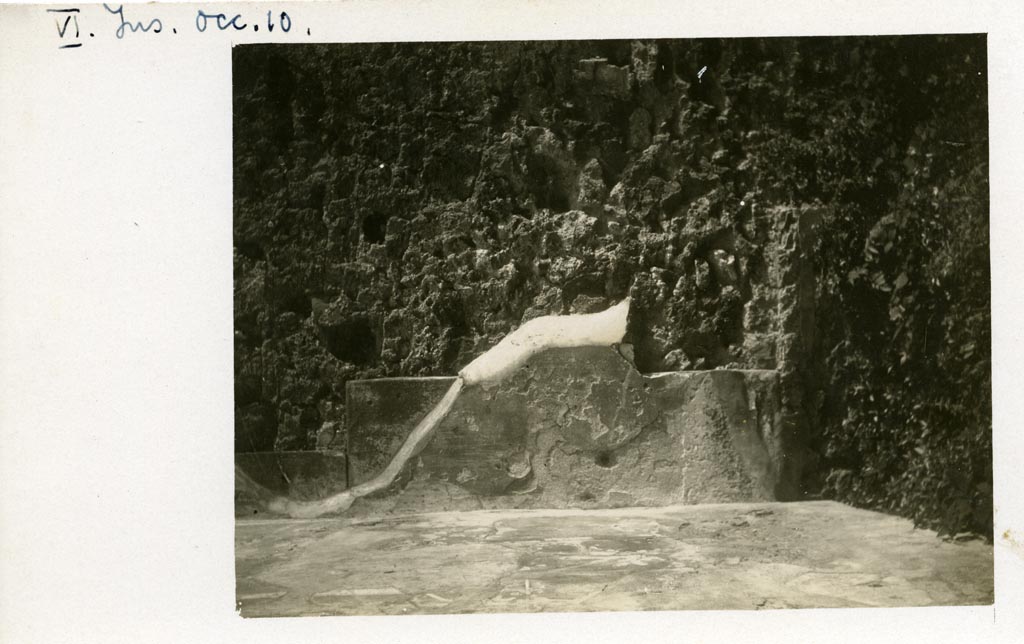
VII. Ins. Occ. 10 Pompeii but shown as VI. Ins. Occ., on photo. Pre-1937-39.
Looking towards wall in tablinum with “tegulae mammatae” on rear of remaining plaster.
Photo courtesy of American Academy in Rome, Photographic Archive. Warsher collection no. 1276.
VII.16.10 Pompeii.
Drawing by Giuseppe Abbate, 1851, of painting of Europa on the Bull seen on wall in tablinum, but badly preserved.
Now in Naples Archaeological Museum. Inventory number ADS 804.
Photo © ICCD. https://www.catalogo.beniculturali.it/
Utilizzabili alle
condizioni della licenza Attribuzione - Non commerciale - Condividi
allo stesso modo 2.5 Italia (CC BY-NC-SA 2.5 IT)

VII.16.10
Pompeii. June 2019.
Structure
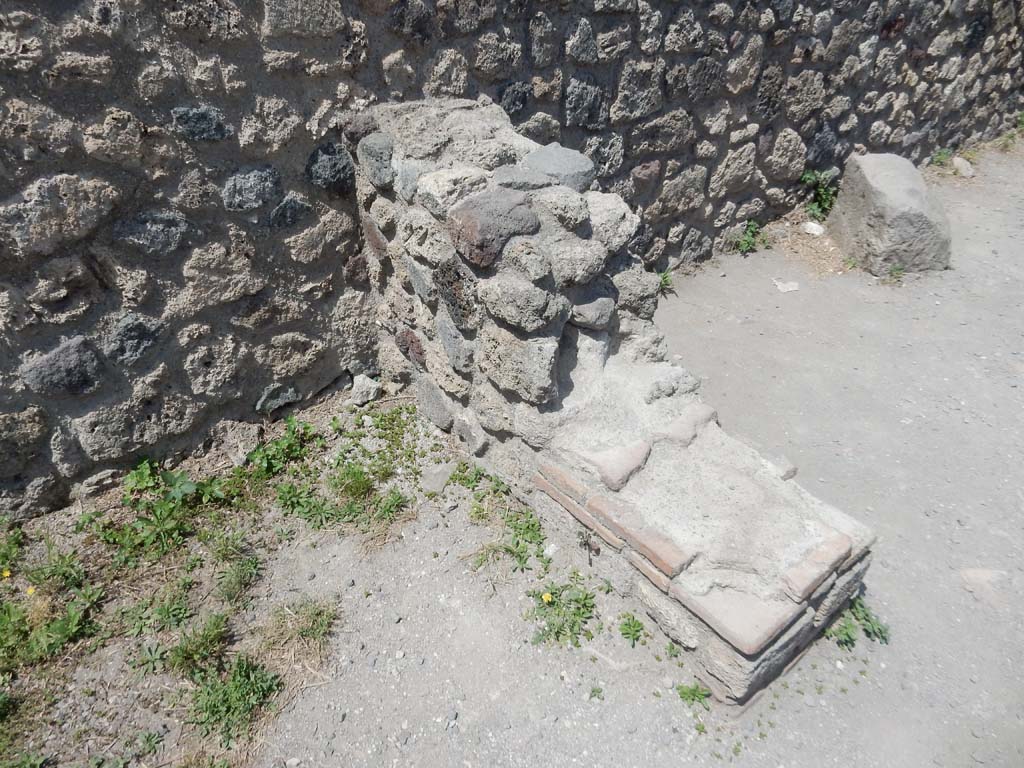
against west wall between tablinum, on left, and oecus, on right. Photo
courtesy of Buzz Ferebee.

VII.16.10 Pompeii. May 2024.
Looking west along north side of atrium towards oecus in
north-west corner of atrium. Photo courtesy of Klaus Heese.
VII.16.10 Pompeii. Found on 20th Feb 1851, in oecus on west side of atrium, adjoining the tablinum.
Wall painting of Perseus freeing Andromeda.
Cut from the wall
and taken to Naples Archaeological Museum. Inventory number
8997.
Photo courtesy of Giuseppe Ciaramella, November
2018.
VII.16.10 Pompeii. Found on 20th Feb 1851, in oecus on west side of atrium, adjoining the tablinum.
Wall painting of Perseus freeing Andromeda.
Cut from the wall and taken to Naples Archaeological Museum.
Inventory number 8997.
See Pagano, M.
and Prisciandaro, R., 2006. Studio sulle
provenienze degli oggetti rinvenuti negli scavi borbonici del regno di
Napoli. Naples: Nicola Longobardi. (p.165).
See Fiorelli G., 1840. Pompeianarum antiquitatum
historia, Vol. 2: 1819 - 1860, Naples, 493.
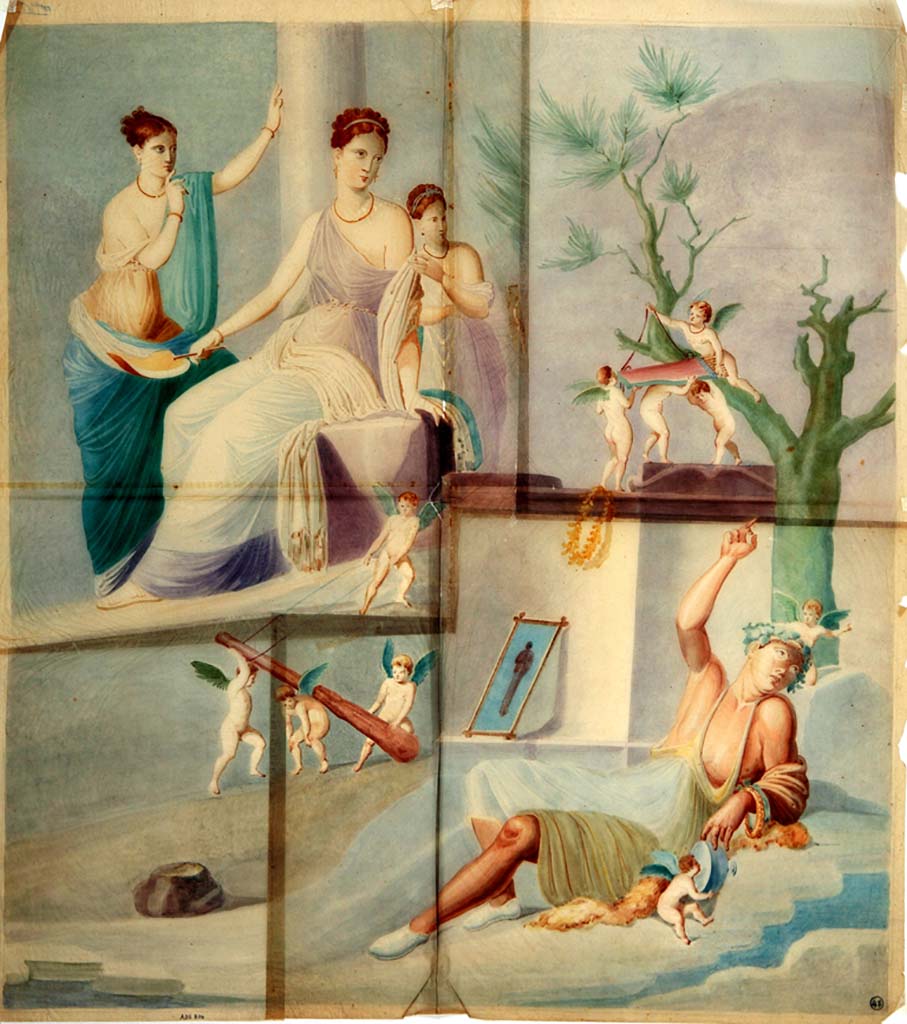
VII.16.10 Pompeii. Found on 20th Feb 1851 in oecus on west side of atrium, adjoining the tablinum.
Wall painting of the drunken Hercules with Omphale, and cupids who are stealing his club.
Cut from the wall and taken to Naples Archaeological Museum. Inventory number 9000.
Photo courtesy of Giuseppe Ciaramella, November
2018.
VII.16.10 Pompeii. Found on 20th Feb 1851 in oecus on west side of atrium, adjoining the tablinum.
Wall painting of the drunken Hercules with Omphale and cupids who are stealing his club.
Cut from the wall and taken to Naples Archaeological Museum.
Inventory number 9000.
See Pagano, M.
and Prisciandaro, R., 2006. Studio sulle
provenienze degli oggetti rinvenuti negli scavi borbonici del regno di
Napoli. Naples: Nicola Longobardi. (p.165).
See Fiorelli G., 1840. Pompeianarum antiquitatum
historia, Vol. 2: 1819 - 1860, Naples, 493.
VII.16.10 Pompeii. Anonymous painting of the scene of drunken Hercules with Omphale.
Now in Naples Archaeological Museum. Inventory number ADS 806.
Photo © ICCD. https://www.catalogo.beniculturali.it/
Utilizzabili alle
condizioni della licenza Attribuzione - Non commerciale - Condividi
allo stesso modo 2.5 Italia (CC BY-NC-SA 2.5 IT)
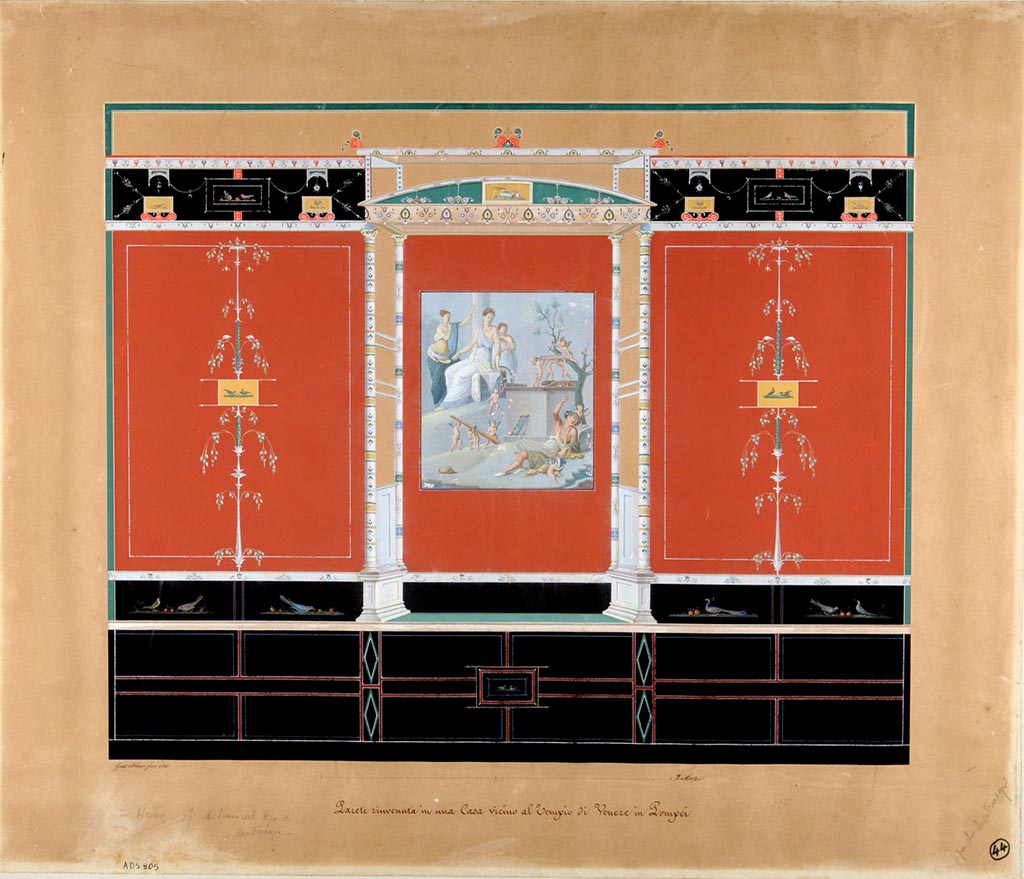
VII.16.10 Pompeii. Painting by Vincenzo Mollame of the wall of the oecus, with painting of Hercules and Omphale in the centre.
This was published by Niccolini in 1890 who describes it as being found 30 years previously in the Casa di Sirico.
However, the Hercules and Omphale painting is not identical to that in the Casa di Sirico which has more figures in its background.
The wall decoration is completely different from that in the Casa di Sirico which has more architectural features, yellow panels and an arabesque upper border.
This Mollame painting corresponds with the painting by Abbate, ADS 805, the fresco MANN 9000, and the watercolour ADS 806, all from VII.16.10.
See Niccolini F, 1890. Le case ed i
monumenti di Pompei: Volume Terzo. Napoli, L’Arte in Pompei, Tav. XXX.
Our thanks to Justin Hicks for his help with this.
VII.16.10 Pompeii.
Painting by Giuseppe Abbate, 1861, of the wall of the oecus, with painting of Hercules and Omphale in the centre which was found ten years previously.
Now in Naples Archaeological Museum. Inventory number ADS 805.
Photo © ICCD. https://www.catalogo.beniculturali.it/
Utilizzabili alle condizioni della licenza Attribuzione
- Non commerciale - Condividi allo stesso modo 2.5 Italia (CC BY-NC-SA 2.5 IT)
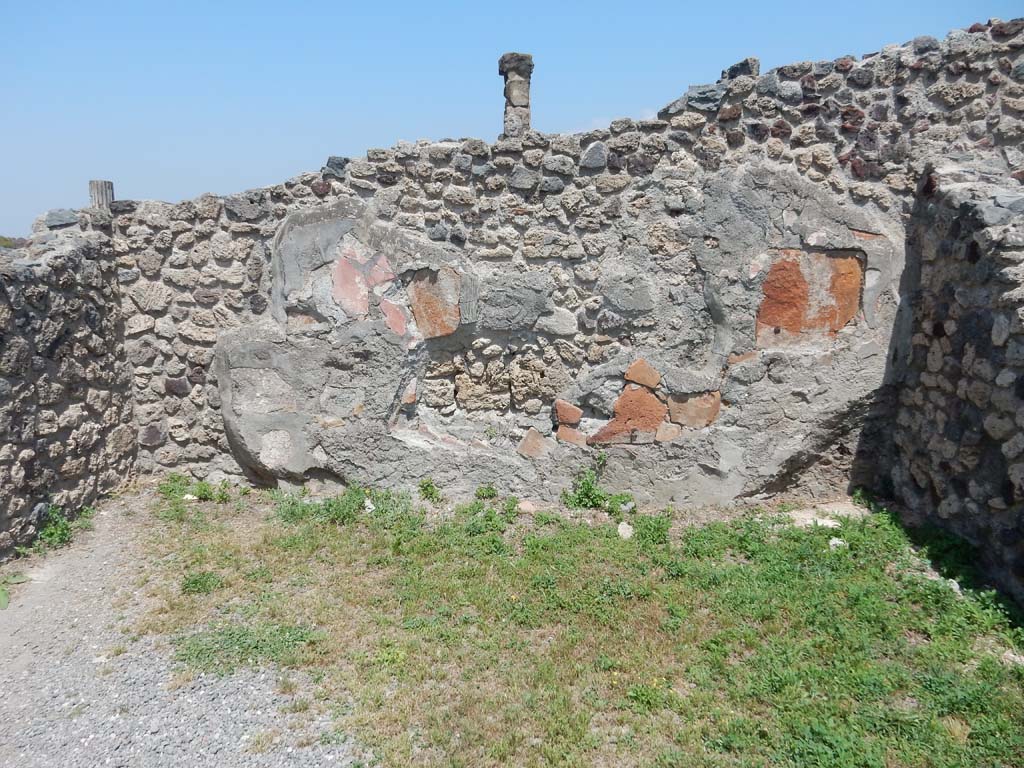
VII.16.10 Pompeii. June 2019. Looking towards north wall of oecus.
Photo courtesy of Buzz Ferebee.

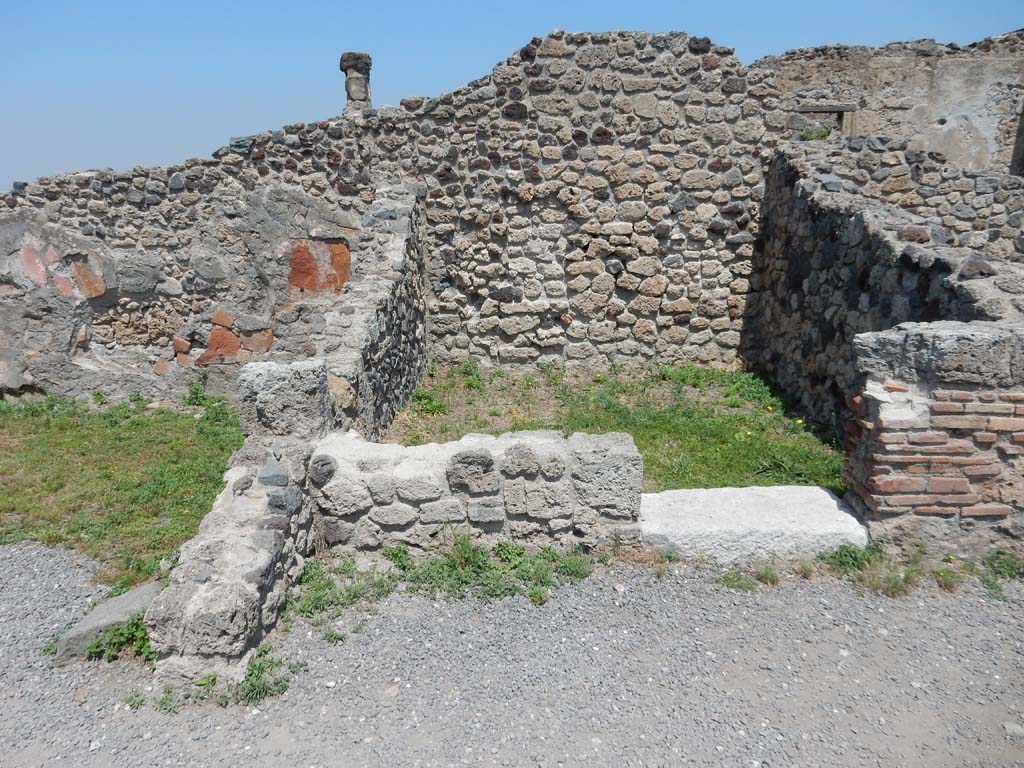
VII.16.10 Pompeii. May 2024. Looking
towards west wall of room in centre of north wall of atrium. Photo courtesy of
Klaus Heese.

VII.16.10 Pompeii. May 2024.
Looking towards west and north walls of
room on east end of north side of atrium. Photo courtesy of Klaus Heese.
VII.16.10
Pompeii. June 2019. Looking south-west across atrium from VII.16.11. Photo courtesy of Buzz Ferebee.

VII.16.10
Pompeii. September 2017. Looking south-west across atrium from
VII.16.11. Photo
courtesy of Klaus Heese.
According to Boyce, in a room to the south side of the house was a square niche.
Its inside walls were coated with white stucco, “forse per uso di santuario o edicola”, according to the report.
He gave the reference PAH, II, 494, (Feb. 27, 1851)
See Boyce G. K., 1937.
Corpus of the Lararia of Pompeii. Rome: MAAR 14. (p.73, no.338)
See Fiorelli G.,
1862. Pompeianarum antiquitatum historia, Vol. 2:
1819 - 1860,
Naples, p. 494, (Feb. 27, 1851).
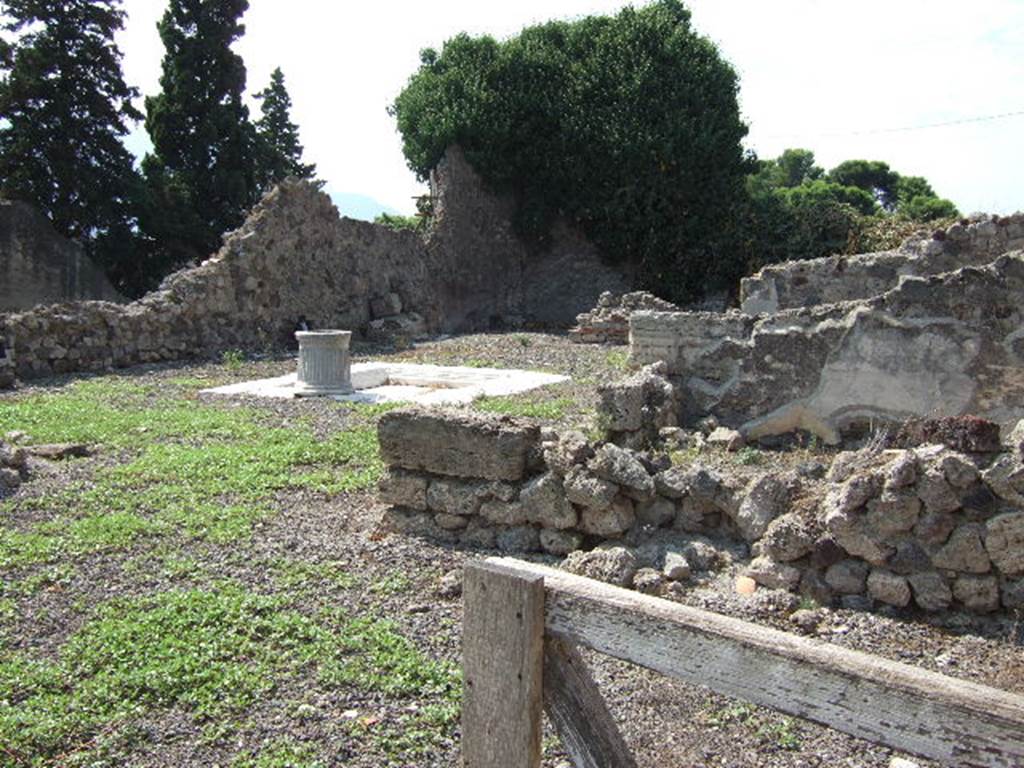
VII.16.10 Pompeii. December 2007. Looking south-west across atrium from VII.16.11.
VII.16.10 Pompeii. September 2005. Looking south-west across atrium from VII.16.11.
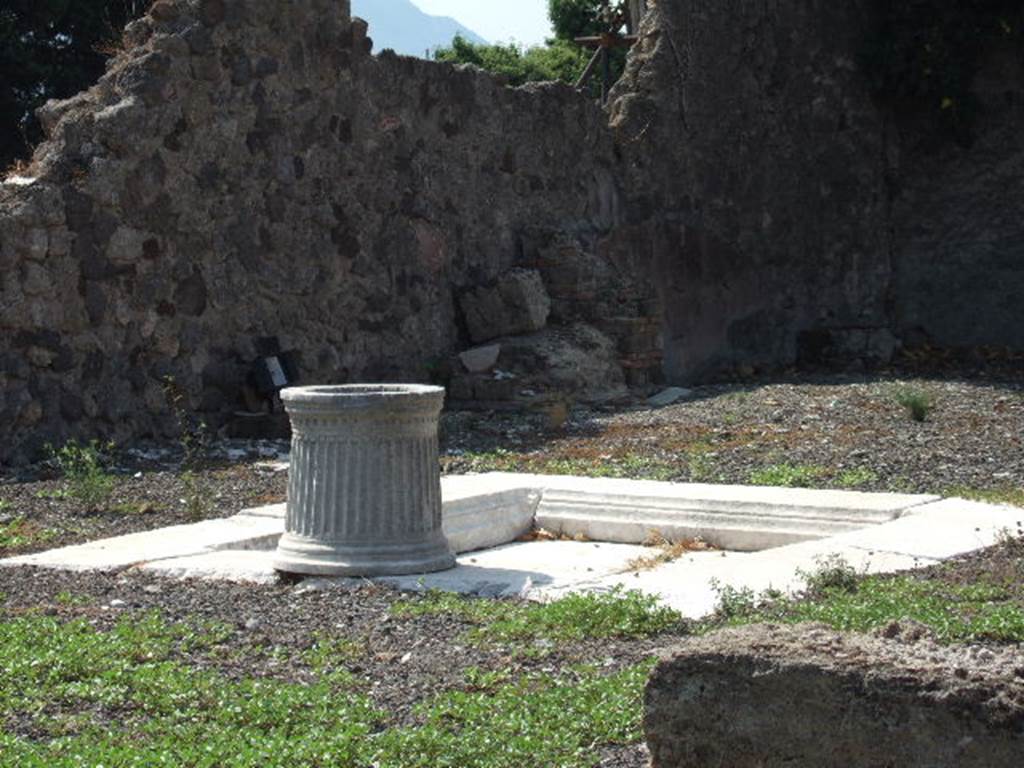
VII.16.10 Pompeii. December 2007. Looking south-west across marble impluvium and puteal in atrium towards tablinum.
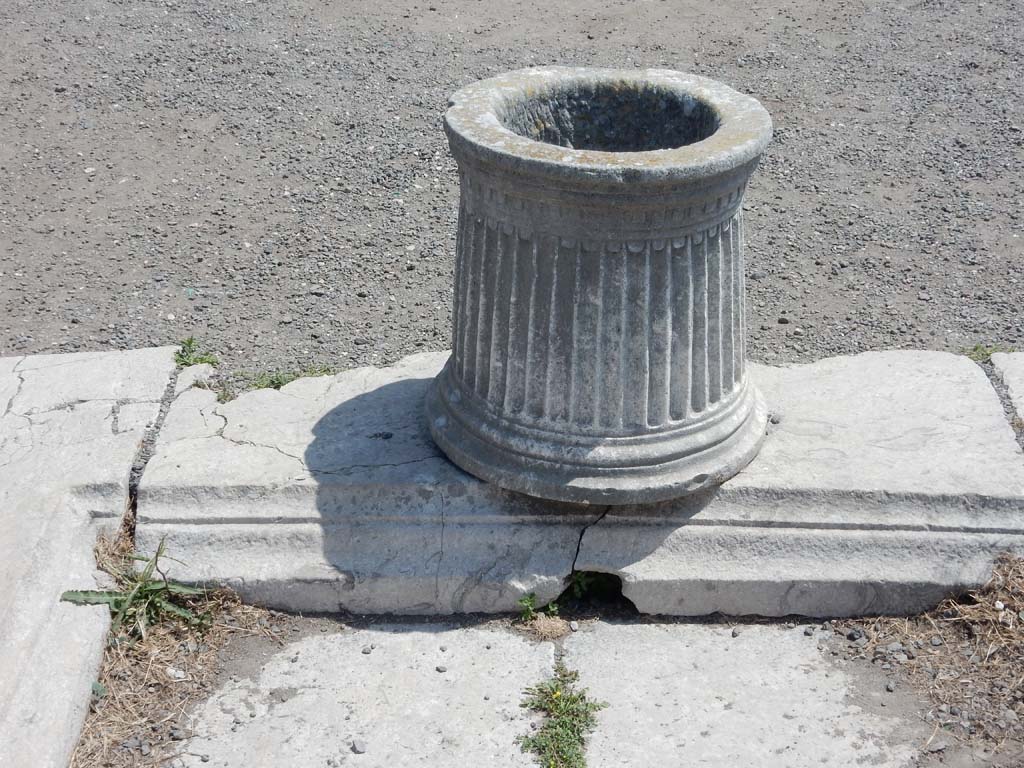
VII.16.10 Pompeii. June 2019. Impluvium and puteal in atrium.
Photo courtesy of Buzz Ferebee.

VII.16.10 Pompeii. September 2005. Impluvium and puteal in atrium.

VII.16.10 Pompeii. June 2019.
Puteal near impluvium. Photo courtesy of Buzz Ferebee.

VII.16.10 Pompeii. June 2019.
Detail of impluvium. Photo courtesy of Buzz Ferebee.

VII.16.10 Pompeii. June 2019. Puteal at west end of impluvium.
Photo courtesy of Buzz Ferebee.