VII.11.13 Pompeii. Caupona. Excavated 1863. (Vico del Lupanare 27).
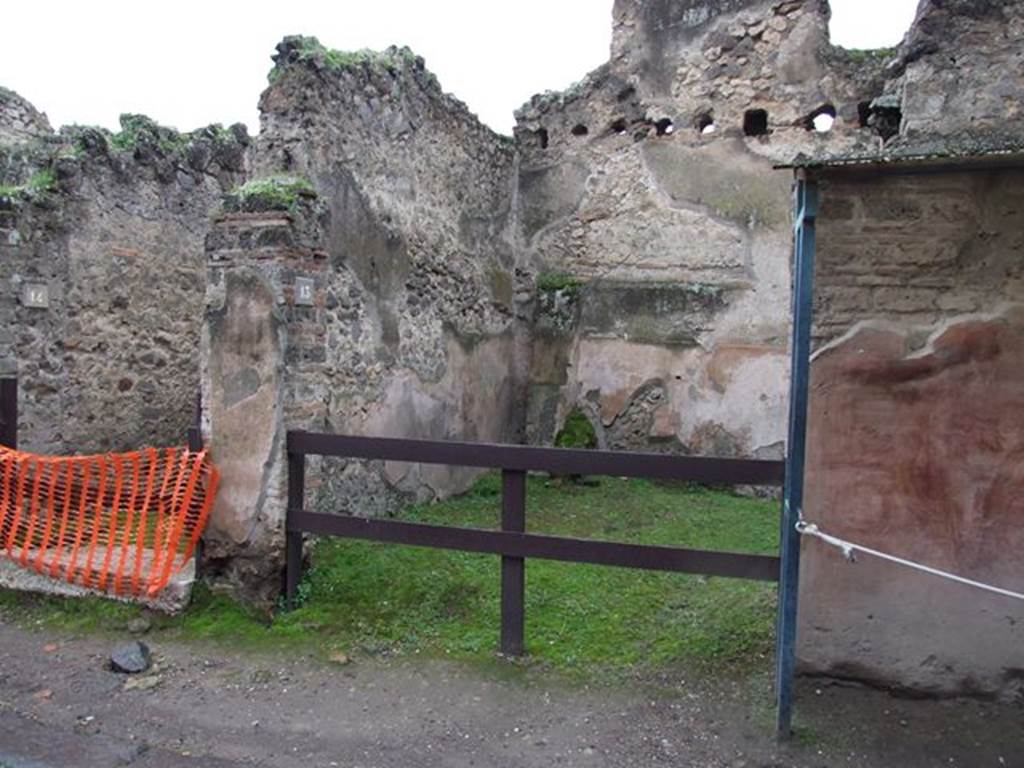
VII.11.13 Pompeii. December 2006. Entrance doorway.
According to Boyce, between VII.11.13 and 14, on the pilaster between the entrances of the caupona and an adjacent taberna, was a painting.
It was of Mercury with a bird (cock?) between his legs, and beside him the graffito CIL IV 812.
See Boyce G. K., 1937. Corpus of the Lararia of Pompeii. Rome: MAAR 14. (p.111, no.21)
According to Frohlich, the painting and the graffito have been destroyed.
See Fröhlich, T., 1991. Lararien und Fassadenbilder in den Vesuvstädten. Mainz: von Zabern. (F58)
According to Dobbins and Foss, the inn possessed an outdoor sign that forbade loiterers. It read -
Otiosis locus hic
non est. Discede morator. [CIL IV 813]
This translates as “This is not the place to idle, Shove off, loiterer”. (Trans by P. Foss)
See Dobbins, J & Foss, P., 2008. The World of Pompeii. New York: Routledge. (p.482)
According to Della Corte, this inn was notable for –
a) the customary Mercury for whose protection one would want [CIL IV 812]
b) for the best wine, lympha Romanensis offered to the clients [CIL IV 815]
c) for some allusions to a Drusus and to caupo [CIL IV 814]
d) Otiosis locus
hic non est, discede morator [CIL IV
813]
e) on the outside wall, the sacred painting of the Serpents Agathodemone
See Della Corte, M., 1965. Case ed Abitanti di Pompei. Napoli: Fausto Fiorentino. (p.205)
According to Varone and Stefani, the wording of CIL IV 813 but numbered 814, and CIL IV 815 were found near the doorway of VII.11.12
See Varone, A. and Stefani, G., 2009. Titulorum Pictorum Pompeianorum, Rome: L’Erma di Bretschneider, (p.359)
According to Epigraphik-Datenbank Clauss/Slaby (See www.manfredclauss.de) these read -
Mercurius
Felix
C(milia)XXXX [CIL IV
812]
Otiosis locus
hic non est
discede
morator [CIL IV 813]
Id(ibus) Iul<i=E>as(!) Druso vina Otisd
Indoio poto nil
VII Erscito
Erumb
Caupo
Marn [CIL IV 814]
L[u]mpas
Romane(n)ses [CIL IV 815]
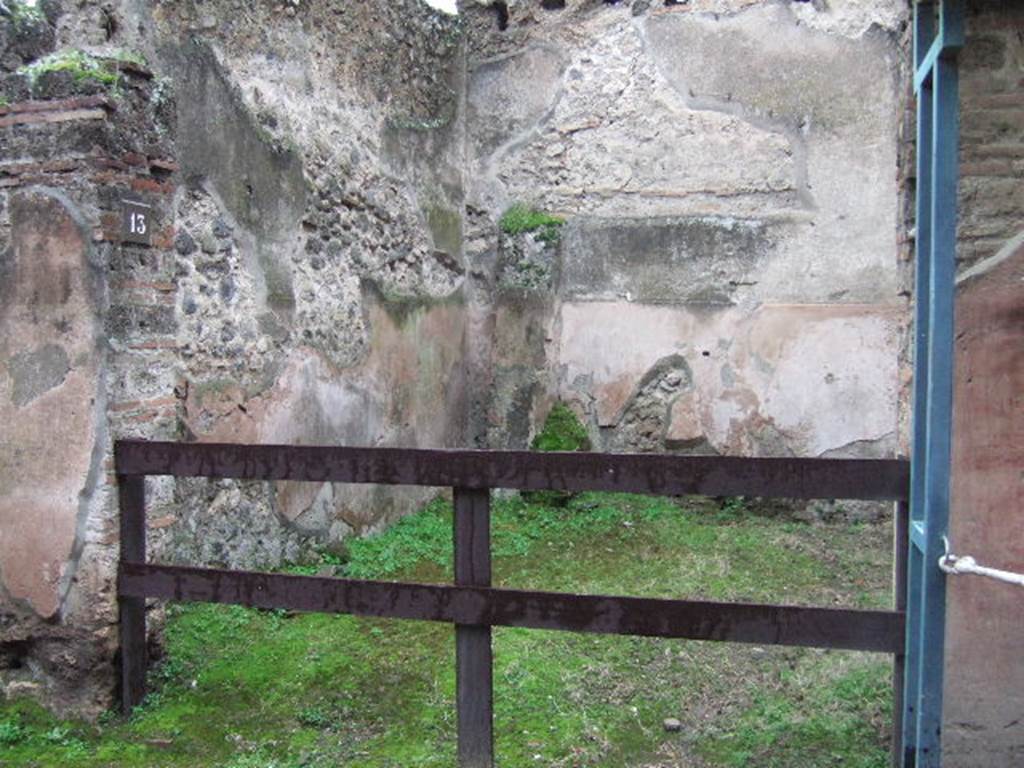
VII.11.13 Pompeii. December 2006. South wall and south-west corner.
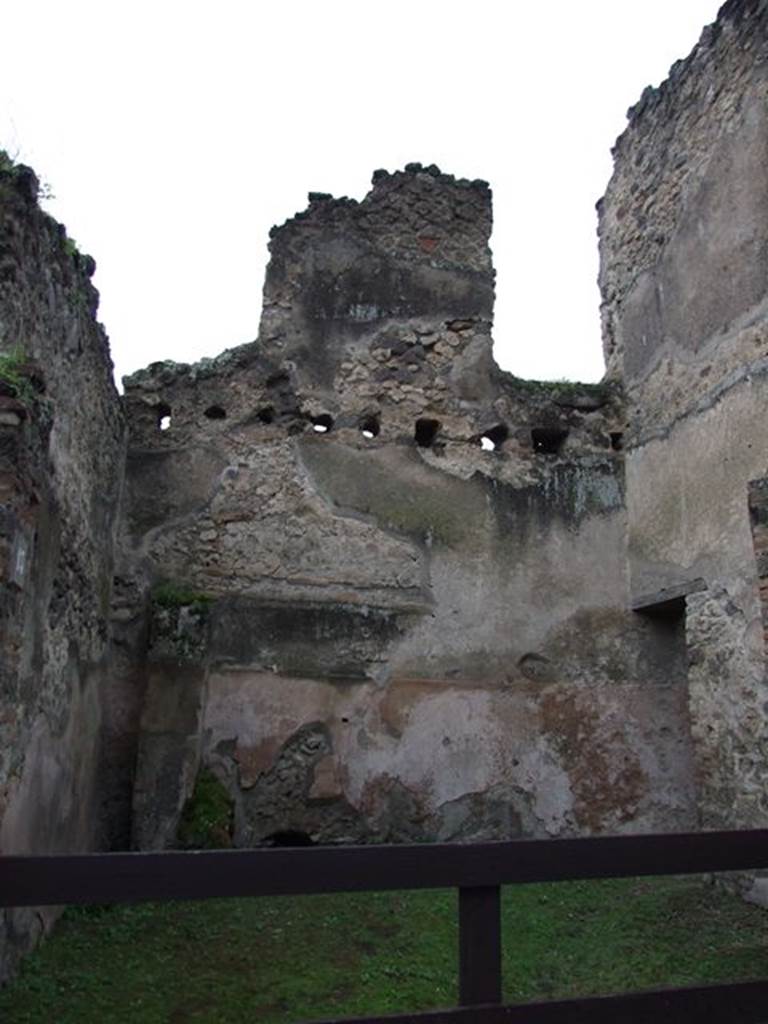
VII.11.13 Pompeii. December 2006. West wall.
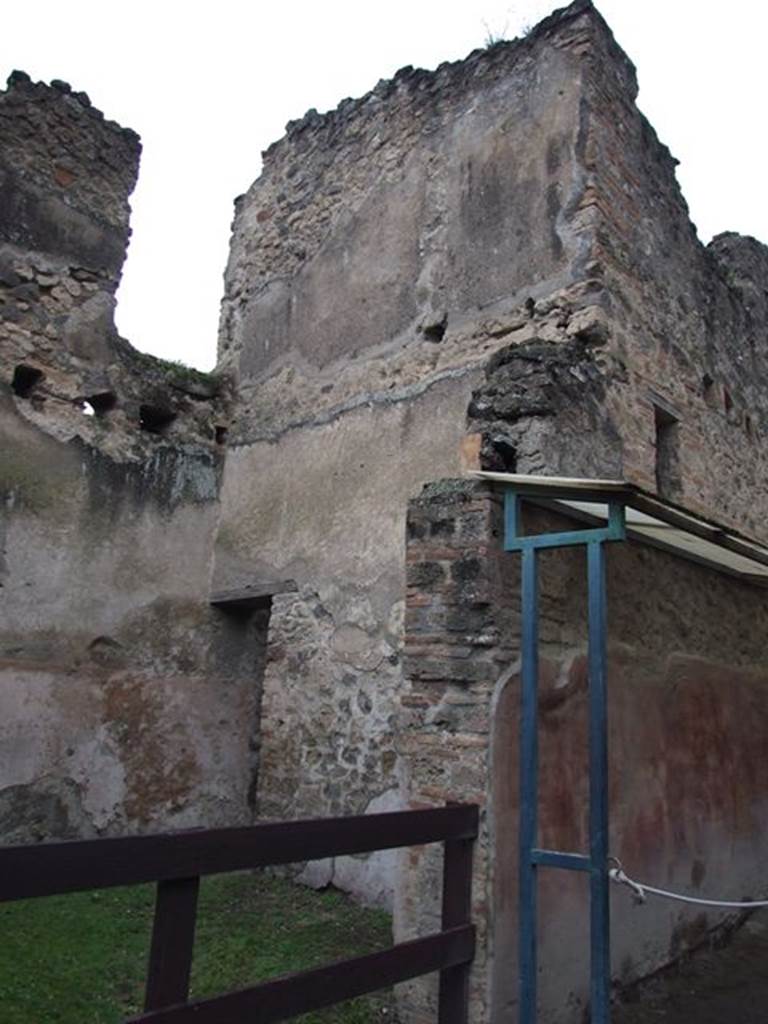
VII.11.13 Pompeii. December 2006. North wall.
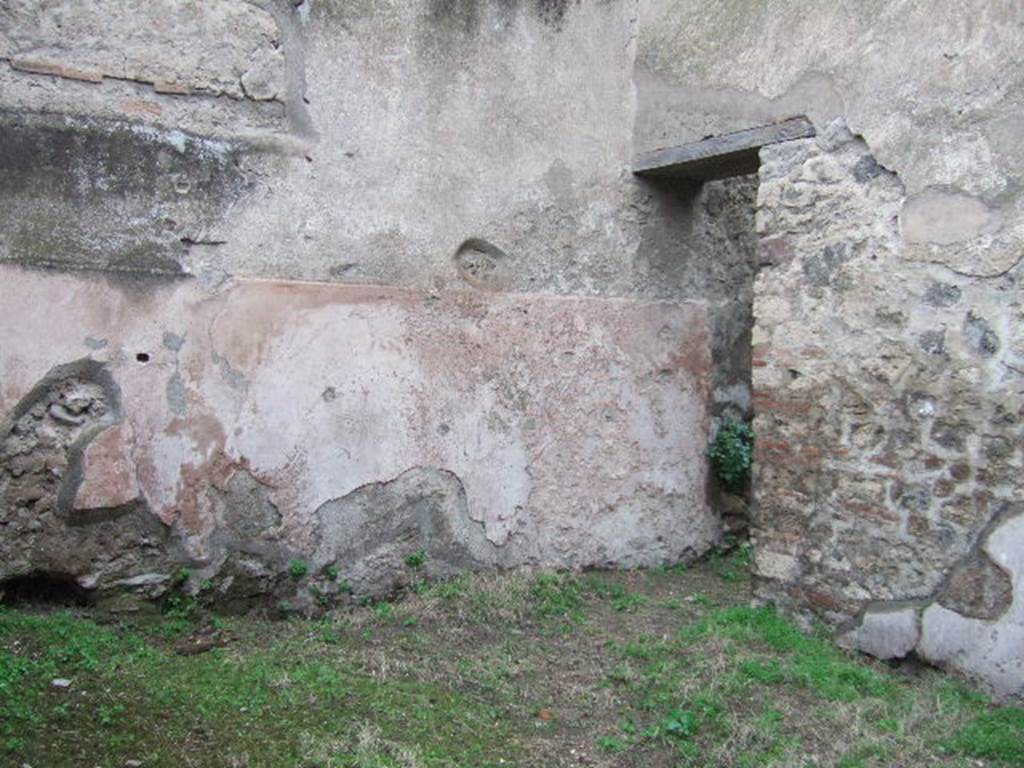
VII.11.13 Pompeii. December 2006. North wall with doorway to rear room.
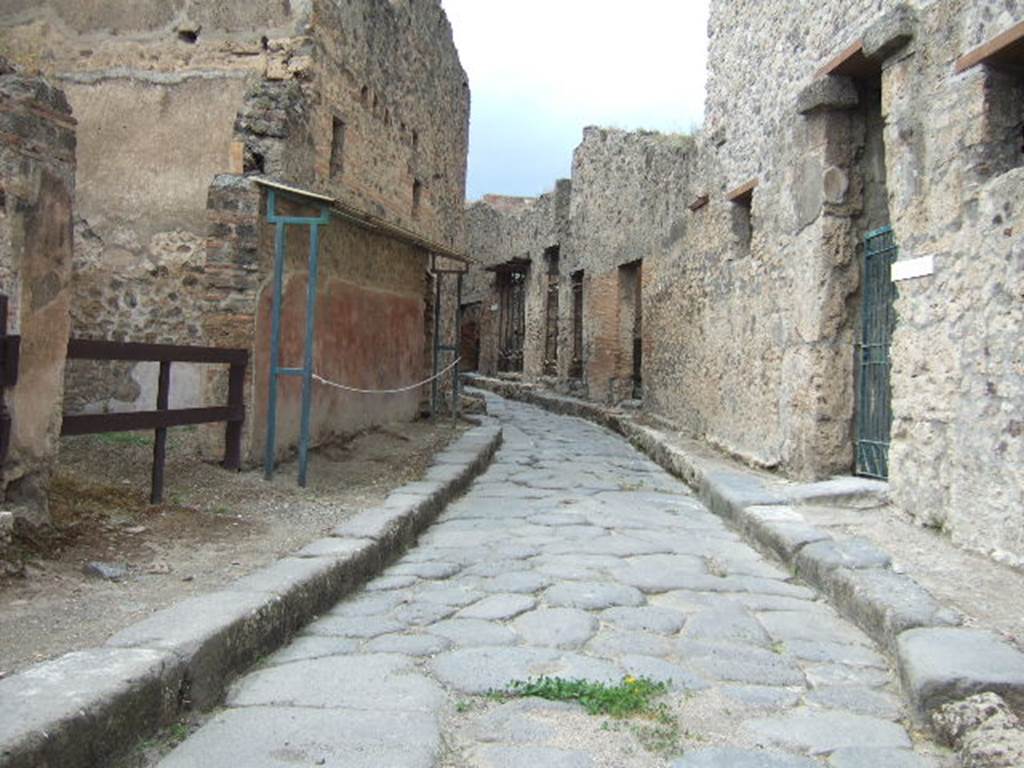
VII.11.13 Pompeii, on left. December 2006. Looking north along Vicolo del Lupanare. VII.1, on right.
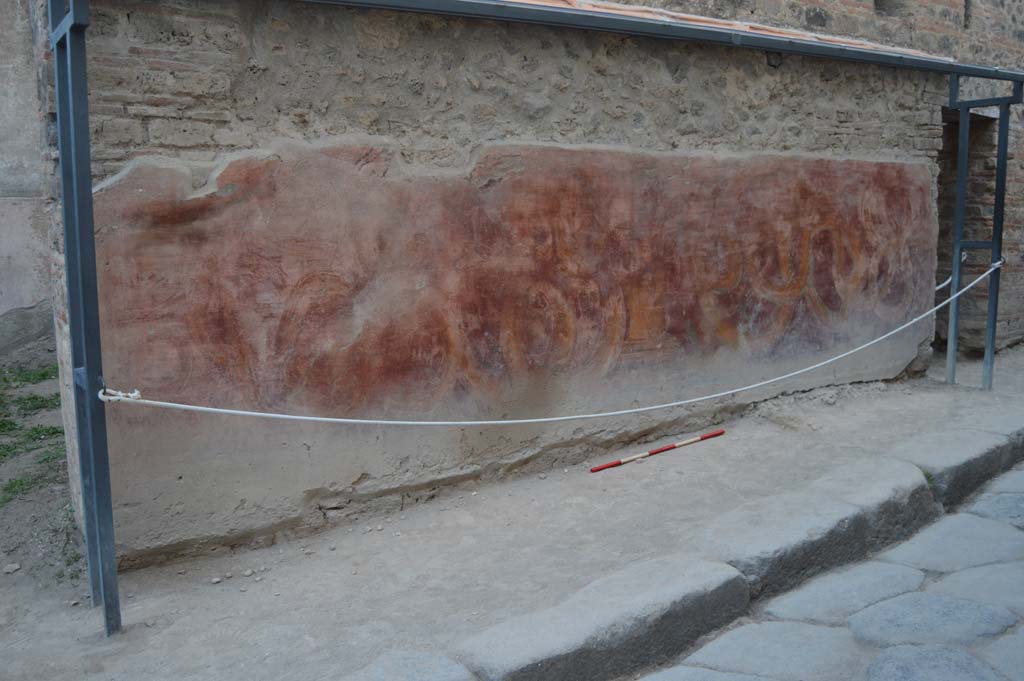
VII.11.13 Pompeii, on left. October
2017. Looking north along painted street shrine, with doorway at
VII.11.12, on right.
Foto Taylor Lauritsen, ERC
Grant 681269 DÉCOR.
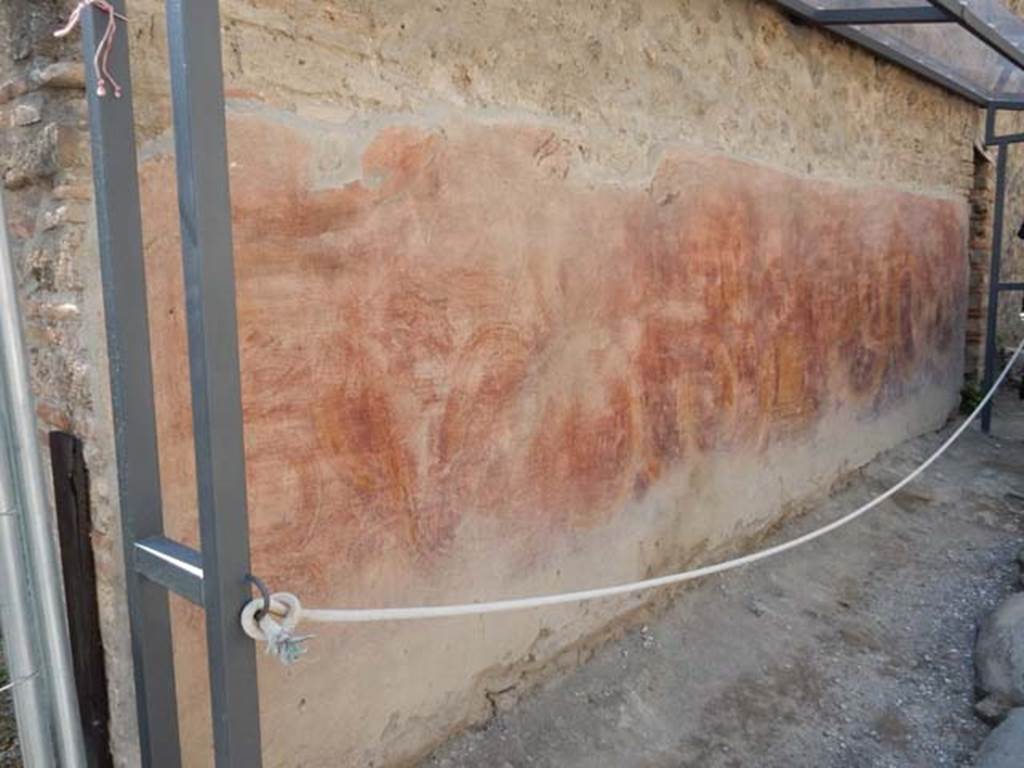
VII.11.13 Pompeii. May 2016. Looking north along painted street shrine. Photo courtesy of Buzz Ferebee.
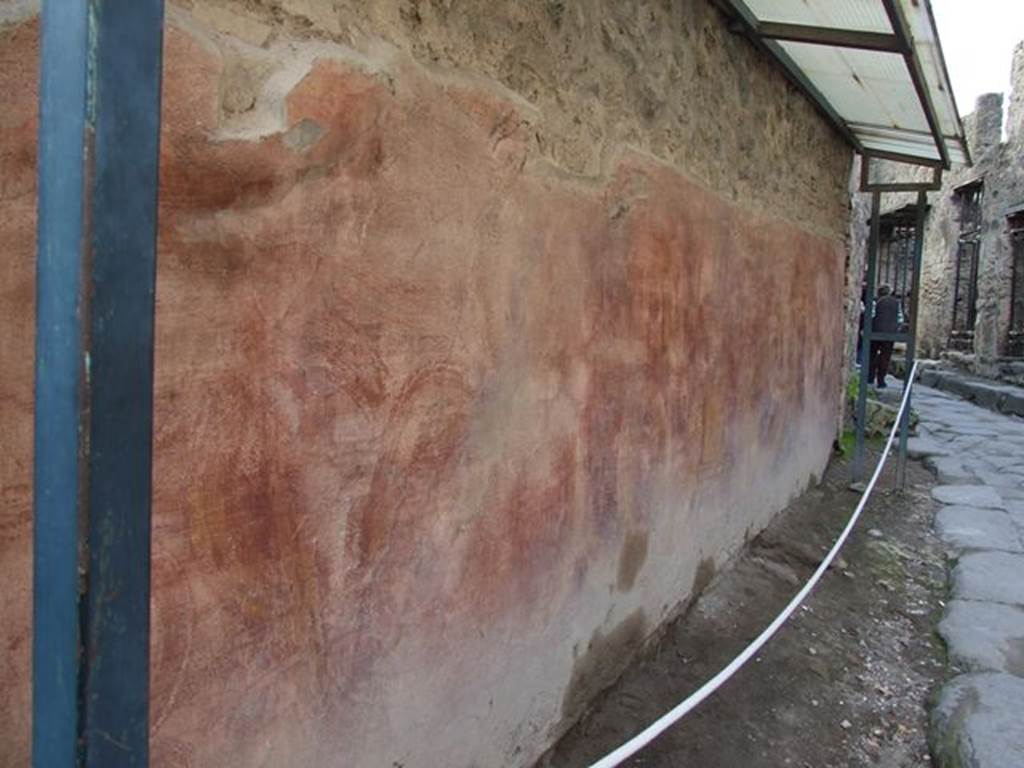
VII.11.13 Pompeii. December 2006. Painted street shrine.
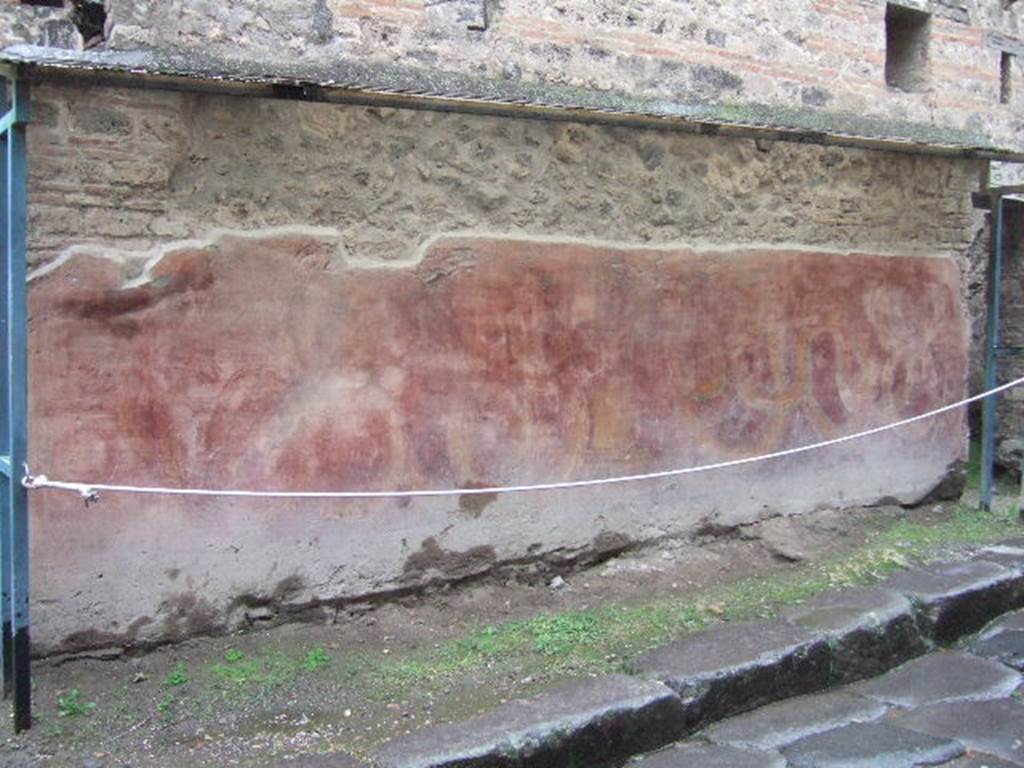
VII.11.13 Pompeii. December 2005. Painted street shrine.
According to Fiorelli, “a painting adorned the exterior of this edifice facing the House of Siricus.
In the painting were two serpents, one male and one female, approaching an altar from either side.
On the altar were two pinecones and two eggs.
Above was written in white letters –
OTIOSIS .
LOCVS HIC . NON EST DISCEDE
MORATOR
and then to the right towards the extremity of the painting, written in white, a record of the wine drunk in the inn, with above
L(V)MPAS
ROMANESES
which I believe is a reference to the Genius of the nearby baths”.
See Pappalardo, U., 2001. La Descrizione di Pompei per Giuseppe Fiorelli (1875). Napoli: Massa Editore. (p.110)
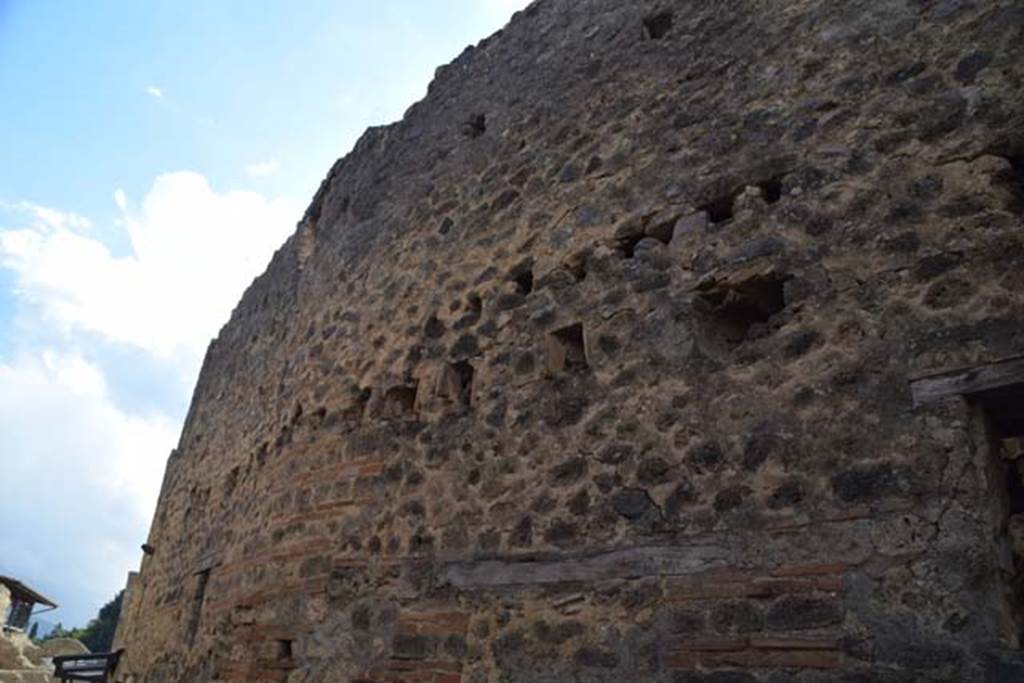
VII.11.13 Pompeii, on left, and VII.11.12, on right.
November 2016. Upper exterior wall. Photo
courtesy of Marie Schulze.
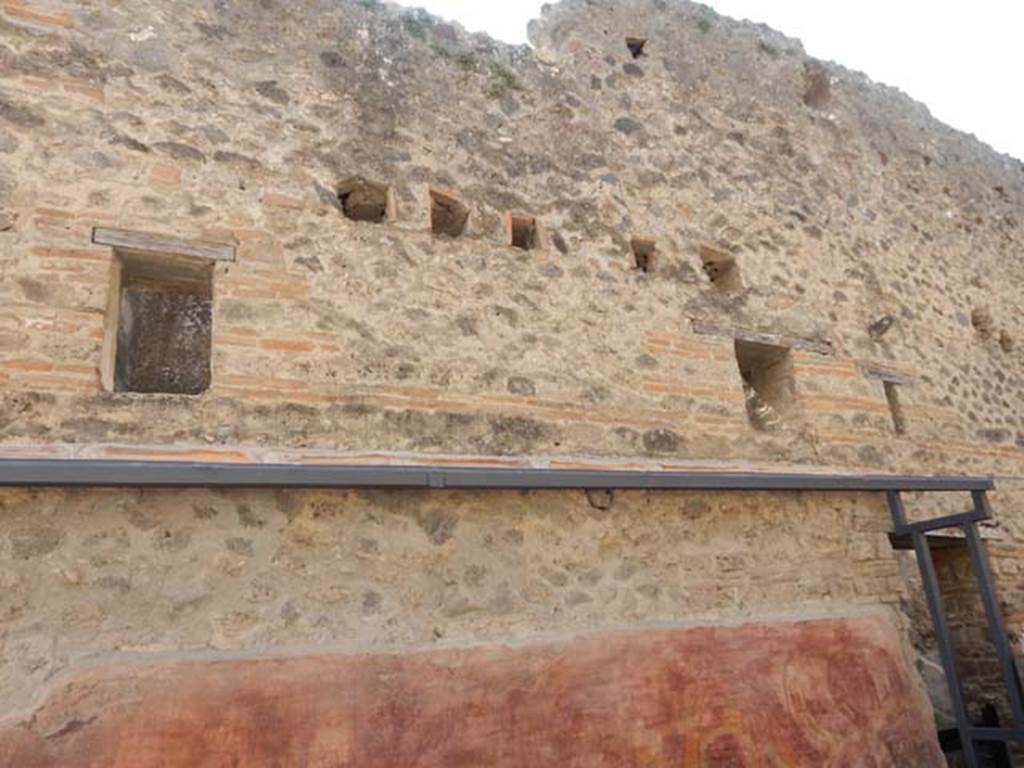
VII.11.13 Pompeii. May 2016. Upper exterior wall between VII.11.13, and VII.11.12, on right. Photo courtesy of Buzz Ferebee.
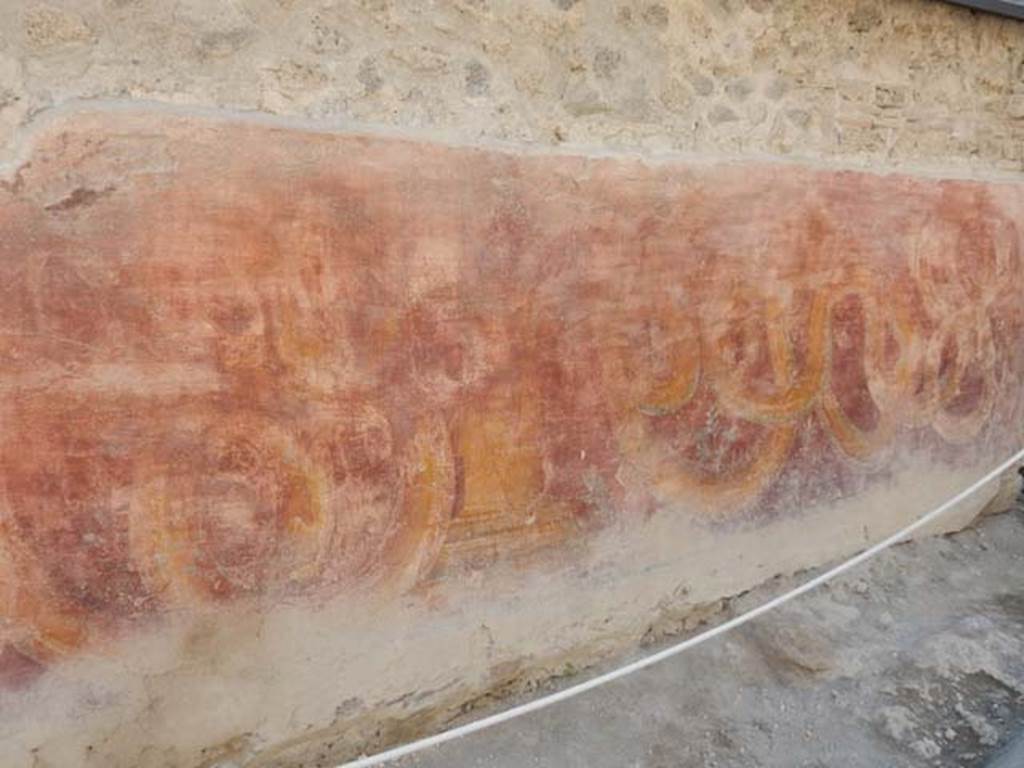
VII.11.13 Pompeii. May 2016. Street shrine. Photo courtesy of Buzz Ferebee.
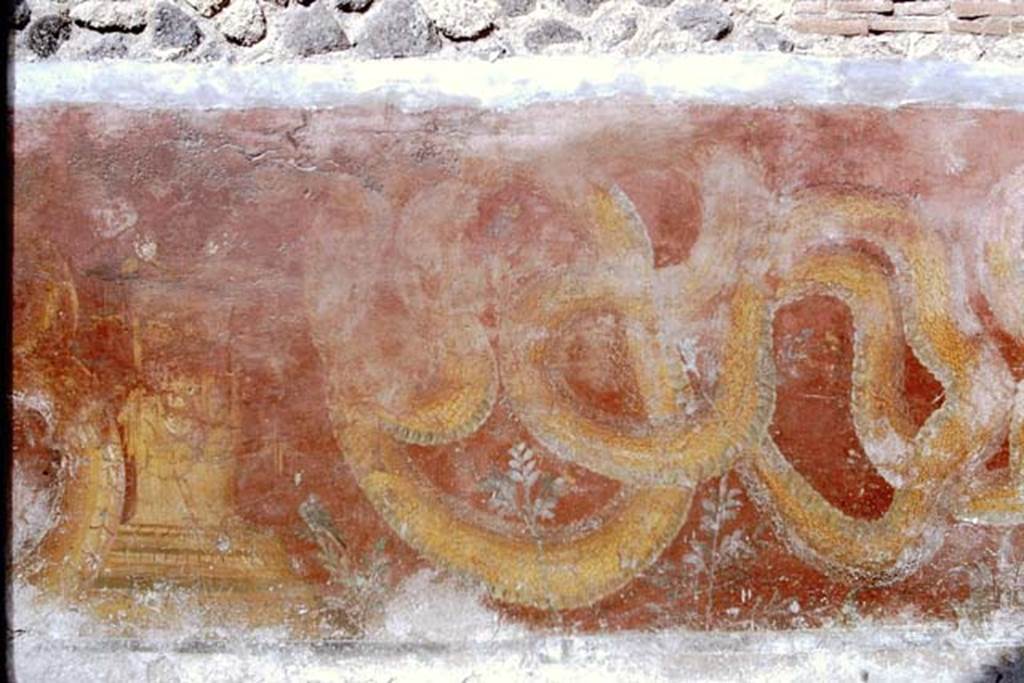
VII.11.13 Pompeii. 1966. Detail of painted altar on street shrine. Photo by Stanley A. Jashemski.
Source: The Wilhelmina and Stanley A. Jashemski archive in the University of Maryland Library, Special Collections (See collection page) and made available under the Creative Commons Attribution-Non-Commercial License v.4. See Licence and use details.
J66f0379
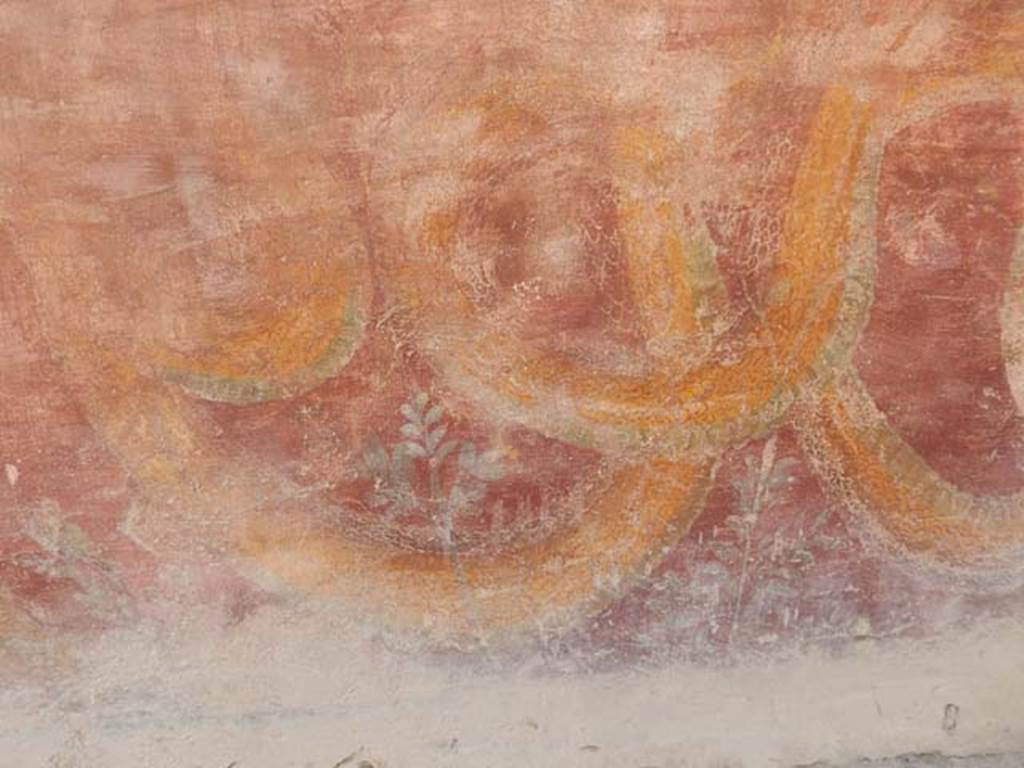
VII.11.13 Pompeii. May 2016. Painted serpents’ coils on street shrine. Photo courtesy of Buzz Ferebee.
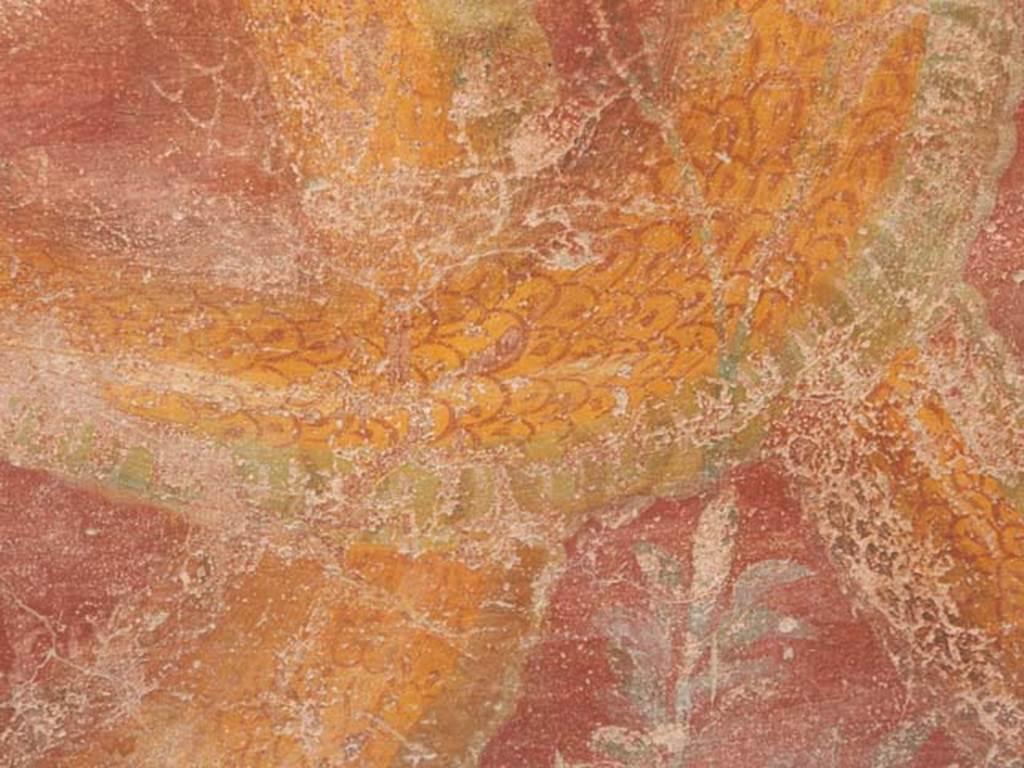
VII.11.13 Pompeii. May 2016. Detail of painted coils on serpents. Photo courtesy of Buzz Ferebee.