VII.6.30
Pompeii. House of Petutius Quintio. Linked to VII .6.37
& VII.6.29?
Excavated 1868, 1910. Area bombed in 1943.
Part 1 Part 2
According to Garcia y Garcia Region VII, Insula VI was one of the insulae most devastated over the years since its excavation.
He calls it the “Cinderella” of Pompeii. Between the years 1759 and 1762 it was vandalised and stripped by the Bourbons, then re-interred.
Then came the slow and non-systematic uncovering again before the final destruction in September 1943.
The area was ignored and abandoned during the years following the war, which reduced the insula to a heap of bricks and masonry.
See Garcia y
Garcia, L., 2006. Danni di guerra a Pompei. Rome: L’Erma di Bretschneider. (p.102).
According
to Fiorelli,
(At this
time), Of this house only the entrance corridor had been excavated.
(Di questo e scavato il solo protiro.)
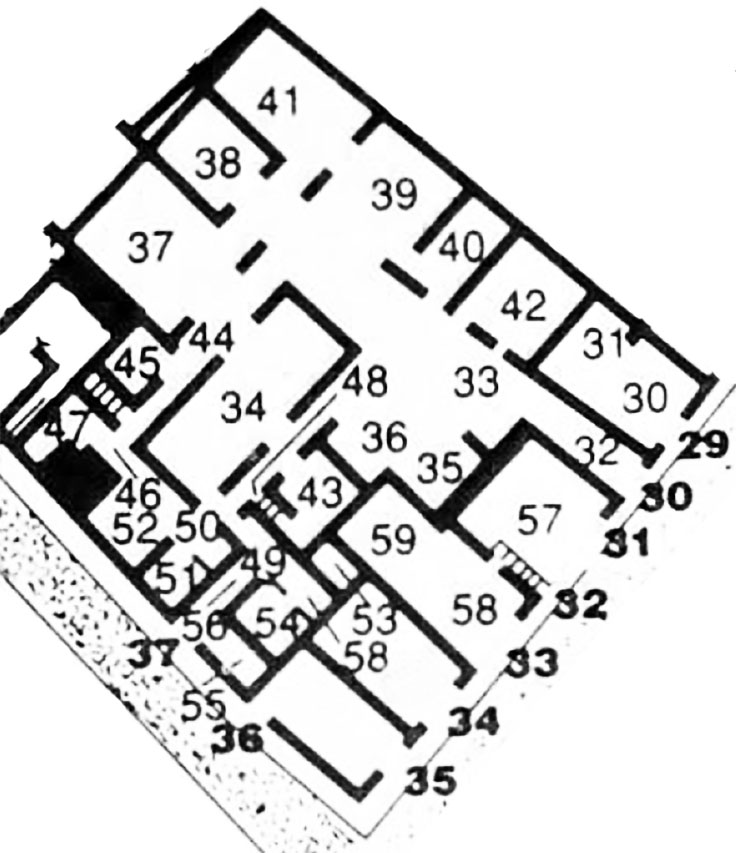
VII.6.30-37 Pompeii. Plan based on PPM.
See Carratelli, G. P., 1990-2003. Pompei: Pitture e Mosaici: Vol. VII.
Roma: Istituto della enciclopedia italiana, p. 197.
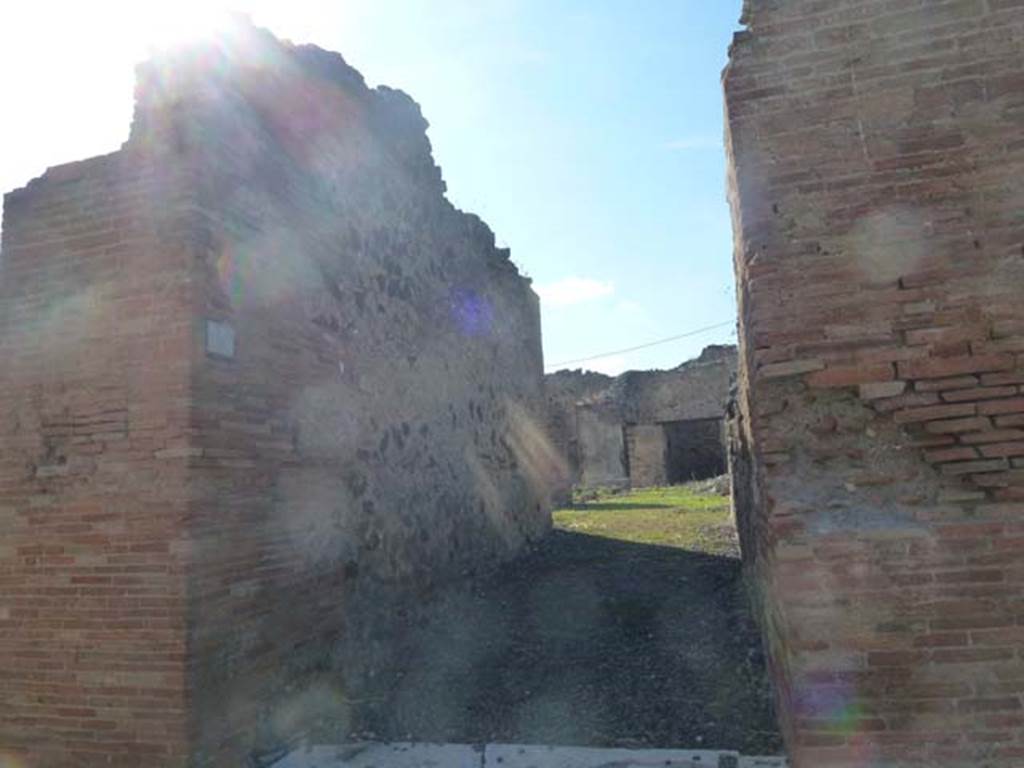
VII.6.30 Pompeii. June 2012. Looking north from entrance doorway.
The entrance
corridor/fauces opens into a long room 33/133, which had unadorned walls, and
preserved floor of signinum with pieces of inlaid marble. Was this perhaps a
kind of atrium displuviatum? The walls were made with rows of broken tiles and
with stones of various species, cut into small parallelepipeds (construction of
Roman times).
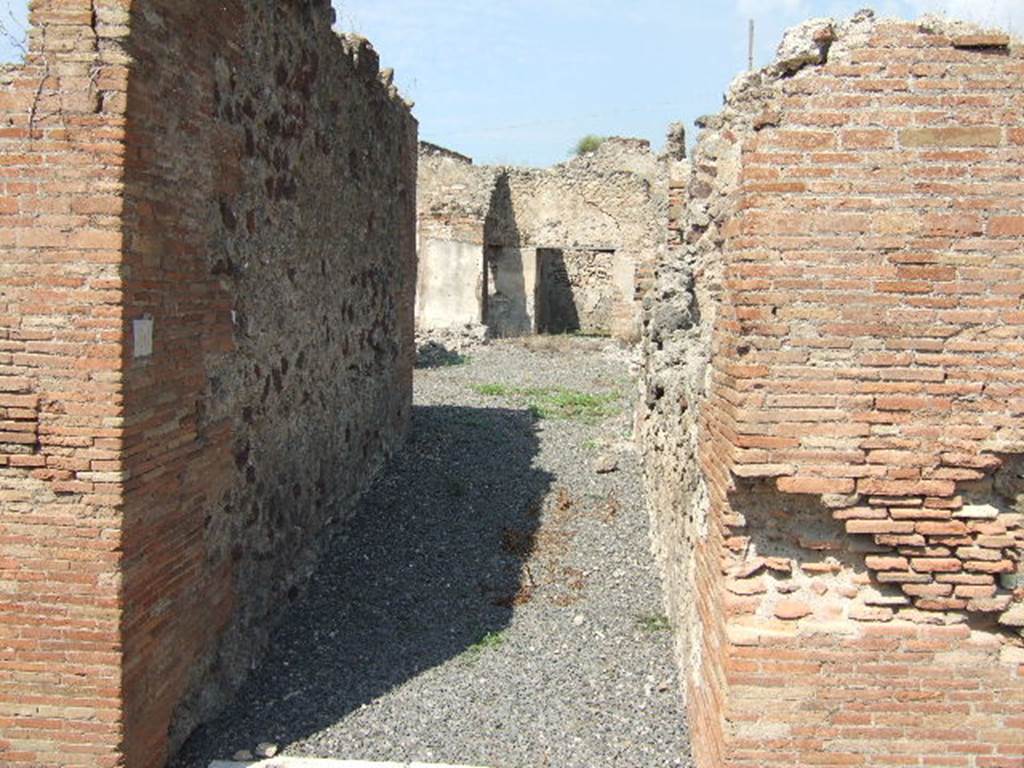
VII.6.30 Pompeii. September 2005. Looking north from entrance doorway.
According to Spano in NdS, immediately after the entrance, on the right, were some steps in lava and masonry, by which one climbed up to a small latrine (131), under which was that of the workshop 130 (VII.6.29, fig.1).
See Spano in Notizie degli Scavi, 1910, p.481
By 1873 only the entrance and fauces or entrance corridor had been excavated, according to Fiorelli.
See Pappalardo, U., 2001. La Descrizione di Pompei per Giuseppe Fiorelli (1875). Napoli: Massa Editore. (p.160)
According to Della Corte, he surmised that Petutio Quintioni would have been the dweller in this house, judging by an amphora found in the atrium.
This amphora was addressed to Petutio Quintioni and had been sent from Pompeius Onesimus.
See Della Corte, M., 1965. Case ed Abitanti di Pompei. Napoli: Fausto Fiorentino. (p.172)
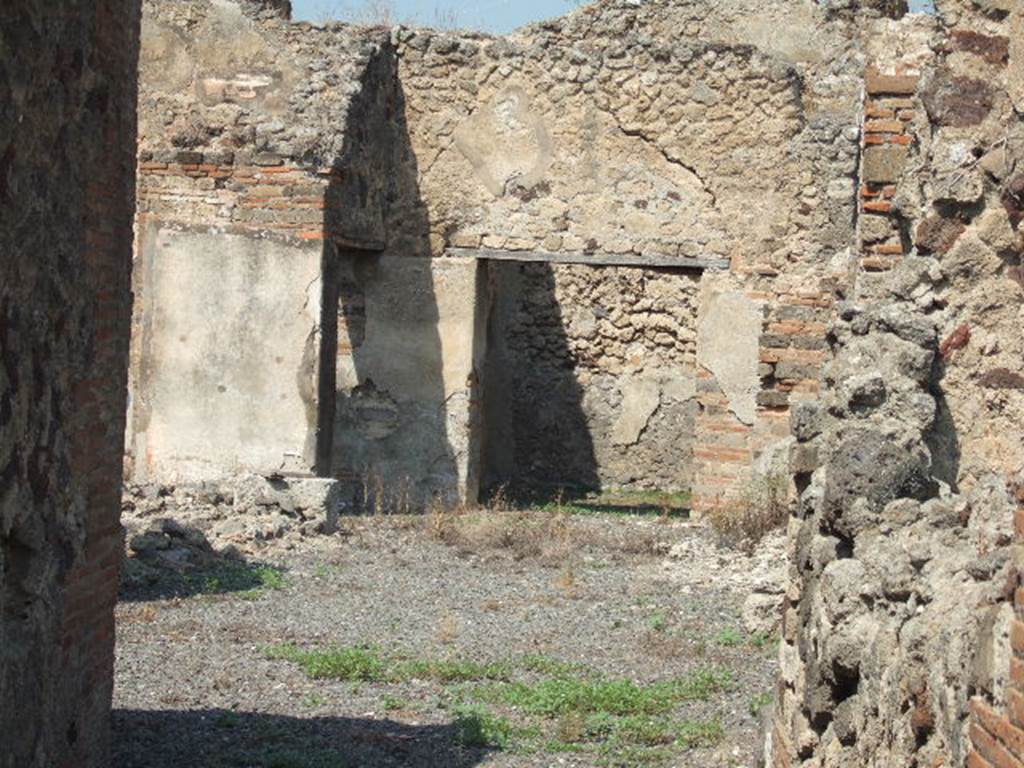
VII.6.30 Pompeii. September 2005.
According to PPM, at the end of the entrance corridor, may have been an atrium displuviate (room 133/33) with the niche/sacrarium on its east wall.
Looking north towards east passageway of the garden area and doorway to room to the east of a very large room, room 138/38).
According to the Spano in Notizie degli Scavi, 1910, page 482, room 138/38 was totally plain and rustic and did not offer anything of merit, when excavated.
In NdS, Spano numbered it as 138, according to PPP, it was numbered 38 on their plan.
See Spano in Notizie degli Scavi, 1910, (p.482)
According to PPM, near to the long and narrow fauces/entrance corridor, 32, one would have come to an atrium displuviate, room 33/133), and which showed a lararium niche on its east wall, near to the entrance doorway into room 39.
See Bragantini, de Vos, Badoni, 1986. Pitture e Pavimenti di Pompei, Parte 3. Rome: ICCD. (plan).
On the right of the photo, the destroyed east wall would have contained a niche.
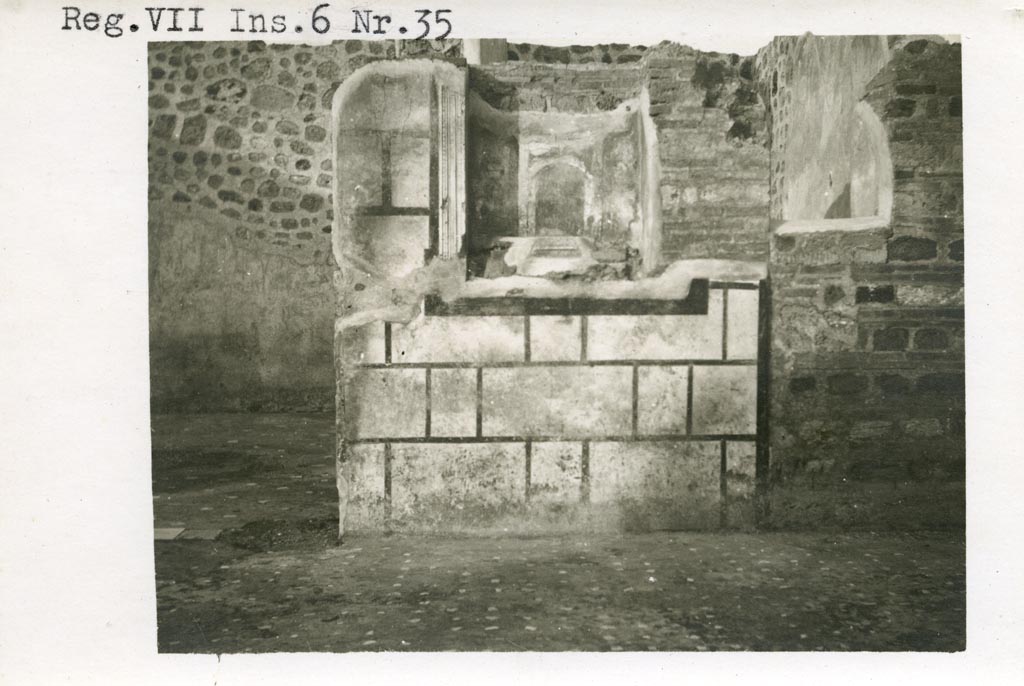
Mystery photo – Warsher numbered this as being from VII.6.35. We hope it is from -
VII.6.30 Pompeii. Pre-1937-39. Looking towards east wall of atrium, room 133/33, with room 139/39 on left.
Photo courtesy of American Academy in Rome, Photographic Archive. Warsher collection no. 560.
According to Boyce, in the east wall of the main room which was entered directly from the fauces was a delicately painted tall, rectangular niche.
He thought this was a Lararium. The white background of the surrounding wall was divided by dark stripes into a series of rectangles.
These rectangles were in imitation of a veneer of slabs of marble or of a wall built of rectangular blocks of stones.
See Boyce G. K., 1937. Corpus of the Lararia of Pompeii. Rome: MAAR 14. (p.67, no.292)
According to the Notizie degli Scavi, 1910, page 481, in the east wall, to the right of the entrance doorway into room numbered 139, was a delicately painted niche, which served as a sacrarium.
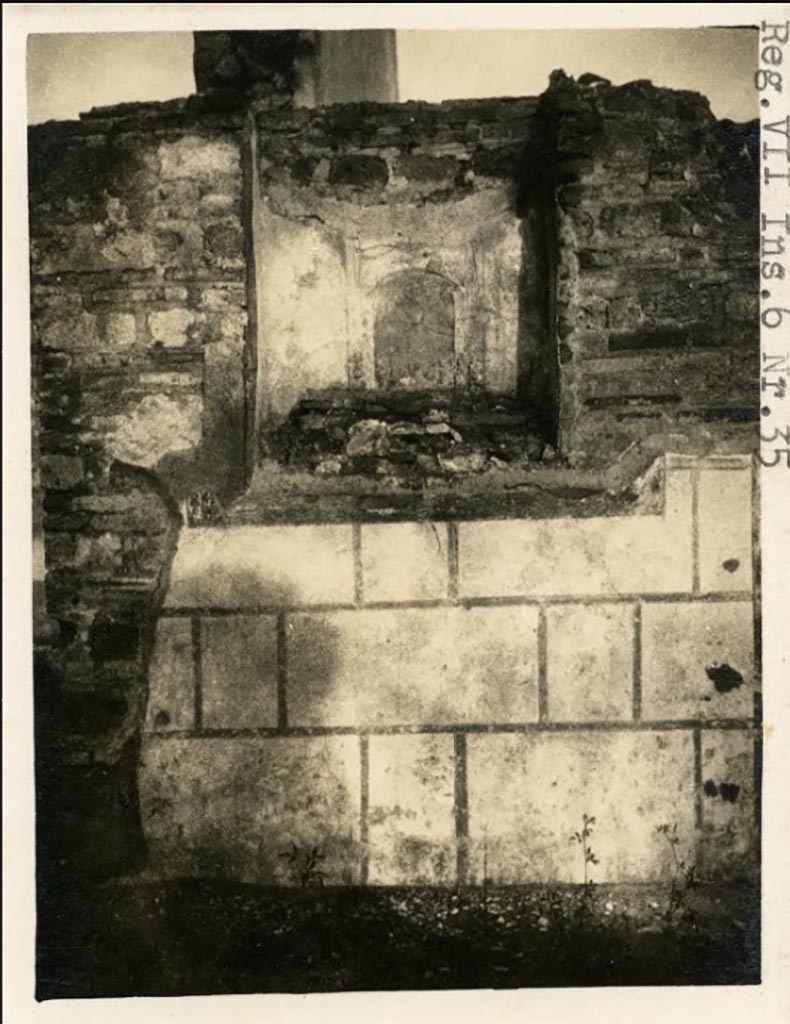
Mystery photo – Warsher numbered this as being from VII.6.35. We hope it is from -
VII.6.30 Pompeii. Pre-1937-39. Enlargement of east wall of atrium, showing detail of painted sacrarium.
Photo courtesy of American Academy in Rome, Photographic Archive. Warsher collection no. 561a.
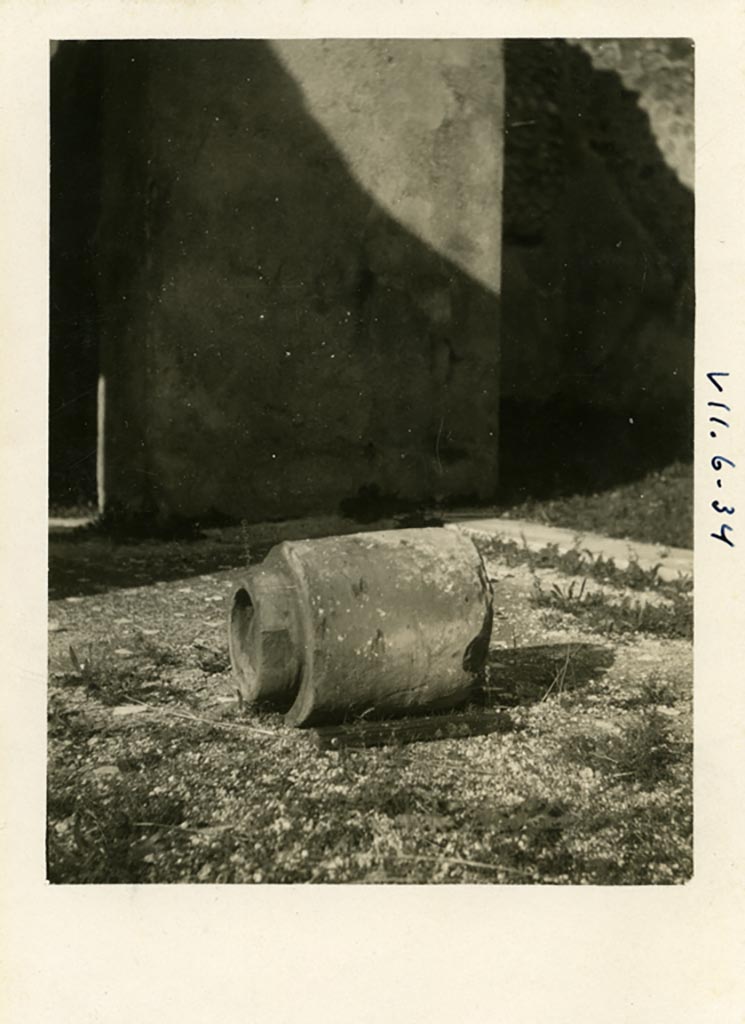
Mystery photo – Warsher numbered this as being from VII.6.34.
We hope it may be from – VII.6.30 Pompeii.
We are thinking it may be from the north-east corner of room 33, the atrium, with doorway to room 38, on left, and into room 41 on right.
The flooring looks very similar to that in the photo two above this one, another mystery photo.
Pre-1937-39. Photo courtesy of American Academy in Rome, Photographic Archive. Warsher collection no. 1071.
If anyone can confirm or refute this location, we would be pleased to hear from you.
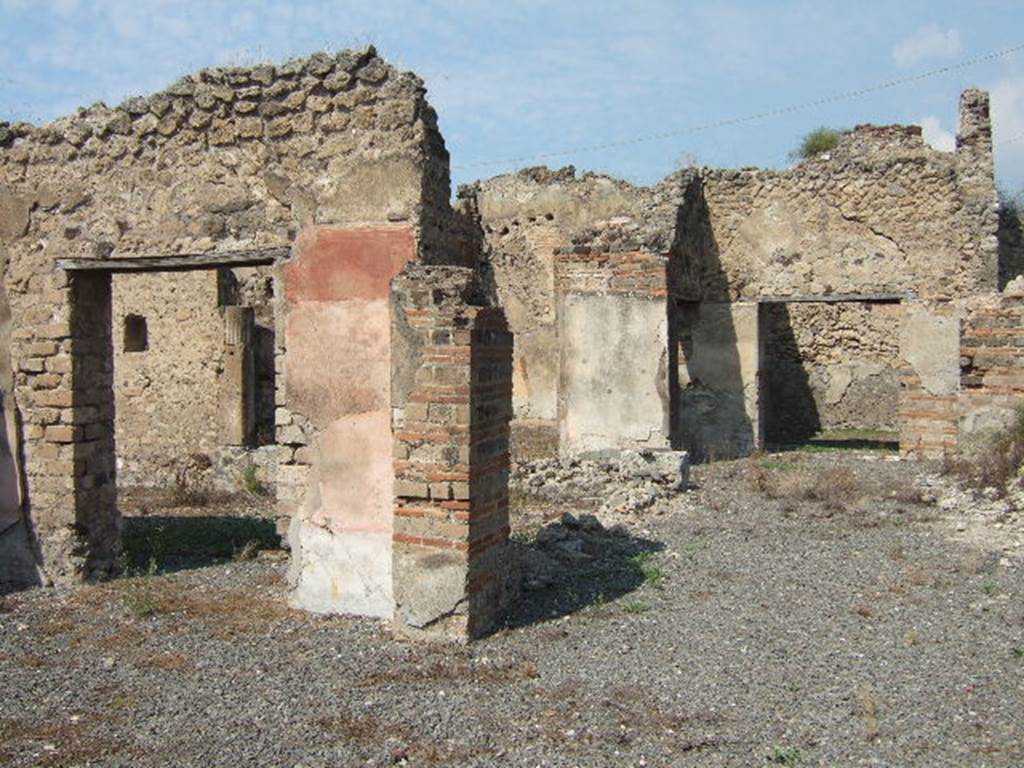
VII.6.30 Pompeii. September 2005. Looking north-west across room 36/136 with doorway to the garden, on left.
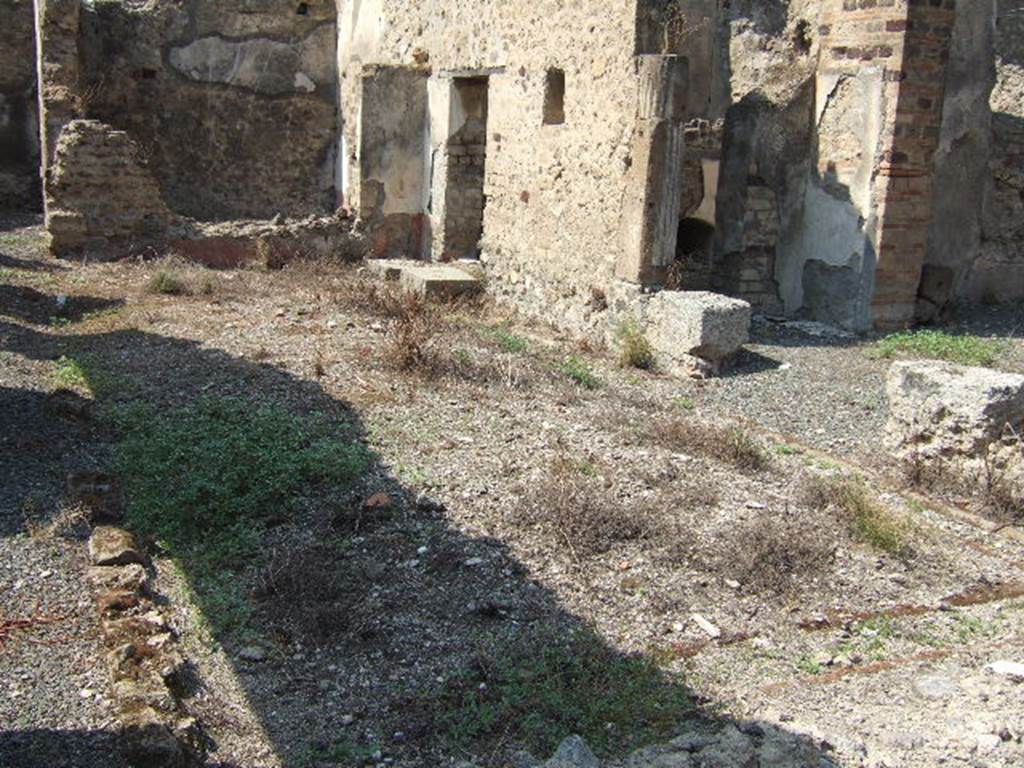
VII.6.30 Pompeii. September 2005. Looking west across garden area.
According to Jashemski, the garden (excavated in 1910) had a roofed passageway on the north, east and south.
Only one tufa column was preserved at the time of excavation.
A low masonry wall enclosed the garden.
The vault of the cistern reached almost to the level of the garden area so it was not possible to plant the central part of the garden.
A planting bed was made, however, around the edges of the garden.
See Jashemski, W. F., 1993. The Gardens of Pompeii, Volume II: Appendices. New York: Caratzas. (p.185)
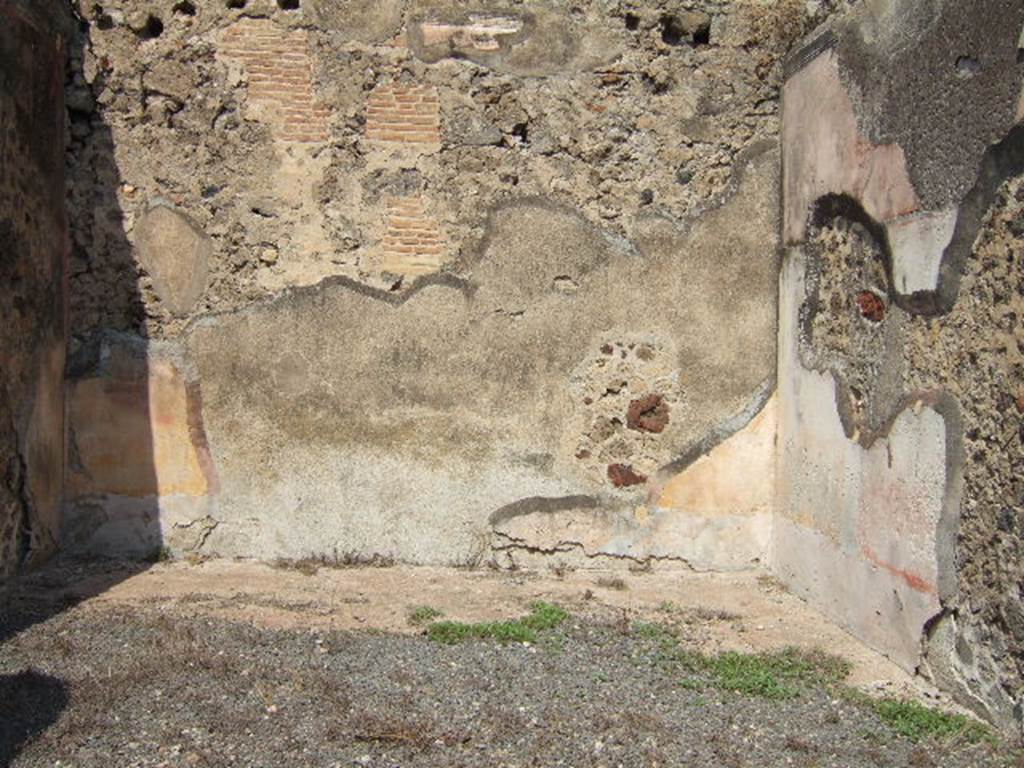
VII.6.30 Pompeii. September 2005. Looking north across a very large room on north side of garden area.
PPP numbered this room as 37, Spano in NdS, numbered it as 137.
According to Spano, the main entrance doorway was in the south onto the garden area but it also had a smaller doorway in its south-east corner.
It had walls divided into large yellow rectangles, in a frieze of the same colour it showed architectural motifs.
In the black lower area of the walls it was divided into squares decorated with plants.
Painted flying cupids, and perhaps also Victory, were shown in the centre of the painted wall panels.
The ceiling had been vaulted, the curve of the arch much reduced and fallen, traces existed at the top of the north wall.
See
Bragantini, de Vos, Badoni, 1986. Pitture e Pavimenti di Pompei, Parte 3. Rome: ICCD. (p.155 and plan)
See Spano in Notizie degli Scavi, 1910, (p.482)
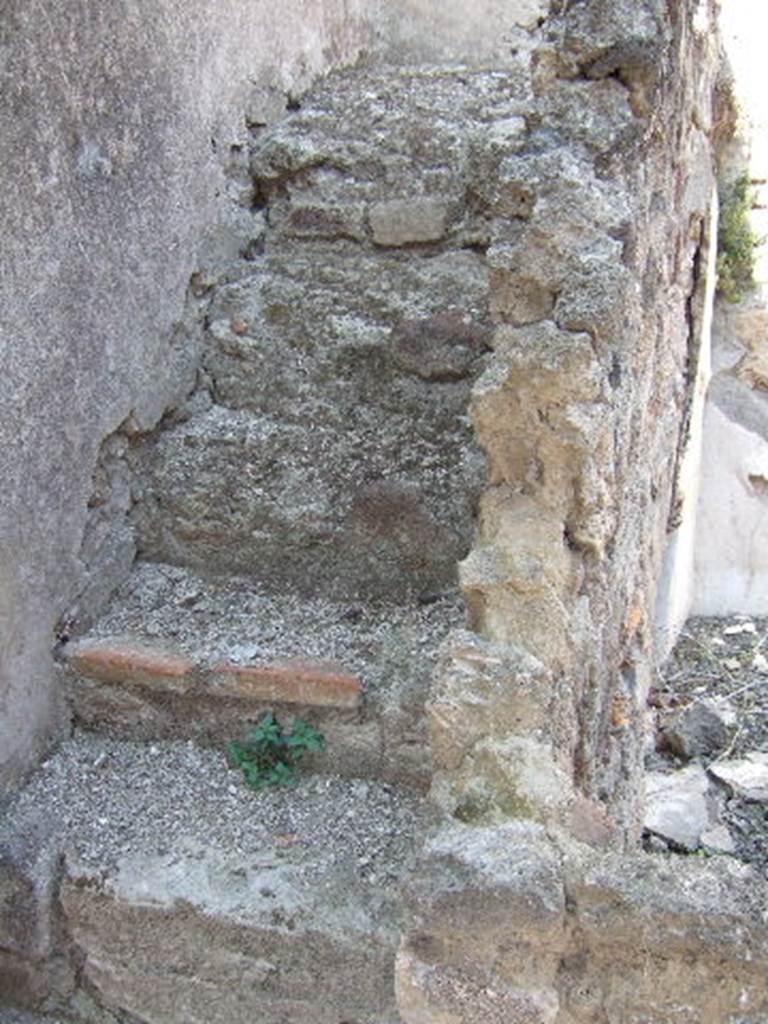
VII.6.30 Pompeii. September 2005. Steps to upper floor.
These are shown against the west wall of a small room, numbered by Spano as “145”.
The steps, numbered “146”, were in masonry and would have led by a smaller wooden staircase to an upper room above the small room number “145”, and from this perhaps to other rooms.
See Spano in Notizie degli Scavi, 1910, (p.483)
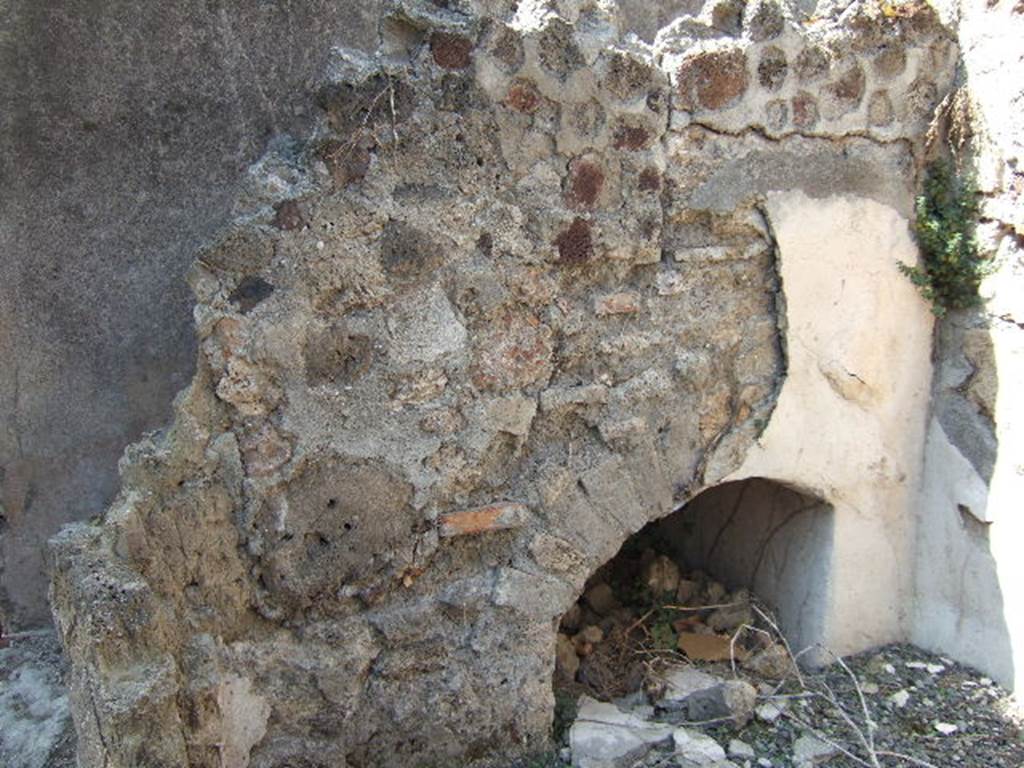
VII.6.30 Pompeii. September 2005. Recess under steps to upper floor, in west wall of room “145”.
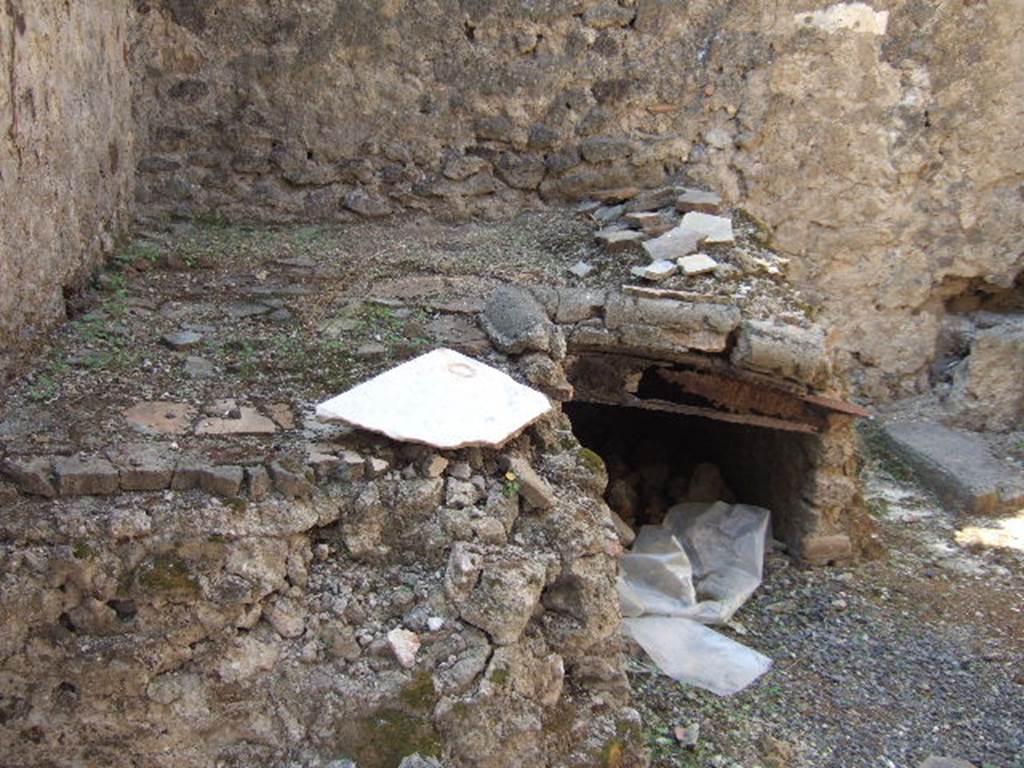
VII.6.30 Pompeii. September 2005. Looking west towards remains of hearth in kitchen.
According to Spano, at the west end of the northern portico it became a corridor “144”.
This corridor led to the kitchen, numbered “147”.
Apart from having the hearth, it also had a latrine.
In the upper north and south walls remained the holes for the rafter-beams.
In the west wall was a square window which gave onto the rear vicolo.
See Spano in Notizie degli Scavi, 1910, (p.483)
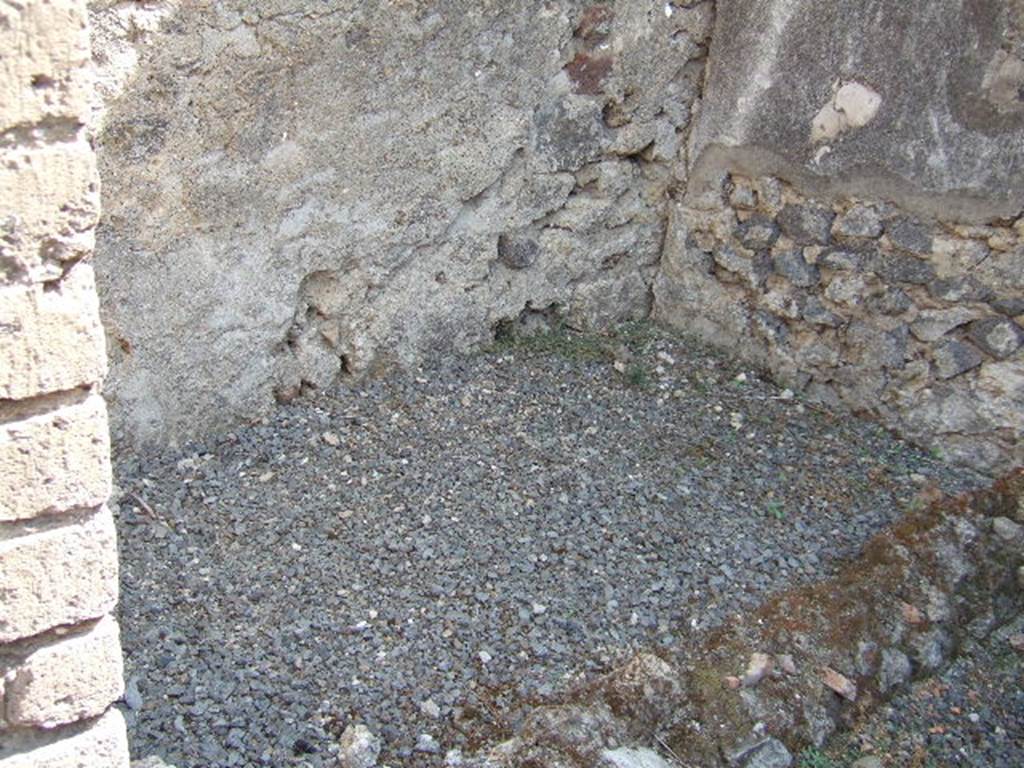
VII.6.30 Pompeii. September 2005. Small room on west side, numbered 52.
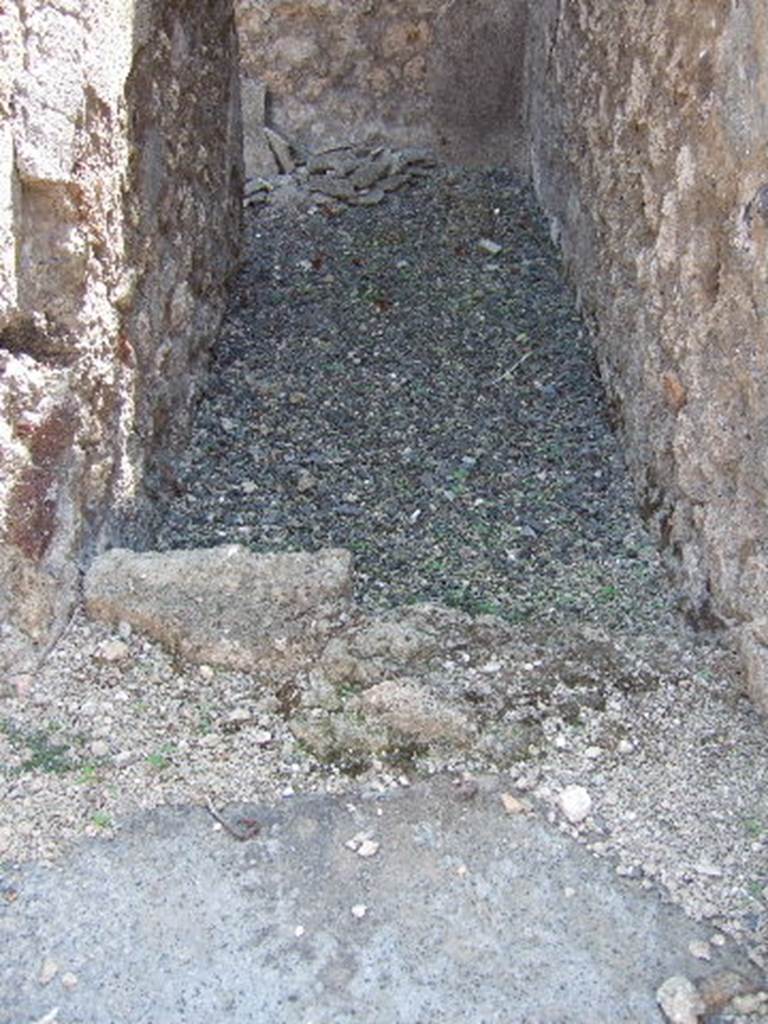
VII.6.30 Pompeii. September 2005. Site of staircase on south side of garden area.
According to Spano in NdS, this small room was numbered “148”.
It contained a staircase, accessible from either the south side of the garden or the west side of room “143”, at the far end of the photo.
Only the lower masonry steps were preserved, since the wooden part was no longer there, having been destroyed.
See Spano in Notizie degli Scavi, 1910, (p.483)
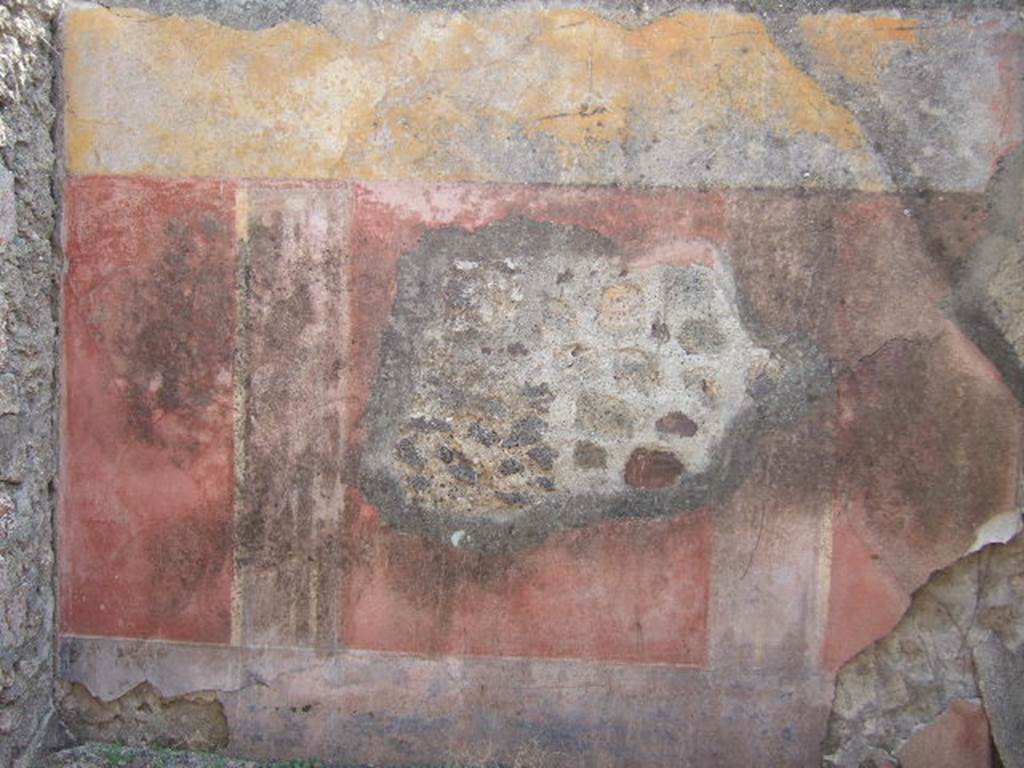
VII.6.30 Pompeii. September 2005. Remains of painted decoration on south wall of room on south side of garden area.
According to Spano in NdS, this small room was numbered “143”.
Each wall was painted with three large red rectangles, divided by large areas of black, showing architectural motifs.
At the top was a yellow frieze, and the lower zoccolo was
painted black. The floor was made
from simple cocciopesto.
See Spano in Notizie degli Scavi di Antichità, 1910, (p.483)
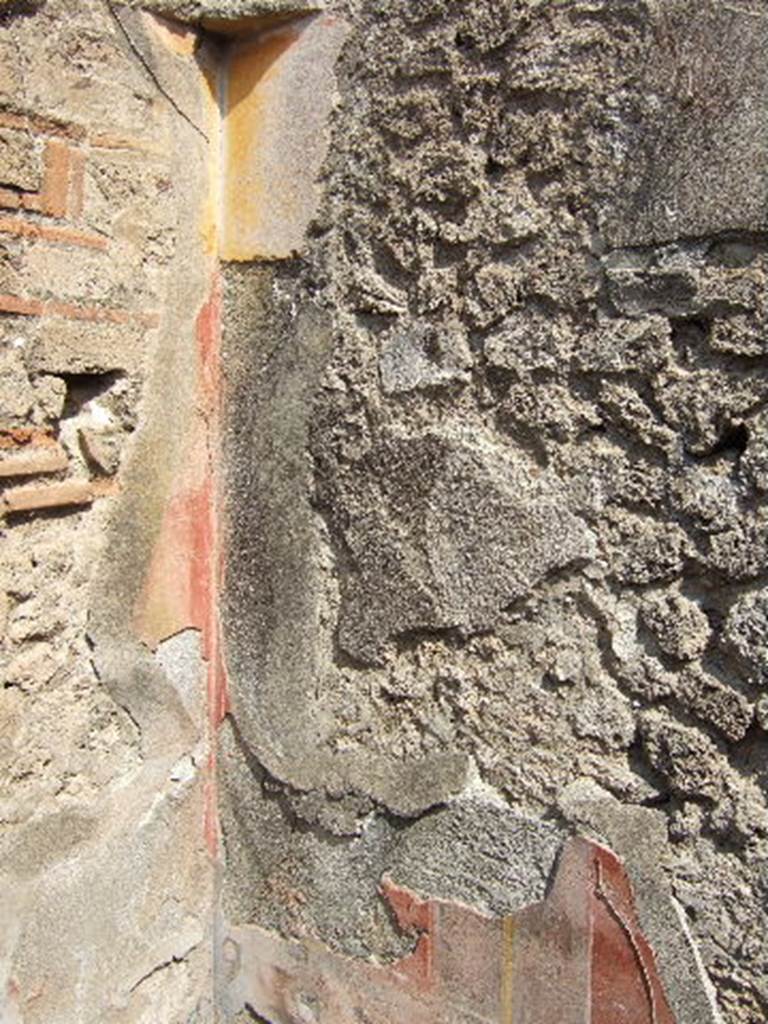
VII.6.30 Pompeii. September 2005.
Remains of painted decoration in room on south side of garden area, numbered “143”.
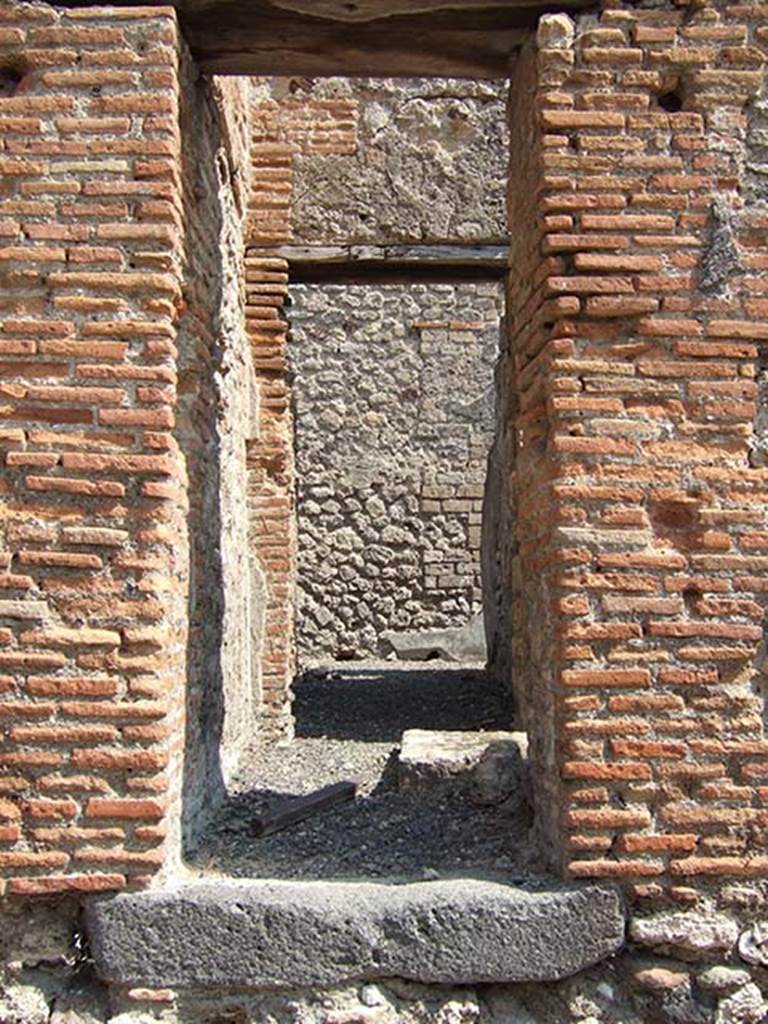
VII.6.30 Pompeii. September 2005. Looking east along corridor from rear entrance at VII.6.37.
The doorway on the south of the corridor, lit by the sun, would have led to the latrine.
According to Spano, this corridor, would have been numbered “156”.
On the right of this in room “155” would have been a latrine, in which were preserved remains of painted decoration.
(In a note he said that the latrines in some other houses were also decorated with painted walls, for example V.5.i The House of the Silver Wedding, and VI.9.6 The House of Castor and Pollux (also known as the Casa dei Dioscuri).
See Spano in Notizie degli Scavi di Antichità, 1910, (p.484 and note)