VII.6.19 Pompeii. Workshop of a Negotiator Pigmentarius?
Linked to VII .6.20 and VII .6.28. Excavated 1873?
According to Garcia y Garcia, Region VII, Insula VI was one of the insulae most devastated over the years since its excavation.
He calls it the “Cinderella” of Pompeii. Between the years 1759 and 1762 it was vandalised and stripped by the Bourbons, then re-interred.
Then came the slow and non-systematic uncovering again before the final destruction in September 1943.
The area was ignored and abandoned during the years following the war, which reduced the insula to a heap of bricks and masonry.
See Garcia y
Garcia, L., 2006. Danni di guerra a Pompei. Rome: L’Erma di Bretschneider. (p.102).
According
to Fiorelli,
19-22. Four
workshops, whose external pillars were of Nocera stone, they follow on from the
Cistern, and contained other more internal rooms with hearths, also the second
of them having a sales podium with three urns.
(19-22. Quattro botteghe, i cui pilastri esterni
sono di pietra nucerina, fanno seguito alla cisterna, e contengono celle piu
interne con focolari, avendo anche la seconda di esso il podio della vendita
con tre urne.)
See Pappalardo, U., 2001. La Descrizione di Pompei per Giuseppe Fiorelli (1875). Napoli: Massa Editore. (p.160).
According to NdS,
XIX and XX. Workshops linked to the house numbered
XXVIII, composed of various rustic rooms, preserved almost only in the lower
part of the walls. (p.463)
From the description of the house at XXVIII, (VII.6.28),
(Exedra 190), at the extreme right of the
southern wall, was a small passage in a corridor (numbered 110), which was in
direct communication from the house to the workshops that have their entrances
in the Vico delle Terme, numbered at XIX and XX, and with the rustic rooms
linked to the latter (room numbered 110-119), which in the most part had been
excavated before us, and which are not necessary to describe them. And so, I
omit to describe the other rooms belonging to this house and numbered (120-129)
on the east side between rooms 108 and 109, rustic rooms with nothing of
importance. (p.475)
(XIX e XX. Botteghe
comunicanti con la casa n. XXVIII, composte di vari ambienti rustici,
conservati quasi solamente nella parte bassa delle pareti.) (p.463).
Descrizione dalla casa al
VII. 6.28 -
(Exedra 190), Nella
estremità destra della parete meridionale, è un piccolo passaggio in un corridoio, 110,
il quale mette in comunicazione diretta la casa con le botteghe che hanno
l'ingresso nel vico delle Terme, ai numeri XIX e XX, e con gli ambienti rustici
annessi a queste ultime (room numbers 110-119), che in buona parte erano già
stati scavati prima di noi, e che non è necessario di descrivere. E così,
tralascio di descrivere anche gli altri ambienti appartenenti a questa casa, e
segnati coi numeri (rooms numbered 120-129 on east side behind rooms 108 and
109), ambienti rustici e di nessuna importanza.(p.475).
See Notizie
degli Scavi, 1910, p.463 and p.475 (from VII.6.28).
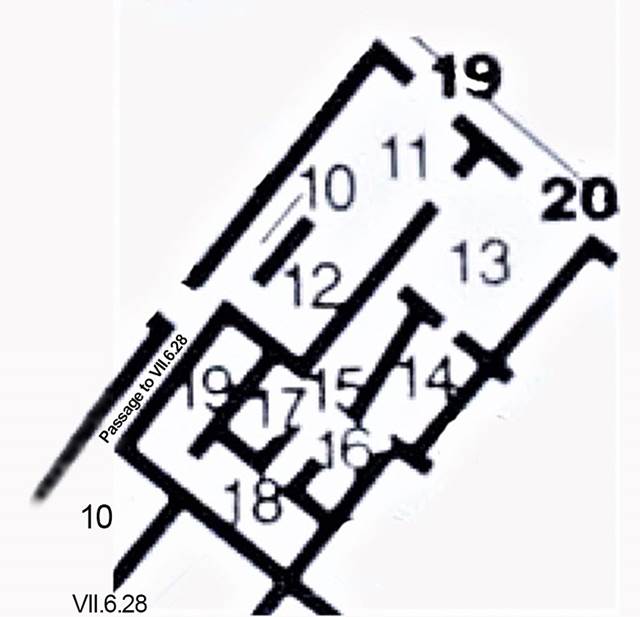
VII.6.19 Pompeii. Plan based on PPM. Corridor 10 joins the workshop VII.6.19 with a room in house VII.6.28 also numbered 10 by PPM.
See
Carratelli, G. P., 1990-2003. Pompei:
Pitture e Mosaici: Vol. VII. Roma: Istituto della enciclopedia italiana, p. 182.
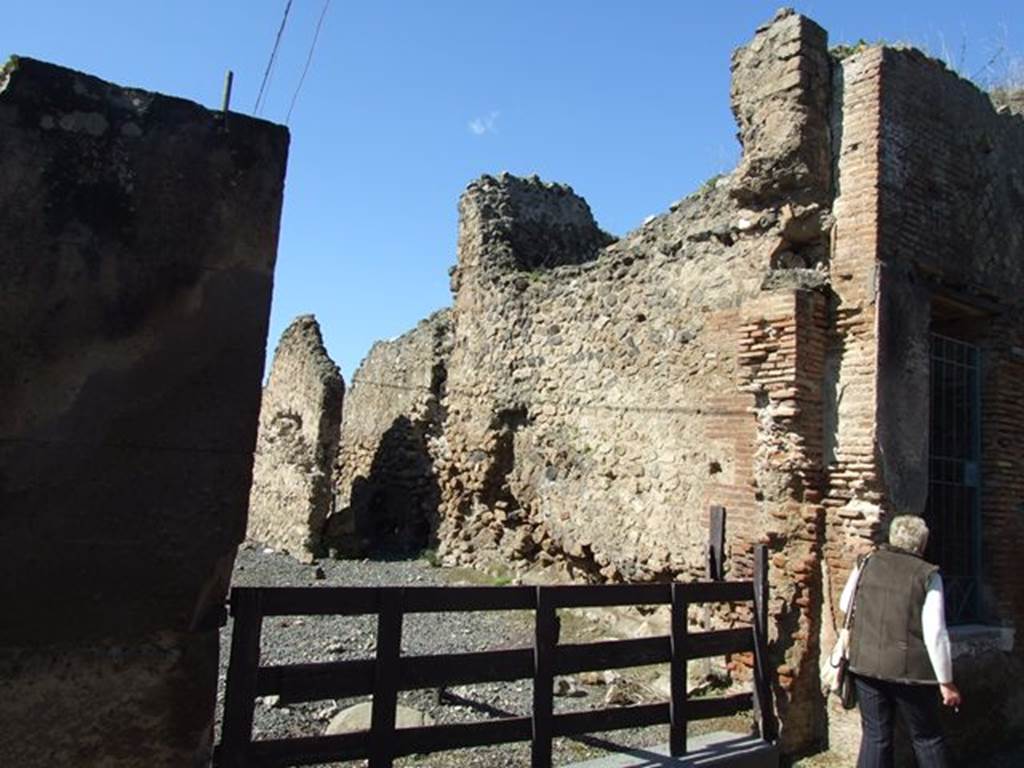
VII.6.19 Pompeii. March 2009. Entrance on Vicolo delle Terme, looking north-west.
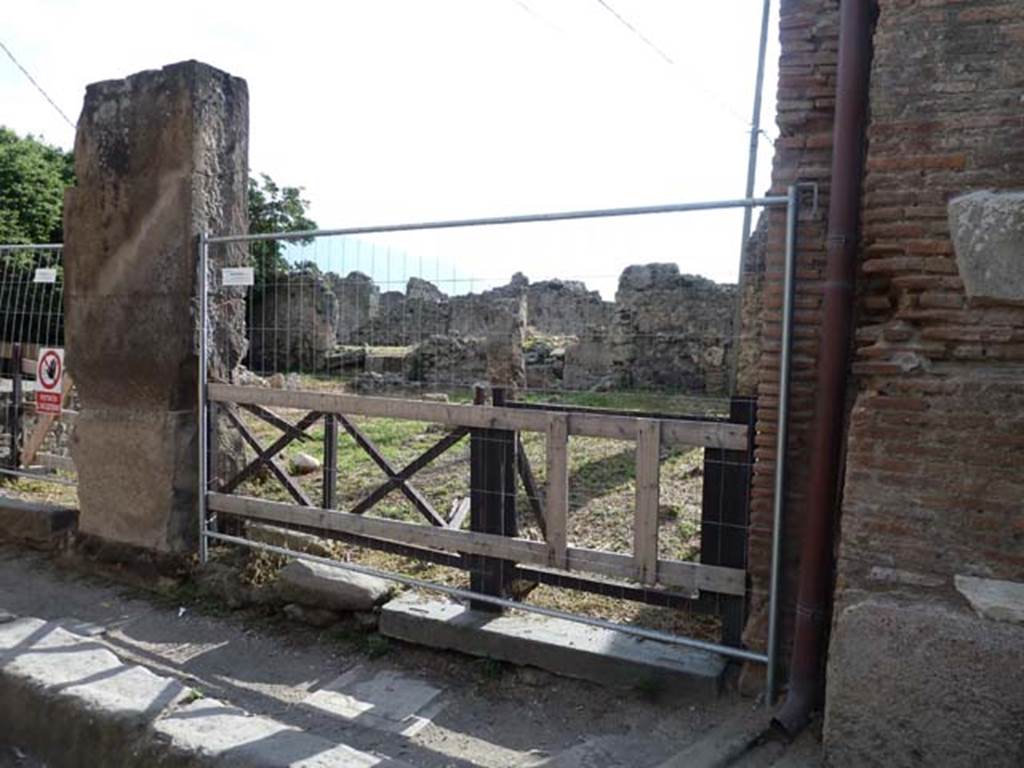
VII.6.19 Pompeii. September 2015. Looking south-west from entrance, towards the rear of VII.6.20.
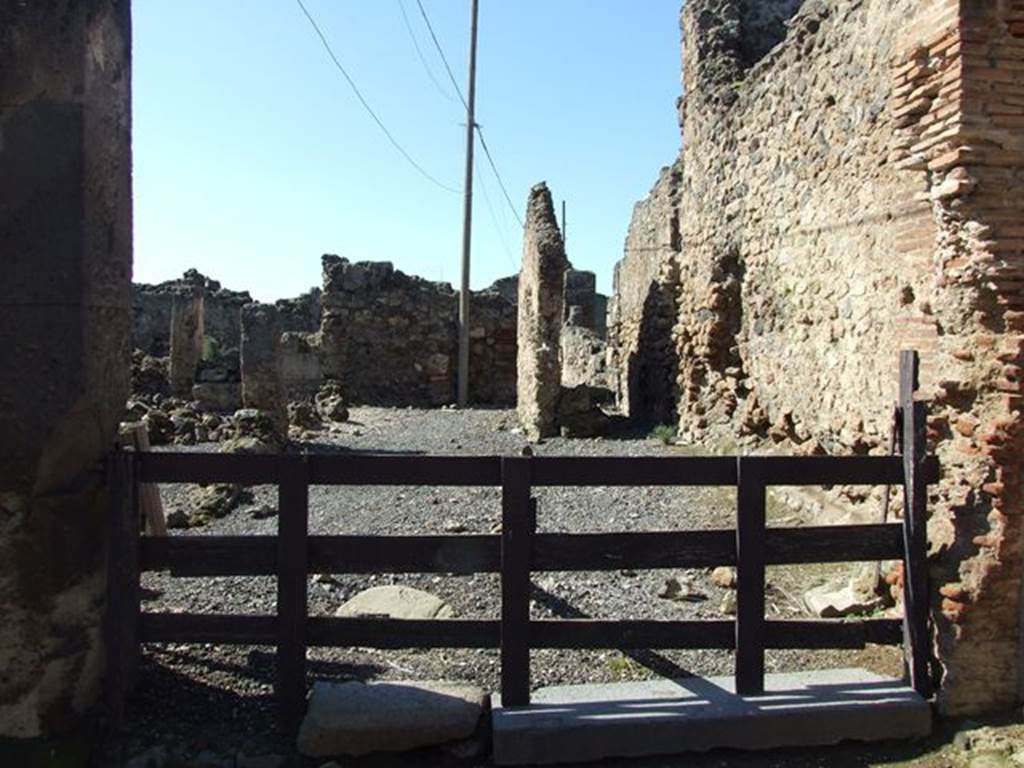
VII.6.19 Pompeii. March 2009. Looking west across workshop to rear.
According to Garcia y Garcia, this was very devastated and ruined following the September 1943 bombing, together with VII.6.20.
See Garcia y
Garcia, L., 2006. Danni di guerra a Pompei. Rome: L’Erma di Bretschneider. (p.102).
According to Della Corte, because of the considerable quantities of colouring materials and pigments found here, he considered it the workshop of an unknown and unnamed Negotiator Pigmentarius.
See Della Corte,
M., 1965. Case ed Abitanti di Pompei.
Napoli: Fausto Fiorentino. (p.173)
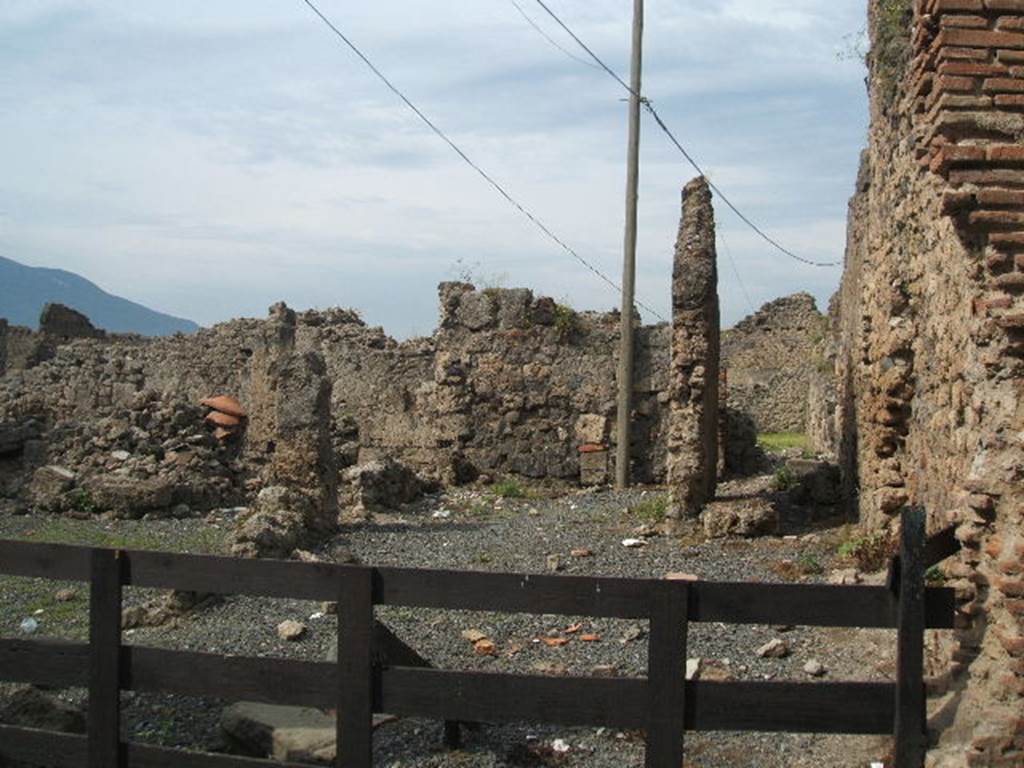
VII.6.19 Pompeii. May 2005. Looking west.
According to Eschebach, on the north side (right) were stairs to the upper floor.
On the south side, (left) was a sales-table, together with doorway to VII.6.20.
On the west side, the rear room had a doorway to VII.6.28 with 4 dormitories behind VII.6.17 & 18, for the workers?
See Eschebach, L., 1993. Gebäudeverzeichnis und Stadtplan der antiken Stadt Pompeji. Köln: Böhlau. (p.296)
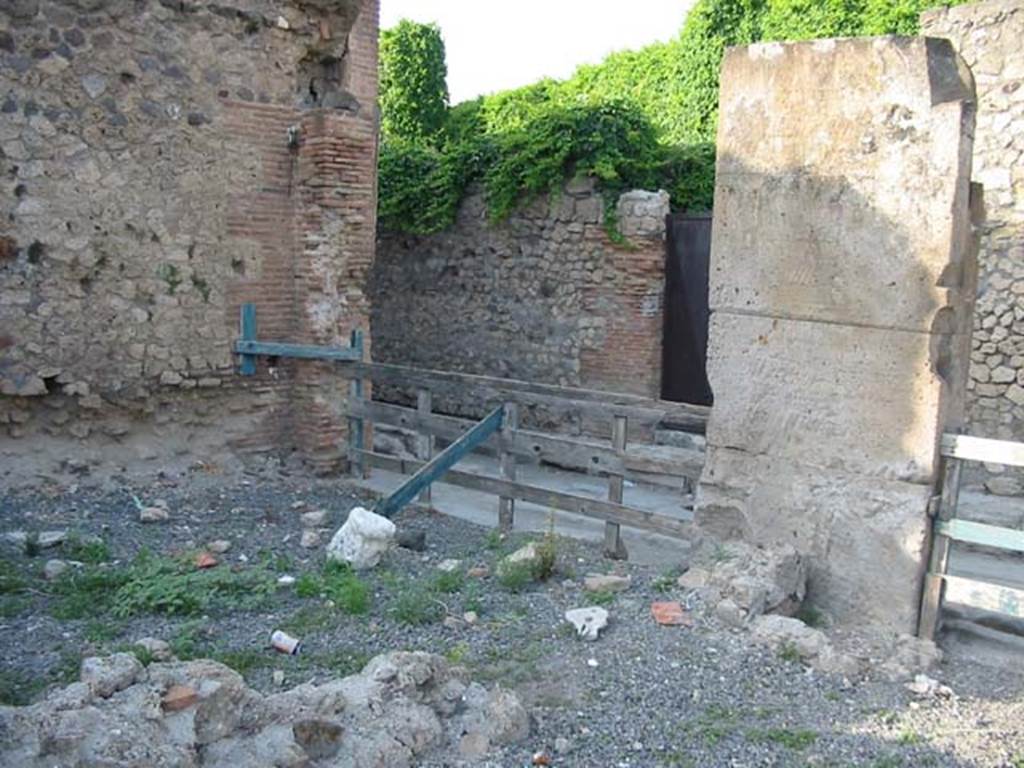
VII.6.19 Pompeii. May 2003. Looking east towards entrance doorway on Vicolo delle Terme. Photo courtesy of Nicolas Monteix.
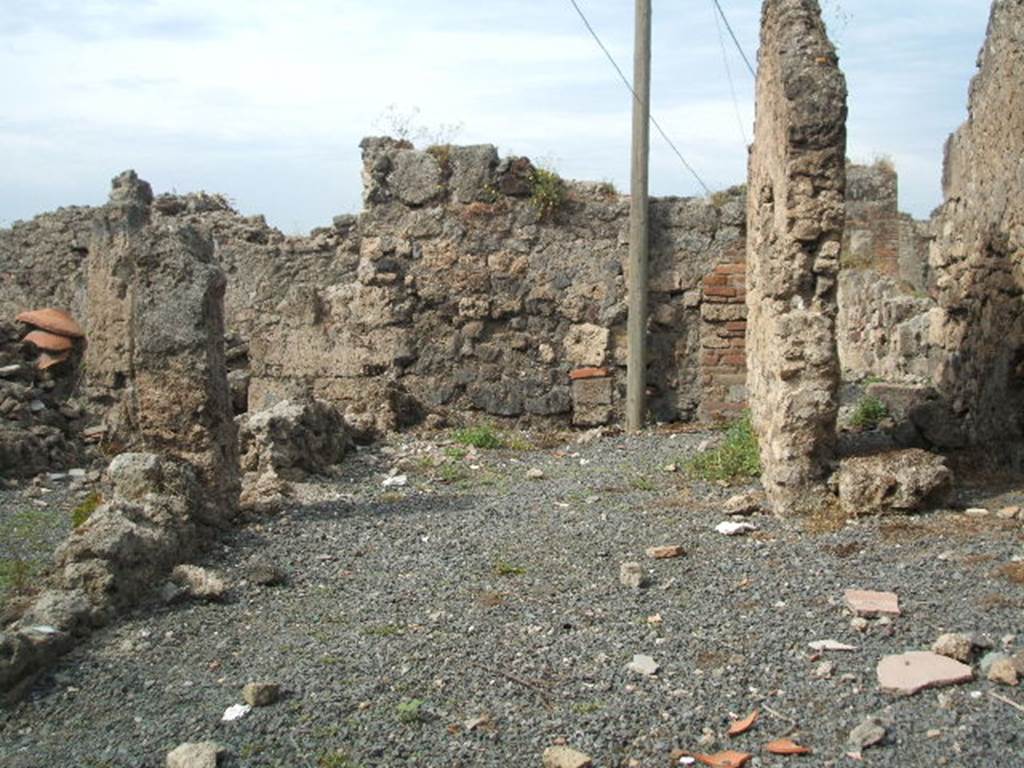
VII.6.19 Pompeii. May 2005. Looking west to room at rear of workshop.
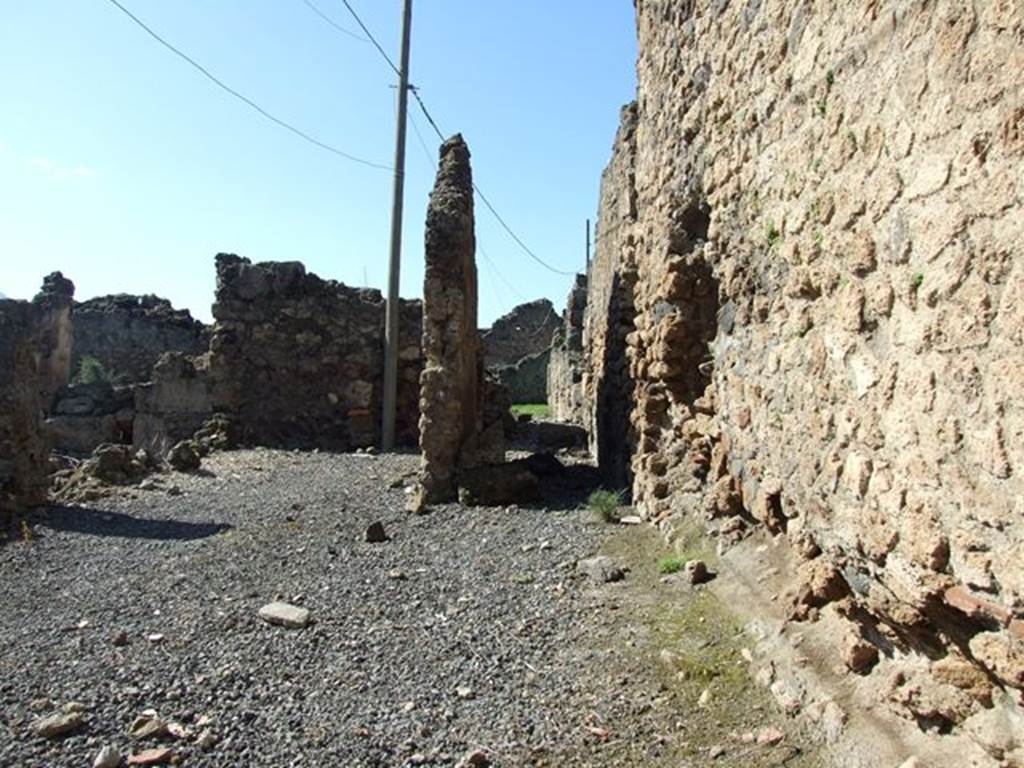
VII.6.19 Pompeii. March 2009. Workshop, rear room, site of steps to upper floor and corridor leading to house at VII.6.28.
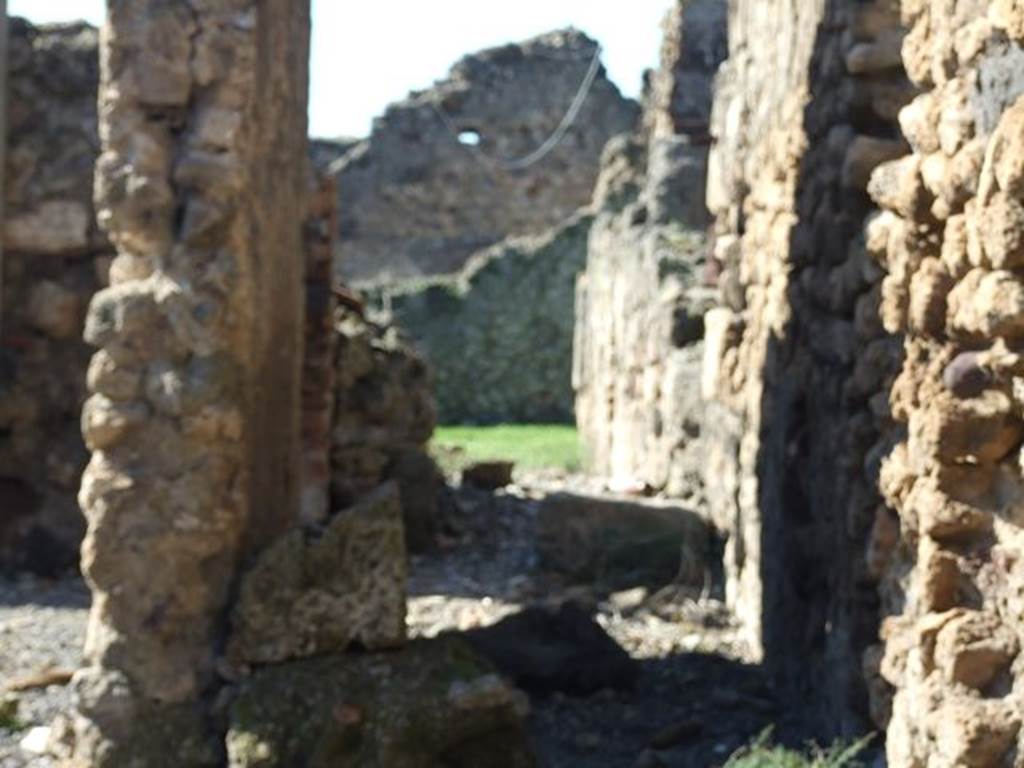
VII.6.19 Pompeii. March 2009. Looking west to rear, and house at VII.6.28.
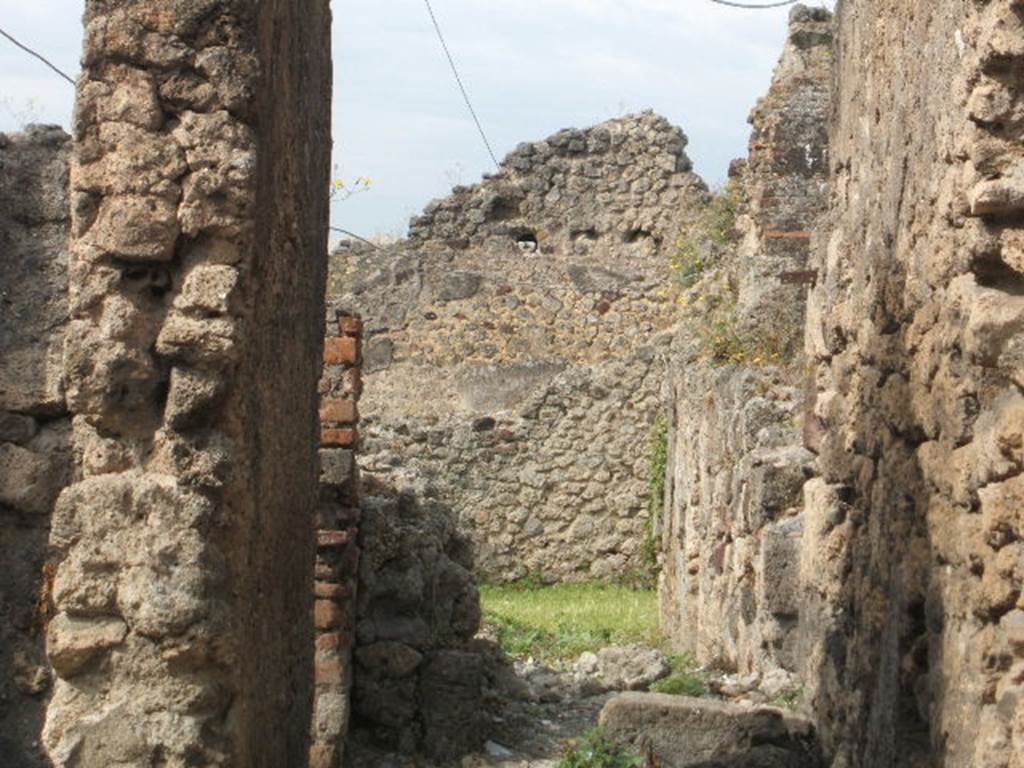
VII.6.19 Pompeii. May 2005. Corridor 10 at rear, leading to VII.6.28.