VII .6.3 Pompeii. Casa della Diana III
or House of M. Spurius Saturninus and D. Volcius Modestus.
Notizie degli Scavi, 1910, pp. 439-453.
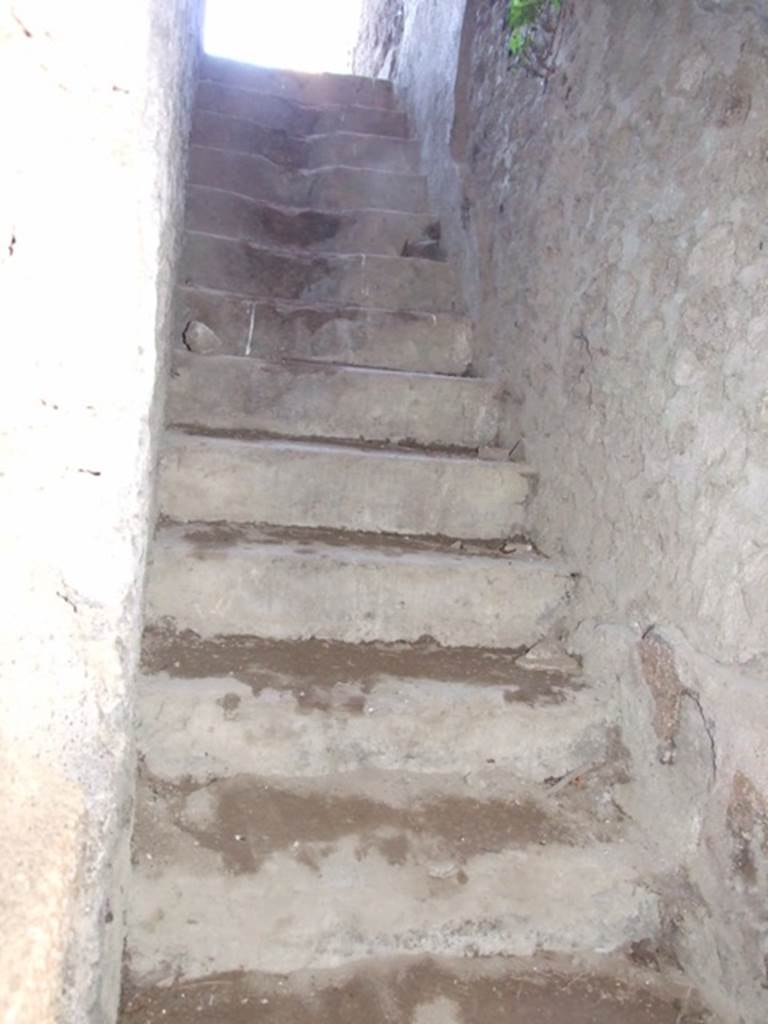
The stairway 16 had sixteen masonry steps of varying heights and had a
high plaster zoccolo/plinth on both sides.
The upper was covered by a vault and received light from two skylights.
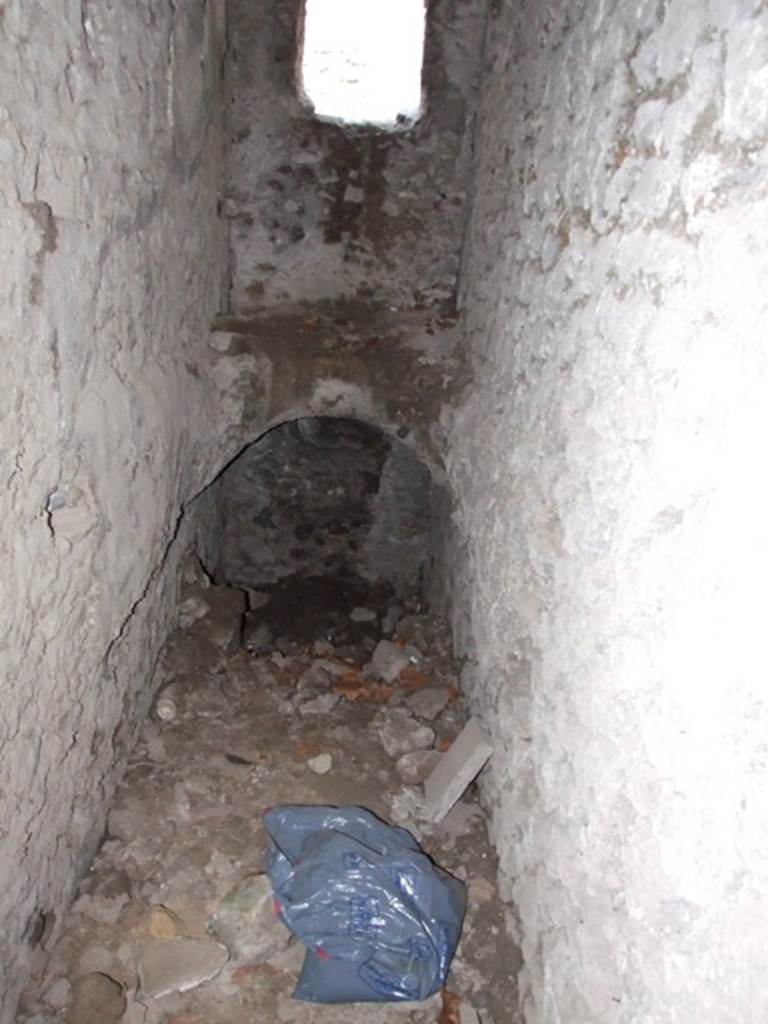
At the base, turning to the right, you enter first into a kind of vaulted
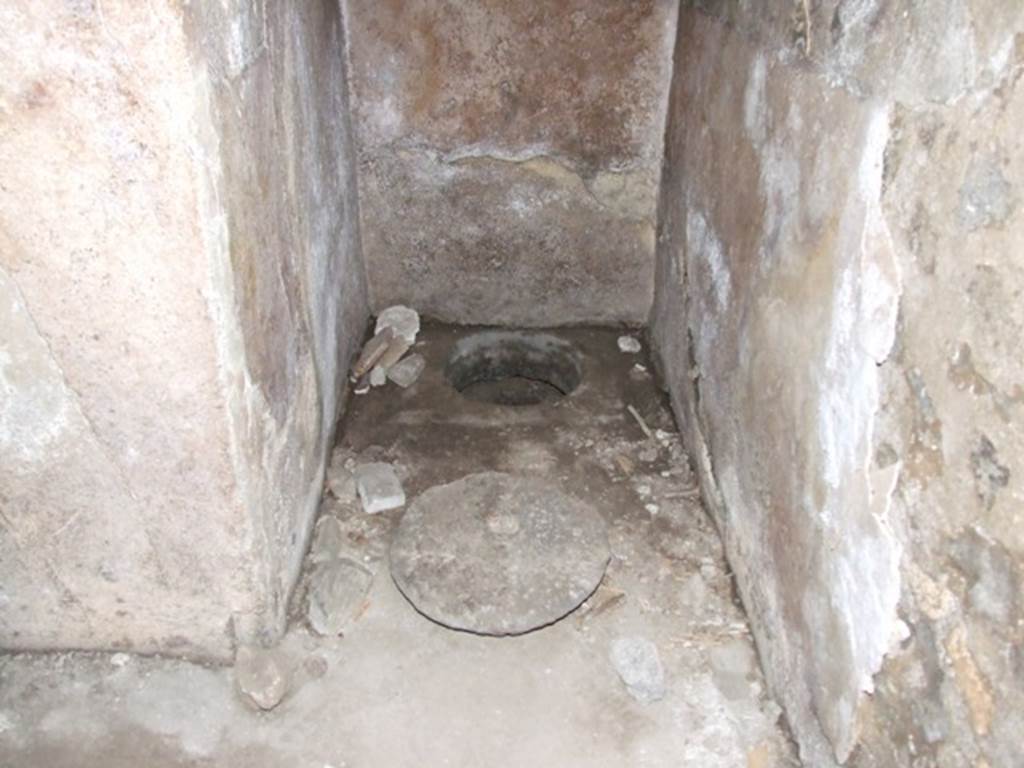
corridor “f” (in the plan these underground rooms are indicated with dots), at
the rear of which was a latrine, with a square window at the top which opened
onto the western vicolo, just above the street level. The walls were roughly
plastered. From the end of the corridor, near the stairs, we pass into a larger
room G, a kitchen, with barrel-vault, unadorned walls, and with three low walls
perpendicular to the northern wall, perhaps with remains of a hearth. In the
north-west corner a fusorium. (?).
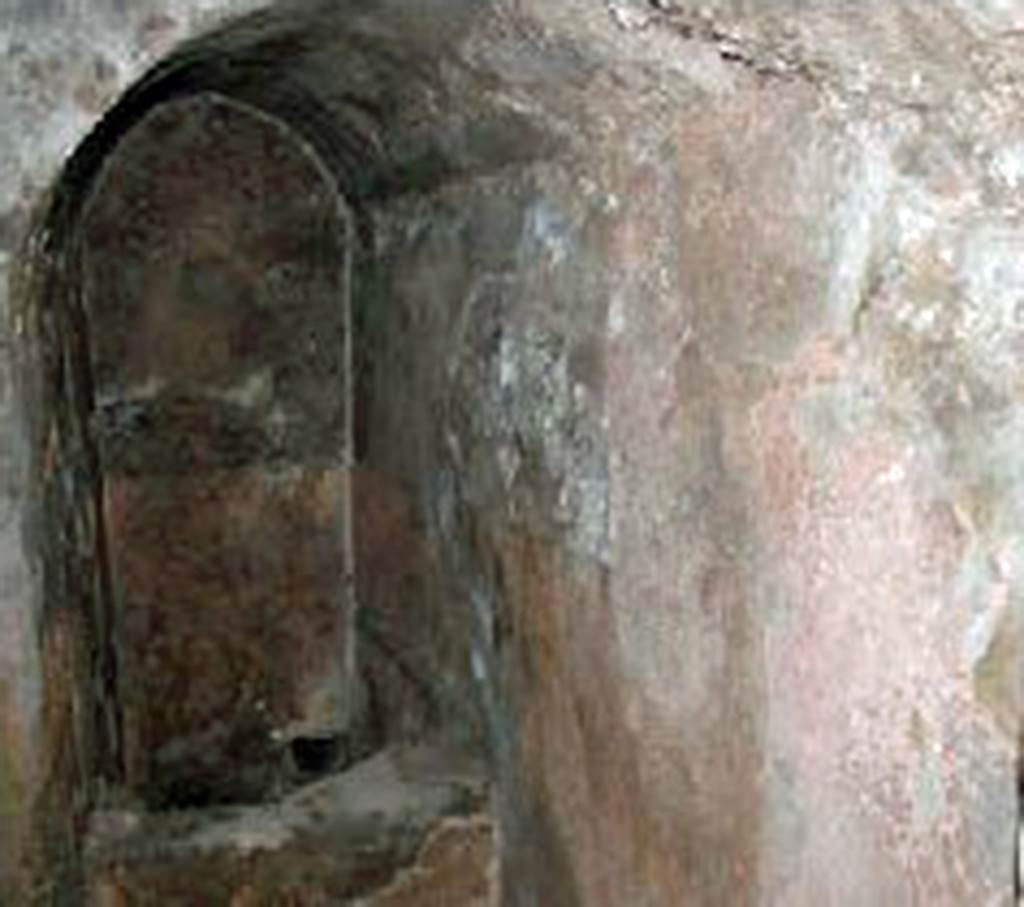
On the extreme right of the same northern wall, the cylindrical altar
was painted on white plaster, which was approached by the two serpents,
symmetrically arranged on one side and the other. Green leaved plants were
painted on the ground beneath them. Above the altar, a tile was embedded in the
wall, now only partially existing, which would have made a true altar in front
of the painted figures (perhaps of the family Genius, the Penates and the
Lares) of which little or nothing remains.
In the extreme left of the eastern wall was a small doorway, which led
into a narrow passage “i”, corresponding to below to the stairs 16. Facing the
doorway was the rectangular masonry mouth of the cistern, which perhaps was fed
by the waters that flowed in the peristyle. It was closed by a wooden lid that
was introduced to slide between the walls of the hole, in the groove which
still remains. At the top, in the two side walls, was a rectangular hole, both
destined to hold a wooden beam to which the pulley was suspended. At the rear of
the passageway “i” was another mouth of a cistern “s” (undoubtedly of the same
cistern), but circular and closed by a lid of lava.
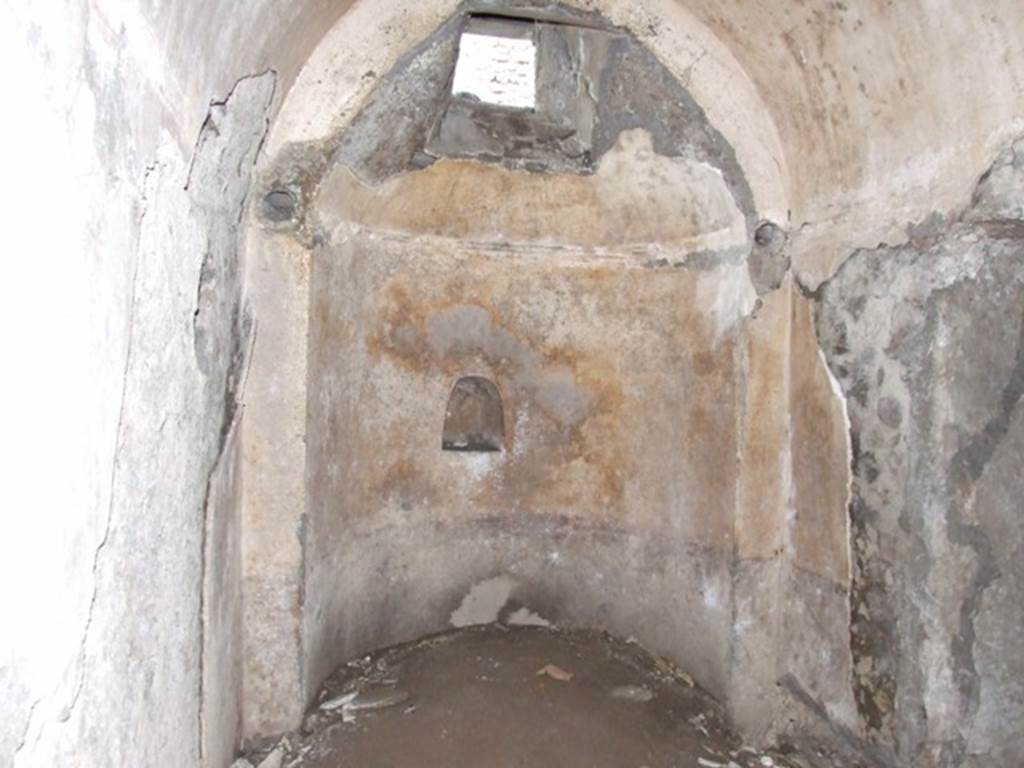
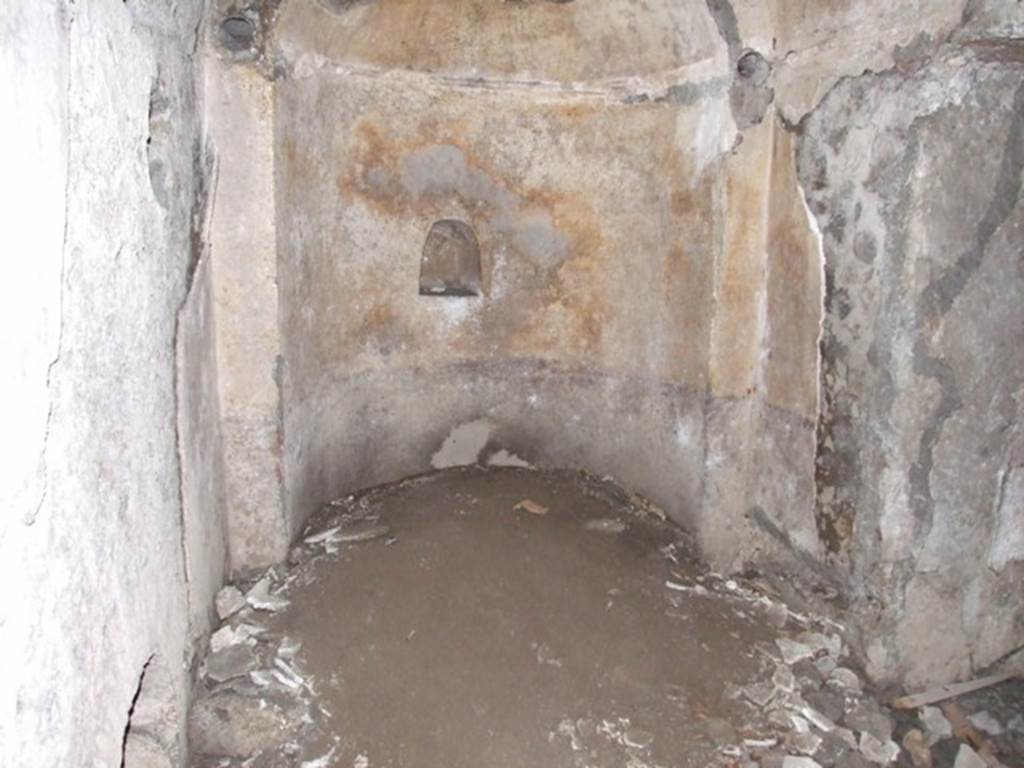
To the left of the entrance was another room “j”. This had a rectangular shape; was covered by
a low vault, and ended with an apse on
the west side, equipped with a window at the top which gave onto the western
vicolo, in the base of the east wall of this western vicolo, as the other
windows of these underground rooms.
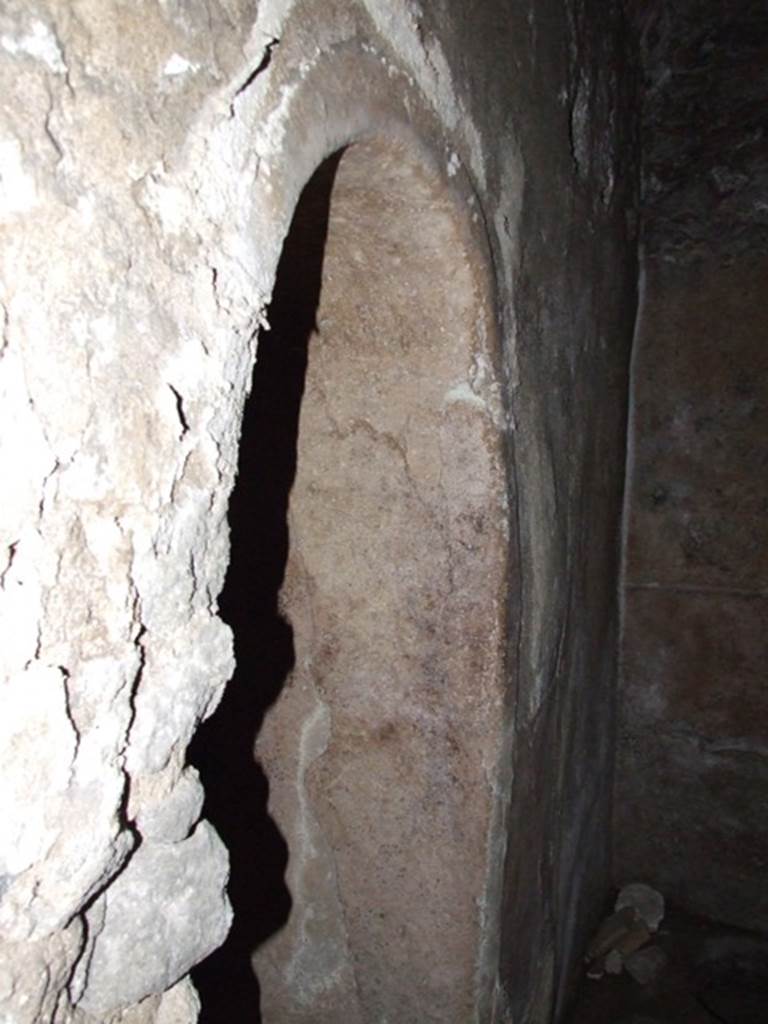
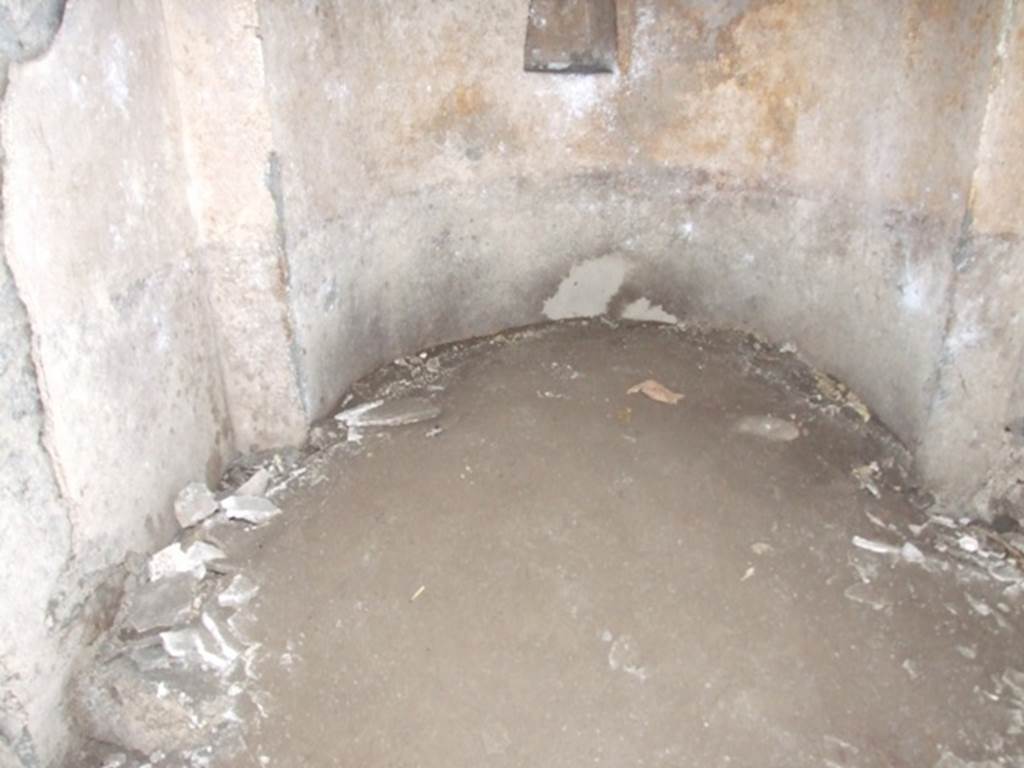
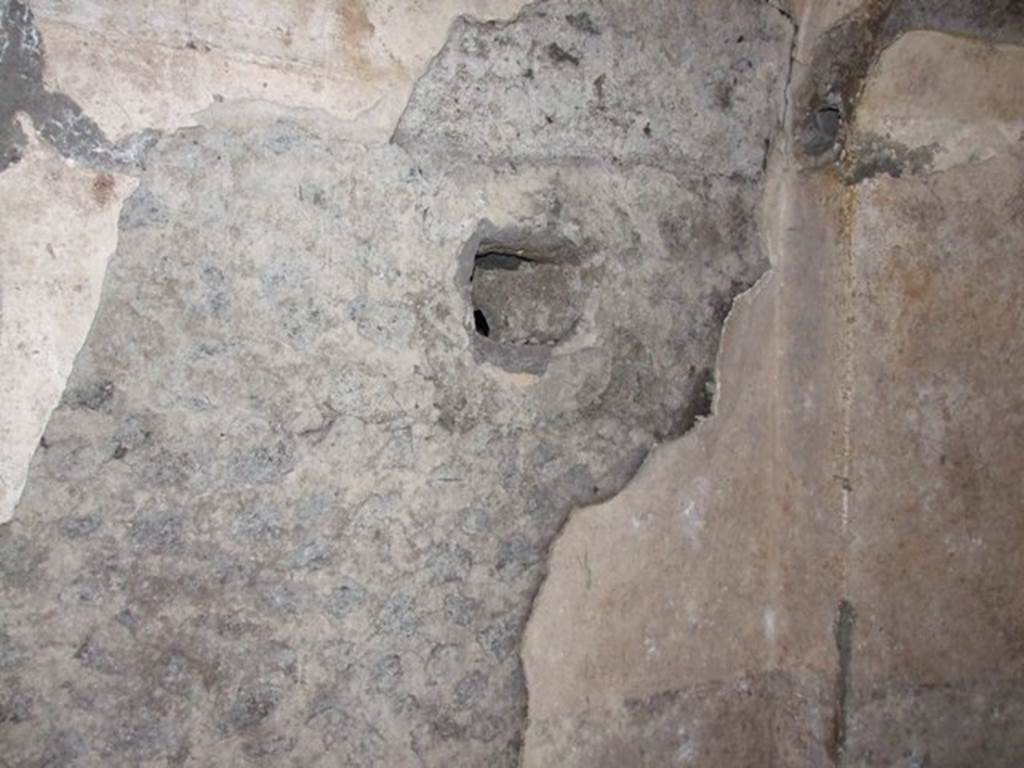
In the middle of the apse was a semi-circular niche, in whose left wall
opened a kind of tunnel in the inside of the wall, I do not know where it
finishes. Another niche, also semi-circular, existed in the foot of the south
wall, in the height of which was a hole, communicating with the kitchen. In the
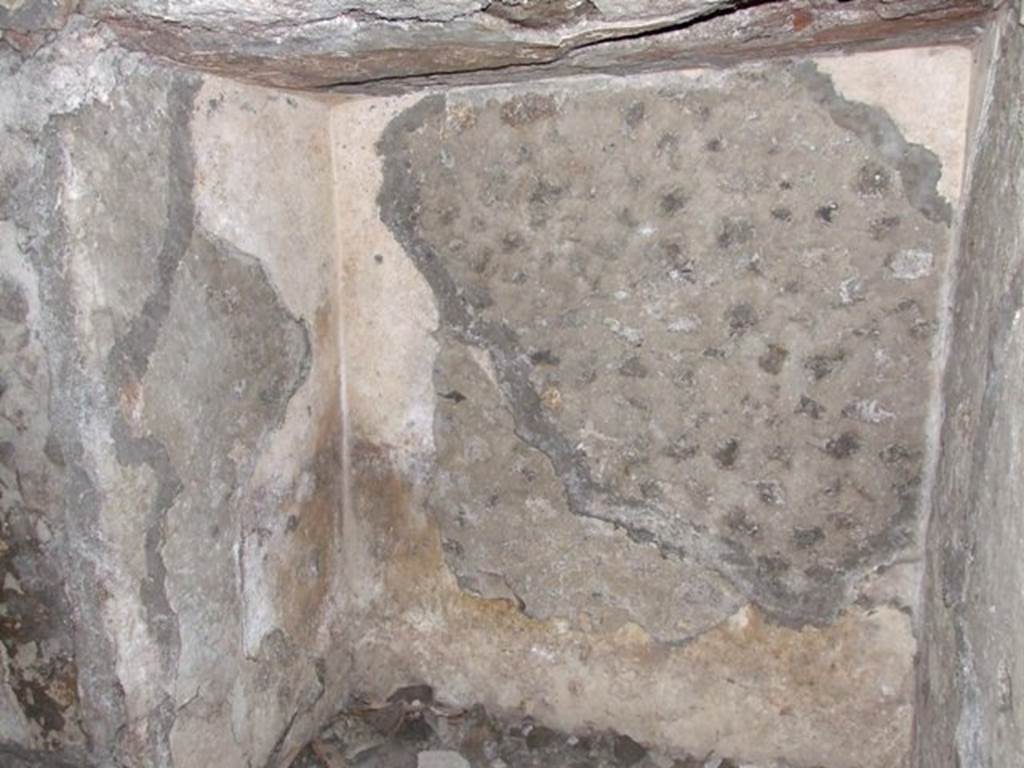
north wall was a large rectangular recess.
All these walls were covered with plaster.
For description of some finds, and graffiti, see Notizie degli Scavi, 1910, p.439-453:
on our final page at the end of the photographs.
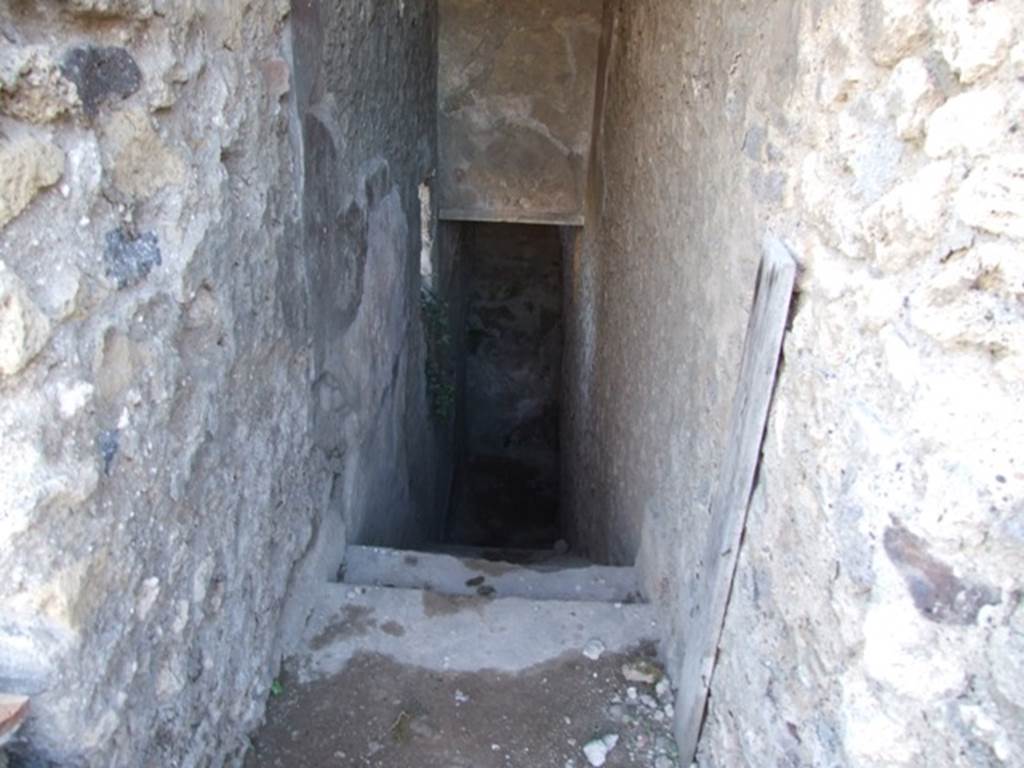
According to Spano the staircase had sixteen masonry steps of varying heights.
There was a tall plaster plinth on both sides.
The top was vaulted and received light from two skylights.
See Notizie degli Scavi di Antichità, 1910,
p. 444.
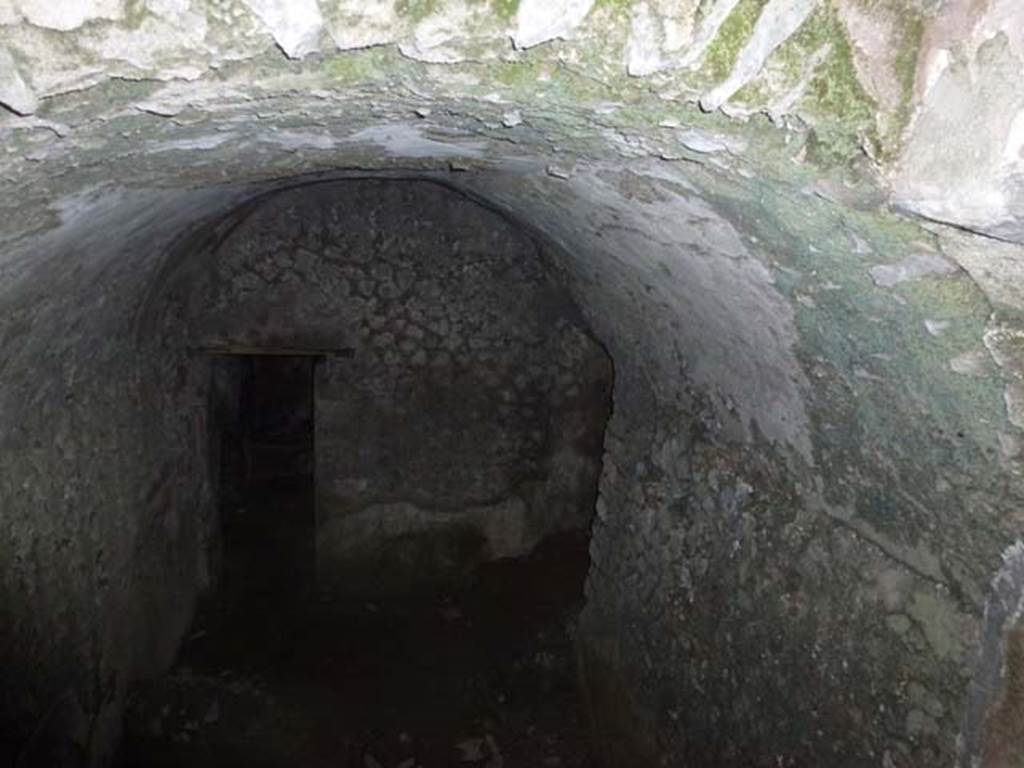
VI.6.3 Pompeii. June 2012. Looking east into kitchen g, from window at floor level in Vicolo del Farmacista.
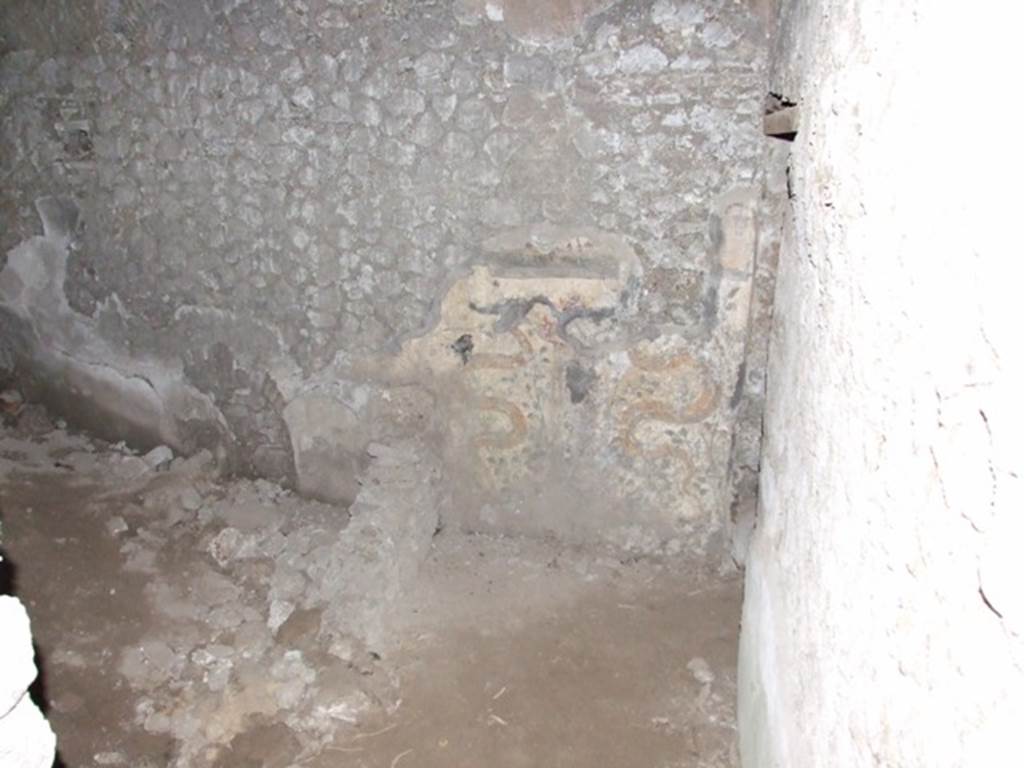
Remains of Lararium wall painting, with ruins of masonry structure on its west side.
According to Spano there were three low walls at right angles to the north wall.
See Notizie degli Scavi di Antichità, 1910,
p. 444.
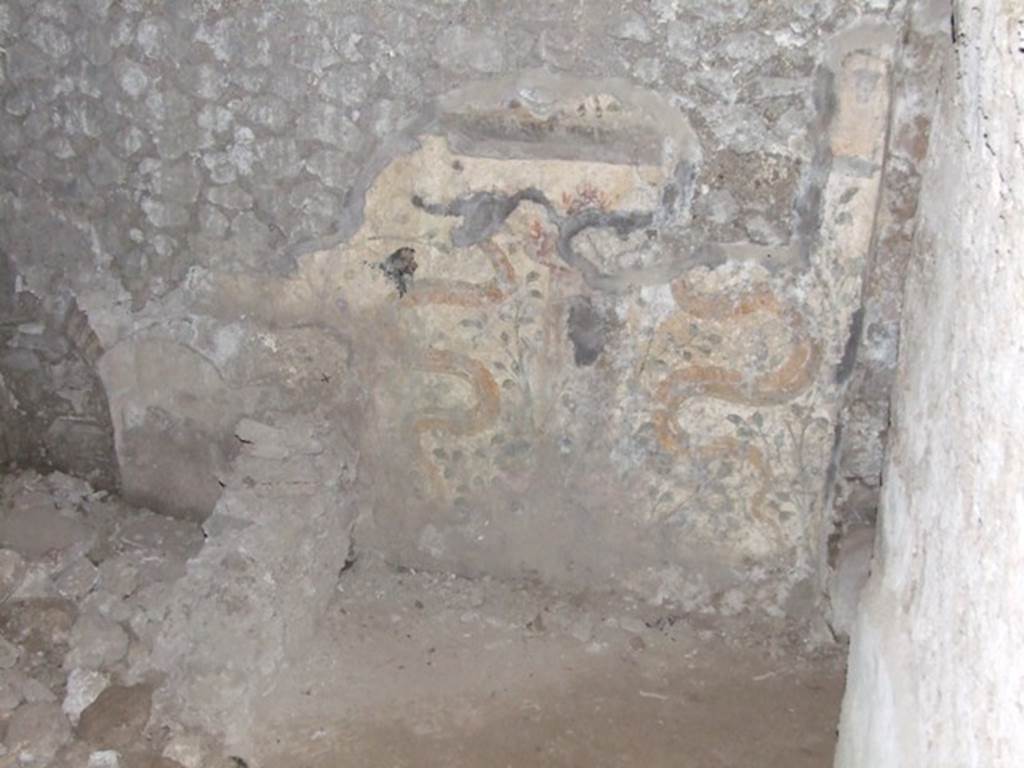
Two upright serpents either side of a round altar with plants in the background.
Above this on the upper part, now lost, was an offering scene.
See Fröhlich, T., 1991. Lararien und Fassadenbilder in den Vesuvstädten. Mainz: von Zabern. (L87, T: 42,1).
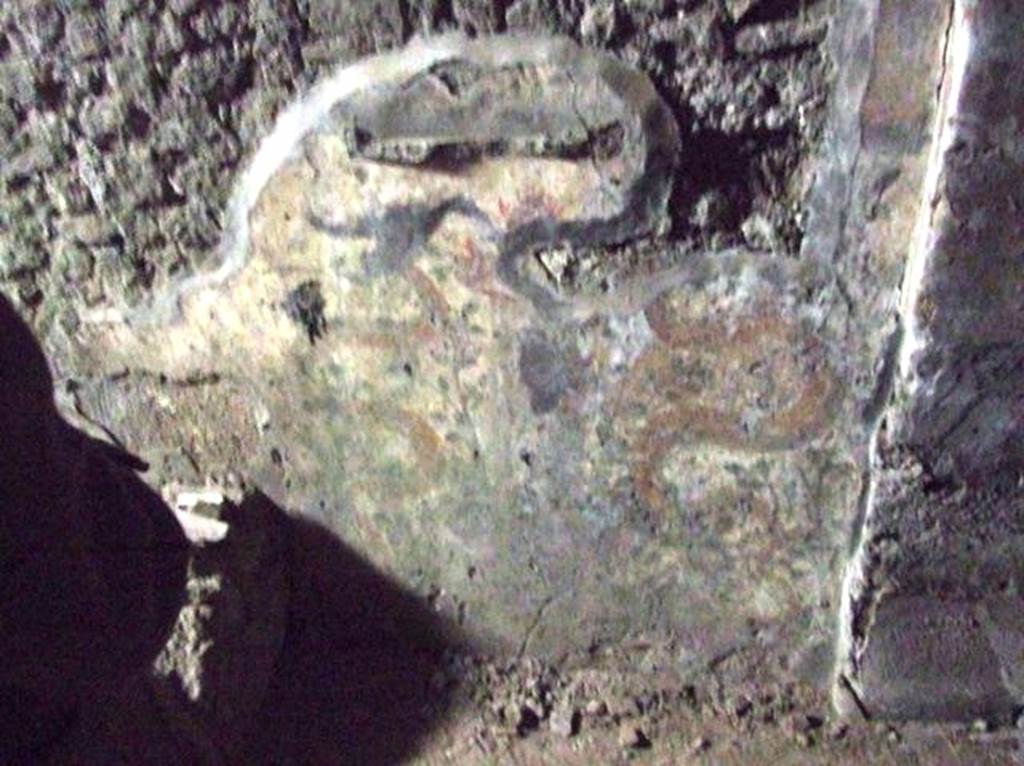
According to Boyce, this was located on the north wall next to the ruins of a masonry structure, probably the hearth.
It was painted on a white background.
In the lower zone, two yellow serpents were confronted at a cylindrical altar with offerings, the background adorned with many plants.
A tile was embedded in the wall above the painted altar to serve as a projecting shelf for offerings in front of the painted figures in the upper zone.
Only faint traces of these figures could be seen at the time of excavation.
See Boyce G. K., 1937. Corpus of the Lararia of Pompeii. Rome: MAAR 14. (p.67, no.287)
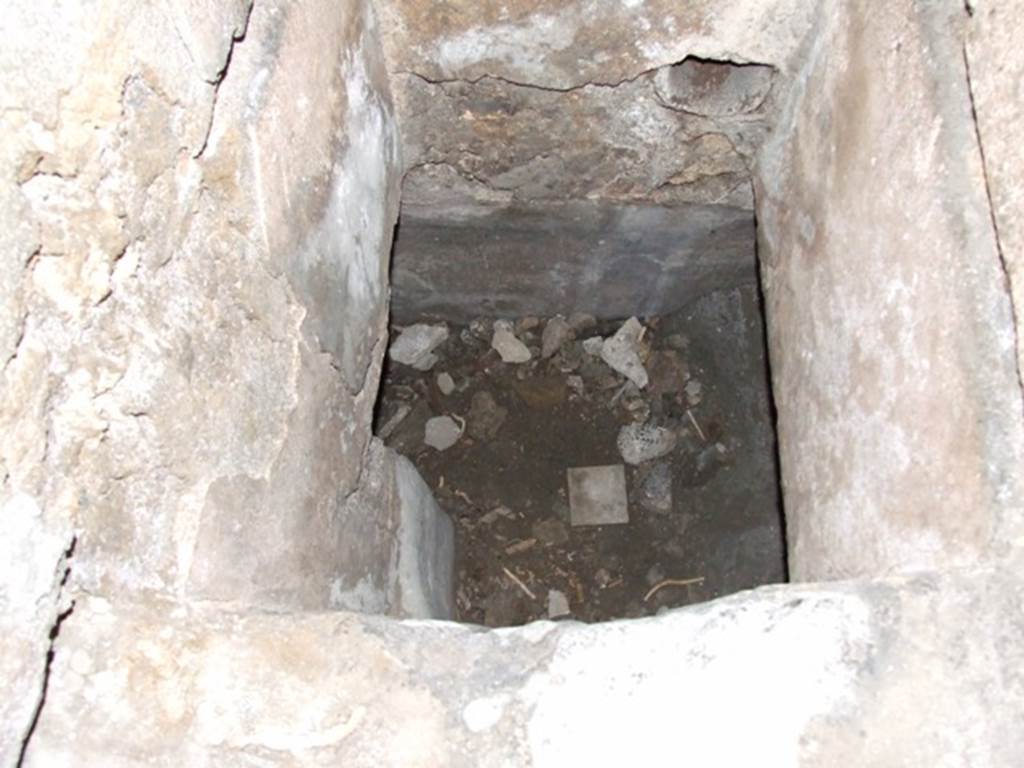
According to Spano this was closed by a wooden lid that slid in the grooves still visible in the wall.
Rectangular holes in the wall above held a wooden beam from which a pulley was suspended.
See Notizie degli Scavi di Antichità, 1910,
p. 444.