VI.16.21 Pompeii. Possible Statio Vindemitorum (grape-gatherers’ post).
Linked to VI.16.20, VI.16.22, VI.16.23 and VI.16.24. Excavated 1904.
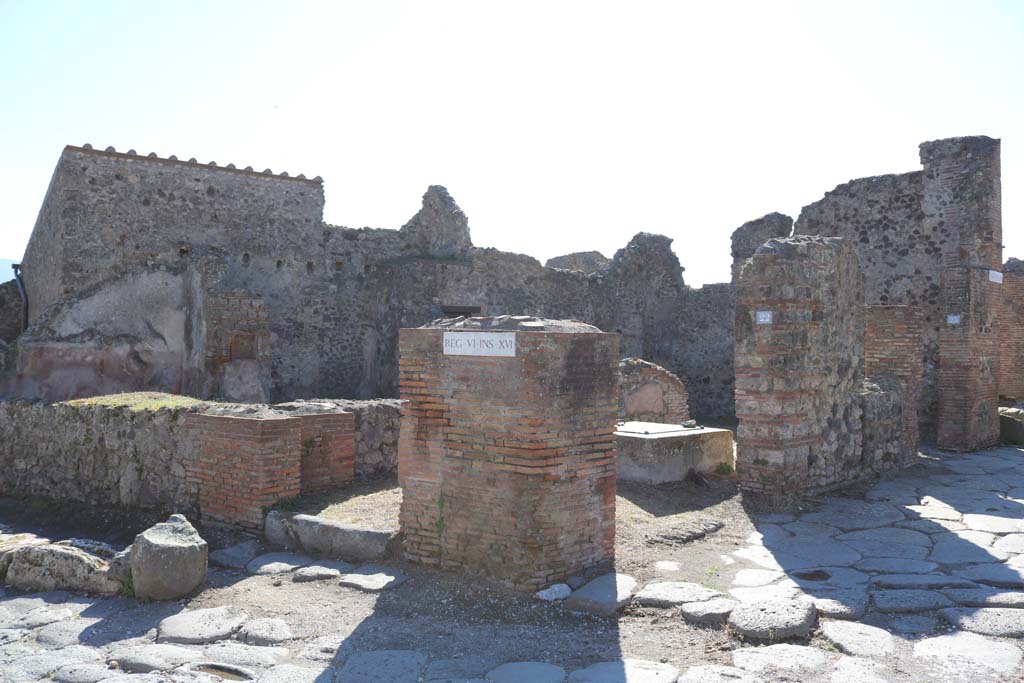
VI.16.21 Pompeii. December
2018. Looking south-west to entrance doorway, on left. Photo courtesy of Aude
Durand.
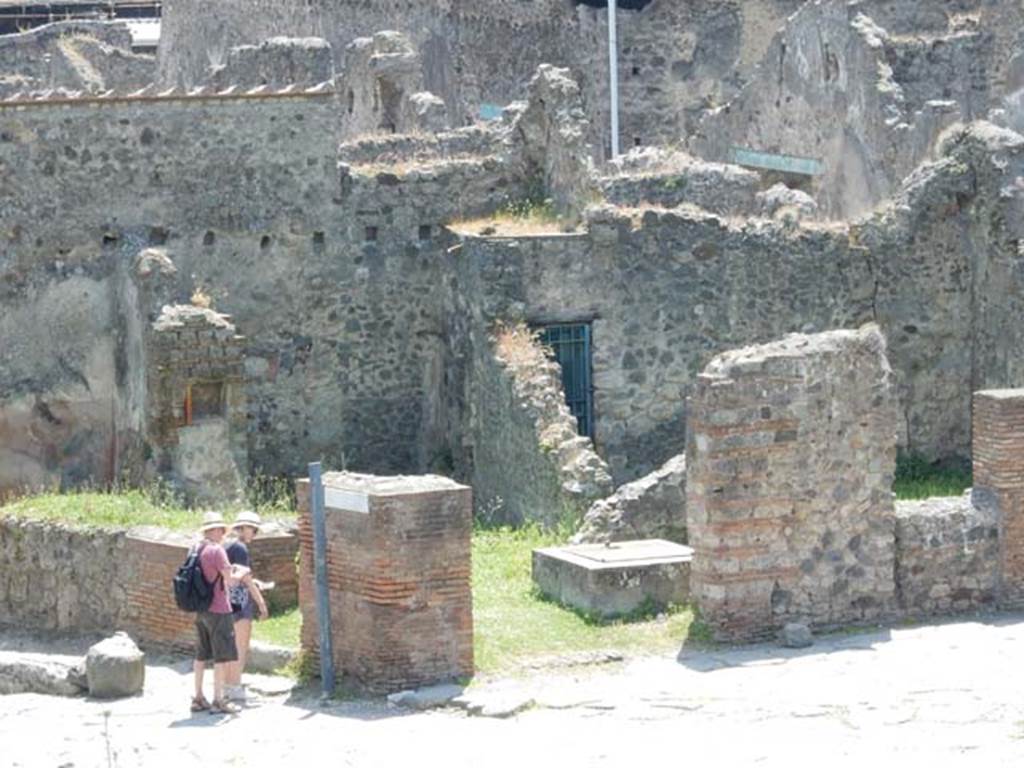
VI.16.21 Pompeii. May 2015.
Entrance doorway with two tourists about to enter. VI.16.22 is in the centre of the photo. Photo courtesy of Buzz Ferebee.
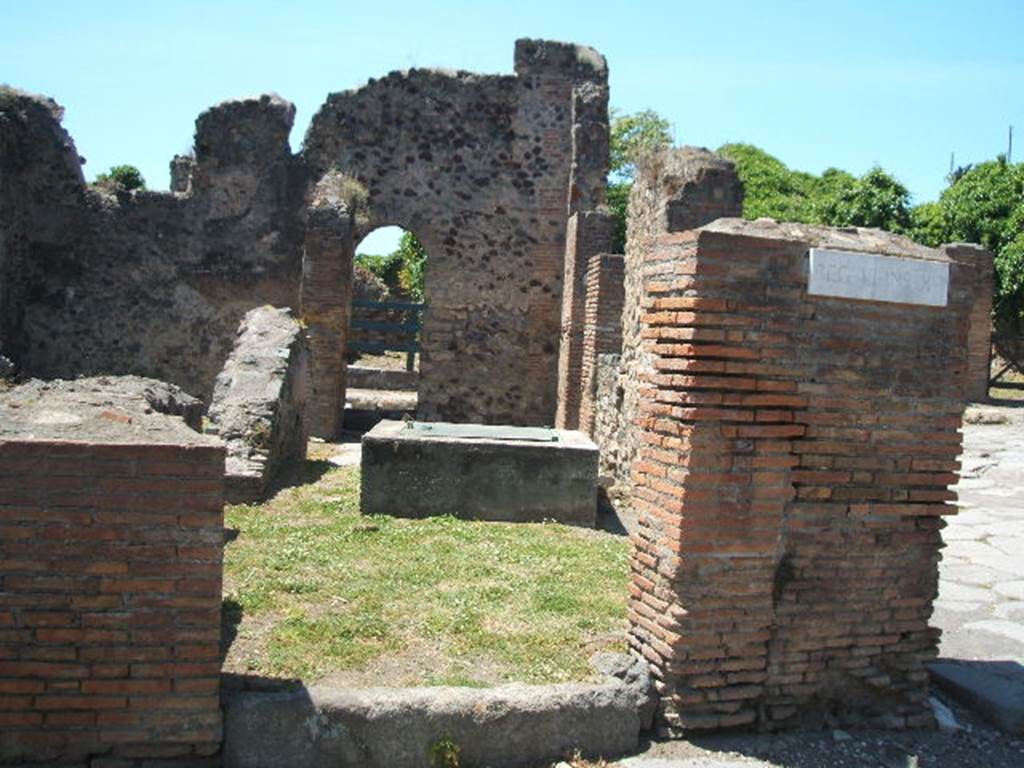
VI.16.21 Pompeii. May 2005. Looking west to entrance doorway, and across north side towards VI.16.24.
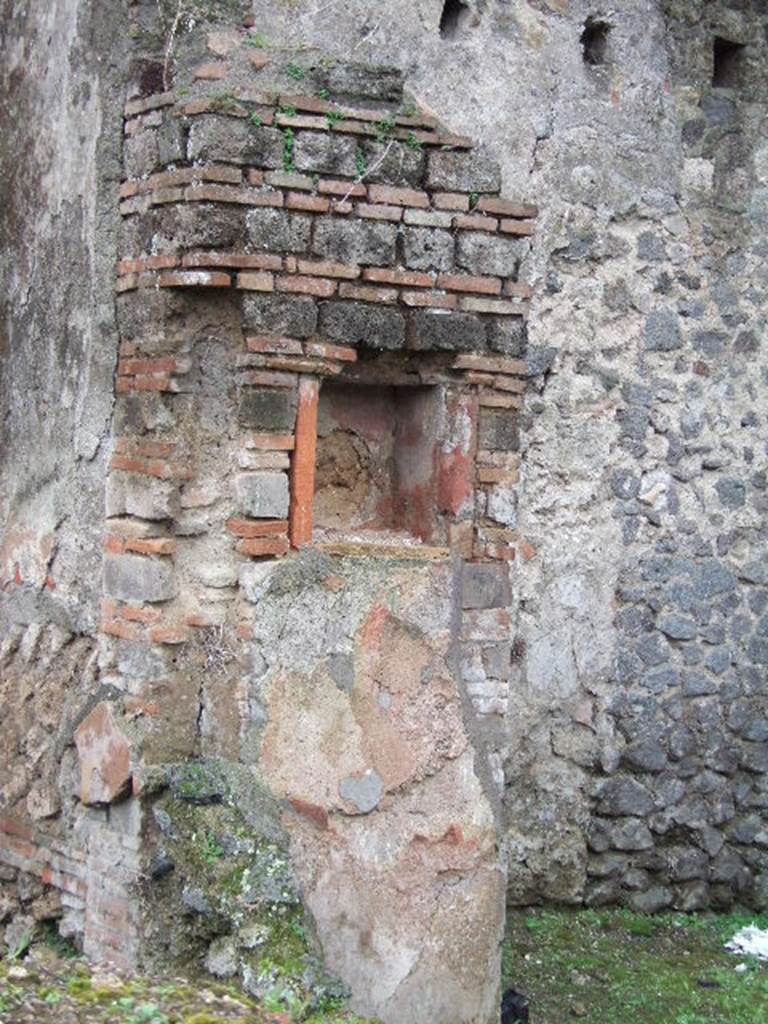
VI.16.21 Pompeii. December 2005. Niche in south wall, originally this may have been in a rear room of VI.16.21/22.
According to Boyce, numbered VI.16.20-24.
In the central room on the south side of the house is a rectangular niche.
It is in the north side of a pilaster which projects from the east wall (now collapsed).
On the wall below the niche, were painted two large yellow serpents on a red background.
See Notizie degli Scavi di Antichità, 1908, 182.
See Boyce G. K., 1937. Corpus of the Lararia of Pompeii. Rome: MAAR 14. (p.59, no.225)
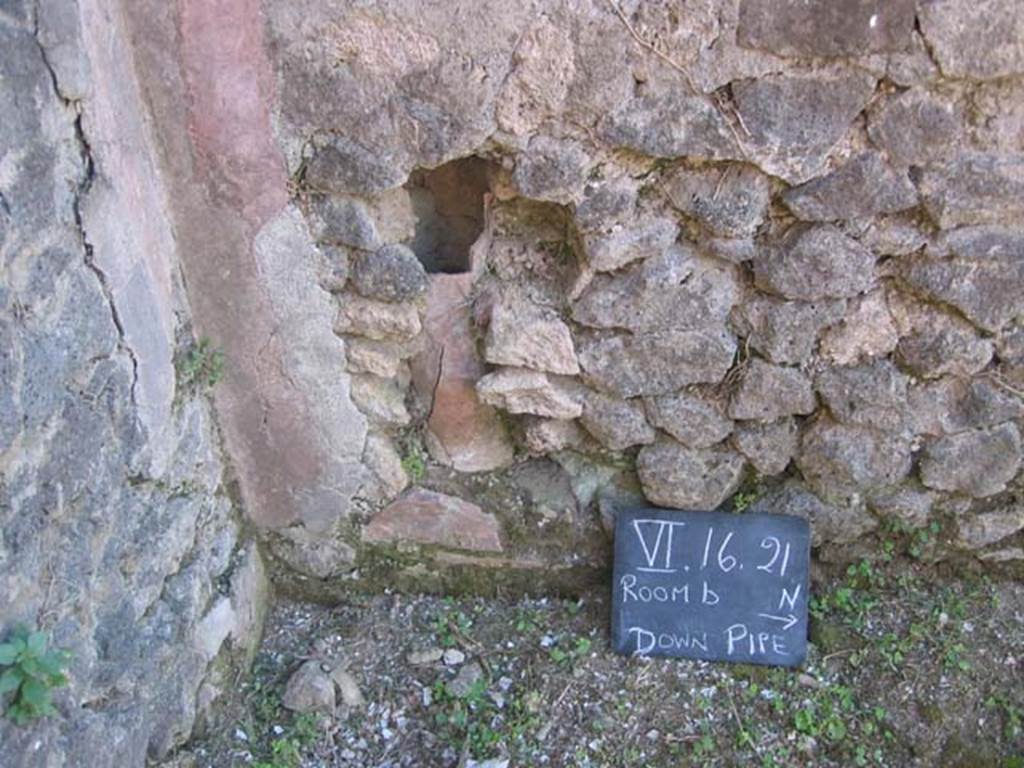
VI.16.21 Pompeii. July 2008. Downpipe in wall, (also included in VI.16.20). Photo courtesy of Barry Hobson.
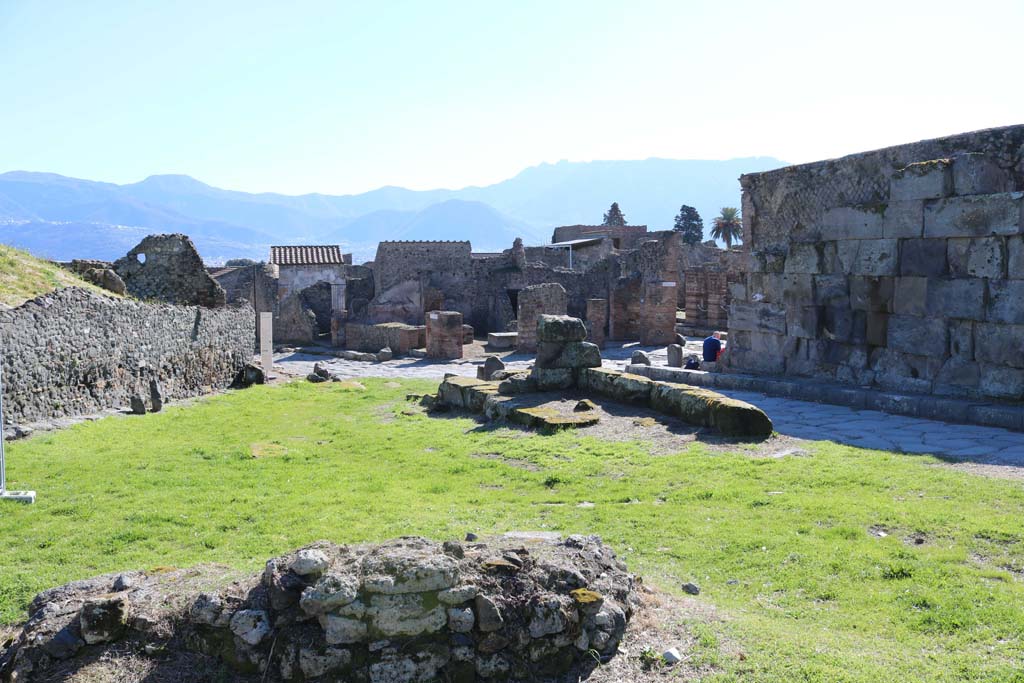
VI.16.21 Pompeii and
VI.16.22, in centre. December
2018.
Looking
south-west from north of the Vesuvian Gate, on right. Photo courtesy of Aude
Durand.