VI.15.1 Pompeii. House of the
Vettii or Casa dei Vettii or Domus Vettiorum.
Excavated 1894-1895. Linked to VI.15.27.
Peristyle
Part 2 Part 3 Part 4 Part 1 VI.15.1 Plan
In Notizie degli Scavi, prior to January 1897, this house was described as being in Insula 12 of Reg. VI, afterwards it was changed to Insula 15 of Reg. VI.
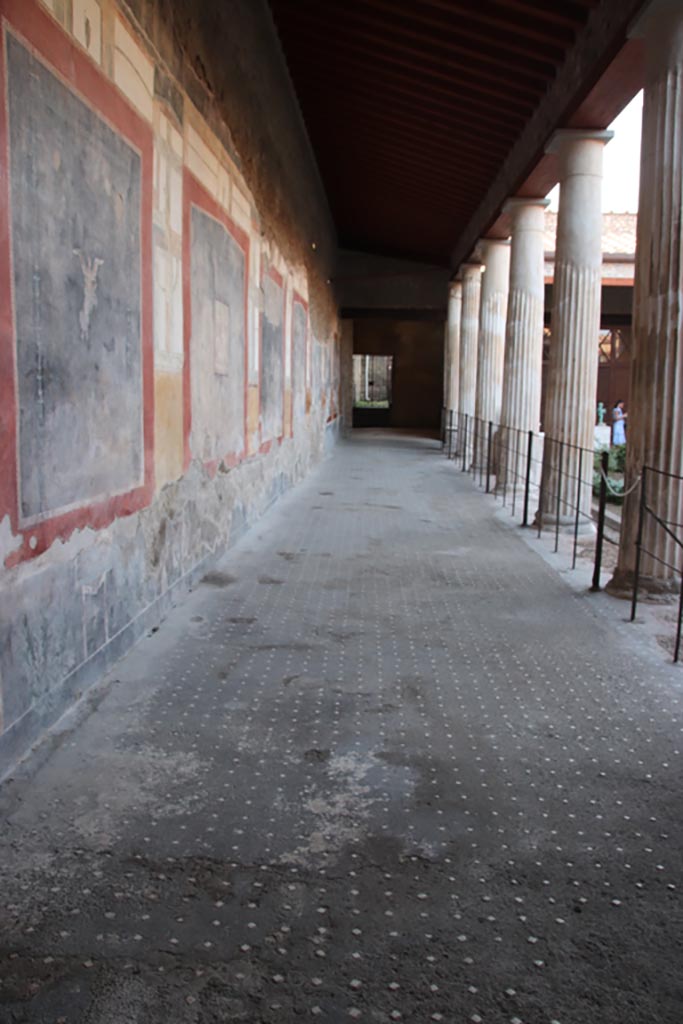
VI.15.1 Pompeii. October 2023.
Looking north along west portico of peristyle. Photo courtesy of Klaus Heese.
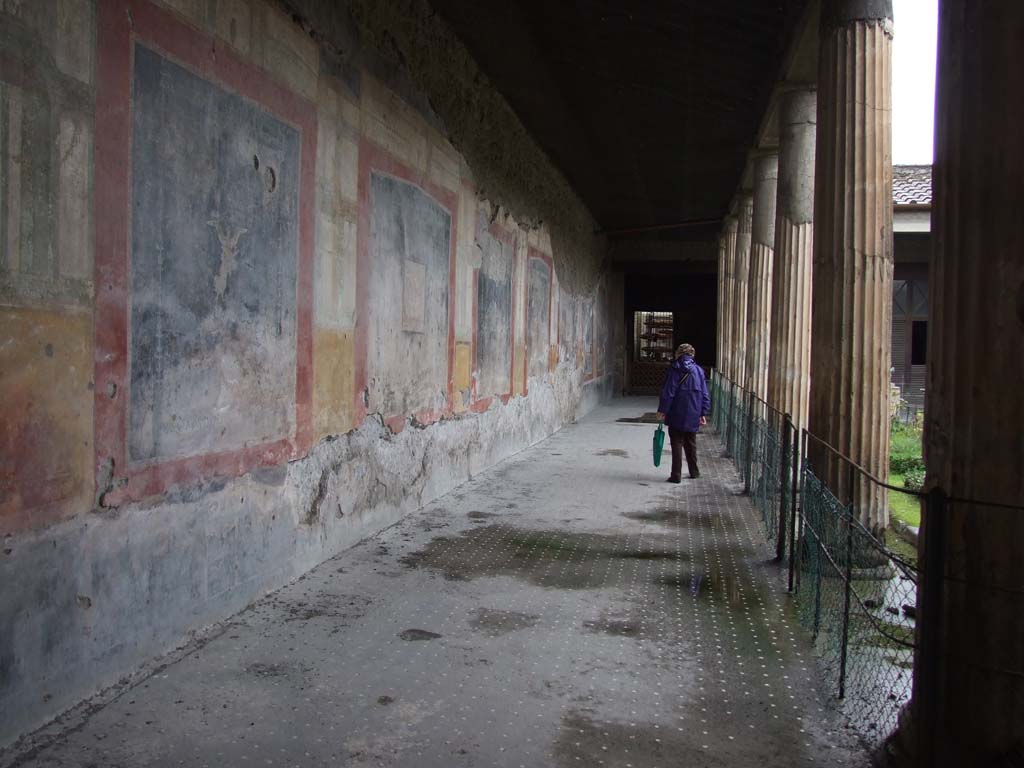
VI.15.1 Pompeii. December 2006. Looking north along west portico of peristyle.
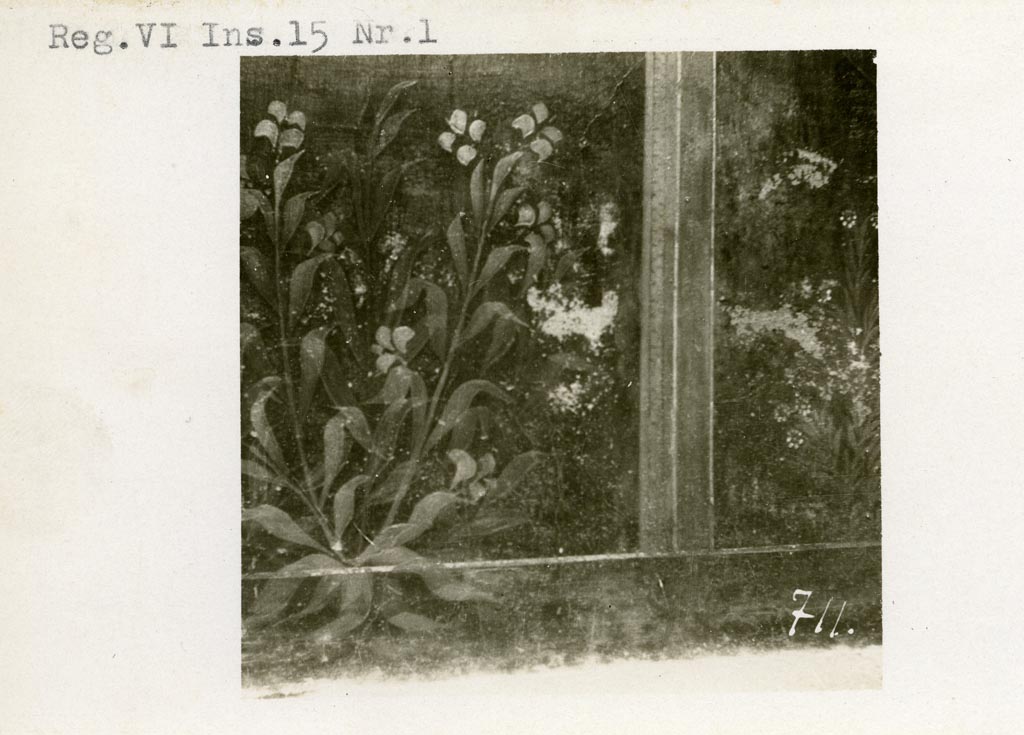
Photo courtesy of American Academy in Rome, Photographic Archive. Warsher collection no. 710.
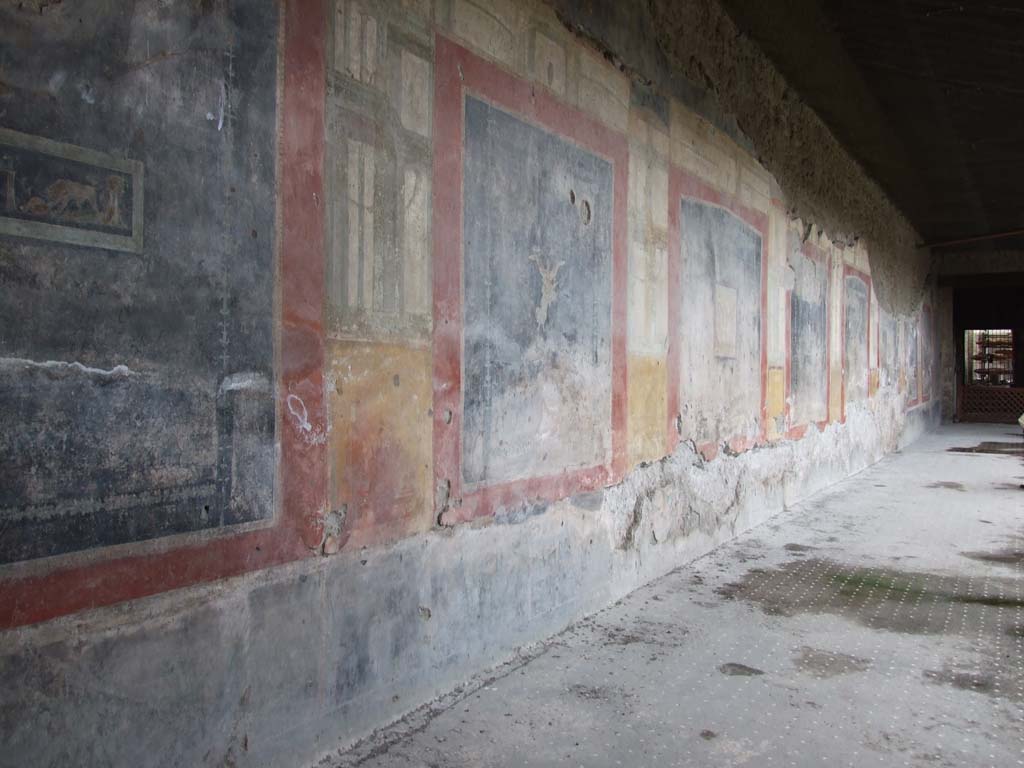
VI.15.1 Pompeii. December 2006. Looking north along west wall of west portico of peristyle.
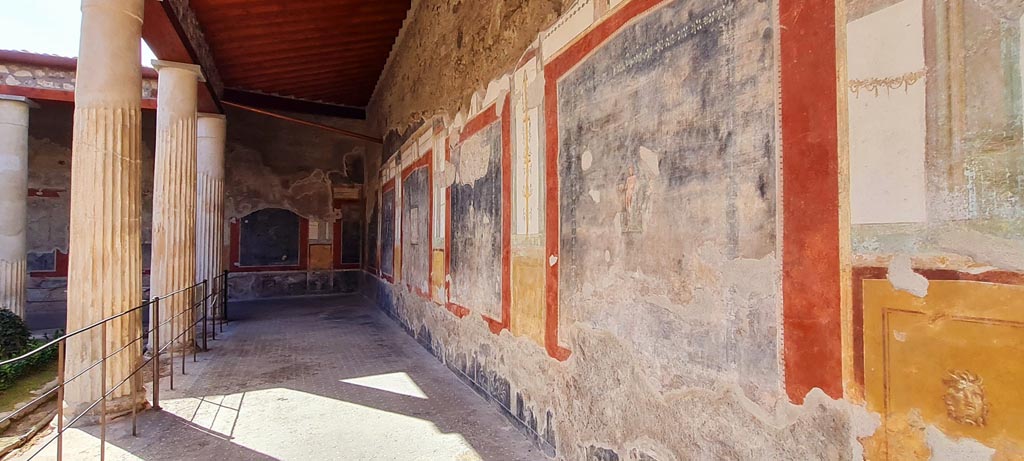
VI.15.1 Pompeii. April 2023. Looking south along west
portico. Photo courtesy of Giuseppe
Ciaramella.
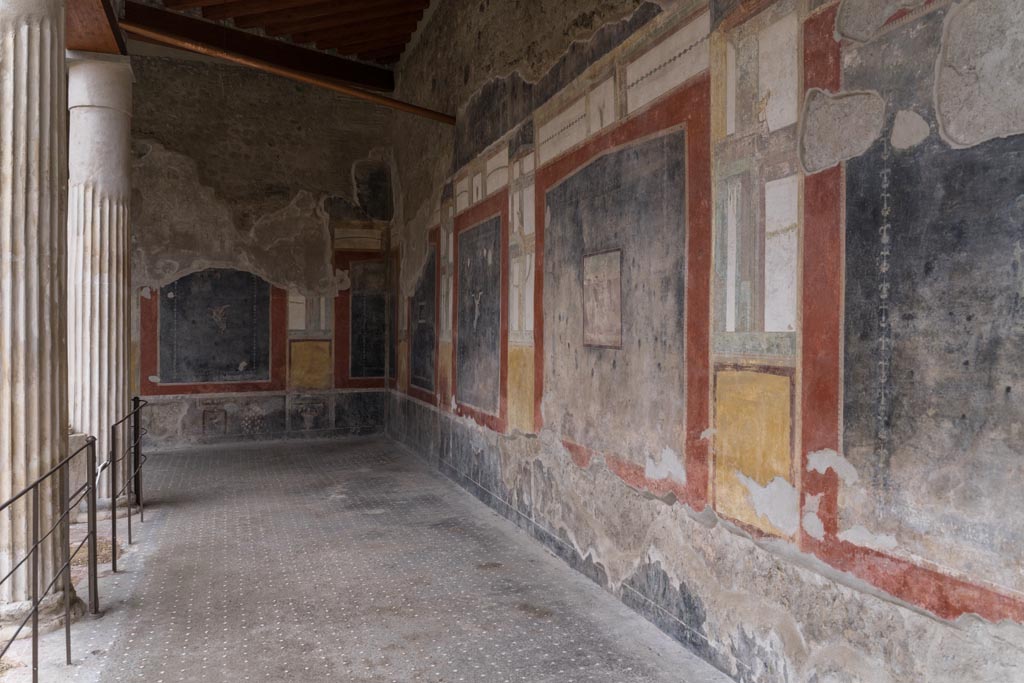
VI.15.1 Pompeii. March 2023. Looking south along west wall of portico towards south-west corner. Photo courtesy of Johannes Eber.
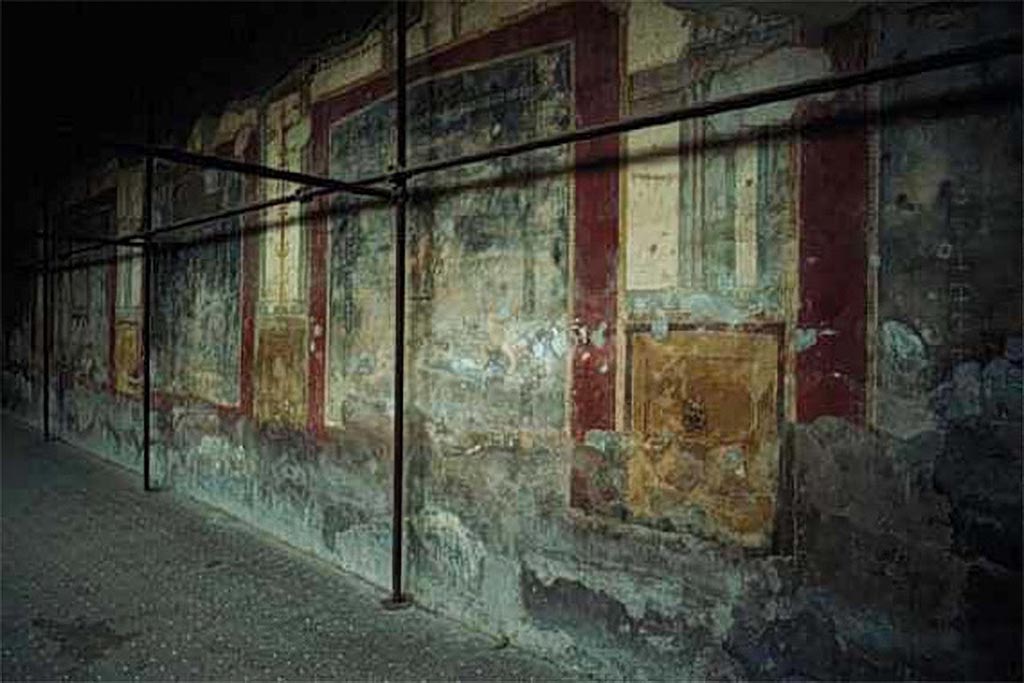
VI.15.1 Pompeii. 1988. West wall of west portico of peristyle. Photo courtesy of Leo C. Curran.
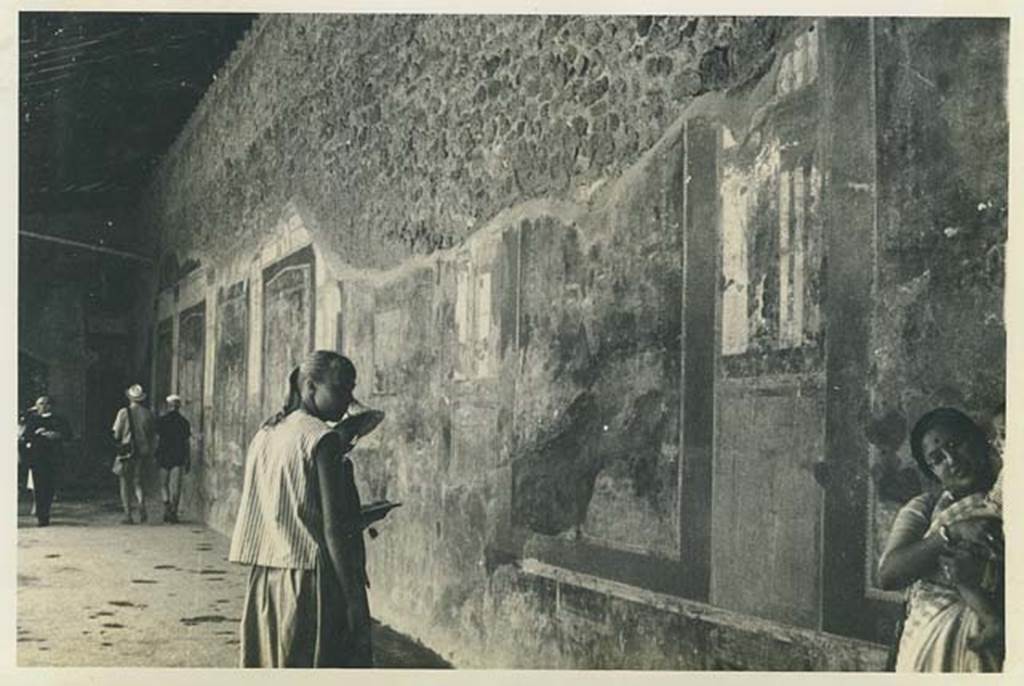
VI.15.1 Pompeii. 22nd July 1961. Looking south along west wall of west portico. Photo courtesy of Rick Bauer.
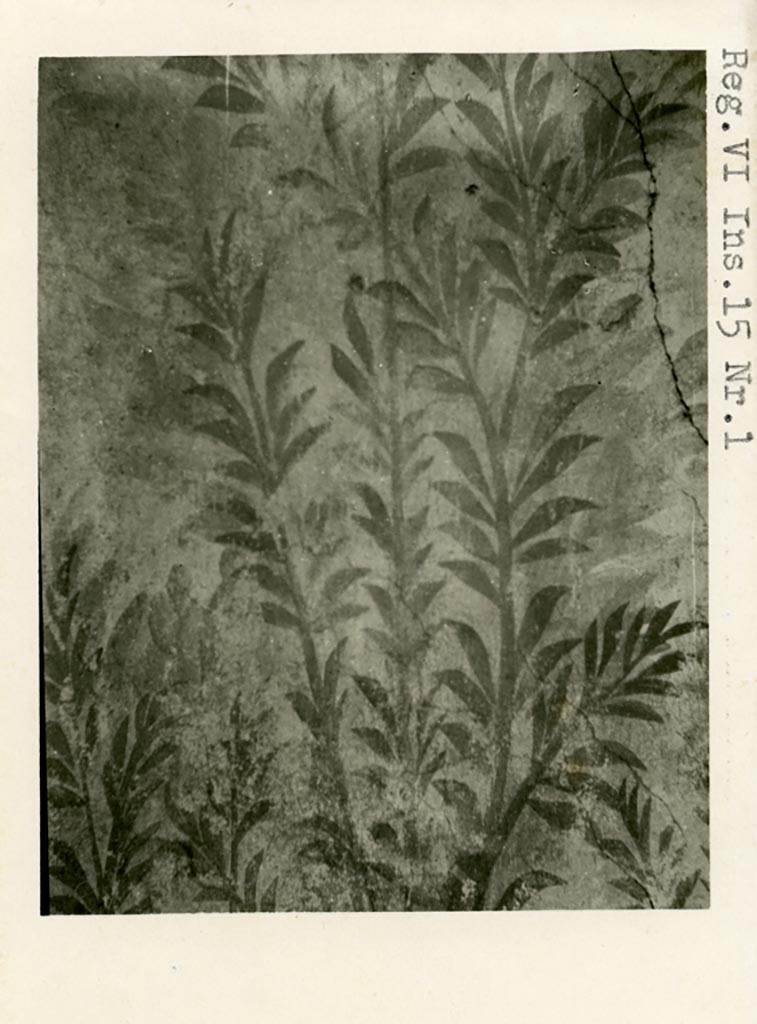
VI.15.1 Pompeii. Pre-1937-39.
Painted panel on zoccolo of west wall of peristyle, with detail of painted oleander bush.
Photo courtesy of American Academy in Rome, Photographic Archive. Warsher collection no. 688.
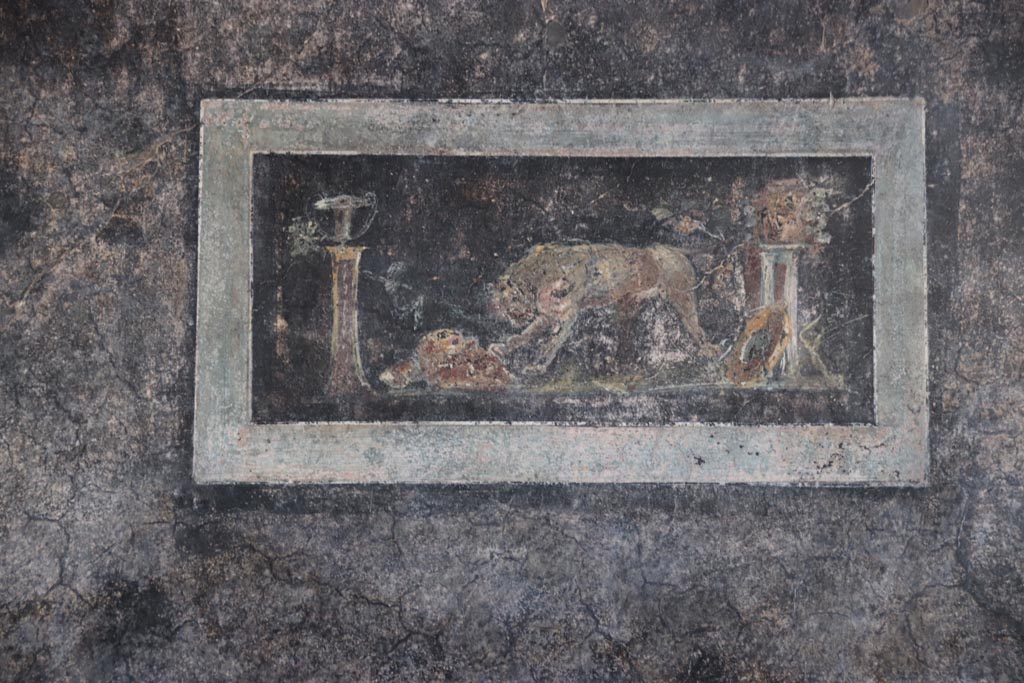
VI.15.1 Pompeii. October 2023. Detail of painted panel from west wall of peristyle near south-west corner. Photo courtesy of Klaus Heese.
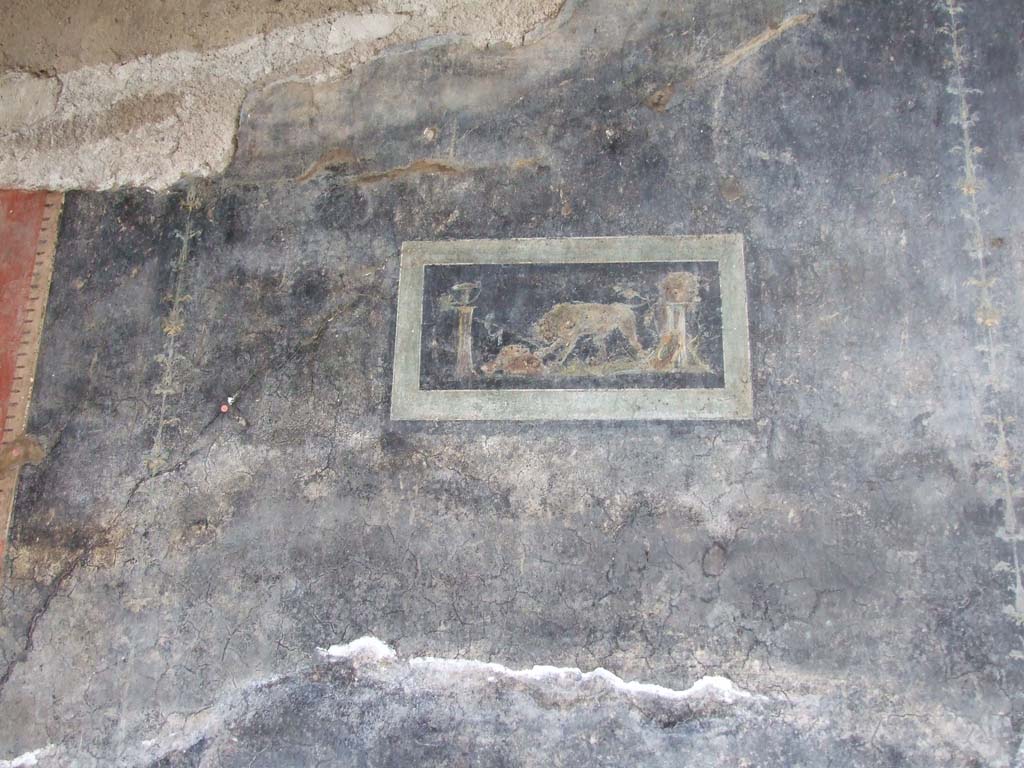
VI.15.1 Pompeii. December 2006. Detail from west wall of peristyle.
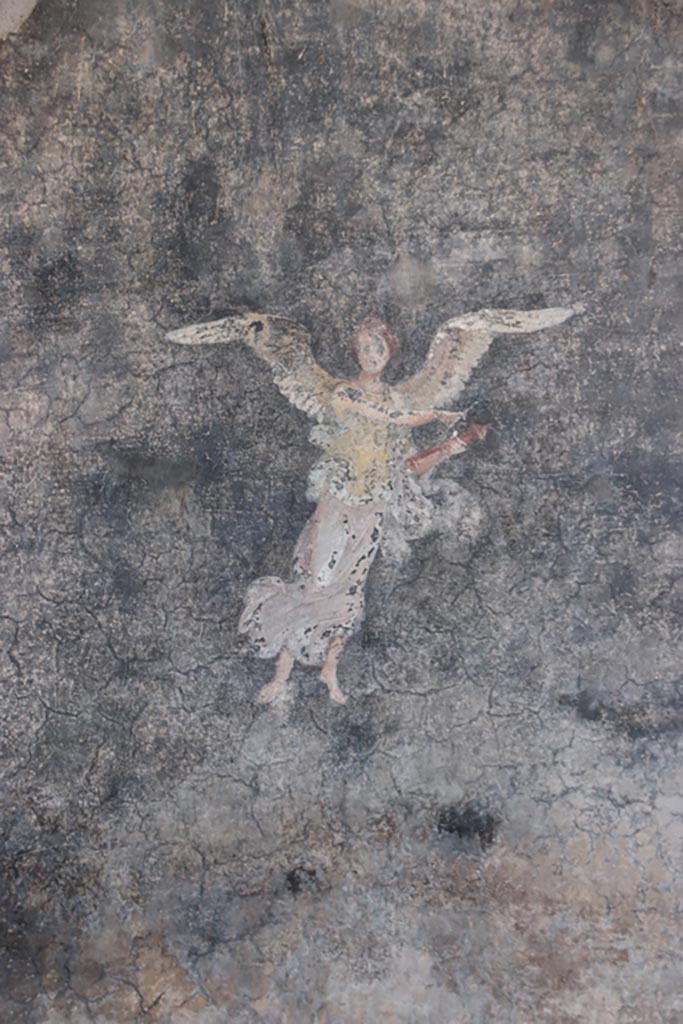
VI.15.1 Pompeii. October 2023.
Detail of painted “flying” figure panel from west wall of peristyle. Photo courtesy of Klaus Heese.
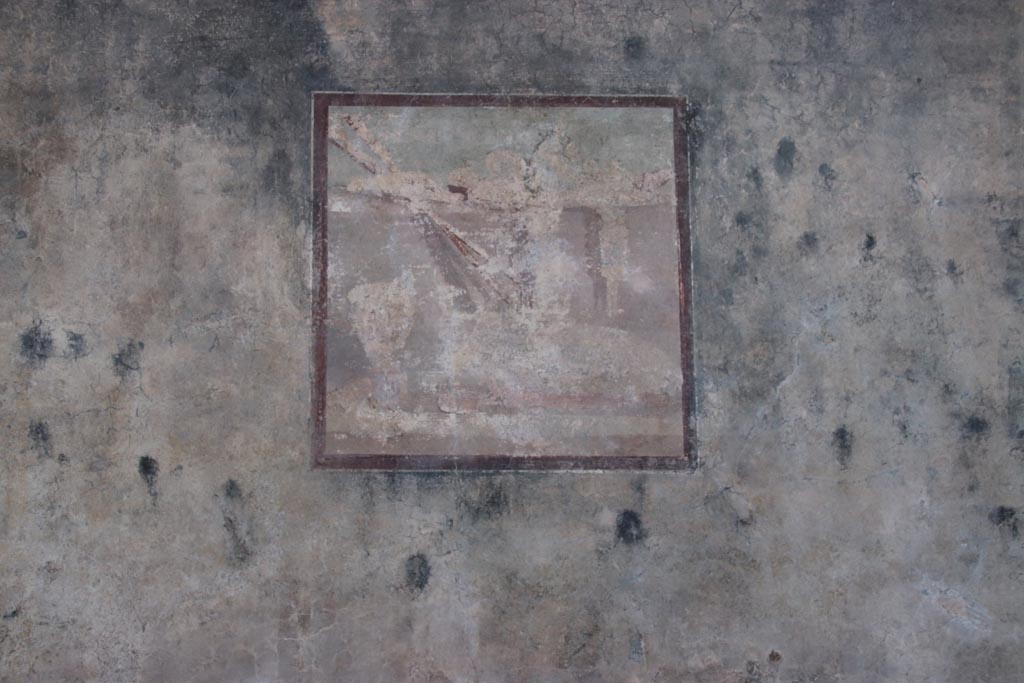
According to PPM –
“West portico, south end, following in the third panel, a painting (62cm x 61cm) showing a hen pecking at fruit, perhaps a plum or fig, on the left a vase and two yellow apples. Behind is a plate with various fruits that are hardly recognizable, but evidently an offering since the plate rests on a yellow and green ribbon: on the left, two inclined torches confirm the votive character of the composition.”
See Carratelli, G. P., 1990-2003. Pompei: Pitture e Mosaici. Roma:
Istituto della enciclopedia italiana, p. 513, no. 79).
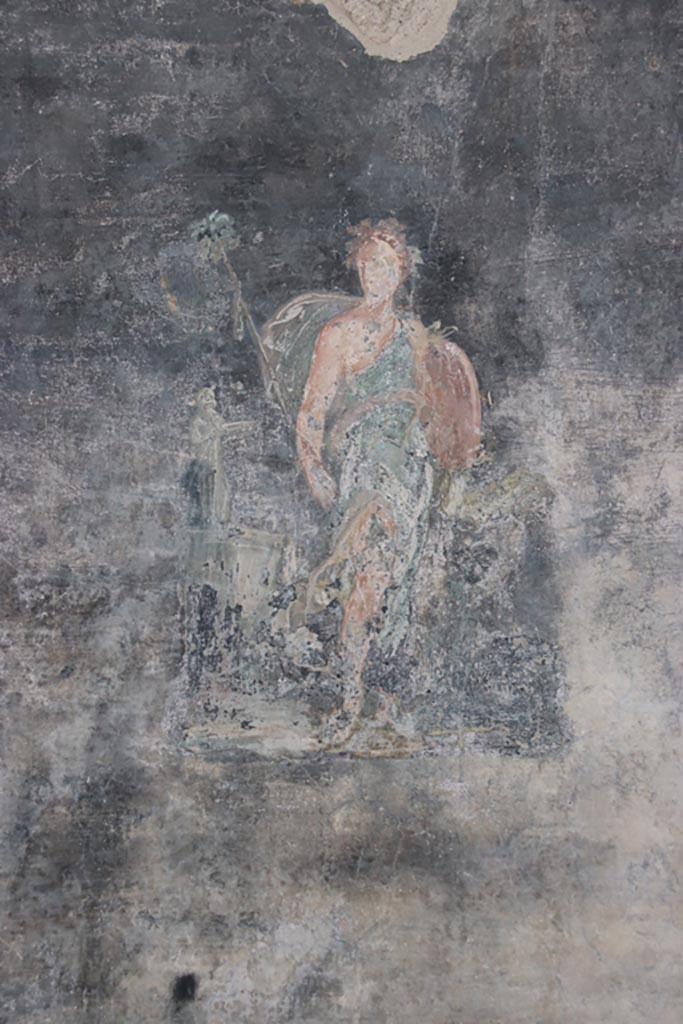
VI.15.1 Pompeii. October 2023.
Painting of Maenad with small statue of Bacchus, from west wall of peristyle. Photo courtesy of Klaus Heese.
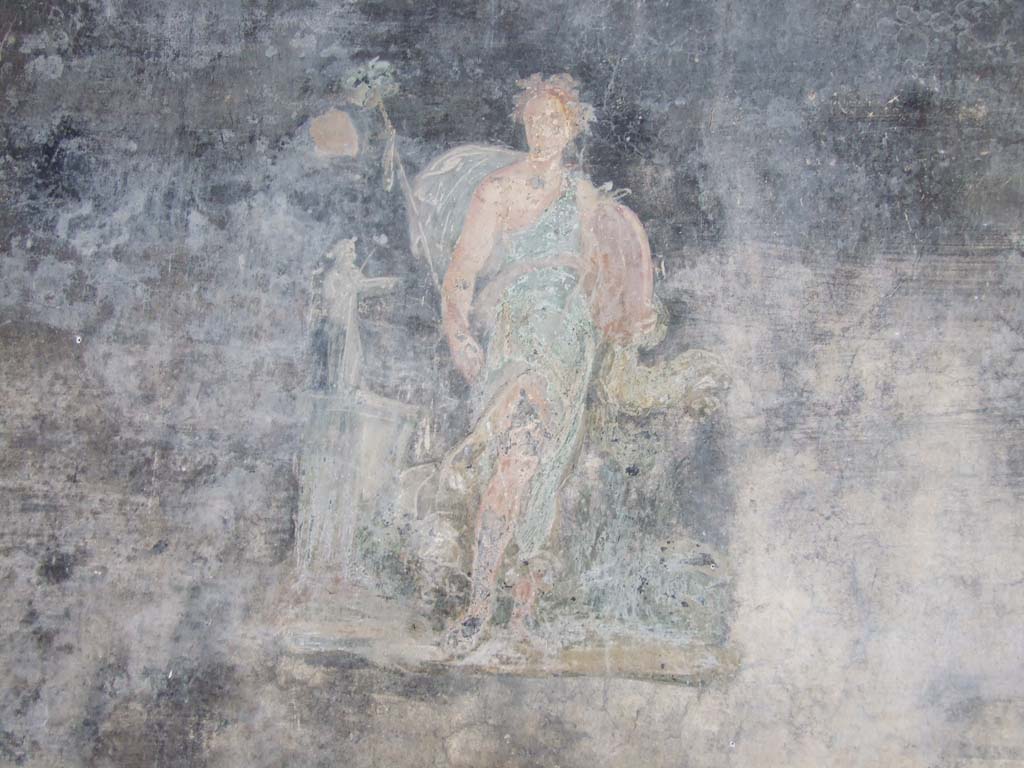
VI.15.1 Pompeii. December 2006. Painting of figure from west wall of peristyle.
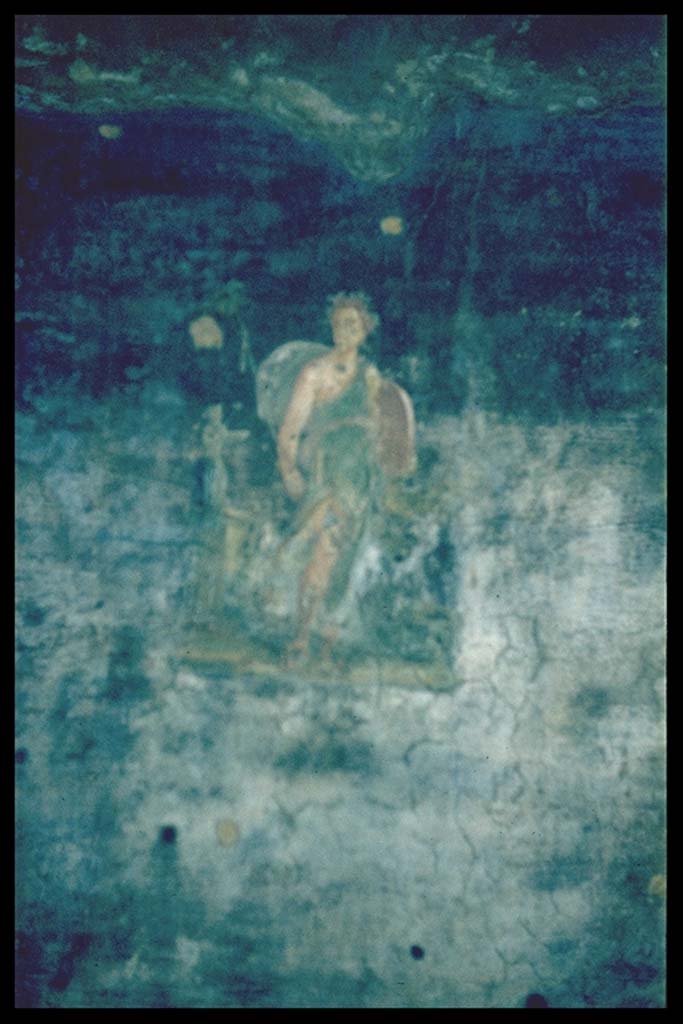
VI.15.1 Pompeii. Painting of figure from west wall of peristyle.
Photographed 1970-79 by Günther Einhorn, picture courtesy of his son Ralf Einhorn.
According to Kuivalainen –
this scene shows a nocturnal ritual by a Maenad in front of a bearded fully robed very small statue of Bacchus.
See Kuivalainen, I., 2021. The Portrayal of Pompeian Bacchus. Commentationes Humanarum Litterarum 140. Helsinki: Finnish Society of Sciences and Letters, (p.81, A5).
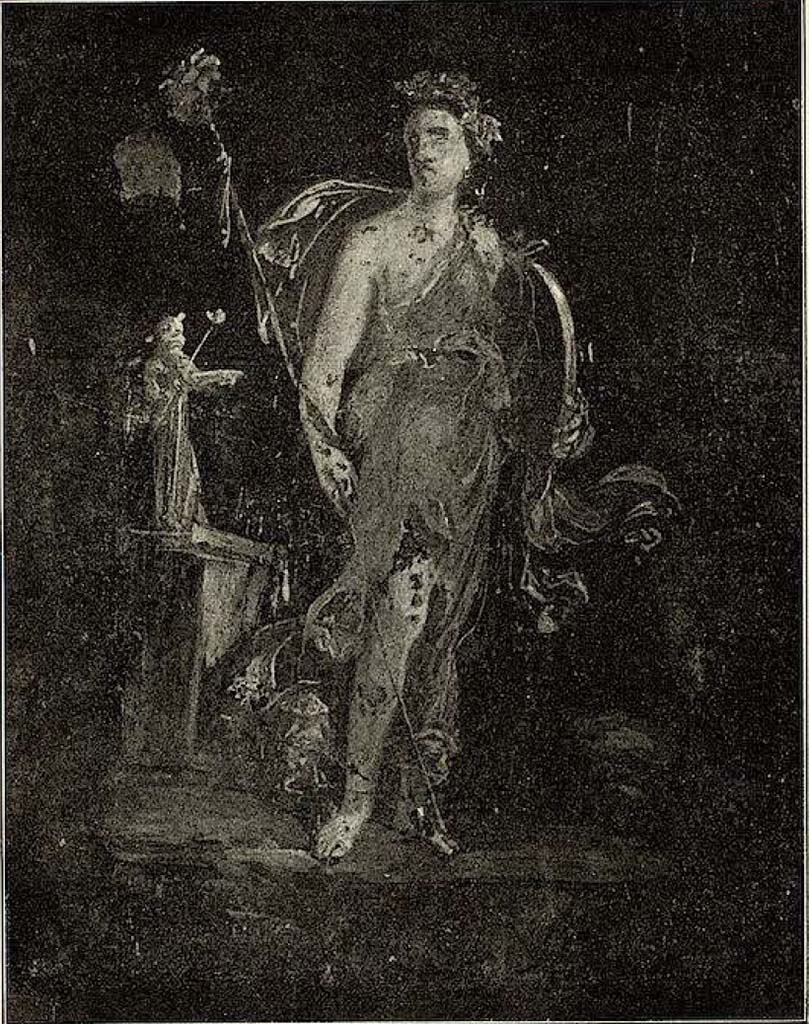
VI.15.1 Pompeii. 1898. Painting of maenad and small statue of Bacchus from west wall of peristyle.
See Sogliano A. La Casa dei Vettii in Monumenti Antichi VIII. Milan: Hoepli, p. 273 fig. 15, p. 278 item 9.
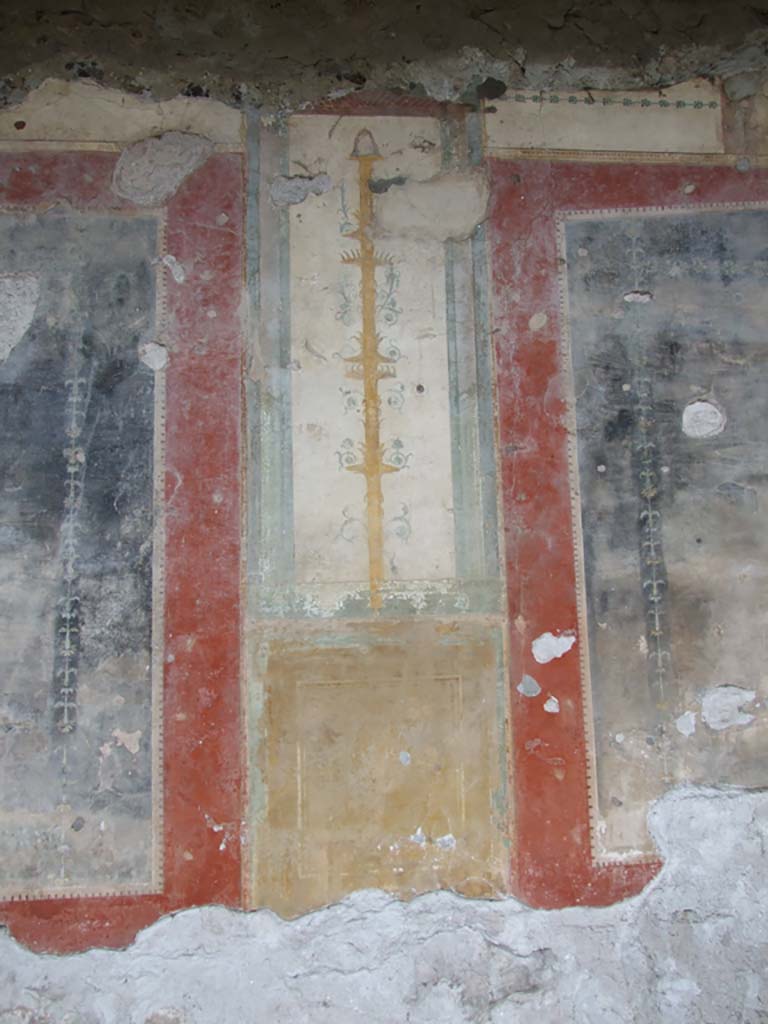
VI.15.1 Pompeii. December 2006. Detail from west wall of peristyle.
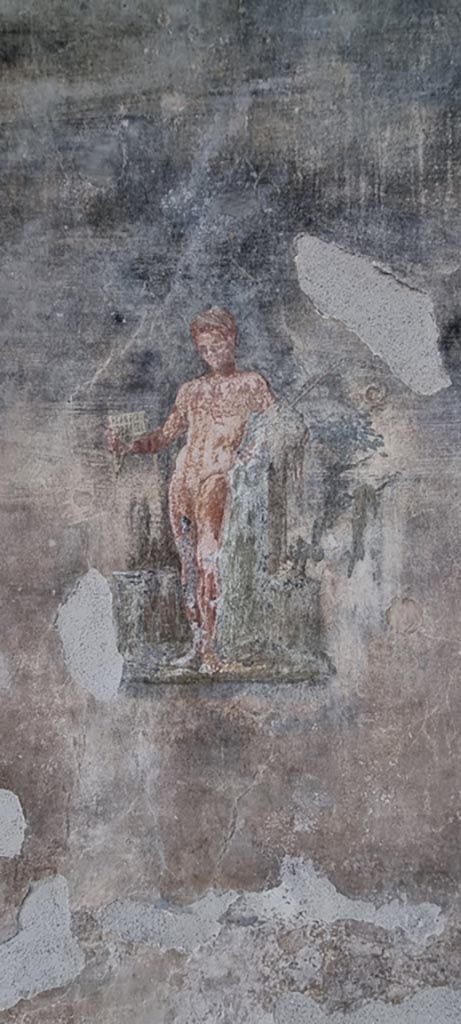
VI.15.1 Pompeii. January 2023.
Painting of a young nude Satyr with pan-pipes held in his right hand, and thyrsus in his left, from west wall of peristyle.
Photo courtesy of Miriam Colomer.
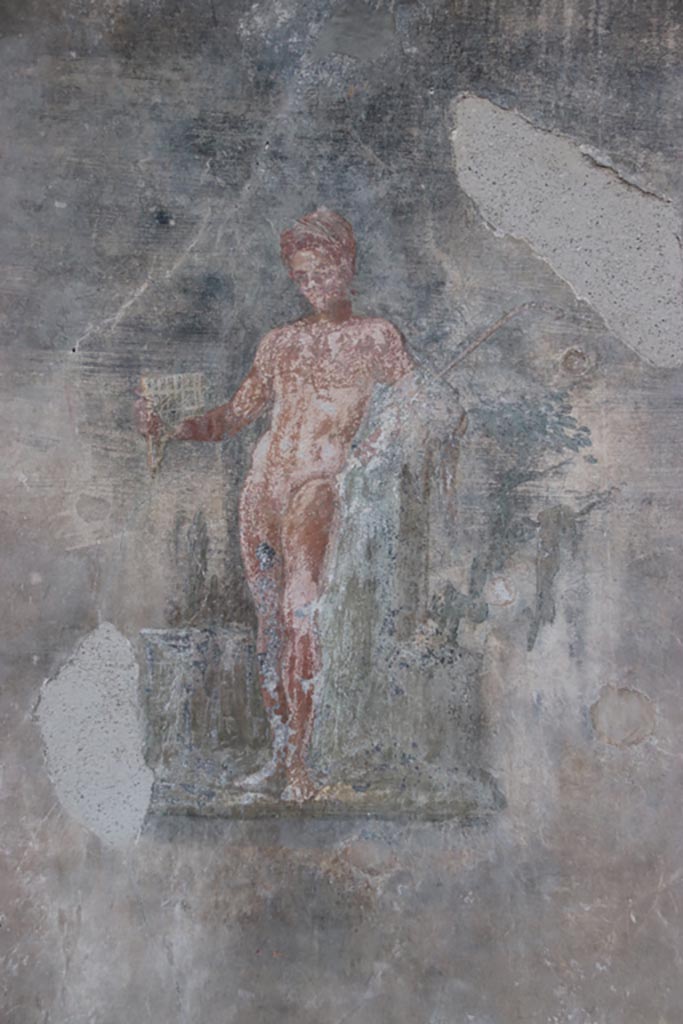
VI.15.1 Pompeii. October 2023.
Painting of figure from west wall of peristyle. Photo courtesy of Klaus Heese.
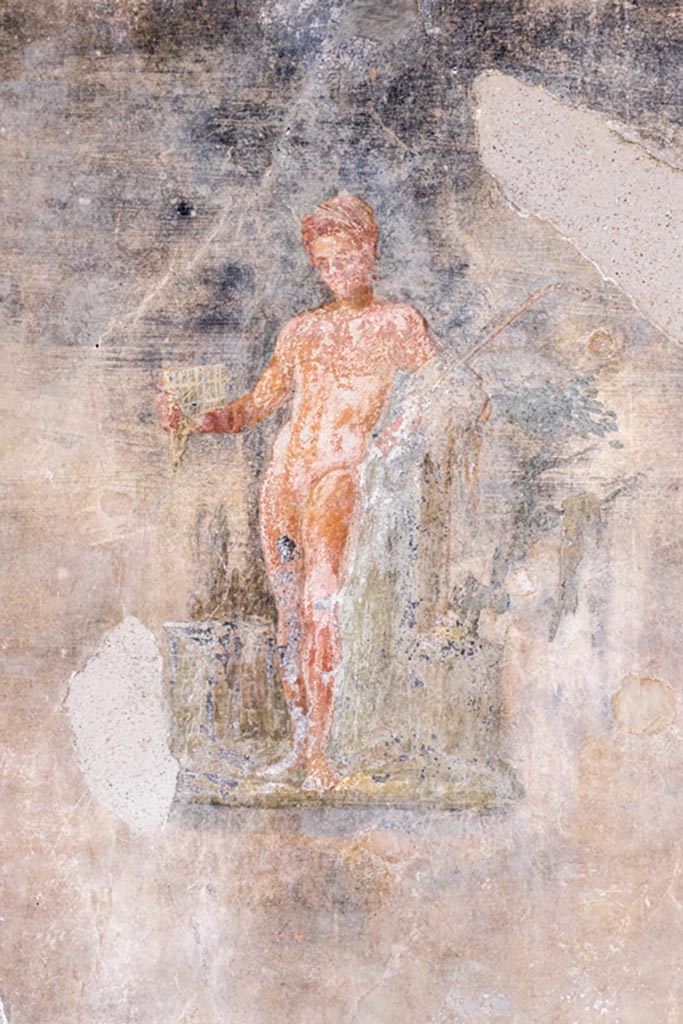
VI.15.1 Pompeii. March 2023.
Painting of figure from west wall of peristyle. Photo courtesy of Johannes Eber.
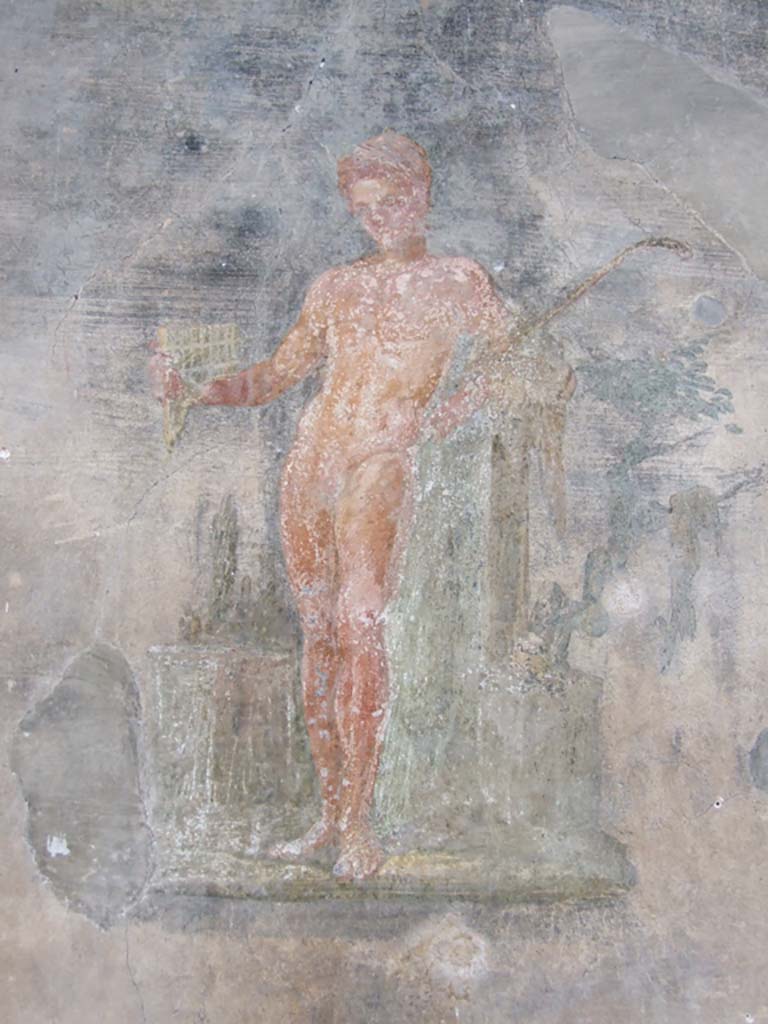
VI.15.1 Pompeii. December 2006. Painting of figure from west wall of peristyle.
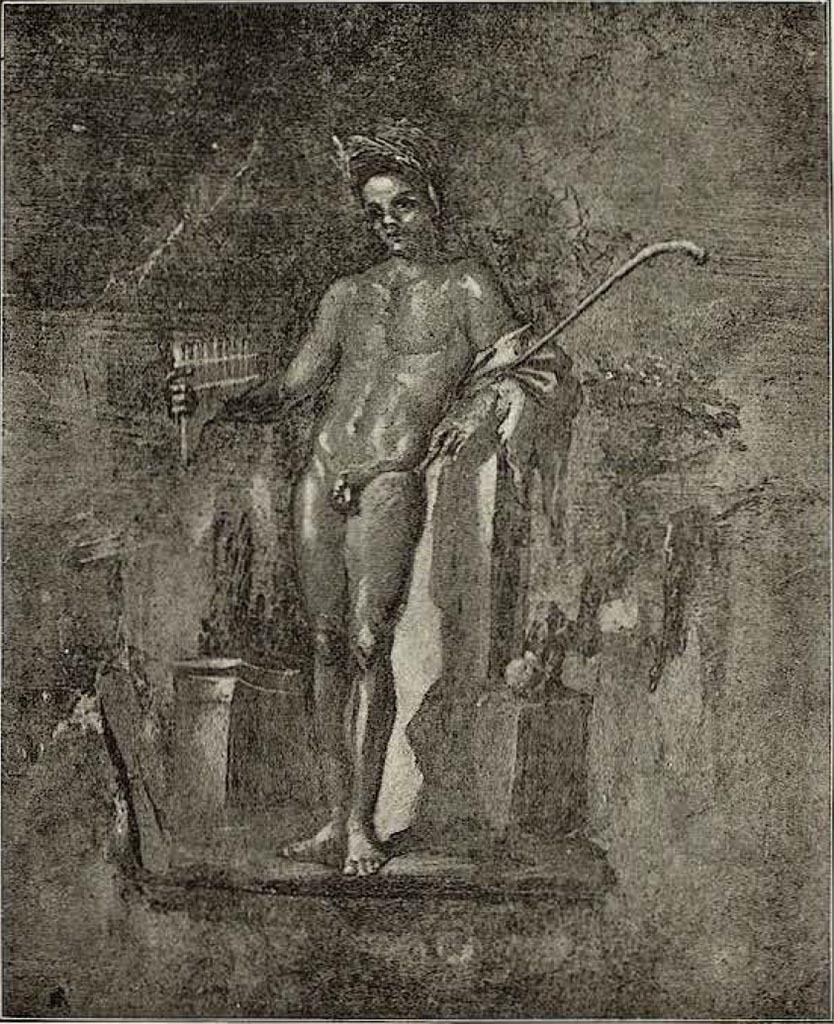
VI.15.1 Pompeii. c.1898. Painting of figure from west wall of peristyle.
See Sogliano, A. La Casa dei Vettii in Pompei Mon. Ant. 1898, (p.275/276,
fig. 16).
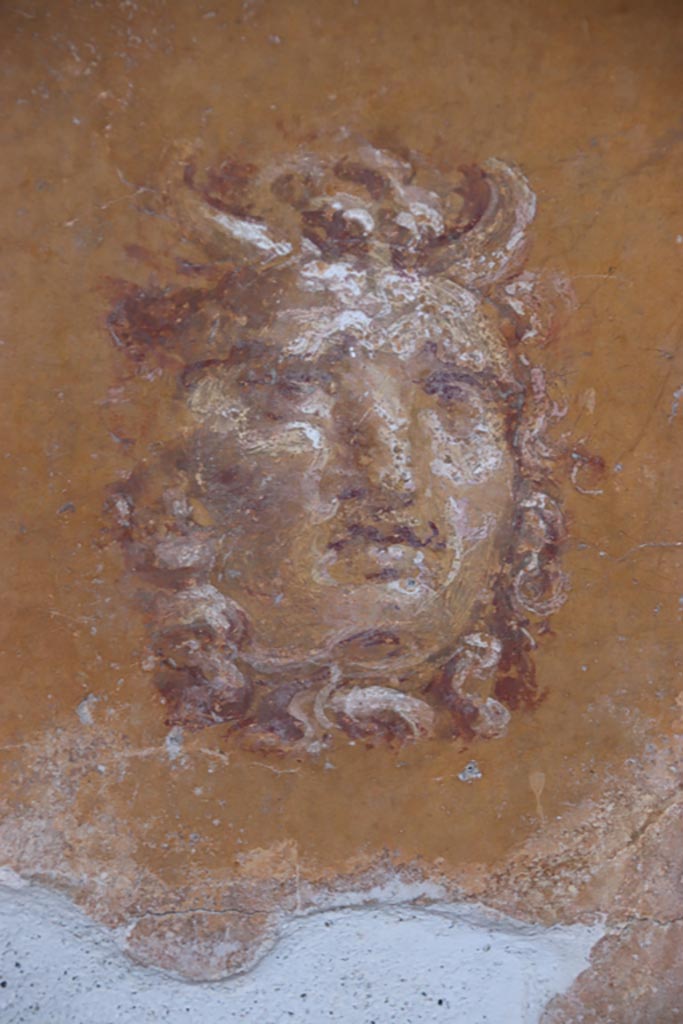
VI.15.1 Pompeii. October 2023. Detail from west wall of peristyle. Photo courtesy of Klaus Heese.
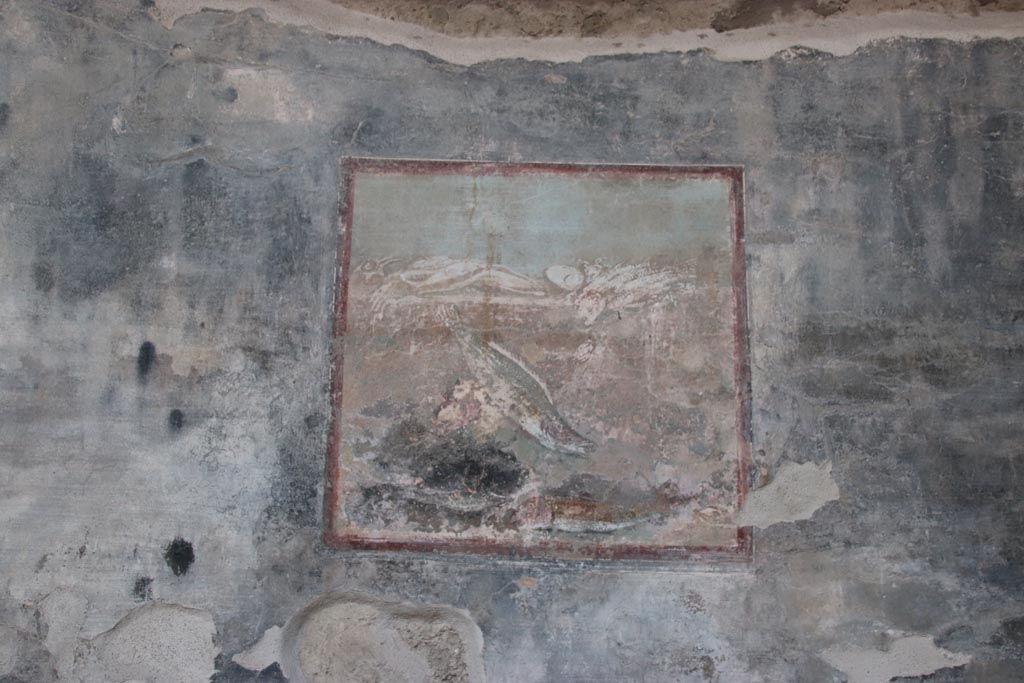
VI.15.1 Pompeii. October 2023.
West wall of peristyle, in the sixth panel from the south end, a painting of fish (59cm x 62cm). Photo courtesy of Klaus Heese.
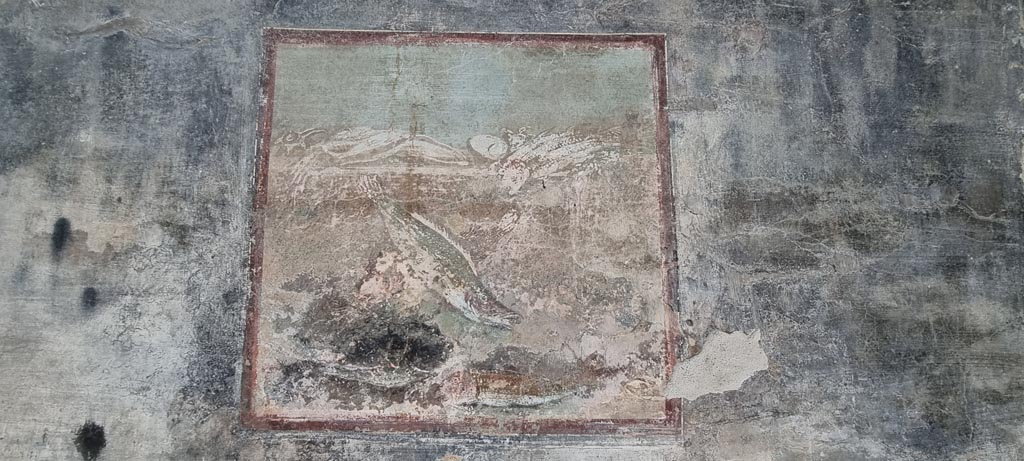
VI.15.1 Pompeii. January 2023.
Painting (59cm x 62cm) of fish from north end of west wall of peristyle. Photo courtesy of Miriam Colomer.
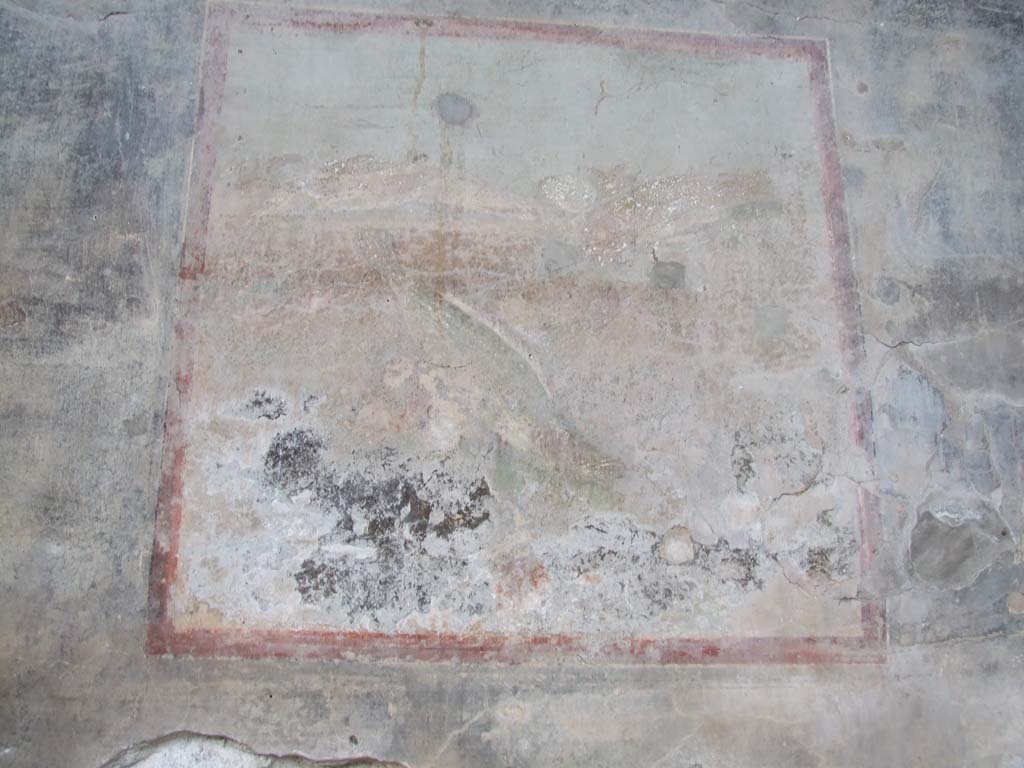
VI.15.1 Pompeii. December 2006. Painting of fishes from west wall of peristyle.
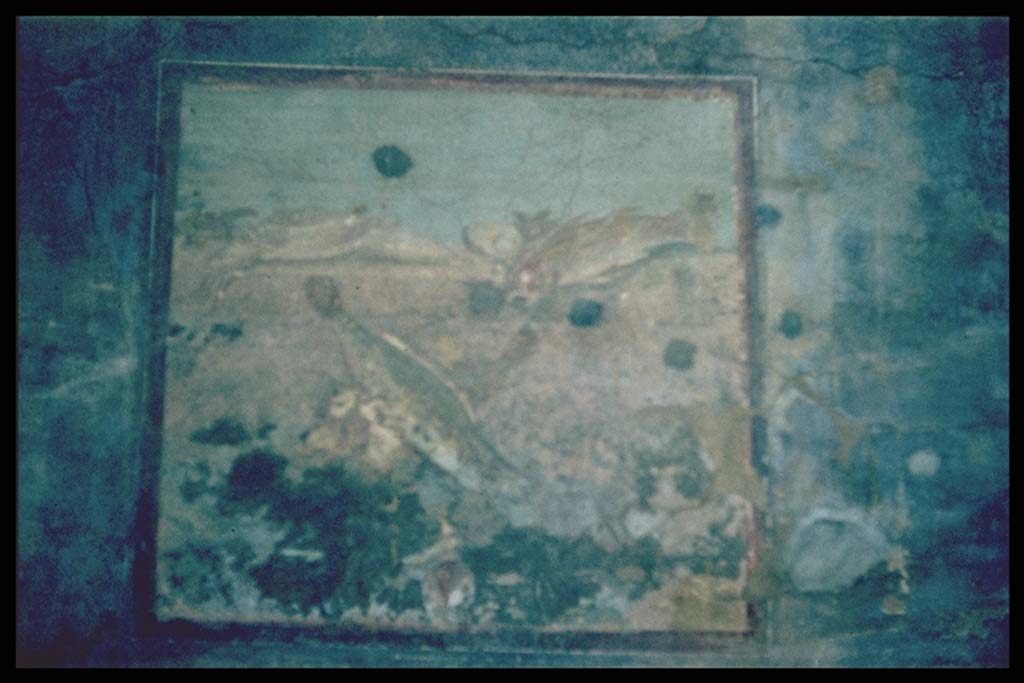
VI.15.1 Pompeii. Painting of fishes from west wall of peristyle.
Photographed 1970-79 by Günther Einhorn, picture courtesy of his son Ralf Einhorn.
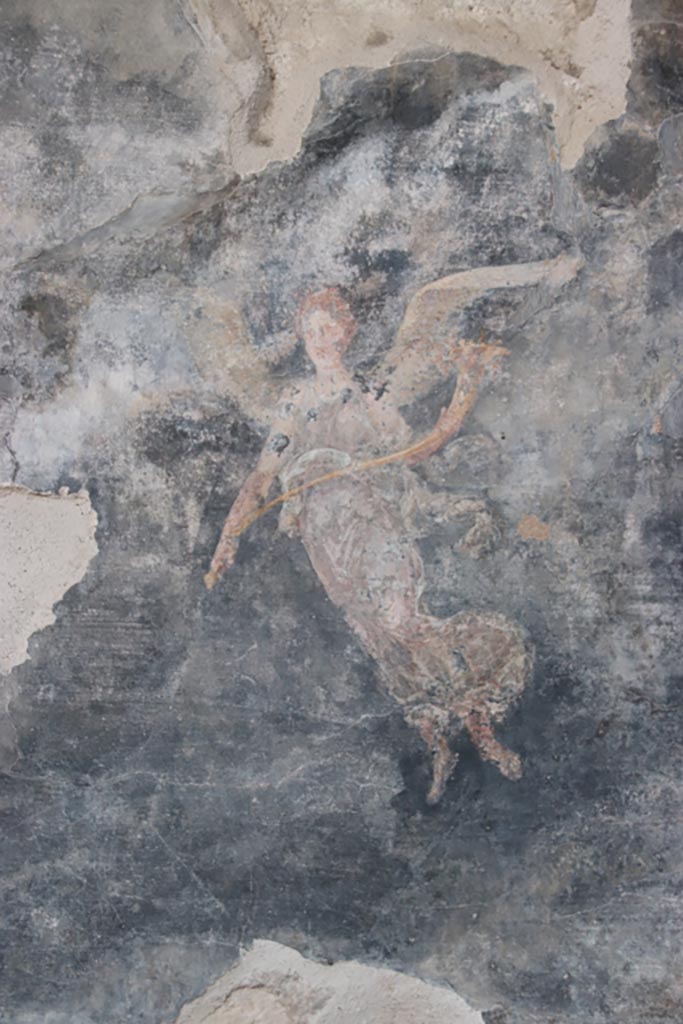
VI.15.1 Pompeii. October 2023.
Painting of winged figure with cornucopia, from west wall of peristyle towards north end.
Photo courtesy of Klaus Heese.
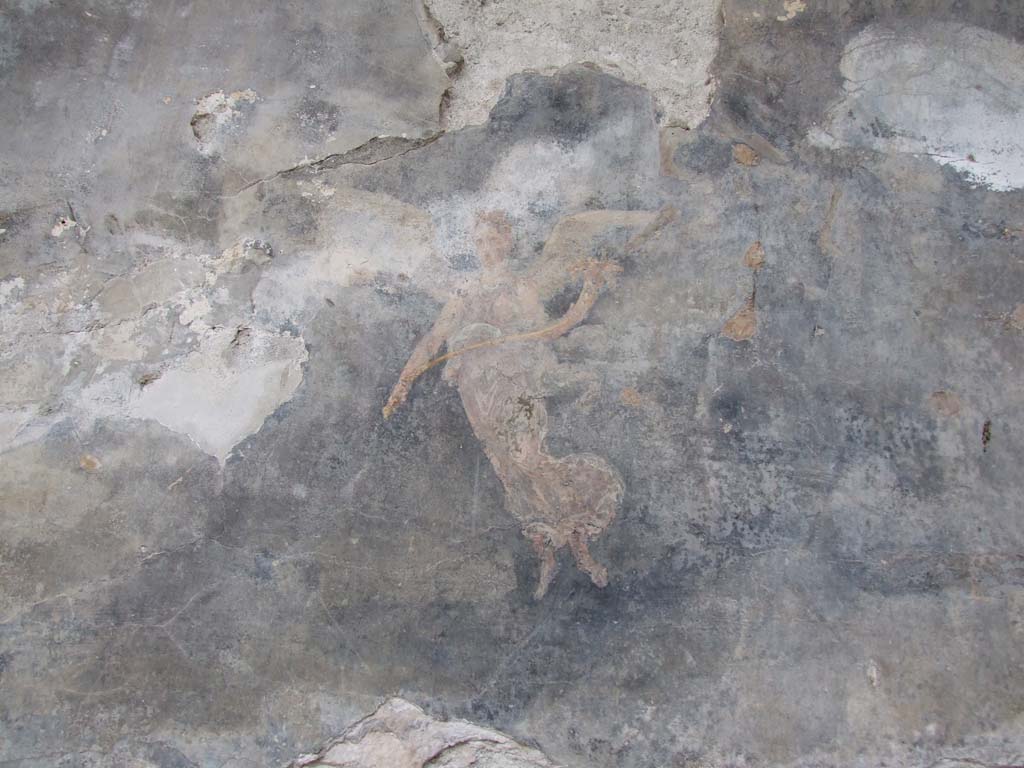
VI.15.1 Pompeii. December 2006. Painting of winged figure from west wall of peristyle.
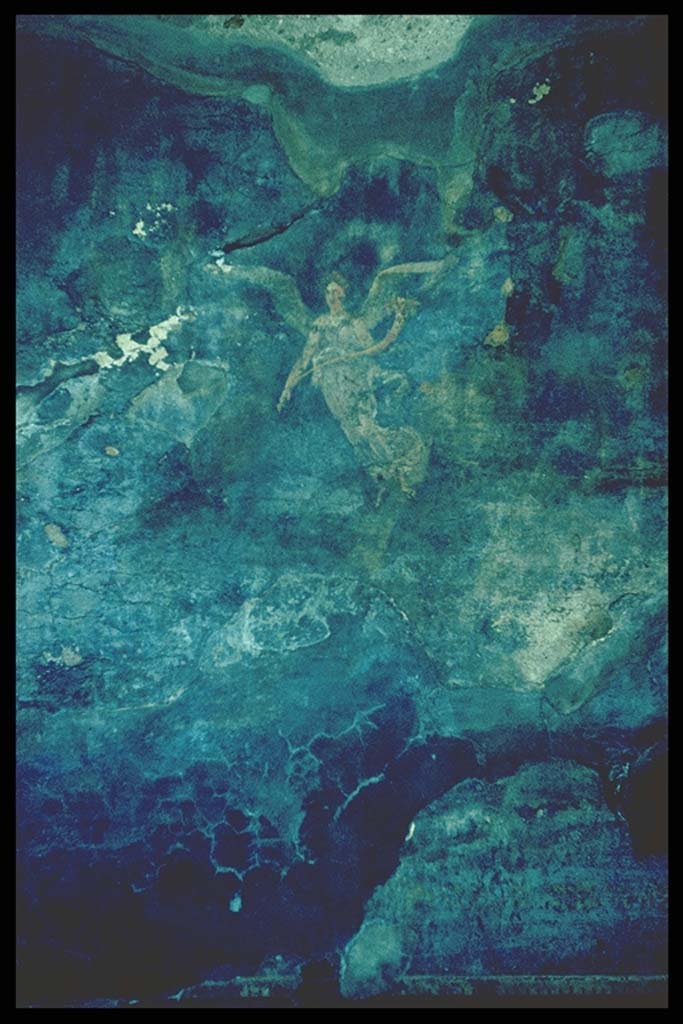
VI.15.1 Pompeii. Painting of winged figure from west wall of peristyle.
Photographed 1970-79 by Günther Einhorn, picture courtesy of his son Ralf Einhorn.
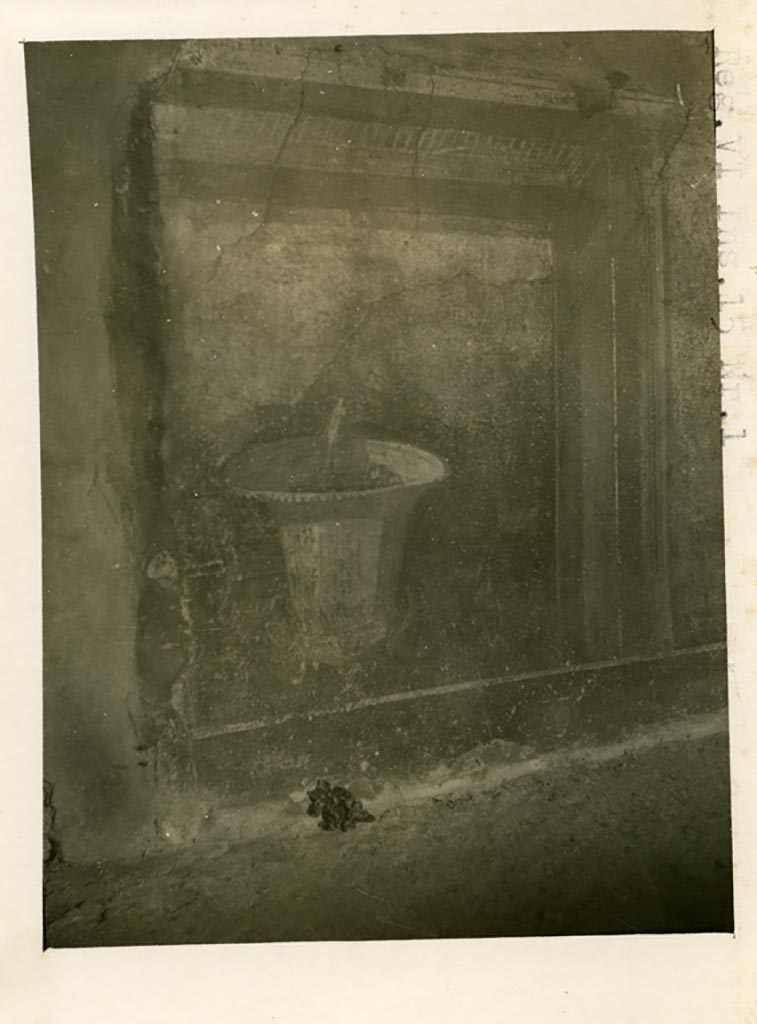
VI.15.1 Pompeii. Pre-1937-39. Painting of vase/fountain on zoccolo, perhaps from west wall.
Photo courtesy of American Academy in Rome, Photographic Archive. Warsher collection no. 1660.
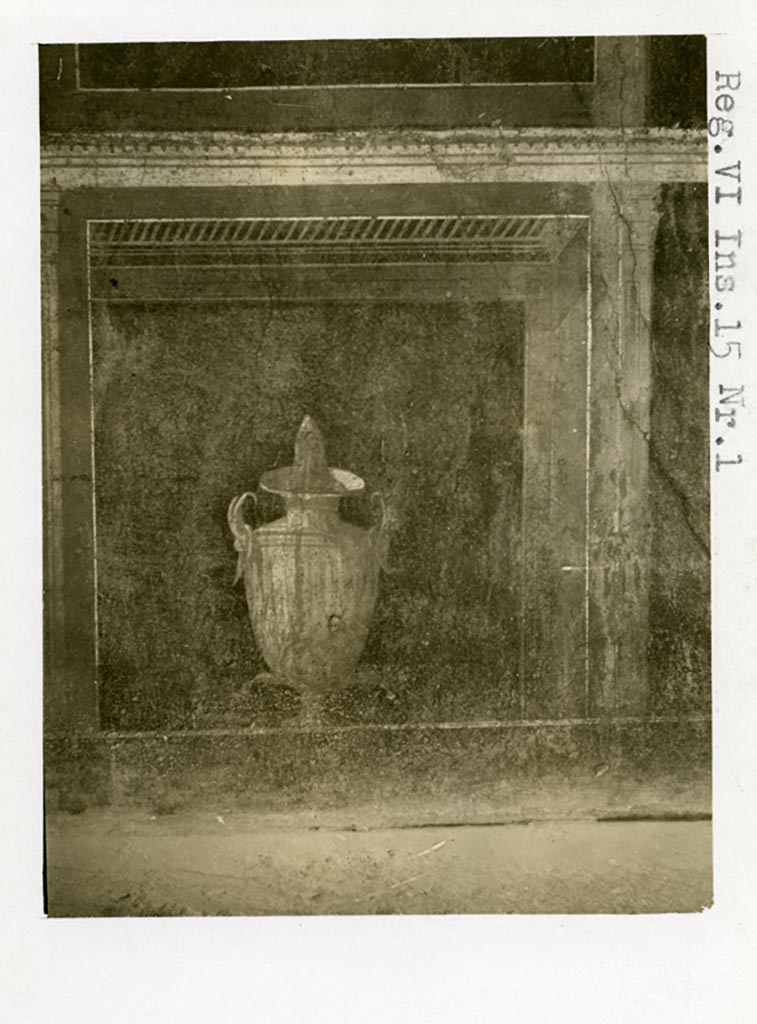
VI.15.1 Pompeii. Pre-1937-39. Painting of vase/fountain on zoccolo, perhaps from west wall.
Pre-1937-39. Photo courtesy of American Academy in Rome, Photographic Archive. Warsher collection no. 1661.
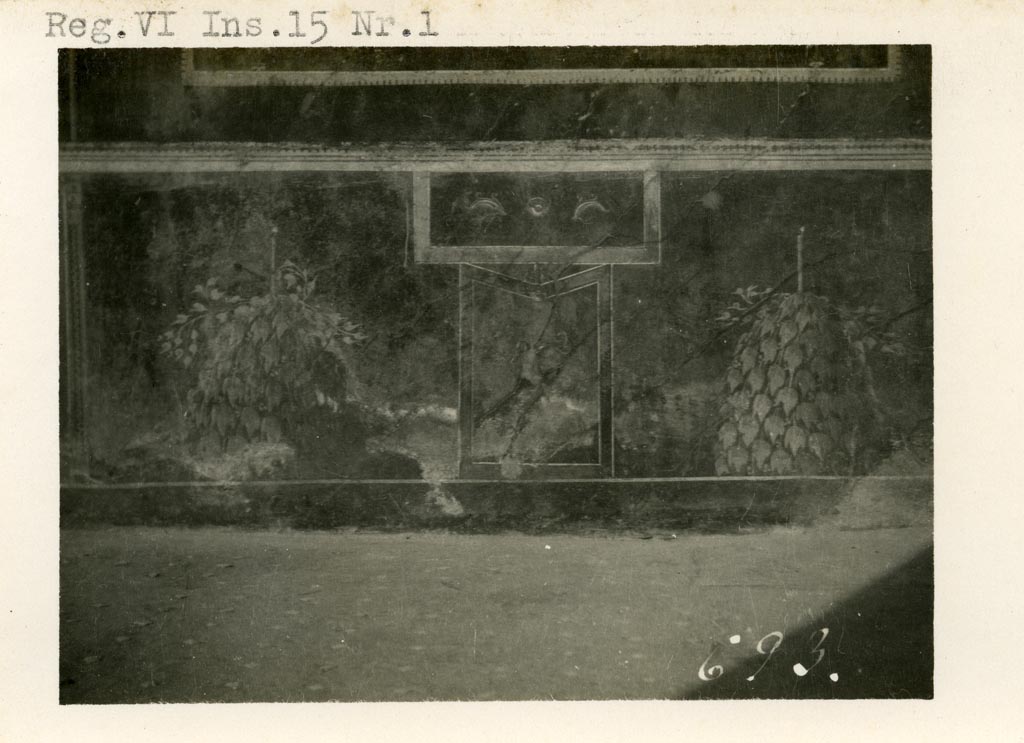
VI.15.1 Pompeii. Pre-1937-39. Zoccolo on west wall at north end of peristyle.
Photo courtesy of American Academy in Rome, Photographic Archive. Warsher collection no. 693.
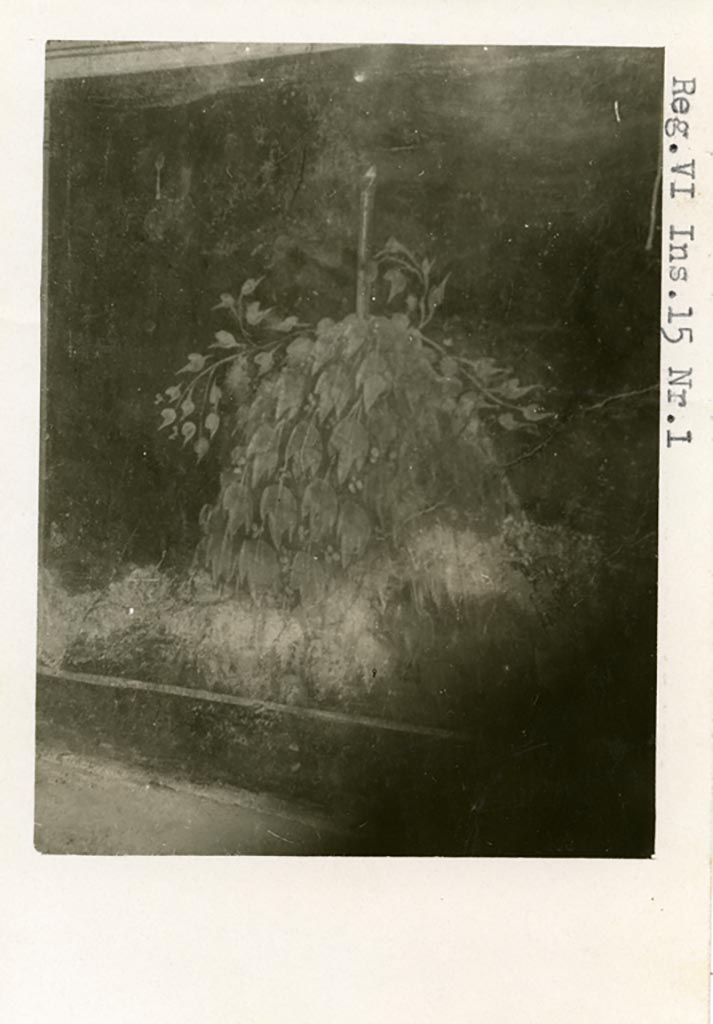
VI.15.1 Pompeii. Pre-1937-39. Zoccolo detail from west wall at north end of peristyle.
Pre-1937-39. Photo courtesy of American Academy in Rome, Photographic Archive. Warsher collection no. 1652.
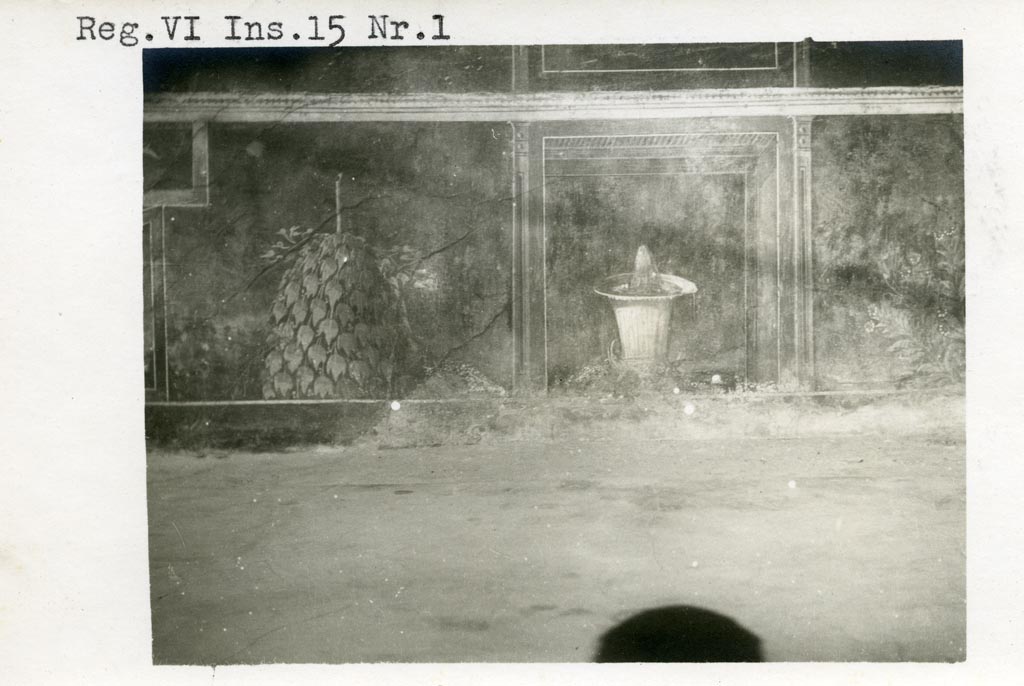
VI.15.1 Pompeii. Pre-1937-39. Zoccolo on west wall at north end of peristyle, continued.
Photo courtesy of American Academy in Rome, Photographic Archive. Warsher collection no. 691.
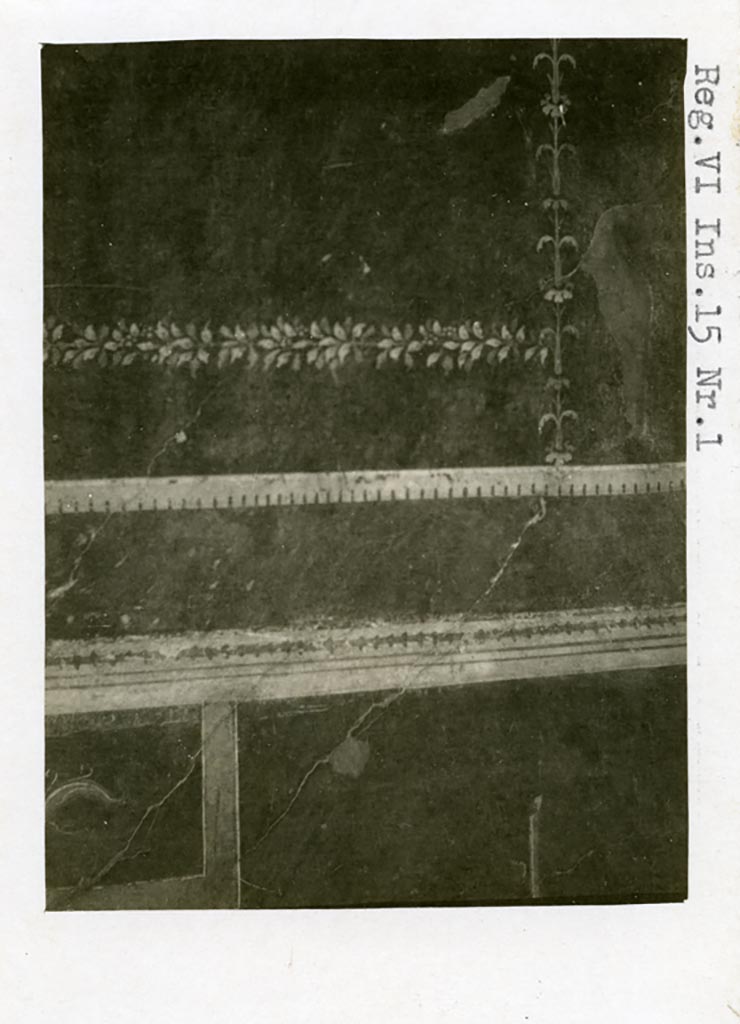
VI.15.1 Pompeii. Pre-1937-39. Detail from above zoccolo on west wall at north end of peristyle.
Photo courtesy of American Academy in Rome, Photographic Archive. Warsher collection no. 1656.
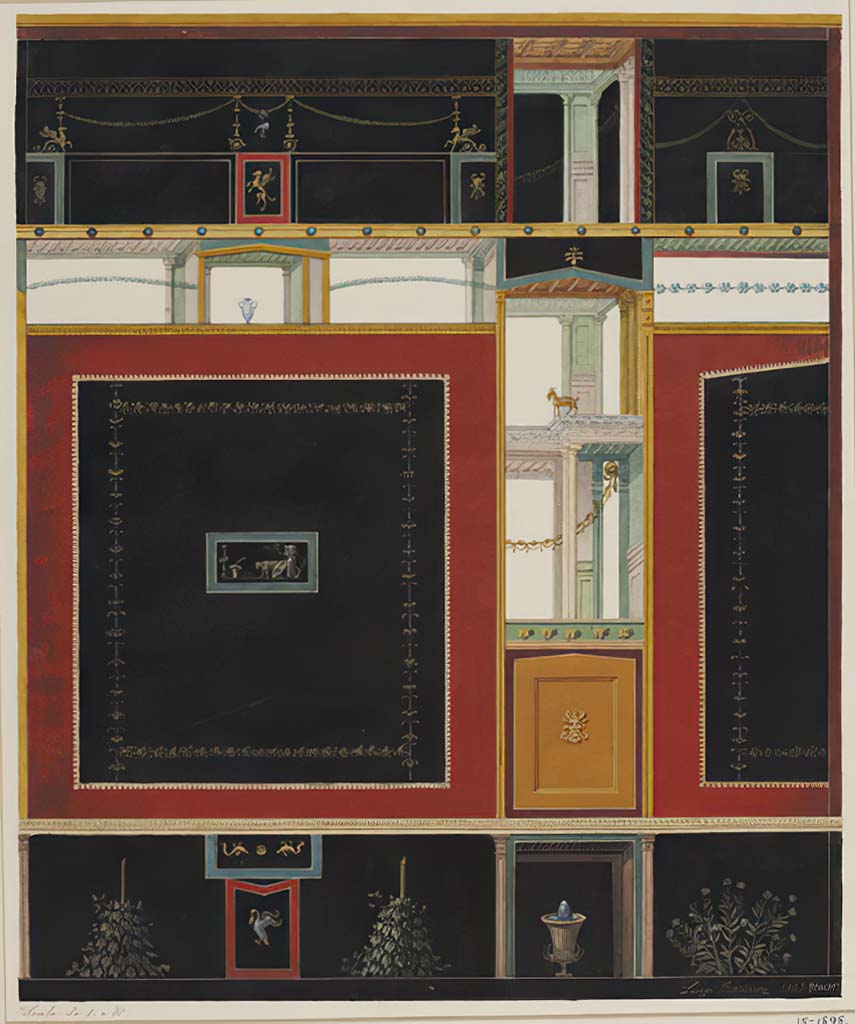
VI.15.1 Pompeii. c.1897.
Watercolour by Luigi Bazzani. Looking towards west wall of peristyle, in north-west corner.
Photo © Victoria and
Albert Museum. Inventory number 15-1898.
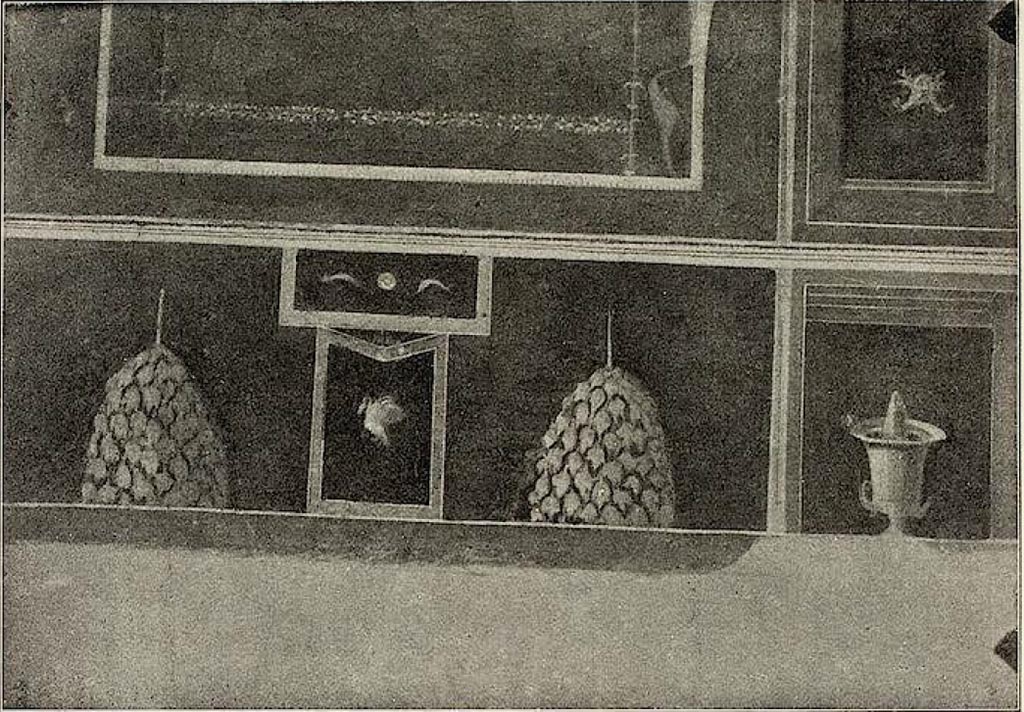
VI.15.1 Pompeii. c.1898. Lower west wall of peristyle, in
north-west corner.
See Sogliano, A. La
Casa dei Vettii in Pompei Mon. Ant. 1898, (p.279-80,
fig. 18).
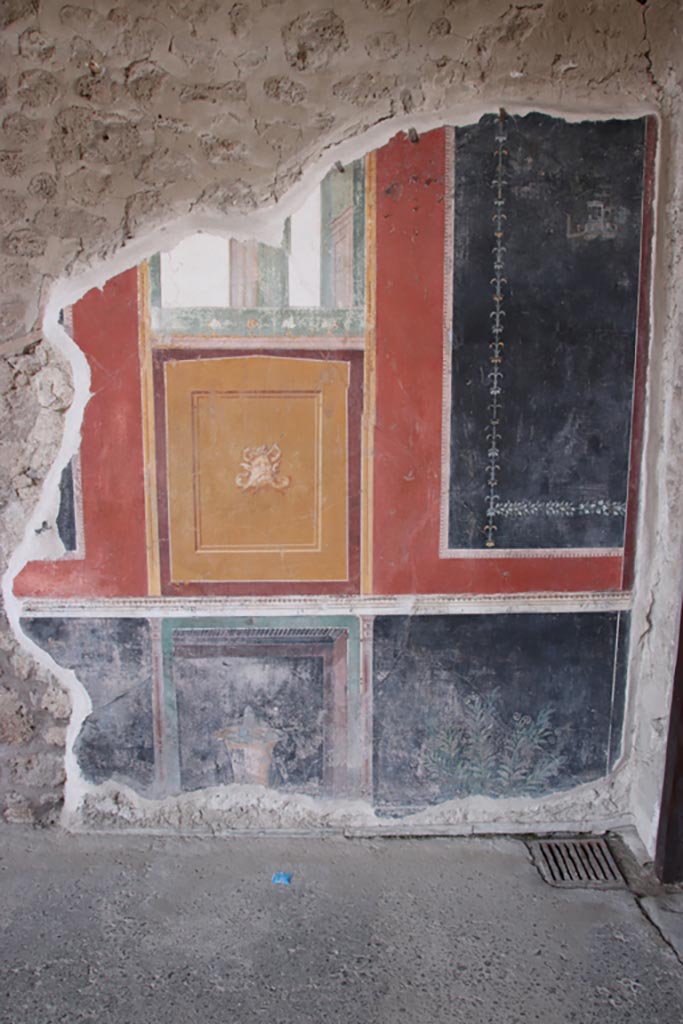
VI.15.1 Pompeii. October 2023.
West wall of peristyle, in north-west corner. Photo courtesy of Klaus Heese.
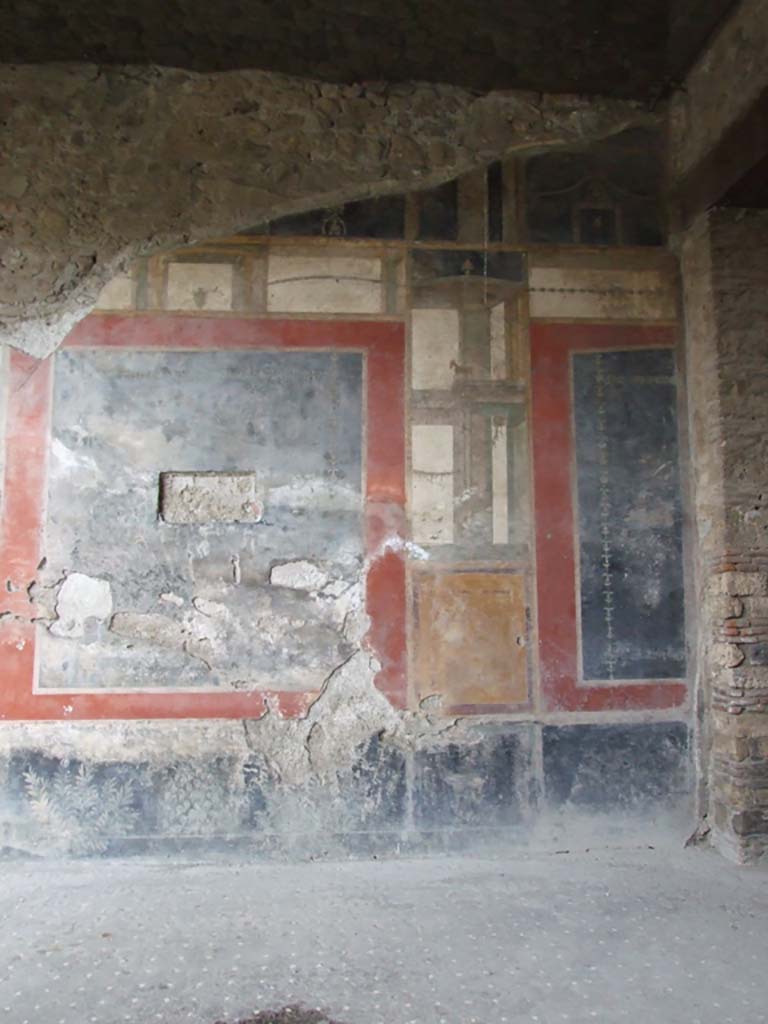
VI.15.1 Pompeii. December 2006. West wall of peristyle, in north-west corner.
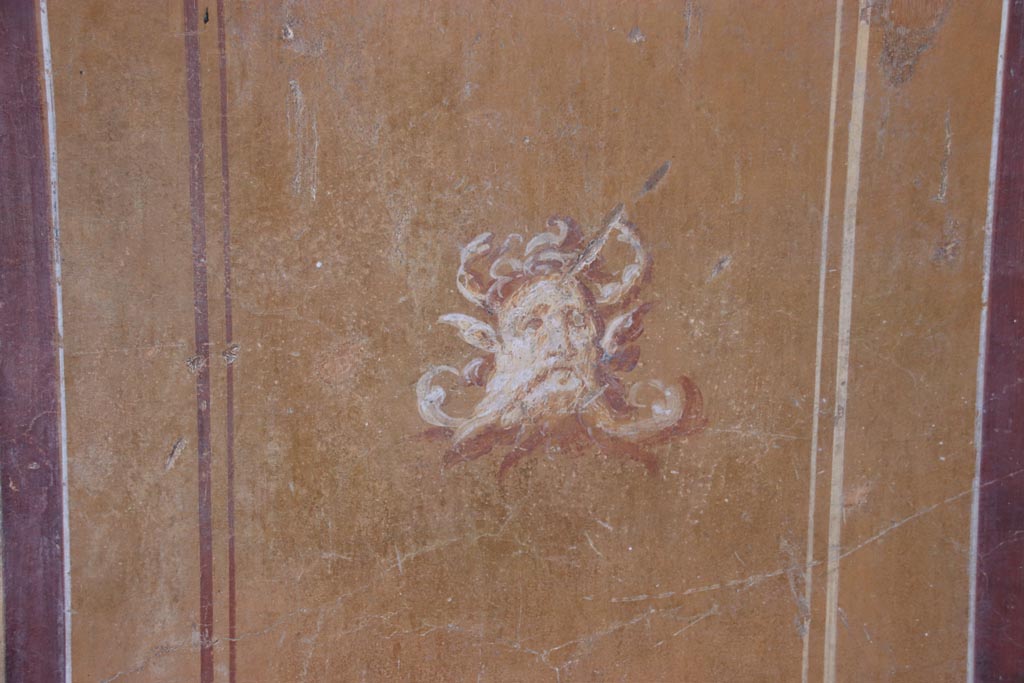
VI.15.1 Pompeii. October 2023. Detail from west wall of peristyle, in north-west corner. Photo courtesy of Klaus Heese.
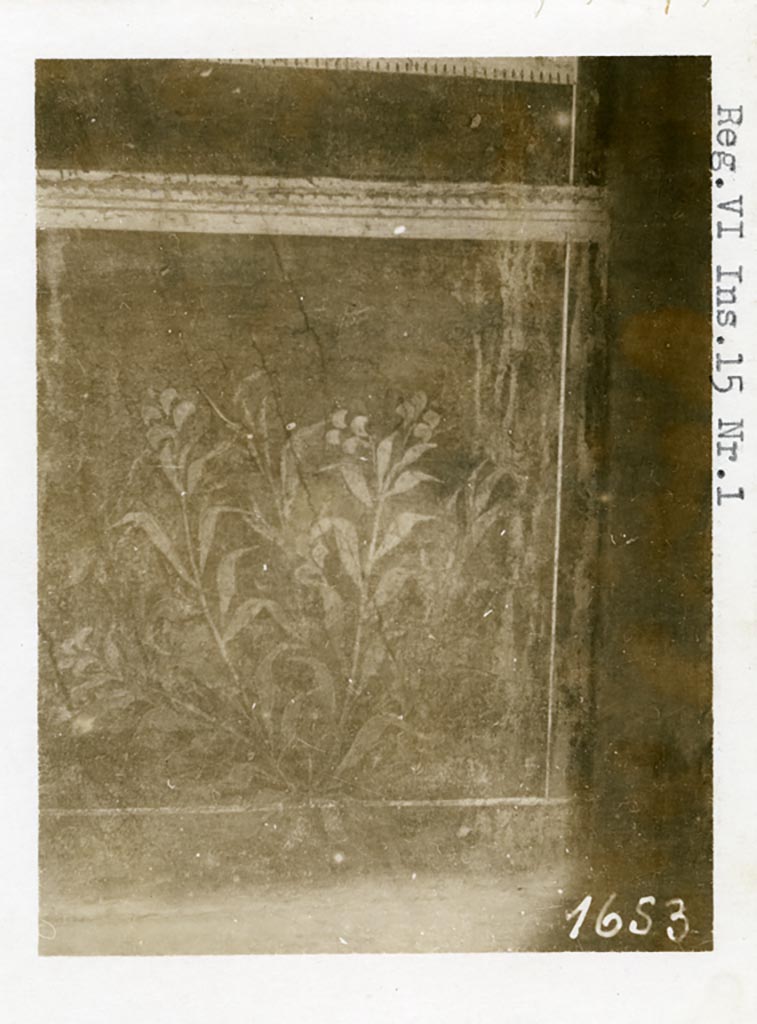
VI.15.1 Pompeii. Pre-1937-39. Detail of painted zoccolo with plant, perhaps from lower west wall at north end.
Photo courtesy of American Academy in Rome, Photographic Archive. Warsher collection no. 1653.
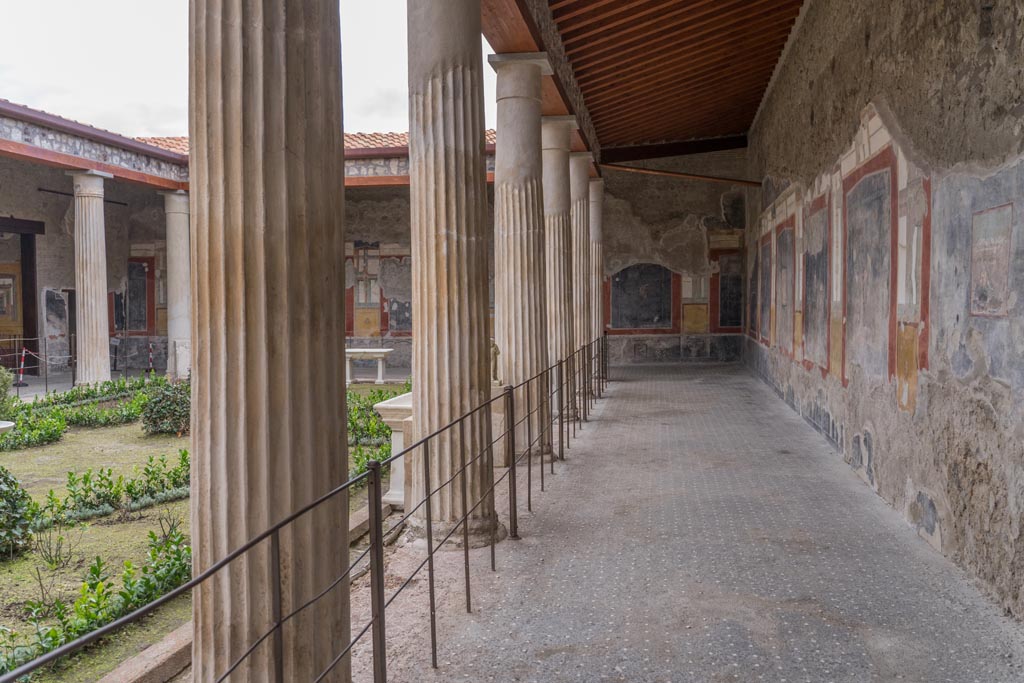
VI.15.1 Pompeii. March 2023. Looking south along west portico towards south-west corner. Photo courtesy of Johannes Eber.
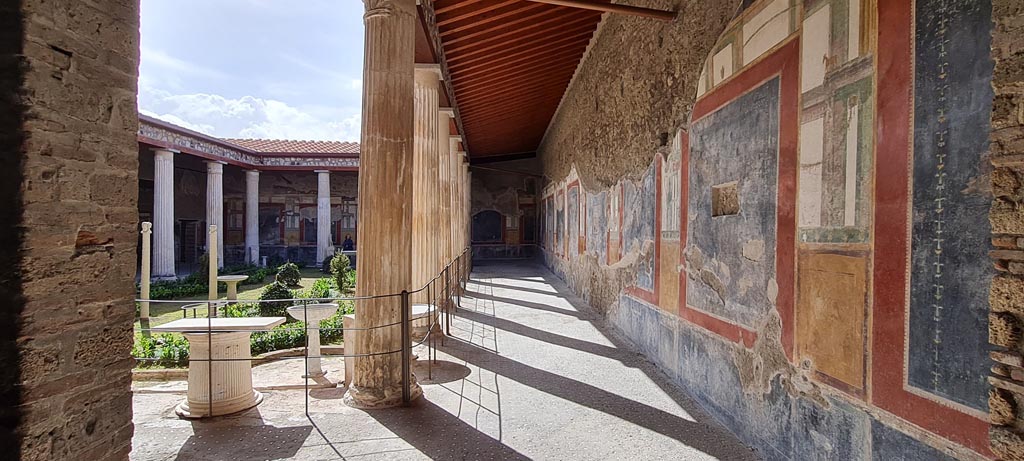
VI.15.1 Pompeii. April 2023. Looking south along west
portico from north-west corner. Photo
courtesy of Giuseppe Ciaramella.
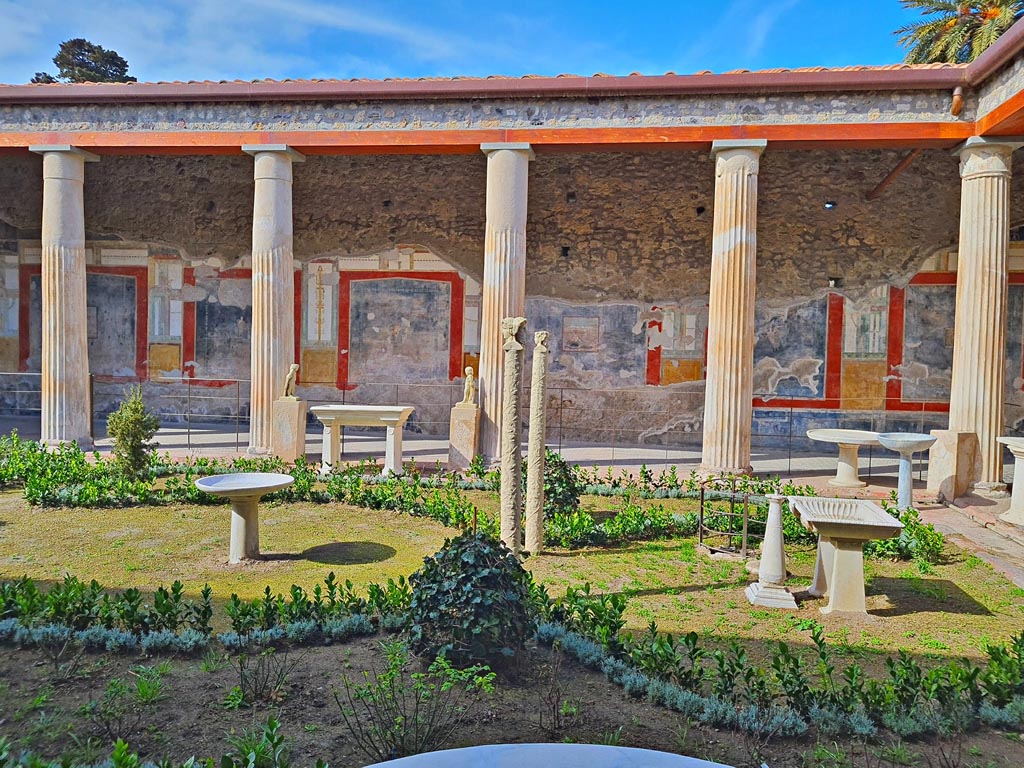
VI.15.1 Pompeii. April 2023.
Looking towards decorated west wall of portico/peristyle at
north end. Photo courtesy of
Giuseppe Ciaramella.
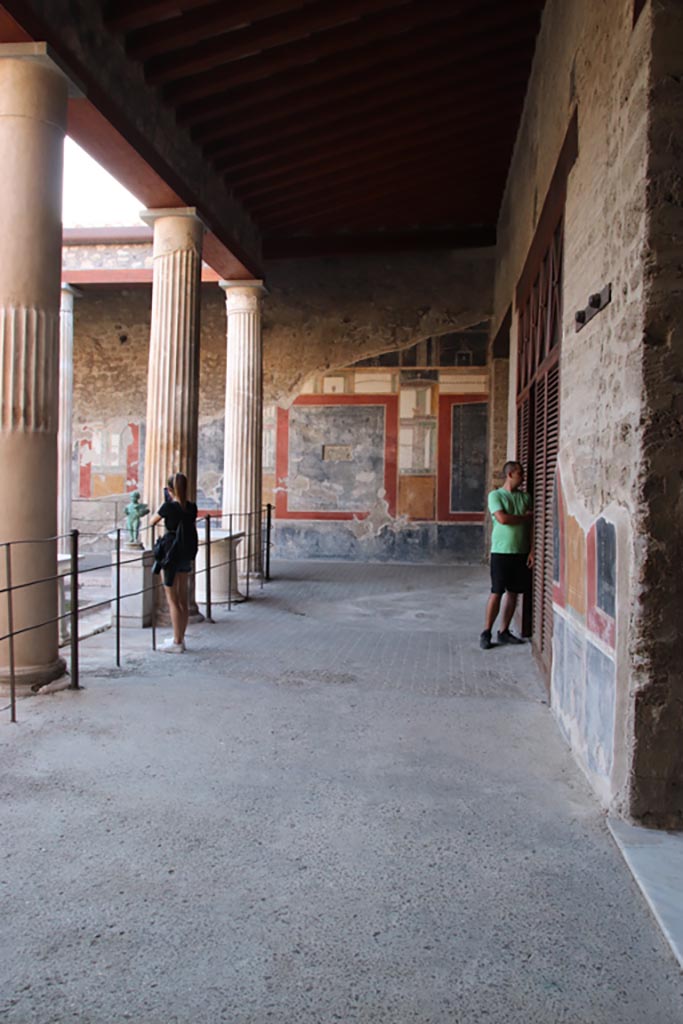
VI.15.1 Pompeii. October 2023. Looking west along north portico. Photo courtesy of Klaus Heese.
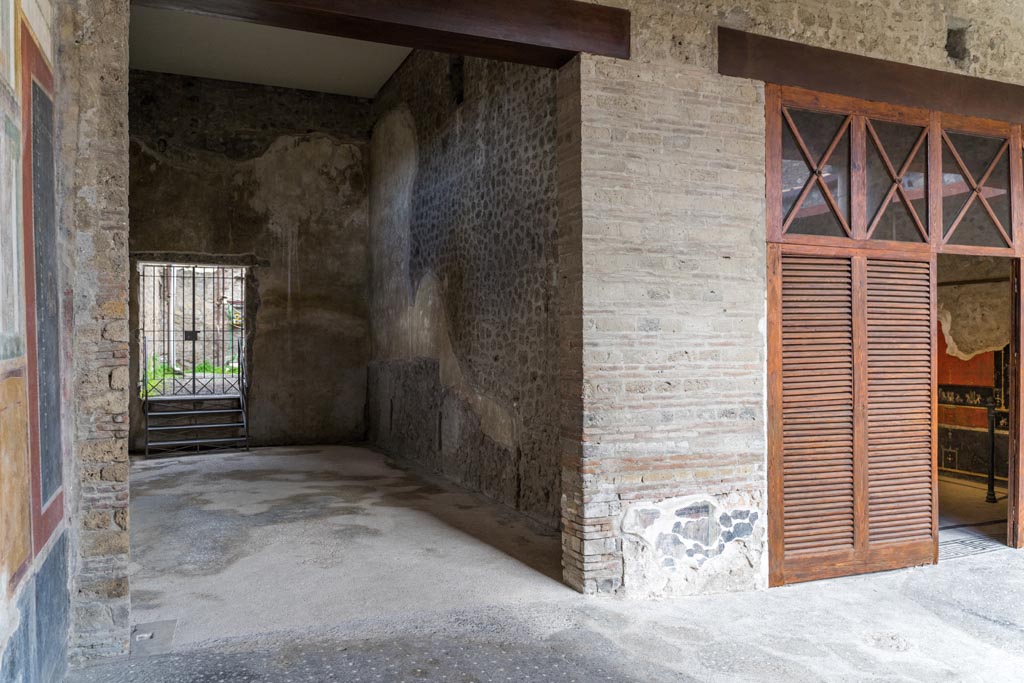
On the right is the doorway to the “Cupids’ room”, (PPM - room q). Photo courtesy of Johannes Eber.
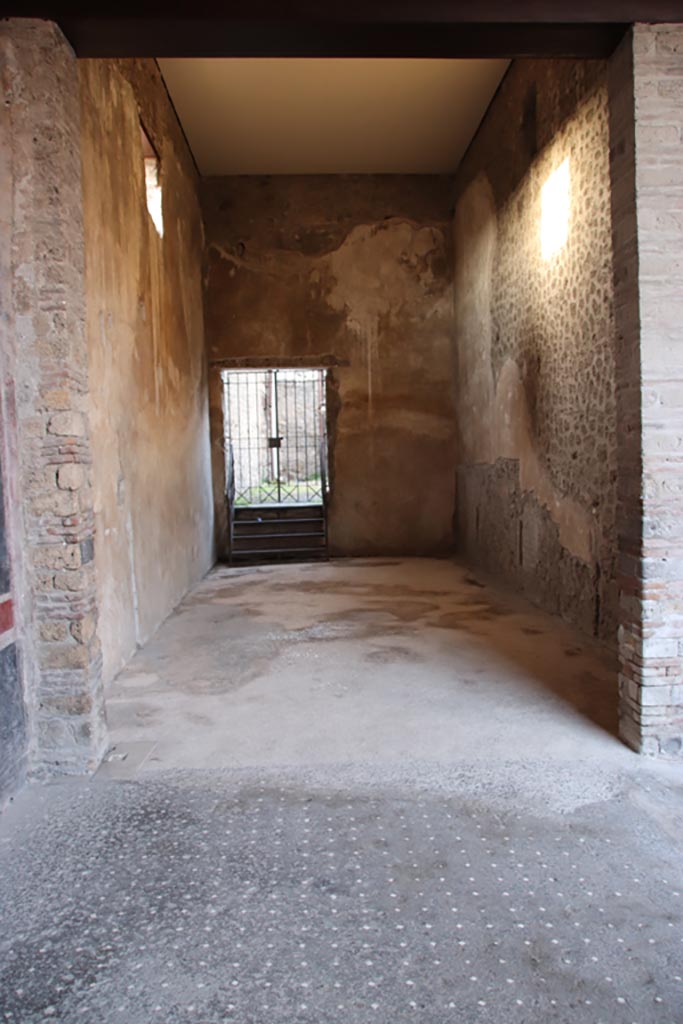
VI.15.1 Pompeii. October 2023.
Looking north in room in north-west corner of peristyle. (PPM – room r). Photo courtesy of Klaus Heese.
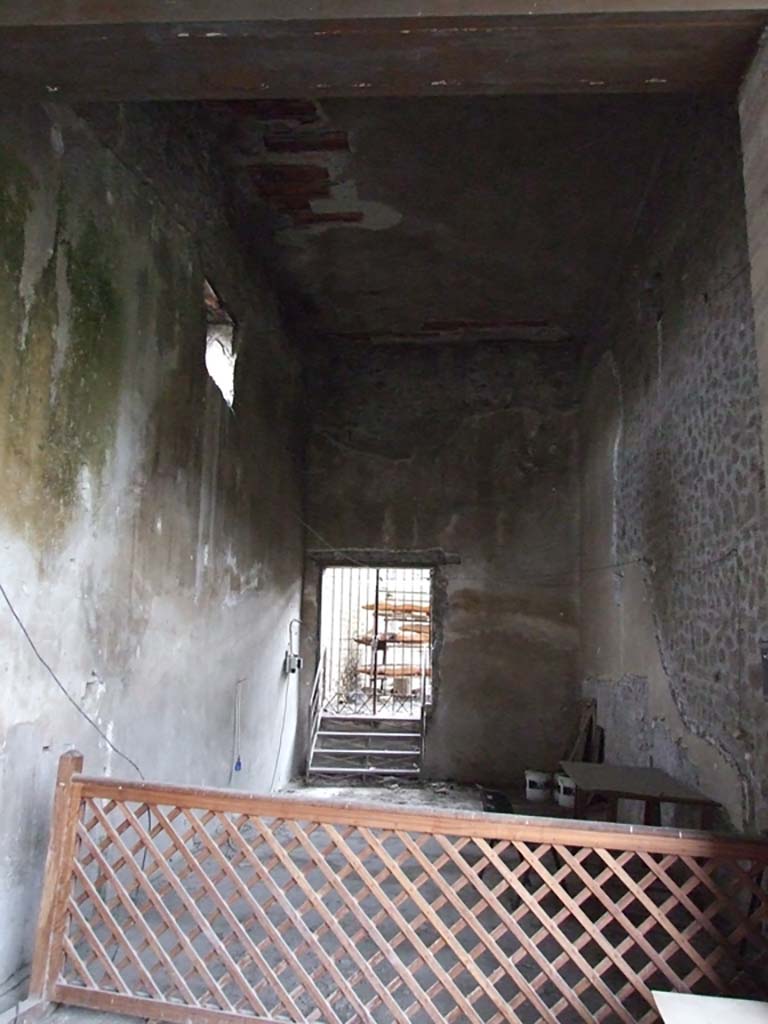
VI.15.1 Pompeii. December 2006. Looking north in room in north-west corner of peristyle. (PPM – room r).
According to Garcia y Garcia, the doorway in the north wall of this room was opened to aid the carrying away of the debris from the 1943 bombing.
This is a modern doorway.
See Garcia y
Garcia, L., 2006. Danni di guerra a Pompei. Rome: L’Erma di Bretschneider. (p.96).
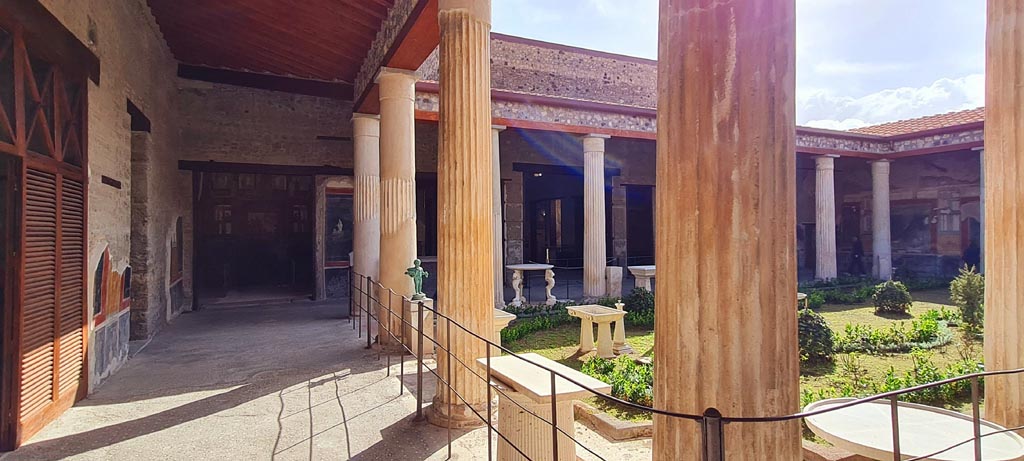
VI.15.1 Pompeii. April
2023. Looking east along north portico. Photo courtesy of Giuseppe Ciaramella.
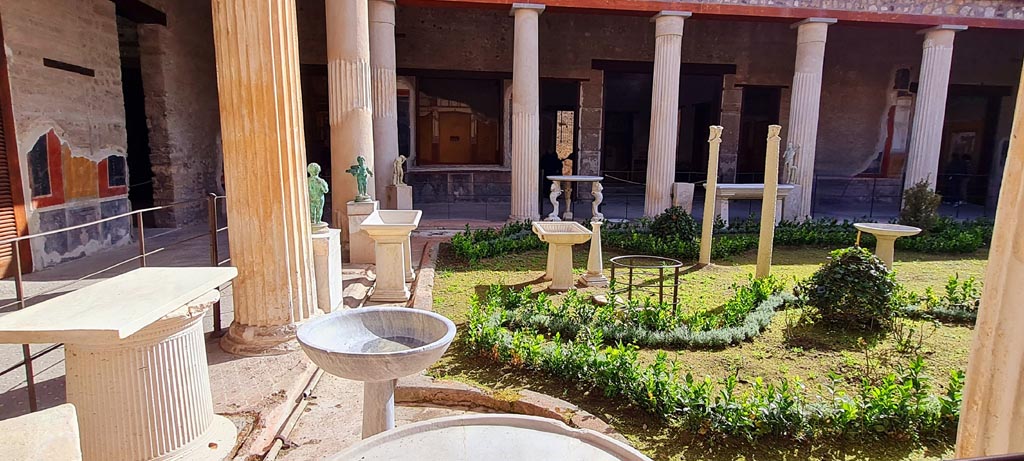
VI.15.1 Pompeii. April 2023. Looking east across peristyle garden from north-west corner. Photo courtesy of Giuseppe Ciaramella.
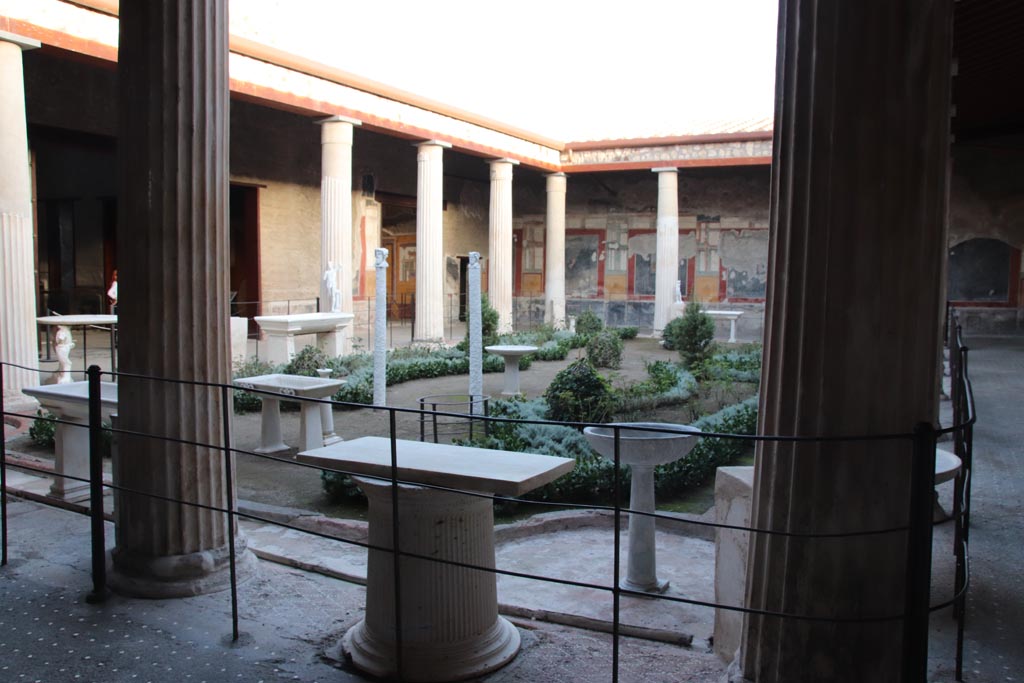
VI.15.1 Pompeii.
October 2023. Looking south-east from north-west corner of peristyle. Photo
courtesy of Klaus Heese.
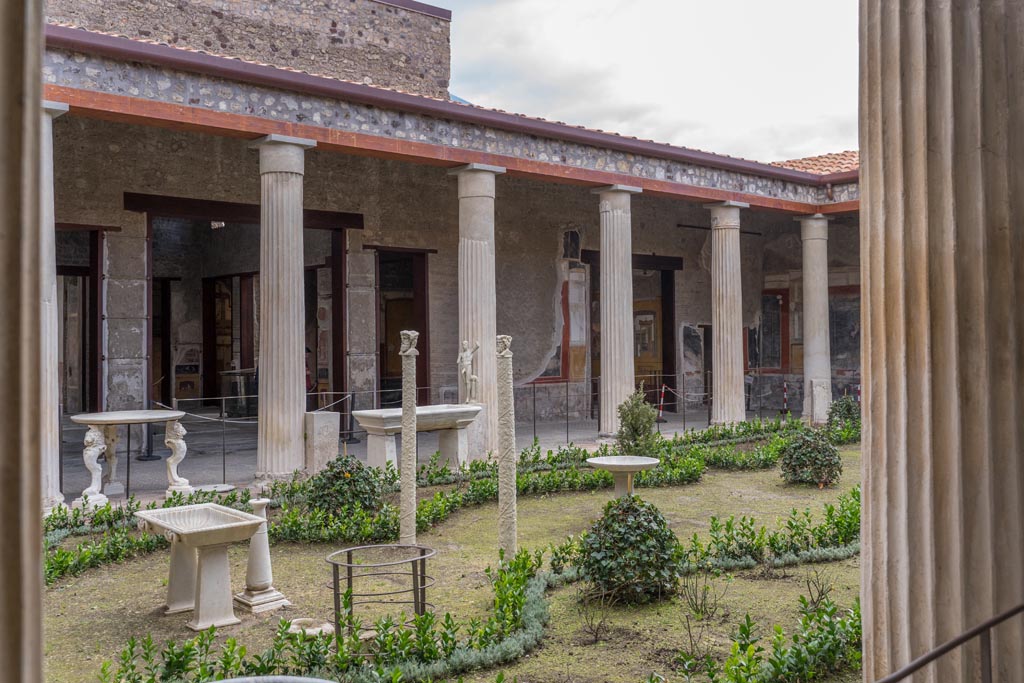
VI.15.1 Pompeii. March 2023. Looking south-east across peristyle, from west portico. Photo courtesy of Johannes Eber.
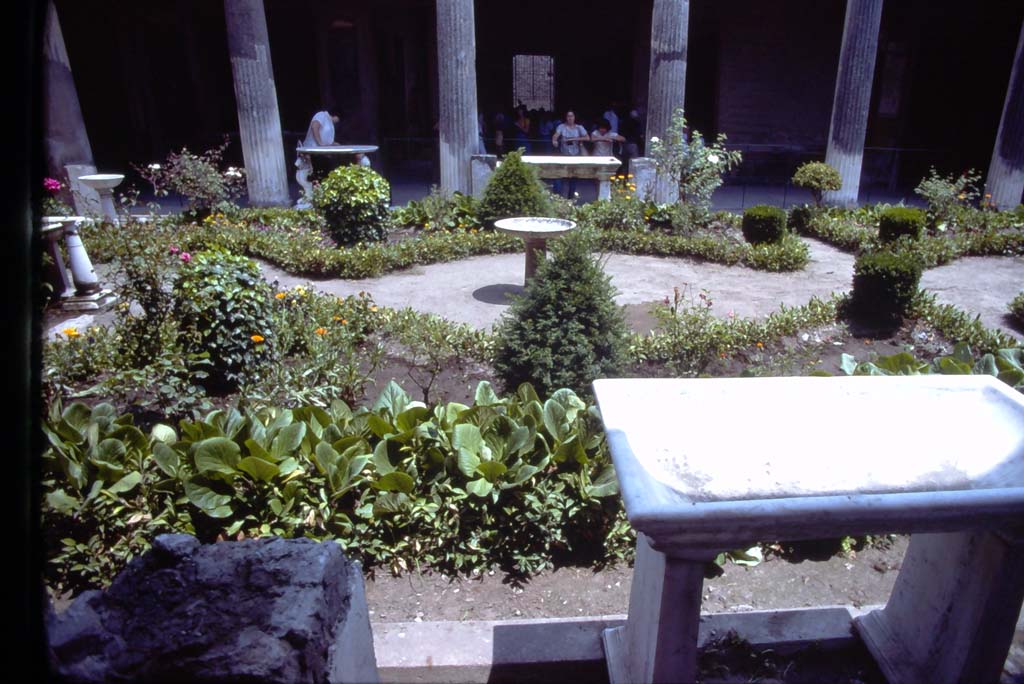
VI.15.1 Pompeii. July 1980. Looking
east across peristyle, from west portico.
Photo
courtesy of Rick Bauer, from Dr George Fay’s slides collection.
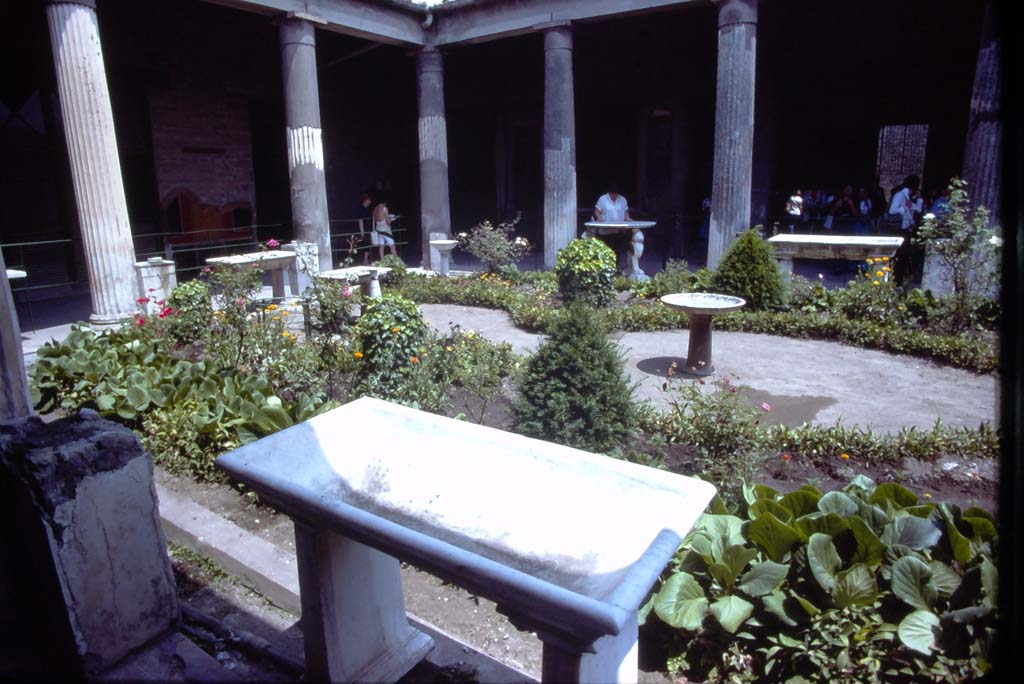
VI.15.1 July 1980. Looking towards north-east corner of peristyle,
from west portico.
Photo courtesy of Rick Bauer, from Dr George Fay’s slides
collection.
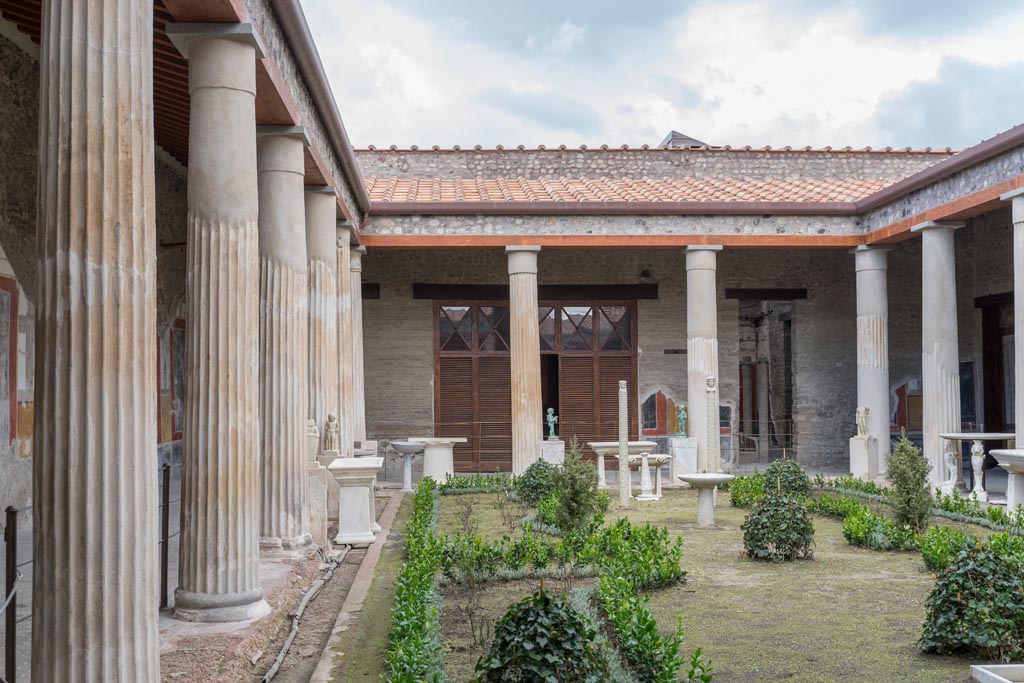
VI.15.1 Pompeii. March 2023. Looking north along west portico of garden towards north end. Photo courtesy of Johannes Eber.
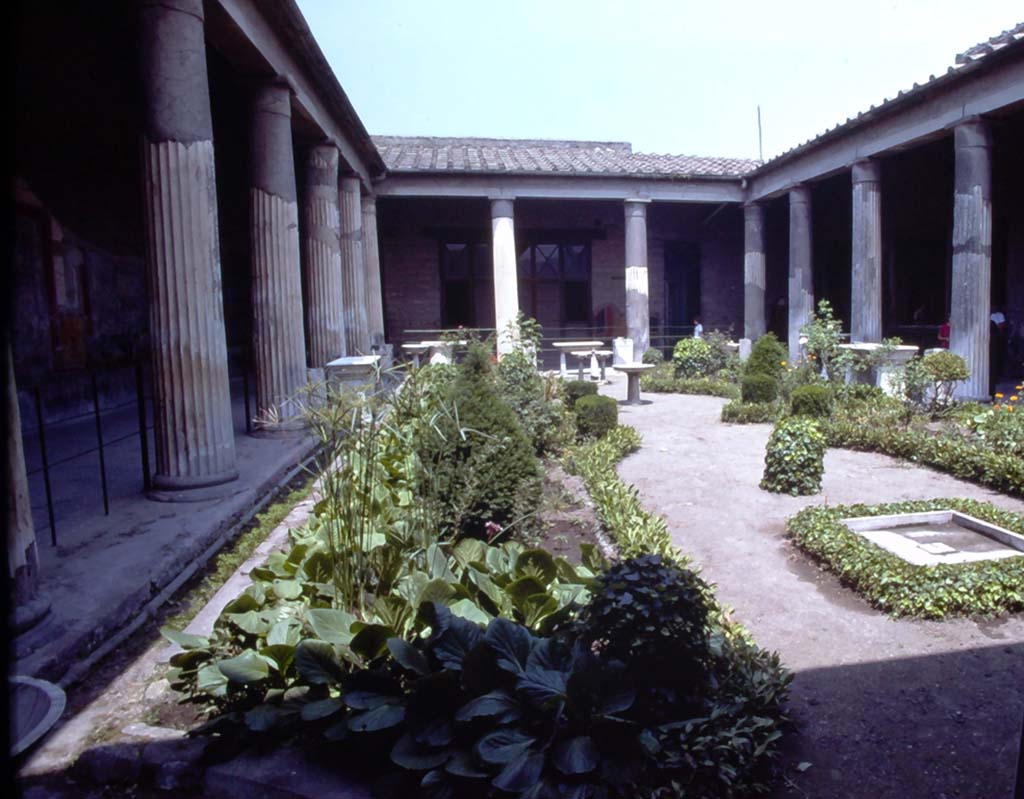
VI.15.1 July 1980. Looking north along west portico of garden
towards north end.
Photo courtesy of Rick Bauer, from Dr George Fay’s slides
collection.
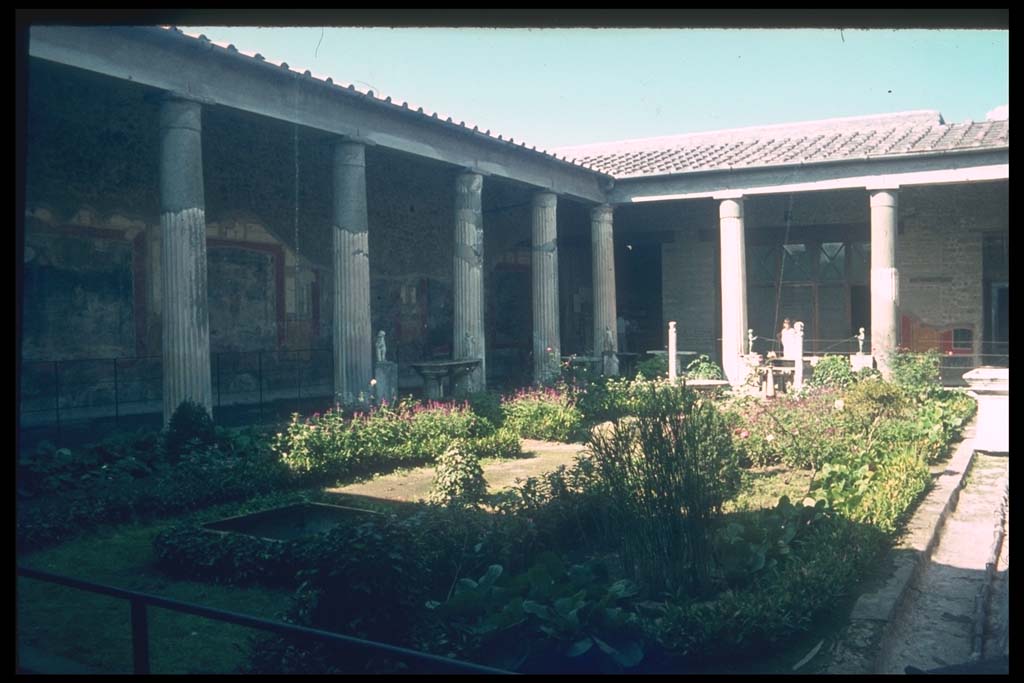
VI.15.1 Pompeii. Looking north-west across peristyle, the two double-headed herms are in place at far end.
Photographed 1970-79 by Günther Einhorn, picture courtesy of his son Ralf Einhorn.
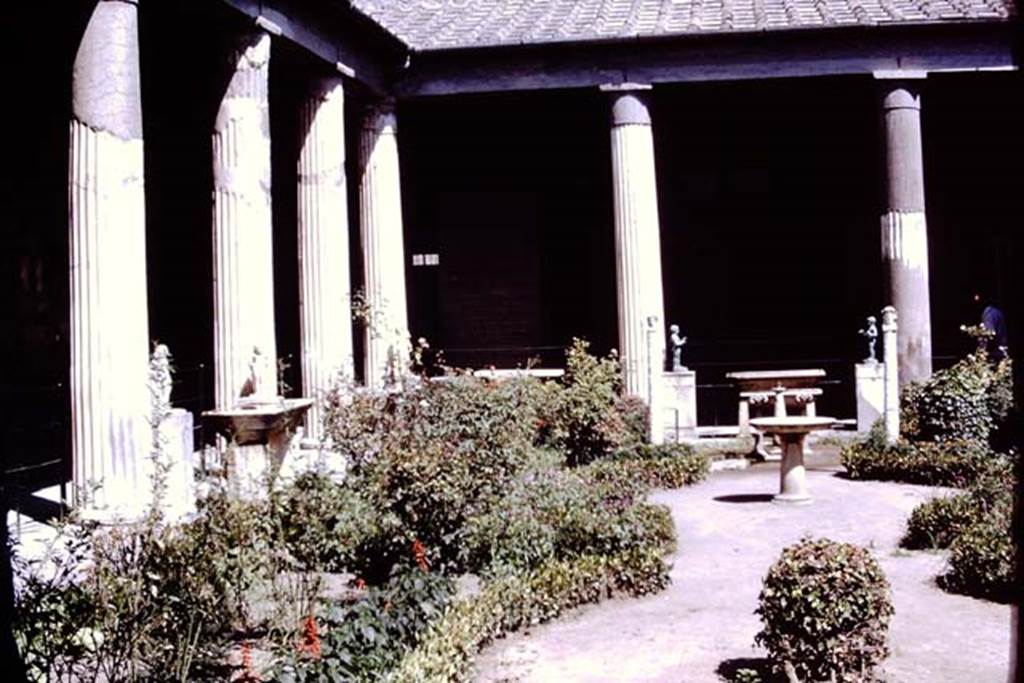
VI.15.1 Pompeii, 1968. Looking towards the north-west corner and north side of the peristyle. Photo by Stanley A. Jashemski.
Source: The Wilhelmina and Stanley A. Jashemski archive in the University of Maryland Library, Special Collections (See collection page) and made available under the Creative Commons Attribution-Non-Commercial License v.4. See Licence and use details.
J68f0689
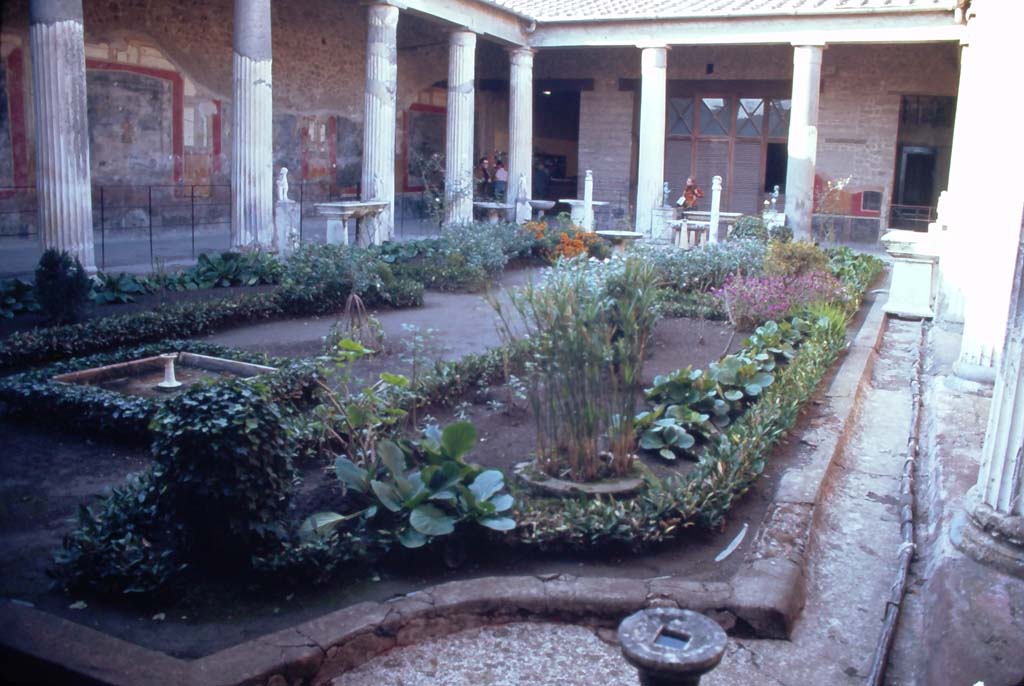
VI.15.1 Pompeii. December
1968.
Looking across
peristyle towards west wall, north-west corner and north wall. Photo courtesy
of Rick Bauer.
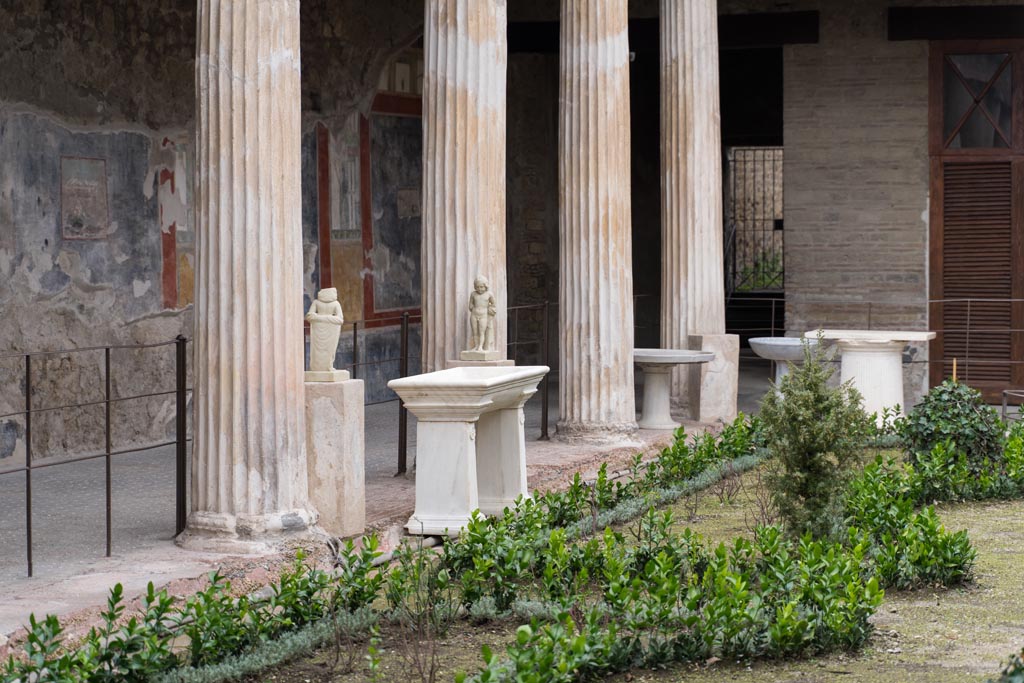
VI.15.1 Pompeii. March 2023. Looking across peristyle towards north-west corner. Photo courtesy of Johannes Eber.
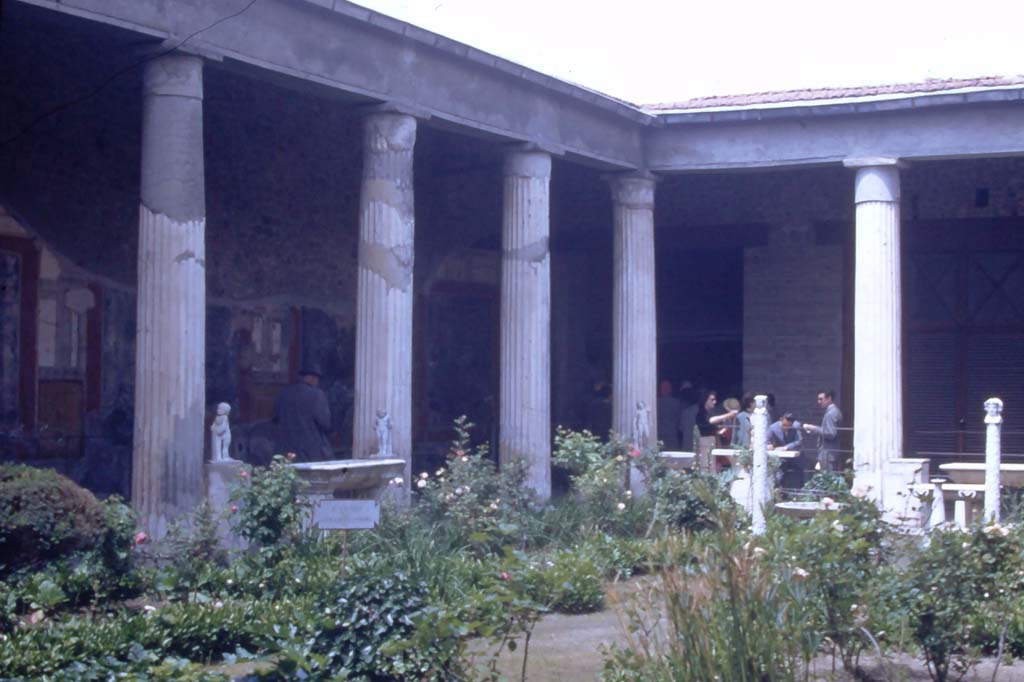
VI.15.1 Pompeii. May
1953. Looking across peristyle towards north-west corner. Photo courtesy of
Rick Bauer.
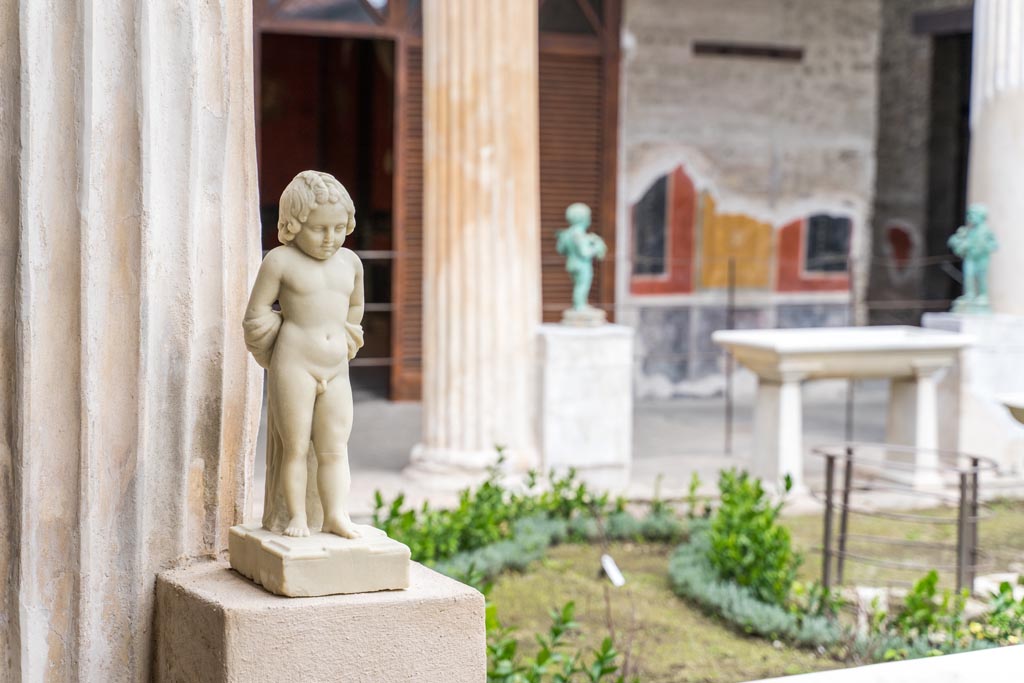
VI.15.1 Pompeii. March 2023. Statue on west side of peristyle, looking north-east. Photo courtesy of Johannes Eber.
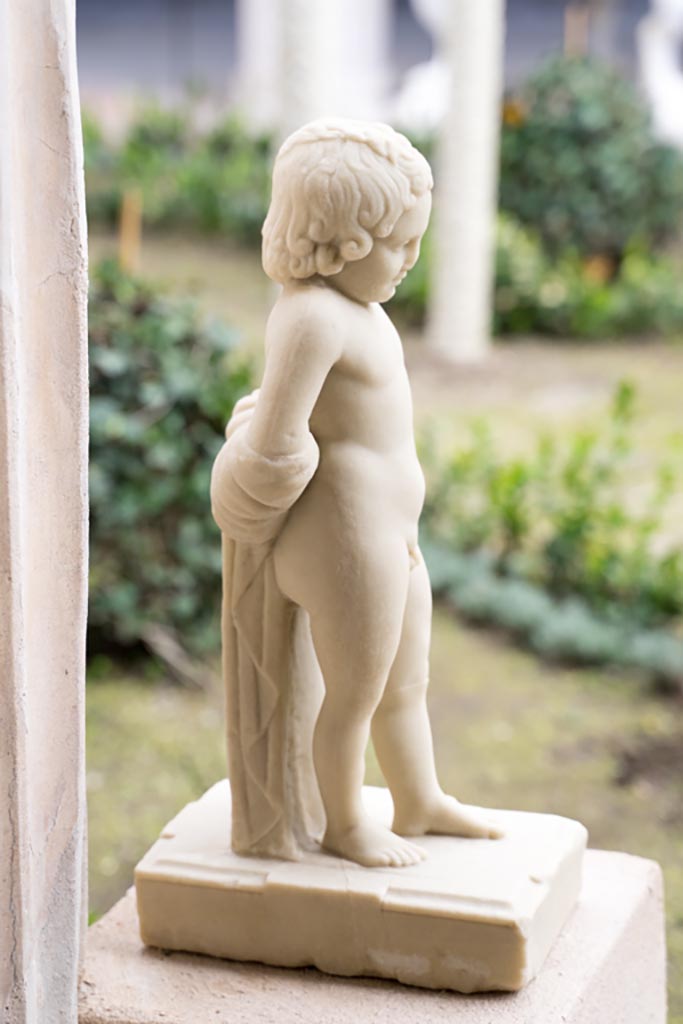
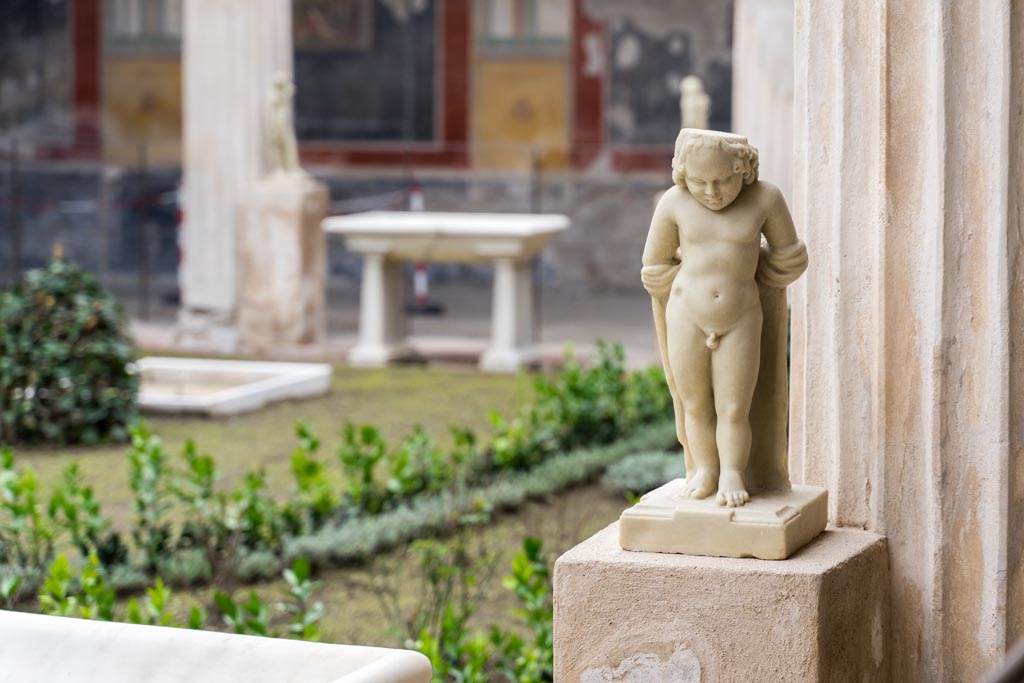
VI.15.1 Pompeii. March 2023.
Detail of statue on west side of peristyle towards north end, looking east.
Photo courtesy of Johannes Eber.
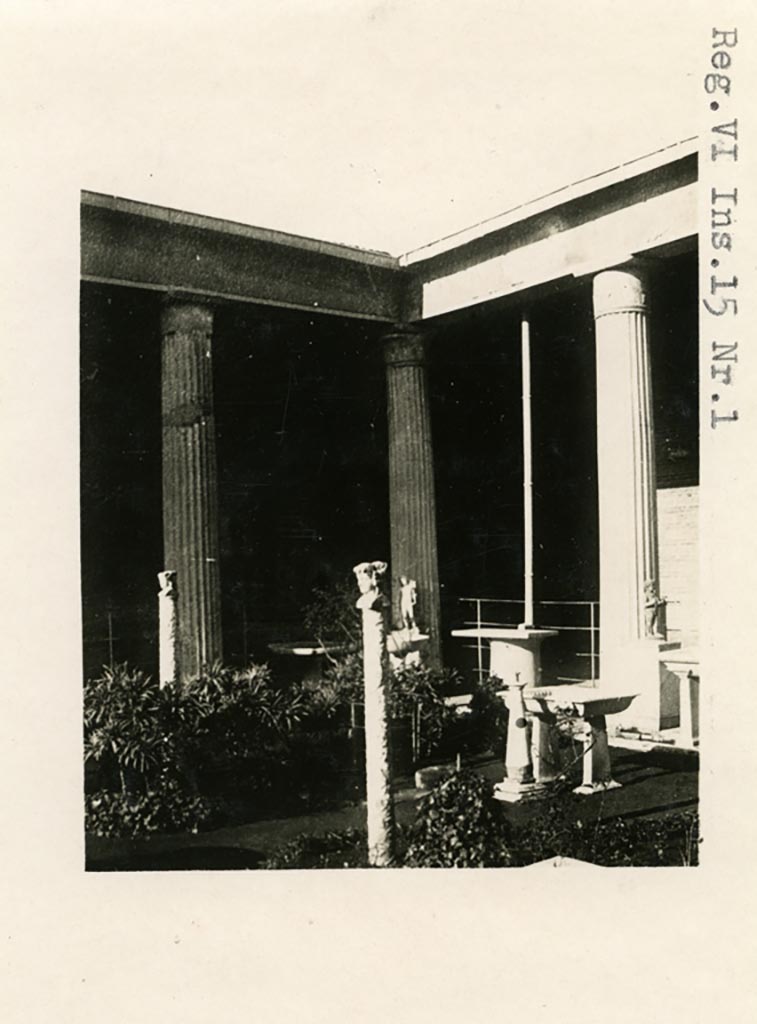
VI.15.1 Pompeii. Pre-1937-39. Looking towards north-west corner of peristyle.
Photo courtesy of American Academy in Rome, Photographic Archive. Warsher collection no. 1434.
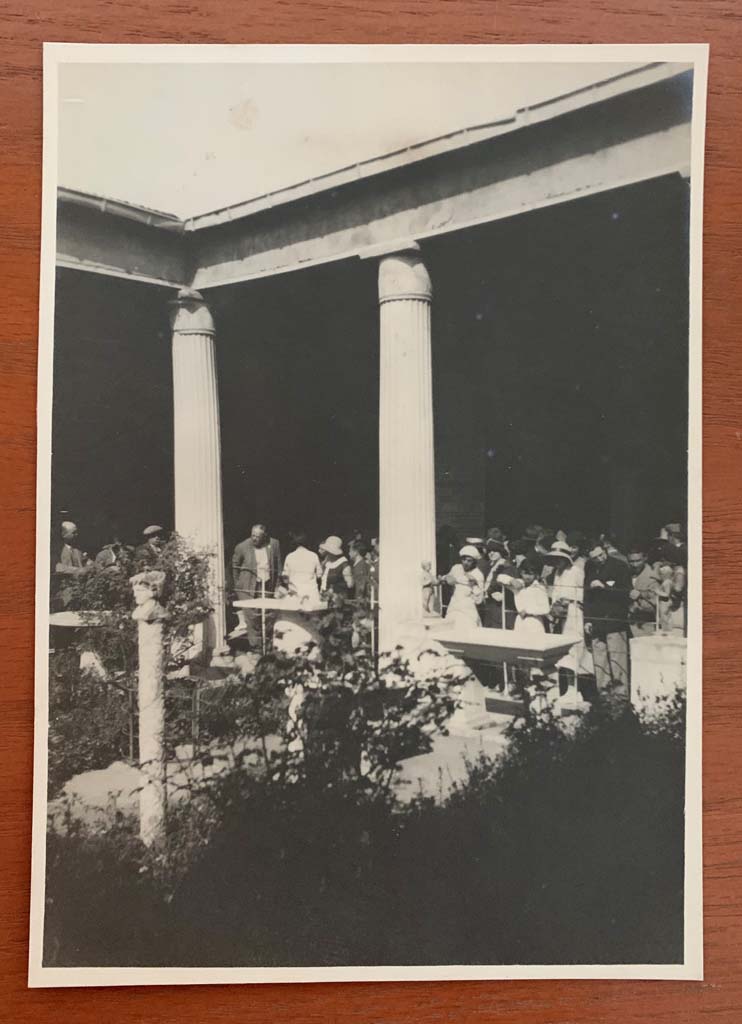
VI.15.1 Pompeii. From an album dated 1922.
Looking towards north-west corner of peristyle. Photo courtesy of Rick Bauer.
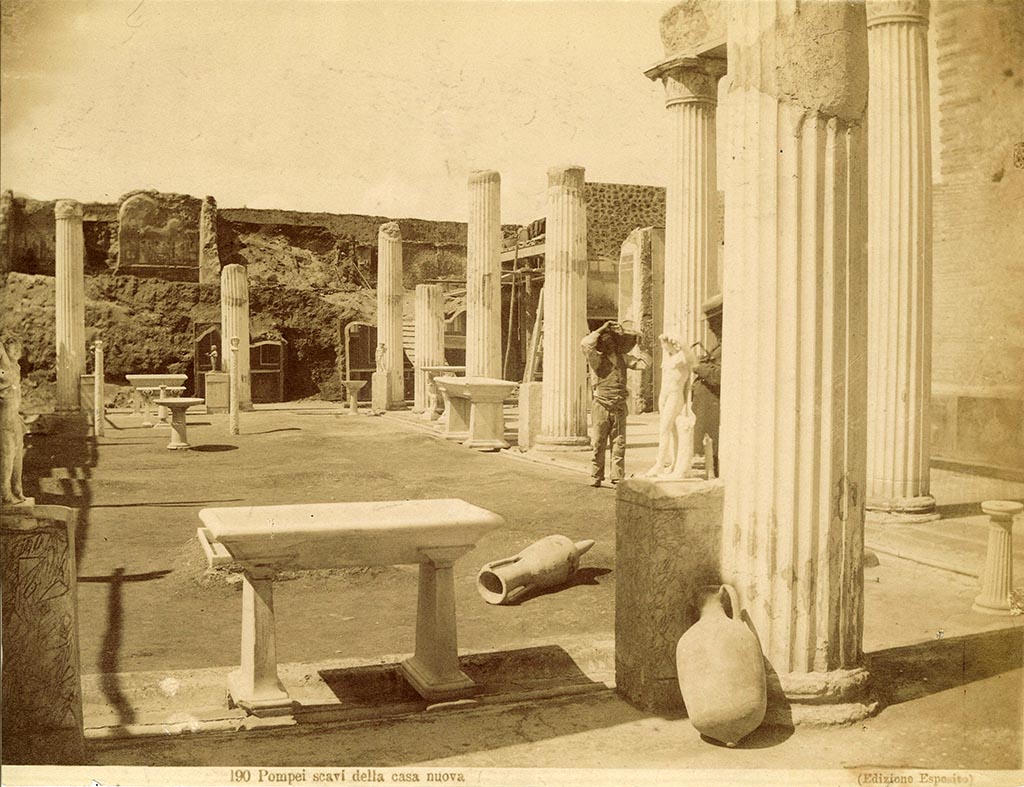
VI.15.1 Pompeii. Esposito
no. 190, “Pompei scavi della casa nuova” showing
excavation of house, 1890s.
Looking north across peristyle. Photo courtesy of Rick Bauer.
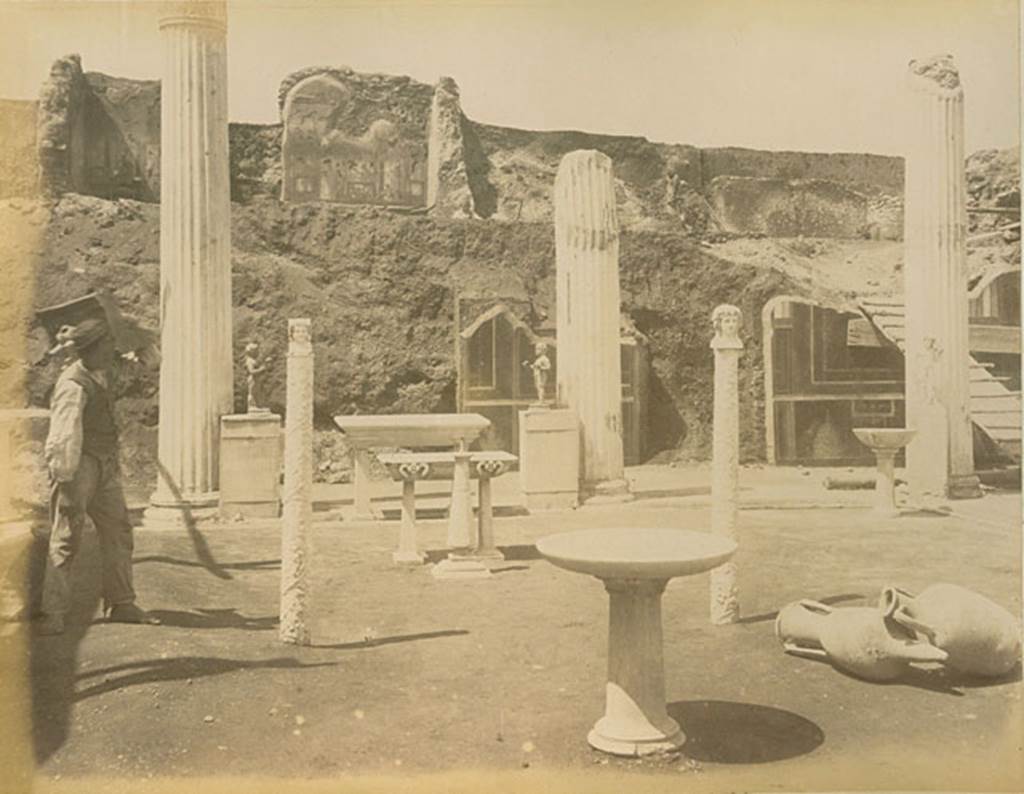
VI.15.1 Pompeii. Possibly 1894-95 during excavations.
North end of peristyle garden showing ornaments in place and upper floor (?). Photo courtesy of Rick Bauer.
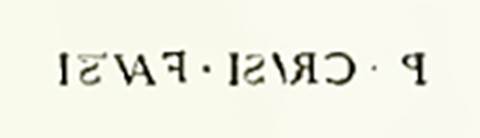
VI.15.1 Pompeii. Wording from a bronze seal, with the name of P. Crusi Fausti, in raised lettering.
According to NdS, on 13th March 1895, a bronze seal was found in the upper levels of soil on the north side of the peristyle.
In a recess in the signet ring of the seal, an ivy leaf was engraved.
See Notizie degli
Scavi, 1895, (p. 109).
According to Della Corte, he thought that P. Crusio Fausto may have been one of the lodgers of the upper floor of the Vettii house.
The family name was not otherwise known to him, other than from this seal found in the upper levels of earth on the north side of the peristyle.
It read - P. Crusi Fausti.
See Della Corte,
M., 1965. Case ed Abitanti di Pompei.
Napoli: Fausto Fiorentino, p. 71 and S. 34 on p. 467.
Part 3 Part 4 Part 1 VI.15.1 Plan