VI.14.30 Pompeii. Casa di
Laocoonte or House of Laocoon.
Excavated 1876.
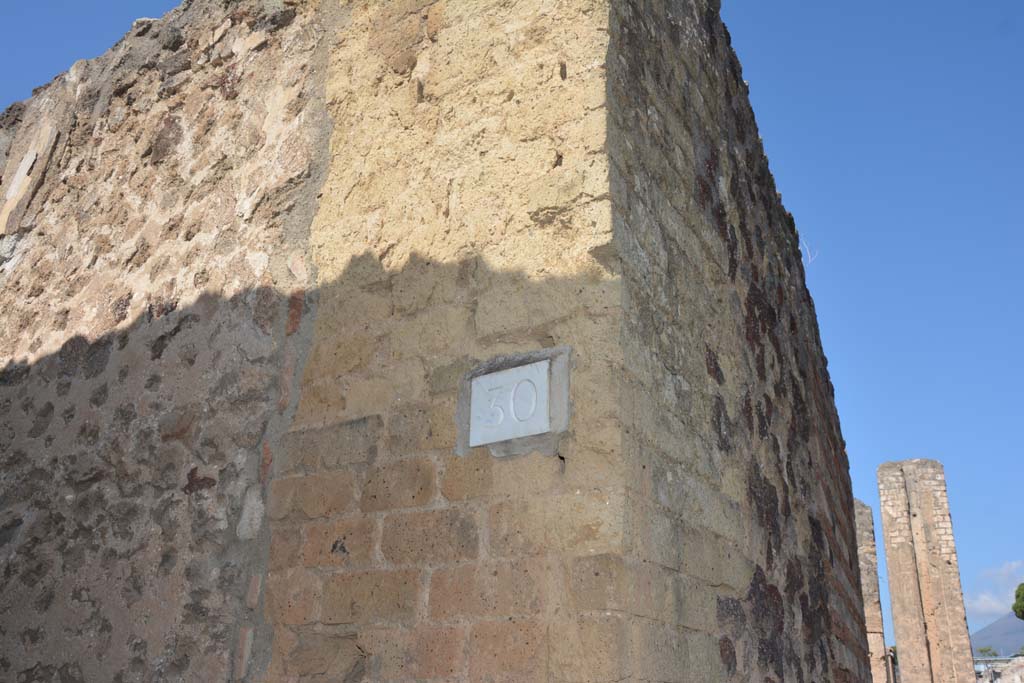
VI.14.30 Pompeii. October 2019. Identification number on north
side of entrance doorway.
Foto Annette Haug, ERC
Grant 681269 DÉCOR.
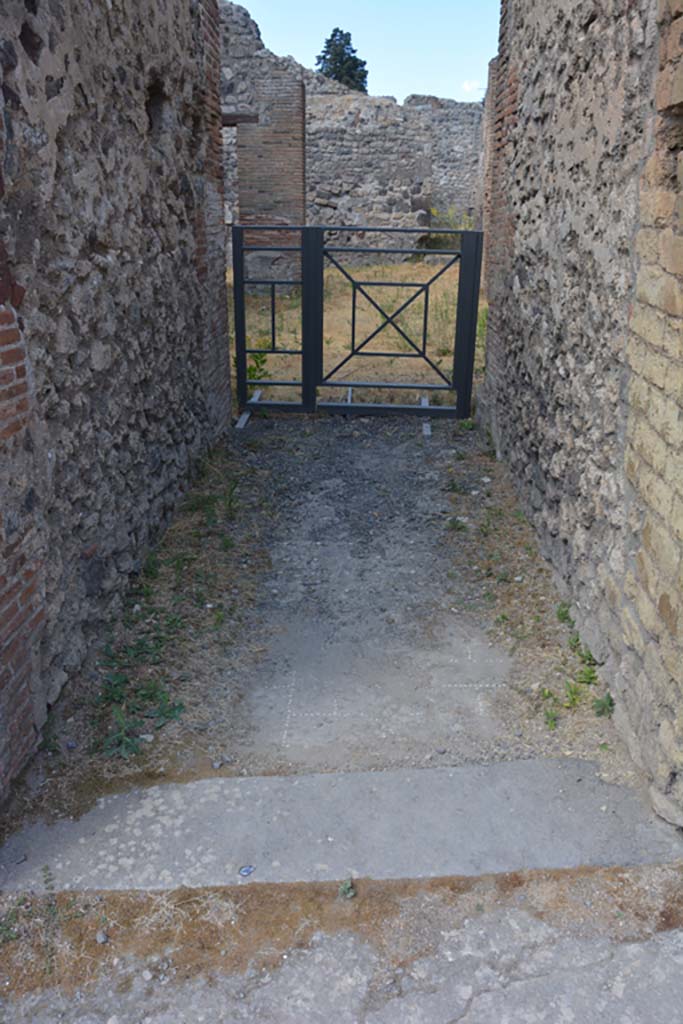
VI.14.30 Pompeii. July 2017.
Looking west along vestibule/entrance corridor.
Foto Annette Haug, ERC Grant 681269 DÉCOR.
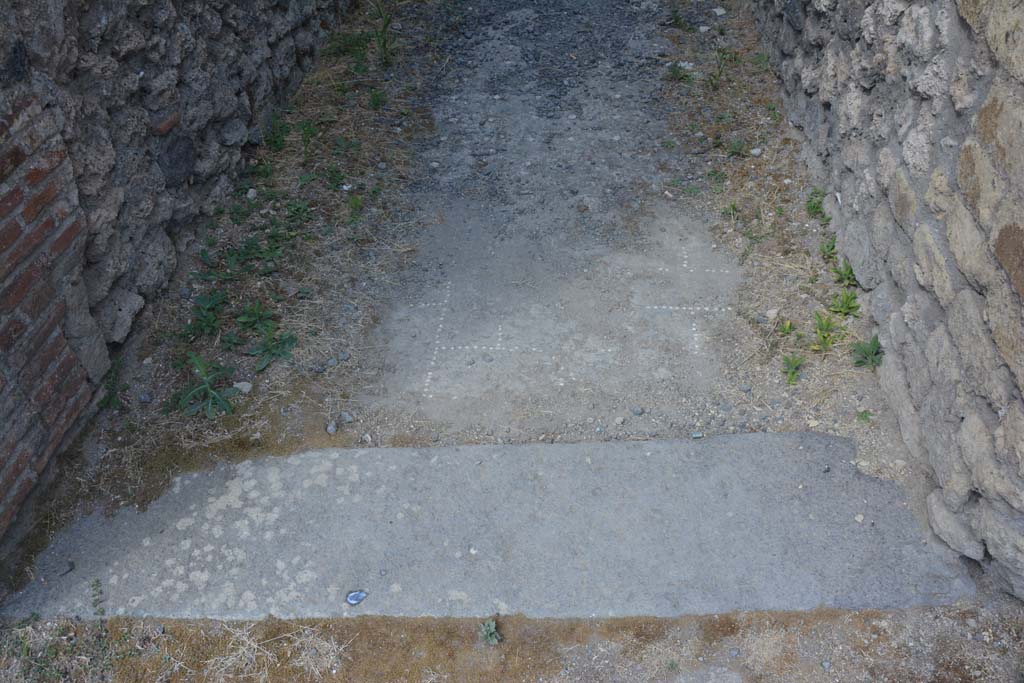
VI.14.30 Pompeii. July 2017. Flooring in
vestibule/entrance corridor
Foto Annette Haug, ERC Grant 681269 DÉCOR.
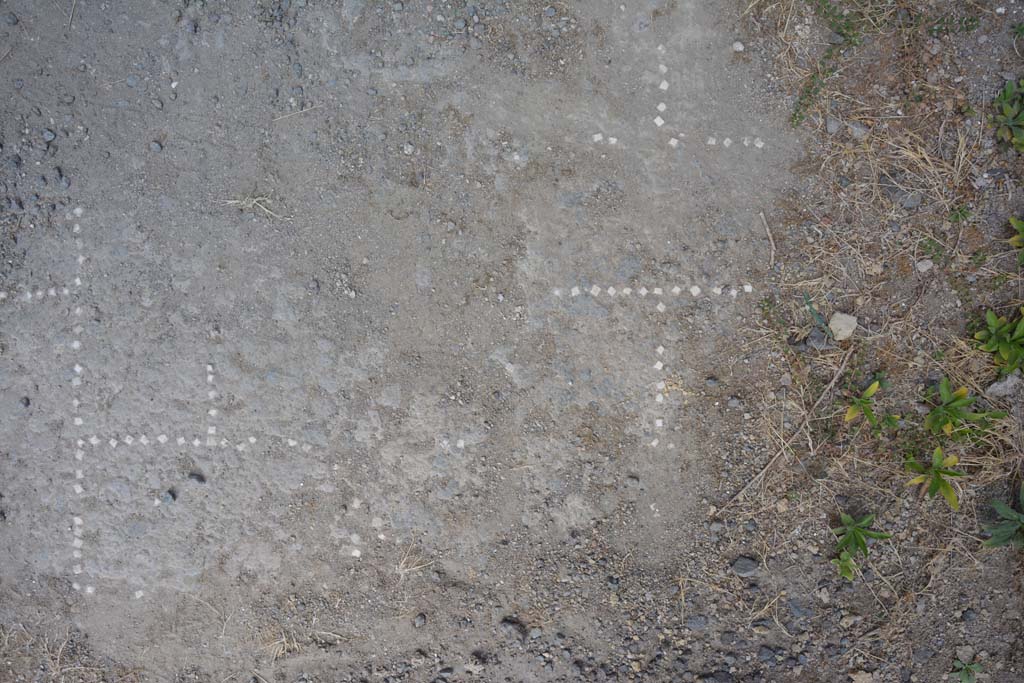
VI.14.30 Pompeii. July 2017. Detail
of flooring.
Foto Annette Haug, ERC Grant 681269 DÉCOR.
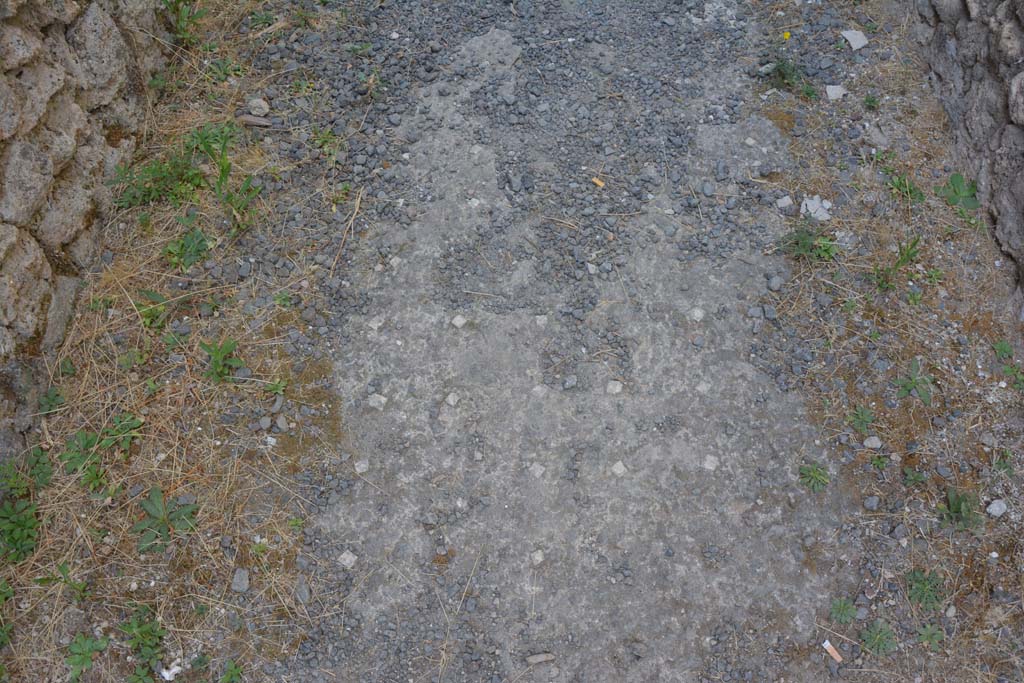
VI.14.30 Pompeii. July 2017. Detail of flooring.
Foto Annette Haug, ERC
Grant 681269 DÉCOR.
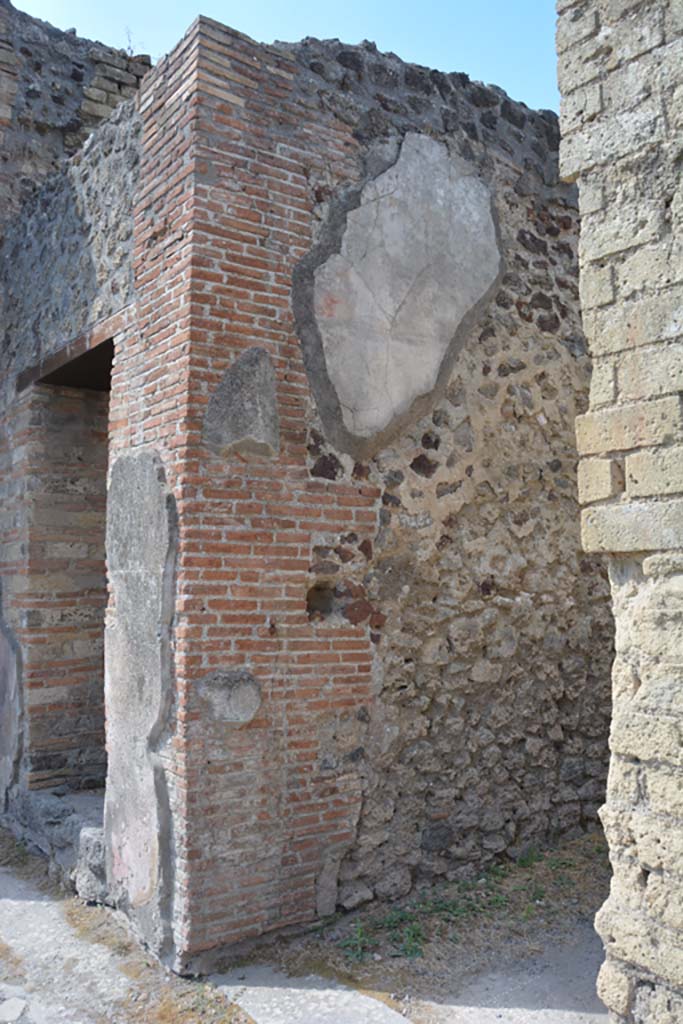
VI.14.30 Pompeii. July 2017. South wall of vestibule/entrance
corridor.
Foto Annette Haug, ERC
Grant 681269 DÉCOR.
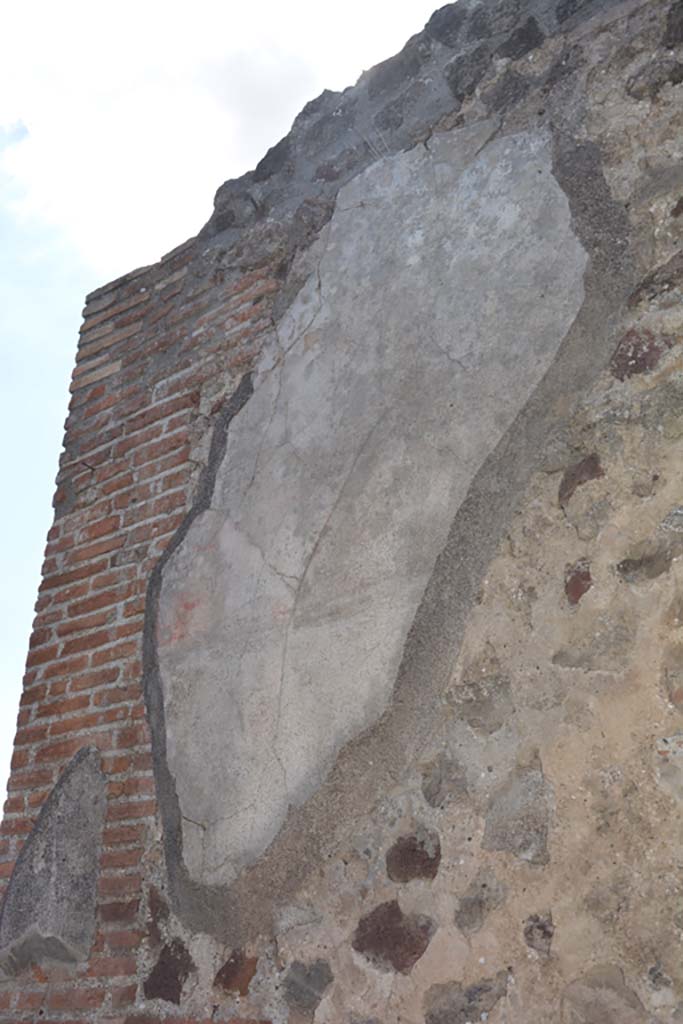
VI.14.30 Pompeii. July 2017. Detail from south wall of
vestibule/entrance corridor.
Foto Annette Haug, ERC
Grant 681269 DÉCOR.
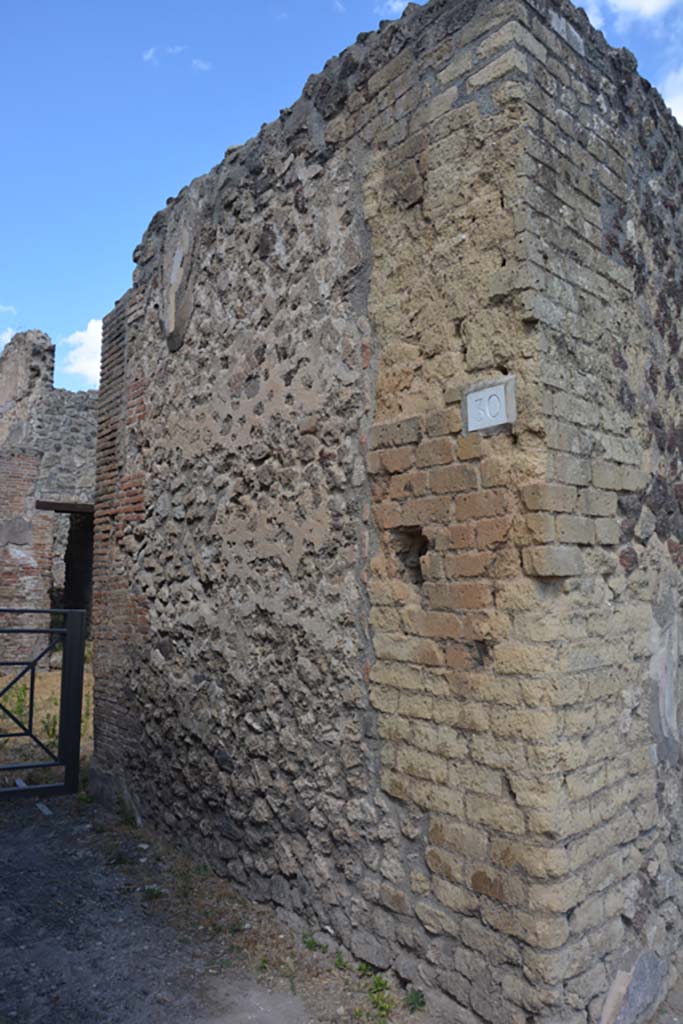
VI.14.30 Pompeii. July 2017. North wall of vestibule/entrance
corridor.
Foto Annette Haug, ERC
Grant 681269 DÉCOR.
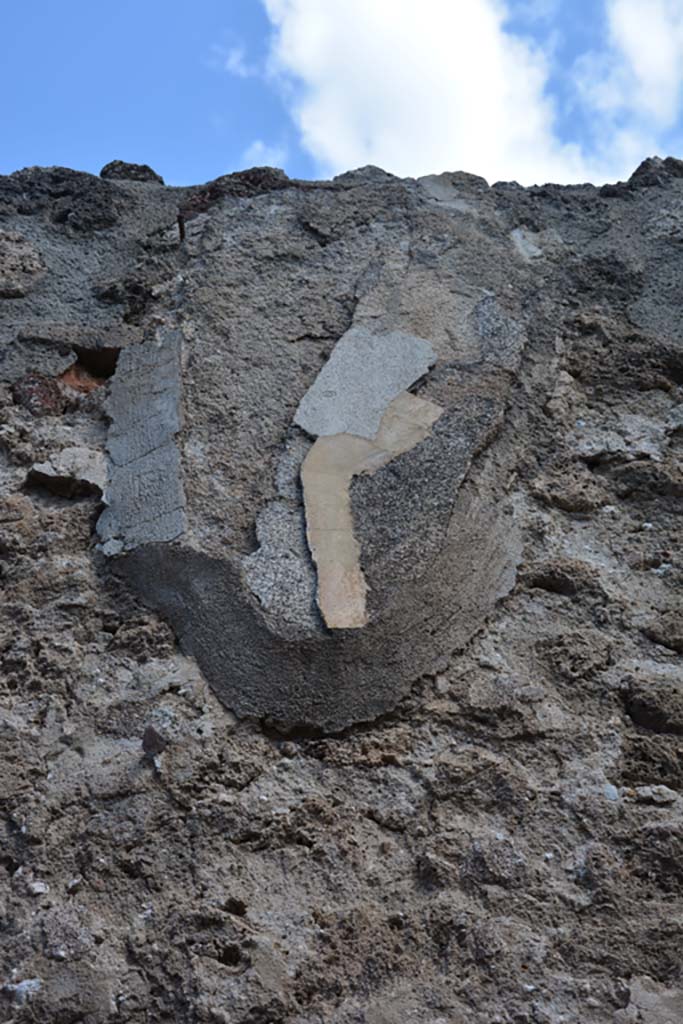
VI.14.30 Pompeii. July 2017. Detail from north wall of
vestibule/entrance corridor.
Foto Annette Haug, ERC
Grant 681269 DÉCOR.
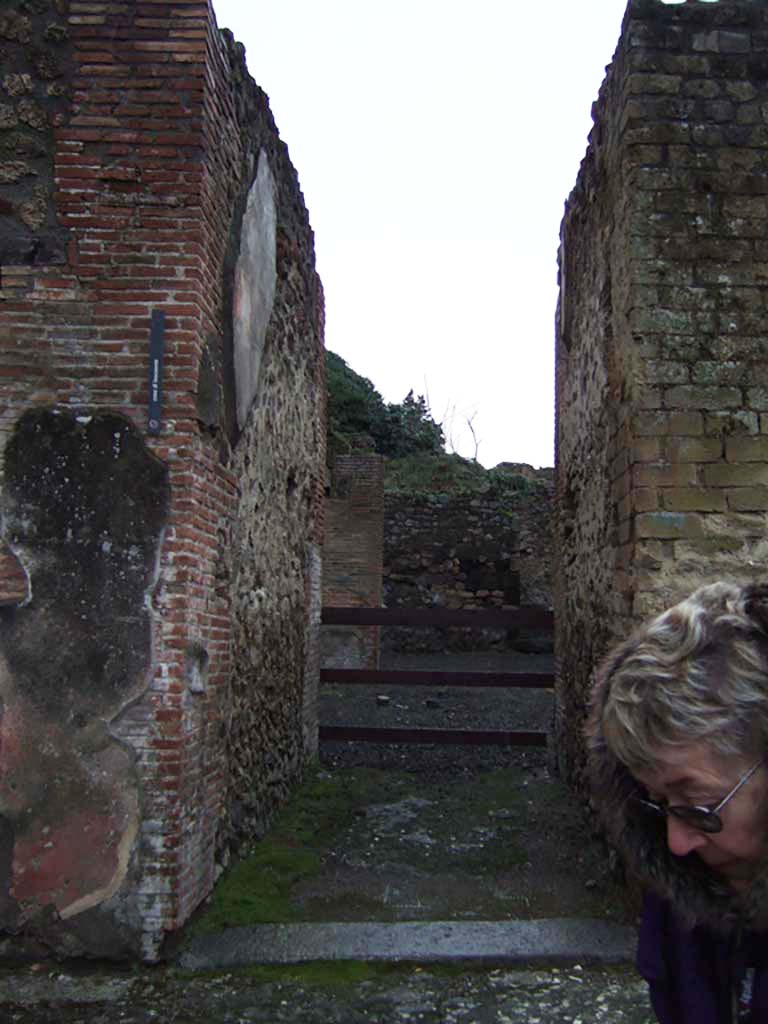
VI.14.30 Pompeii. December 2005. Entrance.
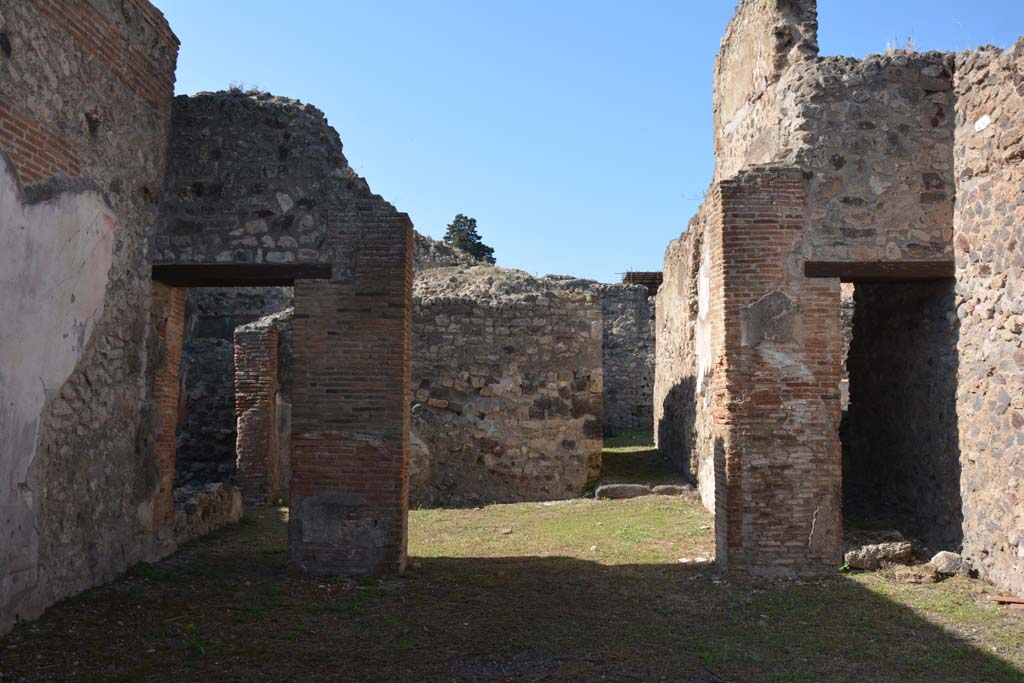
VI.14.30 Pompeii. October 2019.
Looking west across atrium towards tablinum with doorway to corridor linking to VI.14.32 in its west wall.
Foto Annette Haug, ERC
Grant 681269 DÉCOR.
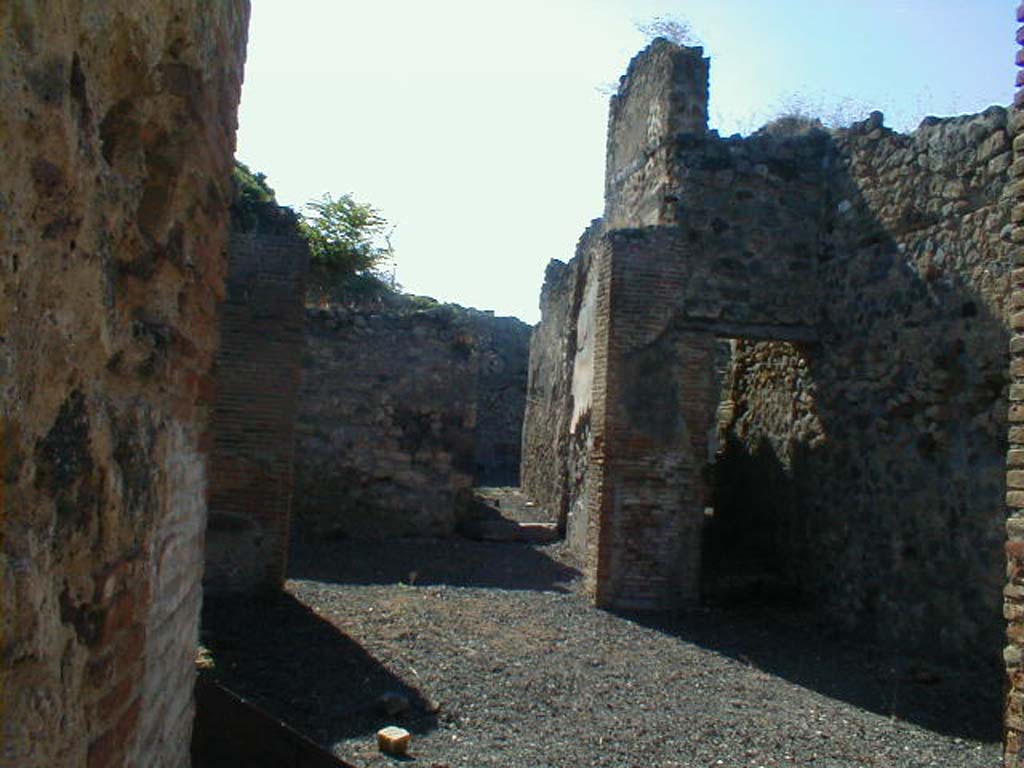
VI.14.30 Pompeii. September 2004.
Looking west across atrium towards tablinum with doorway to corridor linking to VI.14.32 in its west wall.
On the right would have been the doorway to the beginning of the stairs that led to a room above the tablinum.
According to BdI, the flooring of both the fauces and atrium were of a type of opus Signinum.
In this case, lines of white stones were used instead of crushed brick.
The impluvium of the Tuscanic atrium was faced with real opus Signinum.
The place of the tablinum was occupied by a room that was not open onto the atrium in its usual entire width.
The tablinum was entered by two doors from the atrium, the largest on the right side.
A third doorway in the south (left) side of the tablinum led into the small garden area.
A fourth doorway was in the west wall of the tablinum.
Also found on the west wall were fragments of the dado.
See Bullettino dell’Instituto di Corrispondenza
Archeologica (DAIR), 1876, (p.52-3)
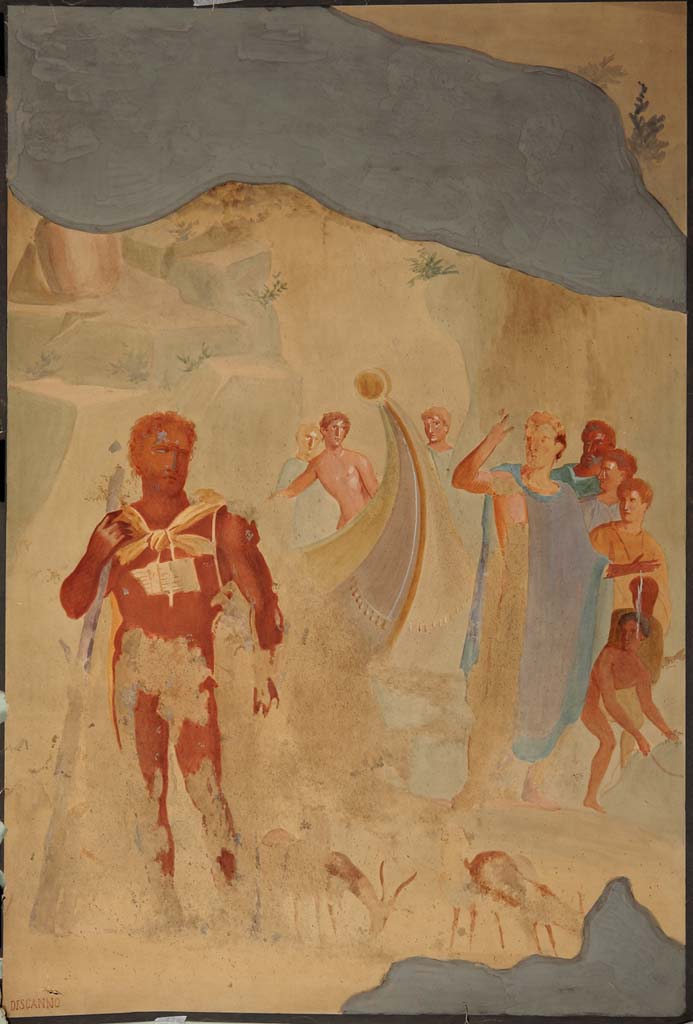
VI.14.30 Pompeii. Painting by Geremia Discanno, of Polyphemus and Aeneas, from north wall of tablinum.
Now in Naples Archaeological Museum. Inventory number ADS 1214.
Photo © ICCD. https://www.catalogo.beniculturali.it
Utilizzabili alle
condizioni della licenza Attribuzione - Non commerciale - Condividi
allo stesso modo 2.5 Italia (CC BY-NC-SA 2.5 IT)
Original now in Naples Archaeological Museum, inventory number 111211.
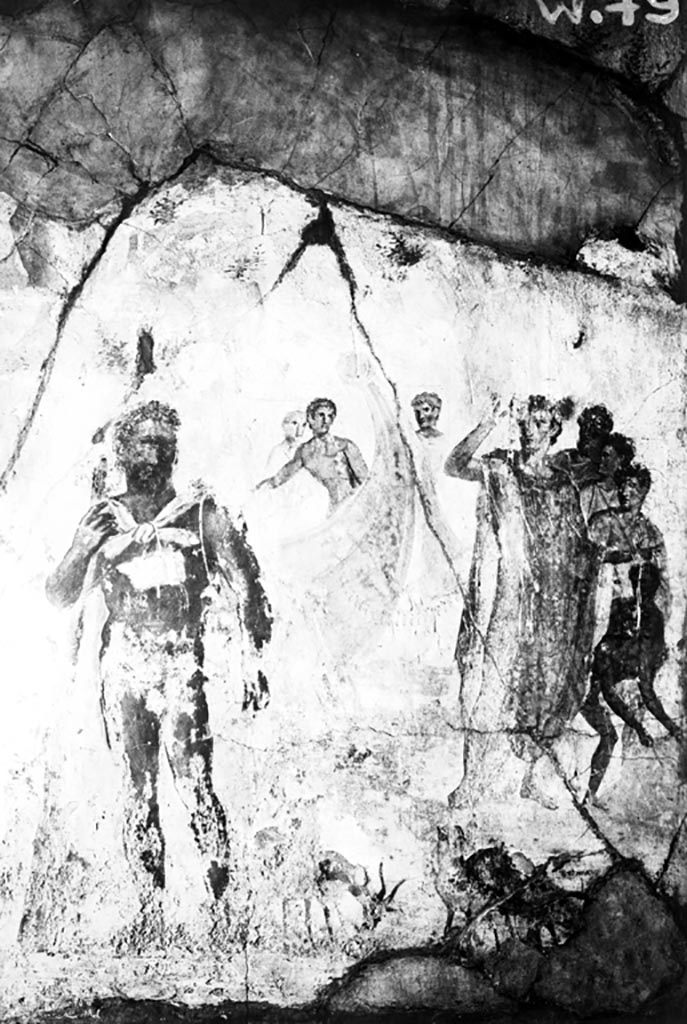
VI.14.30 Pompeii. W.79. Wall painting of Polyphemus and Aeneas, from north wall of tablinum.
Photo by Tatiana
Warscher. Photo © Deutsches Archäologisches Institut, Abteilung Rom, Arkiv.
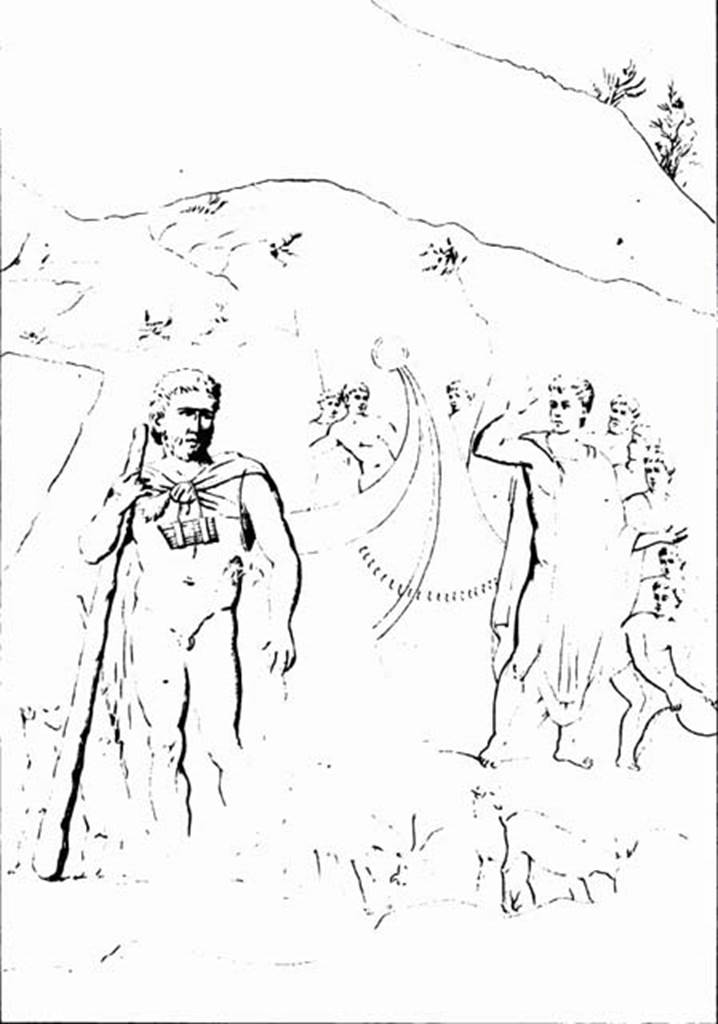
VI.14.30. Drawing of painting of Aeneas’s encounter with Polyphemus, found on the north wall of the tablinum.
See Giornale degli Scavi di Pompei, 1875, NS III,
25, (p.148-50, tav.5).
Now in Naples Archaeological Museum. Inventory number 111211.
See Richardson, L., 2000. A Catalog of Identifiable Figure Painters of Ancient Pompeii,
Herculaneum. Baltimore: John
Hopkins. (p.67)
See Sogliano, A., 1879. Le pitture murali campane scoverte negli anni 1867-79. Napoli: (p. 123, no.603, according to Sogliano it was found damaged in its upper and lower parts).
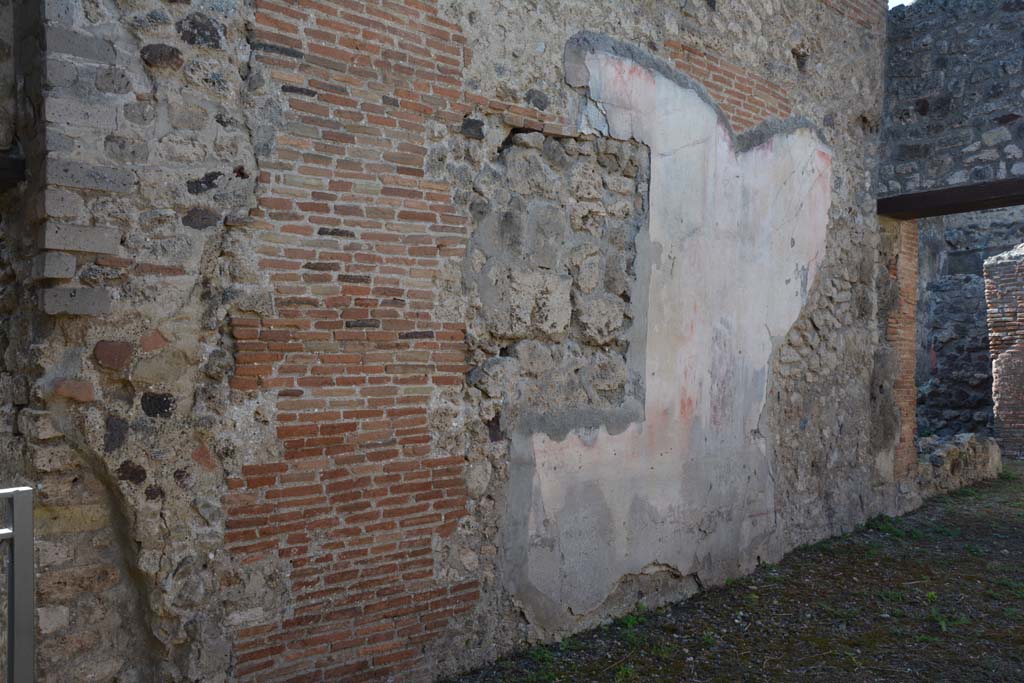
VI.14.30 Pompeii. October 2019.
Looking west along south wall of atrium.
Foto Annette Haug, ERC Grant 681269 DÉCOR.
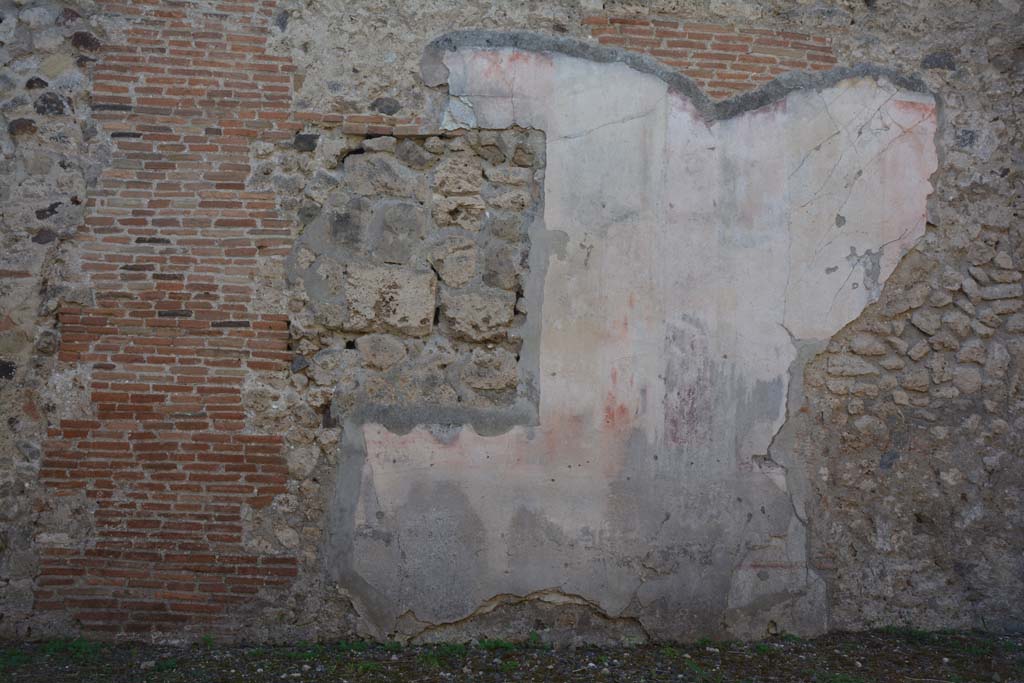
VI.14.28.33 Pompeii. October 2019. South wall of atrium.
Foto Annette Haug, ERC
Grant 681269 DÉCOR.
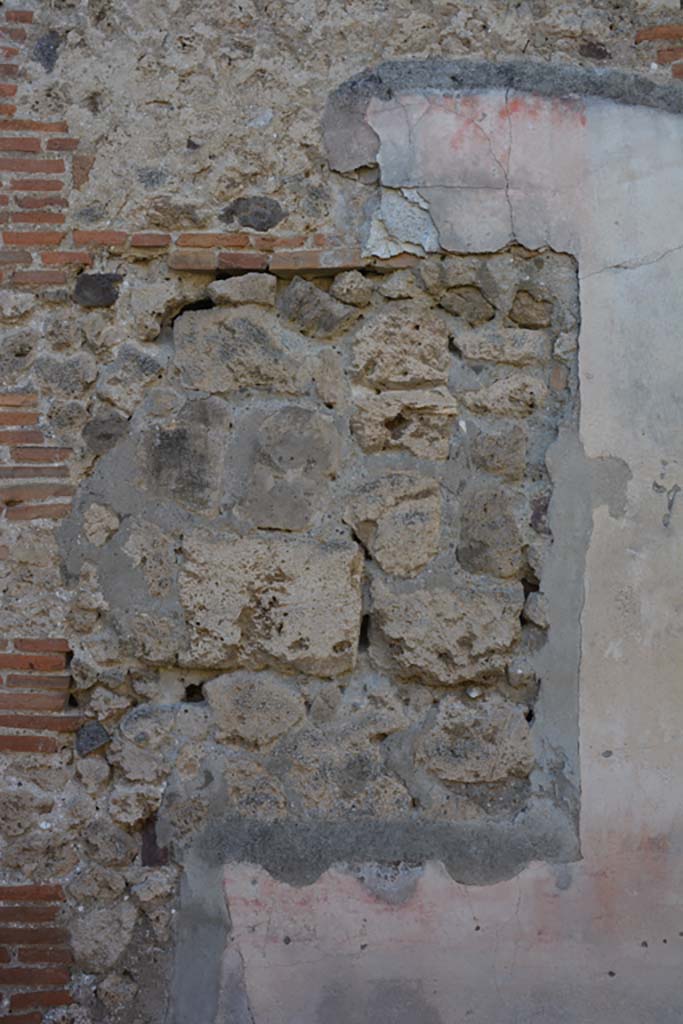
VI.14.28.33 Pompeii. October 2019. Site of painting on south wall
of atrium.
Foto Annette Haug, ERC
Grant 681269 DÉCOR.
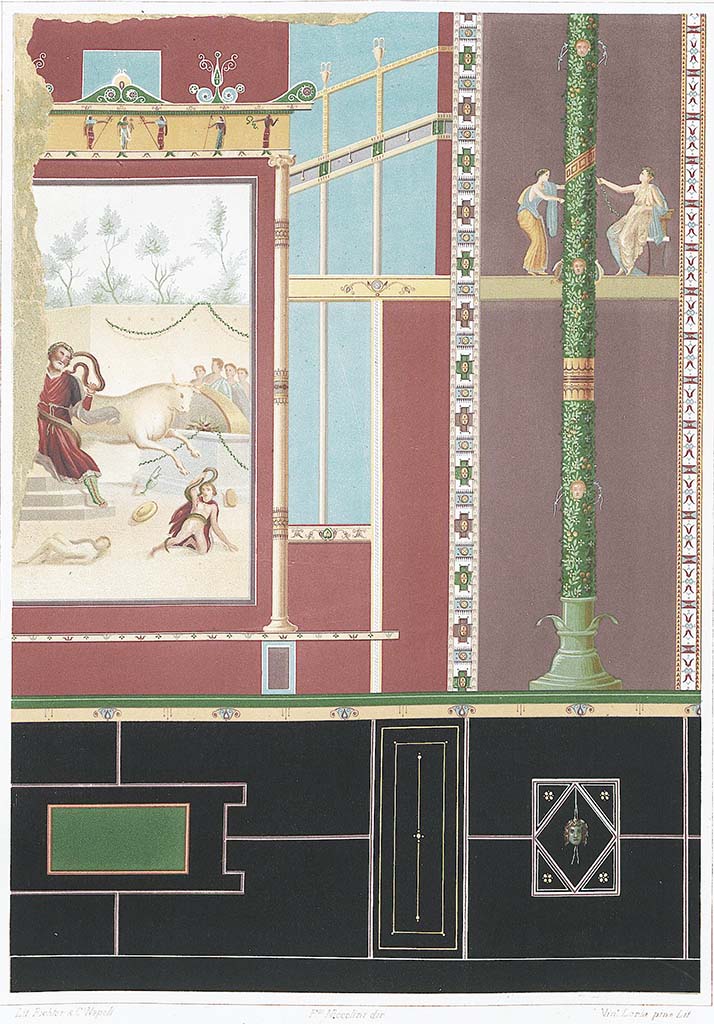
VI.14.30 Pompeii. Water colour by Discanno showing the south wall of atrium, with central painting.
See Niccolini F, 1862. Le case ed i monumenti di Pompei: Volume Secondo. Napoli. Tav. 66.
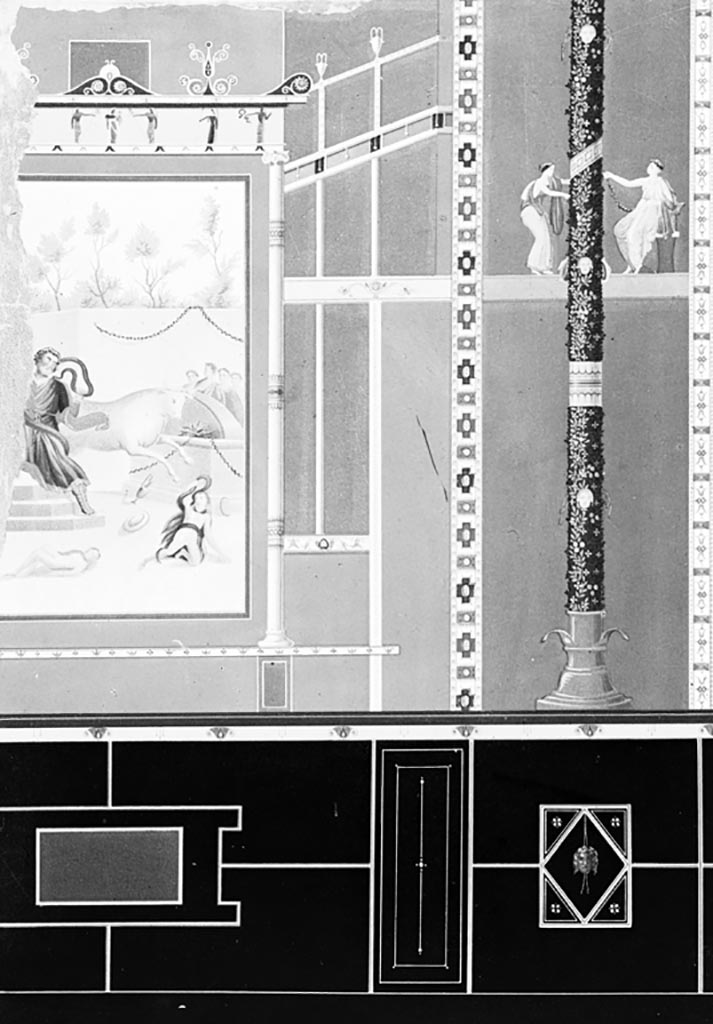
VI.14.30 Pompeii. W.80.
Water colour by Discanno showing the decoration from the south wall of atrium, with central painting.
Photo by Tatiana
Warscher. Photo © Deutsches Archäologisches Institut, Abteilung Rom, Arkiv.
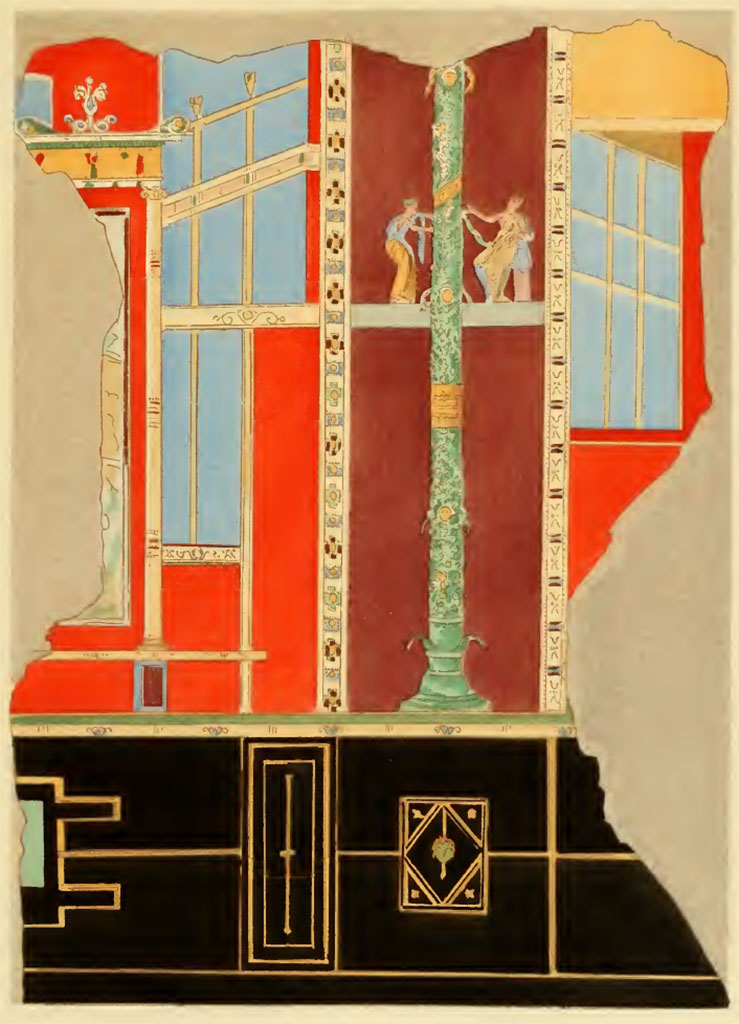
VI.14.30 Pompeii. Undated painting by Pierre Gusman.
South wall of atrium, painted decoration on west side of central painting.
(IX. Panneau d'une salle de la maison du Laocoon (Région
VI, 14, 30). Troisième style.)
See Gusman P., 1924. La Décoration Murale de Pompei.
Paris : Morancé, pl. IX.
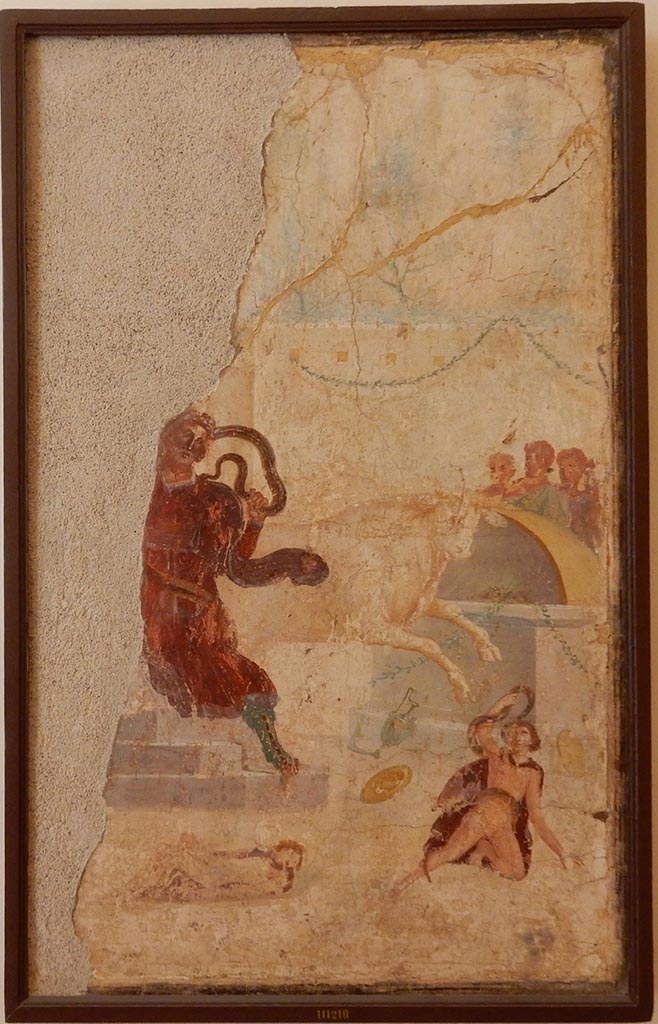
VI.14.30 Pompeii. Wall painting of the death of Laocoon and his sons, found on the south wall of the atrium.
Now in Naples Archaeological Museum. Inventory number 111210.
Photo courtesy of Buzz Ferebee.
According to Sogliano, when found this was damaged on its left side.
See Sogliano, A., 1879. Le pitture murali campane scoverte negli anni 1867-79. Napoli: (p.115, no. 581)
According to BdI, above the painting was a yellow frieze with Egyptian figures.
See Bullettino dell’Instituto di Corrispondenza
Archeologica (DAIR), 1876, (p.53).
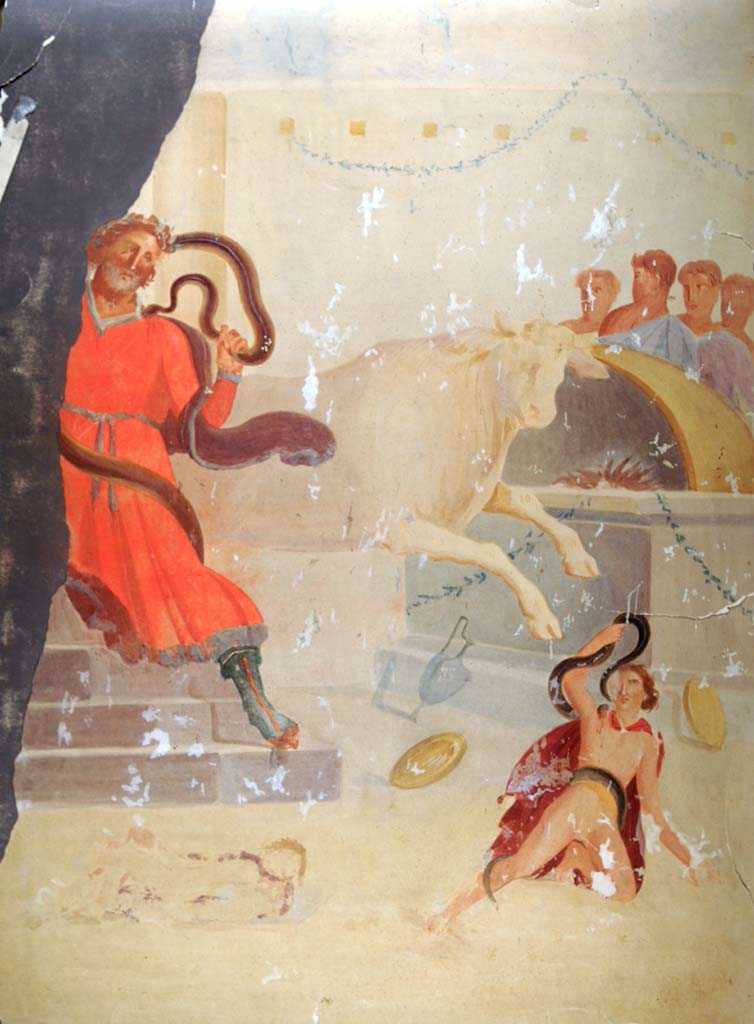
VI.14.30 Pompeii.
Copy by Geremia Discanno of the painting of the death of Laocoon and his sons, from the south wall of the atrium.
Now in Naples Archaeological Museum. Inventory number ADS 418.
Photo © ICCD. https://www.catalogo.beniculturali.it
Utilizzabili alle condizioni della licenza Attribuzione
- Non commerciale - Condividi allo stesso modo 2.5 Italia (CC BY-NC-SA 2.5 IT)
Original now in Naples Archaeological Museum, the decoration from this house that was left in situ has now completely disappeared.
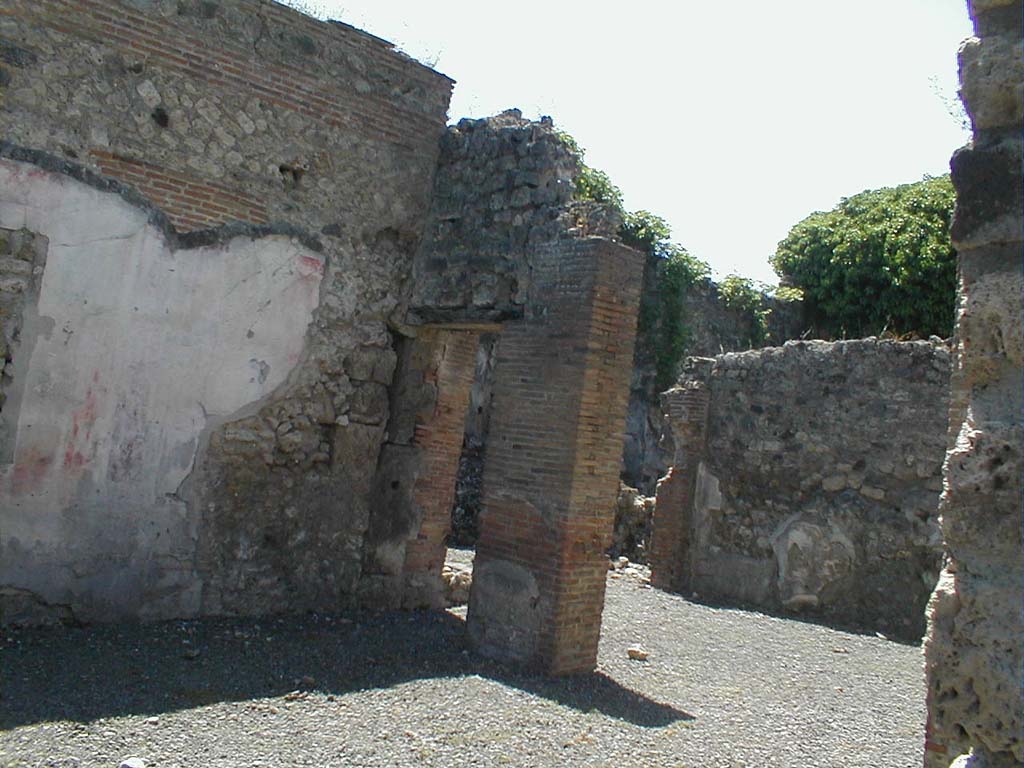
VI.14.30 Pompeii. May 2005. Looking towards south wall of atrium, and south-west towards the garden area, across the tablinum.
According to Jashemski, the small garden excavated in 1875, to the south of the tablinum had a roofed passageway on the north and west.
Built against the east wall was an aedicula lararium: on the south wall was a low niche, perhaps for decorative sculpture, and a garden painting.
There were two puteals, one of terracotta the other of lava.
See Jashemski, W. F., 1993. The Gardens of Pompeii, Volume II: Appendices. New York: Caratzas. (p.150)
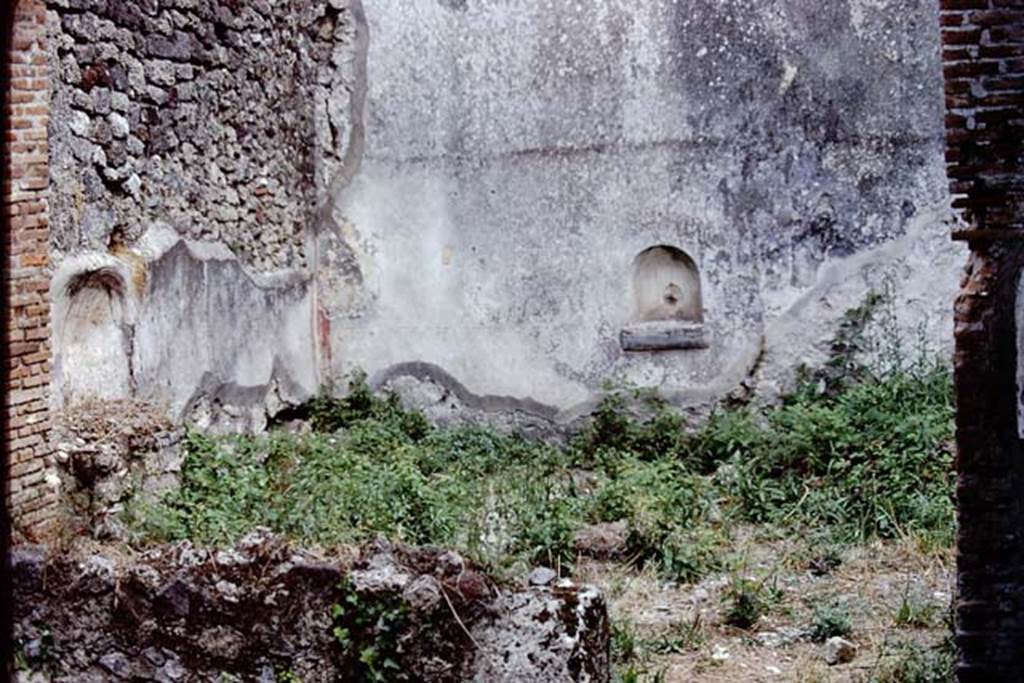
VI.14.30 Pompeii. 1972.
Looking towards south-east corner of garden area.
The remains of
the aedicula lararium can be seen against the east wall, on the left, and the
niche against the south wall, centre right.
According to
PPM, the garden wall decoration is now completely lost but was accurately
described by Mau.
See Mau, in Bullettino
dell’Instituto di Corrispondenza Archeologica (DAIR), 1876,
pp.53-54.
See Carratelli,
G. P., 1990-2003. Pompei: Pitture e Mosaici. Vol. V.
Roma: Istituto della enciclopedia italiana. (p.358, nos.24-25)
Photo by
Stanley A. Jashemski.
Source: The
Wilhelmina and Stanley A. Jashemski archive in the University of Maryland
Library, Special Collections (See collection page) and made available under the Creative
Commons Attribution-Non-Commercial License v.4. See Licence and use details.
J72f0410
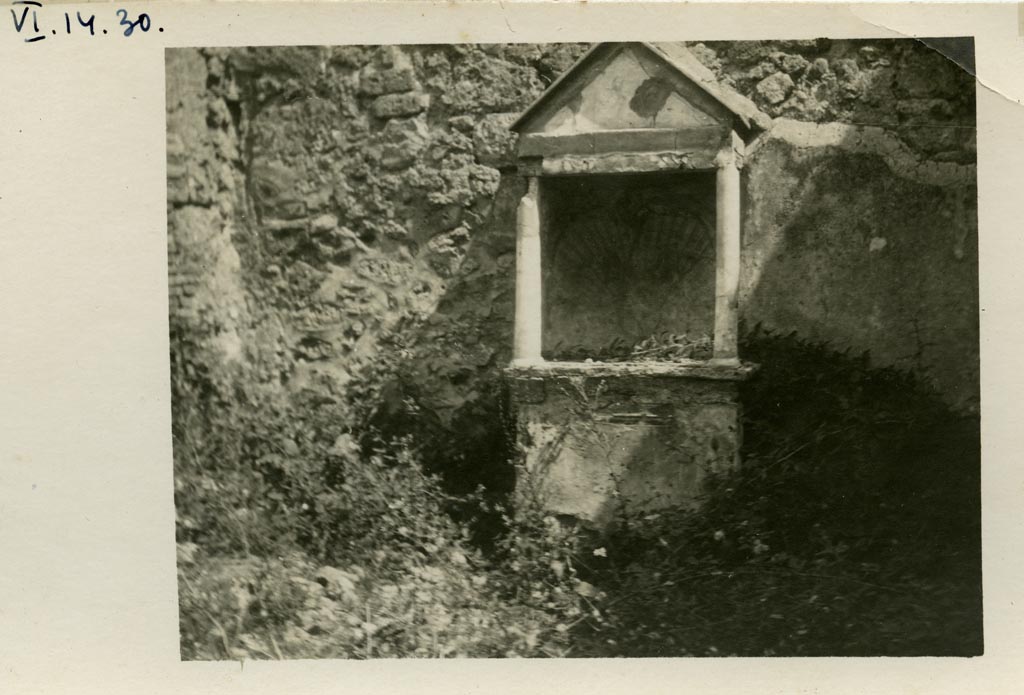
VI.14.30 Pompeii. Pre-1937-39. Aedicula lararium against east wall of garden.
Photo courtesy of American Academy in Rome, Photographic Archive. Warsher collection no. 039.
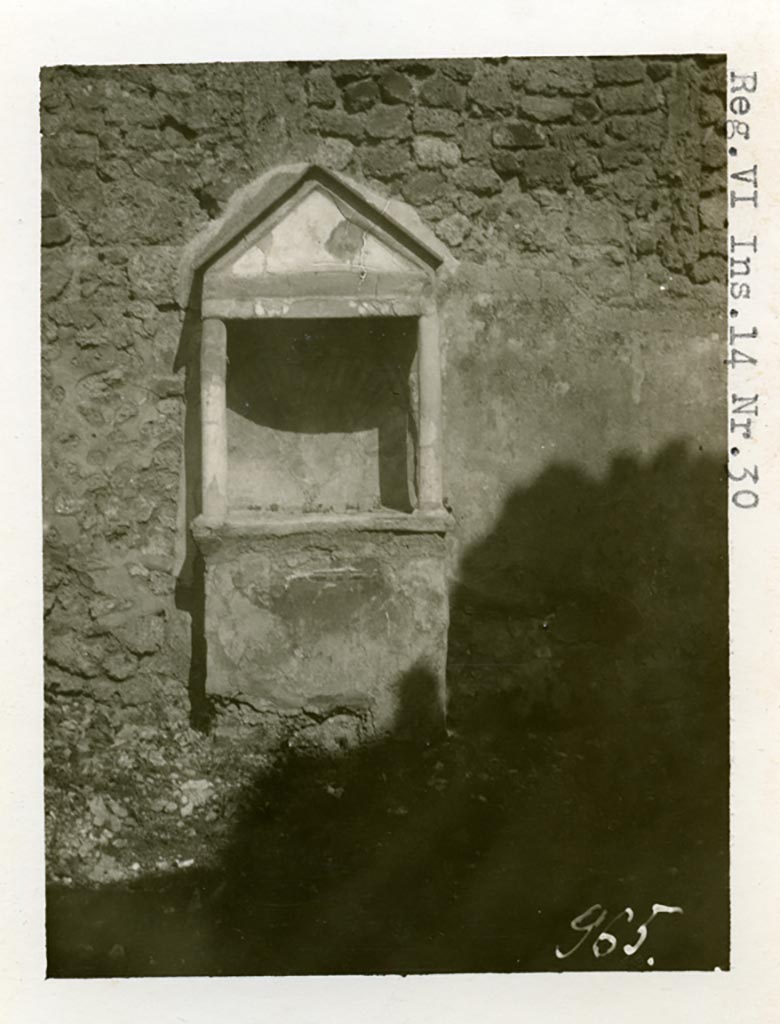
VI.14.30 Pompeii. Pre-1937-39. Aedicula against east wall of garden.
Photo courtesy of American Academy in Rome, Photographic Archive. Warsher collection no. 965.
According to Boyce, against the east wall of the garden stands an aedicula.
Above a solid base, two columns without capitals support a pediment.
In the tympanum is painted a large aquatic bird of reddish colour with wings spread.
It stands upon a black cloth, across its wings lies a black cord ending in a bow-knot, on each side of the bird stands a green marine goat.
The base of the aedicula is black, adorned with a painted garland.
The rear wall within the shrine is hollowed out in the form of a seashell and painted in imitation of one.
In the south wall of the same garden is a niche with projecting floor and vaulted ceiling.
Its walls are adorned with painted plants, flowers and birds.
We can only speculate on the purpose of this niche.
Presumably the aedicula is the lararium, the niche probably contained a figure of primarily decorative character.
See Boyce G. K., 1937. Corpus of the Lararia of Pompeii. Rome: MAAR 14. (p.53, no.203, and Pl. 35,1)
According to Giacobello, the painted decoration on the aedicula and architecture has disappeared, leaving only the stone podium and the niche.
The wall was decorated with a rich garden painting.
Regarding the niche on the south wall of garden, originally painted with flowers, plants and birds, today disappeared, only the red plaster remains.
See Giacobello, F., 2008. Larari Pompeiani: Iconografia e culto dei Lari in ambito domestico. Milano: LED Edizioni. (p.275)
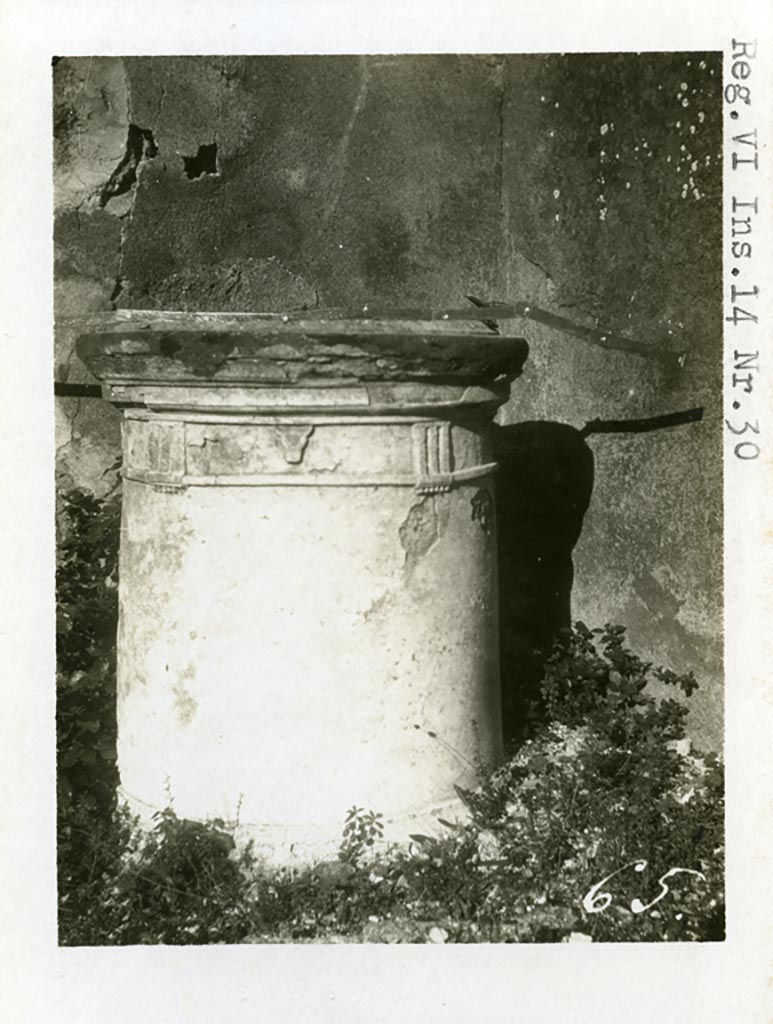
VI.14.30 Pompeii. Pre-1937-39. Puteal.
Photo courtesy of American Academy in Rome, Photographic Archive.
Warsher collection no. 65.
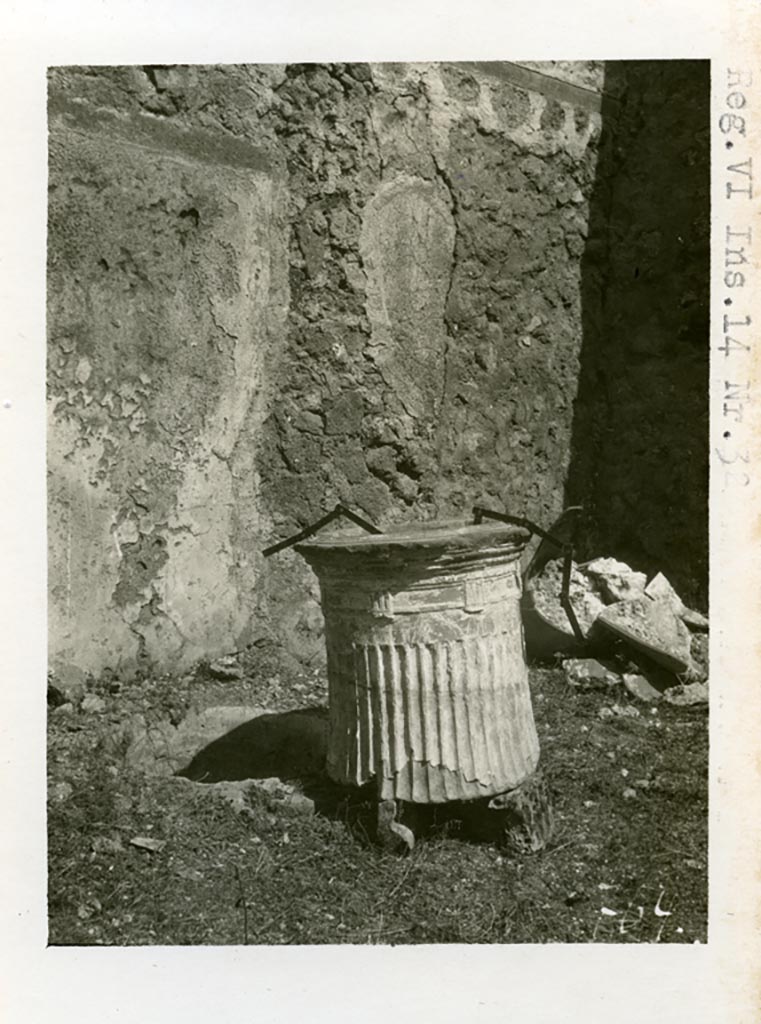
VI.14.30 Pompeii but shown as VI.14.32 on photo. Pre-1937-39.
Puteal, perhaps this is the second puteal found in VI.14.30.
Photo courtesy of American Academy in Rome, Photographic Archive. Warsher collection no. 765.
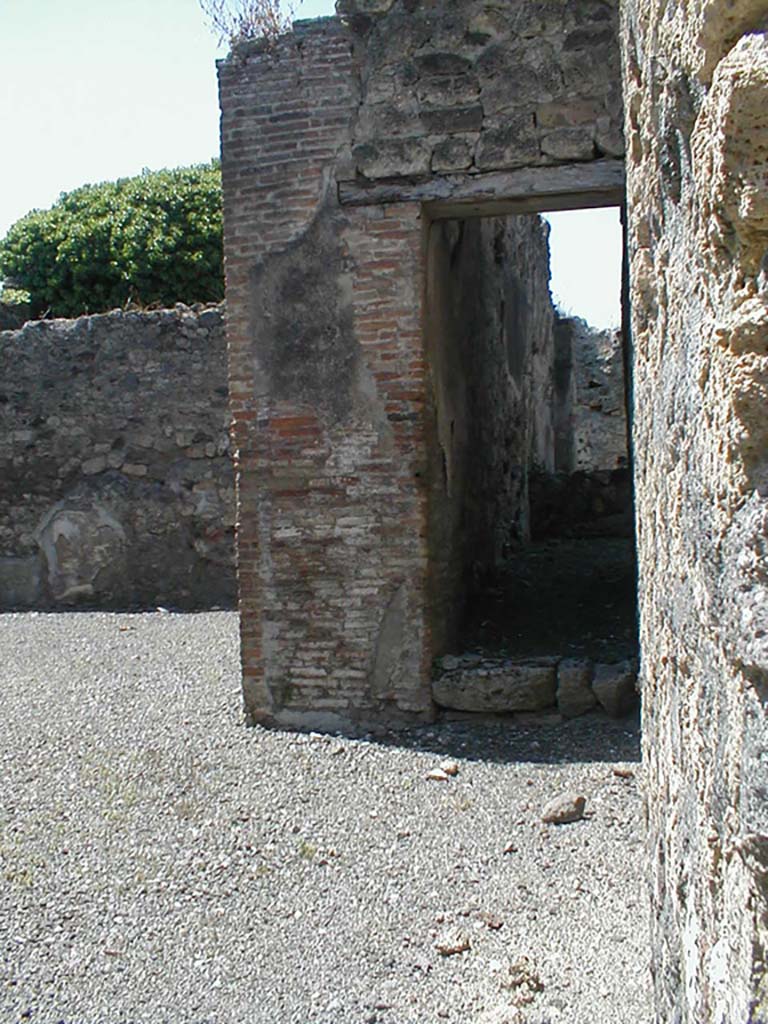
VI.14.30 Pompeii. May 2005. Looking west along north side of atrium towards doorway to stairs to upper floor.
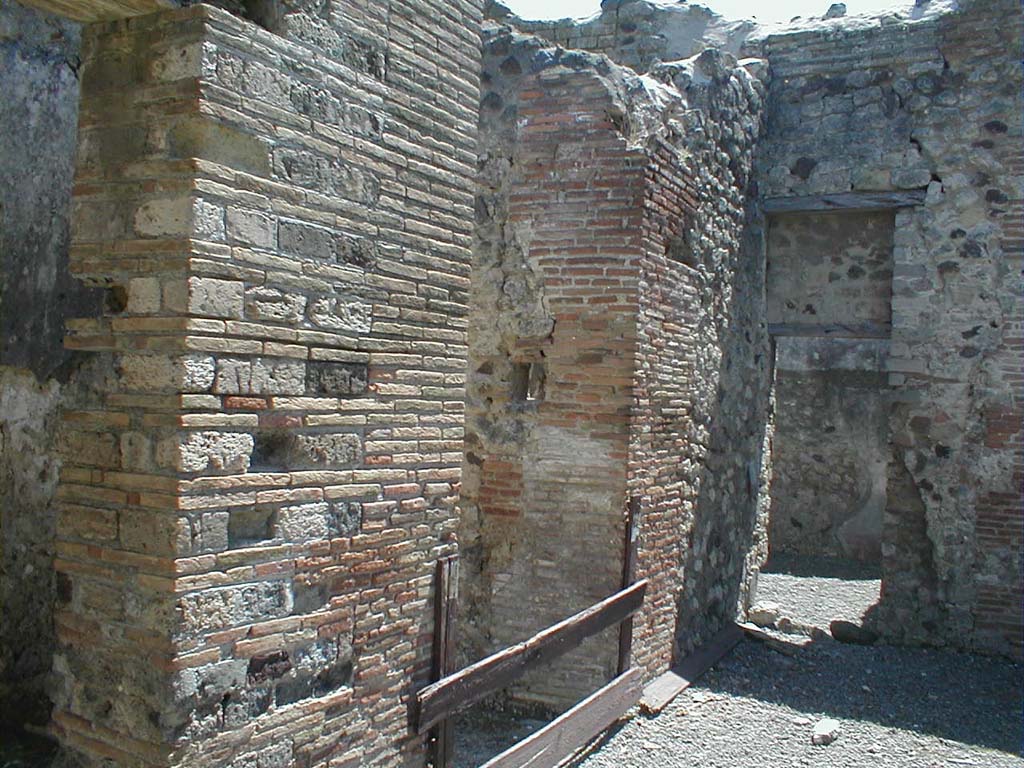
VI.14.30 Pompeii. May 2005. Looking south along east side of atrium.
The entrance corridor or fauces is in the centre, the doorway into VI.14.28 is on the right.
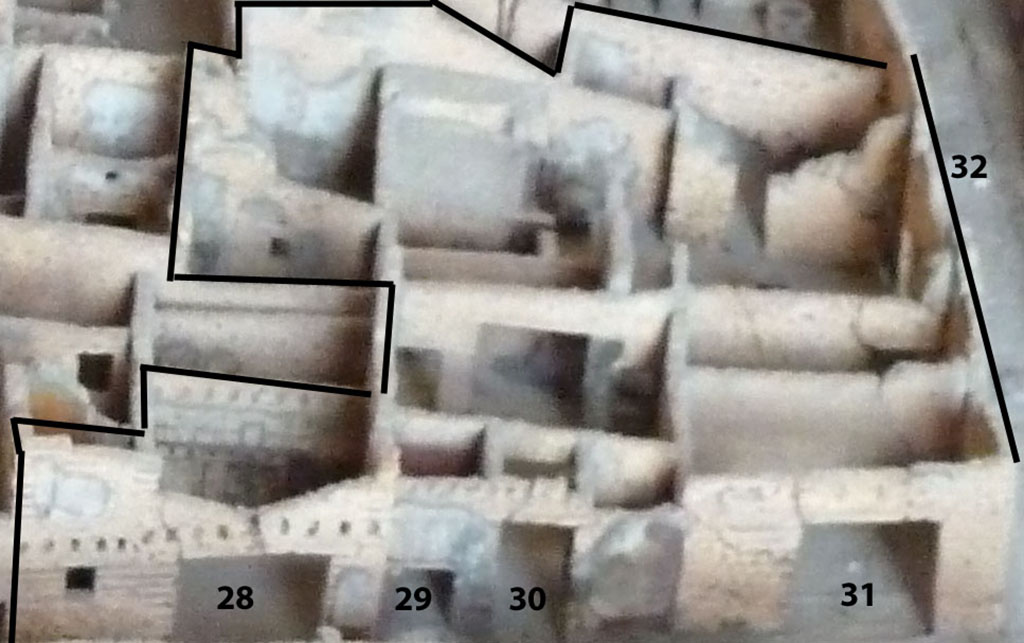
VI.14.30 Pompeii. Showing area on model in Naples Archaeological Museum.