VI.11.17 Pompeii. House.
Linked to workshop at VI.11.4. Excavated 1842.
According to Fiorelli –
“Ingresso dell’abitazione
unita all’officina, che ha la porta nel vico occidentale numero 4.”
See Pappalardo, U., 2001. La Descrizione di Pompei per Giuseppe Fiorelli (1875). Napoli: Massa Editore. (p.70).
(Entrance
doorway of the house joined to the workshop, which has its doorway in the
western roadway at number 4.)
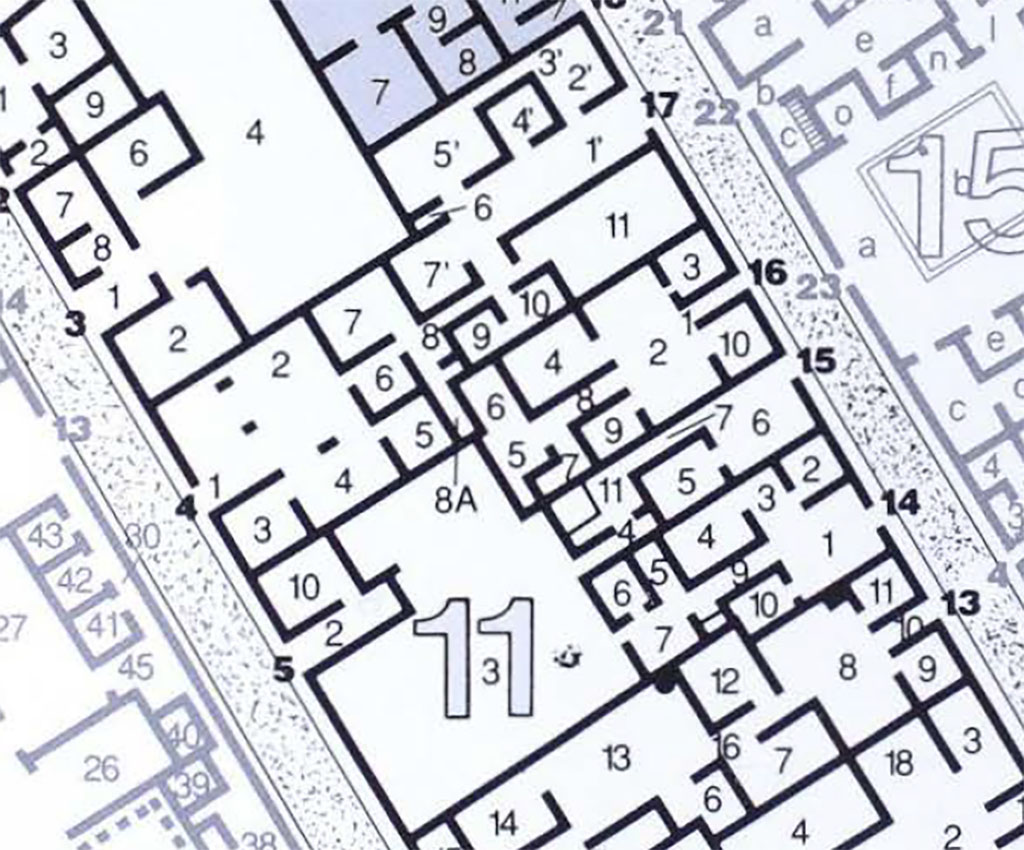
VI.11.4/17 Pompeii. Plan including VI.11.4 and VI.11.17.
See
Carratelli, G. P., 1990-2003. Pompei:
Pitture e Mosaici: Vol. V. Roma: Istituto della enciclopedia italiana, p.
76.
The entrance doorway into the workshop at VII.11.4, is on the lower left. At the top left are VI.11.1/2/3.
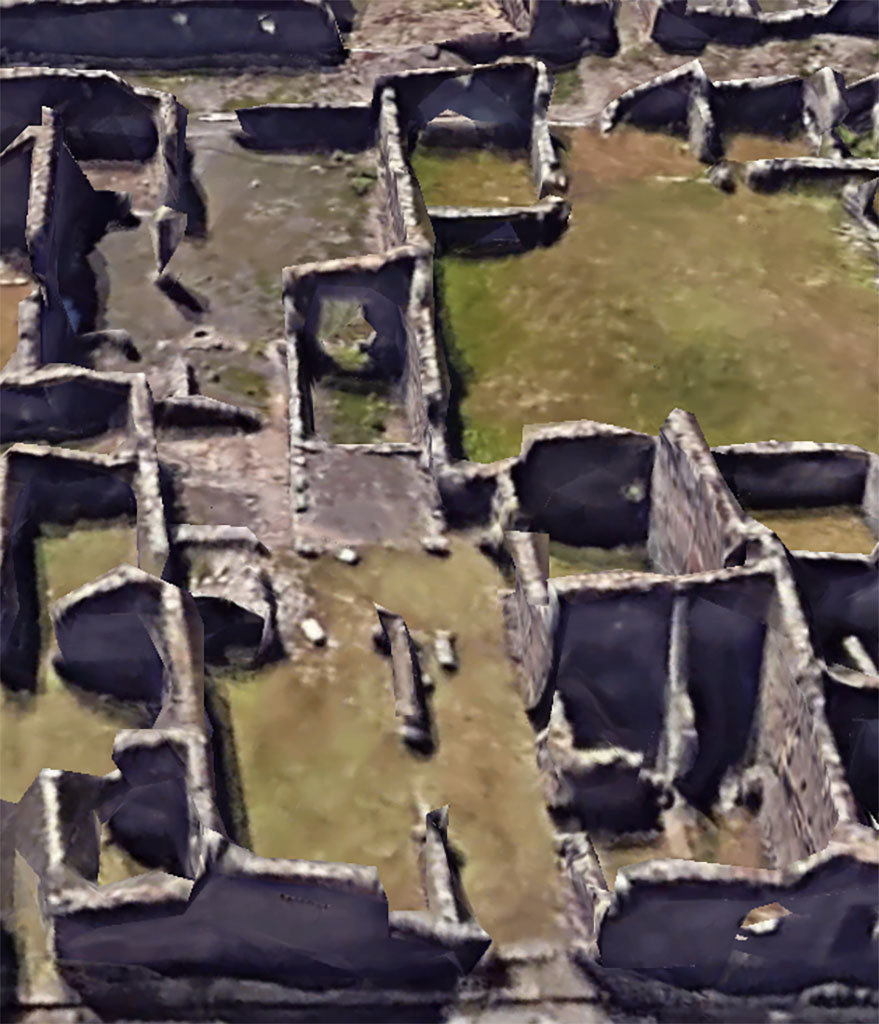
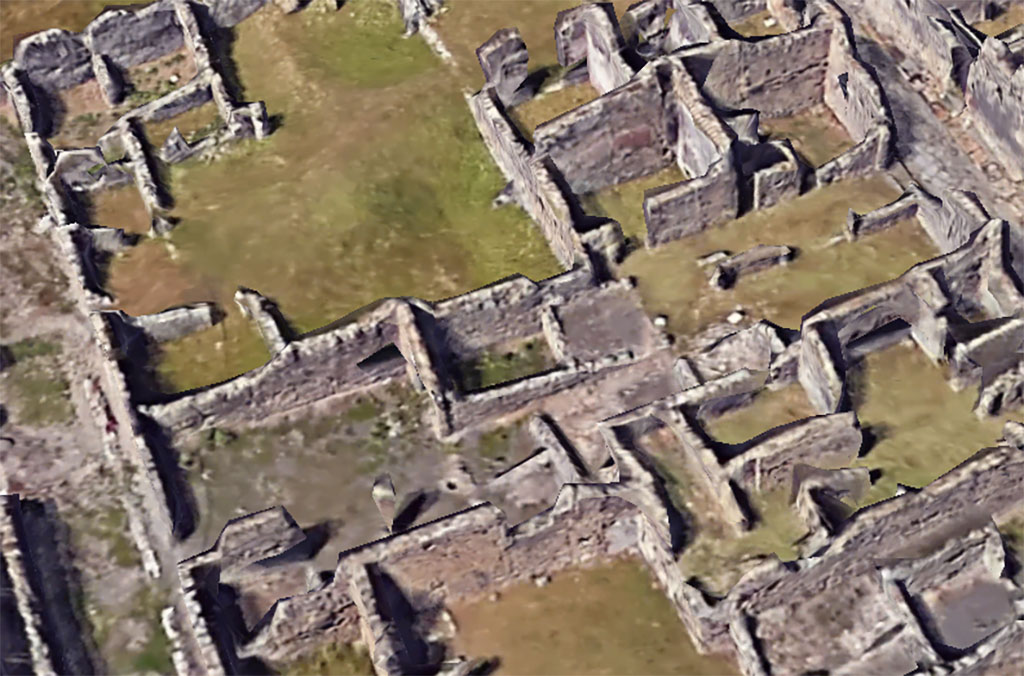
VI.11.17/4 Pompeii. Google Earth. 2023.
Looking west from entrance doorway of VI.11.17, centre right in lower photo.
On the left in the upper photo is the doorway at VI.11.4.
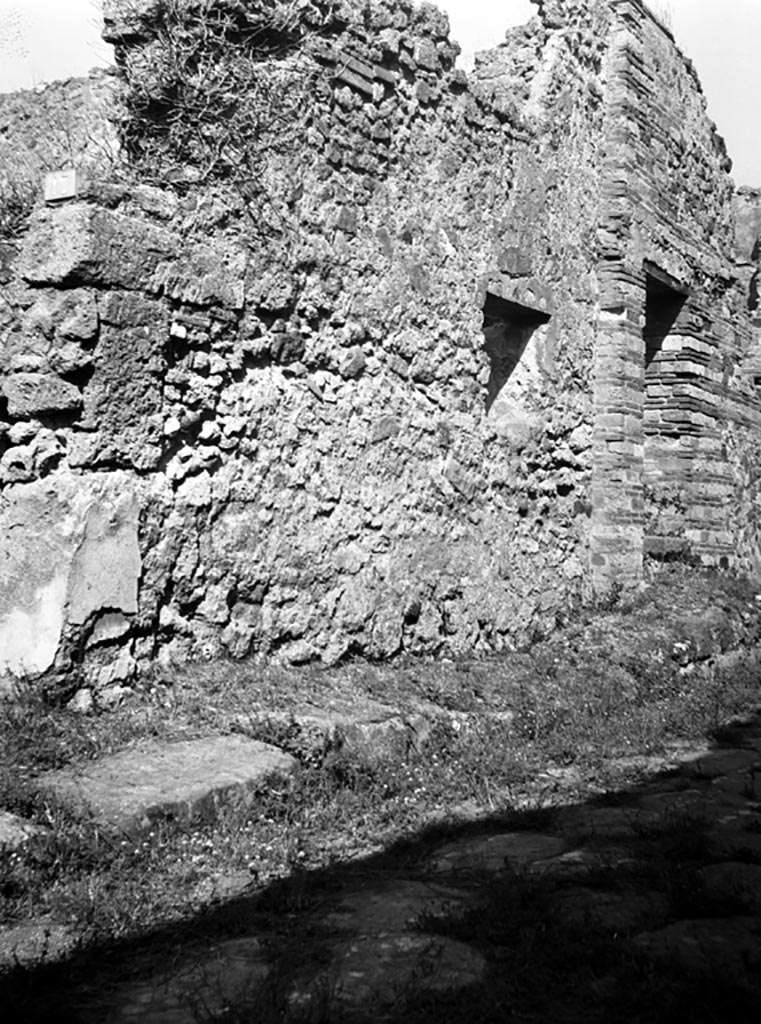
VI.11.17-18 Pompeii. W.1499. Street façade on north side of entrance doorway (on left), with window.
The doorway to the steps to the upper floor at VI.11.18 can be seen (on the right).
Photo by Tatiana
Warscher. Photo © Deutsches Archäologisches Institut, Abteilung Rom, Arkiv.
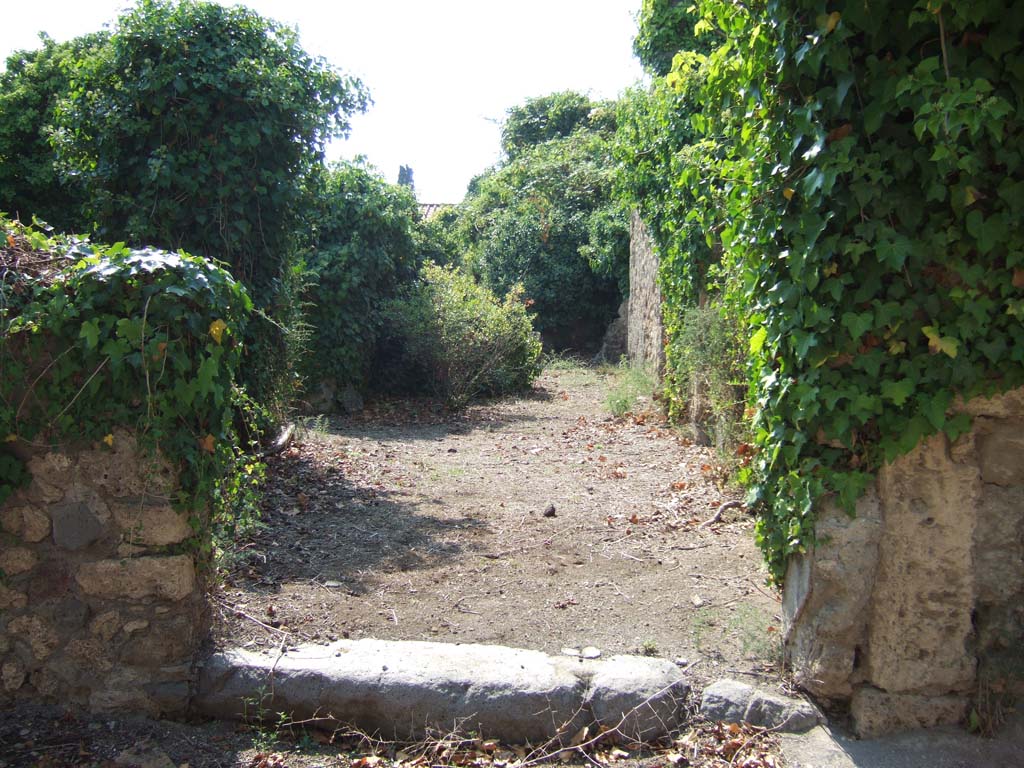
VI.11.17 Pompeii. September 2005. Entrance doorway, looking west.
According to Fiorelli, this entrance doorway of the house was linked to the workshop that had its doorway in the western vicolo at number 4.
See Pappalardo, U., 2001. La Descrizione di Pompei per Giuseppe Fiorelli (1875). Napoli: Massa Editore. (p.70)
According to Jashemski, the portico of the peristyle garden (on the left of entrance doorway at 17) was supported on the north and west by columns. These were connected by a low wall.
She said that Fiorelli incorrectly called this area a triclinium.
See Jashemski, W. F., 1993. The Gardens of Pompeii, Volume II: Appendices. New York: Caratzas. (p.143)
See Pappalardo, U., 2001. La Descrizione di Pompei per Giuseppe Fiorelli (1875). Napoli: Massa Editore. (p.69)
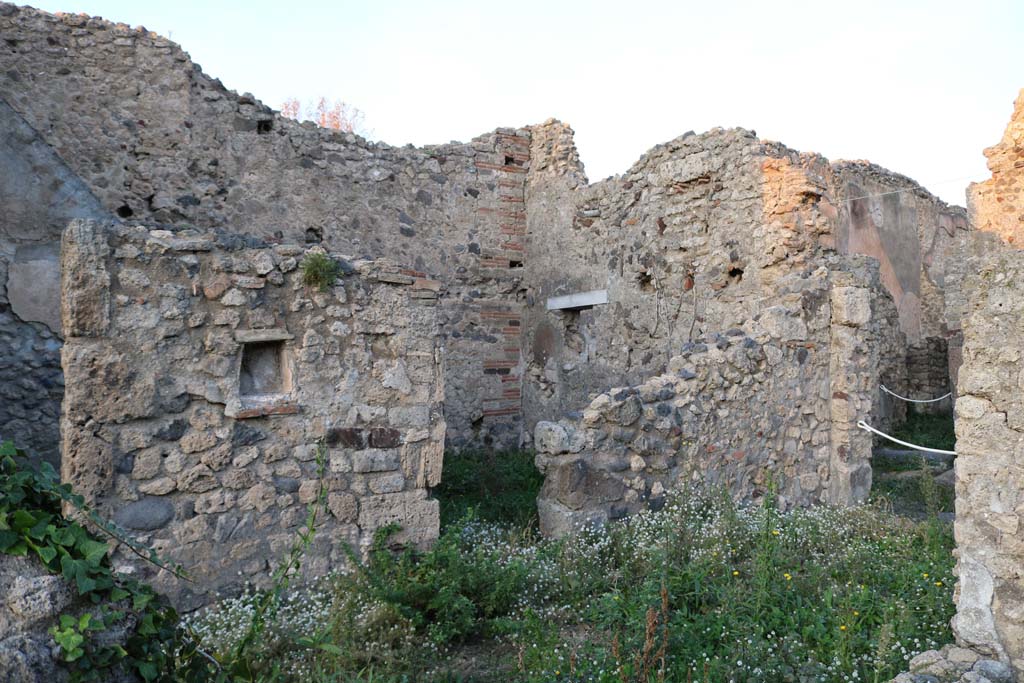
VI.11.17 Pompeii. December 2018.
Looking north from peristyle area towards doorway to room (2’) on
north side of entrance doorway, in centre, with entrance doorway, on right.
Photo courtesy of Aude Durand.
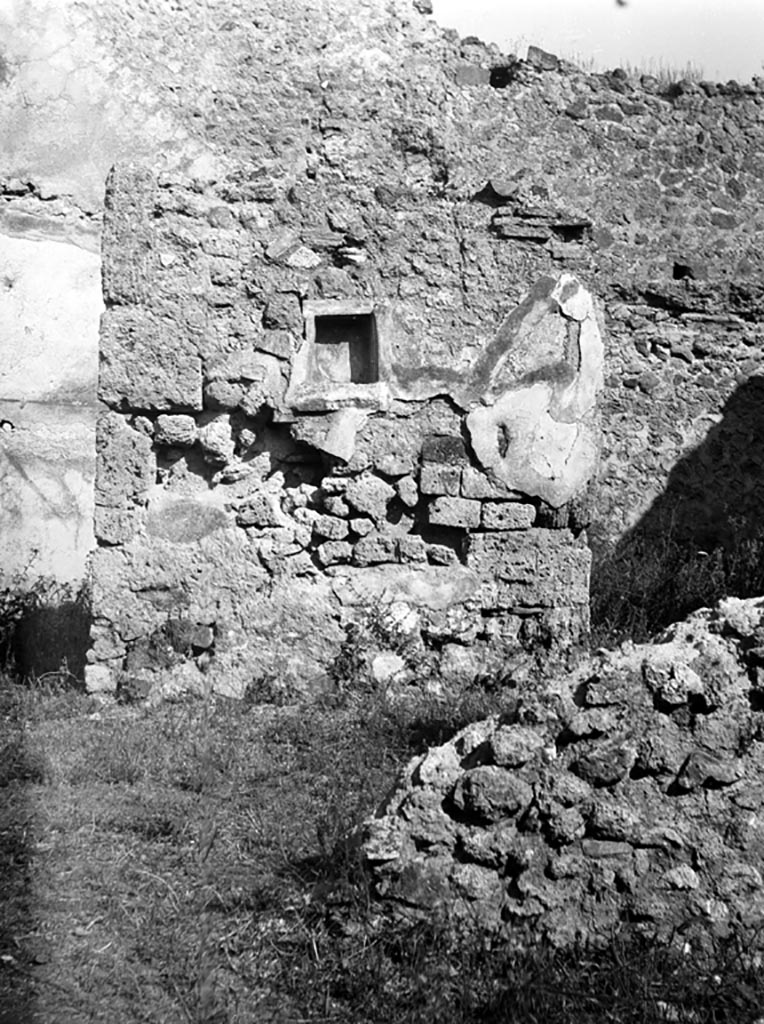
VI.11.4-17 Pompeii. W1494.
Looking north from peristyle area to interior wall with niche, between doorways to two rooms.
Room (4’) on left, room (2’), on right.
Photo by Tatiana
Warscher. Photo © Deutsches Archäologisches Institut, Abteilung Rom, Arkiv.
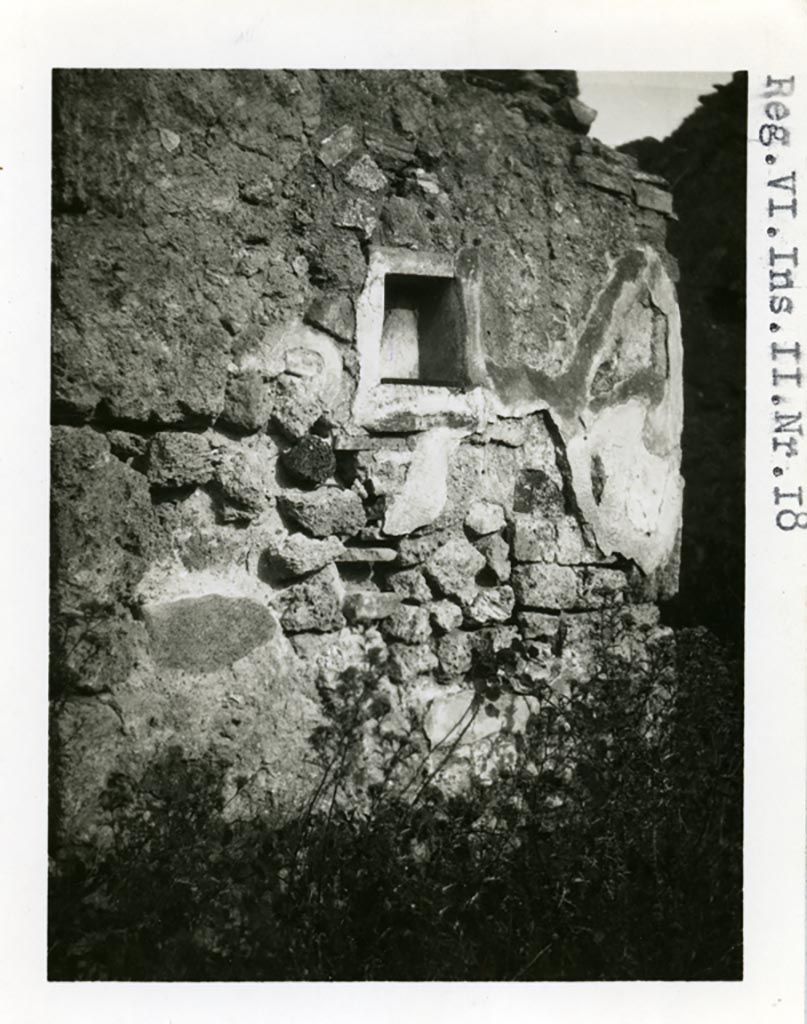
VI.11.17 Pompeii but shown as VI.11.18 on photo. Pre-1937-39.
Looking north towards interior wall with niche, between doorways to two rooms.
Photo courtesy of American Academy in Rome, Photographic Archive. Warsher collection no. 1931.
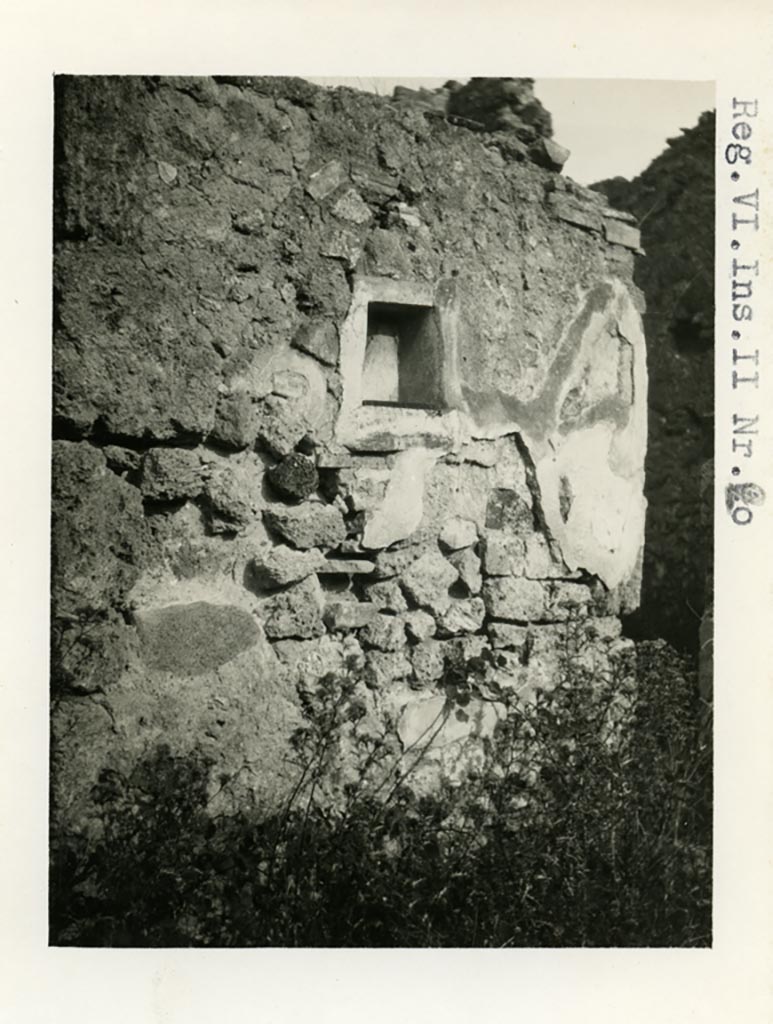
VI.11.17 Pompeii, but according to Warsher VI.11.20, on photo. Pre-1937-39. Niche in wall.
Photo courtesy of American Academy in Rome, Photographic Archive. Warsher collection no. 029.
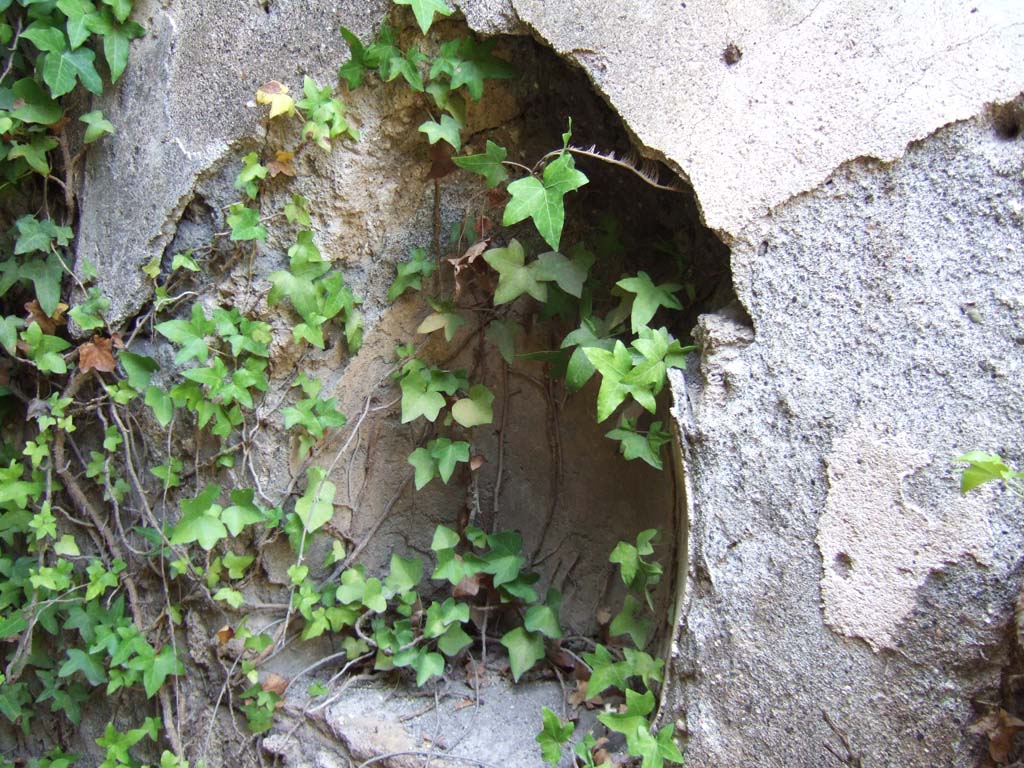
VI.11.17 Pompeii. September 2005. Niche.
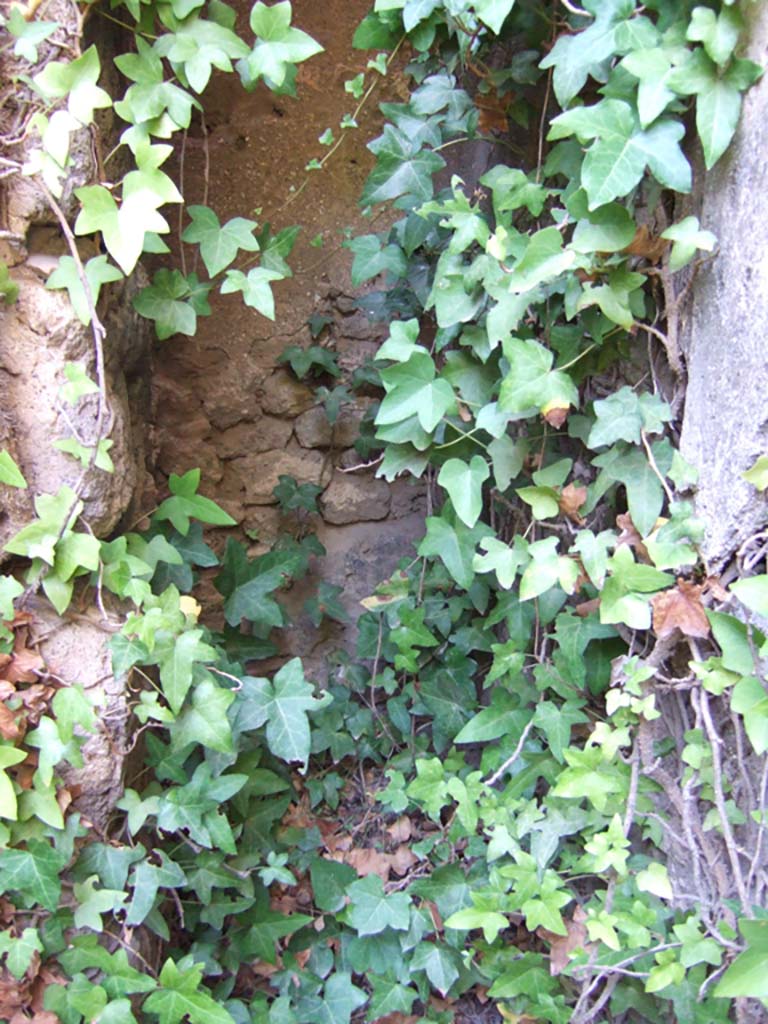
VI.11.17 Pompeii. September 2005.
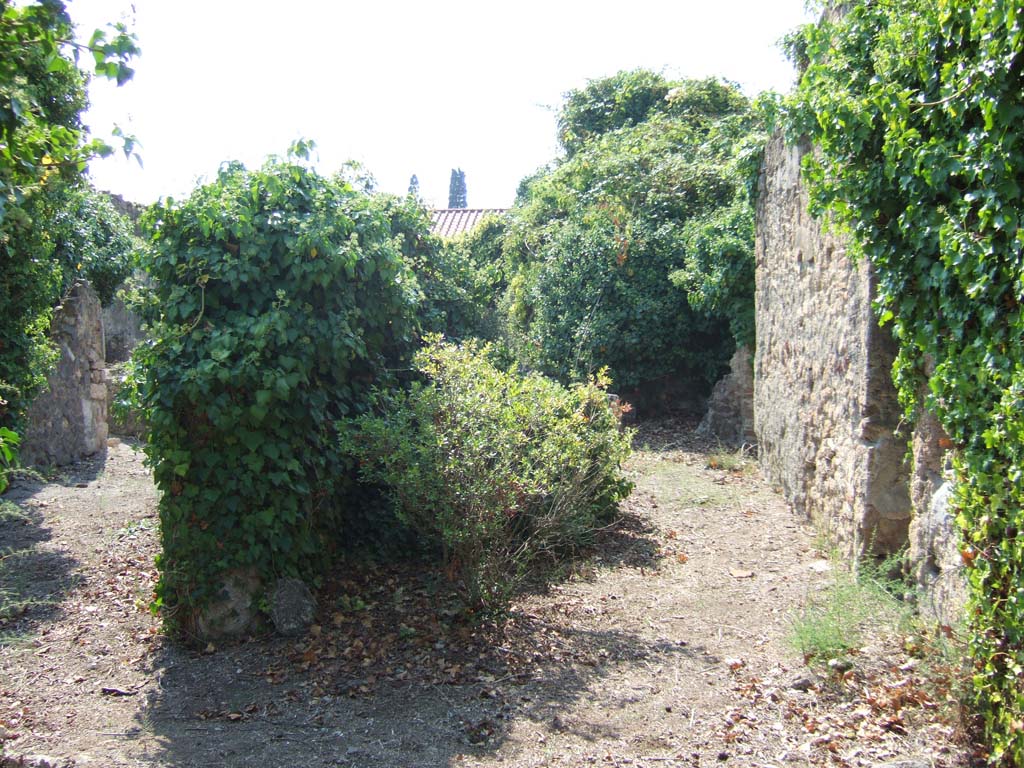
VI.11.17 Pompeii. September 2005.
Looking west from atrium towards tablinum (7’), centre rear. On its right would have been a small room/cupboard.
In the north wall of the atrium, on the right, is a doorway to triclinium (5’). On the left is the peristyle area.
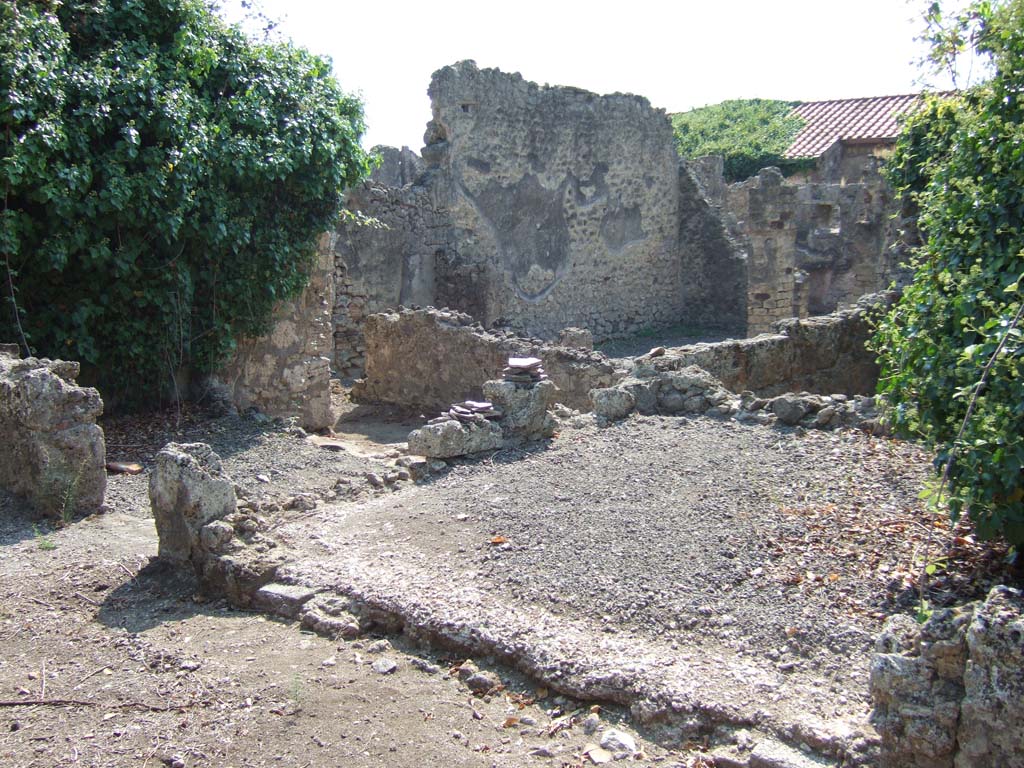
VI.11.17 Pompeii. September 2005.
Looking south-west across tablinum (7’), towards corridor (8) leading to VI.11.4 in centre, and room (9), on left.
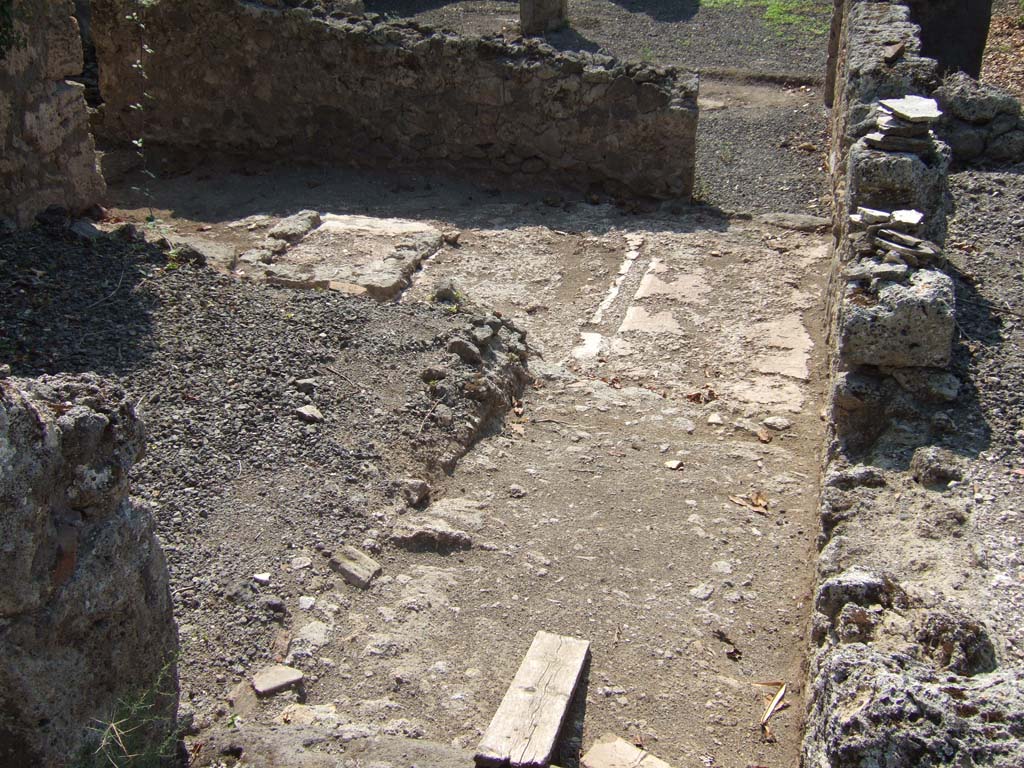
VI.11.17 Pompeii. September 2005. Looking west along floor of corridor (8). On the left would have been a cubiculum, room (9).
According to Jashemski and Fiorelli, the area in the upper left, connecting with the doorway, was a small courtyard of the workshop.
It may have had some potted plants.
See Jashemski, W. F., 1993. The Gardens of Pompeii, Volume II: Appendices. New York: Caratzas. (p.143)
See Pappalardo, U., 2001. La Descrizione di Pompei per Giuseppe Fiorelli (1875). Napoli: Massa Editore. (p.69)
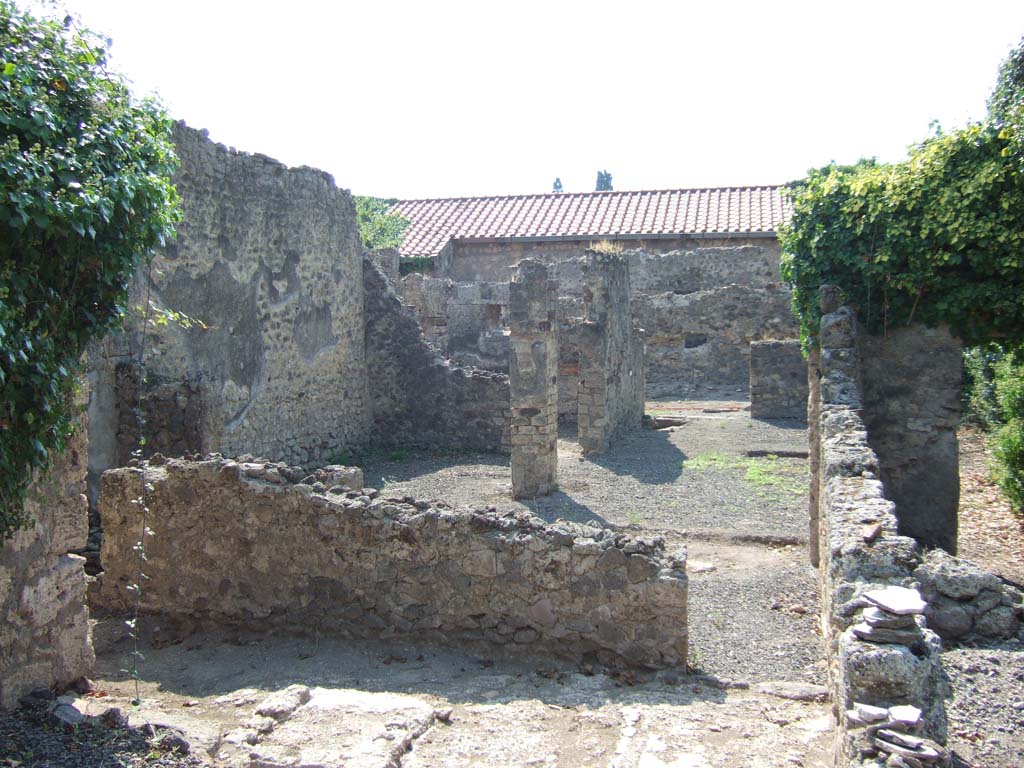
VI.11.17 looking towards VI.11.4 Pompeii. September 2005. Looking west from corridor (8) towards small courtyard (or yard).
On the south side of the entrance doorway at VI.11.4, upper centre, is cubiculum (3), room (4) is on the south side of the yard, on the left.
Behind the wall in corridor (8), lower left, is the area of rooms (5) and (6).
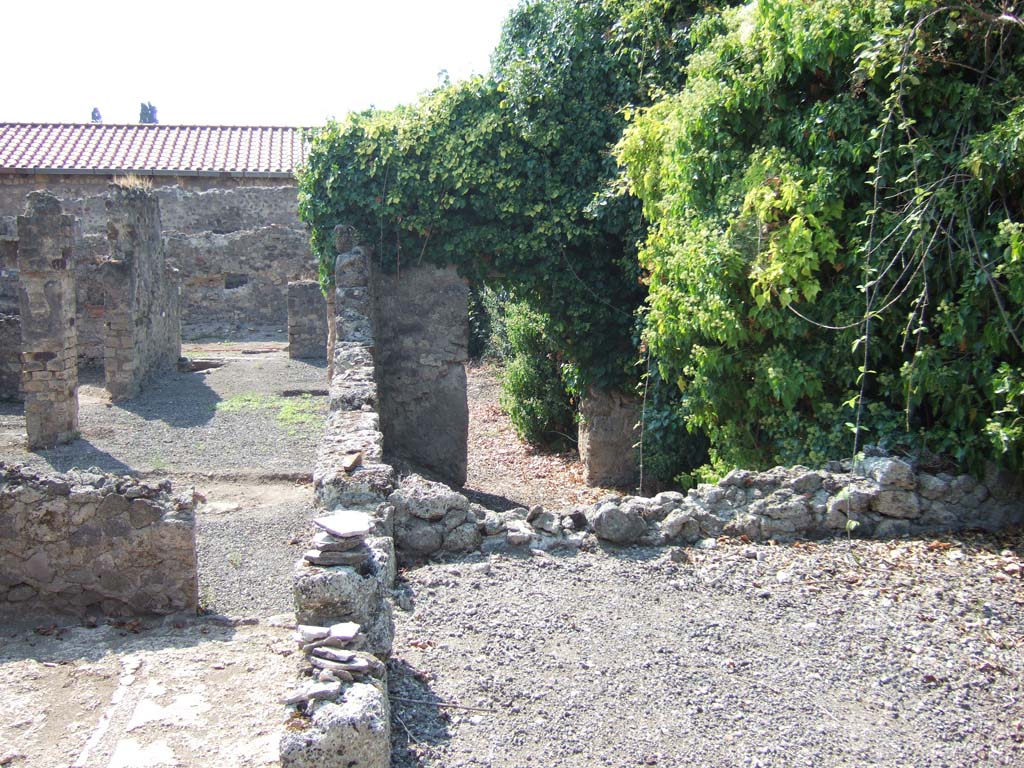
VI.11.17 looking towards VI.11.4 Pompeii. September 2005. Looking west from tablinum (7’).
At the rear of the tablinum are the remains of an oecus (7), this possibly may have been the room (or triclinium 5’) where Helbig described –
“Room beside the peristyle” a painting of Dionysus and Ariadne.
See Helbig, W., 1868. Wandgemälde der vom Vesuv verschütteten Städte Campaniens. Leipzig: Breitkopf und Härtel. (1233).
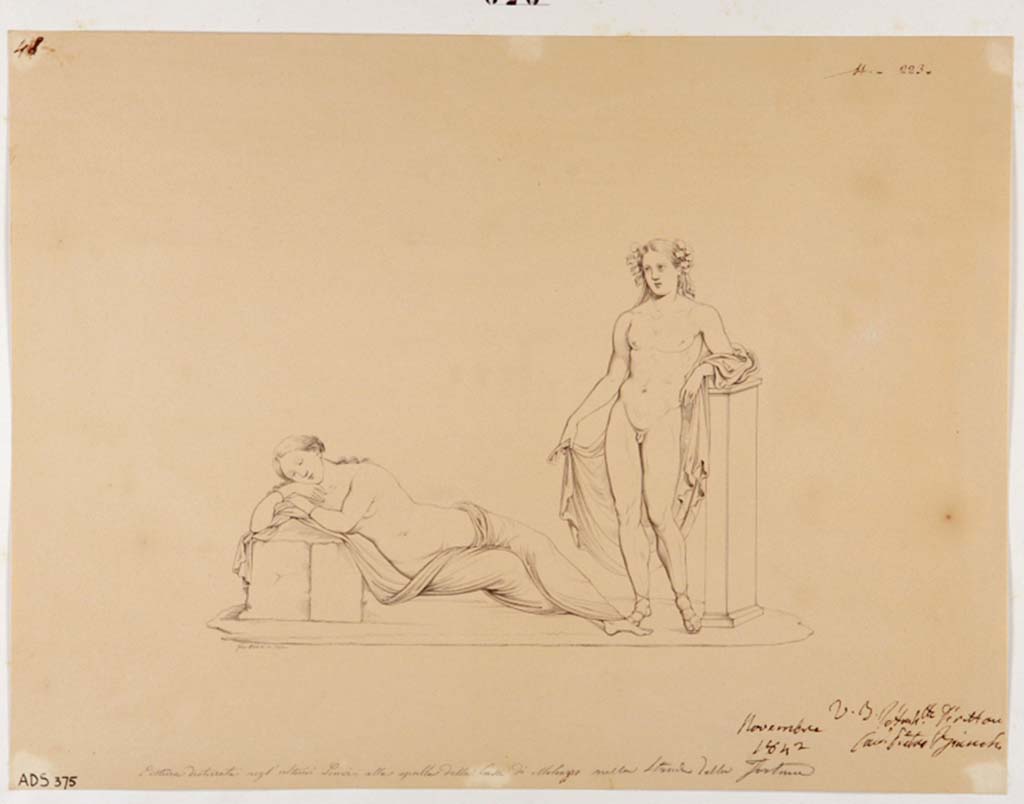
VI.11.17/4, Pompeii. Drawing by Giuseppe Abbate, 1842, of painting of Dionysus finding Ariadne, from a room near the peristyle.
Now in Naples Archaeological Museum. Inventory number ADS 375.
Photo © ICCD. https://www.catalogo.beniculturali.it
Utilizzabili alle condizioni della licenza Attribuzione
- Non commerciale - Condividi allo stesso modo 2.5 Italia (CC BY-NC-SA 2.5 IT)
Kuivalainen comments –
“An almost naked canonical Bacchus discovers Ariadne, who is sleeping heavily, even if on an uncomfortable looking support.”
See Kuivalainen, I., 2021. The Portrayal of Pompeian Bacchus. Commentationes Humanarum Litterarum 140. Helsinki: Finnish Society of Sciences and Letters, (p.142, E1).
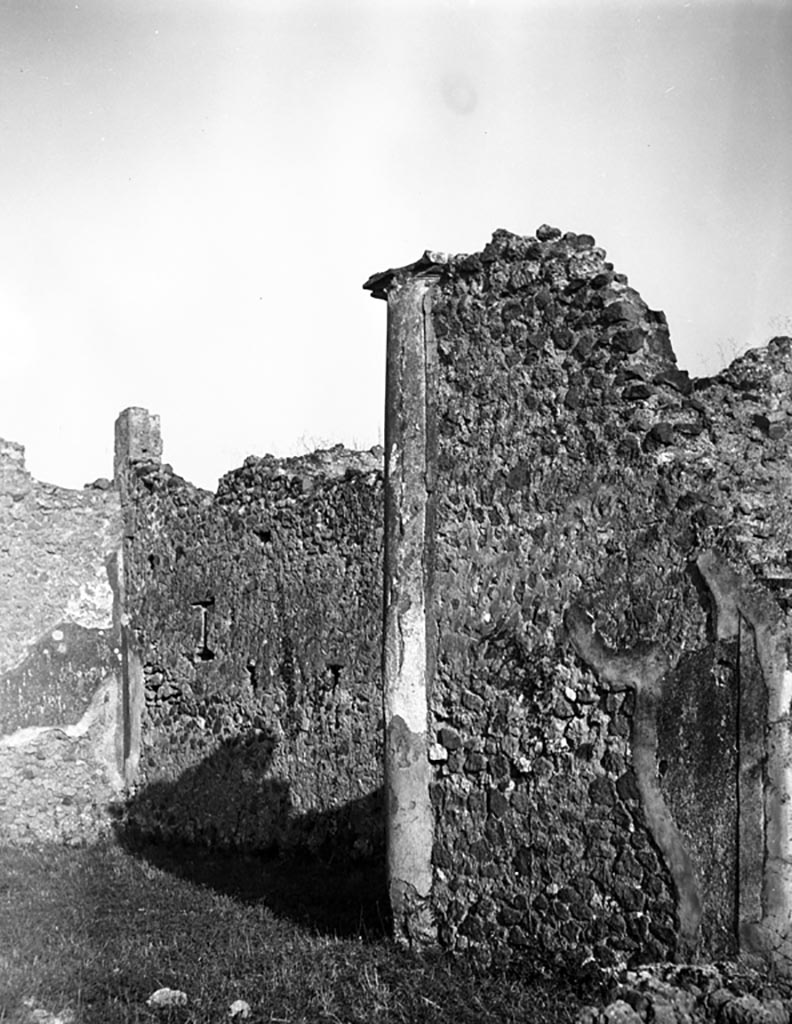
VI.11.4-17 Pompeii. W1491. Wall and column. Photo by Tatiana Warscher.
Photo © Deutsches
Archäologisches Institut, Abteilung Rom, Arkiv.
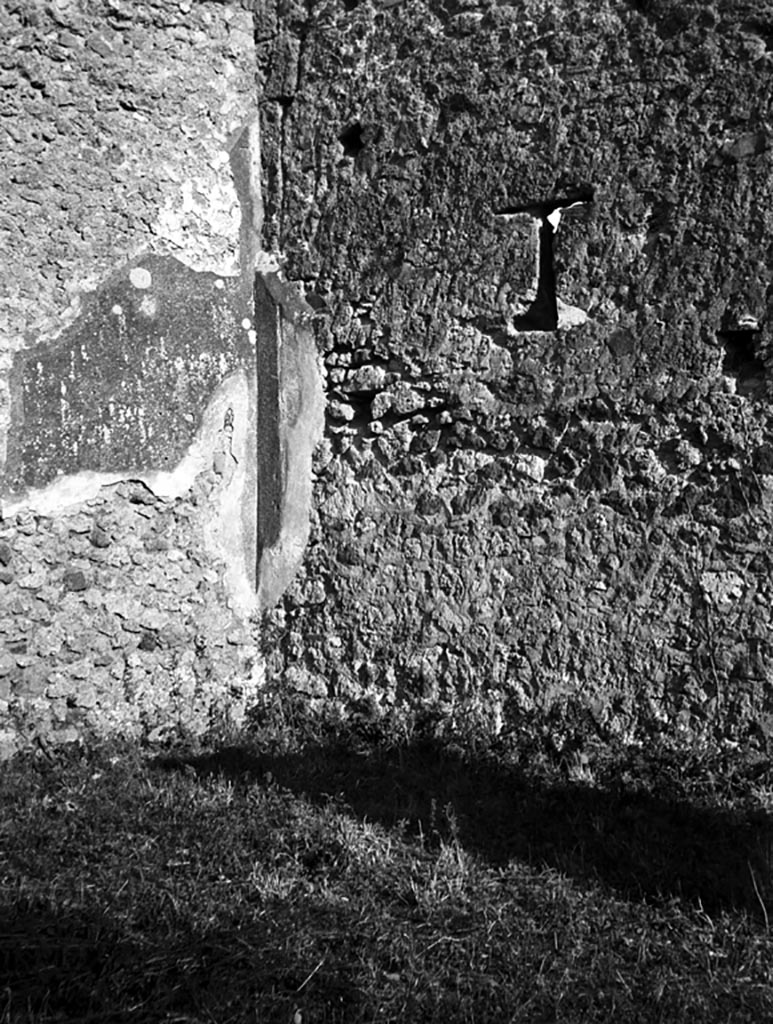
VI.11.4-17 Pompeii. W1492. Looking towards corner with remains of plaster.
Photo by Tatiana
Warscher. Photo © Deutsches Archäologisches Institut, Abteilung Rom, Arkiv.
Extracts from Bullettino Archeologico Napoletano, Anno Primo, 1843.
(Note: “Sesta casa” (Sixth house)
is part of Avellino’s description, and not a numbered location.)
It would seem he called VI.11.4/5/15/16 and 17, the Sixth
house).
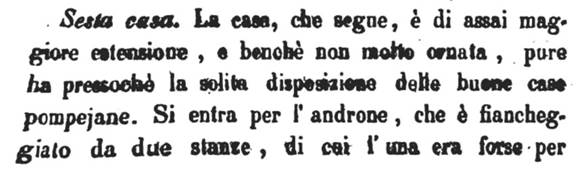
See Bullettino Archeologico Napoletano, Anno Primo, 1843, Napoli:
Tipografia Tramater, No. IX, 1 Maggio 1843, p.67 (also entered into
VI.11.5, 15, 16 and 17).
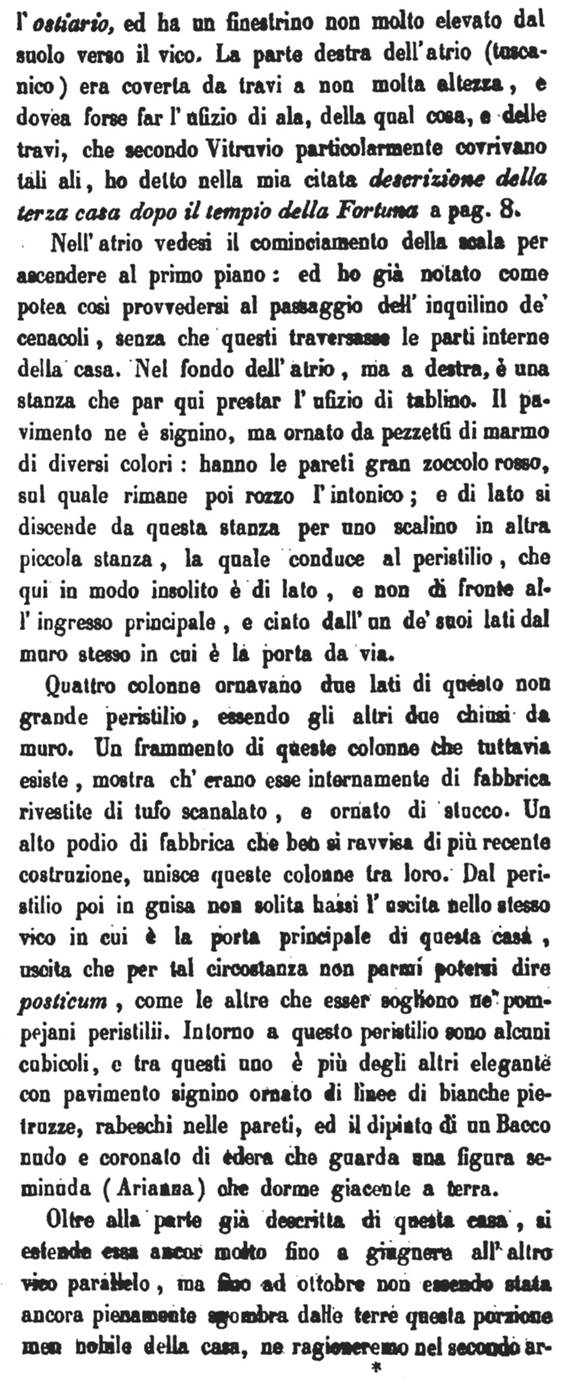
See Bullettino Archeologico
Napoletano, Anno Primo, 1843, Napoli: Tipografia Tramater, No. IX, 1
Maggio 1843, p.67.
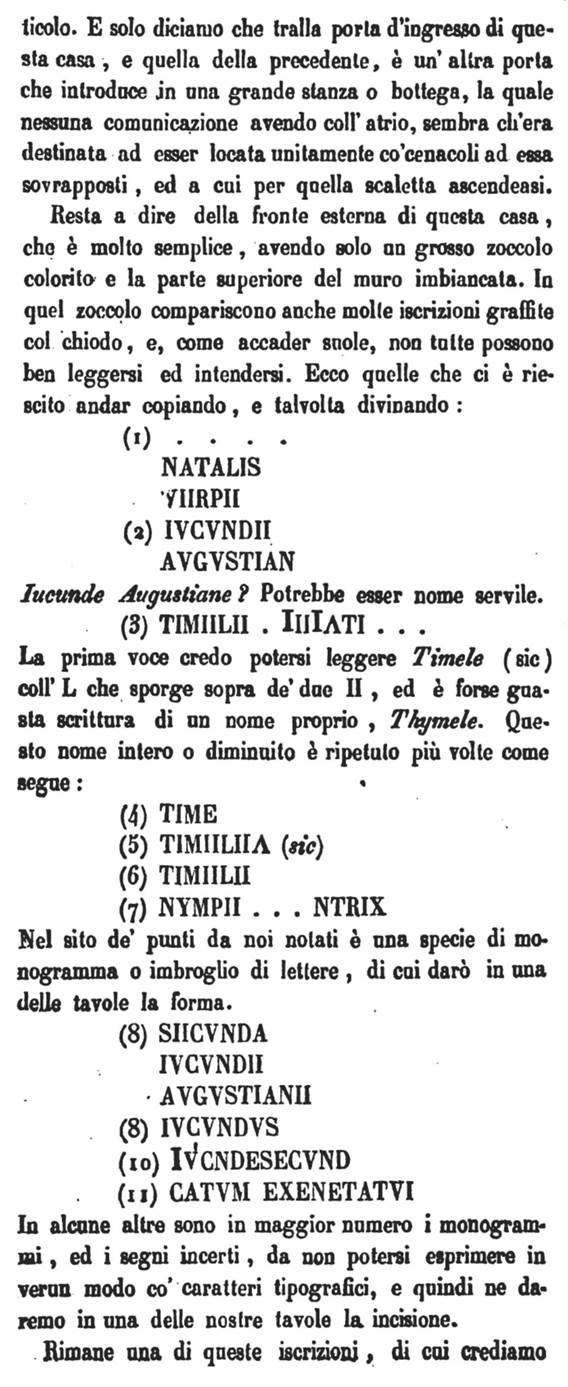
See Bullettino
Archeologico Napoletano, Anno Primo, 1843, Napoli: Tipografia Tramater, No.
IX, 1 Maggio 1843, p.68.
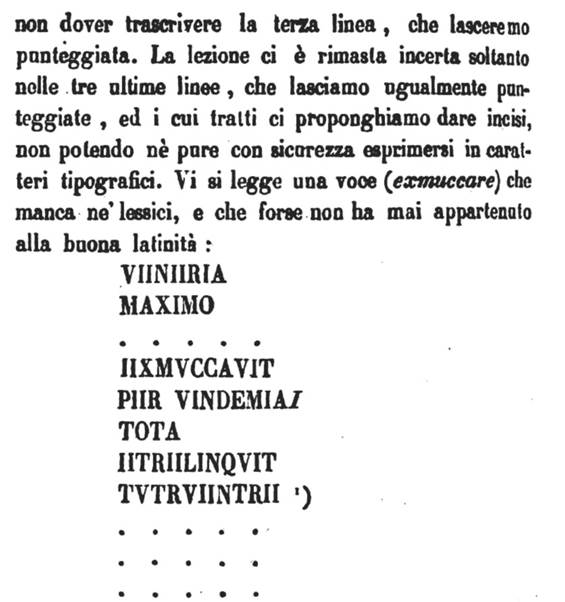

See Bullettino
Archeologico Napoletano, Anno Primo, 1843, Napoli: Tipografia Tramater, No.
IX, 1 Maggio 1843, p.68.
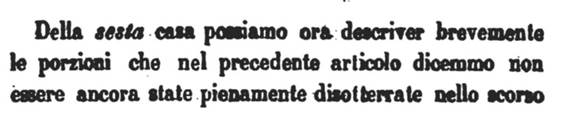
See Bullettino
Archeologico Napoletano, Anno Primo, 1843, Napoli: Tipografia Tramater, No.
X, 1 Giugno, 1843, p. 73.
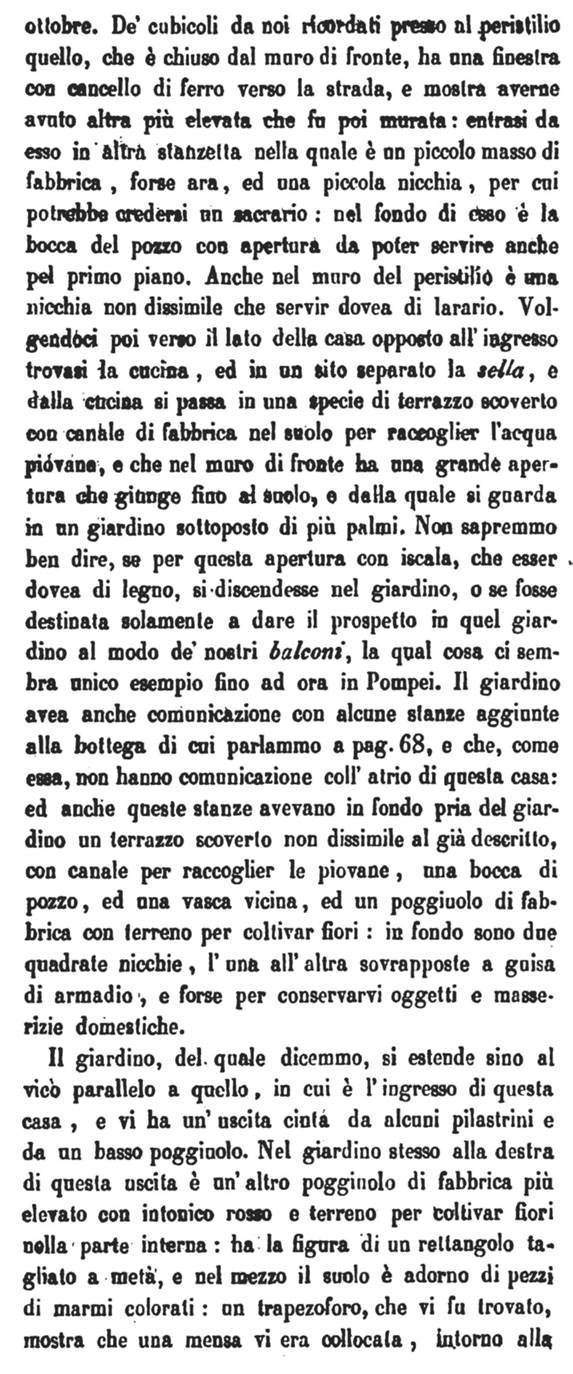
See Bullettino
Archeologico Napoletano, Anno Primo, 1843, Napoli: Tipografia Tramater, No.
X, I Giugno, 1843, p. 74.
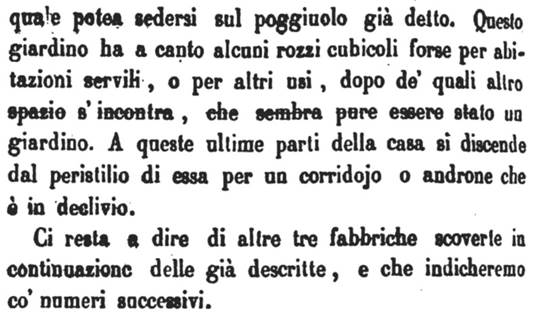
See Bullettino
Archeologico Napoletano, Anno Primo, 1843, Napoli: Tipografia Tramater, No.
X, 1 Giugno, 1843, p. 74.