VI.11.12 Pompeii. House with workshop.
Linked to VI.11.11. Excavated 1841-2. Partly damaged by 1943 bombing.
According to Fiorelli –
Poi
un’abitazione, con atrio tuscanico, un cubicoli ed un cella familiare laterali
all’androne, e il tablino situato fra il triclinio ed un oecus, col giardino
preceduto da ambulacro scoverto, prolungantesi di
fianco, ove nell’estremo sono situate la cucina con dipinto larario, il cesso,
la cella penaria, un dormitorio, ed altre rustiche stanze. A questo gruppo di località
secondarie pervenivasi anche da una porta a sinistra
dell’atrio, in un lato del quale sembra fosse collocato un sedile.
See Pappalardo, U., 2001. La Descrizione di Pompei per Giuseppe Fiorelli (1875). Napoli: Massa Editore. (p.70).
(A
house, with a Tuscan atrium, a cubiculum and a servants’ room at the side of
the entrance hall, and the tablinum located between the triclinium and an
oecus, with the garden preceded by an uncovered ambulatory, extending to the
side, where in the extreme are located the kitchen with lararium painting, the
latrine, a storeroom, a dormitory, and other rustic rooms. This group of
secondary rooms could also be reached from a door to the left of the atrium, on
one side of which seems to have been placed a seat.)
According to PPM -
“The atrium reached through the vestibule with cubiculum (3) and (16) on either side, this last with window towards the roadway and remains of original decoration in I Style. The north ala (18) preserved its flooring in cocciopesto with decoration of white tesserae, but the wall decoration was in IV Style, the south wall not having been decorated after the restoration following the earthquake of 62AD.
The tablinum (5), between the two rooms (6) end (4) was redecorated in III Style, and communicated with the garden area (7), accessible also through corridor (19).
In the south part of the house, the service rooms were found, amongst which was the kitchen with a painted lararium.
The decoration of I Style, visible also in cubiculum (16)
and in triclinium (6) was initially extended to the other rooms in which it had been replaced, as seen in tablinum (5),
by one of III Style that partly overlapped it and, even later by one of IV
Style, recognizable above all in the southern part of the house, made in
conjunction with restorations to the wall structures.”
See Carratelli,
G. P., 1990-2003. Pompei: Pitture e
Mosaici. V, (5), Roma: Istituto della enciclopedia italiana, p. 71.
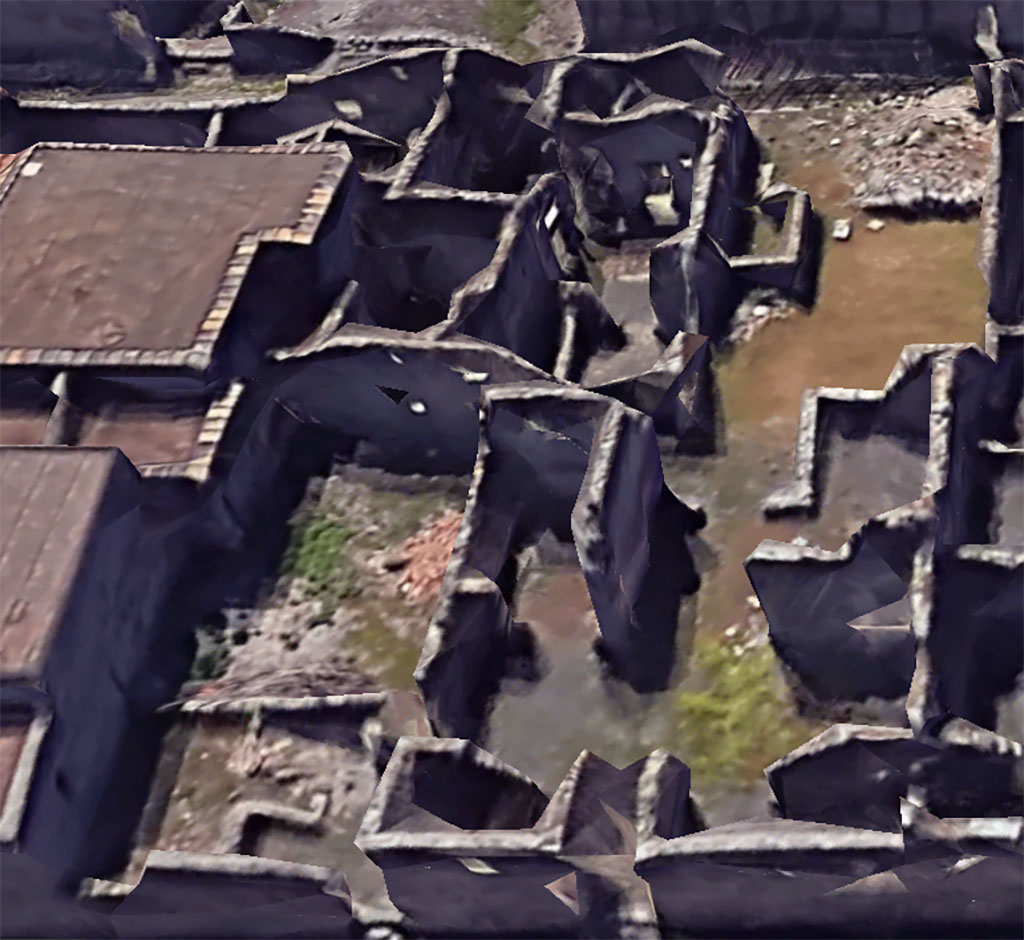
VI.11.11/12 Pompeii. Looking west. Google Earth. 2023.
VI.11.11 is the area in the lower left. VI.11.12 is the entrance on the lower right.
VI.11.7 is the area in the upper right.
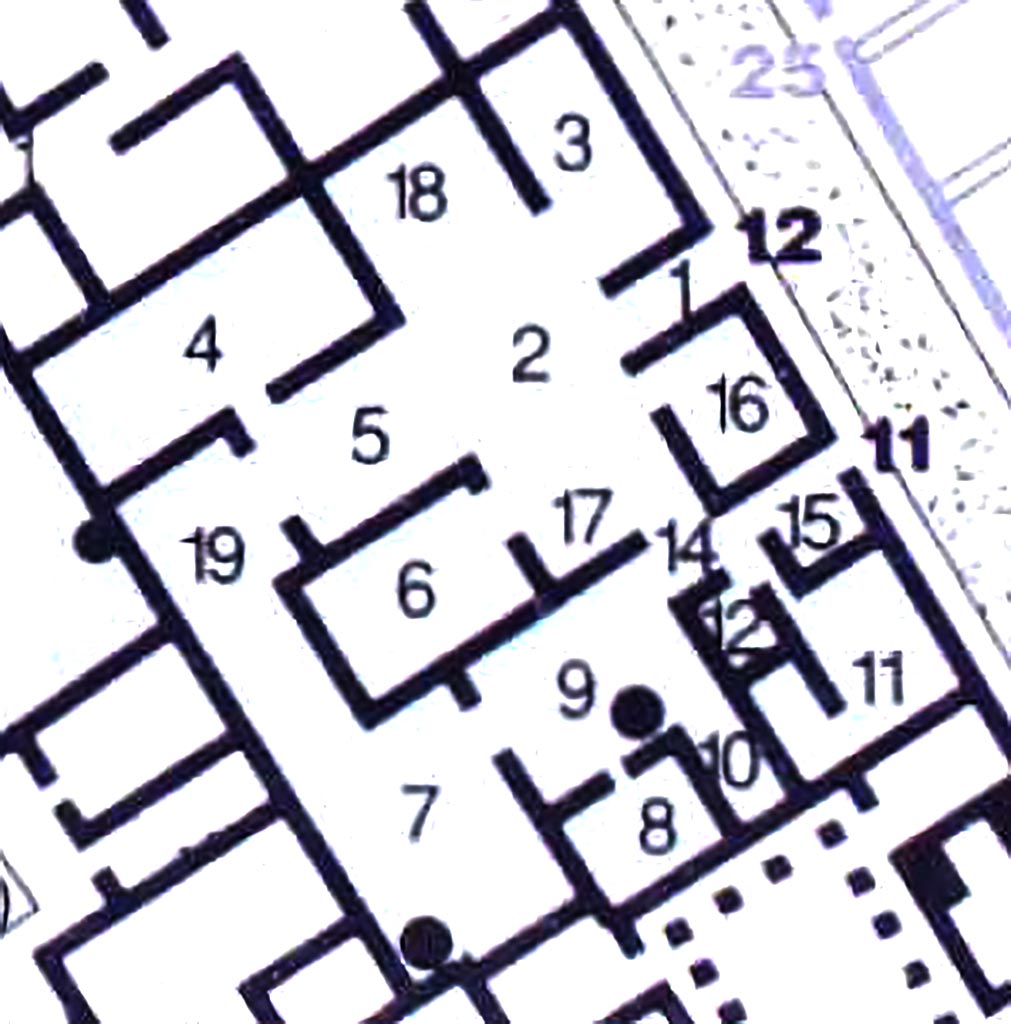
VI.11.11/12
Pompeii. Plan.
See Carratelli,
G. P., 1990-2003. Pompei: Pitture e
Mosaici: Vol. V. Roma: Istituto della enciclopedia italiana, p. 71.
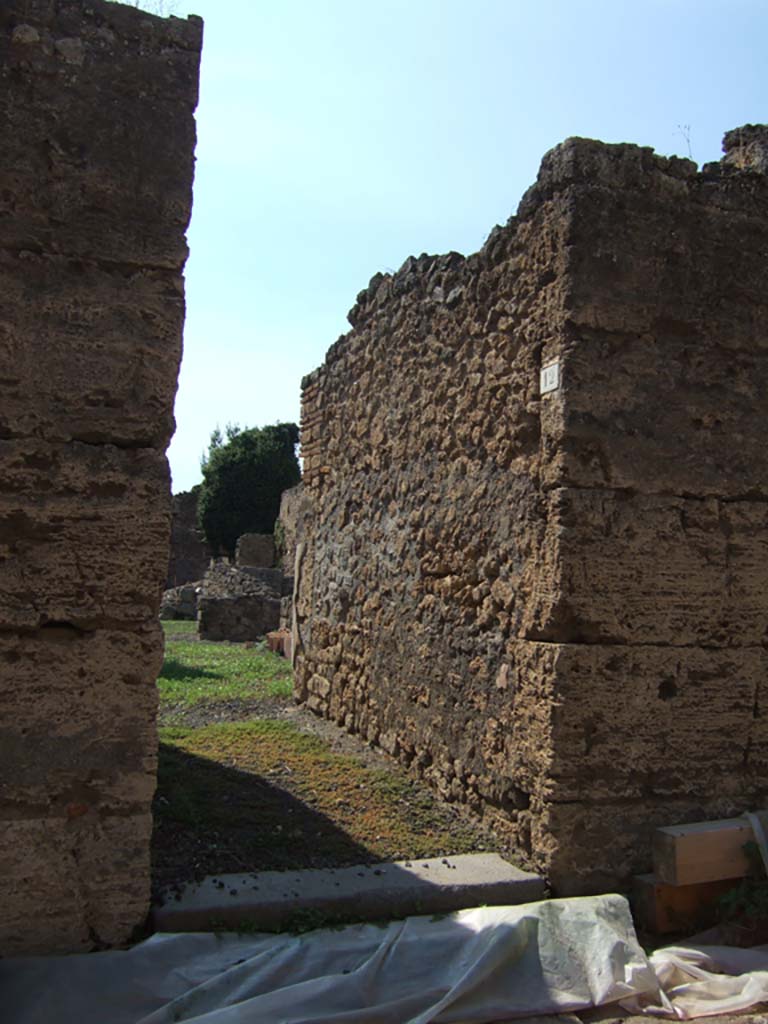
VI.11.12 Pompeii. September 2005. Entrance doorway, looking west.
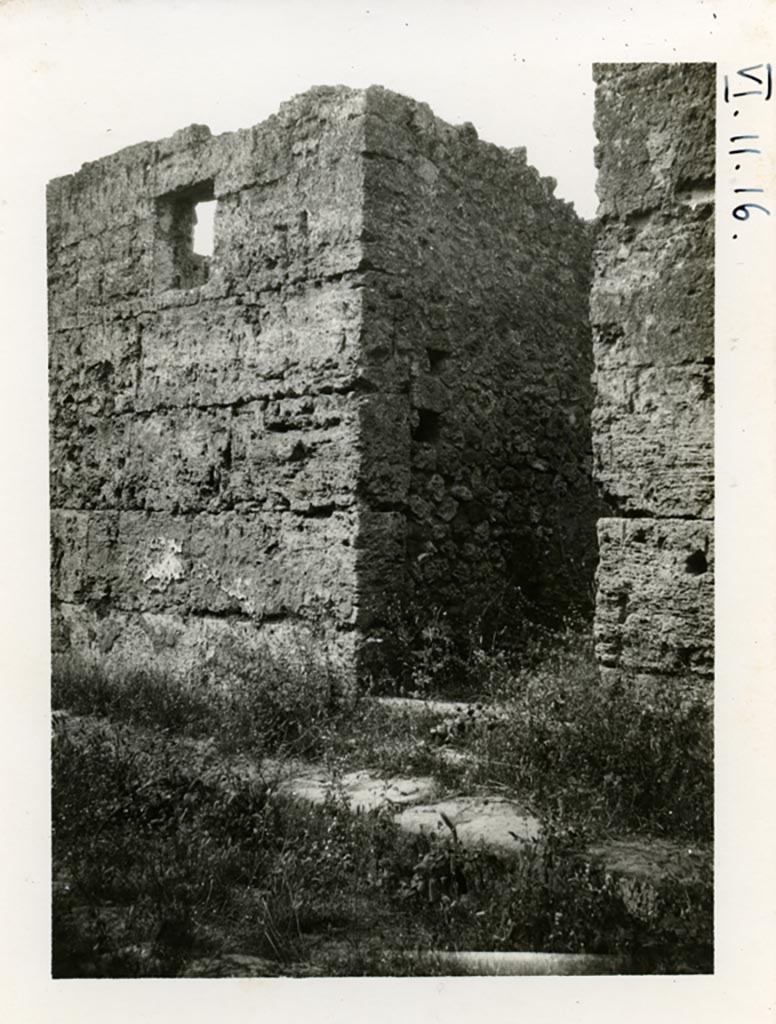
but according to Warsher this is VI.11.16, which appears to have a masonry edged (or rebuilt) doorway and not edged with stone blocks.
Pre-1937-39. Looking west towards entrance doorway.
Photo courtesy of American Academy in Rome, Photographic Archive. Warsher collection no. 026.
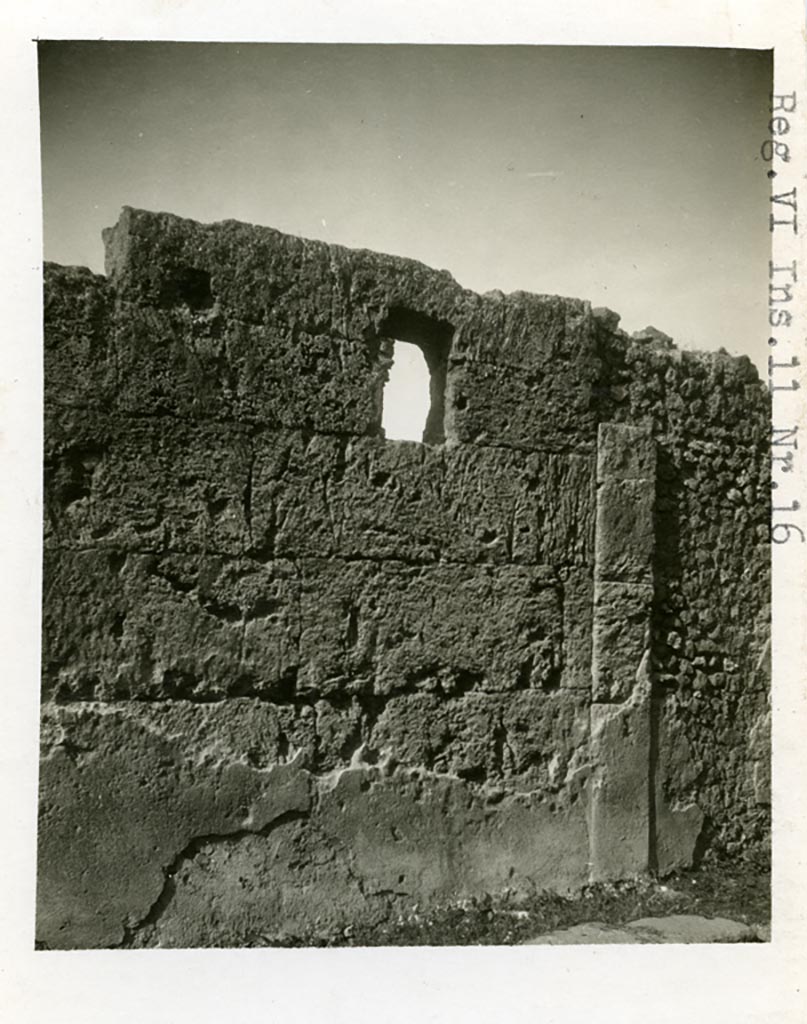
VI.11.12 Pompeii but shown as VI.11.16 on photo. Pre-1937-39. Exterior wall on north side of doorway.
Photo courtesy of American Academy in Rome, Photographic Archive. Warsher collection no. 1524.
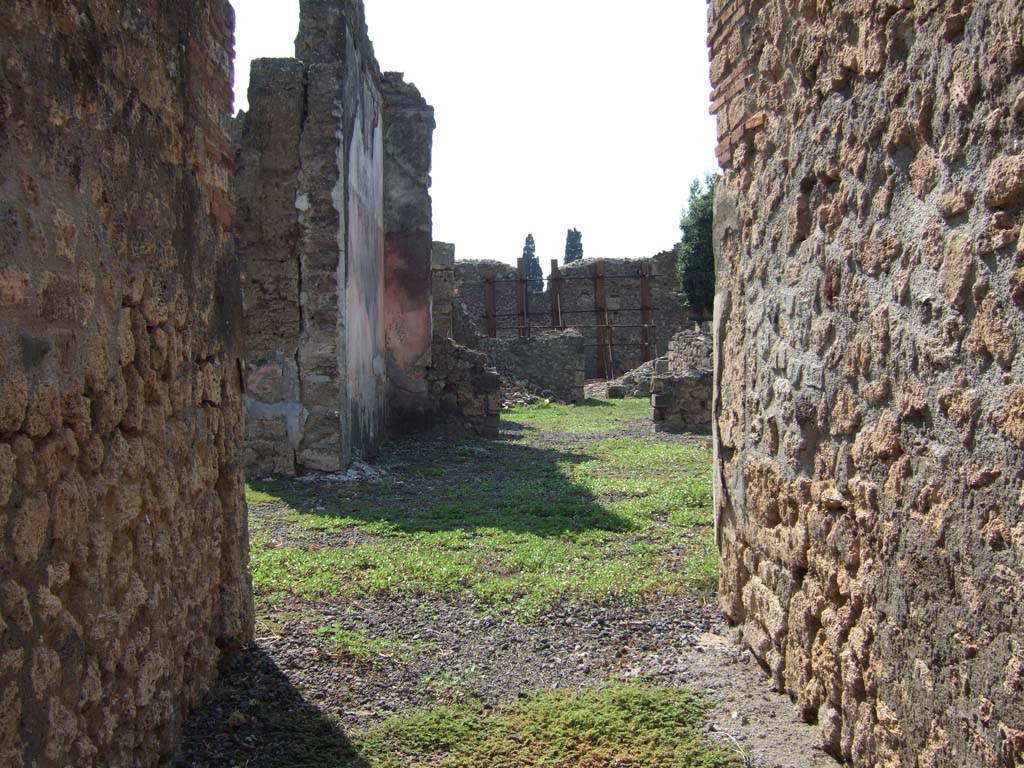
VI.11.12 Pompeii. September 2005.
Looking west from entrance corridor (1), across atrium (2), towards tablinum (5) with remains of painted plaster and garden beyond.
On the south side (left) of the tablinum is the doorway to the oecus (6).
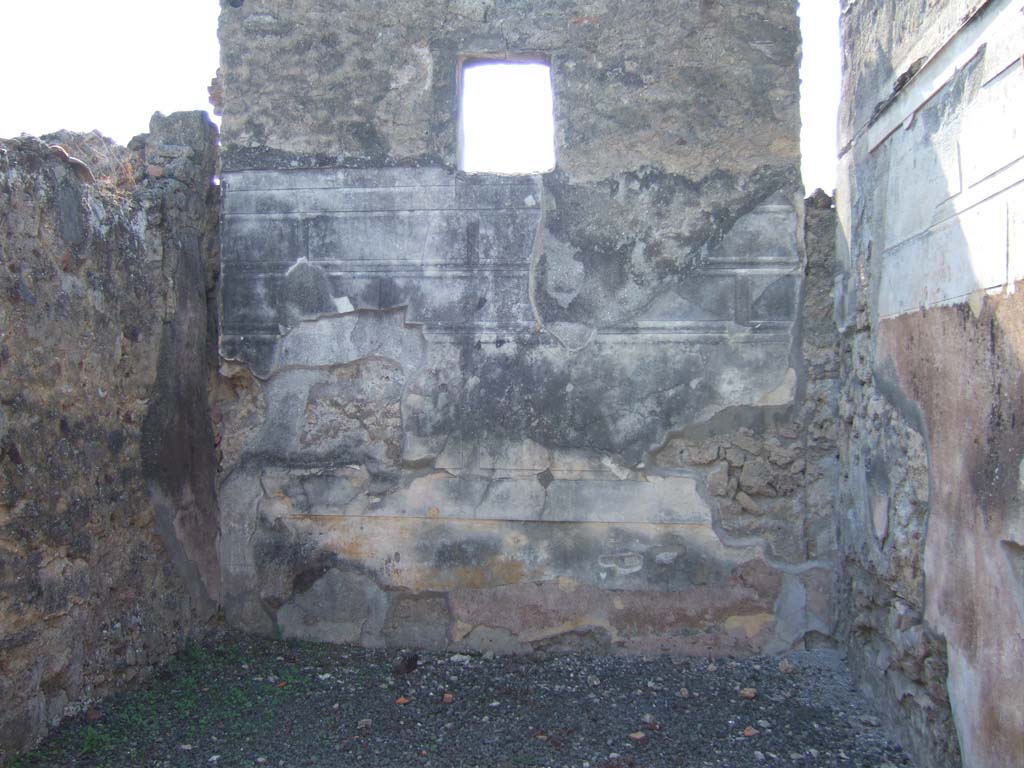
VI.11.12 Pompeii. September 2005. West wall of oecus (6) with remains of 1st style decoration.
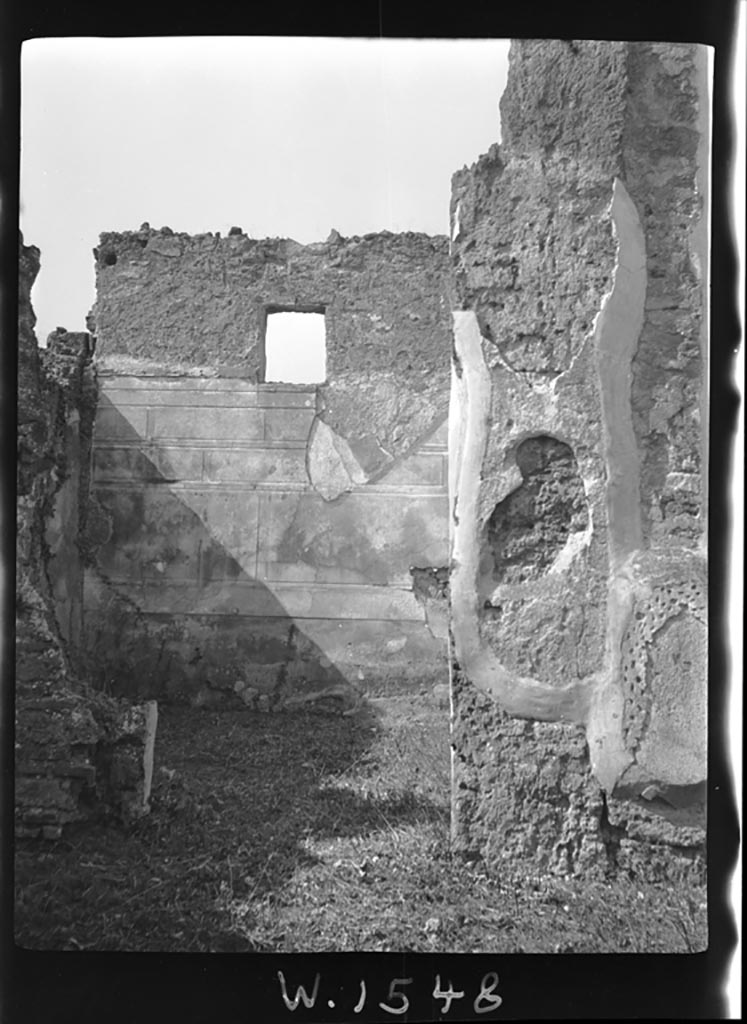
VI.11.12 Pompeii. W1548. Doorway to oecus (6) with window and 1st style decoration.
Photo by Tatiana
Warscher. Photo © Deutsches Archäologisches Institut, Abteilung Rom, Arkiv.
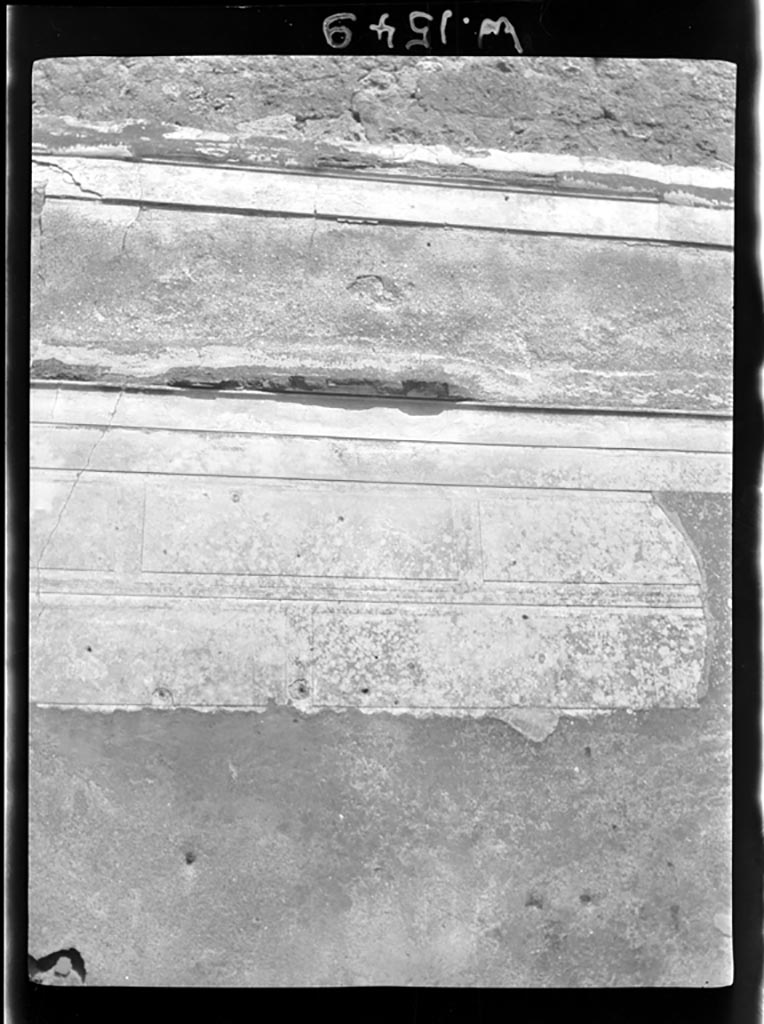
VI.11.12 Pompeii. W 1549. North wall of oecus (6), with remains of decorative 1st Style.
Photo by Tatiana
Warscher. Photo © Deutsches Archäologisches Institut, Abteilung Rom, Arkiv.
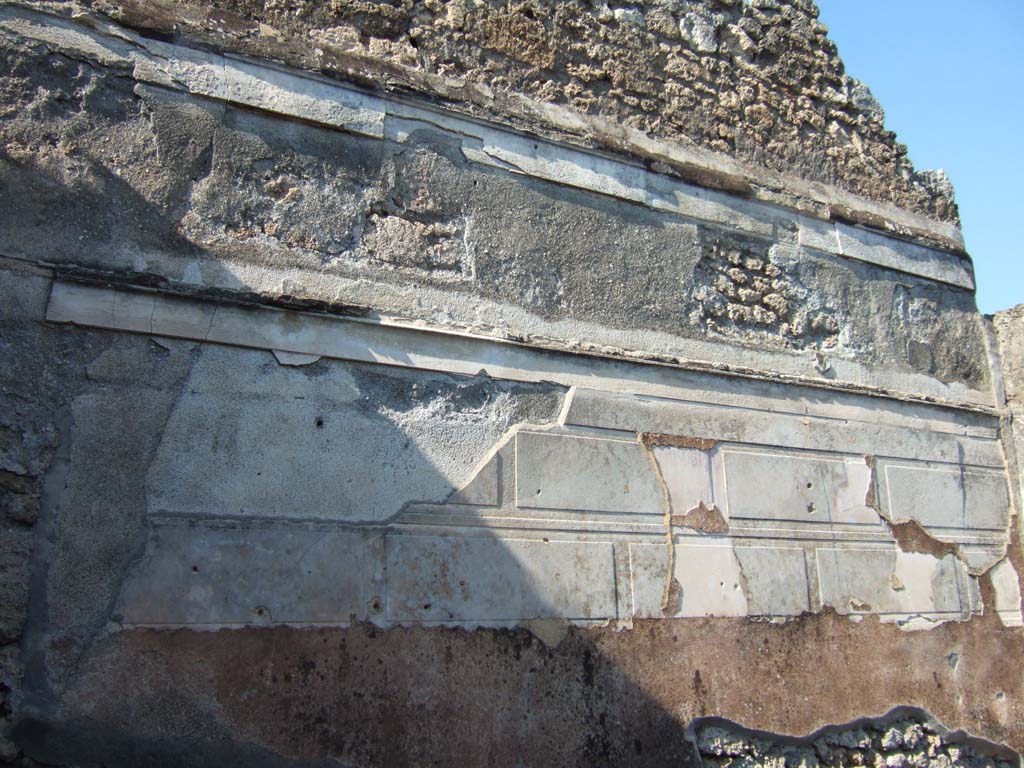
VI.11.12 Pompeii. September 2005. North wall of oecus (6) with remains of 1st Style decoration.
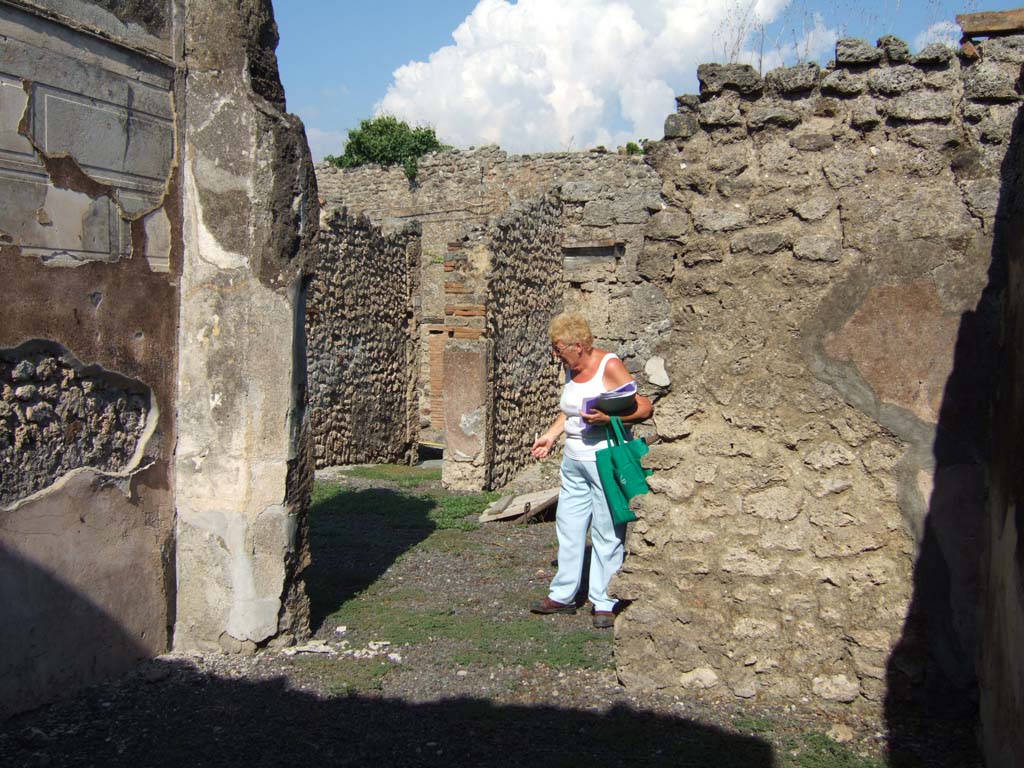
VI.11.12 Pompeii. September 2005. Looking east through doorway of oecus (6) into south ala (17).
At the rear of the figure, and on the south side of entrance corridor, is the doorway to cubiculum (16).
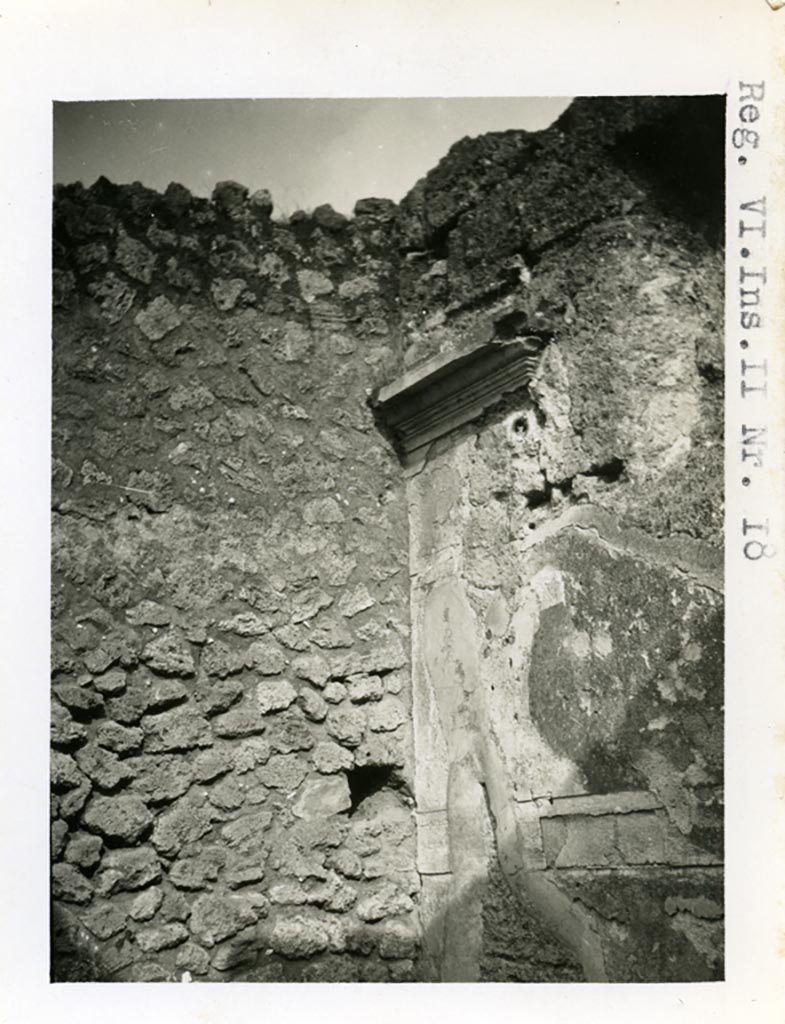
VI.11.12 Pompeii, but according to Warsher, shown as VI.11.18 on photo. Pre-1937-39.
North-east corner of wall in cubiculum (16), decorated in 1st Style, with yellow zoccolo.
Photo courtesy of American Academy in Rome, Photographic Archive. Warsher collection no. 027.
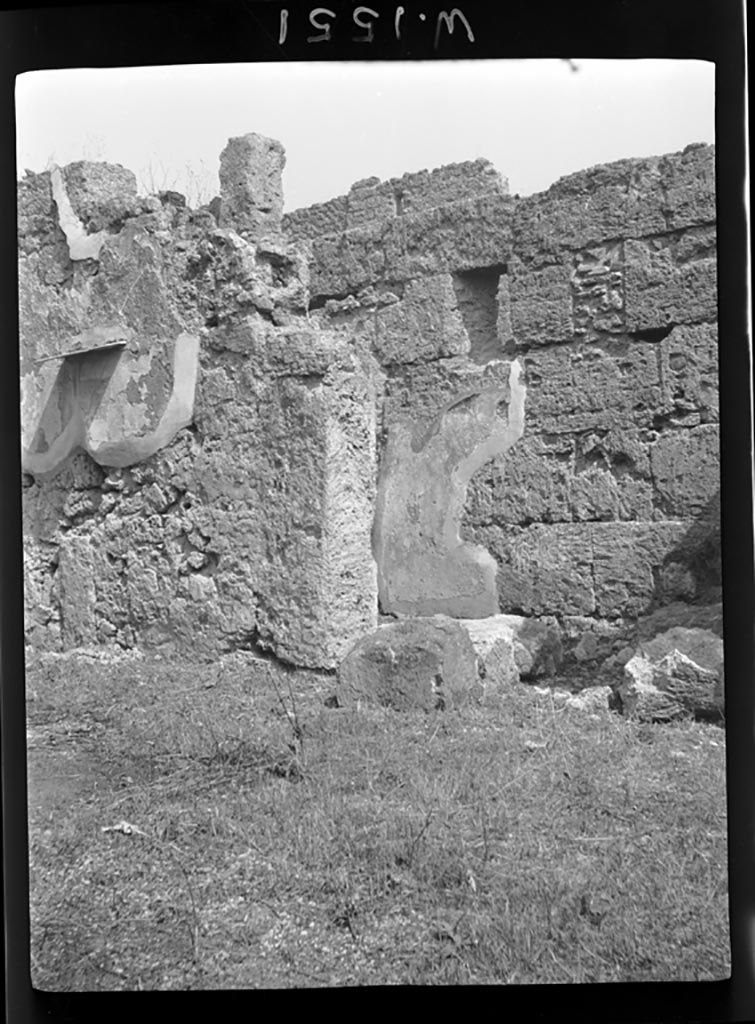
VI.11.12 Pompeii. W1551. East wall of north ala (18).
Looking east towards north-east corner of the north ala (18), with doorway to cubiculum (3) on north side of entrance corridor (1)
On the left can be seen the protected remains of a painting.
According to PPP, in the north ala, on the east wall at the south end, on a white background, had been a painting (38 x 41, of an architectural landscape), now faded.
See Bragantini,
de Vos, Badoni, 1983. Pitture e Pavimenti di Pompei, Parte 2. Rome: ICCD. (p.252)
Photo by Tatiana
Warscher. Photo © Deutsches Archäologisches Institut, Abteilung Rom, Arkiv.
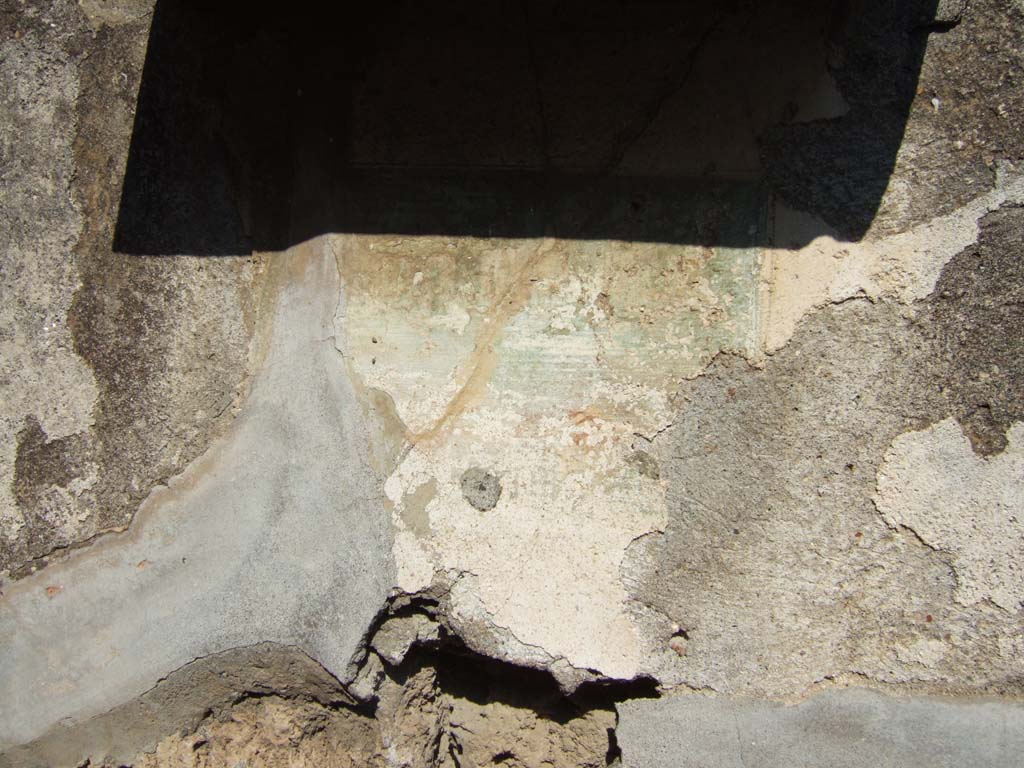
VI.11.12 Pompeii. September 2005. East wall, with remains of painting.
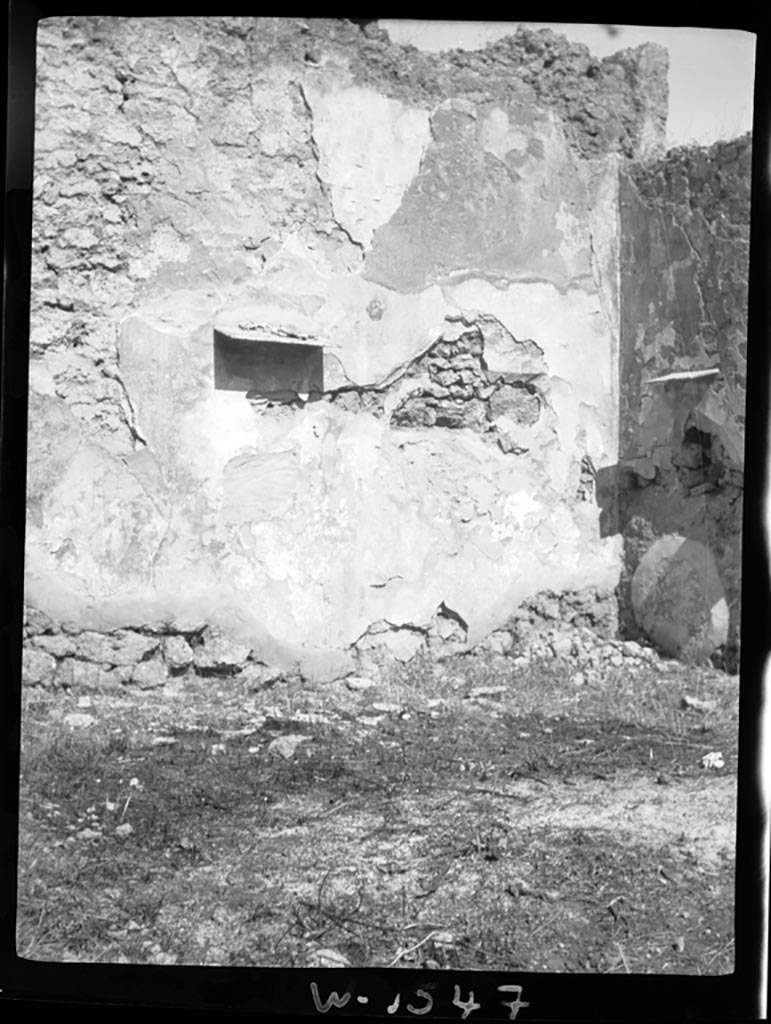
VI.11.12 Pompeii. W.1547. North wall, looking towards north-east corner of ala (18), or atrium.
According to PPP, found in the centre of the north wall on a white background in ala (18), had been a painting (13 x 13), now faded.
On the east wall, at the north end on a white background,
had been a painted medallion (diam. 22), now illegible.
See Bragantini,
de Vos, Badoni, 1983. Pitture e Pavimenti
di Pompei, Parte 2. Rome:
ICCD. (p.252).
Photo by Tatiana
Warscher. Photo © Deutsches Archäologisches Institut, Abteilung Rom, Arkiv.
According to Avellino –
"This atrium has two large alae, (rooms 17 and 18), one (room 18) is adorned with graceful signinum flooring with designs of white stones, and paintings of scrolls, vases, fruits, and small landscapes. One is mainly observed in the facing wall, which shows a bridge on which are various figures, and one of these was curved in attitude, as it seems, as if to throw a net into the water, nearby we see two boats. The other ala (room 17) was rough, and here you can see a masonry block, where was perhaps the area to store the strong-box for the domestic money.”
See Bullettino Archeologico Napoletano, Anno Primo, 1843, Napoli: Tipografia Tramater, No. IX, 1 Maggio 1843, p.66.
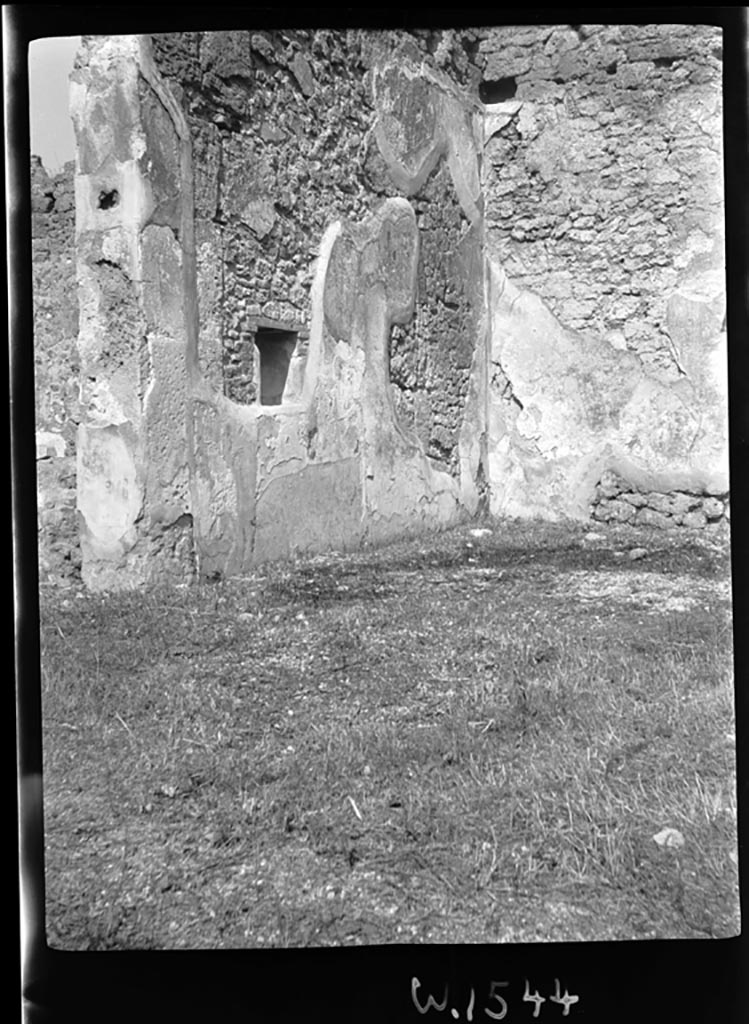
VI.11.12 Pompeii. W.1544. West wall and north-west corner of the north ala (18).
Looking towards the north-west corner with small window into the room (4), triclinium.
Photo by Tatiana
Warscher. Photo © Deutsches Archäologisches Institut, Abteilung Rom, Arkiv.
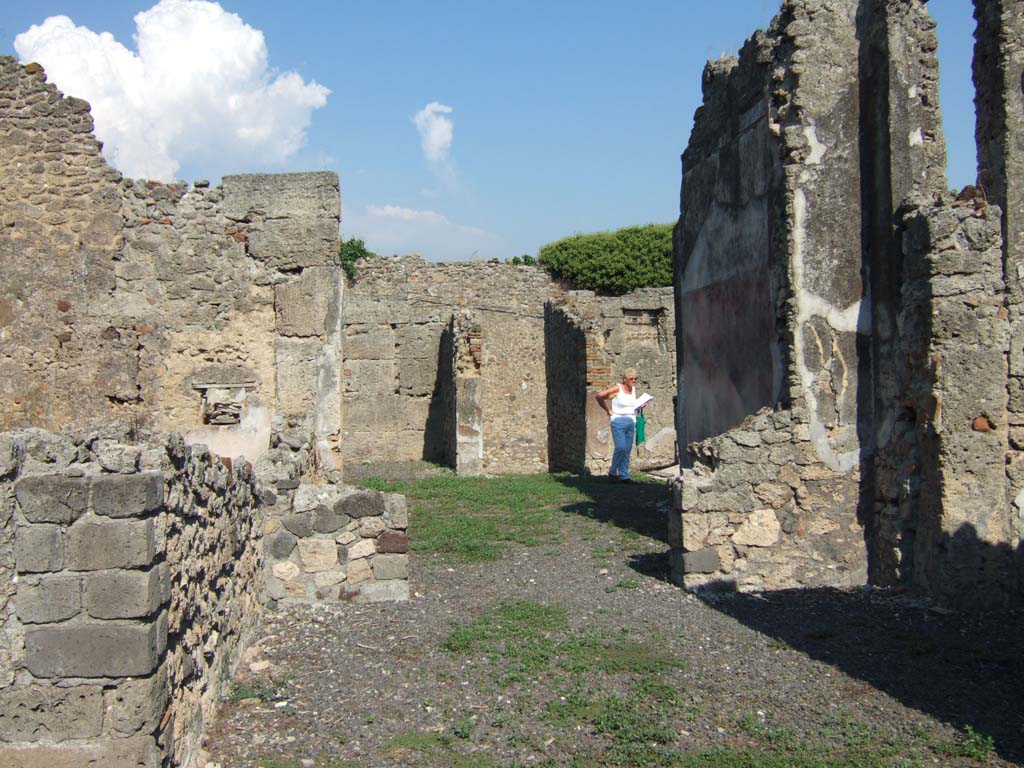
VI.11.12 Pompeii. September 2005.
Looking across area of uncovered walkway (19) to tablinum (5), and east across atrium (2) to entrance doorway.
On the left would have been the triclinium (4), with a window at both ends.
The one in the east wall overlooked the north ala/atrium.
According to Jashemski, the garden at the rear of the house (excavated in 1842) was entered through an unroofed passageway at the rear of the tablinum.
See Jashemski, W. F., 1993. The Gardens of Pompeii, Volume II: Appendices. New York: Caratzas. (p.144)
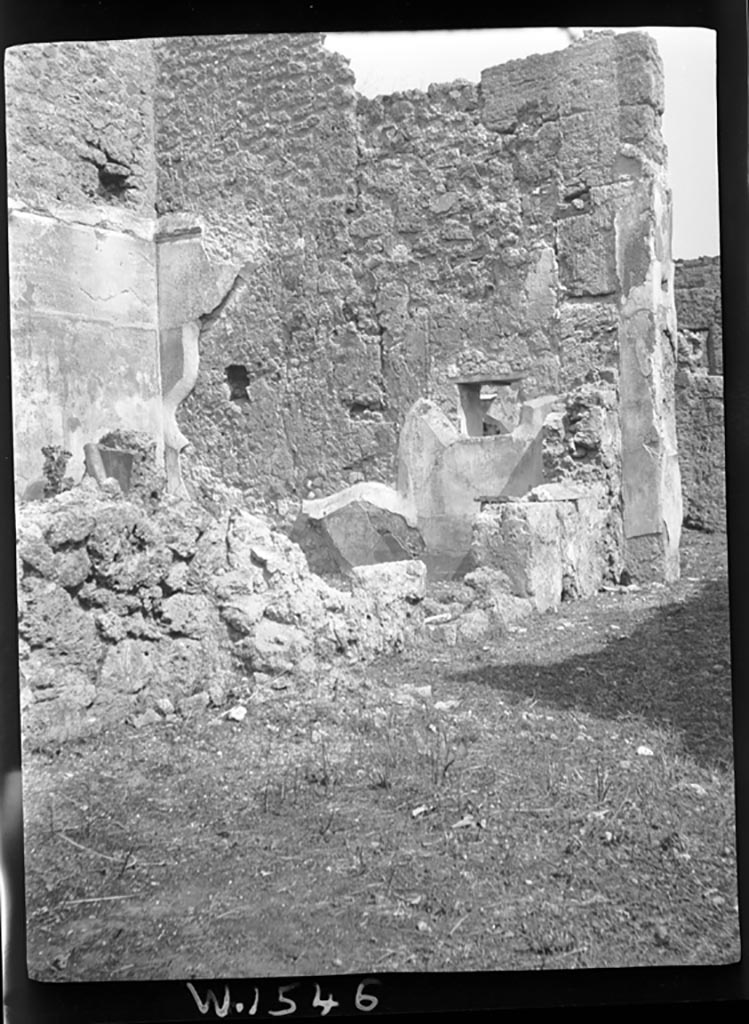
VI.11.12 Pompeii. W.1546.
Looking north-east towards triclinium (4) with window in east wall, from unroofed walkway leading to garden,
Photo by Tatiana
Warscher. Photo © Deutsches Archäologisches Institut, Abteilung Rom, Arkiv.
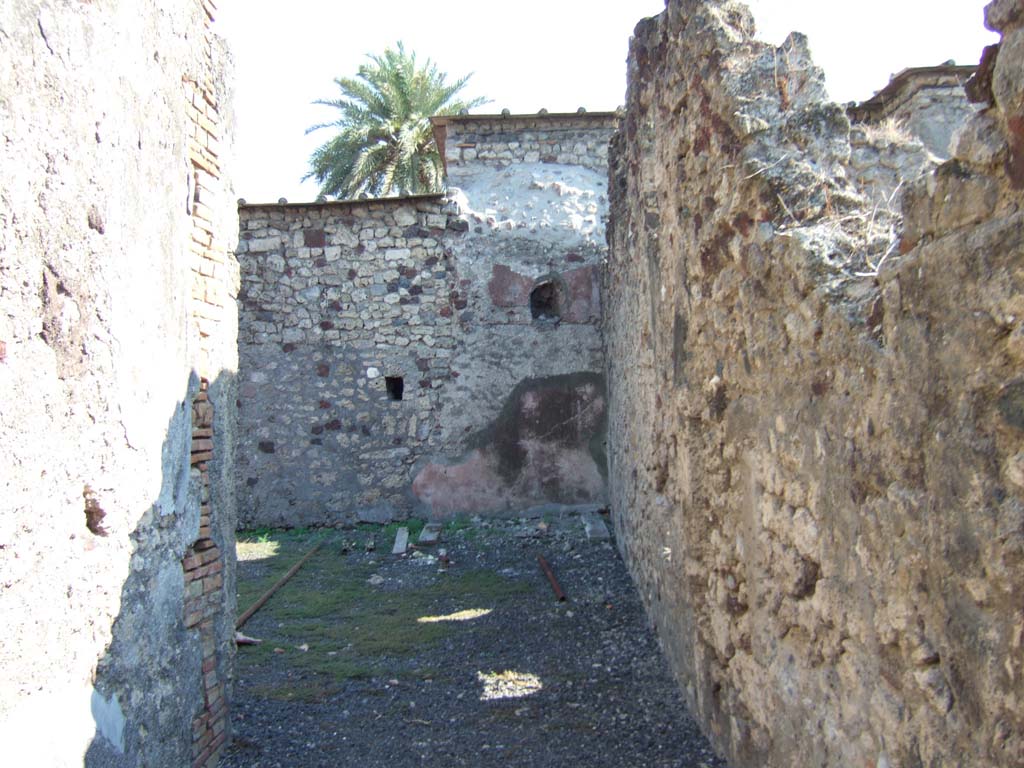
VI.11.12 Pompeii. September 2005.
Looking south along unroofed walkway (19) towards south-west corner of garden area (7), along wide corridor of walkway.
The wall on the south side would join to VI.11.10 and the wall on the west (right) would join to VI.11.8.
According to Garcia y Garcia –
the same bomb that destroyed VI.11.8 also caused the destruction of several rustic rooms in the south of house VI.11.12.
These would have had their dividing walls to the south with VI.11.10, and to the west with VI.11.8.
In the 1980s he said, all the fallen structures were in total ruin and abandoned.
See Garcia y
Garcia, L., 2006. Danni di guerra a Pompei. Rome: L’Erma di Bretschneider. (p.82).
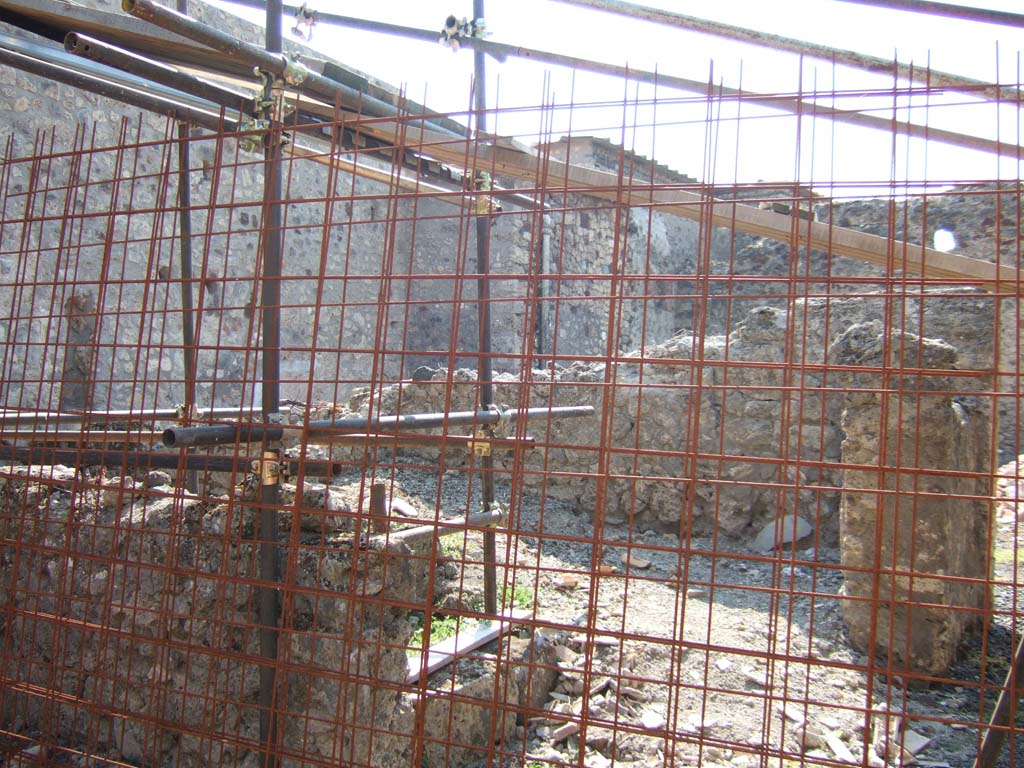
VI.11.11/12 Pompeii. September 2005. Looking south-west from VI.11.11, site of cubiculum ?
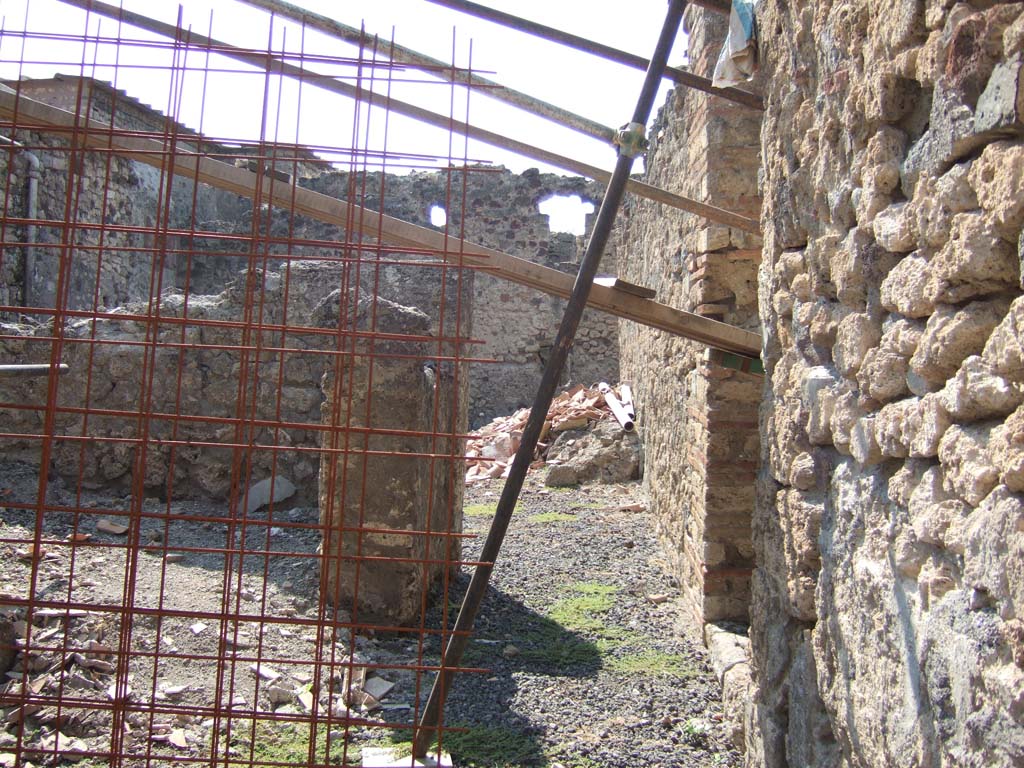
VI.11.11/12 Pompeii. September 2005.
Looking west along corridor 14, with doorway in north wall (centre right) into south ala (17) of VI.11.12.
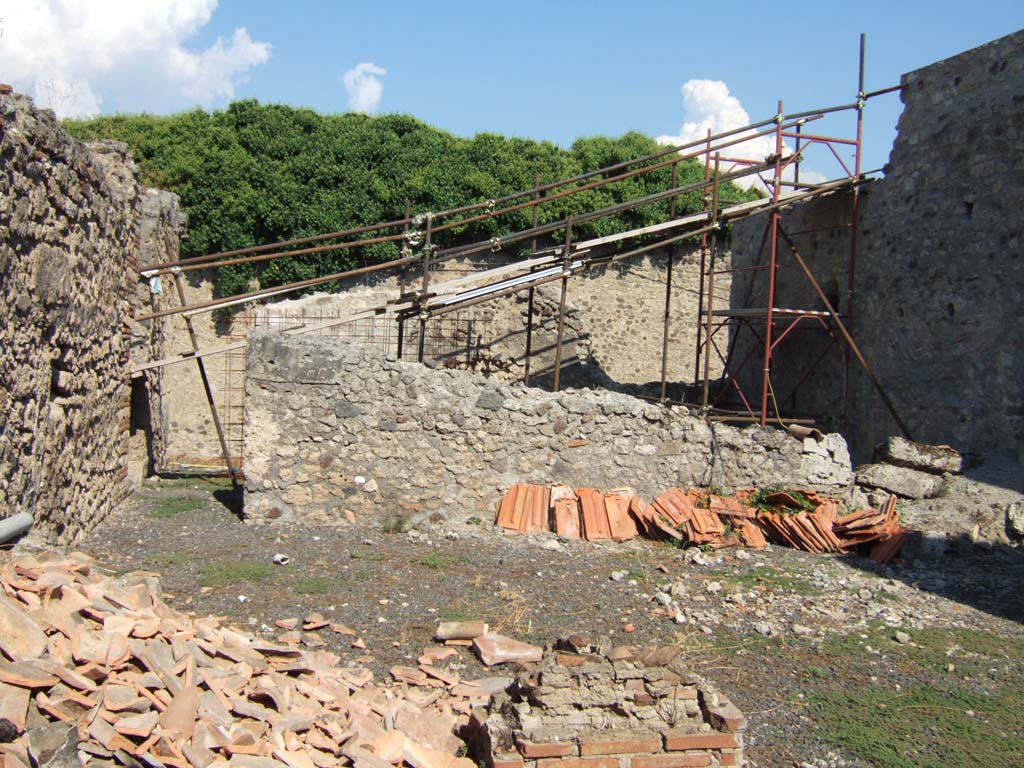
VI.11.11/12 Pompeii. September 2005. Looking east from garden area (7) towards entrance, on left.
Under the scaffolding, on the right, may have been the workshop, with kitchen, latrine and dormitory?
See Eschebach, L., 1993. Gebäudeverzeichnis und Stadtplan der antiken Stadt Pompeji. Köln: Böhlau. (p.200).
According to Boyce, there was a fragmentary lararium painting in the kitchen.
Only the figures of the Lares were preserved.
Boyce stated that the kitchen was in number VI.11.12, which this would have been linked to.
See Boyce G. K., 1937. Corpus of the Lararia of Pompeii. Rome: MAAR 14. (p.51, no.186).
According to Garcia y Garcia –
the same bomb that destroyed VI.11.8 also caused the destruction of several rustic rooms in the south of house VI.11.12.
These would have had their dividing walls to the south with VI.11.10, and to the west with VI.11.8.
In the 1980s he said, all the fallen structures were in total ruin and abandoned.
See Garcia y
Garcia, L., 2006. Danni di guerra a Pompei. Rome: L’Erma di Bretschneider. (p.82).

VI.11.11 Pompeii. July 2008. Downpipe in south wall. Photo courtesy of Barry Hobson.
Extracts from Bullettino Archeologico Napoletano, Anno Primo, 1843.
(Note: “Terza casa” (Third house) is part of Avellino’s description, and not a numbered location.)

See Bullettino Archeologico Napoletano, Anno Primo, 1843, Napoli: Tipografia Tramater, No. IX, I Maggio 1843, p.66.


