VI.2.2 Pompeii. Shop. Excavated 1780, 1806-1808.
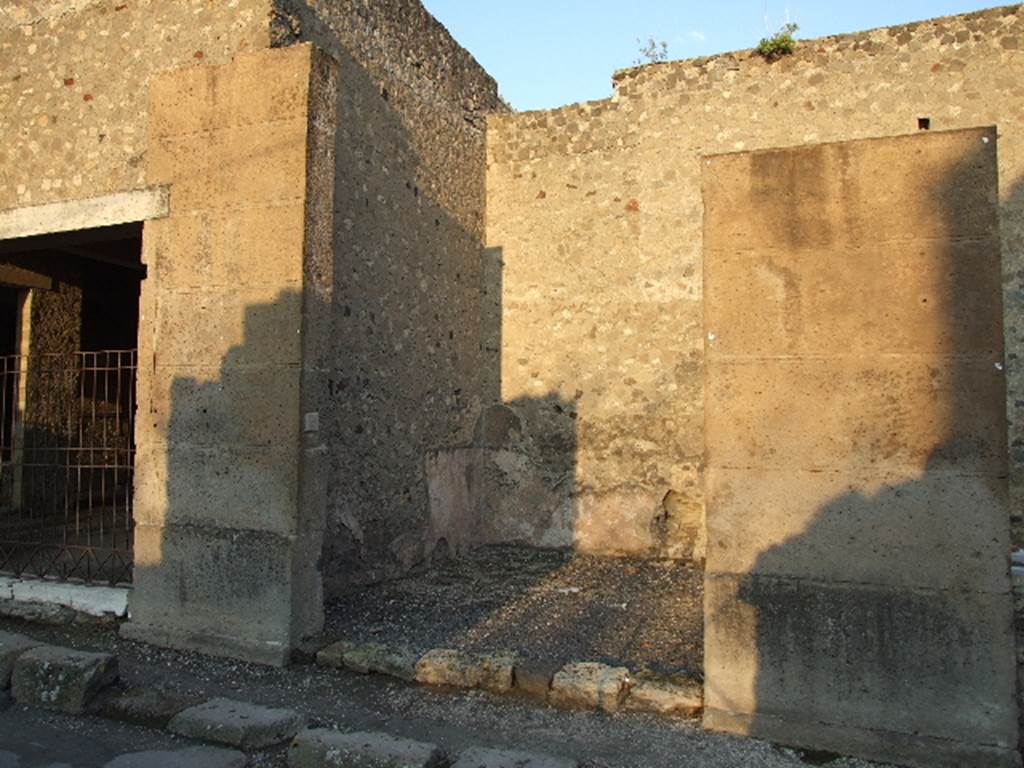
VI.2.2 Pompeii. December 2006. Entrance.
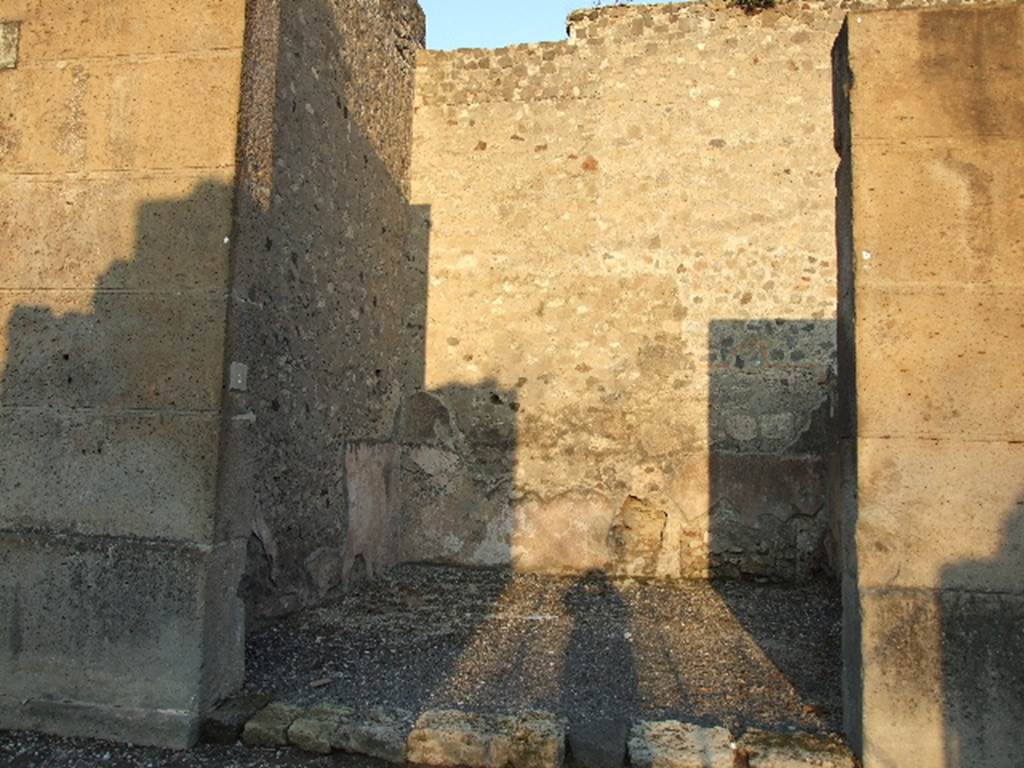
VI.2.2 Pompeii.
December 2006. Entrance doorway.
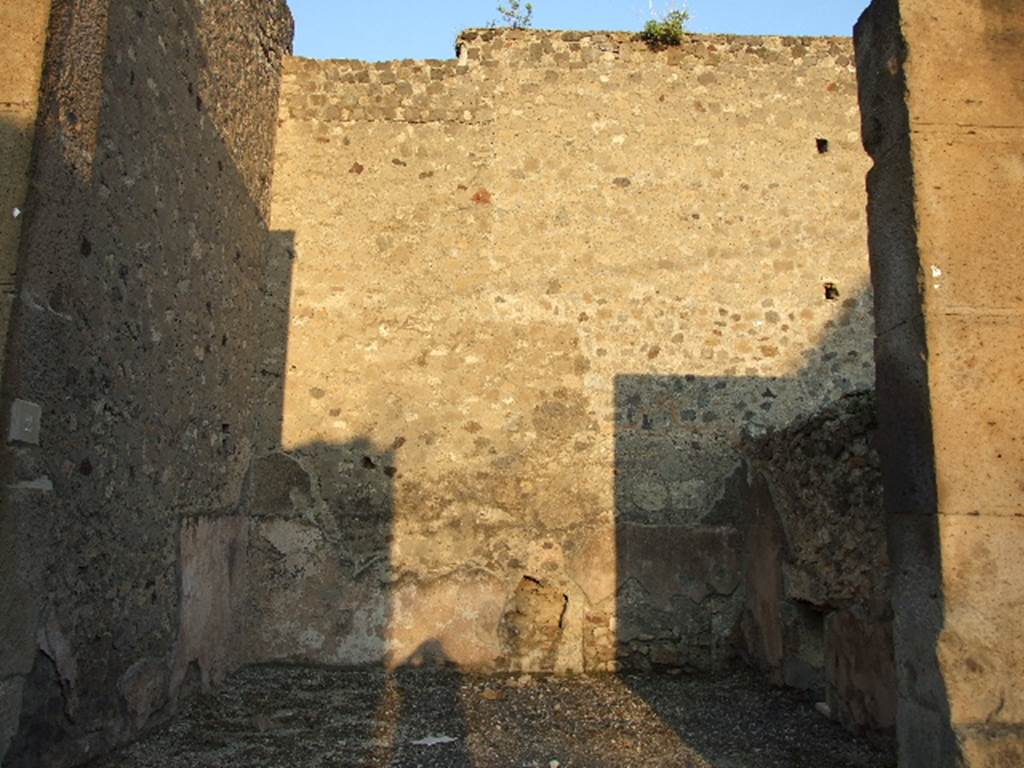
VI.2.2 Pompeii. December 2006. East wall of shop.
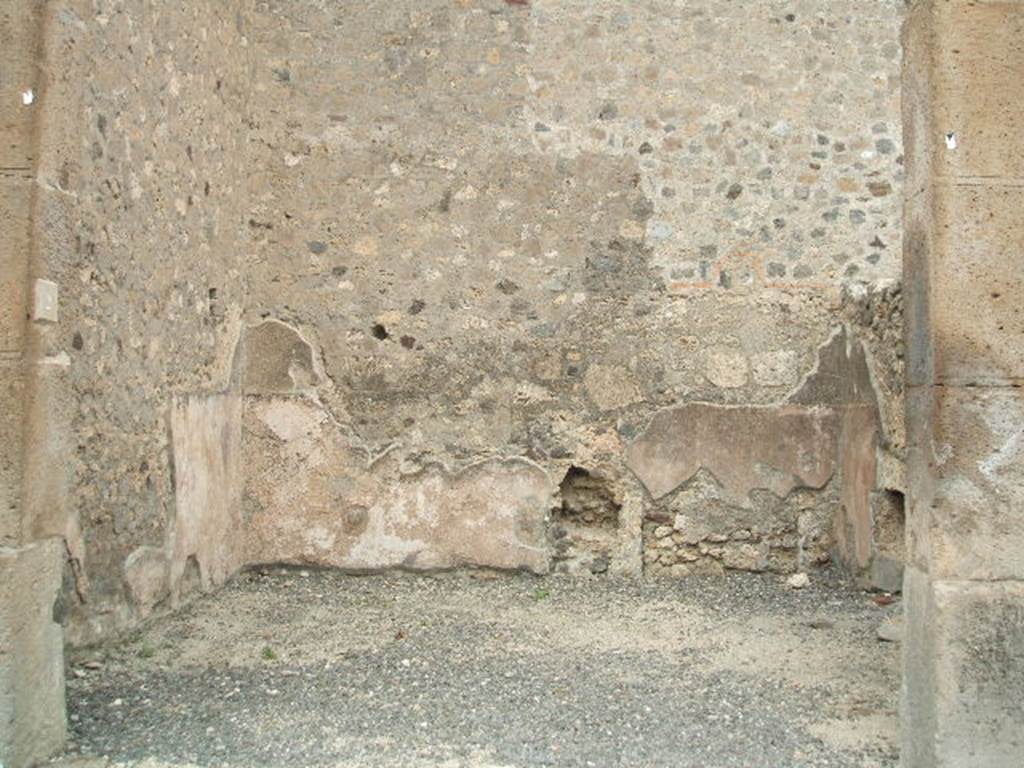
VI.2.2 Pompeii. May 2005. East wall of shop.
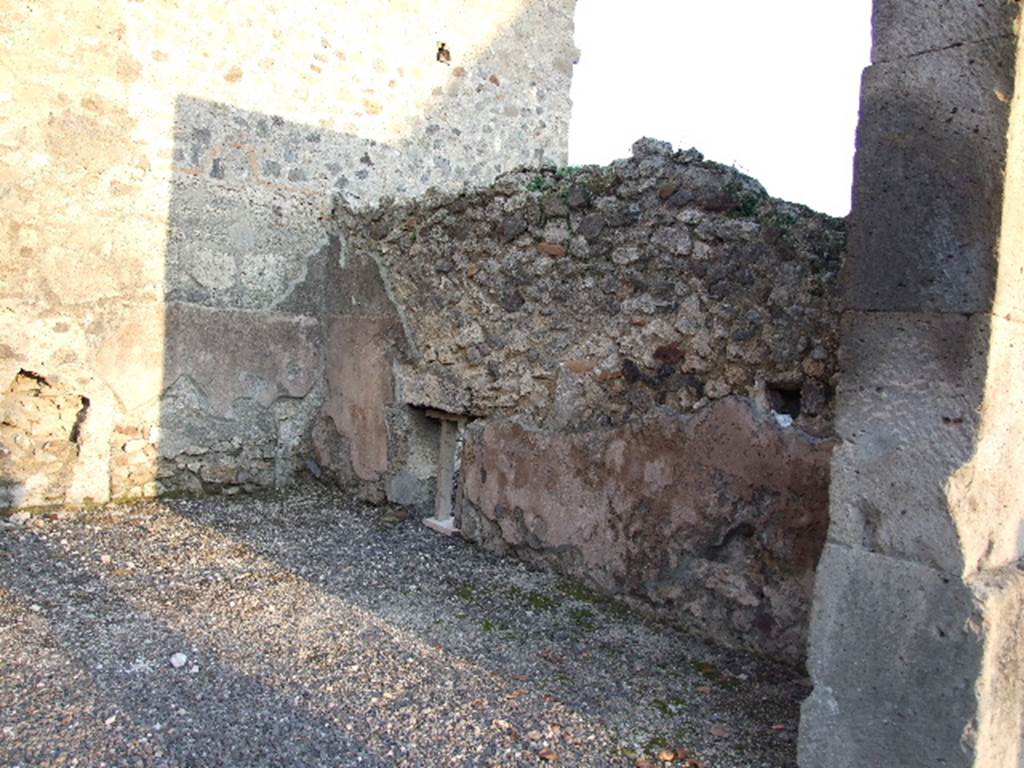
VI.2.2 Pompeii. December 2006. South wall of shop.
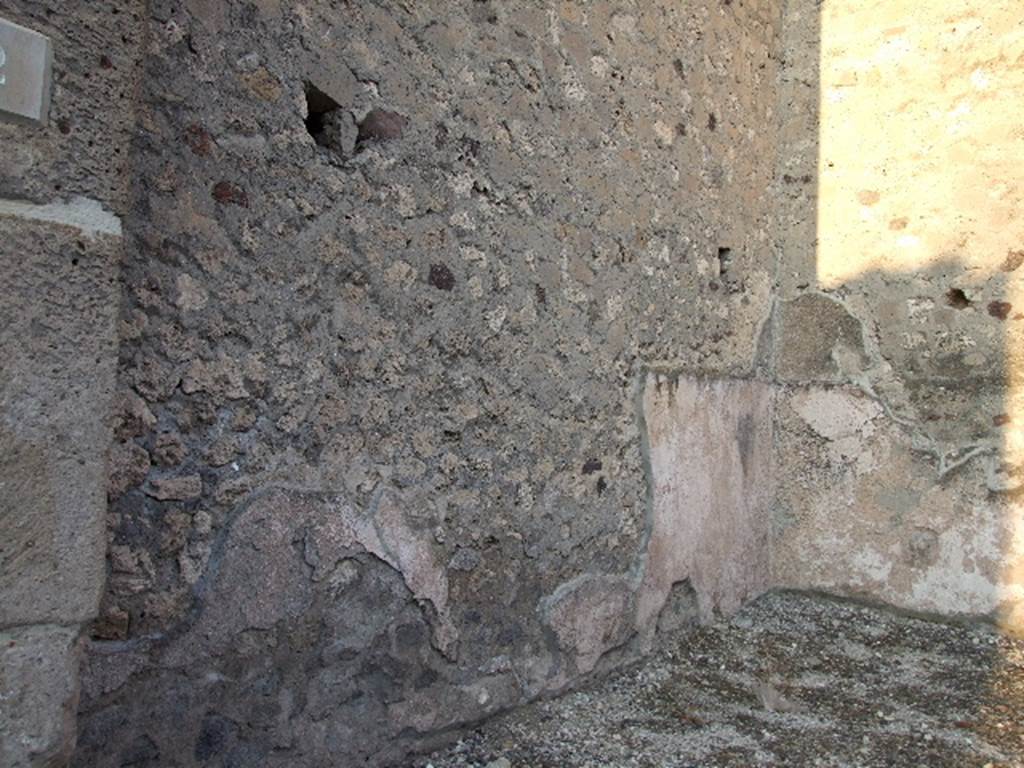
VI.2.2 Pompeii. December 2006. North wall of shop.
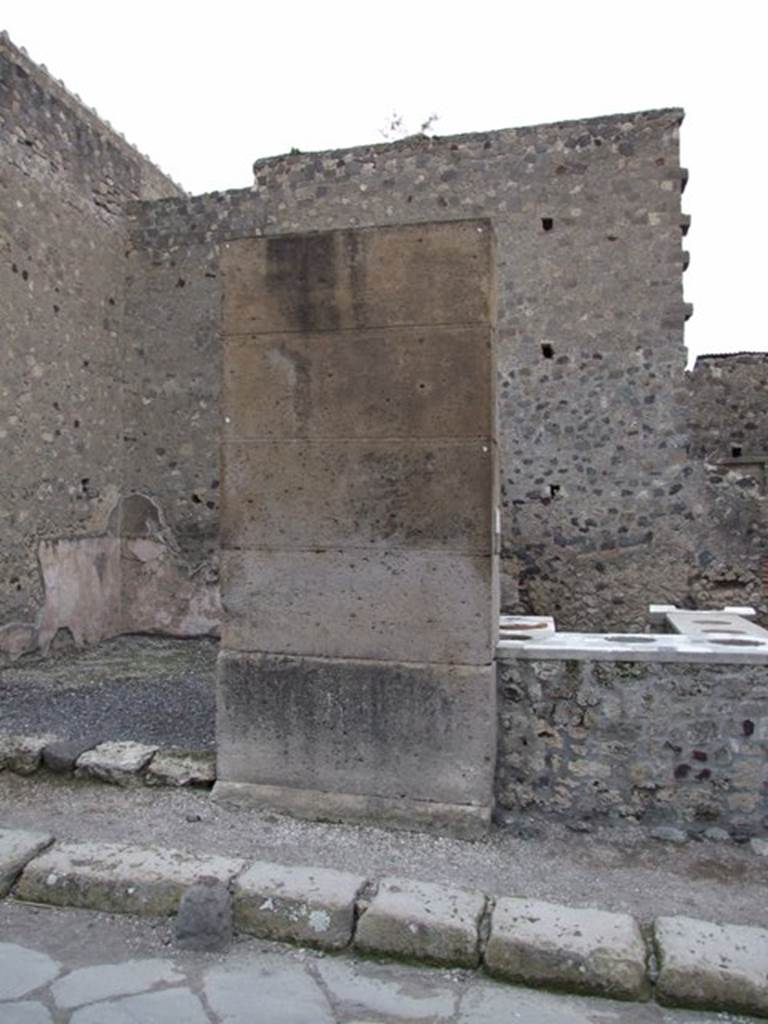
VI.2.2 Pompeii. Shop. December 2007. Pilaster on Via Consolare between VI.2.2 and VI.2.1. Possible site of Eituns?
According to Cooley, Oscan inscriptions (eituns) came to light when the plaster had peeled off the walls after excavation.
These were painted on the outer walls of houses near street corners.
An example has been found at VI.2.4.
These eituns were thought to relate to the military operations from the time of Sulla’s besiege of Pompeii.
See Cooley, A. and M.G.L., 2004. Pompeii: A Sourcebook. London: Routledge. (p. 19)
According to Antonini, the site of the eituns was to the left of doorway numbered VI.2.1, as above.
The one found here is known as Vetter 23. It read –
eksuk. amvianud.
eituns
anter. tiurri.
XII. ini. ver(u)
sarinu. puf.
faamat
m(a)r(a(hi)s).
aadiriis. v(iibieis)
See Antonini, R.
(2007): Contributi pompeiani II-IV,
in Quaderni di Studi Pompeiani, 1/2007, (p. 47)
According to Cooley, this translated as –
“Go by this route between the 12th tower and the Salt Gate, where Maras Atrius, son of Vibius, gives instructions”.
She added the note that the Salt Gate is the Oscan name for what is now known as the Herculaneum Gate.
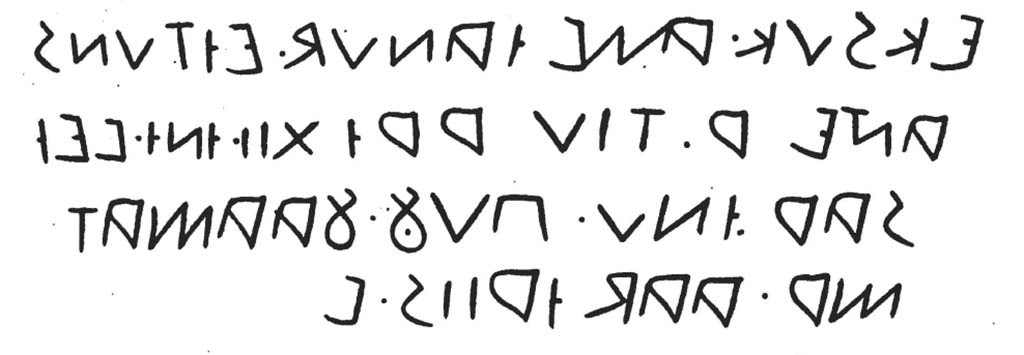
VI.2.2 Pompeii. c.1836. Drawing of remains
of red painted Oscan inscription known as eítuns on pillar between VI.2.3 and VI.2.2.
See De Jorio, A., 1836. Guida di Pompei.
Napoli: Fibrena, Tav. IV. no. 1.
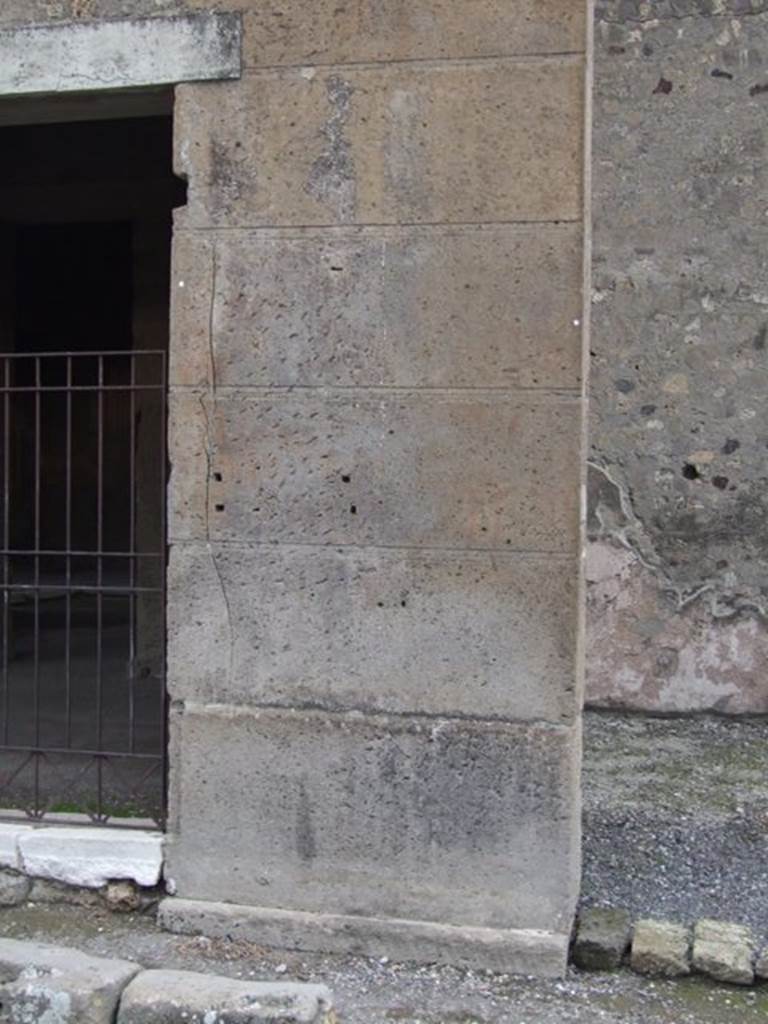
VI.2.2 Pompeii. December 2007. Pilaster on Via Consolare between VI.2.3 and VI.2.2, site of graffiti.
![VI.2.2 Pompeii. December 2007. Pilaster on Via Consolare between VI.2.3 and VI.2.2, site of graffiti.
According to Laidlaw –
“In 1841, Lepsius read C. SALLVS[TIVS] on the pier………….
At some time it must have been put under a protective glass cover which eventually fell off, leaving only the four holes for metal cramps that had attached the glass (a common method for protecting inscriptions and paintings on street facades).
The holes, still extant on the left side of the third tufa block above the sidewalk, form a neat rectangle on the pickmarked left side of the pillar, which must have once been plastered.”
See Laidlaw, A., and Stella M. S., 2014. The House of Sallust in Pompeii (VI.2.4): JRA 98. Portsmouth Rhode Island. (p.25).](6%2002%2002_files/image020.jpg)
VI.2.2 Pompeii.
December 2007. Pilaster on Via Consolare between VI.2.3 and VI.2.2, site of graffiti.
According to Laidlaw –
“In 1841, Lepsius read C. SALLVS[TIVS] on the pier………….
At some time, it must have been put under a protective glass cover which eventually fell off, leaving only the four holes for metal cramps that had attached the glass (a common method for protecting inscriptions and paintings on street facades).
The holes, still extant on the left side of the third tufa block above the sidewalk, form a neat rectangle on the pick marked left side of the pillar, which must have once been plastered.”
See Laidlaw, A., and Stella M. S., 2014. The House of Sallust in Pompeii (VI.2.4): JRA 98. Portsmouth Rhode Island. (p.25).