IV.4.g Pompeii. Street shrine? Excavated 1813.
All the doorways on the northern side of Via Nola, forming Regio IV, have been filled in as a wall to keep the earth bank back from the road.
It is very difficult to find the exact position of these doorways and link them to any site plan.
Our numbering is IV.4.a to IV.4.h, in a west to east direction based on the Hans Eschebach plan of 1969.
Corpus Topographicum Pompeianum (CTP IIIA) excludes IV.4.f as being a window, excludes the street altar and renumbers from east to west as a to f. (p.68-9)
Liselotte Eschebach has numbered these houses from IV.4.1 to IV.4.6 plus a street altar in a niche between IV.4.5 and IV.4.6.
See Eschebach, L., 1993. Gebäudeverzeichnis und Stadtplan der antiken Stadt Pompeji. Köln: Böhlau. (p.120)
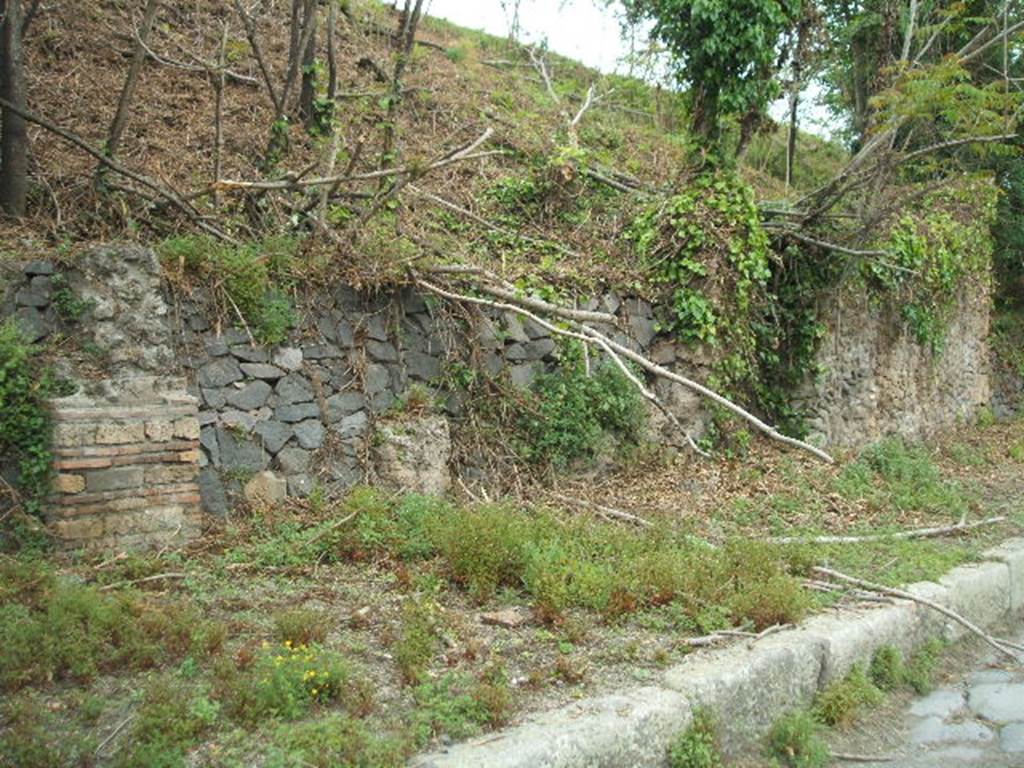
IV.4.e, IV.4.f, IV.4.g, IV.4.h, Pompeii. May 2005. Entrances.
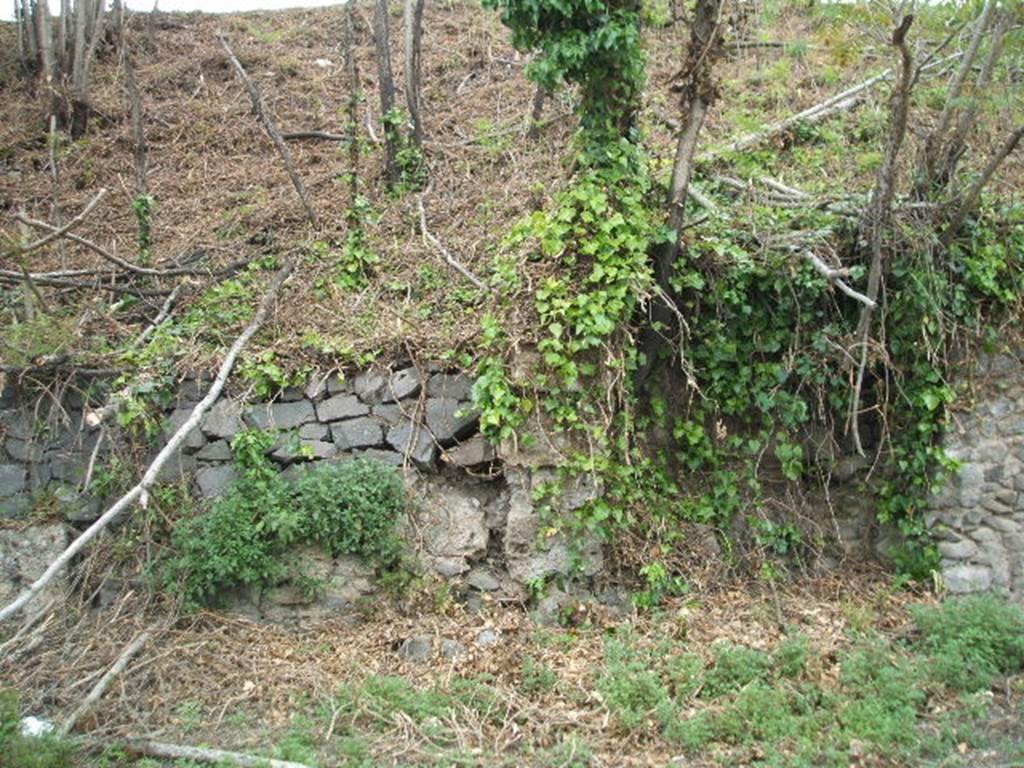
IV.4.f, (on left) and IV.4.g, (on right), Pompeii. May 2005.
According to Liselotte Eschebach between f and g there was a street shrine and niche, originally with a bench.
She suggested this may be the street shrine described by Fröhlich in F24.
Fröhlich in turn referred to a drawing in Gell and Gandy.
See Eschebach,
L., 1993. Gebäudeverzeichnis und
Stadtplan der antiken Stadt Pompeji. Köln: Böhlau. (p.120)
See Fröhlich, T., 1991. Lararien und Fassadenbilder in den Vesuvstädten. Mainz: von Zabern. (p315, F24)
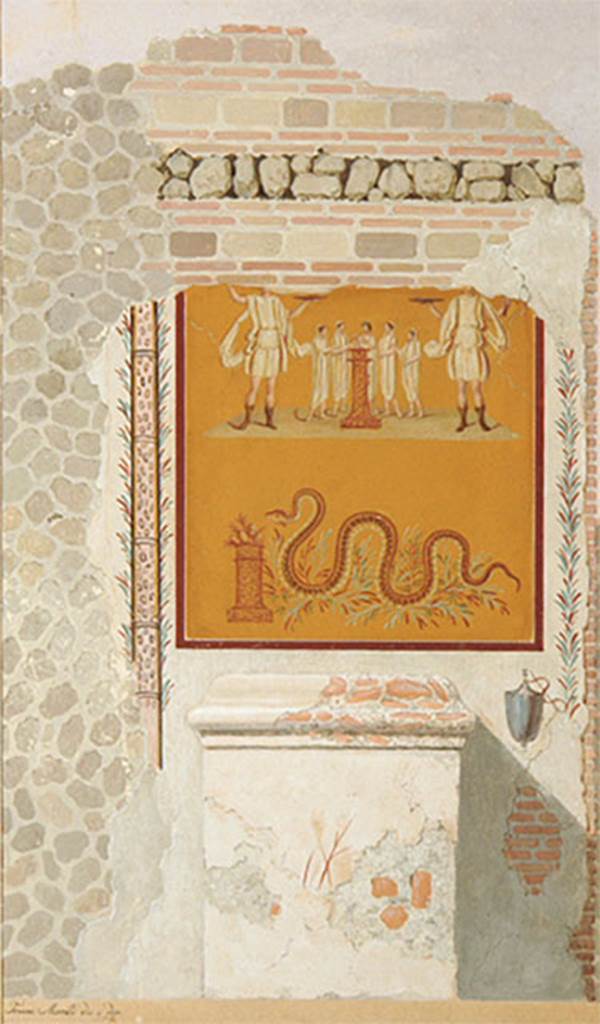
Below is a masonry altar above which is a painting.
In the middle is a round altar with five small figures in long white tunics.
The figure in the centre behind the altar is a tibicen.
On either side are pairs of Vicomagistri with right arms outstretched to the altar.
Two large Lares flank the scene, each with patera and rhyton.
In the lower zone of the painting is a serpent approaching from the left to an altar with eggs and fruit on it.
Now in Naples Archaeological Museum. Inventory number ADS 574.
See Fröhlich, T.,
1991. Lararien und Fassadenbilder
in den Vesuvstädten. Mainz: von Zabern. (p.315, F24)
Photo © ICCD. http://www.catalogo.beniculturali.it
Utilizzabili
alle condizioni della licenza Attribuzione - Non commerciale - Condividi
allo stesso modo 2.5 Italia (CC BY-NC-SA 2.5 IT)
![IV.4.g Pompeii. c.1819 sketch by W. Gell of street shrine and lararium found on the street of Nola, between IV.4.f and IV.4.g.
See Gell W & Gandy, J.P: Pompeii published 1819 [Dessins publiés dans l'ouvrage de Sir William Gell et John P. Gandy, Pompeiana: the topography, edifices and ornaments of Pompei, 1817-1819], p. 65, 110/158.
See book in Bibliothèque de l'Institut National d'Histoire de l'Art [France], collections Jacques Doucet Gell Dessins 1817-1819
Use Etalab Open Licence ou Etalab Licence Ouverte](4%2004%20g_files/image008.jpg)
IV.4.g Pompeii. c.1819 sketch by W. Gell of street shrine and lararium found on the street of Nola, between IV.4.f and IV.4.g.
See Gell W & Gandy, J.P: Pompeii published 1819 [Dessins publiés dans l'ouvrage de Sir William Gell et John P. Gandy, Pompeiana: the topography, edifices and ornaments of Pompei, 1817-1819], p. 65, 110/158.
See
book in Bibliothèque de l'Institut National d'Histoire de l'Art [France],
collections Jacques Doucet Gell Dessins 1817-1819
Use
Etalab Open Licence ou Etalab Licence Ouverte
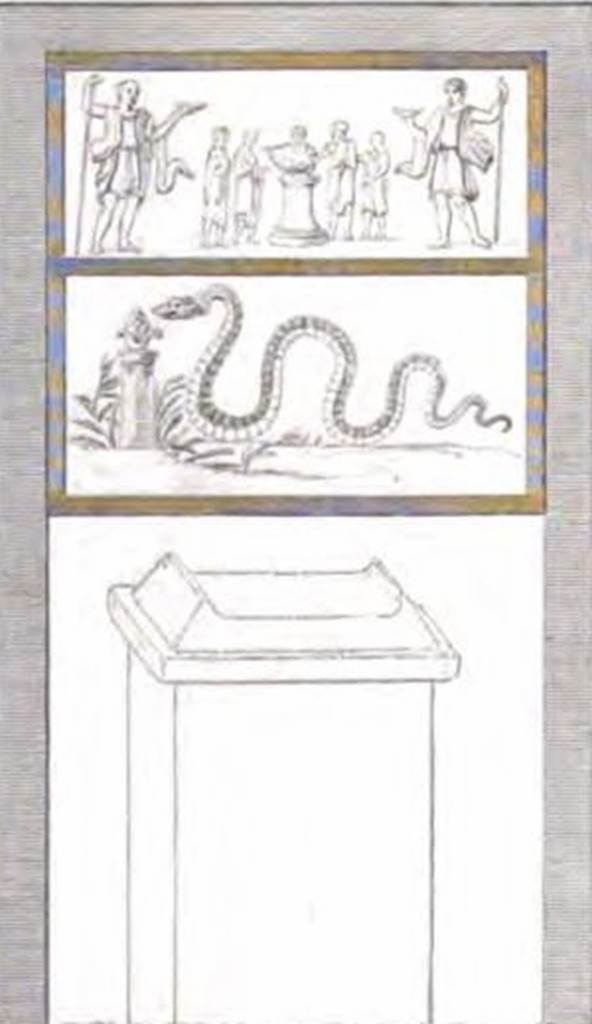
IV.4.g Pompeii. Drawing of the street shrine and Lararium painting found between IV.4.f and IV.4.g.
See Gell, W. and Gandy, J., 1852. Pompeiana: Third Edition. London: Bohn. (p. 97, Pl. 18).
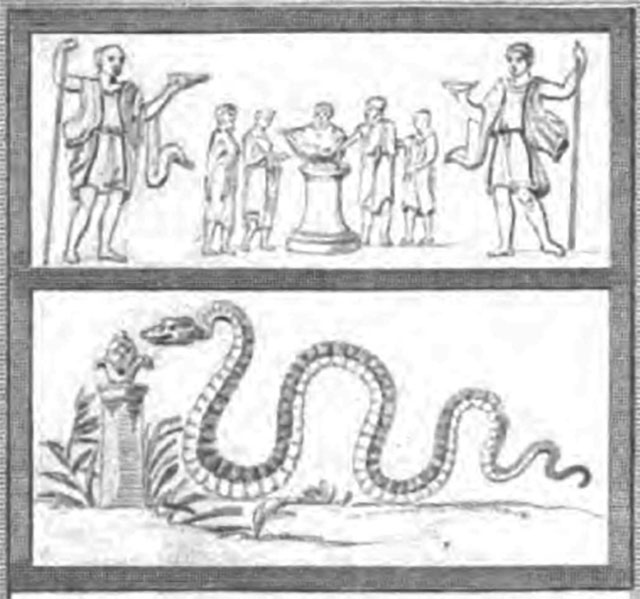
IV.4.g Pompeii. Drawing of the painting found above a street shrine between IV.4.f and IV.4.g.
In the middle was a round altar with five small figures in long white tunics.
In the centre behind the altar is a tibicen.
On either side are pairs of Vicomagistri with right arms outstretched to the altar.
Two large Lares flank the scene.
In the lower zone was a serpent approaching from the left to an altar with eggs and fruit on it.
See Fröhlich, T.,
1991. Lararien und Fassadenbilder in den
Vesuvstädten. Mainz: von Zabern. (p.315, F24)
See Gell, W. and Gandy, J., 1852. Pompeiana: Third Edition. London: Bohn. (p. 97, Pl. 18).
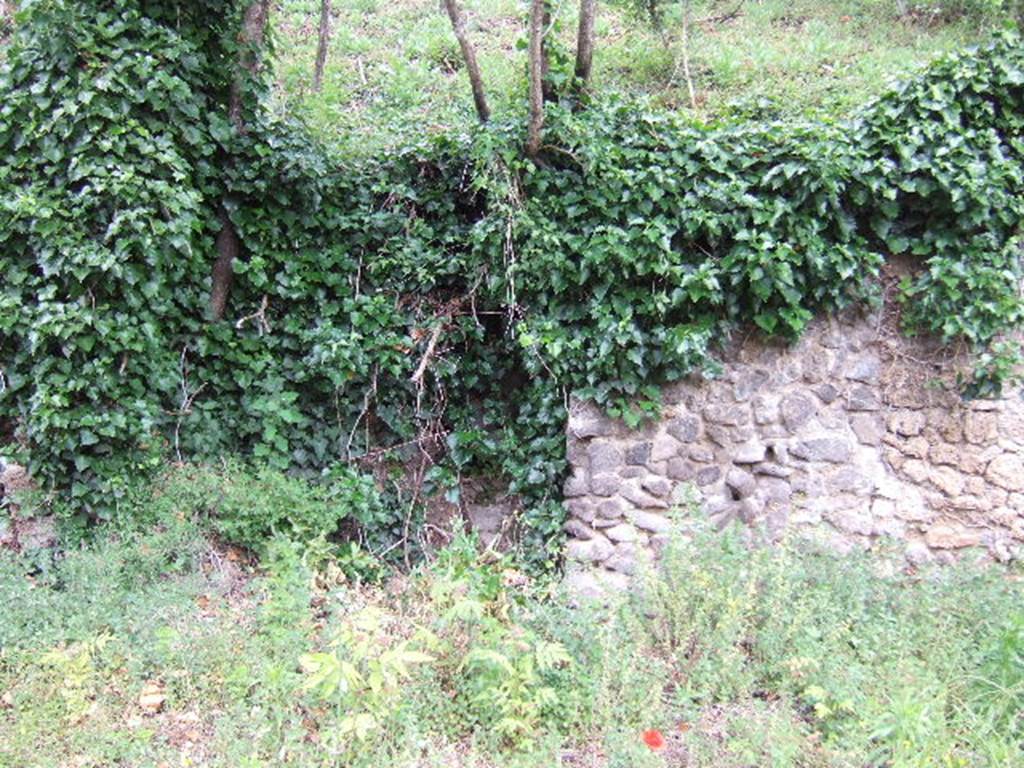
IV.4.g, Pompeii. May 2006. Site of street shrine.
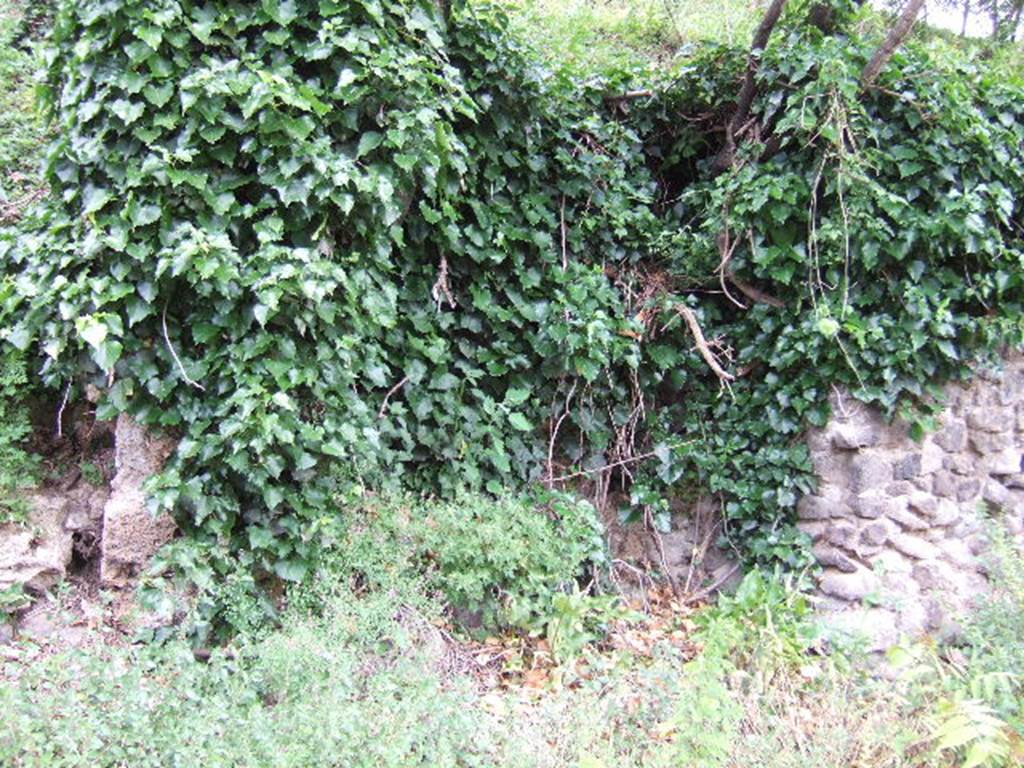
IV.4.g, Pompeii. May 2006. Site of street shrine.
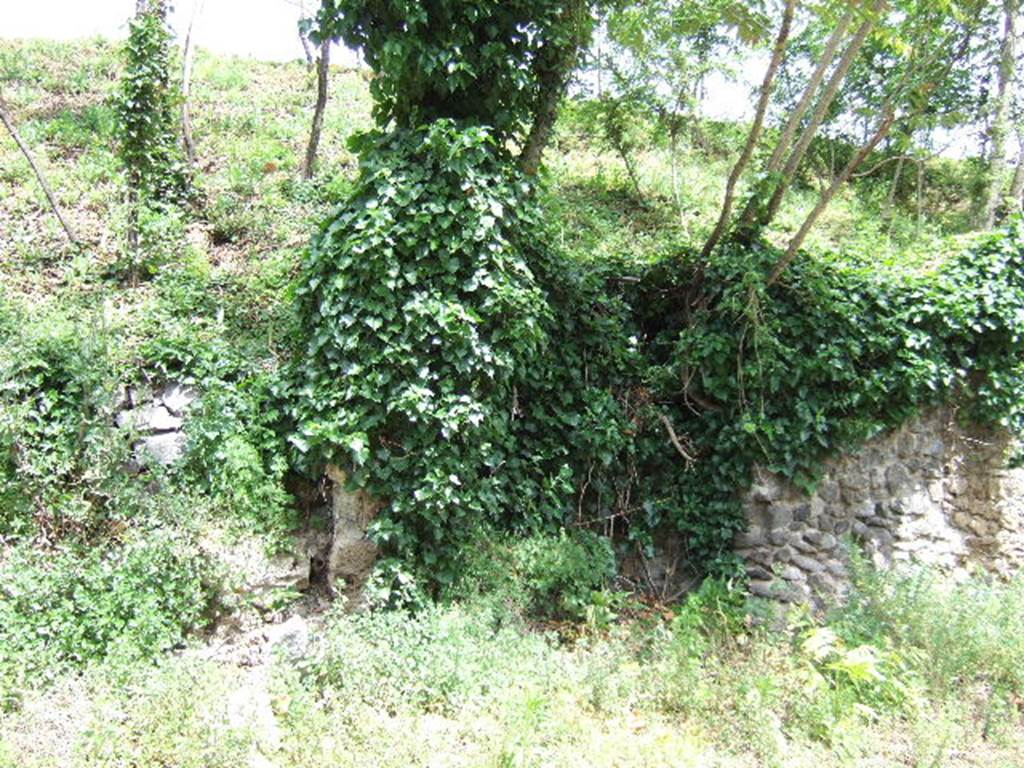
IV.4.g, Pompeii. May 2006. Site of street shrine.