III.6.2 Pompeii. Domus of M. Satrius. Excavated 1935.
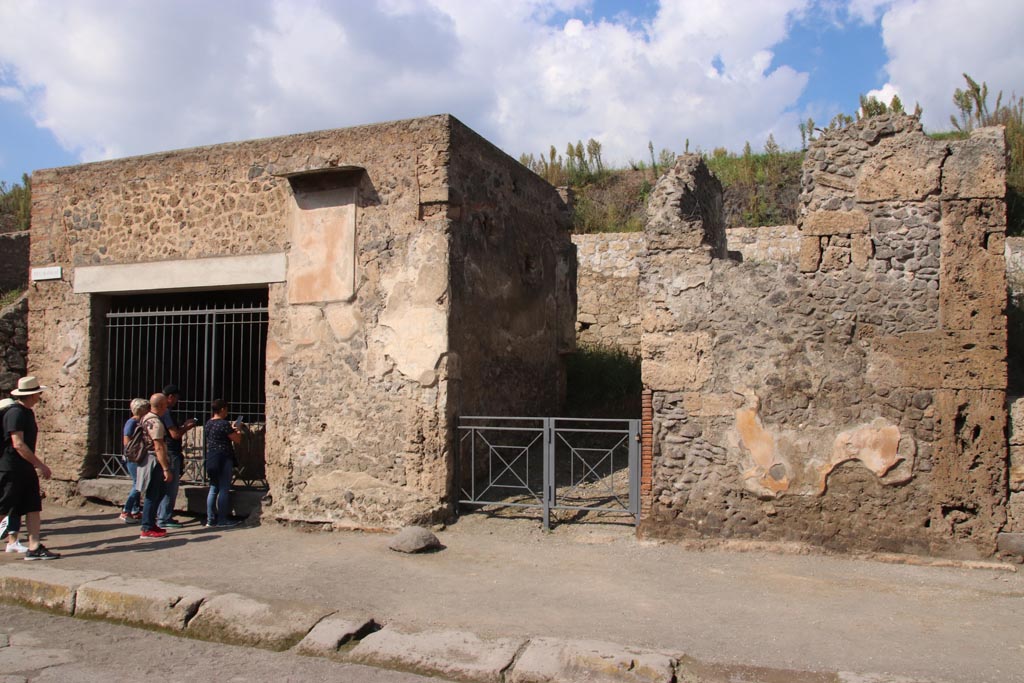
III.6.2 Pompeii, in centre. October 2022. Looking north to entrance doorways with III.6.1, on left. Photo courtesy of Klaus Heese
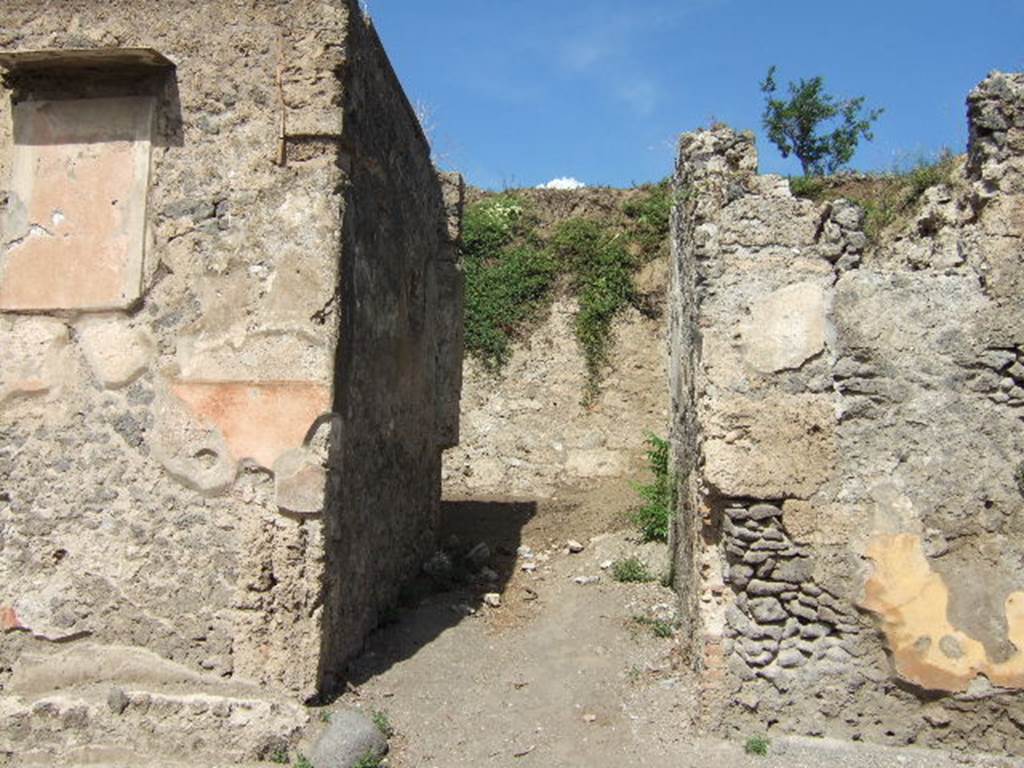
III.6.2 Pompeii. September 2005. Entrance doorway.
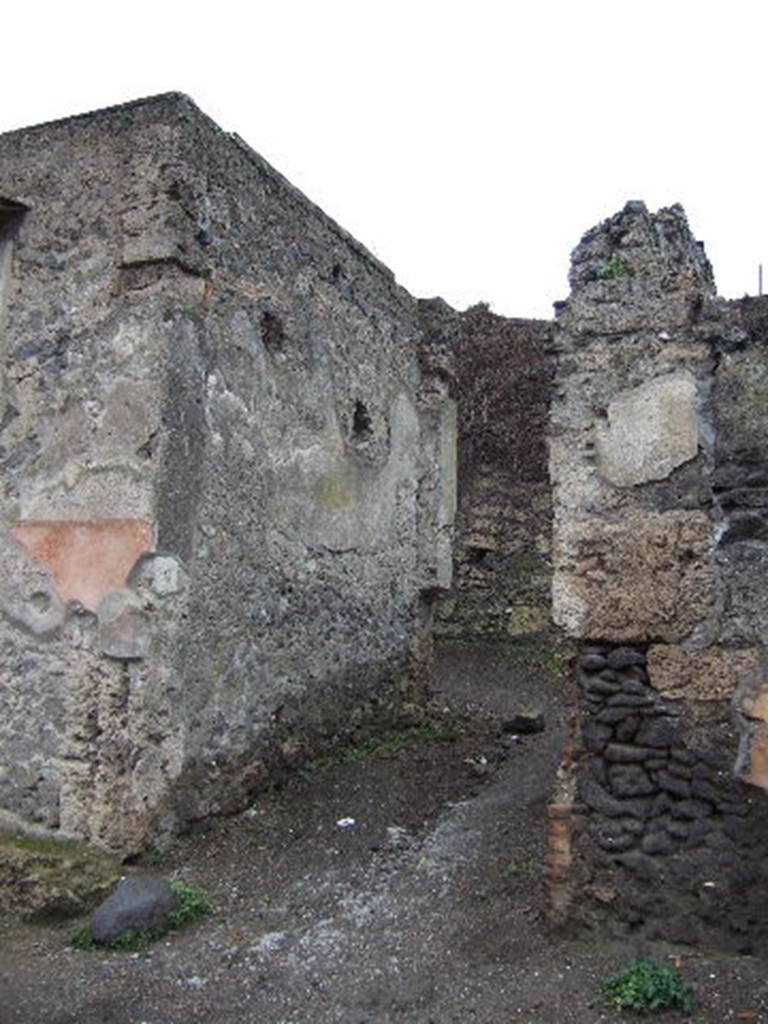
III.6.2 Pompeii. December 2005. Entrance, looking north along west side of entrance corridor.
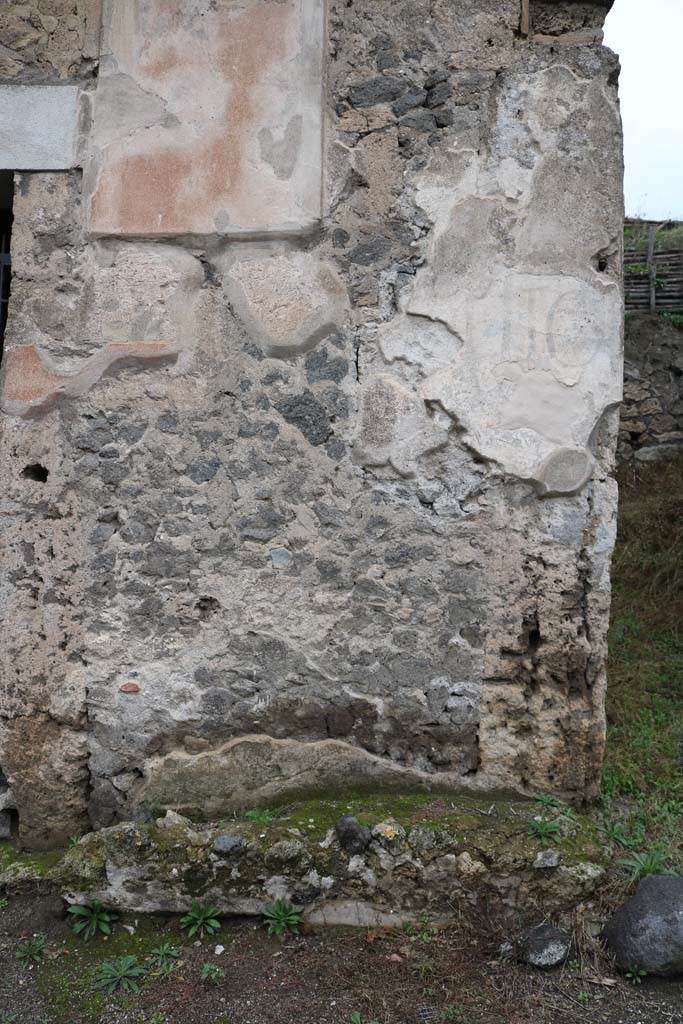
III.6.2 and III.6.1 Pompeii. December 2018.
Front façade between
two entrances. Photo
courtesy of Aude Durand.
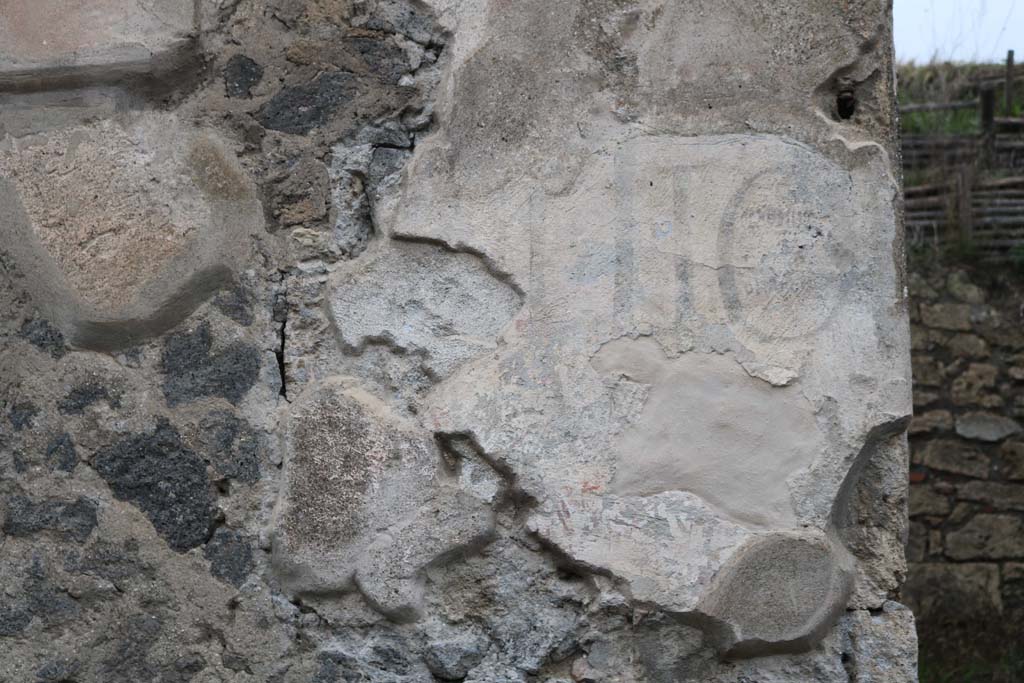
III.6.2 and III.6.1 Pompeii. December 2018.
Front façade, east
of III.6.1 and west of III.6.2, detail of painted inscription. Photo courtesy of Aude Durand.
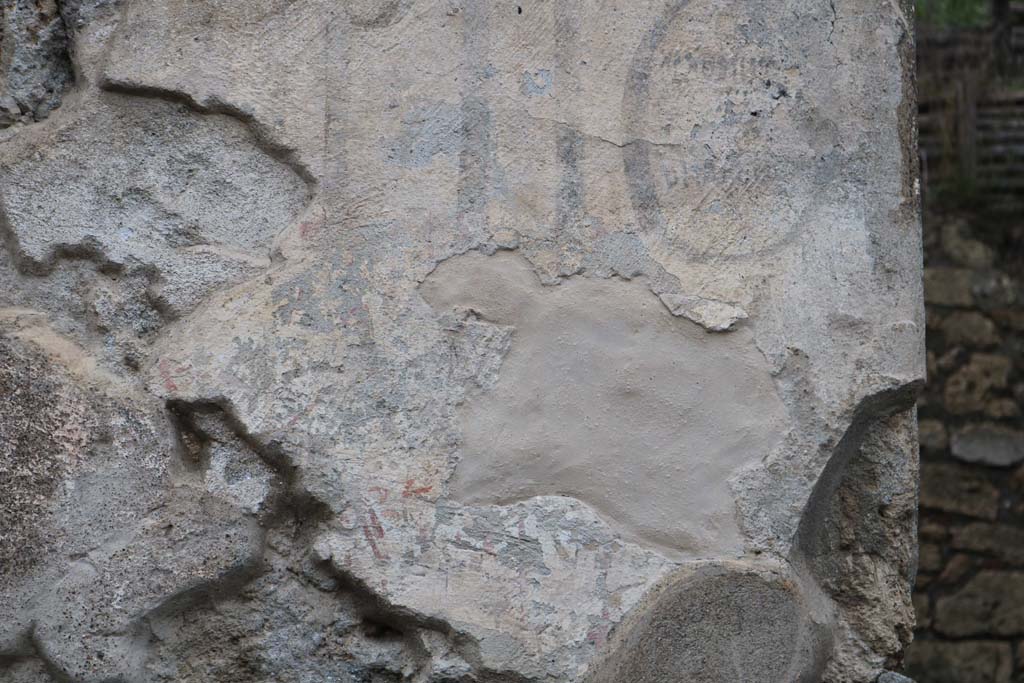
III.6.2 and III.6.1 Pompeii. December 2018.
Detail of remaining
painted inscription on front façade between two entrances. Photo courtesy of Aude Durand.
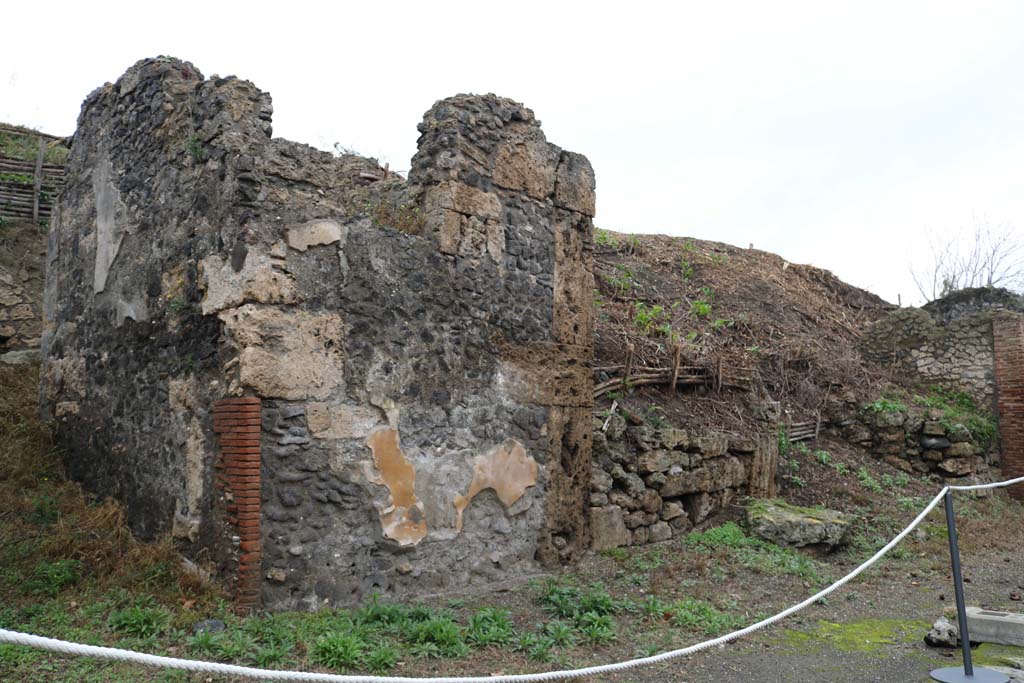
III.6.2 Pompeii on
left. December 2018. Entrance doorway and
east wall of entrance corridor, on left. Photo courtesy of Aude Durand.
![III.6.2 Pompeii. December 2005. Remains of painted plaster. On this wall CIL IV 7995, 7757 and 7758 were found. According to Garcia y Garcia, the bomb that fell to the north of this entrance on the unexcavated land did not cause a lot of damage there. However the beautiful inscriptions to the right of the entrance here were completely lost. See Garcia y Garcia, L., 2006. Danni di guerra a Pompei. Rome: L’Erma di Bretschneider. (p.60-61) See Varone, A. and Stefani, G., 2009. Titulorum Pictorum Pompeianorum, Rome: L’erma di Bretschneider, (p.282-3)
According to Epigraphik-Datenbank Clauss/Slaby (See www.manfredclauss.de), the graffiti read as –
D(ecimi) Lucreti Satri
Valentis flaminis [[Neronis]] Caesaris Augusti f(ilii) perpetui glad(iatorum) par(ia) XX et
D(ecimi) Lucreti Valentis fili(i) [glad(iatorum)] par(ia) X
ex a(nte) d(iem) V K(alendam) April(es) venation et vela er[unt] [CIL IV7995] The graffiti was in black and red, from around AD 50-68, the name of Nero [[Neronis]] was plastered over, perhaps after he committed suicide in AD 68. This translates as - 20 pairs of gladiators of Decimus Lucretius Satrius Valens, perpetual priest of ((Nero)) Caesar, son of Augustus, and 10 pairs of (gladiators) of Decimus Lucretius Valens, his son, on 28 March. There will be a hunt and awnings. See Cooley, A. and M.G.L., 2004. Pompeii : A Sourcebook. London : Routledge. (p.52)
D(ecimum) Luc(retium) V(alentem) v(irum) b(onum)
/
d(uum)v(irum) d(ignum) r(ei) p(ublicae)
vicini faciunt [CIL IV 7757]
Paquium et Caprasium d(uumviros) i(ure) d(icundo) o(ro) v(os) f(aciatis) [CIL IV 7758]](3%2006%2002_files/image013.jpg)
III.6.2 Pompeii. December 2005.
Remains of painted plaster on east side of entrance doorway. On this wall CIL IV 7995, 7757 and 7758 were found.
According to Garcia y Garcia, the bomb that fell to the north of this entrance on the unexcavated land did not cause a lot of damage there.
However the beautiful inscriptions to the right of the entrance here were completely lost.
See Garcia y
Garcia, L., 2006. Danni di guerra a Pompei. Rome: L’Erma di Bretschneider. (p.60-61)
See Varone, A. and Stefani, G., 2009. Titulorum Pictorum
Pompeianorum, Rome:
L’erma di Bretschneider, (p.282-3)
According to Epigraphik-Datenbank Clauss/Slaby (See www.manfredclauss.de), the graffiti read as –
D(ecimi) Lucreti Satri
Valentis flaminis [[Neronis]] Caesaris Augusti f(ilii) perpetui glad(iatorum) par(ia) XX et
D(ecimi) Lucreti Valentis fili(i) [glad(iatorum)] par(ia) X
ex a(nte) d(iem)
V K(alendam) April(es) venation et vela
er[unt]
[CIL IV7995]
The graffiti was in black and red, from around AD 50-68, the name of
Nero [[Neronis]] was plastered over, perhaps after he
committed suicide in AD 68.
This translates as -
20 pairs of gladiators of Decimus Lucretius Satrius Valens, perpetual priest of ((Nero)) Caesar, son of Augustus, and 10 pairs of (gladiators) of Decimus Lucretius Valens, his son, on 28 March. There will be a hunt and awnings.
See Cooley, A. and M.G.L., 2004. Pompeii: A Sourcebook. London: Routledge. (p.52)
D(ecimum) Luc(retium) V(alentem) v(irum) b(onum)
/
d(uum)v(irum)
d(ignum) r(ei) p(ublicae)
vicini faciunt [CIL IV 7757]
Paquium et Caprasium d(uumviros) i(ure) d(icundo)
o(ro) v(os) f(aciatis)
[CIL IV 7758]
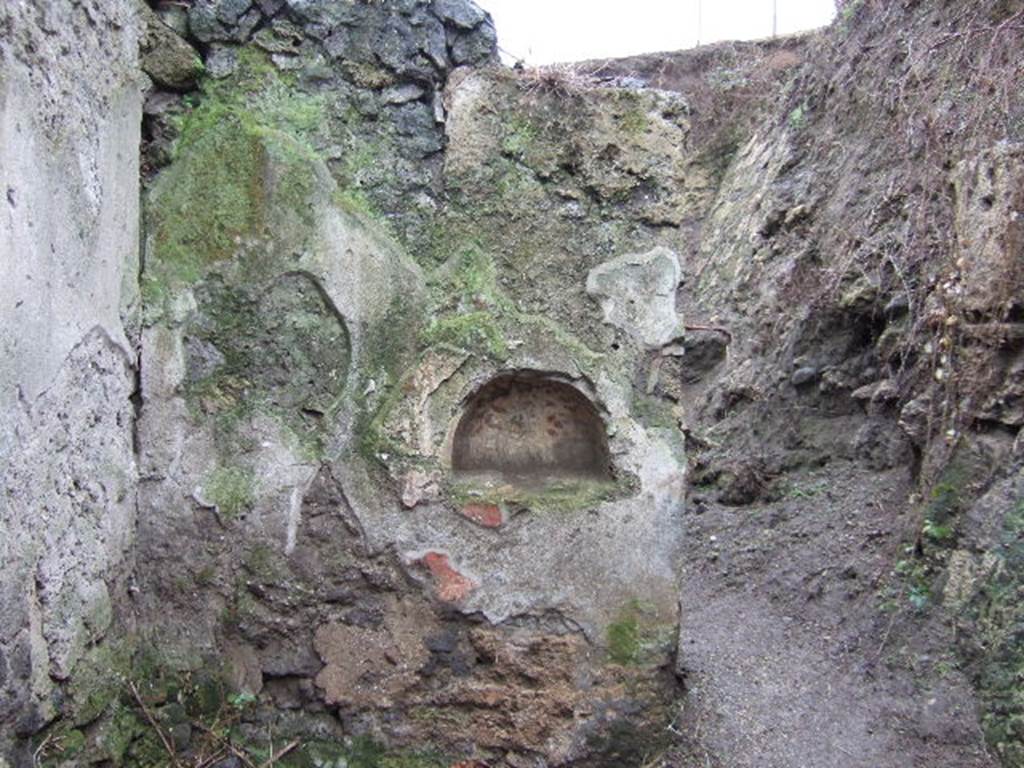
III.6.2 Pompeii. December 2005. Niche.