III.6.1 Pompeii. Caupona Pherusae.
Excavated 1935. Bombed in 1943.
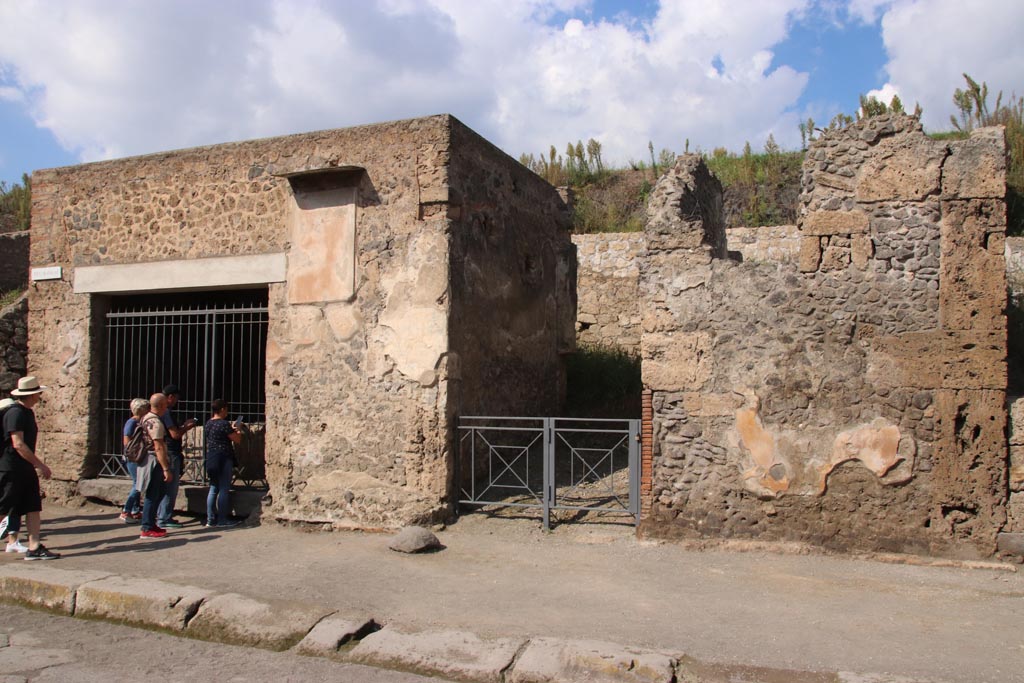
III.6.1, on left, Pompeii. October 2022. Looking north to entrance doorways with III.6.2, in centre. Photo courtesy of Klaus Heese
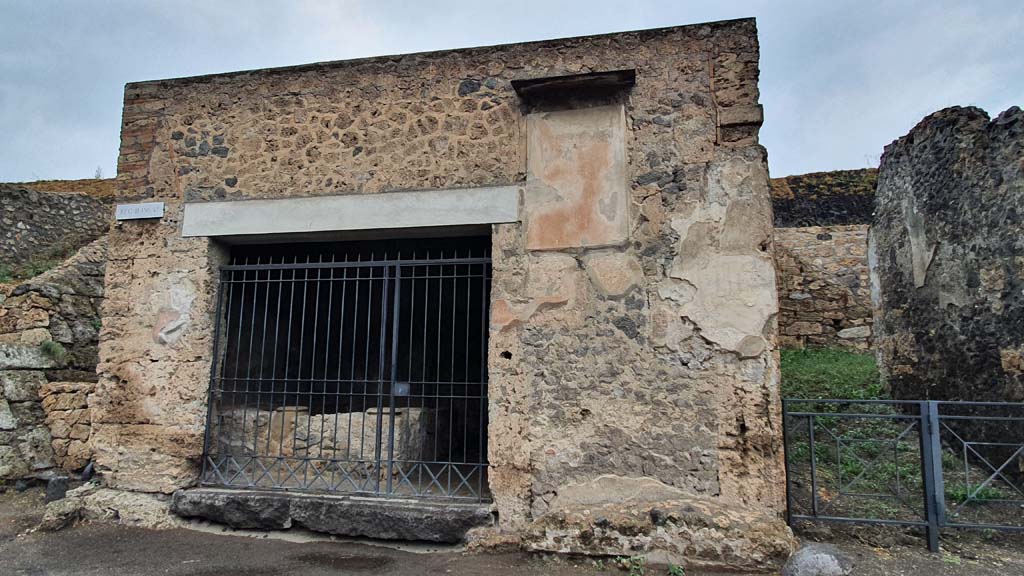
III.6.1, Pompeii. May 2024. Looking towards entrance doorway. Photo courtesy of Klaus Heese.
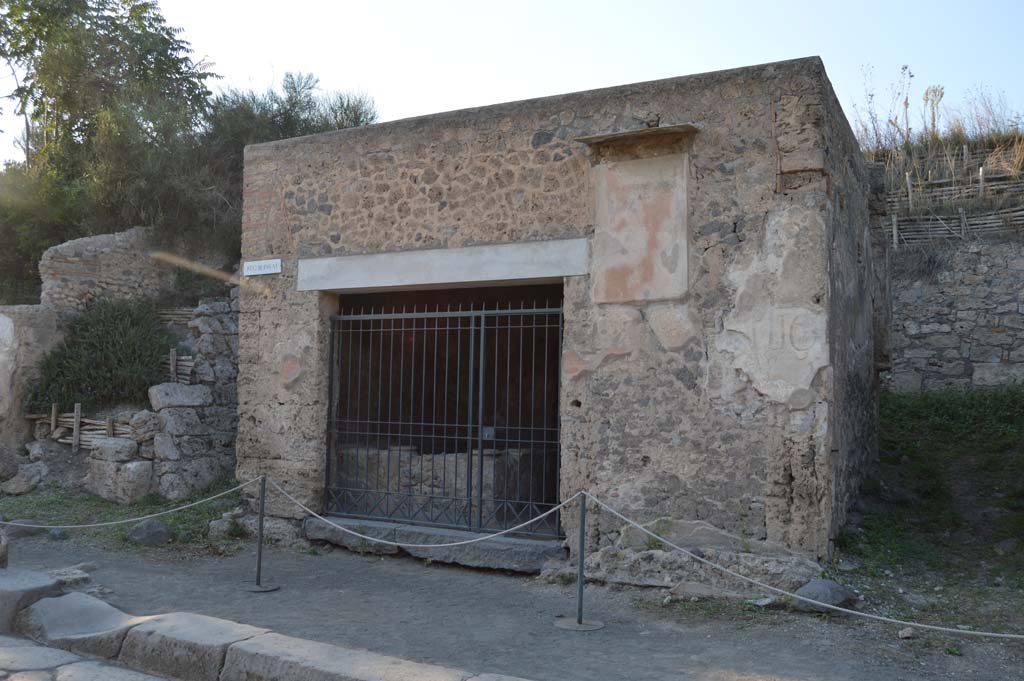
III.6.1 Pompeii. July 2021. Looking towards entrance doorway on north side of Via dell’Abbondanza, with III.6.2, on right.
Foto Annette Haug, ERC Grant 681269 DÉCOR.

III.6.1 Pompeii. October 2017. Looking north-west towards entrance doorway, and unexcavated roadway on its west side, on left.
Foto Taylor
Lauritsen, ERC Grant 681269 DÉCOR.
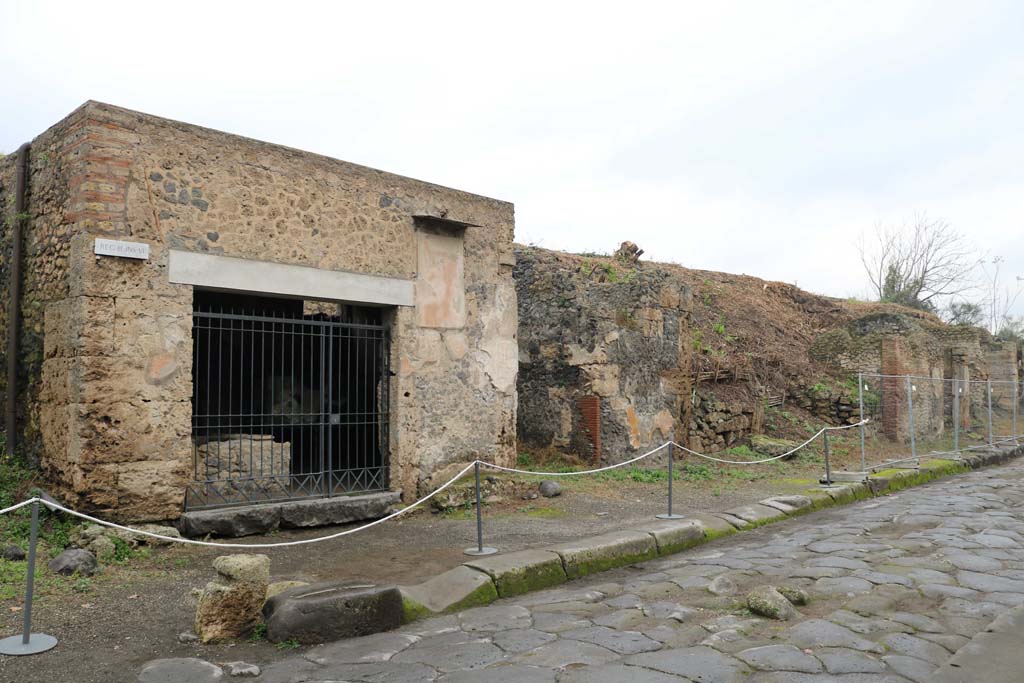
III.5 Pompeii, on left. December 2004. Unexcavated roadway looking north. III.6.1, on right.
According to CTP, this insula was badly damaged during the aerial bombing of 1943, and this greatly damaged the inscriptions on the south and west wall.
Two bombs fell on the roadway in the photo above, one landed at this junction with the Via dell’Abbondanza, the other landed slightly to the north.
From the explosion of the nearest bomb, the above was seriously damaged and today retains very little of the character of its pre-war days.
See Van der Poel, H. B., 1986. Corpus Topographicum Pompeianum, Part IIIA. Austin: University of Texas. (p.64)
According to Garcia y Garcia, because of the bombing all the decoration and the numerous inscriptions to the left and right of the entrance, on the south and west walls were lost.
See Garcia y
Garcia, L., 2006. Danni di guerra a Pompei. Rome: L’Erma di Bretschneider. (p.60).
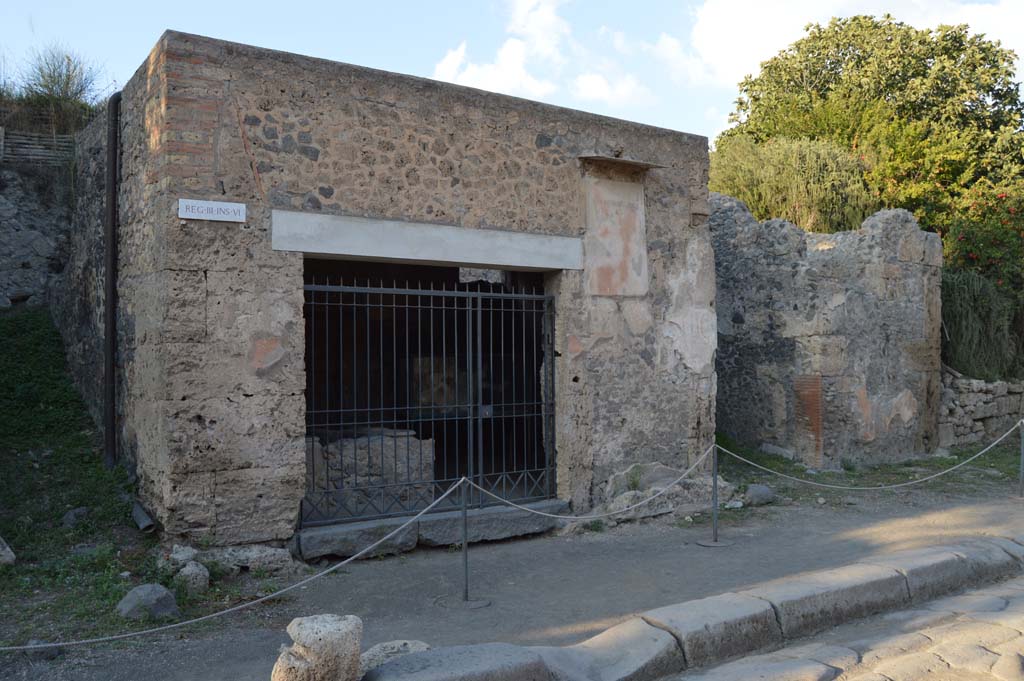
III.6.1 Pompeii, on left. December
2018. Looking east along insula III.6 towards III.6.6, on right. Photo courtesy of Aude Durand.
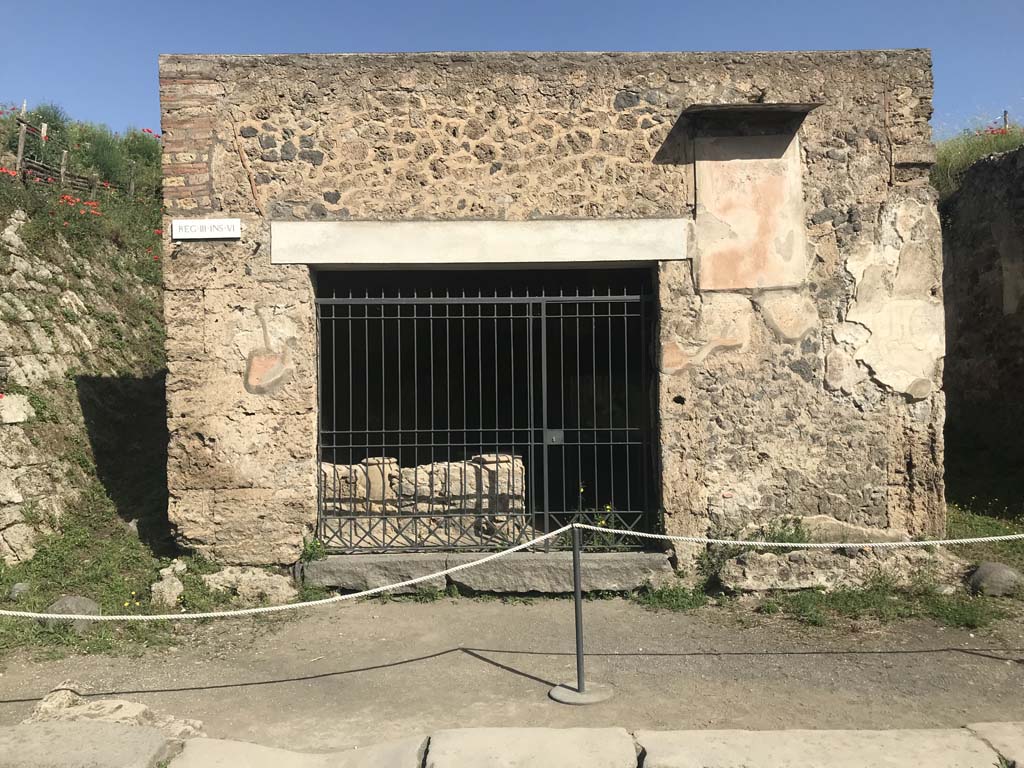
III.6.1 Pompeii. October 2017. Looking towards entrance doorway on north side of Via dell’Abbondanza, looking north-east.
Foto Taylor Lauritsen, ERC Grant 681269 DÉCOR.
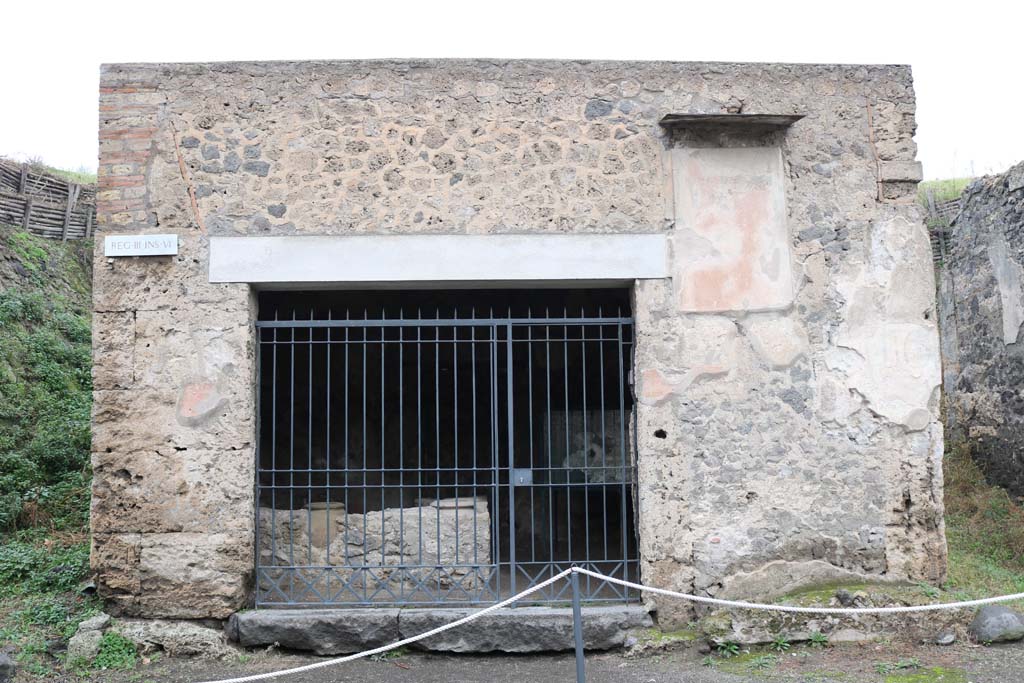
III.6.1 Pompeii. April 2019. Entrance doorway on north side of Via dell’Abbondanza. Photo courtesy of Rick Bauer.
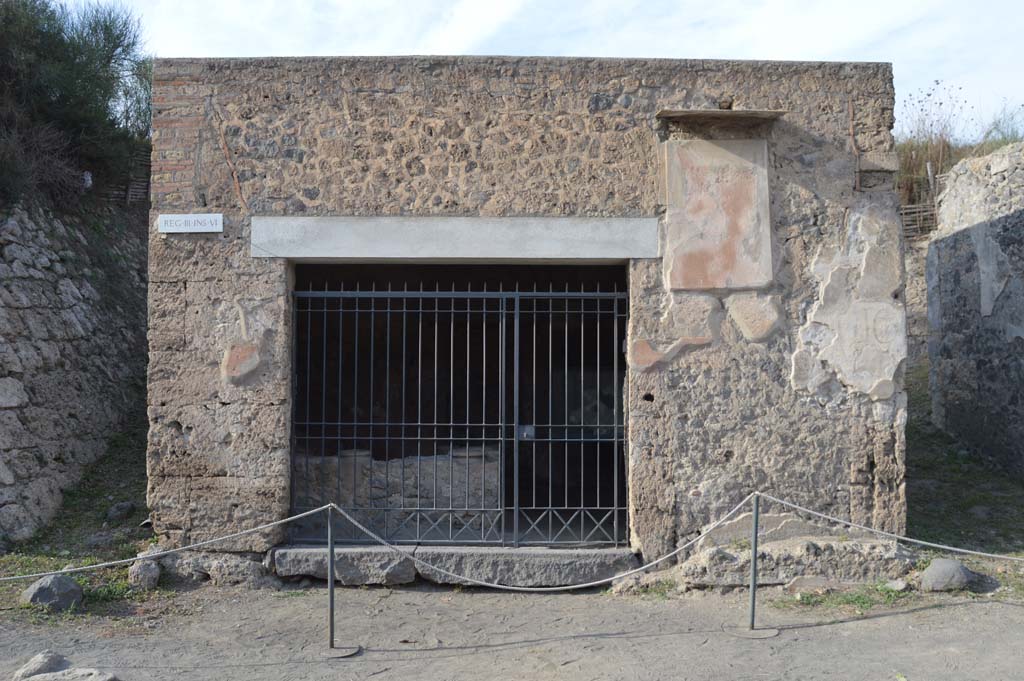
III.6.1 Pompeii. December 2018.
Looking towards entrance doorway on north side of Via
dell’Abbondanza. Photo courtesy of Aude Durand.

III.6.1 Pompeii. October 2017. Looking north to entrance doorway.
Foto Taylor
Lauritsen, ERC Grant 681269 DÉCOR.
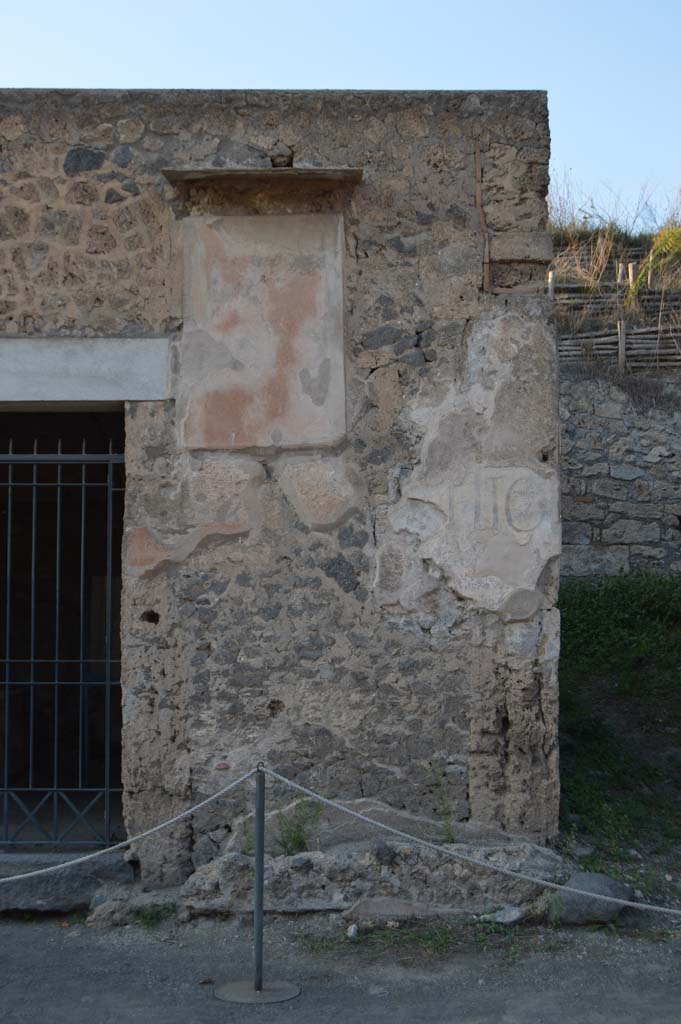
III.6.1 Pompeii. July 2011.
Entrance doorway on north side of Via dell’Abbondanza. Photo courtesy of Rick Bauer.
III.6.1 Pompeii. October 2017.
Front façade on east (right) side of doorway with remains of Venus Pompeiana painting.
Foto Taylor
Lauritsen, ERC Grant 681269 DÉCOR.

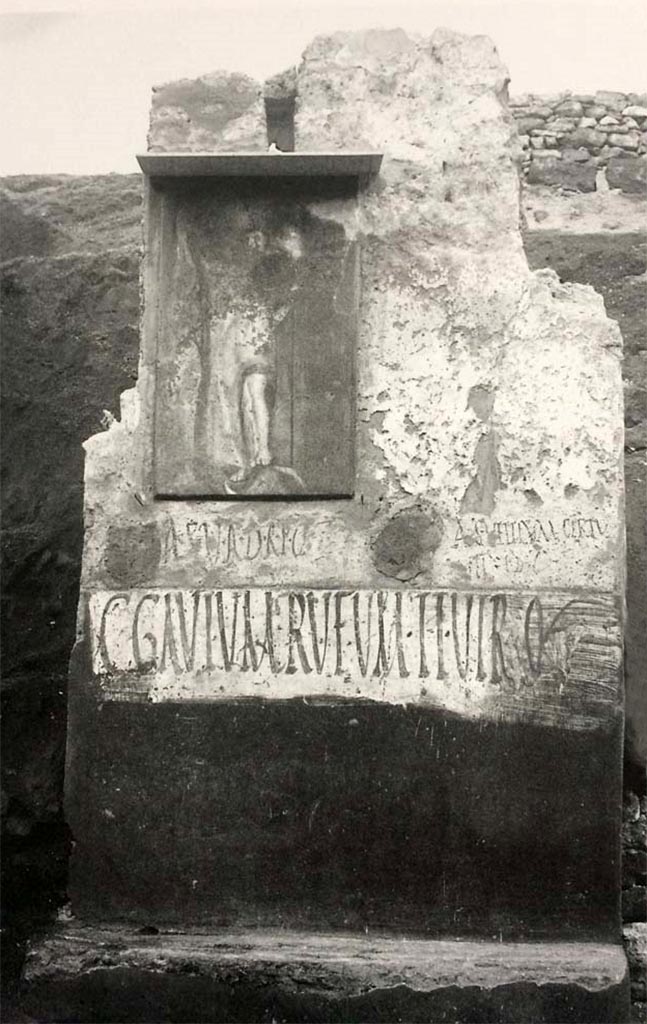
III.6.1 Pompeii. Undated photograph.
Front façade on east (right) side of doorway with painting of Venus Pompeiana.
Foto Taylor Lauritsen, ERC Grant 681269 DÉCOR.
According to Varone and Stefani, to the west (left) of the entrance would have been CIL IV 7747, 7748, 7749.
On the east (right) of the entrance can still be seen the remains of a beautiful wall painting of Venus Pompeiana, described by Della Corte.
Also there would have been many graffiti, between III.6.1 and III.6.2, CIL IV 7750, 7751, 7752, 7753.
See Varone, A. and Stefani, G., 2009. Titulorum Pictorum Pompeianorum, Rome: L’erma di Bretschneider, (p.279-282 with photos)
See Della Corte, M., 1965. Case ed Abitanti di Pompei. Napoli: Fausto Fiorentino. (p.382)
According to Epigraphik-Datenbank Clauss/Slaby (See www.manfredclauss.de), these read as –
Cn(aeum) Helvium
Sabi[num]
aed(ilem) o(ro)
v(os) f(aciatis) Urbulaneses
rog(ant) [CIL IV 7747]
This translates as “The Urbulanenses ask for Cn. Helvius Sabinus as aediles”
See Cooley, A. and M.G.L., 2004. Pompeii: A Sourcebook. London: Routledge. (p.123)
A(ulum) S(uettium)
V(erum) a(edilem) d(ignum)
r(ei) p(ublicae) o(ro)
v(os) f(aciatis) [CIL IV 7748]
Popidium
/
Secundum
aed(ilem) Pherusa
rog(at) [CIL IV 7749]
[Val]entem
/
[Tre]bium
aed(ilem) d(ignum)
r(ei) p(ublicae) [CIL IV 7750]
A(ulum) S(uettium) V(erum)
a(edilem) d(ignum) r(ei)
p(ublicae) o(ro) v(os)
f(aciatis) [CIL IV 7751]
A(ulum) Suettium Certu[m]
IIv(irum) i(ure)
d(icundo) o(ro) v(os)
f(aciatis) [CIL IV 7752]
C(aium) Gavium
Rufum IIvir(um) o(ro)
v(os) f(aciatis) [CIL IV 7753]
According to Cooley, also found here was -
Sa]binum
[iuve]nem
prob[um] [CIL IV 7754]
This translates as - Helvius Sabinus an honest young man.
See Cooley, A. and M.G.L., 2004. Pompeii: A Sourcebook. London: Routledge. (p.120)
Also found on the east (right) of the entrance doorway, were many graffiti, perhaps written by a gladiator’s admirers or friends –
Crescens
insigniarius
Campanus su(i)s
salute(m) [CIL IV 8915a]
Cr(escens) [CIL IV 8916a]
Crese(n)s
puellar{i}um dominus [CIL IV 8916b]
This last translates as –
Crescens is master of the girls. (CIL IV 8916b)
See Berry, J., 2007. The Complete Pompeii. London, Thames & Hudson, (p.103).
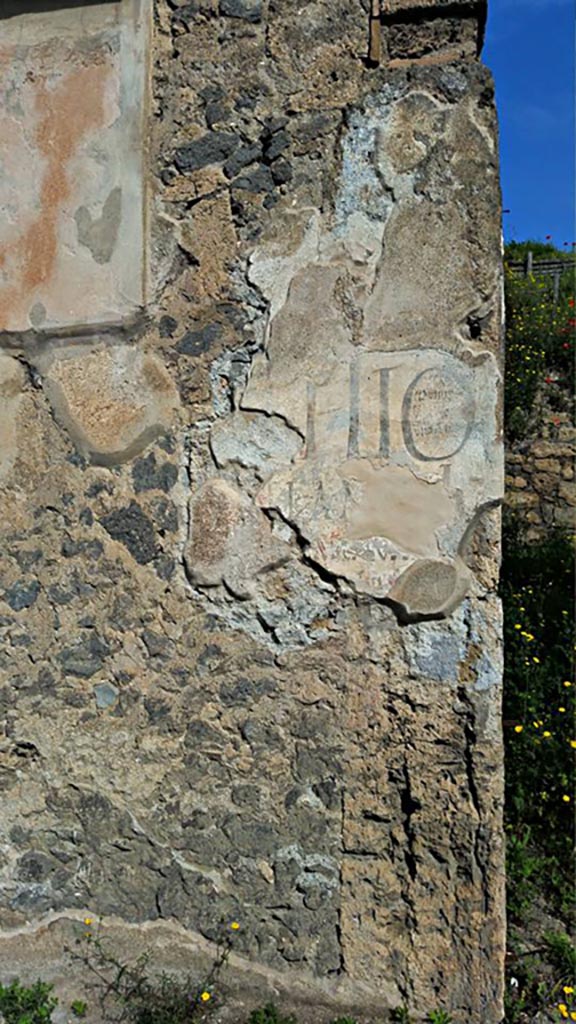
III.6.1 and III.6.2 Pompeii. December 2018.
Front façade between
two entrances. Photo
courtesy of Aude Durand.
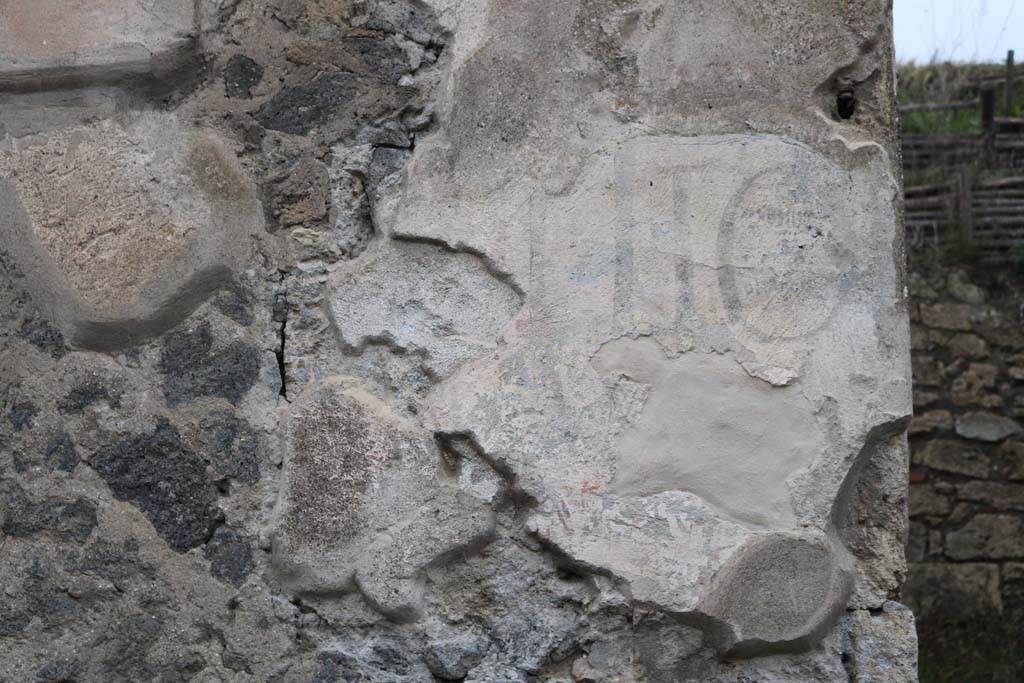
III.6.1 Pompeii. 2016/2017.
East end of front
façade between two entrances. Photo courtesy of Giuseppe Ciaramella.
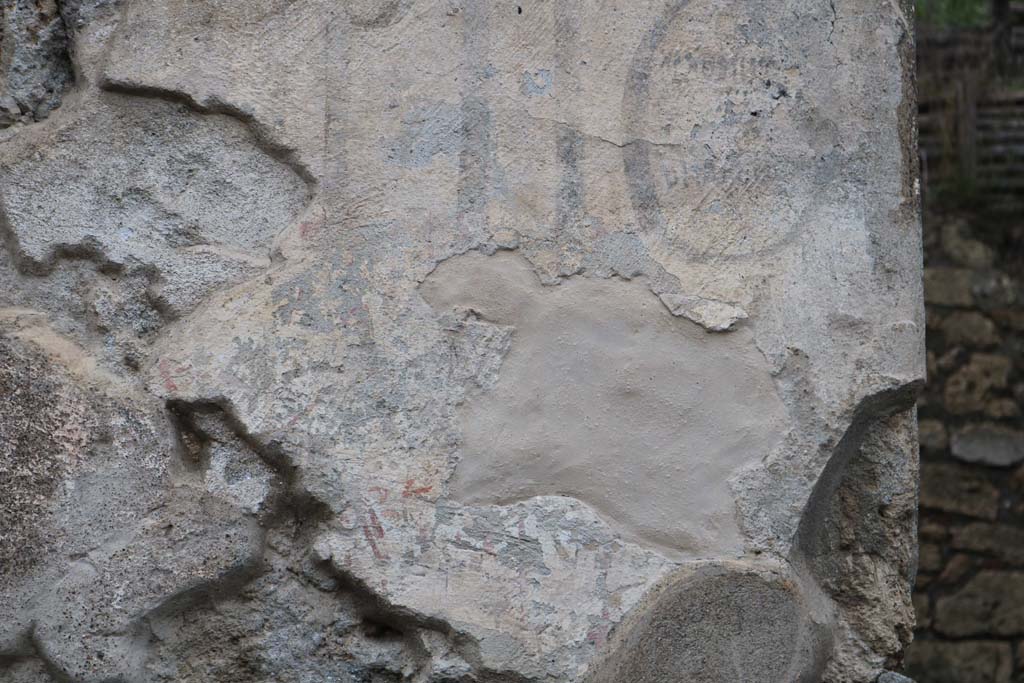
III.6.1 and III.6.2 Pompeii. December 2018.
Front façade, east
of III.6.1 and west of III.6.2, detail of painted inscription. Photo courtesy of Aude Durand.
III.6.1 and III.6.2 Pompeii. December 2018.
Detail of remaining
painted inscription on front façade between two entrances. Photo courtesy of Aude Durand.
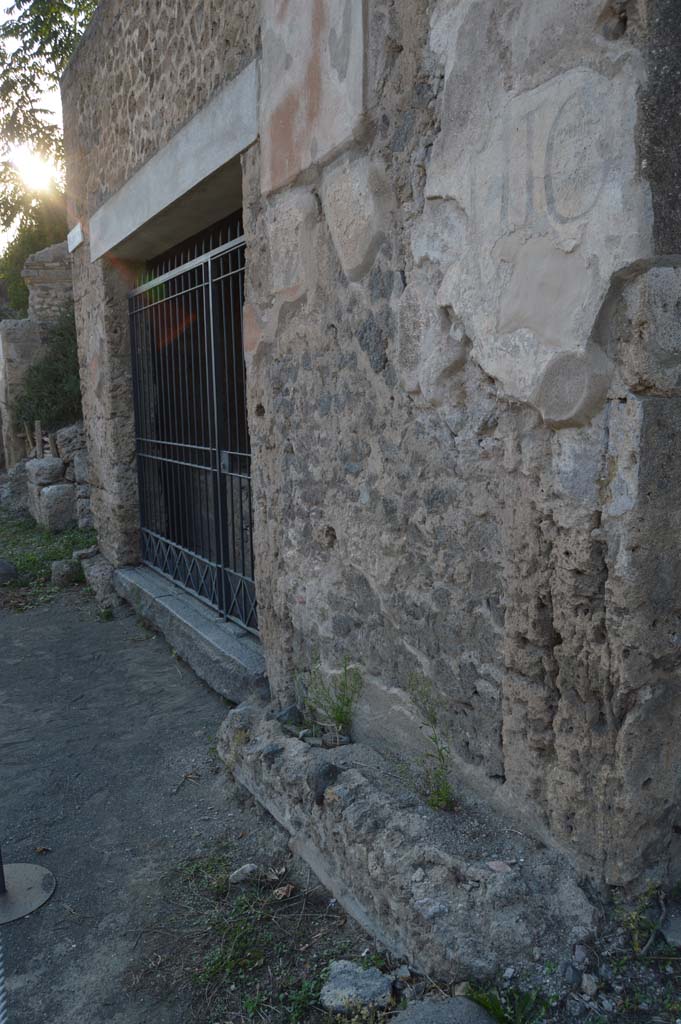
III.6.1 Pompeii. October 2017. Looking west along front façade with remains of graffiti.
Foto Taylor
Lauritsen, ERC Grant 681269 DÉCOR.

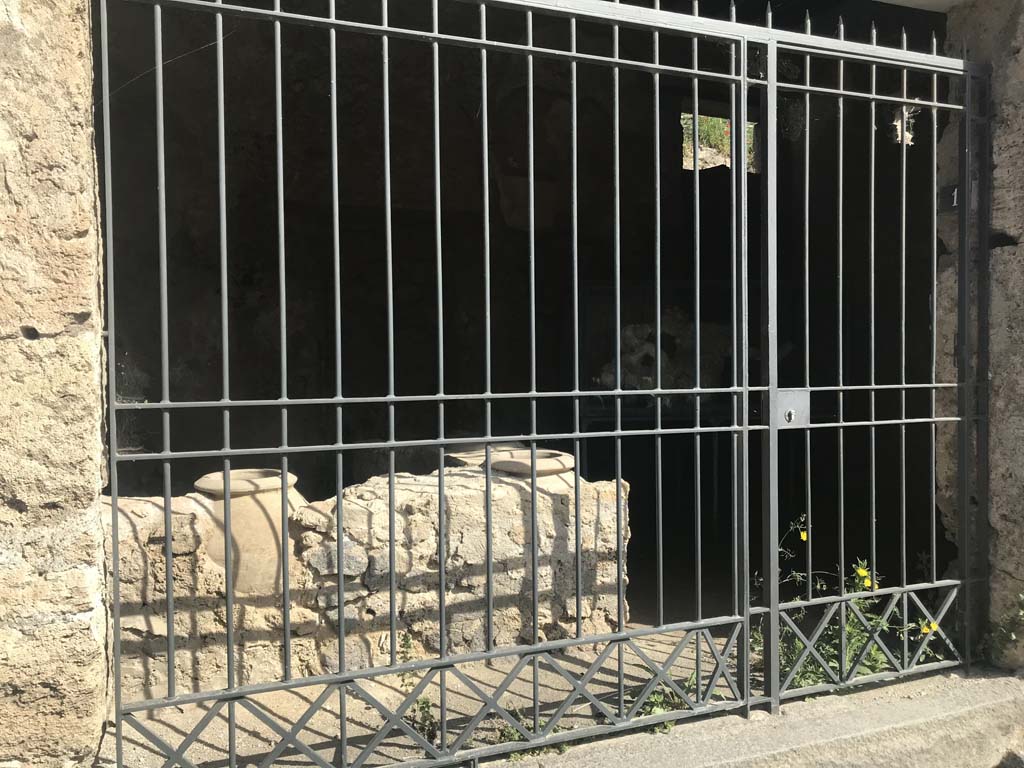
III.6.1 Pompeii. April 2019. Entrance doorway. Photo courtesy of Rick Bauer.
III.6.1 Pompeii. May 2017. Entrance doorway. Photo courtesy of Buzz Ferebee.
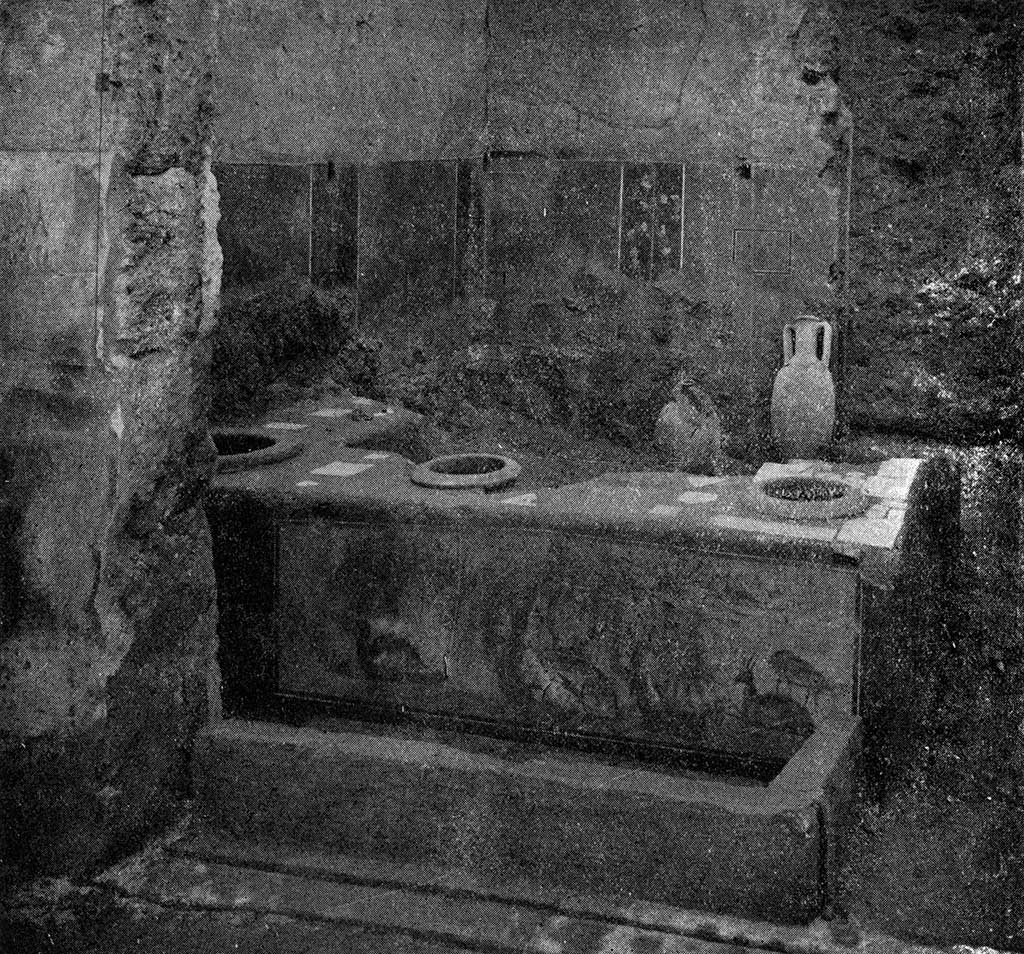
III.6.1 Pompeii. 1936. Front of counter decorated with birds, fish and animals.
See Notizie degli Scavi di
Antichità, 1936, p. 311, fig. 3.
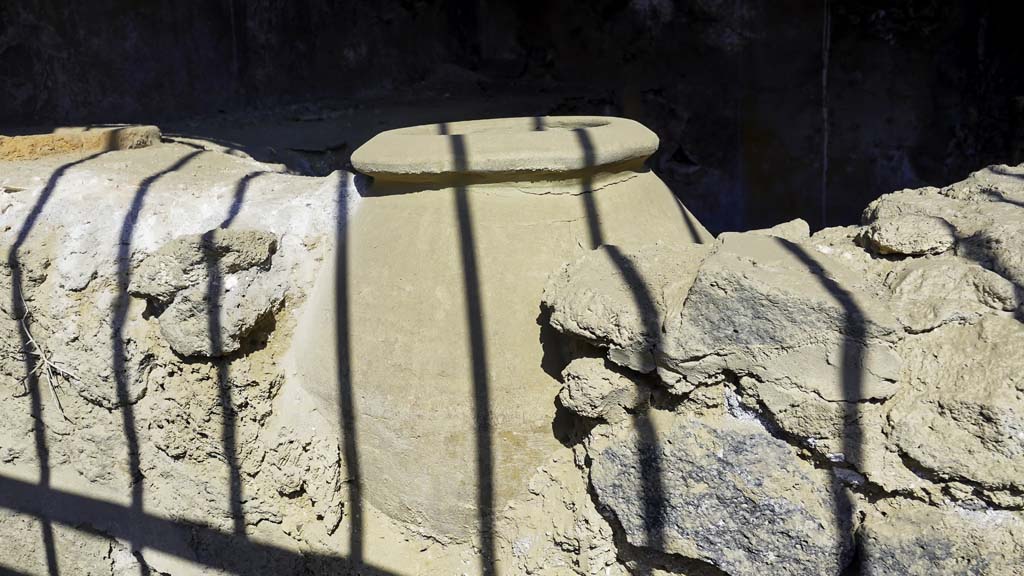
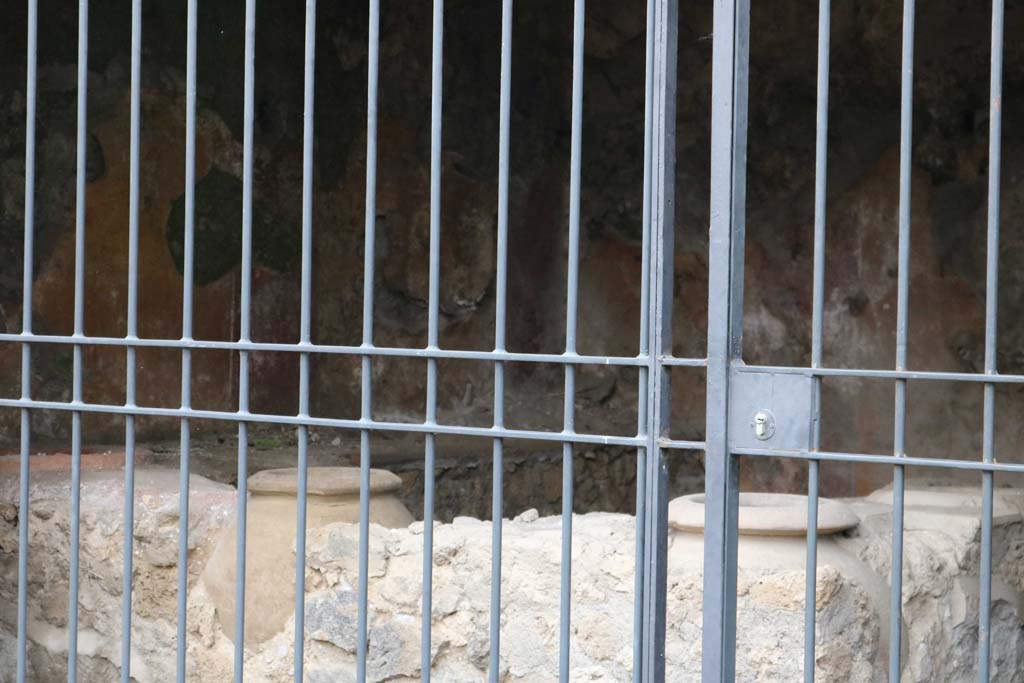
III.6.1 Pompeii. December 2018. Looking north from entrance
towards counter with dolia. Photo courtesy of Aude Durand.

III.6.1 Pompeii. August 2021. Looking north towards
counter with dolia. Photo
courtesy of Robert Hanson.
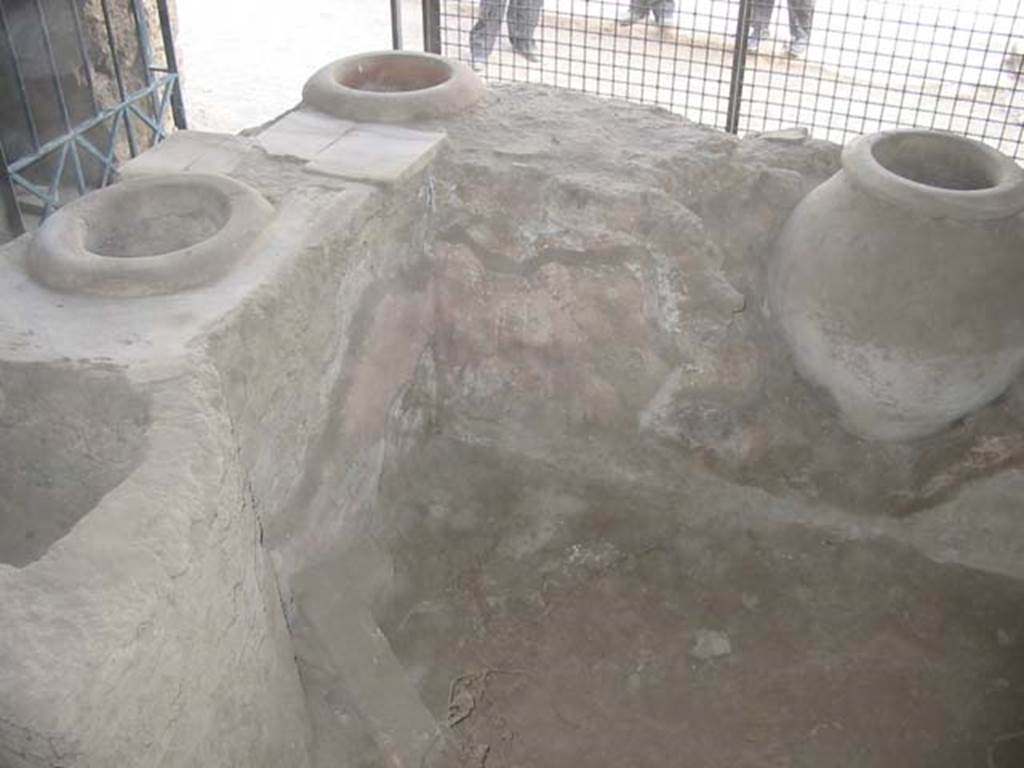
III.6.1 Pompeii. May 2003. Looking south from rear of counter. Photo courtesy of Nicolas Monteix.
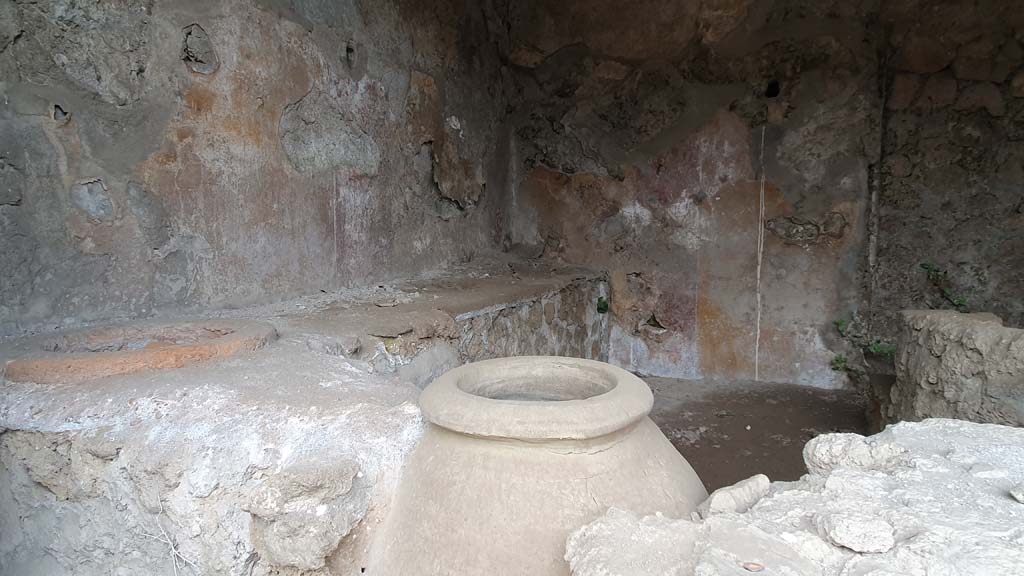
III.6.1 Pompeii. July 2021. Looking north-west across counter with dolia.
Foto Annette Haug, ERC
Grant 681269 DÉCOR.
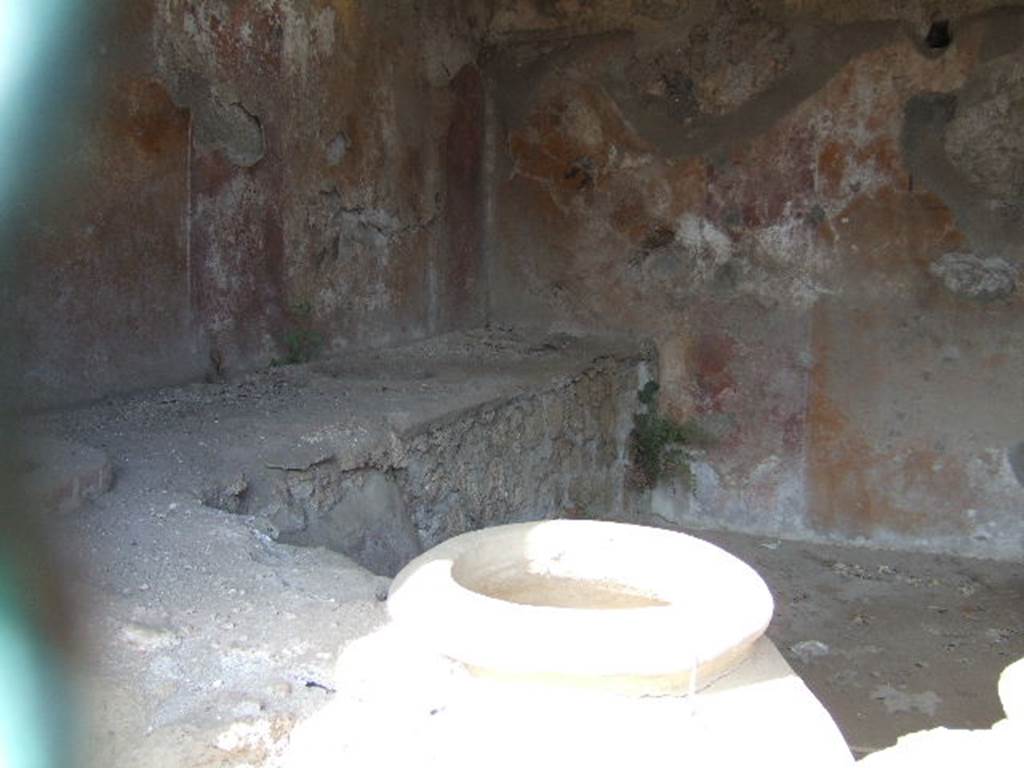
III.6.1 Pompeii. September 2005. Looking north-west across counter with dolia.
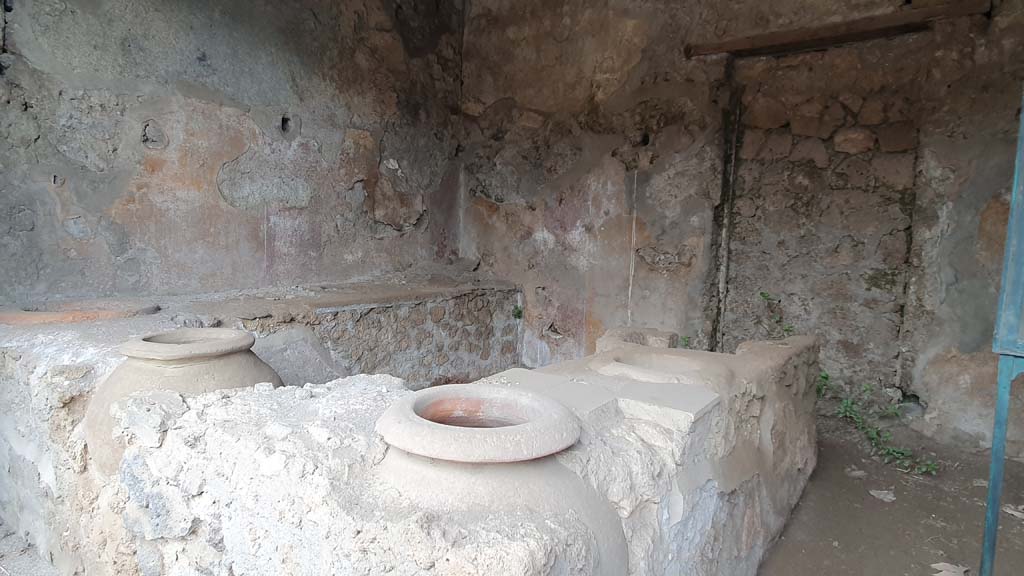
III.6.1 Pompeii. July 2021. Looking north-west across counter with dolia and hearth.
Foto Annette Haug, ERC Grant 681269 DÉCOR.
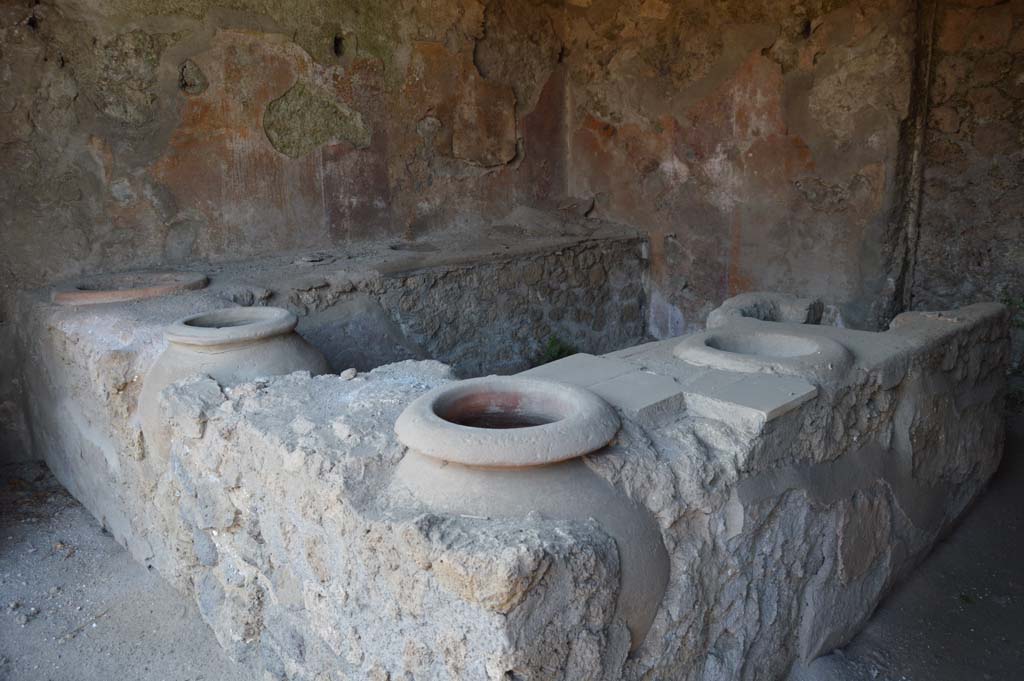
III.6.1 Pompeii. October 2017. Looking north-west across counter with dolia and hearth.
Foto Taylor Lauritsen, ERC Grant 681269 DÉCOR.
According to Eschebach, the counter had a total of 6 dolia.
See Eschebach, L., 1993. Gebäudeverzeichnis und Stadtplan der antiken Stadt Pompeji. Köln: Böhlau. (p.108-9).

III.6.1 Pompeii. May 2003. Looking down at hearth in end of counter. Photo courtesy of Nicolas Monteix.
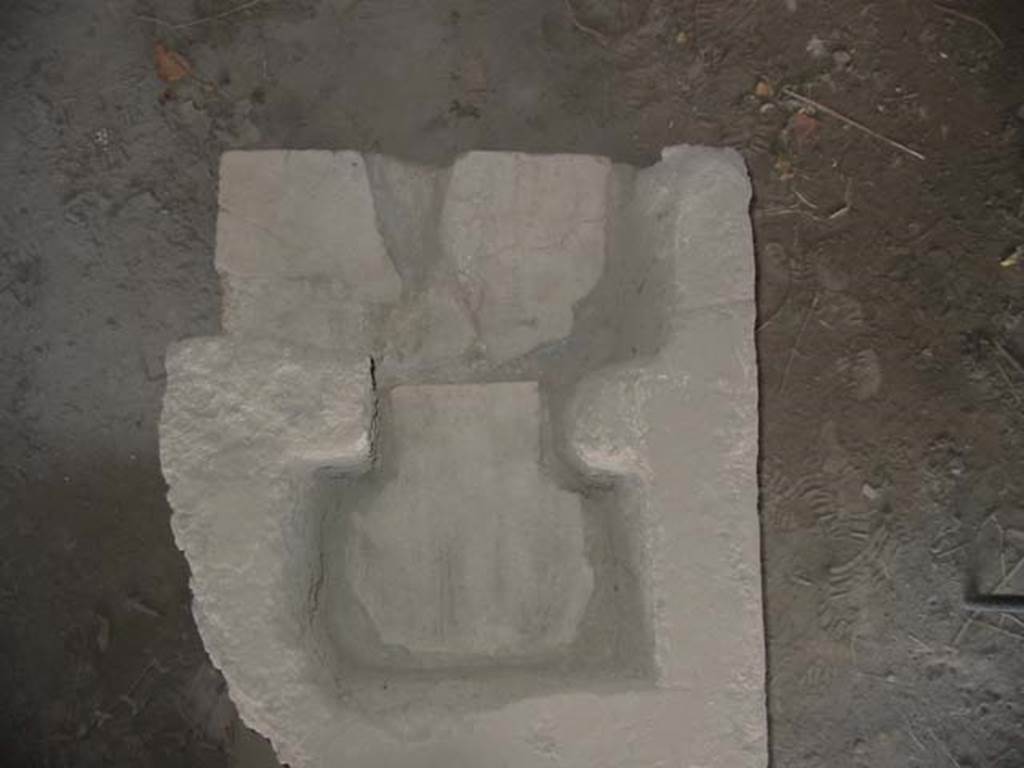
III.6.1 Pompeii. October 2017. Looking towards west wall.
Foto Taylor Lauritsen, ERC Grant 681269 DÉCOR.
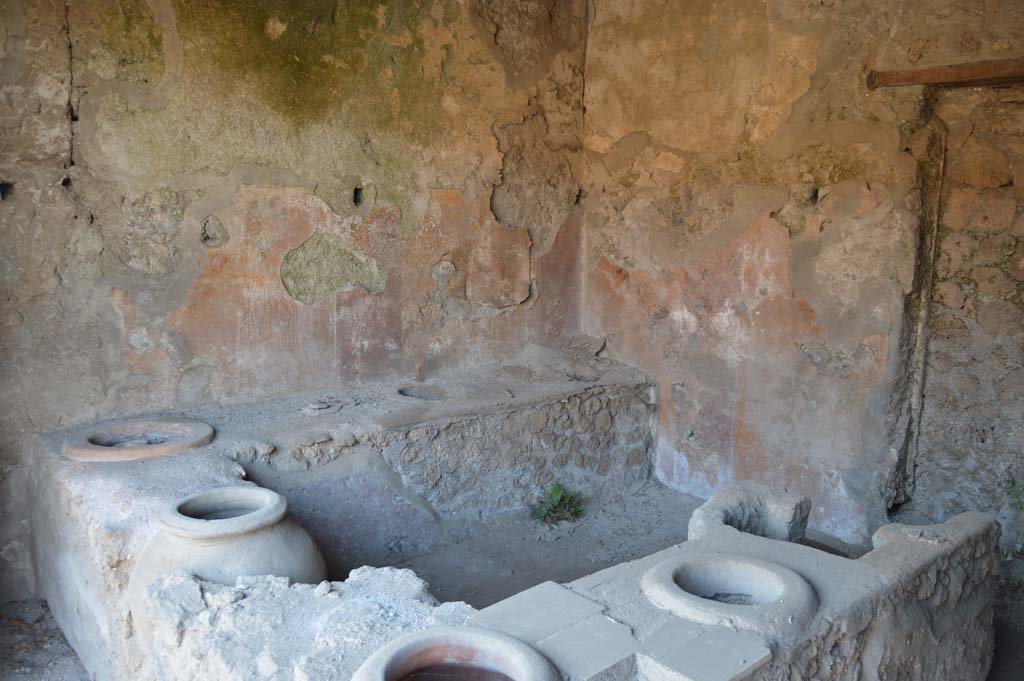
III.6.1 Pompeii. May 2003. Looking towards west wall, across hearth at end of counter. Photo courtesy of Nicolas Monteix.

III.6.1 Pompeii. October 2017. Looking towards north-west corner.
Foto Taylor
Lauritsen, ERC Grant 681269 DÉCOR.
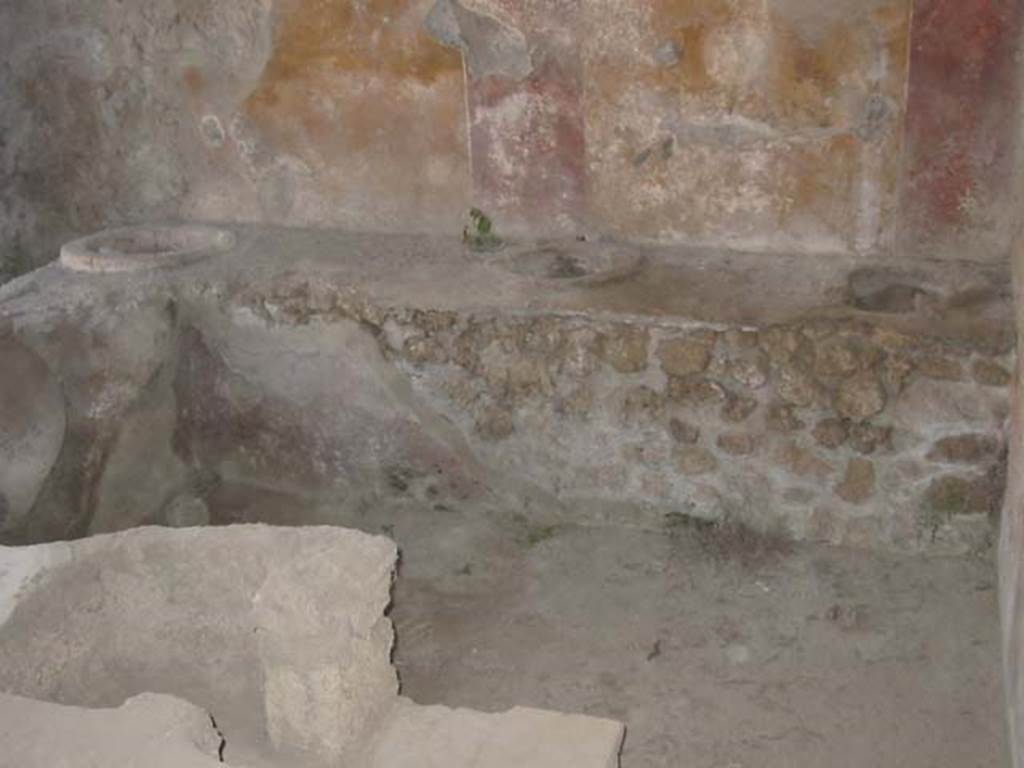
III.6.1 Pompeii. October 2017. Looking towards north wall at west end at rear of counter.
Foto Taylor Lauritsen, ERC Grant 681269 DÉCOR.
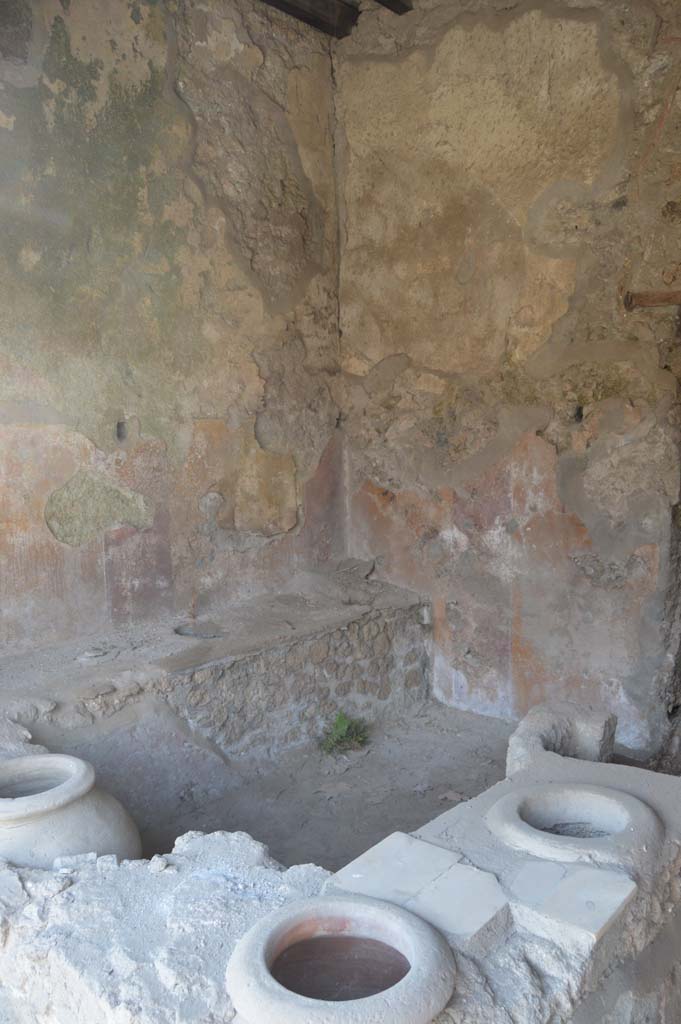
III.6.1 Pompeii. October 2017. Looking towards north wall.
Foto Taylor Lauritsen, ERC Grant 681269 DÉCOR.
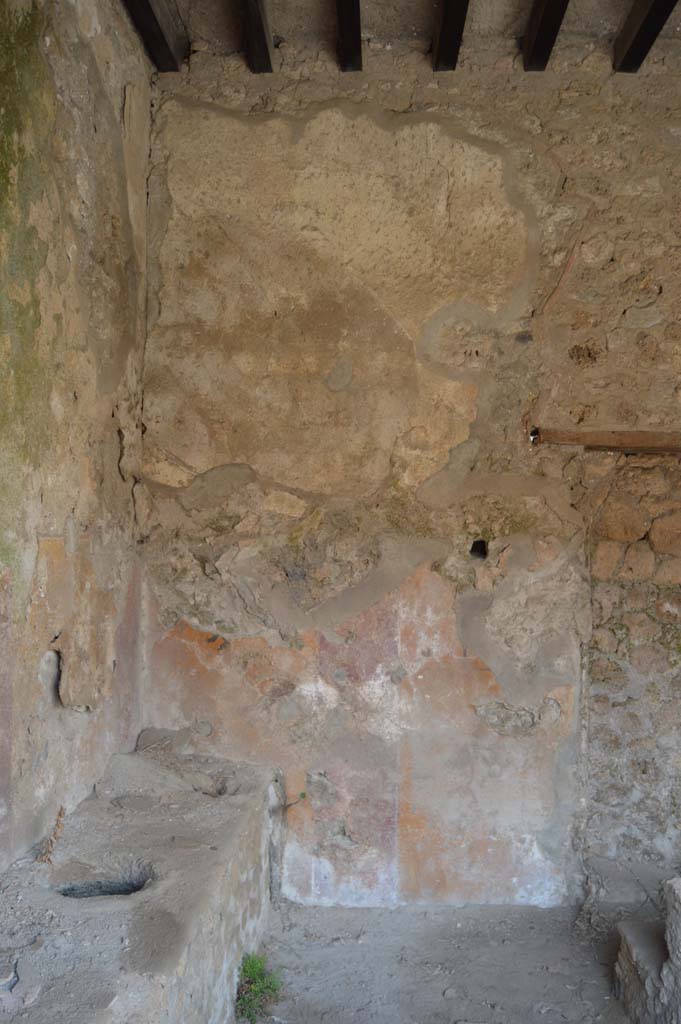
Foto
Taylor Lauritsen, ERC Grant 681269 DÉCOR.
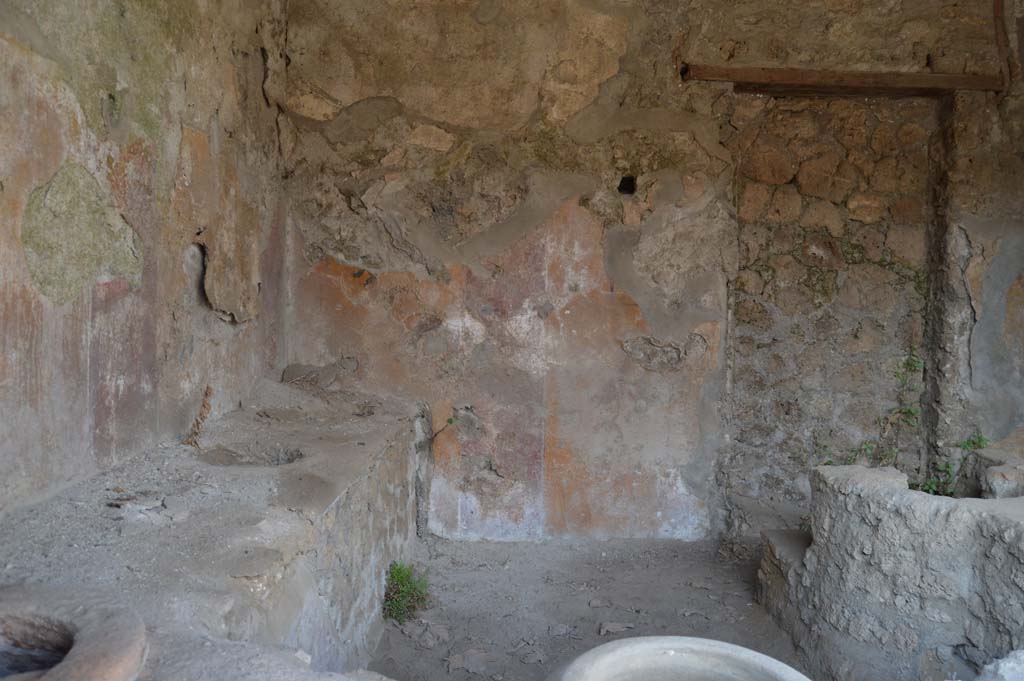
III.6.1 Pompeii. October 2017. Looking towards east wall of bar-room.
Foto
Taylor Lauritsen, ERC Grant 681269 DÉCOR.
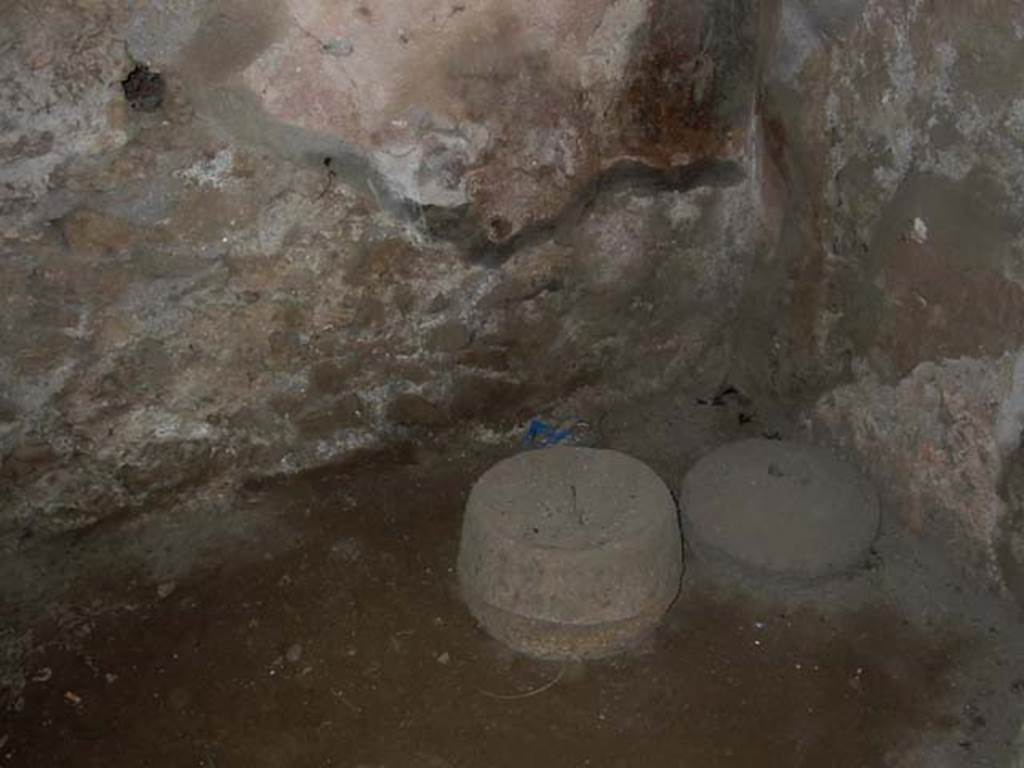
III.6.1 Pompeii. May 2003. Items in south-east corner of bar-room. Photo courtesy of Nicolas Monteix.
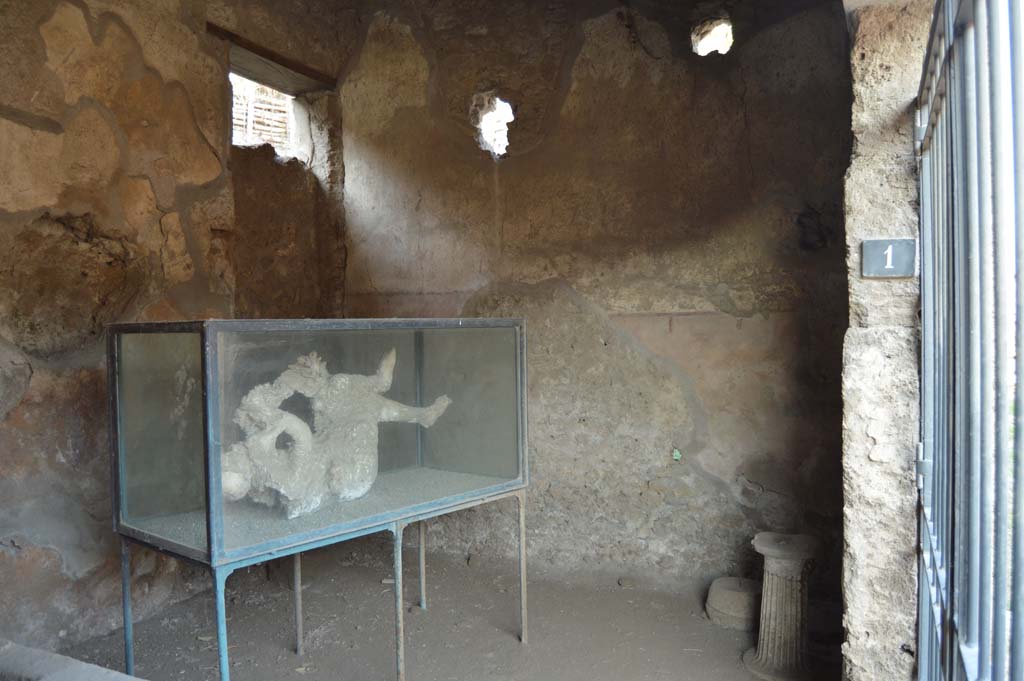
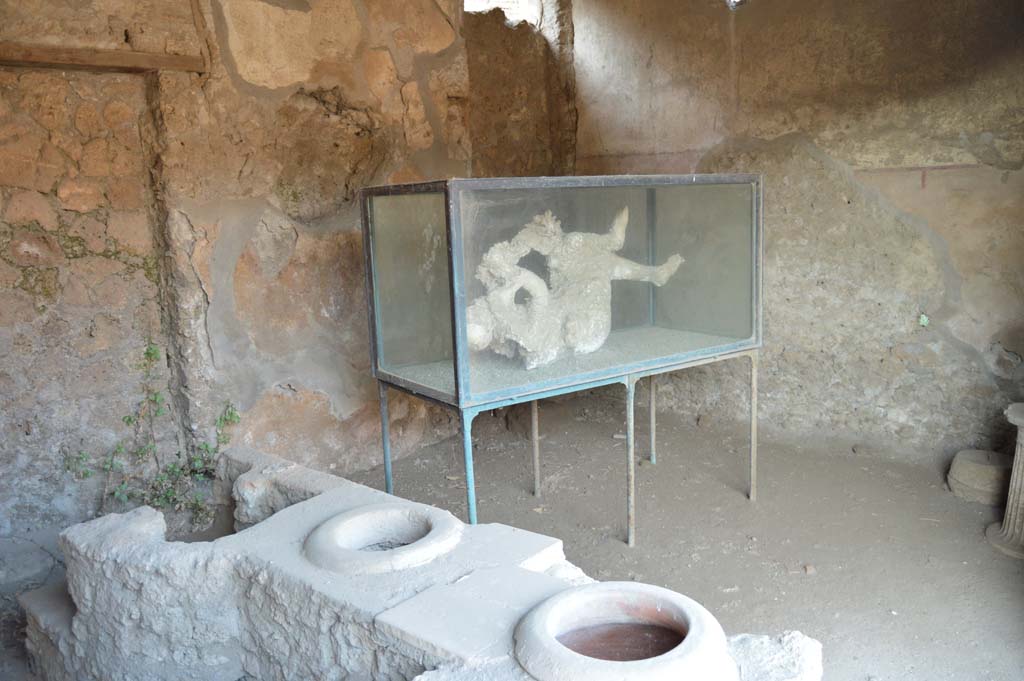
III.6.1 Pompeii. May 2024. Photo courtesy of Klaus Heese.
Victim 27. Plaster cast of female victim found in Vicolo di Venere, 8th to 12th September 1933 (two years before the excavation of the Caupona).
See
Giornale degli Scavi 1933, 8-12 settembre 1933.
See
Osanna, N., Capurso, A., e Masseroli, S. M., 2021. I Calchi di Pompei da
Giuseppe Fiorelli ad oggi: Studi e Ricerche del PAP 46, p. 381.
Luongo records the date as the date of the excavation of the caupona on March 11, 1935
See G. Luongo et al: Journal of Volcanology and Geothermal Research 126, (2003), p.185, with reference Arch. Pompei, GS 1935.
III.6.1 Pompeii. September 2005. Victim 27. Plaster cast of female victim found in Vicolo di Venere, 8th to 12th September 1933.