II.4.6 Pompeii. Entrance to
Baths complex.
Complesso di Giulia Felice
(Julia Felix) or Praedia di Giulia Felice.
First excavated 1754 to 1757 then re-interred, 1912, 1933, fully re-excavated 1951.
Part 1 Part 2 Part 3
Part 4 Part 5 Part 6
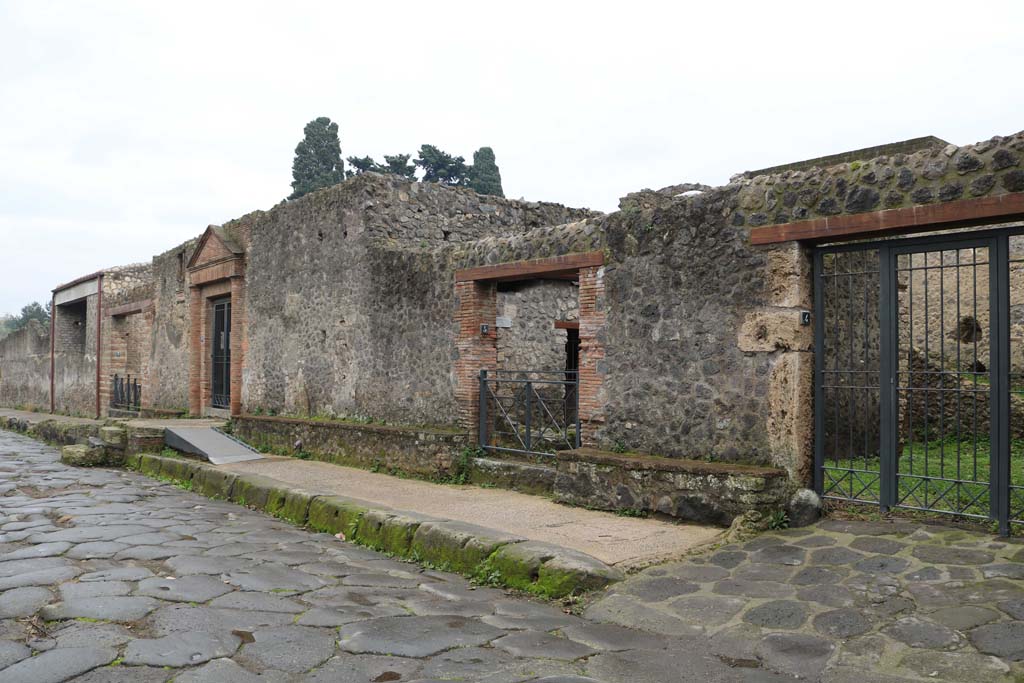
Via dell’Abbondanza, south side, Pompeii. December 2018.
Looking
east on Via dell’Abbondanza, with doorways II.4.4 (on right) through to II.4.7
(on left). Photo
courtesy of Aude Durand.
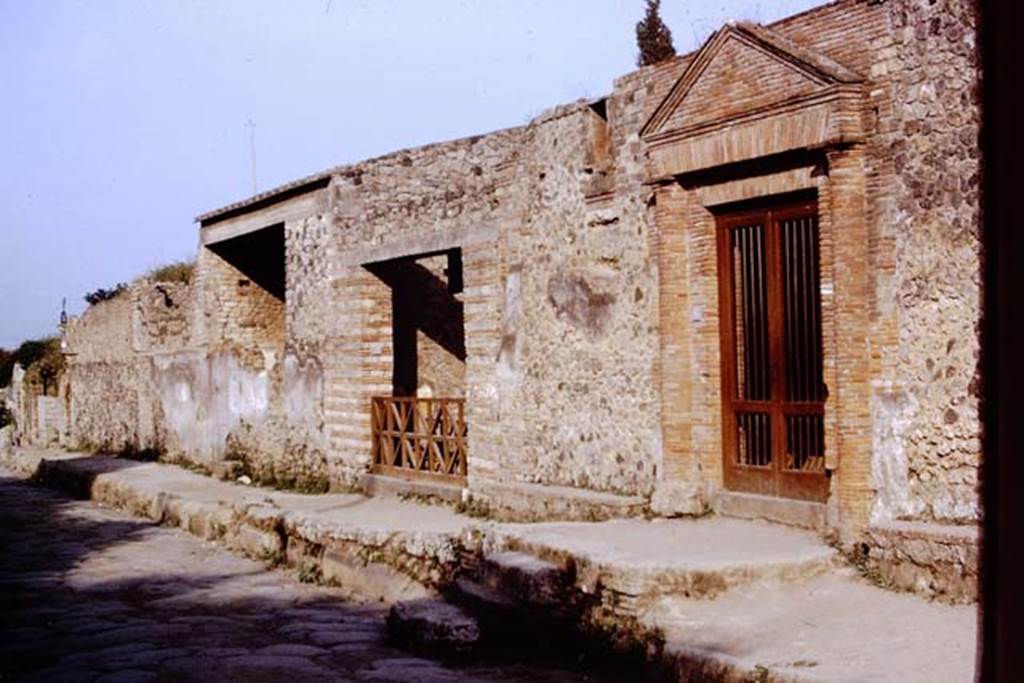
II.4.6 Pompeii. 1972. Looking east towards entrance doorway, on right. Photo by Stanley A. Jashemski.
Source: The Wilhelmina and Stanley A. Jashemski archive in the University of Maryland Library, Special Collections (See collection page) and made available under the Creative Commons Attribution-Non-Commercial License v.4. See Licence and use details.
J72f0512
![II.4.6 Pompeii. December 2005. Main entrance to the house at II.4.6 on Via dell’ Abbondanza. Looking east. According to Della Corte, found on the right (west side) of the principal and monumental doorway, was the famous CIL IV 1136 –
In Praediis Iuliae Sp. f. Felicis
locantur Balneum Venerium et Nongentum tabernae pergulae
caenacula ex idibus Aug. Primis in Idus Aug. sextas annos continuos quinque
S(i) q(uinquennium) d(ecurrerit) l(ocatio) e(rit) n(udo) c(onsensu) [CIL IV 1136]
See Della Corte, M., 1965. Case ed Abitanti di Pompei. Napoli: Fausto Fiorentino. (p.390)
According to Pagano and Prisciandaro, CIL IV 1136 was found in February 1756, between II.4.5 and II.4.6, and read –
In praedi(i)s Iuliae Sp(uri) f(iliae) Felicis
locantur
balneum Venerium et nongentum tabernae pergulae
cenacula ex Idibus Aug(ustis) primis in Aug(ustas) sextas annos continuos quinque
S() Q() D() L() E() N() C()
See Pagano, M. and Prisciandaro, R., 2006. Studio sulle provenienze degli oggetti rinvenuti negli scavi borbonici del regno di Napoli Naples : Nicola Longobardi. (p.22). They give a note that says the letters stand for “si quis domi lenocinium exerceat non conducito”.
According to Cooley, this translates as –
To let, in the estate of Julia Felix, daughter of Spurius: elegant baths for respectable people, shops with upper rooms, and apartments.
From the 13th August next to the 13th August of the sixth year, for five continuous years. The lease will expire at the end of the five years.
See Cooley, A. and M.G.L., 2004. Pompeii : A Sourcebook. London : Routledge. (p.171) She makes the point “The final phrase is highly abbreviated (with only the initial letter of each word). Its meaning is not certain, but likely from the context”.
CIL IV 1136 (and 1137) are now preserved at Naples Archaeological Museum, inventory number 4713. A photo of the graffito, and surrounding ones, can be seen on pages 212 and 213 of Varone, A. and Stefani, G., 2009. Titulorum Pictorum Pompeianorum, Rome: L’erma di Bretschneider.](2%2004%2006%20p1_files/image006.jpg)
II.4.6 Pompeii. December 2005. Main entrance to the house at II.4.6 on Via dell’ Abbondanza. Looking east.
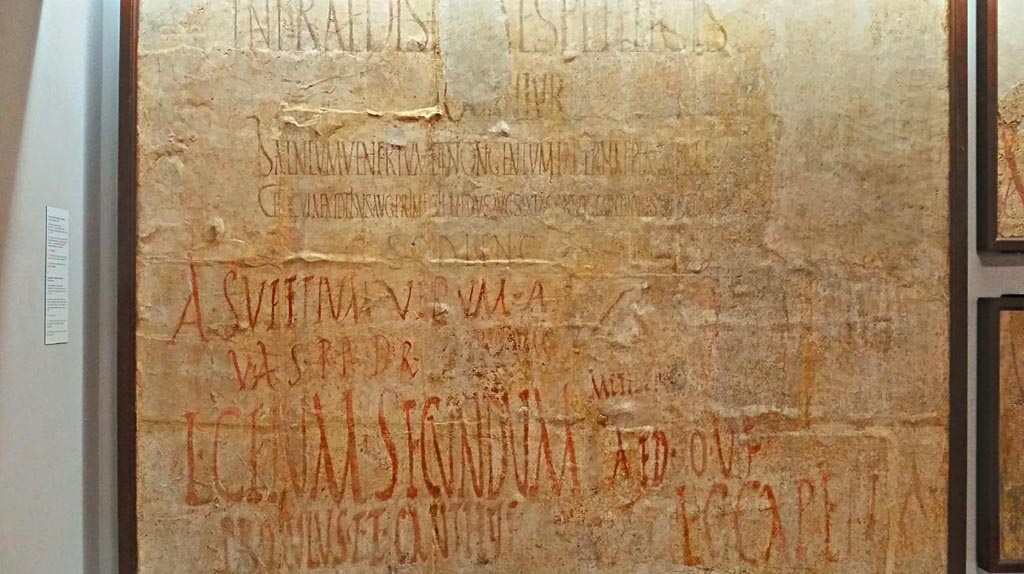
II.4.6 Pompeii. Found February 1756. Graffiti to the west side of doorway between II.4.5 and II.4.6.
Now in Naples Archaeological Museum. Inventory number 4713. Photo courtesy of Giuseppe Ciaramella,
June 2017.
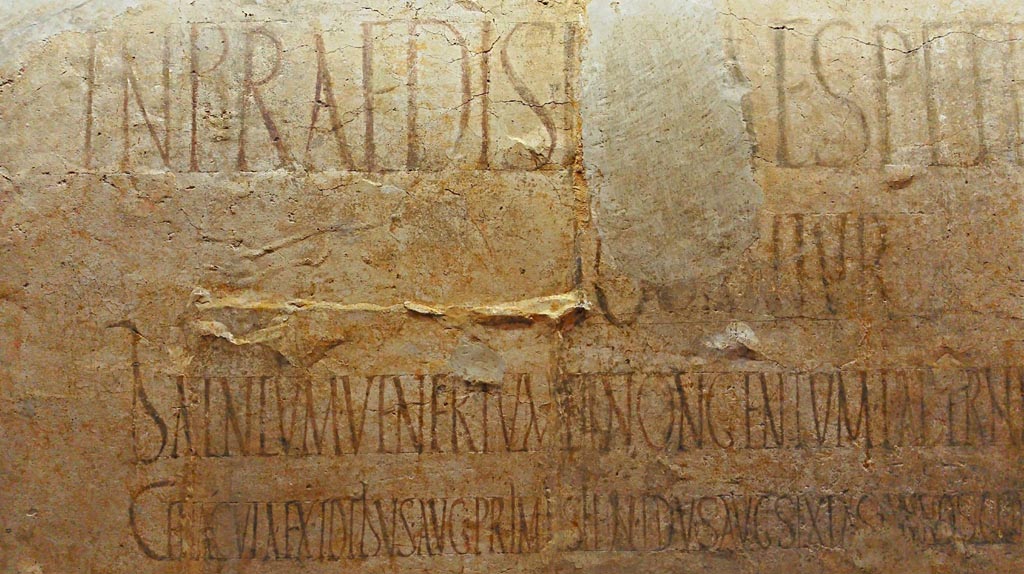
II.4.6 Pompeii. Found
February 1756. Detail from fragment of painted
plaster, with black letters. (CIL IV 1136).
Now in Naples Archaeological Museum. Inventory number 4713. Photo courtesy of Giuseppe Ciaramella, June 2017.
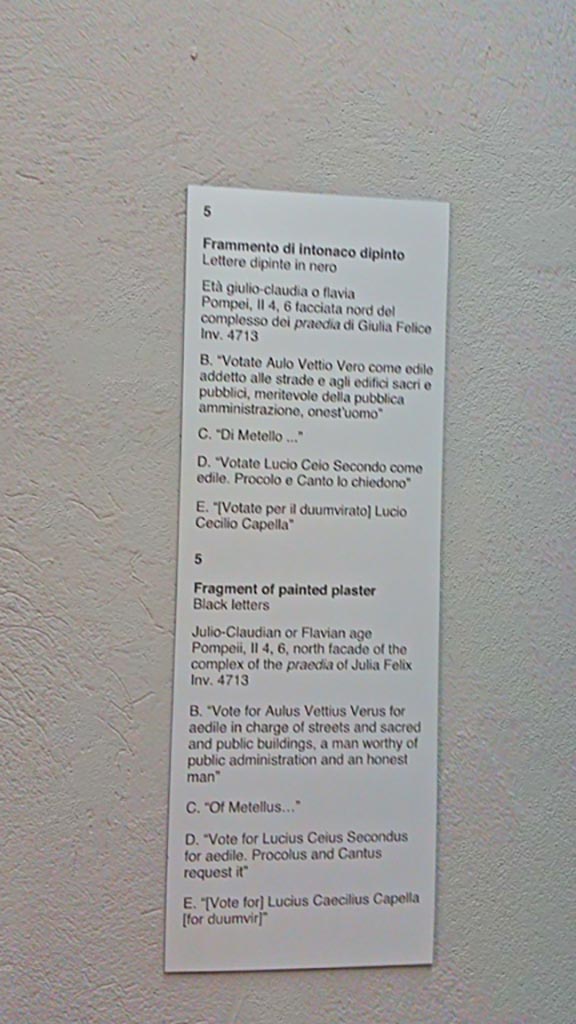
II.4.6 Pompeii. Information
description card for inv. 4713 from Naples Archaeological Museum.
Photo courtesy of Giuseppe Ciaramella, June 2017.
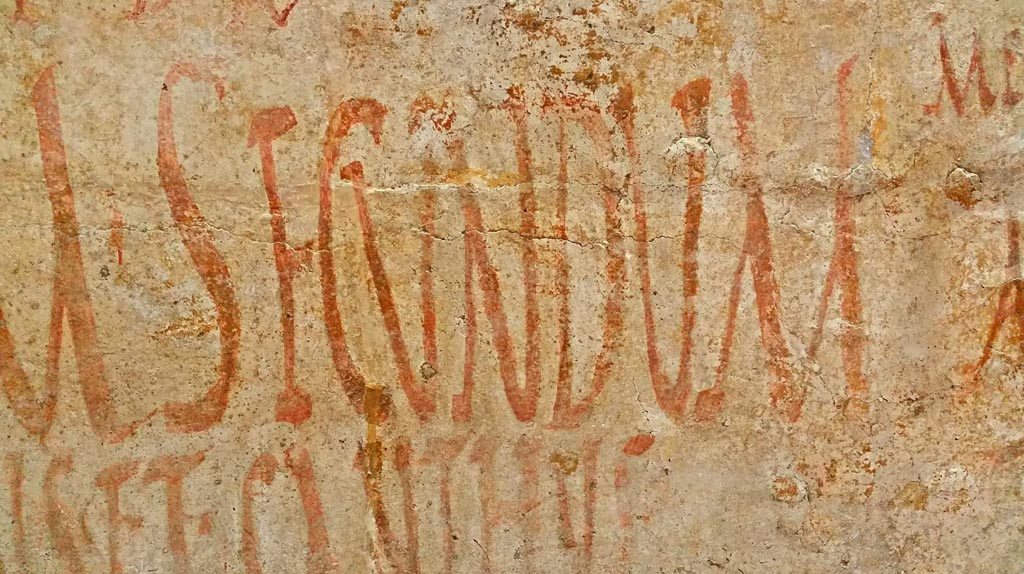
II.4.6 Pompeii. Detail
from “D” on information card in Naples Archaeological Museum - Secundum.
Photo courtesy of Giuseppe Ciaramella, June 2017.
![II.4.6 Pompeii. Found February 1756. Graffiti to the west side of doorway between II.4.5 and II.4.6.
Now in Naples Archaeological Museum. Inventory number 4713.
According to Pagano and Prisciandaro, CIL IV 1136 was found in February 1756, between II.4.5 and II.4.6 on the west side of the doorway, and read –
In praedi(i)s Iuliae Sp(uri) f(iliae) Felicis
locantur
balneum Venerium et nongentum tabernae pergulae
cenacula ex Idibus Aug(ustis) primis in Aug(ustas) sextas annos continuos quinque
S() Q() D() L() E() N() C()
See Pagano, M. and Prisciandaro, R., 2006. Studio sulle provenienze degli oggetti rinvenuti negli scavi borbonici del regno di Napoli Naples : Nicola Longobardi. (p.22).
They give a note that says the letters stand for “si quis domi lenocinium exerceat non conducito”.
See also Della Corte, M., 1965. Case ed Abitanti di Pompei. Napoli: Fausto Fiorentino. (p.390)
According to Cooley, this translates as –
To let, in the estate of Julia Felix, daughter of Spurius: elegant baths for respectable people, shops with upper rooms, and apartments.
From the 13th August next, to the 13th August of the sixth year, for five continuous years.
The lease will expire at the end of the five years.
See Cooley, A. and M.G.L., 2004. Pompeii: A Sourcebook. London: Routledge. (p.171)
She makes the point “The final phrase is highly abbreviated (with only the initial letter of each word).
Its meaning is not certain, but likely from the context”.
According to Epigraphik-Datenbank Clauss/Slaby (See www.manfredclauss.de) the last line is interpreted differently:
In praedi(i)s Iuliae Sp(uri) f(iliae) Felicis
Locantur
balneum Venerium et nongentum tabernae pergulae
cenacula ex Idibus Aug(ustis) primis in Idus Aug(ustas) sextas annos continuos quinque
s(i) q(uis) d(esiderabit) l(ocatricem) e(o) n(omine) c(onvenito?)
On this panel can also be seen:
A(ulum) Suettium Verum aed(ilem) / v(iis) a(edibus) s(acris) p(ublicis) p(rocurandis) d(ignum) r(ei) p(ublicae) probum o(ro) v(os) f(aciatis) [CIL IV 1137]
Trebium aed(ilem) [CIL IV 1138]
Metelli C[ [CIL IV 1139]
L(ucium) Ceium Secundum aed(ilem) o(ro) v(os) f(aciatis) Proculus et Canthus rog(ant) [CIL IV 1140]
L(ucium) C(aecilium) C(apellam) [CIL IV 1141]
See Varone, A. and Stefani, G., 2009. Titulorum Pictorum Pompeianorum, Rome: L’Erma di Bretschneider, pp. 212-3.](2%2004%2006%20p1_files/image012.jpg)
II.4.6 Pompeii. Found February 1756. Graffiti to the west side of doorway between II.4.5 and II.4.6.
Now in Naples Archaeological Museum. Inventory number 4713.
According to Pagano and Prisciandaro, CIL IV 1136 was found in February 1756, between II.4.5 and II.4.6 on the west side of the doorway, and read –
In
praedi(i)s Iuliae Sp(uri)
f(iliae) Felicis
locantur
balneum
Venerium et nongentum
tabernae pergulae
cenacula
ex Idibus Aug(ustis)
primis in Aug(ustas)
sextas annos continuos
quinque
S()
Q() D() L()
E() N() C()
See Pagano, M. and Prisciandaro, R., 2006. Studio sulle provenienze degli oggetti rinvenuti negli scavi borbonici del regno di Napoli Naples: Nicola Longobardi. (p.22).
They give a note that says the letters stand for “si quis domi lenocinium exerceat non conducito”.
See also Della Corte, M., 1965. Case ed Abitanti di Pompei. Napoli: Fausto Fiorentino. (p.390)
According to Cooley, this translates as –
To let, in the estate of Julia Felix, daughter of Spurius: elegant baths for respectable people, shops with upper rooms, and apartments.
From the 13th August next, to the 13th August of the sixth year, for five continuous years.
The lease will expire at the end of the five years.
See Cooley, A. and M.G.L., 2004. Pompeii: A Sourcebook. London: Routledge. (p.171)
She makes the point “The final phrase is highly abbreviated (with only the initial letter of each word).
Its meaning is not certain, but likely from the context”.
According to Epigraphik-Datenbank Clauss/Slaby (See www.manfredclauss.de) the last line is interpreted differently:
In praedi(i)s Iuliae Sp(uri) f(iliae) Felicis
Locantur
balneum Venerium et nongentum tabernae pergulae
cenacula ex Idibus Aug(ustis) primis in Idus
Aug(ustas) sextas annos continuos quinque
s(i) q(uis) d(esiderabit) l(ocatricem) e(o)
n(omine) c(onvenito?)
On this panel can also be seen:
A(ulum) Suettium Verum aed(ilem) / v(iis)
a(edibus) s(acris) p(ublicis) p(rocurandis) d(ignum) r(ei) p(ublicae) probum
o(ro) v(os) f(aciatis) [CIL IV 1137]
Trebium aed(ilem) [CIL IV 1138]
Metelli C[
[CIL IV 1139]
L(ucium) Ceium Secundum aed(ilem) o(ro) v(os) f(aciatis)
Proculus et Canthus rog(ant) [CIL IV
1140]
L(ucium) C(aecilium) C(apellam) [CIL IV 1141]
See Varone, A. and Stefani, G., 2009. Titulorum Pictorum Pompeianorum, Rome: L’Erma di Bretschneider, pp. 212-3.
According to Pagano and Prisciandaro, also found on the same wall between II.4.6 and II.4.5 (on the right of the doorway) were -
[3]m Sabinum
IIvir(um)
i(ure) d(icundo) o(ro) v(os) f(aciatis)
[CIL IV 1142]
Popidium
L(uci) f(ilium)]
Secundum
aed(ilem)
o(ro) v(os) f(aciatis) Veninosm [CIL
IV 1143 & Naples Museum inventory number 4670]
These were found in 1756, see PAH. I, 1, 38, add. 95, 96, dated 15th February 1756.
See Pagano, M. and Prisciandaro, R., 2006. Studio sulle provenienze degli oggetti rinvenuti negli scavi borbonici del regno di Napoli. Naples: Nicola Longobardi. (p.22).
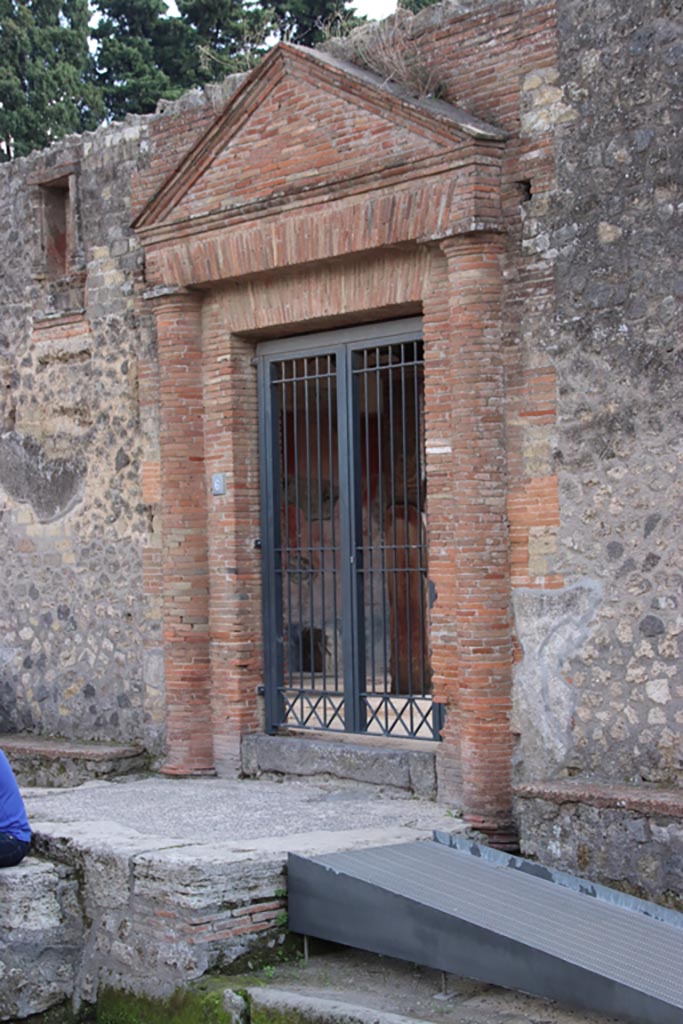
II.4.6 Pompeii. October 2022. Entrance
doorway. Photo
courtesy of Klaus Heese.
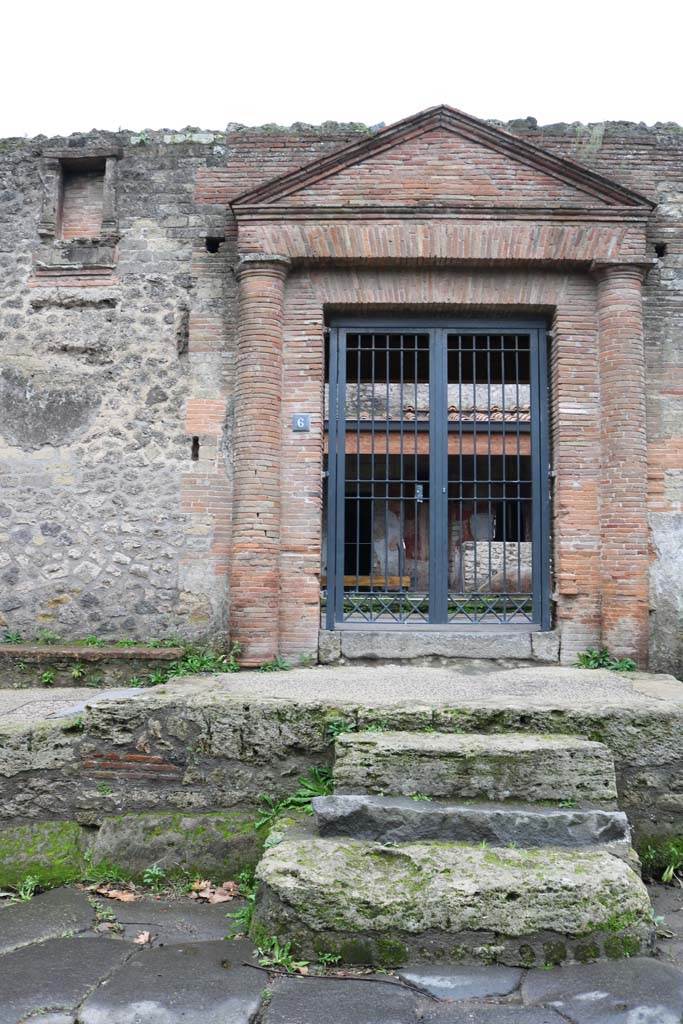
II.4.6 Pompeii. December 2018.
Looking south to steps to entrance doorway. Photo
courtesy of Aude Durand.
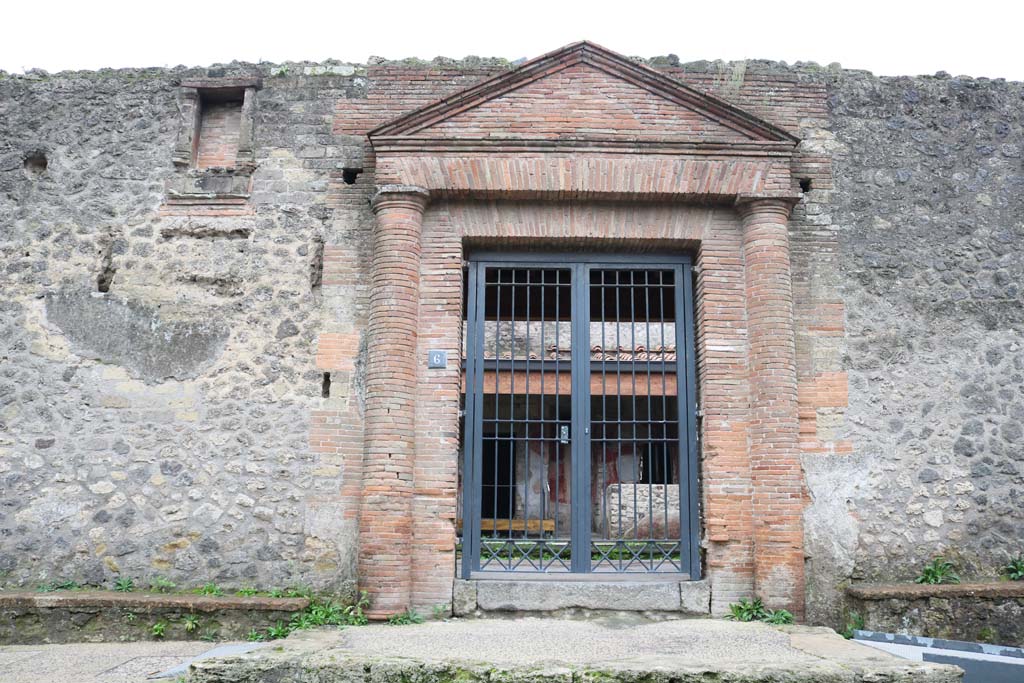
II.4.6 Pompeii. December 2018.
Entrance doorway
with upper niche/recess on left of doorway, and bench on right of doorway. Photo courtesy of Aude Durand.
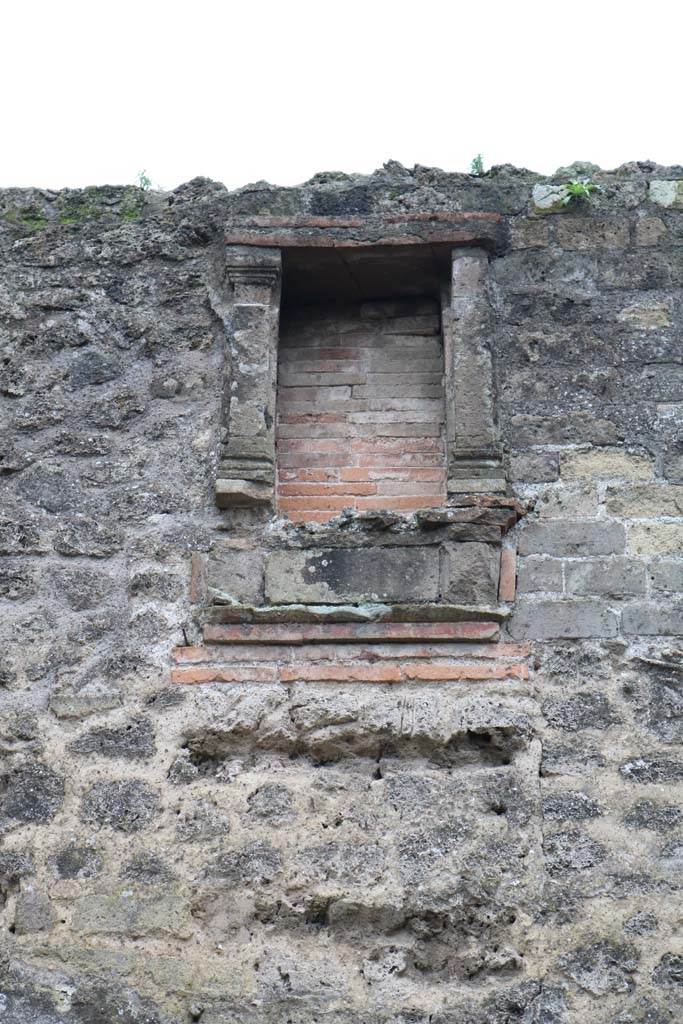
II.4.6 Pompeii. December 2018.
Niche/recess on
upper front façade on left of entrance doorway. Photo courtesy of Aude Durand.
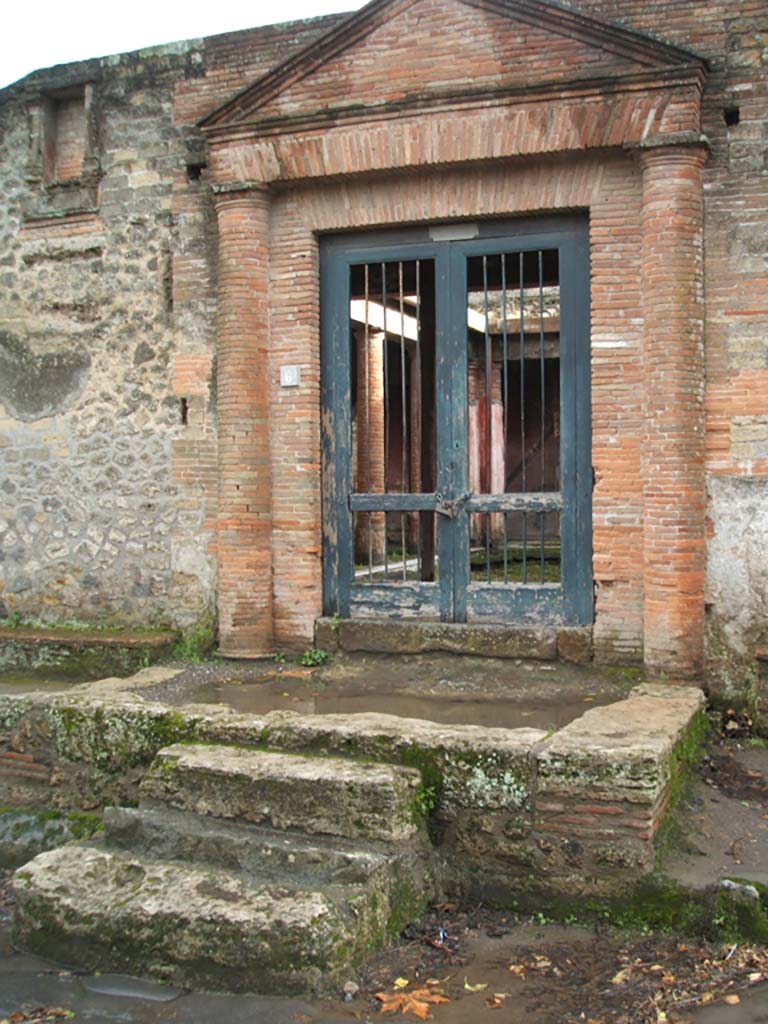
II.4.6 Pompeii. December 2004. Main entrance to the house at II.4.6 on Via dell’ Abbondanza.
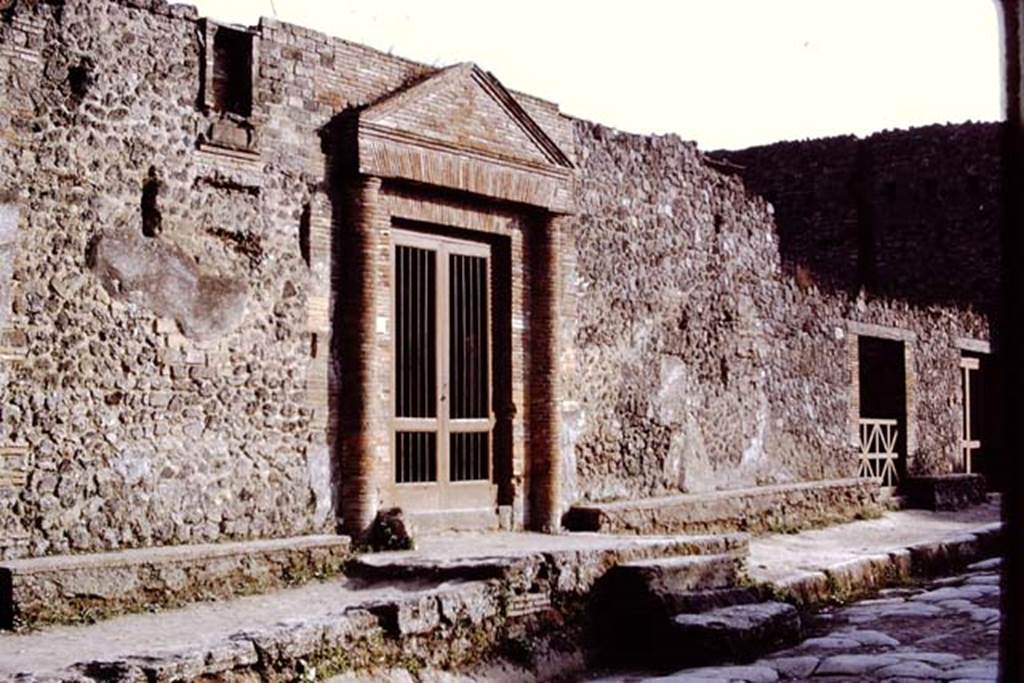
II.4.6 Pompeii. 1972. Looking towards entrances of II.4.6, centre, and II.4.5 and II.4.4. Photo by Stanley A. Jashemski.
Source: The Wilhelmina and Stanley A. Jashemski archive in the University of Maryland Library, Special Collections (See collection page) and made available under the Creative Commons Attribution-Non-Commercial License v.4. See Licence and use details.
J72f0511
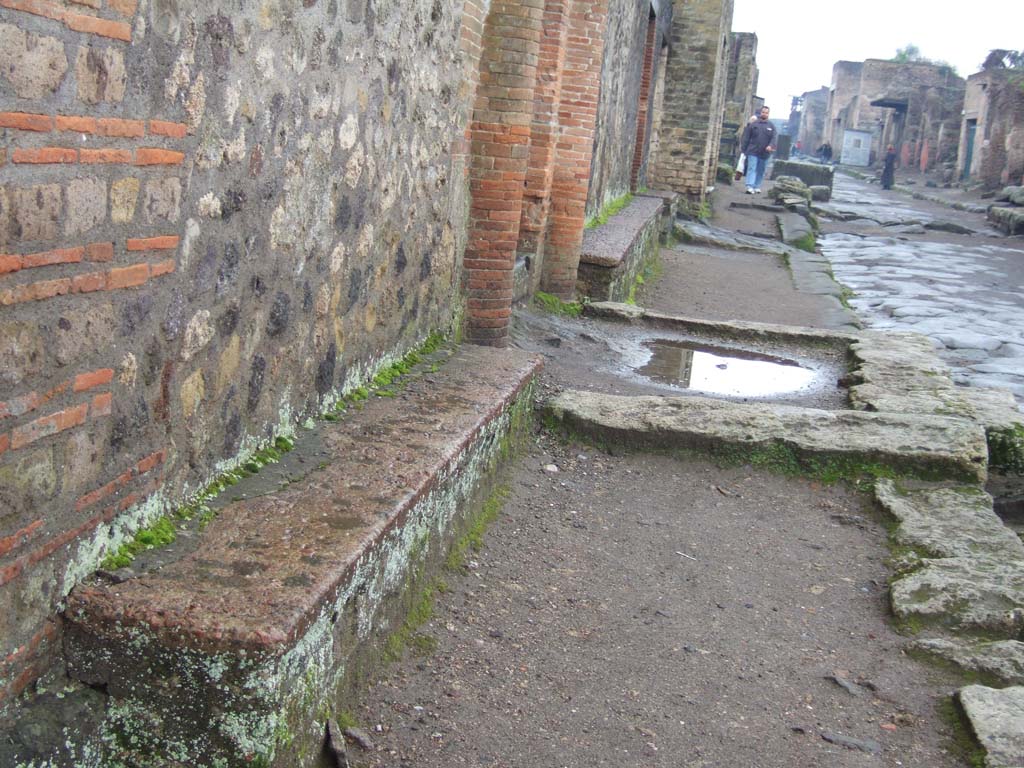
II.4.6 Pompeii. December 2005. Benches outside the entrance. Looking west.
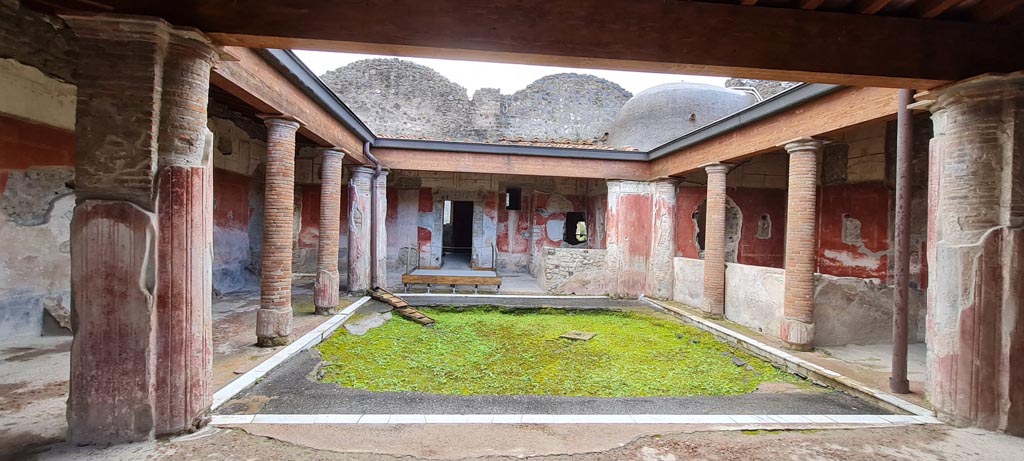
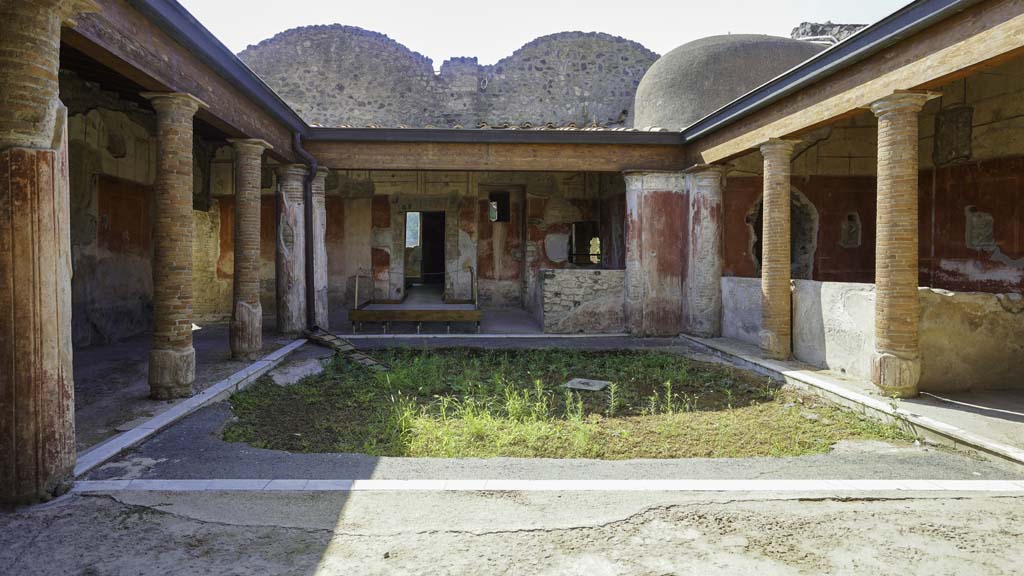
II.4.6 Pompeii. August 2021. Looking south from entrance
doorway towards south portico. Photo courtesy of Robert Hanson.
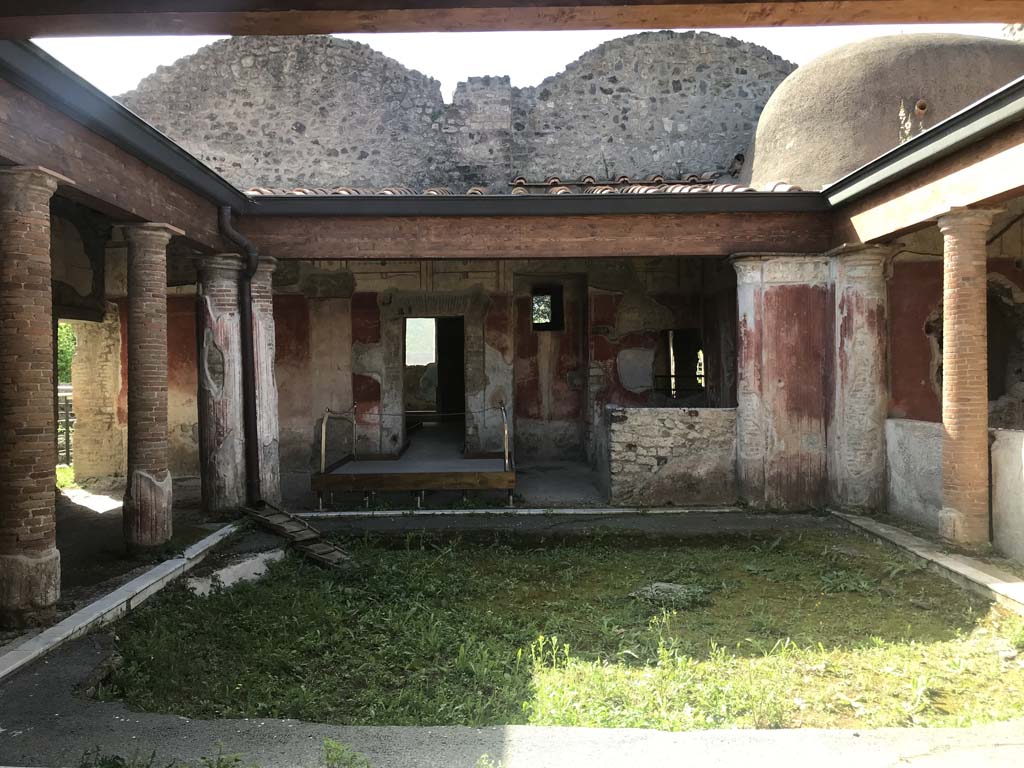
II.4.6 Pompeii. April 2019. Looking south from entrance doorway towards south portico. Photo courtesy of Rick Bauer.
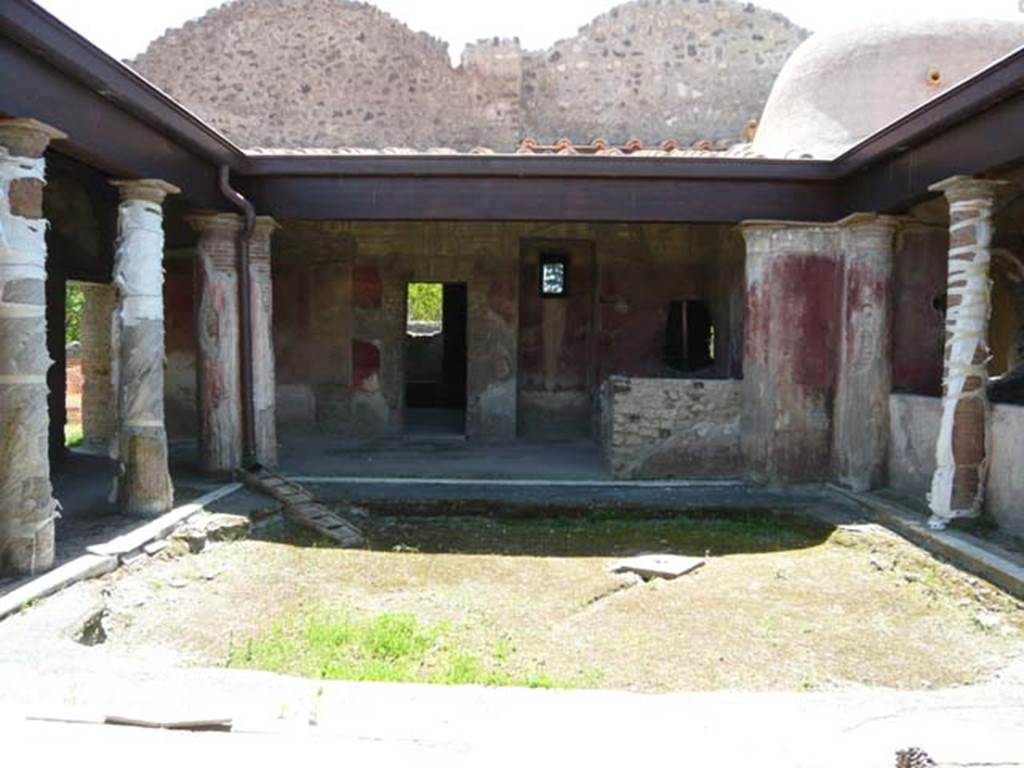
II.4.6 Pompeii. May 2012. Looking from entrance doorway to south side of portico. Photo courtesy of Buzz Ferebee.
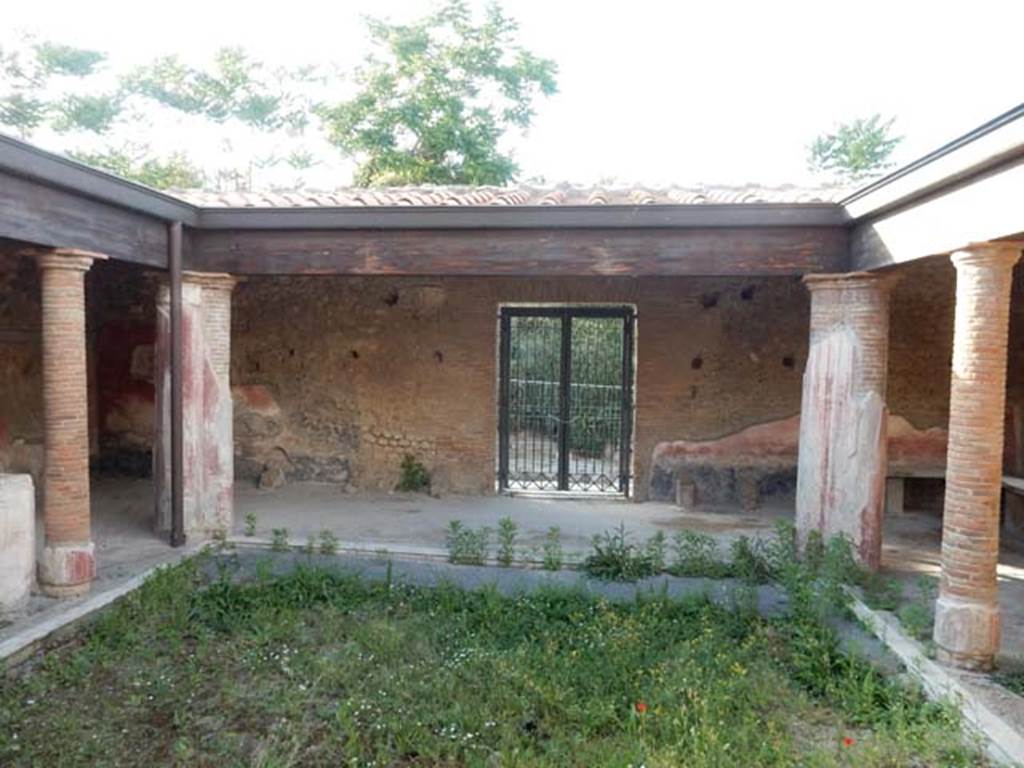
II.4.6 Pompeii. May 2017. Looking north towards entrance doorway across atrium flooring. Photo courtesy of Buzz Ferebee.
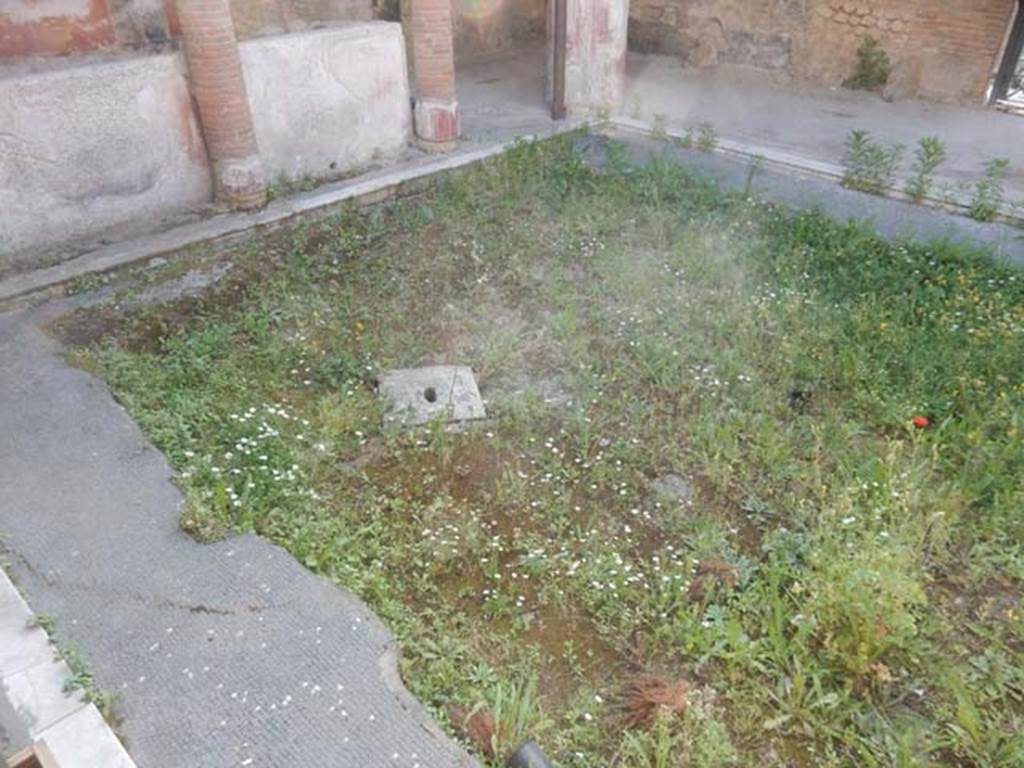
II.4.6 Pompeii. May 2017. Looking across flooring towards north-west corner. Photo courtesy of Buzz Ferebee.
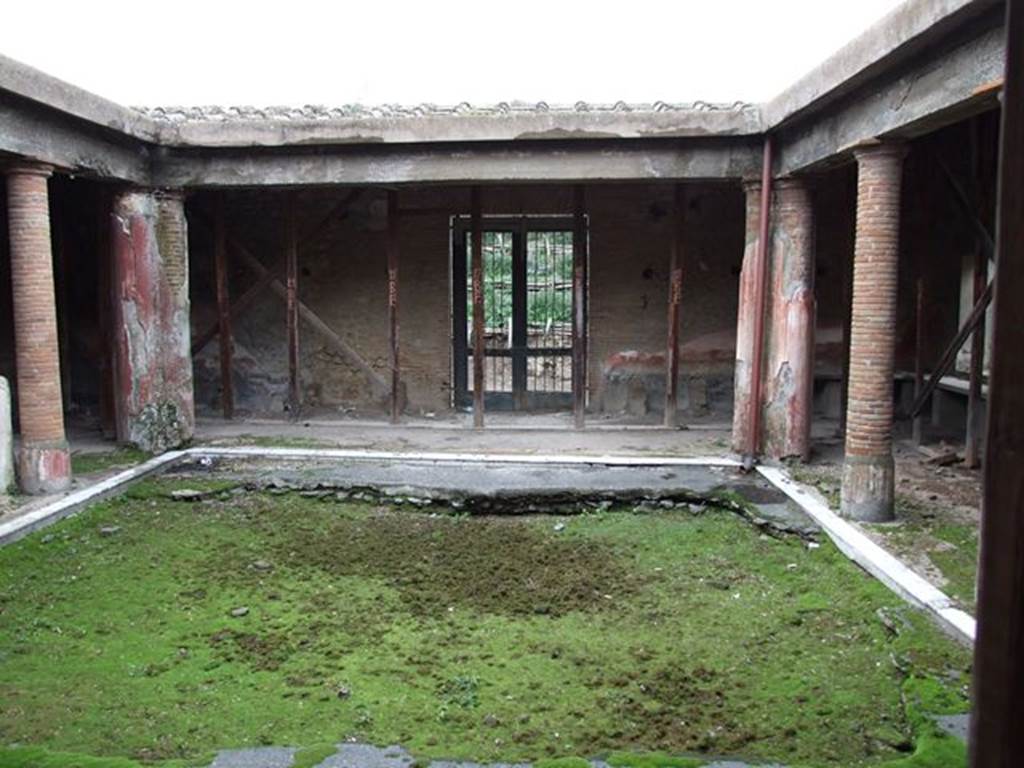
II.4.6 Pompeii. December 2006. From doorway of apodyterium, looking towards north portico, and entrance doorway.
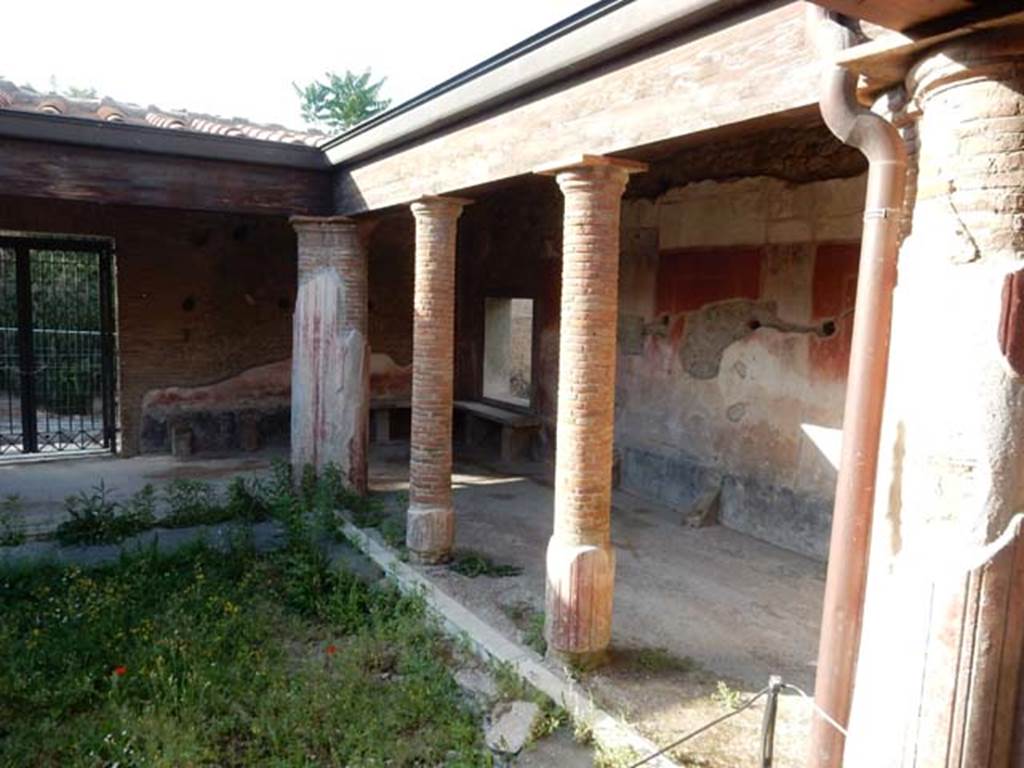
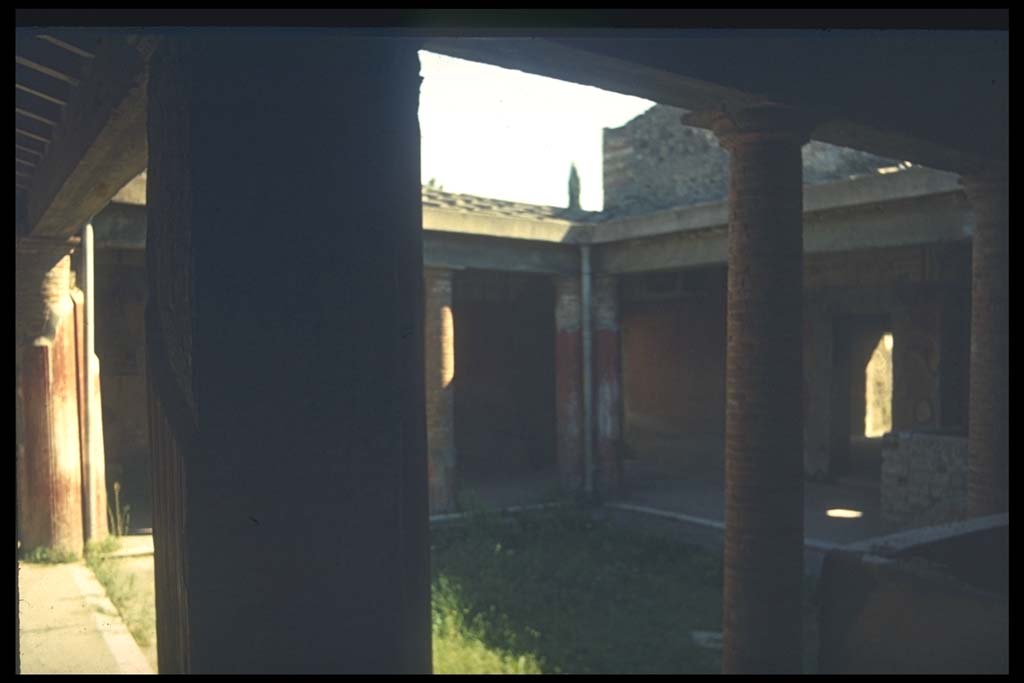
II.4.6 Pompeii. May 2017. Looking towards east portico and north-east corner. Photo courtesy of Buzz Ferebee.
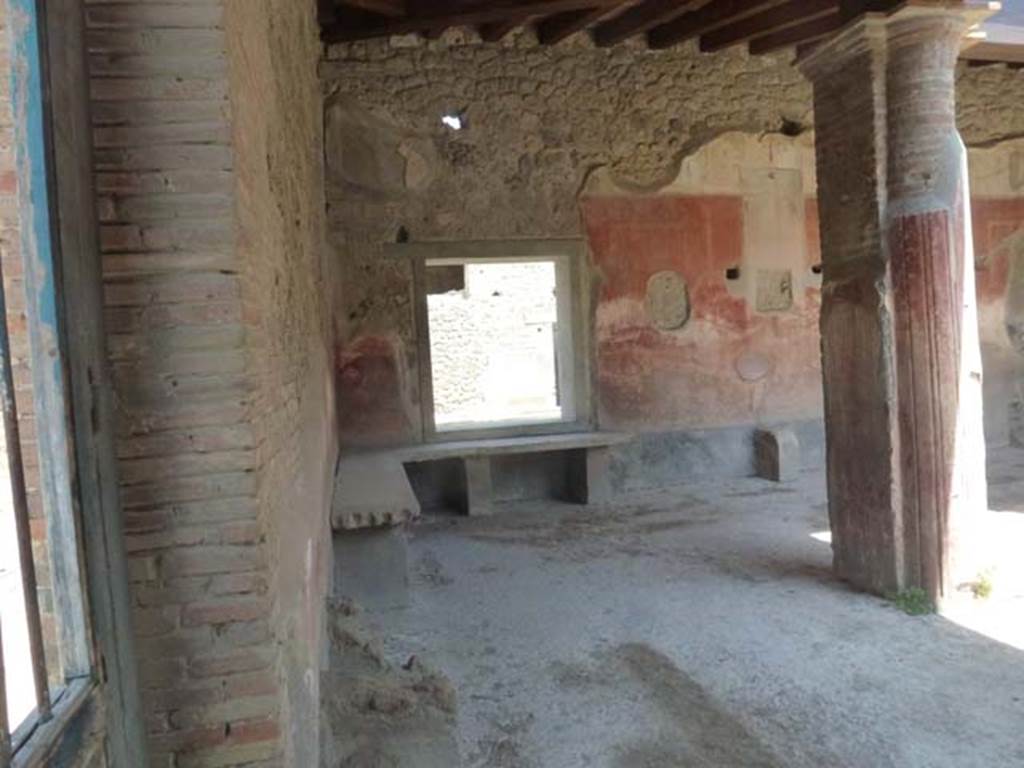
II.4.6 Pompeii. June 2012.
View looking east from entrance across the east portico towards benches in the north-east corner. Photo courtesy of Michael Binns.
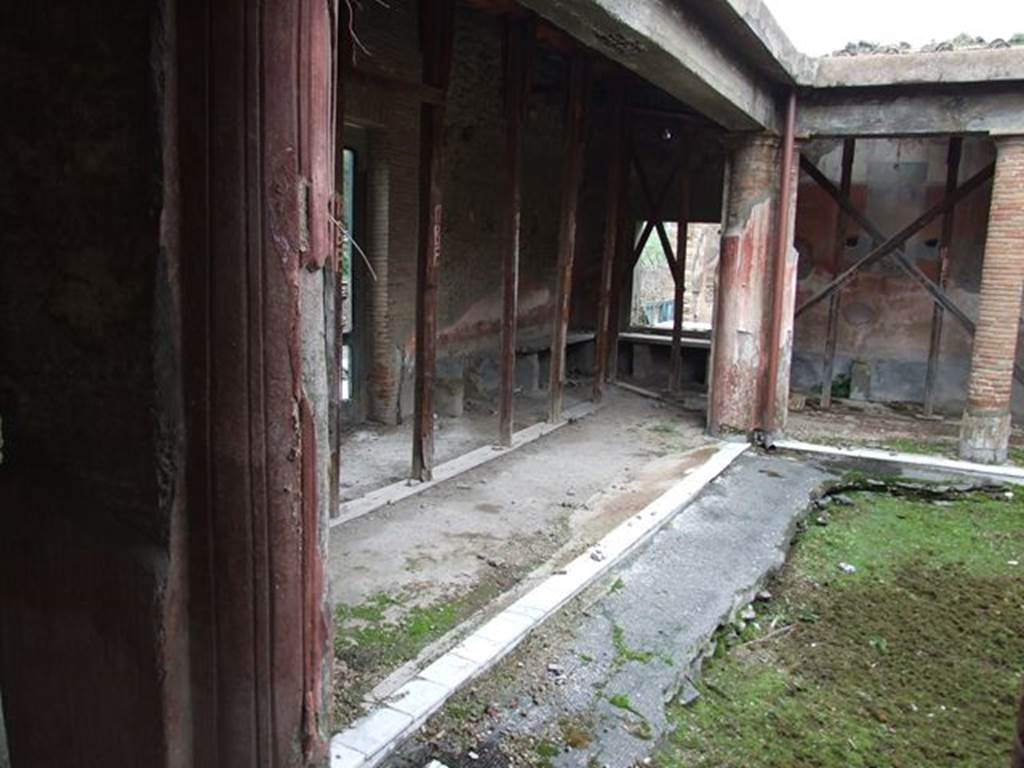
II.4.6 Pompeii. December 2006. View looking east from II.4.5 across the north portico, showing benches for waiting clients.
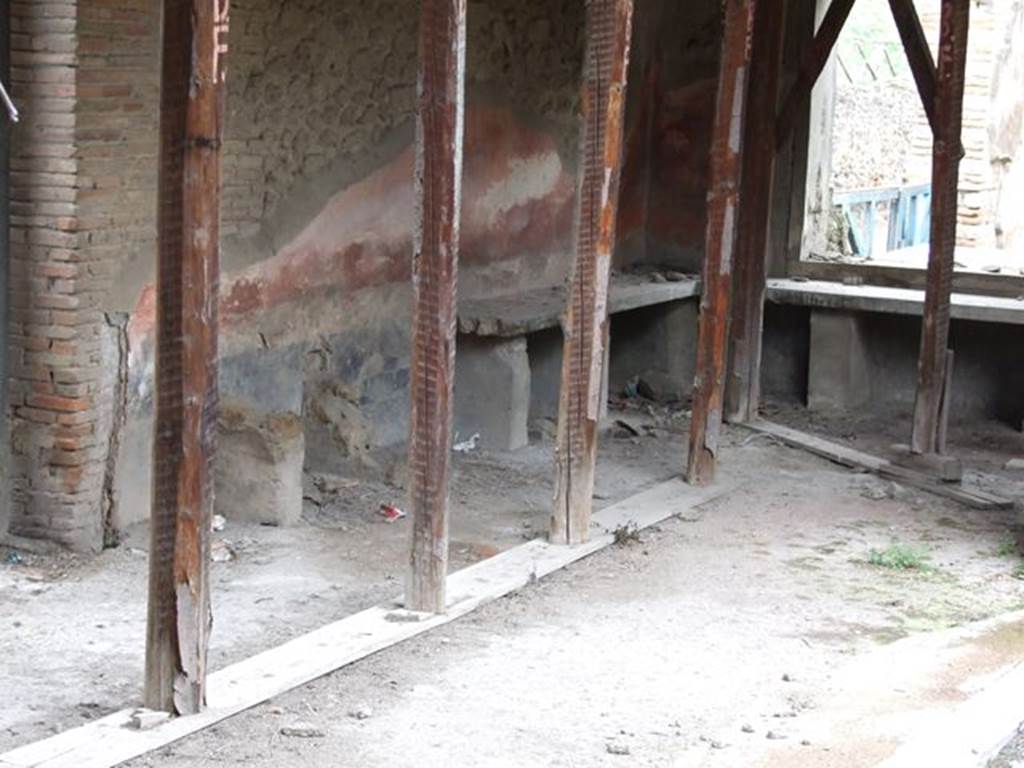
II.4.6 Pompeii. December 2006. Benches on north and east walls.
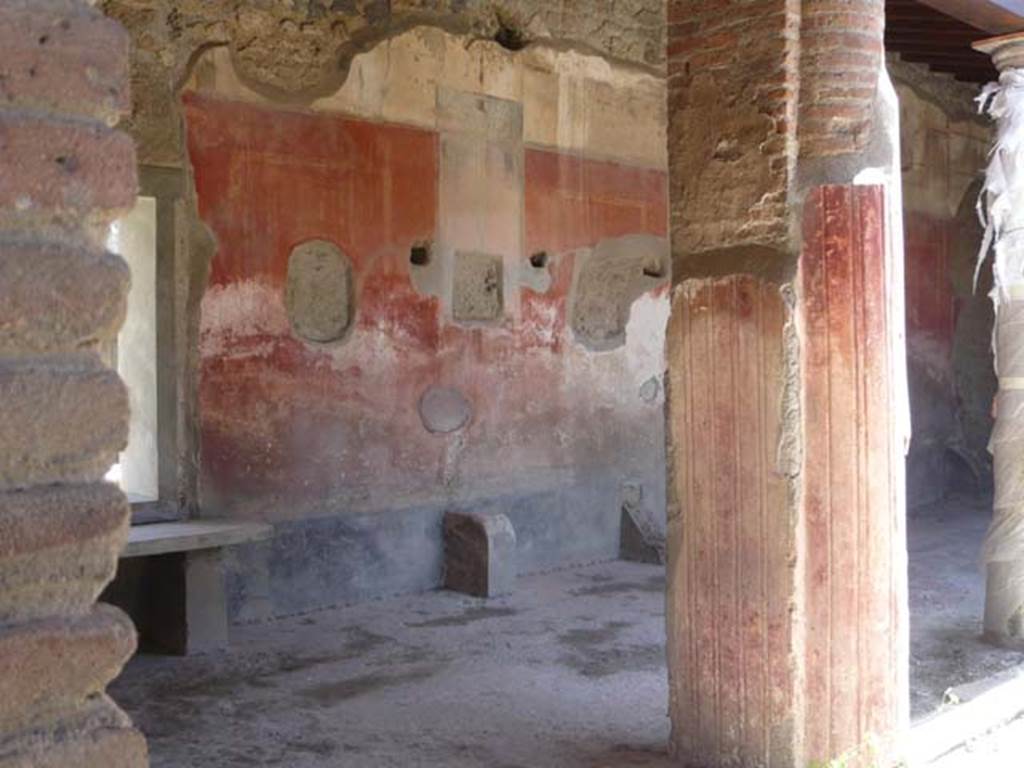
II.4.6 Pompeii. May 2012.
View looking east from entrance, showing north end of east wall with benches for waiting clients. Photo courtesy of Buzz Ferebee.
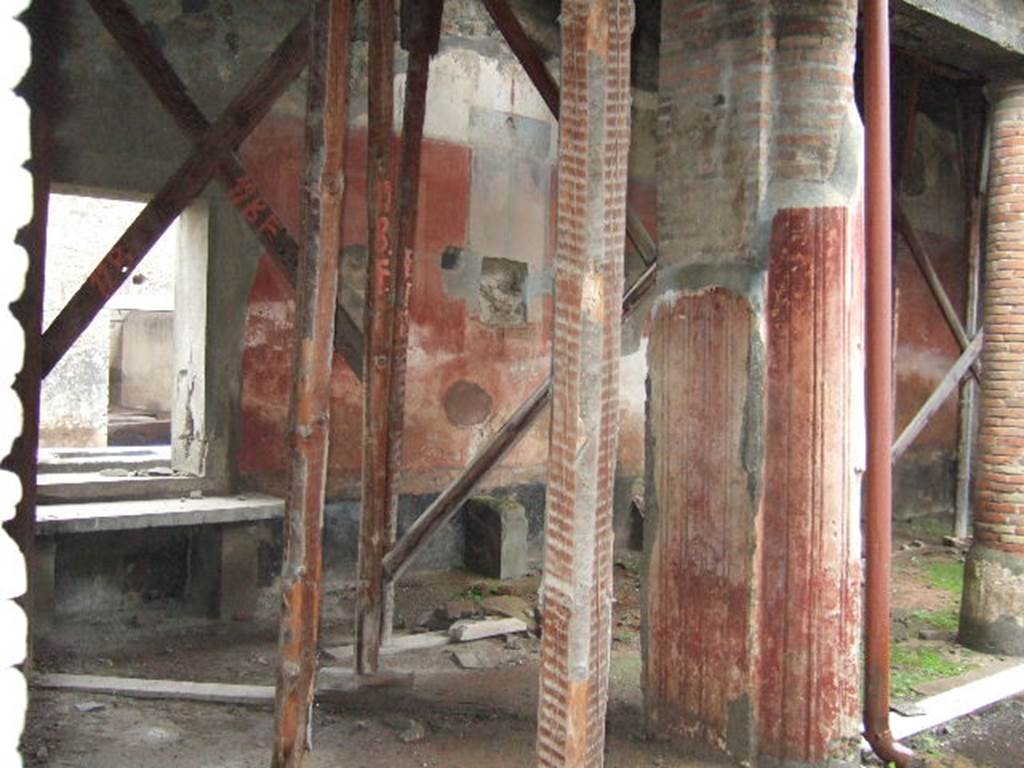
II.4.6 Pompeii. December 2006. View looking east from entrance, showing benches for waiting clients
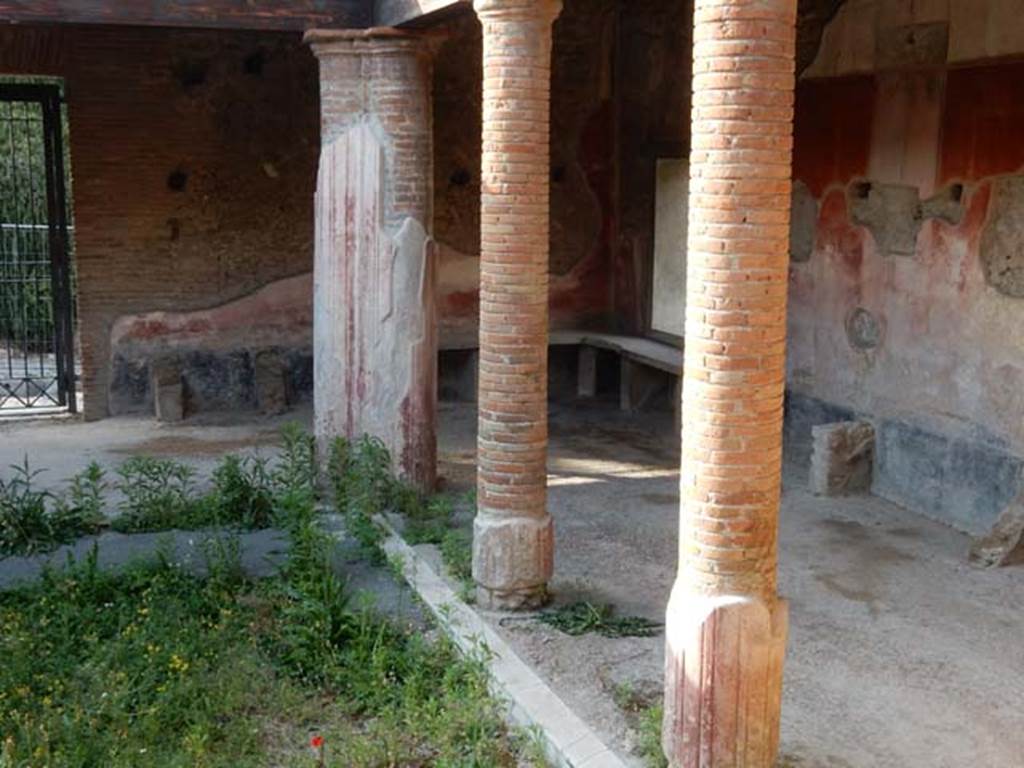
II.4.6 Pompeii. May 2017. Looking towards north-east corner. Photo courtesy of Buzz Ferebee.
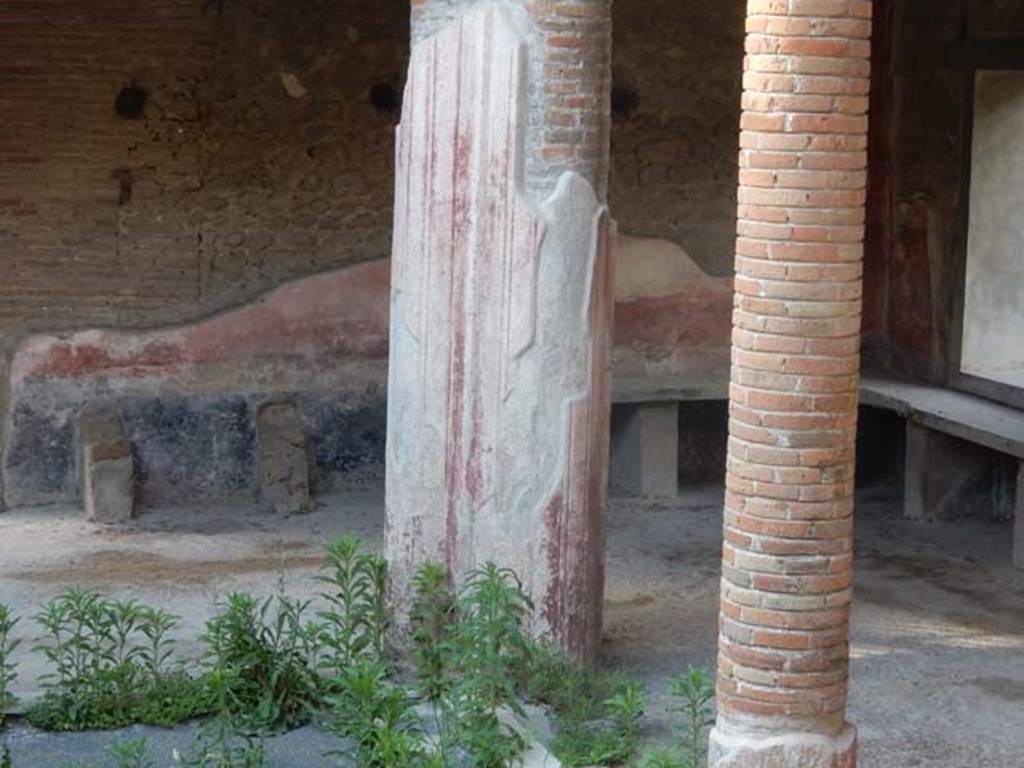
II.4.6 Pompeii. May 2017. Looking towards north-east corner. Photo courtesy of Buzz Ferebee.
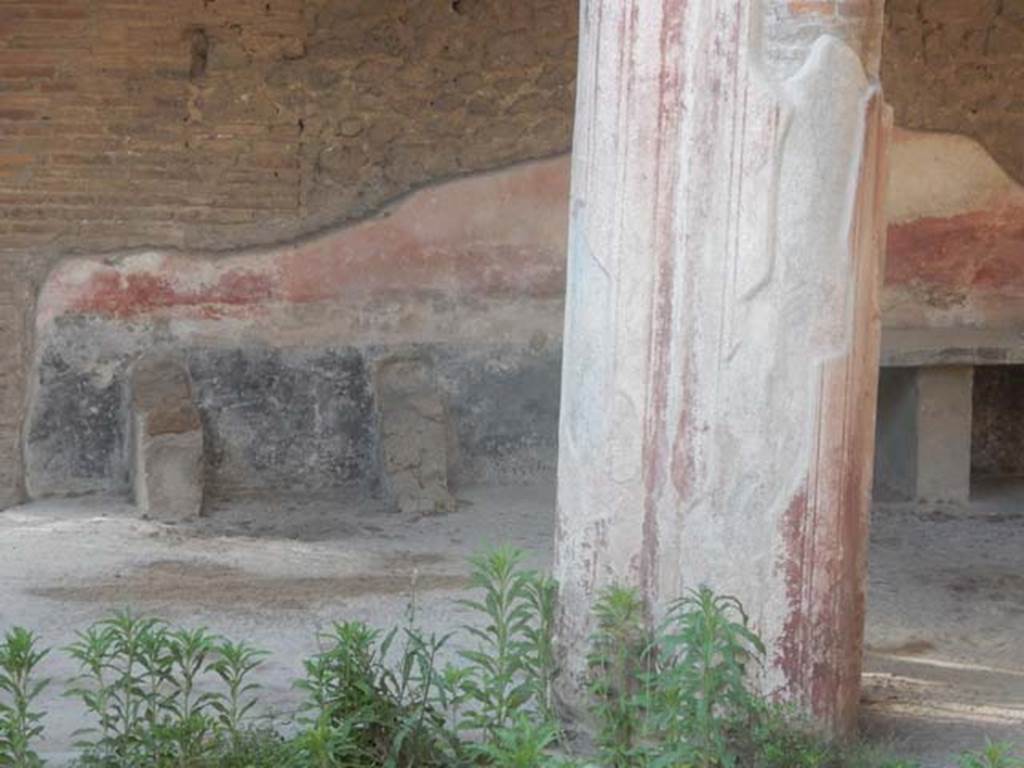
II.4.6 Pompeii. May 2017. Detail of benches against north wall. Photo courtesy of Buzz Ferebee.
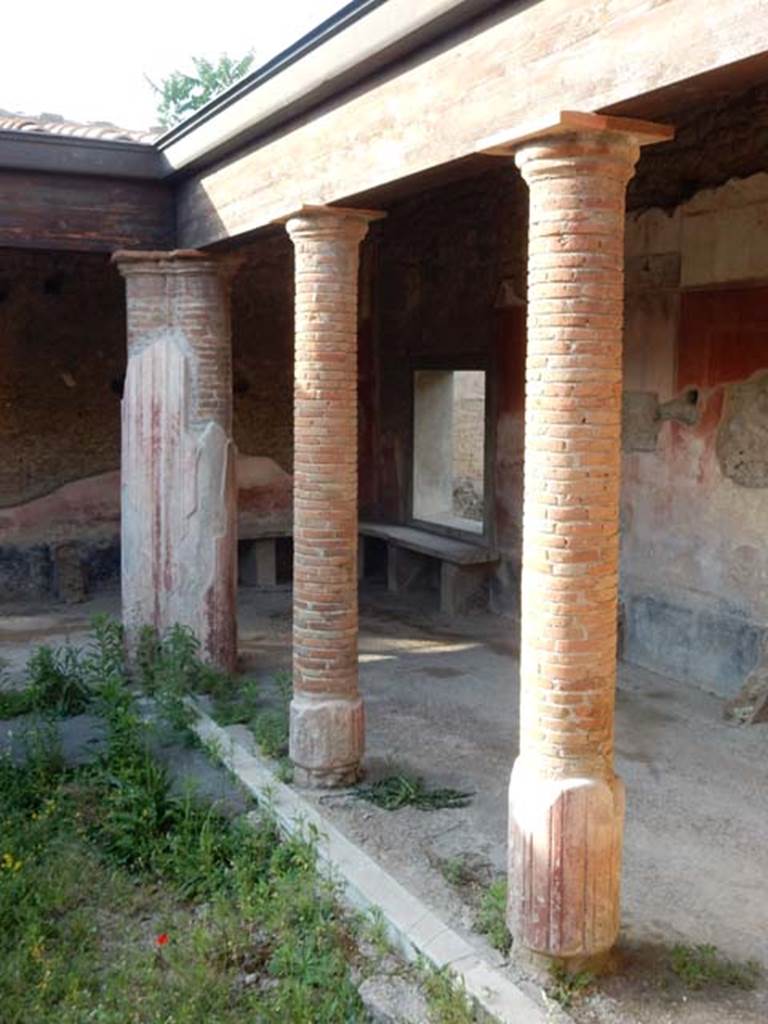
II.4.6 Pompeii. May 2017. Looking towards north-east corner. Photo courtesy of Buzz Ferebee.
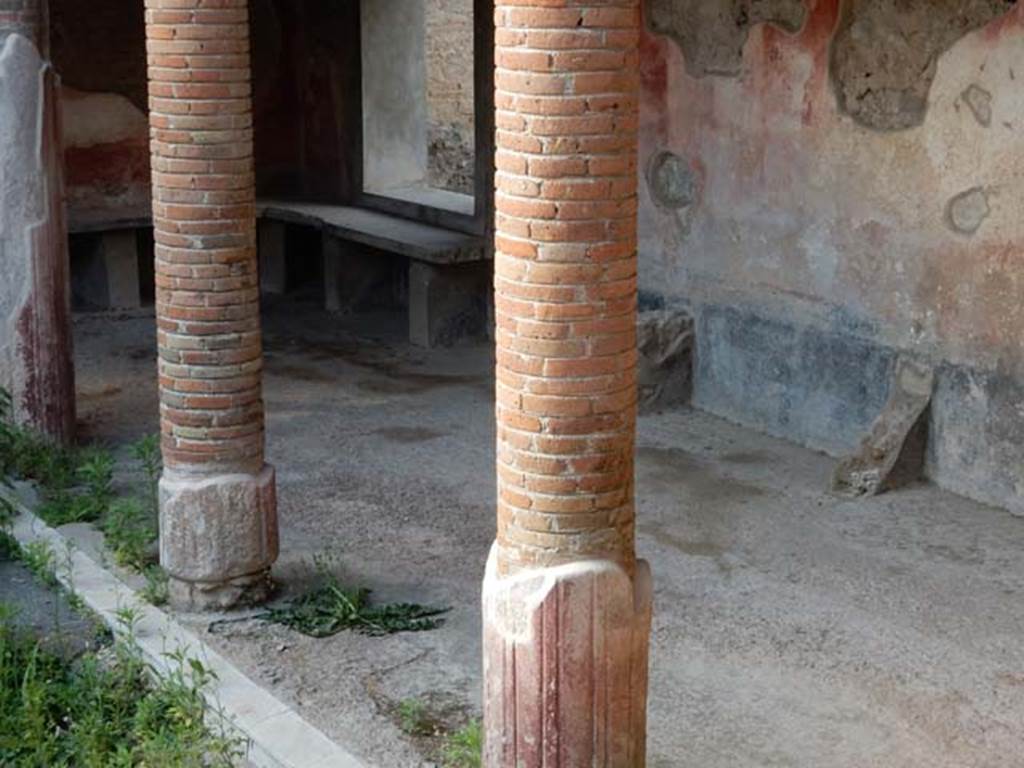
II.4.6 Pompeii. May 2017. Looking towards north-east corner and east wall. Photo courtesy of Buzz Ferebee.
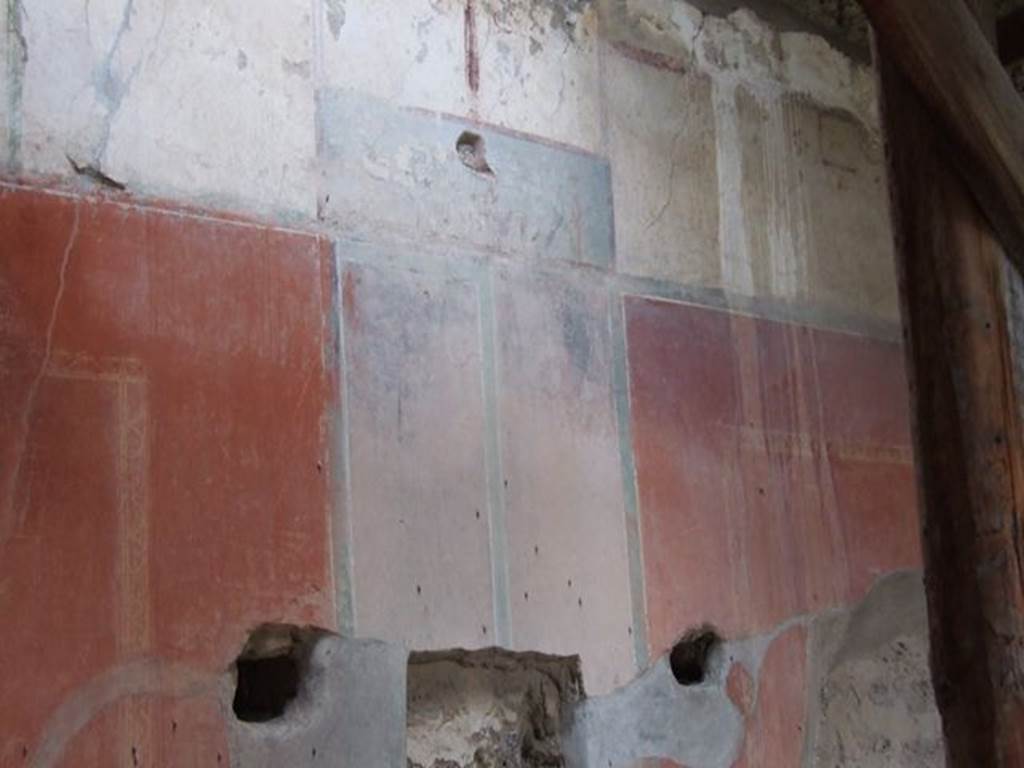
II.4.6 Pompeii. December 2006. Detail of wall decoration on north end of east wall.
According to PPM, the dark blue monochrome square topped by candelabrum, present in the upper white area, is a representation of a sacred landscape.
See Carratelli,
G. P., 1990-2003. Pompei: Pitture e Mosaici: Vol. III.
Roma: Istituto
della enciclopedia italiana, p. 209.
II.4.6 Pompeii. December 2006. View looking towards east wall across the portico of the baths, from II.4.5.
II.4.6 Pompeii. View looking east across the portico.
Photographed 1970-79 by Günther Einhorn, picture courtesy of his son Ralf Einhorn.
II.4.6 Pompeii. December 2006. Looking north along east wall towards benches and entrance doorway
II.4.6 Pompeii. May 2017. East wall. Photo courtesy of Buzz Ferebee.
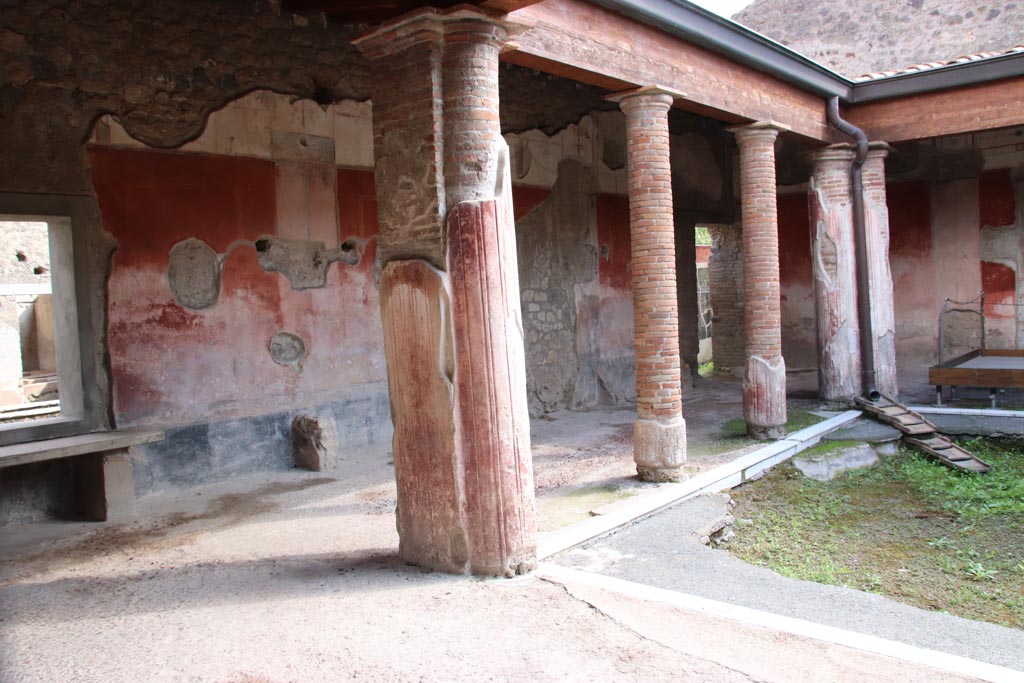
Looking towards east portico and south-east corner form entrance doorway. Photo courtesy of Klaus Heese
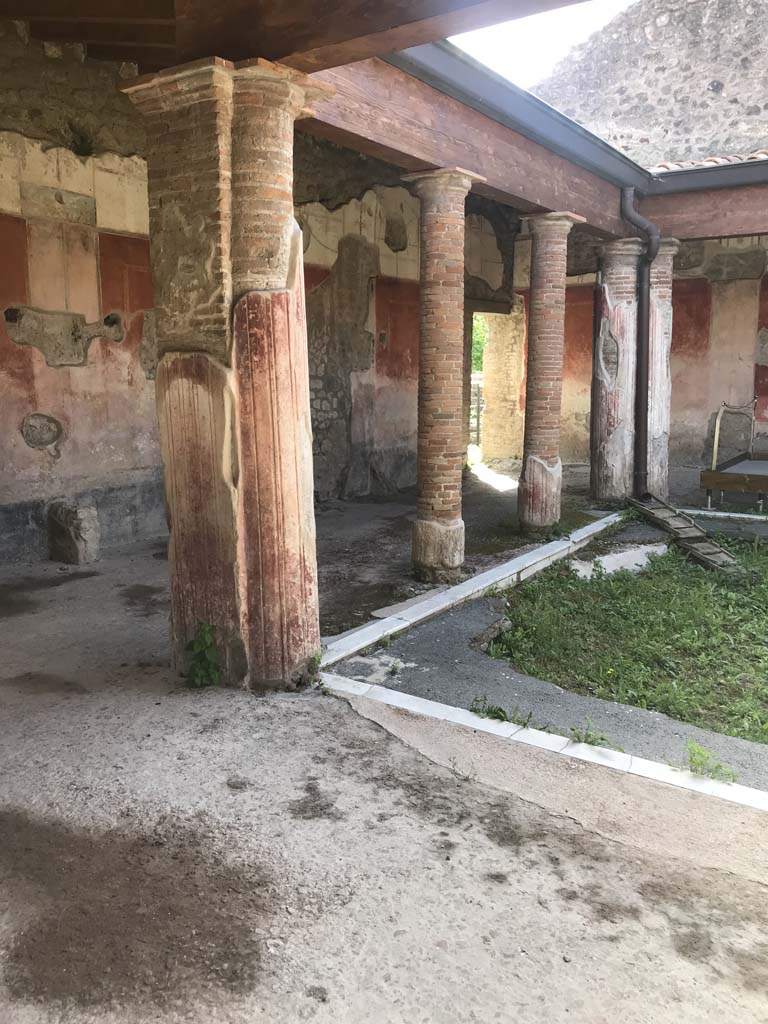
II.4.6 Pompeii. April 2019.
Photo courtesy of Rick Bauer.
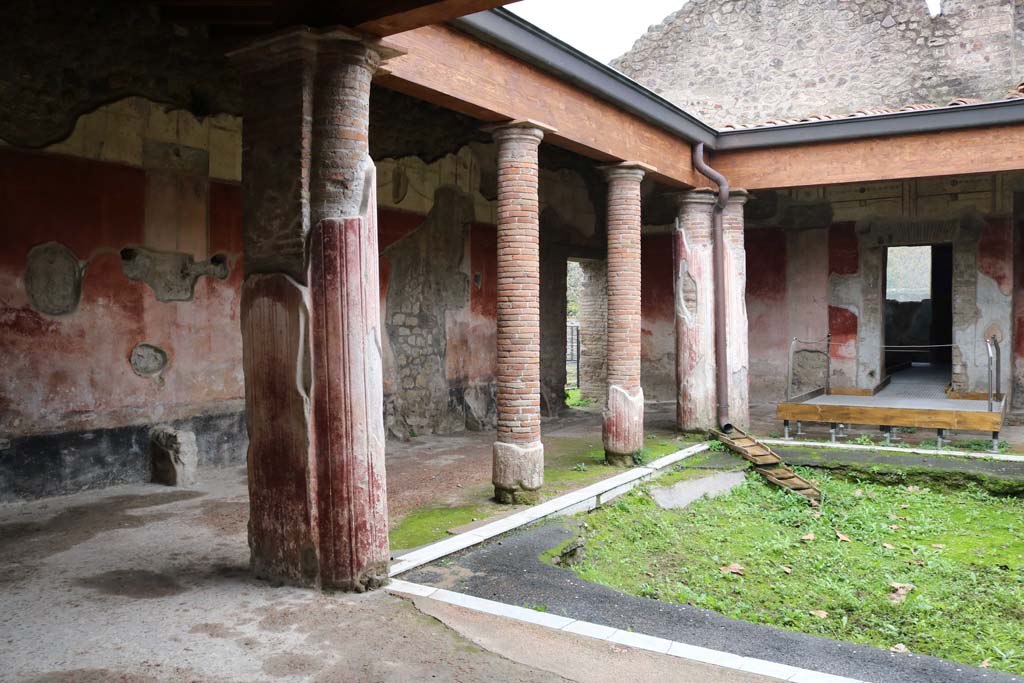
II.4.6 Pompeii. December 2018.
Looking towards the
east side and south-east corner of the portico of the baths, from entrance
doorway. Photo courtesy of Aude Durand.
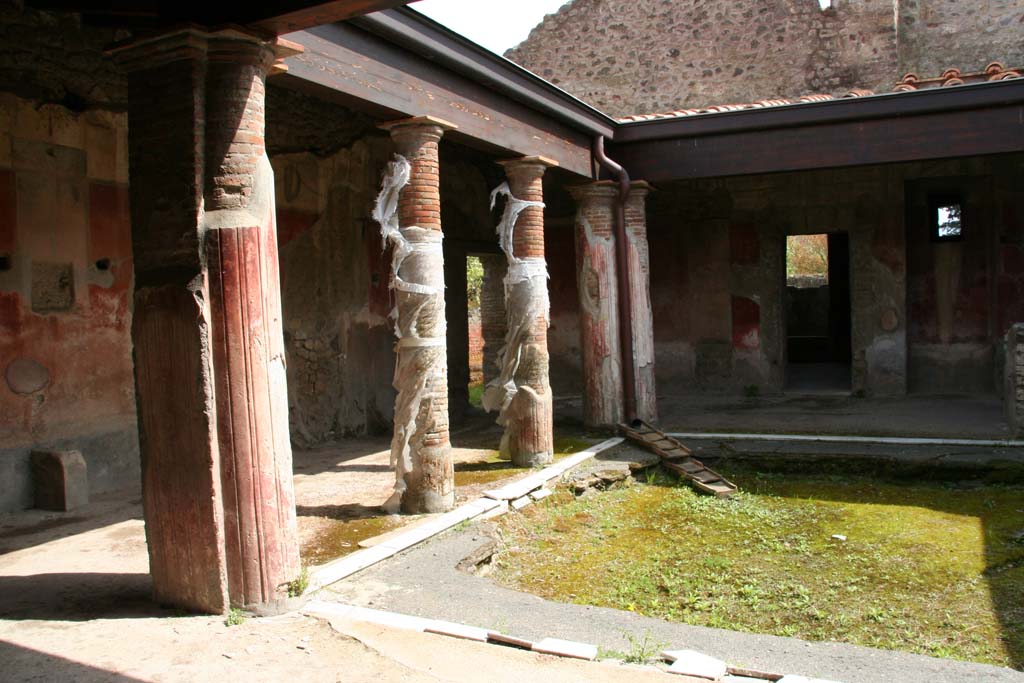
Looking towards the
east side and south-east corner of the portico, from entrance doorway. Photo courtesy of Klaus Heese.
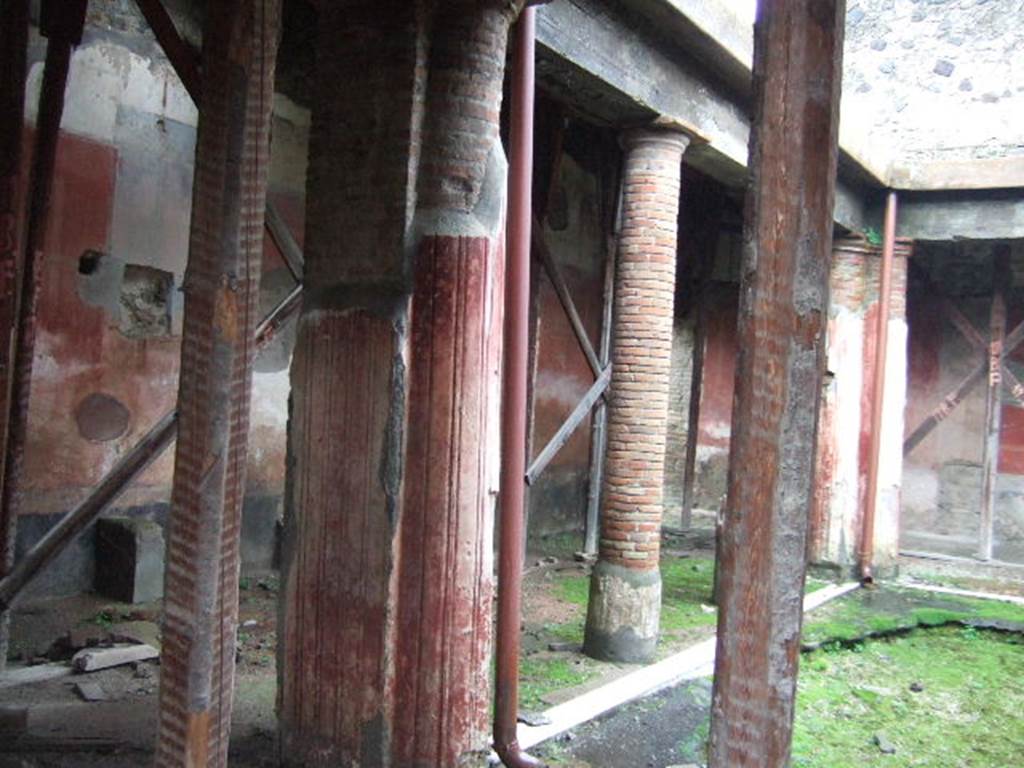
II.4.6 Pompeii. December 2006. View looking south from entrance across the east portico of the baths.
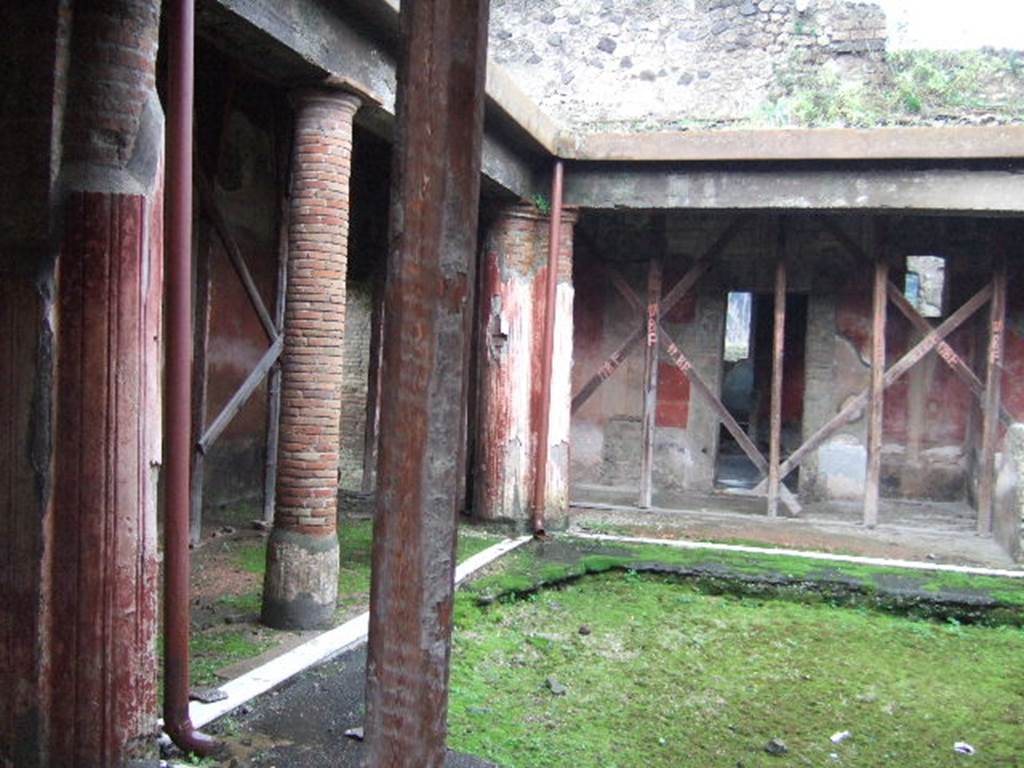
II.4.6 Pompeii. December 2006. View towards the south-east corner of the portico, from entrance.
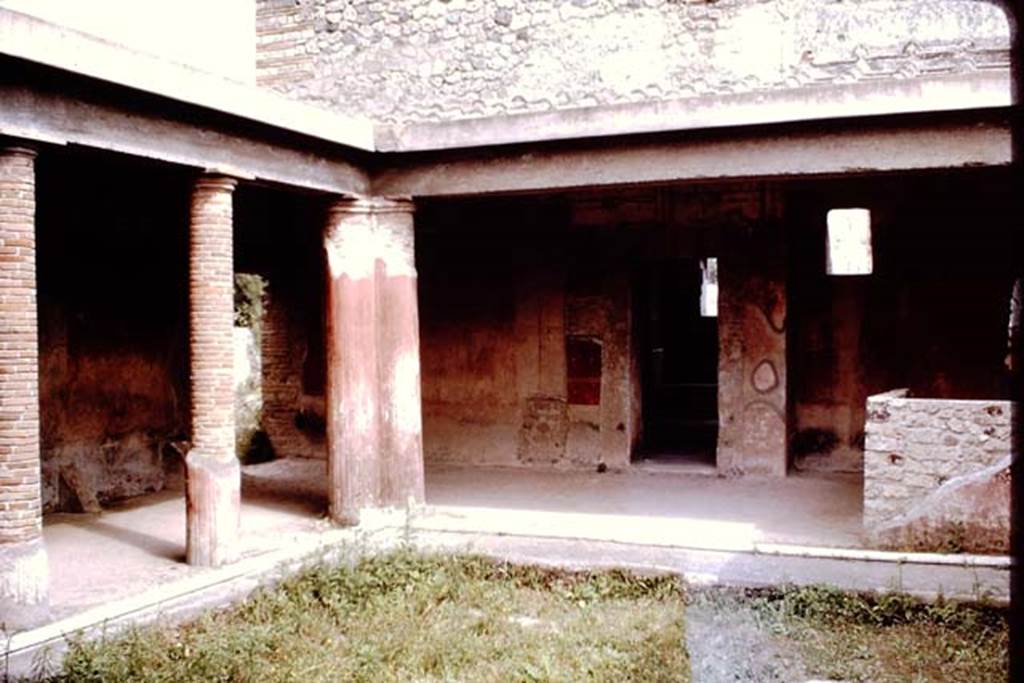
II.4.6 Pompeii. 1964. Looking from entrance doorway to south-east corner of portico. Photo by Stanley A. Jashemski.
Source: The Wilhelmina and Stanley A. Jashemski archive in the University of Maryland Library, Special Collections (See collection page) and made available under the Creative Commons Attribution-Non-Commercial License v.4. See Licence and use details.
J64f1393
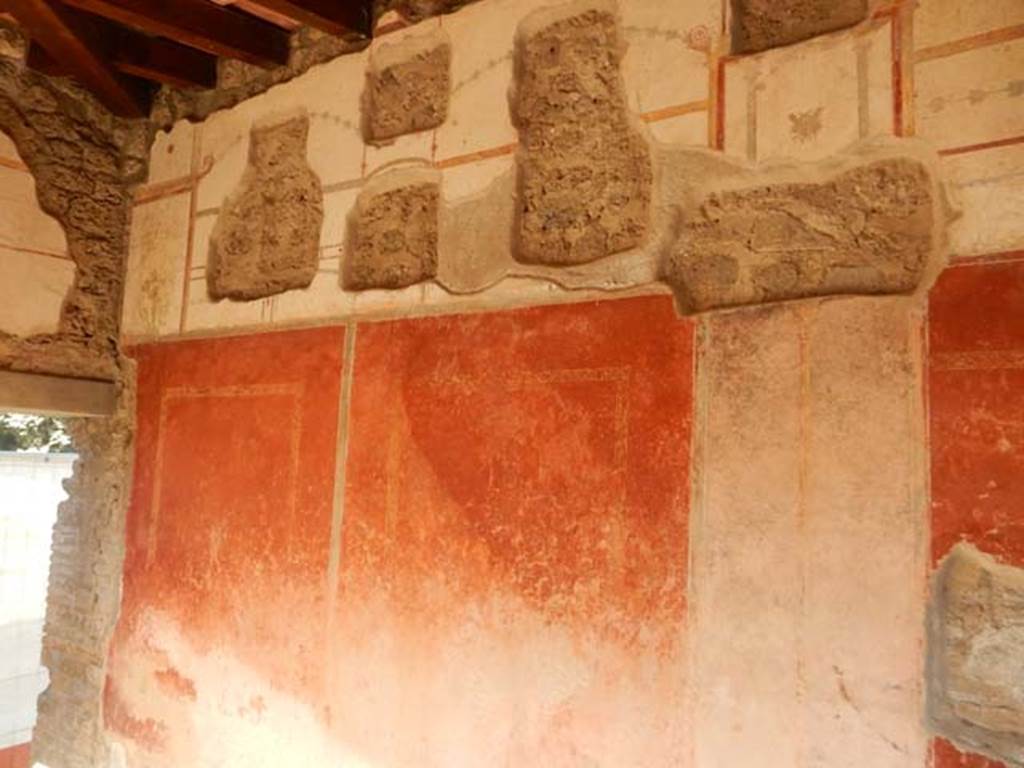
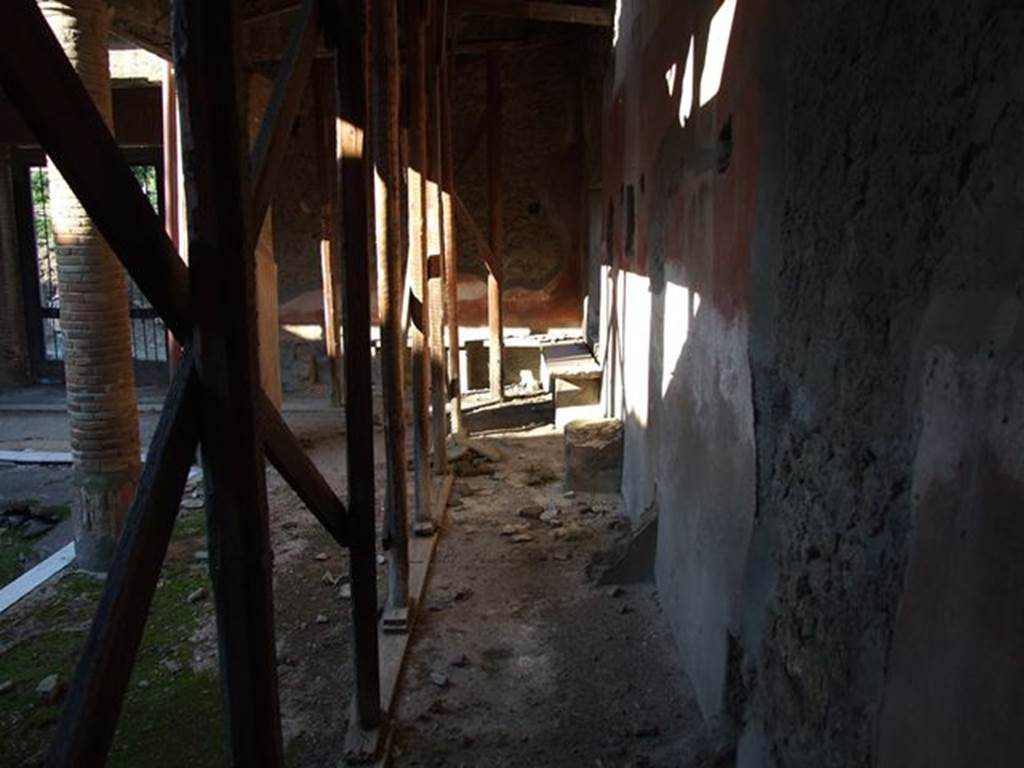
II.4.6 Pompeii. May 2017. South wall in south-east corner, on left side of doorway to apodyterium. Photo courtesy of Buzz Ferebee.
See Carratelli, G. P., 1990-2003. Pompei: Pitture e Mosaici: Vol. III. Roma:
Istituto della enciclopedia italiana, p. 210.
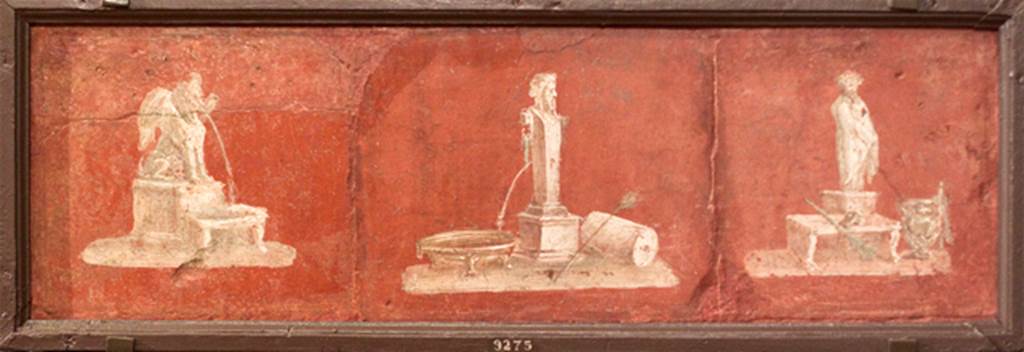
II.4.6 Pompeii. 3 separate frescoes with depiction of architectural fountains, united into one
frame.
Now in Naples
Archaeological Museum. Inventory number 9275, described as being from
Herculaneum.
According to PPM, the separate vignettes of a Sphynx fountain (on left), and statue of a Philosopher (on right) would have been found in this front portico by the Bourbons, detached and sent to the Museum.
The vignette of the Herm used as a fountain, perhaps came from the atrium reached by entrance doorway II.4.10 and II.4.11, and from the south end of the west portico of the garden area.
See Carratelli,
G. P., 1990-2003. Pompei: Pitture e Mosaici. Vol. III.
Roma: Istituto della enciclopedia italiana. (p.212-3, no.43).
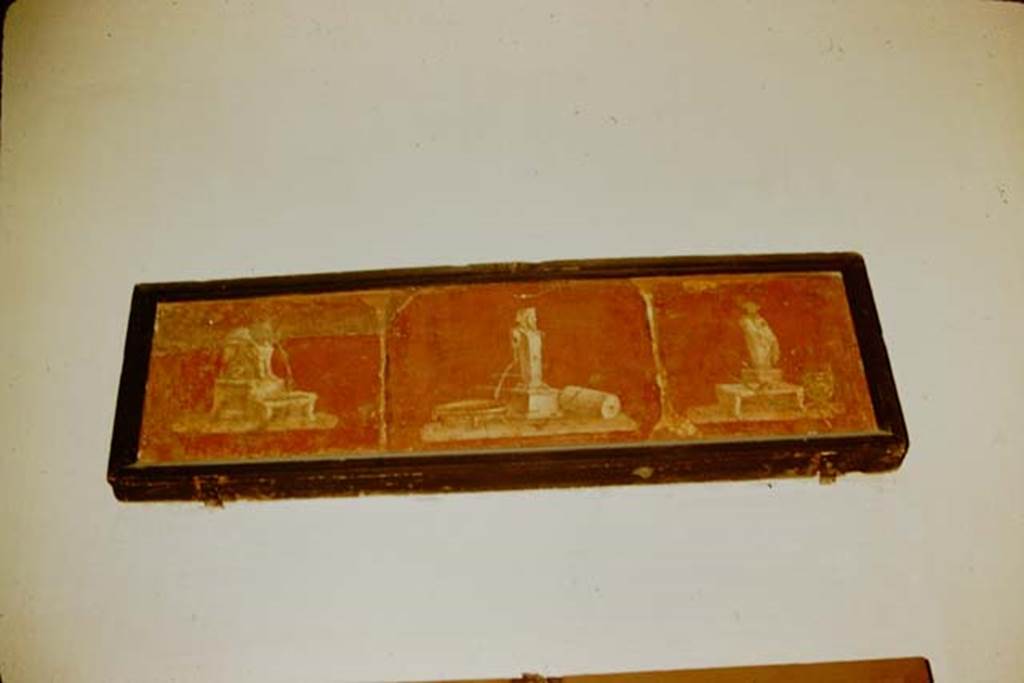
II.4.6 Pompeii. 1957. 3 vignettes of architectural fountains, in one frame. Photo by Stanley A. Jashemski.
Source: The Wilhelmina and Stanley A. Jashemski archive in the University of Maryland Library, Special Collections (See collection page) and made available under the Creative Commons Attribution-Non-Commercial License v.4. See Licence and use details.
J57f0560
Naples Archaeological Museum Inventory number 9275, described as being from Herculaneum.
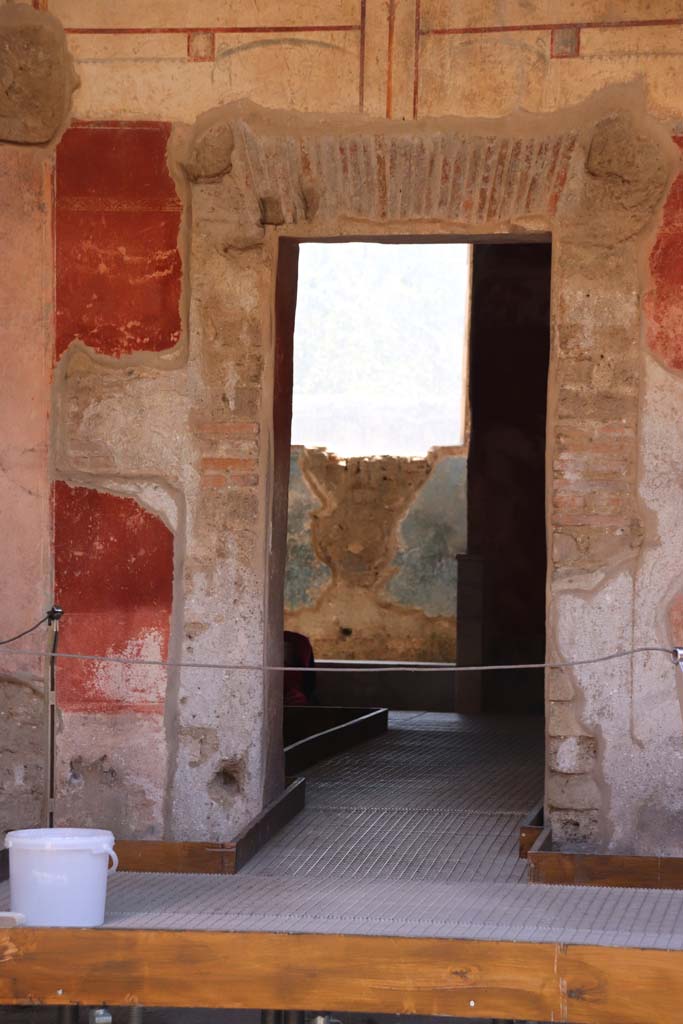
II.4.6 Pompeii. September 2019.
Doorway to
apodyterium, looking south in south-east corner of portico. Photo courtesy of Klaus
Heese.
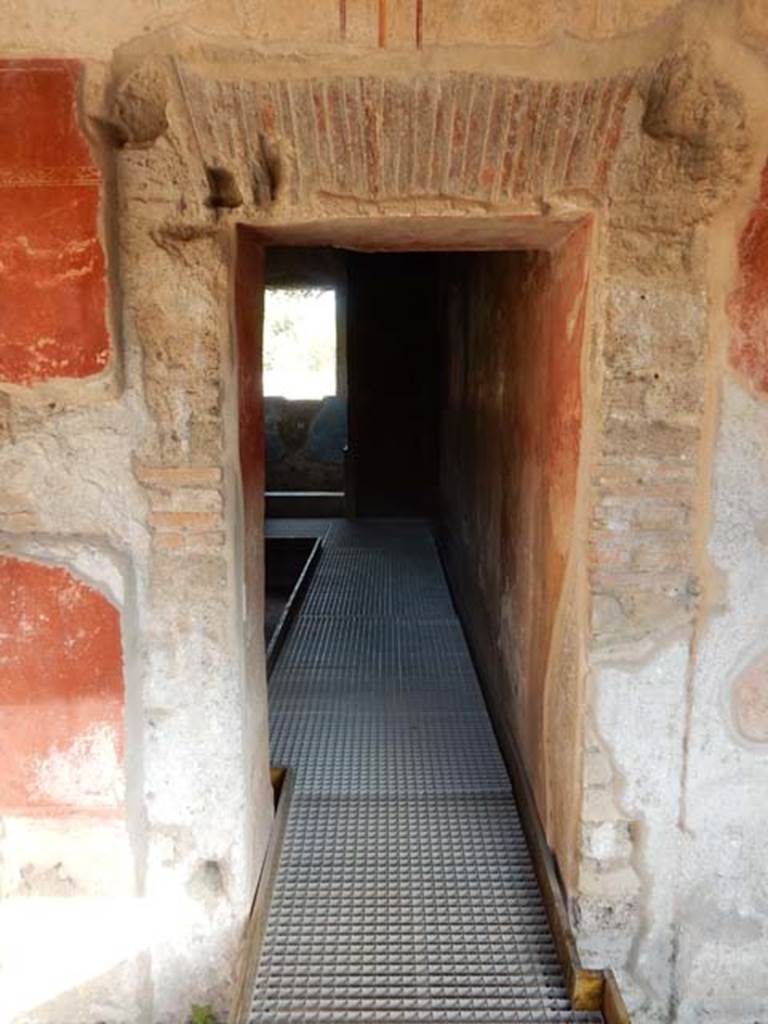
II.4.6 Pompeii. May 2017.
Doorway to apodyterium, looking south in south-east corner of portico. Photo courtesy of Buzz Ferebee.
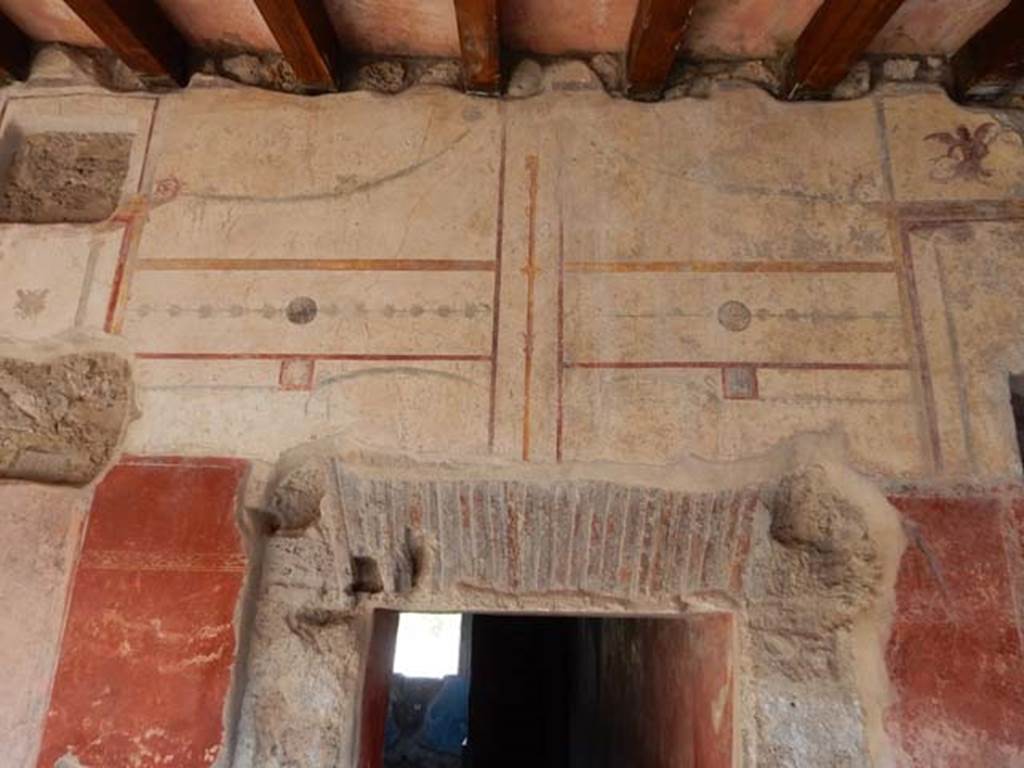
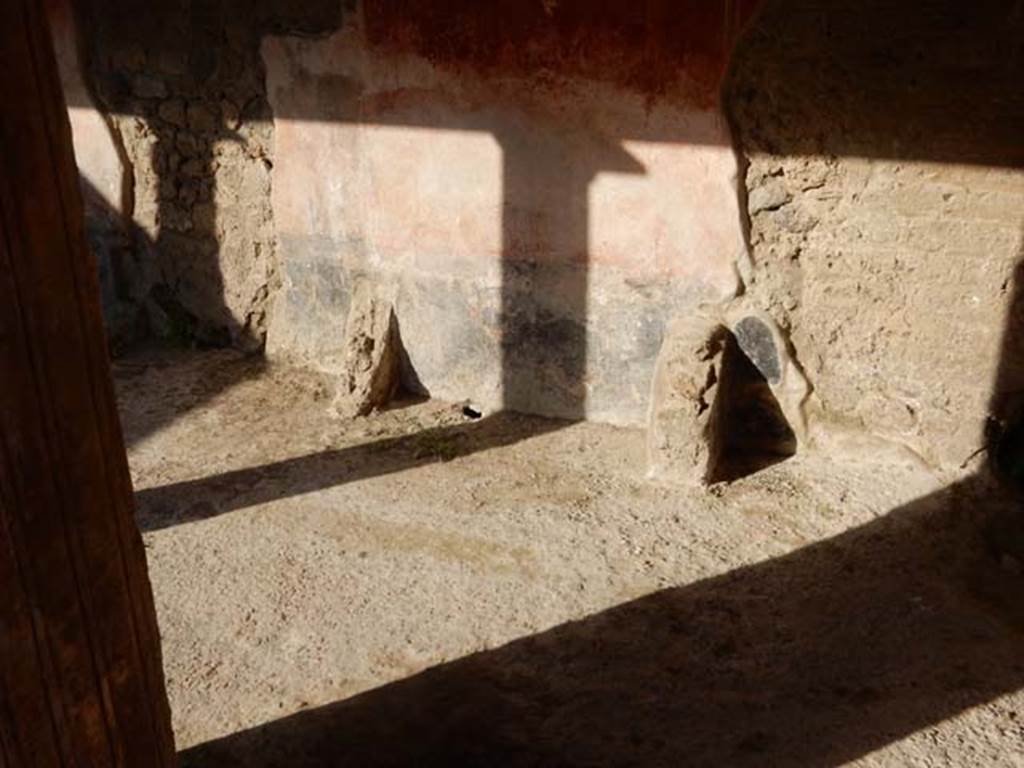
II.4.6 Pompeii. May 2017. Detail of south wall decoration above doorway to apodyterium. Photo courtesy of Buzz Ferebee.
According to PPM, on top of the aedicula is a mermaid with fish in her hands.
See Carratelli,
G. P., 1990-2003. Pompei: Pitture e Mosaici: Vol. III.
Roma: Istituto
della enciclopedia italiana, p. 211.
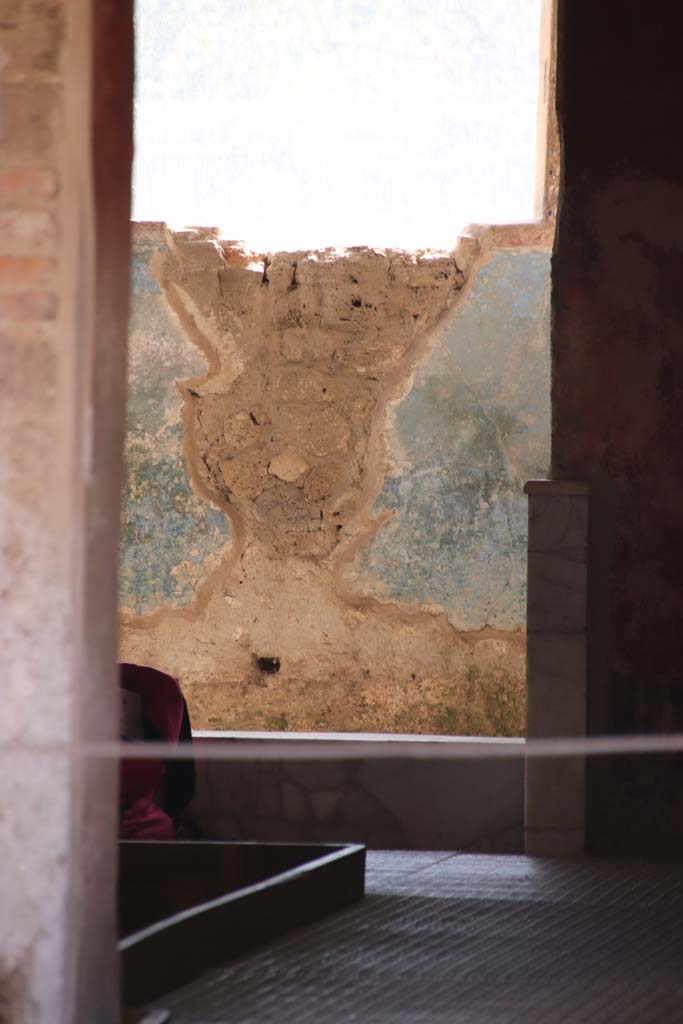
II.4.6 Pompeii. September 2019.
Looking south
through doorway into apodyterium. Photo
courtesy of Klaus Heese.
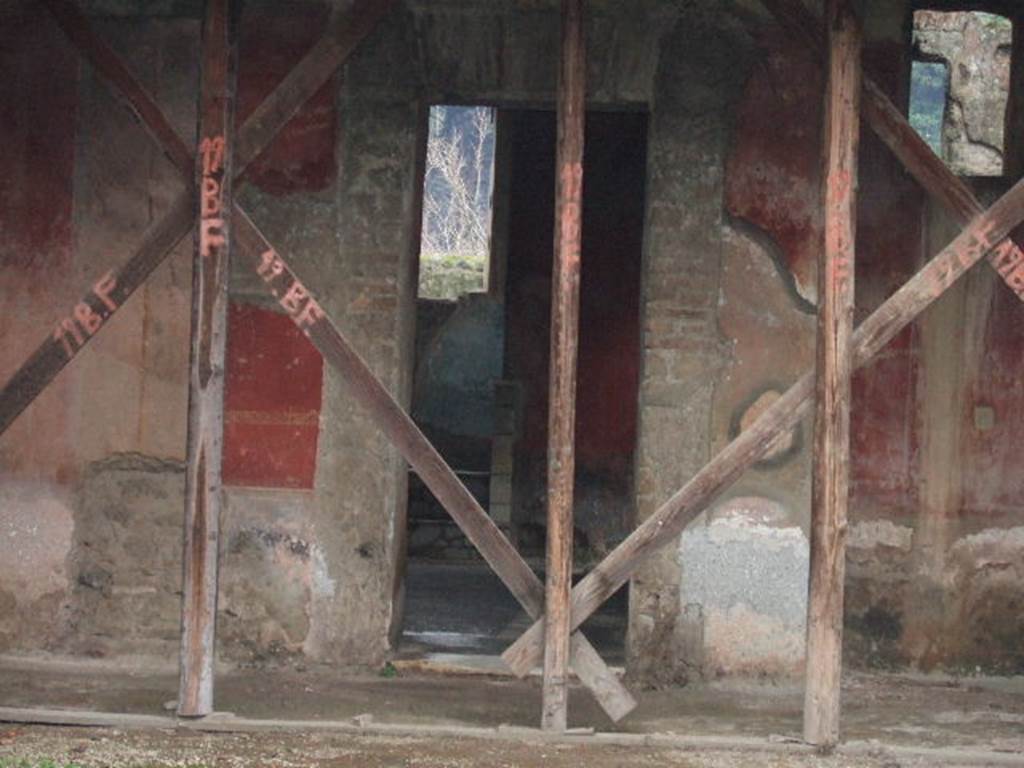
II.4.6 Pompeii. December 2006. Doorway to apodyterium, looking south.
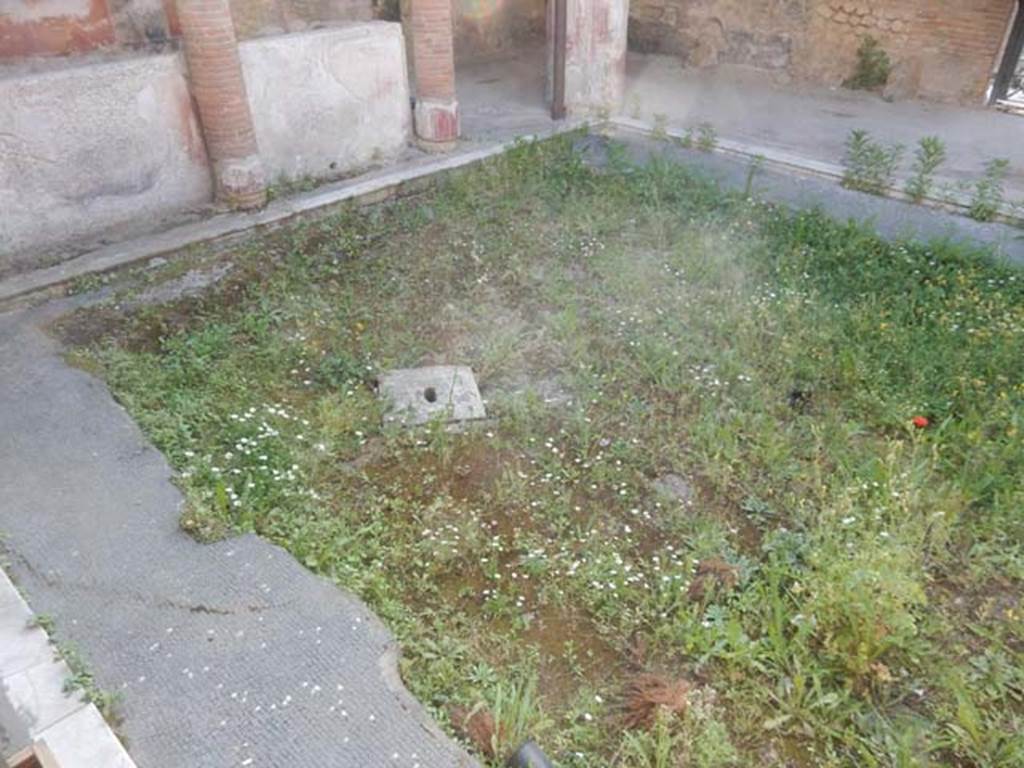
II.4.6 Pompeii. May 2017. Looking across flooring towards north-west corner. Photo courtesy of Buzz Ferebee.
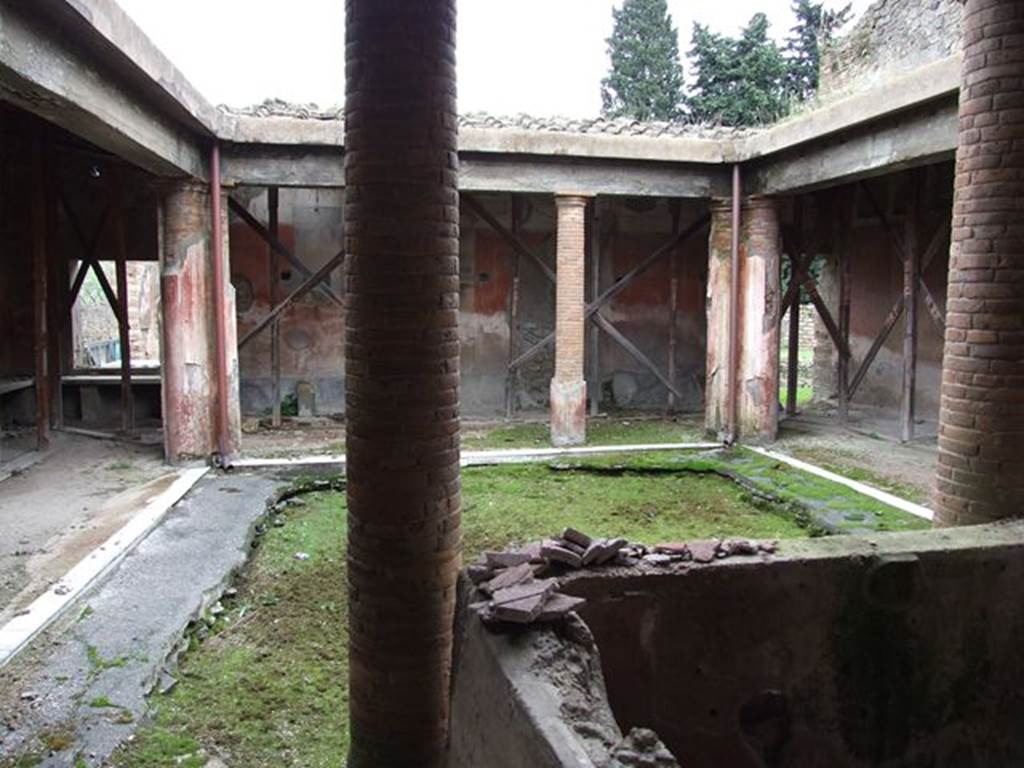
According to PPM, there was a low basin in the centre of the courtyard, functioning as an impluvium.
In the bottom, there was a large black and white mosaic with a marine scene with dolphins and tritones.
This was found between 30th November and 7th December 1755.
It was removed and taken away during the Bourbon period.
See Carratelli, G. P., 1990-2003. Pompei:
Pitture e Mosaici: Vol. III. Roma: Istituto della
enciclopedia italiana, p. 208.
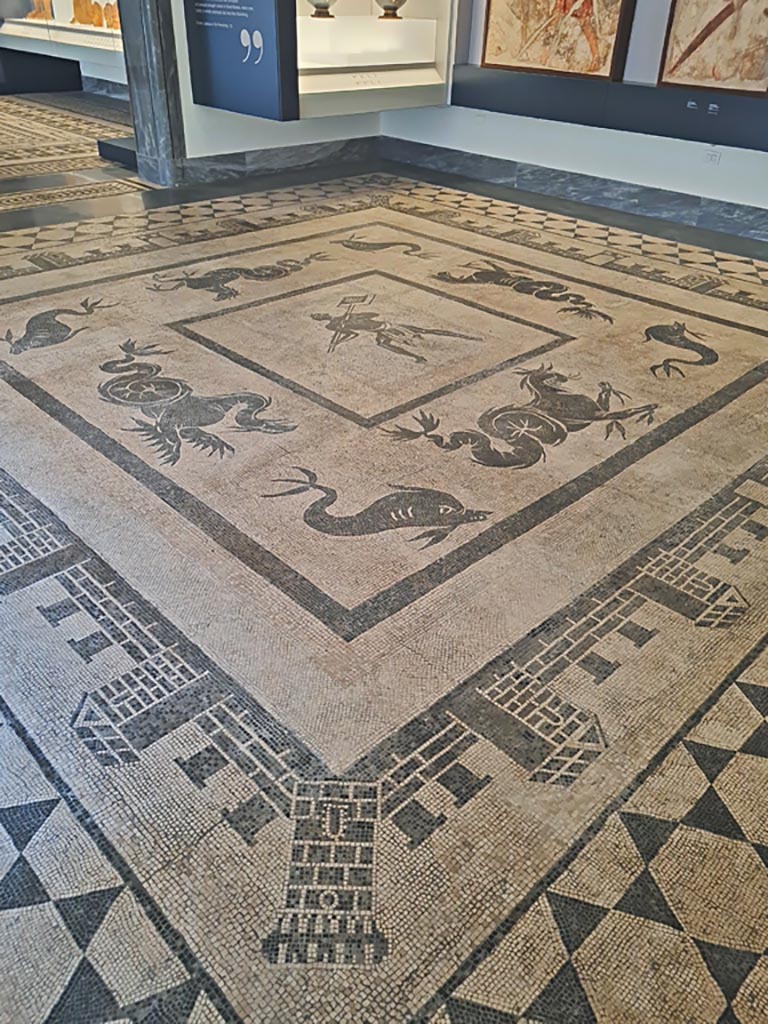
II.4.6 Pompeii. June 2024. Looking across mosaic floor with a marine scene.
On display in Naples Archaeological Museum,
room CXXXII (132). Photo courtesy of Giuseppe Ciaramella.
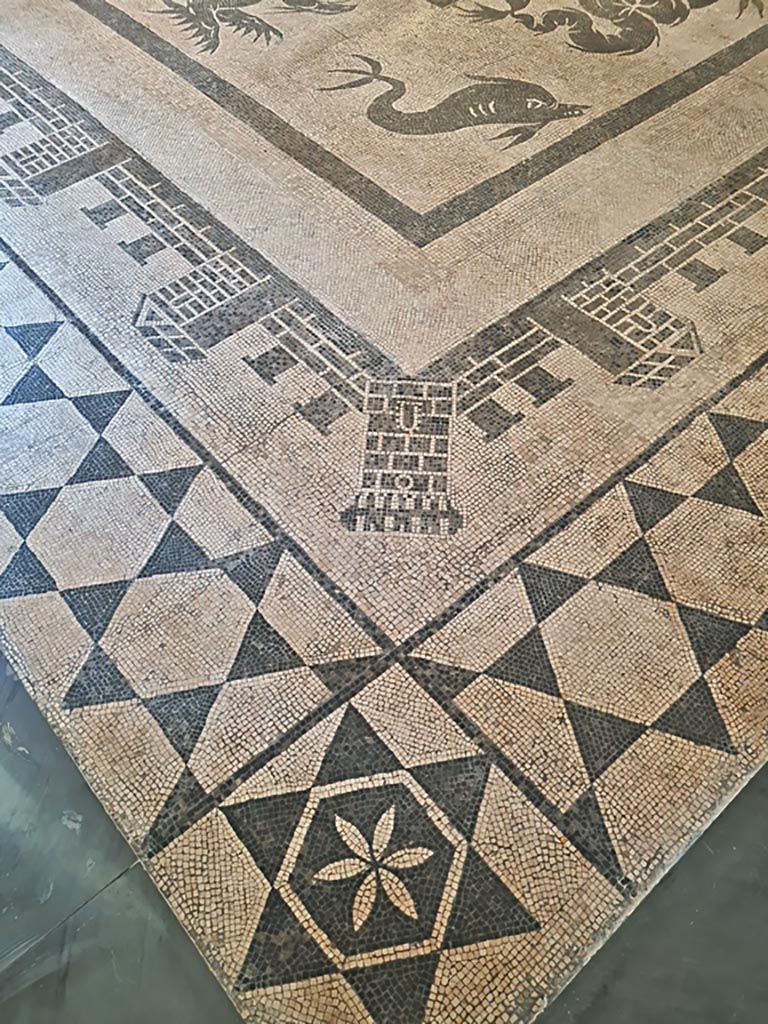
II.4.6 Pompeii. June 2024. Looking across mosaic floor from corner edge of border.
On
display in Naples Archaeological Museum, room CXXXII (132). Photo courtesy of Giuseppe Ciaramella.
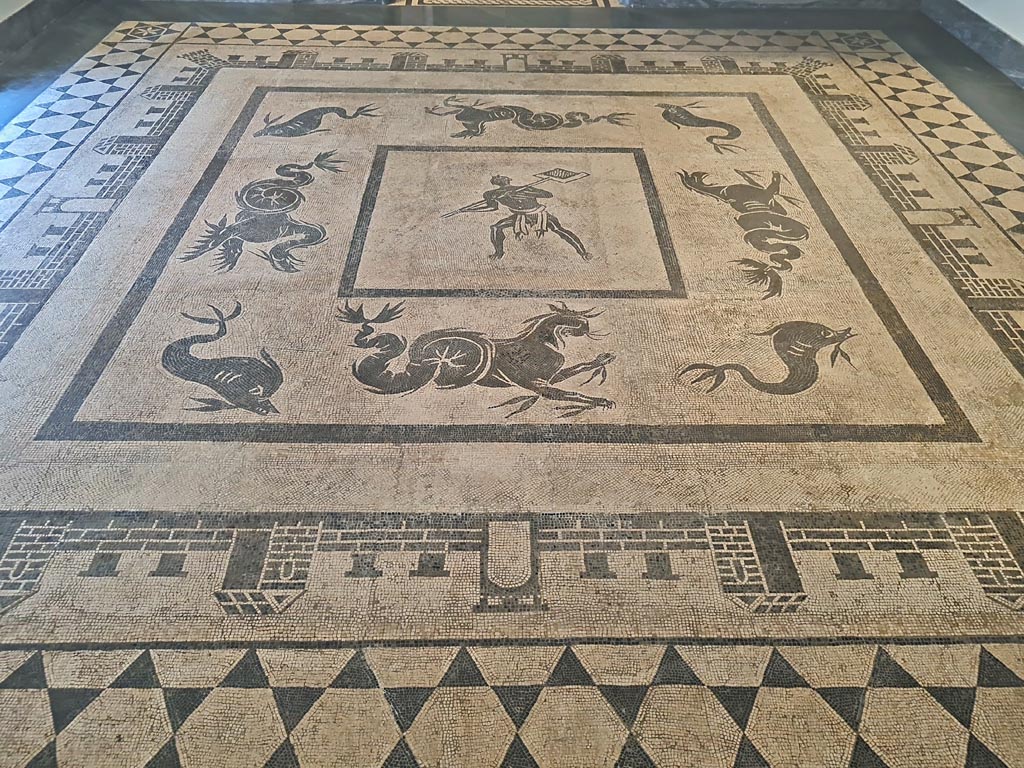
Mosaic floor in Room CXXXII (132). On display in Naples Archaeological Museum. Photo courtesy of Giuseppe
Ciaramella.
(Note:
this mosaic has also been entered into VI.1.25, Pompeii).
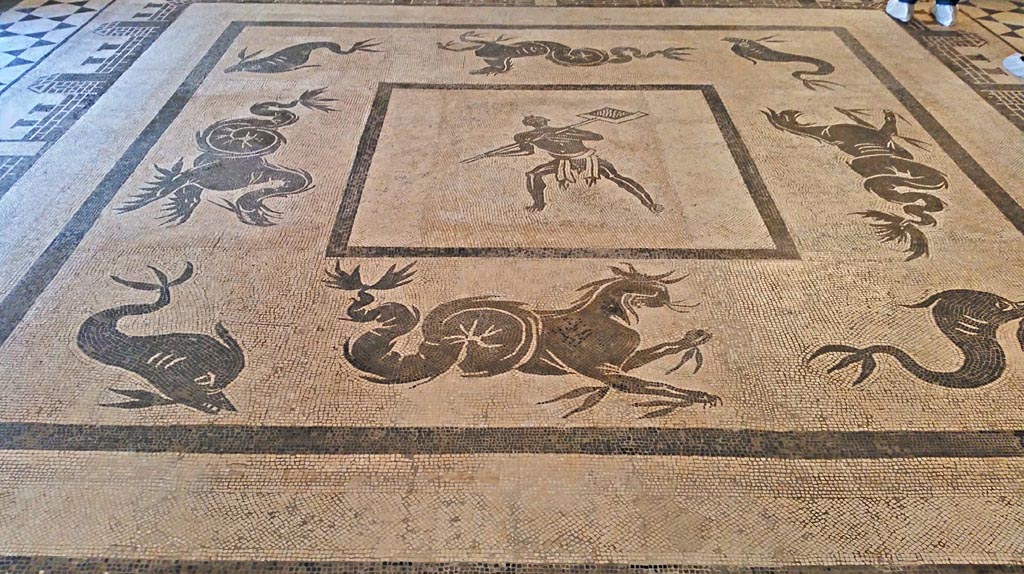
II.4.6 Pompeii. July 2019. Mosaic floor with a marine scene with dolphins and tritones.
On display in Naples Archaeological Museum. Photo courtesy of Giuseppe Ciaramella.
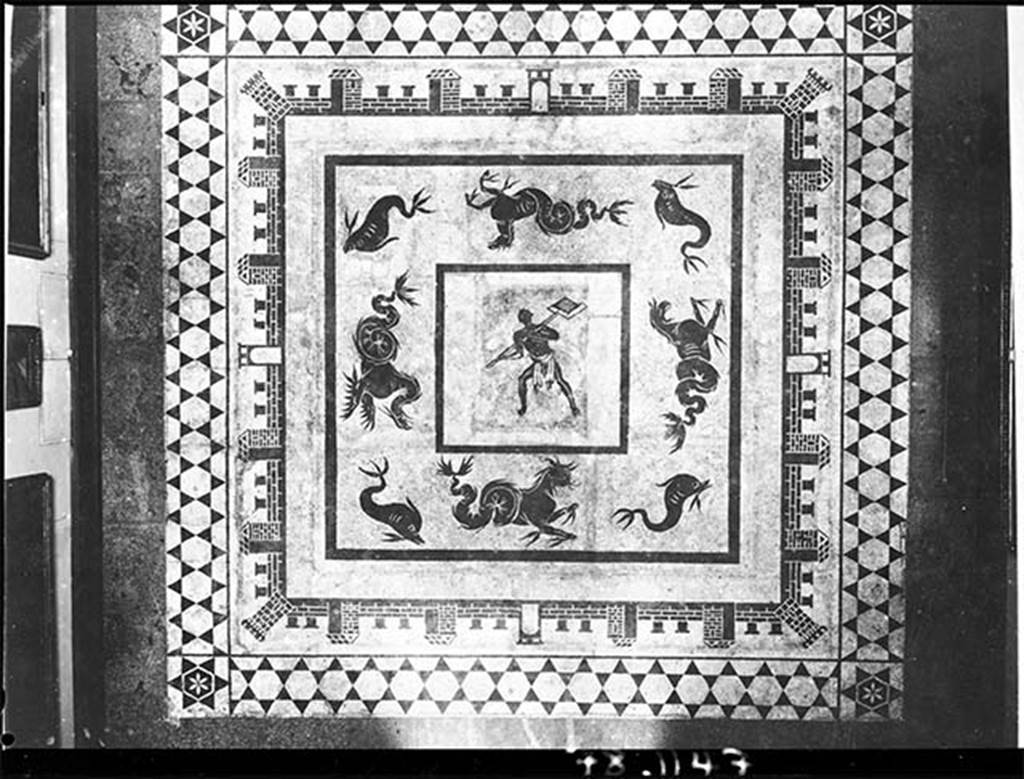
II.4.6 Pompeii. Black and white mosaic showing a furnaceman and a marine scene set in floor of Naples Museum.
DAIR
78.1147. Photo © Deutsches Archäologisches Institut, Abteilung Rom, Arkiv.
According to Marietta de Vos, this was provenanced from the baths of the Praedia di Julia Felix and is now in the floor of Naples Archaeological Museum, piano nobile, giro interno, Sala III, pavimento.
See
Dell’Orto, L. F. (ed), 1993. Ercolano
1738-1988: 250 anni di ricerca archeologica: Atti del Convegno internazionale.
SAP
Monografie 6, p. 115, pl. XXII.
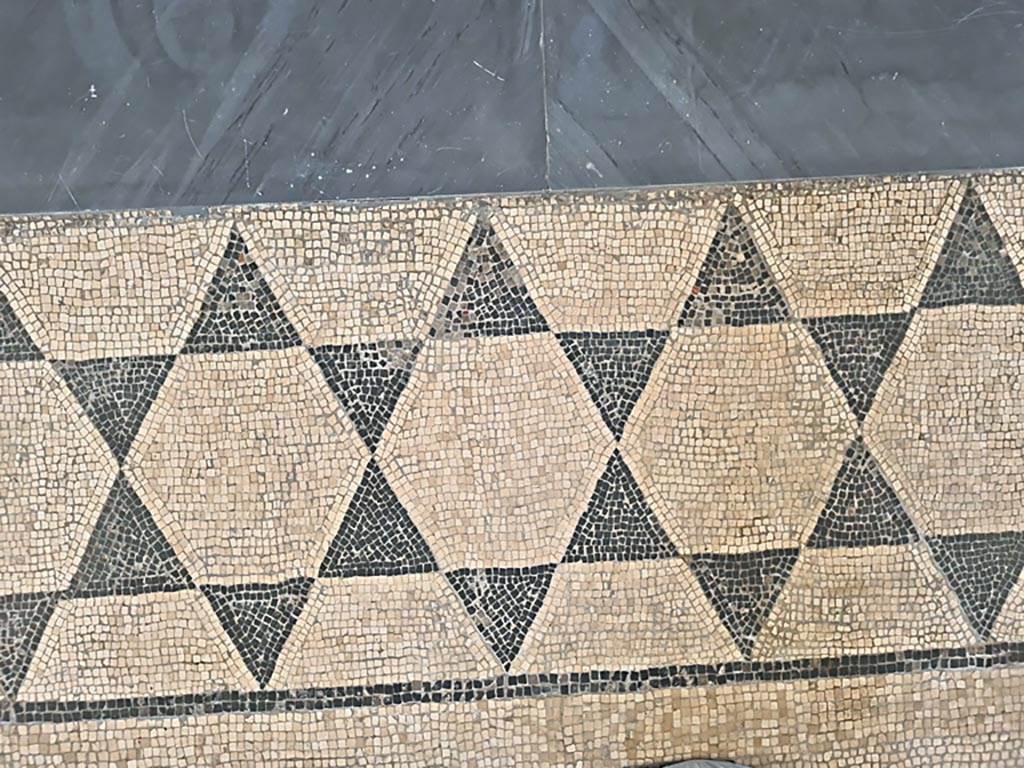
Black and white mosaic border around edge of mosaic in room CXXXII (132). Photo courtesy of Giuseppe Ciaramella.
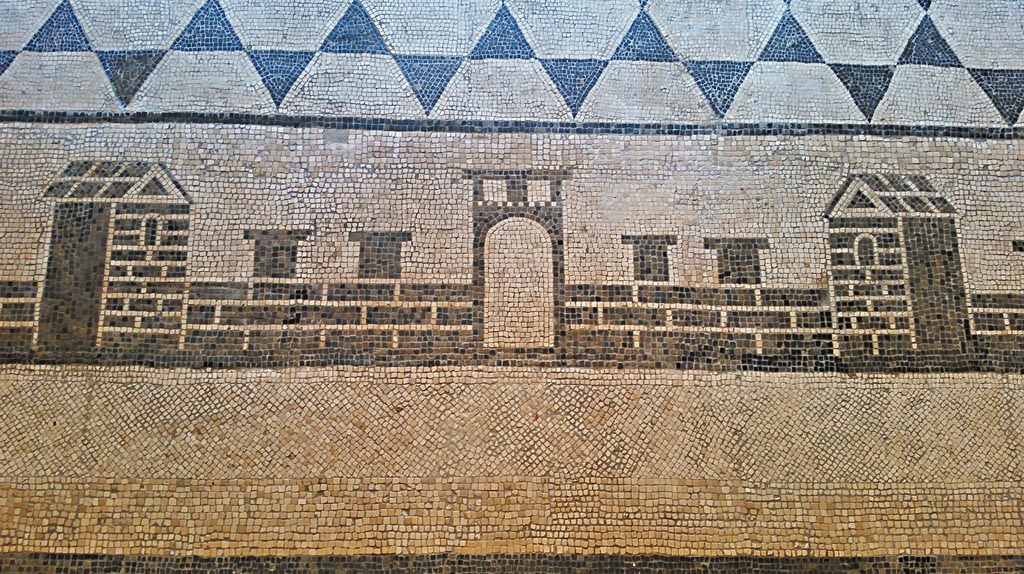
II.4.6 Pompeii. July 2019. Border edging of mosaic in atrium.
On display in Naples Archaeological Museum. Photo courtesy of Giuseppe Ciaramella.
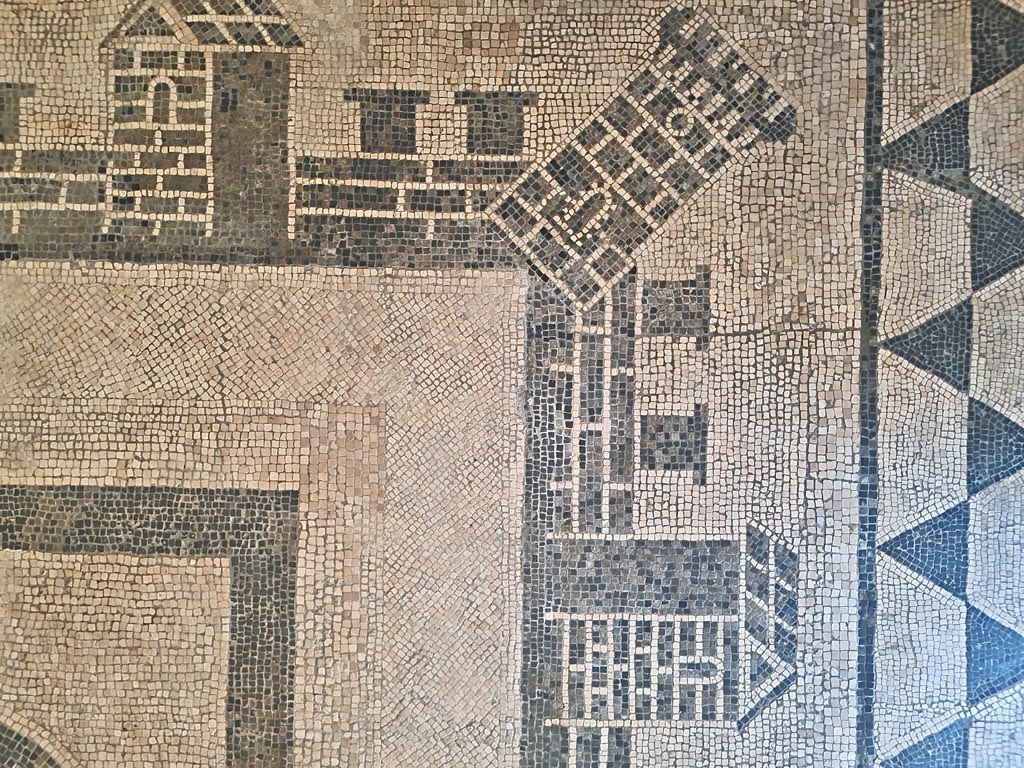
On display in Naples Archaeological Museum. Photo courtesy of Giuseppe Ciaramella.
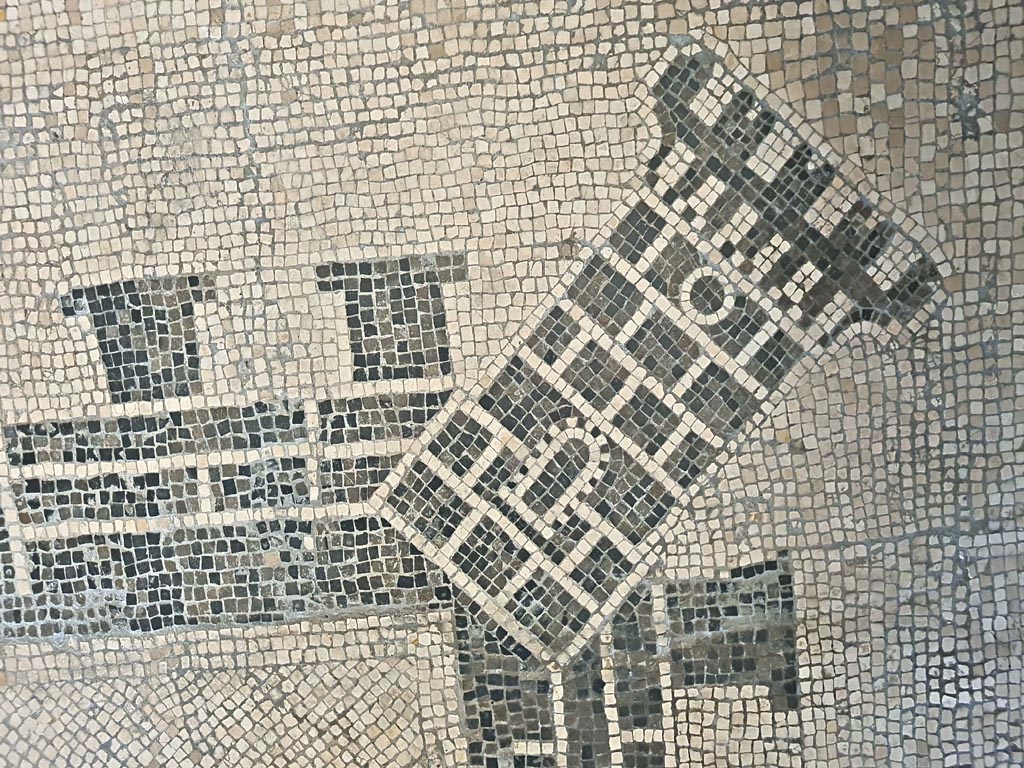
On display in Naples Archaeological Museum. Photo courtesy of Giuseppe Ciaramella.
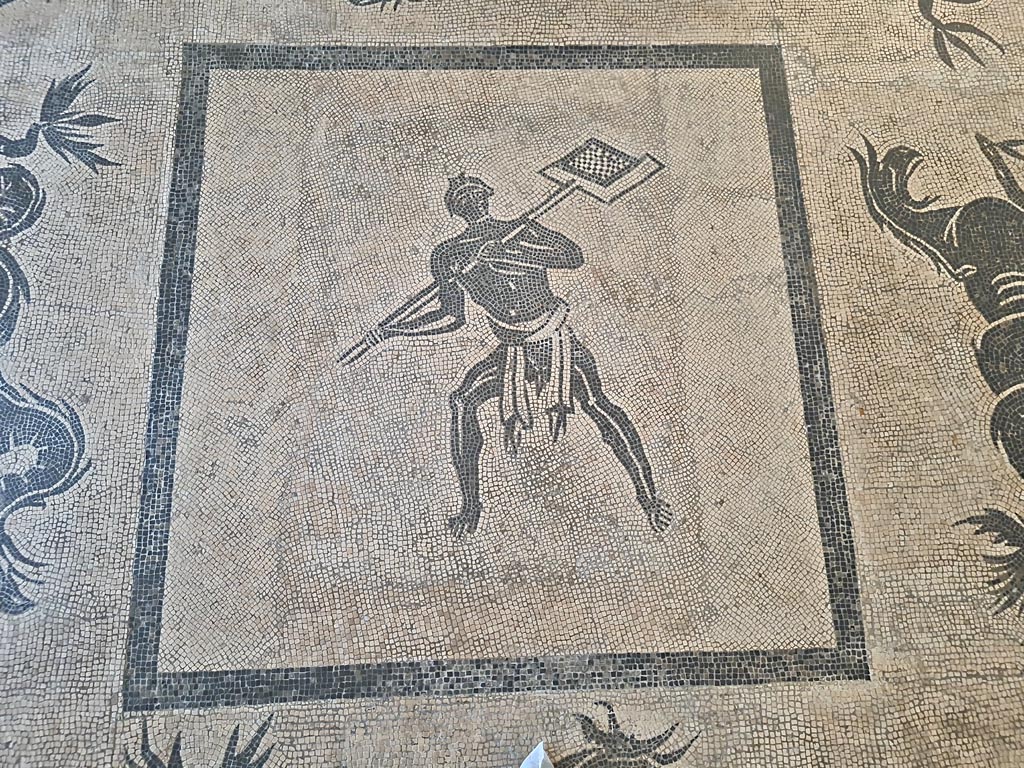
Black and white mosaic from centre of floor showing a furnaceman, a slave with a shovel, in the act of feeding the furnace near the baths.
Photo courtesy of Giuseppe Ciaramella.
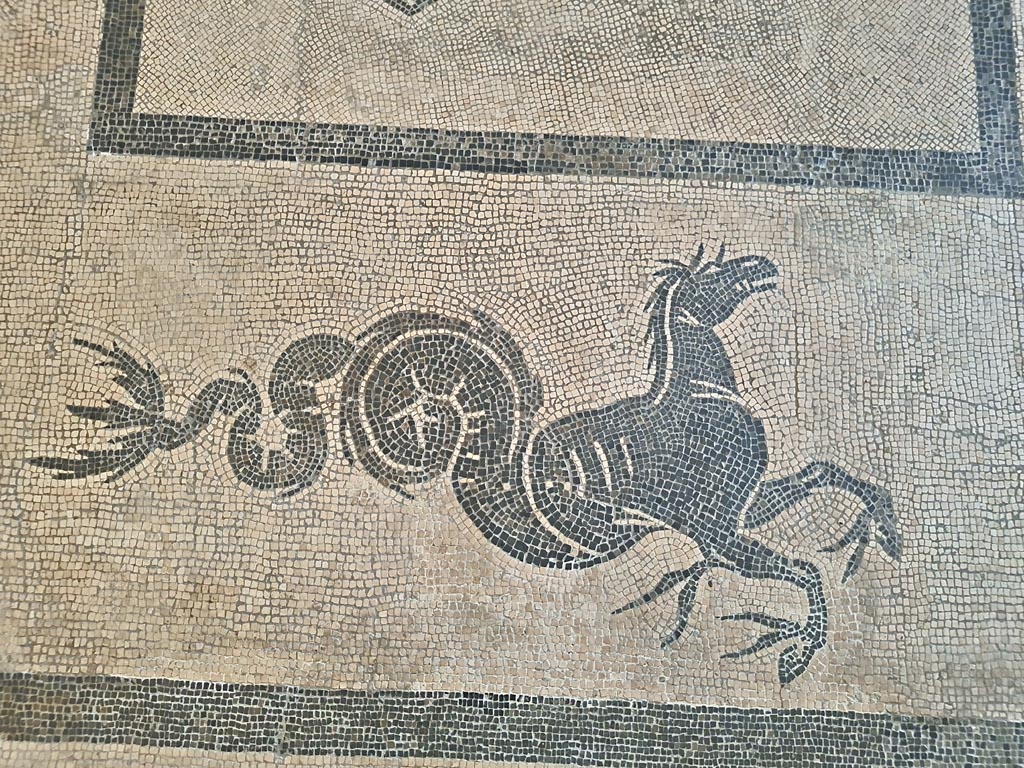
II.4.6 Pompeii. July 2024.
Detail from mosaic floor in atrium, now in
Naples Archaeological Museum. Photo
courtesy of Giuseppe Ciaramella.
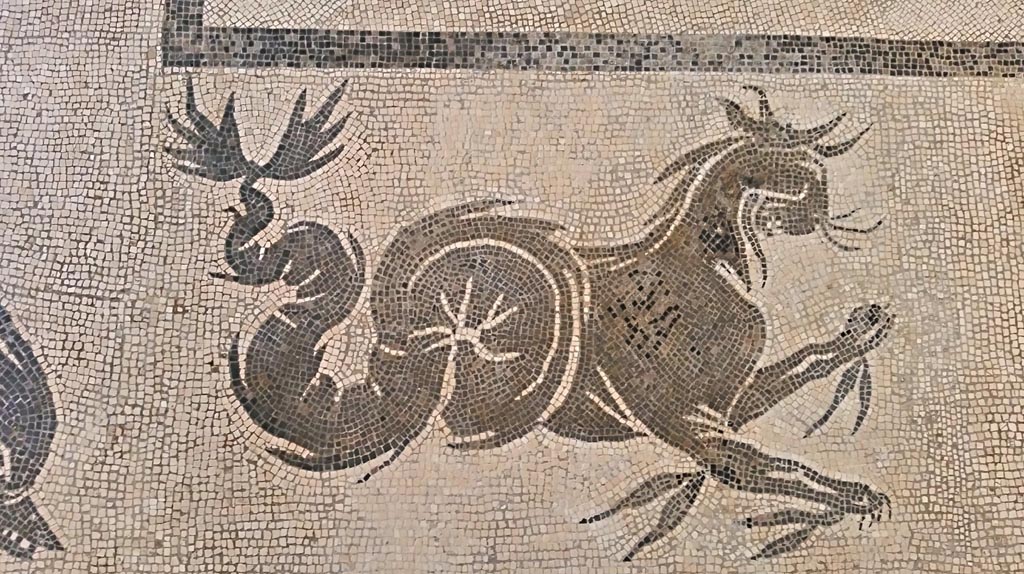
II.4.6 Pompeii. July
2019. Detail from mosaic floor in atrium. Photo courtesy of Giuseppe Ciaramella.
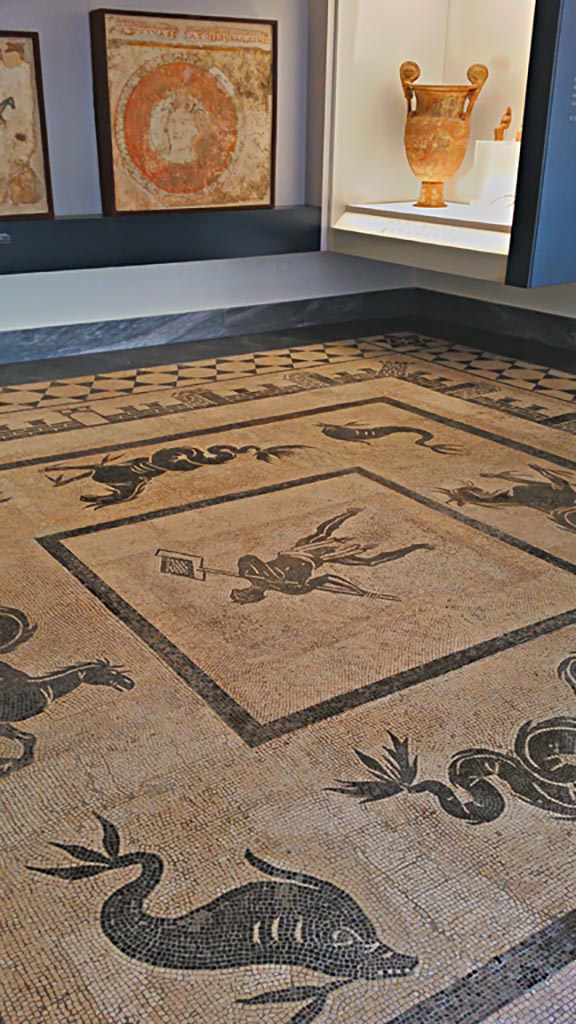
II.4.6 Pompeii. July 2019.
Looking across flooring in Naples Archaeological Museum, detail from mosaic floor from atrium.
Photo courtesy of Giuseppe Ciaramella.
Part 2 Part 3 Part 4
Part 5 Part 6