II.2.2 Pompeii. House of Loreius Tiburtinus or House of D. Octavius Quartio.
Excavated 1916, 1918, 1921, 1933-35 and 1973. Linked to II.2.5.
Part 1 2 3 4 5 6 7 8 9 10 11 12 13 Plan
Room “i”, upper euripus, cont’d
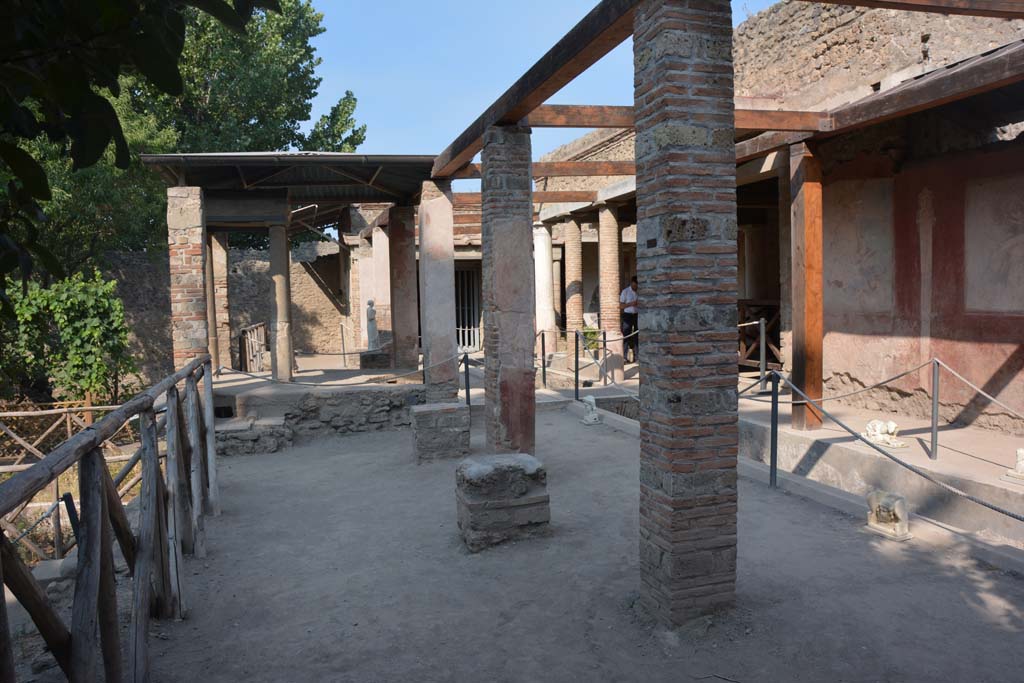
II.2.2 Pompeii. March 2024.
Room “i”, looking west along upper euripus from east end. Photo courtesy of Giuseppe Ciaramella.
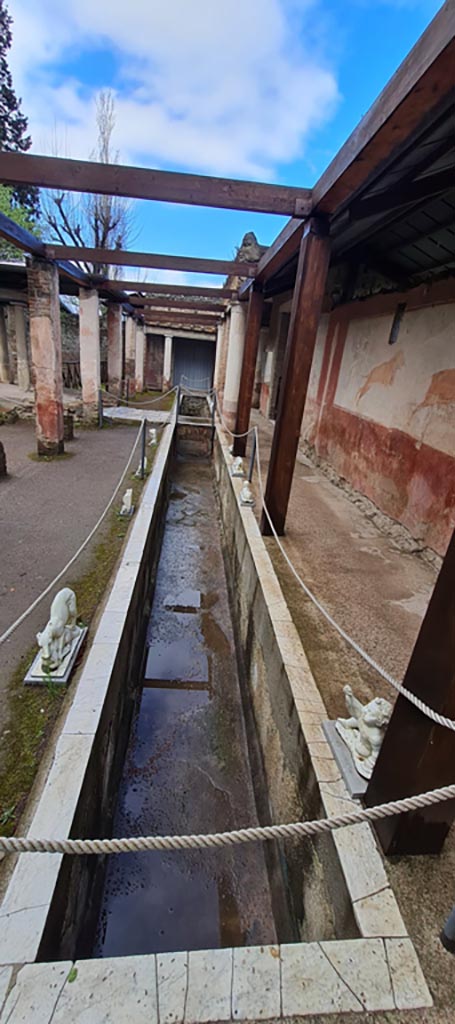
II.2.2 Pompeii. July 2017. Room “i”, looking west along upper
euripus from east end.
Foto Annette Haug, ERC
Grant 681269 DÉCOR.
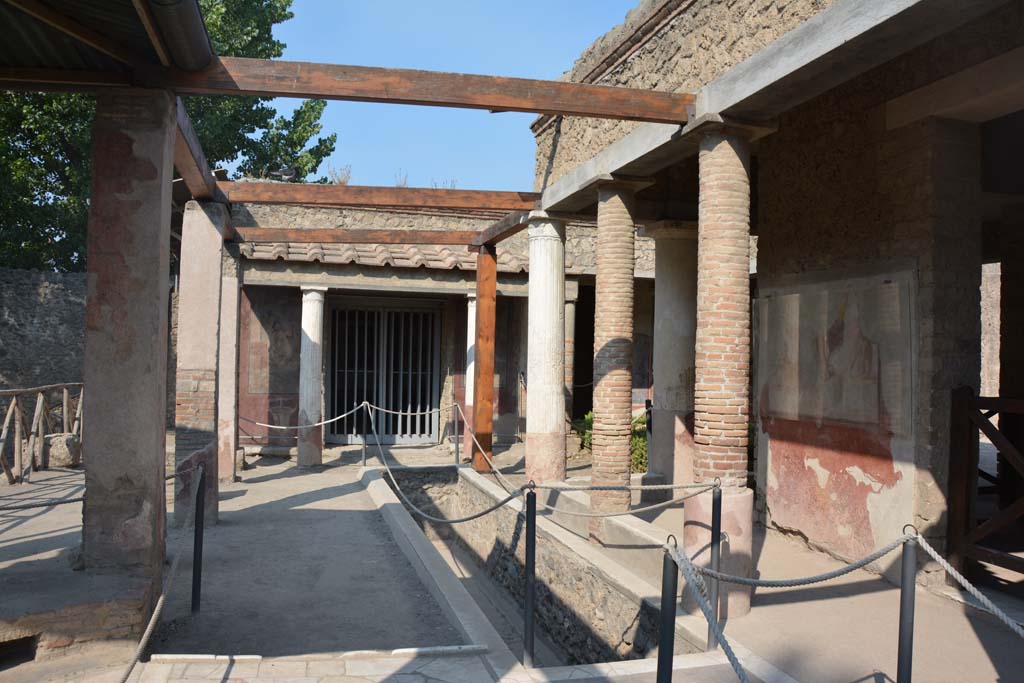
II.2.2 Pompeii.
April 2022.
Room “i”, looking west along upper euripus from east end.
Photo courtesy of Giuseppe Ciaramella.

II.2.2 Pompeii. July 2017. Room “i”, looking west along upper
euripus towards wall paintings of Diana and Actaeon on west wall.
Foto Annette Haug, ERC
Grant 681269 DÉCOR.

II.2.2 Pompeii. December 2005. Room “i”, looking west along upper euripus.

II.2.2 Pompeii. 1961.
Room “i”, looking west along upper euripus. Photo by Stanley A. Jashemski.
Source: The Wilhelmina and Stanley A. Jashemski archive in the University of Maryland Library, Special Collections (See collection page) and made available under the Creative Commons Attribution-Non Commercial License v.4. See Licence and use details.
J61f0406
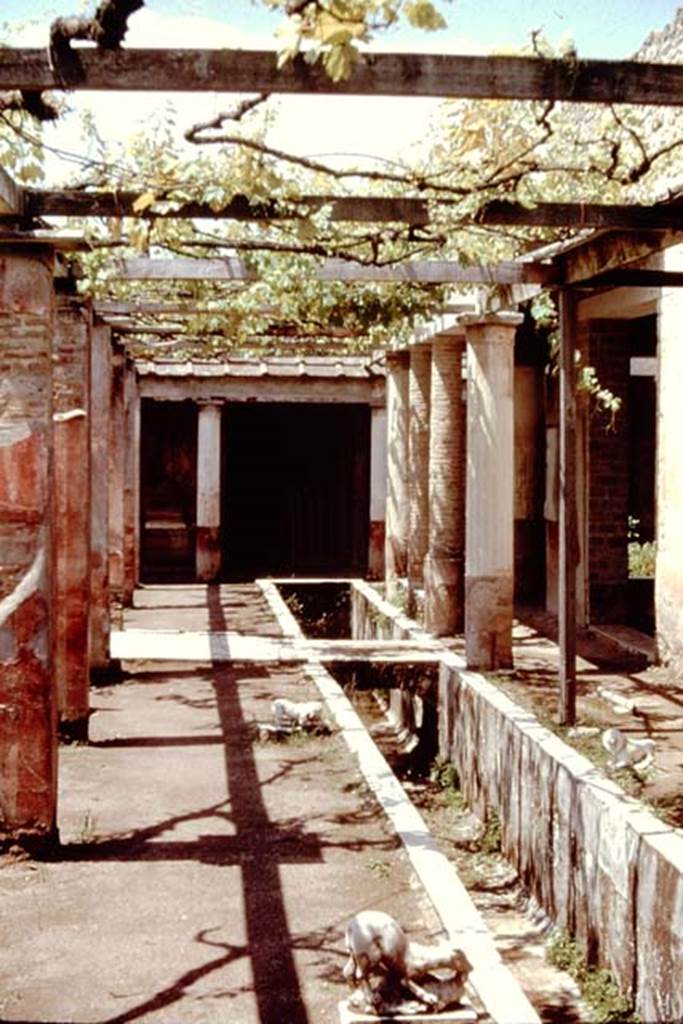
II.2.2 Pompeii. July 2017. Room “i”, looking south-west along
upper euripus at west end.
Foto Annette Haug, ERC
Grant 681269 DÉCOR.

II.2.2 Pompeii. December 2005. Room “i”, west end of upper euripus showing the paintings of Diana and Actaeon.
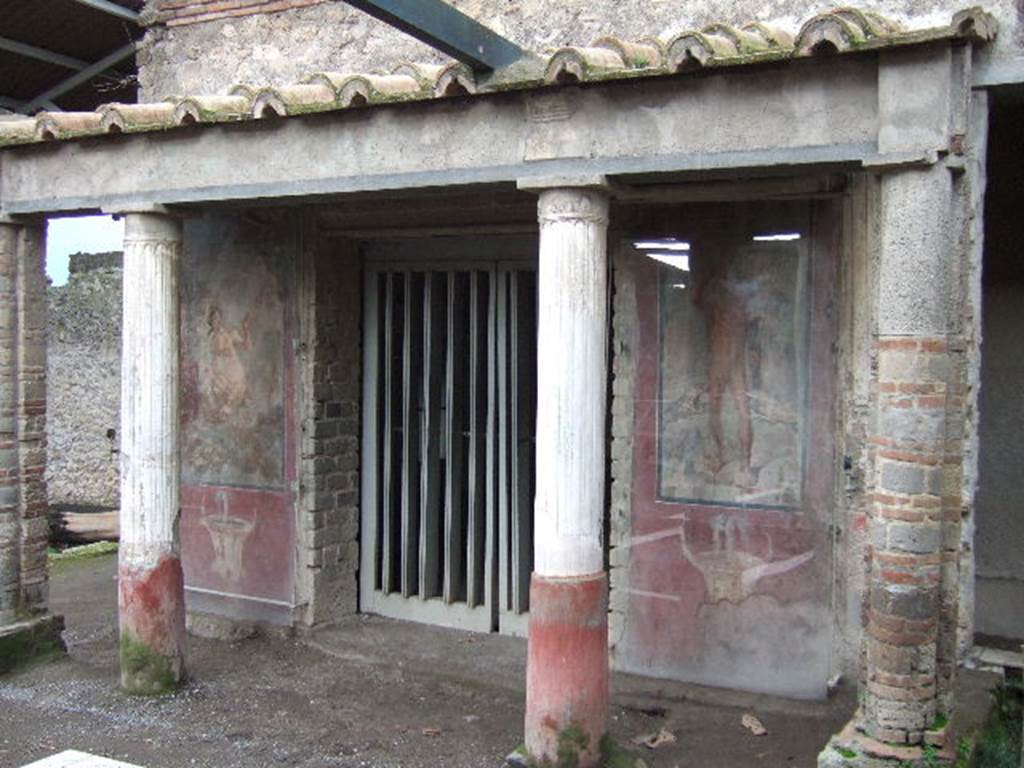
II.2.2 Pompeii.
April 2022.
Room “i”, west end of upper euripus, detail of painting of Diana
bathing. Photo courtesy of Giuseppe
Ciaramella.

II.2.2 Pompeii. December 2005.
Room “i”, west end of upper euripus. Painting of Actaeon discovering Diana bathing.

II.2.2 Pompeii. May 2016. Room “i”, west end of upper euripus. Detail of Diana bathing. Photo courtesy of Buzz Ferebee.

II.2.2 Pompeii. December 2005.
Room “i”, west end of upper euripus. Painting of Actaeon discovering Diana bathing.

II.2.2 Pompeii. May 2016. Room “i”, west end of upper euripus. Detail of Diana. Photo courtesy of Buzz Ferebee.

II.2.2 Pompeii. May 2016. Room “i”, west end of upper euripus. Detail of Diana. Photo courtesy of Buzz Ferebee.

II.2.2 Pompeii. December 2005.
Room “i”, west end of upper euripus. Detail from lower part of Diana painting. Photo courtesy of Buzz Ferebee.

II.2.2 Pompeii. May 2016.
Room “i”, west end of upper euripus. Painting of Actaeon being attacked by the goddess Diana’s dogs. Photo courtesy of Buzz Ferebee.
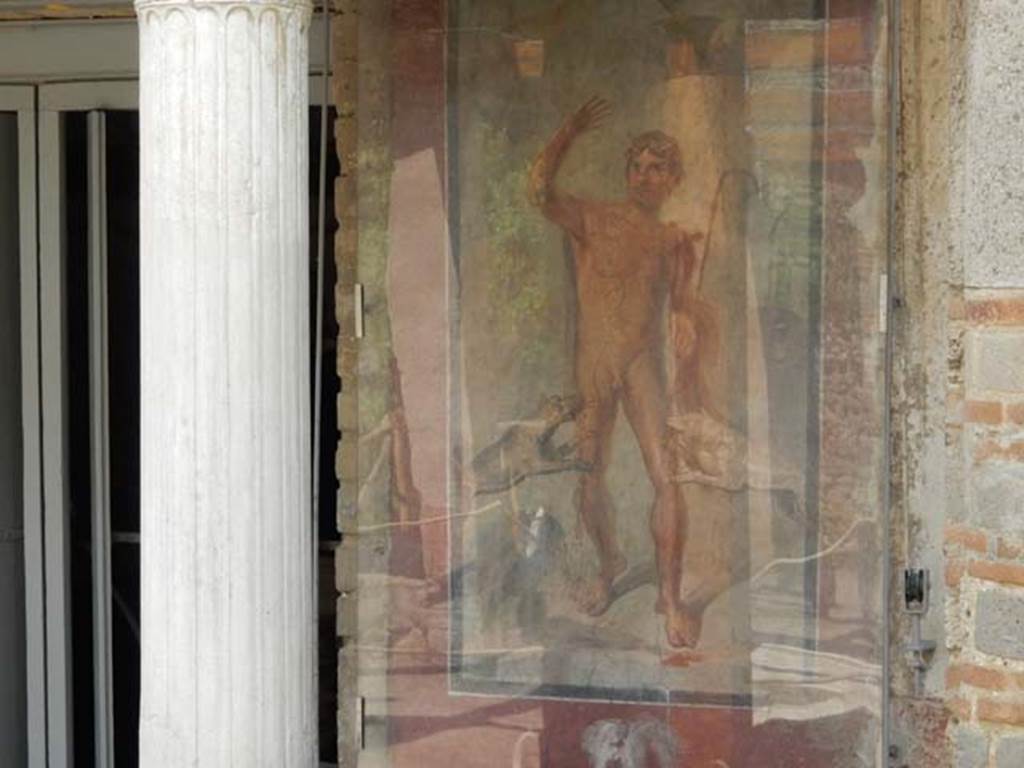
II.2.2 Pompeii. October 2022.
Room “i”, west end of upper euripus. Painting of Actaeon being attacked by the goddess Diana’s dogs.
Photo courtesy of Klaus Heese

II.2.2 Pompeii. December 2005.
Room “i”, west end of upper euripus. Painting of Actaeon being attacked by the goddess Diana’s dogs.

II.2.2 Pompeii. May 2016. Room “i”, west end of upper euripus. Detail from painting of Actaeon. Photo courtesy of Buzz Ferebee.

II.2.2 Pompeii. May 2016. Room “i”, west end of upper euripus. Detail from painting of Actaeon. Photo courtesy of Buzz Ferebee.

II.2.2 Pompeii. May 2016.
Room “i”, west end of upper euripus, detail from painting of Actaeon being attacked by the goddess Diana’s dogs.
Photo courtesy of Buzz Ferebee.

II.2.2 Pompeii. May 2016.
Room “i”, west end of upper euripus, detail from painting of Actaeon being attacked by the goddess Diana’s dogs.
Photo courtesy of Buzz Ferebee.

II.2.2 Pompeii. May 2016.
Room “i”, west end of upper euripus, detail from painting of Actaeon being attacked by the goddess Diana’s dogs.
Photo courtesy of Buzz Ferebee.
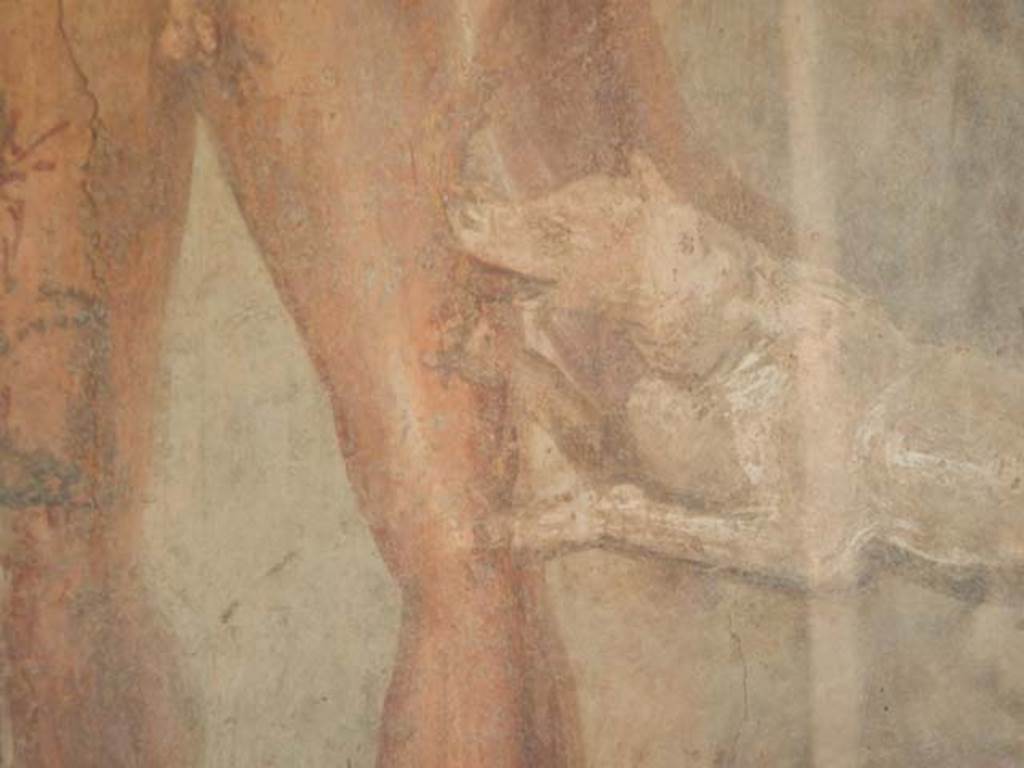
II.2.2 Pompeii. July 2017. Room “i”, looking towards painting at
west end of north wall and doorway to room “h”.
Foto Annette Haug, ERC
Grant 681269 DÉCOR.

II.2.2 Pompeii. May 2016.
Room “i”, remains of wall painting at west end of north wall of upper euripus. Photo courtesy of Buzz Ferebee.

II.2.2 Pompeii. December 2007. Room “i”, remains of wall painting on north wall of upper euripus.

II.2.2 Pompeii. May 2016.
Room “i”, remains of wall painting at west end of north wall of upper euripus. Photo courtesy of Buzz Ferebee.

II.2.2 Pompeii. May 2016.
Room “i”, detail from wall painting at west end of north wall of upper euripus. Photo courtesy of Buzz Ferebee.

II.2.2 Pompeii. May 2016.
Room “i”, north wall of upper euripus, on east side of “myths” room doorway. Photo courtesy of Buzz Ferebee.

II.2.2 Pompeii. May 2016.
Room “i”, wall painting on north wall of upper euripus, on east side of “myths” room doorway. Photo courtesy of Buzz Ferebee.

II.2.2 Pompeii. May 2016. Room “i”, detail from wall painting on north wall of upper euripus. Photo courtesy of Buzz Ferebee.

II.2.2 Pompeii. May 2011.
Room “i”, wall painting of herm on north wall of upper euripus, on east side of “myths” room doorway. Photo courtesy of Buzz Ferebee.

II.2.2 Pompeii. May 2011.
Room “i”, detail of wall painting of herm on north wall of upper euripus, on east side of “myths” room doorway.
Photo courtesy of Buzz Ferebee.

II.2.2 Pompeii. December 2005.
Room “i”, detail of wall painting of herm on north wall of upper euripus, on east side of “myths” room doorway.
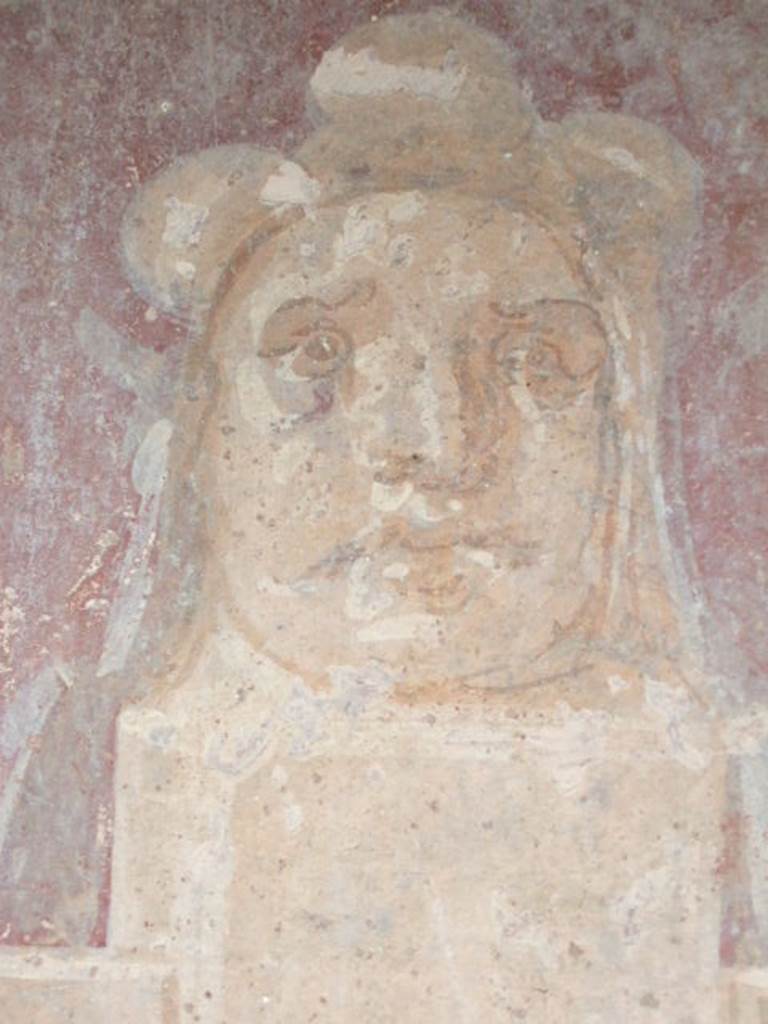
II.2.2 Pompeii. January 2017. Room “i”, looking east along north
wall of upper euripus, towards biclinium “k”.
Foto Annette Haug, ERC
Grant 681269 DÉCOR.

II.2.2 Pompeii. May 2016. Room “i”, wall painting on north wall of upper euripus. Photo courtesy of Buzz Ferebee.

II.2.2 Pompeii. May 2016. Room “i”, wall painting on north wall of upper euripus. Photo courtesy of Buzz Ferebee.

II.2.2 Pompeii. May 2016. Room “i”, wall painting on north wall of upper euripus. Photo courtesy of Buzz Ferebee.

II.2.2 Pompeii. May 2016. Room “i”, wall painting on north wall of upper euripus. Photo courtesy of Buzz Ferebee.

II.2.2 Pompeii. December 2005. Room “i”, painting of leopard on north wall of upper euripus.

II.2.2 Pompeii. December 2005. Room “i”, large hunting scene on north wall of upper euripus.
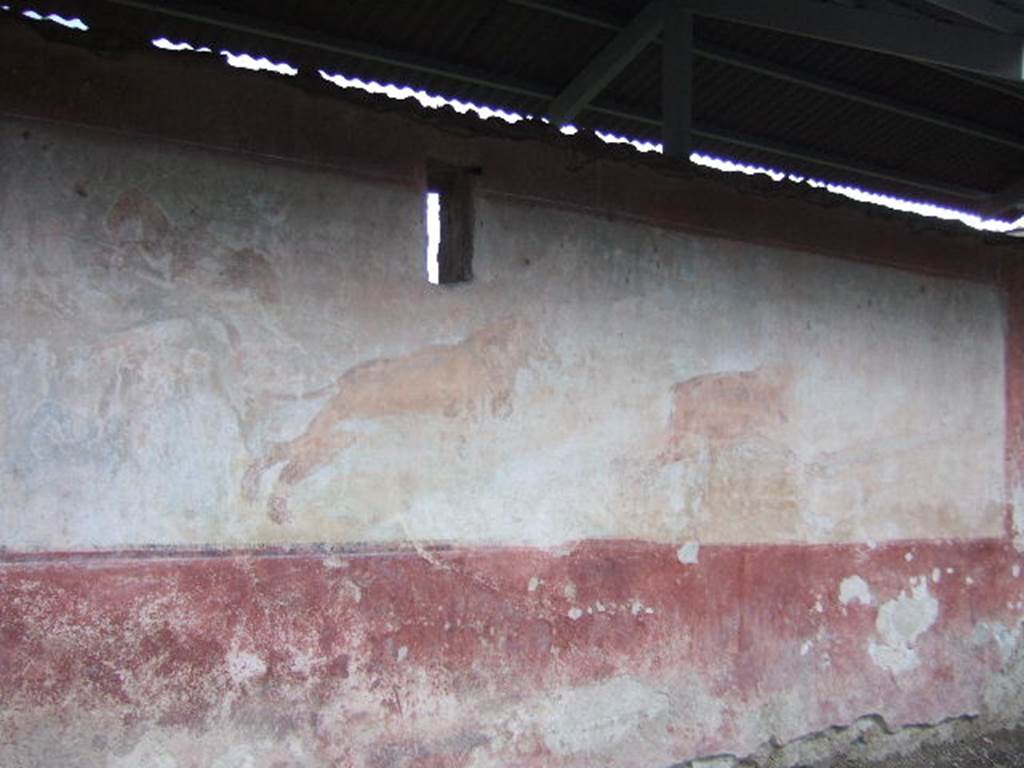
II.2.2 Pompeii. 2016/2017.
Room “i”, large hunting scene on east end of north wall in
north-east corner. Photo courtesy of Giuseppe Ciaramella.

II.2.2 Pompeii. March 2009. Room “i”, large hunting scene on east end of north wall.

II.2.2 Pompeii. December 2005. Room “i”, large hunting scene on north wall of upper euripus.

II.2.2 Pompeii. 1964. Room “i”, large hunting scene on north wall of upper euripus. Photo by Stanley A. Jashemski.
Source: The Wilhelmina and Stanley A. Jashemski archive in the University of Maryland Library, Special Collections (See collection page) and made available under the Creative Commons Attribution-Non Commercial License v.4. See Licence and use details.
J64f1062

II.2.2 Pompeii. 1964.
Room “i”, large hunting scene on north wall of upper euripus. Photo by Stanley A. Jashemski.
Source: The Wilhelmina and Stanley A. Jashemski archive in the University of Maryland Library, Special Collections (See collection page) and made available under the Creative Commons Attribution-Non Commercial License v.4. See Licence and use details.
J64f1061
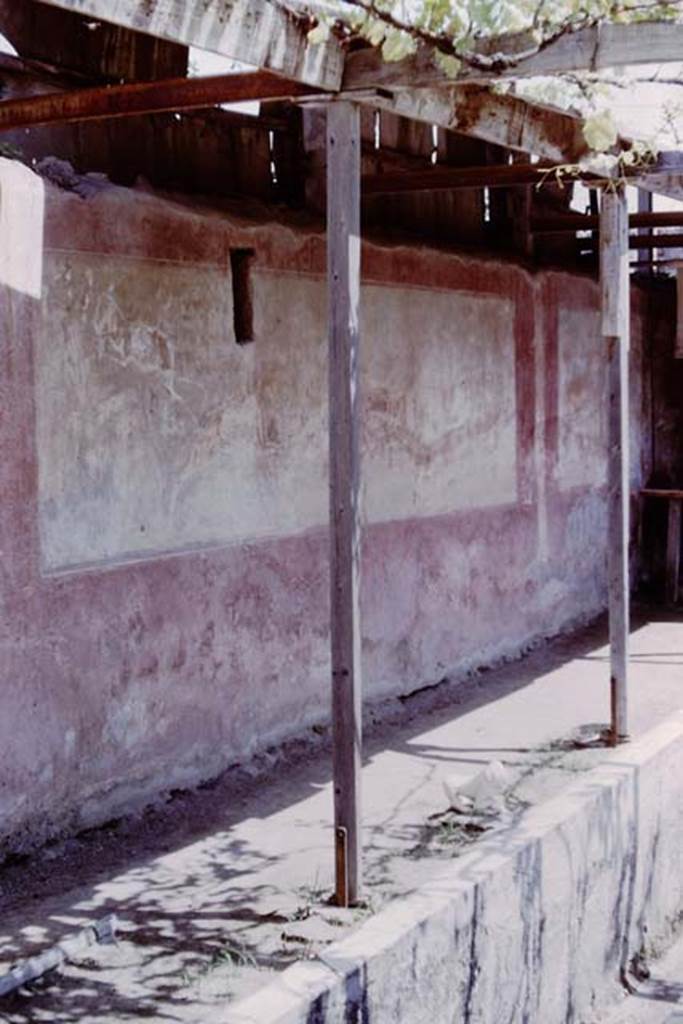
II.2.2 Pompeii. July 2017. Room “i”, with wall painting along
north wall, looking east to room “k”.
Foto Annette Haug, ERC
Grant 681269 DÉCOR.
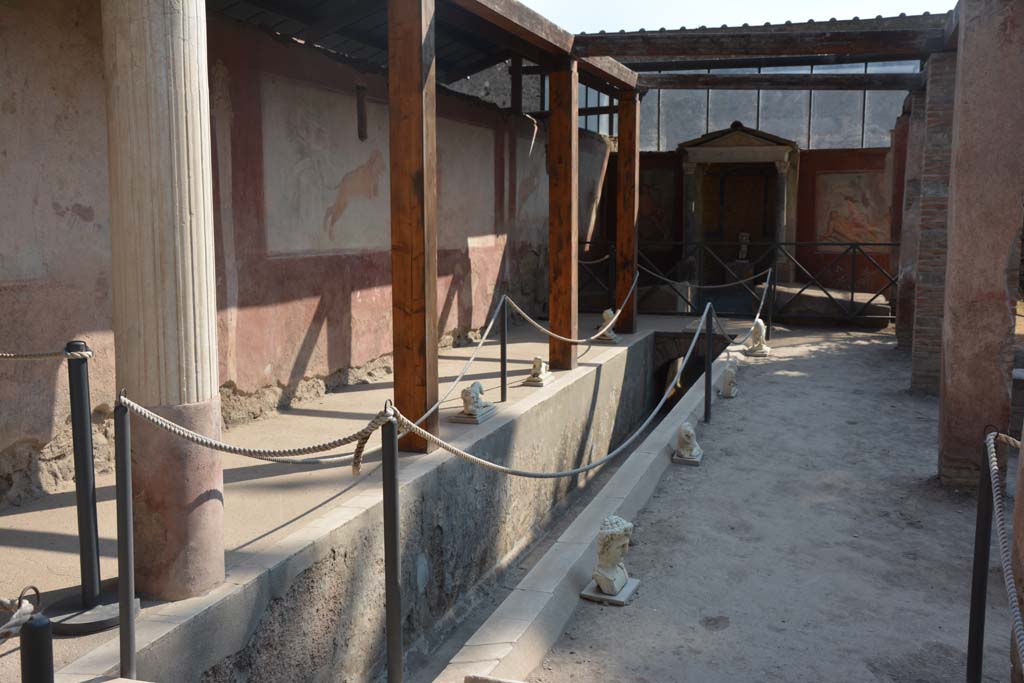
II.2.2 Pompeii. Undated excavation photo.
Room “i”, looking east along upper euripus. Photo courtesy of Giuseppe Ciaramella.

II.2.2 Pompeii. July 2017. Room “i”, looking east along upper
euripus, from west end.
Foto Annette Haug, ERC
Grant 681269 DÉCOR.
Part 1 2 3 4 5 6 7 8 9 10
11 12 13 Plan