I.21.3 Pompeii. Possible market garden. Excavated 1960-61.
Originally, in the 1950’s this Insula was numbered as Reg. I, Insula 16.
Part 1 Part 2 - Jashemski 1974 Excavations
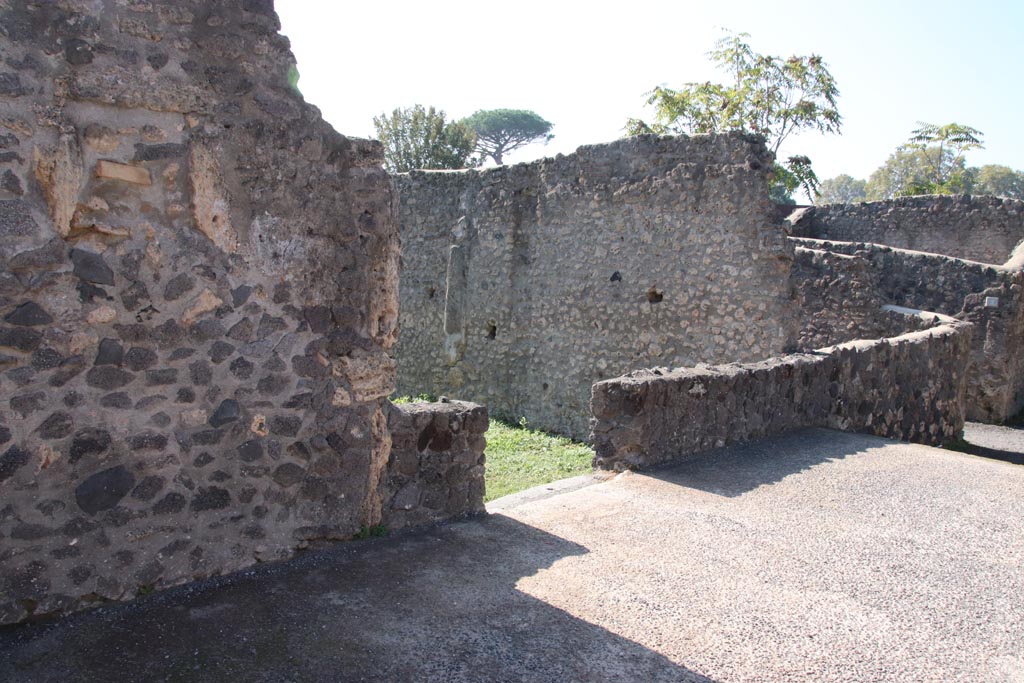
Looking south-west to entrance doorway on south side of Via della Palestra. Photo courtesy of Klaus Heese.
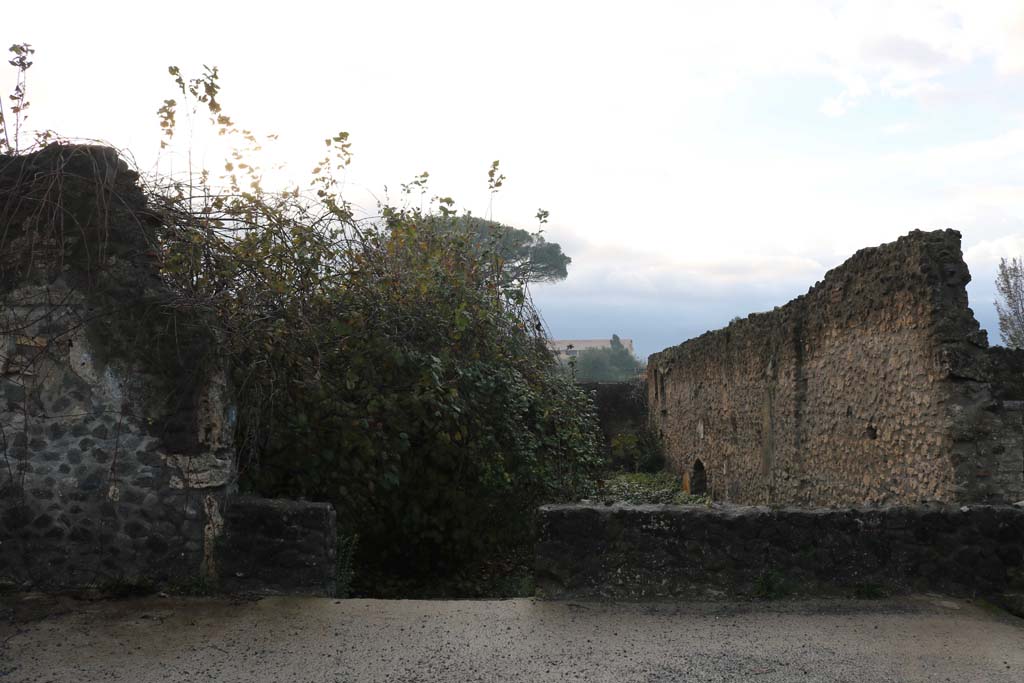
I.21.3 Pompeii. December 2018. Looking south to entrance on Via
della Palestra. Photo courtesy of Aude Durand.
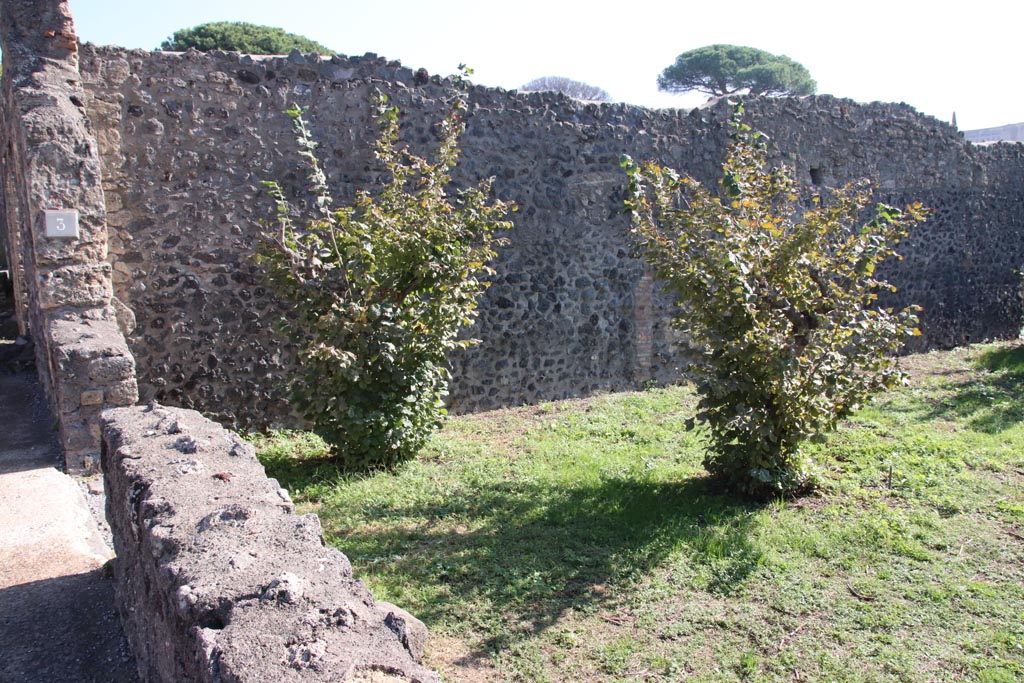
I.21.3 Pompeii. October 2022. Looking east towards entrance doorway. Photo courtesy of Klaus Heese.
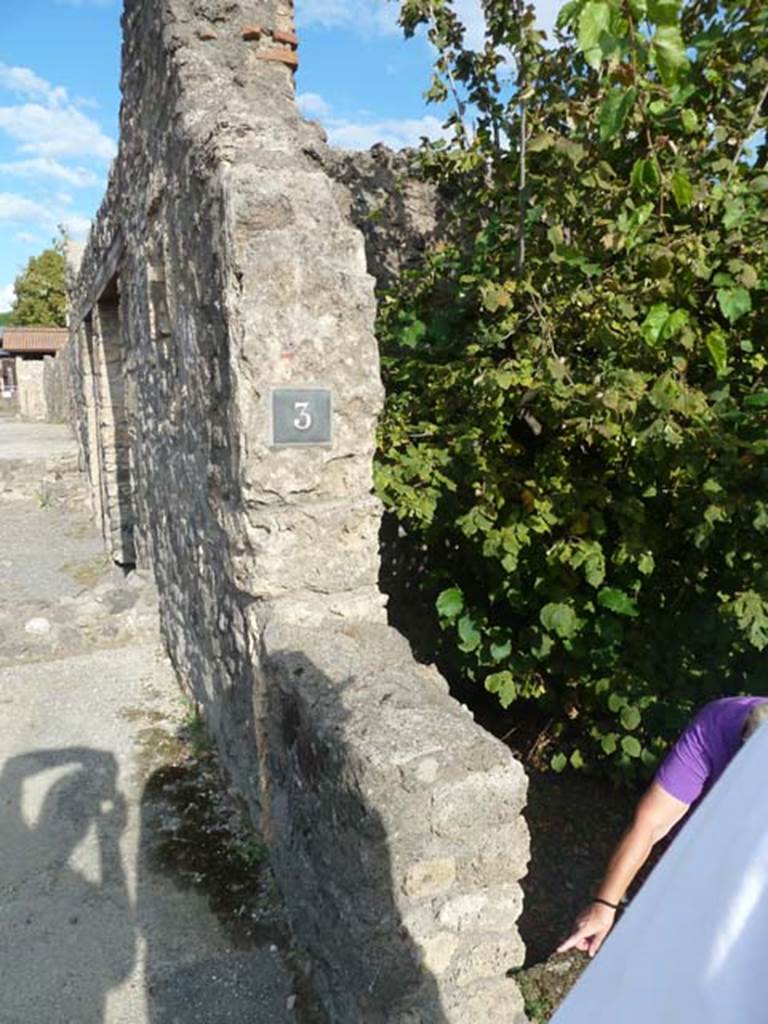
I.21.3 Pompeii. September 2015. East side of entrance doorway on Via della Palestra.
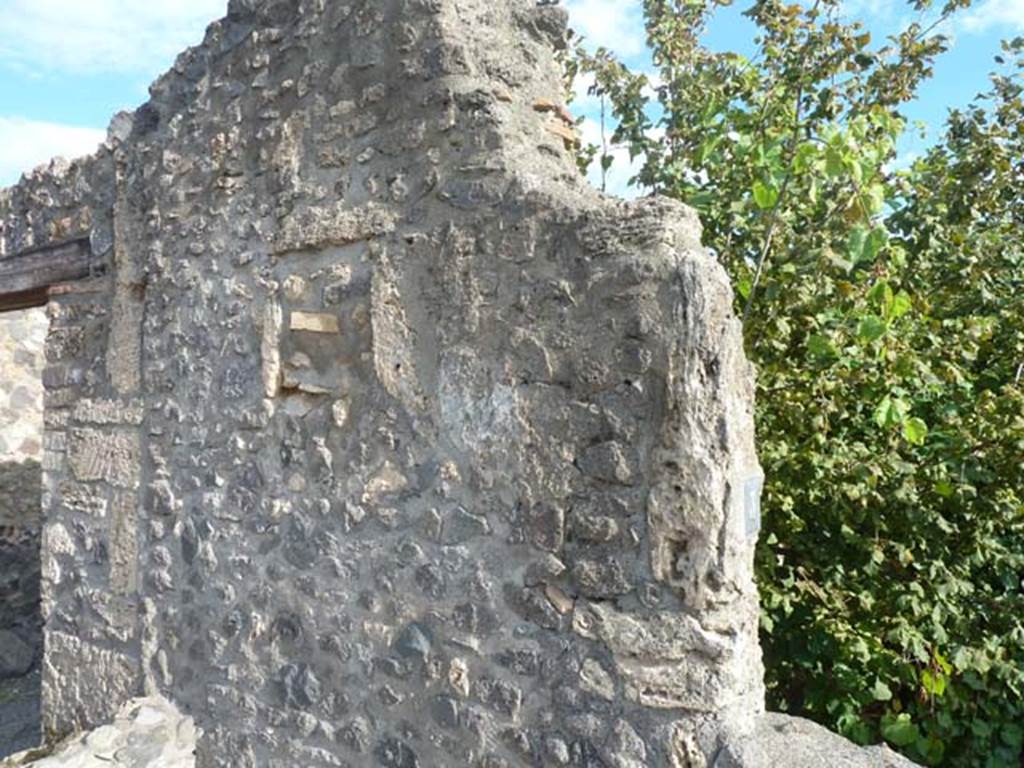
I.21.3 Pompeii. September 2015. Blocked window on east side of entrance doorway.
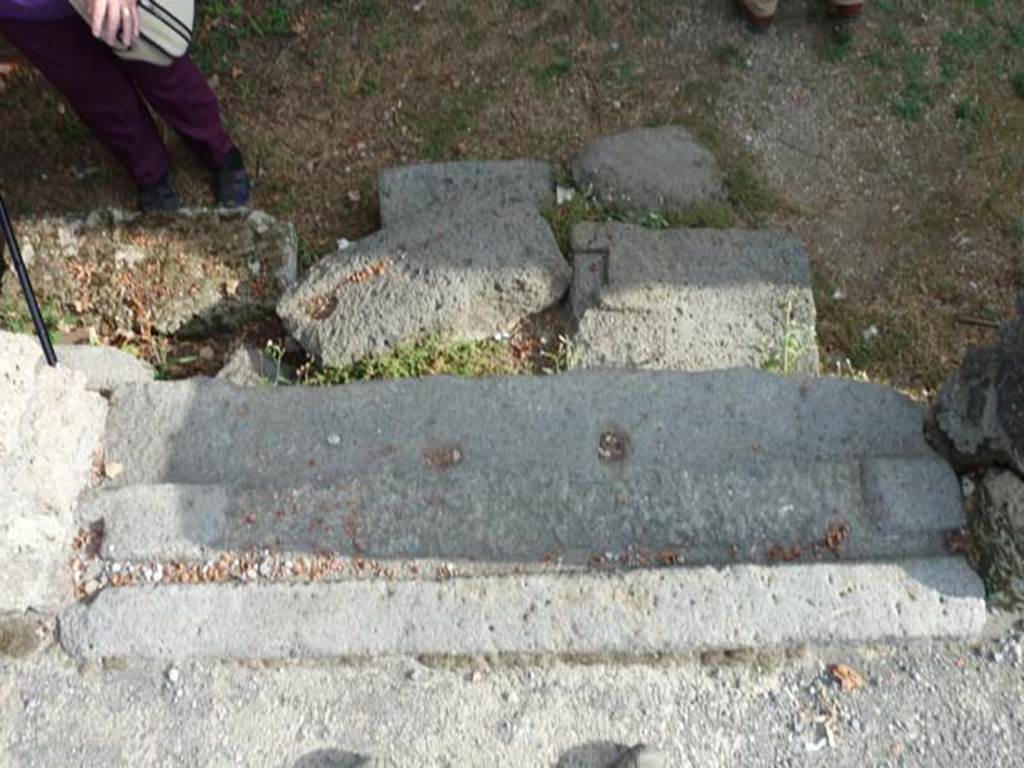
I.21.3 Pompeii. September 2015. Threshold and four steps down of entrance doorway.
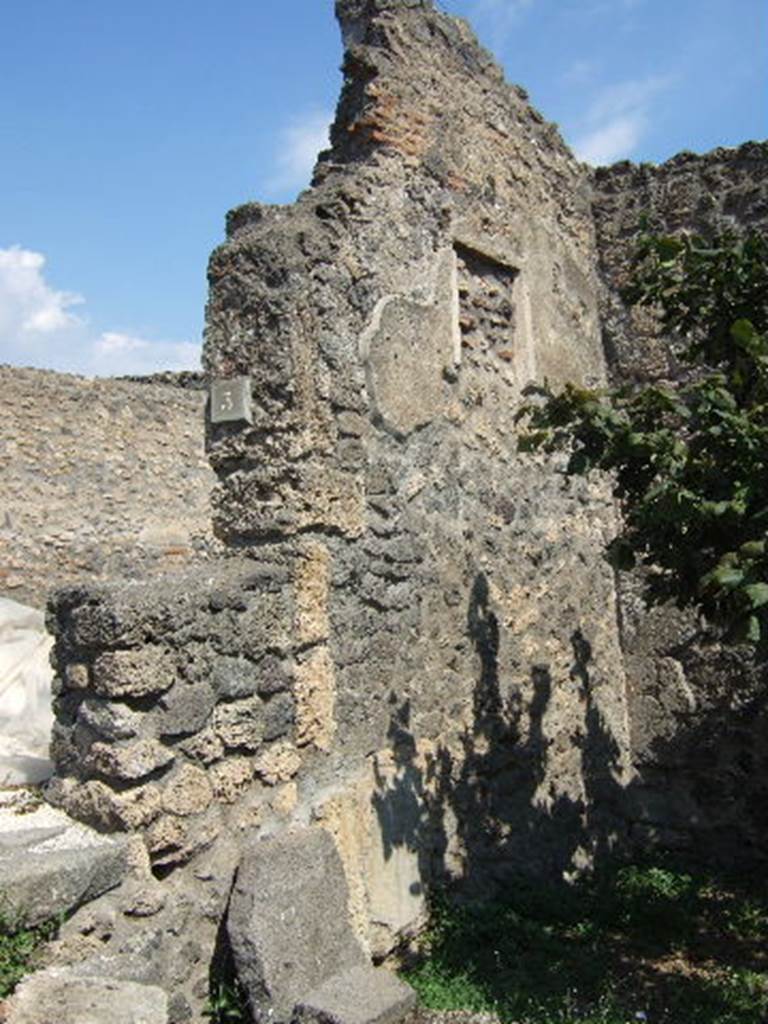
I.21.3 Pompeii. September 2005. East side of entrance doorway.
According to Jashemski, there had been a roofed building at this site at an earlier time.
She thought, probably after the earthquake, the site was cleared and made into a garden.
A window in the wall to the east of the street entrance had been blocked up.
See Jashemski, W. F., 1993. The Gardens of Pompeii, Volume II: Appendices. New York: Caratzas. (p. 70)
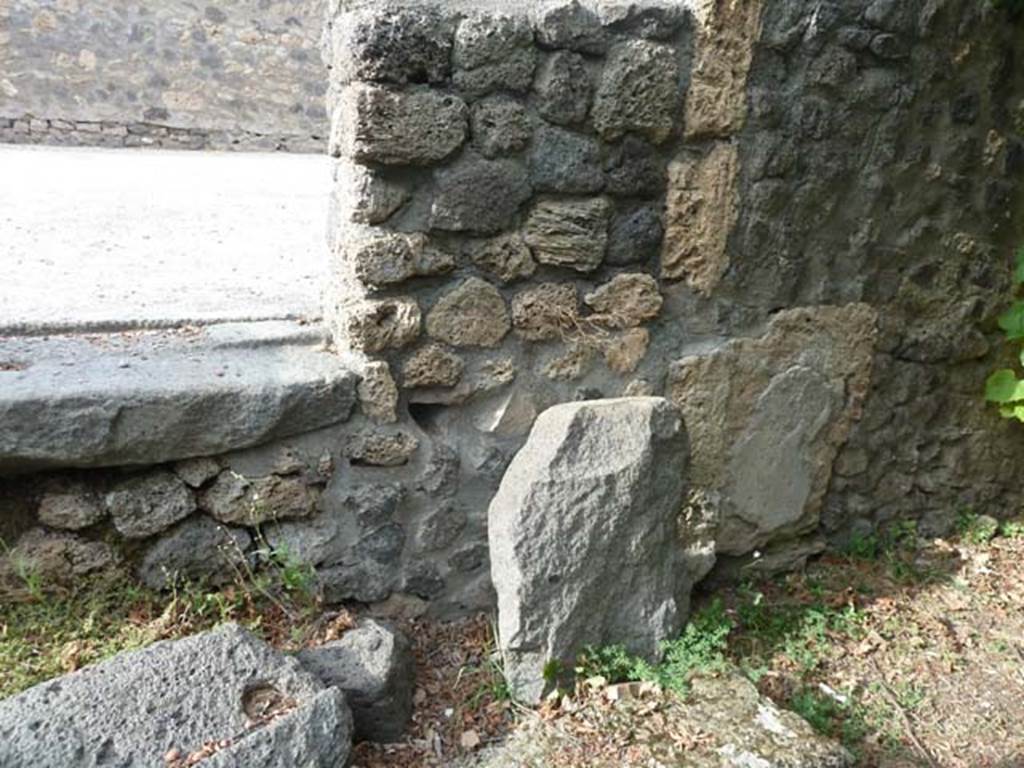
I.21.3 Pompeii. September 2015. Interior east side of entrance doorway.
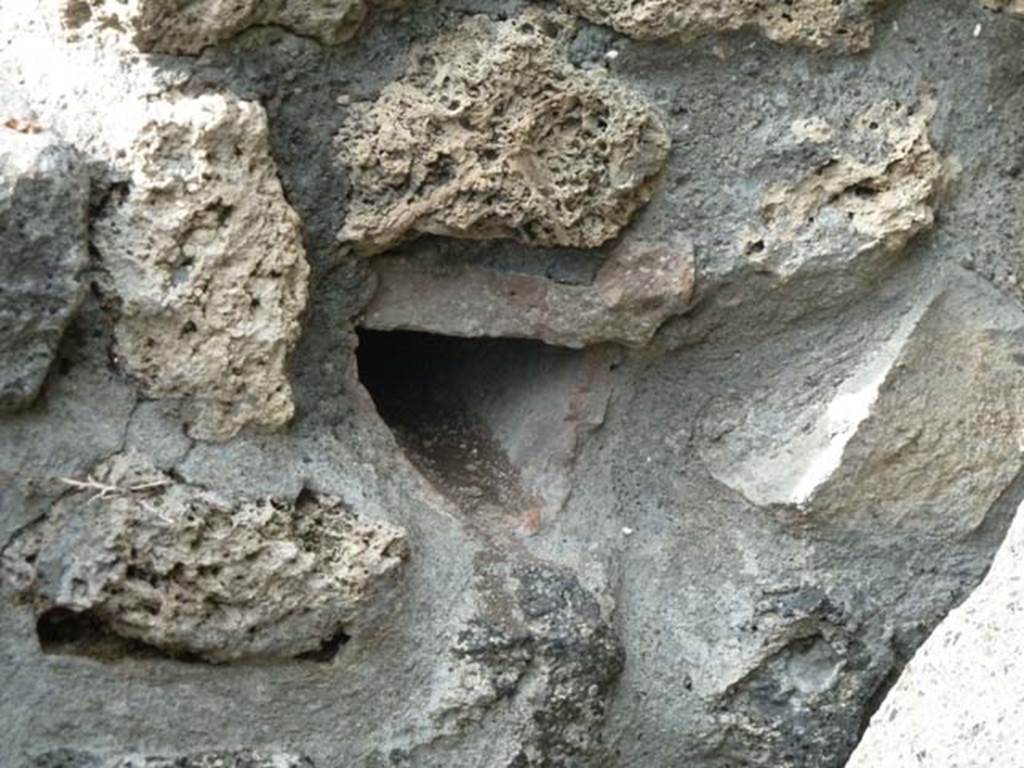
I.21.3 Pompeii. September 2015.
Tile lined opening built into the wall to the east of the top step, used to channel the overflow water from the street as a source of watering the garden area.
See Jashemski, W. F., 1993. The Gardens of Pompeii, Volume II: Appendices. New York: Caratzas. (p.71)
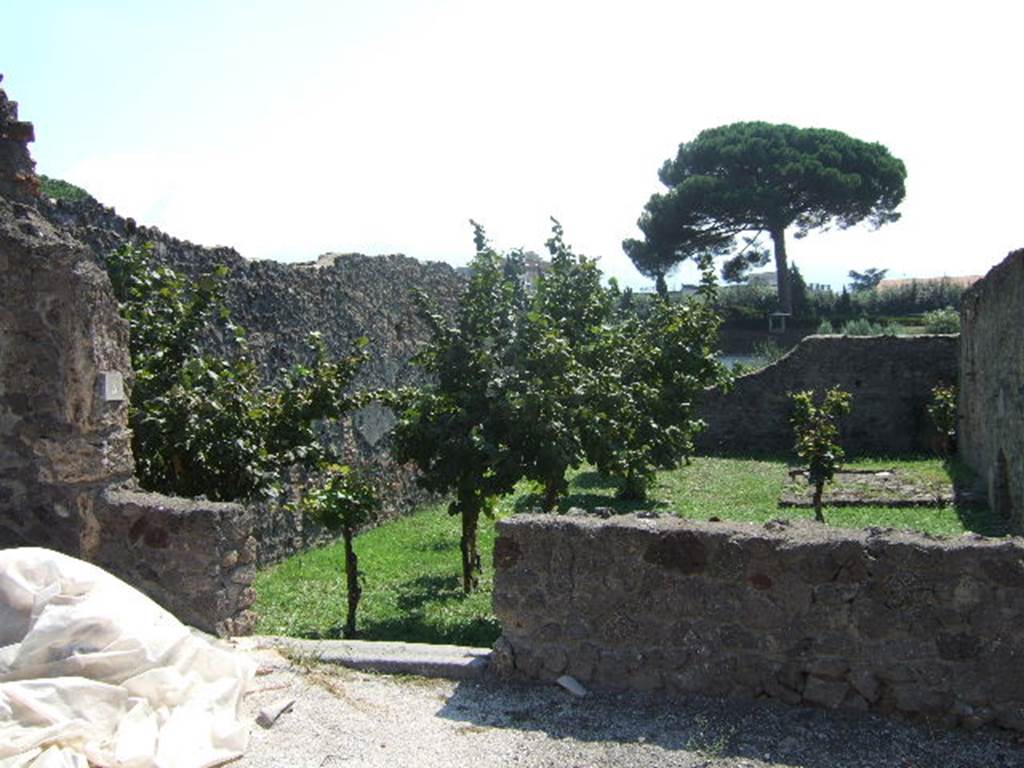
I.21.3 Pompeii. May 2005. Looking south to entrance with steps down to garden.
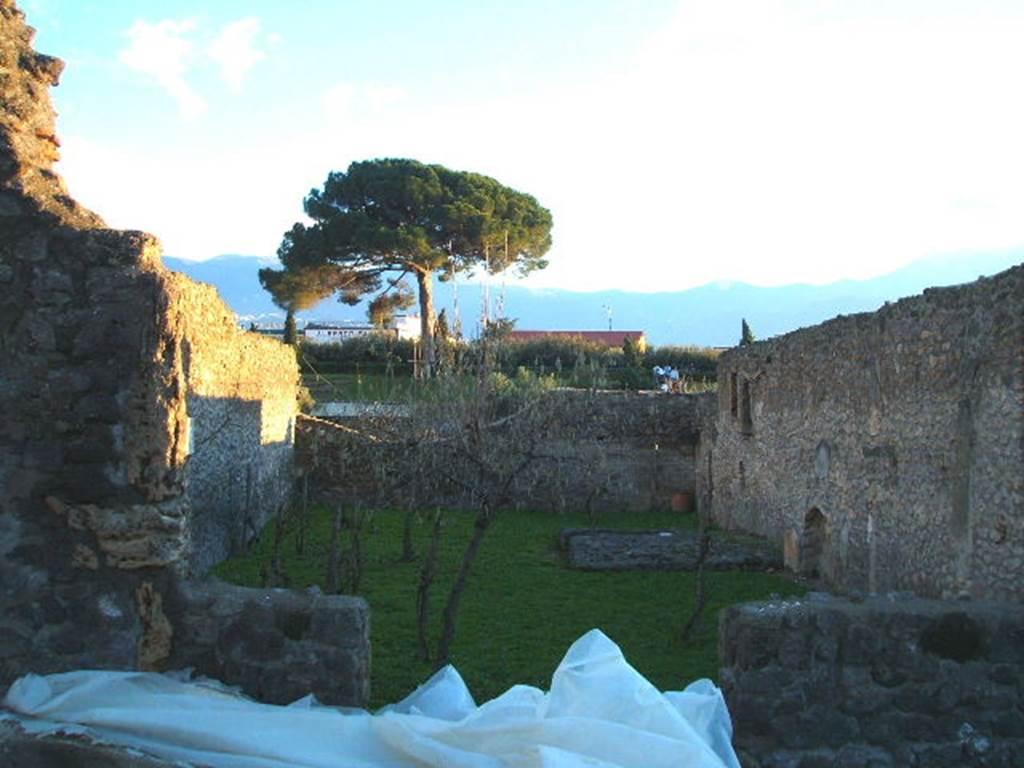
I.21.3 Pompeii. December 2004. Entrance, looking south.
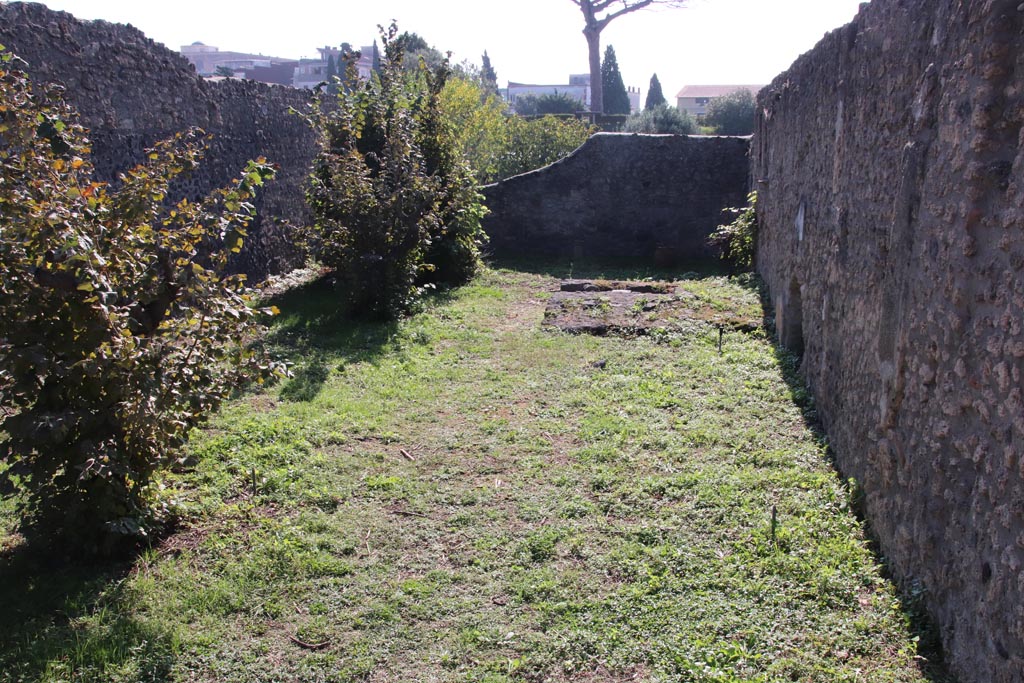
I.21.3 Pompeii. October 2024. Looking south along west wall.
Photo courtesy of Giuseppe
Ciaramella.

I.21.3 Pompeii. October 2022. Looking south along west wall. Photo courtesy of Klaus Heese.

I.21.3 Pompeii. September 2015. Looking south along west wall.
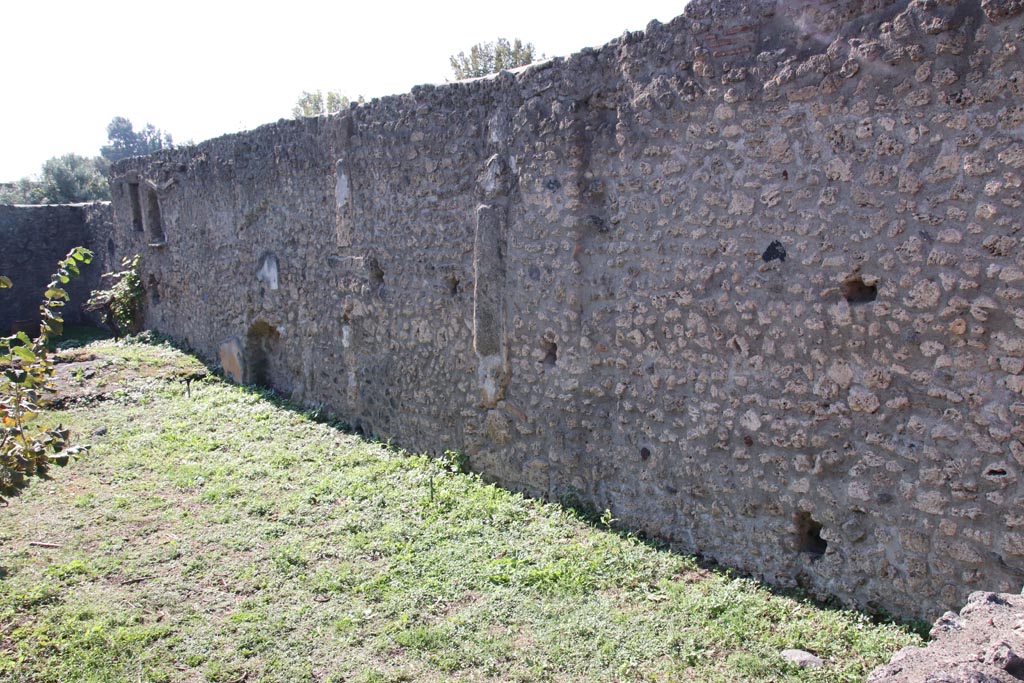
I.21.3 Pompeii. September 2005. Looking south along west wall.
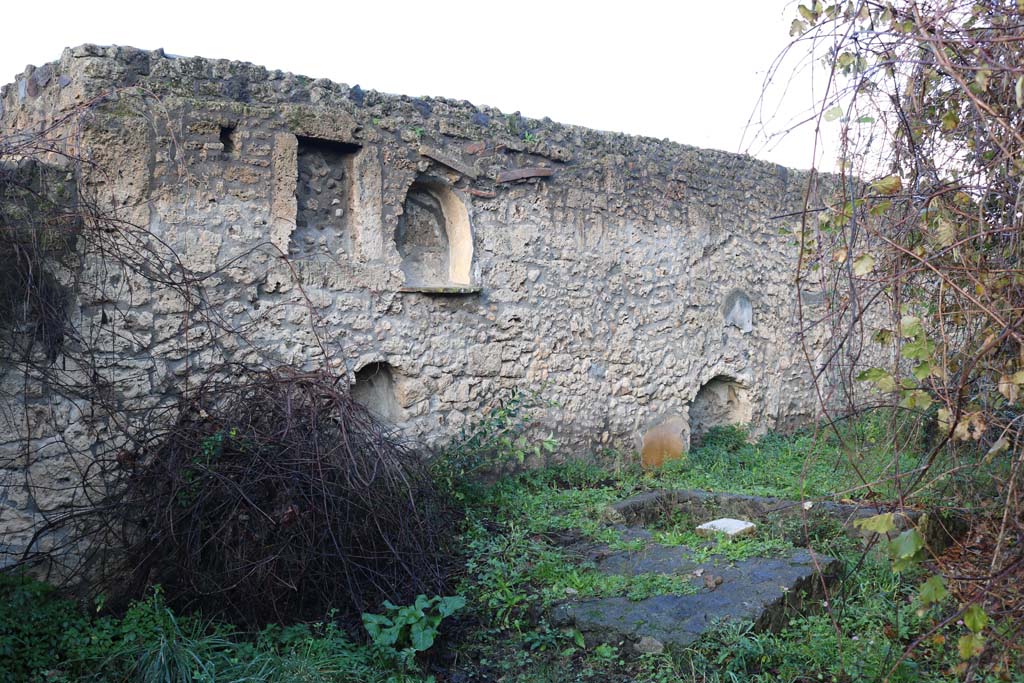
I.21.3 Pompeii. October 2022. Looking south-west along west wall. Photo courtesy of Klaus Heese.

I.21.3 Pompeii. December 2018.
Looking towards west wall with niches above triclinium. Photo courtesy of Aude Durand.
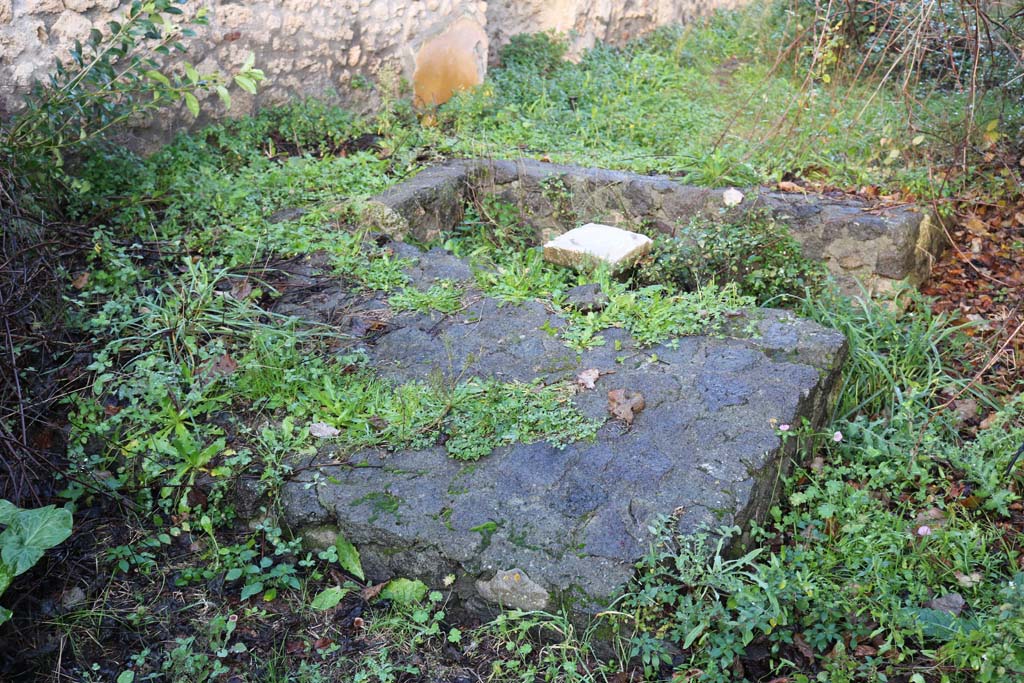
I.21.3 Pompeii. September 2015. Looking towards west wall with niches above triclinium.

I.21.3 Pompeii. December 2018. Triclinium. Photo courtesy of Aude Durand.

I.21.3 Pompeii. May 2015. Looking towards west wall with triclinium. Photo courtesy of Buzz Ferebee.

I.21.3 Pompeii. May 2015. Triclinium. Photo courtesy of Buzz Ferebee.

I.21.3 Pompeii. September 2005. Looking west across triclinium.

I.21.3 Pompeii. September 2005. Looking west across triclinium.
According to Jashemski, a masonry triclinium had been built against the west wall.
A table base was still buried in the lapilli between the couches of the triclinium.
See Jashemski, W. F., 1993. The Gardens of Pompeii, Volume II: Appendices. New York: Caratzas. (p. 70)

I.21.3 Pompeii. December 2018.
Looking towards west
wall with niches. Photo
courtesy of Aude Durand.

I.21.3 Pompeii. May 2015. Looking towards west wall with niches above triclinium. Photo courtesy of Buzz Ferebee.

I.21.3 Pompeii. September 2005. In the west wall above the triclinium were three niches.
The larger of the two arched niches had a roof tile forming a shelf that reached out into the garden: this niche was undoubtedly a lararium.
The smaller and lower of the two arched niches may have held a lamp.
The rectangular niche had the appearance of a window that had been only partially walled in. It too may have held a lamp.
See Jashemski, W. F., 1993. The Gardens of Pompeii, Volume II: Appendices. New York: Caratzas. (p. 70).

I.21.3 Pompeii. December 2018. Arched niche lararium. Photo
courtesy of Aude Durand.
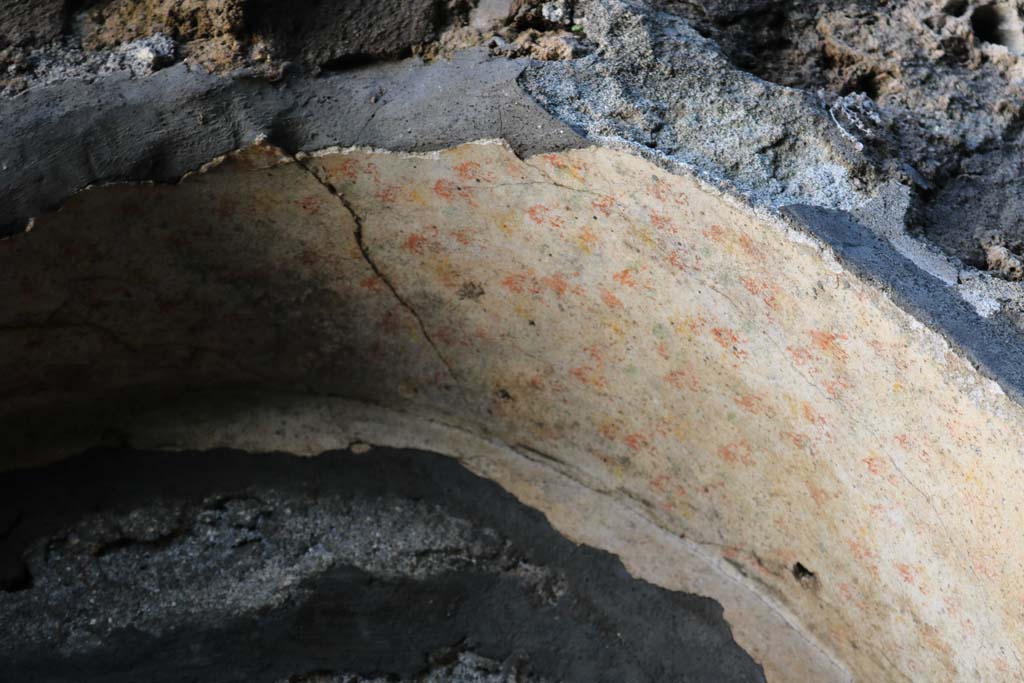
I.21.3 Pompeii. December 2018. Detail of niche. Photo
courtesy of Aude Durand.

I.21.3 Pompeii. December 2018. Detail of niche with
remaining painted decoration. Photo
courtesy of Aude Durand.

I.21.3 Pompeii. December 2018. Smaller arched niche. Photo
courtesy of Aude Durand.

I.21.3 Pompeii. December 2018. Detail of smaller arched
niche. Photo courtesy of Aude Durand.

I.21.3 Pompeii. September 2015. Pots.
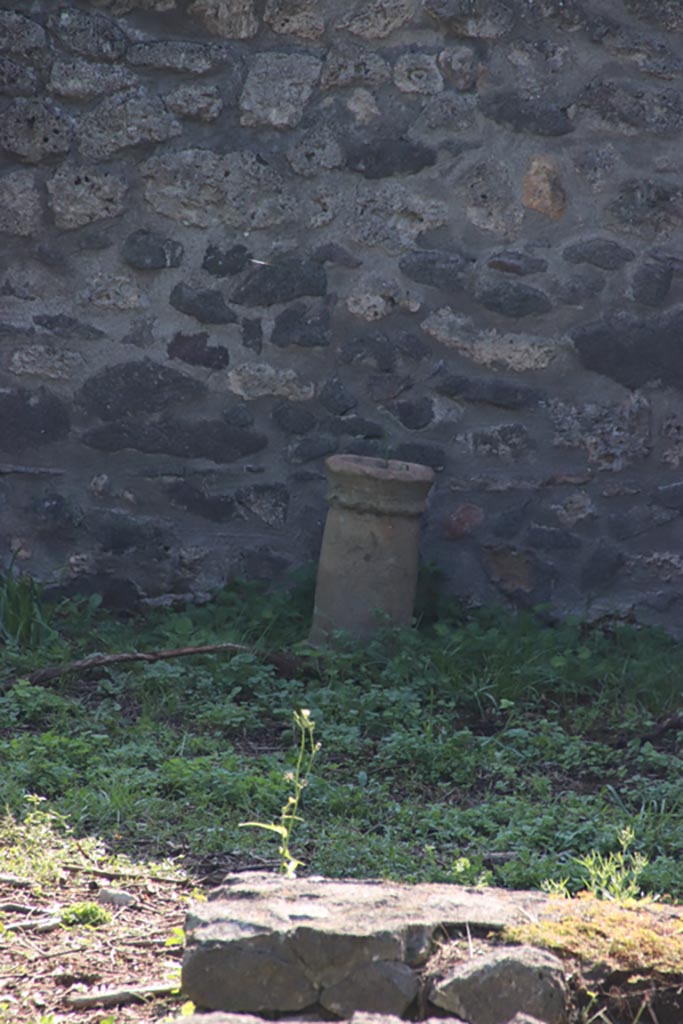
I.21.3 Pompeii. May 2015. Pots. Photo courtesy of Buzz Ferebee.
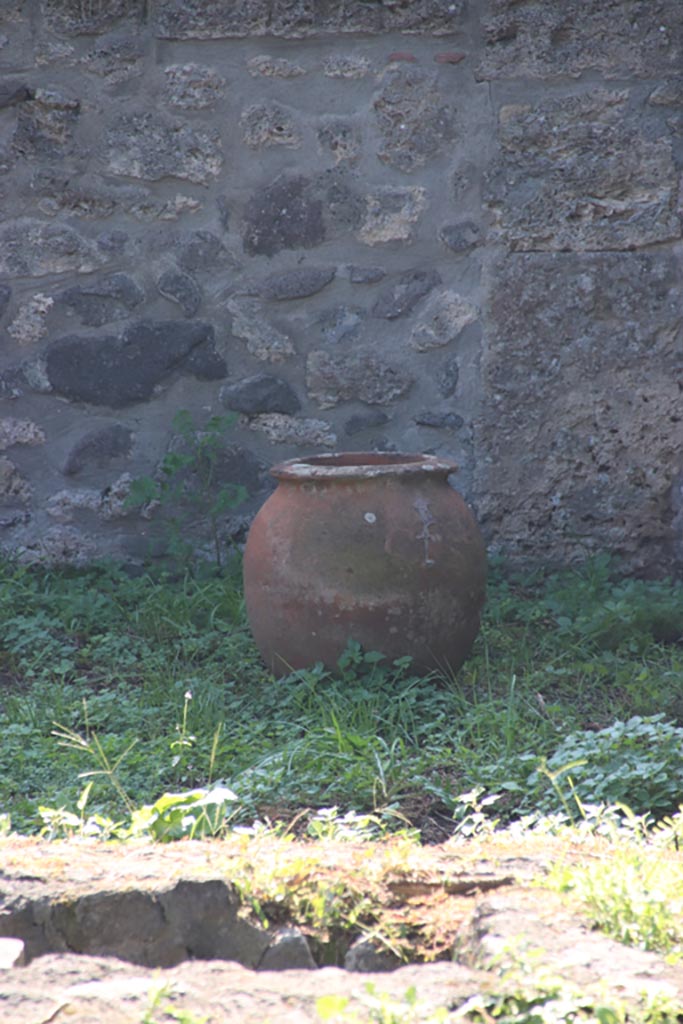
I.21.3 Pompeii. October 2022. Vessel/pot against south wall. Photo courtesy of Klaus Heese.

I.21.3 Pompeii. October 2022. Pot against south wall. Photo courtesy of Klaus Heese.

I.21.3 Pompeii. September 2015. Looking towards triclinium against west wall.

I.21.3 Pompeii. September 2005. West wall, looking west.
In the west wall at floor level there was a very large recessed niche with some painted plaster still preserved on its interior as well as on the adjacent wall.
See Jashemski, W. F., 1993. The Gardens of Pompeii, Volume II: Appendices. New York: Caratzas. (p. 70)
Part 2 - Jashemski 1974 Excavations