I.13.9 Pompeii. Domus of Lesbianus and Numicia Primigenia.
Excavated 1953-6.
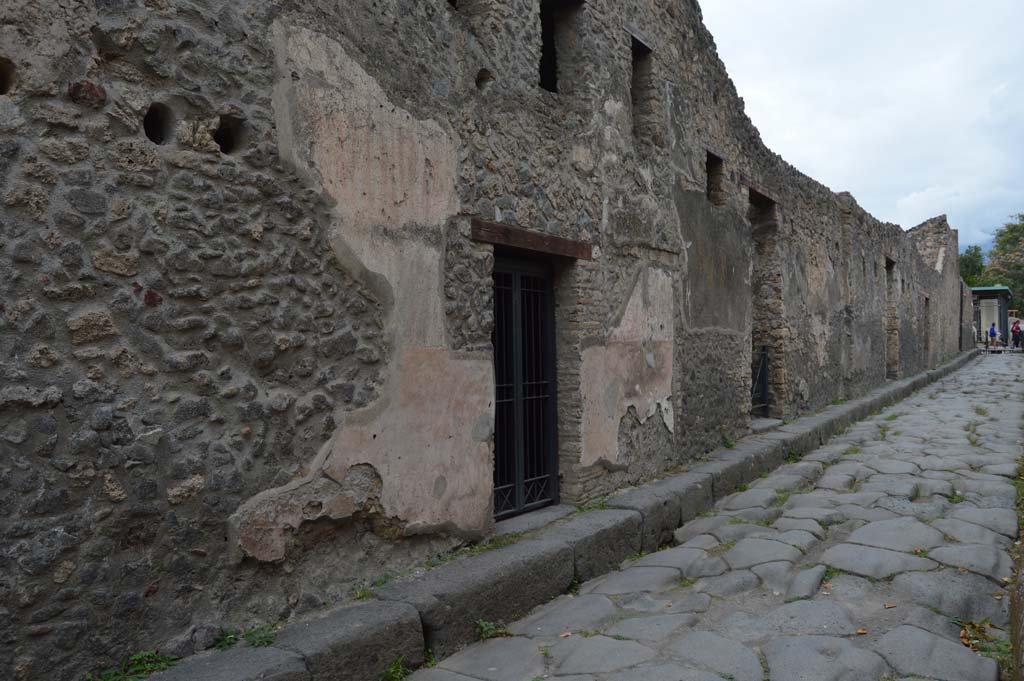
I.13.9 Pompeii. October 2017.
Looking north towards entrance doorway on west side of Via di Nocera.
Foto Taylor Lauritsen, ERC Grant 681269 DÉCOR.
![I.13.9 Pompeii. September 2004. Entrance and upper floor, looking north. According to Varone and Stefani, the remains of the stucco on the upper south side of the entrance doorway, used to have a painted graffito, now barely visible: See Varone, A. and Stefani, G., 2009. Titulorum Pictorum Pompeianorum, Rome: L’erma di Bretschneider, (p.159)
According to Epigraphik-Datenbank Clauss/Slaby (See www.manfredclauss.de), it read -
Valentem aed(ilem) o(ro) v(os) f(aciatis) [CIL IV 9868]](1%2013%2009_files/image004.jpg)
I.13.9 Pompeii. September 2004. Entrance and upper floor, looking north.
According to Varone and Stefani –
the remains of the stucco on the upper south side of the entrance doorway, used to have a painted graffito, now barely visible:
See Varone, A. and Stefani, G., 2009. Titulorum Pictorum
Pompeianorum, Rome:
L’erma di Bretschneider, (p.159)
According to Epigraphik-Datenbank Clauss/Slaby (See www.manfredclauss.de), it read -
Valentem aed(ilem)
o(ro) v(os) f(aciatis) [CIL IV 9868]
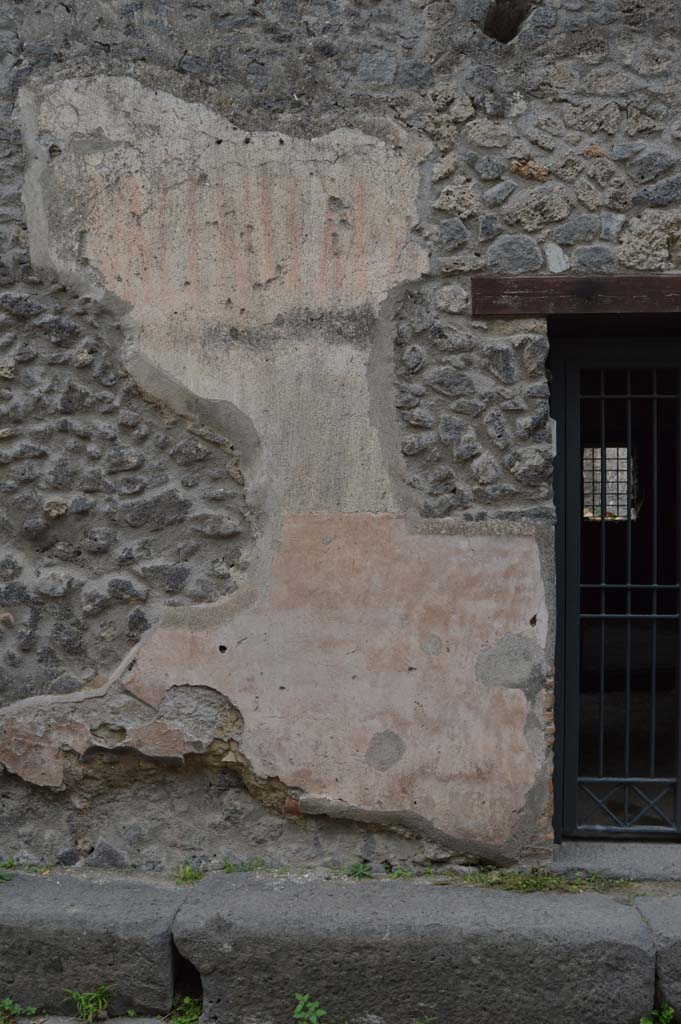
I.13.9
Pompeii. October 2017.
Remaining
painted plaster on south side of entrance doorway.
Foto Taylor Lauritsen, ERC Grant 681269 DÉCOR.
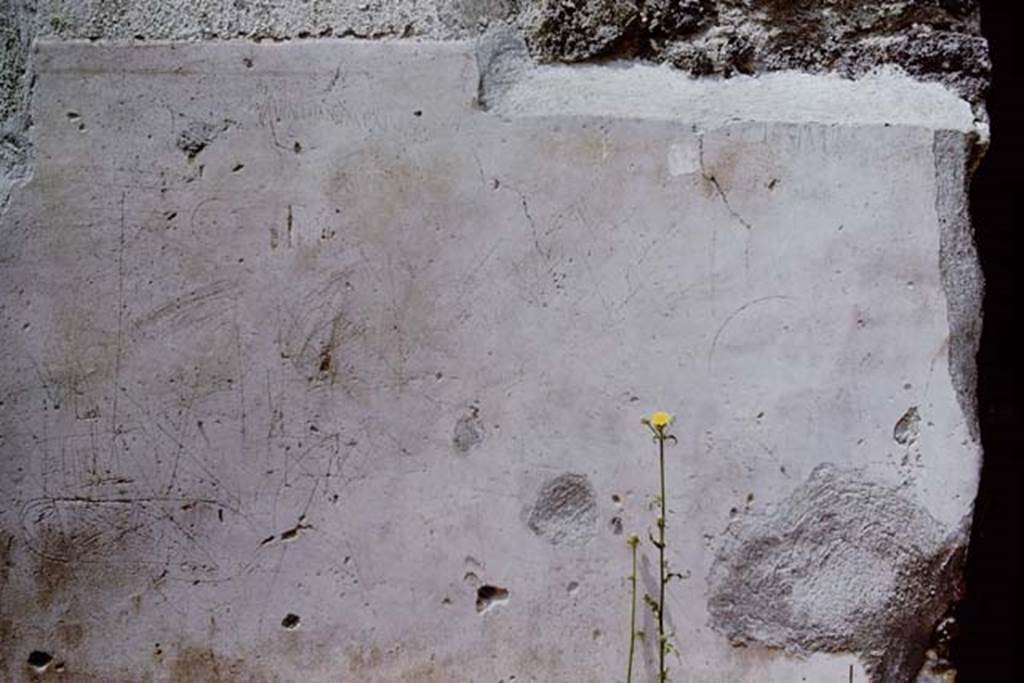
I.13.9 Pompeii. 1966. Plaster with graffiti on south (left) of doorway. Photo by Stanley A. Jashemski.
Source: The Wilhelmina and Stanley A. Jashemski archive in the University of Maryland Library, Special Collections (See collection page) and made available under the Creative Commons Attribution-Non Commercial License v.4. See Licence and use details.
J66f0274
![I.13.9 Pompeii. 1966. Inscription from plaster immediately south (left) of doorway.
Detail from photo J66f0274 by Stanley A. Jashemski.
According to Epigraphik-Datenbank Clauss/Slaby (See www.manfredclauss.de) this read
[Z]osime [CIL IV 10072b]
See Varone A., 2012. Titulorum Graphio Exaratorum Qui In C.I.L. Vol. IV Collecti Sunt Imagines: Studi SAP 31. Roma: L’Erma di Bretschneider, p. 87.](1%2013%2009_files/image009.jpg)
I.13.9 Pompeii. 1966. Inscription from plaster immediately south (left) of
doorway.
Detail from photo J66f0274 by Stanley A. Jashemski.
According to Epigraphik-Datenbank Clauss/Slaby (See www.manfredclauss.de) this read
[Z]osime [CIL IV 10072b]
See Varone A.,
2012. Titulorum Graphio Exaratorum Qui In C.I.L. Vol. IV
Collecti Sunt Imagines:
Studi SAP 31. Roma: L’Erma di Bretschneider, p. 87.
![I.13.9 Pompeii. 1966. Inscription from plaster further to south (left) of doorway.
Detail from photo J66f0274 by Stanley A. Jashemski.
According to Epigraphik-Datenbank Clauss/Slaby (See www.manfredclauss.de) this read
Quintum Valerium [CIL IV 10072a]
See Varone A., 2012. Titulorum Graphio Exaratorum Qui In C.I.L. Vol. IV Collecti Sunt Imagines: Studi SAP 31. Roma: L’Erma di Bretschneider, p. 87.](1%2013%2009_files/image011.jpg)
I.13.9 Pompeii. 1966. Inscription from plaster further to south (left) of
doorway.
Detail from photo J66f0274 by Stanley A. Jashemski.
According to Epigraphik-Datenbank Clauss/Slaby (See www.manfredclauss.de) this read
Quintum
Valerium [CIL IV 10072a]
See Varone A., 2012. Titulorum Graphio Exaratorum Qui In C.I.L.
Vol. IV Collecti Sunt Imagines: Studi SAP 31.
Roma: L’Erma di
Bretschneider, p. 87.
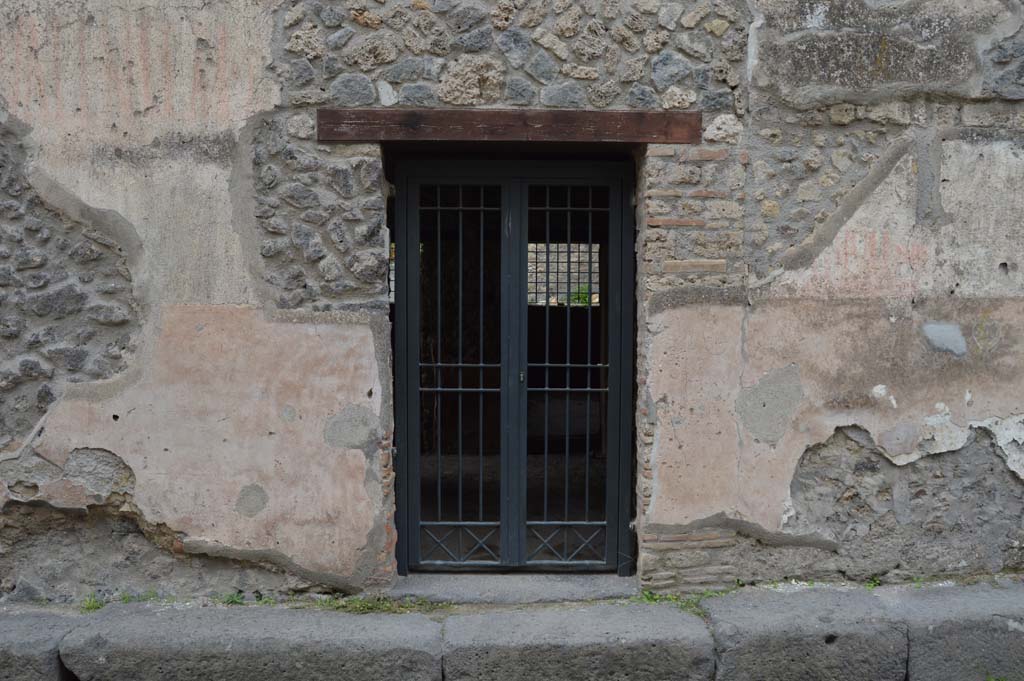
I.13.9 Pompeii. October 2017.
Looking west to entrance doorway on Via di Nocera.
Foto Taylor Lauritsen, ERC Grant 681269 DÉCOR.
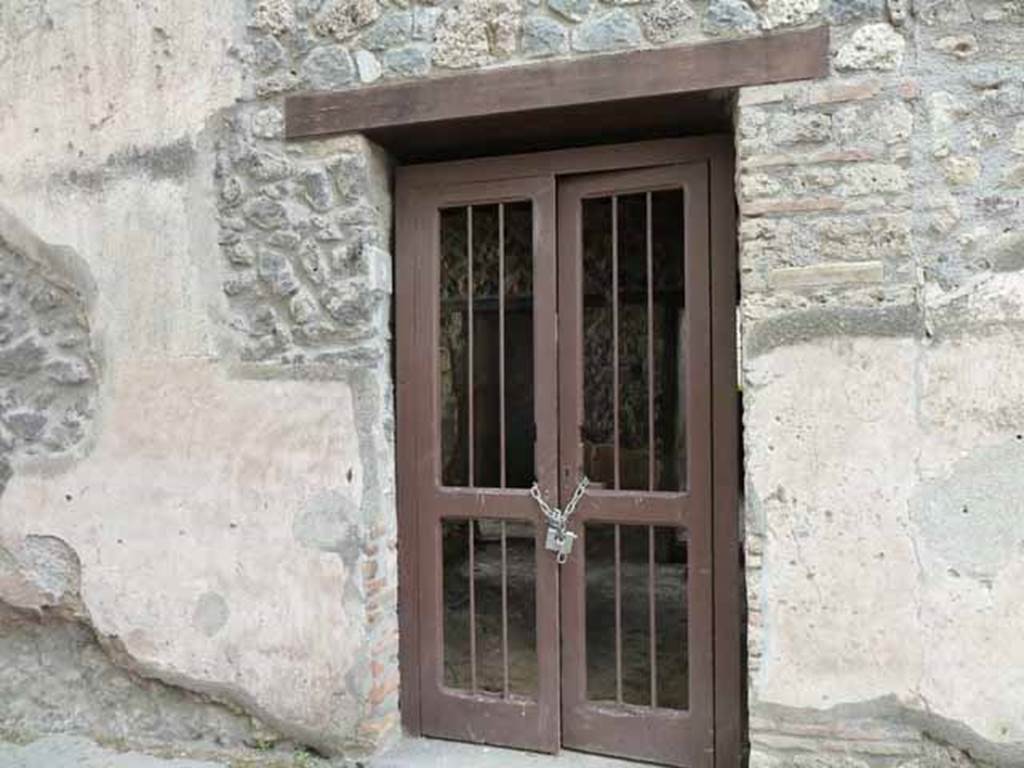
I.13.9 Pompeii.
May 2010. Entrance on Via di Nocera.
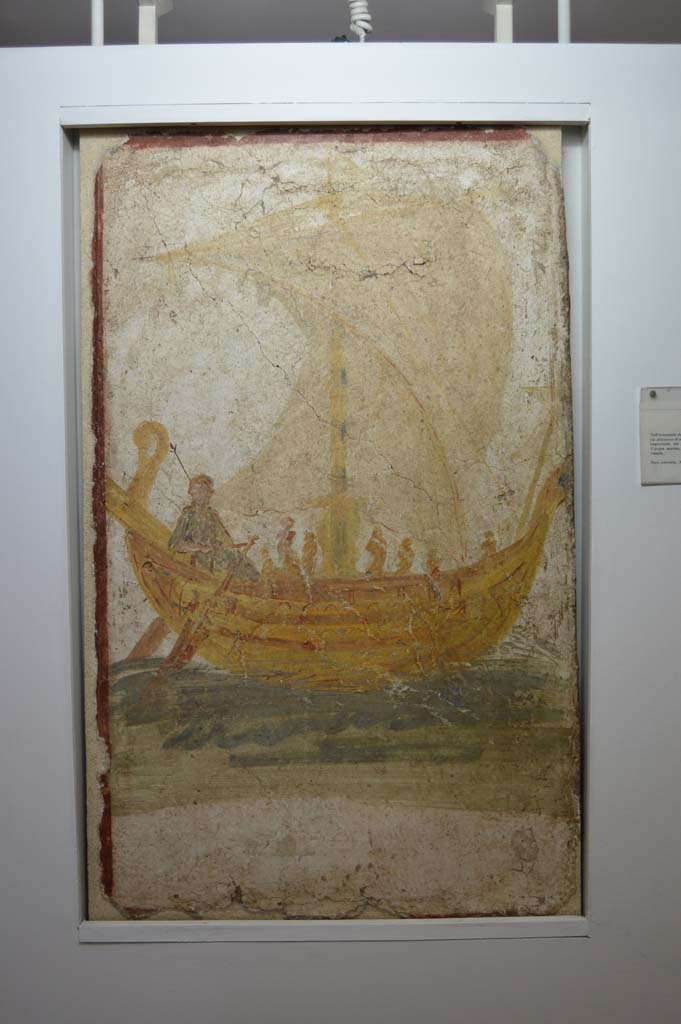
I.13.9 Pompeii. Photograph taken March 2019. Boscoreale Antiquarium.
Wall painting from
exterior wall on south side of the entrance.
Foto Taylor Lauritsen, ERC Grant 681269 DÉCOR.
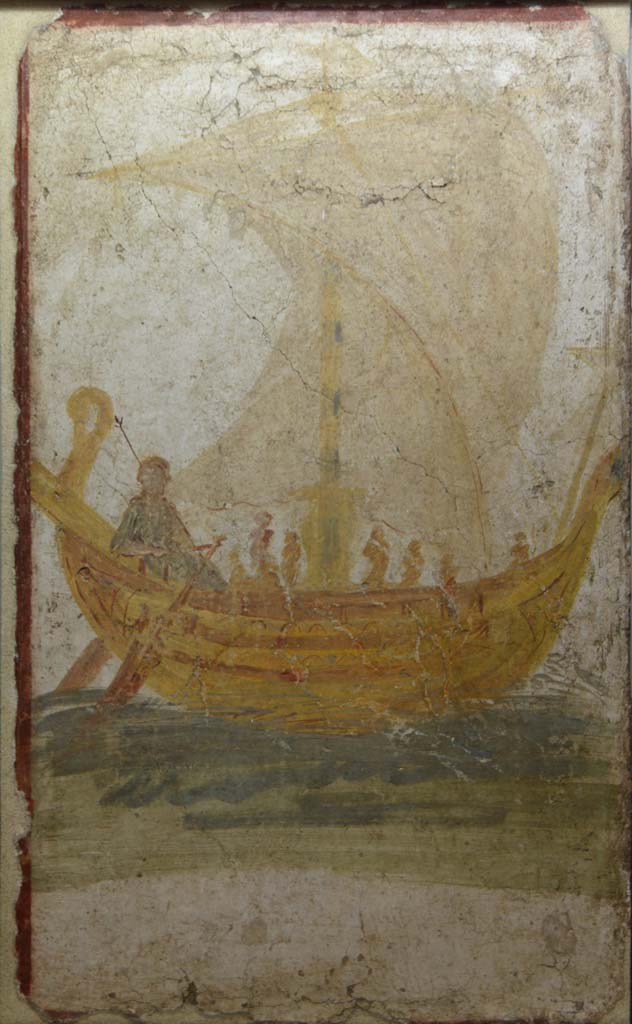
I.13.9 Pompeii. March 2019.
Wall painting from exterior wall on south
side of the entrance.
Foto
Taylor Lauritsen, ERC Grant 681269 DÉCOR.
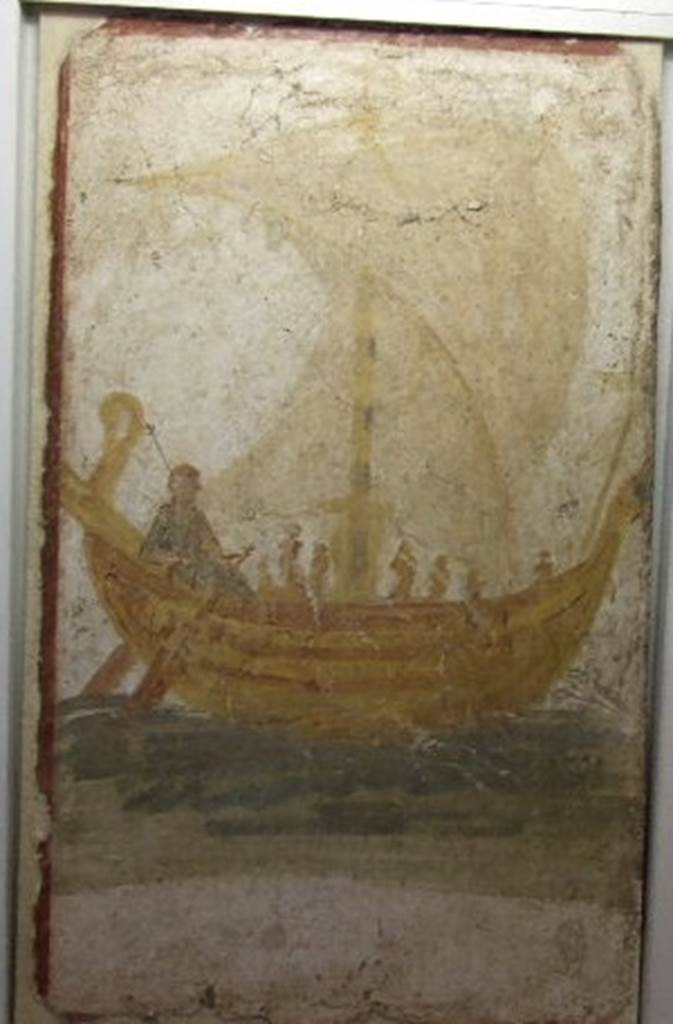
I.13.9 Pompeii. Venus on a boat, wall painting from exterior wall on south side of the entrance.
Photograph taken December 2006, Boscoreale Antiquarium.
According to Varone, underneath the painting of a boat with open sails and Venus at the rudder acting a helmsman for the sailors, was a Greek inscription painted in black letters, saying “Venus the Saviour”. This was CIL IV 9867 but is no longer conserved.
See Varone, A., 2002. Erotica Pompeiana: Love Inscriptions on the Walls of Pompeii, Rome: L’erma di Bretschneider. (p.24)
According to Varone and Stefani, the inventory number of the painting should be 20697.
See Varone, A. and Stefani, G., 2009. Titulorum Pictorum
Pompeianorum, Rome:
L’erma di Bretschneider, (p.158)
According to Fröhlich, the SAP inventory number was 2212-4.
See Fröhlich, T., 1991. Lararien und Fassadenbilder in den Vesuvstädten. Mainz: von Zabern. (p. 311, F. 13, taf 17,10)
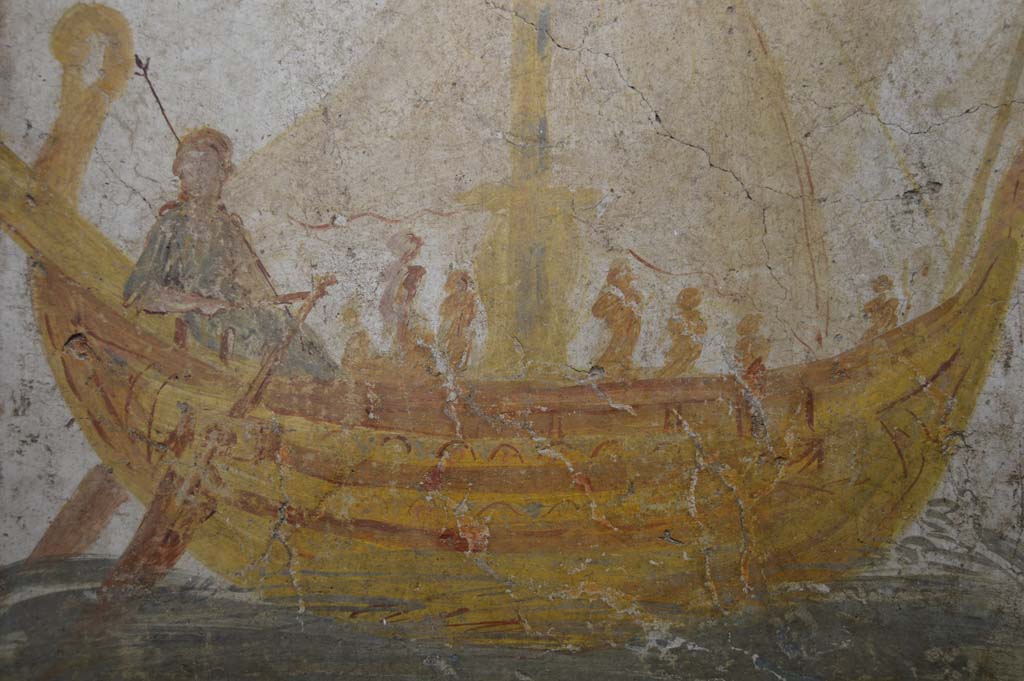
I.13.9 Pompeii. March 2019.
Detail from wall painting from exterior wall on south side
of the entrance, showing Venus on a boat.
Foto Taylor Lauritsen, ERC
Grant 681269 DÉCOR.
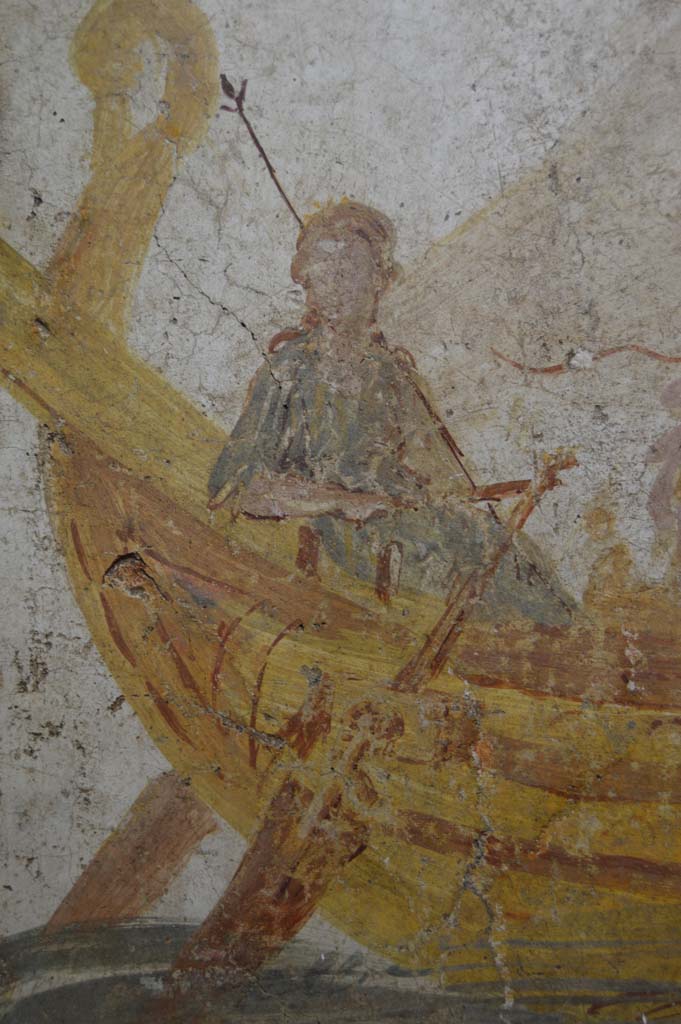
I.13.9 Pompeii. March 2019.
Detail showing Venus on a boat.
Foto Taylor Lauritsen, ERC Grant 681269 DÉCOR.
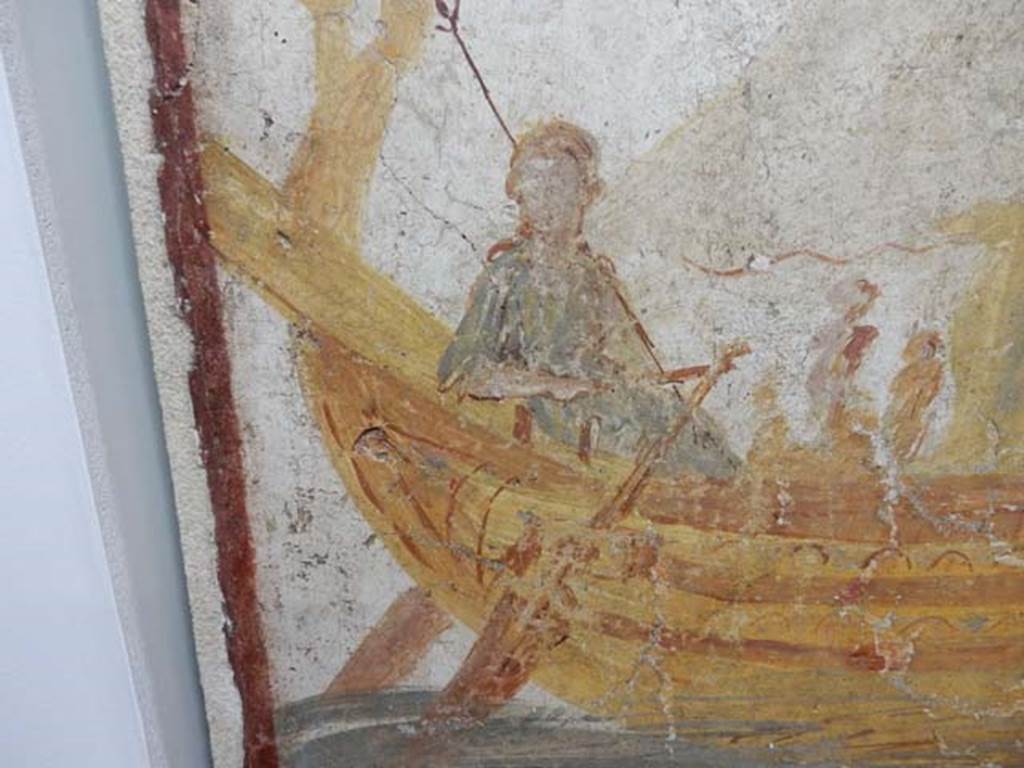
I.13.9 Pompeii. May 2018. Boscoreale Antiquarium.
Detail of Venus at the rudder from wall painting on exterior wall on south side of the entrance. Photo courtesy of Buzz Ferebee.
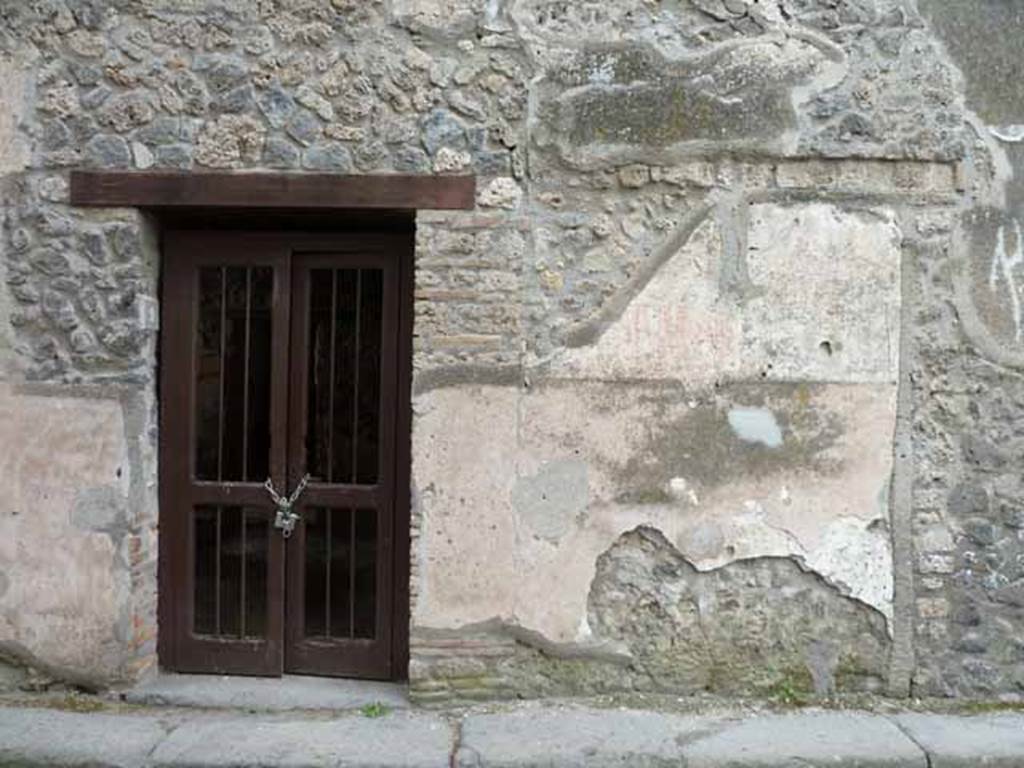
I.13.9 Pompeii. May 2010. North side of entrance doorway, with remains of painted graffiti.
![I.13.9 Pompeii. May 2010. Painted graffiti barely visible on north side of entrance. According to Varone and Stefani, this was CIL IV 9870.
See Varone, A. and Stefani, G., 2009. Titulorum Pictorum ompeianorum, Rome: L’erma di Bretschneider, (p.160)
According to Epigraphik-Datenbank Clauss/Slaby (See www.manfredclauss.de), this read as –
Popidium D(uo) V(irum) I(ure) D(icundo)
Lesbianus [[popule]] rogat [CIL IV 9870]](1%2013%2009_files/image026.jpg)
I.13.9 Pompeii. May 2010. Painted graffiti barely visible on north side of entrance.
According to Varone and Stefani, this was CIL IV 9870.
See Varone, A. and Stefani, G., 2009. Titulorum Pictorum
Pompeianorum, Rome:
L’erma di Bretschneider, (p.160)
According to Epigraphik-Datenbank Clauss/Slaby (See www.manfredclauss.de), this read as –
Popidium D(uo)
V(irum) I(ure) D(icundo)
Lesbianus
[[popule]] rogat [CIL IV 9870]
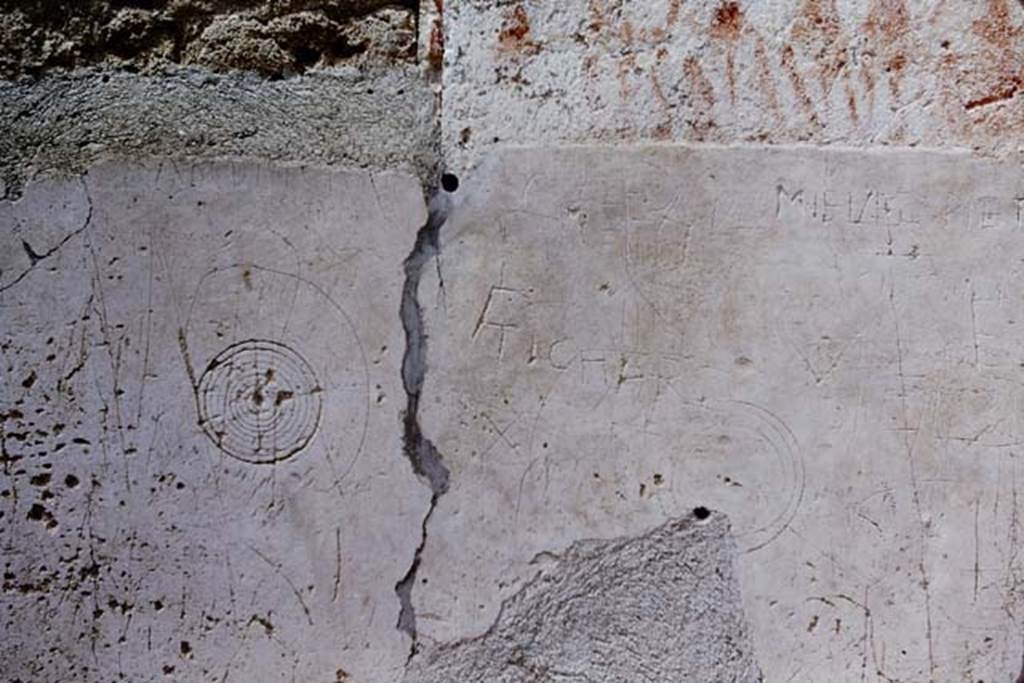
I.13.9 Pompeii. 1966.
Part of painted inscription CIL IV 9870 (top) from north (right) side of doorway. Photo by Stanley A. Jashemski.
Source: The Wilhelmina and Stanley A. Jashemski archive in the University of Maryland Library, Special Collections (See collection page) and made available under the Creative Commons Attribution-Non Commercial License v.4. See Licence and use details.
J66f0275
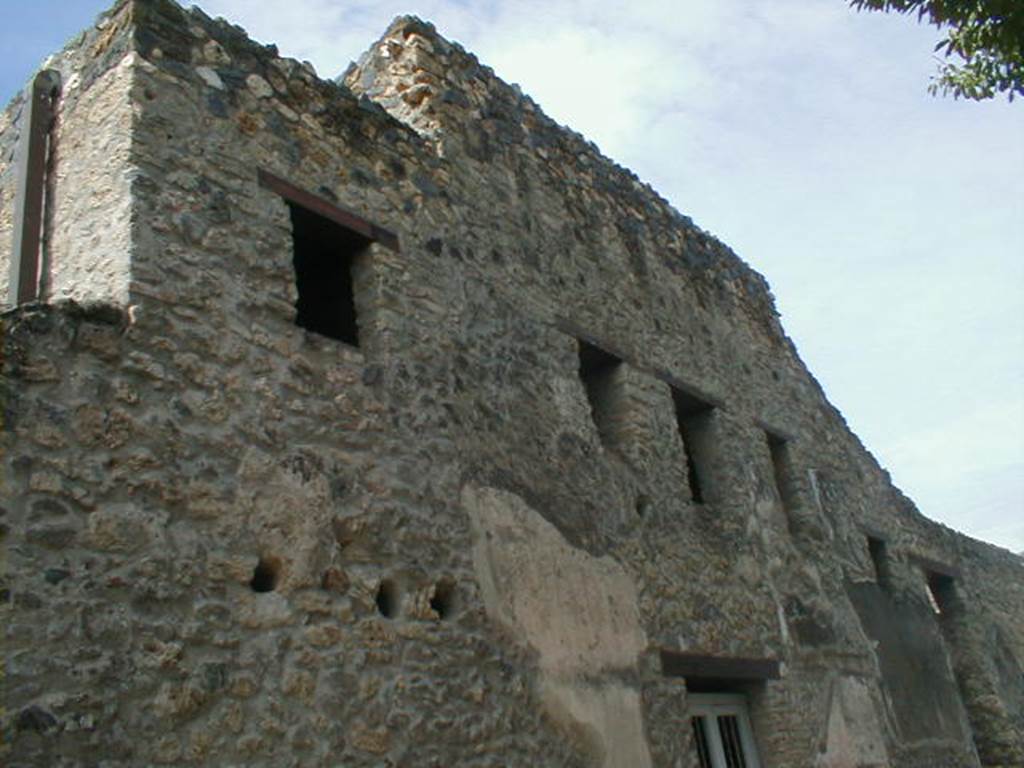
I.13.9 Pompeii. May 2005. Upper floor, looking north.
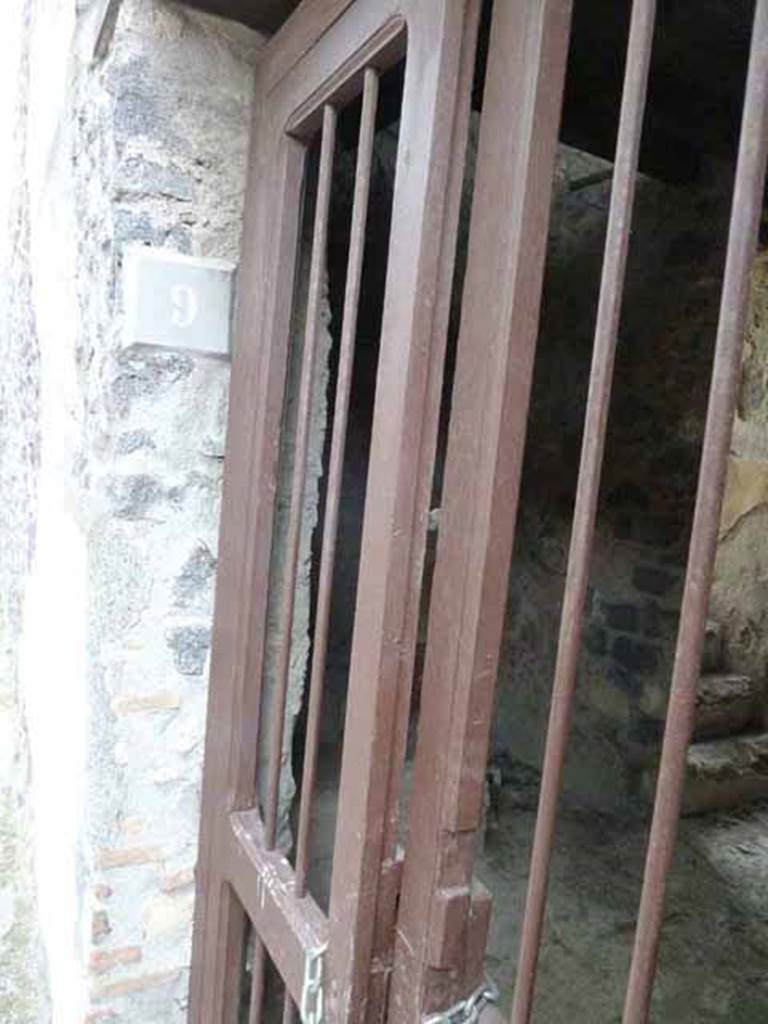
I.13.9 Pompeii. May 2010. Looking south through entrance doorway.

I.13.9 Pompeii. July 2008.
Looking south into latrine, in south-east corner of atrium. Photo courtesy of Barry Hobson.

I.13.9 Pompeii. May 2005. South-east corner of atrium with the doorway to the latrine, on the left.

I.13.9 Pompeii. May 2005. Painted plaster in south-east corner of atrium.

I.13.9 Pompeii. May 2010.
South side of small atrium, with steps to upper floor and doorway to oecus.

I.13.9 Pompeii. May 2005. Doorways in west wall of atrium, to oecus on the left, and to triclinium on the right.

I.13.9 Pompeii. May 2005. West painted wall of atrium, and doorway to triclinium.

I.13.9 Pompeii. December 2005. Doorway to triclinium, with window to garden.

I.13.9 Pompeii. December 2005. Window to garden from triclinium.

I.13.9 Pompeii. May 2005. West wall of atrium, and north-west corner.

I.13.9 Pompeii, May 2005. North wall of atrium.

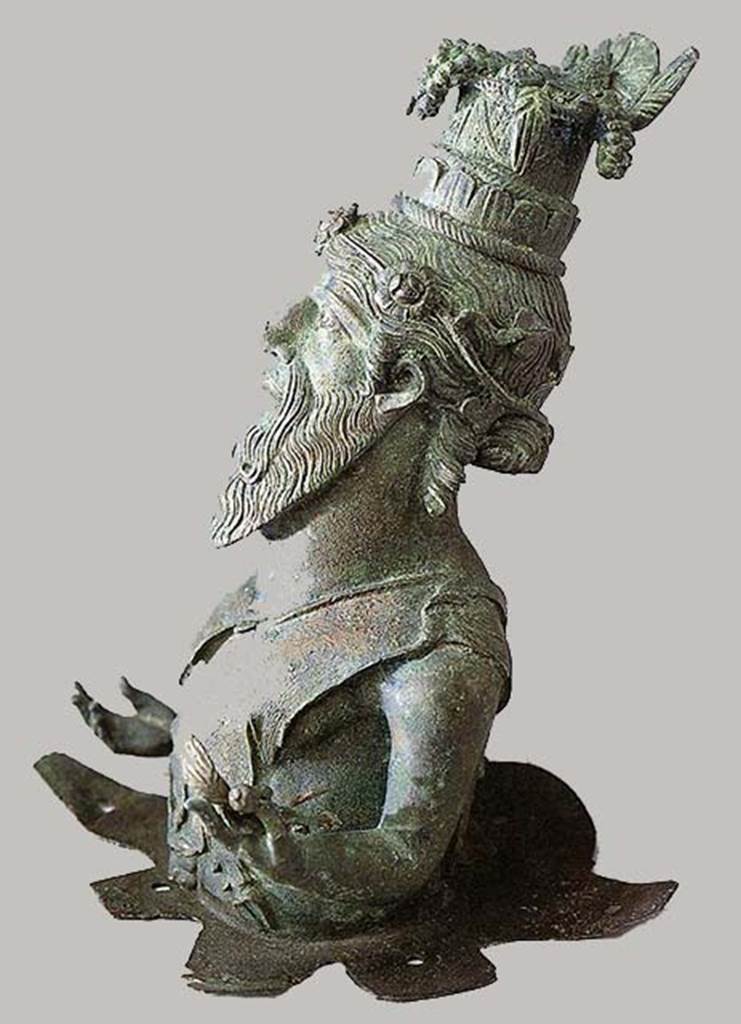
I.13.9 Pompeii, Bust of Dionysus-Sabazius wearing a leather skin.
In his right hand he holds a poppy. His left hand is open and empty.
SAP inventory
number 11471.
See 2005. Cibi e Sapori a Pompei e Dintorni. Exhibition Catalogue: Boscoreale, p. 36.
See Berry, J., 2007. The
Complete Pompeii. London: Thames & Hudson, p. 200.
See Conticello,
B., Ed, 1990. Rediscovering Pompeii.
Rome: L’Erma di Bretschneider, p. 137.
See Elia O.,
1961. Bacco Fancillo e Dioniso chtonio a
Pompeii: Bolletino d'Arte series 4, p. 4.

I.13.9 Pompeii, Bust of Dionysus-Sabazius, side view. SAP inventory number 11471.
According to Berry, he wears a tall fruit basket as a hat.
From it overflow grapes, figs, plums, ears of wheat and a loaf of bread, all symbols of fertility.
The figure was originally mounted on a wooden pole.
See Berry, J., 2007. The Complete Pompeii. London: Thames & Hudson, p. 200.
I.13.9 Pompeii.
March 2024. Photo courtesy of Giuseppe Ciaramella.
No.1 (on right) -Terracotta theatre mask, from I.13.9 (Ist century AD).
No.2 (on left) – Model of a plaster mask, from Porta Ercolano, Pompeii, (Ist century AD).
On display in
exhibition in Palaestra entitled – “L’altra Pompei, vite comuni all’ombra del
Vesuvio”.