I.12.8 Pompeii. Casa e Officina
del Garum degli Umbricii.
Excavated 1958 and 1960 to 1961.
Part 2 Part 3
Part 4 Part 1 Plan
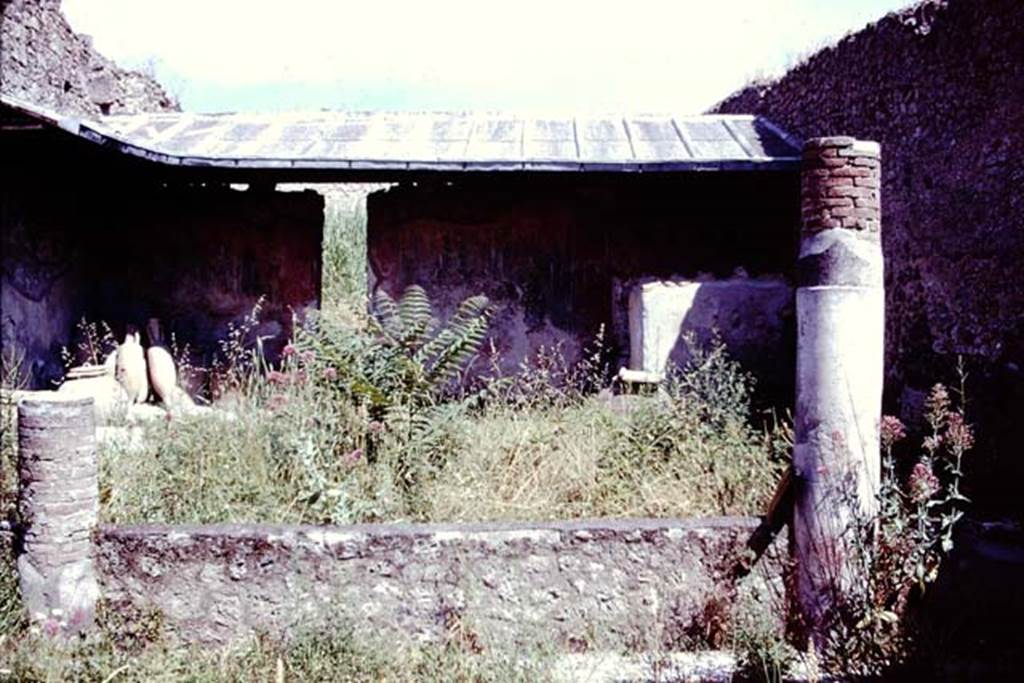
I.12.8 Pompeii, 1978. Looking north across peristyle from south portico with remains of two columns. Photo by Stanley A. Jashemski.
Source: The Wilhelmina and Stanley A. Jashemski archive in the University of Maryland Library, Special Collections (See collection page) and made available under the Creative Commons Attribution-Non Commercial License v.4. See Licence and use details.
J78f0207
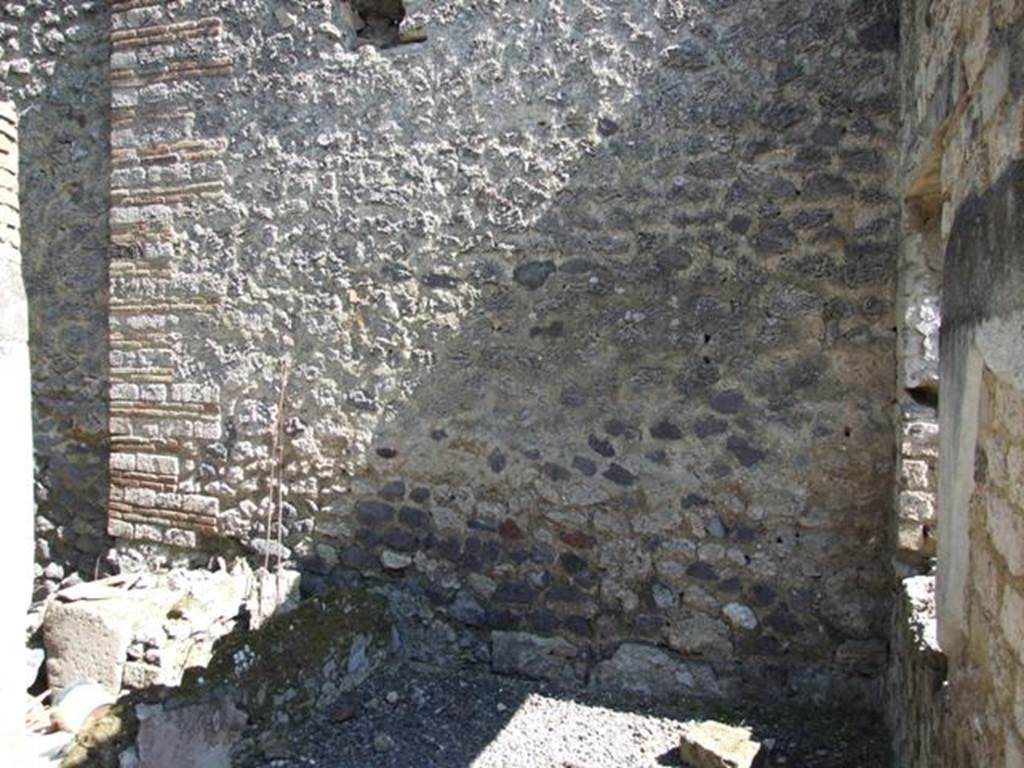
I.12.8 Pompeii. March 2009. East wall of south portico. On the left can be seen the remains of a shallow basin.
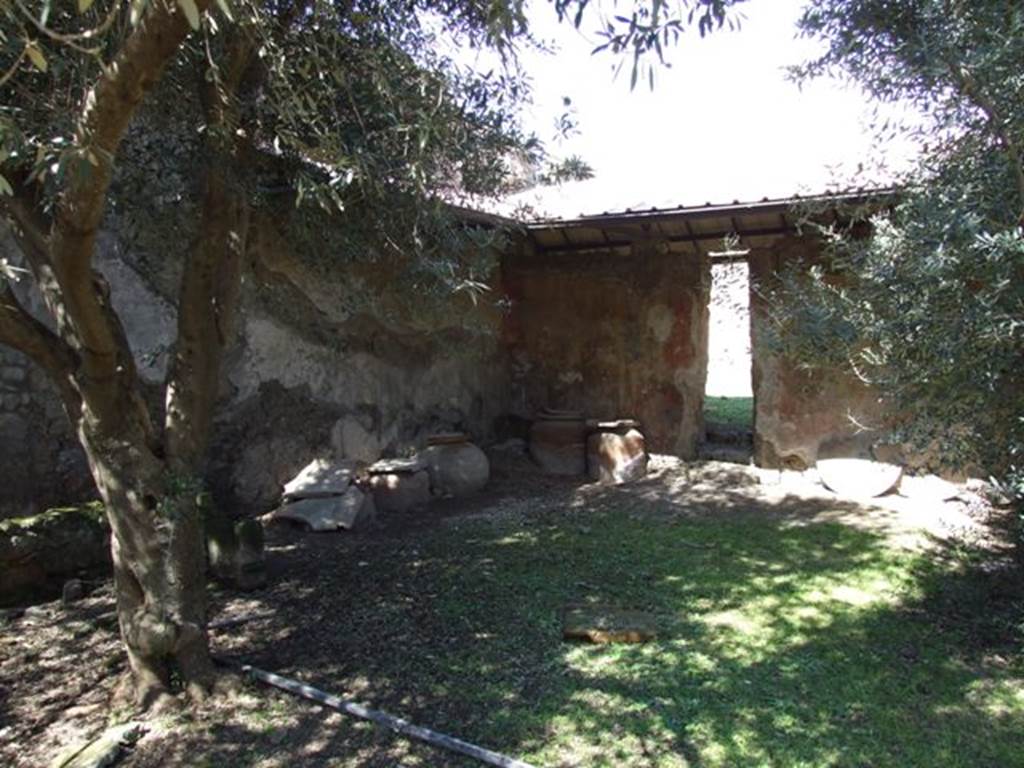
I.12.8 Pompeii. March 2009. Room 9, looking north-west across peristyle garden, which was possibly used as the work area.
The doorway in the rear wall led to the rear courtyard which served as a storeroom for the amphorae.
According to Jashemski, when she excavated the peristyle in 1975, she discovered the root cavities of two large fig trees.
One was located near the low wall in the south-west corner, the other near the latrine and dolium in the north-east corner.
She believed the large tree near the latrine would have been around 30-40 years old, and the smaller one about 10 years old in 79AD.
These have now been replaced by two olive trees, but the shade provided by the trees can be appreciated.
See Jashemski, W. F., 1993. The Gardens of Pompeii, Volume II: Appendices. New York: Caratzas. (p.54-5).
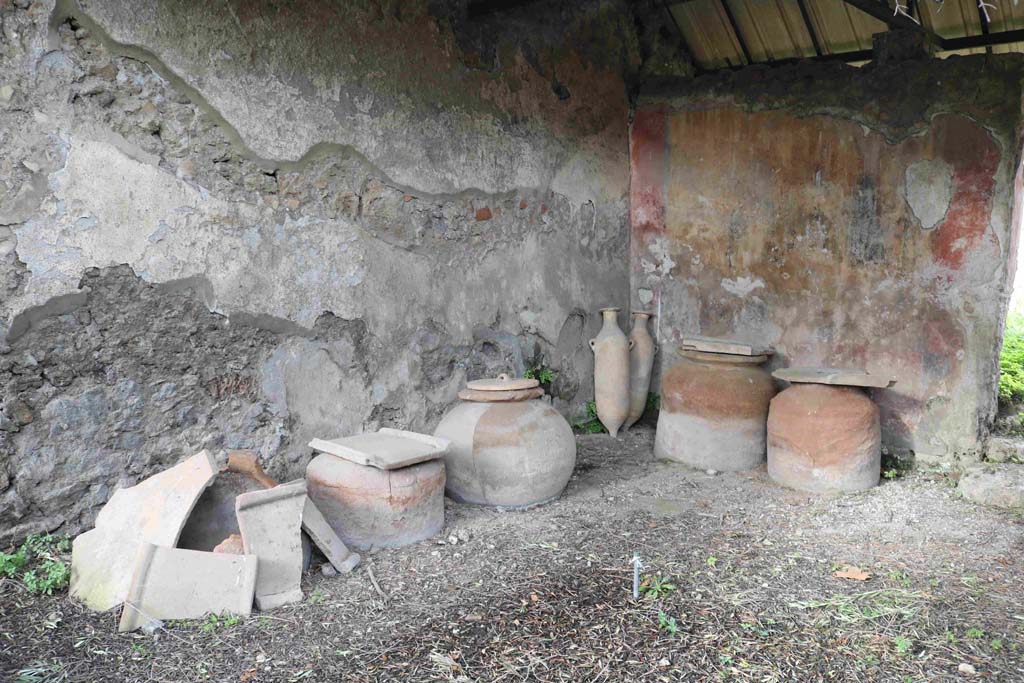
I.12.8
Pompeii. December 2018. Room 9, looking towards north-west corner and dolia. Photo
courtesy of Aude Durand.
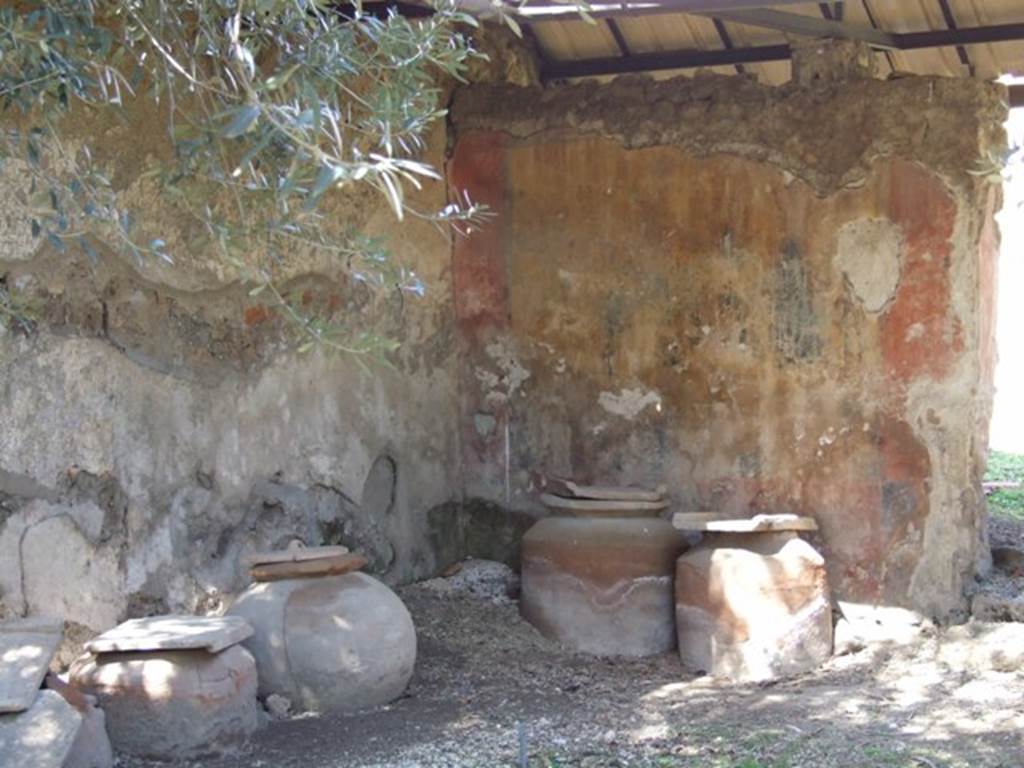
I.12.8 Pompeii. March 2009. Room 9, north-west corner showing five of the six dolia found here.
The sixth stands near the latrine in the north-east corner of the peristyle garden.
According to Curtis, five of these containers held the remains of a fish sauce, either garum or liquamen.
Garum was the product formed from the self-maceration of fish and other small marine animals in salt.
Liquamen was a closely related fish sauce.
Several of the amphorae that were also found here also contained a substance similar to that found in the dolia.
Maiuri stated that when these vessels were excavated the smell of fish was still fresh.
This smell remained strong for some time after the exposure to the air.
The dried fish sauce contained the small bones and vertebrae of anchovies.
Although the clear liquid had long since dried up, it left the odour entrapped until released in 1960.
See Curtis, R.I: The Garum shop at Pompeii, In Cronache
Pompeiane, V,1979, (p.10)
See Maiuri, A: L’odore della salsa di 2000 anni fa, In
Corriere della Sera (Milan), 2 January 1961, p. 3.
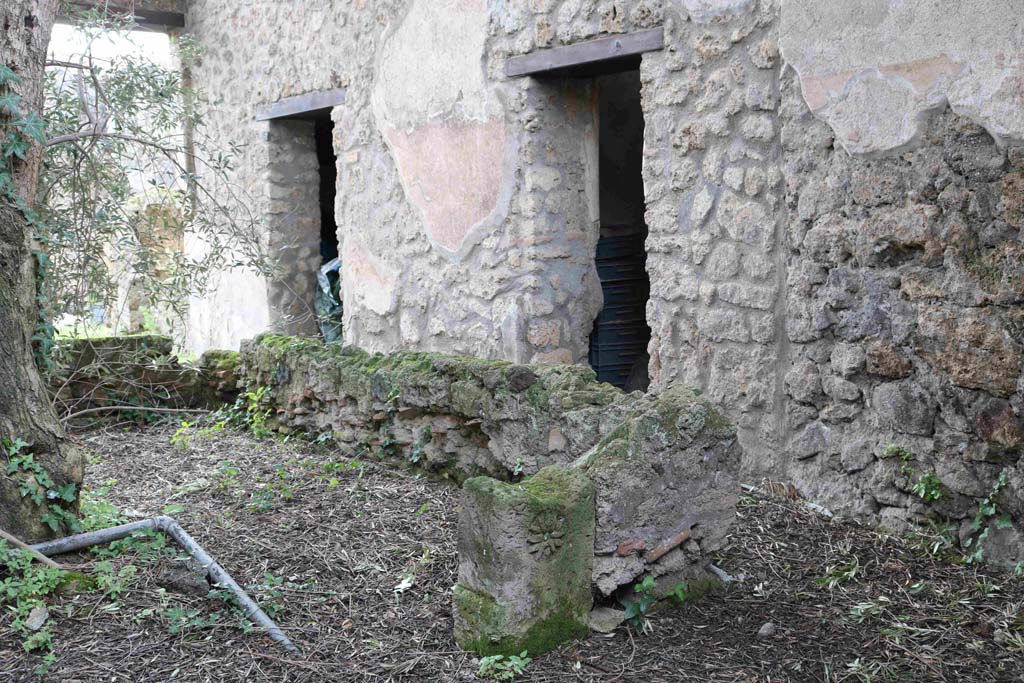
I.12.8 Pompeii. December 2018.
Room 9, peristyle garden, looking towards west wall and doorways to rooms 10 and 11. Photo courtesy of Aude Durand.
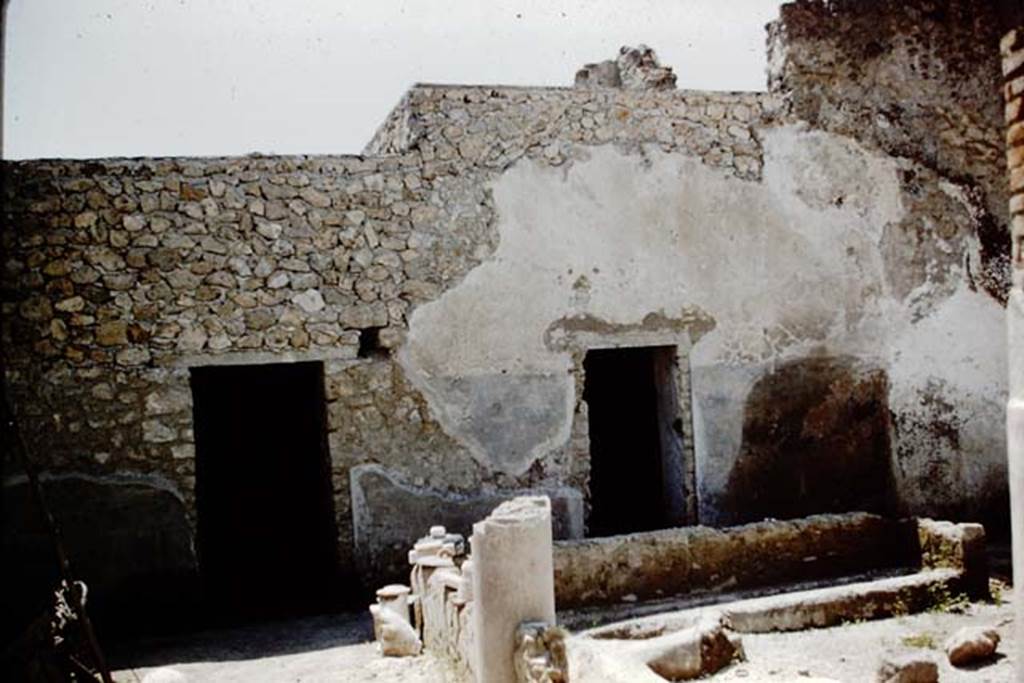
I.12.8 Pompeii. 1961.
Looking towards west side of peristyle garden, and doorways to rooms 10 and 11. Photo by Stanley A. Jashemski.
Source: The Wilhelmina and Stanley A. Jashemski archive in the University of Maryland Library, Special Collections (See collection page) and made available under the Creative Commons Attribution-Non Commercial License v.4. See Licence and use details.
J61f0554
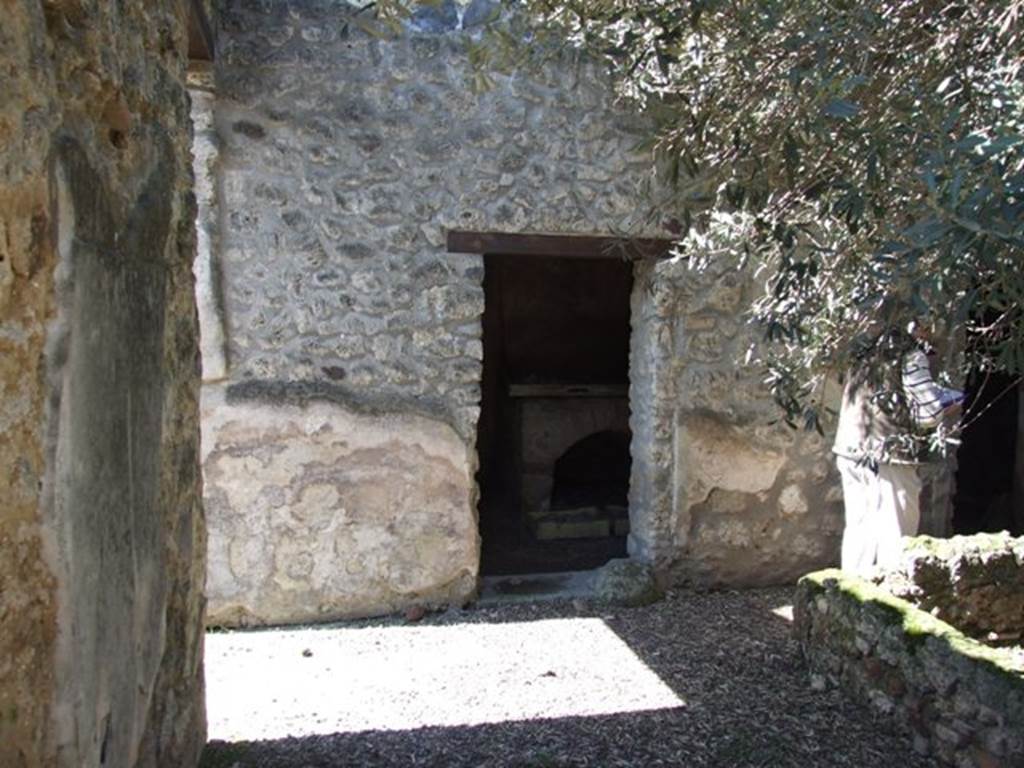
I.12.8 Pompeii. March 2009. West side of south portico, with doorway to room 10, kitchen.
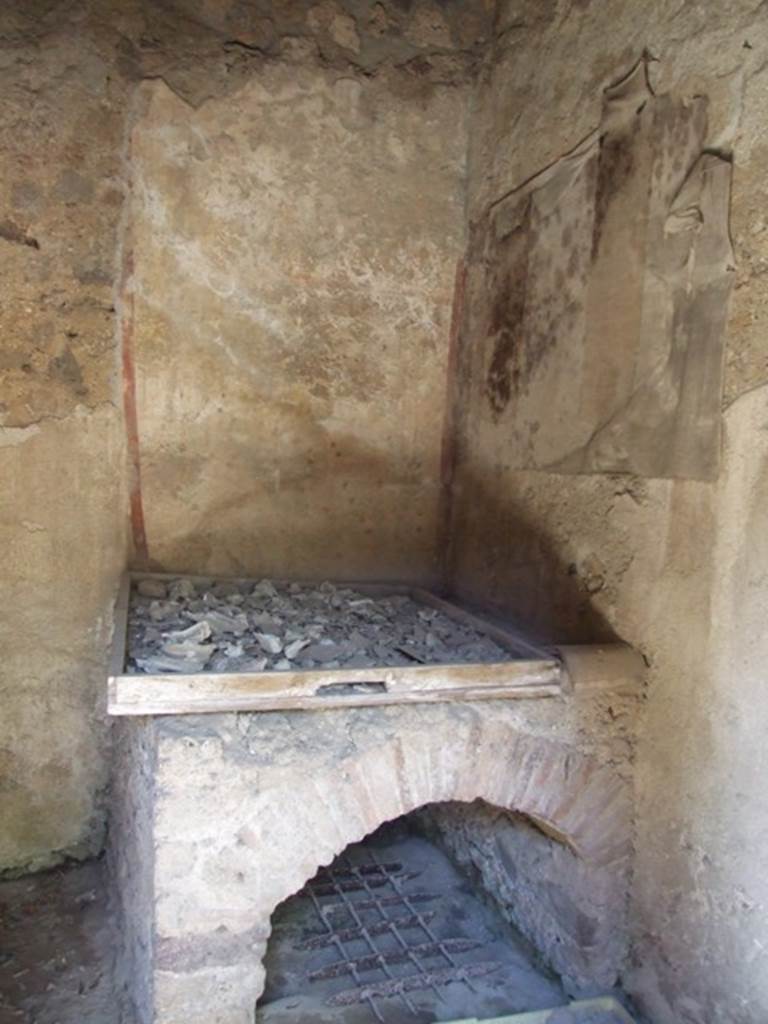
I.12.8 Pompeii. March 2009. Room 10, north-west corner of kitchen with lararium.
On the north wall can just be seen some cloth, which has adhered to the lararium and damaged it.
It used to show one serpent approaching a round altar from the right.
See Giacobello, F., 2008. Larari Pompeiani: Iconografia e culto dei Lari in ambito domestico. Milano: LED Edizioni. (p.152-3).
According to Curtis, the lararium painting covering two walls above the oven in the kitchen was beautiful but badly-deteriorated.
Painted on the north wall was a large single serpent near an altar. On the altar were sacrificial gifts, such as pine cones.
There may have been another scene beneath the serpent, but the wall was too badly damaged to verify this.
See Curtis, R.I: The Garum shop at Pompeii, In Cronache Pompeiane, V,1979, (p.20-1)
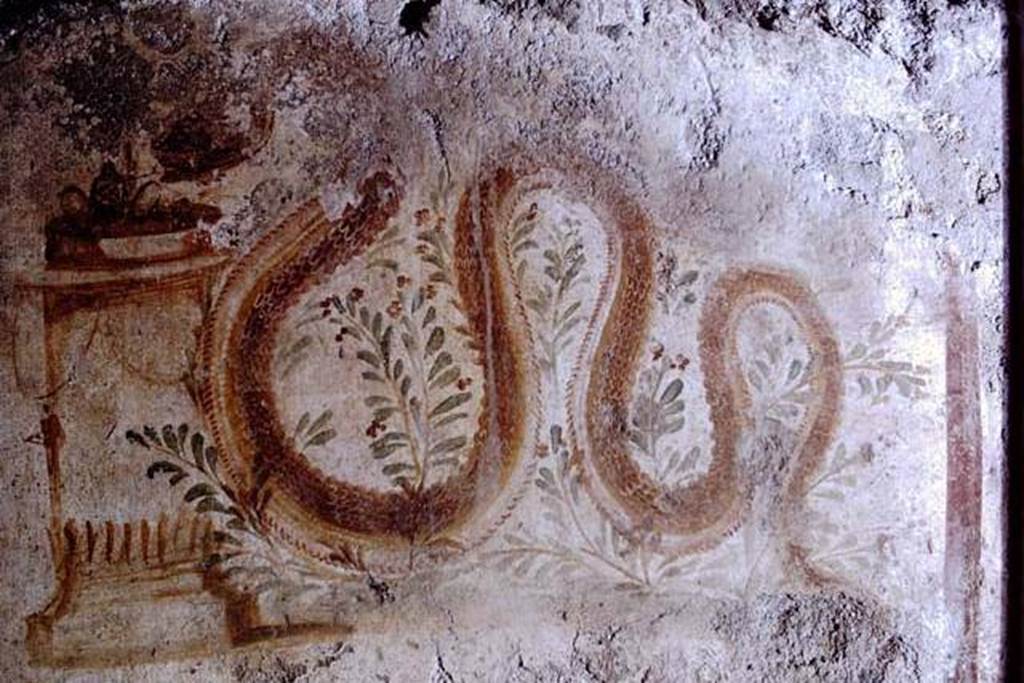
I.12.8 Pompeii. 1968. Room 10, north wall with lararium painting. Photo by Stanley A. Jashemski.
Source: The Wilhelmina and Stanley A. Jashemski archive in the University of Maryland Library, Special Collections (See collection page) and made available under the Creative Commons Attribution-Non Commercial License v.4. See Licence and use details.
J68f1284
According to Curtis, painted on the north wall was a large single serpent near an altar. On the altar were sacrificial gifts, such as pine cones.
There may have been another scene beneath the serpent, but the wall was too badly damaged to verify this.
See Curtis, R.I: The Garum shop at Pompeii, In Cronache Pompeiane, V,1979, (p.20-1)
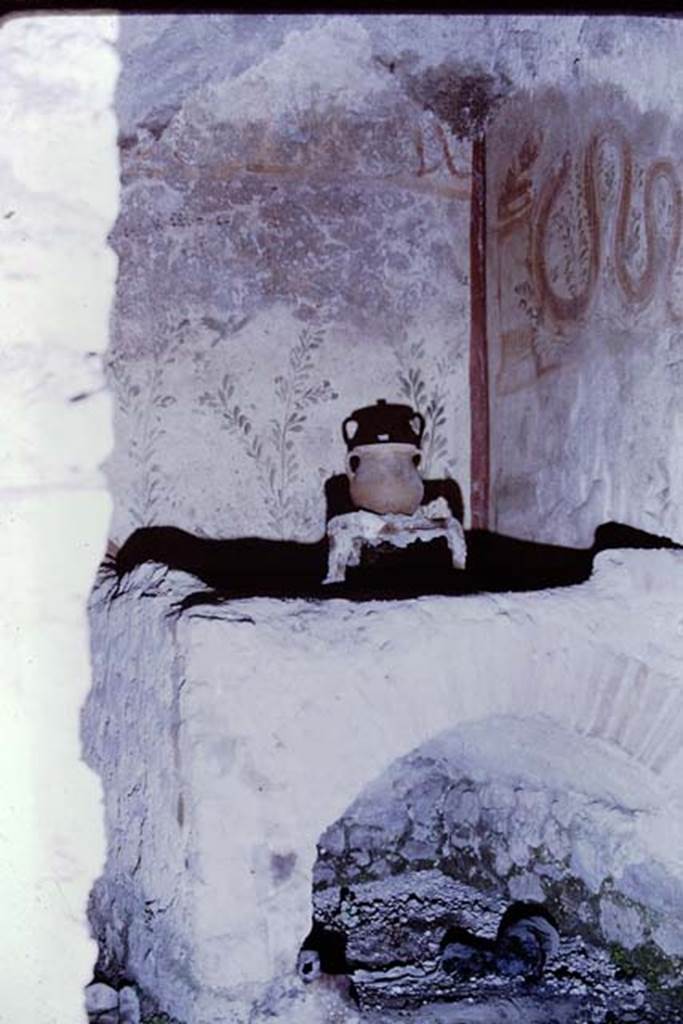
I.12.8 Pompeii. 1968.
Room 10, hearth in north-west corner of kitchen with lararium. Photo by Stanley A. Jashemski.
Source: The Wilhelmina and Stanley A. Jashemski archive in the University of Maryland Library, Special Collections (See collection page) and made available under the Creative Commons Attribution-Non Commercial License v.4. See Licence and use details.
J68f1281
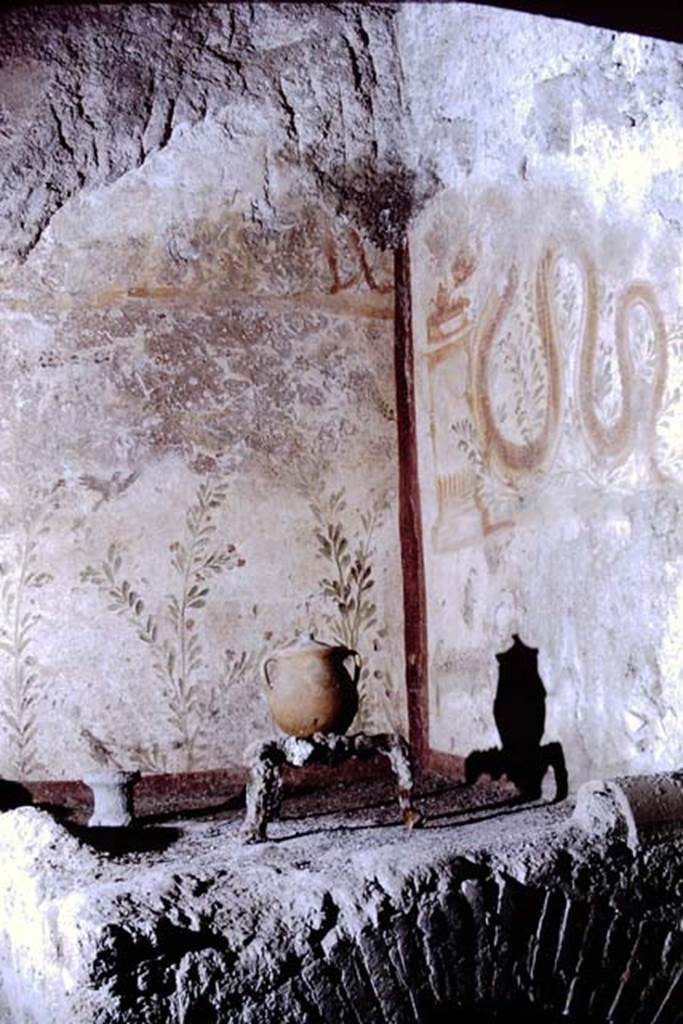
I.12.8 Pompeii. 1968.
Room 10, lararium in north-west corner of kitchen. Photo by Stanley A. Jashemski.
Source: The Wilhelmina and Stanley A. Jashemski archive in the University of Maryland Library, Special Collections (See collection page) and made available under the Creative Commons Attribution-Non Commercial License v.4. See Licence and use details.
J68f1283
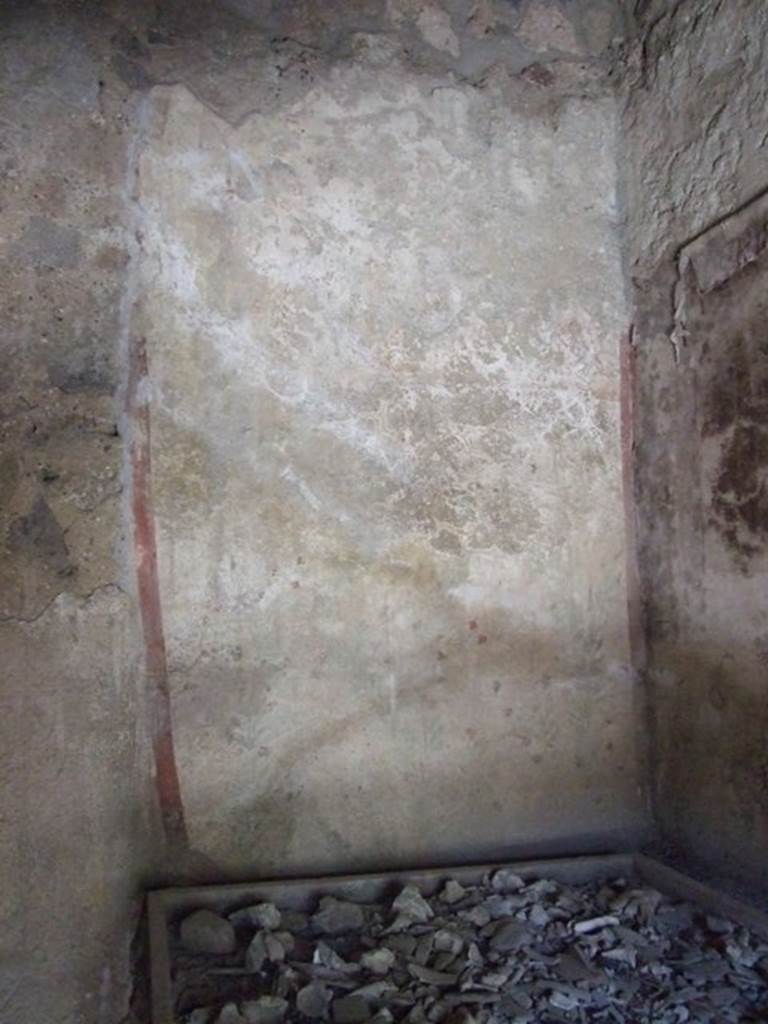
I.12.8 Pompeii. March 2009. Room 10, west wall.
Painted on the upper west wall was a round altar with a genius flanked by two Lares with a rhyton and a patera.
On the lower west wall was a garland with painted plants and birds underneath.
See Fröhlich, T., 1991. Lararien und Fassadenbilder in den Vesuvstädten. Mainz: von Zabern. (L26, T:26,1).
According to Giacobello, the legs of the Lares used to be visible at the top of the wall, but only their booted legs as their upper parts were destroyed.
See Giacobello, F., 2008. Larari Pompeiani: Iconografia e culto dei Lari in ambito domestico. Milano: LED Edizioni. (p.152-3).
According to Curtis, on the west wall was a painting in two parts, both in a bad state of preservation.
In the upper part appeared the genius of the family, or owner, sacrificing on an altar which was on his right.
Two possible Lares were shown, one on the left side of the altar, and the other to the right of the figure near the altar.
The lower panel presented a garden scene including three birds, one perched on a branch, one standing on the ground, and one in flight.
See Curtis, R.I: The Garum shop at Pompeii, In Cronache Pompeiane, V,1979, (p.20-1)
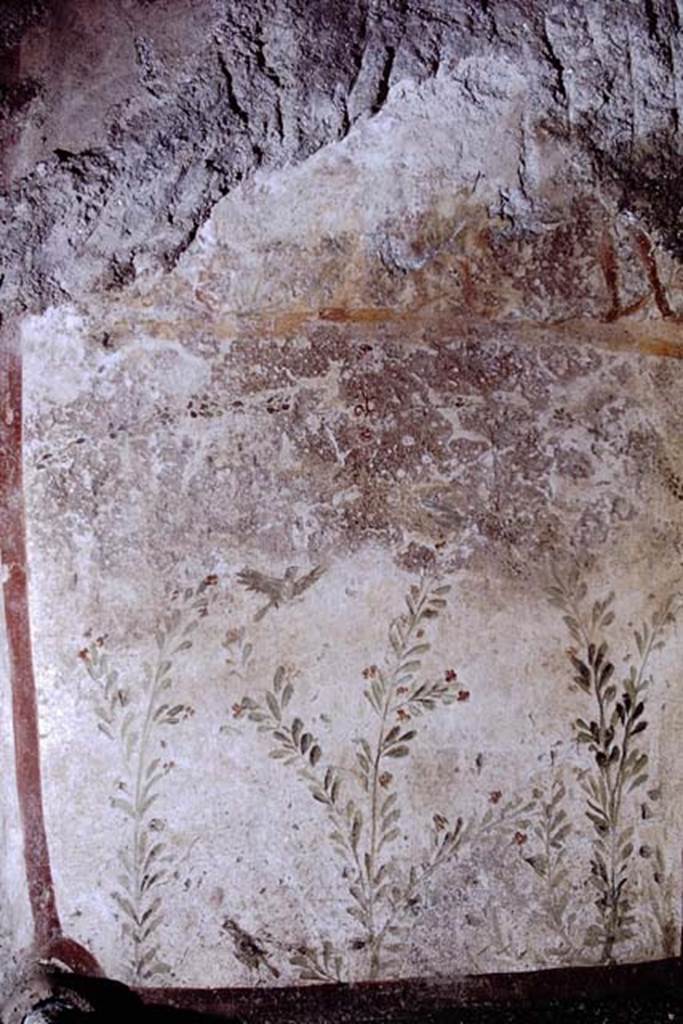
I.12.8 Pompeii. 1968. Room 10, west wall. Photo by Stanley A. Jashemski.
Source: The Wilhelmina and Stanley A. Jashemski archive in the University of Maryland Library, Special Collections (See collection page) and made available under the Creative Commons Attribution-Non Commercial License v.4. See Licence and use details.
J68f1285
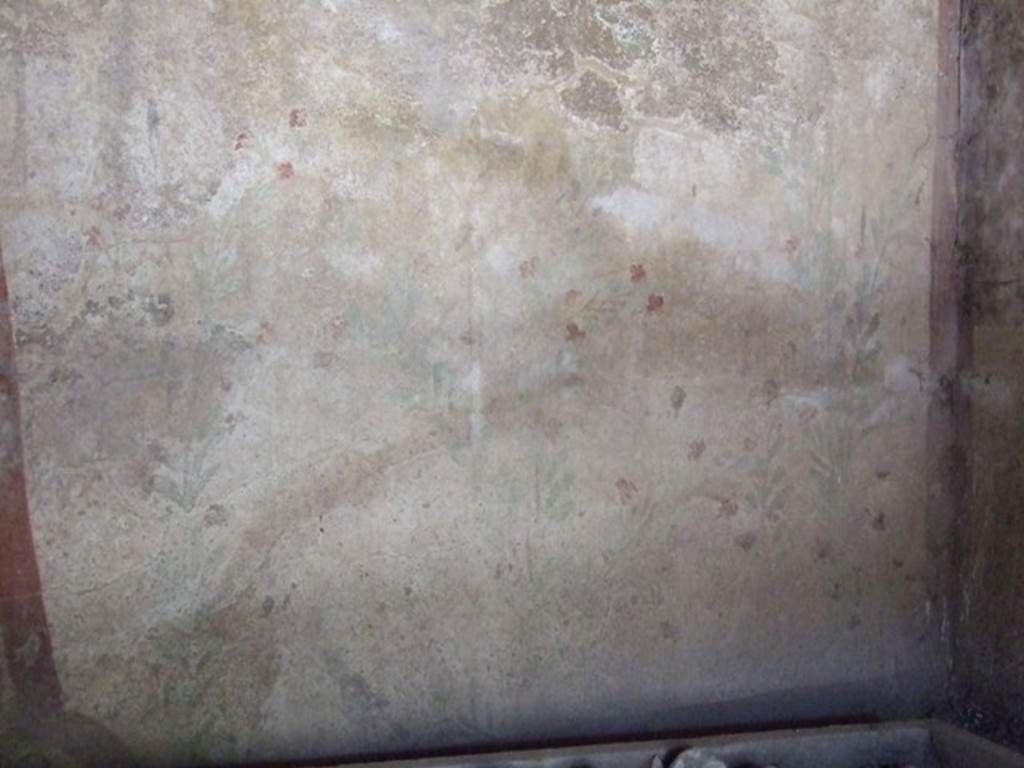
I.12.8 Pompeii. March 2009. Room 10, west wall with remains of lararium, and painting with plants and birds.
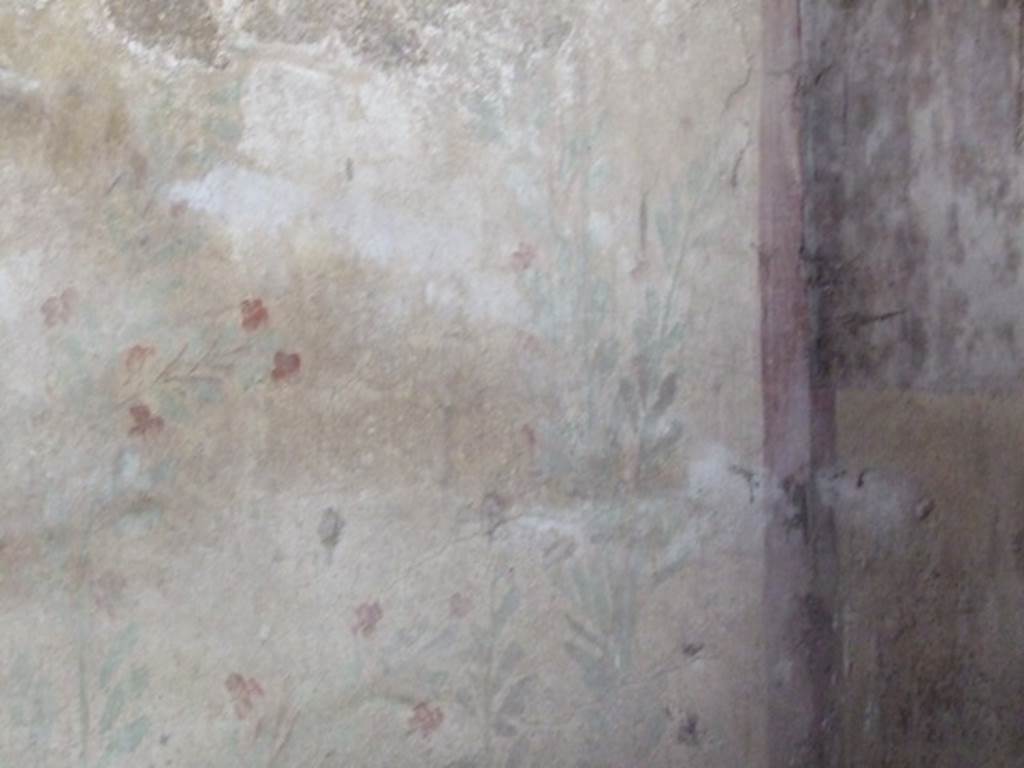
I.12.8 Pompeii. March 2009. Room 10, west wall with lararium. Remains of painted plant decoration and birds.
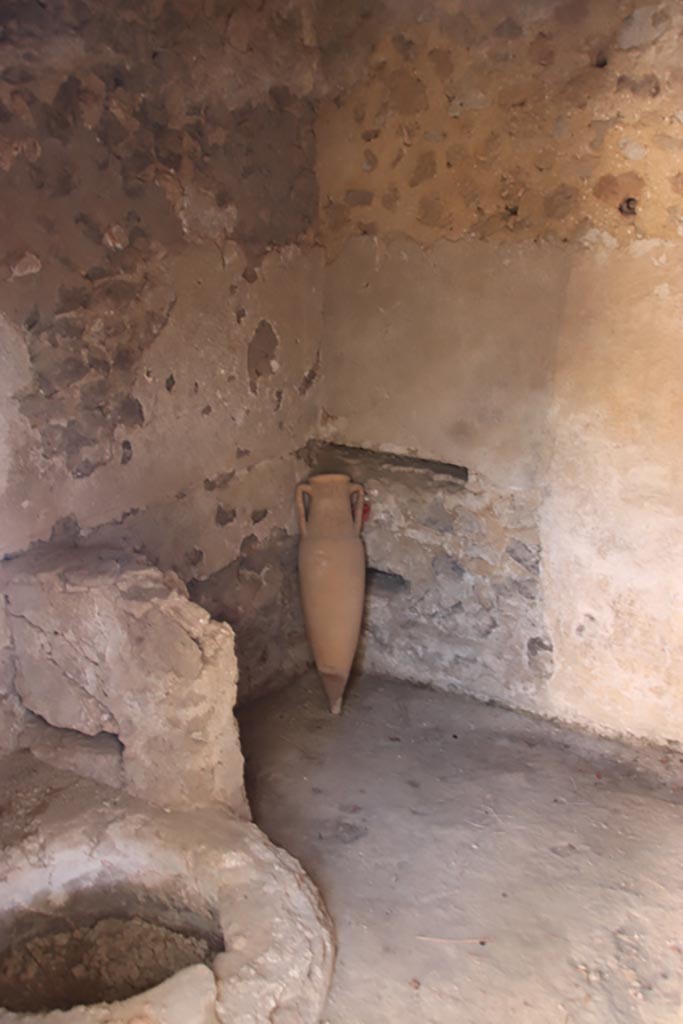
I.12.8 Pompeii. October 2022.
Room 10, looking towards south-west corner. Photo courtesy of Klaus Heese.
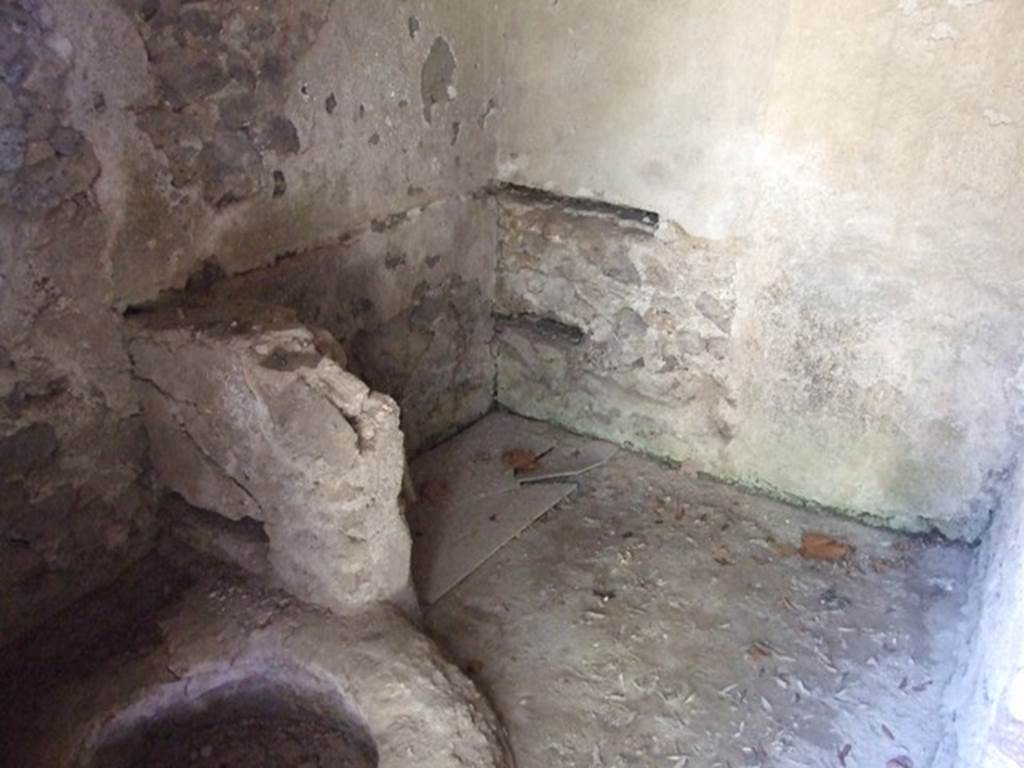
I.12.8 Pompeii. March 2009. Room 10, south-west corner.
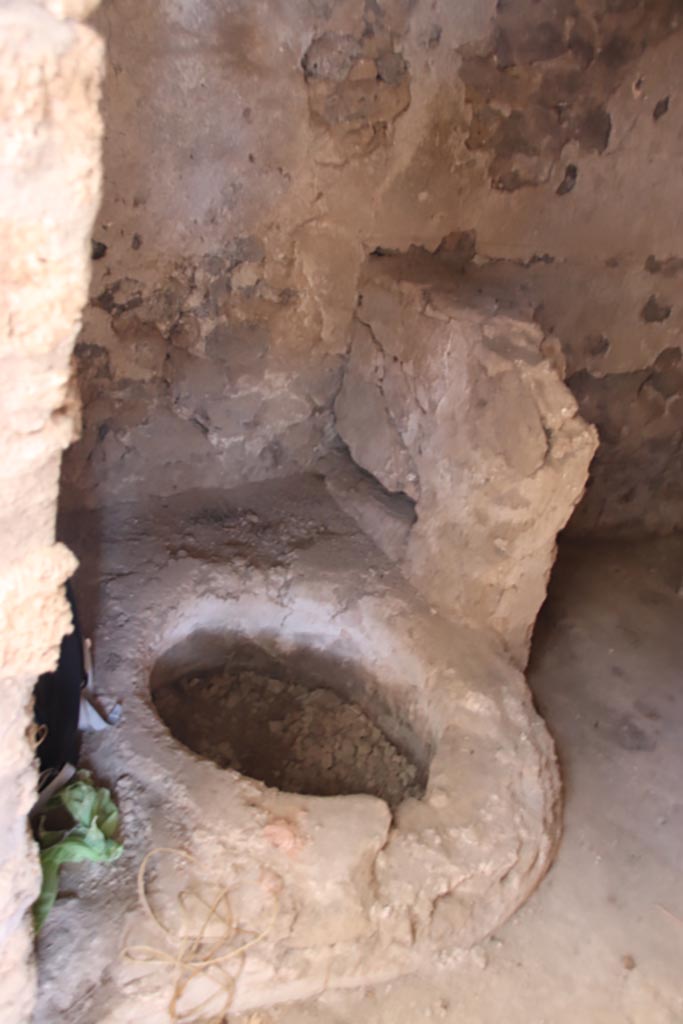
I.12.8 Pompeii. October 2022. Room 10, south-east corner. Photo courtesy of Klaus Heese.
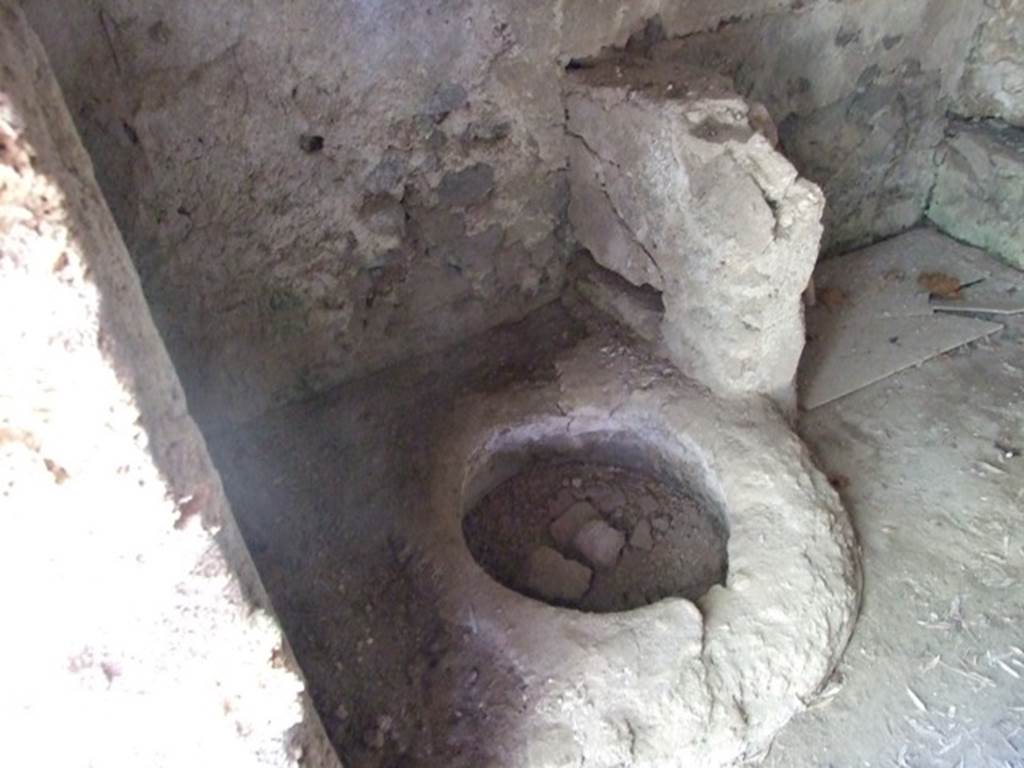
I.12.8 Pompeii. March 2009. Room 10, south-east corner.
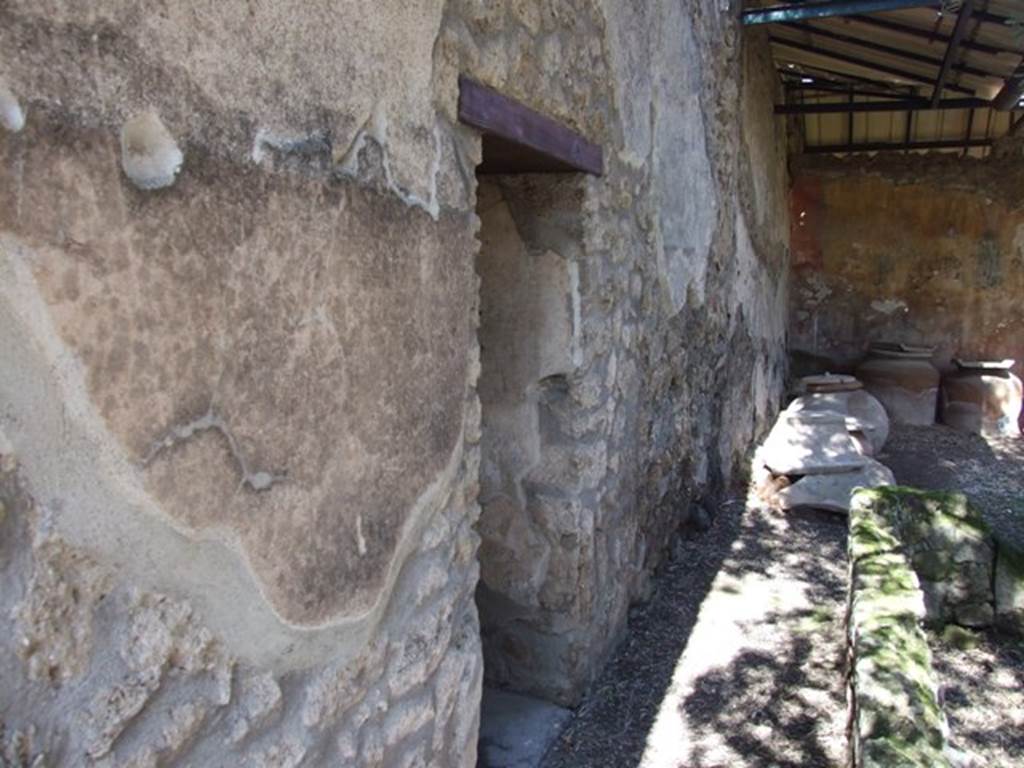
I.12.8 Pompeii. March 2009. Room 9, looking north along west portico, and doorway to room 11.
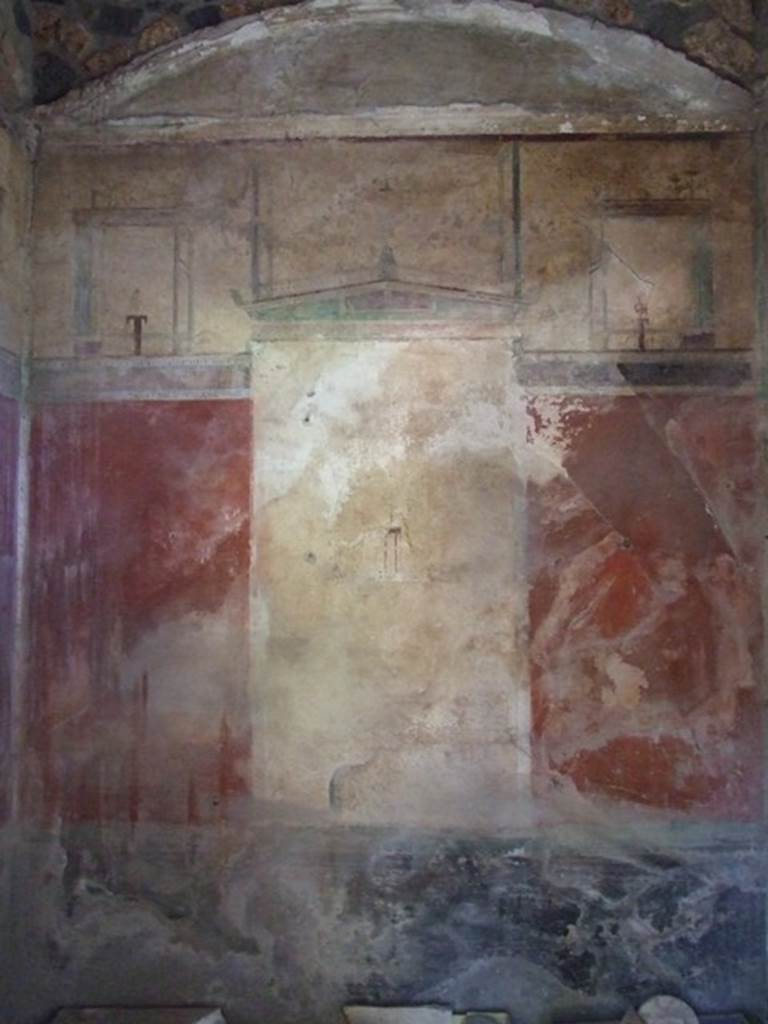
I.12.8 Pompeii. March 2009. Room 11, looking towards north wall of cubiculum.
According to Curtis, on the Eschebach 1969 plan of the house a doorway is shown from this cubiculum into the house at I.12.14.
This is an error. See Curtis R.L: The Garum shop of Pompeii, In Cronache Pompeiane, V.1979, p.8, note 5
He also described this room as having a beautiful third style wall painting on three of its walls.
The bordering appeared in deep green and the architectural structure above the panels contained differently shaped amphorae.
A large panel on each of the three walls contained a simple idyllic scene on a white background.
See Curtis R.L: The Garum shop of Pompeii, In Cronache Pompeiane, V.1979, (p.20).
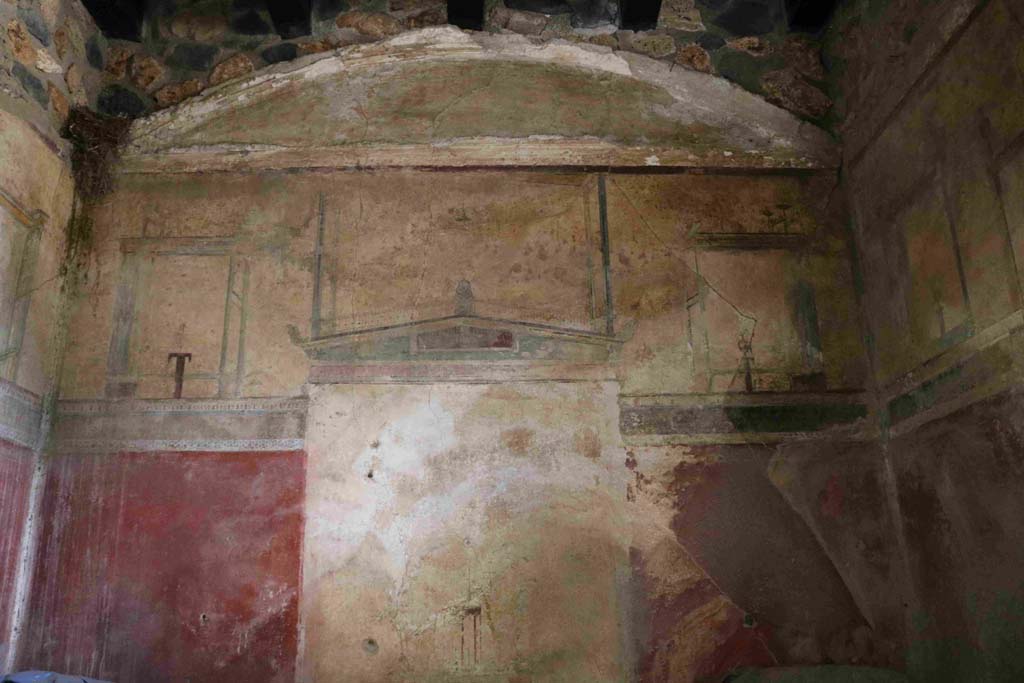
I.12.8 Pompeii. December
2018. Room 11, detail from upper north wall of cubiculum. Photo courtesy of Aude
Durand.
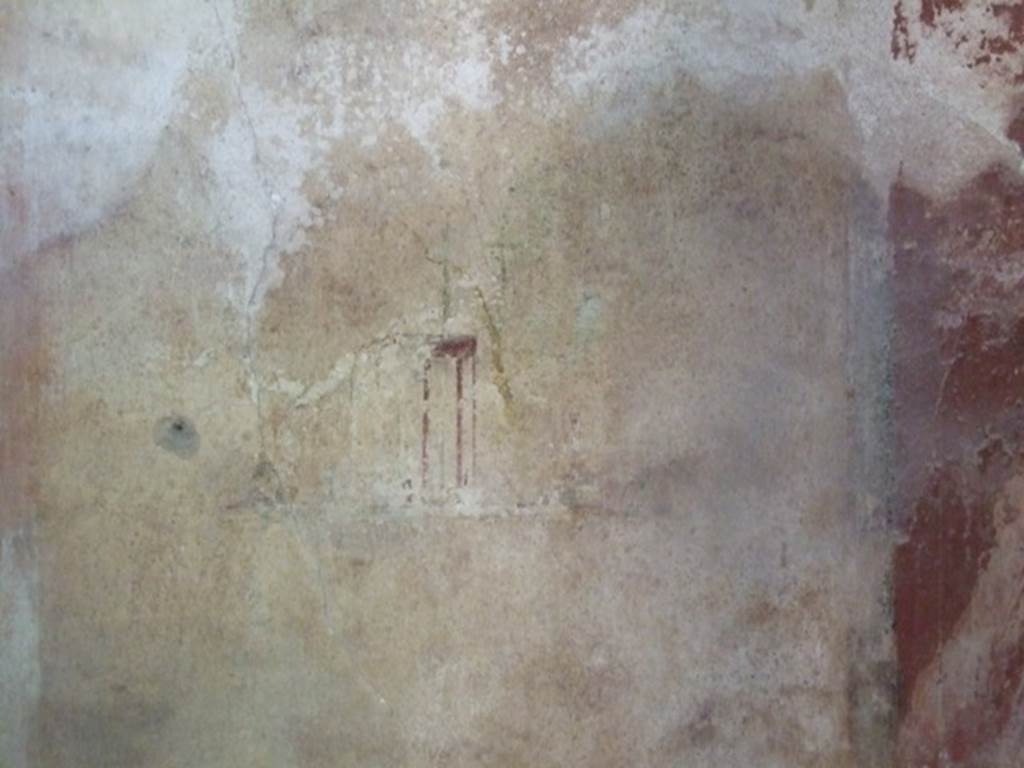
I.12.8 Pompeii. March 2009. Room 11, painted wall decoration from centre panel on north wall.
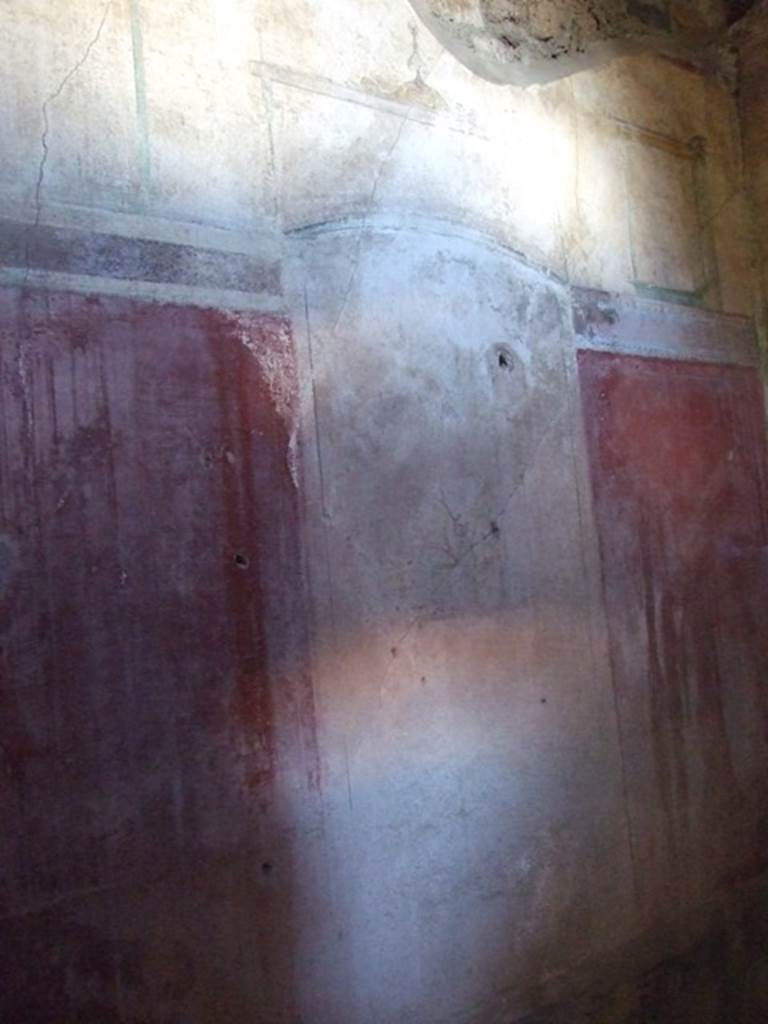
I.12.8 Pompeii. March 2009. West wall of cubiculum.
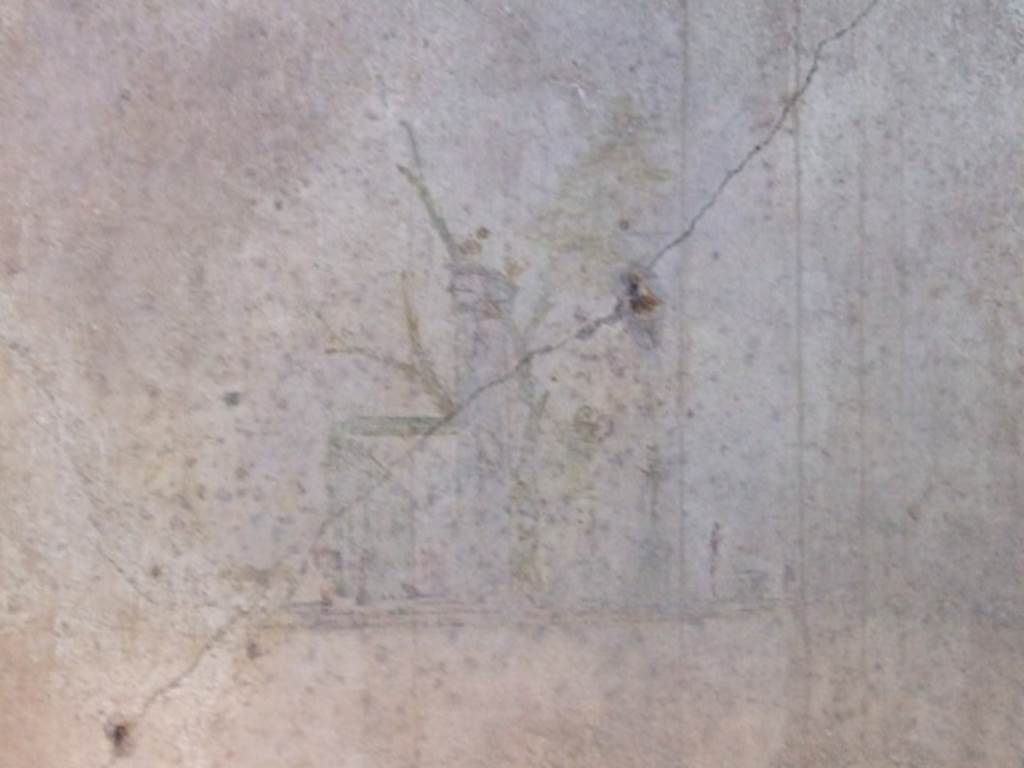
I.12.8 Pompeii. March 2009. Room 11, painted wall decoration in centre of west wall.
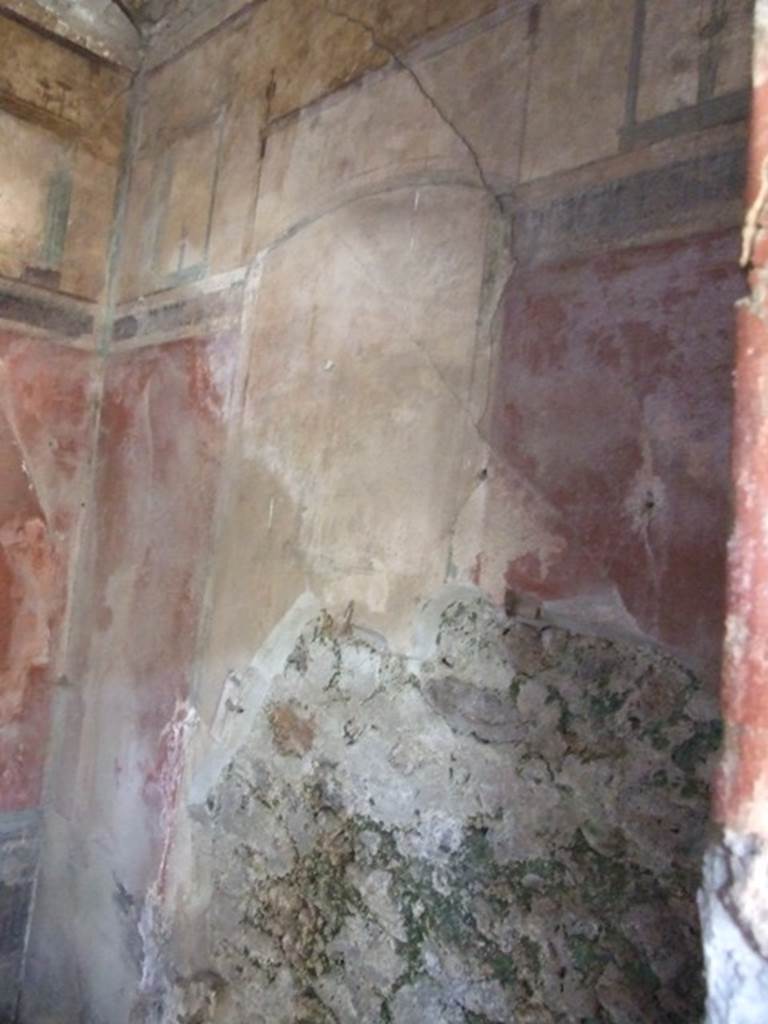
I.12.8 Pompeii. March 2009. Room 11, east wall and north-east corner.
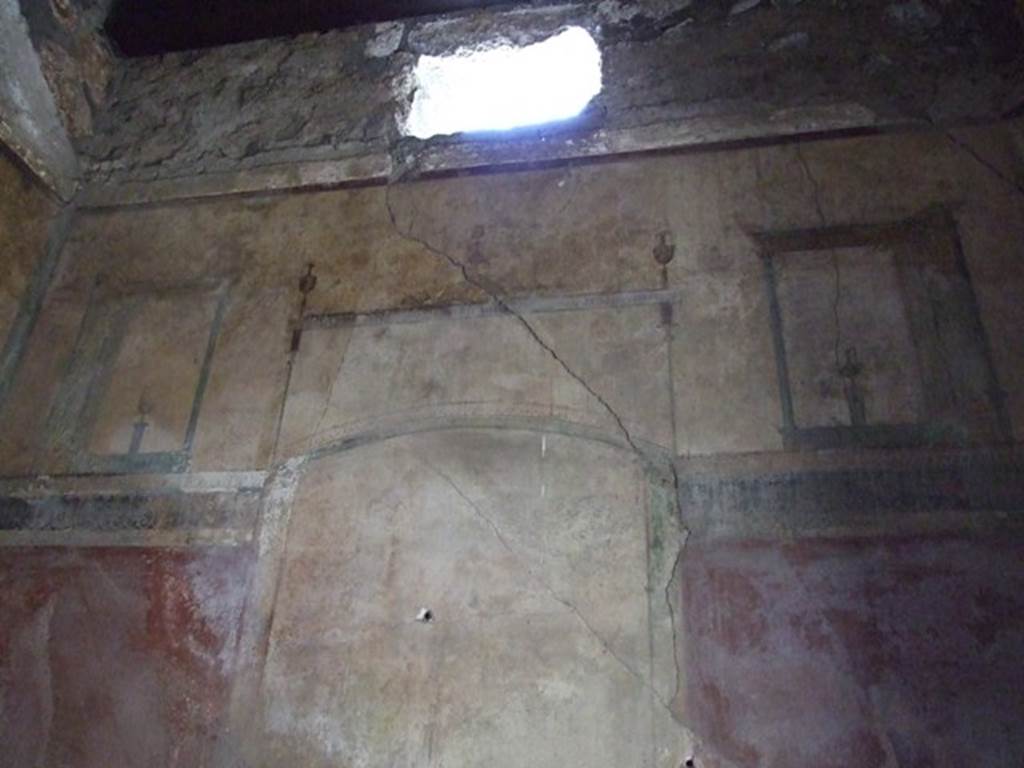
I.12.8 Pompeii. March 2009. Room 11, east wall.
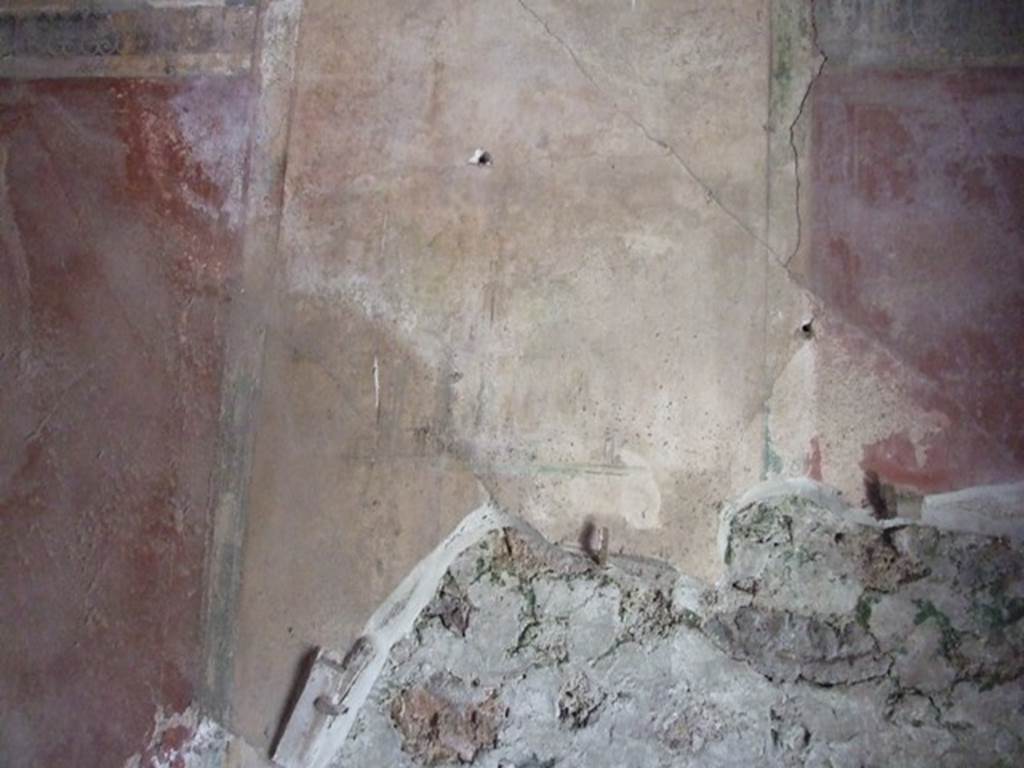
I.12.8 Pompeii. March 2009. Room 11, east wall.
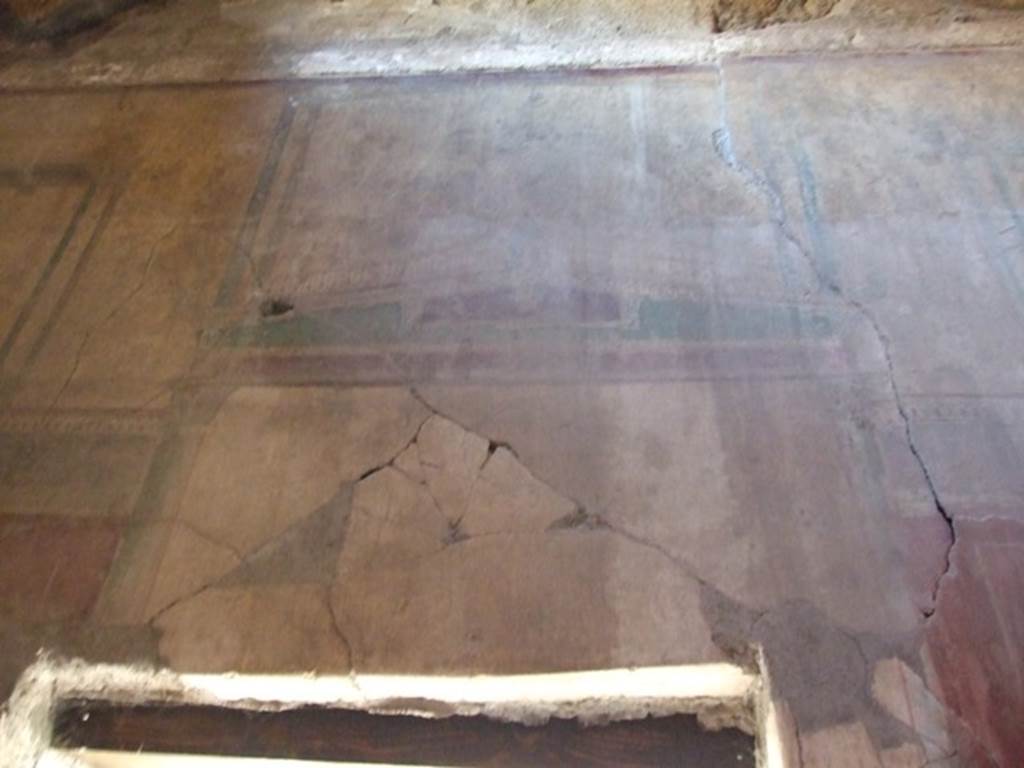
I.12.8 Pompeii. March 2009. Room 11, east wall above door.
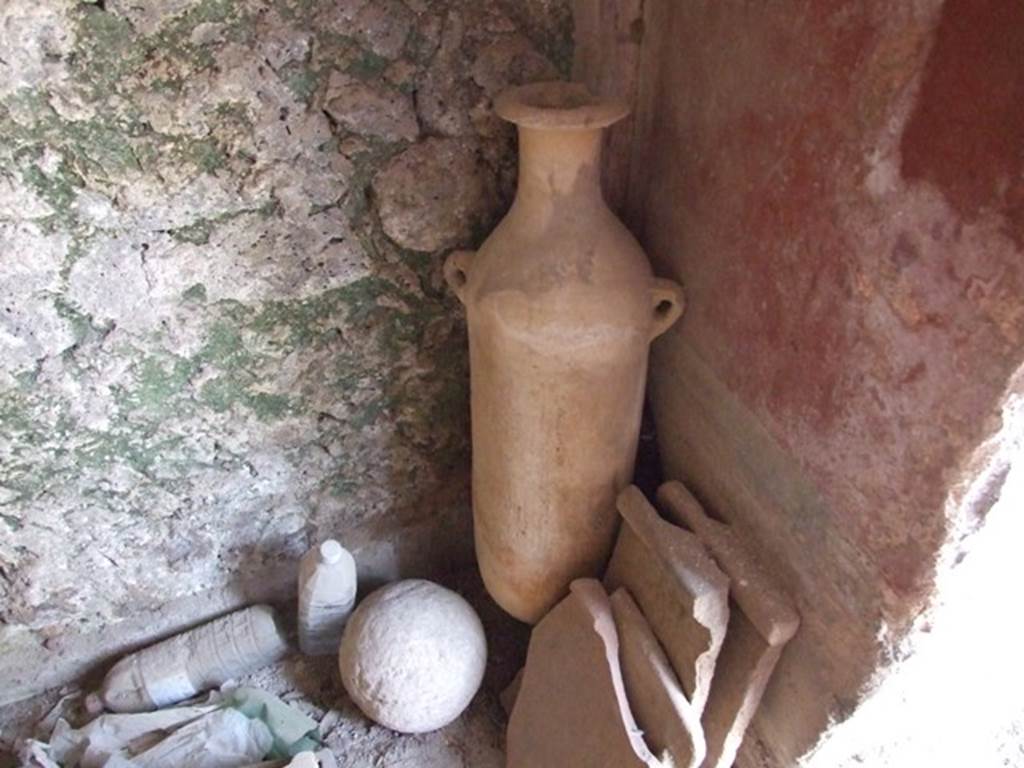
I.12.8 Pompeii. March 2009. Room 11, north-east corner.
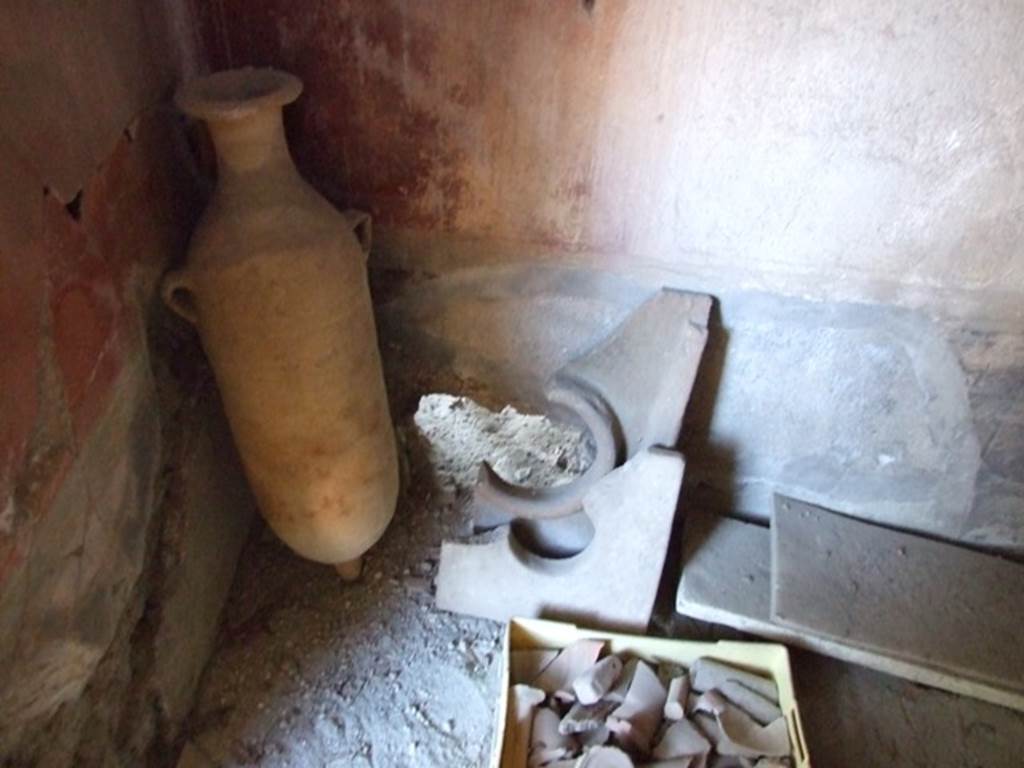
I.12.8 Pompeii. March 2009. Room 11, south-east corner.
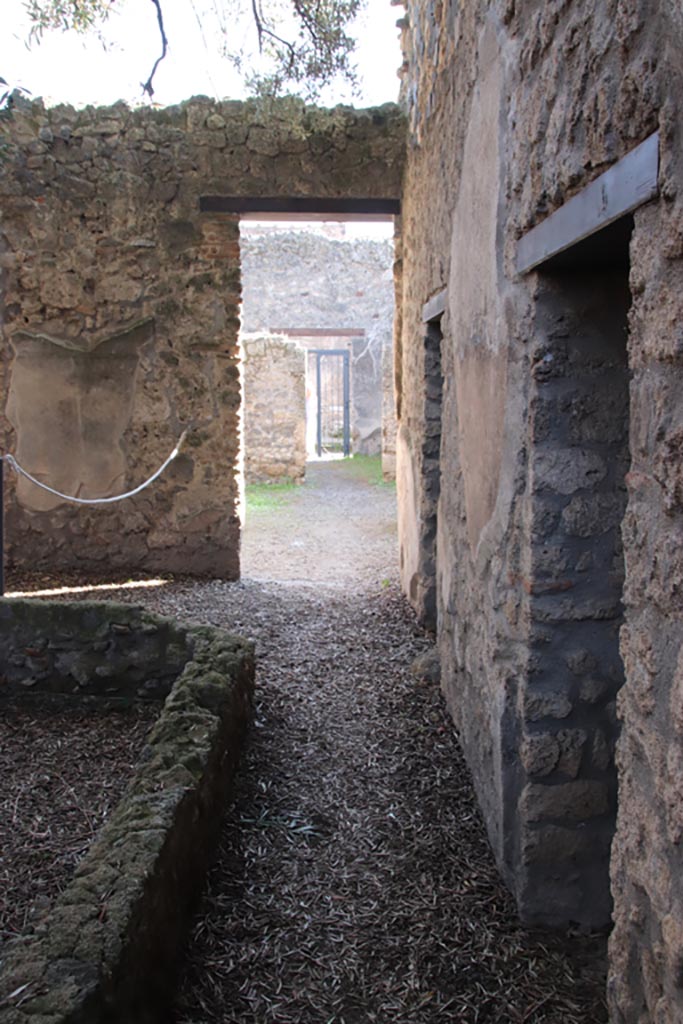
Peristyle 9, looking south from doorways into rooms 10 and 11, on right. Photo courtesy of Klaus Heese.