I.10.18 Pompeii. Casa di Aufidius Primus or Domus of Aufidius Primus and Ampliatus.
Excavated 1932.
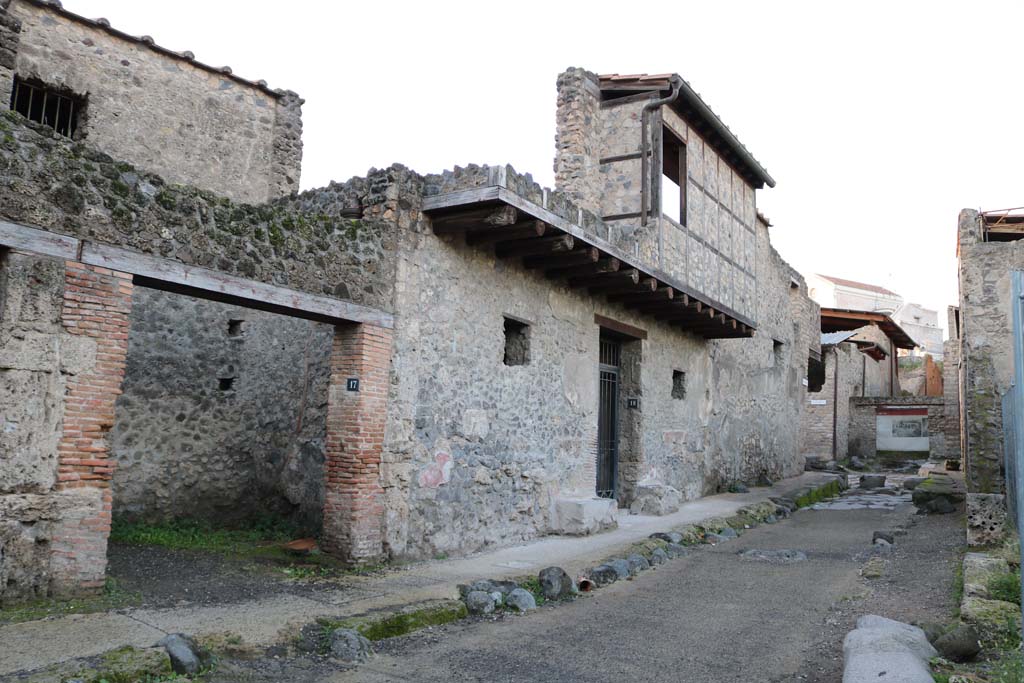
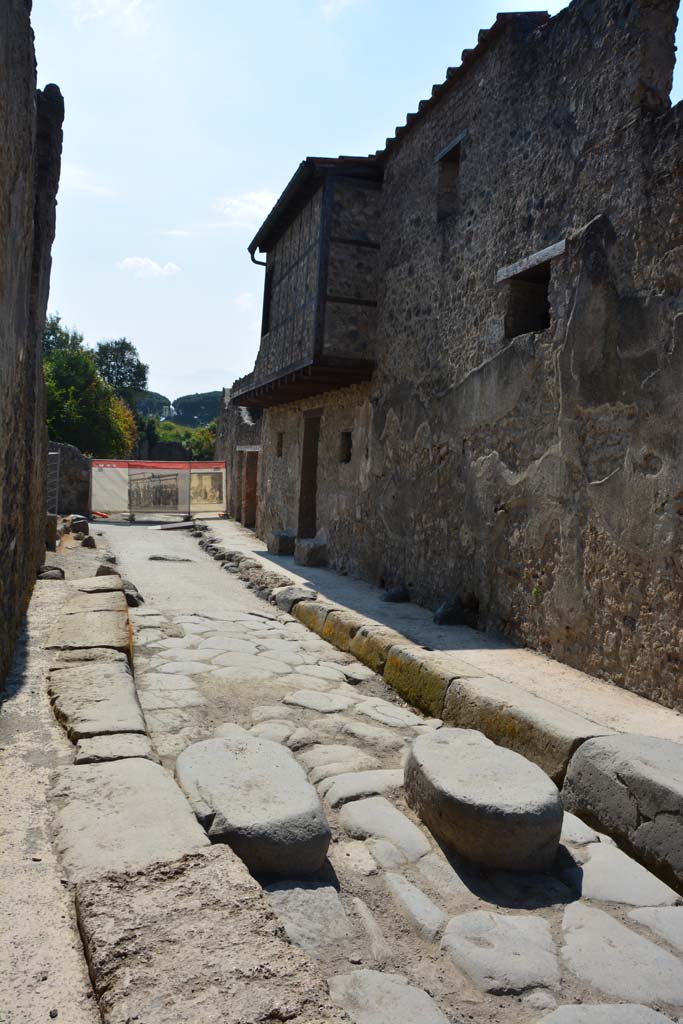
I.10.18 Pompeii. June 2024. Looking north along west side of
Vicolo di Paquius Proculus. Photo
courtesy of Giuseppe Ciaramella.

I.10.18 Pompeii, centre right. December 2018.
Looking north along west side of Vicolo di Paquius Proculus. Photo courtesy of Aude Durand.

I.10.18 Pompeii, on right. May 2017. Looking north. Photo courtesy of Buzz Ferebee.
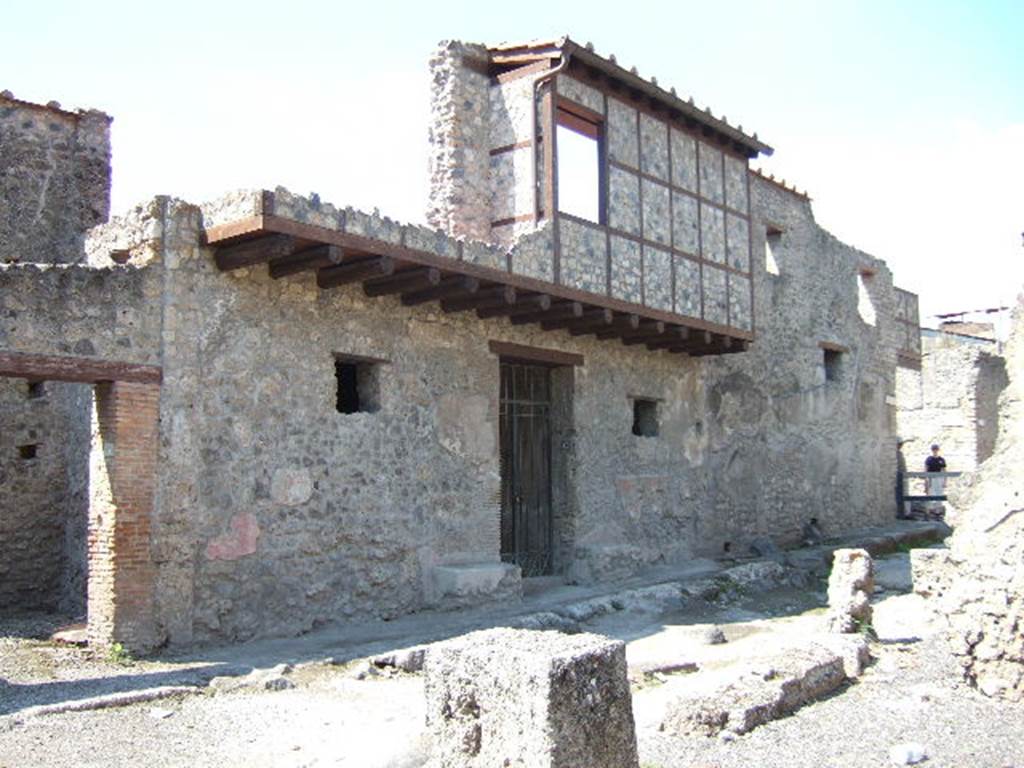
I.10.18 Pompeii. September 2005.
Looking north towards entrance doorway with a window on either side overlooking roadway from rooms on either side of entrance corridor.

I.10.18 Pompeii, on left. Looking north along roadway. I.7.15/16/17 on right.
Photographed 1970-79 by Günther Einhorn, picture courtesy of his son Ralf Einhorn.
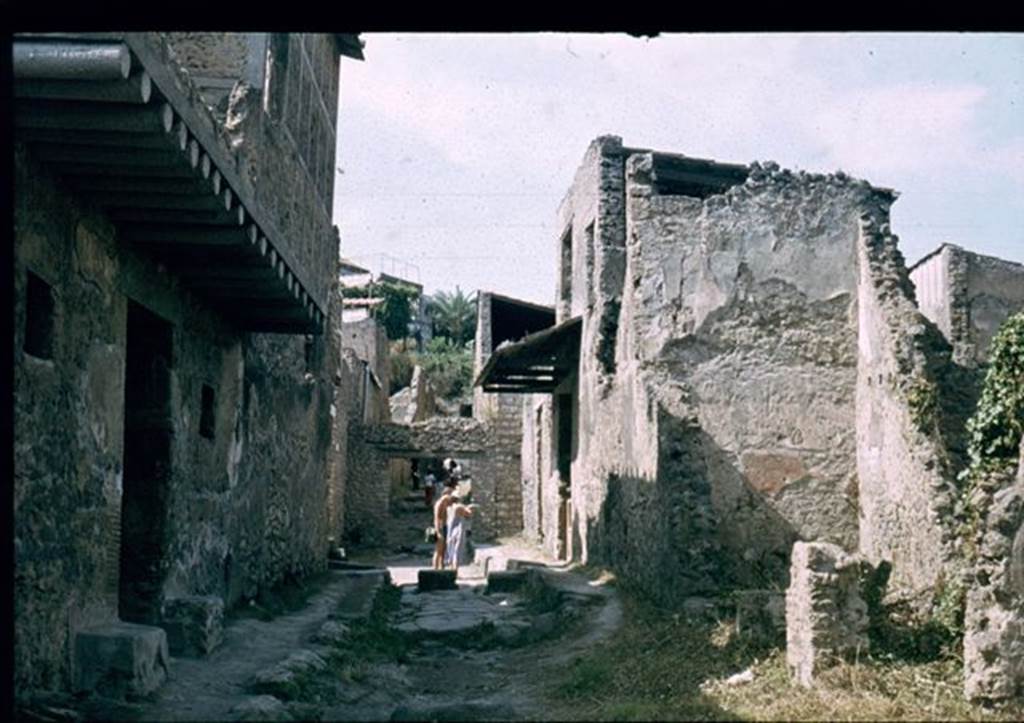
I.10.18 Pompeii. Looking north along Vicolo di Paquius Proculus.
This photo shows the high red plastered zoccolo with a white upper part to the wall, in which many simple inscriptions in red, could be read.
See Notizie degli Scavi di Antichità, 1934, Tav. XIII.
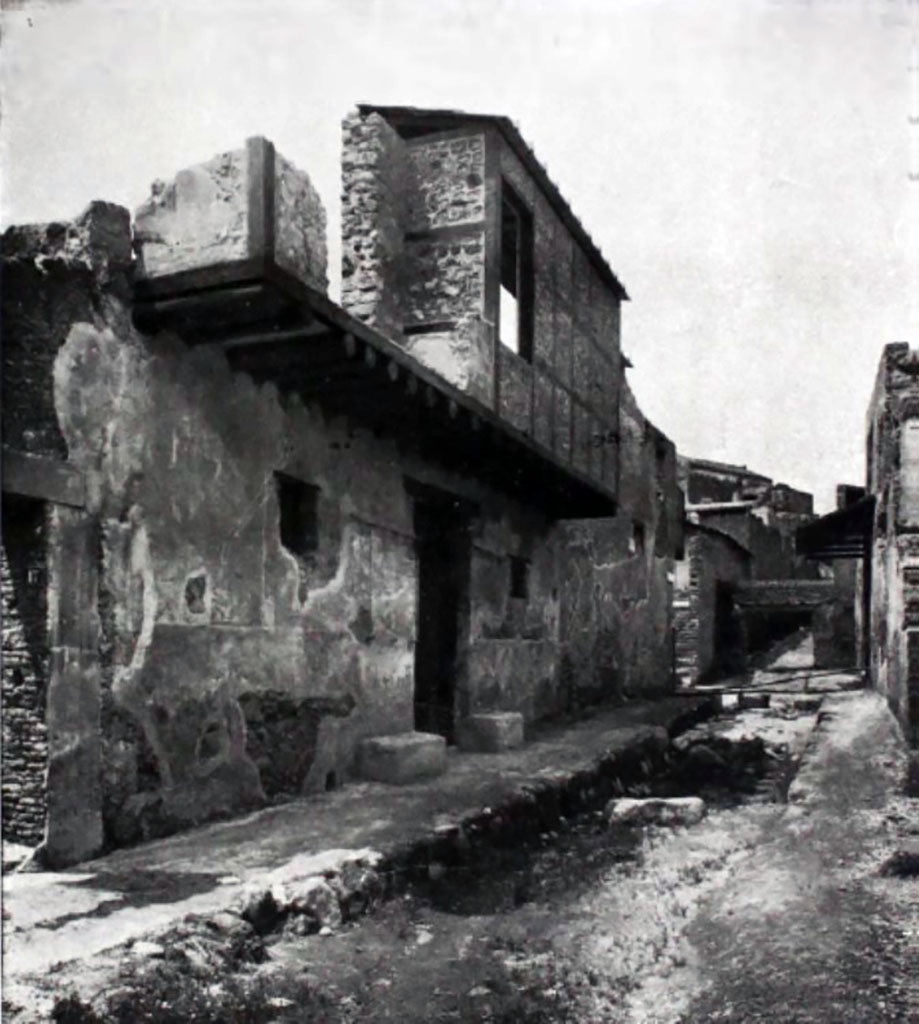
I.10.18 Pompeii. April 2017.
Looking south along the exterior façade in Vicolo di
Paquius Proculus. Photo courtesy Adrian Hielscher.
Looking west towards entrance
doorway and north along exterior façade. Photo courtesy Adrian
Hielscher.
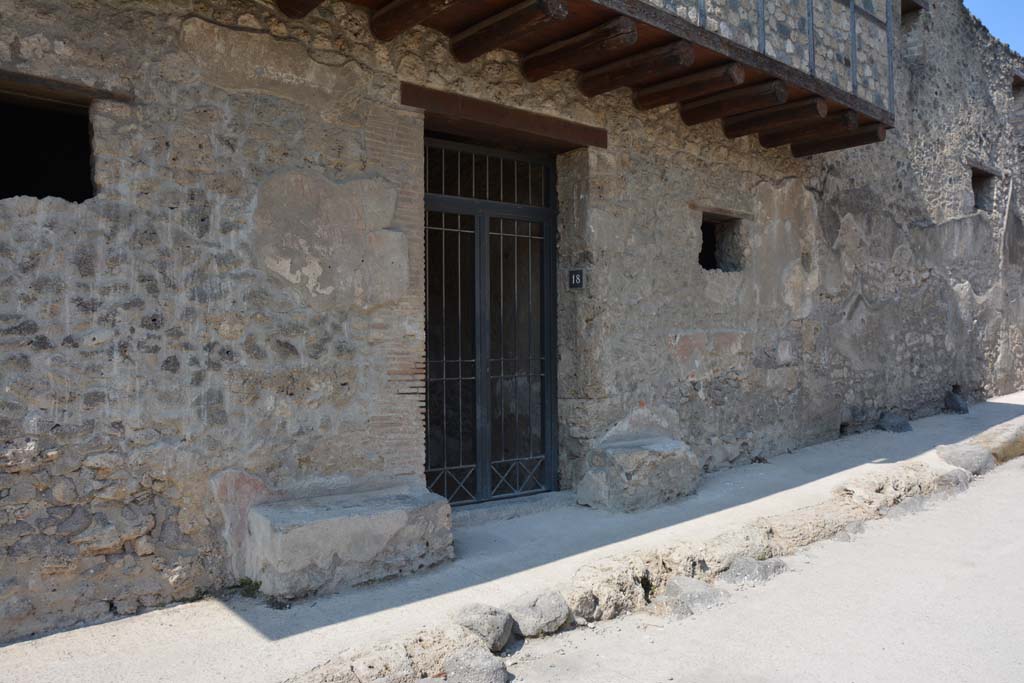
I.10.18
Pompeii. December 2018. Looking west towards entrance doorway. Photo courtesy
of Aude Durand.

I.10.18 Pompeii. May 2017. Looking west to entrance doorway. Photo courtesy of Buzz Ferebee.
According to NdS –
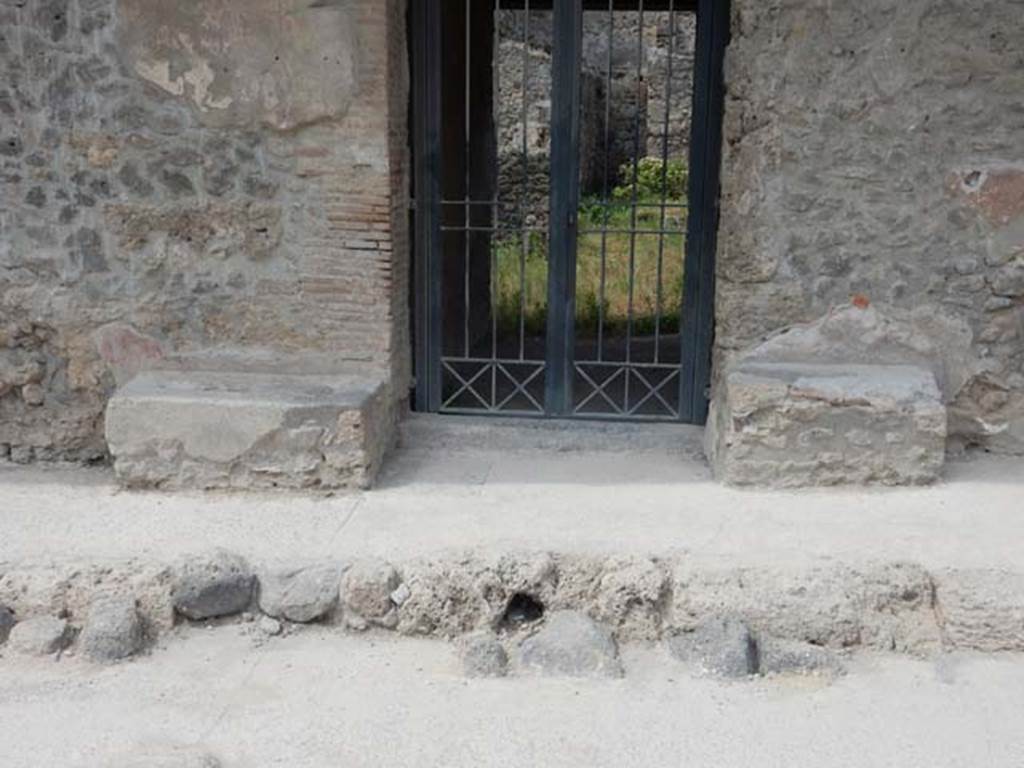
The entrance to this modest house had a lava threshold framed between a brick door-jamb and one of limestone blocks, with the walls of the high zoccolo of red plaster and with a white upper part, in which stood out lively inscriptions, simple and unpretentious, on the other end of the two masonry benches that stand to the right and to the left of the entrance.
See
Notizie degli Scavi di Antichità, 1934, p.341.
I.10.18 Pompeii. April 2017. Bench
seating on south side of entrance doorway. Photo
courtesy Adrian Hielscher.
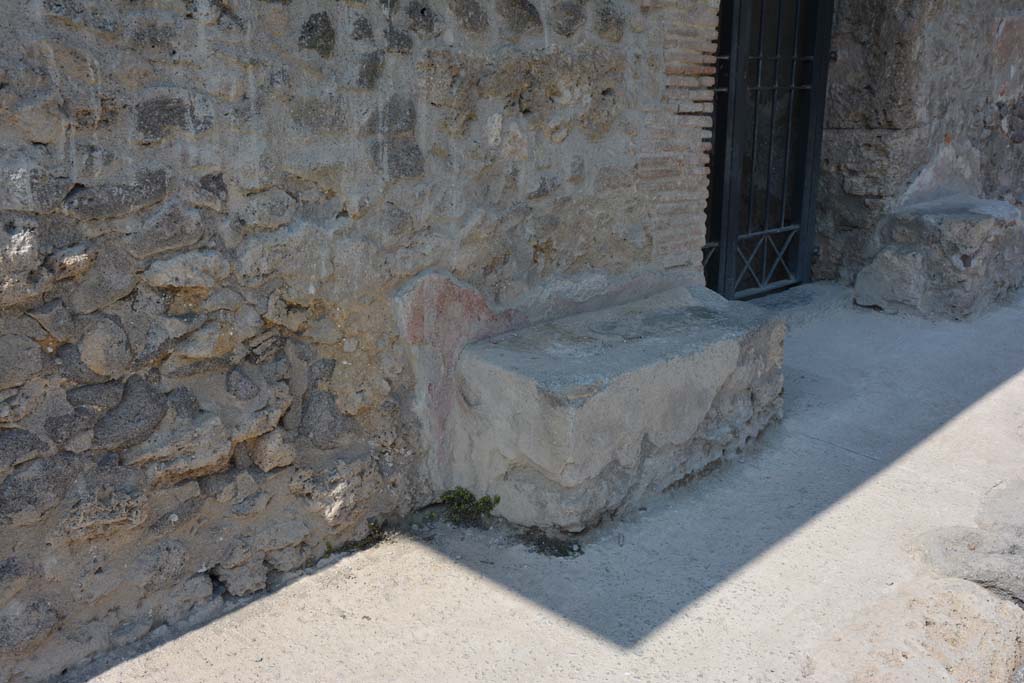
Detail of remaining
painted plaster at rear of bench seating on south side of entrance doorway. Photo courtesy Adrian
Hielscher.
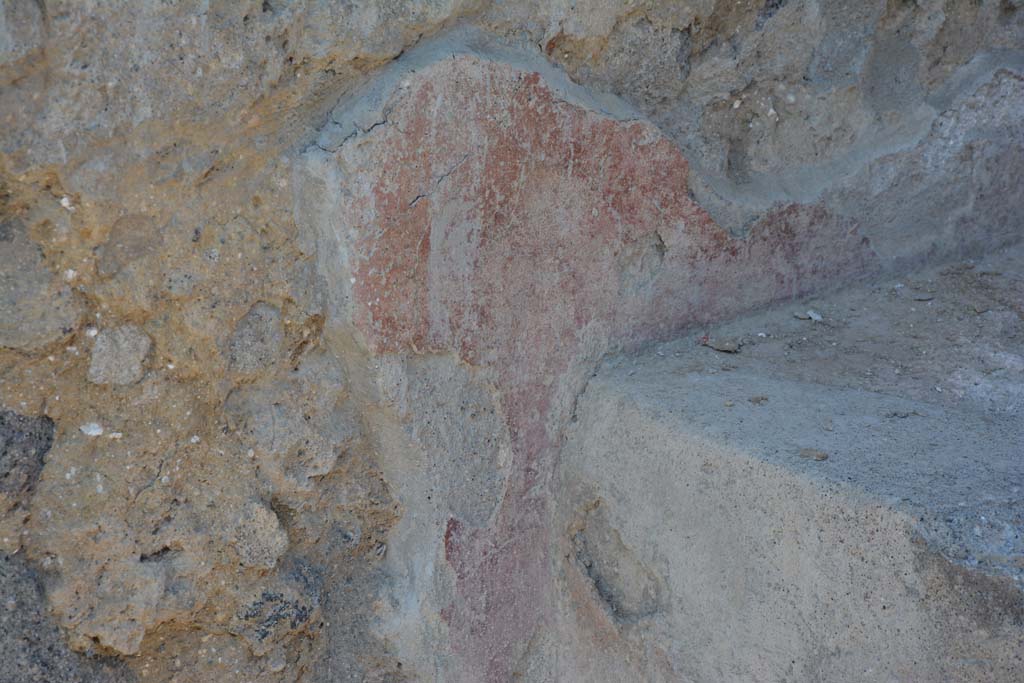
Detail of remaining painted plaster on south side of bench seating on south side of entrance doorway.
Photo
courtesy Adrian Hielscher.
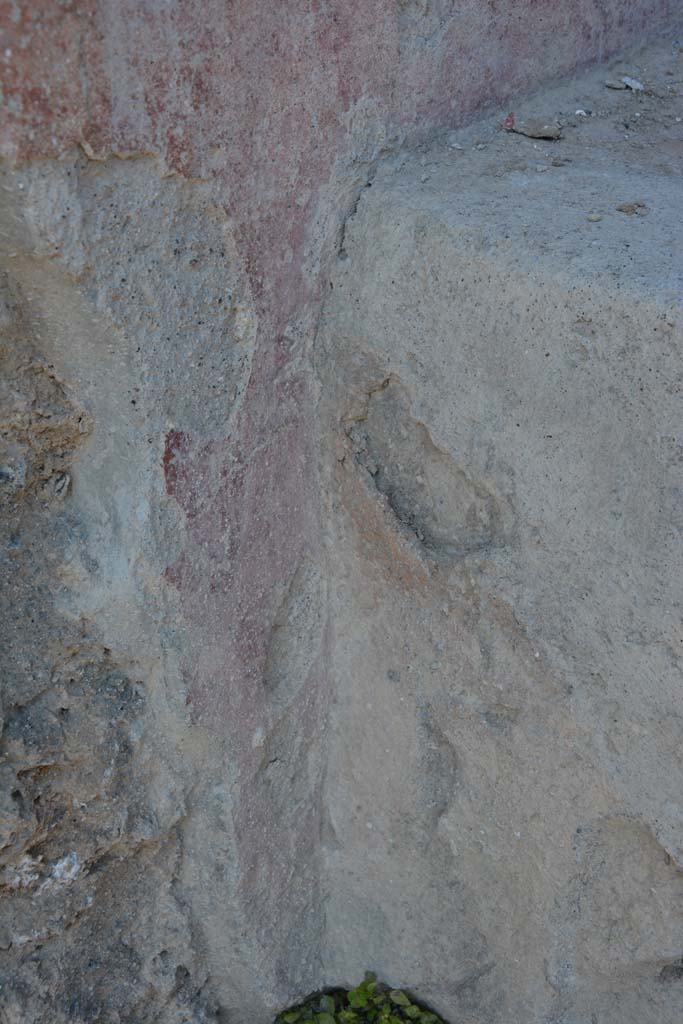
Detail of remaining painted plaster at rear
of bench seating on south side of entrance doorway. Photo
courtesy Adrian Hielscher.
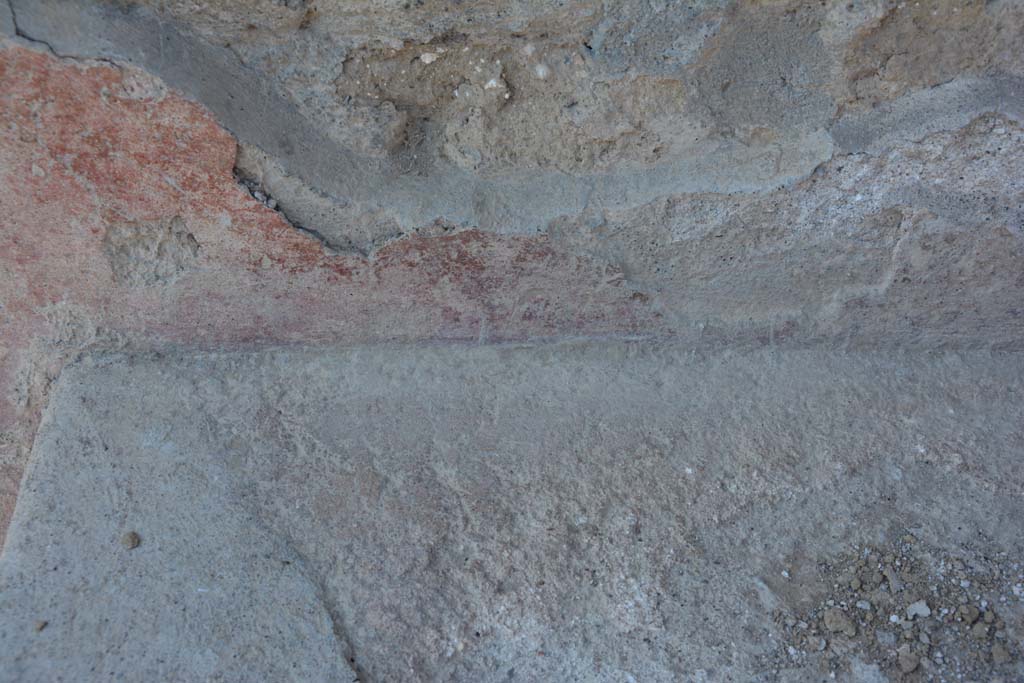
Detail of remaining painted plaster at north
end of bench seating on south side of entrance doorway. Photo
courtesy Adrian Hielscher.
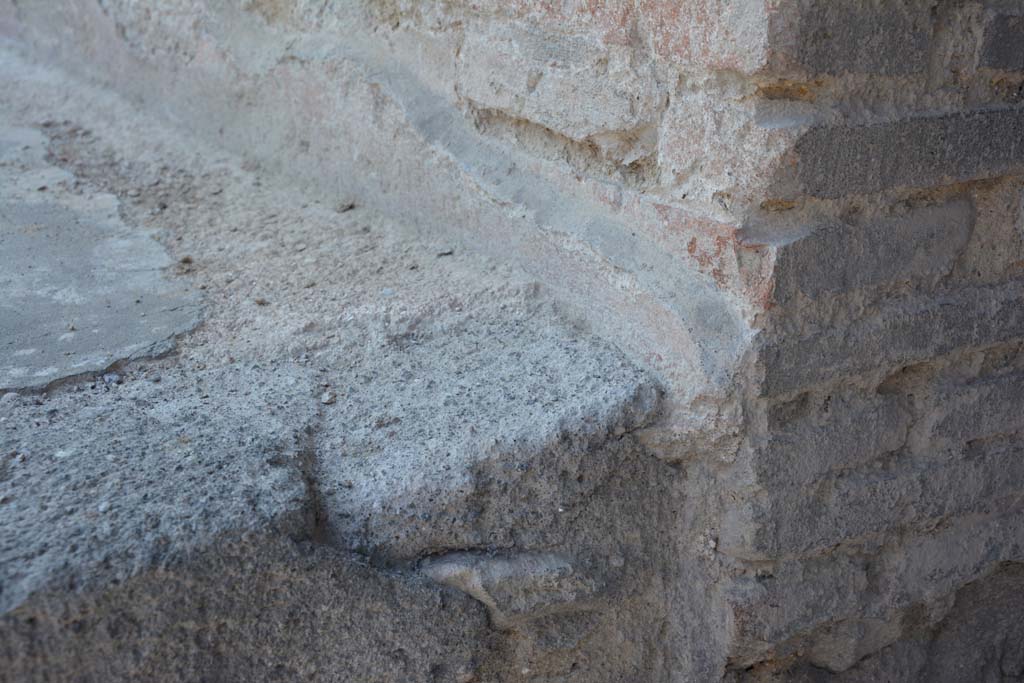
I.10.18 Pompeii. April 2017.
Detail of remaining plaster at rear of bench seating on
north side of entrance doorway. Photo courtesy Adrian
Hielscher.
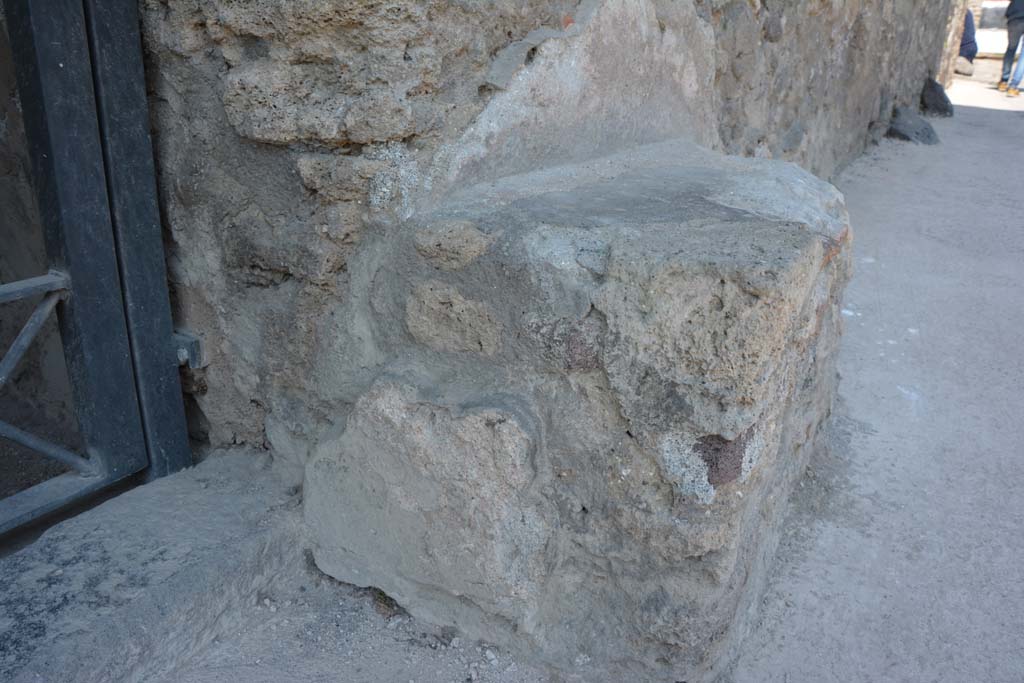
I.10.18 Pompeii. April 2017. Detail of remaining painted
plaster on north side of entrance doorway. Photo
courtesy Adrian Hielscher.
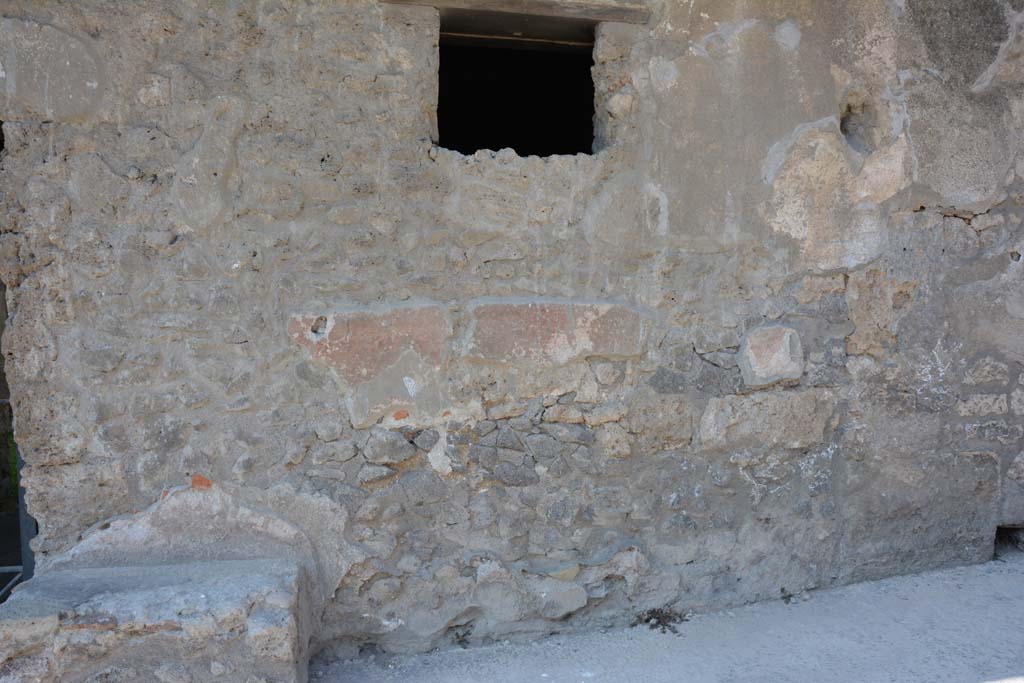
I.10.18 Pompeii.
Plan from Notizie degli Scavi, 1934, p.266.
Room 1 – atrium
Room 2 – oecus
Room 3 – cubiculum
Room 4 – ala (note: from the descriptions in NdS this looks like it was wrongly numbered on the plan as a second “7”).
Room 5 – apotheca/storeroom or cupboard
Room 6 – area to the west of atrium
Room 7 – area to the west of atrium
Room 8 – walkway/yard
Room 9 – kitchen
Room 10 – latrine
For details of “finds” from this house,
See Allison, P.M. (2006). The Insula of the Menander at Pompeii: Vol. III The finds, Clarendon Press, Oxford, (p.251-255 & p.368-70).
See Online Companion with details and photographs of the finds from I.10.18.
![I.10.18 Pompeii. September 2005. Entrance doorway.
According to Della Corte, found on the left side of the doorway was an electoral recommendation –
Aufidius Primus (rogat) [CIL IV 7375]
Found on the right side of the doorway were –
(Aufidius) Ampliatus rog(at) [CIL IV 7377] and
[Prim]us cliens (cupidus?) rogat [CIL IV 7378]
See Della Corte, M., 1965. Case ed Abitanti di Pompei. Napoli: Fausto Fiorentino. (p.304)
According to Epigraphik-Datenbank Clauss/Slaby (See www.manfredclauss.de), these read as –
[Veiento]nem
Aufidius
Primus [CIL IV 7375]
M(arcum) Cerrinium
Vatiam aed(ilem) o(ro) v(os) f(aciatis)
Ampliatus rog(at) [CIL IV 7377]
Ceium
aed(ilem) [3]us cliens
[3] rogat [CIL IV 7378]](1%2010%2018_files/image022.jpg)
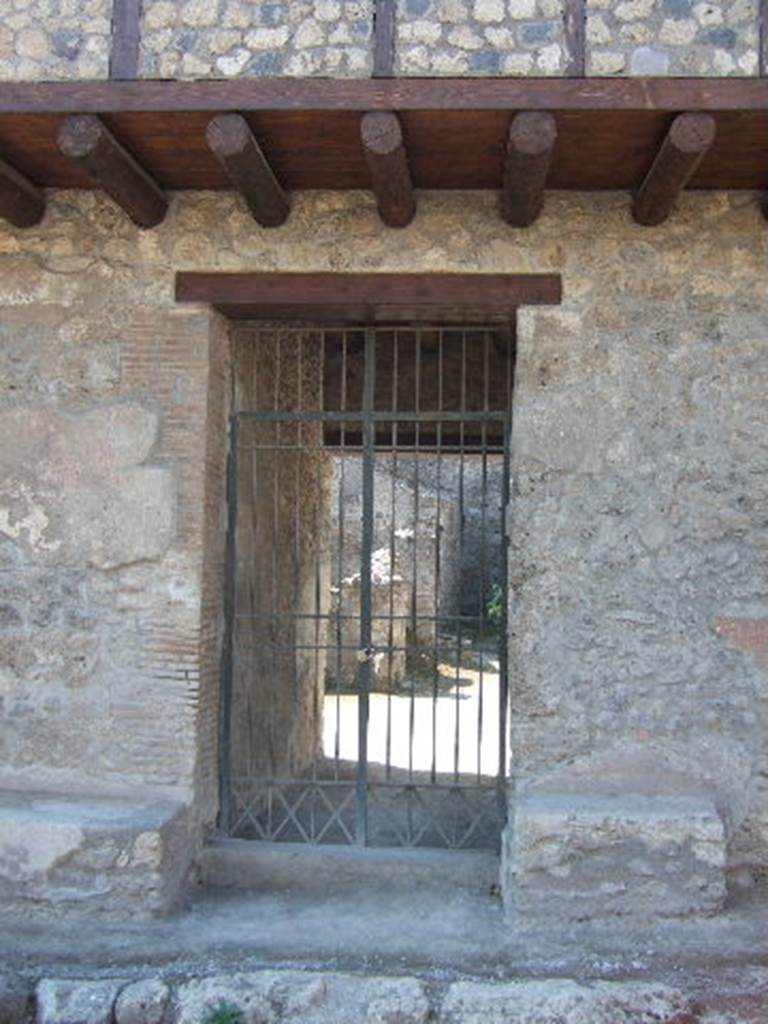
I.10.18 Pompeii. September 2005. Entrance doorway.
According to Della Corte, found on the left side of the doorway was an electoral recommendation –
Aufidius
Primus (rogat) [CIL IV 7375]
Found on the right side of the doorway were –
(Aufidius)
Ampliatus rog(at) [CIL IV 7377] and
[Prim]us cliens
(cupidus?) rogat [CIL
IV 7378]
See Della Corte, M., 1965. Case ed Abitanti di Pompei. Napoli: Fausto Fiorentino. (p.304)
According to Epigraphik-Datenbank Clauss/Slaby (See www.manfredclauss.de), these read as –
[Veiento]nem
Aufidius
Primus [CIL IV 7375]
M(arcum) Cerrinium
Vatiam aed(ilem)
o(ro) v(os) f(aciatis)
Ampliatus rog(at)
[CIL IV 7377]
Ceium
aed(ilem) [3]us cliens
[3] rogat [CIL IV 7378]

I.10.18 Pompeii. April 2017.
Looking west from entrance corridor/fauces. Photo
courtesy Adrian Hielscher.
“The entrance doorway enters through the
spacious entrance corridor with rustic flooring and walls covered with fine
black plaster, into a small tuscanic atrium. Opening, on either side of the
entrance corridor, were rooms 2 and 3, both with doorjambs painted in red, both
lit by a rectangular window which opened in the east wall overlooking the
roadway.
The room to the left of the fauces/corridor
(room 2), probably a cubiculum, was decorated with a low light red zoccolo topped
with a narrow red band edged by white lines and decorated with white geometric
patterns. The upper area of the wall was simple white rough plaster.
The room to the right (room 3) was an oecus, it
was decorated with a high pink zoccolo, above which the part of the wall had
been left of rustic white plaster, equally rustic was the flooring.”
See Notizie degli Scavi di Antichità, 1934, (p.341-4).
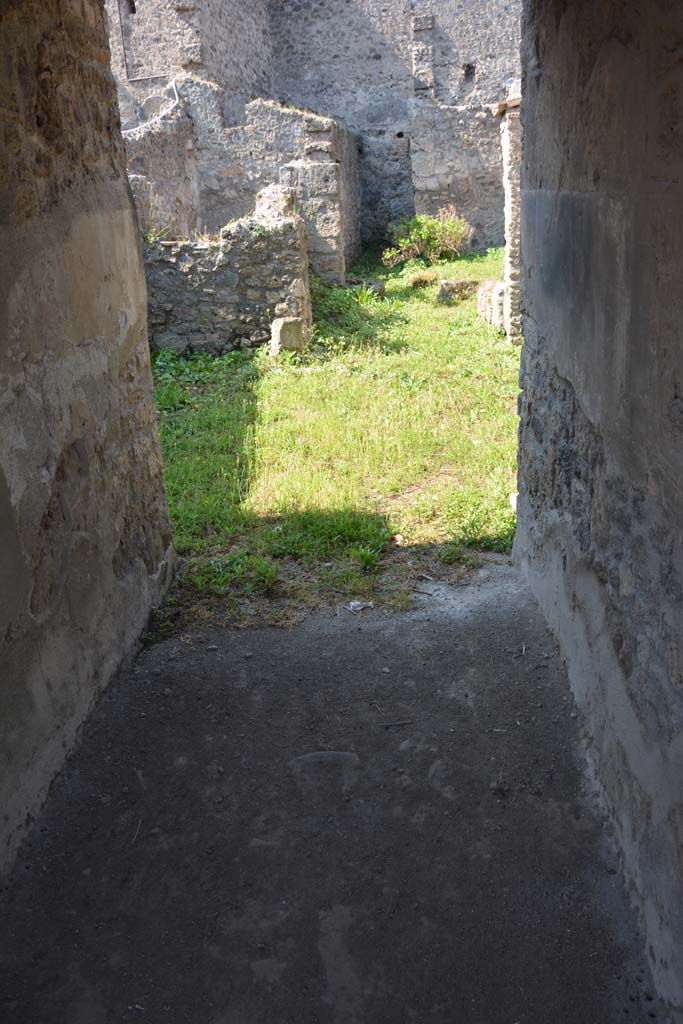
I.10.18 Pompeii. September 2005. Looking west from entrance fauces into atrium.
“The atrium, of an irregular shape, and paved with simple beaten-earth, had an impluvium of masonry (1.2m x 0.9m) faced with cocciopesto and embedded in its base were fragments of coloured marble, and this was placed almost in the middle of the atrium, but not in line with the entrance fauces.
A high black zoccolo, followed by the rest of the walls simply painted white, without any decorations, was the uniform aspect of the walls on all four sides.”
I.10.18 Pompeii. September 2005. Looking west from entrance fauces.

I.10.18 Pompeii. September 2005. Looking north-west from entrance fauces.
On the right is the doorway to Room 5, followed by room 6.
“Along the north wall, next to the wall shared with I.10.1, opened successively, the small rectangular ala (no.4) in the form of an exedra finely decorated with painted panels with a black background and white and yellow-gold threads, and then another small room used as an apotheca (no.5).
The decoration of the ala/exedra was of the III Style, with a black painted zoccolo with white vertical lines joined by a thin red band, finished with a narrow green band. The background of the wall was divided into red panels by thin white lines, and with white lines of panels and finished at the top with a green band decorated with floral elements.
The upper part of the wall, also with a red background, presented the motif of a slender wooden architecture consisting of an aedicula with two smaller side aediculae, from which hung suspended light garlands. The flooring was of lavapesto.
The following small room (5), which we will call an apotheca, had a light yellow zoccolo and the upper part of the wall was left with rough plaster.”
The flooring was of concrete (calcestruzzo).
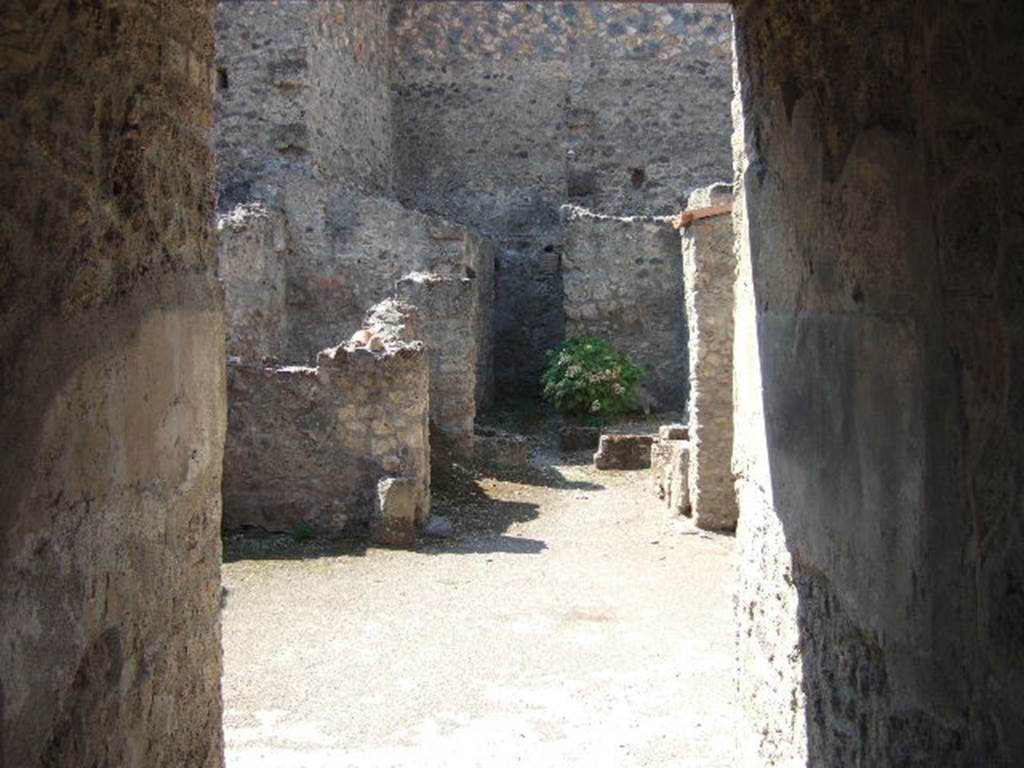
I.10.18 Pompeii. April 2017. Looking south-west from
entrance fauces. Photo courtesy Adrian Hielscher.
“Along the south side (of the atrium 1) which was the wall next to the rustic quarters of the Casa del Menandro, a block of limestone was found, which would have been used as reinforcement for the wooden stairs that led up to the upper floor, of which one could see the outline in the plaster.
The “understairs”, closed towards the atrium by a wooden partition, had the two brick walls covered in simple white plaster.
On the west side of the atrium opened, respectively to the right and to the left,
-
a large doorway opening into a room all open to
the west (no.6) and defended only
by a low wall, covered by canopy/roof,
- and with another room (no.7) of elongated trapezoidal shape, whose south wall, slanting, marks a tilt of the perimeter wall.
In the room to the right, (no.6) there is no trace of the original flat roof cover other than the two large holes of the lintel, there is, on the left side, a recess in the wall, to which a pile of lime had been attached and on the right side were the two limestone blocks, supporting an attached ladder. The flooring was of a simple floor of beaten material; the walls were covered with rustic white plaster, which did not have any decoration.
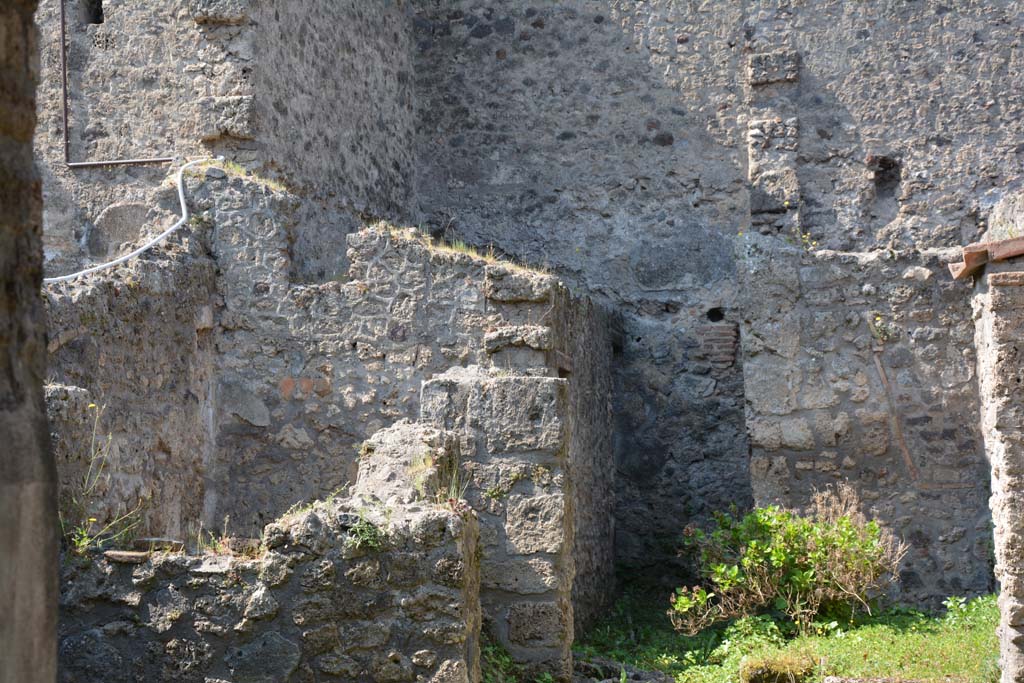
From here we pass by means of a door rather wide, but occupied in part by the circular mouth of the cistern, into a narrow and long area (no.8), uncovered, with a floor of cocciopesto, onto which poured the dripping of the roofs of this part of the house.
This area (no.8) gave access to the room described as the kitchen (no.9), and at the rear of no.8 was the latrine (no.10), which would have consisted of the usual seat with a recess in the wall for it.
On the back wall, two low masonry podiums are attached, the second of which was connected to a square base built in the corner.
Along the left side of the walkway (No.8), opened the kitchen, also rectangular and at a lower level than the walkway/yard. The hearth is in the SE corner opposite the entrance, with masonry bench (1.25 m x 0.86 x 0.86) and edges covered with bricks and tiles, on the south wall beyond the podium was the Lararium painting (0.35m x 1.10), preserved only for half of its length, on a white background framed by a red band.
In front of the
kitchen was a very small rectangular uncovered area of a few square metres and bordered
by a low wall, and in which poured the rainwater from the surrounding roofs.”
See Notizie
degli Scavi, 1934, (p.341-4).
According to Allison –
The kitchen, room 9, had coarse plaster on its east and south walls and a tiled floor. On the south wall beside the masonry bench is the lararium painting (preserved for the height of I.8m).
The latrine, room 10, had coarsely plastered walls. The excavators recorded the remains of a wooden seat-plank in the wall, at the south end.
Its proximity to the kitchen suggests its additional use for general waste.
See Allison, P.M. (2006). The Insula of the Menander at Pompeii: Vol. III The finds, Clarendon Press, Oxford, (p.369-70).
See Online Companion with details and photographs of the finds from I.10.18.

I.10.18 Pompeii. September 2005. Looking south-west from entrance fauces across atrium.
Right of centre is the area of room 6, looking ahead to cistern mouth in walkway No.8.
On the left at the end of the entrance corridor wall is the south-west side of the atrium.
Left of centre is room 7, the kitchen (room 9) is at the rear of room 7.
According to Boyce, in the south wall of the kitchen beside the hearth was a fragmentary painting in two zones.
It was on a white background outlined with red stripes.
In the upper zone stood the Genius, with a Lar.
In the lower zone, beneath garlands, was the tail of a black and yellow serpent.
Below the serpent were several kitchen articles, a hog’s head, a ham on a nail, and an eel on a spit.
See Notizie degli Scavi di Antichità, 1934, p. 344, and fig.38.
See Boyce G. K., 1937. Corpus of the Lararia of Pompeii. Rome: MAAR 14. (p.29, no.60)
See Fröhlich, T., 1991. Lararien und Fassadenbilder in den Vesuvstädten. Mainz: von Zabern. (L18, Taf. 26, 3).

I.10.18 Pompeii. Lararium painting on south wall of the kitchen beside the hearth.
See Fröhlich, T., 1991. Lararien und Fassadenbilder in den Vesuvstädten. Mainz: von Zabern. (L18, Taf. 26, 3)
I.10.18 Pompeii. Lararium painting on south wall of the kitchen beside the hearth.
See Notizie degli Scavi di Antichità, 1934, p. 344, and fig.38.

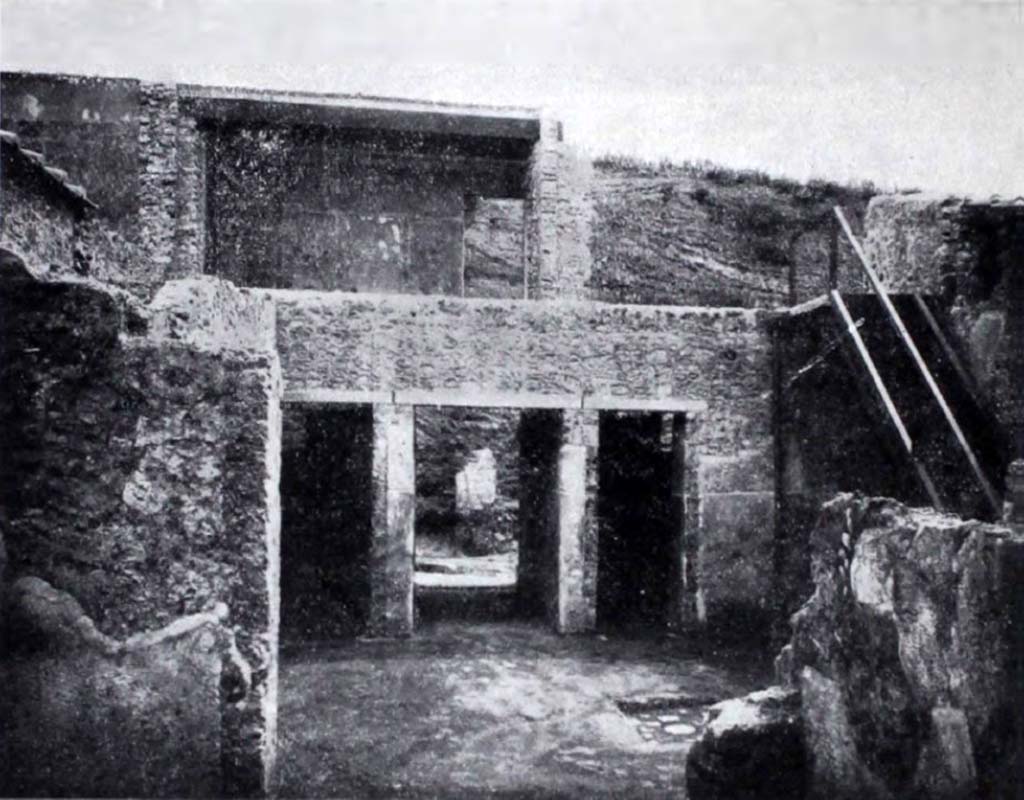
I.10.18 Pompeii. Looking east across atrium towards entrance doorway, in centre, between doorways to rooms 2 & 3.
On the right, is a reconstructed staircase on the south side of the atrium, leading up to the rooms of the upper floor.
See Notizie
degli Scavi di Antichità, 1934, p. 342, fig.37.
The upper floor
“Characterised by considerable interest in its state of preservation and the reconstruction that had been possible, the upper floor consists of two areas, projecting over the roadway, improperly called balconies:
- of these, the one in direct communication with the staircase can be reconstructed only in the masonry walls,
- while the other, larger, still retained part of the decoration of fourth style with a black zoccolo, red panels and red upper area with various architectural motifs.
In the centre of the red panels or painted directly on the plaster or embedded, there were paintings of landscapes and garden motifs.”
See Notizie
degli Scavi di Antichità, 1934, (p.341-4).
According to Allison –
Ling also identified further rooms above rooms 3, 4 and 5.
See Allison, P.M. (2006). The Insula of the Menander at Pompeii: Vol. III The finds, Clarendon Press, Oxford, (p.370).
See Online Companion with details and photographs of the finds from I.10.18.
See Ling, R. & Ling, L. (2005). The Insula of the Menander at Pompeii, Vol. II The Decorations/ Oxford, (p. 298-9).

I.10.18 Pompeii. 1980 or 1983. North-east corner and east wall of room on upper floor. The small paintings have been removed.
Source: The Wilhelmina and Stanley A. Jashemski archive in the University of Maryland Library, Special Collections (See collection page) and made available under the Creative Commons Attribution-Non-Commercial License v.4. See Licence and use details.
J80f0559

I.10.18 Pompeii. 1980 or 1983.
North wall of room on upper floor, detail from near north-east corner.
Source: The Wilhelmina and Stanley A. Jashemski archive in the University of Maryland Library, Special Collections (See collection page) and made available under the Creative Commons Attribution-Non-Commercial License v.4. See Licence and use details.
J80f0560
I.10.18 Pompeii. 1980 or 1983. East wall with window in room on upper floor.
The zoccolo was black and sprinkled with red, the middle zone had red panels separated by narrow black compartments, containing small paintings (removed), and the upper zone of the wall was red.
Source: The Wilhelmina and Stanley A. Jashemski archive in the University of Maryland Library, Special Collections (See collection page) and made available under the Creative Commons Attribution-Non-Commercial License v.4. See Licence and use details.
J80f0561

I.10.18 Pompeii, on right. April 2017.
Looking south on Vicolo di Paquius Proculus. Photo courtesy Adrian Hielscher.

I.10.18 Pompeii. May 2017. Looking south on Vicolo di Paquius Proculus. Photo courtesy of Buzz Ferebee.

I.7 Pompeii, on left. December 2004. Vicolo di Paquius Proculus, looking south. I.10.18, on right.
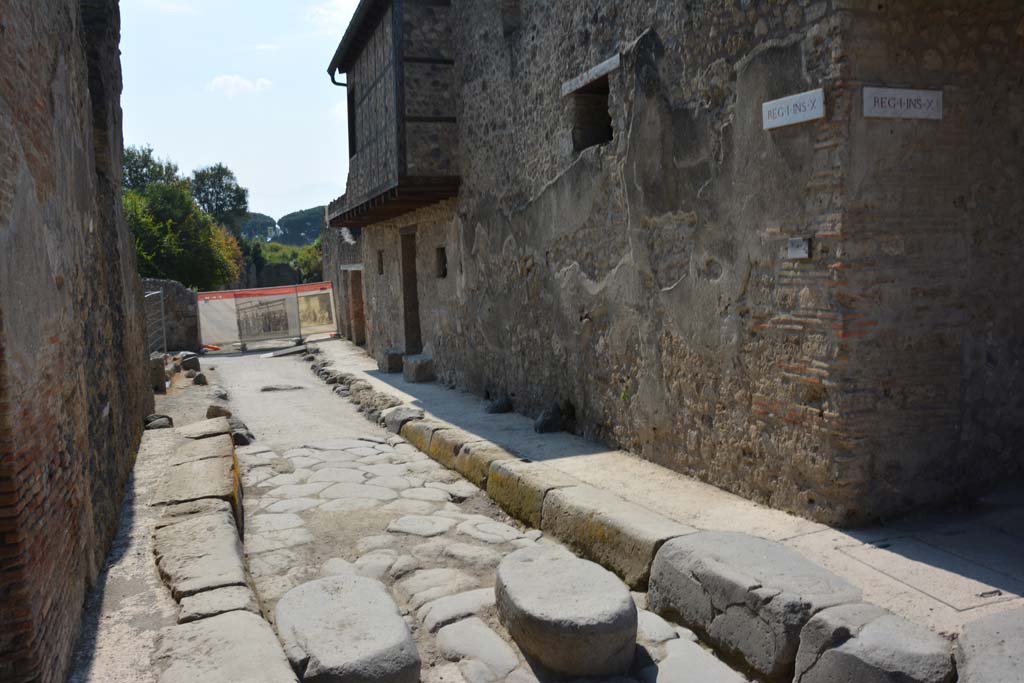
I.7 Pompeii, on left. May 2004. Vicolo di Paquius Proculus, looking south. I.10.18, on right.