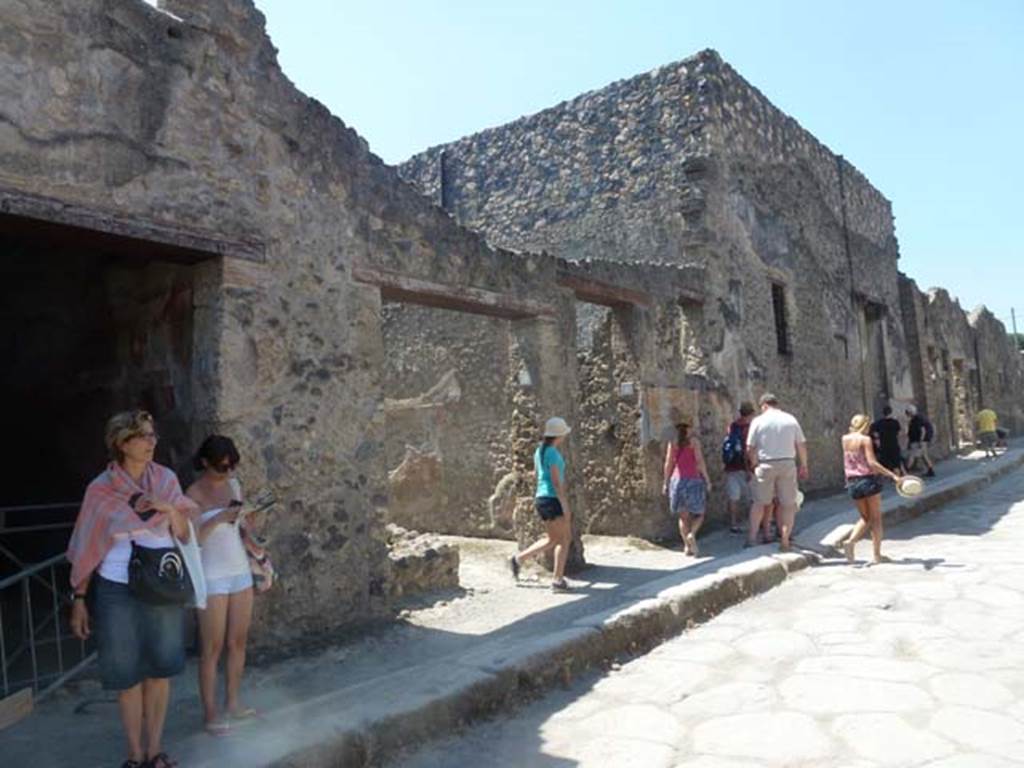
I.10.2 Pompeii. Caupona di Coponia or Thermopolium of Prima or Caupona of Iris.
Linked to I.10.3. Excavated 1927 and 1934.

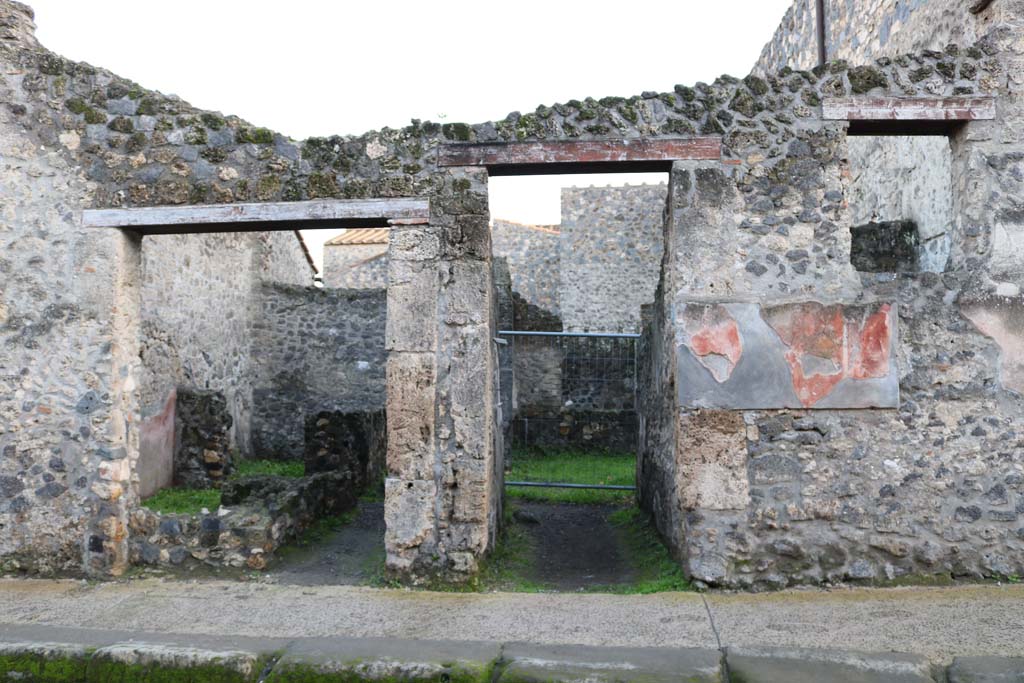
I.10.2 Pompeii. November 2024. Looking west towards doorways on south side of Vicolo del Menandro. Photo courtesy of Annette Haug.
I.10.2 and I.10.3 Pompeii. Plan from Notizie degli
Scavi, 1934, p. 266.
For details of “finds” from this house, including I.10.3,
See Allison, P.M. (2006). The Insula of the Menander at Pompeii: Vol. III The finds, Clarendon Press, Oxford, (p.48-55, & p.293-297).
See Online Companion with list of finds and
photographs for I.10.2-3.
I.10.2, Pompeii. November 2024.
Looking towards entrance on south side of Vicolo del Menandro. Photo courtesy of Annette Haug.


I.10.2 Pompeii, on left. December 2006. Entrance with 1.10.3, on right.

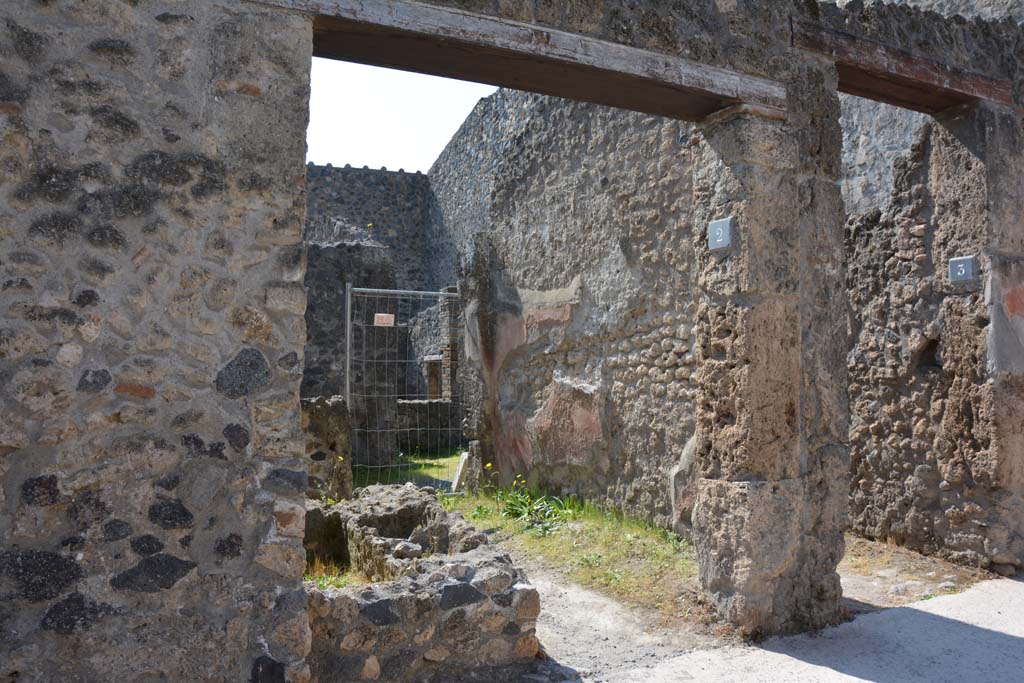
I.10.2, Pompeii. November 2024.
Looking south from entrance doorway. Photo courtesy of Annette Haug.
I.10.2 Pompeii. December 2006. Entrance, looking south.
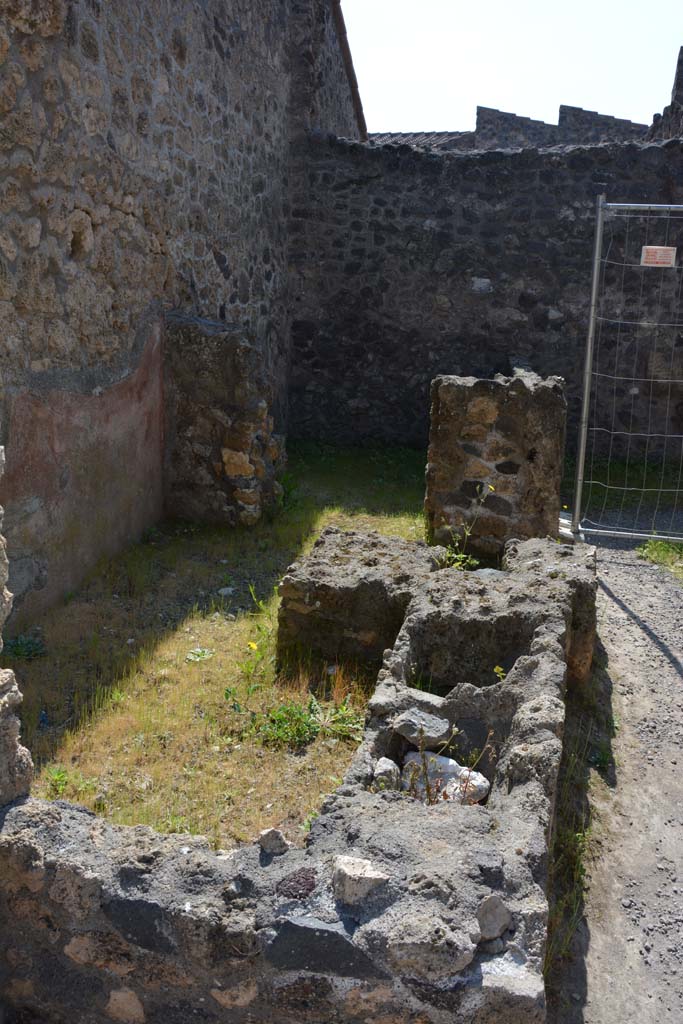
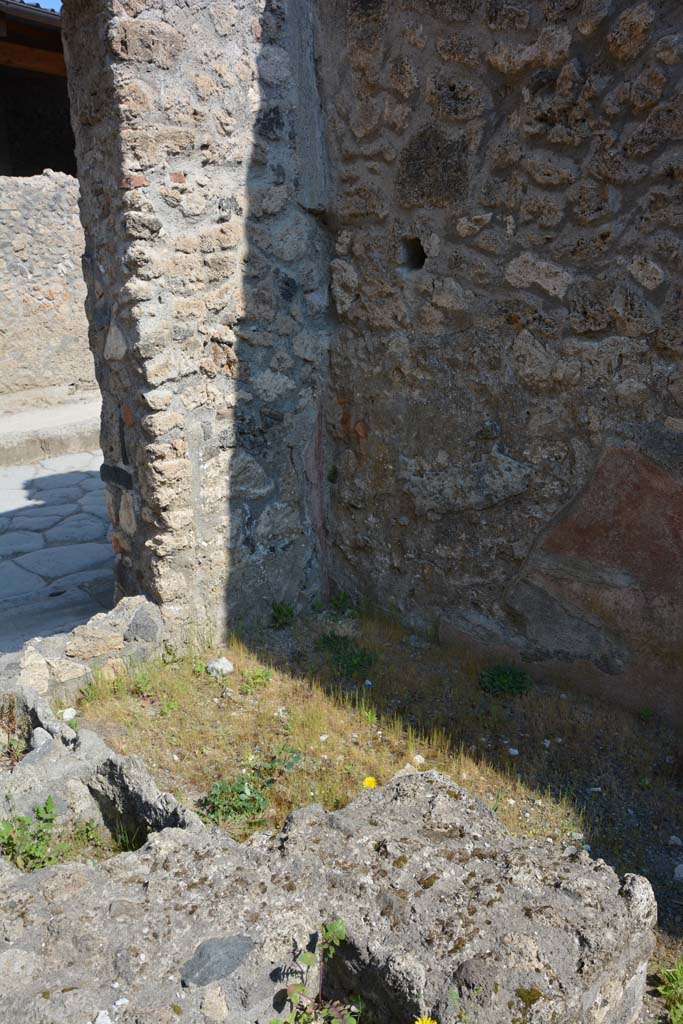
I.10.2, Pompeii. November 2024.
Remains of podium/counter, originally with two dolia and a hearth. Photo courtesy of Annette Haug.
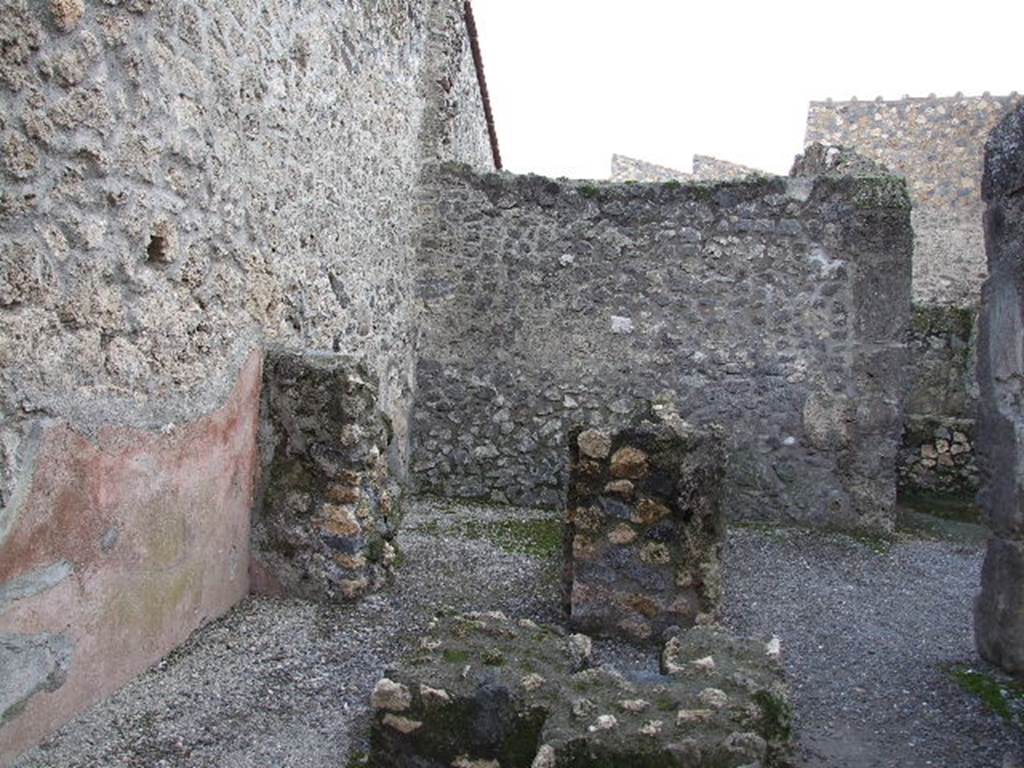
I.10.2 Pompeii. December 2006. Remains of podium, originally with two dolia and a hearth.
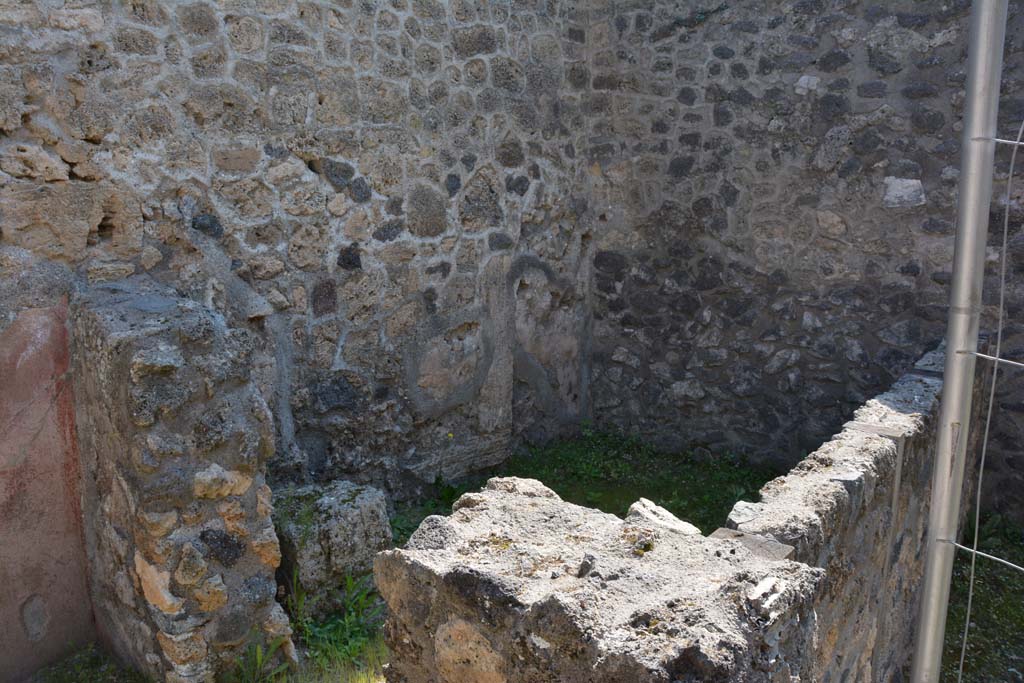
Looking
towards north-east corner of bar room. Photo courtesy of Adrian Hielscher.
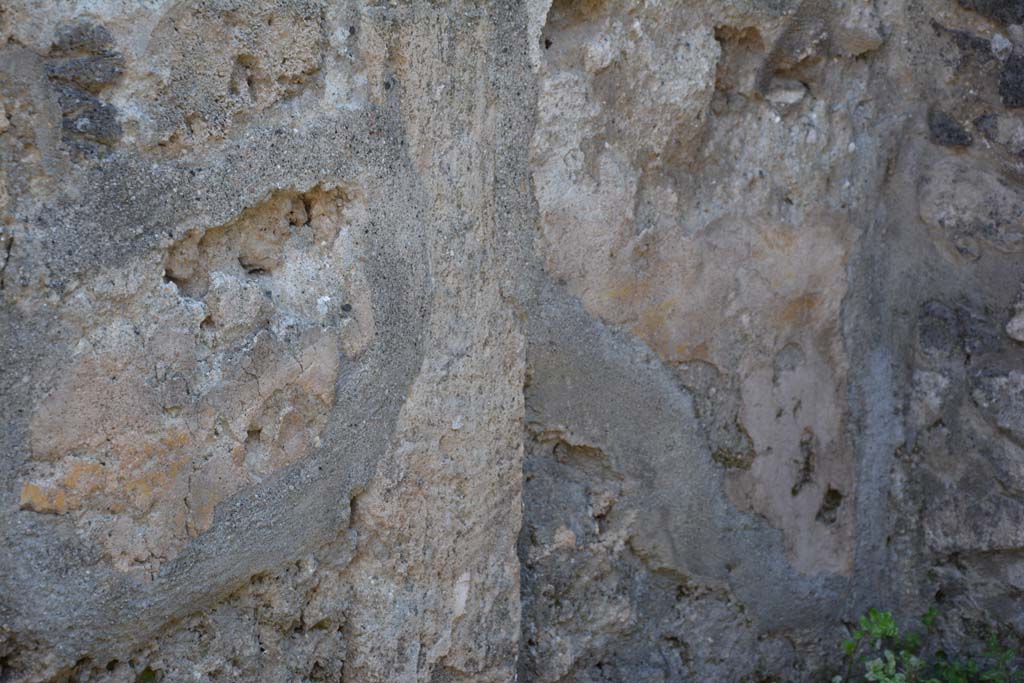
Detail
from north-east corner of bar room on east side of entrance doorway.
Photo
courtesy of Adrian Hielscher.
I.10.2, Pompeii. November 2024. Looking south-east across remains of podium/counter.
In the south-east corner, at the rear of the bar-room, is a doorway to a rear-room. Photo courtesy of Annette Haug.

Looking south across remains of podium, originally with two dolia and a hearth.
In the south-east corner is a doorway to a
rear-room. Photo courtesy of Adrian
Hielscher.

I.10.2 Pompeii. December 2006.
East wall of caupona, with doorway in south-east corner to a rear room, centre, (numbered 8 on plan).
On the right of the photo is the area numbered 7 on the plan.
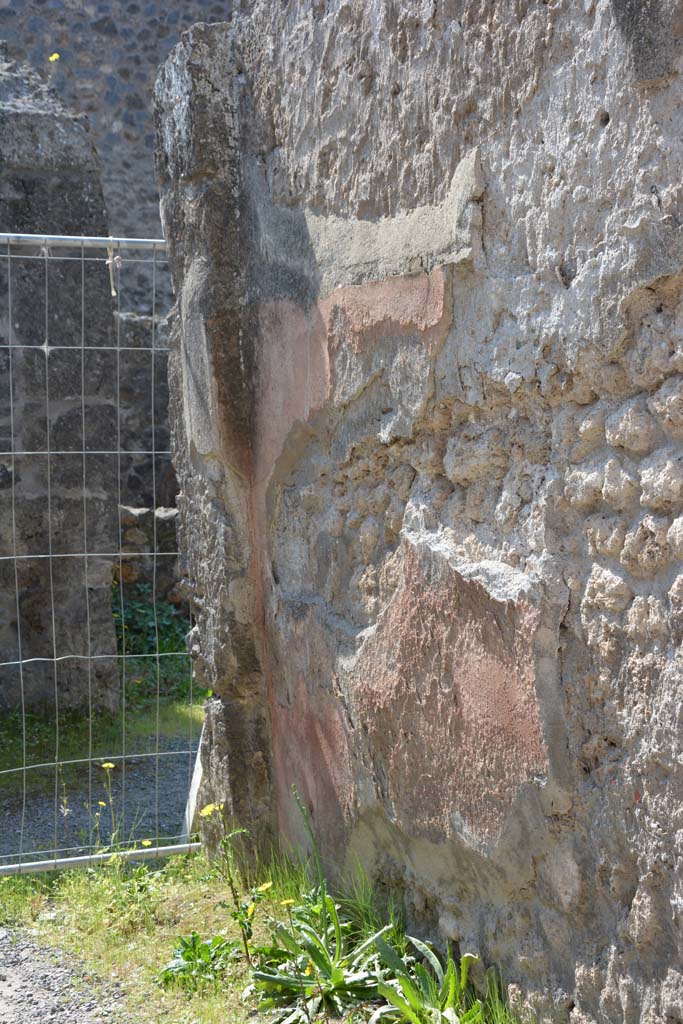
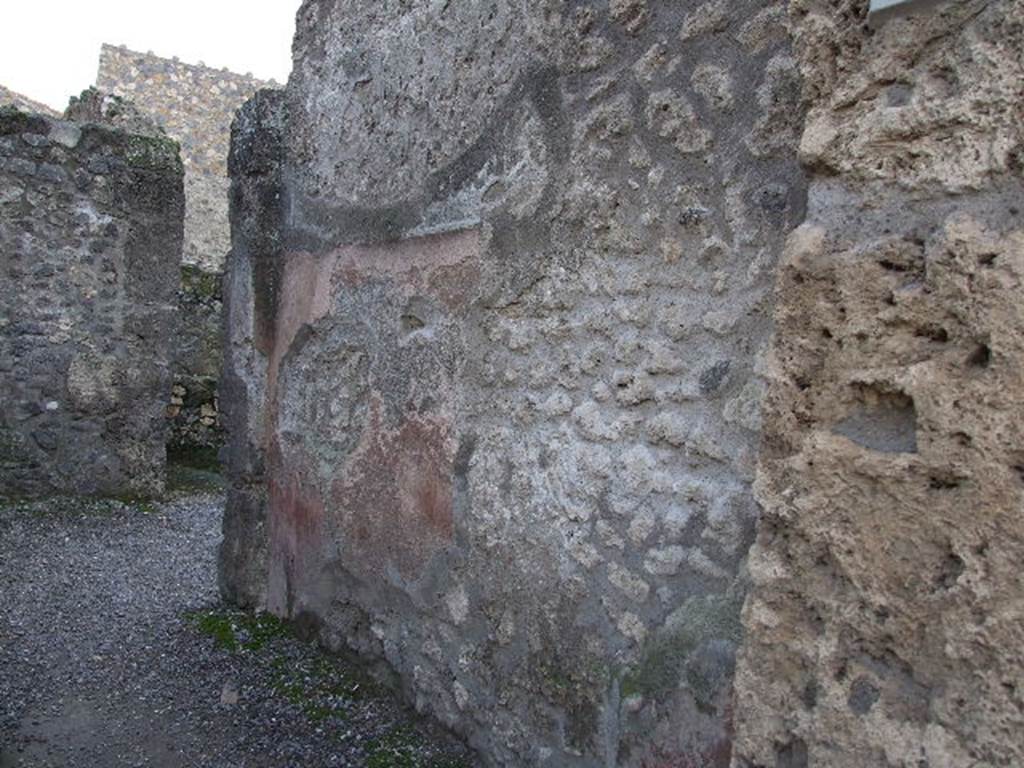
I.10.2 Pompeii. April 2017.
Detail from east wall of room 8. Photo courtesy of Adrian Hielscher.
![I.10.2 Pompeii. December 2006. West wall of caupona, and site of stairs to upper floor. According to Della Corte, found to the right of the entrance in very small writing was a set of questions and answers between two rivals in love. Their names were Severus and Successus. [CIL IV 8259-58] See Della Corte, M., 1965. Case ed Abitanti di Pompei. Napoli: Fausto Fiorentino. (p.292)
According to Epigraphik-Datenbank Clauss/Slaby (See www.manfredclauss.de), these read as –
Successus textor amat coponiaes ancilla(m)
nomine Hiredem quae quidem illum
non curat sed illa com(m)iseretur
scribit rivalis vale
invidiose quia rumper<i=E>s se<c=D>are noli formonsiorem
/
et qui est homo prav<i=E>ssimus et bellus [CIL IV 8259]
Dixi scripsi amas Hiredem
quae te non curat SIX() Successo
ut su[p]ra(t) [3]s[3]
Severus [CIL IV 8258]
According to Cooley, this the love story of Successus, Severus and Iris played out on the walls of the bar. [CIL IV 8258, 8259]
There are 3 messages, the first and third by Severus, the second is the reply of Successus. These translate as -
(Severus) - “Successus, a weaver, loves the innkeeper’s slave girl named Iris, She, however, does not love him. Still he begs her to have pity on him. His rival wrote this. Goodbye”
(Answer by Successus) - “Envious one, why do you get in the way.
Submit to a handsomer man and one who is being treated very wrongly and good looking”
(Answer by Severus) - “I have spoken. I have written all there is to say. You love Iris, but she does not love you”.
See Cooley, A. and M.G.L., 2004. Pompeii : A Sourcebook. London : Routledge. (p.77-78)](1%2010%2002_files/image028.jpg)
I.10.2 Pompeii. December 2006. West wall of caupona, and site of stairs to upper floor.
According to Della Corte, found to the right of the entrance in very small writing was a set of questions and answers between two rivals in love.
Their names were Severus and Successus. [CIL
IV 8259-58]
See Della Corte,
M., 1965. Case ed Abitanti di Pompei.
Napoli: Fausto Fiorentino. (p.292)
![I.10.2 Pompeii. West wall of caupona, and site of stairs to upper floor.
First and second graffiti of the love story of Successus, Severus and Iris.
See Della Corte, M., 1965. Case ed Abitanti di Pompei. Napoli: Fausto Fiorentino. (p.292)
According to Epigraphik-Datenbank Clauss/Slaby (See www.manfredclauss.de), this read as –
Successus textor amat coponiaes ancilla(m)
nomine Hiredem quae quidem illum
non curat sed illa com(m)iseretur
scribit rivalis vale
invidiose quia rumper<i=E>s se<c=D>are noli formonsiorem
/
et qui est homo prav<i=E>ssimus et bellus [CIL IV 8259]](1%2010%2002_files/image030.jpg)
I.10.2 Pompeii. West wall of caupona, and site of stairs to upper floor.
First and second graffiti of the love story of Successus, Severus and Iris.
See Della Corte, M., 1965. Case ed Abitanti di Pompei. Napoli: Fausto Fiorentino. (p.292)
According to Epigraphik-Datenbank Clauss/Slaby (See www.manfredclauss.de), this read as –
Successus textor
amat coponiaes ancilla(m)
nomine Hiredem
quae quidem illum
non curat sed
illa com(m)iseretur
scribit rivalis vale
invidiose quia
rumper<i=E>s se<c=D>are noli formonsiorem
/
et qui est homo
prav<i=E>ssimus et bellus [CIL
IV 8259]
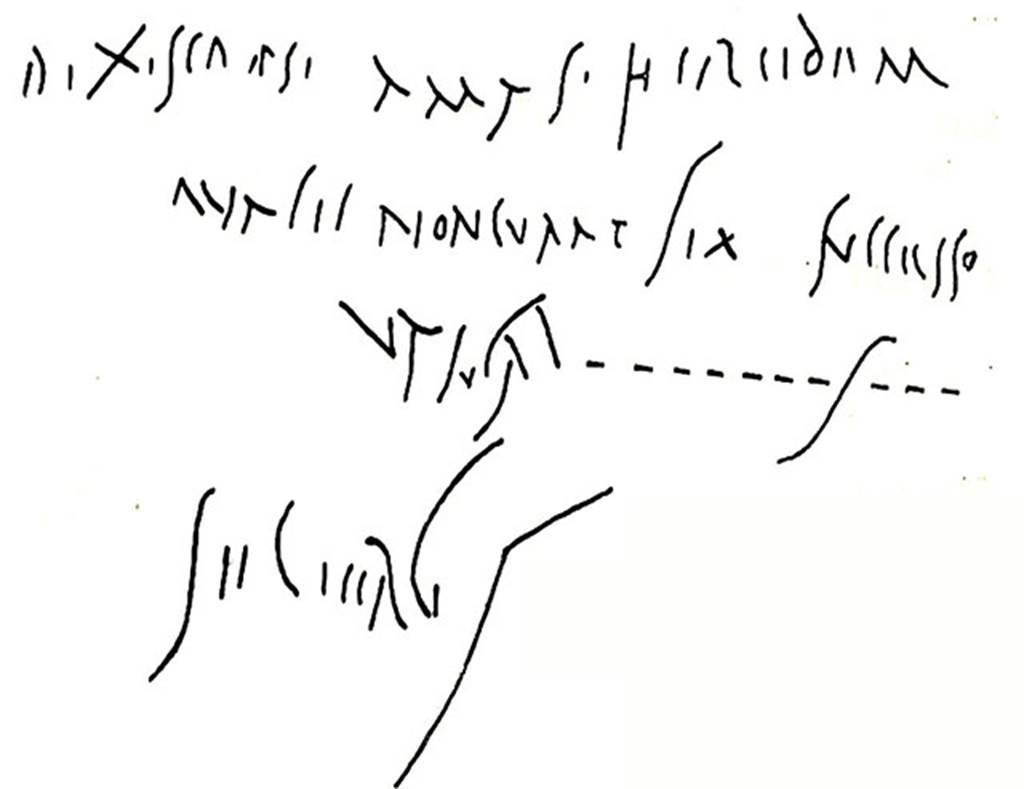
![I.10.2 Pompeii. West wall of caupona, and site of stairs to upper floor.
Third graffito of the love story of Successus, Severus and Iris.
According to Epigraphik-Datenbank Clauss/Slaby (See www.manfredclauss.de), this read as –
Dixi scripsi amas Hiredem
quae te non curat SIX() Successo
ut su[p]ra(t) [3]s[3]
Severus [CIL IV 8258]](1%2010%2002_files/image032.jpg)
I.10.2 Pompeii. West wall of caupona, and site of stairs to upper floor.
Third graffito of the love story of Successus, Severus and Iris.
According to Epigraphik-Datenbank Clauss/Slaby (See www.manfredclauss.de), this read as –
Dixi scripsi amas
Hiredem
quae te non curat
SIX() Successo
ut su[p]ra(t)
[3]s[3]
Severus
[CIL IV 8258]
According to Cooley, this the love story of Successus, Severus and Iris played out on the walls of the bar. [CIL IV 8258, 8259]
There are 3 messages, the first and third by Severus, the second is the reply of Successus.
These translate as -
(Severus) - “Successus, a weaver, loves the innkeeper’s slave girl named Iris. She, however, does not love him.
Still he begs her to have pity on him. His rival wrote this. Goodbye”
(Answer by Successus) - “Envious one, why do you get in the way.
Submit to a handsomer man and one who is being treated very wrongly and good looking”
(Answer by Severus) - “I have spoken. I have written all there is to say.
You love Iris, but she does not love you”.
See Cooley, A. and M.G.L., 2004. Pompeii: A Sourcebook. London: Routledge. (p.77-78)

South
end of west wall with remaining painted decoration. Photo courtesy of Adrian
Hielscher.