I.2.24 Pompeii. Officina
libraria of Acilius Cedrus, (according to Fiorelli & Della Corte).
Caupona or wine shop, (according to Mau), Hospitium or restaurant, (according to Packer).
Linked to I.2.25. Excavated 1872.
Part 1 Part 2
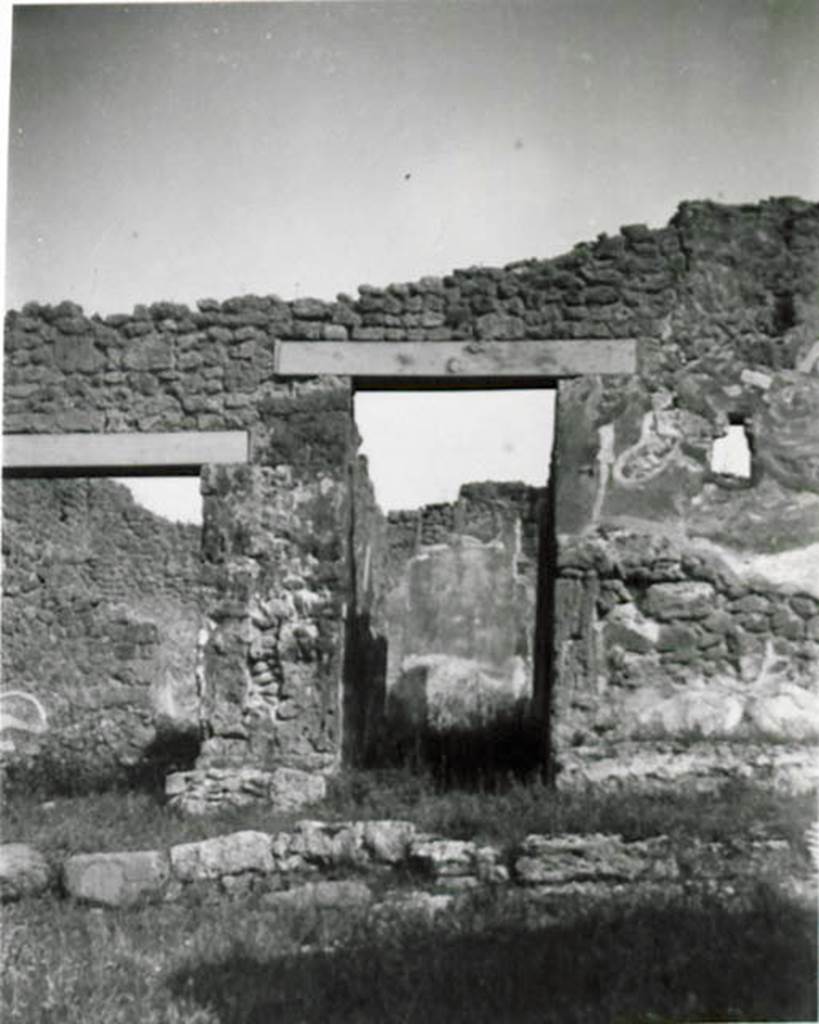
I.2.24 Pompeii. 1935 photo taken by Tatiana Warscher.
Looking north to entrance doorway, on right, with doorway to I.2.25, on left.
See Warscher T., 1935. Codex Topographicus Pompeianus: Regio I.2. (no.44), Rome: DAIR, whose copyright it remains.
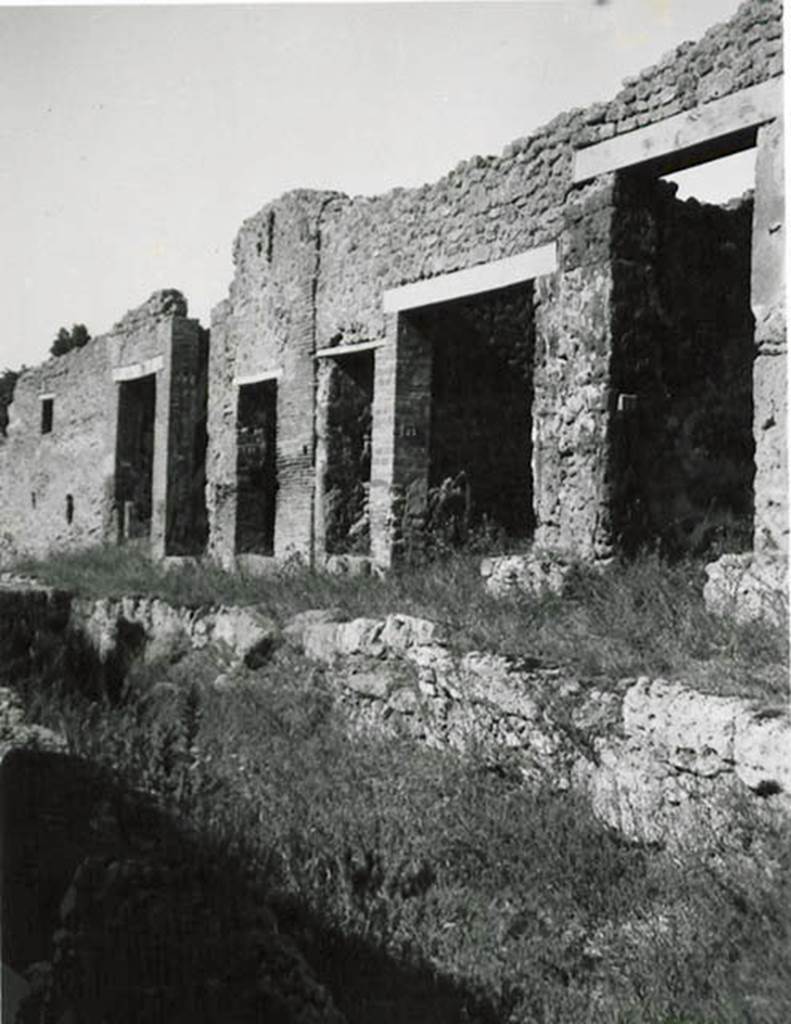
I.2.29-24 Pompeii. 1935 photo taken by Tatiana Warscher.
Looking west along Vicolo del Conciapelle, with entrance doorway to I.2.24, on right.
See Warscher T., 1935. Codex Topographicus Pompeianus: Regio I.2. (no.42a) Rome: DAIR, whose copyright it remains.

I.2.24-23 Pompeii. October 2024. Looking north-east on Vicolo del Conciapelle. Photo courtesy of Klaus Heese.
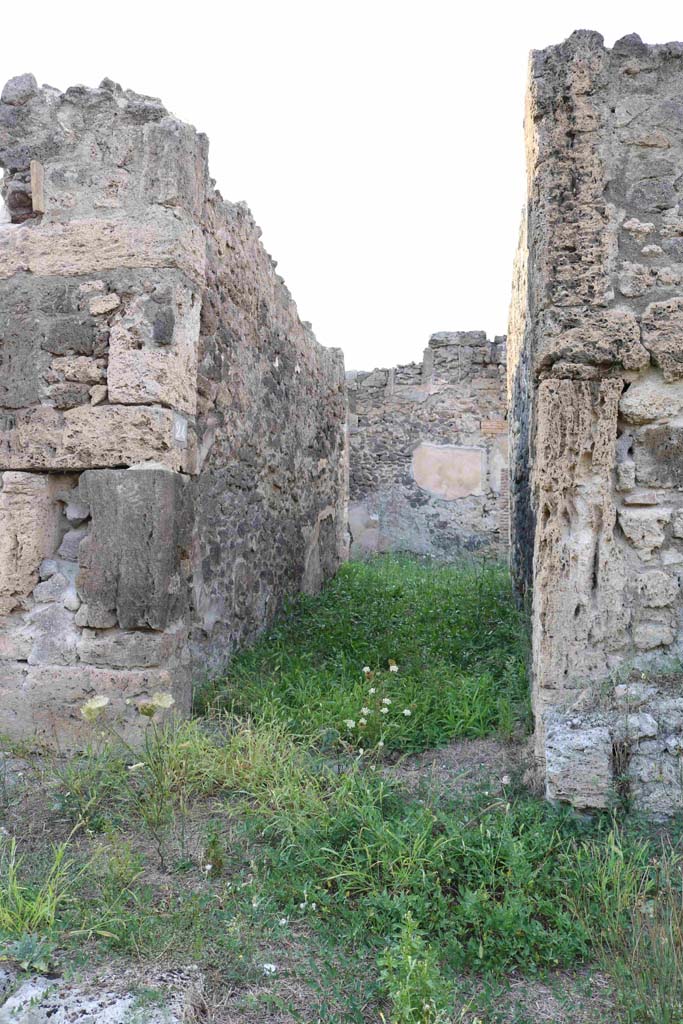
I.2.24-23 Pompeii. 1935 photo taken by Tatiana Warscher.
Looking east along Vicolo del Conciapelle from outside 1.2.24, with entrance doorway to I.2.23, on right.
See Warscher T., 1935. Codex Topographicus Pompeianus: Regio I.2. (no.42b), Rome: DAIR, whose copyright it remains.

I.2.24 Pompeii. September 2018.
Looking north to entrance doorway. Photo courtesy of Aude Durand.

I.2.24 Pompeii. September 2010. Looking north to entrance doorway. Photo courtesy of Drew Baker.
See - Packer, Jim: Inns at Pompeii: a short survey. In
Cronache Pompeiane, IV, 1978, (p.12-18).
![I.2.24 Pompeii. December 2006. Entrance doorway. According to Della Corte, an electoral recommendation was found on the left of the entrance doorway, between I.2.23 and 24. This would have been painted on the pilaster on the left. It read – (Libr)ari rog(ant) (CIL IV 3368). See Della Corte, M., 1965. Case ed Abitanti di Pompei. Napoli: Fausto Fiorentino. (p.274) According to Epigraphik-Datenbank Clauss/Slaby (See www.manfredclauss.de), it read -
[3] Sabinum
[3]ari rog(at) [CIL IV 3368]](1%2002%2024_files/image013.jpg)
I.2.24 Pompeii. December 2006. Entrance doorway.
According to Della Corte, an electoral recommendation was found on the left of the entrance doorway, between I.2.23 and 24.
This would have been painted on the pilaster on the left. It read – (Libr)ari rog(ant) (CIL IV 3368).
See Della Corte, M., 1965. Case ed Abitanti di Pompei. Napoli: Fausto Fiorentino. (p.274)
According to Epigraphik-Datenbank Clauss/Slaby (See www.manfredclauss.de), it read -
[3] Sabinum
[3]ari
rog(at) [CIL IV 3368]

I.2.24 Pompeii. September 2005. Entrance doorway.
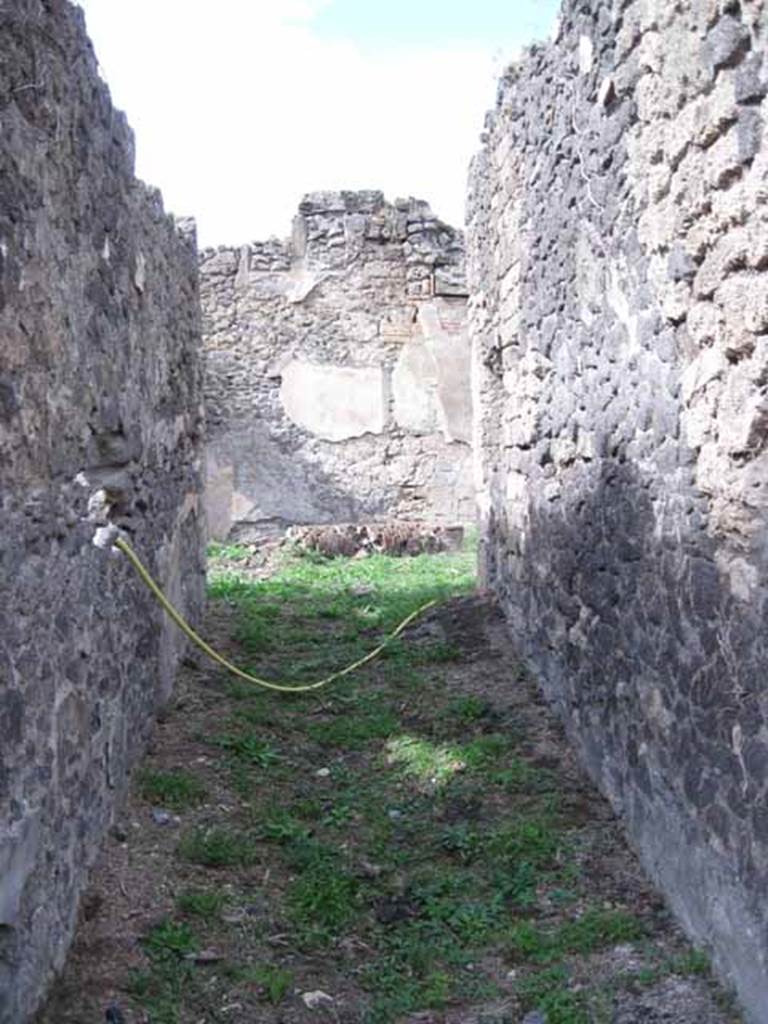
I.2.24 Pompeii. October 2024.
Looking north along entrance corridor/fauces. Photo courtesy of Klaus Heese.
![I.2.24 Pompeii. September 2010. Looking north through entrance fauces or corridor towards atrium.Photo courtesy of Drew Baker.
According to Fiorelli, the use of this edifice had been named from a graffito, found in the atrium. He described - after the entrance corridor there was an area, the roof held up by two columns, with an aperture through which the water flowed to an impluvium near the facing wall, on which one could read -
C . NONIVS . LORICA
P . INSTVLEIVS NEDYMVS LIBRARI . QVI . C……
L . AELIVS . CYDINVS SVNT . HIC .SIN ……
ACILIVS . CEDRVS APPVLEI . ADIVTOR . ET…..
See Pappalardo, U., 2001. La Descrizione di Pompei per Giuseppe Fiorelli (1875). Napoli: Massa Editore. (p.37)
According to Della Corte, here flanked by seats was the entrance to a house of irregular plan spacious and commodious enough, noted for its sacred painting.Here was installed a workshop of copyists, some of whom are shown in the following epigraph, painted in the courtyard at the front (see Note 5 on page 274) –
C. Nonius Lorica, P. Instuleius Nedymus,
L. Aelius Cydinus, Acilius Cedrus, library qui…sunt hic sine….
Appulei Adiutor(is)?..... (CIL IV 3376)
Other names were also found graffitoed in the house, and it was not possible to know if they too were copyists - C. Siccius, Nicanor e Restitutus. See Della Corte, M., 1965. Case ed Abitanti di Pompei. Napoli: Fausto Fiorentino. (p.274)
According to Garcia y Garcia, the edifice here had been identified as the seat of a possible association of public scribes, or of a typing agency as we would call it today. Fiorelli called it Officina libraria after an important inscription (CIL IV 3376) found on the wall of the atrium, near to the impluvium: This would be where the « copyists » or amanuenses bound or transcribed their books. These copyists were not many, but were certainly active participants in the electoral propaganda, as can be deduced from the defaced inscription on the right of the entrance number I.2.23, nearby: (Libr) ARI ROG(ant). (CIL IV 3368) See Garcia y Garcia, L., 2005. Pupils, Teachers and Schools in Pompeii. Roma: Bardi editore. (p.119)
According to Epigraphik-Datenbank Clauss/Slaby (See www.manfredclauss.de), these read –
C(aius) Nonius Lorica
P(ublius) Instuleius Nedymus
L(ucius) Aelius Cydinus
Acilius Cedrus
/ Librari qui C[3]
sunt hic sine [3]
Appulei adiutor et II[ (CIL IV 3376)
[3] Sabinum
[3]ari rog(at) (CIL IV 3368).](1%2002%2024_files/image018.jpg)
I.2.24 Pompeii. September 2010.
Looking north through entrance fauces or corridor towards atrium. Photo courtesy of Drew Baker.
According to Fiorelli, the use of this edifice had been named from a graffito, found in the atrium.
He described - after the entrance corridor there was an area, the roof held up by two columns, with an aperture through which the water flowed to an impluvium near the facing wall, on which one could read -
C . NONIVS .
LORICA
P . INSTVLEIVS
NEDYMVS LIBRARI . QVI . C……
L . AELIVS .
CYDINVS SVNT .
ACILIVS .
CEDRVS APPVLEI . ADIVTOR .
ET…..
See Pappalardo, U., 2001. La Descrizione di Pompei per Giuseppe Fiorelli (1875). Napoli: Massa Editore. (p.37)
According to Della Corte, here flanked by seats was the entrance to a house of irregular plan spacious and commodious enough, noted for its sacred painting.
Here was installed a workshop of copyists, some of whom are shown in the following epigraph, painted in the courtyard at the front (see Note 5 on page 274) –
C. Nonius Lorica,
P. Instuleius Nedymus,
L. Aelius Cydinus, Acilius Cedrus, librari
qui…sunt hic sine….
Appulei
Adiutor(is)?..... (CIL IV 3376)
Other names were also found graffitied in the house, and it was not possible to know if they too were copyists - C. Siccius, Nicanor e Restitutus.
See Della Corte, M., 1965. Case ed Abitanti di Pompei. Napoli: Fausto Fiorentino. (p.274)
According to Garcia y Garcia, the edifice here had been identified as the seat of a possible association of public scribes, or of a typing agency as we would call it today.
Fiorelli called it Officina libraria after an important inscription (CIL IV 3376) found on the wall of the atrium, near to the impluvium.
This would be where the « copyists » or amanuenses bound or transcribed their books.
These copyists were not many, but were certainly active participants in the electoral propaganda, as can be deduced from the defaced inscription on the right of the entrance number I.2.23, nearby:
(Libr) ARI
ROG(ant). (CIL IV 3368)
See Garcia y Garcia, L., 2005. Pupils, Teachers and Schools in Pompeii. Roma: Bardi editore. (p.119)
According to Epigraphik-Datenbank Clauss/Slaby (See www.manfredclauss.de), these read –
C(aius) Nonius Lorica
P(ublius)
Instuleius Nedymus
L(ucius) Aelius
Cydinus
Acilius Cedrus
/
Librari qui C[3]
sunt hic sine [3]
Appulei adiutor
et II[ (CIL IV 3376)
[3] Sabinum
[3]ari rog(at) (CIL IV 3368).
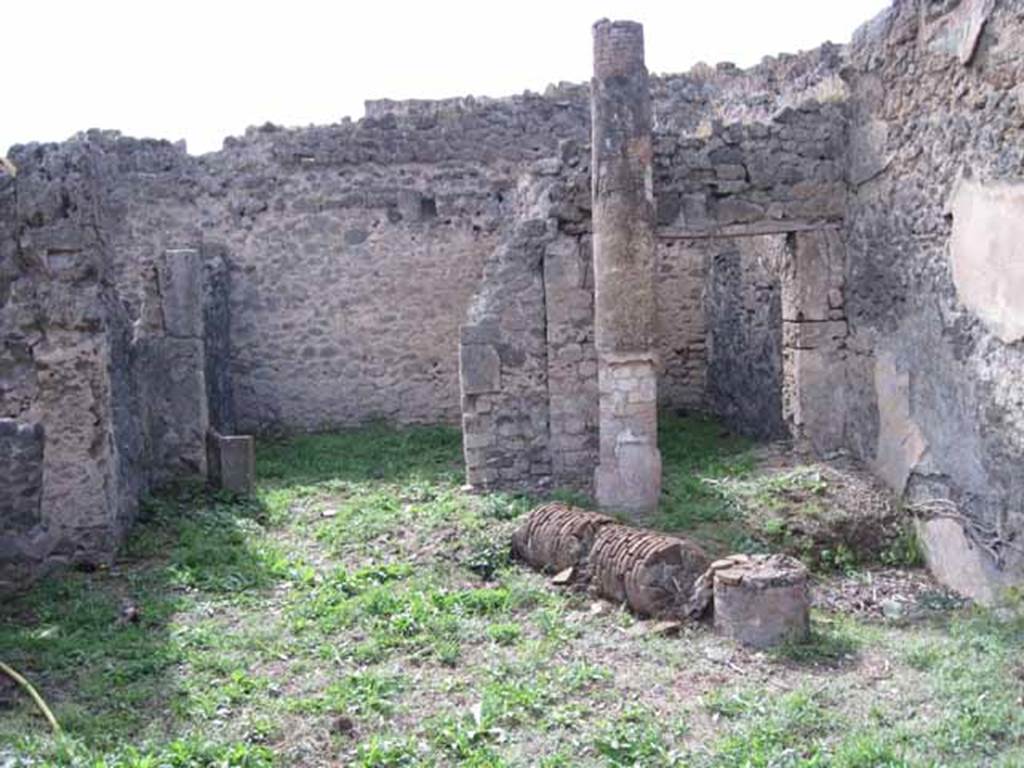
I.2.24 Pompeii. September 2010.
Looking south in entrance corridor towards doorway onto Vicolo del Conciapelle. Photo courtesy of Drew Baker.
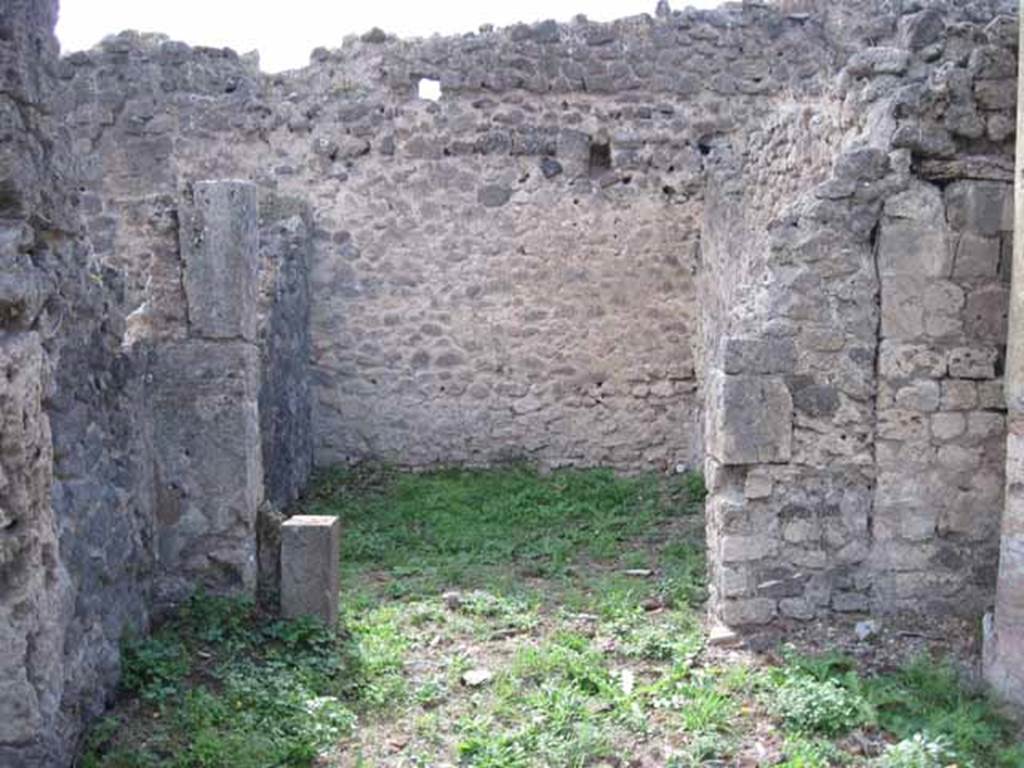
I.2.24 Pompeii. September 2010. Doorways to two rooms on west side of atrium, looking west. Photo courtesy of Drew Baker.
According to Fiorelli,
“after the entrance corridor there was an area, the roof held up by two columns, with an aperture through which the water flowed to an impluvium”.
These would be the two columns that held up the roof, and the square “pool” against the north wall, the impluvium.
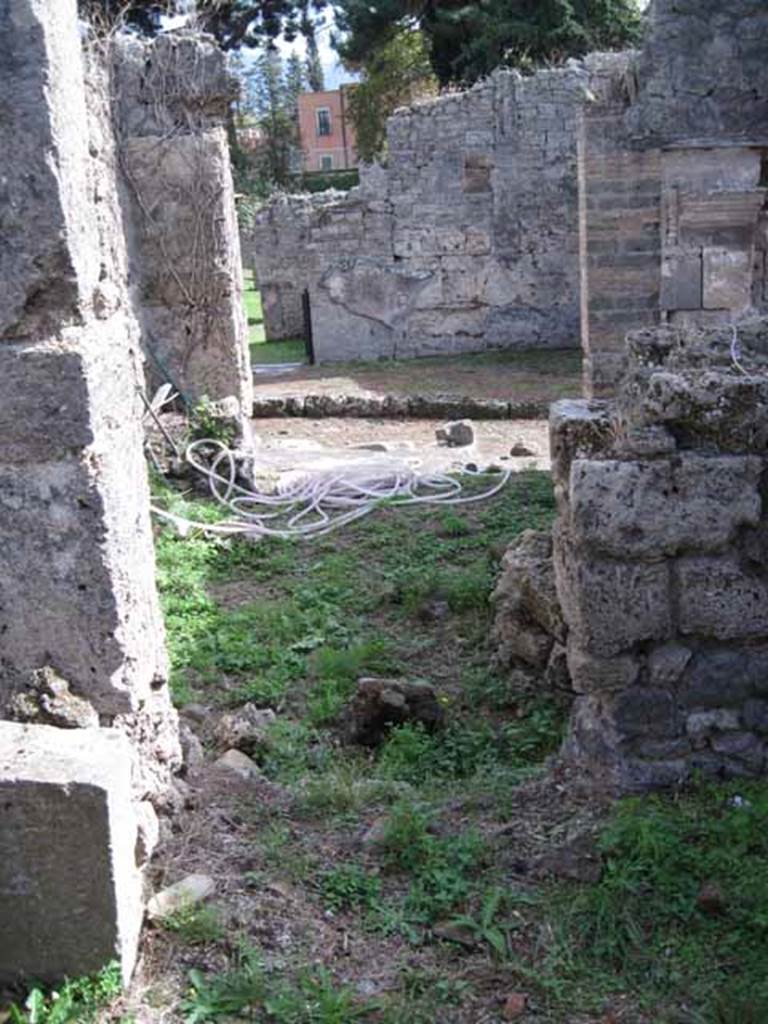
I.2.24 Pompeii. September 2010.
Doorway to room in south-west corner of atrium, linked to I.2.25, looking west. Photo courtesy of Drew Baker.
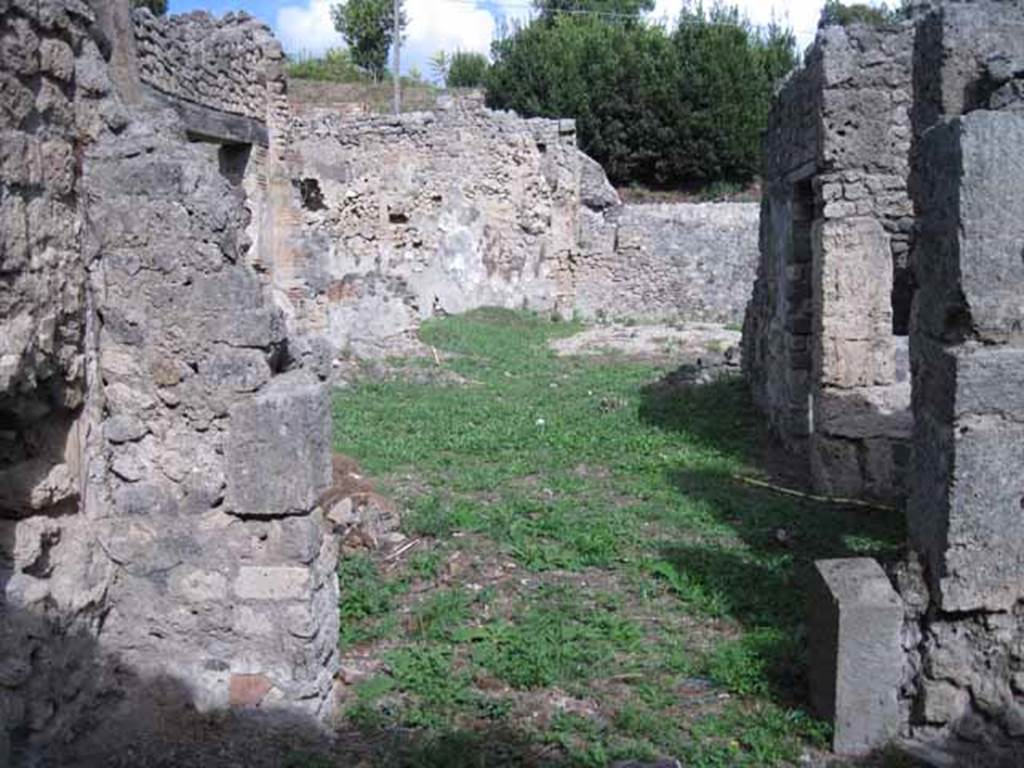
I.2.24 Pompeii. September 2010.
South side of room, looking south through I.2.25 onto Vicolo del Conciapelle. Photo courtesy of Drew Baker.

I.2.24 Pompeii. September 2010. Looking east from room in south-west corner of atrium, into atrium. Photo courtesy of Drew Baker.
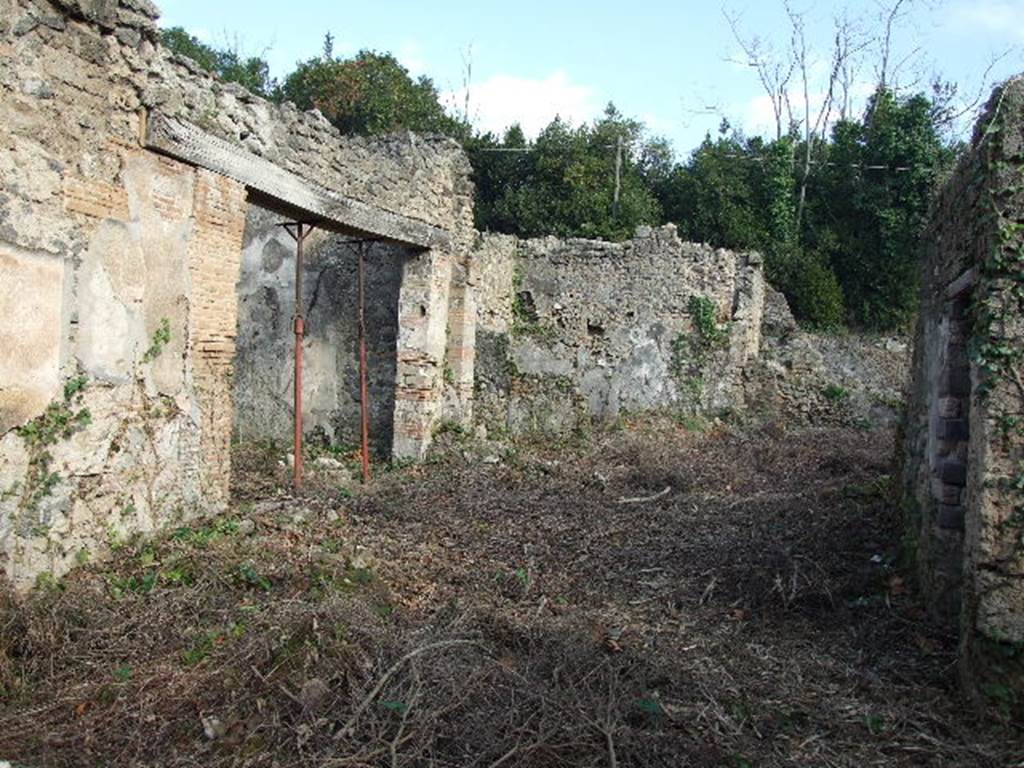
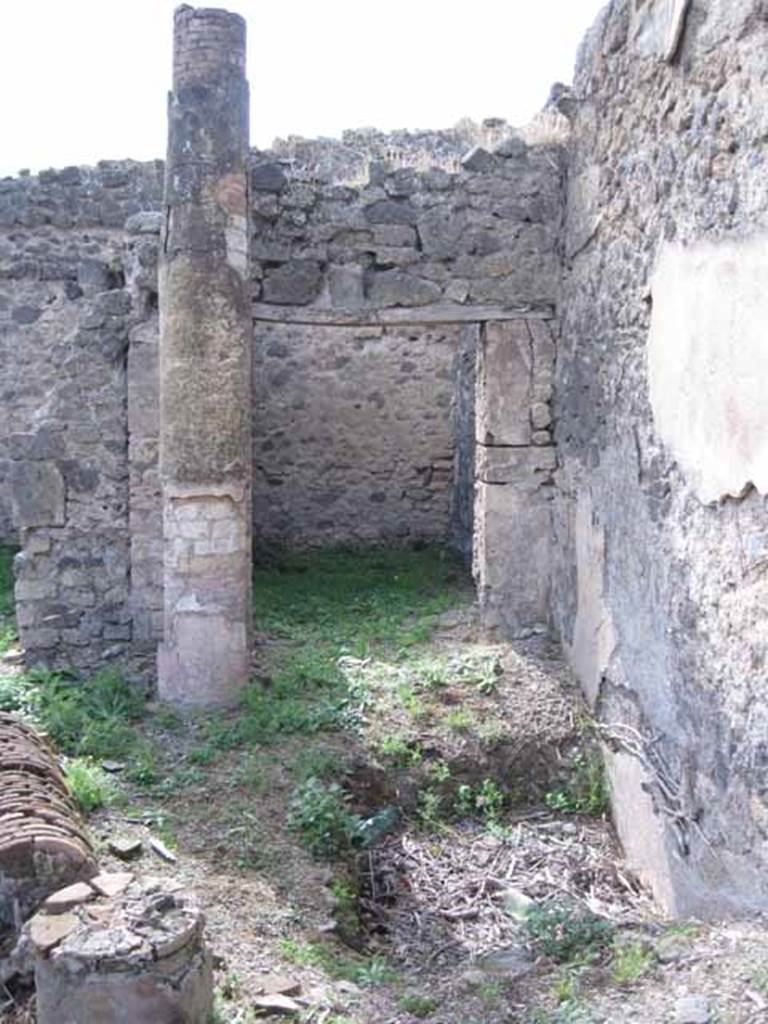
I.2.24 Pompeii. December 2006. Looking east across atrium, towards garden area.
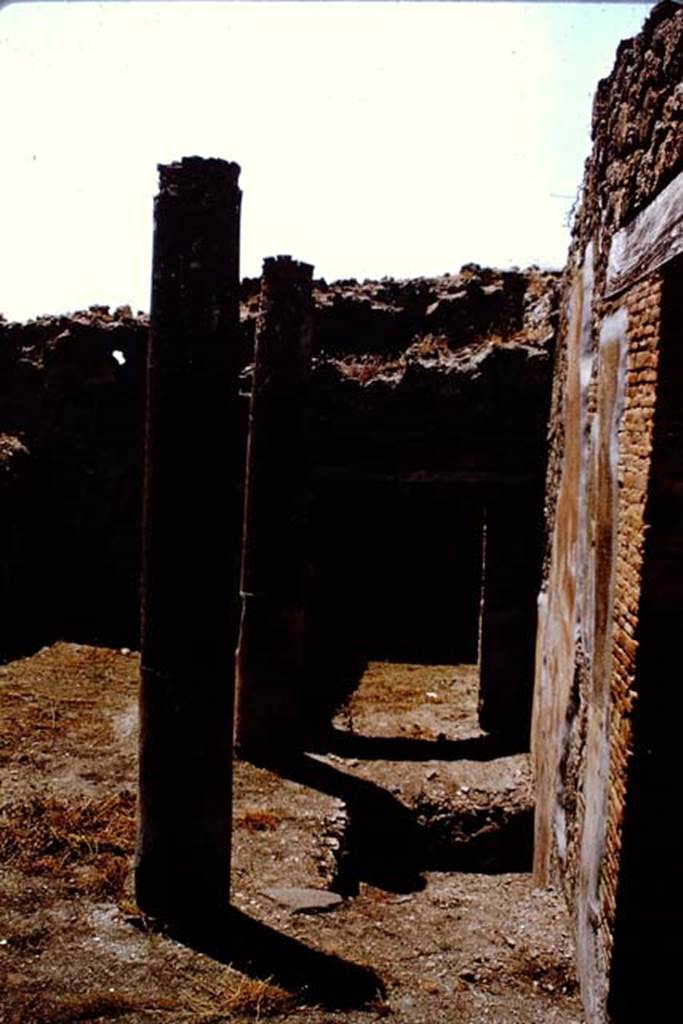
I.2.24 Pompeii. September 2010.
Doorway to room in north-west corner of atrium, looking west across atrium, and site of impluvium.
Photo courtesy of Drew Baker.
According to Warscher, quoting Mau in Bull. Inst, 1874, (p.252), she described –
“L’atrio è d’una
forma affatto singolare.
L’impluvio, cioè,
più profondo del solito, non sta nel mezzo, ma presso alla parete di N, poco
lontano dall’estremità occidentale di essa, dimodochè il tetto dell’atrio
veniva sorretto non da quattro ma soltante da due colonne, sulle quali
riposavano le travi, una che congiungeva le due colonne, due con un’estremità
incastrata nel muro di N. Conforme a ciò quella parte del muro di N, che sta
sopra l’impluvio, ed era esposta alla pioggia, non partecipa della decorazione
del resto, ma è rozzamente dipinta color di carne. Dall’impluvio l’acqua scolava verso SE nel
pozzo”.
See Warscher T., 1935. Codex Topographicus Pompeianus: Regio I.2. Rome: DAIR, whose copyright it remains.
(translation: “The
atrium was of an unusual form. The impluvium deeper than usual was not in the
middle, but near to the north wall, not far from the extreme west of this, the
atrium roof was supported not by four columns but only by two columns on which
rested the beams, one which linked the two columns, two with an end buried in
the north wall. That part of the north wall that was above the impluvium, which
was exposed to the rain, did not participate in the same decoration as the
rest, but it was crudely painted flesh-coloured. From the impluvium the water drained towards
the south-east in the well.”)
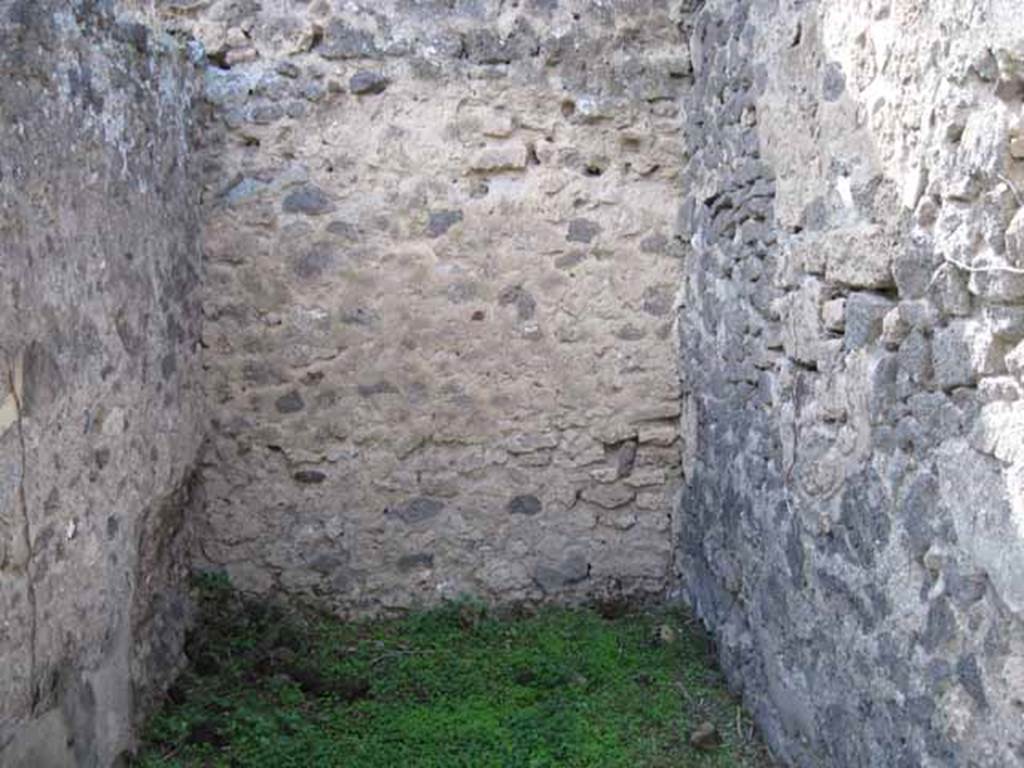
I.2.24 Pompeii. 1966.
Looking west across north side of atrium, across site of impluvium towards doorway.
Photo by Stanley A. Jashemski.
Source: The Wilhelmina and Stanley A. Jashemski archive in the University of Maryland Library, Special Collections (See collection page) and made available under the Creative Commons Attribution-Non Commercial License v.4. See Licence and use details.
J66f0214
I.2.24 Pompeii. September 2010. West wall of room in north-west corner of atrium. Photo courtesy of Drew Baker.
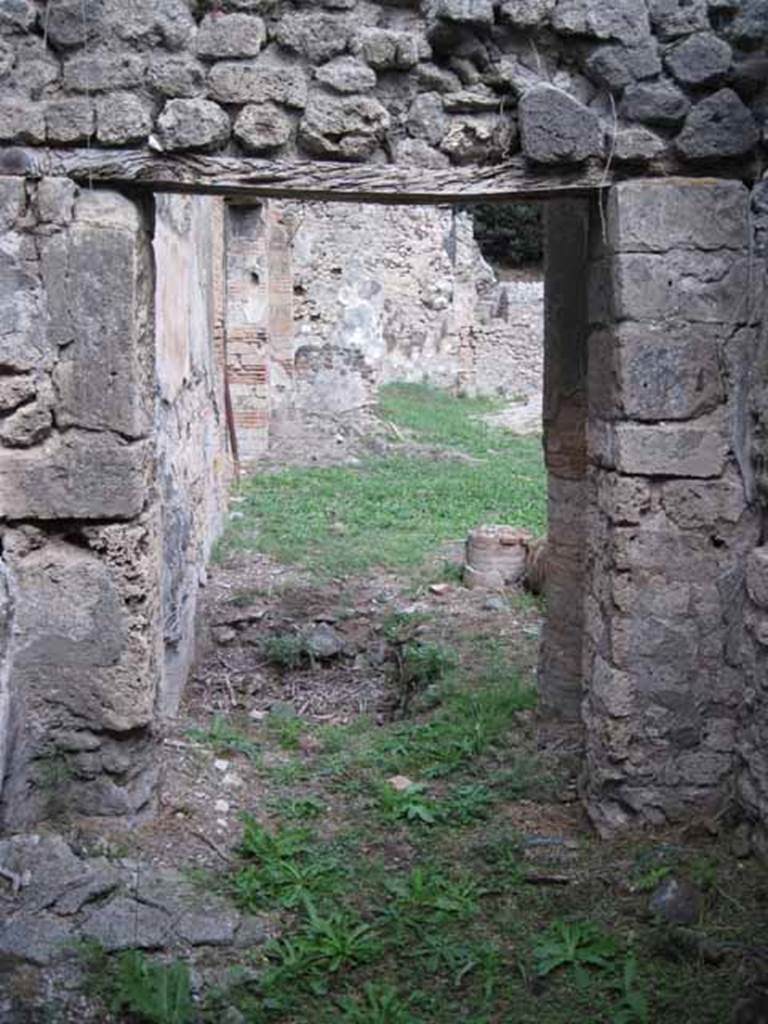
I.2.24 Pompeii. September 2010.
Looking east into atrium and across impluvium, through doorway from room in north-west corner of atrium.
Photo courtesy of Drew Baker.
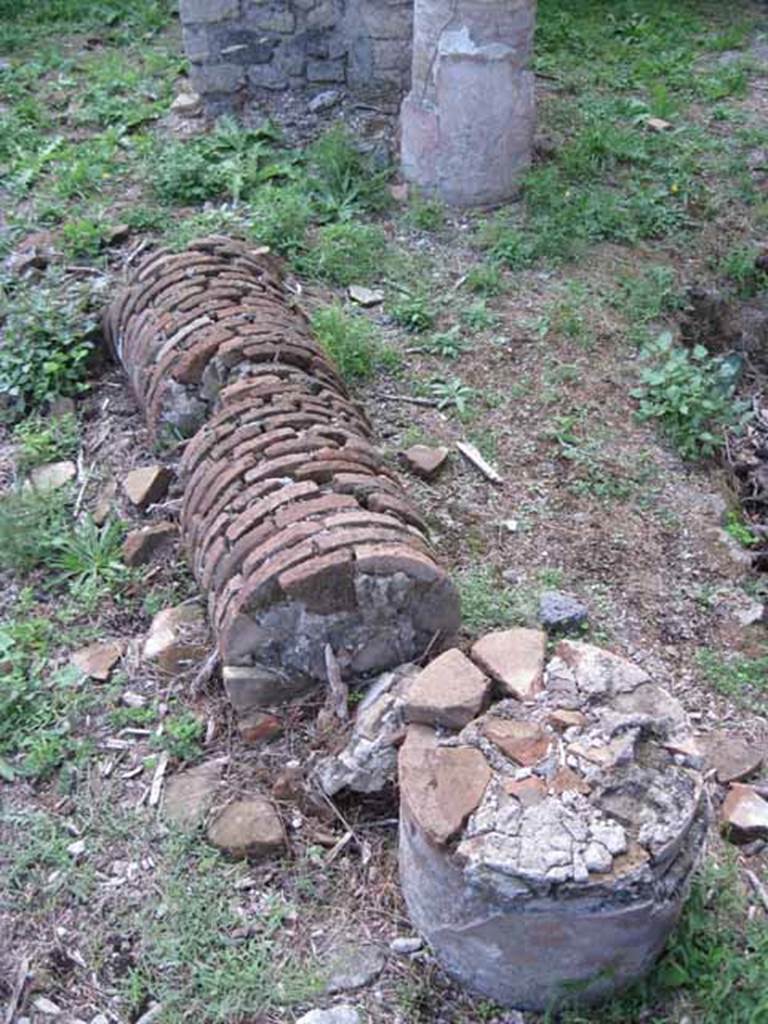
I.2.24 Pompeii. September 2010.
Detail of fallen brick column on west side of atrium, looking west. Photo courtesy of Drew Baker.
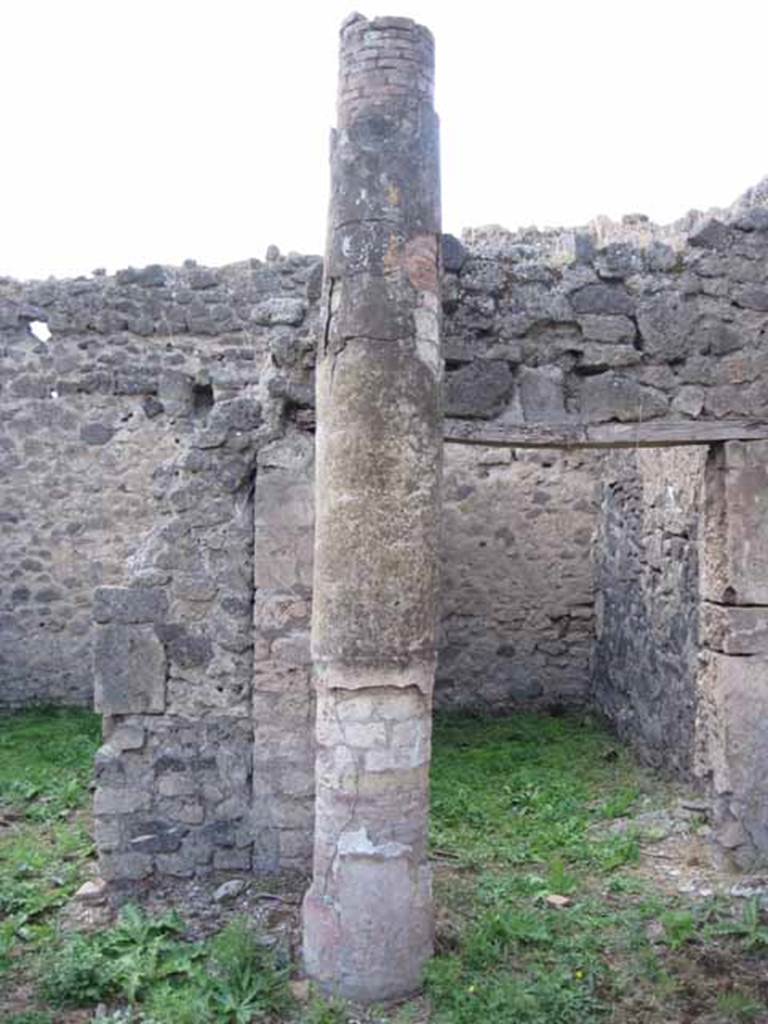
I.2.24 Pompeii. September 2010.
Detail of upright brick column in atrium, looking west. Photo courtesy of Drew Baker.
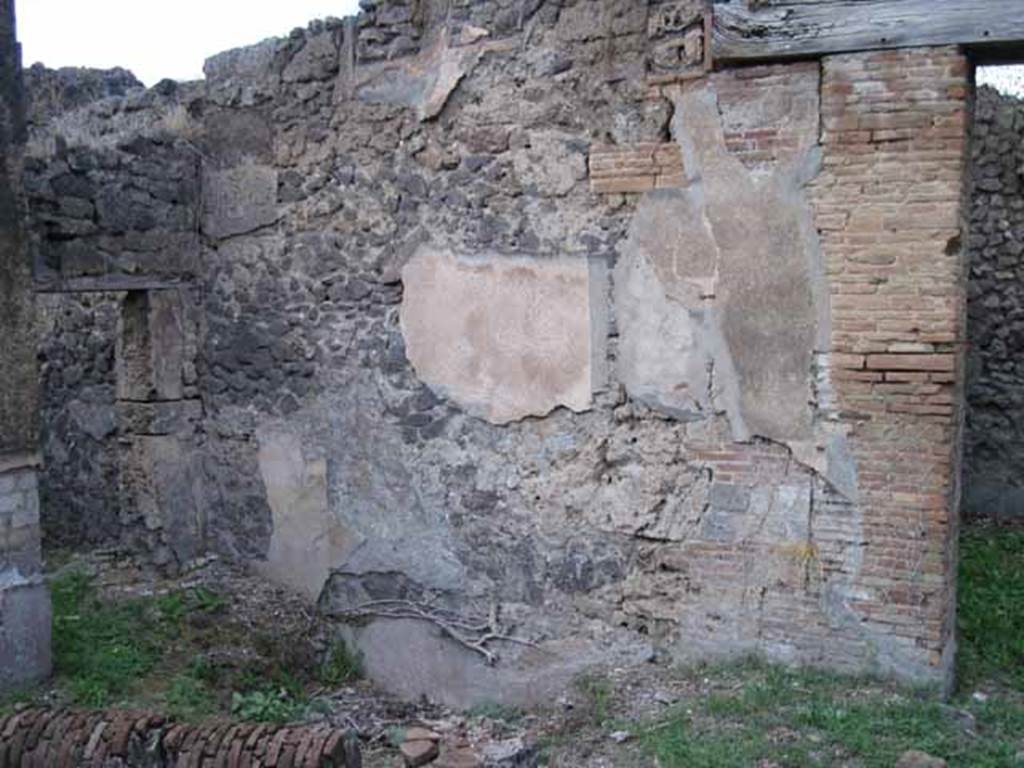
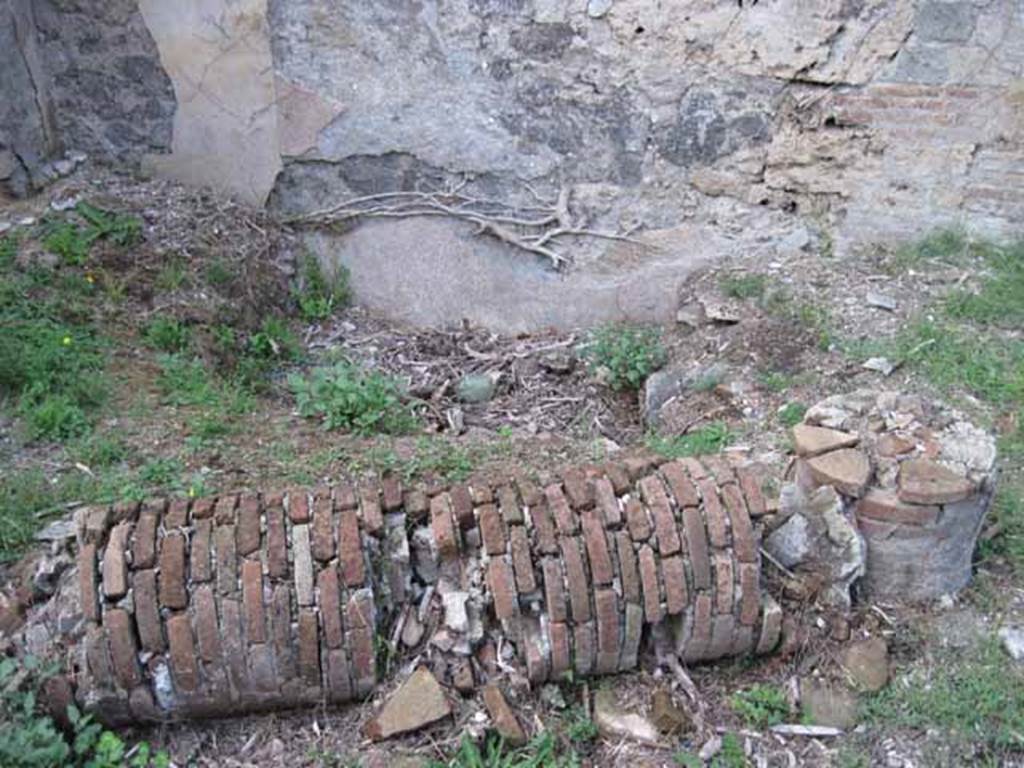
I.2.24 Pompeii. September 2010.
Detail of fallen brick column and impluvium or pool in atrium looking north. Photo courtesy of Drew Baker.

I.2.24 Pompeii. October 2024.
Looking towards north wall of atrium, from entrance doorway. Photo courtesy of Klaus Heese.
![I.2.24 Pompeii. September 2010. North wall of atrium in north-west corner. Photo courtesy of Drew Baker. According to Fiorelli, painted on the facing wall of the atrium was -
C . NONIVS . LORICA
P . INSTVLEIVS NEDYMVS LIBRARI . QVI . C……
L . AELIVS . CYDINVS SVNT . HIC .SIN ……
ACILIVS . CEDRVS APPVLEI . ADIVTOR . ET….. [CIL IV 3376]
See Pappalardo, U., 2001. La Descrizione di Pompei per Giuseppe Fiorelli (1875). Napoli: Massa Editore. (p.37)
According to Epigraphik-Datenbank Clauss/Slaby (See www.manfredclauss.de), it read –
C(aius) Nonius Lorica
P(ublius) Instuleius Nedymus
L(ucius) Aelius Cydinus
Acilius Cedrus
/ Librari qui C[3]
sunt hic sine [3]
Appulei adiutor et II[ (CIL IV 3376)](1%2002%2024_files/image048.jpg)
I.2.24 Pompeii. September 2010. North wall of atrium in north-west corner. Photo courtesy of Drew Baker.
According to Fiorelli, painted on the facing wall of the atrium was -
C . NONIVS .
LORICA
P . INSTVLEIVS
NEDYMVS LIBRARI . QVI . C……
L . AELIVS .
CYDINVS SVNT .
ACILIVS .
CEDRVS APPVLEI .
ADIVTOR . ET….. [CIL IV 3376]
See Pappalardo, U., 2001. La Descrizione di Pompei per Giuseppe Fiorelli (1875). Napoli: Massa Editore. (p.37)
According to Epigraphik-Datenbank Clauss/Slaby (See www.manfredclauss.de), it read –
C(aius) Nonius Lorica
P(ublius)
Instuleius Nedymus
L(ucius) Aelius
Cydinus
Acilius Cedrus
/
Librari qui C[3]
sunt hic sine [3]
Appulei adiutor
et II[ (CIL IV 3376)
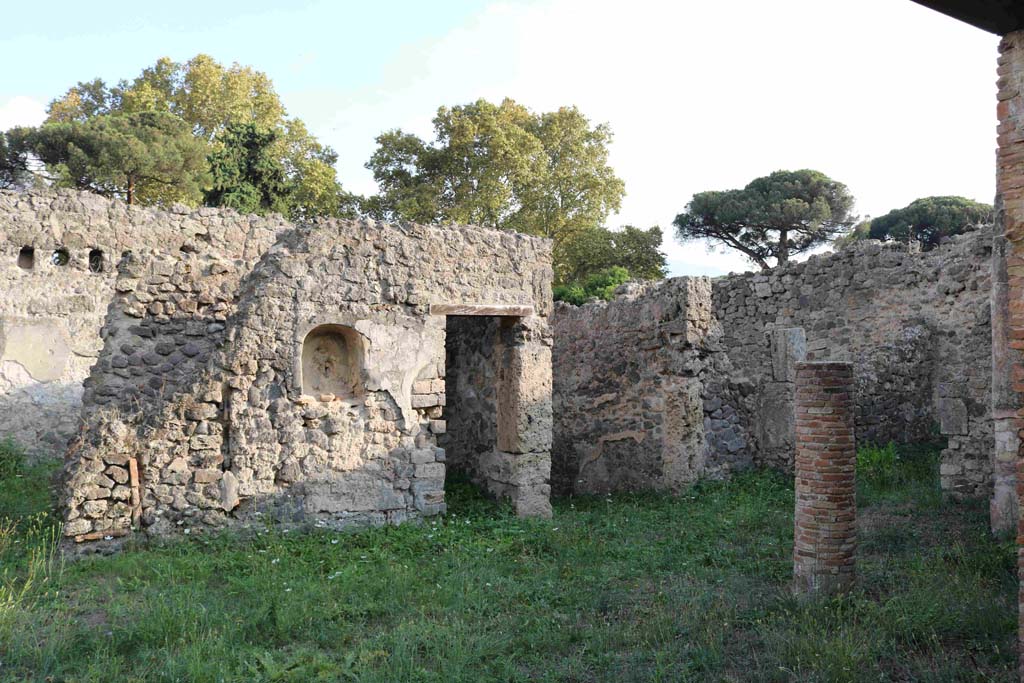
I.2.24 Pompeii. 1966.
Standing columns near north wall of atrium by impluvium. Photo by Stanley A. Jashemski.
Source: The Wilhelmina and Stanley A. Jashemski archive in the University of Maryland Library, Special Collections (See collection page) and made available under the Creative Commons Attribution-Non Commercial License v.4. See Licence and use details.
J66f0213
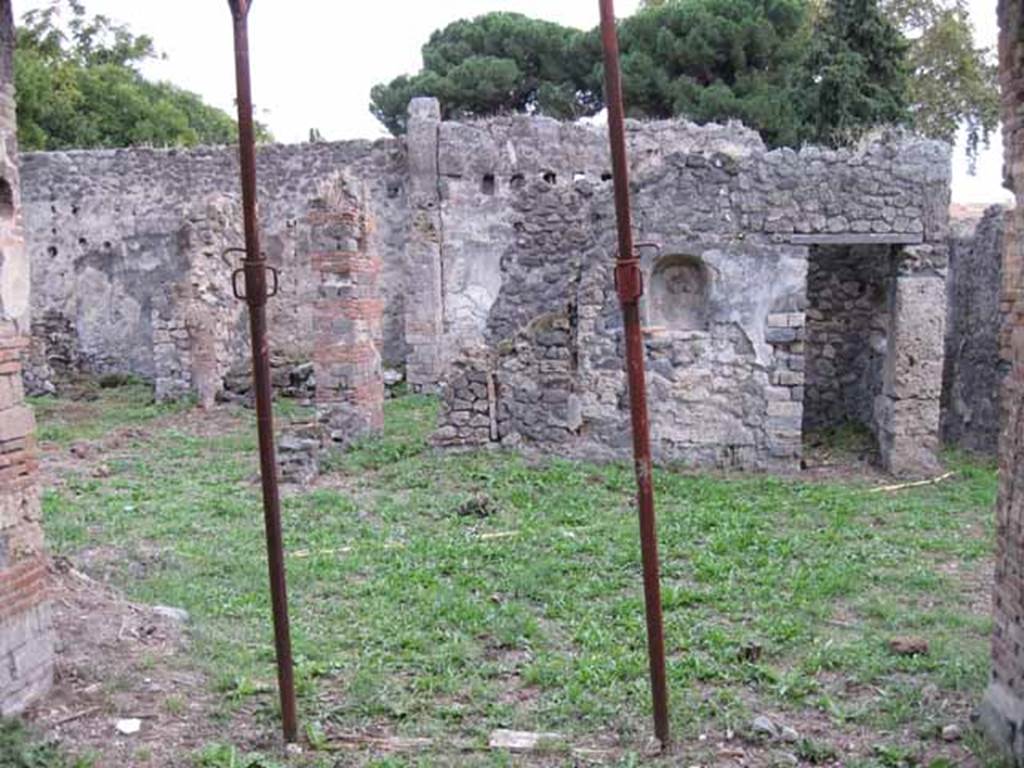
I.2.24 Pompeii. September 2010. North wall of atrium with doorway to large room, looking north. Photo courtesy of Drew Baker.

I.2.24 Pompeii. September 2018. Looking south-west across atrium from large room on north side. Photo courtesy of Aude Durand.

I.2.24 Pompeii. September 2010. Looking south across atrium from large room on north side. Photo courtesy of Drew Baker.

I.2.24 Pompeii. September 2010. South-west corner of large room. Photo courtesy of Drew Baker.

I.2.24 Pompeii. September 2010. East wall of large room. Photo courtesy of Drew Baker.

I.2.24 Pompeii. December 2006. Large room on north side of atrium, with entrance to stairs and dormitory.

I.2.24 Pompeii. September 2010. Doorway in north wall of large room.
Looking north through doorway to corridor and rooms on the north side.
The stairs to the upper floor are through the doorway on the left side. Photo courtesy of Drew Baker.

I.2.24 Pompeii. September 2010.
Remains of stairs to upper floor, immediately to the west through the doorway. Photo courtesy of Drew Baker.

I.2.24 Pompeii. December 2006. Stairs to upper floor.

I.2.24 Pompeii. September 2010.
Looking south through doorway into large room on north side of atrium. Photo courtesy of Drew Baker.

I.2.24 Pompeii. September 2010. Looking west in first room on north side of corridor. Photo courtesy of Drew Baker.

I.2.24 Pompeii. September 2010. North wall of room, showing sleeping/reclining recess feature. Photo courtesy of Drew Baker.

I.2.24 Pompeii. December 2006. North wall of dormitory with recess, and north-west corner.

I.2.24 Pompeii. September 2010.
South wall of room, in south-west corner, showing sleeping/reclining recess feature. Photo courtesy of Drew Baker.

I.2.24 Pompeii. September 2010. East wall, showing doorway to corridor on right.
There is a second doorway on the left (north), leading into another room. Photo courtesy of Drew Baker.

I.2.24 Pompeii. September 2010.
North wall with doorway into second room on north side. Photo courtesy of Drew Baker.

I.2.24 Pompeii. December 2006. North wall of dormitory and doorway to second room on north side.

I.2.24 Pompeii. March 2009. South wall of dormitory with recess. Taken from I.2.20. Looking south.

I.2.24 Pompeii. March 2009. South wall of room on north side of dormitory. Taken from I.2.20. Looking south.

I.2.24 Pompeii. September 2010.
Looking south through doorway into corridor, from second room. Photo courtesy of Drew Baker.

I.2.24 Pompeii. September 2010. West wall of second room. Photo courtesy of Drew Baker.

I.2.24 Pompeii. September 2010. South wall and south-west corner. Photo courtesy of Drew Baker.

I.2.24 Pompeii. September 2010. Marble artefact in south wall. Photo courtesy of Drew Baker.