Pompeii. Porta di Nocera or Nuceria Gate. Excavated c.1803, 1814, 1952.
Part 2 Part 1
Looking south
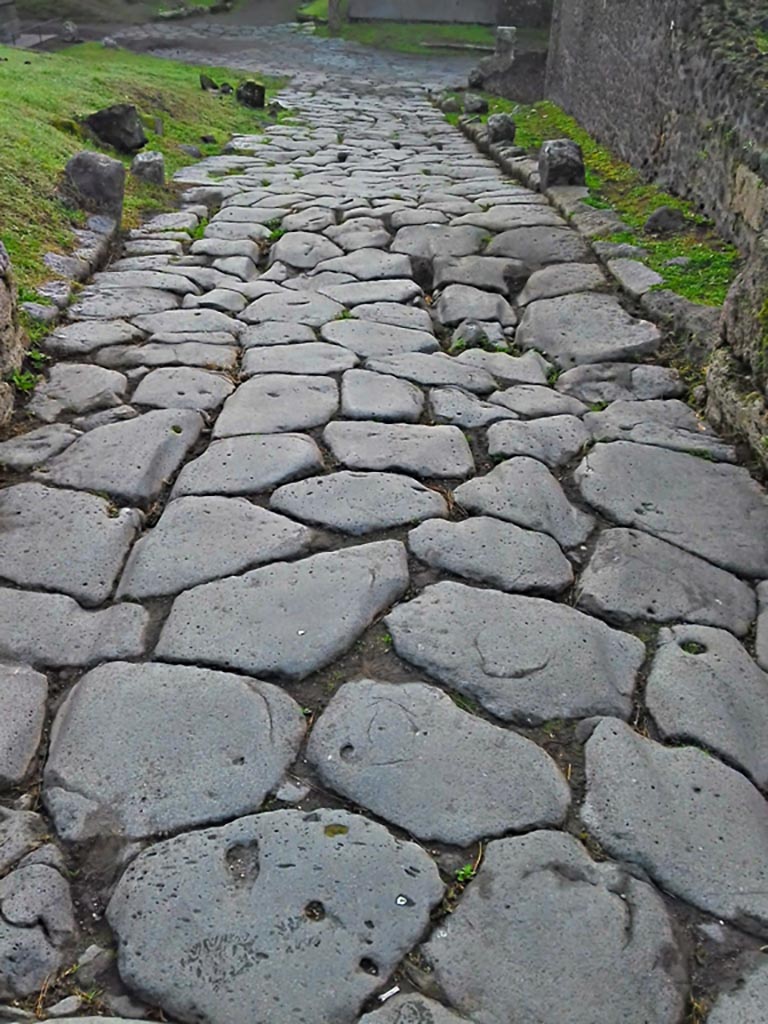
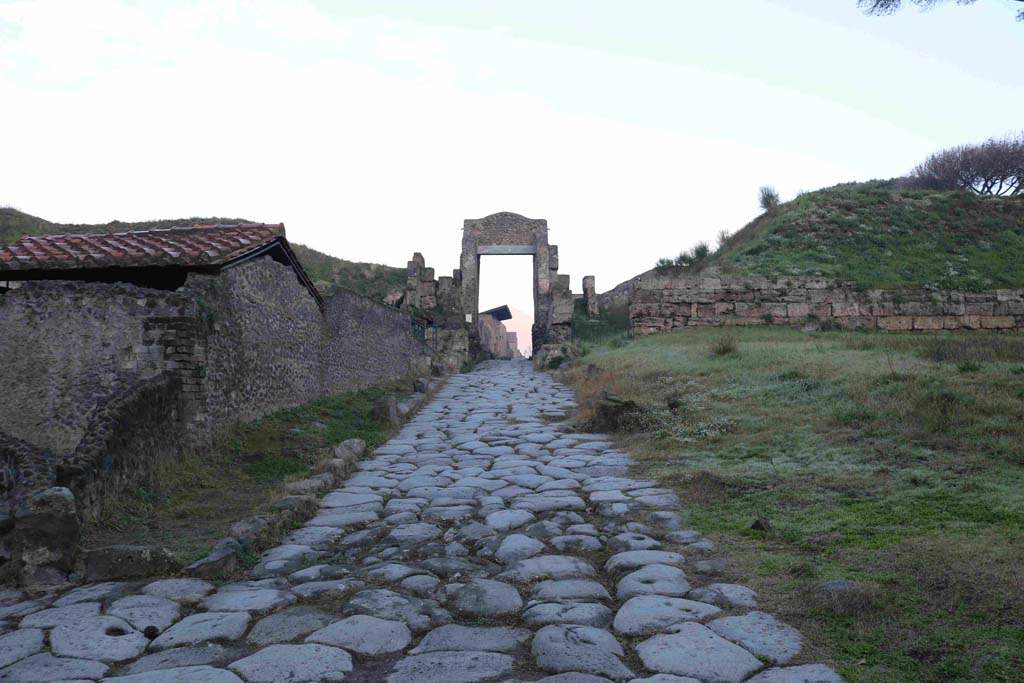
Porta di Nocera, Pompeii. 2017/2018/2019.
Detail of lava stones in roadway, looking
south. Photo courtesy of
Giuseppe Ciaramella.
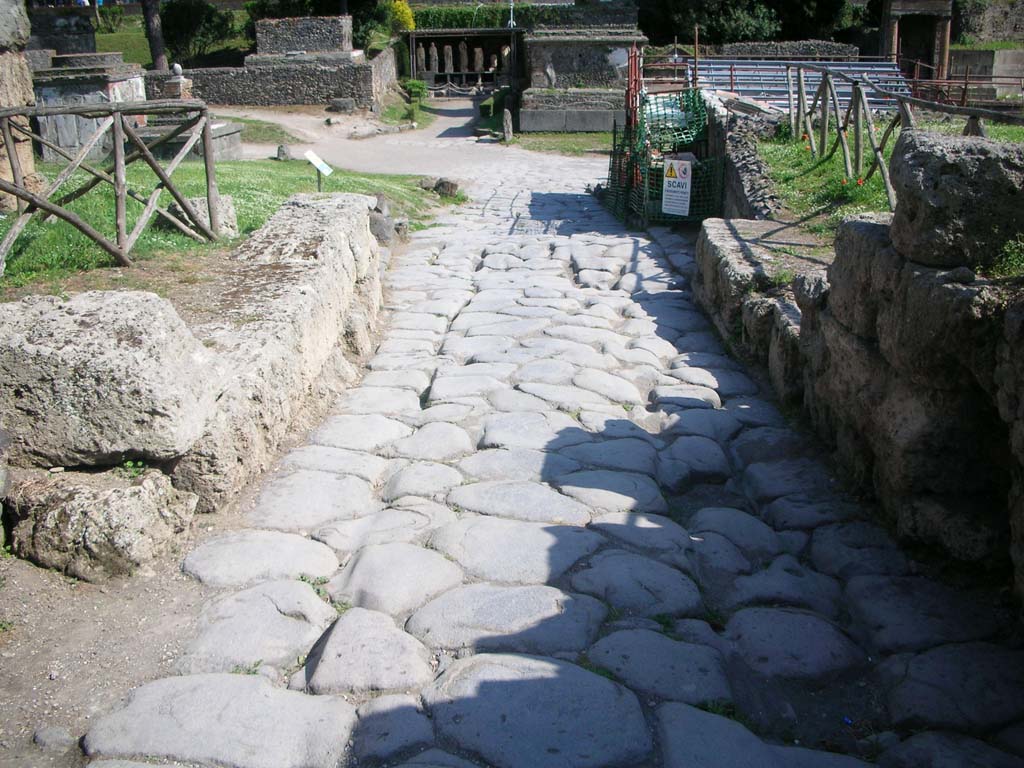
Porta di Nocera or Nuceria Gate, Pompeii. May 2010. Looking south. Photo courtesy of Ivo van der Graaff.
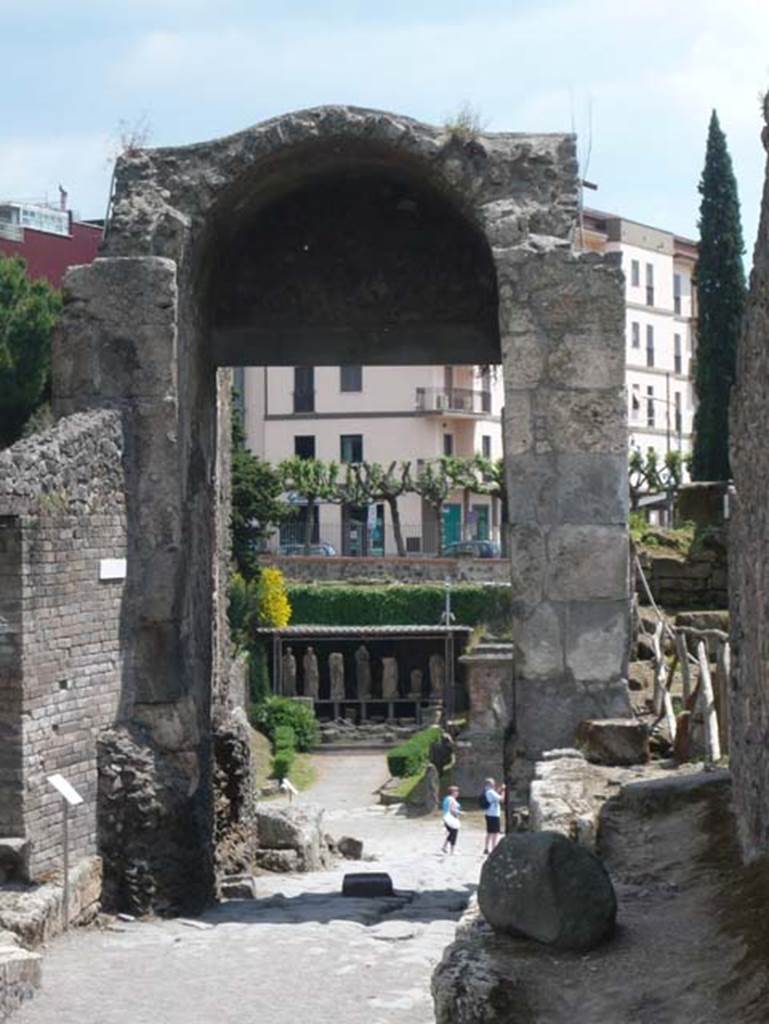
Pompeii Porta Nocera. May 2015. North side of Porta Nocera, looking south. Photo courtesy of Buzz Ferebee.

Pompeii Porta Nocera. October 2024. Looking south along Via di Nocera out through City Gate.
Three gate post mountings can be seen on the ground under the gate and the cart ruts in the road. Photo courtesy of Giuseppe Ciaramella.
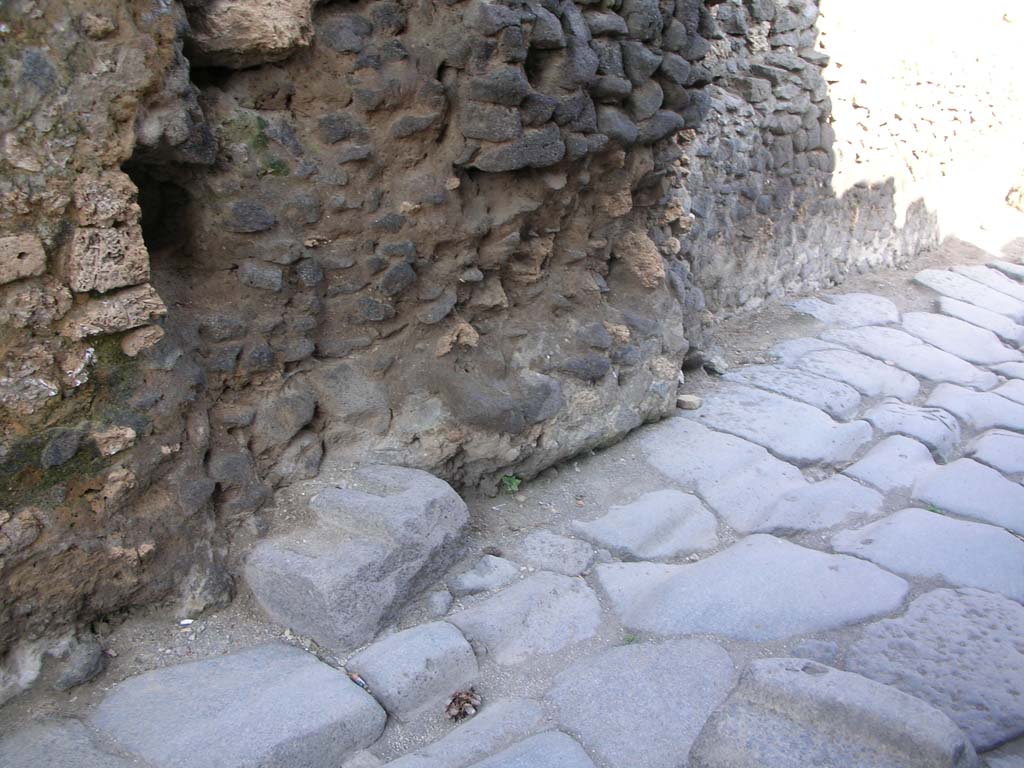
Pompeii Porta di Nocera. May 2015. Looking out to south.
Three gate post mountings can be seen on the ground under the gate and the cart ruts in the road. Photo courtesy of Buzz Ferebee.
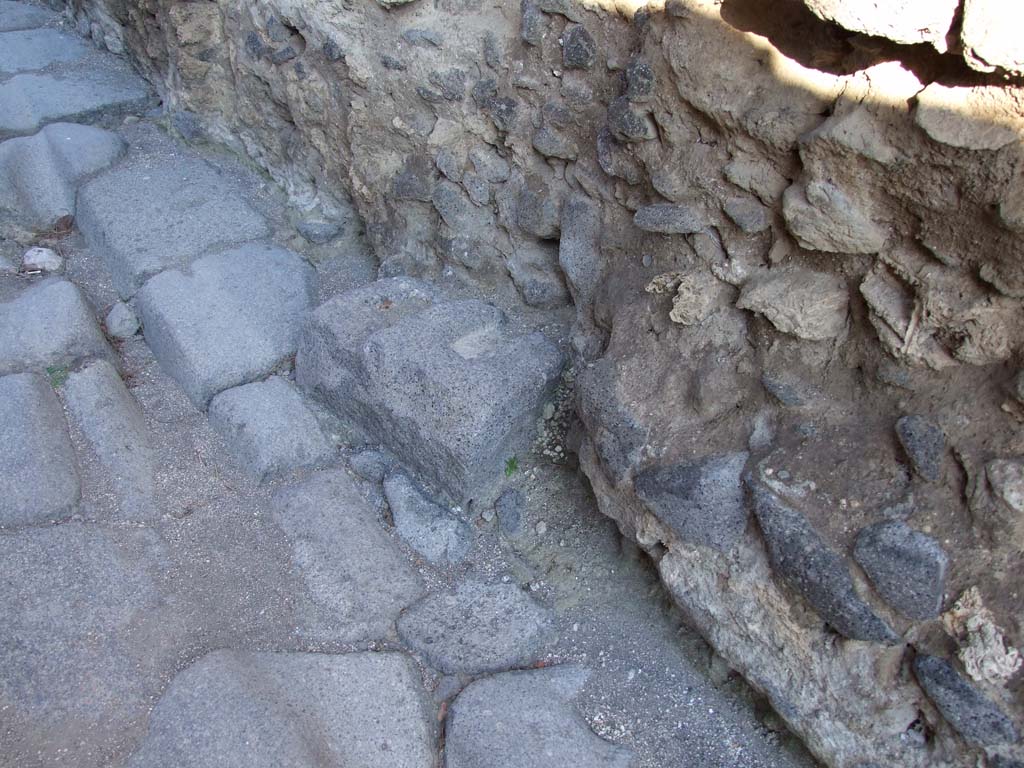
Porta di Nocera or Nuceria Gate, Pompeii. May 2010. Looking south along lower east side of gate. Photo courtesy of Ivo van der Graaff.
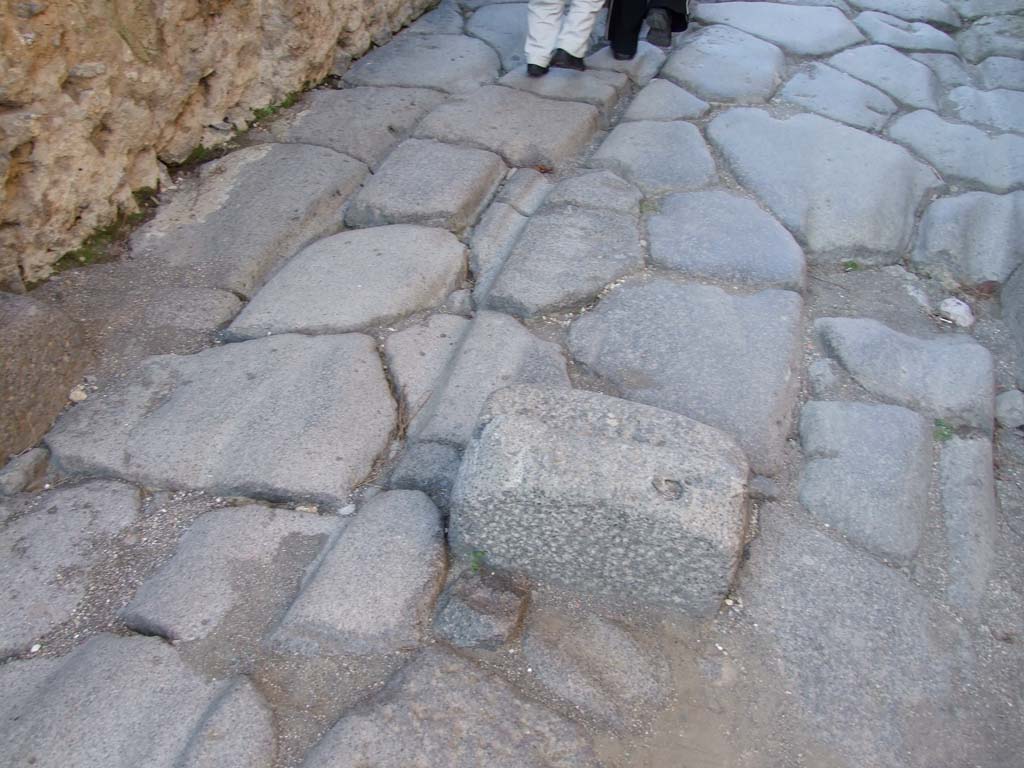
Pompeii Porta di Nocera. December 2006. Gate post mounting, looking north along east side.
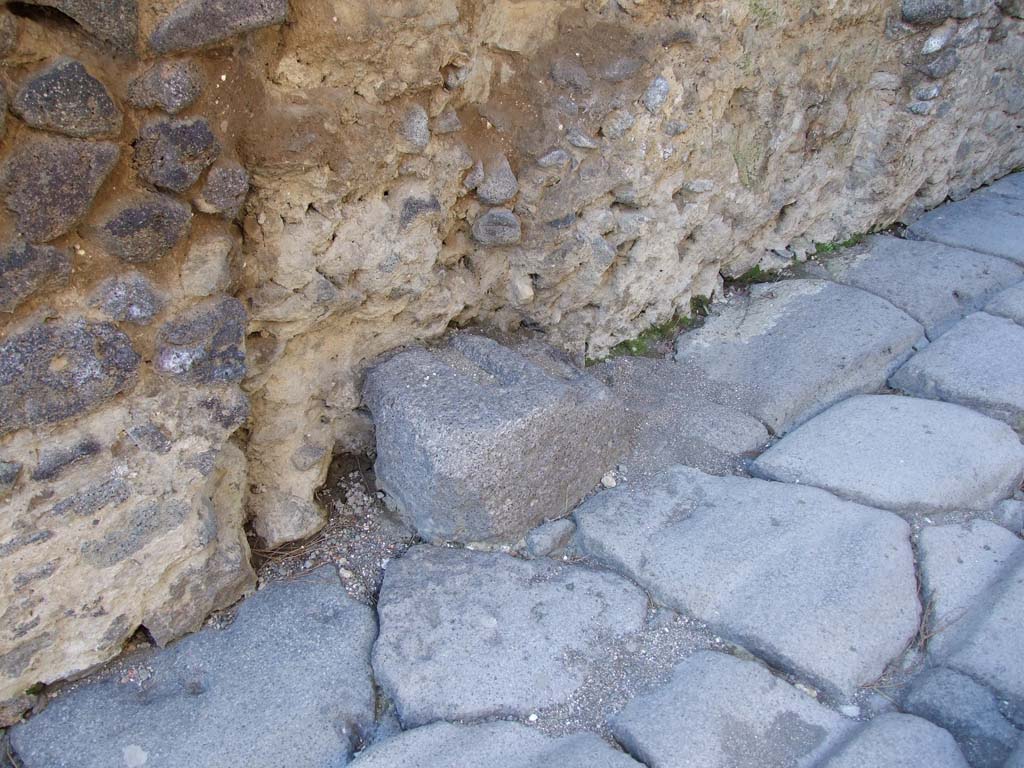
Pompeii Porta di Nocera. December 2006. Gate post mounting in middle of roadway.
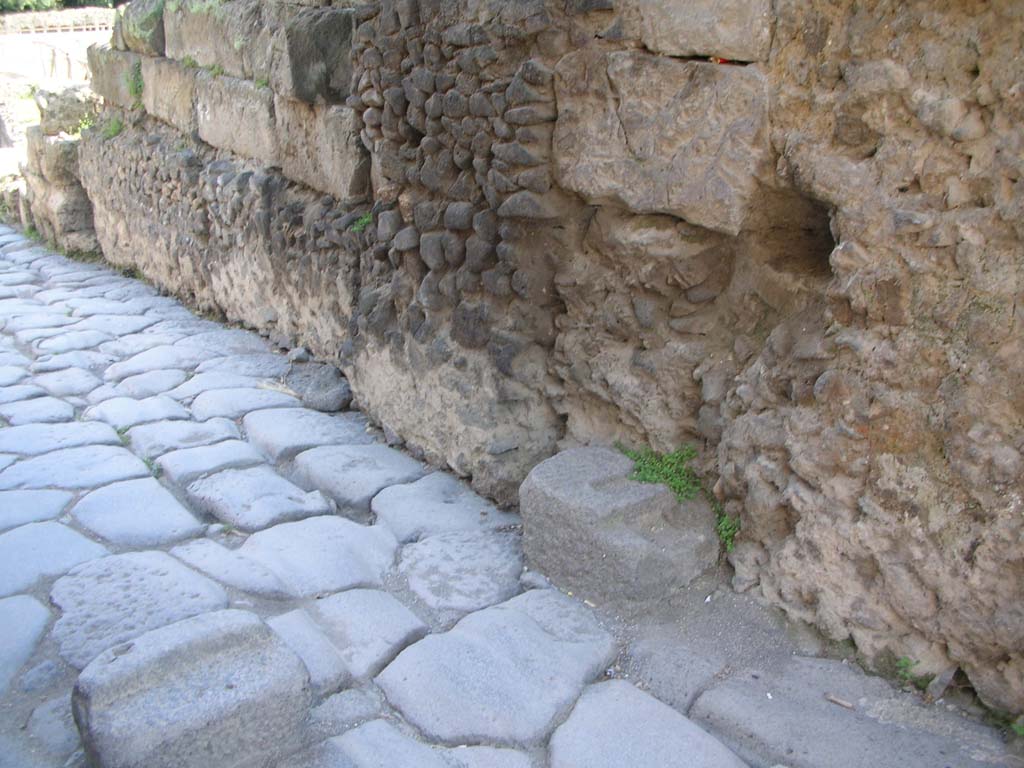
Porta di Nocera or Nuceria Gate, Pompeii. May 2010. Looking south along lower west side. Photo courtesy of Ivo van der Graaff.
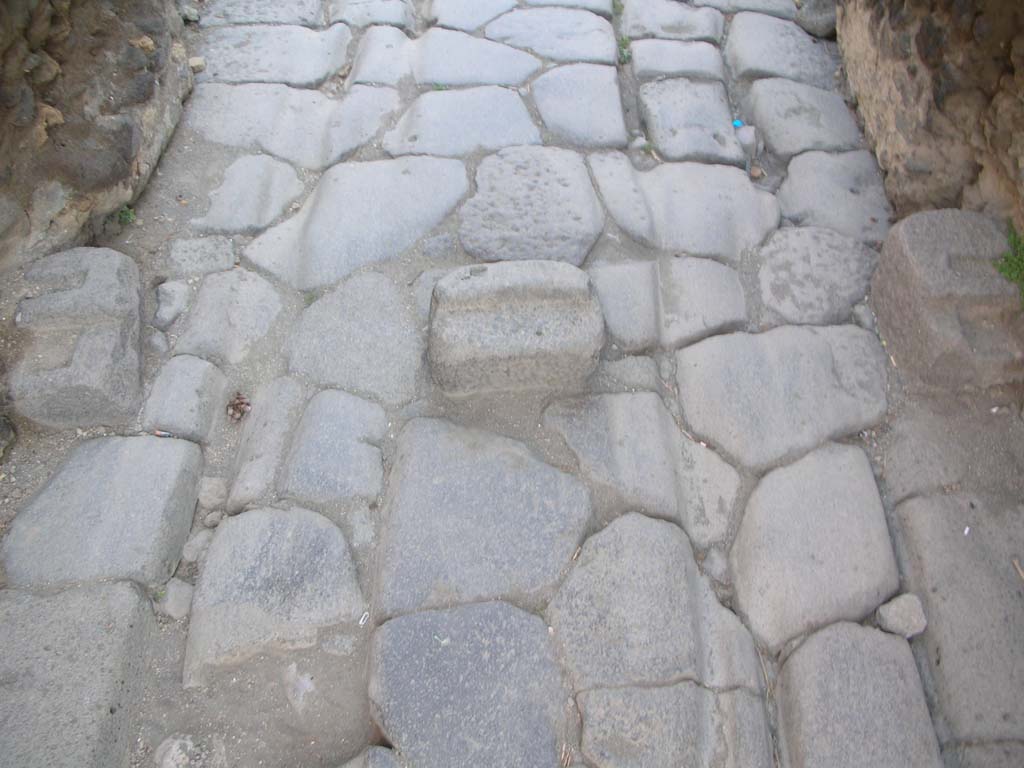
Pompeii Porta di Nocera. December 2006. Gate post mounting, looking north along west side.

Porta di Nocera or Nuceria Gate, Pompeii. May 2010. Looking south along roadway. Photo courtesy of Ivo van der Graaff.
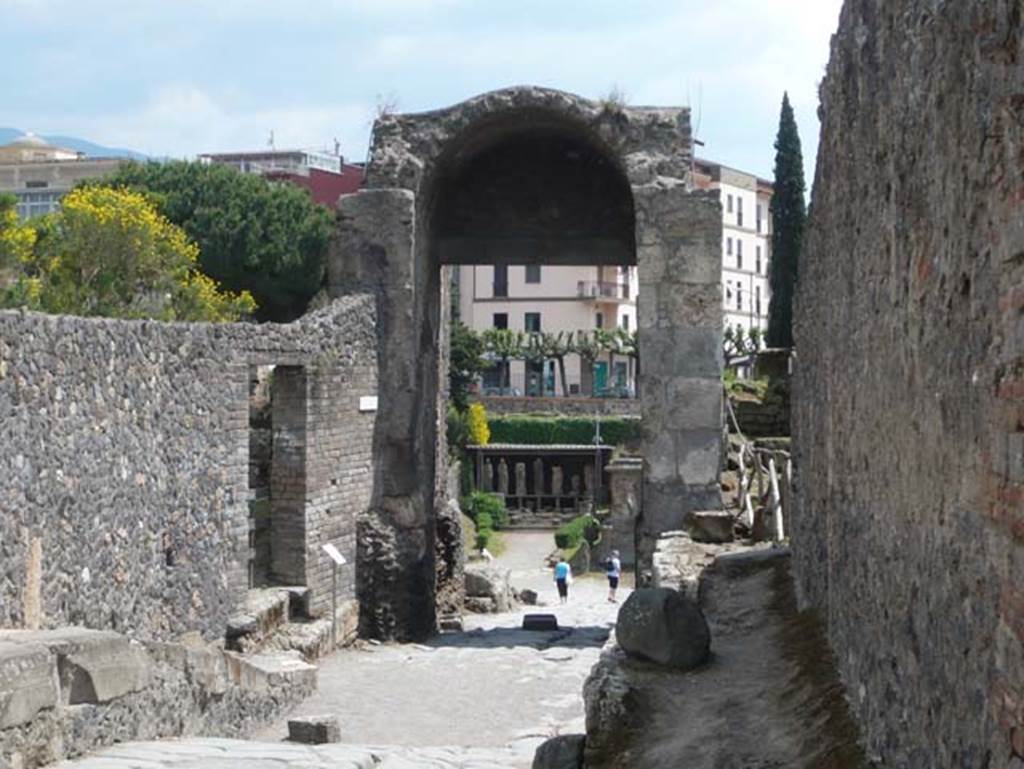
Porta di Nocera or Nuceria Gate, Pompeii. October
2023. Looking east towards north end of Gate. Photo courtesy of Klaus Heese.
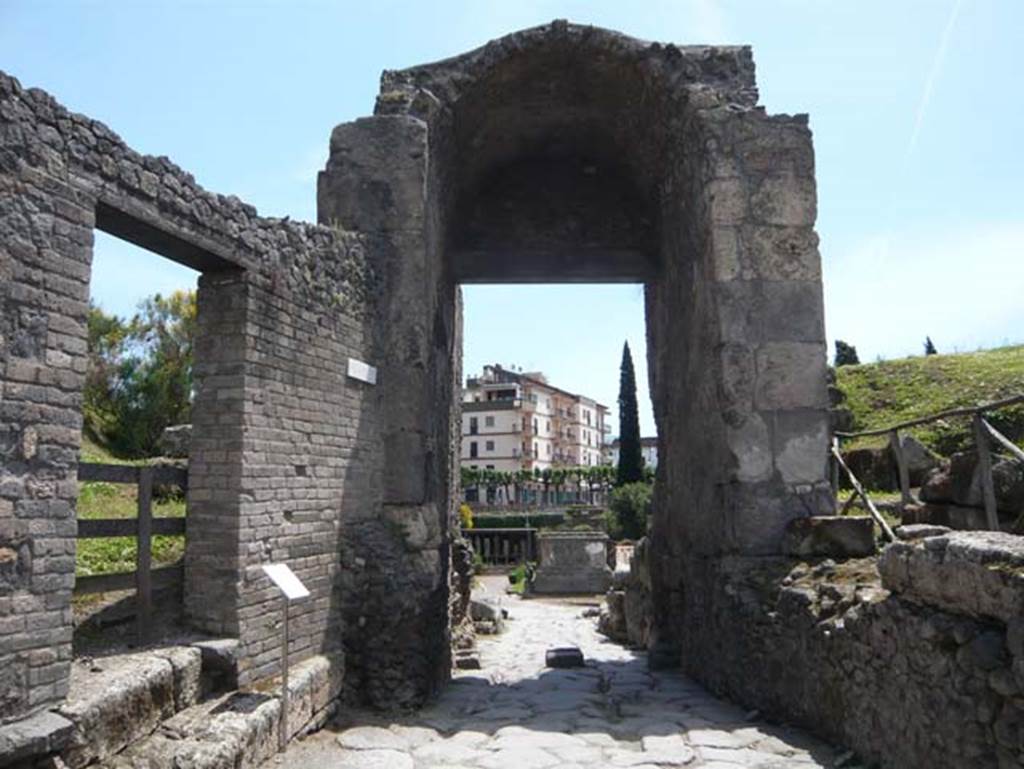
Pompeii Porta Nocera. May 2015. North side of Porta Nocera. Photo courtesy of Buzz Ferebee.
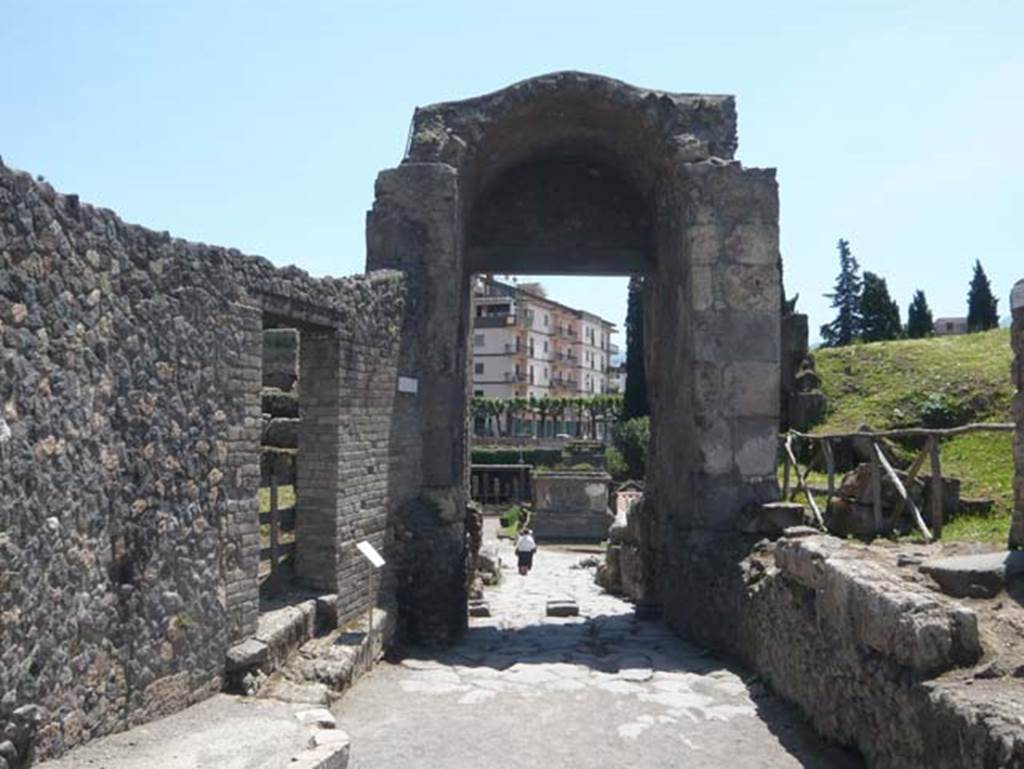
Pompeii Porta Nocera. May 2015. Looking south through Porta Nocera to Via delle Tombe. Photo courtesy of Buzz Ferebee.
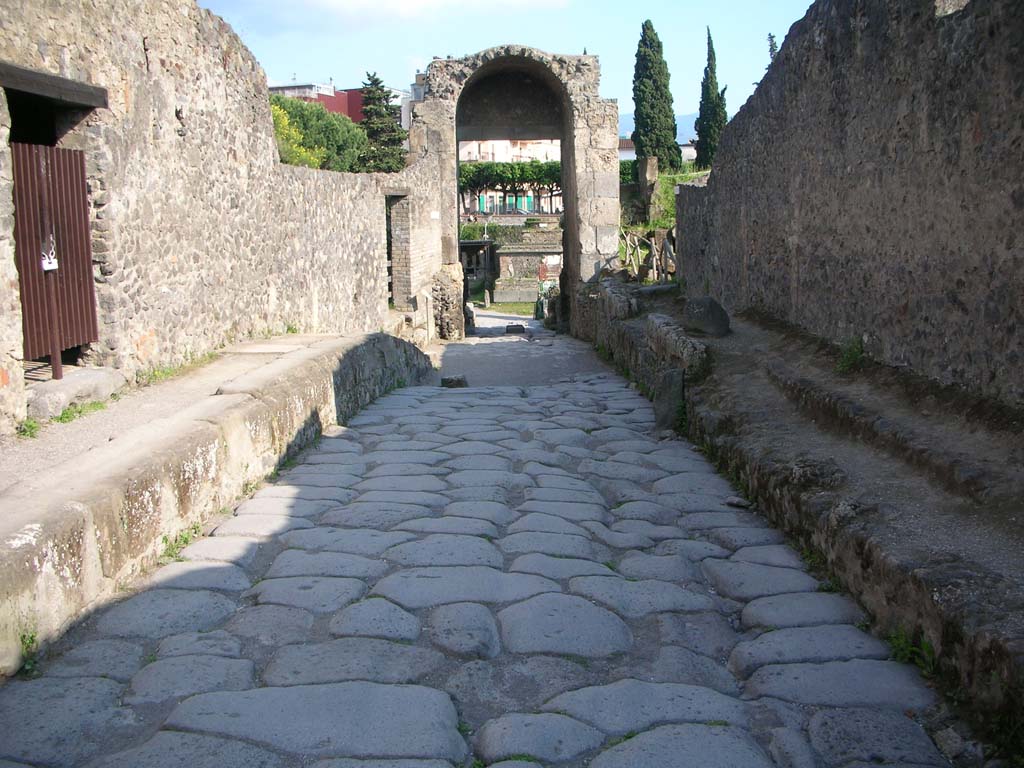
Pompeii Porta Nocera. May 2012. Looking south through Porta Nocera to Via delle Tombe. Photo courtesy of Buzz Ferebee.
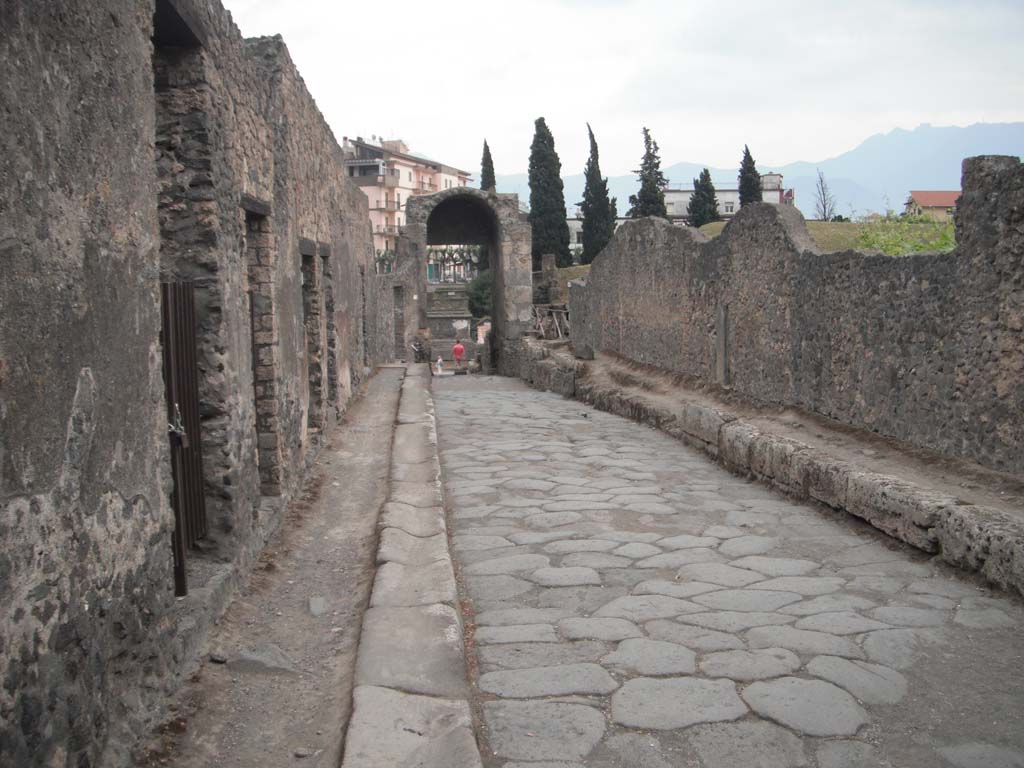
Pompeii Porta di Nocera. December 2004. From the inside looking south.
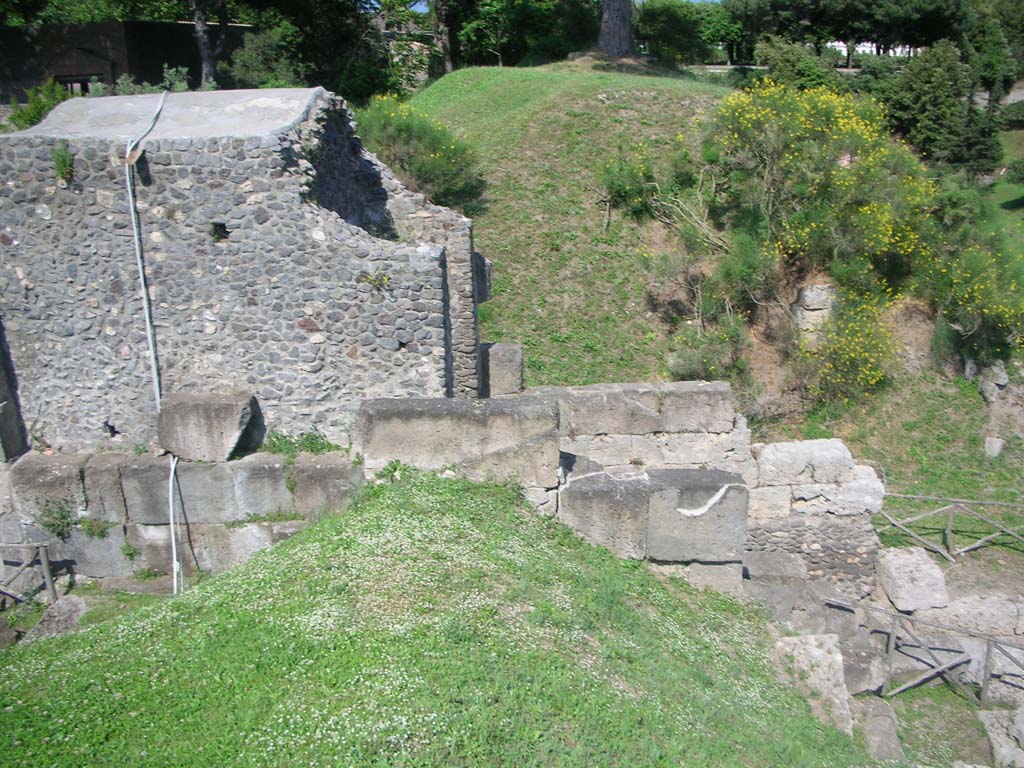
Porta di Nocera or Nuceria Gate, Pompeii. May 2010.
Looking south on Via di Nocera towards gate. Photo courtesy of Ivo van der Graaff.
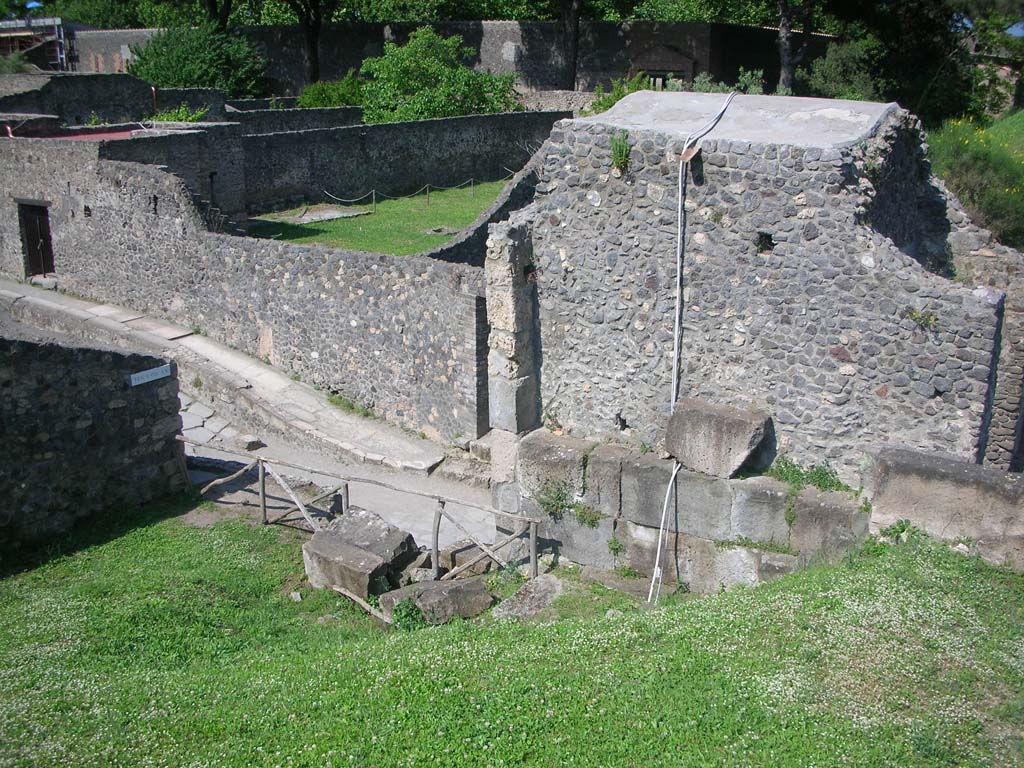
Porta di Nocera or Nuceria Gate, Pompeii. May 2011. Looking south to gate on Via di Nocera. Photo courtesy of Ivo van der Graaff.
Exterior of gate, west and east sides
West exterior side of gate.
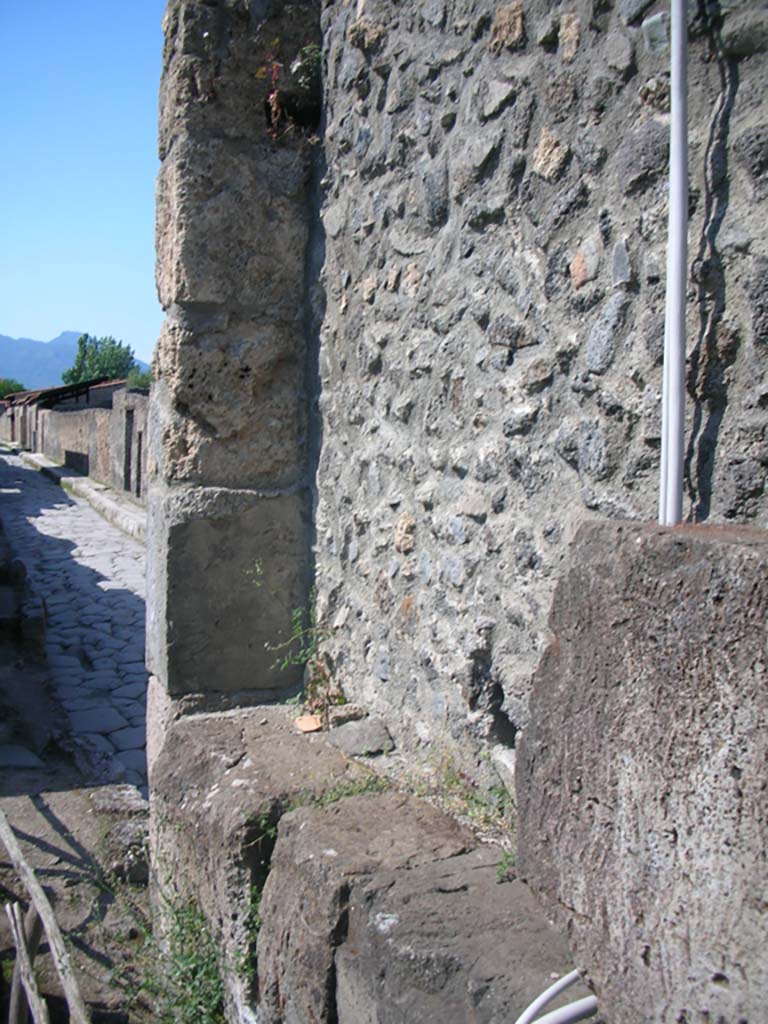
Porta di Nocera or Nuceria Gate, Pompeii. May 2010.
Looking east from west exterior of gate at south end from agger. Photo courtesy of Ivo van der Graaff.
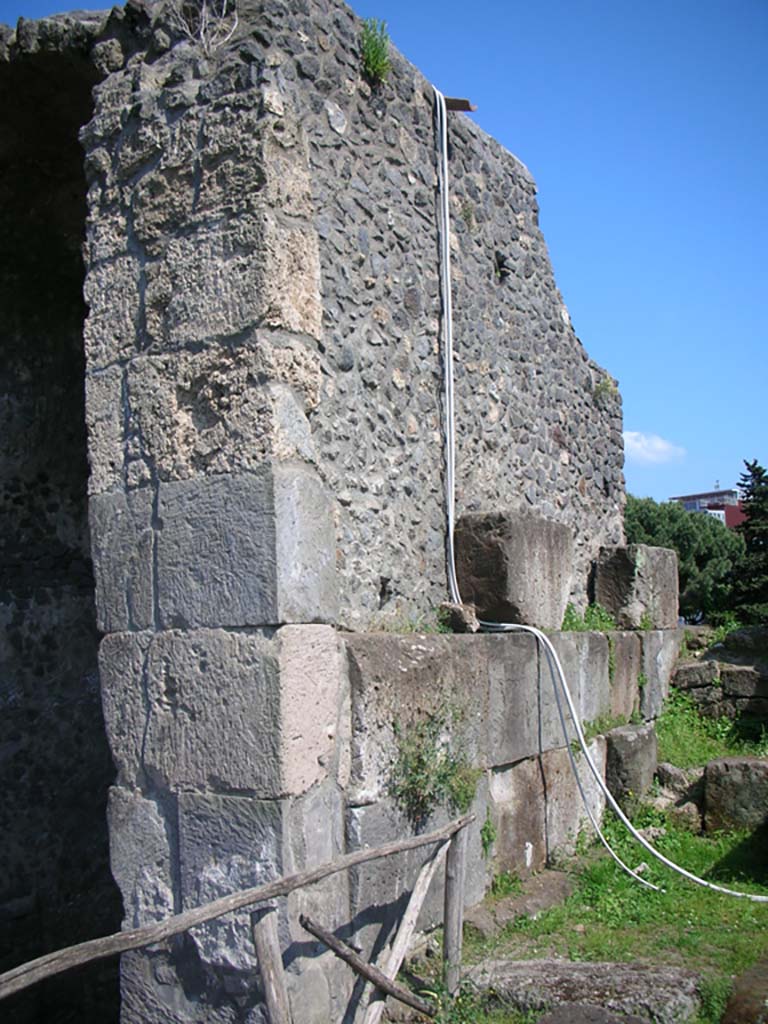
Porta di Nocera or Nuceria Gate, Pompeii. May 2010.
Looking east from west exterior of gate at north end. Photo courtesy of Ivo van der Graaff.
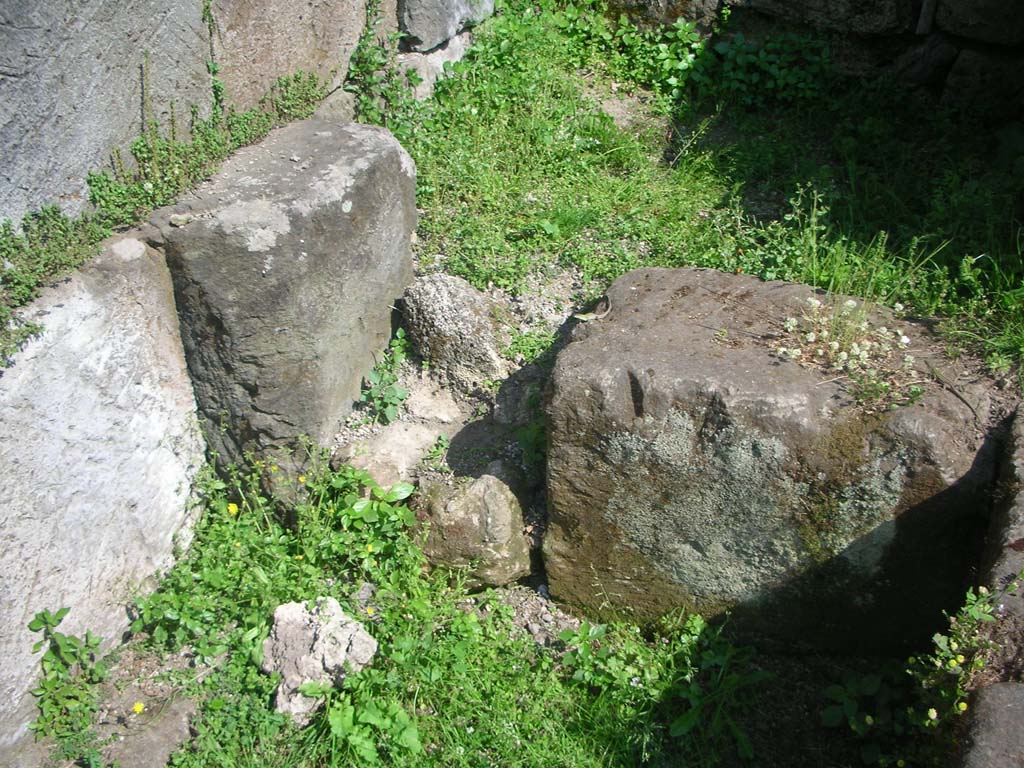
Porta di Nocera or Nuceria Gate, Pompeii. May 2010.
Looking north along west exterior wall of gate. Photo courtesy of Ivo van der Graaff.
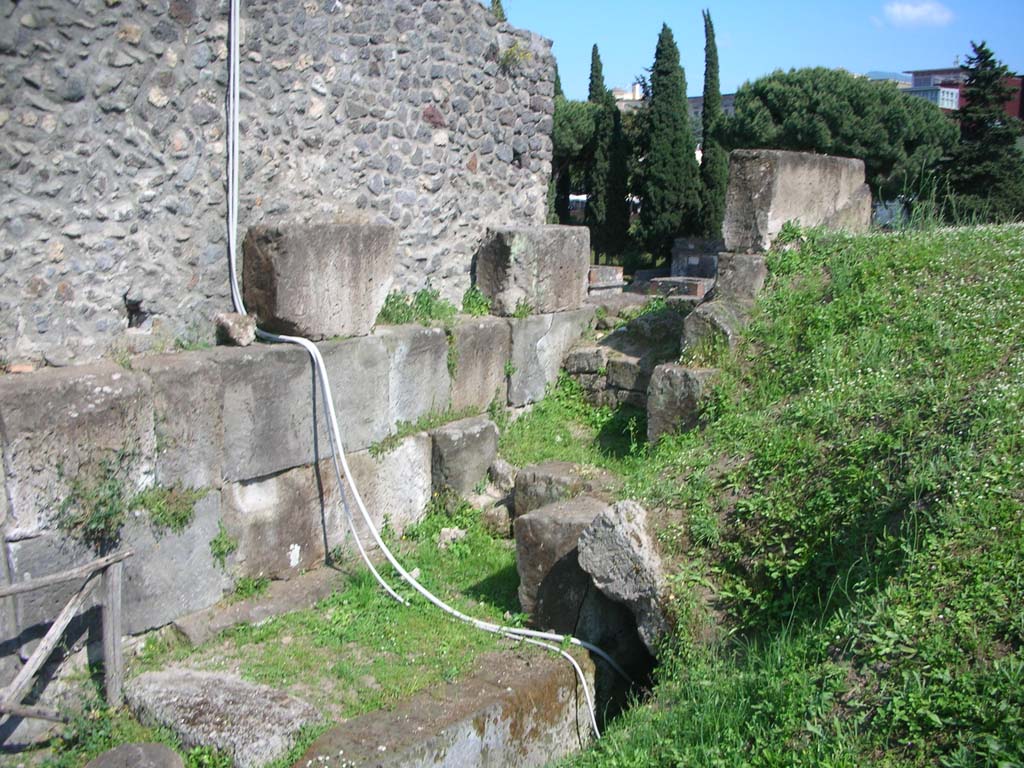
Porta di Nocera or Nuceria Gate, Pompeii. May 2010.
West exterior wall of gate. Photo courtesy of Ivo van der Graaff.
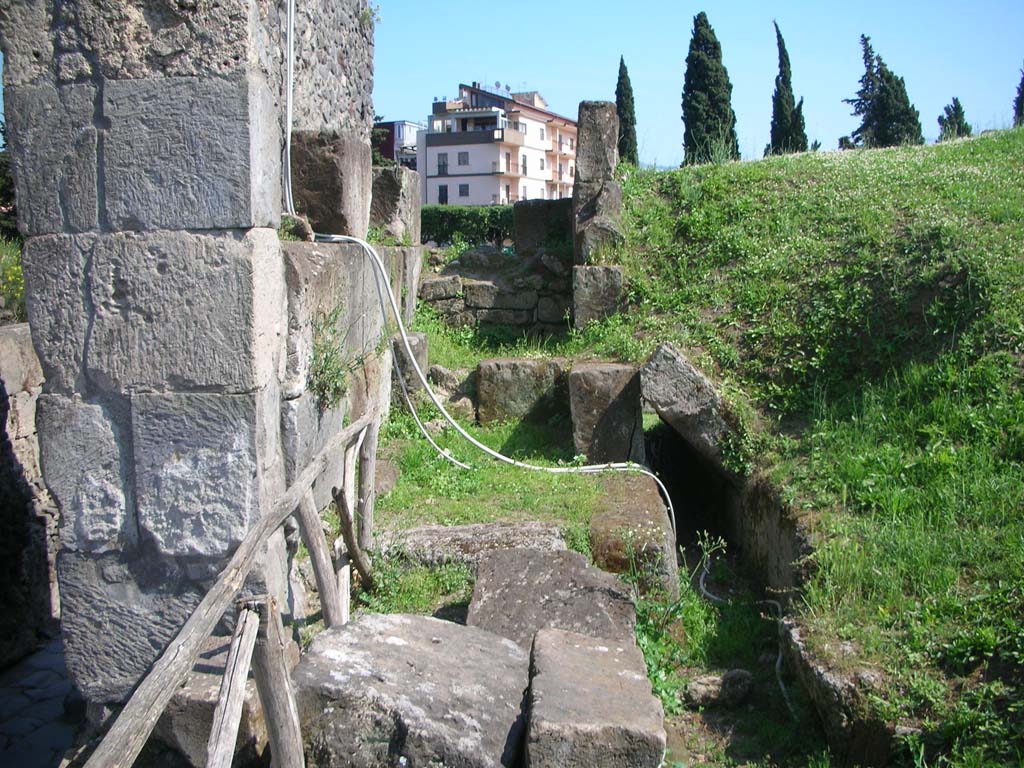
Porta di Nocera or Nuceria Gate, Pompeii. May 2010. Stone on west side of gate. Photo courtesy of Ivo van der Graaff.
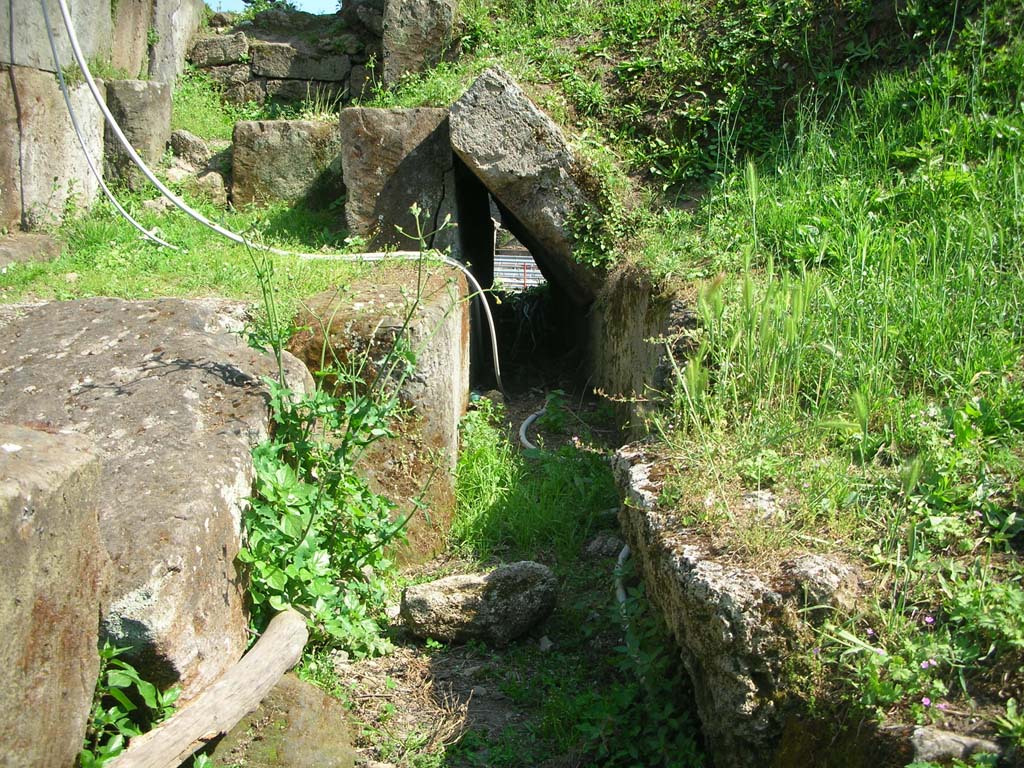
Porta di Nocera or Nuceria Gate, Pompeii. May 2010.
Looking south along west exterior wall, and site of drain, lower centre. Photo courtesy of Ivo van der Graaff.
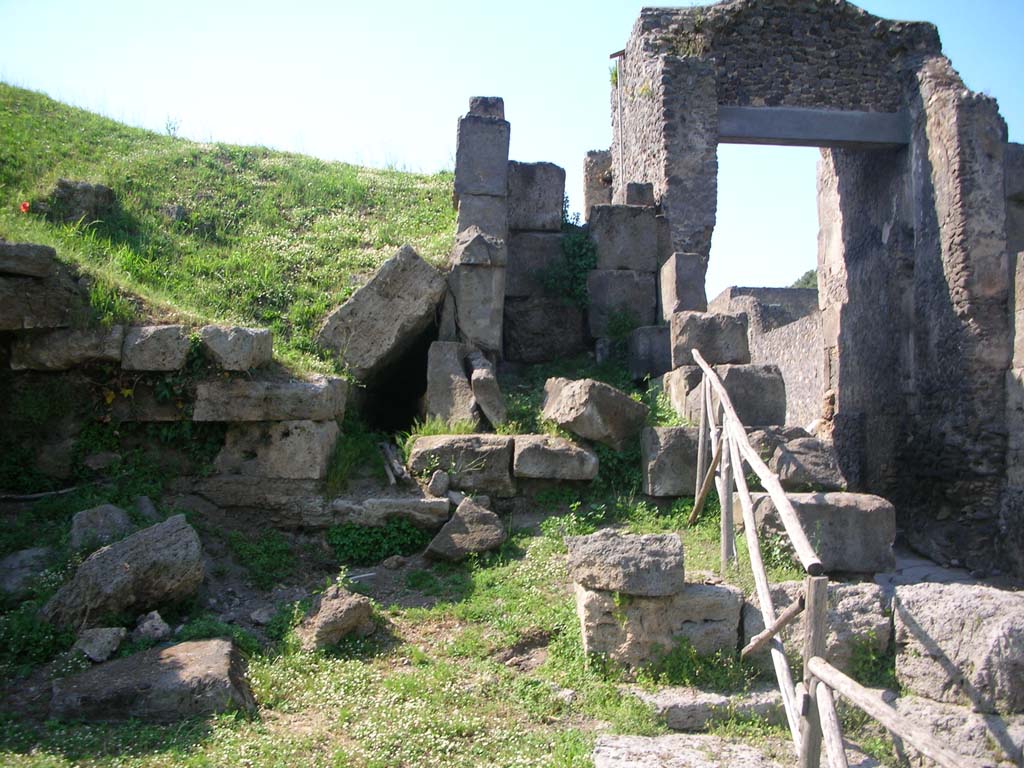
Porta di Nocera or Nuceria Gate, Pompeii. May 2010.
Looking south along west exterior wall and course of drain. Photo courtesy of Ivo van der Graaff.
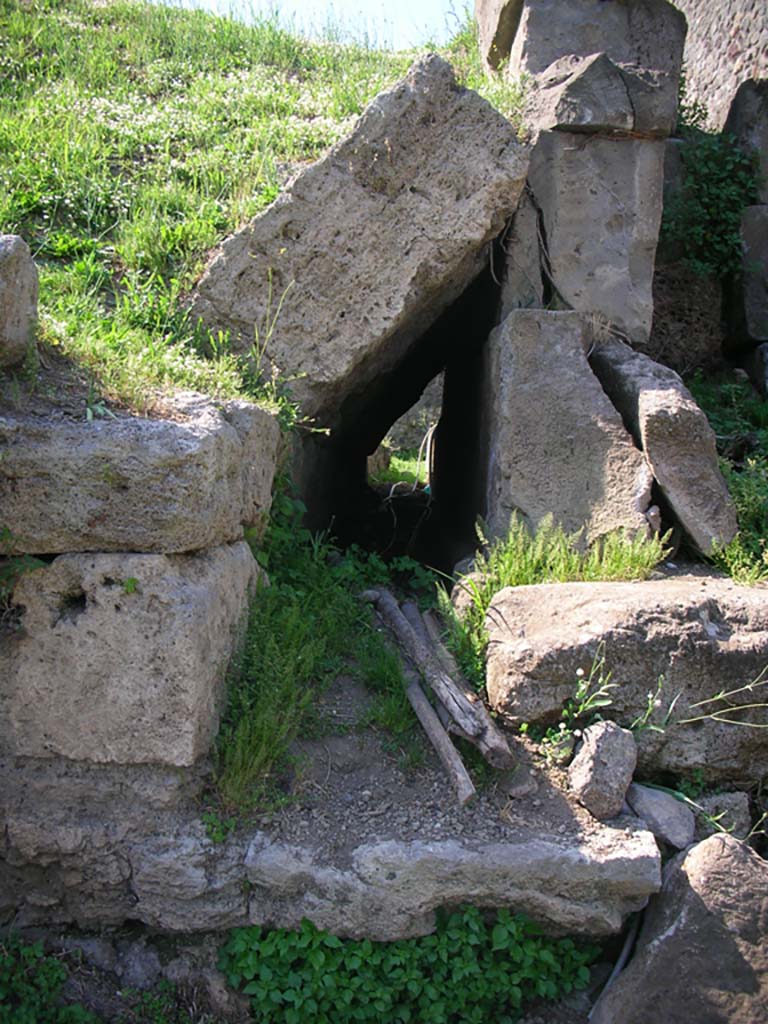
Porta di Nocera or Nuceria Gate, Pompeii. May 2010.
Looking south along course of drain on west exterior side of gate. Photo courtesy of Ivo van der Graaff.
According to Van der Graaff –
“The drains are less conspicuous and a practical necessity.
Even today, the characteristic sudden downpours of the region can turn the streets into small torrents draining water from much of the city.
Each gate on the downslope side of Pompeii was a natural drain because they tend to be on the topographical depressions that formed the easiest access routes into the city. Rather than having the water pass through the gates, authorities eventually built formal drains through the agger.
At Porta Stabia, Nocera and Sarno, engineers would modify basalt street pavers to direct runoff waste into the sewers passing next to the gate to keep the passageways free of wastewater (Note 110). …………………….
Most gates indicate that drainage concerns were already current in the late second century BCE, if not earlier.
The Porta Nocera preserves a drain on its western flank.
Due to its relative height, it clearly predates the lowering of the road passing through it – an event that occurred in the Augustan period.
The drain remained in use as engineers altered the flagstones in the road to channel the water into the sidewalk farther uphill (Note 115).”
See Van der Graaff, I. (2018). The Fortifications of Pompeii and Ancient Italy. Routledge, (p.103-104, Notes 110 and 115).
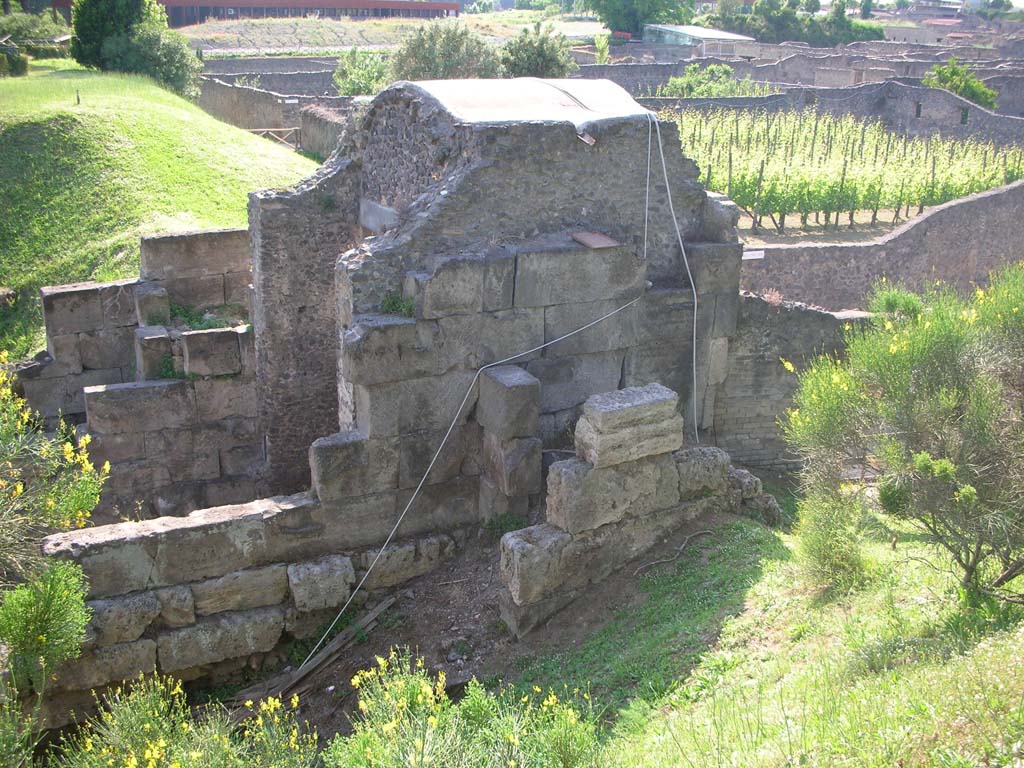
Porta di Nocera or Nuceria Gate, Pompeii. May 2010.
Looking north on west side of gate, towards site of outlet of drain, centre left. Photo courtesy of Ivo van der Graaff.
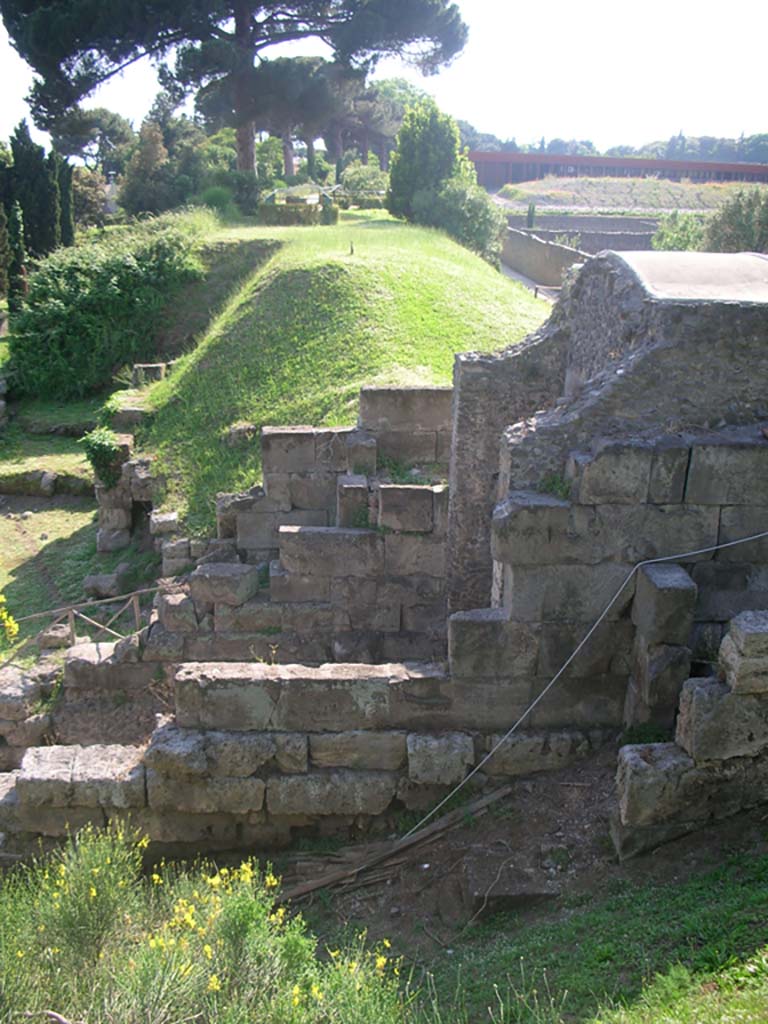
Porta di Nocera or Nuceria Gate, Pompeii. May 2010.
Looking north along course of drain, from south end on west side of gate. Photo courtesy of Ivo van der Graaff.
East exterior side of gate.
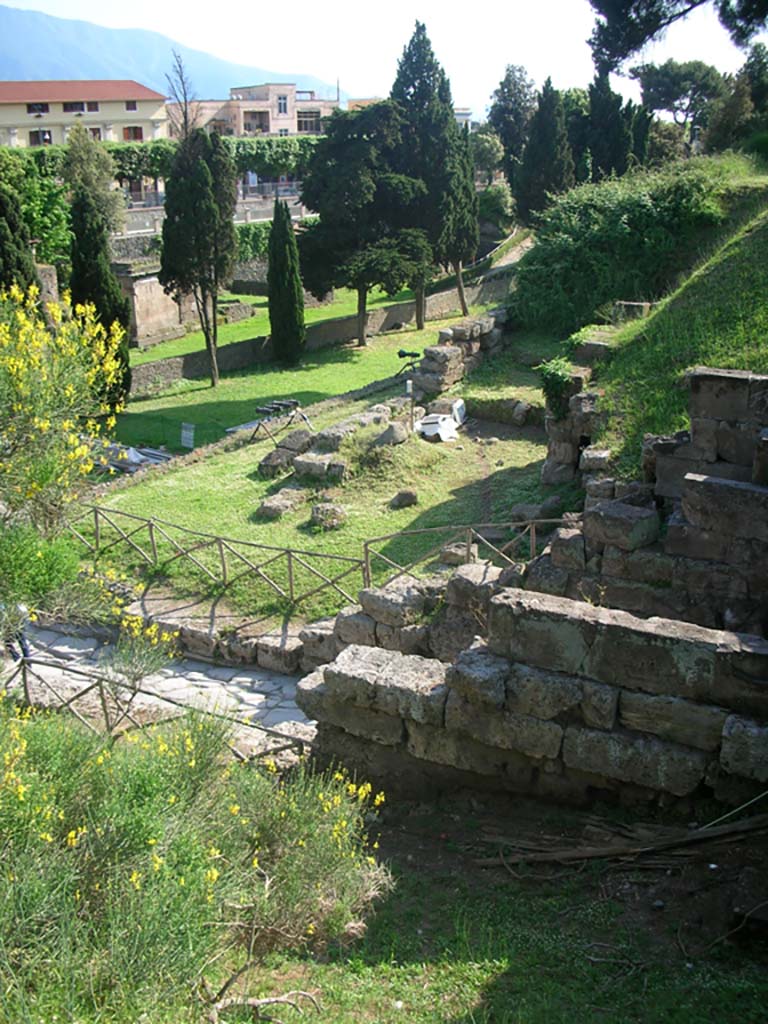
Porta di Nocera or Nuceria Gate, Pompeii. May 2010.
Looking west towards exterior east side of gate. Photo courtesy of Ivo van der Graaff.
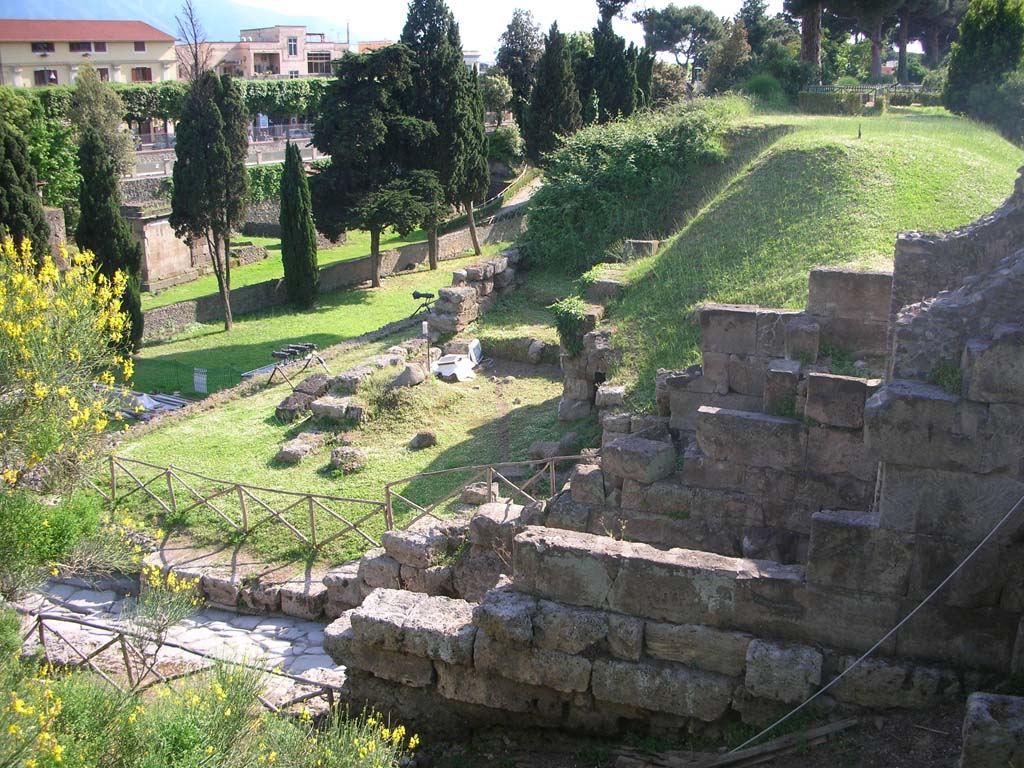
Porta di Nocera or Nuceria Gate, Pompeii. May 2010.
Looking west at south end of exterior east side of gate. Photo courtesy of Ivo van der Graaff.
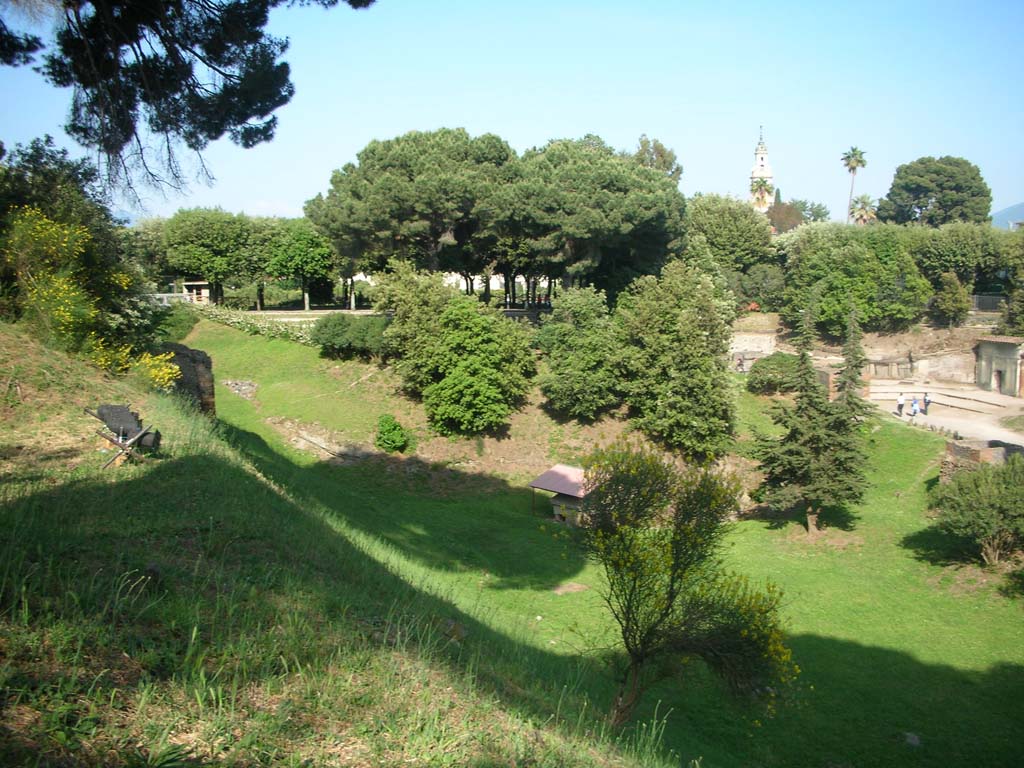
Porta di Nocera or Nuceria Gate, Pompeii. May 2010.
Looking south-west from exterior east side of gate. Photo courtesy of Ivo van der Graaff.
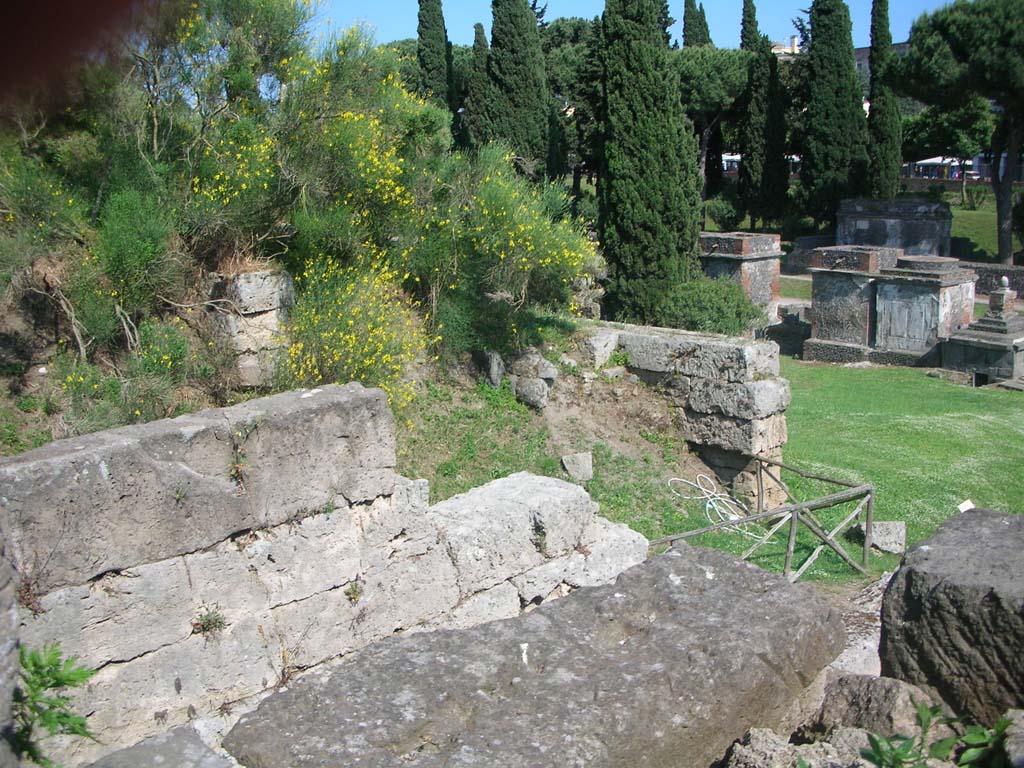
Porta di Nocera or Nuceria Gate, Pompeii. May 2010.
Looking west towards Nocera Gate, on right, across agger towards city wall on south-west side of Gate. Photo courtesy of Ivo van der Graaff.
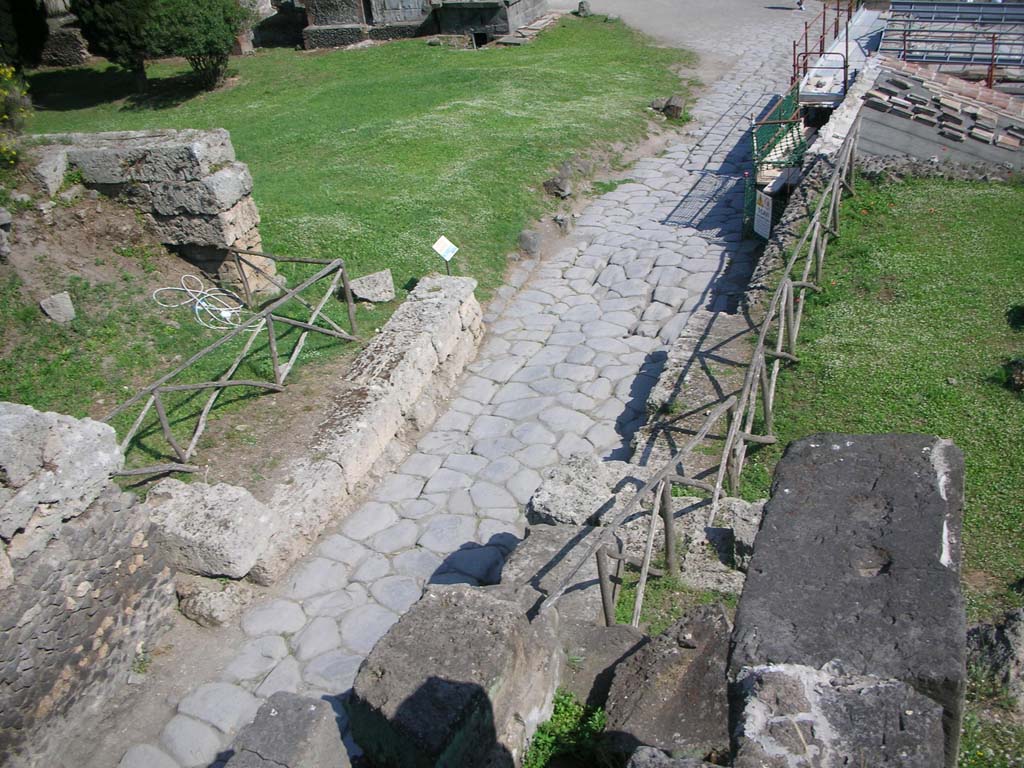
Porta di Nocera or Nuceria Gate, Pompeii. May 2010.
Looking south-east from exterior east side of gate. Photo courtesy of Ivo van der Graaff.
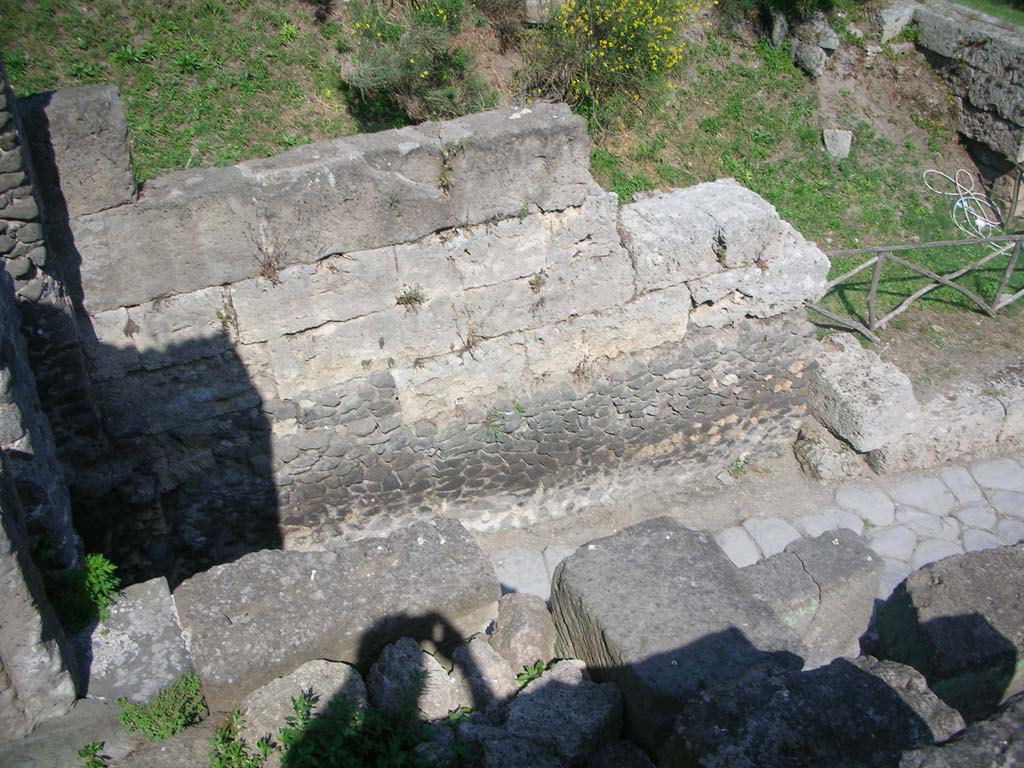
Porta di Nocera or Nuceria Gate, Pompeii. May 2011.
Looking south-east towards east side of gate, with city wall, in centre. Photo courtesy of Ivo van der Graaff.
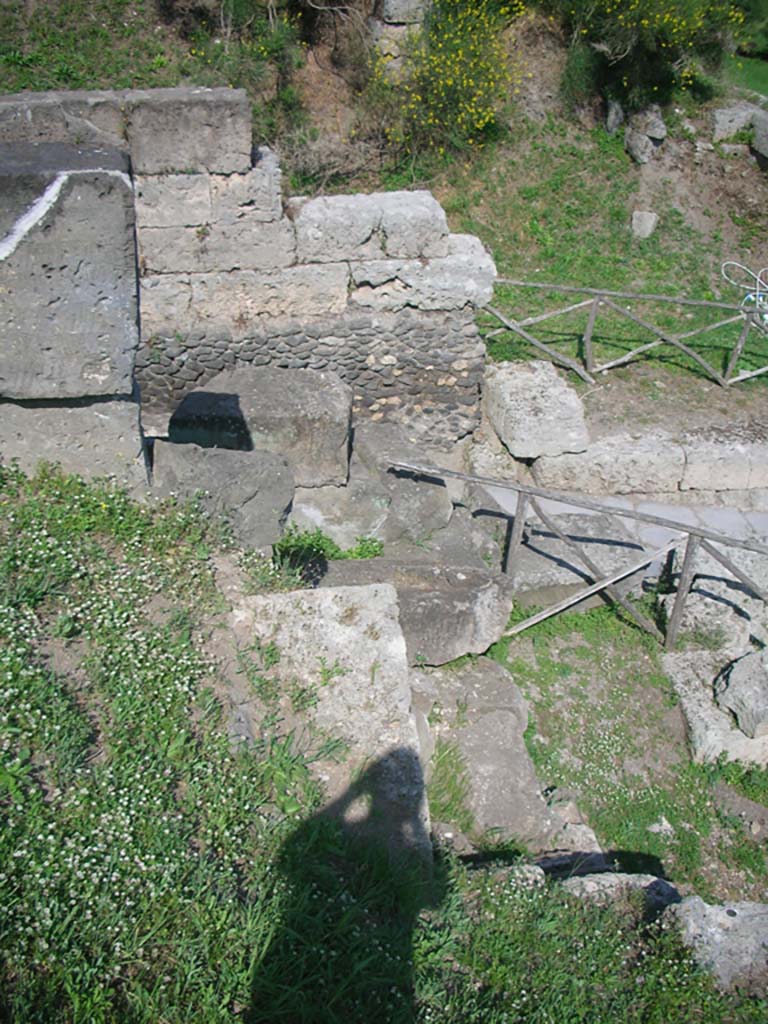
Porta di Nocera or Nuceria Gate, Pompeii. May 2010.
Looking south-east from upper west side, across site of city wall and gate on Via di Nocera. Photo courtesy of Ivo van der Graaff.
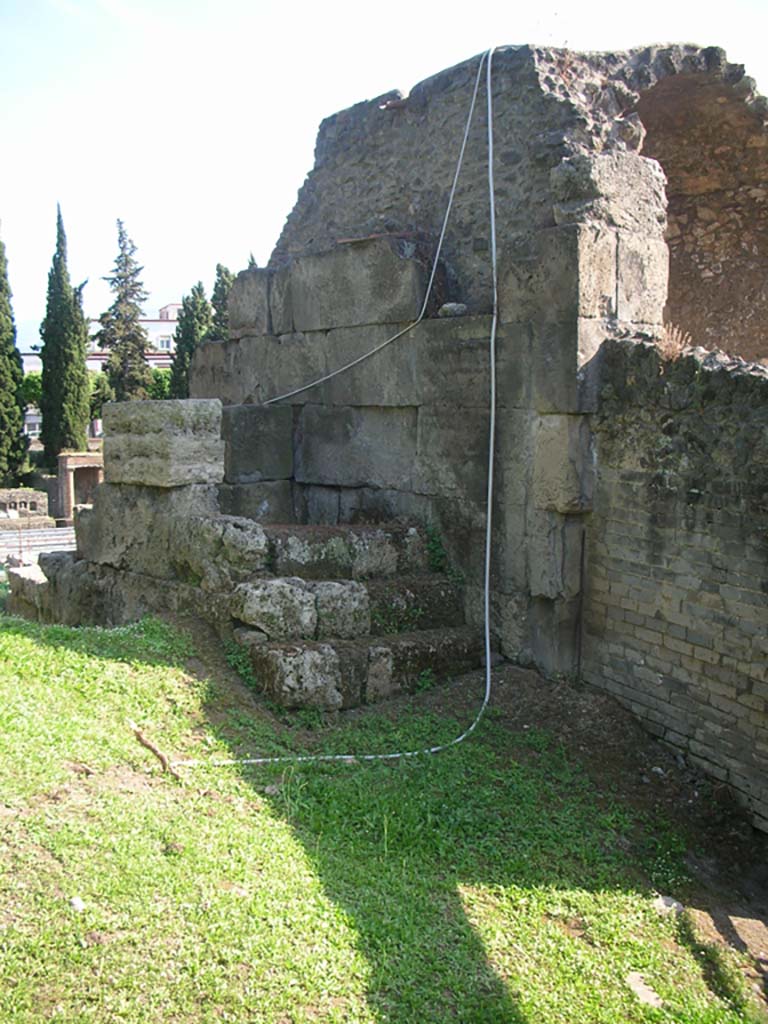
Porta di Nocera or Nuceria Gate, Pompeii. May 2010. East side of gate, from upper west side. Photo courtesy of Ivo van der Graaff.
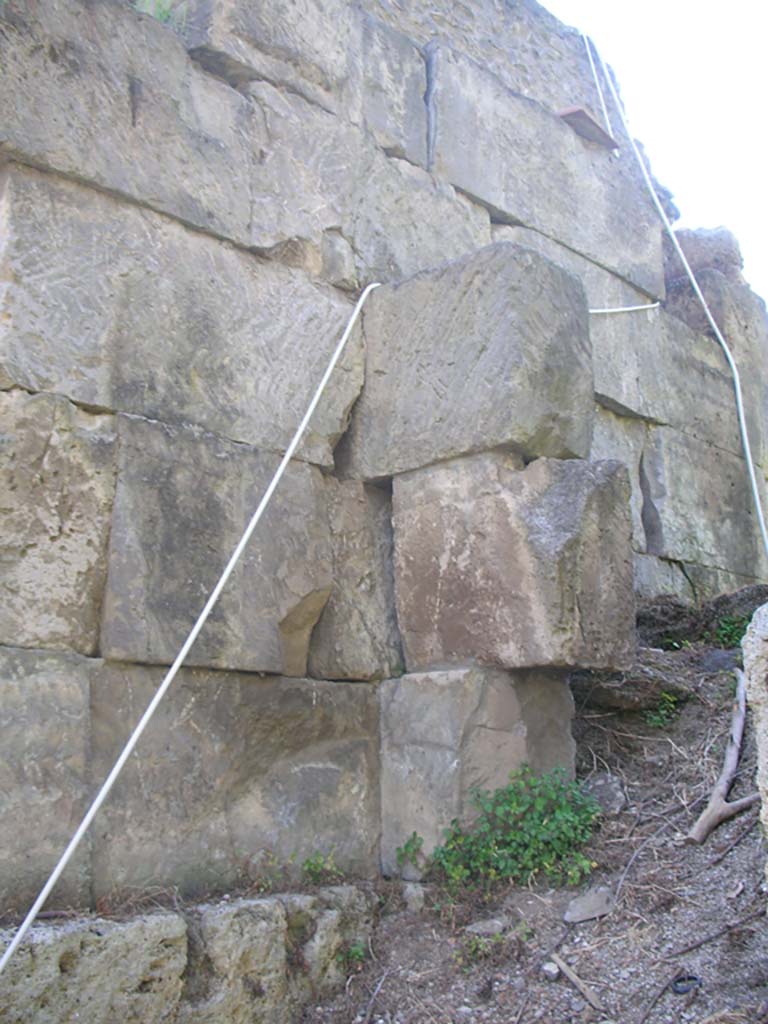
Porta di Nocera or Nuceria Gate, Pompeii. May 2010.
East side of gate, from west side. Photo courtesy of Ivo van der Graaff.
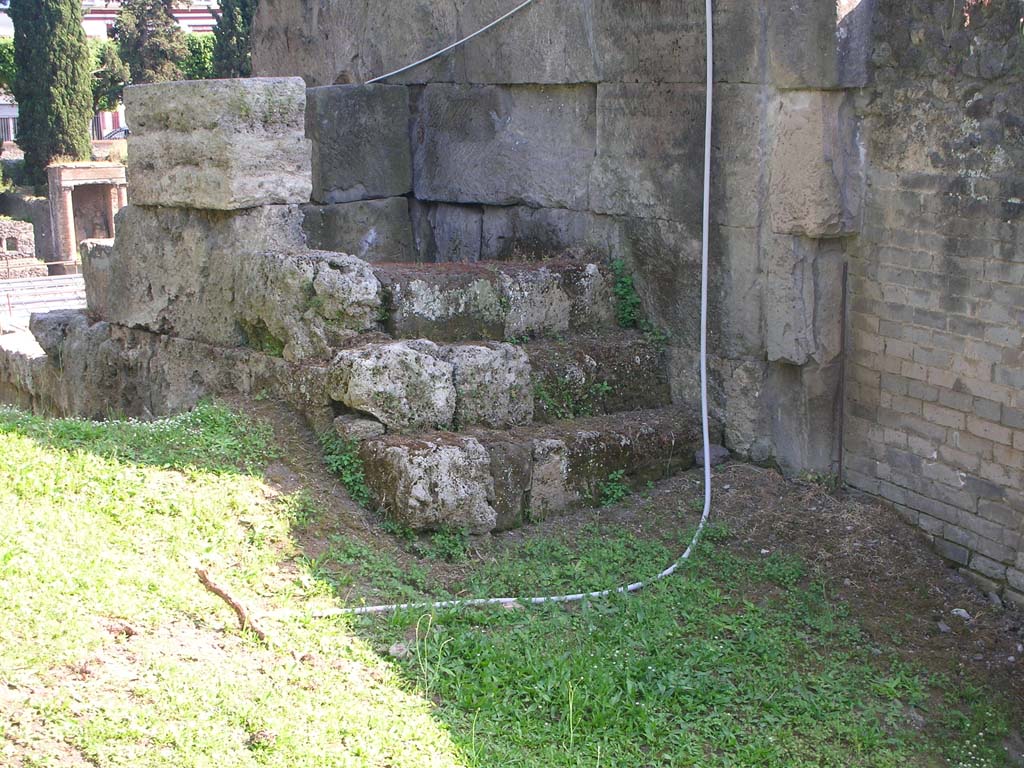
Porta di Nocera or Nuceria Gate, Pompeii. May 2010.
Looking south along exterior east wall of gate, with steps. Photo courtesy of Ivo van der Graaff.
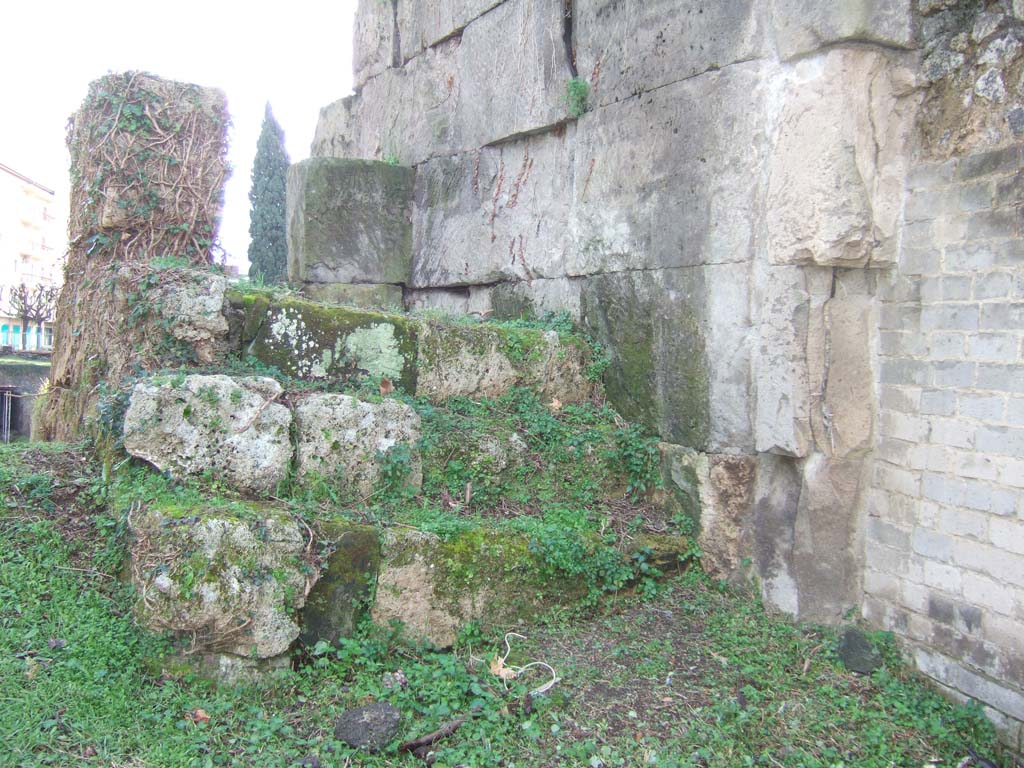
Porta di Nocera or Nuceria Gate, Pompeii. May 2010.
Looking north along exterior east wall. Photo courtesy of Ivo van der Graaff.
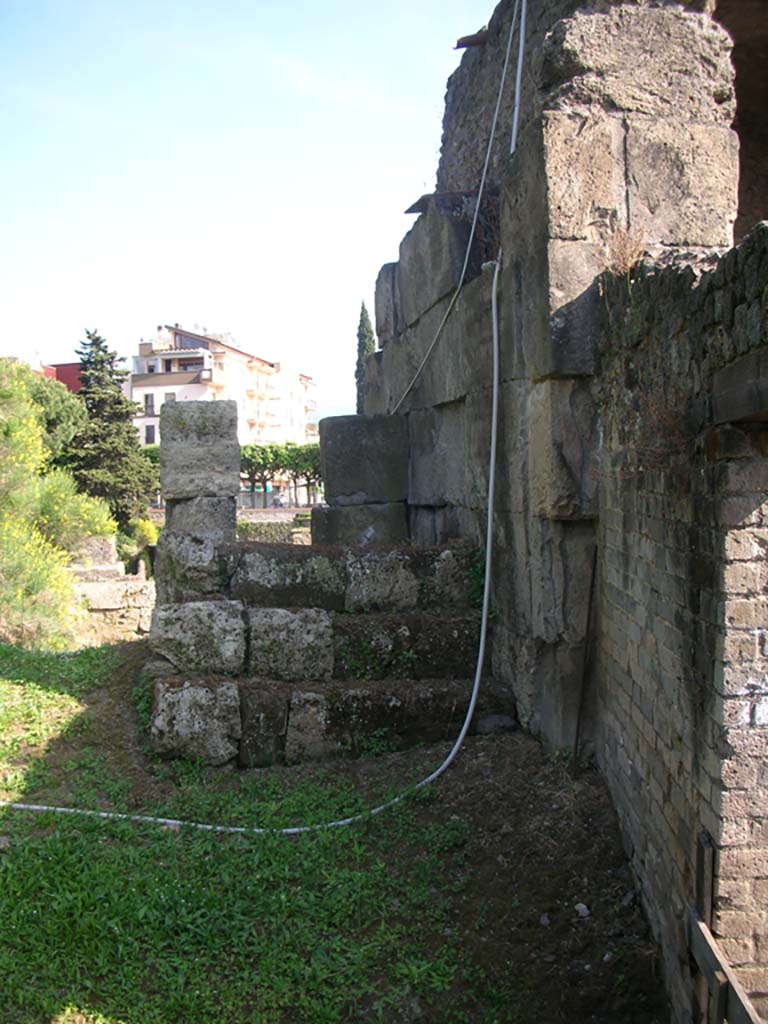
Porta di Nocera or Nuceria Gate, Pompeii. May 2010. Exterior east wall of gate, with steps. Photo courtesy of Ivo van der Graaff.
Pompeii Porta di Nocera. December 2005. Steps at east side of gate, looking south.
Porta di Nocera or Nuceria Gate, Pompeii. May 2010.
Looking south along east wall of gate, from north end. Photo courtesy of Ivo van der Graaff.
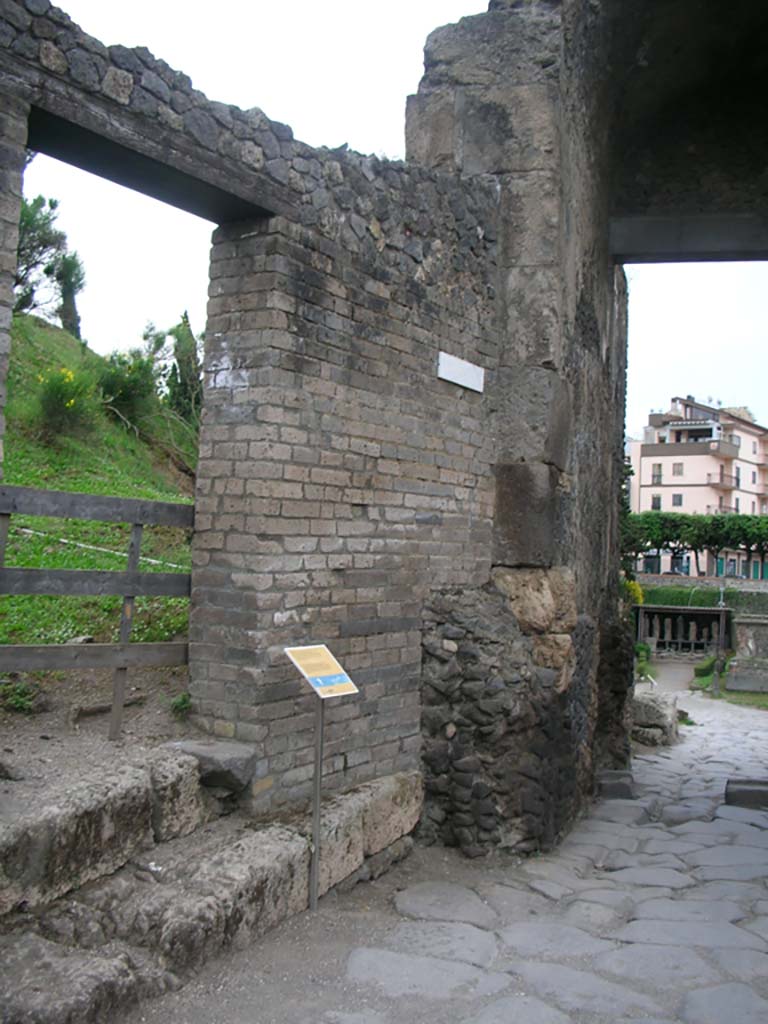
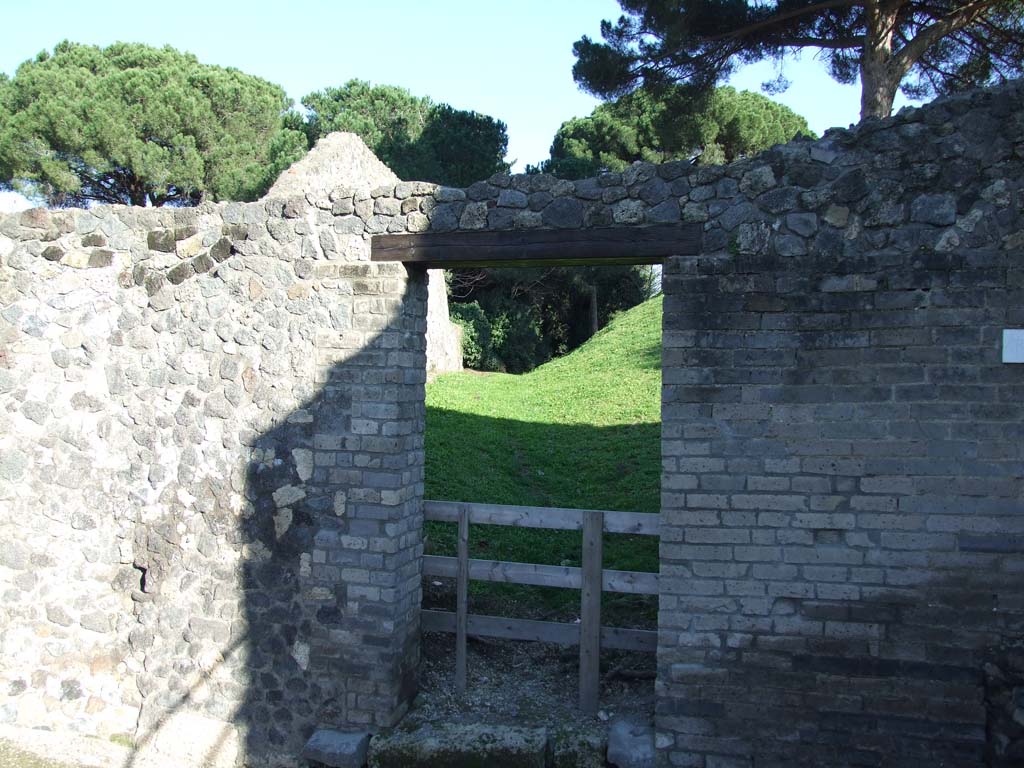
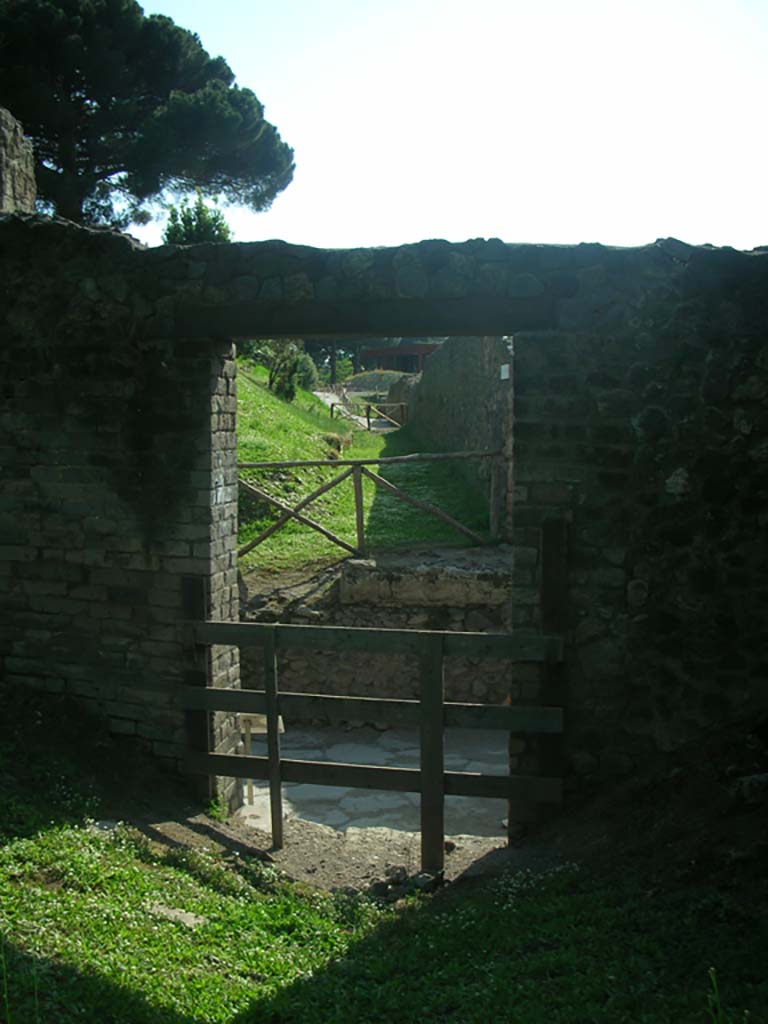
Pompeii Porta di Nocera. December 2006. Looking east through doorway leading to agger and city walls on east side.
Porta di Nocera or Nuceria Gate, Pompeii. May 2010.
Looking west towards Via di Nocera, through entrance in wall at north end of gate on east side.
Photo courtesy of Ivo van der Graaff.
Nocera Gate: Surroundings
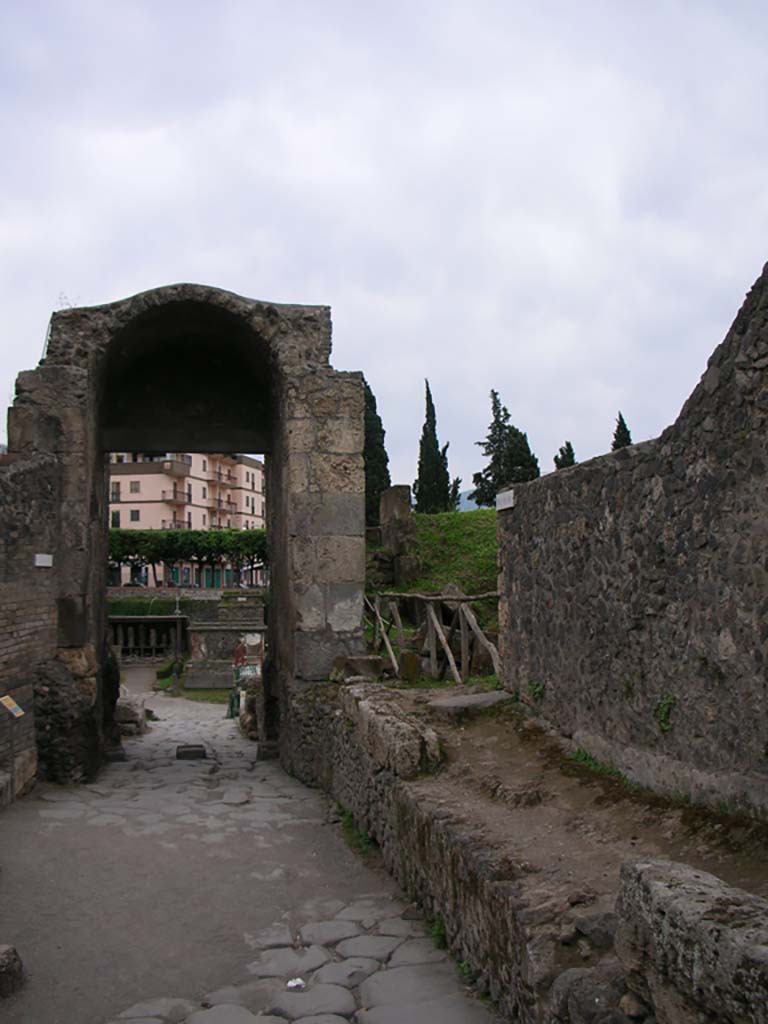
Porta di Nocera or Nuceria Gate, Pompeii. May 2010.
Entrance at north end of east side of gate. Photo courtesy of Ivo van der Graaff.
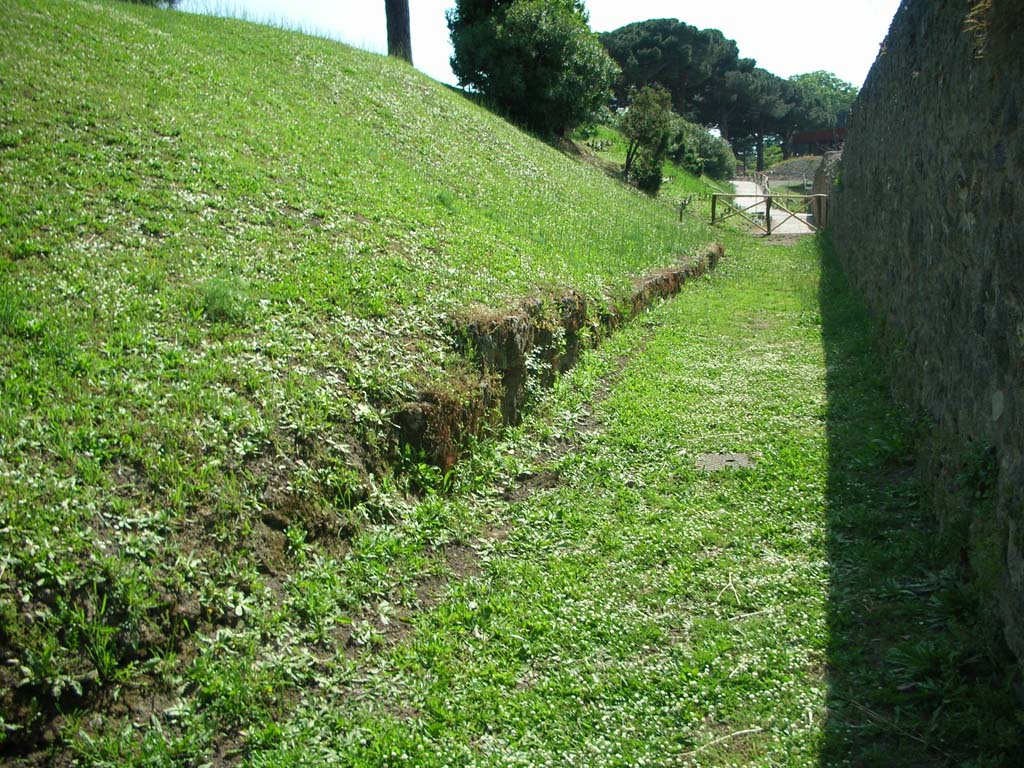
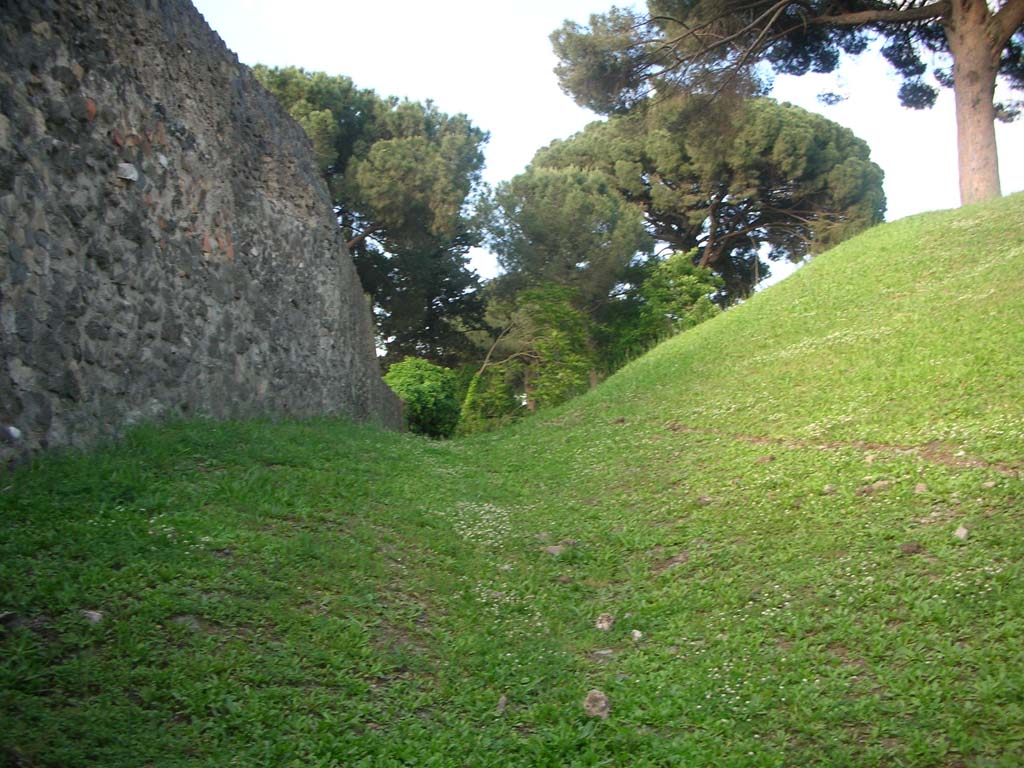
Porta di Nocera or Nuceria Gate, Pompeii. May 2010.
Looking along north side of agger from east side of north end of gate. Photo courtesy of Ivo van der Graaff.
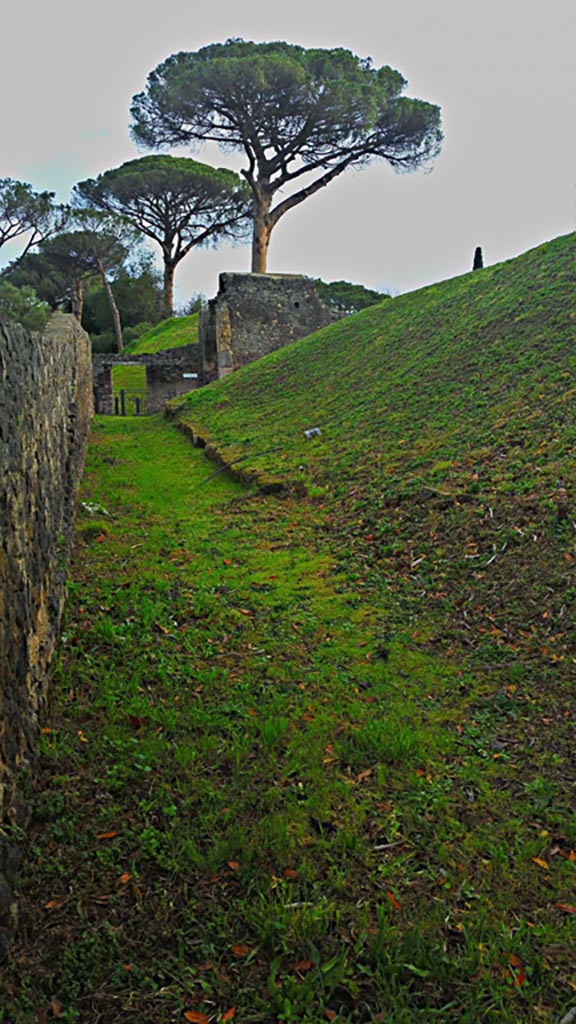
Porta di Nocera or Nuceria Gate, Pompeii. May 2010.
Entrance at north end of west side of gate. Photo courtesy of Ivo van der Graaff.
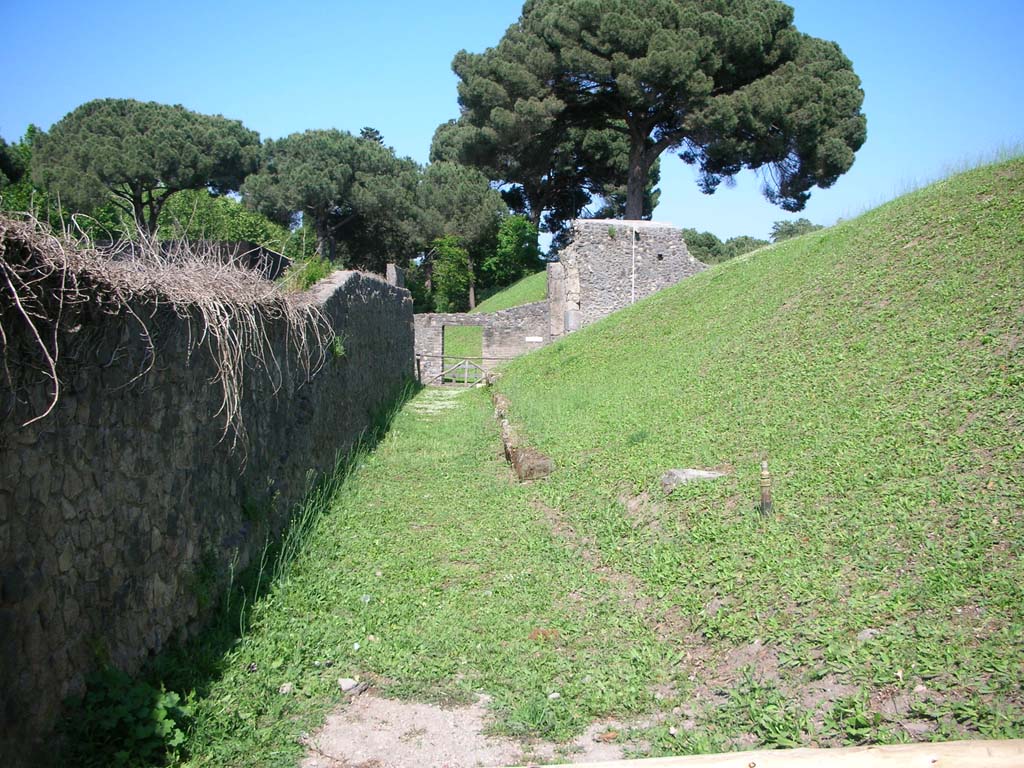
Porta di Nocera or Nuceria Gate, Pompeii. May 2010.
Looking along rear of agger from north end of west side of gate. Photo courtesy of Ivo van der Graaff.
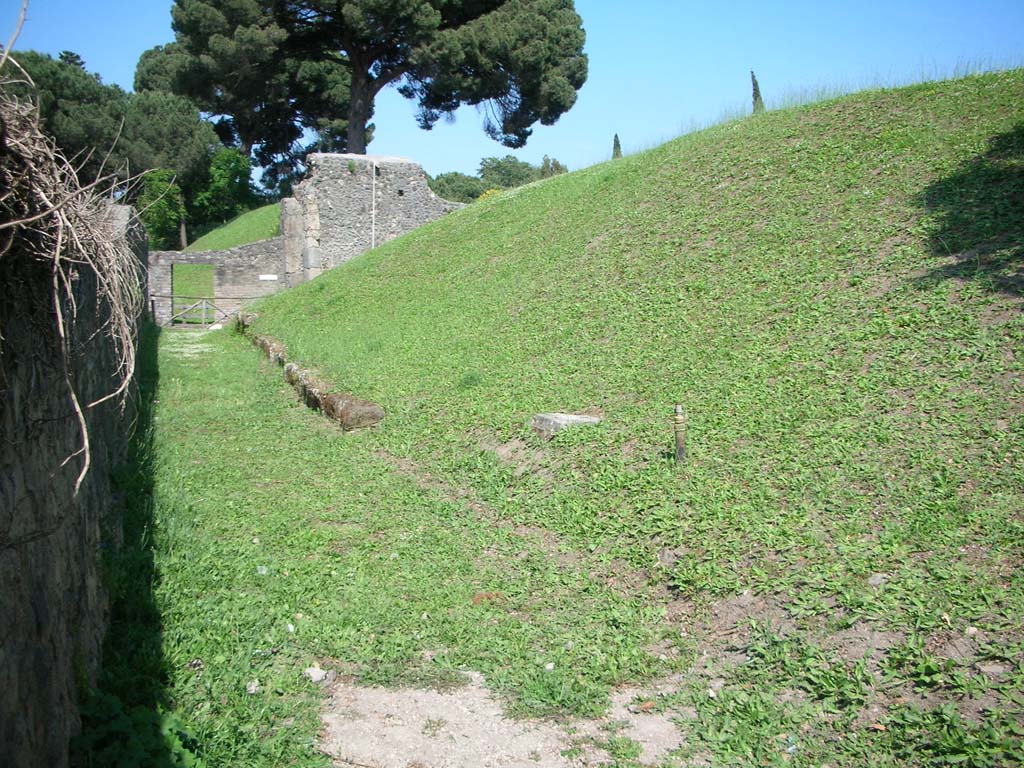
Pompeii Porta di Nocera. 2017/2018/2019.
Looking east along north
side of agger towards Porta Nocera. Photo
courtesy of Giuseppe Ciaramella.
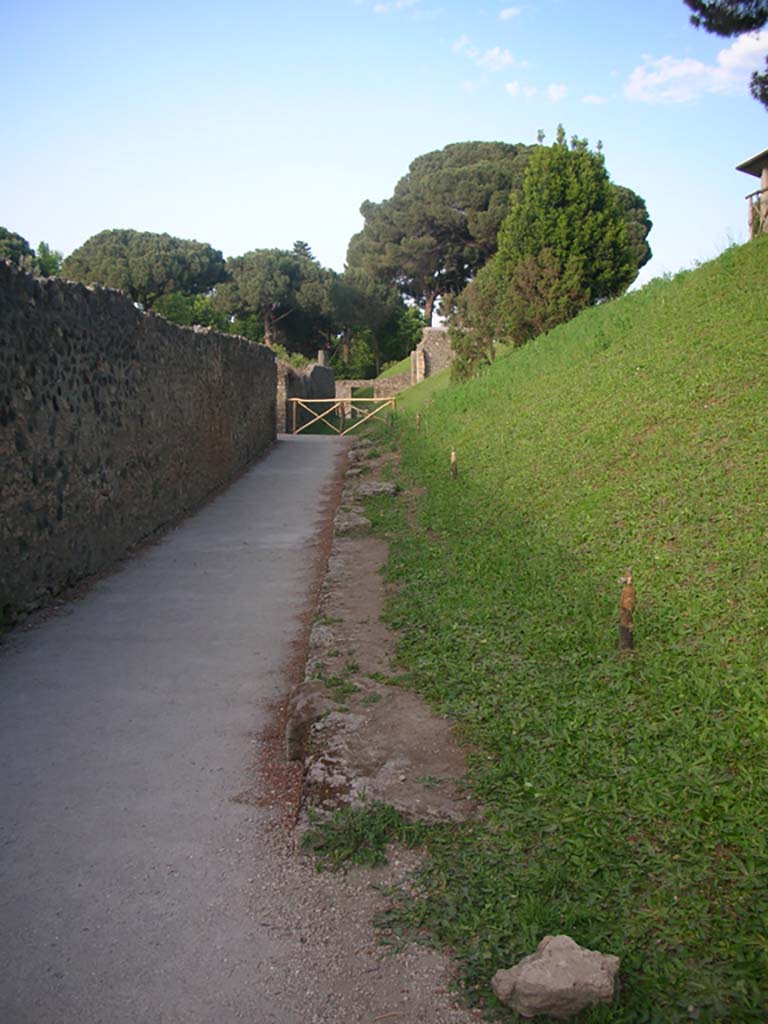
Porta di Nocera or Nuceria Gate, Pompeii. Porta Nocera, Pompeii. May 2010.
Looking towards north end of west side of gate. Photo courtesy of Ivo van der Graaff.
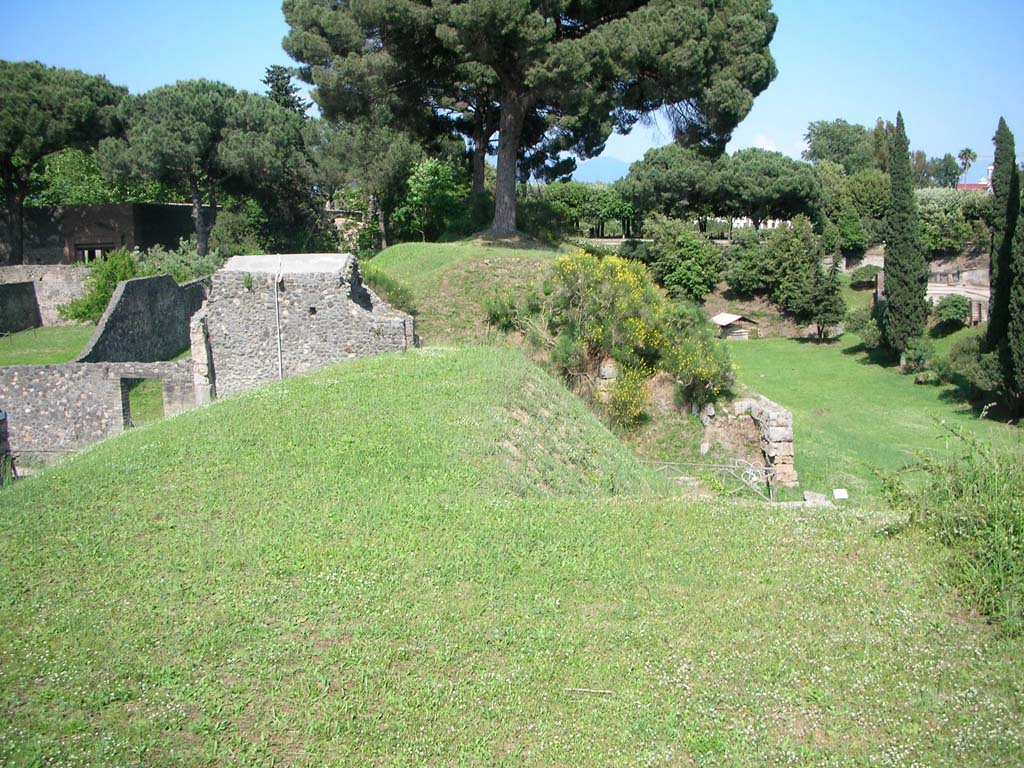
Porta di Nocera or Nuceria Gate, Pompeii. West side, looking east to Nocera gate and agger.
Porta di Nocera or Nuceria Gate, Pompeii. May 2010.
Looking east from north side of agger towards Nocera gate. Photo courtesy of Ivo van der Graaff.
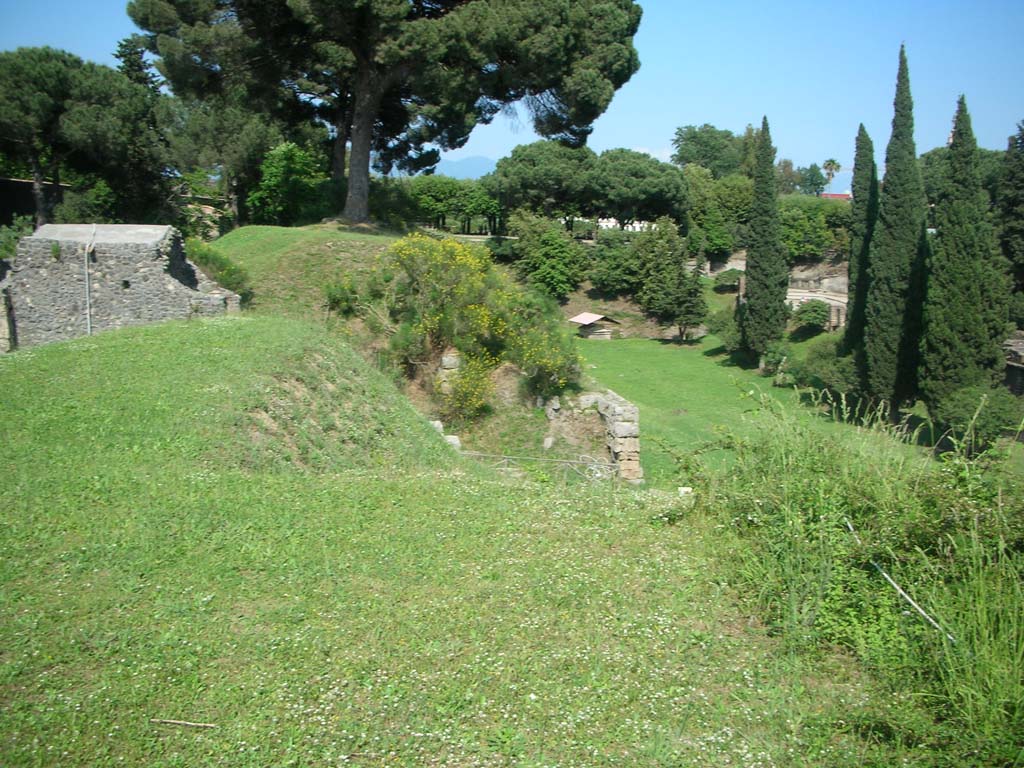
Porta di Nocera or Nuceria Gate, Pompeii. May 2010.
From agger on west side, looking east to south side of Nocera gate. Photo courtesy of Ivo van der Graaff.
Porta di Nocera or Nuceria Gate, Pompeii. May 2010.
From agger on west side, looking east to south side of Nocera gate. Photo courtesy of Ivo van der Graaff.
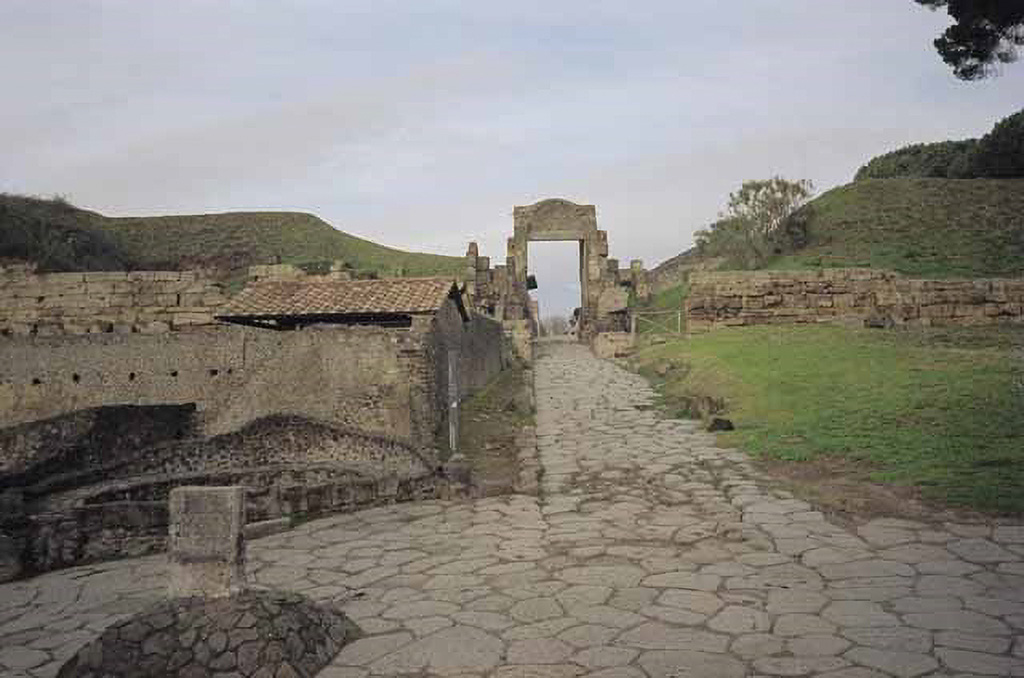
Pompeii Porta di
Nocera. October 2022.
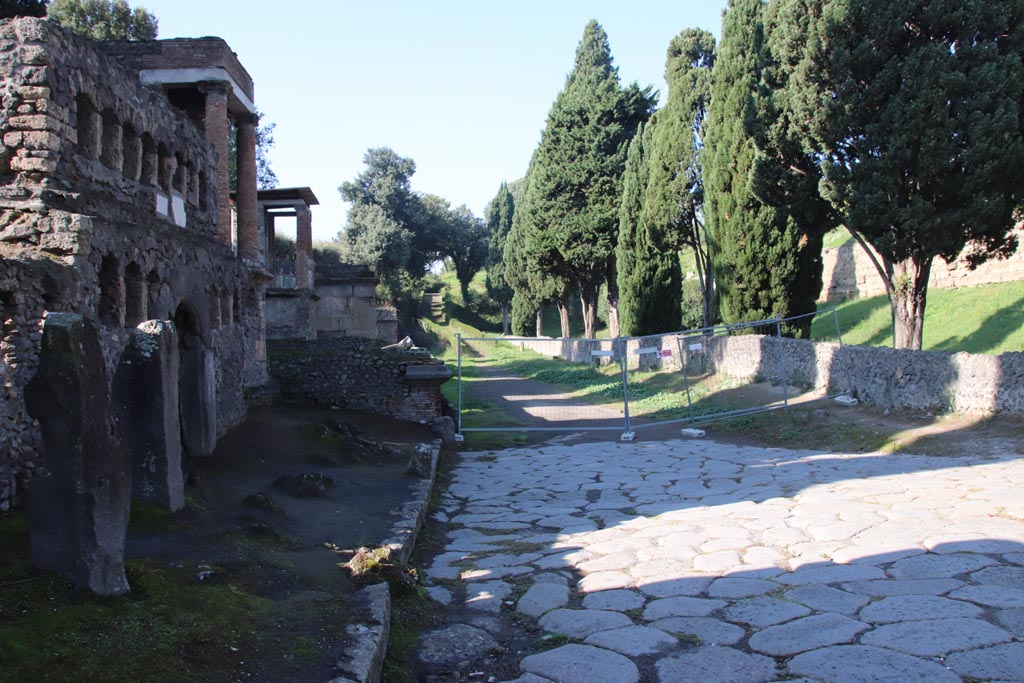
Via di Nocera leading to Gate. Looking north from Via delle Tombe. Photo courtesy of Klaus Heese.
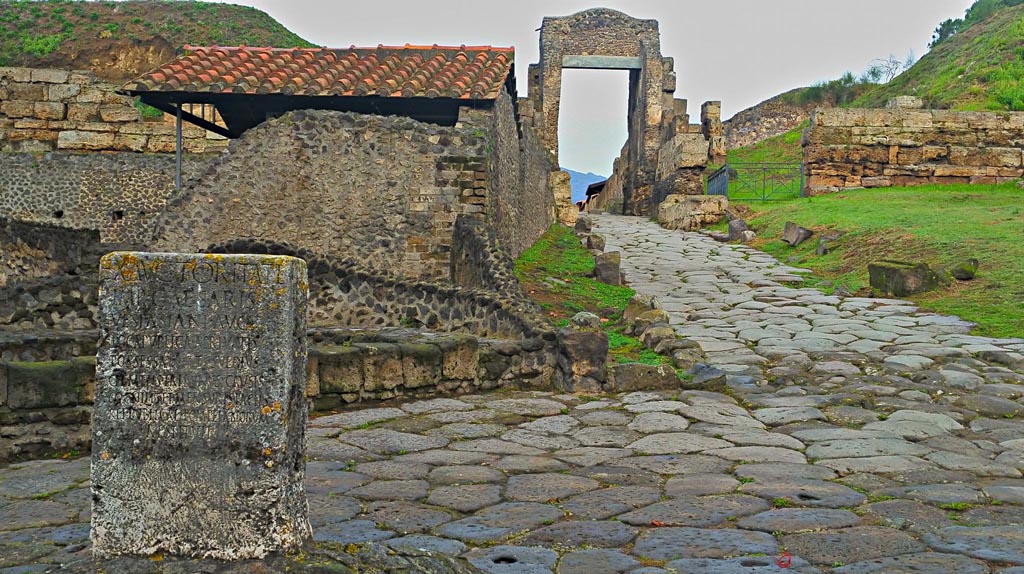
Pompeii Porta di Nocera. December 2018. Porta di Nocera from Via delle
Tombe, looking north. Photo
courtesy of Aude Durand.
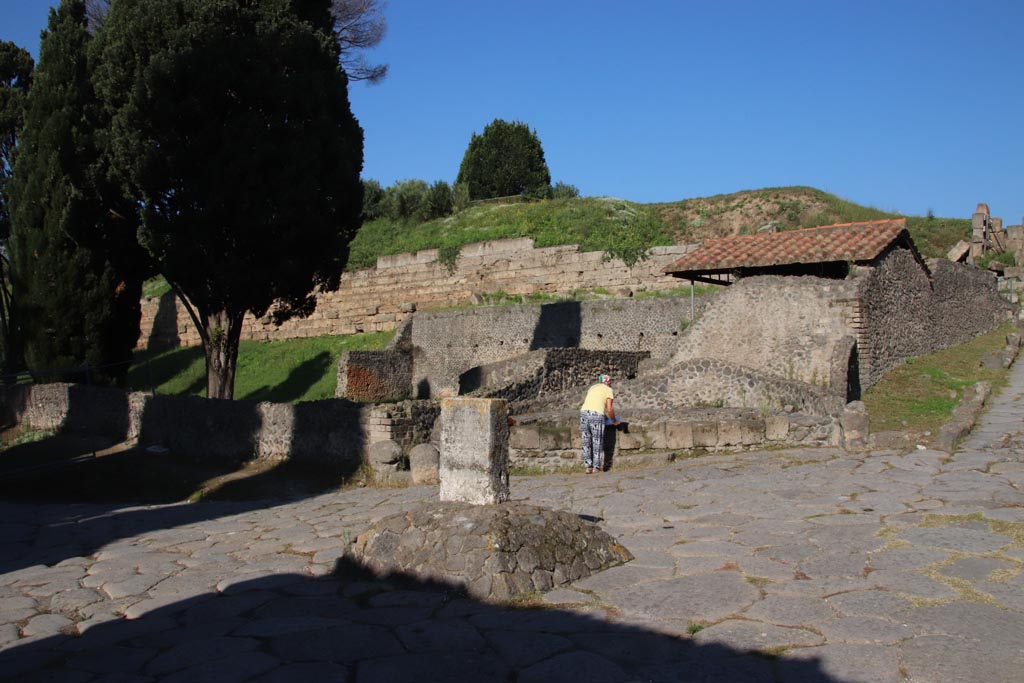
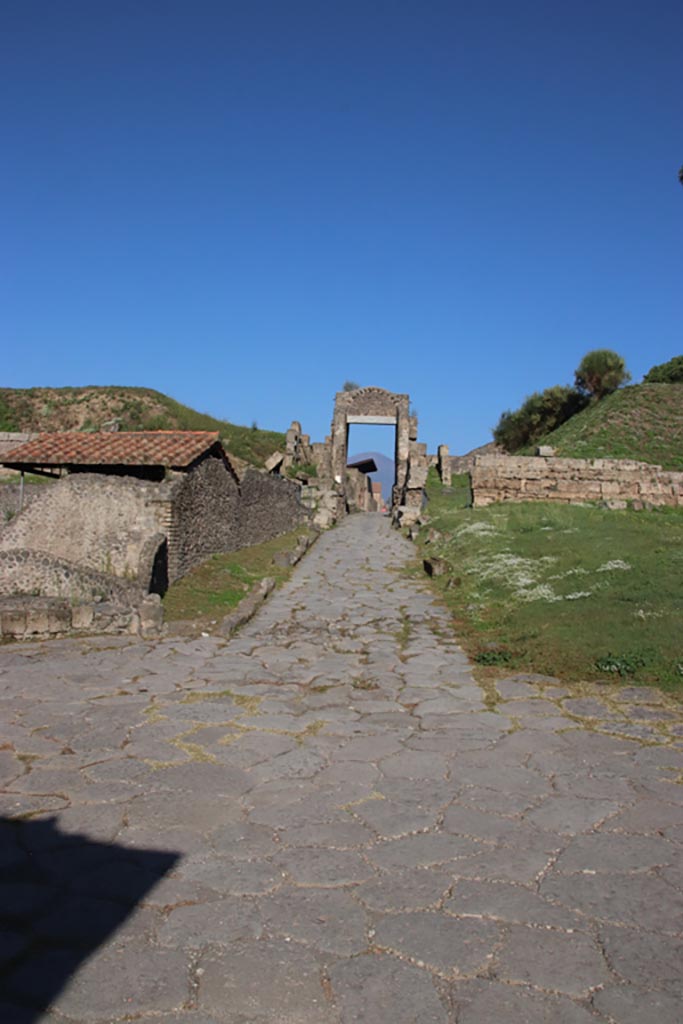
Pompeii Porta di Nocera. May 2010. Via di Nocera leading to gate. Looking north from Via delle Tombe. Photo courtesy of Rick Bauer.
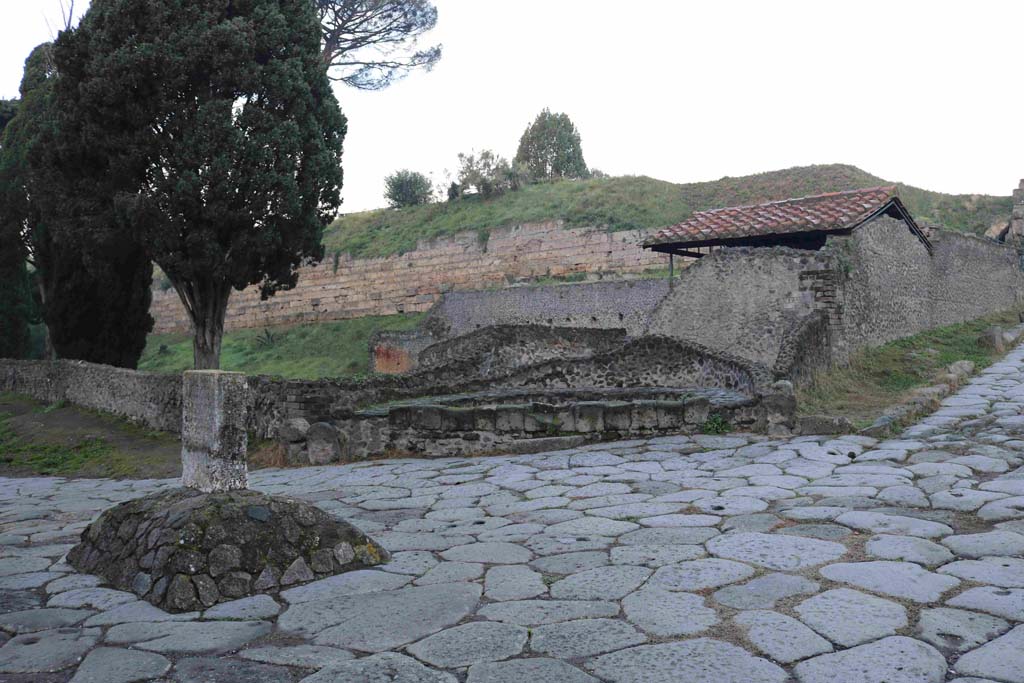
Pompeii Porta di
Nocera. 2017/2018/2019. Looking north to gate from Via delle
Tombe. Photo courtesy of Giuseppe Ciaramella.
Pompeii Porta di Nocera. October 2022.
Looking north-west towards city walls from junction with Via della Tombe. Photo courtesy of Klaus Heese.
Pompeii Porta di
Nocera. December 2018.
Looking north-west at junction with Via delle Tombe, with
cippus of Titus Suedius Clemens, on left. Photo courtesy of Aude Durand.

Pompeii Porta di Nocera. October 2022.
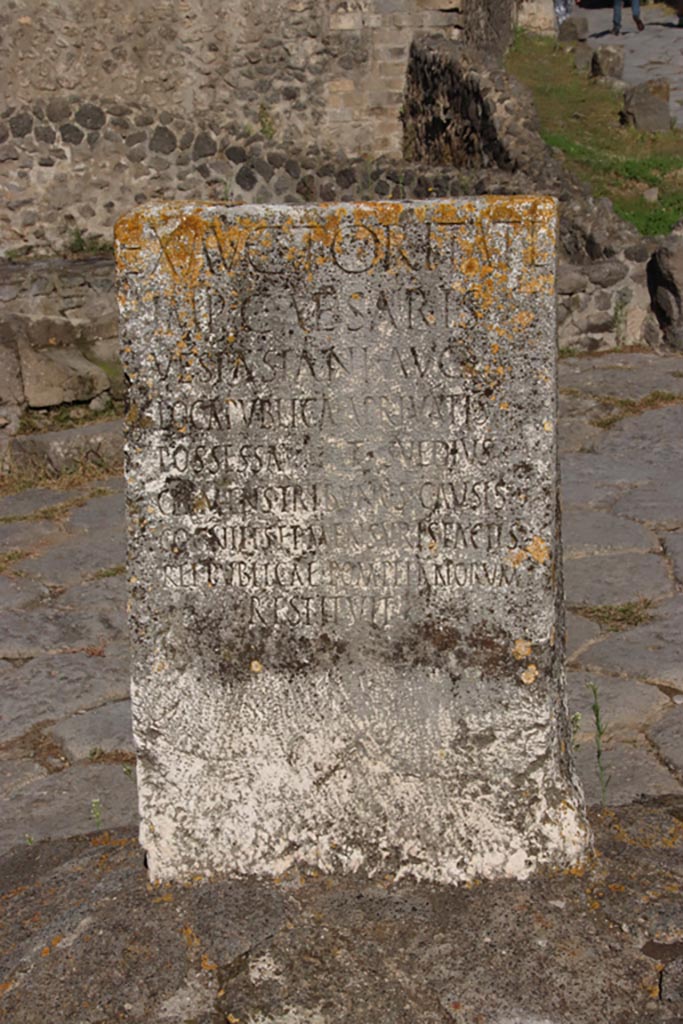
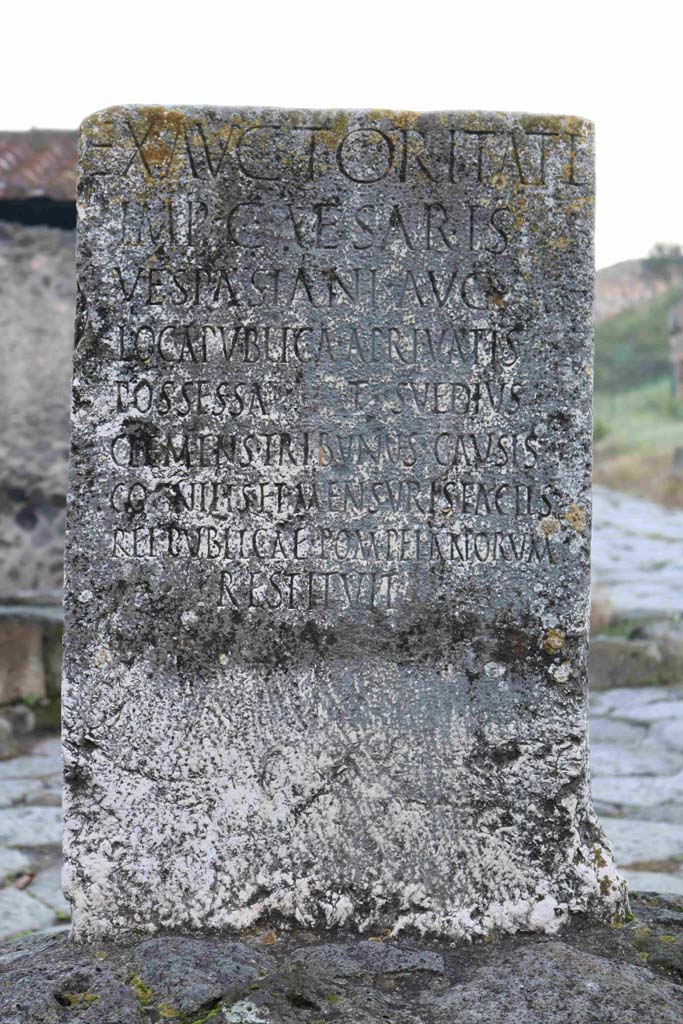
Cippus of Titus Suedius Clemens, south side, looking north. Photo courtesy of Klaus Heese.
Pompeii Porta di Nocera. December 2018.
Cippus of Titus
Suedius Clemens, south side, looking north. Photo courtesy of Aude Durand.
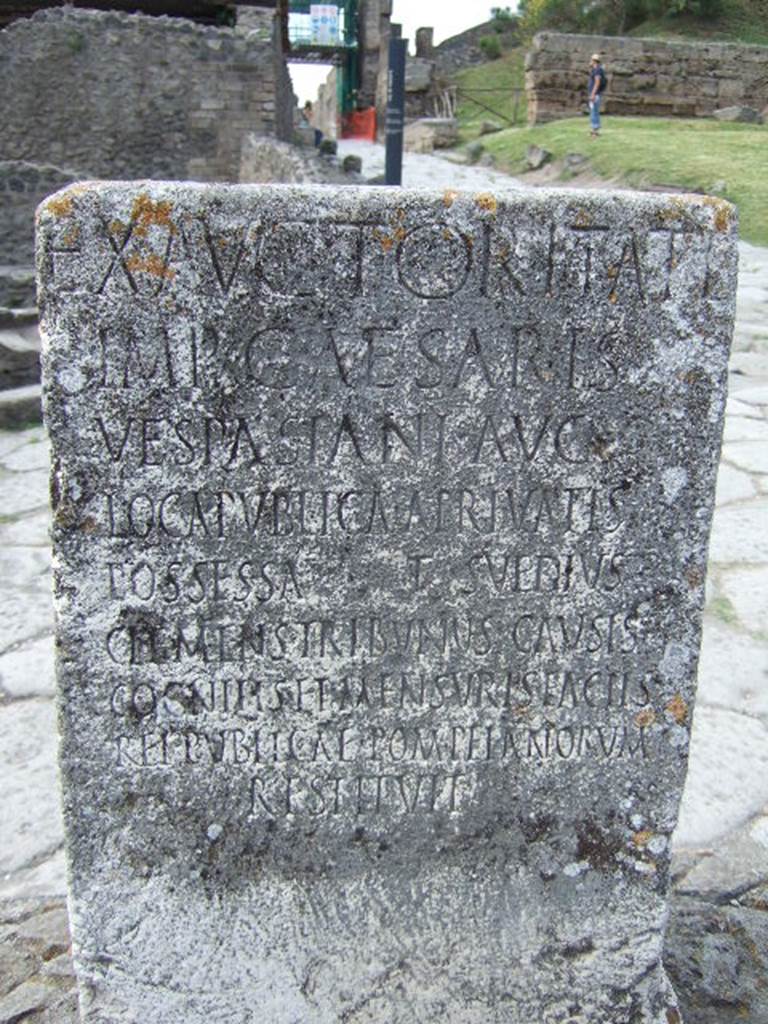
Pompeii Porta di Nocera. Cippus of Titus Suedius Clemens. The Cippus is inscribed:
Ex auctoritate
imp(eratoris)
Caesaris
Vespasiani
Aug(usti)
loca publica, a
privatis
possessa T(itus)
Suedius
Clemens tribunus
causis c
ognitis et
mensuris factis
rei publicae
Pompeianorum
restituit
By virtue of authority conferred upon him by the Emperor Vespasian Caesar Augustus,
Titus Suedius Clemens, tribune, having investigated the facts and taken measurements,
restored to the citizens of Pompeii public places illegally appropriated by private persons.
Similar Cippi were found at the Porta Ercolano, Porta Marina and the Porta Vesuvio.
The wording “rei publicae Pompeianorum” on one of these, discovered in 1763, was the first positive identification that the site was Pompeii.
Until then scholars had divided opinions on the city buried under Civita. Many, including the first official excavators, thought it was the ancient city of Stabiae.
See Conticello,
B., Ed, 1990. Rediscovering Pompeii.
Rome: L’Erma di Bretschneider. (p. 225).
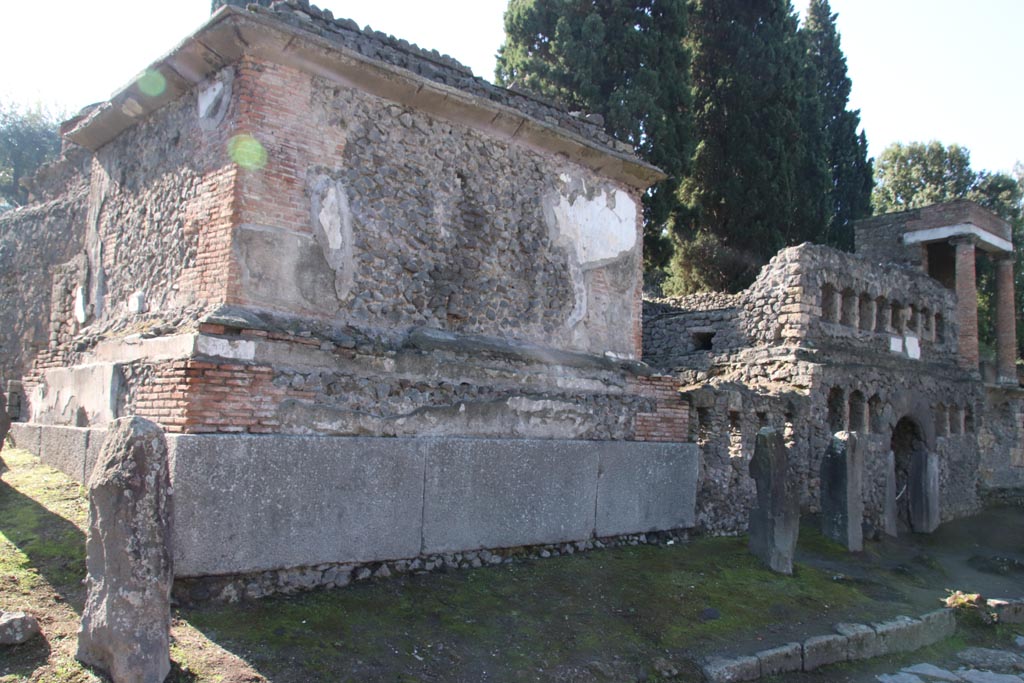
Pompeii Porta di
Nocera. December 2018.
Cippus of Titus Suedius Clemens, north (rear) side, looking
south. Photo courtesy of Aude Durand.
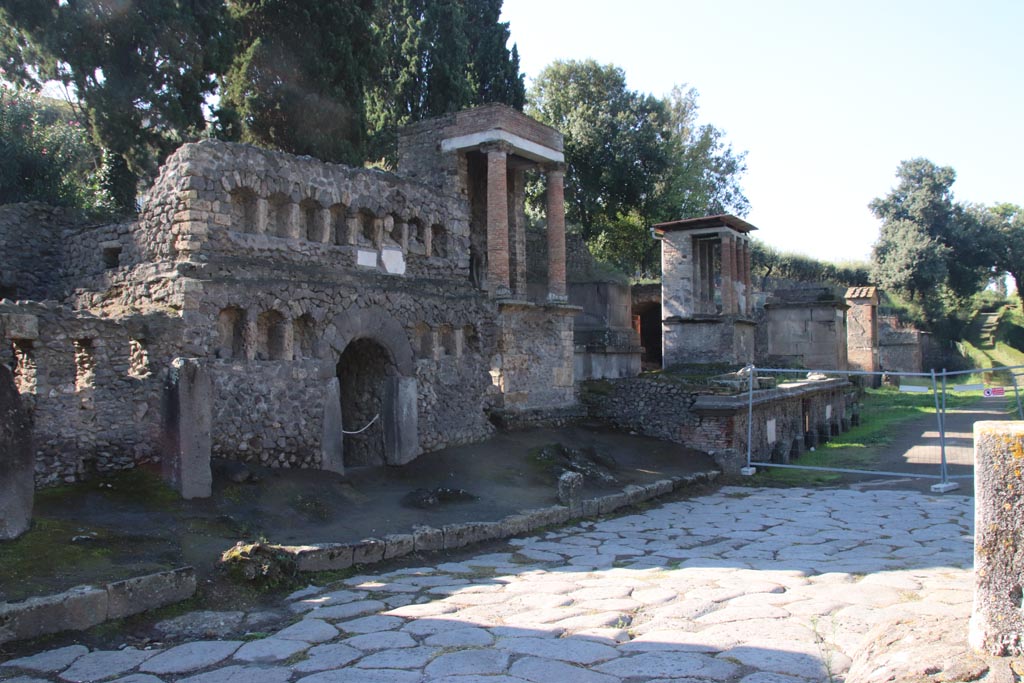
Via delle Tombe, Pompeii. October 2022. Looking west from junction with Via di Nocera. Photo courtesy of Klaus Heese.
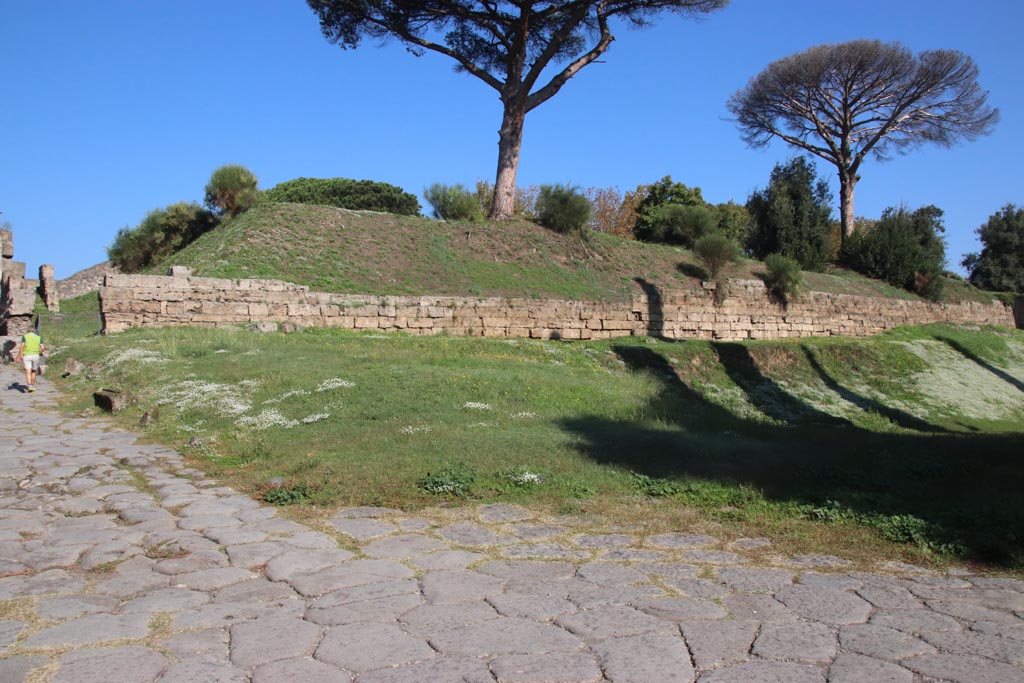
Via delle Tombe, Pompeii. October 2022. Looking south-west from junction with Via di Nocera. Photo courtesy of Klaus Heese.
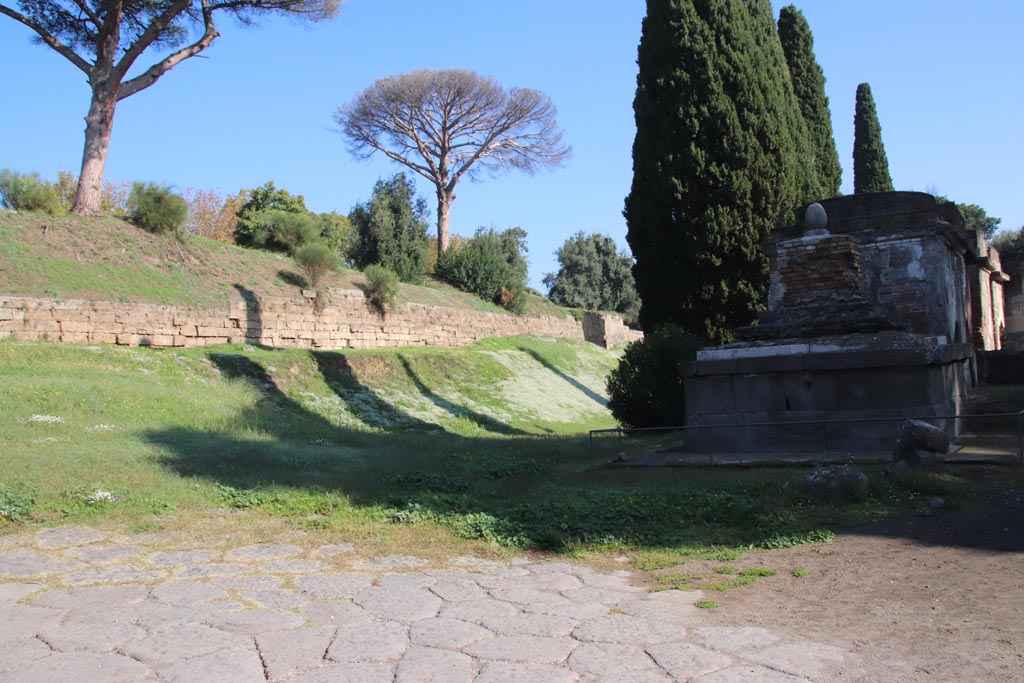
Via delle Tombe,
Pompeii. October 2022.
Looking south-west towards tombs, from junction with Via di
Nocera. Photo courtesy of Klaus
Heese.
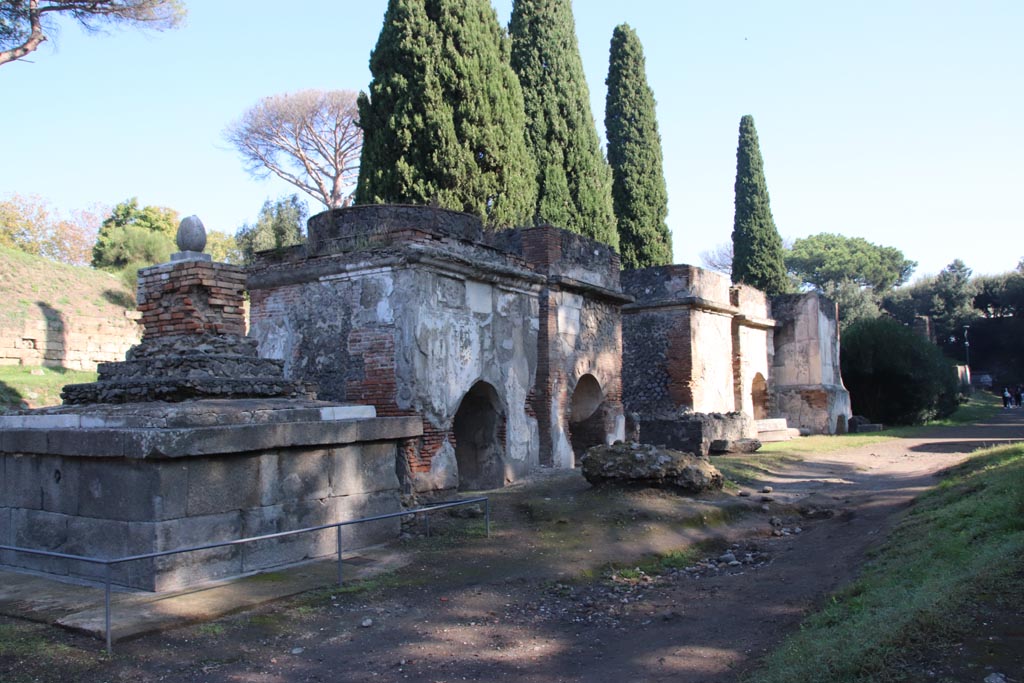
Pompeii Porta di Nocera. October 2022. City walls on east side of gate. looking north-east. Photo courtesy of Klaus Heese.
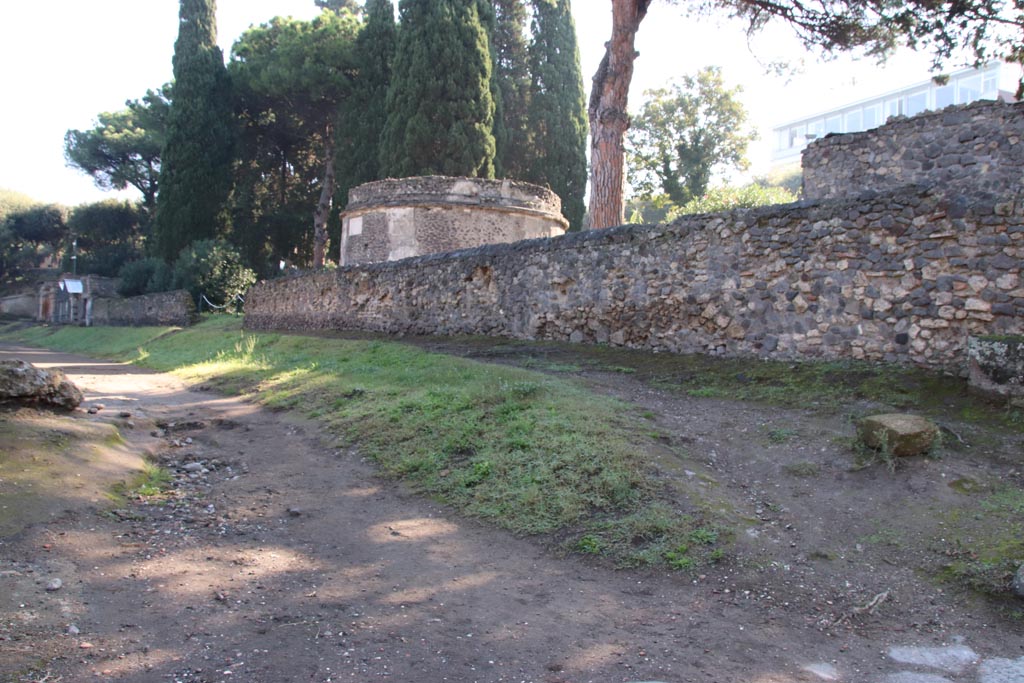
City Walls, Pompeii. October 2024. Looking east along City Walls on south side of Porta di Nocera. Photo courtesy of Giuseppe Ciaramella.

Via delle Tombe,
Pompeii. October 2022.
Looking north-east towards city walls and tombs, from
junction with Via di Nocera. Photo
courtesy of Klaus Heese.

Via delle Tombe,
Pompeii. October 2022.
Looking north-east towards tombs, from junction with Via di
Nocera. Photo courtesy of Klaus
Heese.

Via delle Tombe,
Pompeii. October 2022.
Looking south-east from junction with Via di Nocera. Photo courtesy of Klaus Heese.