Pompeii. Fountain outside II.3.5. Fountain with a representation of Vertumnus or Bacchus?
Fountain with a mask with clusters of grapes for earrings?
Excavated 1756.
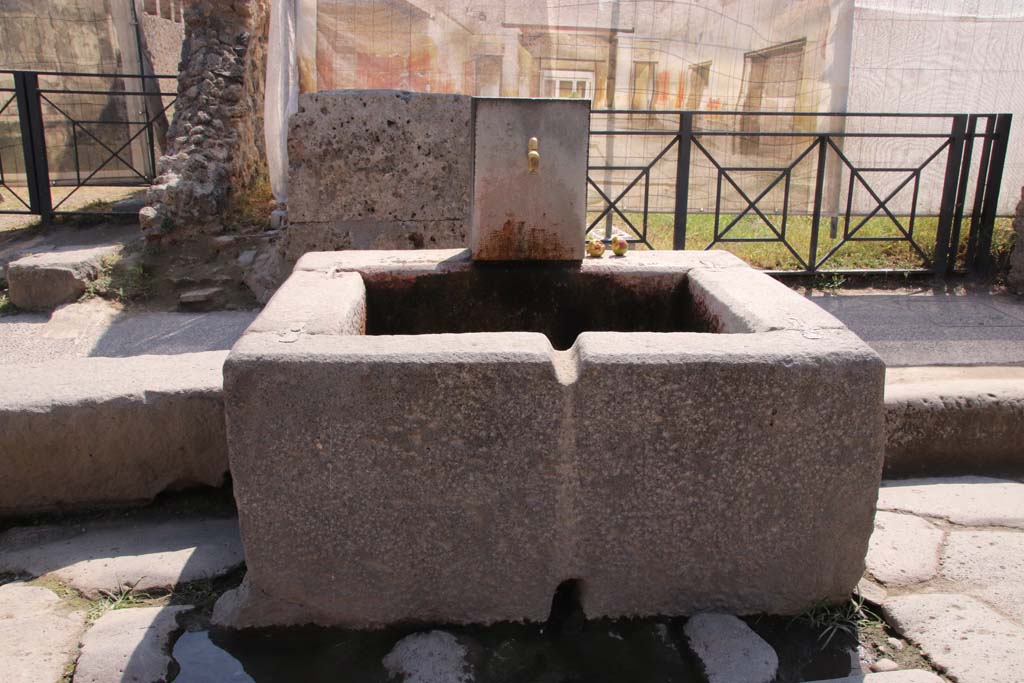
Fountain outside II.3.5. September 2019. Looking south on
Via dell’Abbondanza. Photo courtesy of
Klaus Heese.
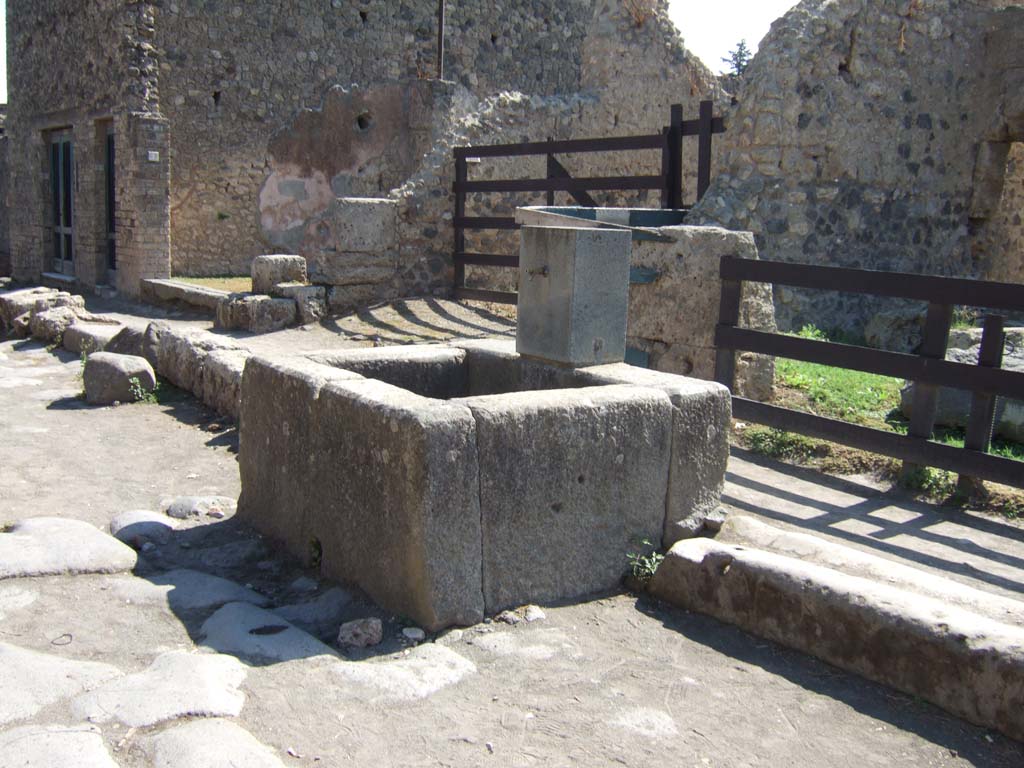
Fountain outside II.3.5. September 2005. Looking south-east from Via dell’Abbondanza.
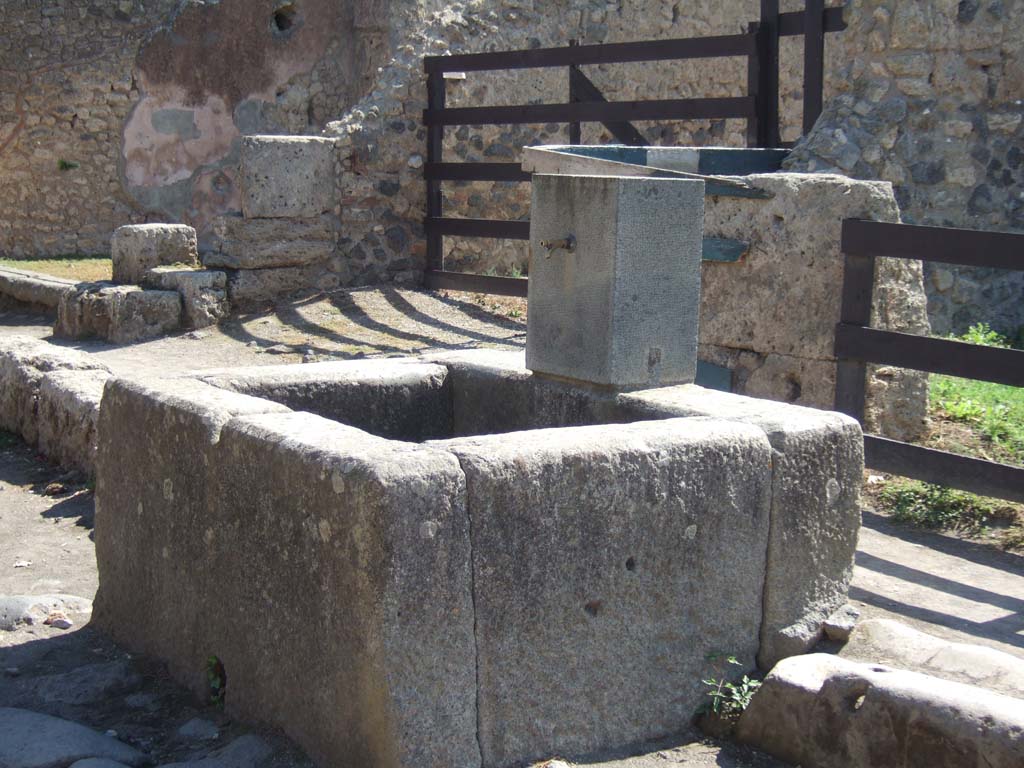
Fountain outside II.3.5. September 2005. Looking south-east.
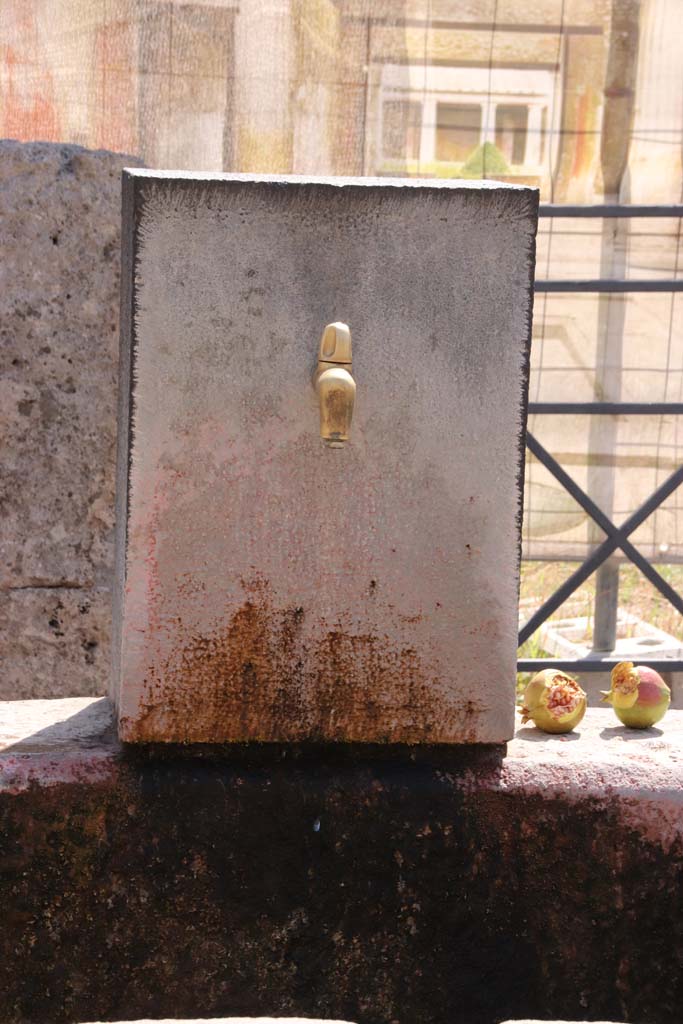
Fountain outside II.3.5. September 2019.
Detail of “modern” pilaster. Photo courtesy of Klaus Heese.
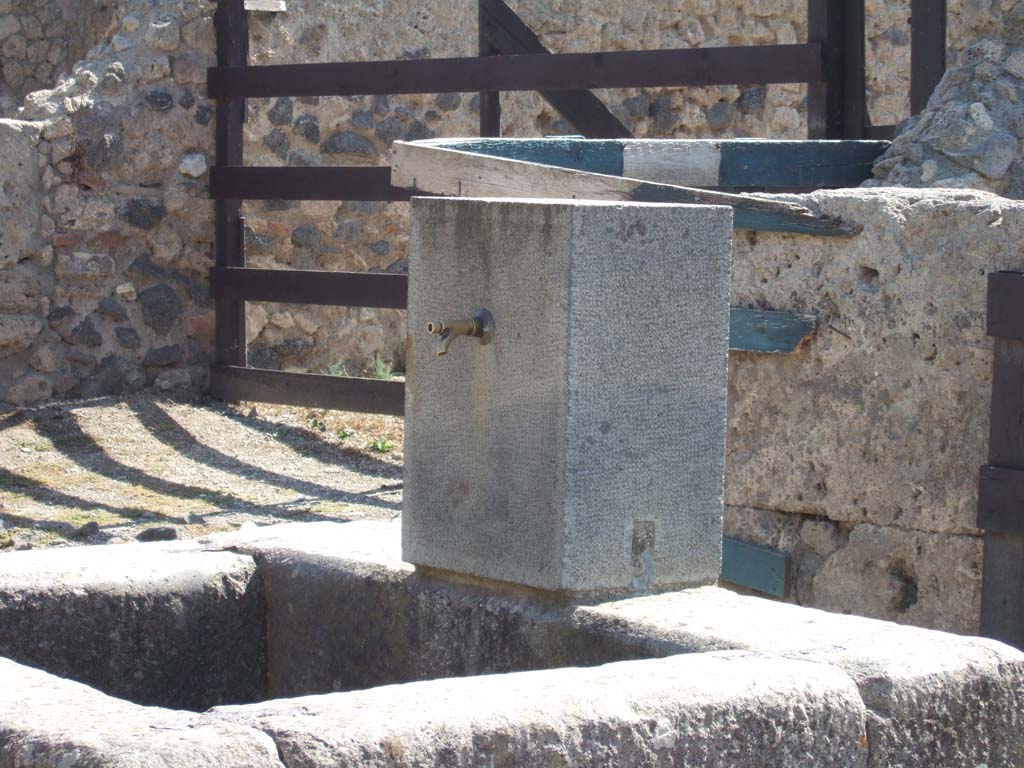
Fountain outside II.3.5. September 2005.The relief on the fountain pilaster has not been preserved in situ.
According to Parslow, the fountain pilaster or “lava standard” was described by Weber as being decorated with a mask wreathed with clusters of grapes and found 20th September 1756.
On Weber’s original rough draft of the site from 1757, he described it as being “a mask with clusters of grapes for earrings”.
This detail was completely removed from his final version.
The fountain pilaster, or standard, was removed and transported to the royal villa at Portici.
See Parslow, C.C. (1998). Rediscovering Antiquity: Karl Weber and the Excavation of Herculaneum, Pompeii and Stabiae. UK, Cambridge UP (pp.121,168 and 283)
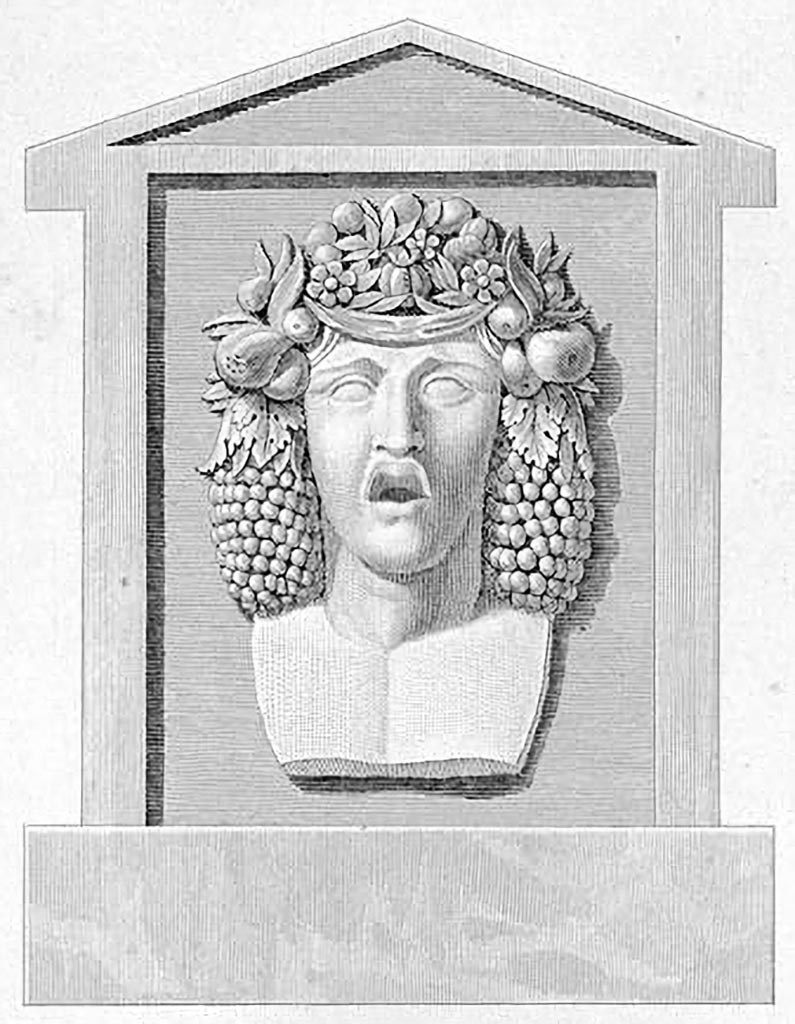
About 1810. Drawing by Mazois of fountain head of Bacchus, or a God of the countryside and crossroads.
See Mazois, F., 1824. Les Ruines de Pompei: Second Partie. Paris: Firmin Didot. (p. 37, Pl. III Fig. II).
According to Eschebach, during the earliest excavations in 1755, near the Street of the Graves, a representation of the god Vertumnus or Bacchus was found, in the form of a fountain profile, which fits the character of this residential area.
This fountain in the form of a pilaster was discovered in VI. Ins. Occ. Via Consolare, see Mazois.
Eschebach commented “this permits no conclusions on the shape of the well basin”.
See Eschebach, H., 1983. Pompeii, Herculaneum, Stabiae; Bollettino dell’ Associazione Internazionale Amici di Pompei 1. (pp. 15, 25, 26: Fig 33).
This may, or may not, be the fountain from this site, see also the possible fountain we have placed at VI.17.27, which may also be a dubious location.
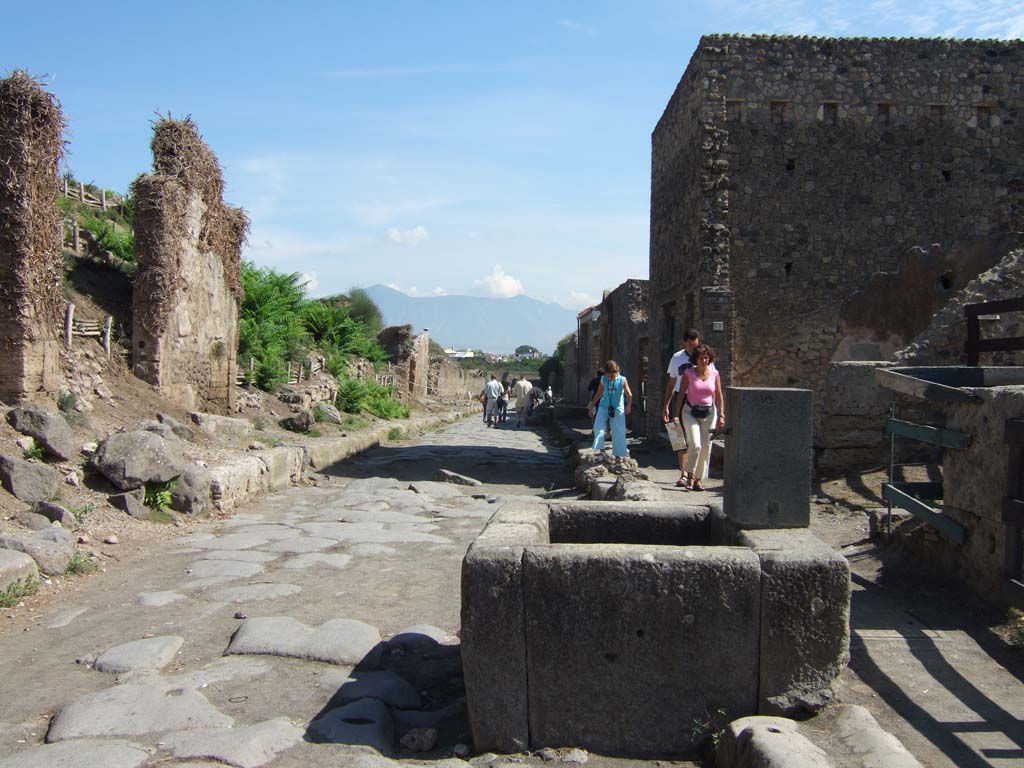
III.6, III.7.1 and Via dell’Abbondanza at II.3.5. September 2005. Looking east.